
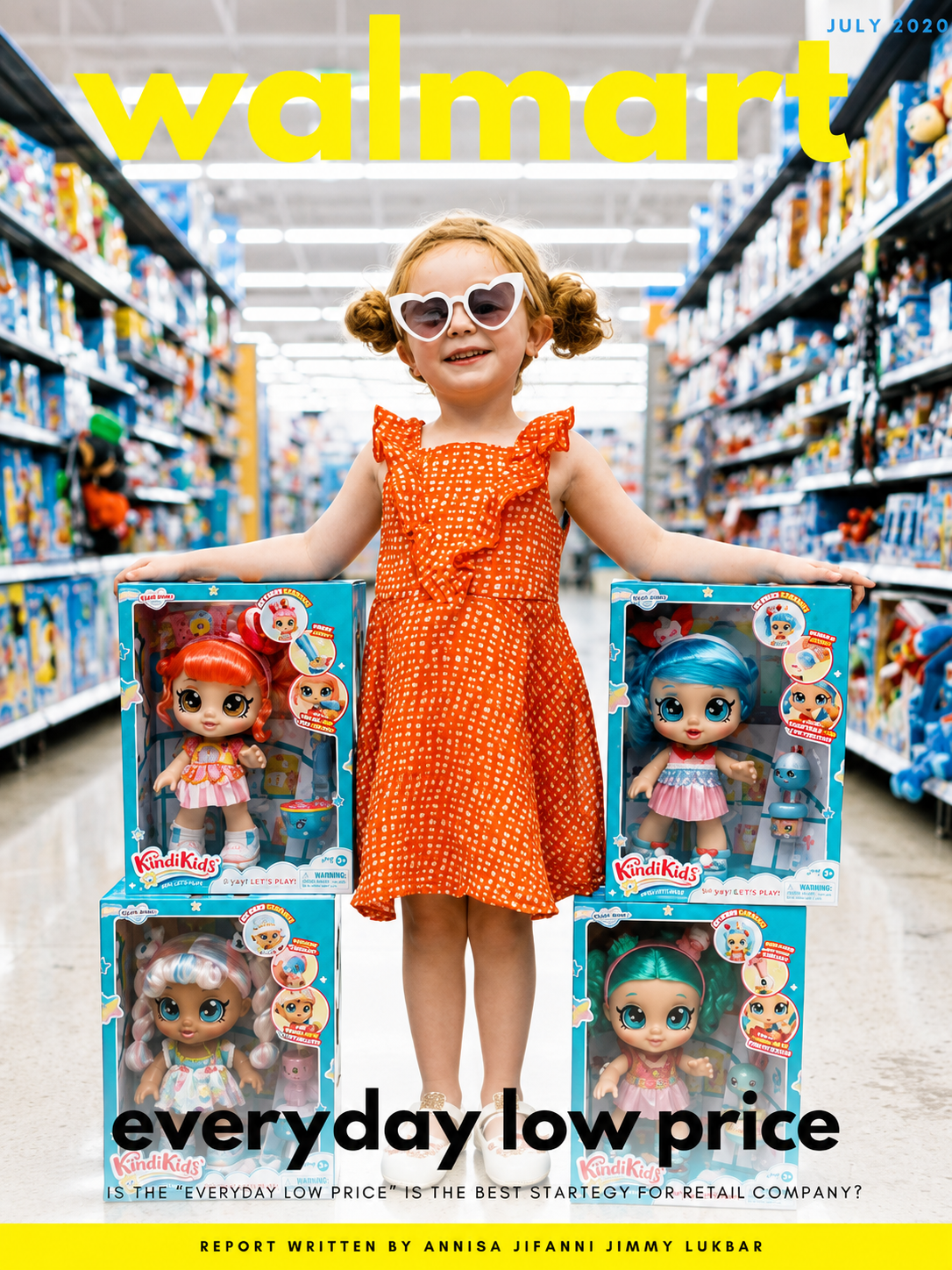
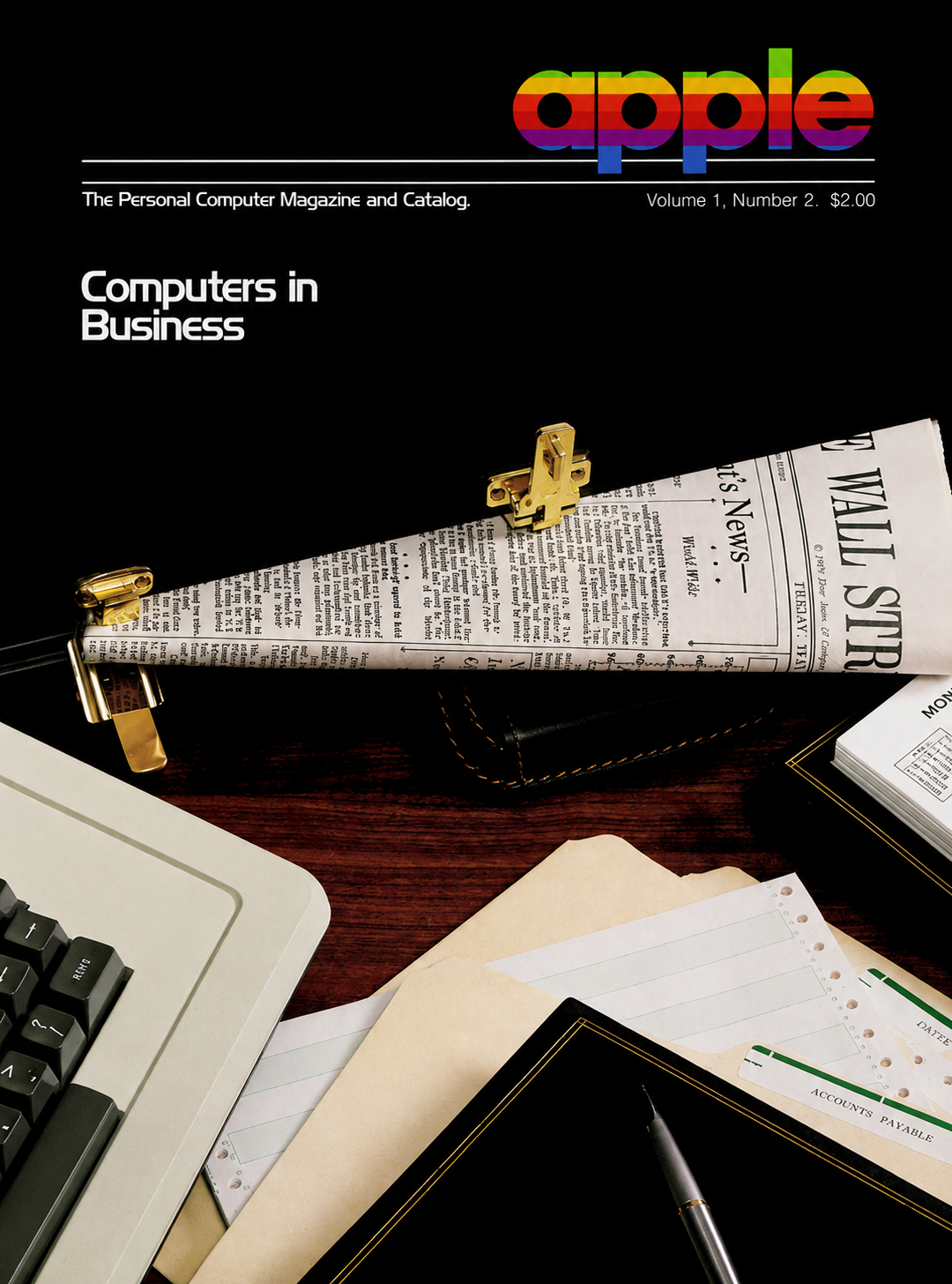
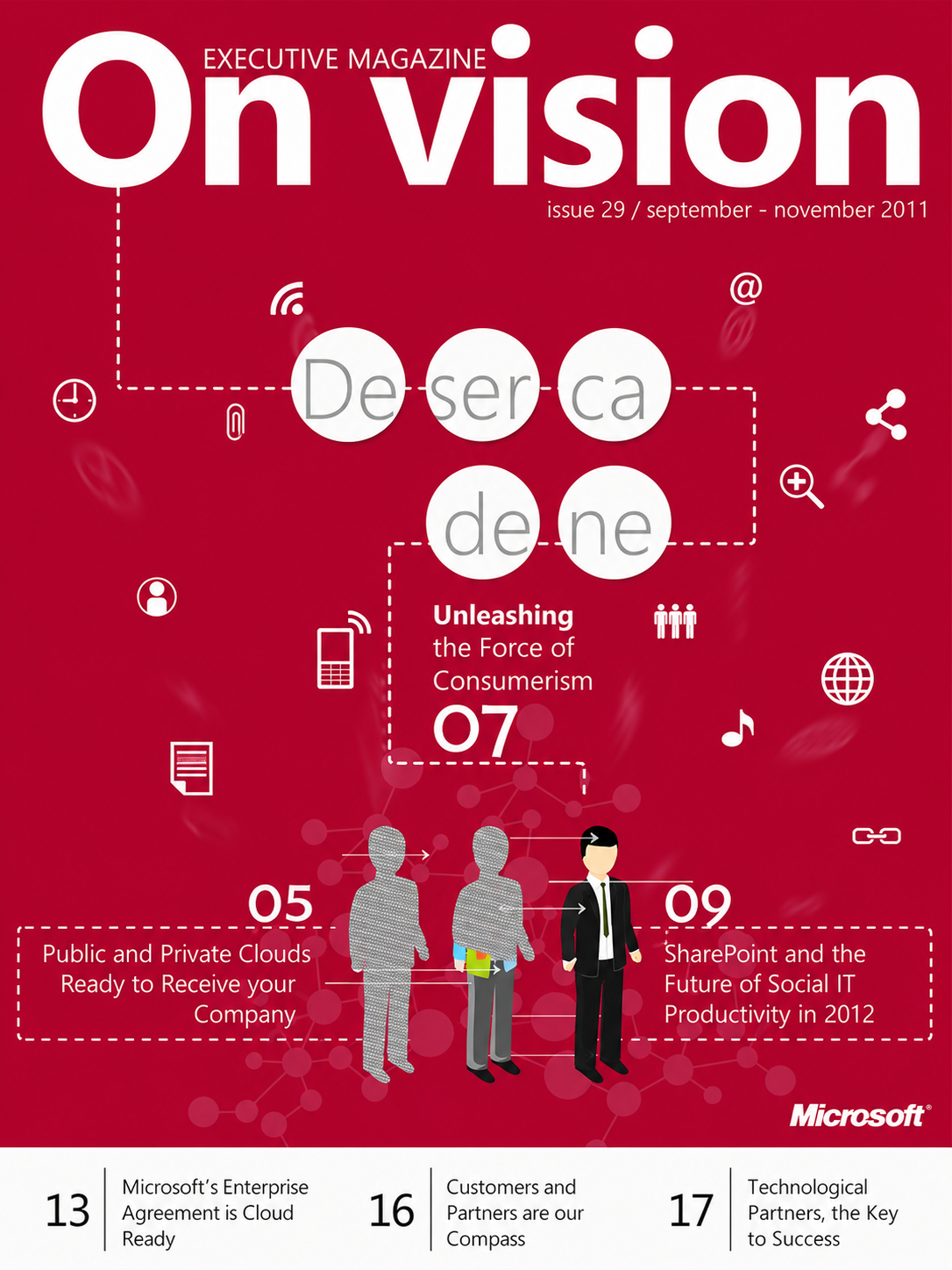
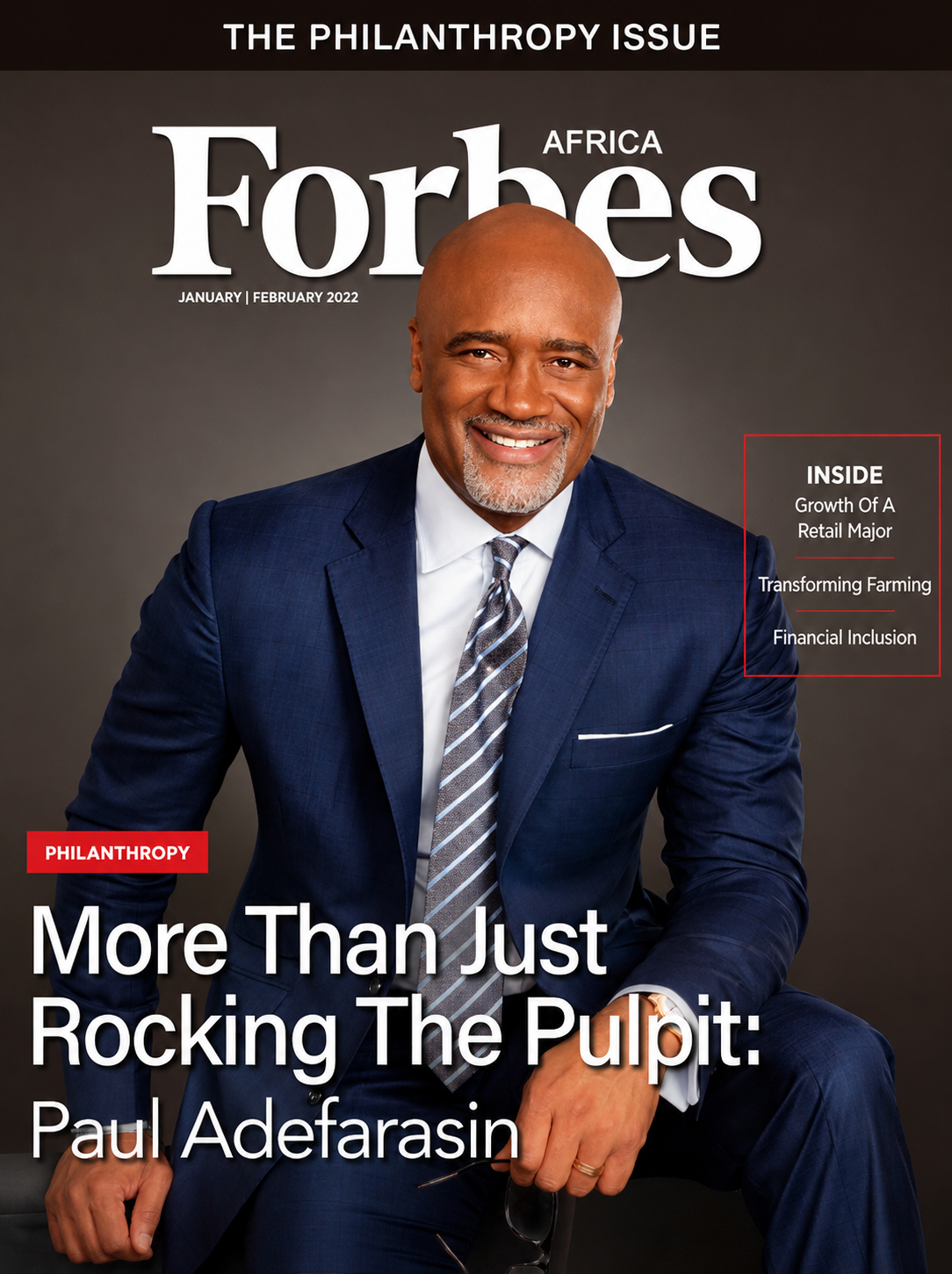
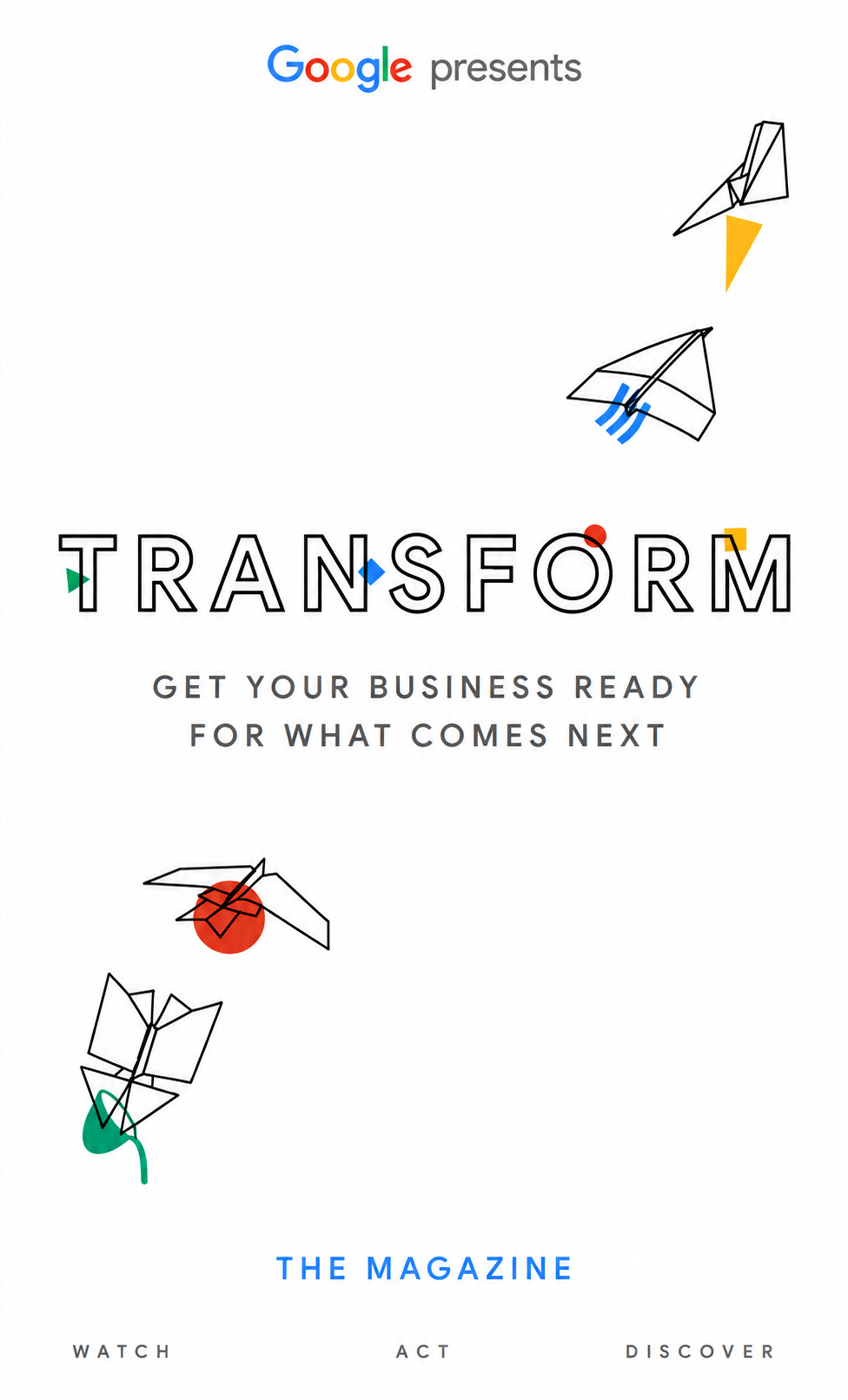
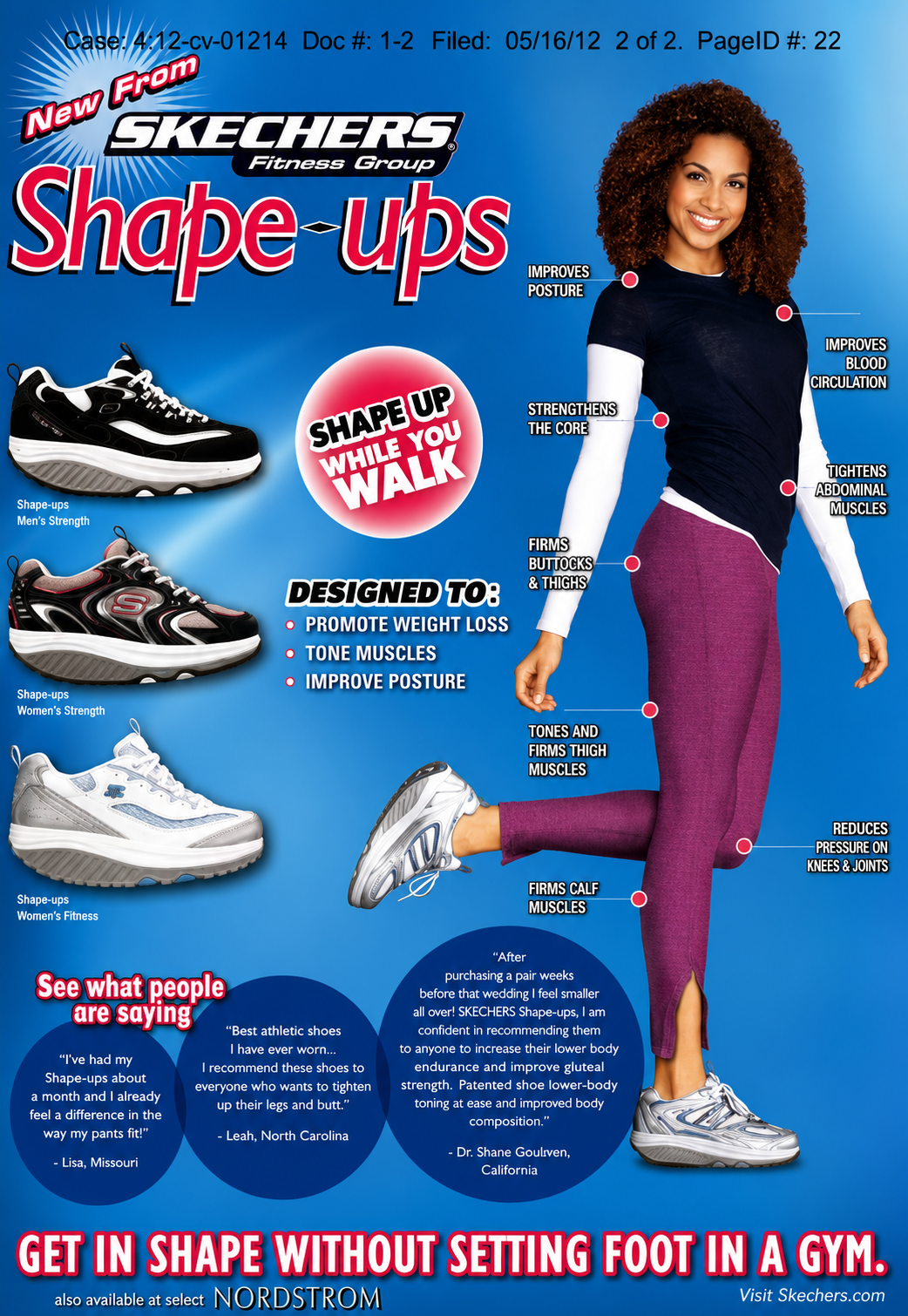



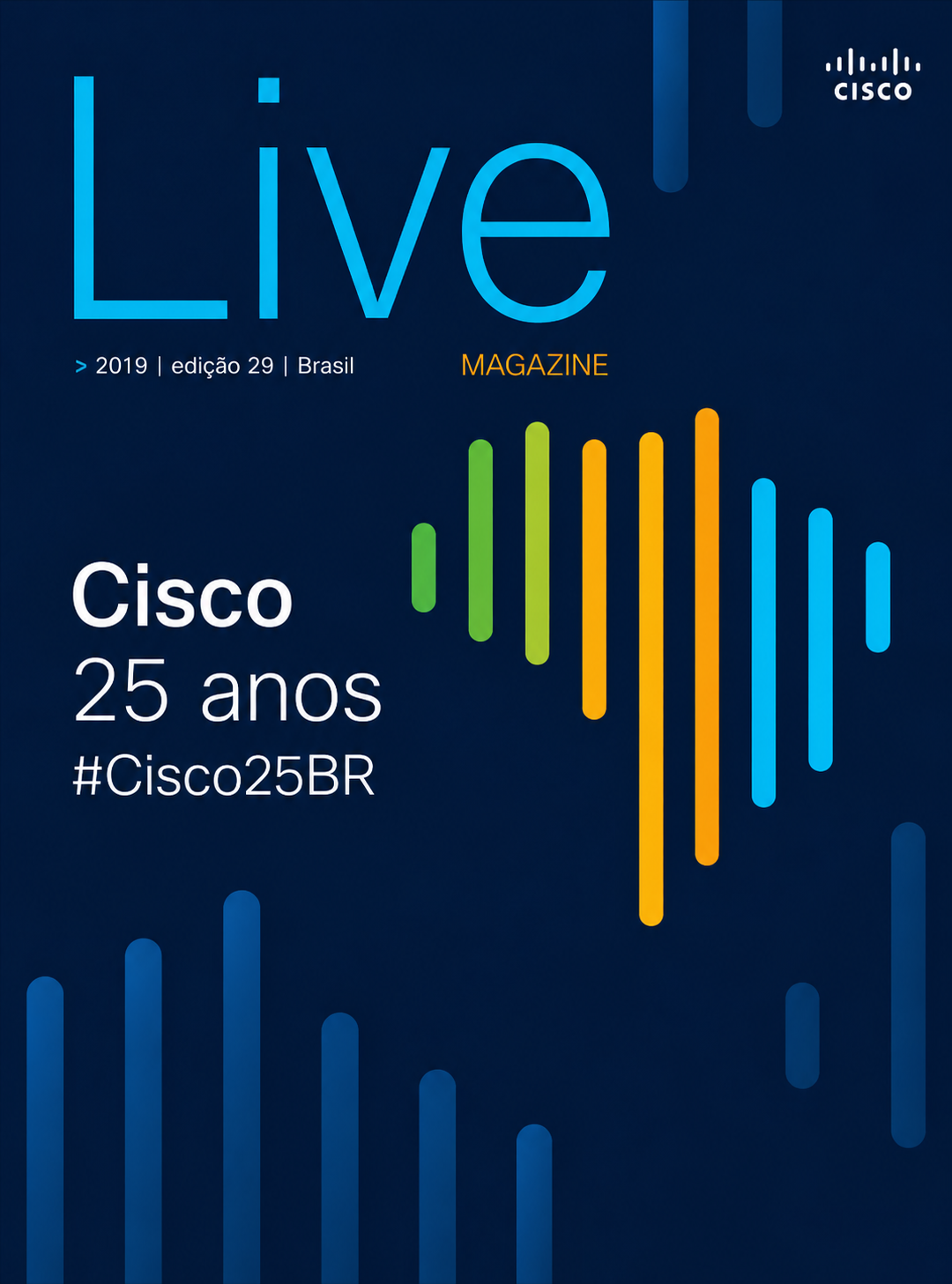



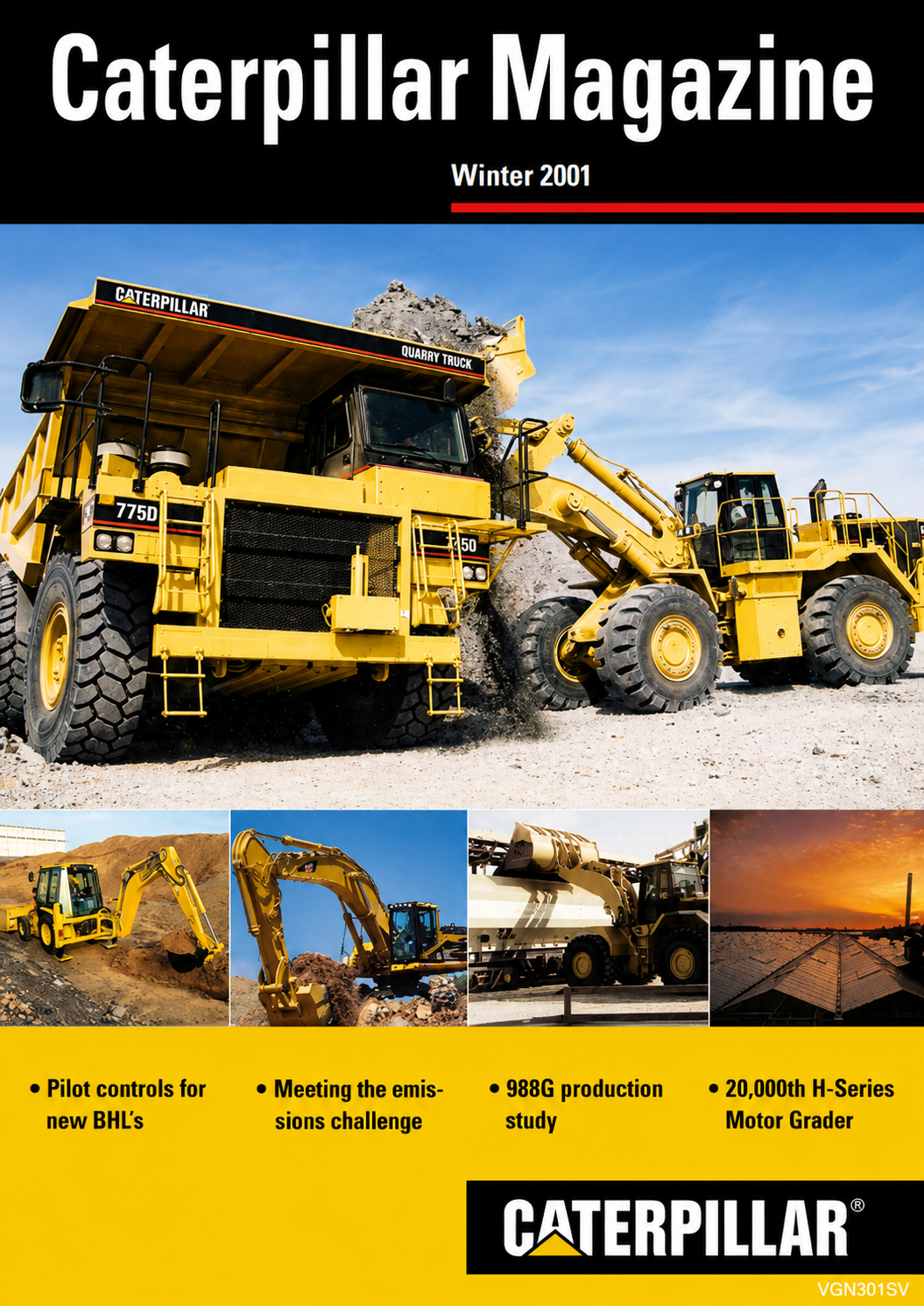
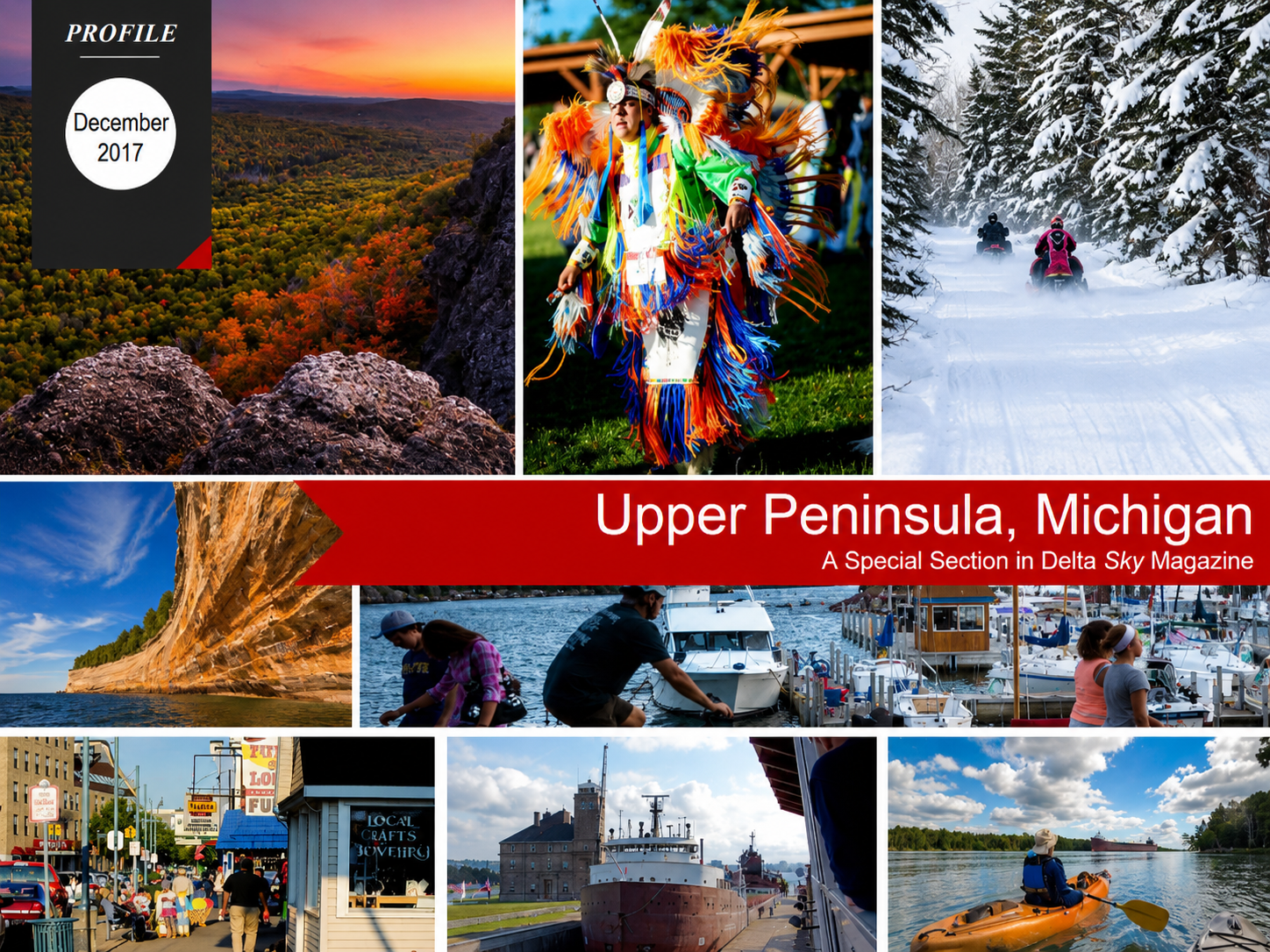
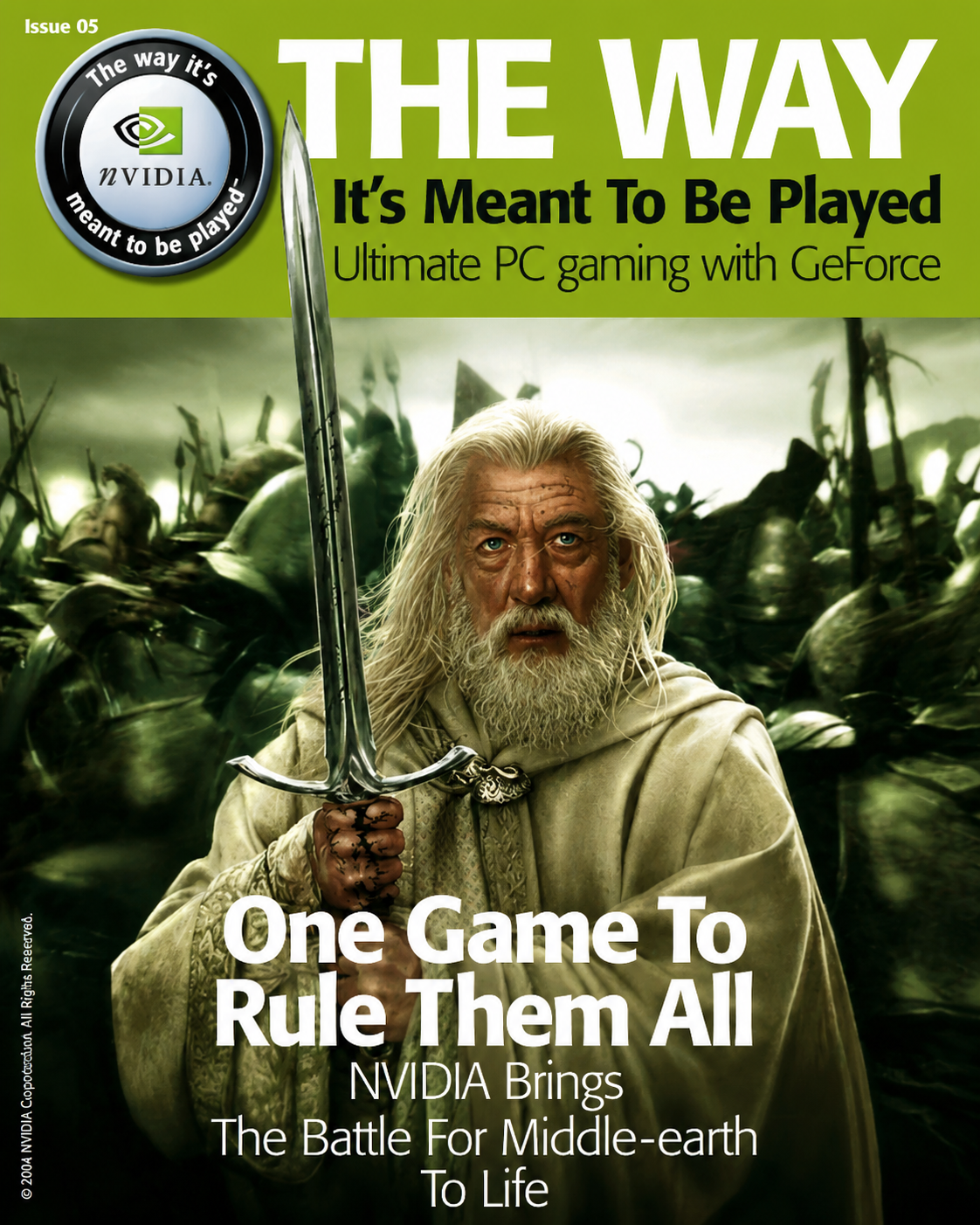
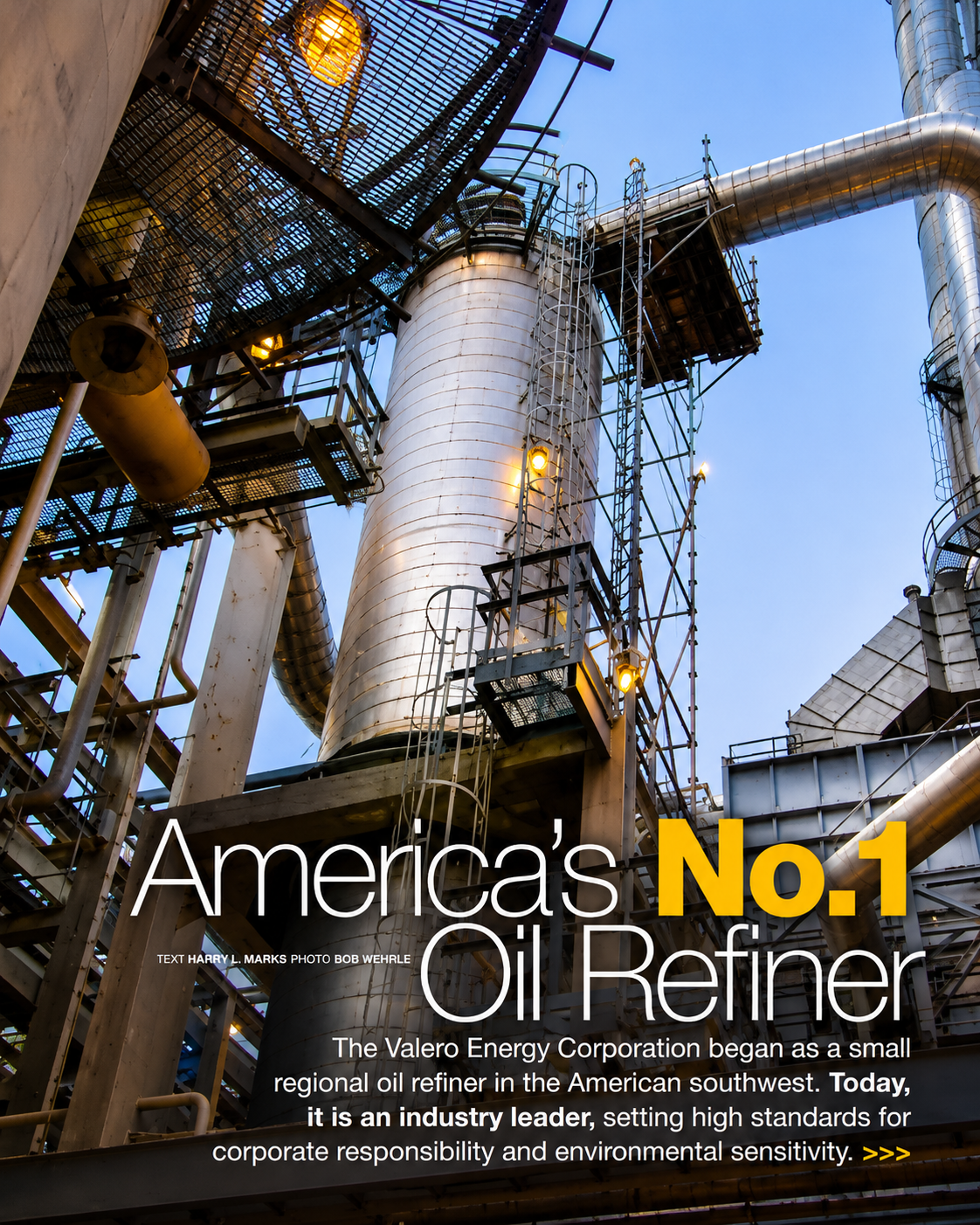
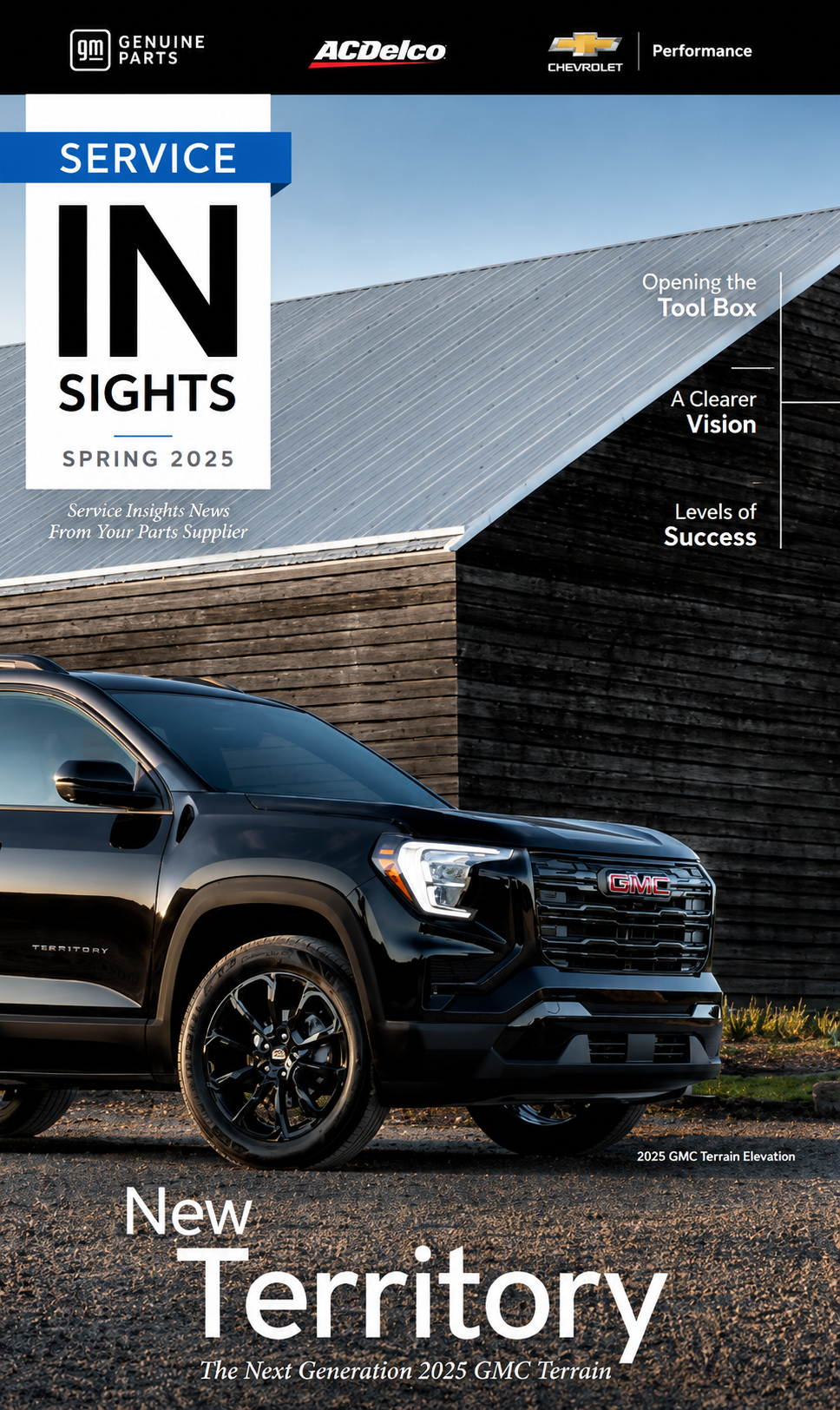
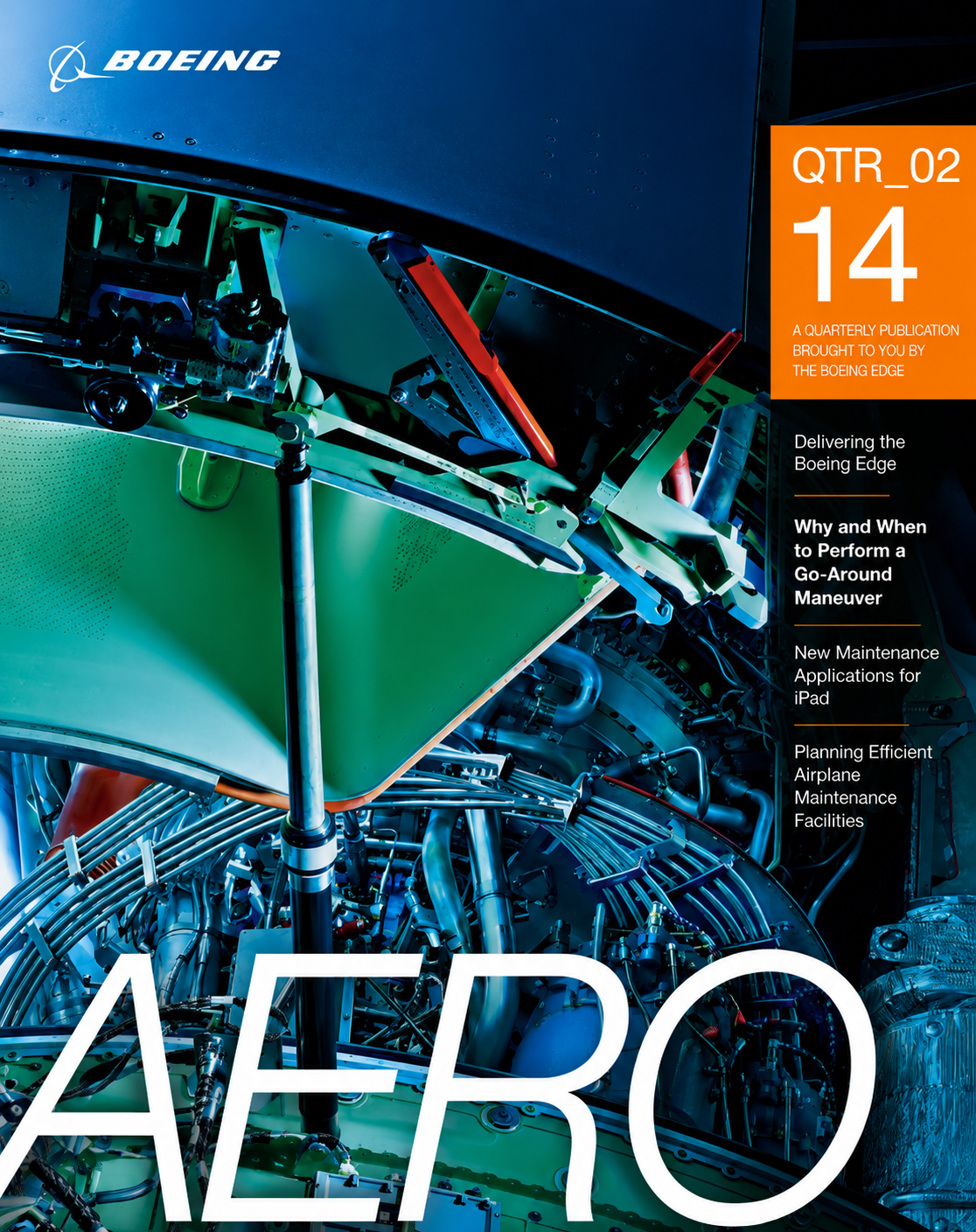
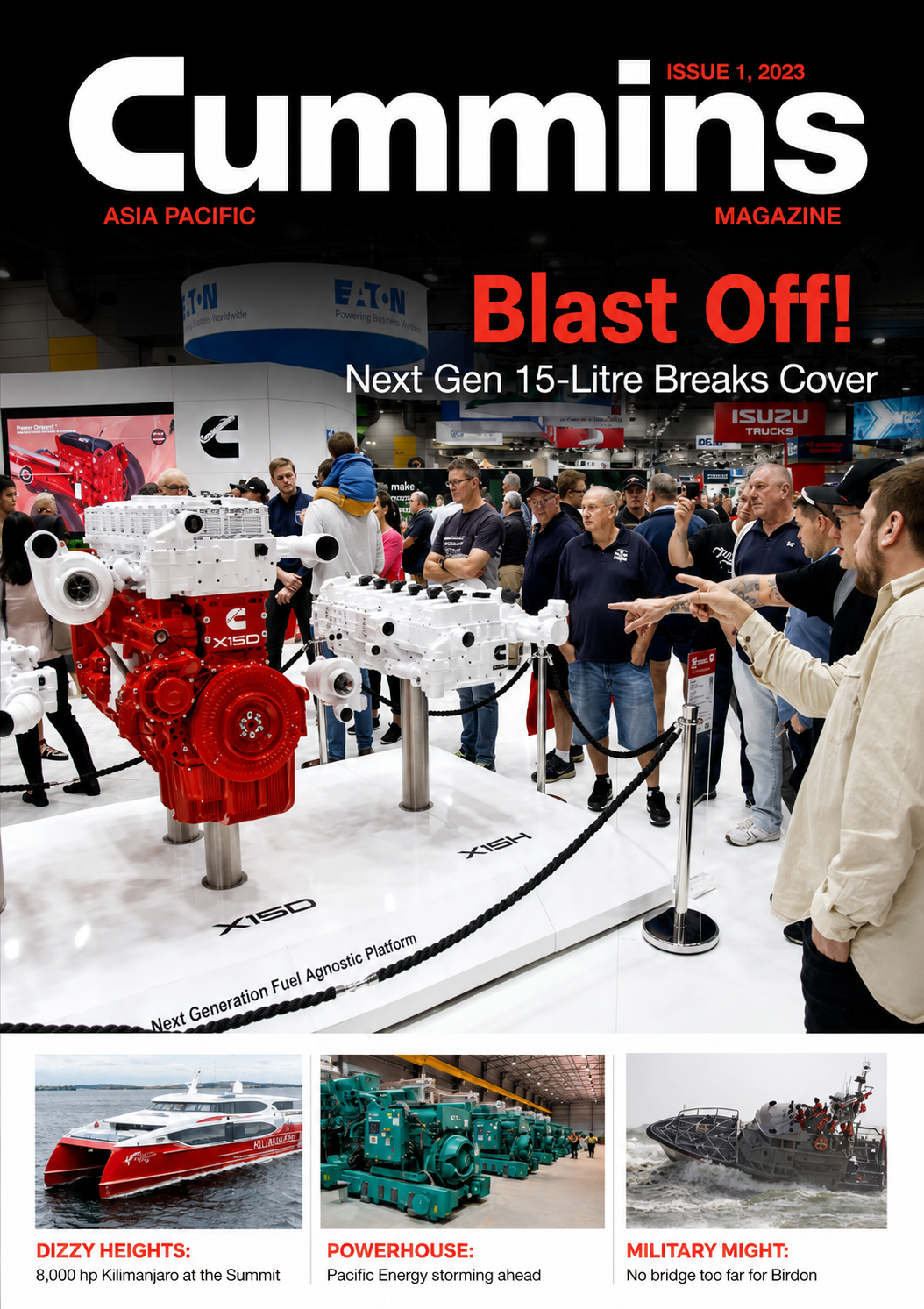

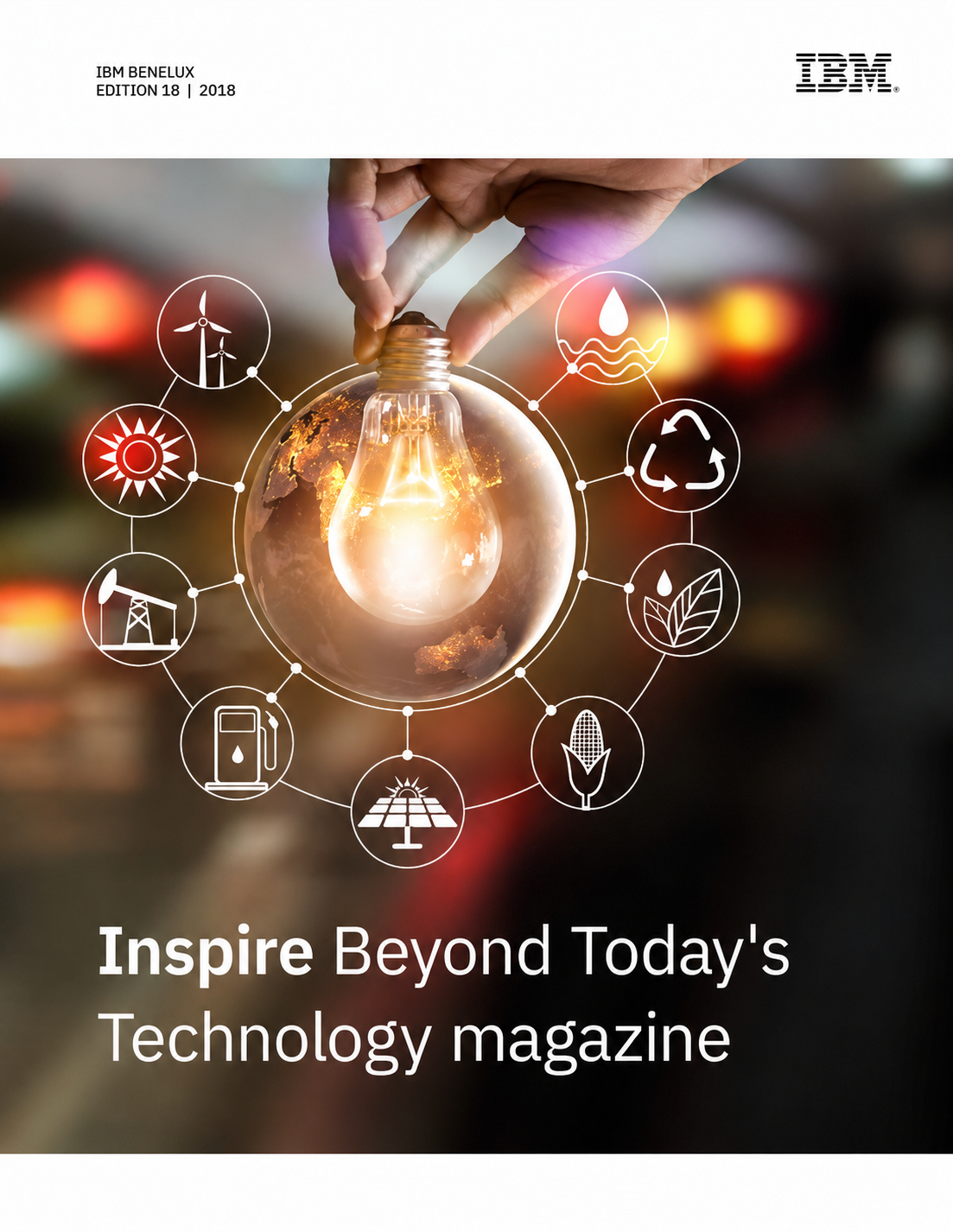

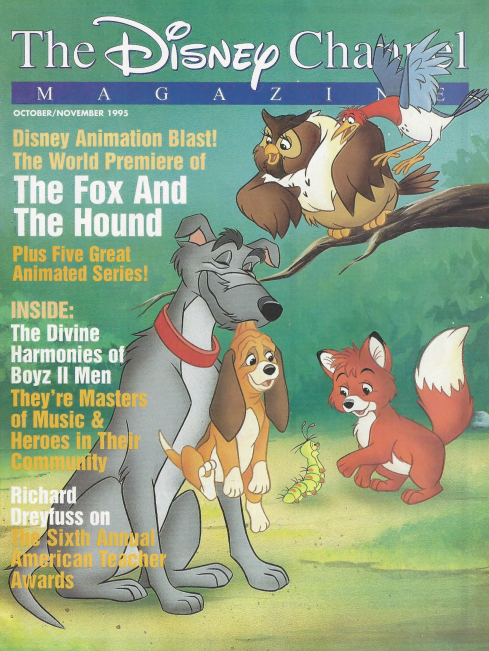
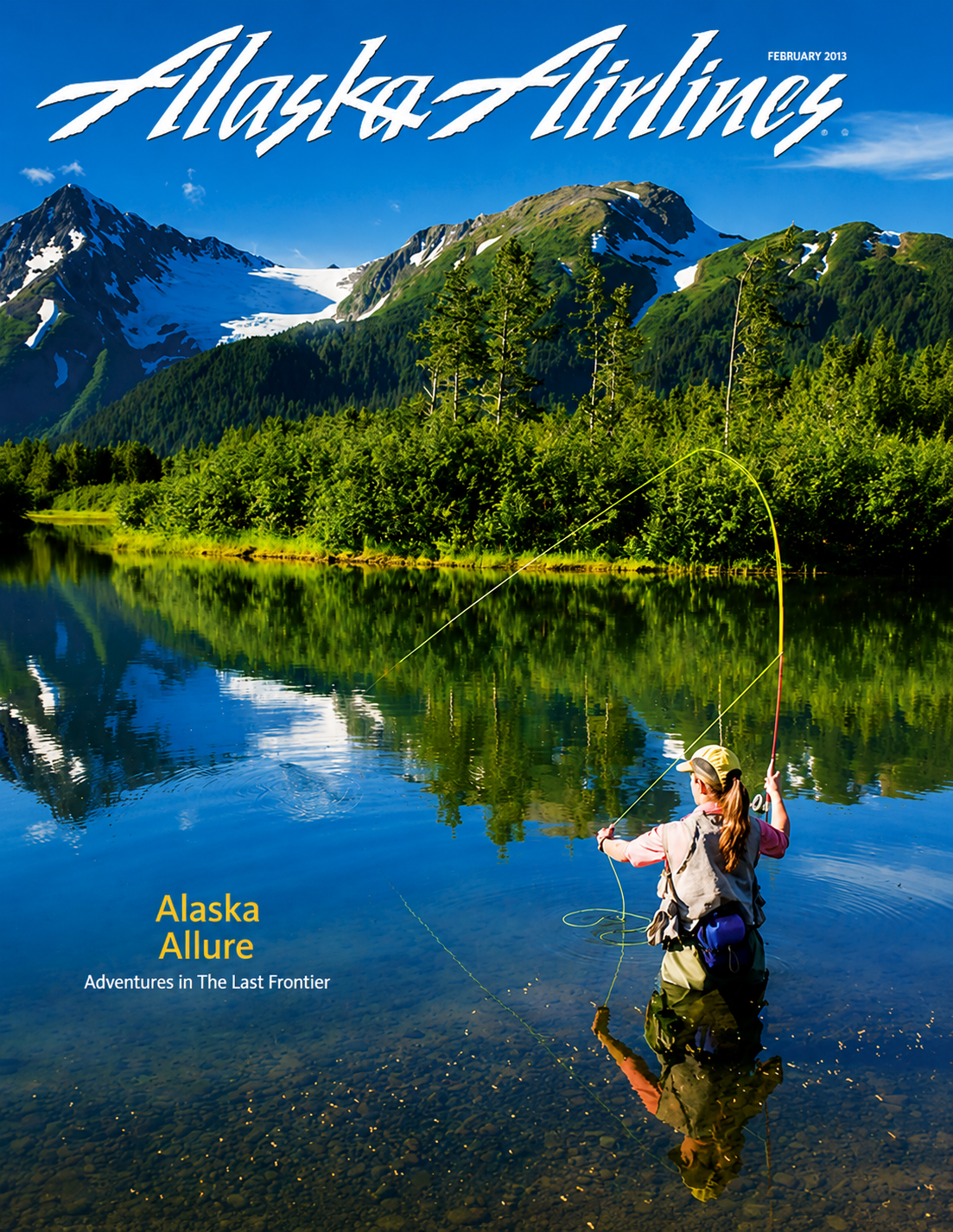
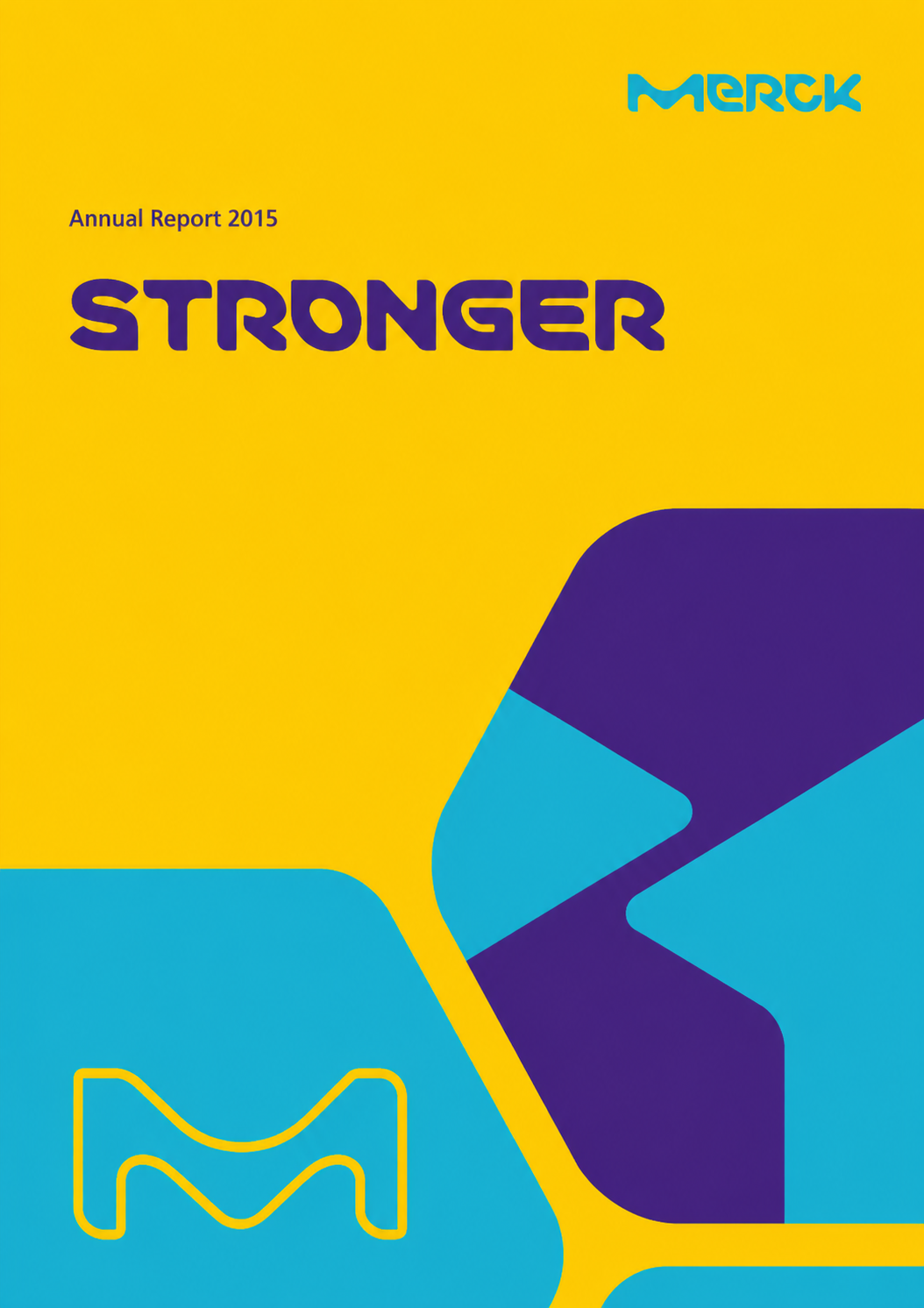
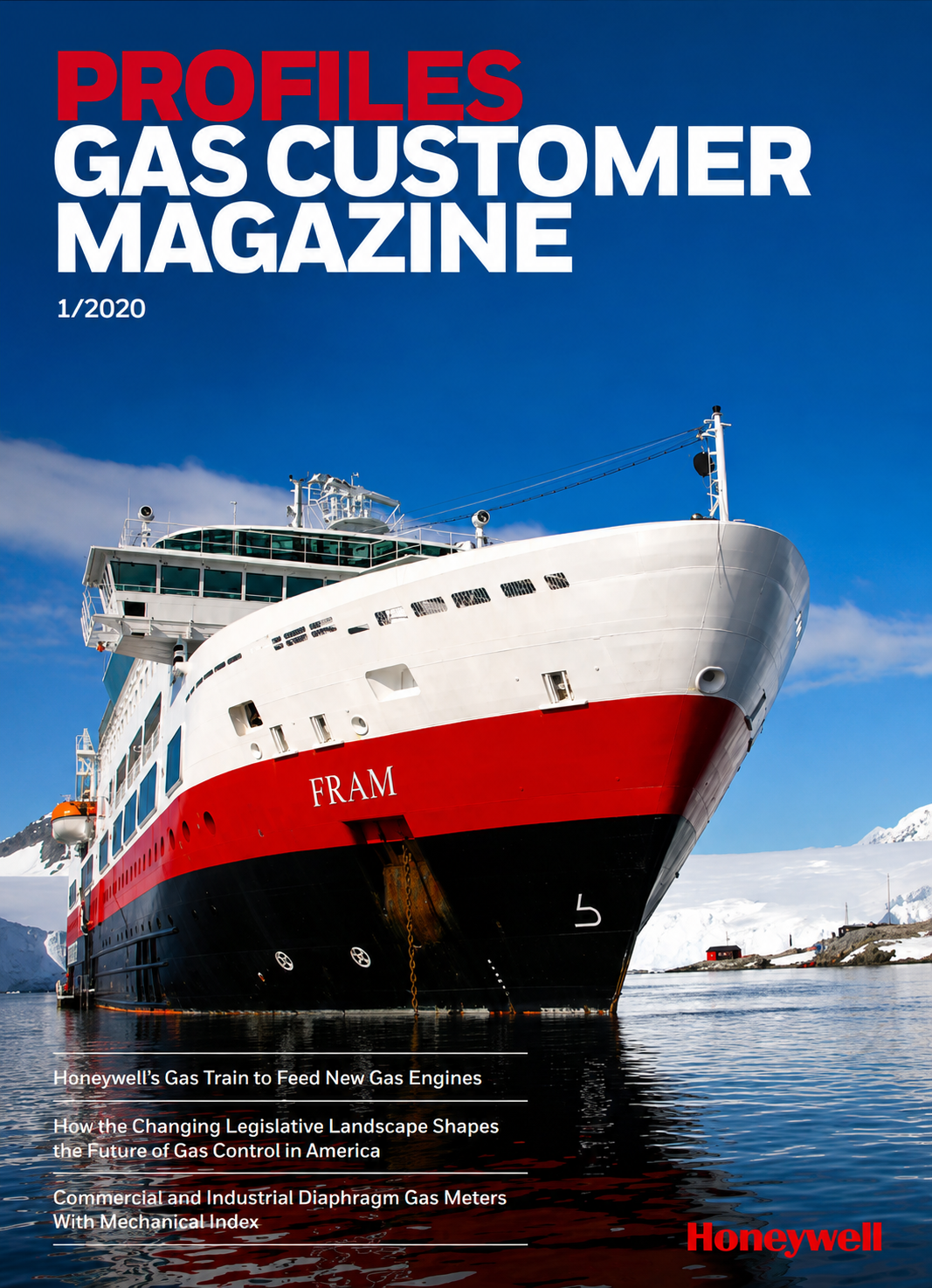








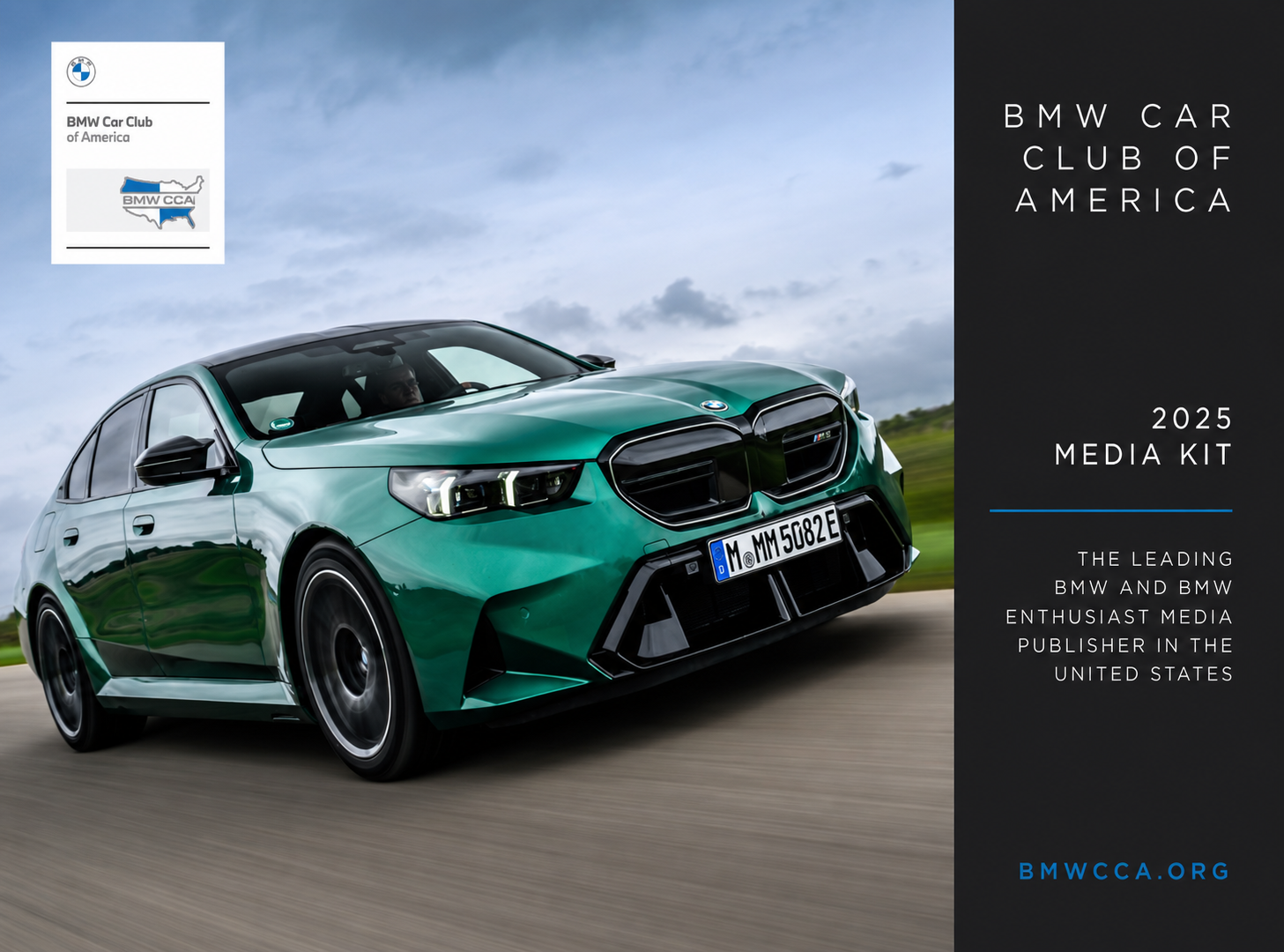

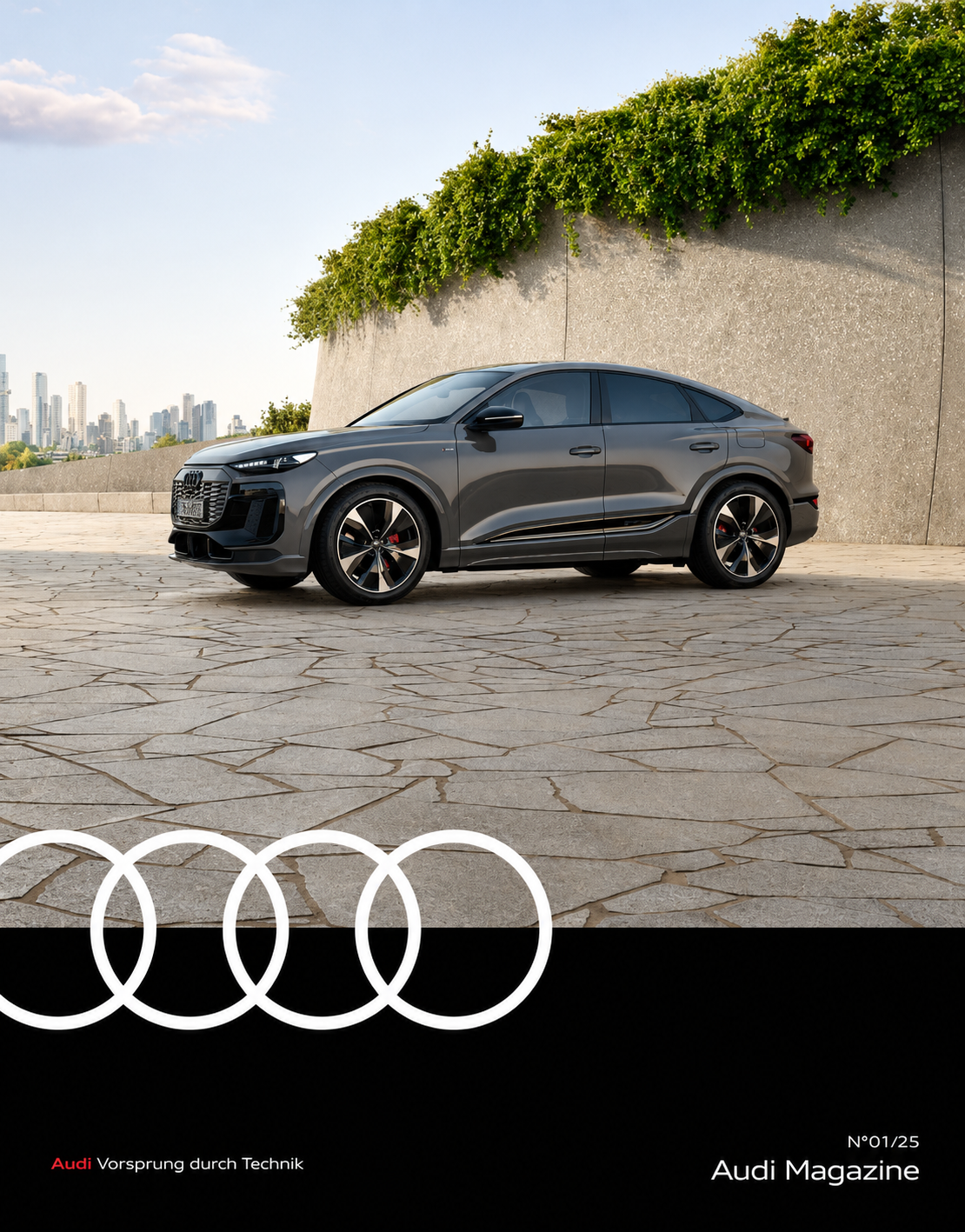
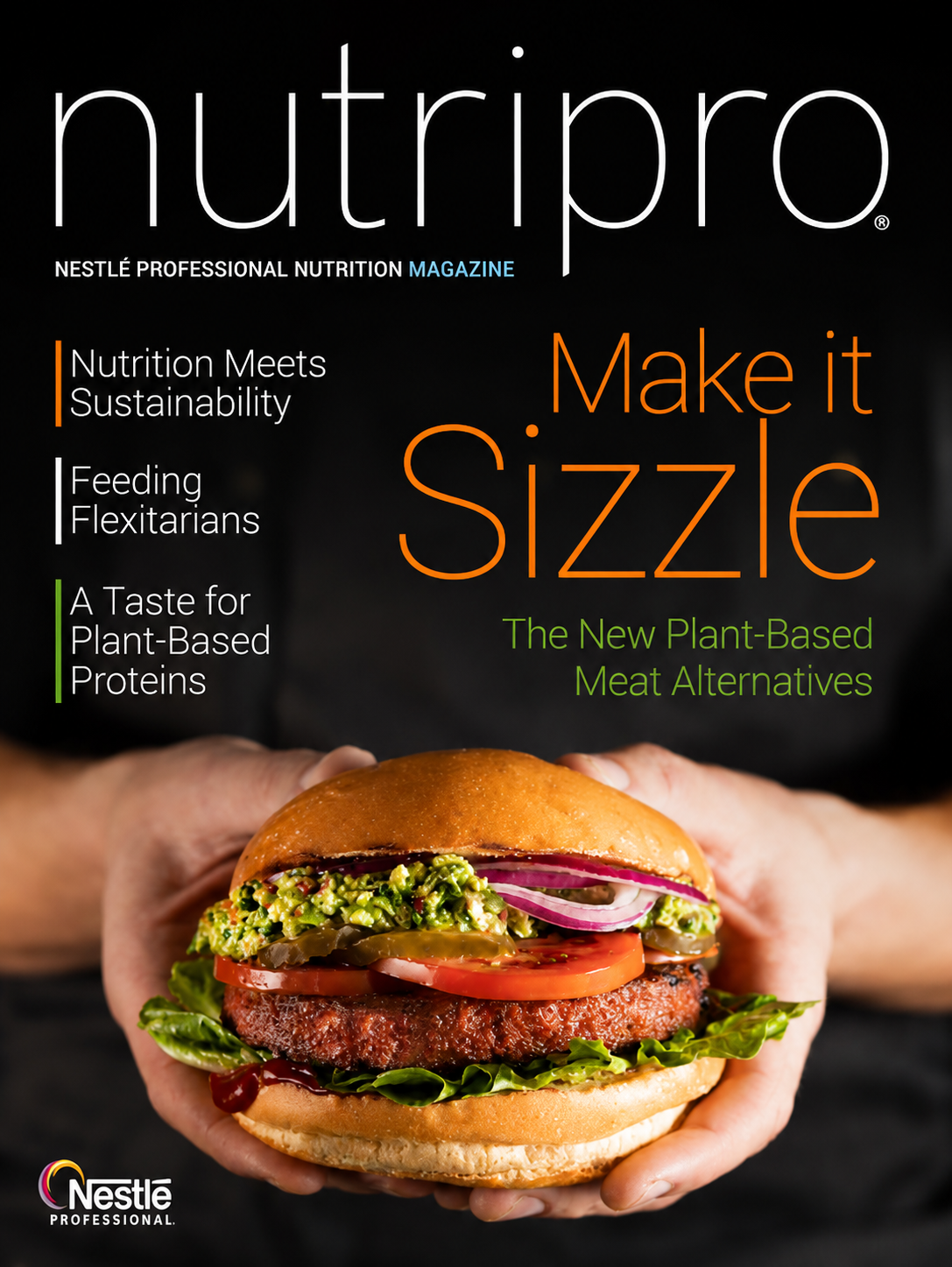
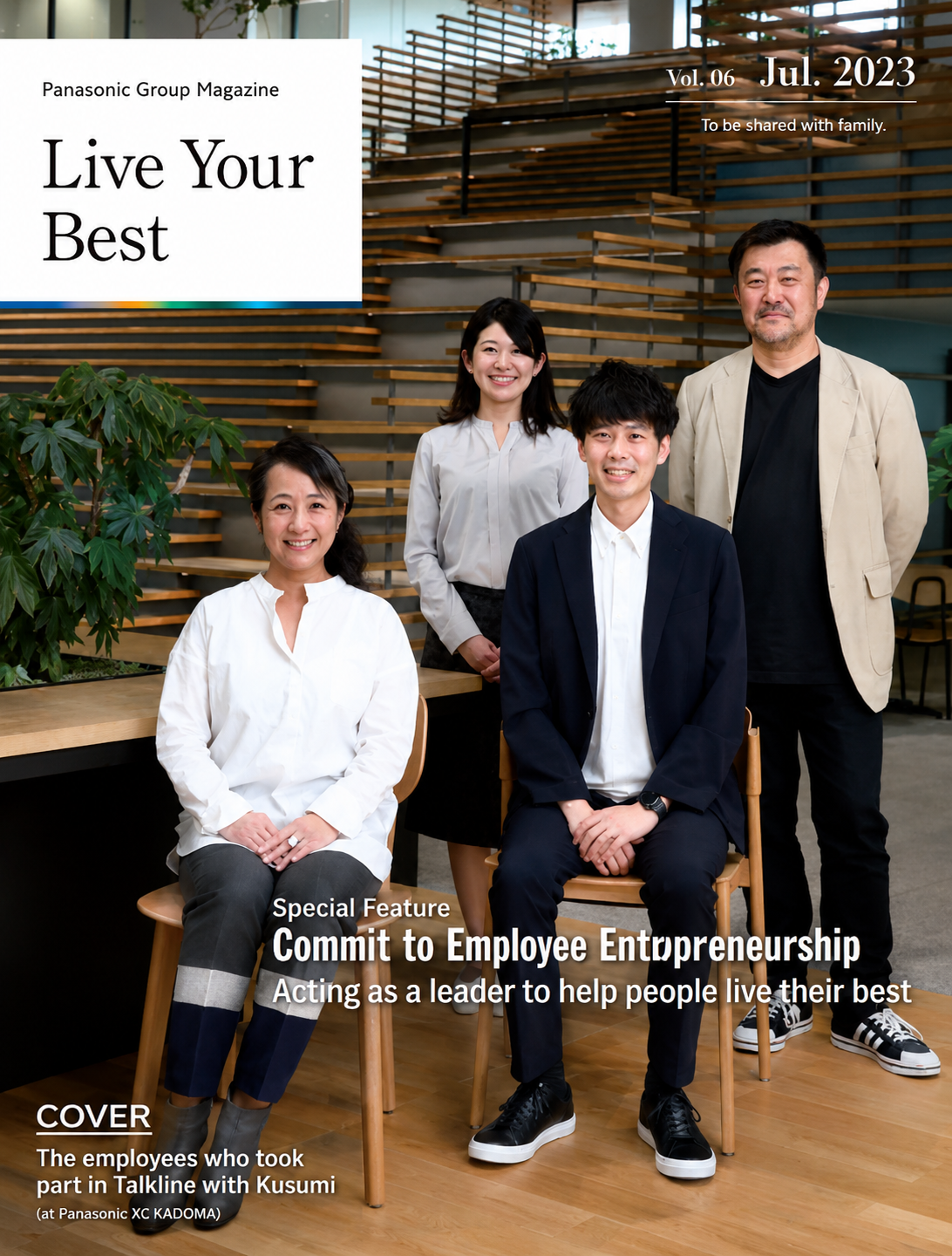

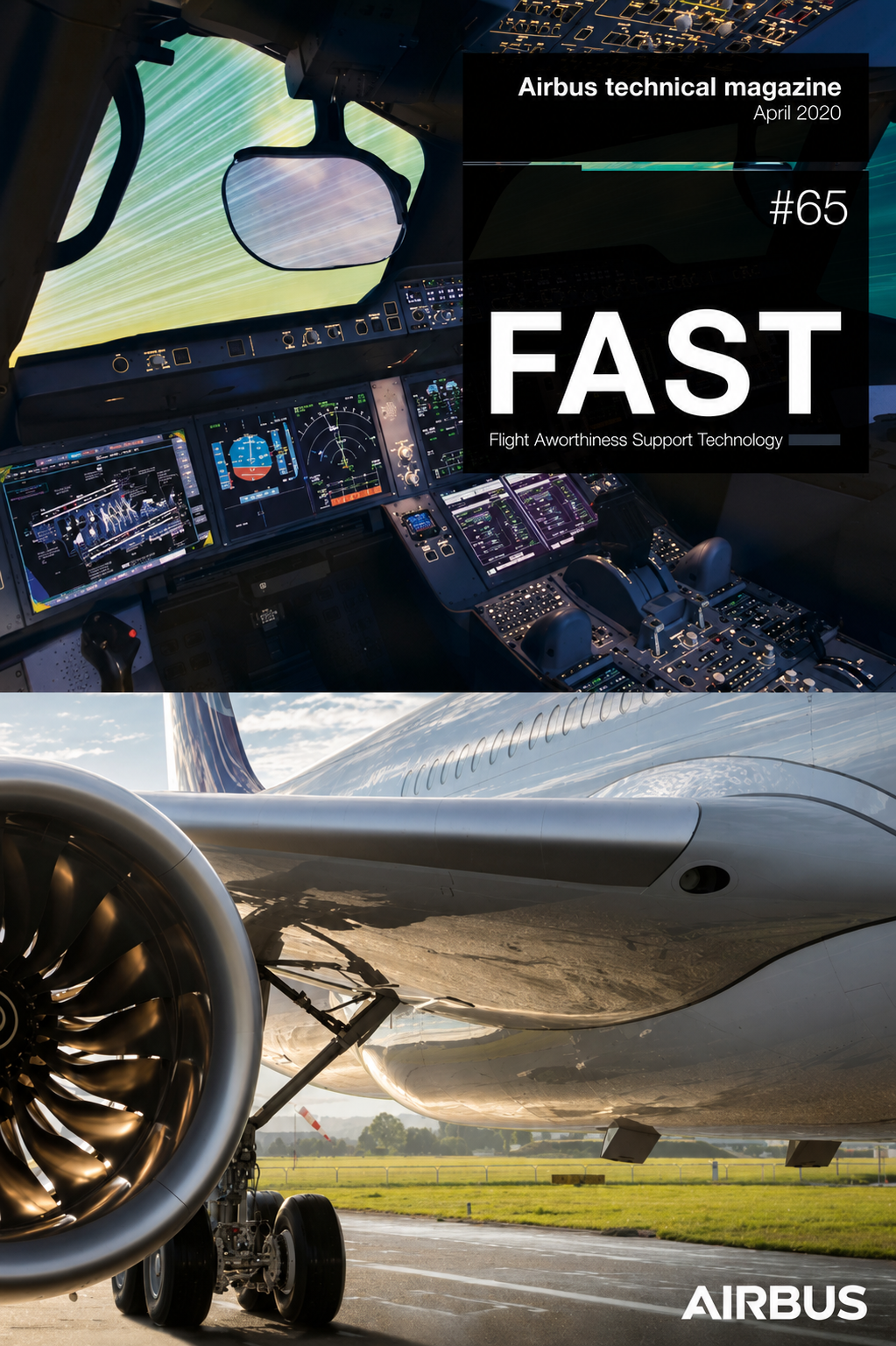
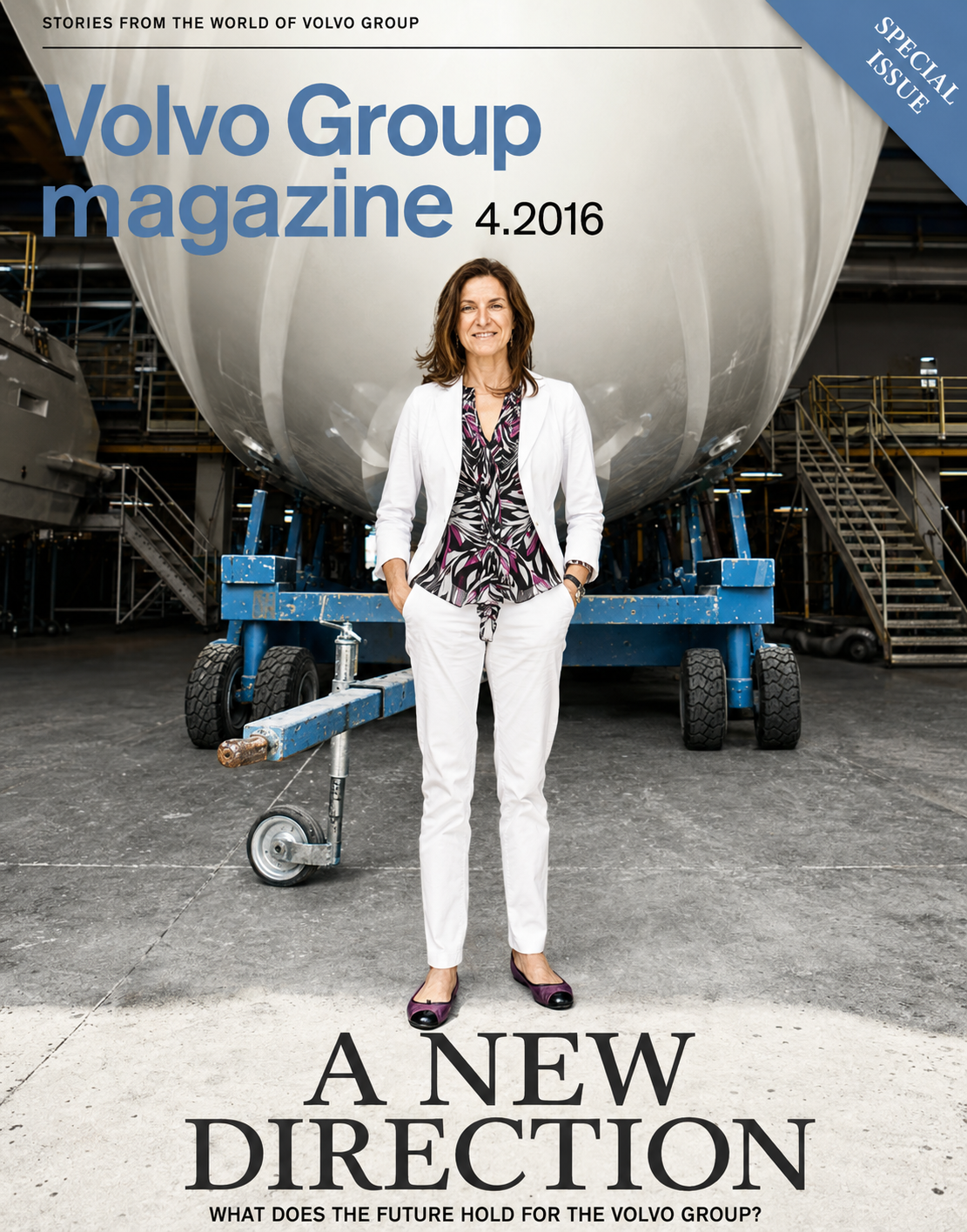
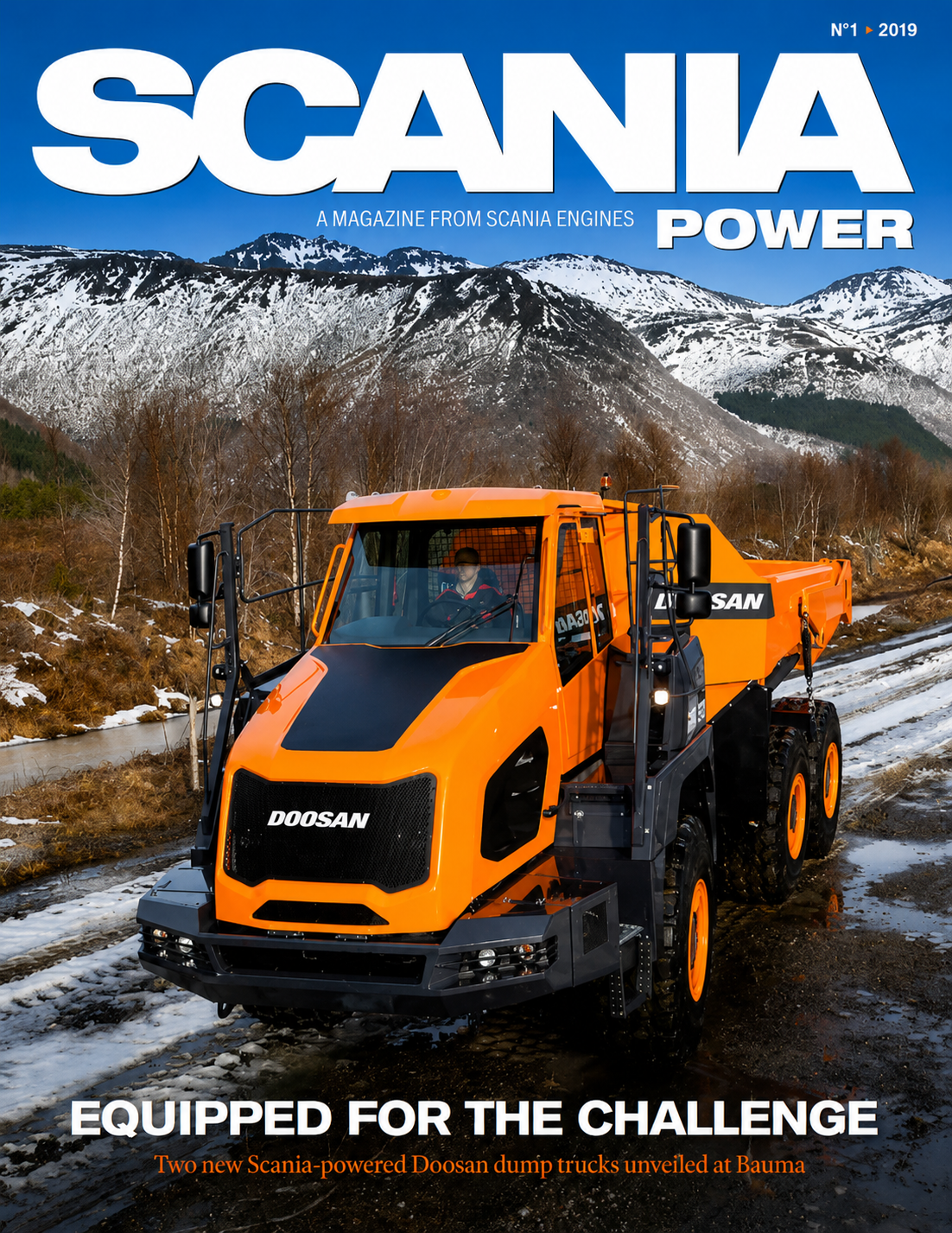
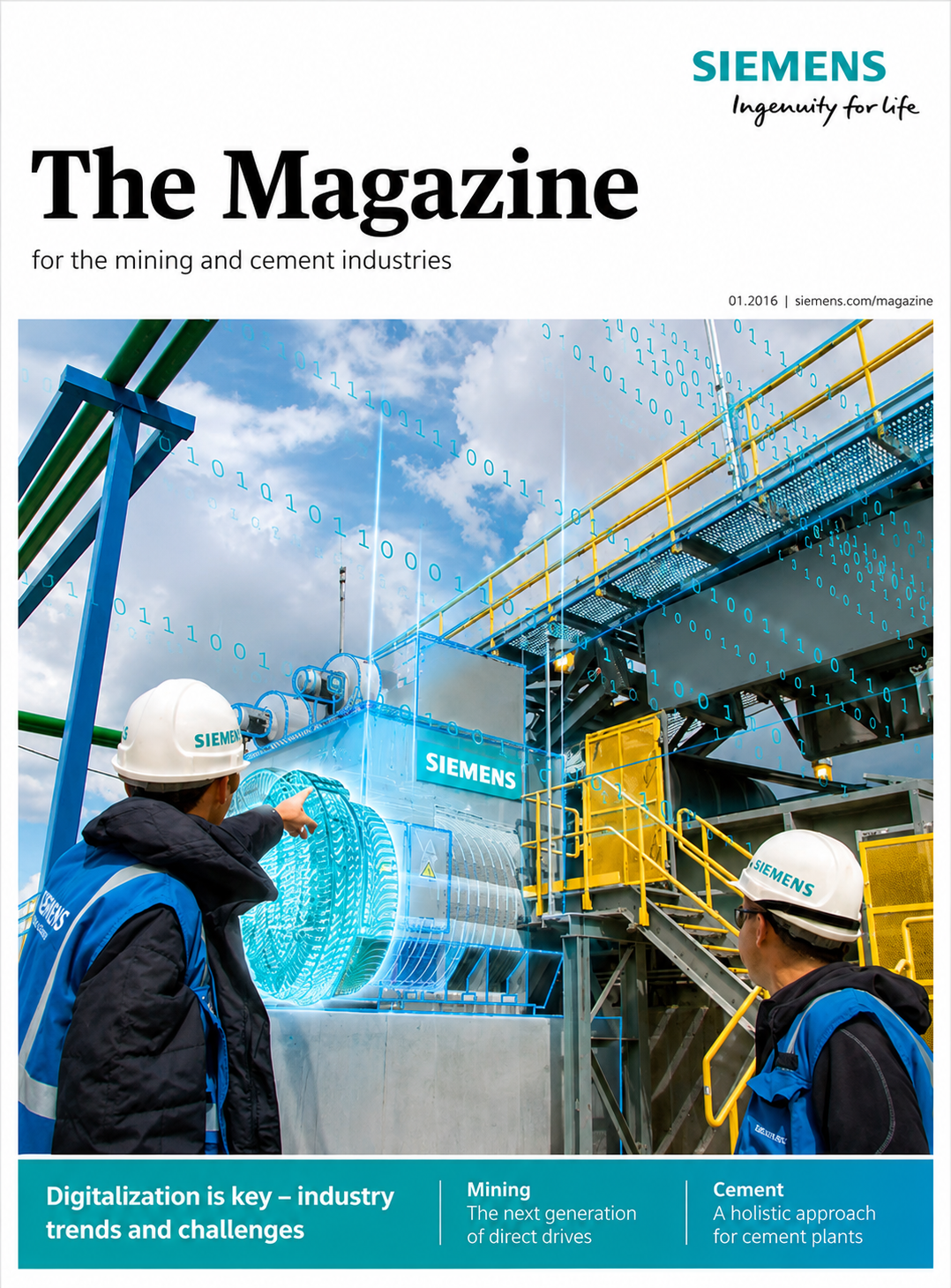
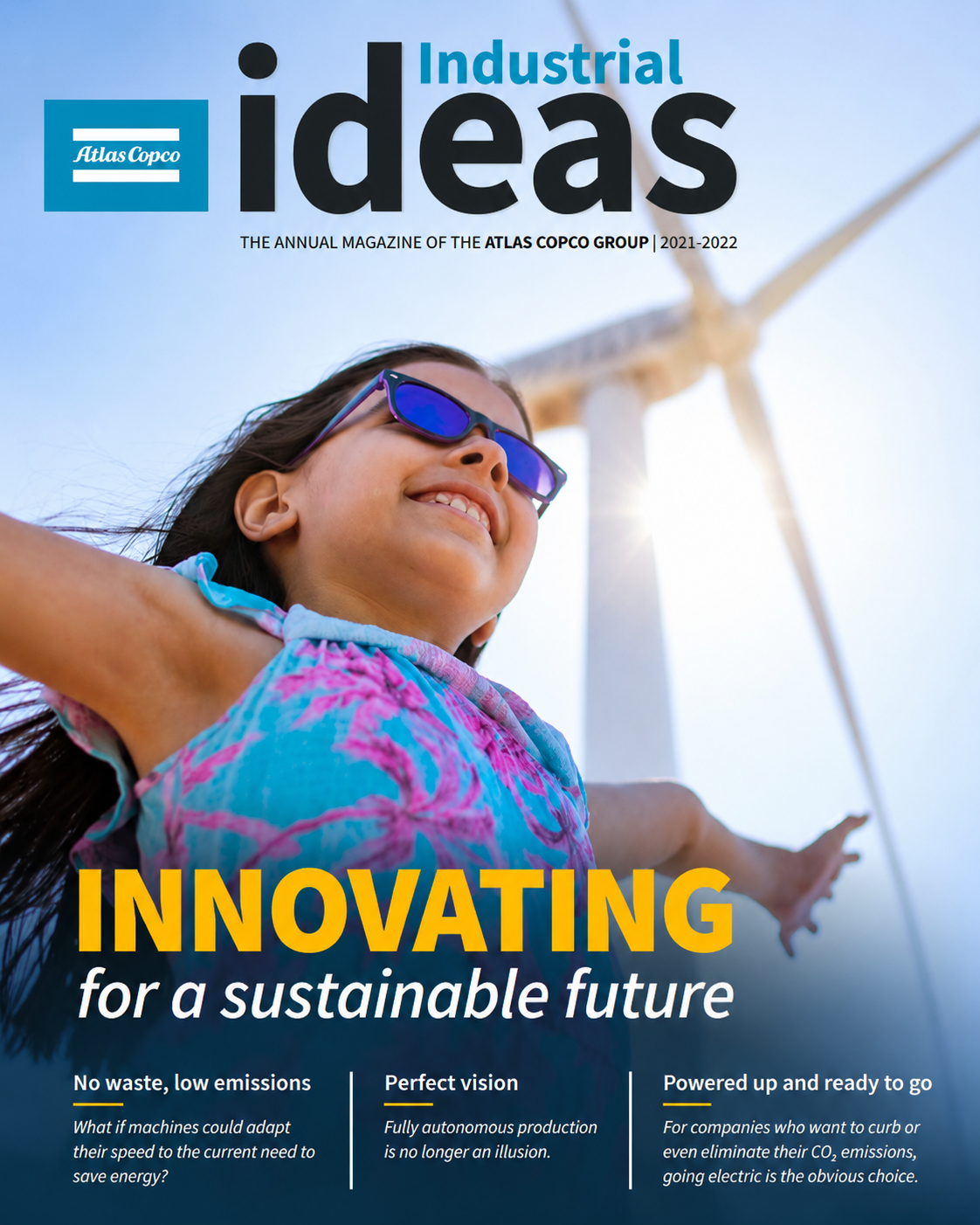
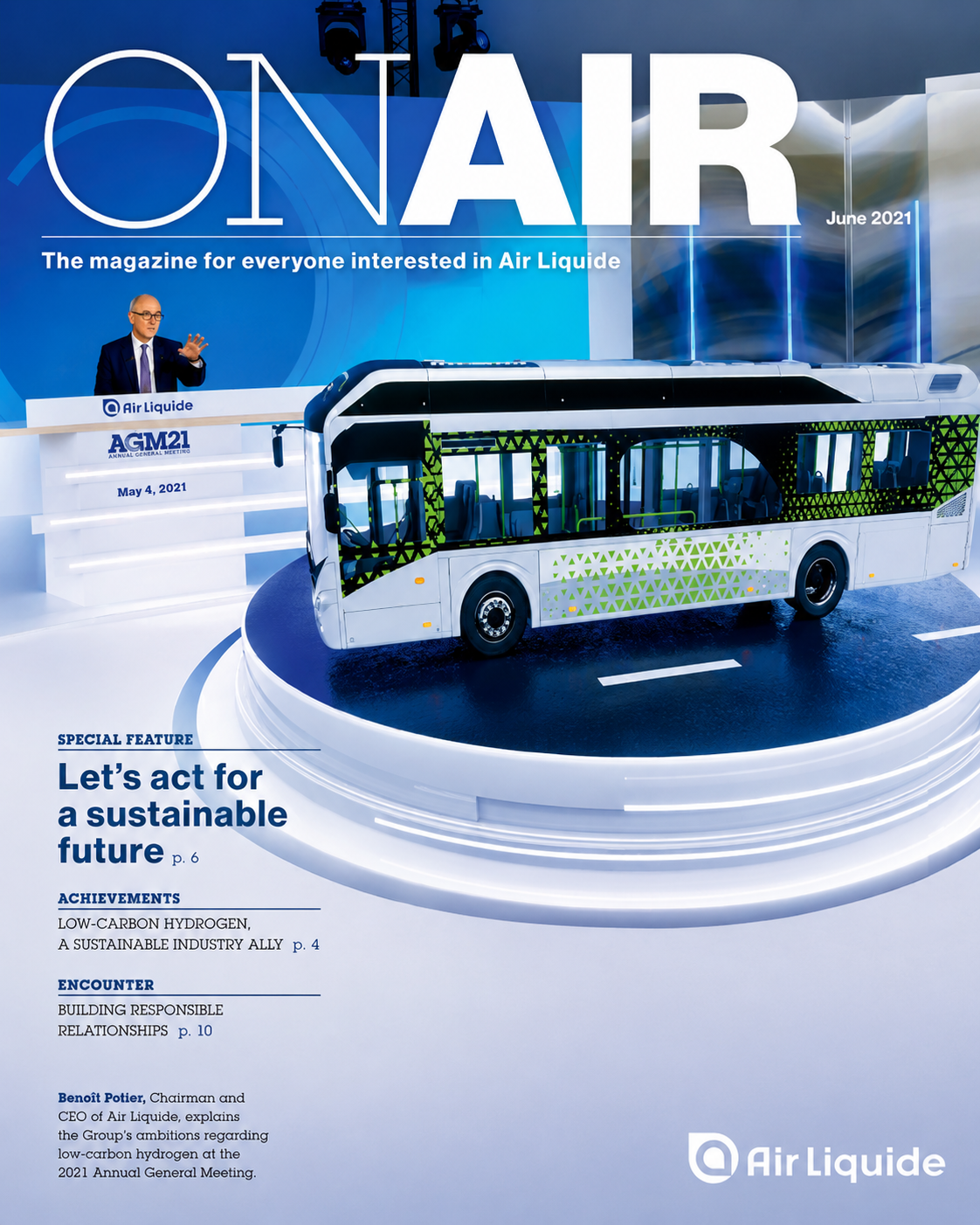
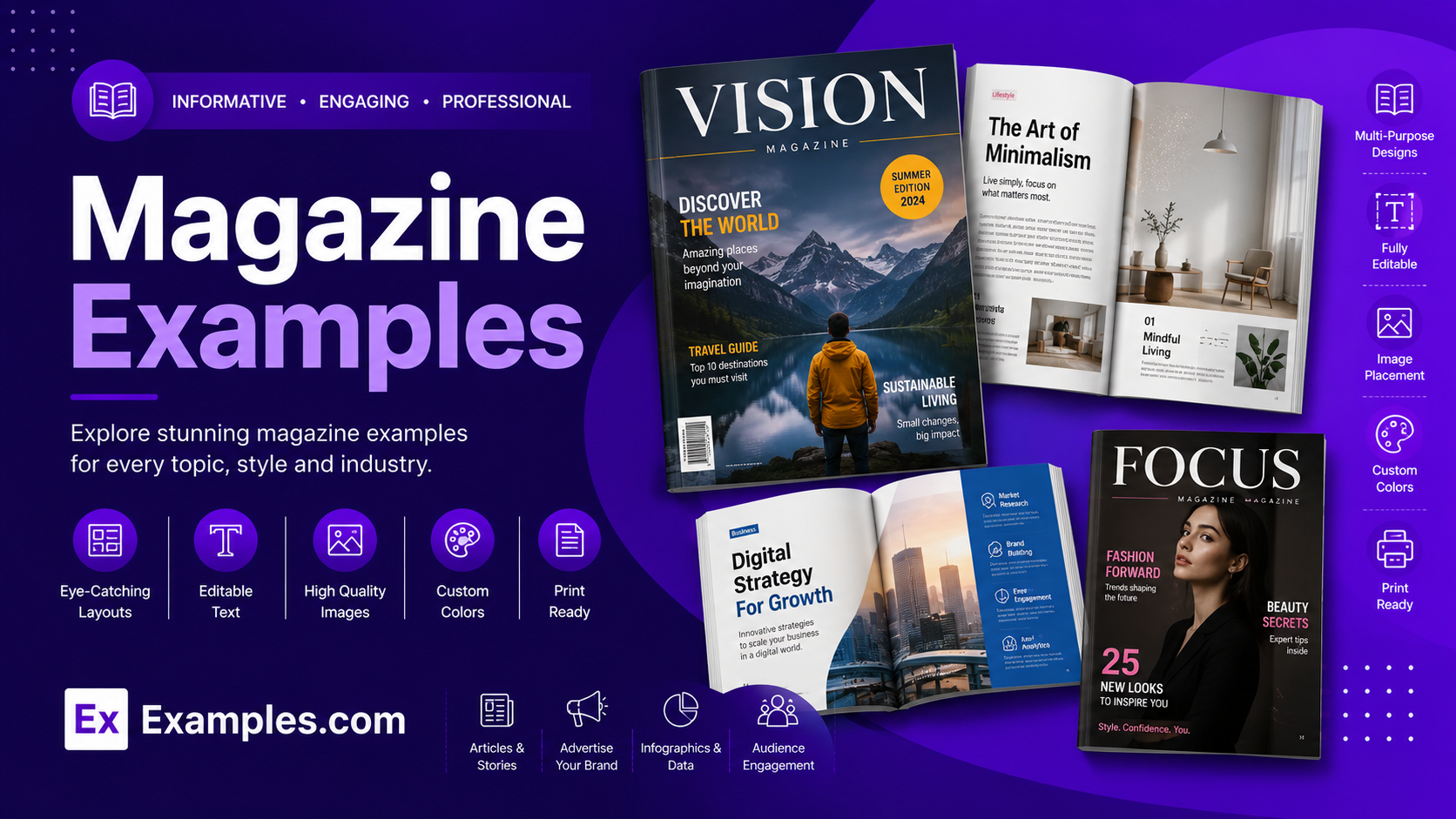
Create magazines using AI-powered generation inspired by real-world magazine examples. Browse magazine designs from business, fashion, technology, travel, food, lifestyle, education, and brand publications, choose a reference pdf, enter your prompt, generate a completely new magazine, customize every page in the online editor, and download the final design as a PDF. Examples.com helps users transform inspiration into personalized magazine designs through an AI-powered creative workflow.
What Is A Magazine?
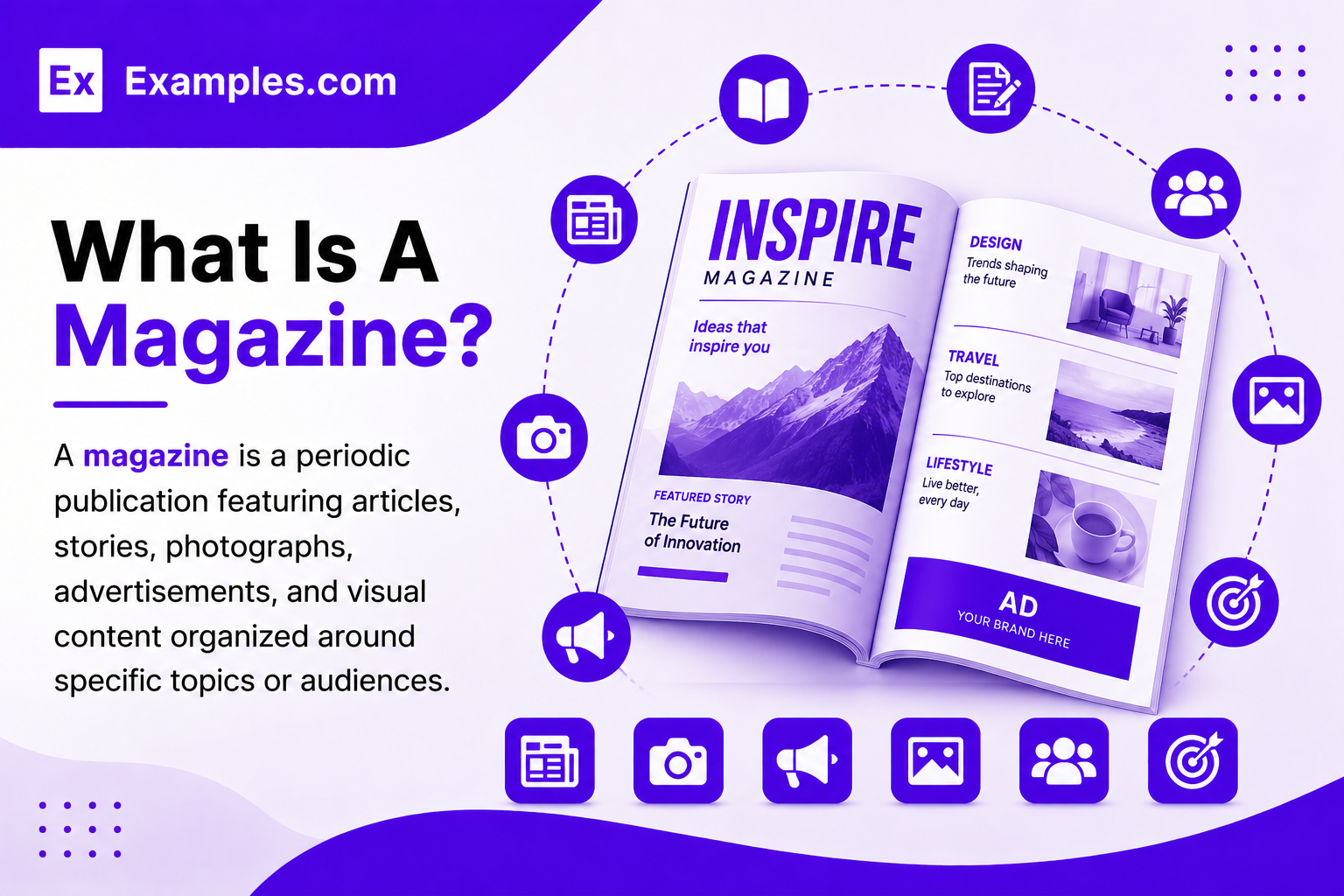
A magazine is a periodic publication featuring articles, stories, photographs, advertisements, and visual content organized around specific topics or audiences. Magazines are created for business, education, fashion, technology, travel, entertainment, marketing, and personal projects. AI-powered magazine tools help users generate personalized editorial layouts using prompts, professionally inspired examples, and online customization features.
Popular Types Of Magazines
Magazine publications serve different audiences, industries, and communication goals. Each magazine category focuses on unique content, layouts, and editorial styles.
Fashion And Lifestyle Magazines
Showcase fashion trends, beauty, culture, celebrity stories, and lifestyle inspiration through engaging editorial layouts.
Business And Finance Magazines
Present market insights, corporate news, investing strategies, entrepreneurship, and professional business content.
Science And Technology Magazines
Explain scientific discoveries, technology trends, innovations, product reviews, and future-focused developments clearly.
Travel And Hobby Magazines
Feature destinations, adventures, cooking, sports, photography, gaming, and recreational lifestyle experiences.
Brand And Corporate Magazines
Promote company stories, products, customer engagement, brand culture, and business communication professionally.
Educational And Academic Magazines
Share educational articles, research highlights, learning resources, school activities, and academic achievements effectively.
Why Should I Use Real Magazine Examples To Create My Own Magazine?
Real magazine examples help users understand professional layouts, article organization, typography, photography placement, page balance, and visual storytelling before creating their own publication. Instead of starting with a blank page, users can explore successful editorial designs used by businesses, publishers, brands, and creative professionals.
Using real-world magazine examples also makes the creative process faster and more effective. Users simply choose a preferred layout, enter a custom AI prompt, generate a completely new magazine, and personalize every page. This workflow improves visual consistency, editorial quality, and overall design while making magazine creation easier for beginners and professionals alike.
How Do I Generate A Magazine With AI?
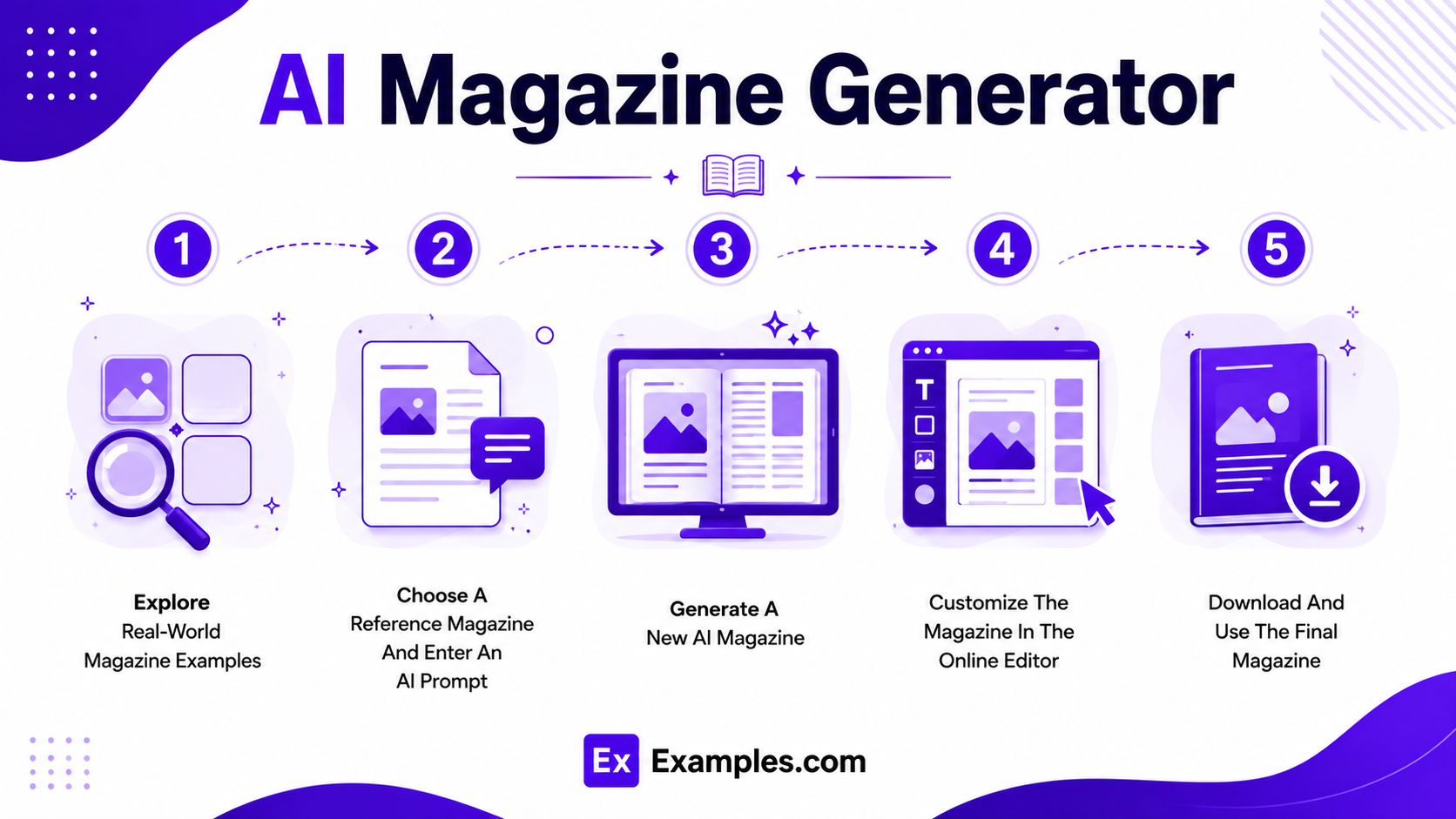
Creating a professional magazine becomes simple by combining real-world editorial inspiration with AI-powered generation and online customization tools.
Explore Real-World Magazine Examples
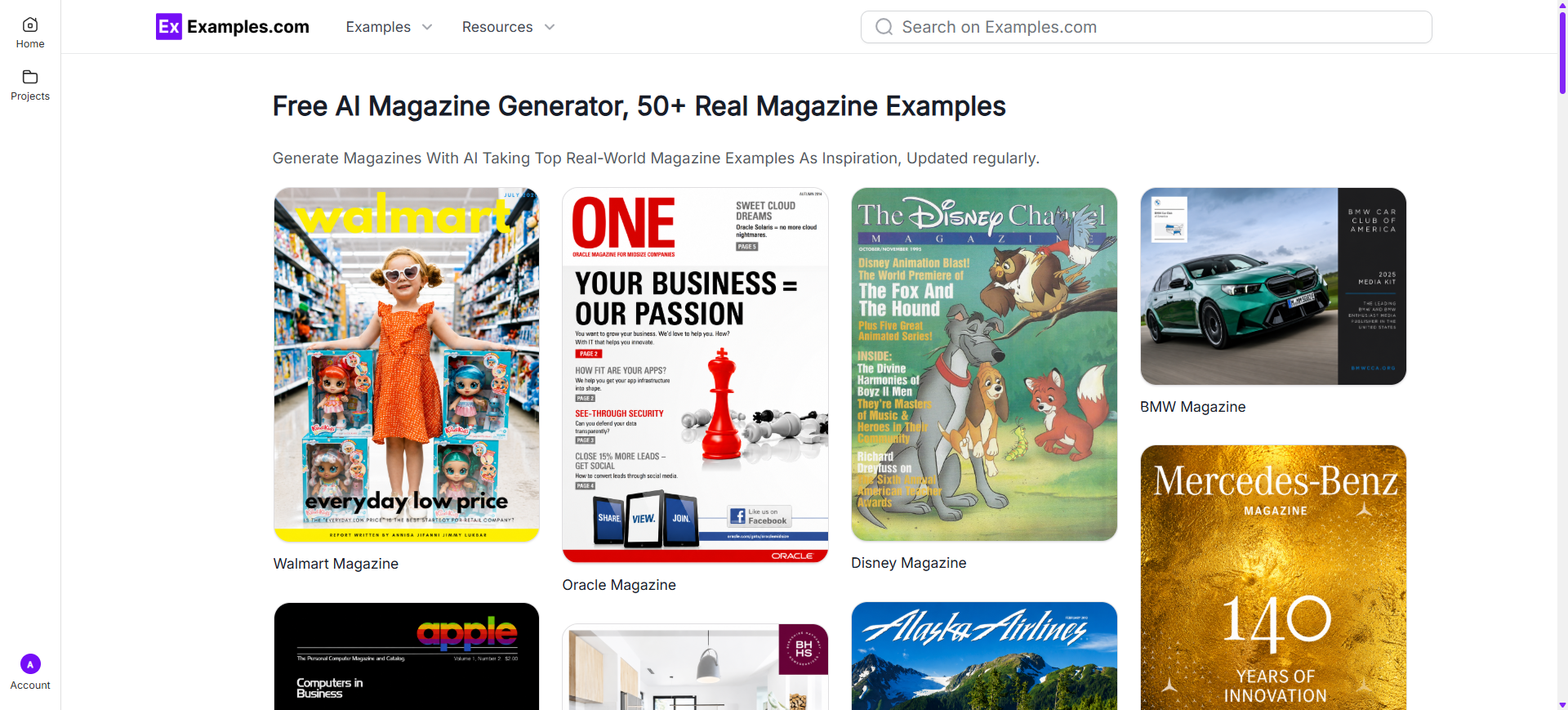
Browse magazine examples across fashion, business, technology, travel, education, food, lifestyle, and corporate publishing. These professionally designed publications help users discover layouts, cover styles, typography, photography placement, and editorial design ideas before creating a new magazine.
Choose A Reference Magazine And Enter An AI Prompt
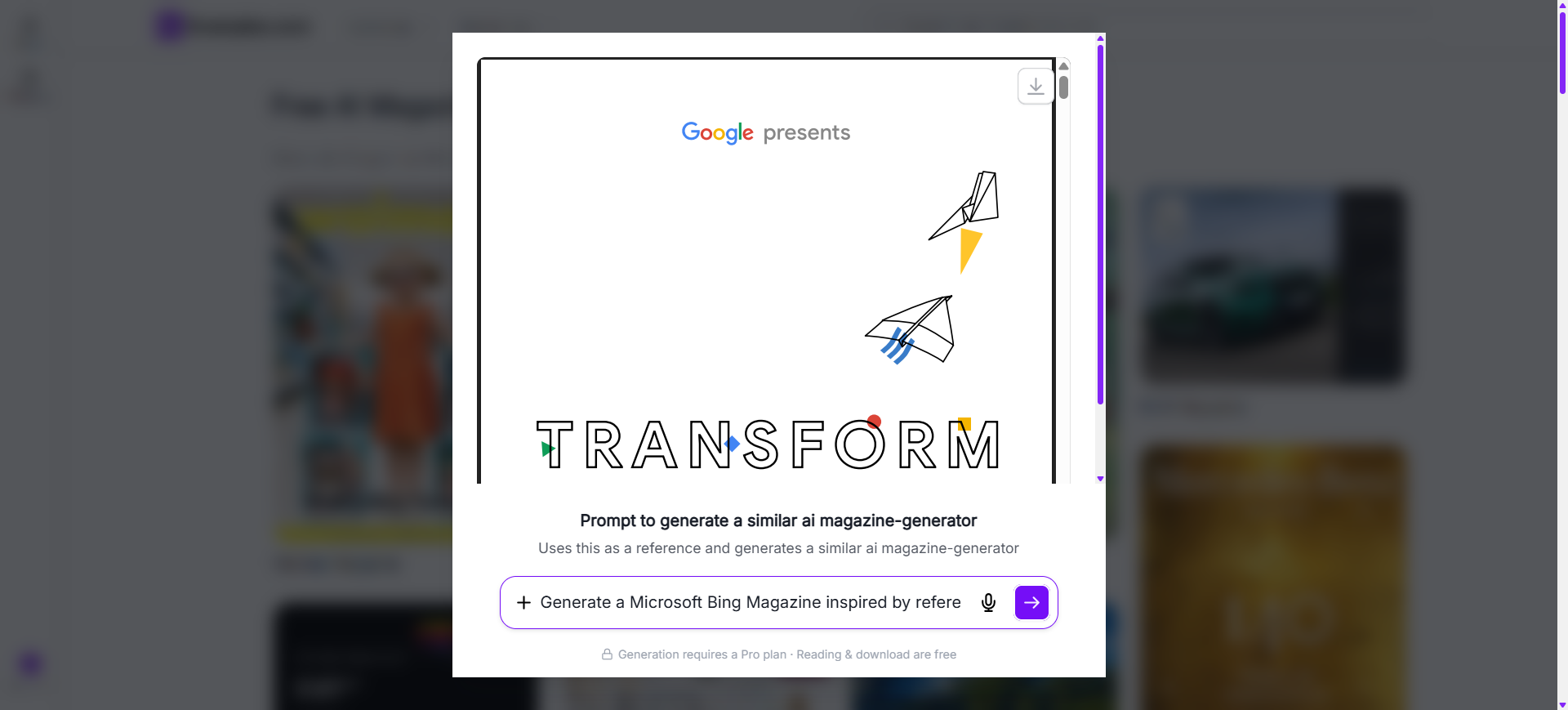
Select a magazine example that matches your preferred editorial style. Then enter an AI prompt describing your publication topic, audience, colors, typography, imagery, page structure, branding, and overall creative direction.
Generate A New AI Magazine
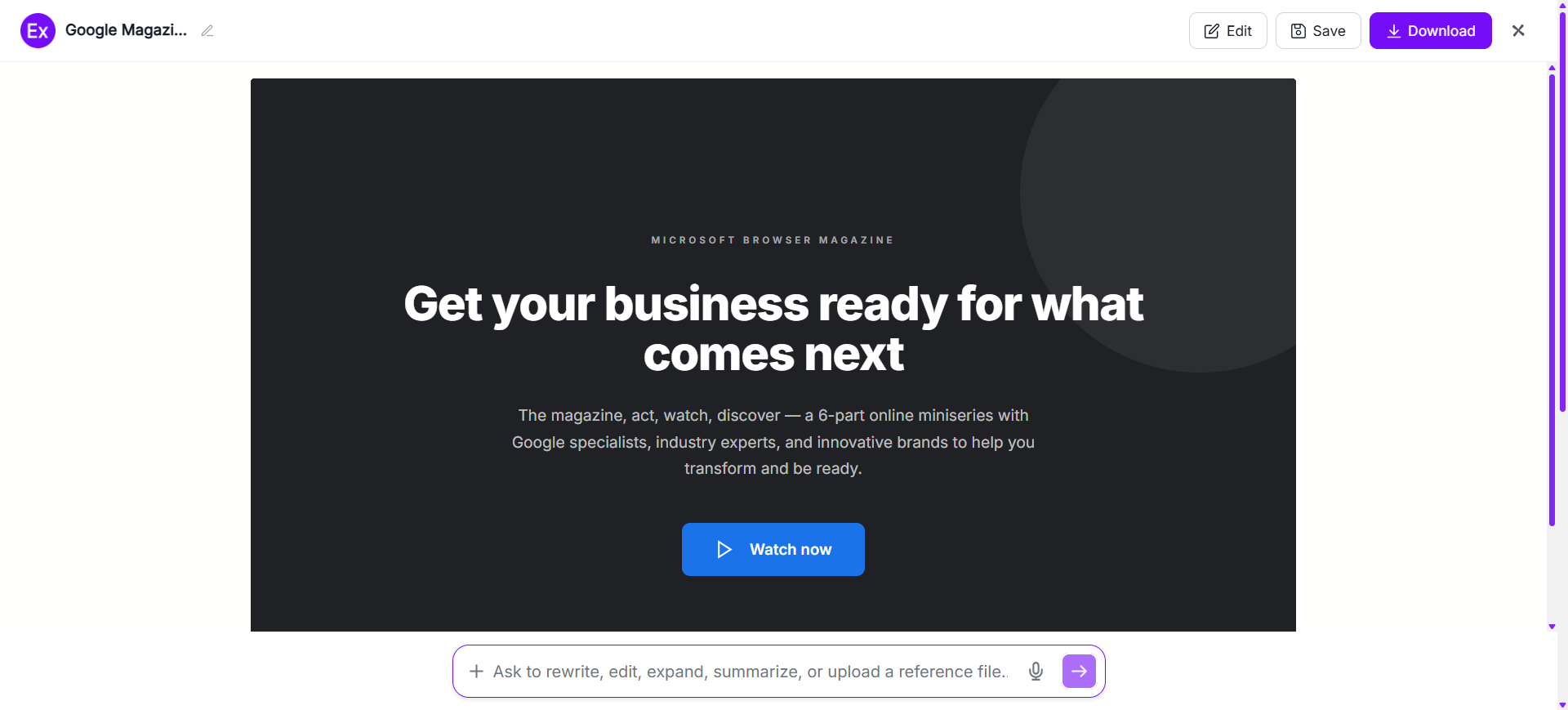
The AI generates a completely new magazine inspired by the selected reference and your prompt. Users can create original cover pages, article layouts, editorial sections, visual storytelling pages, and branded magazine designs without modifying the original example.
Customize The Magazine In The Online Editor
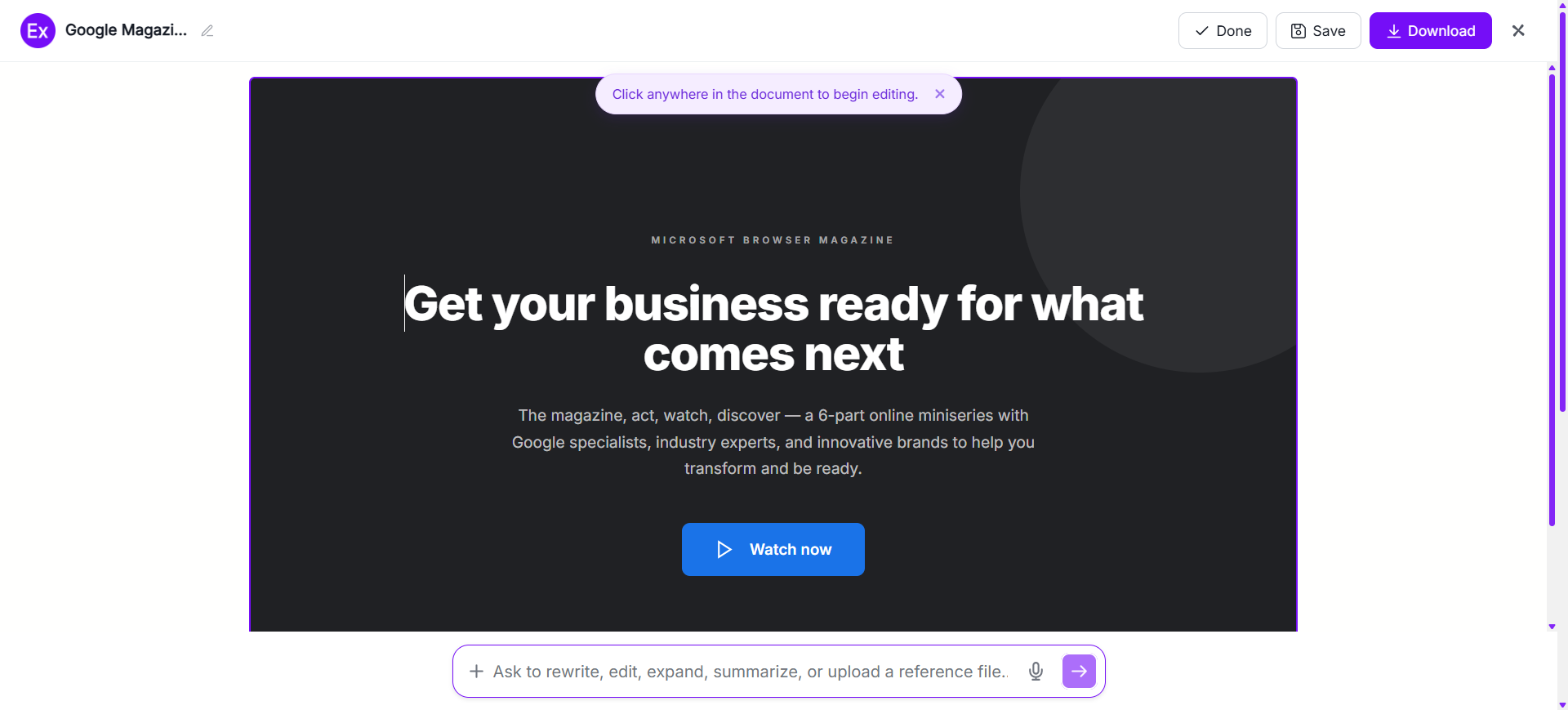
Open the generated magazine inside the online editor to customize every page. Replace images, edit headlines, update articles, change fonts, adjust colors, reorganize layouts, upload media, insert graphics, and enhance visuals using AI-powered editing tools.
Download And Use The Final Magazine
After customization is complete, download the final magazine as a PDF. The finished publication can be used for digital publishing, marketing campaigns, presentations, company magazines, educational resources, brand promotions, social media, and creative portfolio projects.
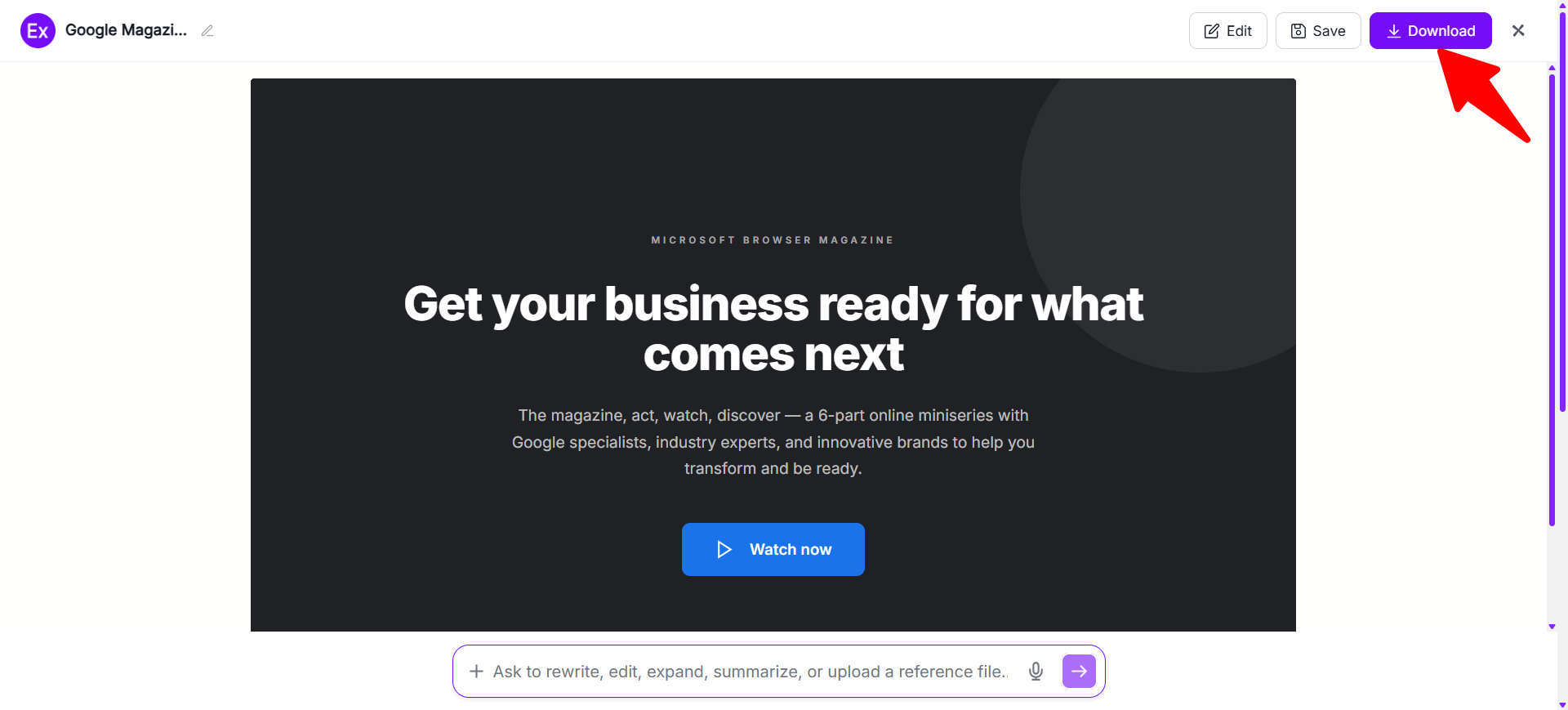
Customize Magazine Designs Online
Magazine customization allows users to personalize every page for different audiences, industries, and publishing goals. Examples.com provides an online editor where users can modify layouts, replace images, update headlines, edit articles, adjust typography, change colors, and reorganize page elements without requiring professional design software.
Users can also upload their own media, insert graphics, generate new visuals with AI prompts, improve image quality, resize pages, edit backgrounds, and create multiple magazine variations. This flexible workflow helps businesses, educators, marketers, publishers, and creators produce unique magazines for branding, education, promotions, storytelling, digital publishing, and corporate communication.
AI Magazine Editing Features
Examples.com includes multiple AI-powered editing tools that help users improve and customize magazine designs online.
AI Layout Adjustments
Automatically improves page structure for balanced, professional-looking magazine layouts.
Smart Text Editing
Refines headlines and article content with clearer wording while maintaining readability.
Image Enhancement
Improves photo clarity, sharpness, and overall visual quality throughout the magazine.
Color Theme Customization
Applies matching color palettes for consistent branding across every magazine page.
Typography Optimization
Suggests readable font combinations that improve editorial hierarchy and presentation.
Background Editing
Remove, replace, or customize page backgrounds for cleaner editorial layouts.
Resize
Adjust magazine page dimensions for digital publishing, presentations, and print layouts.
One-Click Design Updates
Instantly refreshes magazine layouts while preserving the overall editorial style.
Multishot
Generate multiple magazine design variations from a single concept or AI prompt.
Standard Magazine Sizes And Formats
Magazine size affects readability, page organization, printing costs, and the overall reader experience. Choosing the appropriate format depends on the publication’s purpose, audience, and distribution method.
| Magazine Size | Common Dimensions | Best Use Case |
|---|---|---|
| Letter | 8.5 × 11 Inches | Business magazines and educational publications |
| A4 | 210 × 297 mm | Corporate, marketing, and informational magazines |
| Digest | 5.5 × 8.5 Inches | Travel, hobby, and lifestyle magazines |
| Square | 8 × 8 Inches | Fashion, photography, and creative portfolios |
| Large Format | 9 × 12 Inches | Premium editorials and visual storytelling |
| Digital Magazine | Custom Screen Size | Online publishing and interactive viewing |
Letter and A4 magazine formats are widely used for professional publications because they provide enough space for articles, photography, advertisements, and editorial layouts. Smaller formats are easier to carry, while larger formats create greater visual impact for photography and feature stories.
PDF format is commonly preferred for digital publishing, presentations, online sharing, marketing campaigns, and branded editorial content.
Essential Elements Every Magazine Should Include
An effective magazine combines engaging editorial content with organized visual design. Including the right elements helps improve readability, navigation, and the overall reader experience.
- Clear Cover Title – Use a memorable magazine title that immediately communicates the publication’s identity and main topic.
- Attractive Cover Image – Add high-quality photography or illustrations that encourage readers to explore the magazine.
- Organized Table Of Contents – Help readers quickly locate articles, features, and important sections.
- Engaging Headlines – Use clear headlines that improve readability and make articles easier to scan.
- High-Quality Photography – Include professional images that strengthen storytelling and enhance visual appeal.
- Consistent Typography – Maintain coordinated fonts to create a clean, organized, and professional editorial appearance.
- Balanced Page Layout – Arrange text, images, and graphics with proper spacing to improve reading comfort.
- Brand Identity – Use consistent colors, logos, and design styles across every page for stronger recognition.
- Clear Call To Action – Encourage readers to visit websites, subscribe, explore products, or learn more.
How Do I Design A Better Magazine?
A well-designed magazine combines engaging editorial content, organized layouts, and strong visual storytelling. Following a few design principles helps improve readability, consistency, and the overall reader experience.
- Define Your Target Audience – Identify who will read the magazine before planning layouts, articles, and visual style.
- Create A Strong Cover Design – Design an eye-catching cover with a clear title, engaging imagery, and compelling headlines.
- Organize Content Clearly – Arrange articles into logical sections so readers can navigate the publication easily.
- Maintain Consistent Typography – Use coordinated fonts throughout the magazine to create a professional editorial appearance.
- Balance Text And Images – Combine written content with photography and graphics to avoid overcrowded page layouts.
- Use High-Quality Visuals – Include sharp images and illustrations that enhance storytelling and strengthen reader engagement.
- Keep Branding Consistent – Apply matching colors, logos, and visual elements throughout every magazine page.
- Use White Space Effectively – Leave enough spacing between content sections to improve readability and page balance.
- Review Every Page Carefully – Check layouts, images, typography, and article formatting before publishing the final magazine.
Common Magazine Design Mistakes To Avoid
Avoiding common magazine design mistakes helps improve readability, visual consistency, and the overall editorial experience.
- Overcrowded Pages – Too much text or too many graphics can overwhelm readers. Maintain proper spacing throughout the publication.
- Poor Typography Choices – Using too many fonts or decorative typefaces reduces readability and editorial consistency.
- Low-Quality Images – Blurry or pixelated visuals make magazines appear less professional and reduce visual impact.
- Weak Visual Hierarchy – Headlines, subheadings, and body text should be organized clearly to improve content navigation.
- Inconsistent Branding – Frequently changing colors, typography, or layouts weakens the publication’s identity.
- Ignoring White Space – Crowded page designs reduce readability and make editorial layouts feel unorganized.
- Unorganized Content Flow – Random article placement makes magazines harder to read and navigate.
- Missing Calls To Action – Encourage readers to visit websites, subscribe, explore products, or continue learning.
How Can I Market My Product Using A Magazine?
Magazines help businesses educate customers, showcase products, strengthen brand identity, and support long-term marketing campaigns across print and digital platforms.
Product Catalogs
Present product collections using detailed descriptions, professional photography, organized layouts, and feature highlights.
Brand Storytelling
Share company history, achievements, customer success stories, and brand values through engaging editorial content.
Product Launches
Introduce new products with promotional visuals, comparison pages, feature highlights, and launch announcements.
Educational Content
Publish tutorials, buying guides, expert advice, and industry insights that help customers make informed decisions.
Event And Campaign Promotions
Promote conferences, exhibitions, seasonal campaigns, workshops, and special events using editorial-style content.
Customer Engagement
Feature interviews, testimonials, community stories, exclusive updates, and user-generated content to strengthen audience relationships.
Which Magazine Sizes Perform Best?
The ideal magazine size depends on the publication’s audience, reading platform, content length, and design objectives.
| Magazine Size | Best For | Advantages |
|---|---|---|
| Letter (8.5 × 11 Inches) | Business, education, and corporate magazines | Spacious layouts and comfortable reading |
| A4 (210 × 297 mm) | Marketing and professional publications | Internationally recognized standard size |
| Digest (5.5 × 8.5 Inches) | Travel, hobby, and lifestyle magazines | Compact, portable, and easy to distribute |
| Square (8 × 8 Inches) | Fashion, photography, and creative portfolios | Modern appearance with strong visual impact |
| Large Format (9 × 12 Inches) | Premium editorials and visual storytelling | Ideal for large photography and feature stories |
| Digital Magazine | Online publishing and presentations | Optimized for screens and digital sharing |
Letter and A4 magazines remain the most widely used because they balance readability, content capacity, and professional presentation. Smaller formats are easier to distribute, while larger layouts provide more space for photography and editorial storytelling.
Magazine Ideas For Different Industries
Different industries use magazines to educate audiences, strengthen brand identity, and share valuable editorial content.
- Fashion Industry – Showcase seasonal collections, designer interviews, style guides, and fashion trends.
- Business And Finance Industry – Publish market analysis, investment insights, leadership articles, and company updates.
- Technology Industry – Highlight innovations, software releases, product reviews, and emerging technology trends.
- Education Industry – Share learning resources, academic achievements, research highlights, and campus news.
- Healthcare Industry – Publish wellness advice, medical updates, patient education, and healthcare innovations.
- Travel And Tourism Industry – Feature destinations, travel experiences, hotel recommendations, and cultural stories.
- Food And Hospitality Industry – Present recipes, restaurant features, chef interviews, and culinary trends.
- Real Estate Industry – Showcase featured properties, market reports, investment opportunities, and homeowner guides.
- Automotive Industry – Publish vehicle reviews, maintenance tips, industry news, and future mobility innovations.
- Brand And Corporate Industry – Create customer magazines featuring company stories, product updates, employee highlights, and brand initiatives.
FAQs
What Is The Difference Between A Magazine And A Brochure?
A magazine contains multiple articles, stories, and editorial content published regularly, while a brochure is a shorter promotional document focused on specific products, services, or events.
Can I Create A Digital Magazine Without Graphic Design Experience?
Yes. AI-powered tools help users generate layouts, organize content, customize pages, and create professional-looking digital magazines without advanced design knowledge.
How Many Pages Should A Magazine Have?
The ideal page count depends on the publication’s purpose. Many magazines contain between 16 and 64 pages, although digital publications can be shorter or longer.
What Makes A Magazine Cover Attractive?
A strong cover combines a clear title, high-quality photography or illustrations, engaging headlines, balanced typography, and a consistent visual style.
Can I Customize Every Page After AI Generates A Magazine?
Yes. After generating a new magazine, users can edit images, headlines, layouts, colors, graphics, and other design elements inside the online editor.
Which Industries Commonly Use Brand Magazines?
Retail, automotive, travel, hospitality, technology, healthcare, education, and consumer brands commonly publish magazines to engage customers and share valuable content.
Can AI Help Generate Magazine Content Ideas?
Yes. AI can suggest layouts, themes, article concepts, visual directions, and creative ideas based on prompts and reference magazine examples.
What Can I Use A Magazine For?
Magazines can be used for brand marketing, customer communication, education, company publications, product showcases, event promotions, digital publishing, storytelling, and portfolio presentations.