

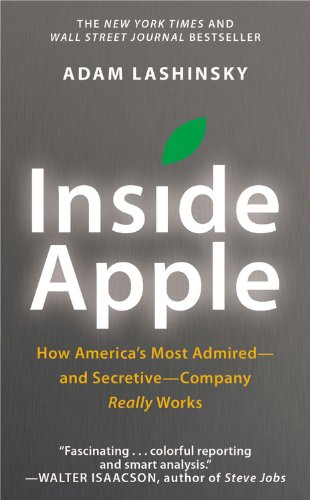

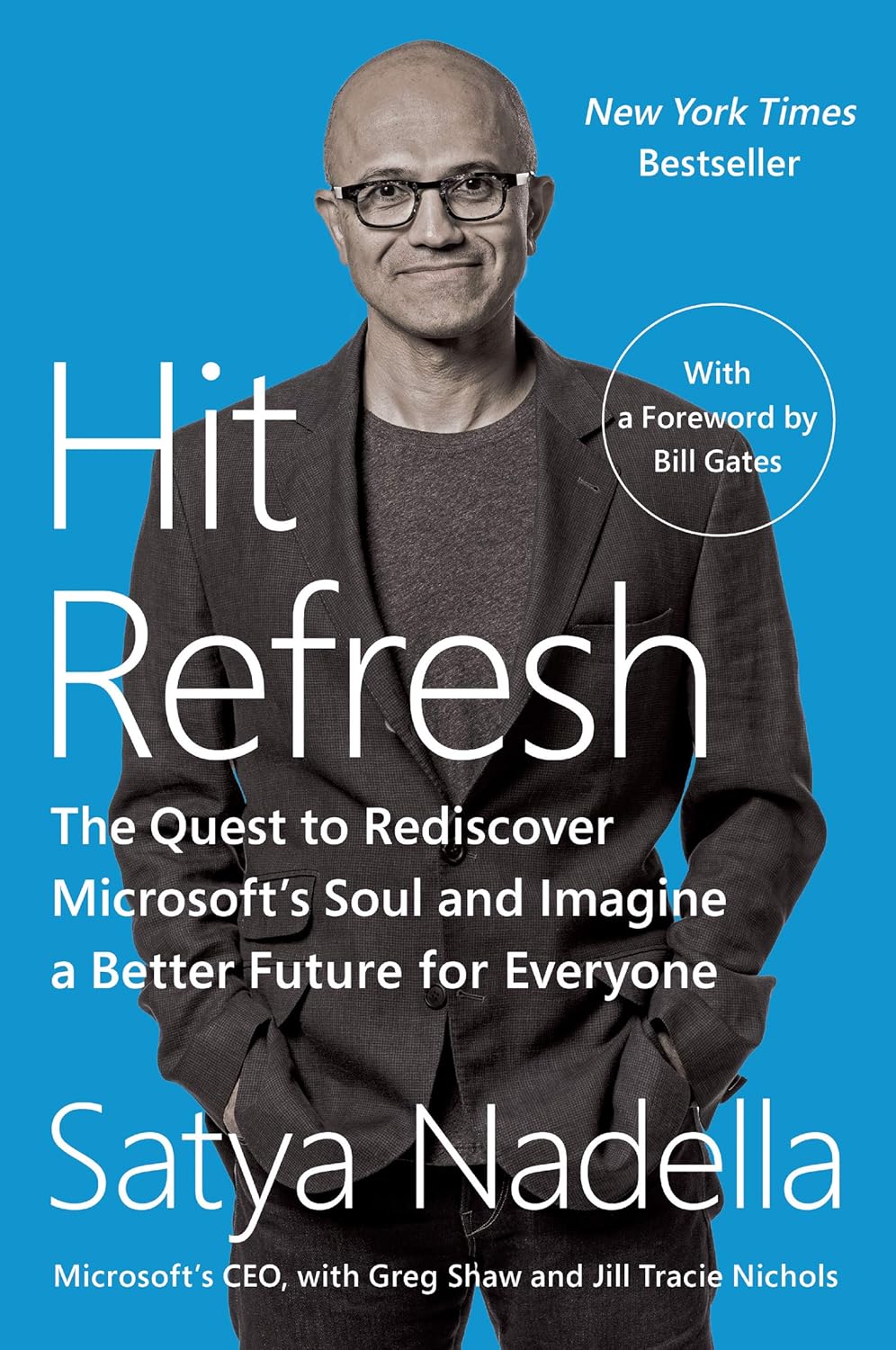














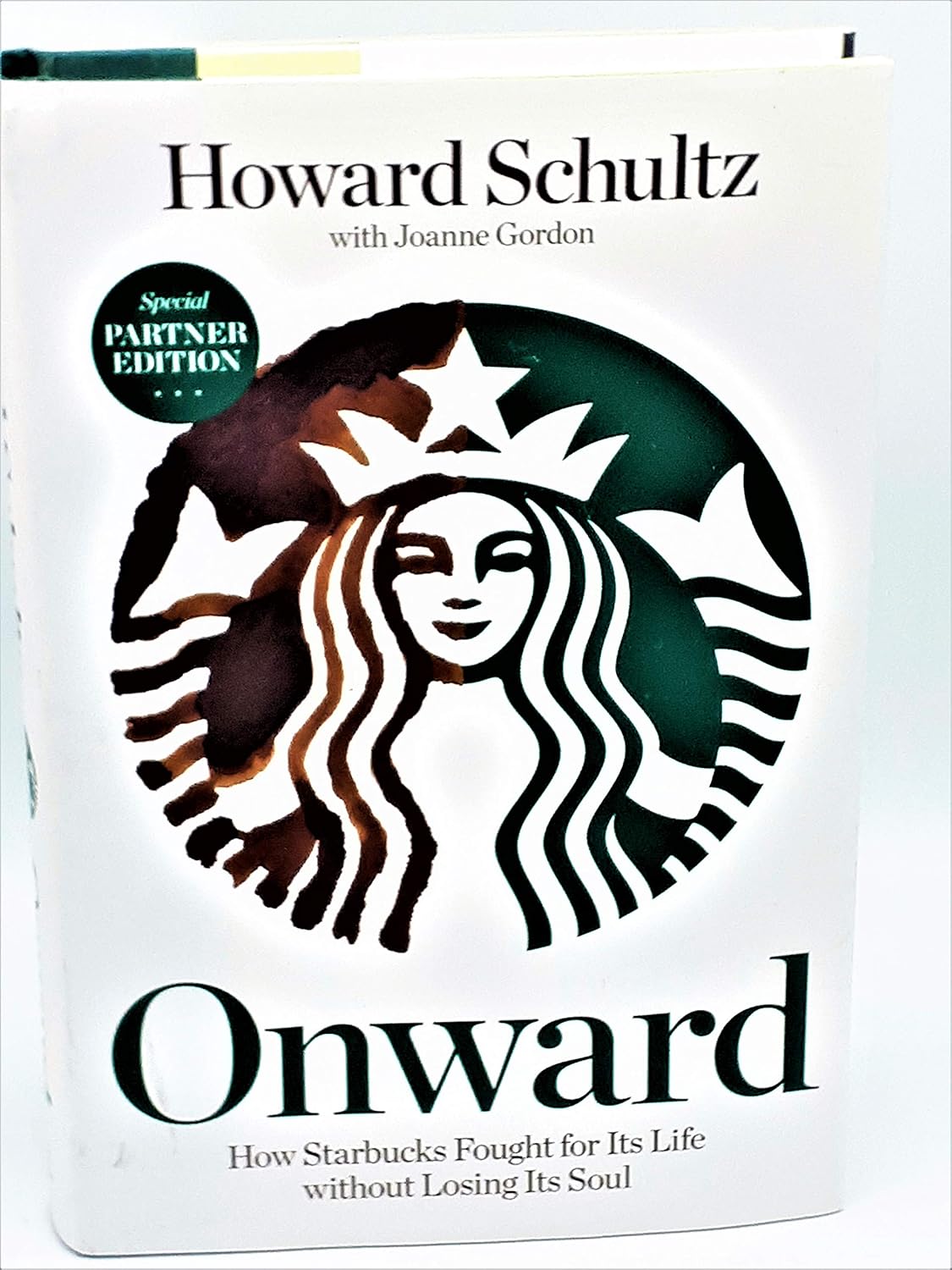







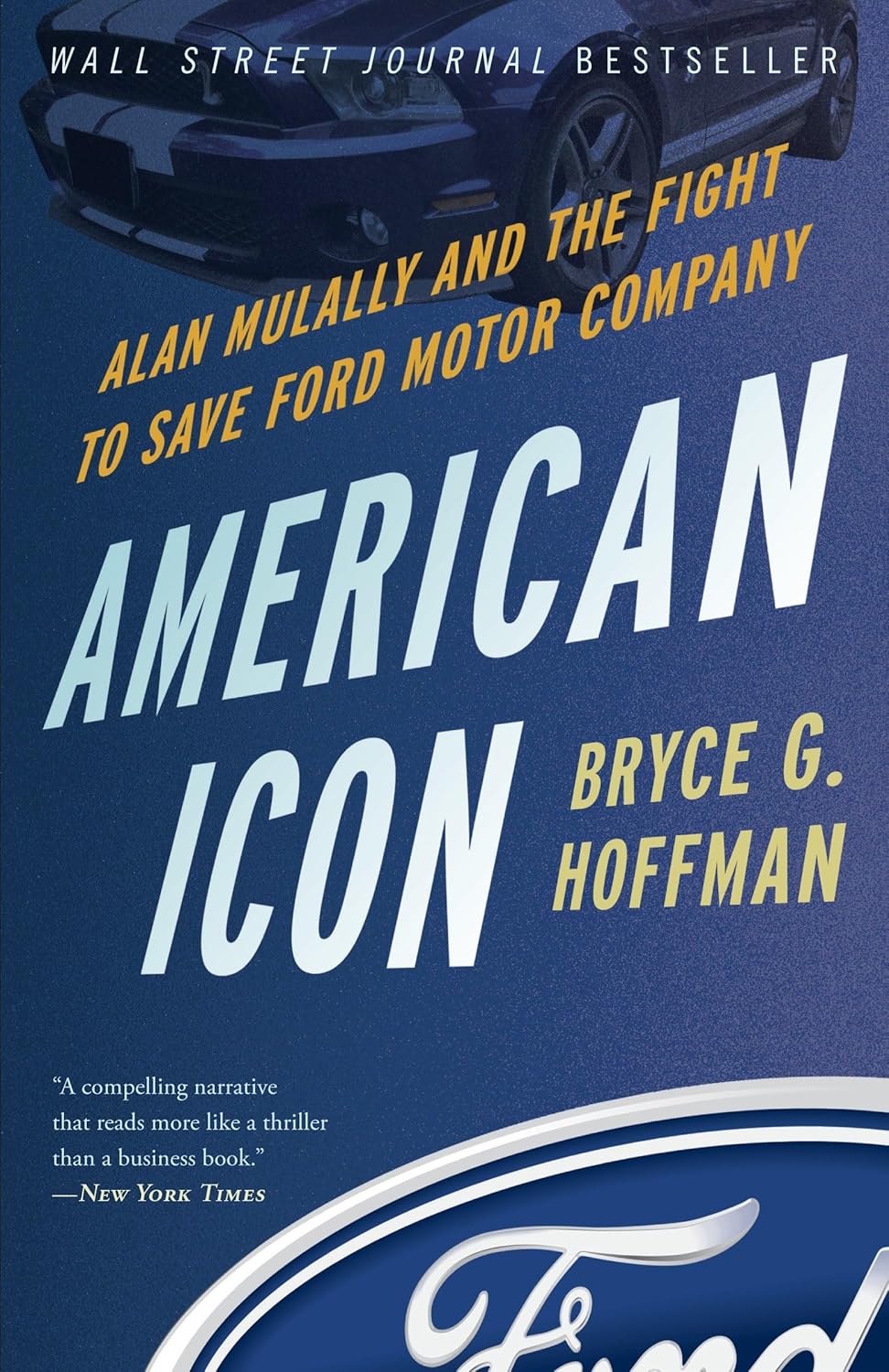








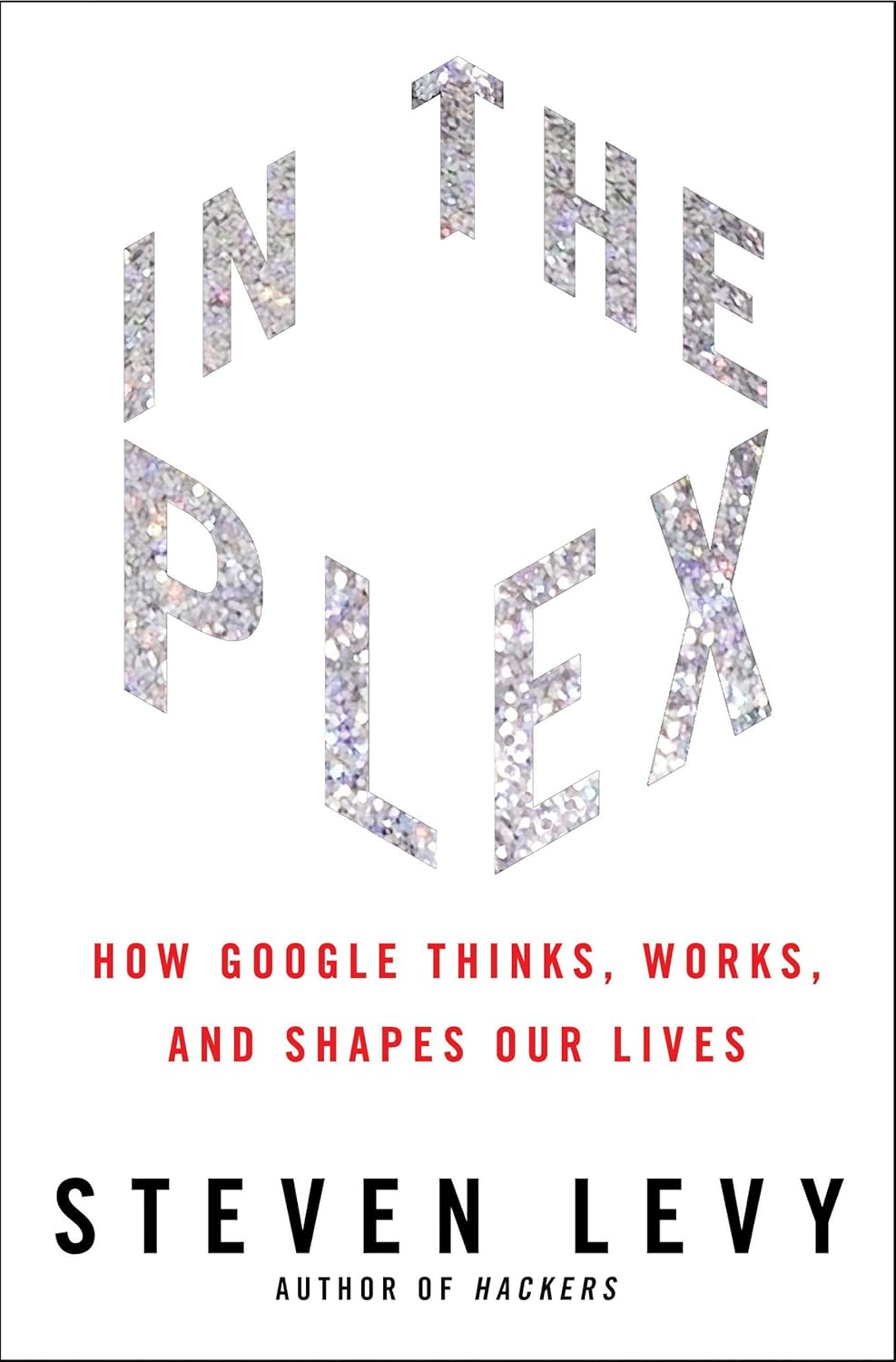
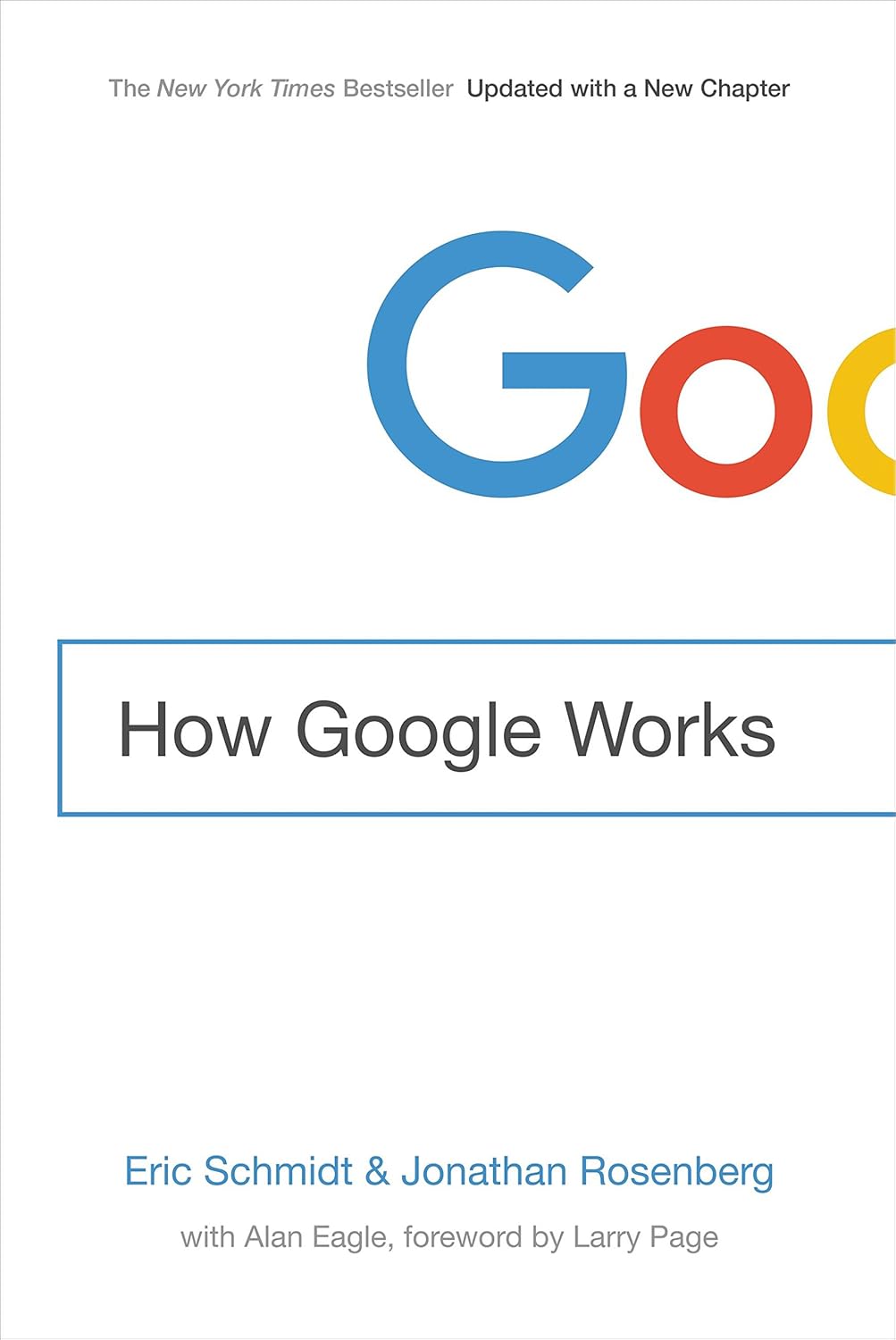
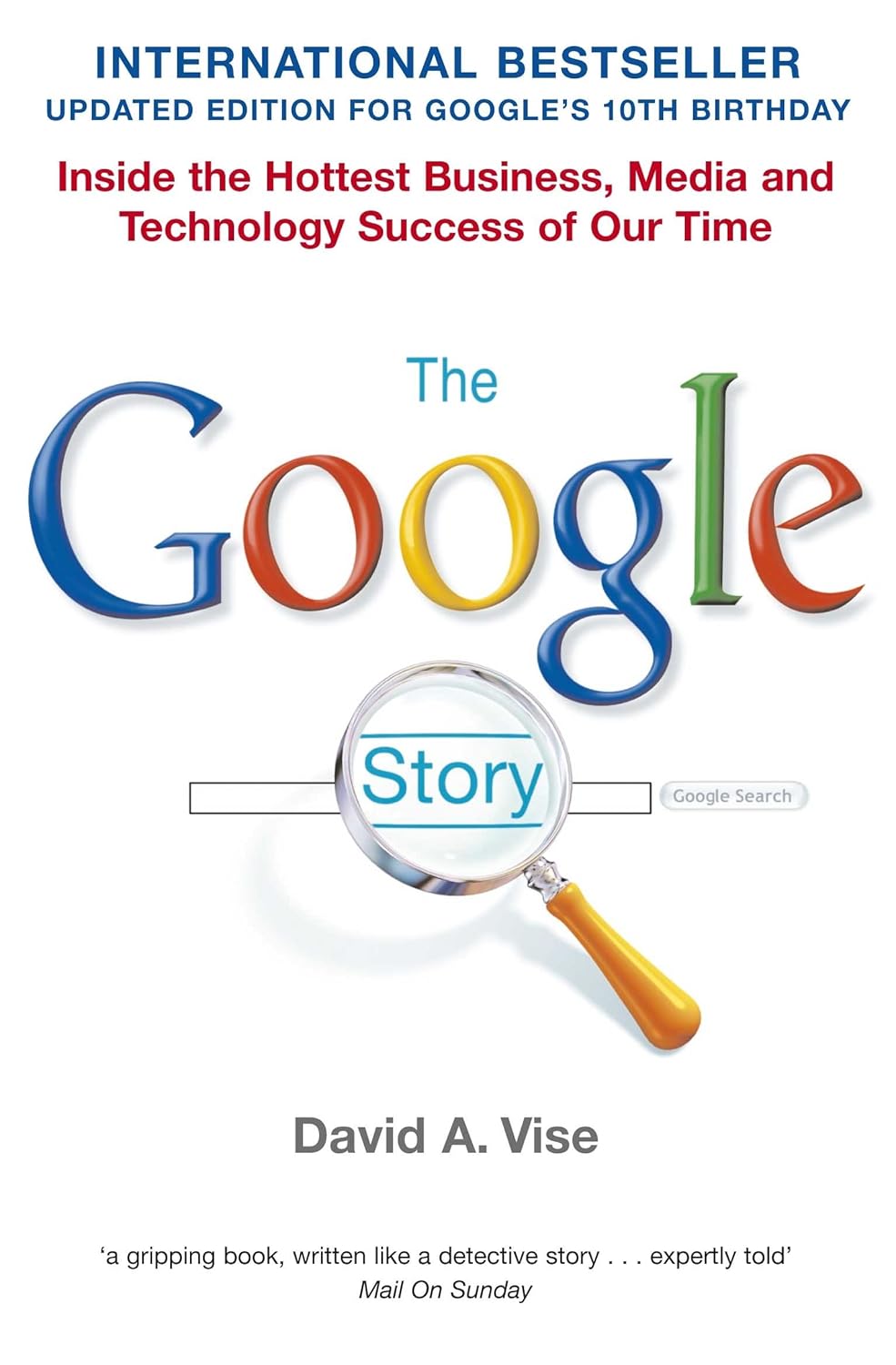


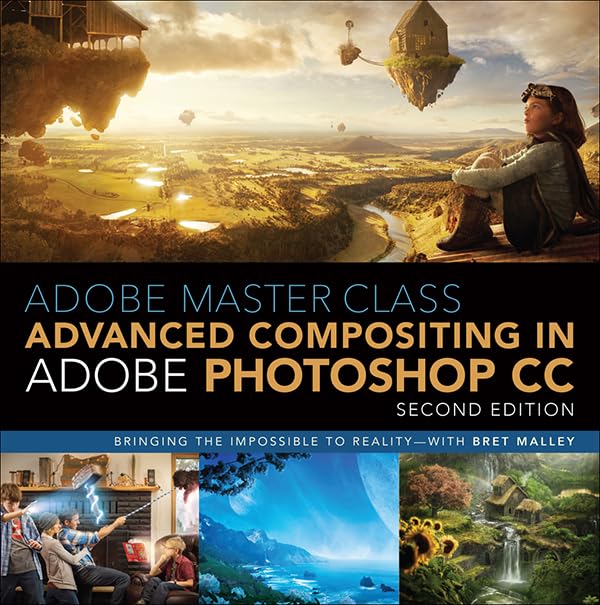
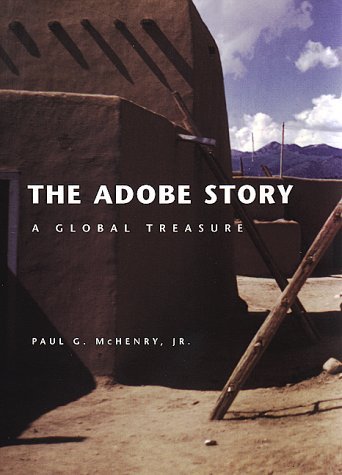












































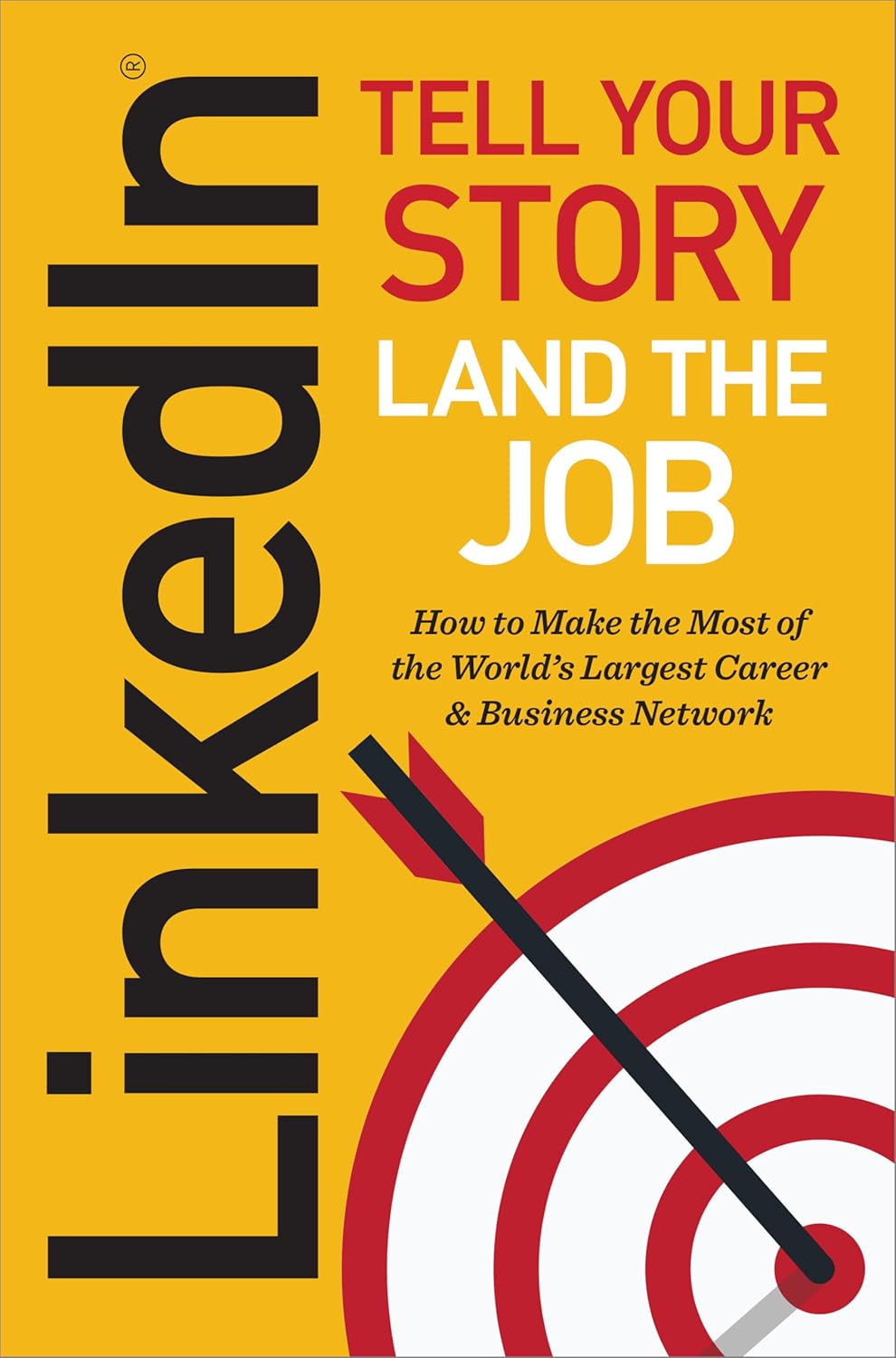

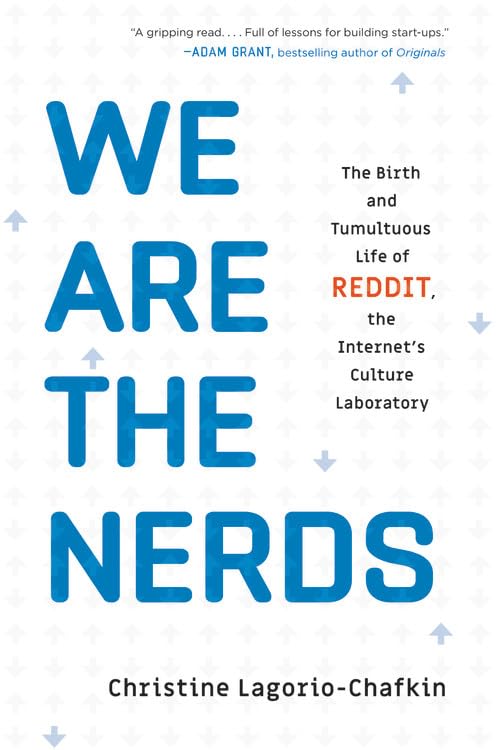

Book cover showcase how authors, publishers, and brands use visual design to attract readers, communicate a book’s theme, and build a strong first impression. From bestselling novels and business books to educational textbooks and biographies, a well-designed book cover plays a major role in influencing purchasing decisions and reader engagement.
What is a Book Cover?
A book cover is the outer design of a book that protects its contents while visually representing the story, subject, or message inside.
A professional book cover typically includes:
- Book title
- Author name
- Cover image or illustration
- Publisher logo
- Subtitle (if applicable)
- Design elements and typography

Popular Types Of Book Covers
Different types of books require different cover styles depending on the audience and genre.
Fiction Book Covers
Fiction covers focus on storytelling, emotion, and visual intrigue.
Examples
- Fantasy novels
- Mystery books
- Romance novels
- Science fiction books
Nonfiction Book Covers
Nonfiction covers emphasize clarity, authority, and subject matter.
Examples
- Self-help books
- Business books
- Leadership books
- Personal development books
Biography And Memoir Covers
These covers often feature portraits and personal branding.
Examples
- Steve Jobs
- Shoe Dog
- Elon Musk
Children's Book Covers
Children’s covers use bright colors, illustrations, and playful typography.
Examples
- Storybooks
- Educational books
- Picture books
Academic Book Covers
Academic covers prioritize professionalism and educational value.
Examples
- Textbooks
- Research publications
- University press books
Business Book Covers
Business books often feature bold typography and minimal designs.
Examples
- The Everything Store
- Working Backwards
- No Rules Rules
eBook Covers
eBook covers are optimized for digital marketplaces and mobile devices.
Examples
- Kindle books
- Online learning guides
- Digital publications
Audiobook Covers
Audiobook covers use simple and recognizable visuals designed for small-screen viewing.
Examples
- Audible originals
- Podcast-style audiobooks
- Business audio content
How Do I Generate Book Covers Using Proven Examples from Top Companies?
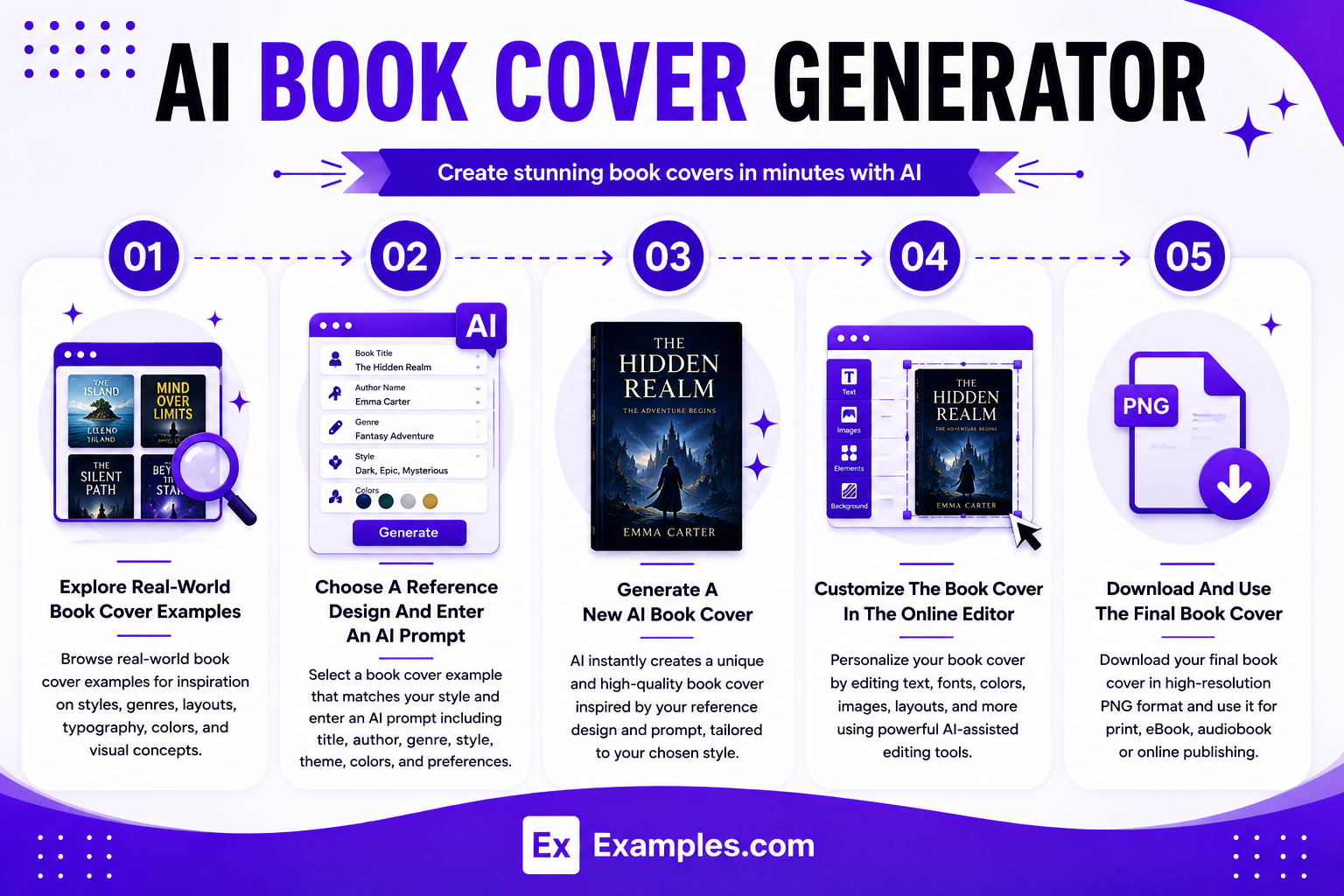
Creating book covers with AI helps users quickly generate professional visuals using prompts, reference examples, and built-in editing tools.
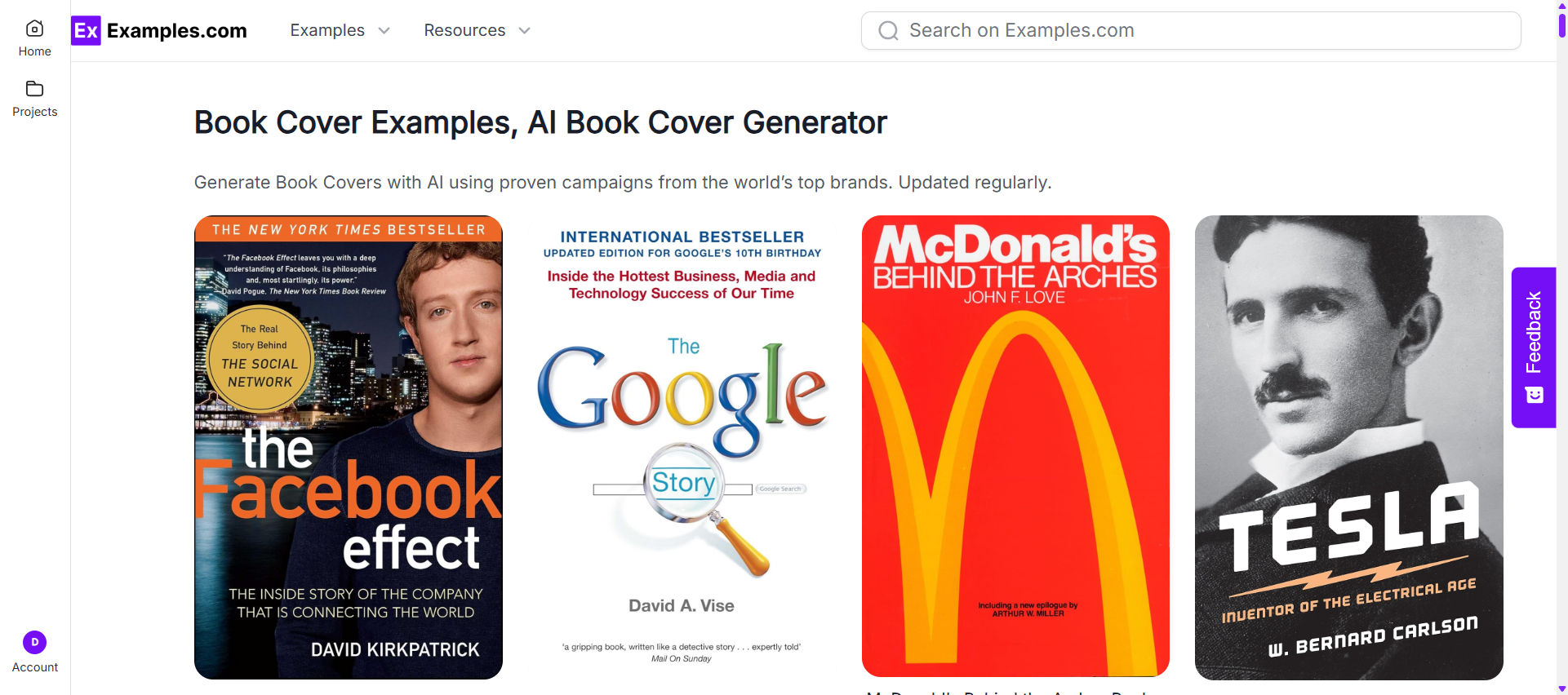
Explore Real-World Book Cover Examples
Browse real-world book cover examples on the category page to discover different layouts, styles, typography, color palettes, branding concepts, illustration techniques, and visual inspirations. These examples help users choose the creative direction for their AI-generated book cover.
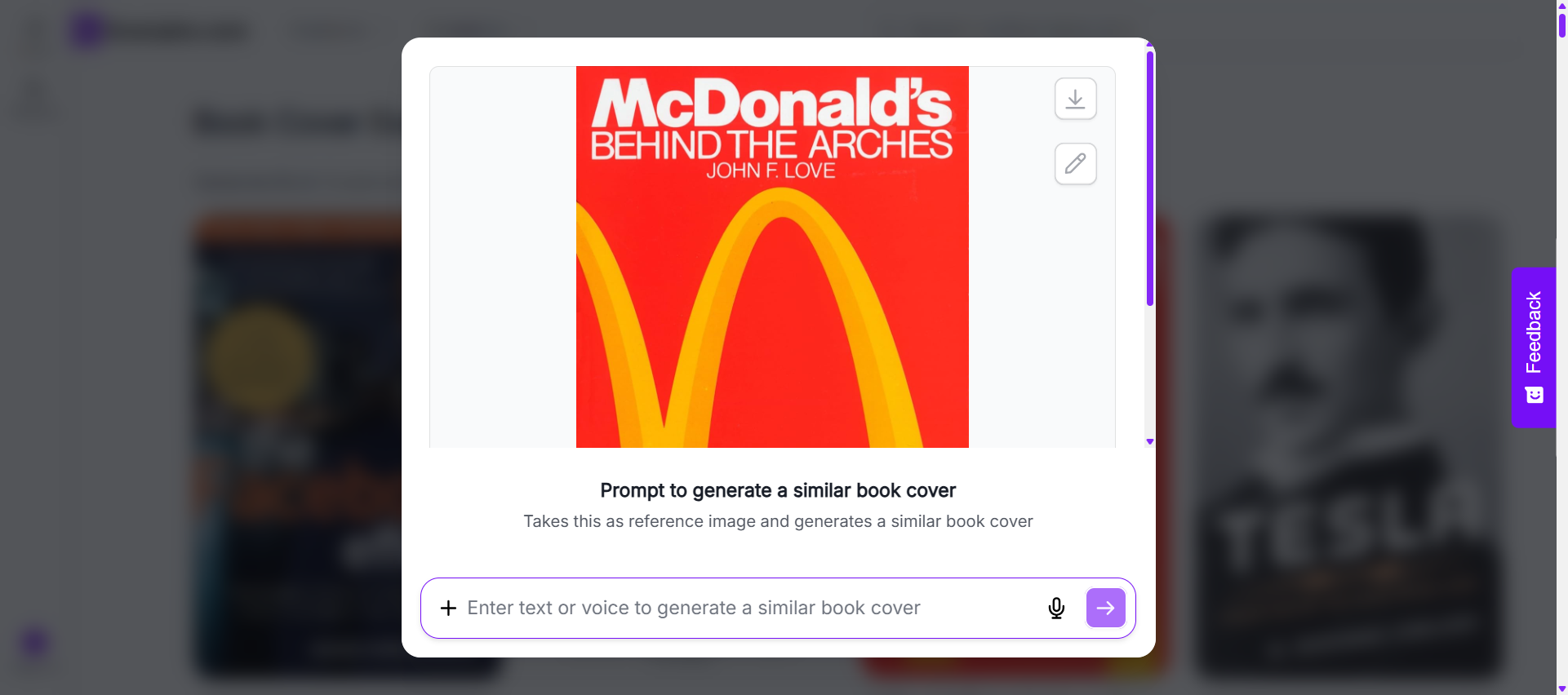
Choose A Reference Design And Enter An AI Prompt
Select a book cover example that matches the style or layout you want to use as inspiration. Then enter an AI prompt describing the book cover you want to create, including genre, colors, themes, title, author name, illustrations, typography, layouts, branding, and visual preferences.
Generate A New AI Book Cover
The AI instantly creates a completely new book cover inspired by the selected reference design and user prompt. The generated result is unique and designed specifically around the provided creative direction.

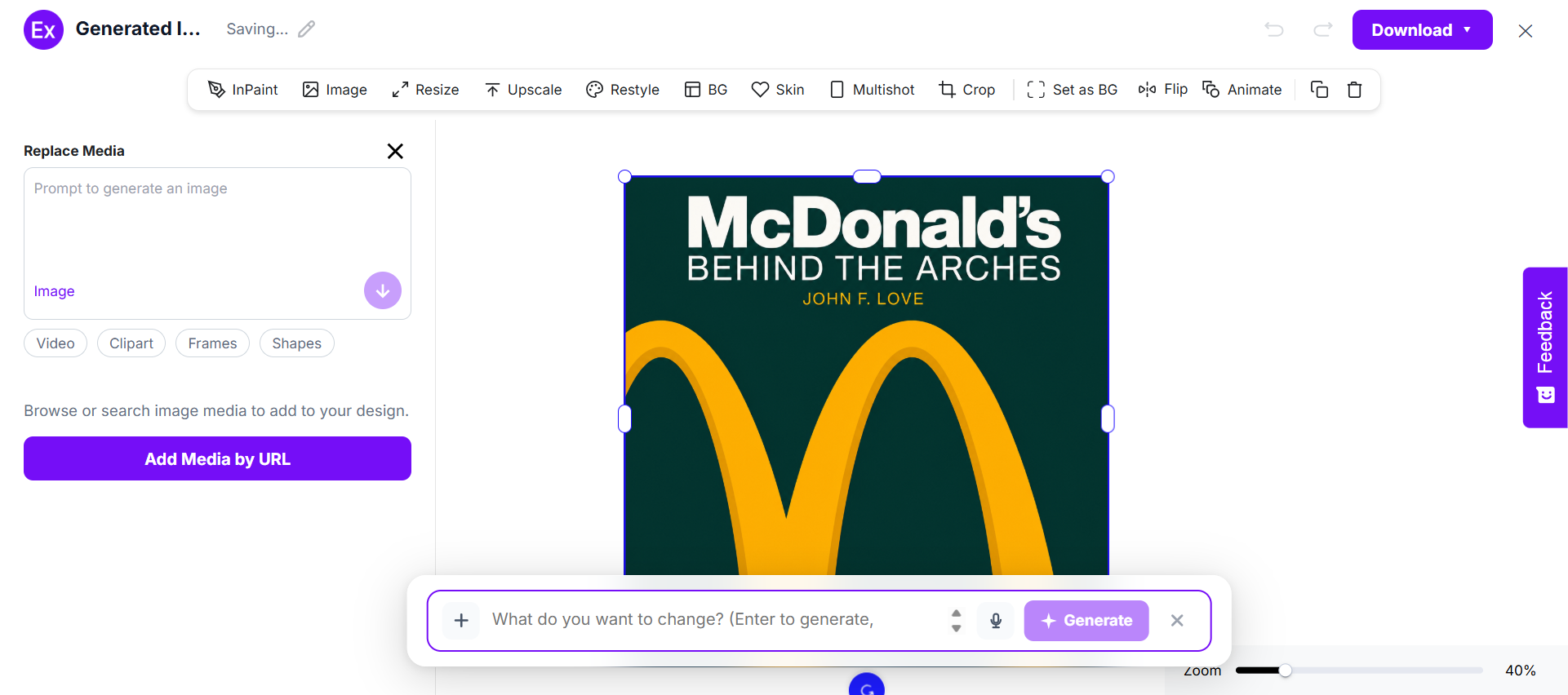
Customize The Book Cover In The Online Editor
Open the generated book cover inside the online editor to personalize the design further. Users can replace images, upload graphics, edit text, change fonts, modify colors, adjust layouts, and use additional AI-powered editing tools.
Download And Use The Final Book Cover
Once customization is complete, download the final book cover in PNG format. The finished design can be used for printed books, eBooks, audiobooks, online bookstores, author websites, marketing campaigns, and publishing platforms.

Book Cover Design Elements
Successful book covers combine several important visual components.
Typography
Typography influences readability and genre recognition.
Popular typography styles include:
- Serif fonts for traditional books
- Sans-serif fonts for modern books
- Script fonts for romance books
- Bold typography for business books
Colors
Color choices influence reader perception and emotional response.
| Color | Common Meaning |
|---|---|
| Blue | Trust and knowledge |
| Red | Energy and excitement |
| Black | Mystery and sophistication |
| Green | Growth and nature |
| Gold | Luxury and prestige |
Images And Illustrations
Visuals help communicate the book’s theme instantly.
Common cover visuals include:
- Character portraits
- Scenic photography
- Abstract graphics
- Custom illustrations
- Symbolic imagery
Layout
Effective layouts create visual hierarchy and readability.
Strong layouts help readers quickly identify:
- Book title
- Author name
- Genre
- Key message
Standard Book Cover Sizes
Different publishing formats use different dimensions.
| Book Type | Common Size |
|---|---|
| Paperback | 6 × 9 inches |
| Trade Paperback | 5.5 × 8.5 inches |
| Hardcover | 6 × 9 inches |
| Children’s Book | 8 × 10 inches |
| eBook Cover | 1600 × 2560 px |
| Audiobook Cover | 2400 × 2400 px |
Most Popular Book Cover Size
The 6 × 9 inch format remains one of the most commonly used book sizes for nonfiction, business, self-help, and educational publishing.
Real-World Book Cover Examples By Genre
Business Book Cover Examples
- The Everything Store
- Working Backwards
- No Rules Rules
Biography Book Cover Examples
- Steve Jobs
- Elon Musk
- Shoe Dog
Self-Help Book Cover Examples
- Atomic Habits
- Deep Work
- Think and Grow Rich
Educational Book Cover Examples
- Pearson textbooks
- Wiley publications
- Oxford University Press books
Children's Book Cover Examples
- Scholastic books
- Disney publishing titles
- Picture books
How Do I Design A Better Book Cover?
A great book cover should attract attention while accurately representing the content.
Tips For Better Book Cover Design
- Use a clear title hierarchy
- Choose genre-appropriate visuals
- Use readable typography
- Keep the design uncluttered
- Maintain strong contrast
- Optimize for thumbnail viewing
- Use professional imagery
- Create visual balance
How Can Authors Market Books Using Cover Design?
A book cover often acts as the first marketing tool readers encounter.
Ways Book Covers Support Marketing
- Improve bookstore visibility
- Increase online click-through rates
- Strengthen author branding
- Enhance social media promotion
- Support advertising campaigns
- Improve marketplace discoverability
Professional covers can significantly improve reader engagement and purchase decisions.
AI Book Cover Generator Examples
AI tools help authors and publishers create book covers quickly and efficiently.
Popular AI Book Cover Generators
- Canva AI
- Adobe Express
- Fotor
- Designs.ai
- Picsart AI
Benefits Of AI Book Cover Design
- Faster design process
- Professional layouts
- Easy customization
- Cost-effective publishing
- Multiple design variations
- Beginner-friendly editing
Common Book Cover Design Mistakes
Avoid these mistakes when creating book covers.
Mistakes To Avoid
- Overcrowded layouts
- Poor typography choices
- Low-quality images
- Weak color contrast
- Unclear title placement
- Ignoring genre expectations
- Excessive visual effects
FAQ’s
What are book cover examples?
Book cover examples are real-world cover designs used by publishers, authors, and brands to showcase different design styles, genres, layouts, and visual approaches.
What makes a good book cover?
A good book cover is visually appealing, readable, genre-appropriate, and communicates the book’s message effectively.
Why are book covers important?
Book covers influence first impressions, attract readers, strengthen branding, and increase the likelihood of book sales.
What size should a book cover be?
The most common print book cover size is 6 × 9 inches, while eBook covers are often designed at 1600 × 2560 pixels.
Can I create a book cover with AI?
Yes. AI book cover generators help create professional-looking covers using prompts, templates, and editing tools.
What colors work best on book covers?
The best colors depend on the genre, but high-contrast and genre-appropriate color schemes generally perform best.
How many fonts should a book cover use?
Most professional book covers use one to three fonts to maintain readability and visual consistency.
What is the difference between a book cover and a dust jacket?
A book cover is the main exterior design of a book, while a dust jacket is a removable paper cover typically used on hardcover books.
Which genres have the most creative book covers?
Fantasy, science fiction, children’s books, graphic novels, and fiction titles often feature the most visually creative cover designs.
How do publishers choose book cover designs?
Publishers consider target audience, genre, market trends, branding, readability, and sales potential when selecting book cover designs.