Free AI Biography Generator, 50+ Real Biography Examples
Generate Biographies With AI Taking Top Real-World Biography Examples As Inspiration, Updated Regularly.
Select or upload a product to enable generation.
Examples
Browse an Example below, or pick one above to generate right here.
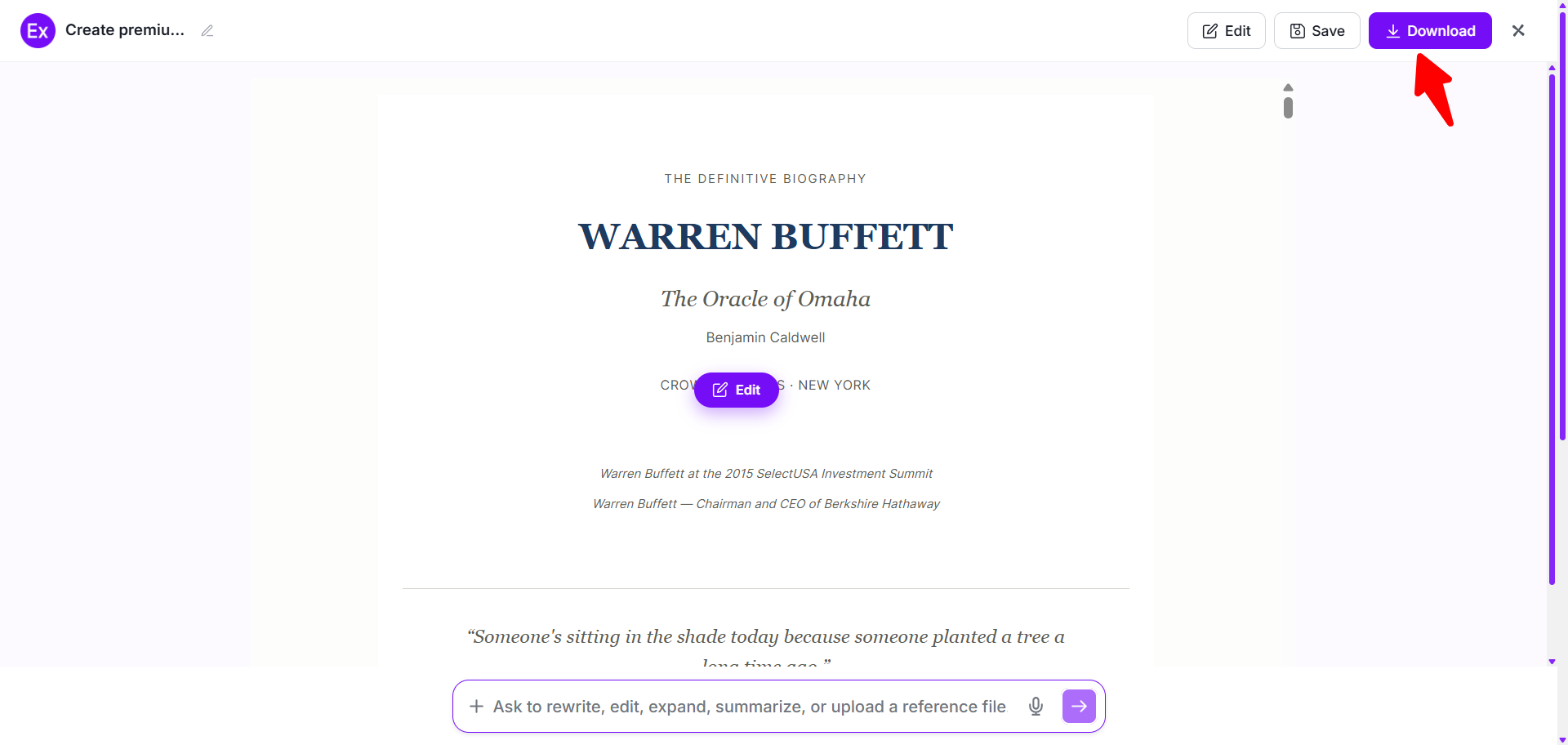
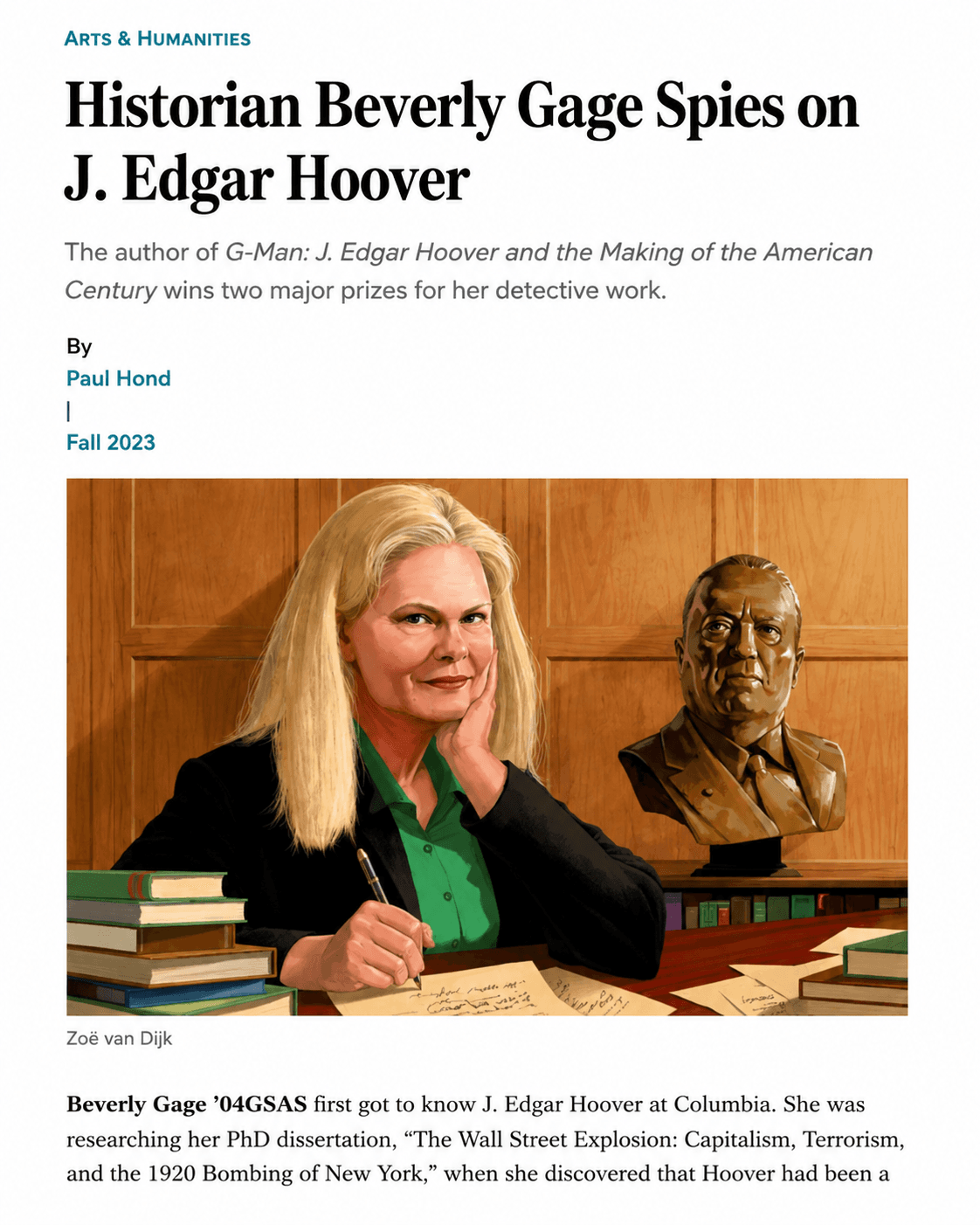
Columbia University G-Man Biography
product shot
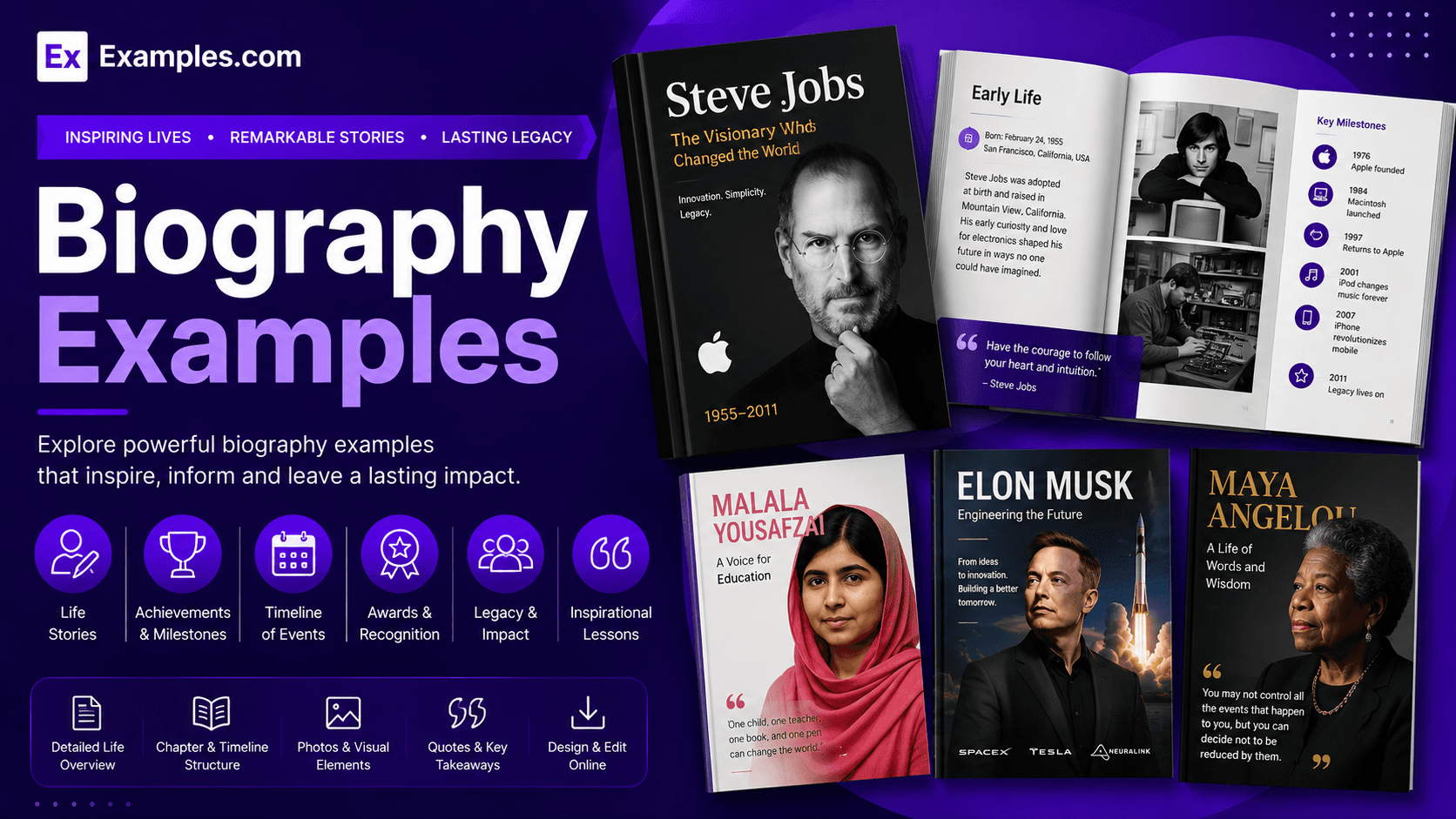
Create compelling biographies using AI-powered writing inspired by real-world biography examples. I can explore biographies of business leaders, entrepreneurs, scientists, artists, athletes, authors, politicians, and historical figures, choose a writing style that fits my purpose, enter an AI prompt, generate a completely new biography, customize every section in the online editor, and download the final PDF. With Examples.com, I can transform factual information into a well-structured biography that informs, inspires, and accurately presents a person's life story.
What Is A Biography?
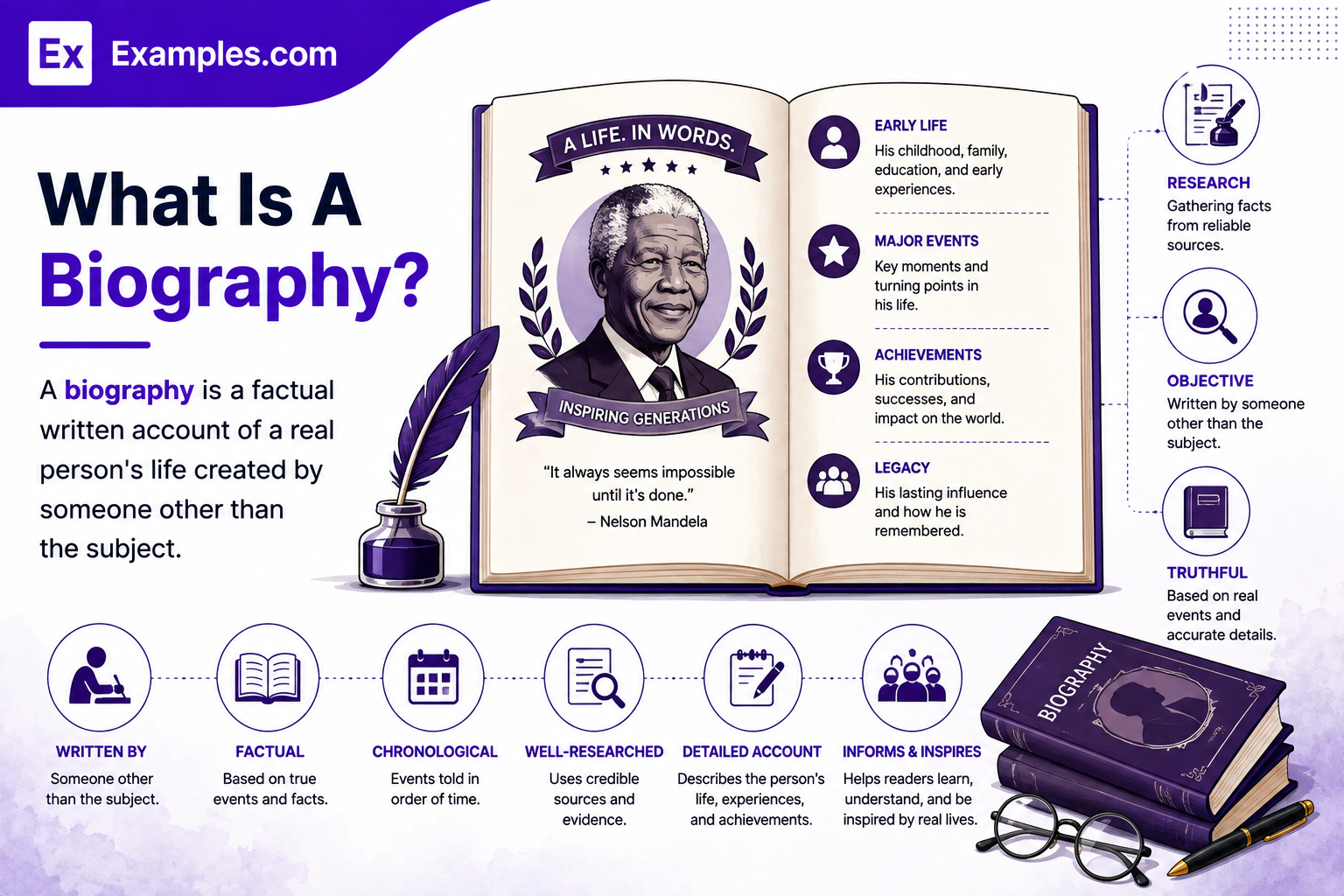
A biography is a factual written account of a real person's life created by someone other than the subject. It presents important events, achievements, challenges, and personal milestones in chronological order. I can create biographies for professionals, historical figures, students, leaders, and public personalities using AI-powered writing and editing tools.
Popular Types Of Biographies
Different biography formats serve different audiences, purposes, and storytelling approaches.
📖
Standard Biography
Present a complete life story covering early life, education, career, achievements, and lasting legacy.
✍️
Autobiography
Tell a person's complete life story written from the subject's own personal perspective.
📝
Memoir
Focus on one meaningful period, experience, or theme instead of an entire lifetime.
✅
Authorized Biography
Create a biography with the subject's cooperation, verified information, and official approval.
📚
Unauthorized Biography
Present a researched life story without direct involvement or approval from the subject.
👤
Professional Bio
Highlight career achievements, education, skills, and accomplishments in a concise professional profile.
Why Should I Use Real Biography Examples To Create My Own Biography?
Real biography examples help me understand how factual events, historical context, and personal achievements can be organized into a compelling life story. They provide inspiration while making it easier to present accurate information, maintain a logical structure, and create an engaging narrative.
Instead of copying an existing biography, I can use professional biographies as references. On Examples.com, I simply choose a writing style, enter an AI prompt, generate a completely new biography, and customize every section to reflect the person's life, accomplishments, and unique journey.
How Do I Generate Biographies Using Proven Examples From The World's Best Biographers?
Creating a professional biography becomes easier when I use well-written biographies as inspiration. The workflow combines real-world biography examples, AI-powered writing, online editing, and personalized customization to transform factual information into a structured life story.
Explore Real-World Biography Examples
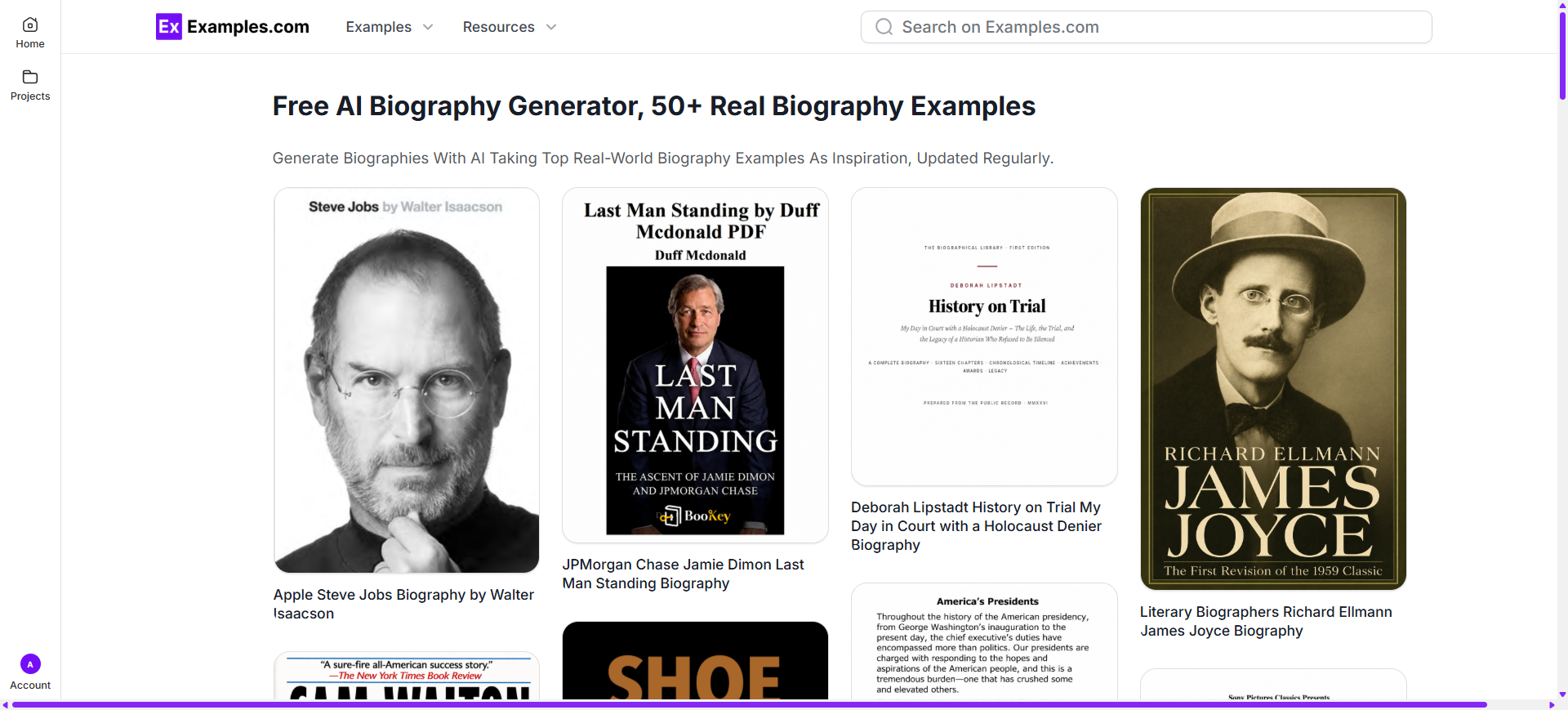
I can browse biography examples covering entrepreneurs, scientists, business executives, athletes, artists, authors, political leaders, educators, innovators, and historical figures to discover writing styles, chronological structures, storytelling techniques, and narrative organization.
Choose A Reference Biography And Enter An AI Prompt
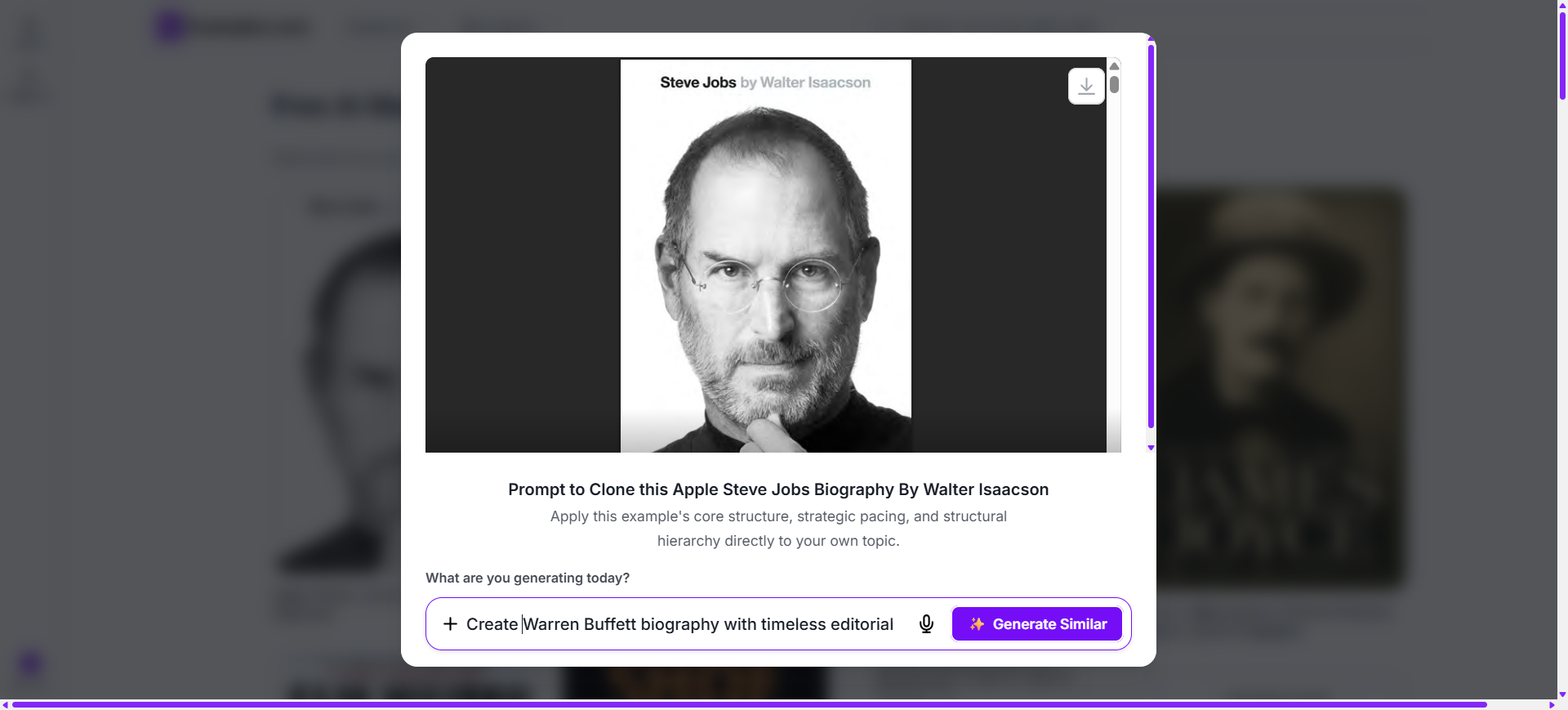
After selecting a biography style, I can describe the person's background, early life, education, career, achievements, challenges, historical context, and writing tone through an AI prompt to generate a completely original biography.
Generate A New AI Biography
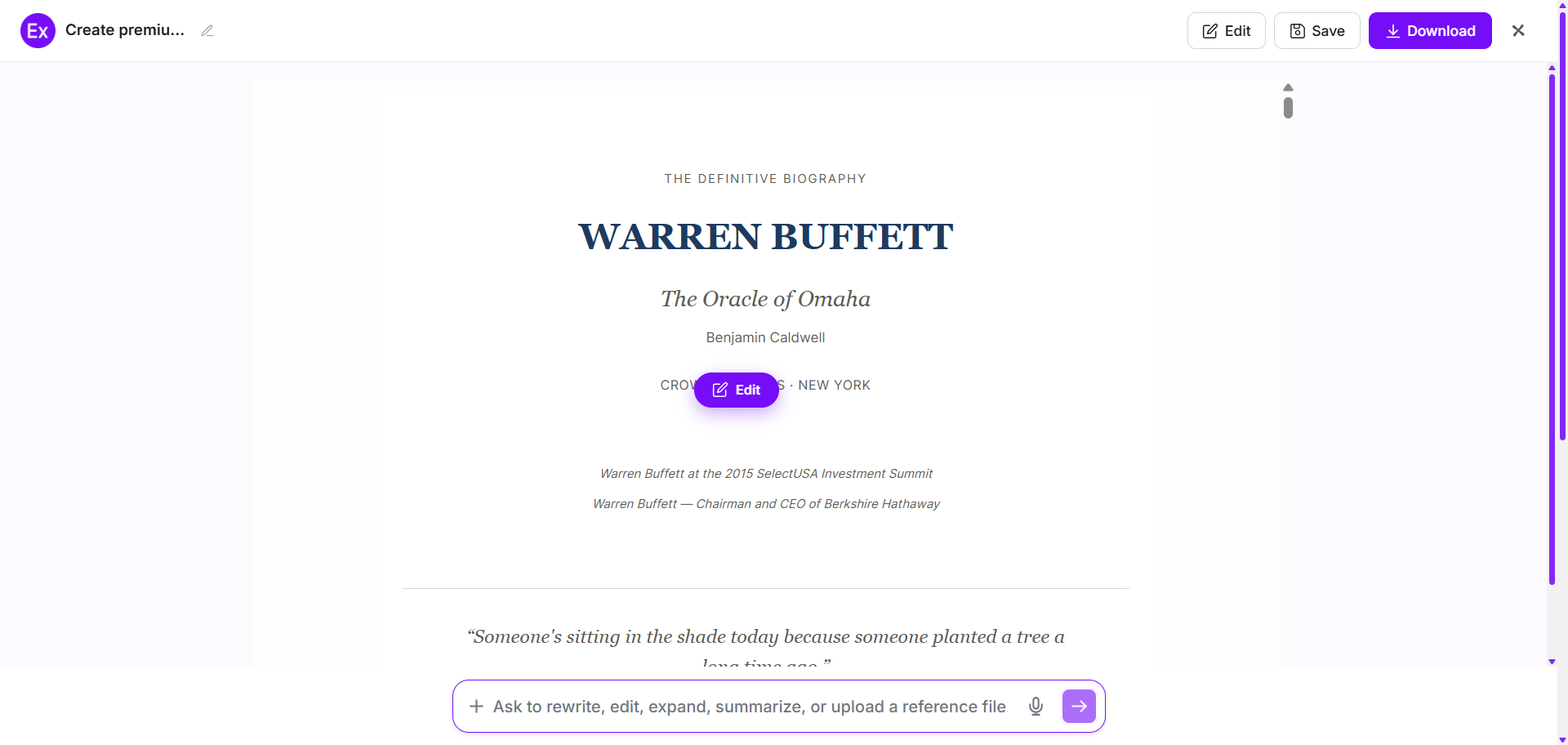
The AI creates a brand-new biography inspired by the selected example and my prompt. It generates an original life story with organized sections, chronological events, factual summaries, and balanced storytelling without copying the reference biography.
Customize The Biography In The Online Editor
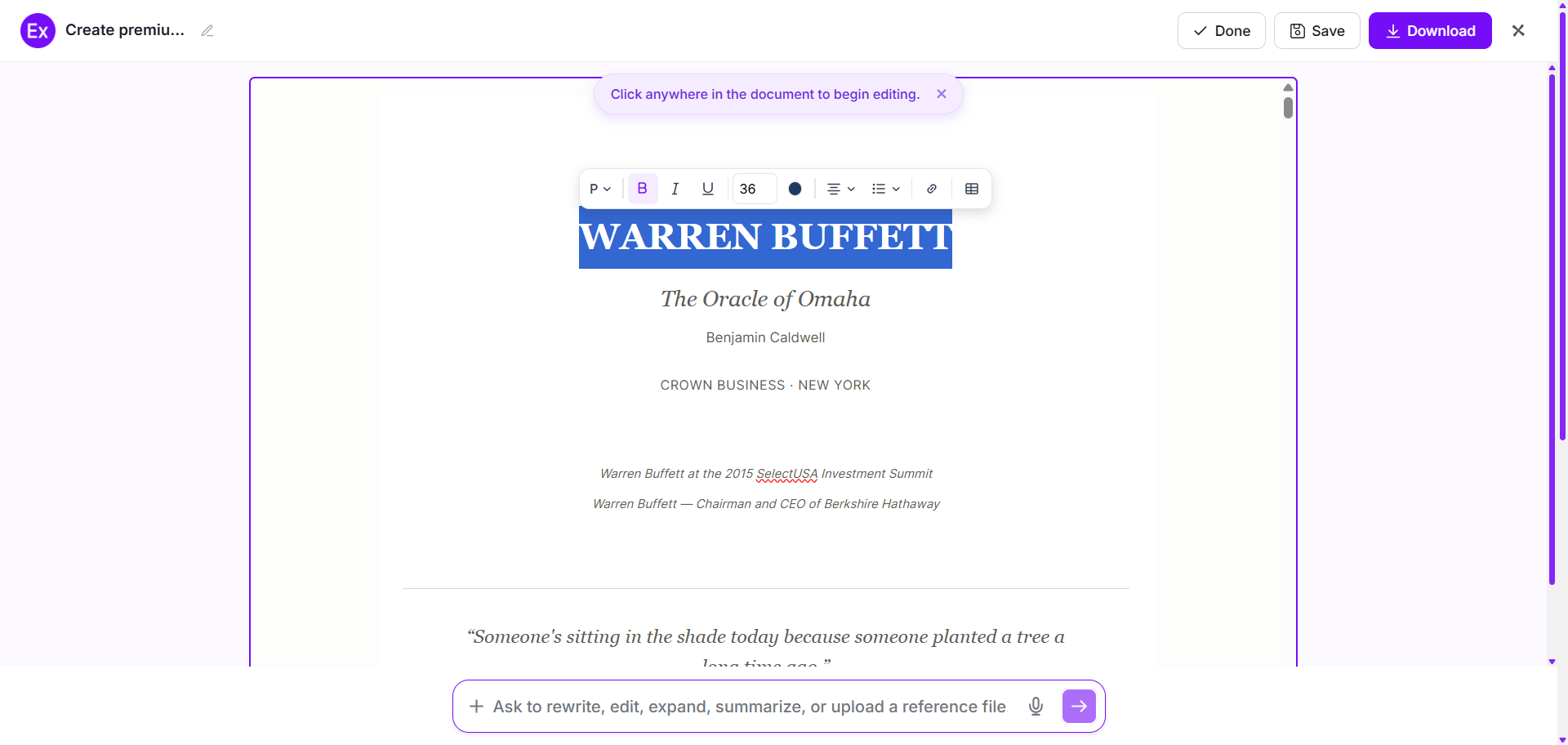
I can personalize every section by editing facts, updating achievements, refining timelines, adding photographs, modifying headings, adjusting formatting, reorganizing content, and improving readability using AI-powered editing tools.
Download And Use The Final Biography
Once my biography is complete, I can download the finished as a PDF and use it for professional profiles, educational projects, presentations, company websites, publications, media kits, historical documentation, or personal storytelling.
After generating a new biography, I can open it in the online editor to personalize every section according to the person's life and achievements. I can edit facts, update career milestones, replace photographs, modify headings, improve timelines, add important accomplishments, reorganize content, and refine the overall narrative while maintaining a clear and professional structure.
The editor also includes AI-powered tools that help improve images, generate new visuals, enhance formatting, resize layouts, and create multiple biography variations. On Examples.com, I can transform an AI-generated biography into a polished life story suitable for educational, professional, historical, or personal use without requiring advanced writing or design experience.
AI Biography Editing Features
AI-powered editing features make biography creation faster, more accurate, and easier to customize.
1
InPaint
Edit or replace photographs, portraits, or visual elements while preserving the overall biography layout.
2
Resize
Adjust biography dimensions for presentations, websites, social media, printed profiles, or educational materials.
3
Upscale
Improve portrait quality and sharpen images for a more professional biography presentation.
4
Restyle
Generate alternative biography layouts, typography, color themes, and visual styles using AI.
5
BG
Remove or replace portrait backgrounds to create cleaner and more professional biography designs.
6
Crop
Adjust image framing to emphasize important portraits or historical photographs.
7
Flip
Mirror selected visual elements when creating alternative layout arrangements.
8
Animate
Transform biography visuals into engaging animated presentations for educational or professional storytelling.
9
Multishot
Generate multiple biography design variations from one prompt to compare different presentation styles.
Standard Biography Formats And Lengths
Biography formats vary depending on the audience, publication type, and amount of information being presented. Choosing the appropriate length helps communicate a person's story effectively.
Biography Format
Typical Length
Best Use Case
Micro Biography
10–30 words
Social media profiles, headlines, author credits
Short Biography
50–100 words
Conference programs, company profiles, directories
Professional Biography
200–500 words
Business websites, media kits, speaker introductions
Websites, presentations, online portfolios, digital publishing
Short biographies are ideal for professional introductions, while feature biographies provide deeper insight into a person's achievements and experiences. Full-length biographies offer a comprehensive account of an individual's life and legacy.
Essential Elements Every Biography Should Include
A strong biography combines factual accuracy with organized storytelling to present a complete and engaging account of a person's life.
Early Life – Introduce where and when the person was born, their family background, and childhood experiences.
Education – Highlight schools, universities, training, and educational achievements that shaped the person's journey.
Career – Describe important jobs, professional roles, projects, and major career milestones.
Challenges – Explain important obstacles, setbacks, and difficulties the person faced throughout life.
Historical Context – Show how important events, society, or cultural changes influenced the person's decisions and achievements.
Chronological Timeline – Organize major life events in a logical order from early life to later accomplishments.
Legacy – Summarize the lasting impact, influence, and contributions made by the individual.
Reliable Sources – Base the biography on verified facts, trusted references, interviews, and historical records whenever available.
How Do I Write A Better Biography?
A well-written biography presents factual information through clear storytelling that helps readers understand a person's life and lasting contributions.
Research reliable sources – Research reliable sources before writing the biography.
Begin with the person's early life – Begin with the person's early life and important background information.
Organize events in chronological order – Organize events in chronological order for a natural narrative flow.
Include major achievements – Include major achievements supported by verified facts.
Explain important challenges – Explain important challenges and how they were overcome.
Provide historical or cultural context – Provide historical or cultural context when it improves understanding.
Maintain an objective third-person writing style – Maintain an objective third-person writing style throughout the biography.
Focus on one central theme – Focus on one central theme that connects important life events.
Review dates, names, and accomplishments – Review dates, names, and accomplishments carefully for factual accuracy.
Refine the final biography – Refine the final biography so it remains clear, balanced, informative, and engaging for readers.
Common Biography Writing Mistakes To Avoid
A biography should present an accurate and engaging account of a person's life. Avoiding these common mistakes helps create a well-structured biography that readers can trust and understand.
Using Unverified Information – Confirm important dates, achievements, quotations, and life events using reliable sources before publishing.
Ignoring Chronological Order – Present life events in a logical timeline so readers can easily follow the person's journey.
Focusing Only On Successes – Include both achievements and challenges to create a balanced and authentic life story.
Adding Too Much Unnecessary Detail – Highlight meaningful events instead of overwhelming readers with minor facts.
Missing Historical Context – Explain how important social, cultural, or historical events influenced the person's life and decisions.
Writing From The Wrong Perspective – A biography should normally use an objective third-person perspective rather than first-person narration.
Lacking A Clear Theme – Connect important life events through a consistent theme such as leadership, innovation, resilience, or public service.
Skipping Final Fact Checking – Review names, dates, locations, accomplishments, and references carefully before finalizing the biography.
How Can I Use A Biography For Personal Or Professional Growth?
Biographies help educate, inspire, and communicate personal achievements. They are valuable for professional branding, educational projects, historical documentation, and organizational storytelling.
1
Professional Profiles
Present career achievements, education, experience, and expertise for business websites, portfolios, and company directories.
2
Educational Projects
Create informative biographies for school assignments, research projects, classroom activities, and academic presentations.
3
Company Leadership
Introduce founders, executives, board members, and key leaders through well-structured organizational biographies.
4
Historical Documentation
Preserve the lives of influential individuals, innovators, scientists, artists, and public figures for future generations.
5
Media And Publications
Develop biographies for books, magazines, interviews, documentaries, press releases, and media kits.
6
Personal Legacy
Document important life experiences, achievements, values, and contributions to create a meaningful personal record for family or future readers.
Which Biography Formats Perform Best?
The best biography format depends on the audience, publication platform, and amount of information that needs to be presented.
Biography Format
Best For
Advantages
Micro Biography (10–30 Words)
Social media profiles and headlines
Delivers a quick introduction using only essential facts
Short Biography (50–100 Words)
Company websites and event programs
Provides a concise professional overview
Professional Biography (200–500 Words)
Business profiles and media kits
Balances education, experience, and career highlights
Feature Biography (1,000–5,000 Words)
Magazines and educational articles
Explores one significant period or achievement in greater depth
Full-Length Biography
Books and historical publications
Presents a comprehensive account of an individual's life journey
Digital Biography
Websites and online portfolios
Easy to update, share, and present across digital platforms
Selecting the appropriate biography format improves readability, supports the intended audience, and ensures the life story is communicated effectively.
Biography Ideas For Different Industries
Biographies are used across many industries to recognize achievements, introduce professionals, and preserve important life stories.
Business And Entrepreneurship – Highlight founders, executives, entrepreneurs, leadership journeys, and company-building achievements.
Science And Research – Document discoveries, innovations, academic contributions, and scientific breakthroughs.
Technology – Present software developers, engineers, inventors, technology leaders, and digital innovators.
Healthcare – Showcase physicians, nurses, medical researchers, healthcare executives, and public health advocates.
Sports – Celebrate athletes, coaches, sporting achievements, records, and career milestones.
Arts And Entertainment – Present actors, musicians, writers, filmmakers, designers, and creative professionals through engaging life stories.
Government And Public Service – Document political leaders, diplomats, judges, military personnel, and public servants.
Nonprofit Organizations – Recognize founders, volunteers, social entrepreneurs, and community leaders who create meaningful impact.
Corporate Organizations – Feature executive leadership teams, board members, award recipients, and employee success stories that strengthen organizational identity.
FAQs
What Is The Difference Between A Biography And An Autobiography?
A biography is written by someone other than the subject, while an autobiography is written by the individual whose life is being described.
What Should Every Biography Include?
A biography should include early life, education, career, achievements, challenges, historical context, major milestones, and a lasting legacy supported by accurate information.
Can I Create A Biography Without Professional Writing Experience?
Yes. AI-powered tools help organize information, structure life events, improve writing, and create professional biographies from simple prompts.
Why Is Factual Accuracy Important In A Biography?
Accurate information builds credibility, preserves historical integrity, and ensures readers receive a truthful account of the person's life and accomplishments.
Can I Customize Every Biography Section After AI Generates It?
Yes. After generating a biography, I can edit facts, update milestones, replace photographs, reorganize sections, adjust formatting, and refine the content using the online editor available on Examples.com.
What Is The Difference Between A Memoir And A Biography?
A memoir focuses on a specific experience, period, or theme in a person's life, while a biography usually covers the individual's entire life story.
Which Biography Format Should I Choose?
The ideal format depends on your purpose. A short biography works well for introductions, a professional biography suits business use, and a full-length biography is appropriate for comprehensive life stories.
Where Can I Use A Biography?
Biographies can be used for company websites, educational projects, books, magazines, media kits, conferences, award programs, historical archives, online portfolios, and professional profiles.
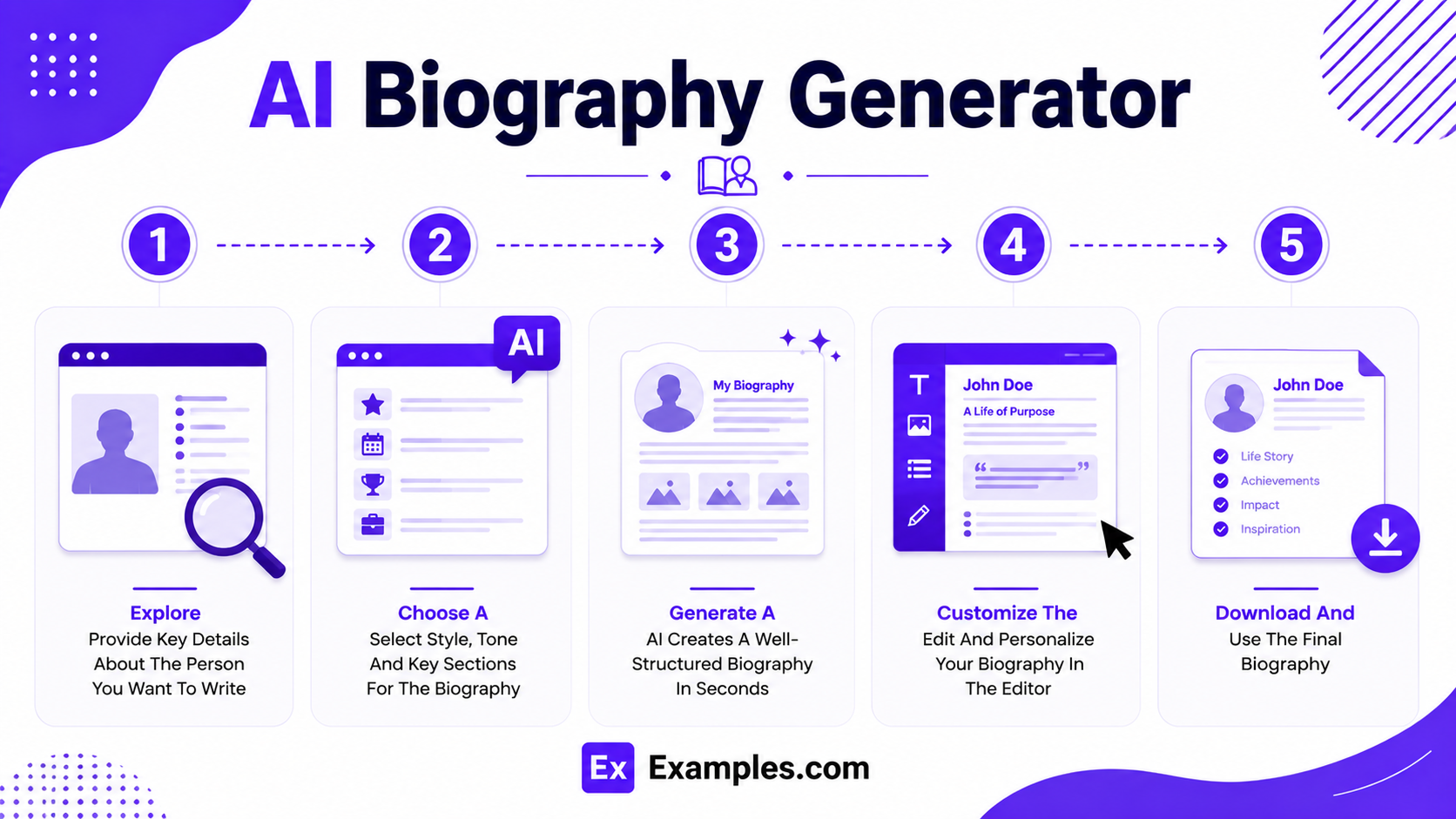 Creating a professional biography becomes easier when I use well-written biographies as inspiration. The workflow combines real-world biography examples, AI-powered writing, online editing, and personalized customization to transform factual information into a structured life story.