Free AI CV Maker, 50+ Real CV Examples
No Examples available yet
Check back soon, or browse other Examples to generate with.
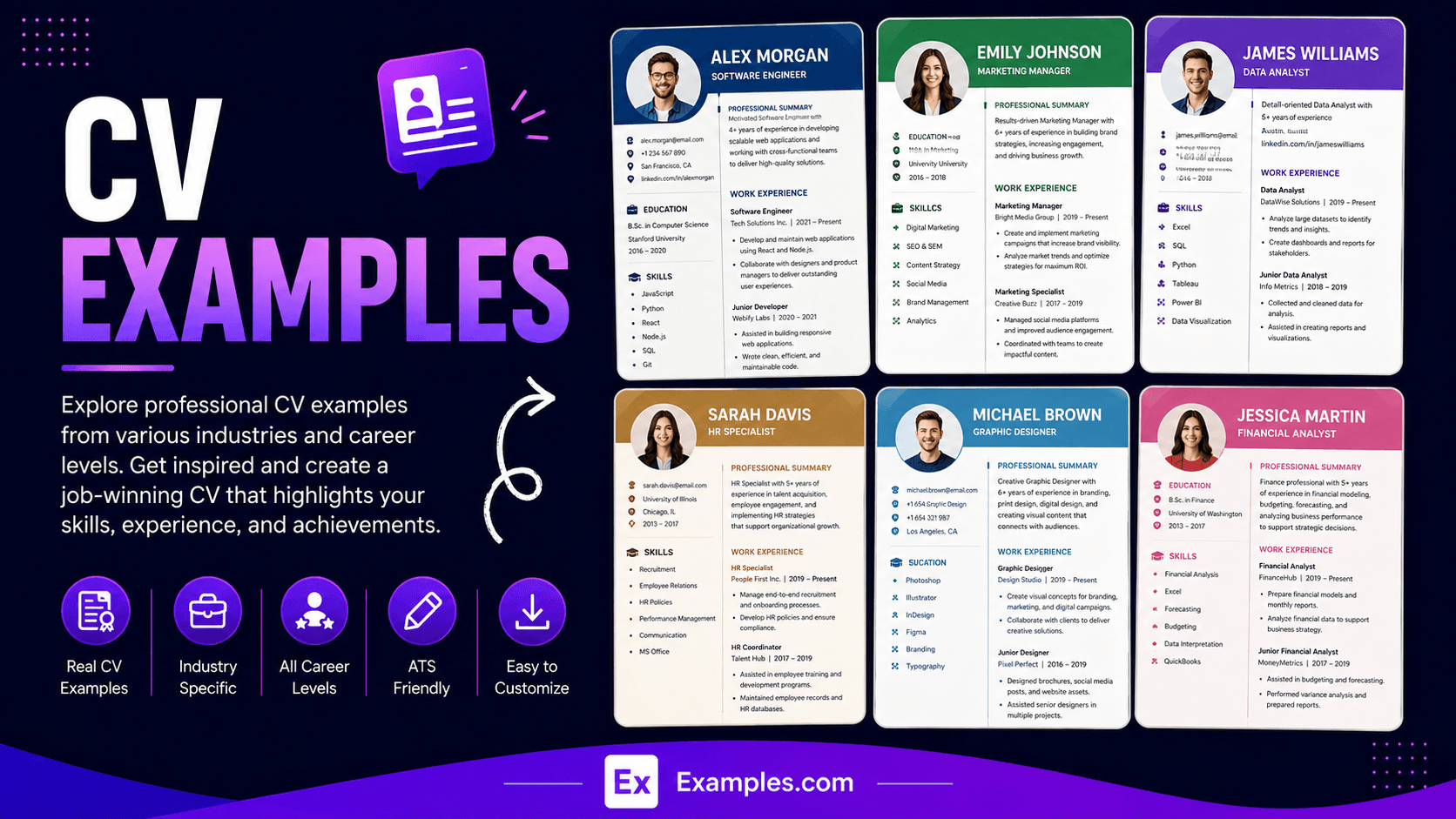
CV examples help job seekers create professional, well-structured curriculum vitae that highlight their qualifications, work experience, education, and skills. Whether you're a student, recent graduate, experienced professional, or executive, reviewing real CV examples can help you understand the best layout, formatting, and content to impress recruiters and hiring managers.
What is a CV?
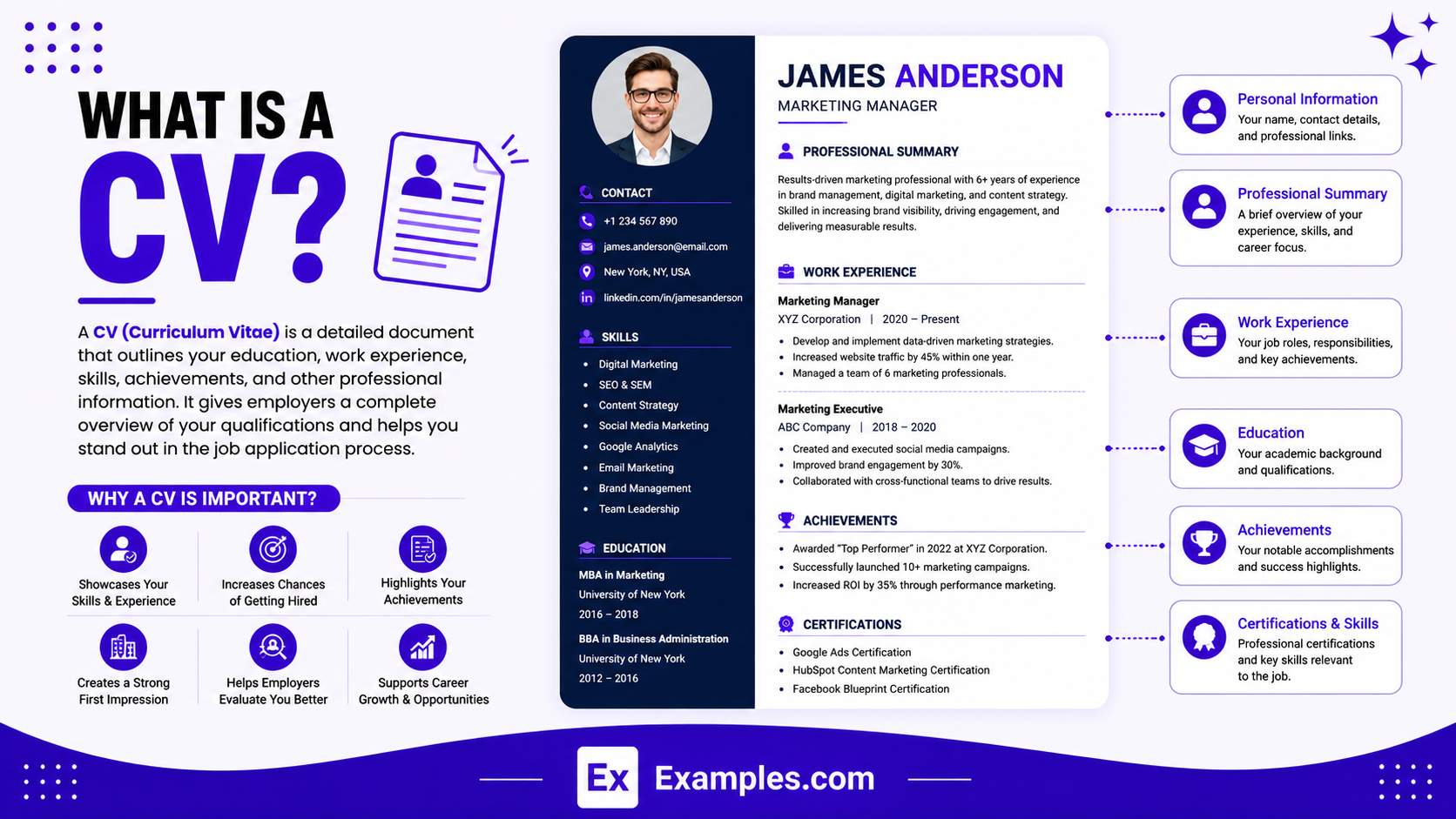
A CV (Curriculum Vitae) is a detailed professional document that outlines your education, work experience, skills, certifications, achievements, publications, and other qualifications. It provides employers with a complete overview of your professional background and is commonly used when applying for jobs, internships, academic positions, scholarships, and research opportunities.
A professional CV typically includes:
- Personal information
- Professional summary
- Work experience
- Education
- Skills
- Certifications
- Awards
- Projects
- Publications (if applicable)
- Languages
- References (optional)
Popular Types Of CVs
Different careers require different CV formats. Below are some of the most common types of CVs.
Professional CVs
- Accountant CV
- Administrative Assistant CV
- Business Analyst CV
- Customer Service CV
- Executive Assistant CV
- Human Resources CV
- Marketing Manager CV
- Office Manager CV
- Operations Manager CV
- Project Manager CV
Technology CVs
- Software Engineer CV
- Web Developer CV
- Front-End Developer CV
- Back-End Developer CV
- Full Stack Developer CV
- Data Scientist CV
- Data Analyst CV
- Cybersecurity Analyst CV
- DevOps Engineer CV
- UI UX Designer CV
Engineering CVs
- Civil Engineer CV
- Mechanical Engineer CV
- Electrical Engineer CV
- Chemical Engineer CV
- Industrial Engineer CV
- Manufacturing Engineer CV
- Quality Assurance Engineer CV
- Quality Control Inspector CV
Healthcare CVs
- Doctor CV
- Nurse CV
- Pharmacist CV
- Dentist CV
- Physiotherapist CV
- Psychologist CV
- Occupational Therapist CV
- Veterinarian CV
Education CVs
- Teacher CV
- Lecturer CV
- Professor CV
- School Principal CV
- Librarian CV
- Research Assistant CV
Creative CVs
- Graphic Designer CV
- Content Writer CV
- Copywriter CV
- Journalist CV
- Photographer CV
- Video Editor CV
- Animator CV
- Fashion Designer CV
Legal and Finance CVs
- Lawyer CV
- Financial Analyst CV
- Auditor CV
- Investment Banker CV
- Economist CV
- Tax Consultant CV
Student and Academic CVs
- Student CV
- Graduate CV
- Internship CV
- Scholarship CV
- Academic CV
- Research CV
- PhD CV
How Do I Generate CVs Using Proven Examples from Top Companies?
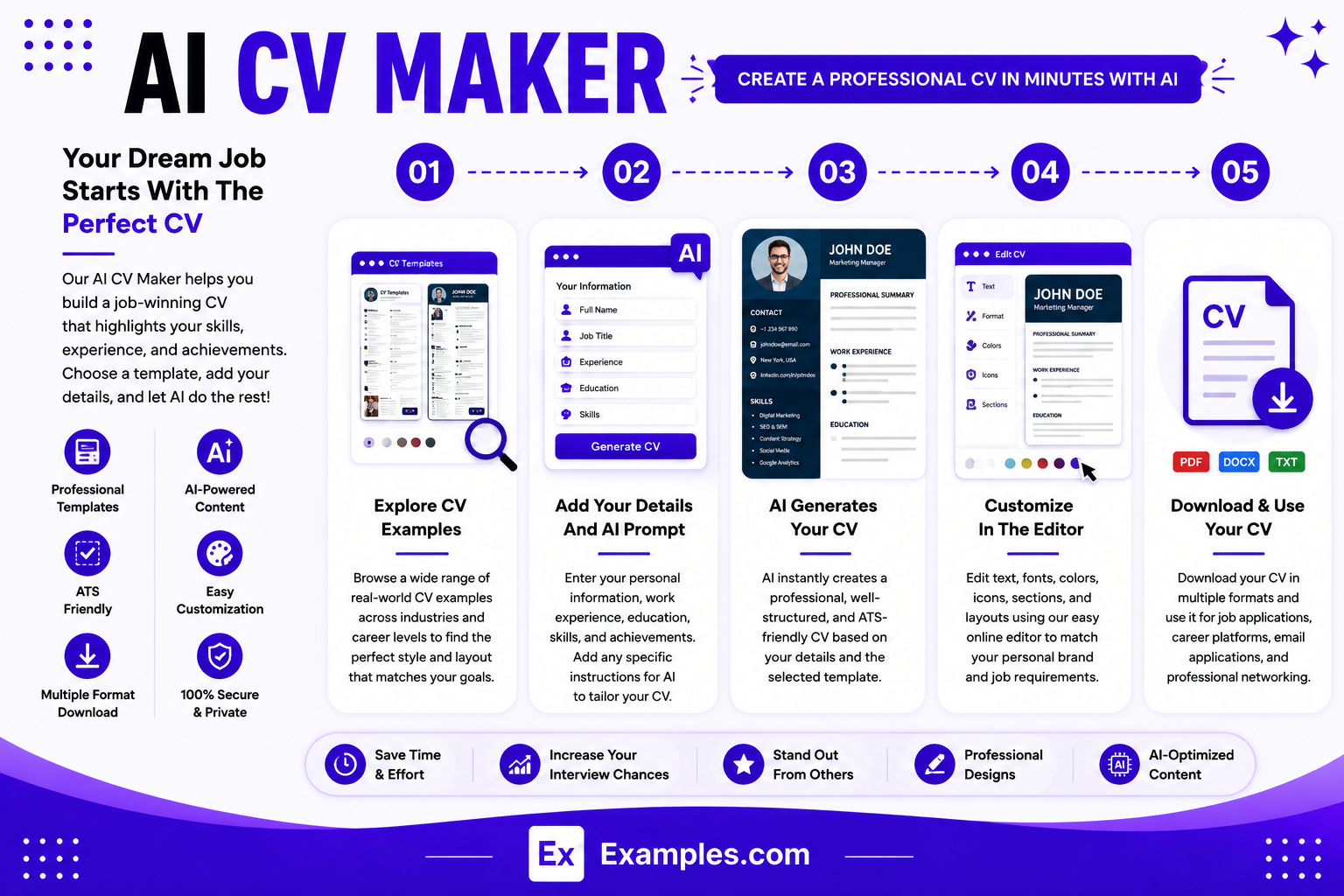 Create professional CVs with AI by using real-world CV examples, intelligent prompts, and powerful editing tools to build job-ready documents in minutes.
Explore Real-World CV Examples


Choose A Reference CV And Enter An AI Prompt
Generate A New AI CV


Customize The CV In The Online Editor
Download And Use The Final CV

Why Are CV Examples Important?
Studying CV examples helps applicants understand what employers expect and how to present their qualifications effectively.
CV examples can help you:
- Learn professional formatting.
- Write stronger work experience descriptions.
- Highlight achievements effectively.
- Improve ATS compatibility.
- Organize information clearly.
- Tailor your CV for different industries.
- Increase interview opportunities.
- Build confidence before applying.
Essential Sections of a Professional CV
A strong CV should include information that is relevant, organized, and easy to scan.
Contact Information
Include:
- Full name
- Professional email address
- Phone number
- City and country
- LinkedIn profile
- Portfolio or website (if applicable)
Professional Summary
Write a short introduction that highlights:
- Years of experience
- Core skills
- Industry expertise
- Career achievements
- Professional goals
Work Experience
List your employment history in reverse chronological order.
Include:
- Job title
- Company name
- Employment dates
- Key responsibilities
- Measurable achievements
Education
Mention:
- Degrees
- Institutions
- Graduation dates
- Academic honors
- Relevant coursework (if applicable)
Skills
Include a balanced mix of:
- Technical skills
- Soft skills
- Industry-specific competencies
- Software proficiency
CV Formats Explained
Choosing the right CV format helps employers quickly understand your qualifications and career history. The best format depends on your experience, industry, and career goals.
Chronological CV
A chronological CV lists your work experience starting with your most recent position.
It is best for:
- Experienced professionals
- Applicants with a steady career history
- Corporate job seekers
Advantages include:
- Easy to read
- Preferred by recruiters
- Clearly shows career progression
Functional CV
A functional CV focuses on skills and abilities rather than employment history.
It is suitable for:
- Career changers
- Recent graduates
- Freelancers
- Applicants with employment gaps
This format highlights what you can do rather than where you have worked.
Combination CV
A combination CV blends the best features of chronological and functional formats.
It includes:
- Professional summary
- Skills section
- Detailed work experience
- Education
This format works well for professionals with specialized skills and several years of experience.
Academic CV
Academic CVs are much more detailed than standard job application CVs.
They often include:
- Research experience
- Publications
- Conferences
- Teaching experience
- Grants
- Awards
- Academic memberships
These CVs are commonly used for universities and research institutions.
How to Write an Effective CV
A well-written CV demonstrates your qualifications while remaining concise, organized, and relevant to the position you're applying for.
Tailor Your CV to Every Job
Avoid sending the same CV for every application.
Customize:
- Professional summary
- Skills
- Keywords
- Achievements
- Work experience
Match your CV to the specific job description whenever possible.
Write a Strong Professional Summary
Your professional summary should immediately explain why you're a good fit.
Include:
- Years of experience
- Industry specialization
- Core strengths
- Major achievements
- Career objective
Keep it between three and five sentences.
Highlight Achievements Instead of Duties
Employers prefer measurable accomplishments rather than generic responsibilities.
Instead of writing:
- Responsible for managing projects
Write:
- Successfully managed 15 client projects with a 98% on-time delivery rate.
Numbers make your achievements more credible.
Use Action Verbs
Strong action verbs create a more impactful CV.
Examples include:
- Managed
- Developed
- Designed
- Increased
- Improved
- Implemented
- Coordinated
- Led
- Optimized
- Delivered
These words demonstrate initiative and results.
Keep the Layout Professional
Use:
- Clear headings
- Consistent spacing
- Easy-to-read fonts
- Logical section order
- Bullet points
A clean layout makes your CV easier for recruiters to scan.
ATS-Friendly CV Tips
Many employers use Applicant Tracking Systems (ATS) to screen applications before a recruiter reviews them.
Creating an ATS-friendly CV improves your chances of passing the initial screening.
Use Job Description Keywords
Read the job posting carefully and naturally include relevant keywords throughout your CV.
Examples include:
- Project Management
- Customer Service
- Python
- Financial Analysis
- Data Visualization
- Quality Assurance
Avoid keyword stuffing and keep the content natural.
Use Standard Headings
ATS software recognizes common section titles such as:
- Professional Summary
- Work Experience
- Education
- Skills
- Certifications
- Projects
Avoid overly creative headings that software may not recognize.
Avoid Complex Graphics
While visually appealing CVs look impressive, ATS software may struggle to read:
- Tables
- Text boxes
- Charts
- Decorative icons
- Multi-column layouts
Simple formatting is generally the safest choice.
Save in the Right Format
Unless the employer specifies otherwise, submit your CV as:
- Microsoft Word (.docx)
These formats preserve formatting and are widely accepted.
Common CV Mistakes to Avoid
Even experienced professionals sometimes make avoidable mistakes that reduce their chances of getting interviews.
Including Irrelevant Information
Only include information related to the job you're applying for.
Remove:
- Outdated experience
- Irrelevant hobbies
- Unnecessary personal details
Using Generic Language
Avoid vague statements such as:
- Hardworking
- Team player
- Good communication skills
Instead, support your claims with measurable achievements and real examples.
Grammar and Spelling Errors
Typos create a poor first impression.
Before submitting your CV:
- Proofread carefully.
- Use grammar checking tools.
- Ask someone else to review it.
Writing Long Paragraphs
Recruiters spend only a short time reviewing each CV.
Use:
- Bullet points
- Short sentences
- Clear formatting
This improves readability.
Including an Unprofessional Email Address
Always use a professional email address based on your name.
Avoid casual or outdated email IDs.
International CV Standards
CV expectations vary across countries. Understanding regional preferences helps you prepare a document that meets local hiring practices and improves your chances of securing interviews.
CVs in the United States
In the United States, employers typically request a resume rather than a CV for most private-sector jobs. A CV is generally used for:
- Academic positions
- Research roles
- Medical professions
- Scientific careers
American CVs are often detailed and include publications, research, grants, teaching experience, and professional memberships.
CVs in the United Kingdom
UK employers commonly use the term "CV" for job applications.
A typical UK CV includes:
- Personal information
- Professional profile
- Employment history
- Education
- Skills
- Certifications
- References (optional)
Most UK CVs are two pages long and focus on achievements relevant to the role.
CVs in Europe
Many European employers prefer the Europass CV format for certain applications.
It includes standardized sections such as:
- Personal details
- Work experience
- Education
- Language proficiency
- Digital skills
- Communication skills
- Additional information
Using a consistent format makes qualifications easier to compare across countries.
CVs in Australia and New Zealand
Australian and New Zealand employers typically expect CVs that highlight:
- Professional achievements
- Relevant work experience
- Technical skills
- References
- Industry certifications
These CVs generally range from two to four pages depending on experience.
How AI Can Help You Create a Professional CV
Artificial Intelligence has transformed the way professionals prepare job applications. AI-powered CV generators simplify the writing process while helping users create polished, ATS-friendly documents.
AI tools can help you:
- Generate professional summaries.
- Write achievement-focused work experience.
- Suggest industry-specific keywords.
- Improve grammar and readability.
- Optimize formatting for ATS software.
- Recommend relevant skills.
- Personalize content for different job roles.
- Create modern, professional layouts.
Instead of starting with a blank page, users can use AI-generated content as a foundation and customize it to reflect their own experience and accomplishments.
CV Writing Best Practices
Following a few best practices can significantly improve the quality and effectiveness of your CV.
Keep Your CV Updated
Review your CV regularly and update it whenever you gain:
- New work experience
- Certifications
- Technical skills
- Awards
- Projects
- Professional achievements
An up-to-date CV ensures you're always ready for new opportunities.
Quantify Your Achievements
Recruiters value measurable results.
Examples include:
- Increased sales by 35%.
- Reduced operational costs by 20%.
- Managed a team of 15 employees.
- Delivered 50 successful client projects.
- Improved customer satisfaction scores by 18%.
Specific numbers demonstrate your impact more effectively than general statements.
Showcase Relevant Skills
Include skills that directly relate to the position.
Examples include:
Technical Skills
- Microsoft Office
- SQL
- Python
- Java
- Adobe Creative Suite
- AutoCAD
- Salesforce
- Google Analytics
Soft Skills
- Leadership
- Communication
- Problem-solving
- Teamwork
- Time management
- Critical thinking
- Adaptability
- Decision-making
Include Professional Certifications
Certifications demonstrate ongoing learning and industry expertise.
Examples include:
- Project Management Professional (PMP)
- Certified Public Accountant (CPA)
- AWS Certified Solutions Architect
- Google Professional Certificates
- Cisco Certified Network Associate (CCNA)
- Microsoft Certified Professional
- Six Sigma Certification
- Certified Scrum Master (CSM)
Always use a professional email address based on your name.
Avoid casual or outdated email IDs.