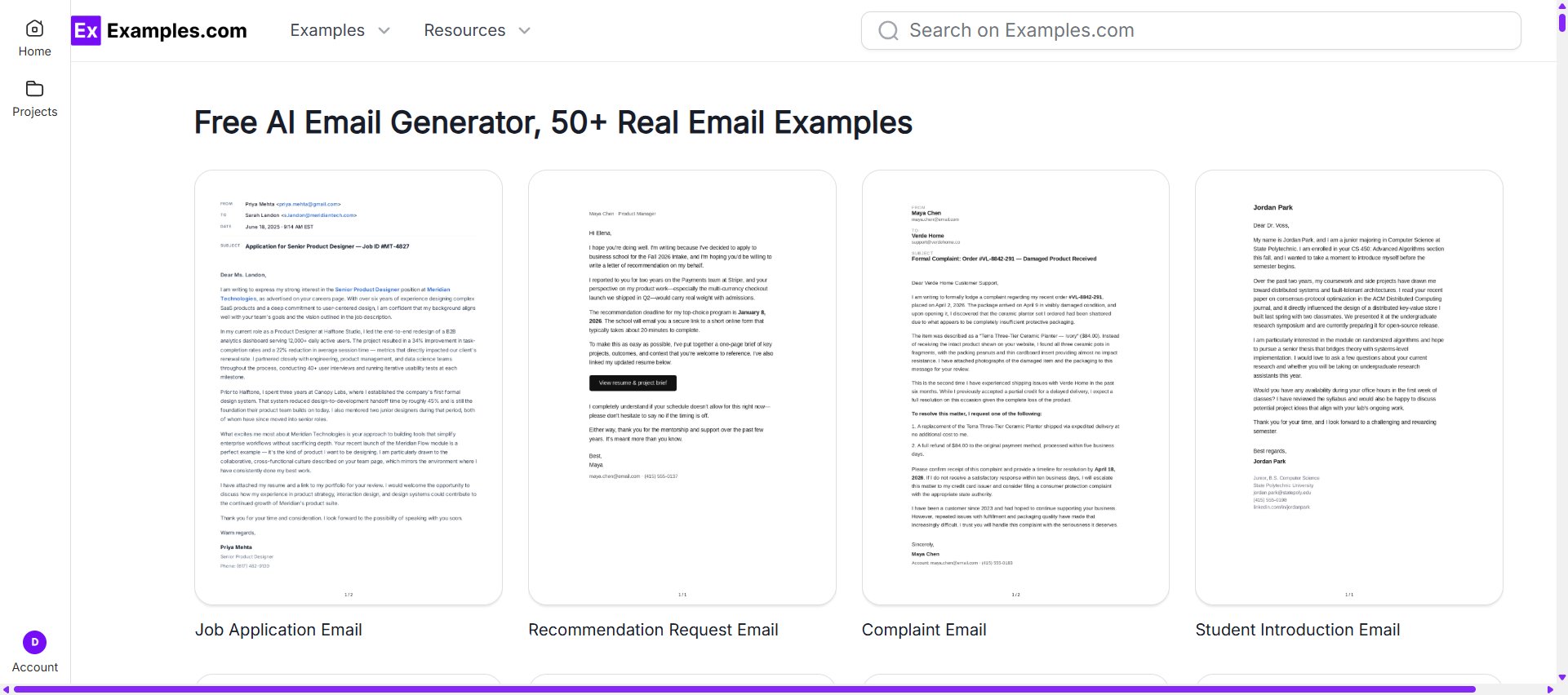
Free AI Email Generator, 50+ Real Email Examples
No Examples available yet
Check back soon, or browse other Examples to generate with.
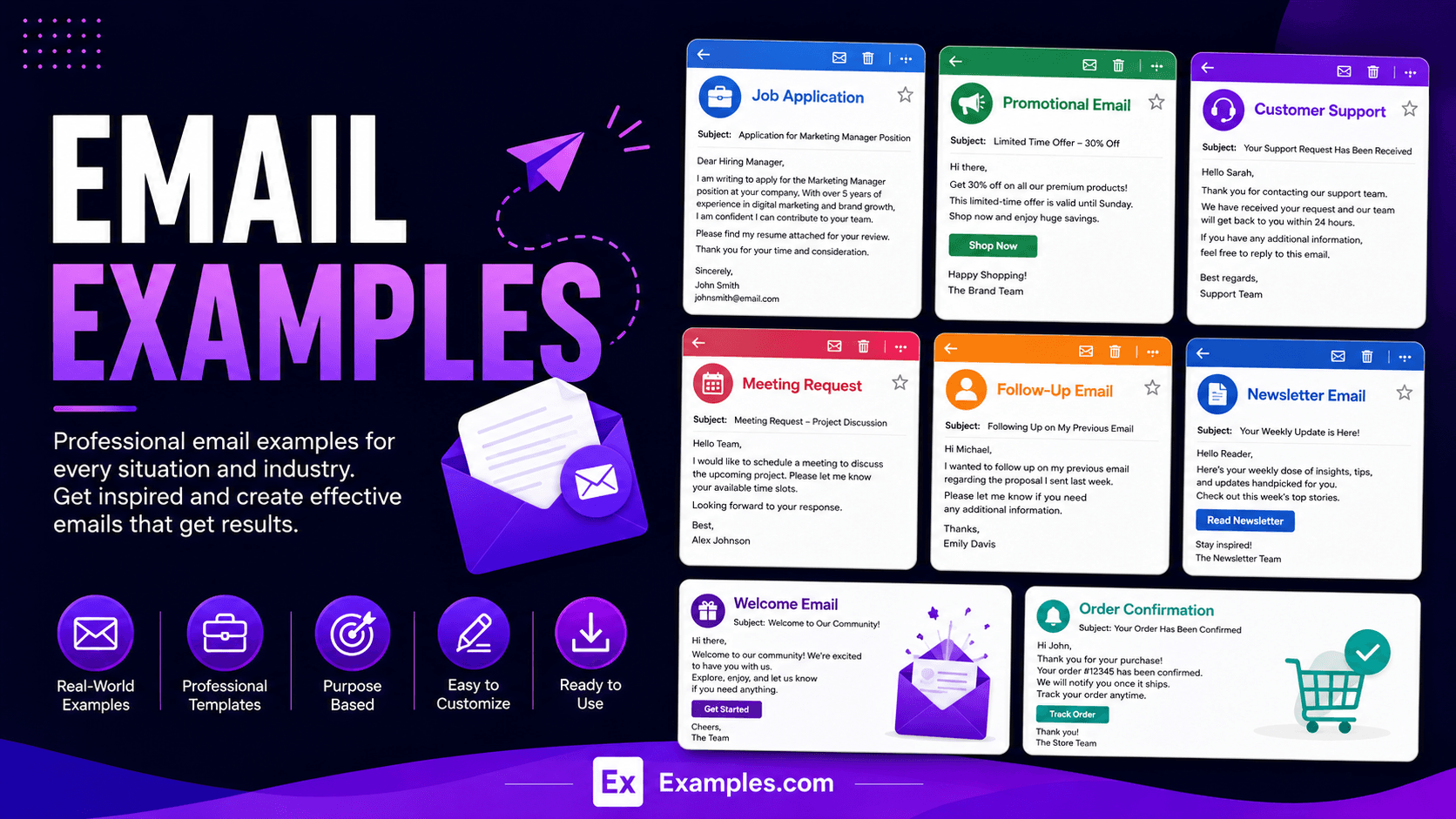
Emails help individuals and businesses write clear, professional, and effective messages for work, education, marketing, customer service, and everyday communication. From job applications and business proposals to newsletters and follow-ups, email examples provide proven formats that save time and improve communication.
Modern email examples cover everything from formal corporate emails to promotional campaigns, helping users create messages that engage readers, build relationships, and achieve specific goals.
What is an Email?
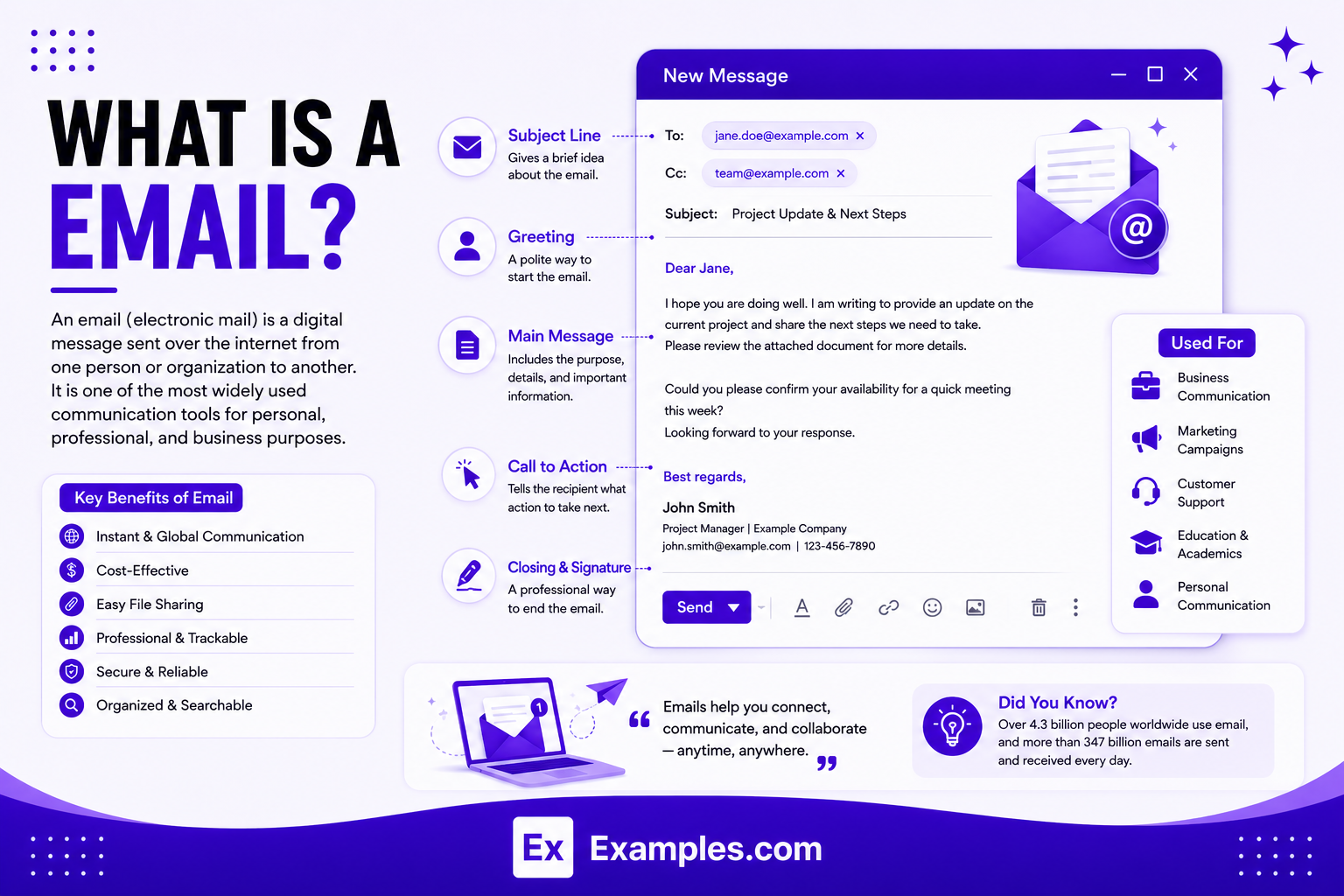
An email, short for electronic mail, is a digital message sent over the internet between individuals, businesses, schools, and organizations. It is one of the most widely used communication methods for sharing information, documents, requests, updates, and promotional content.
Emails can be formal or informal depending on their purpose. A professional email typically includes:
- Subject line
- Greeting
- Opening statement
- Main message
- Call to action
- Closing
- Signature
Popular Types Of Emails
Different situations require different email formats. Here are some of the most commonly used email types across industries.
Professional Email Examples
Used for workplace communication and corporate interactions.
- Business email
- Meeting request email
- Project update email
- Follow-up email
- Client email
- Team announcement email
Examples:
- Product launch announcement email from Apple
- Quarterly business update email from Microsoft
Job and Career Email Examples
Used by job seekers, recruiters, and employers.
- Job application email
- Internship request email
- Resume submission email
- Interview invitation email
- Offer letter email
- Resignation email
Examples:
- Software engineer application email
- Marketing internship inquiry email
Academic Email Examples
Commonly used by students, teachers, and universities.
- Email to professor
- Assignment submission email
- Scholarship inquiry email
- College admission email
- Recommendation request email
- Research collaboration email
Examples:
- Graduate admission inquiry email
- Assignment extension request email
Marketing Email Examples
Created to promote products, services, and events.
- Promotional email
- Newsletter email
- Product launch email
- Discount offer email
- Event invitation email
- Seasonal campaign email
Examples:
- Black Friday promotional email
- New product announcement email
Customer Service Email Examples
Designed to support customers and improve satisfaction.
- Complaint email
- Refund request email
- Support email
- Feedback email
- Thank-you email
- Welcome email
Examples:
- Customer complaint response email
- Subscription welcome email
Networking Email Examples
Used to build professional relationships.
- Introduction email
- Referral request email
- Networking email
- Partnership proposal email
- Collaboration email
Examples:
- LinkedIn connection follow-up email
- Business partnership proposal email
Personal Email Examples
Used for day-to-day communication.
- Invitation email
- Congratulations email
- Apology email
- Farewell email
- Holiday greeting email
Examples:
- Birthday invitation email
- Farewell email to colleagues
How Do I Generate Emails Using Proven Examples from Top Companies?
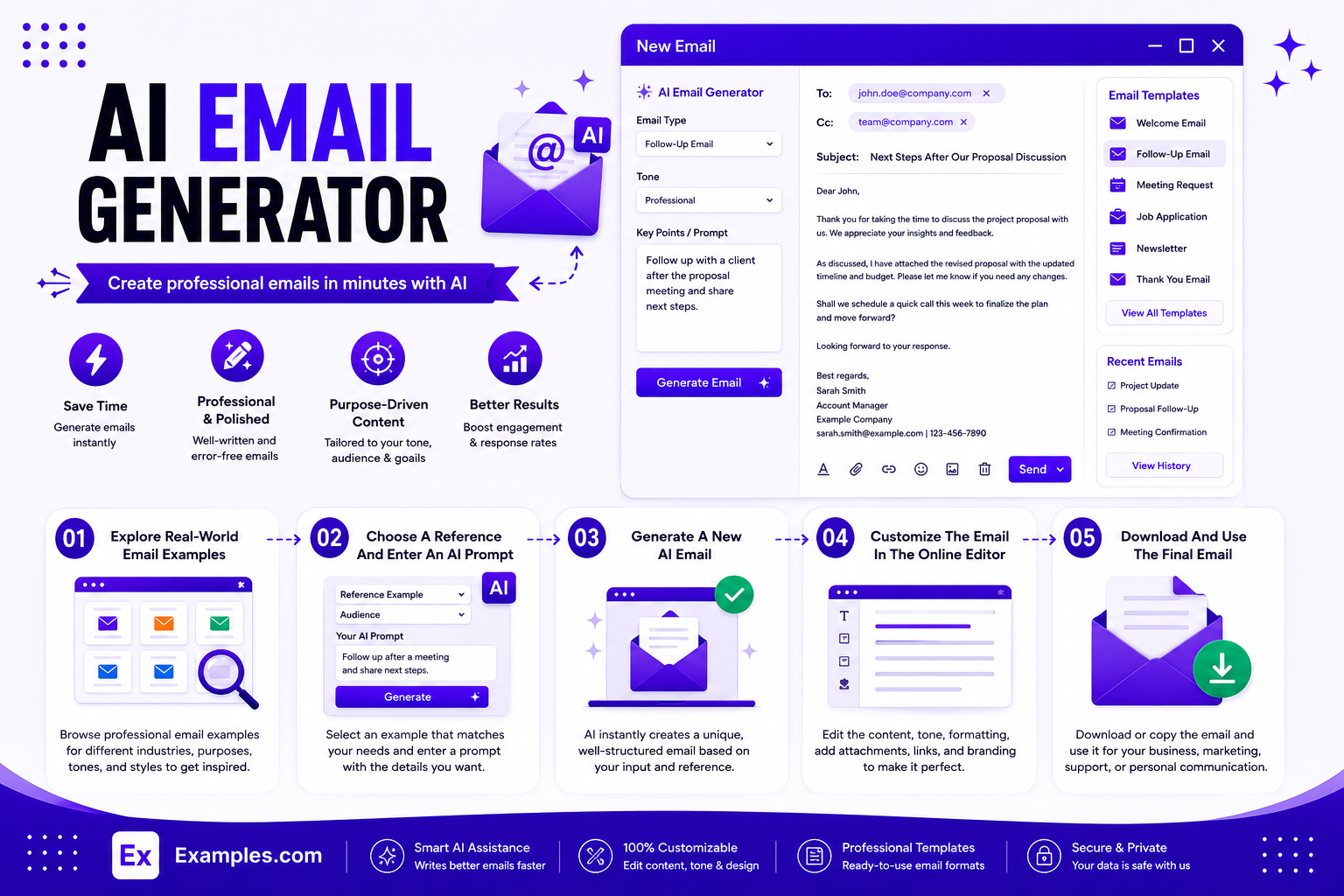 Creating emails with AI helps users quickly draft professional messages using prompts, proven examples, and powerful editing tools.
Explore Real-World Email Examples
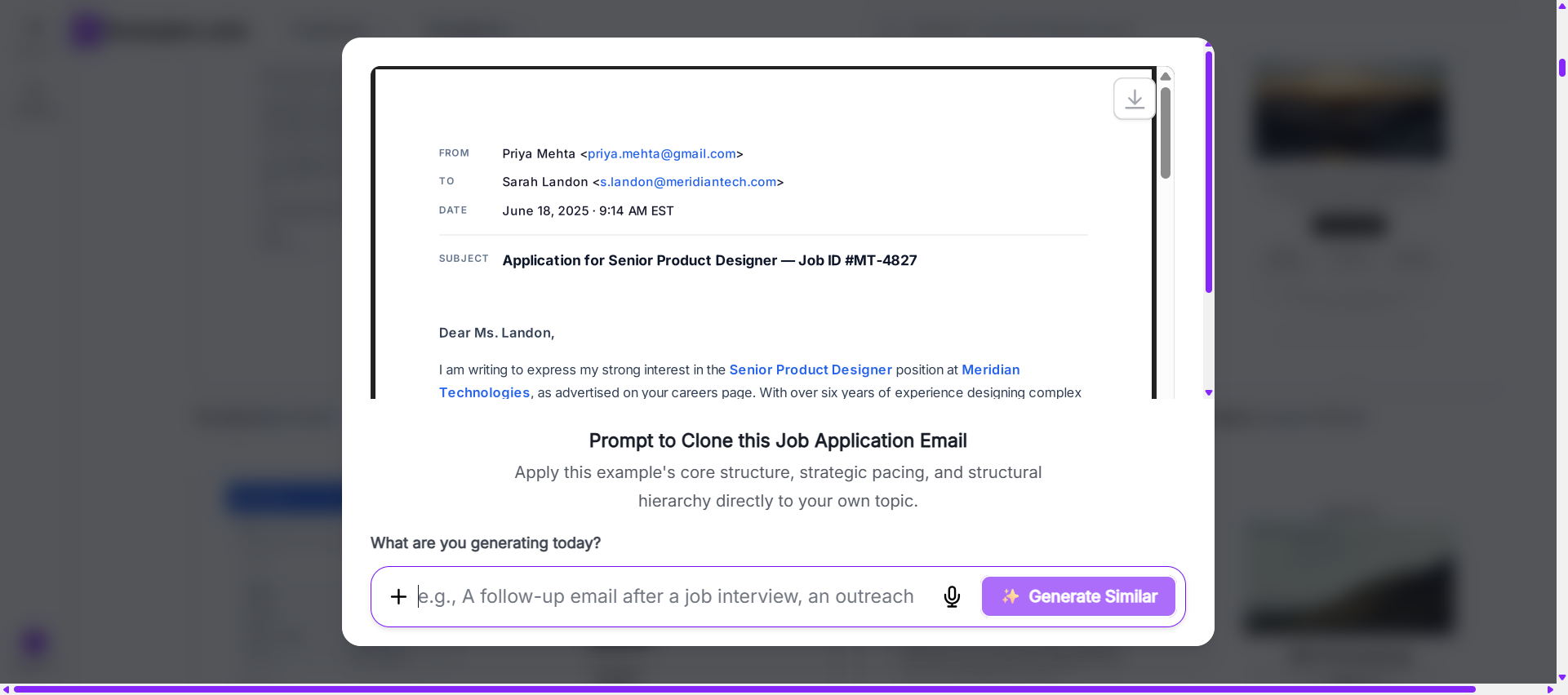
Choose A Reference Design And Enter An AI Prompt
Generate A New AI Email
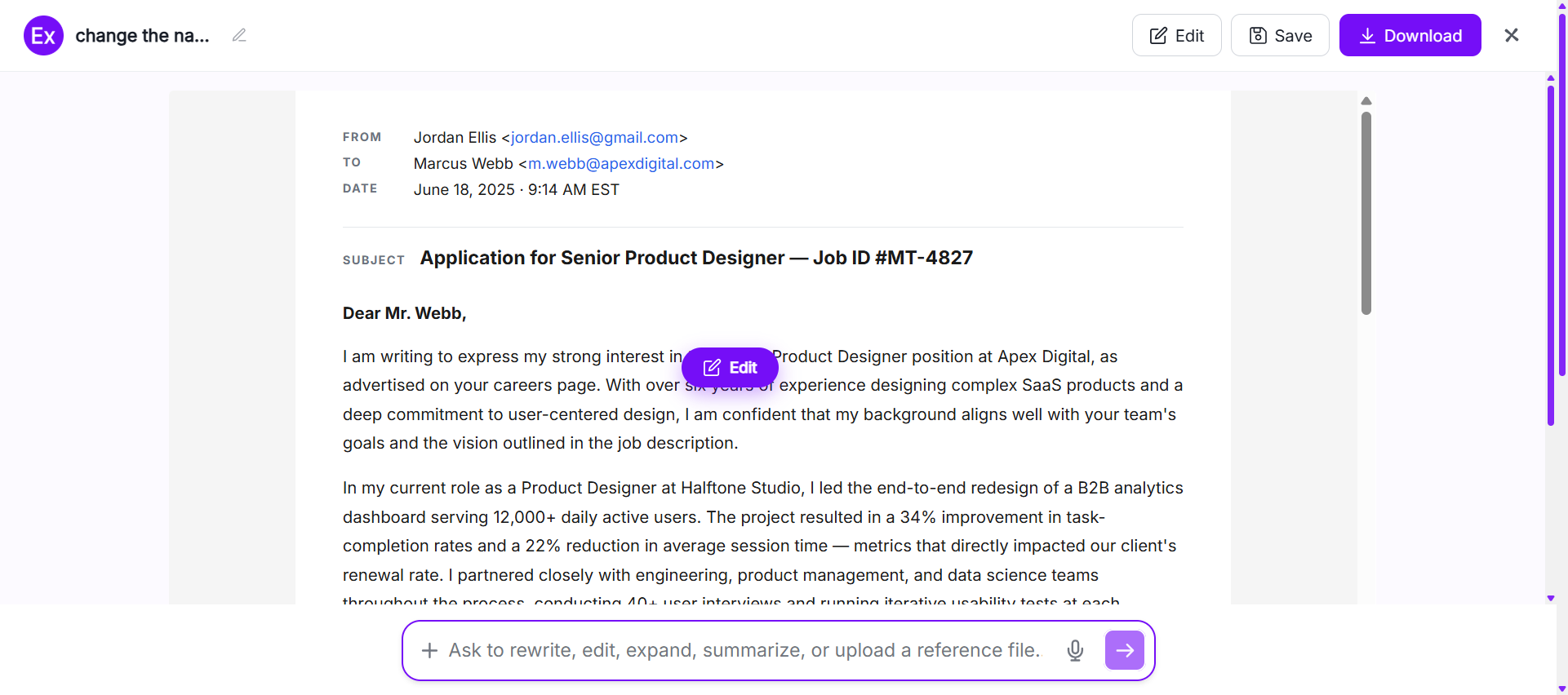
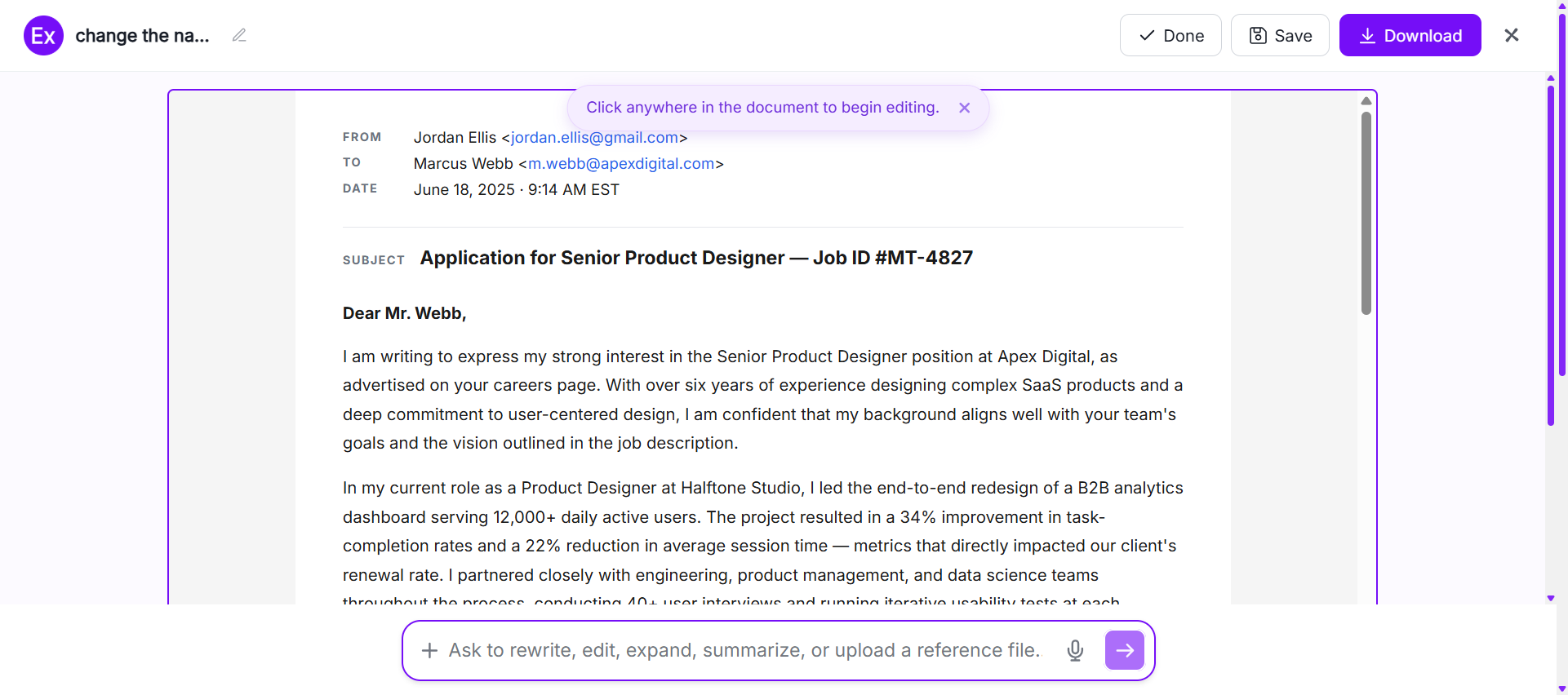
Customize The Email In The Online Editor
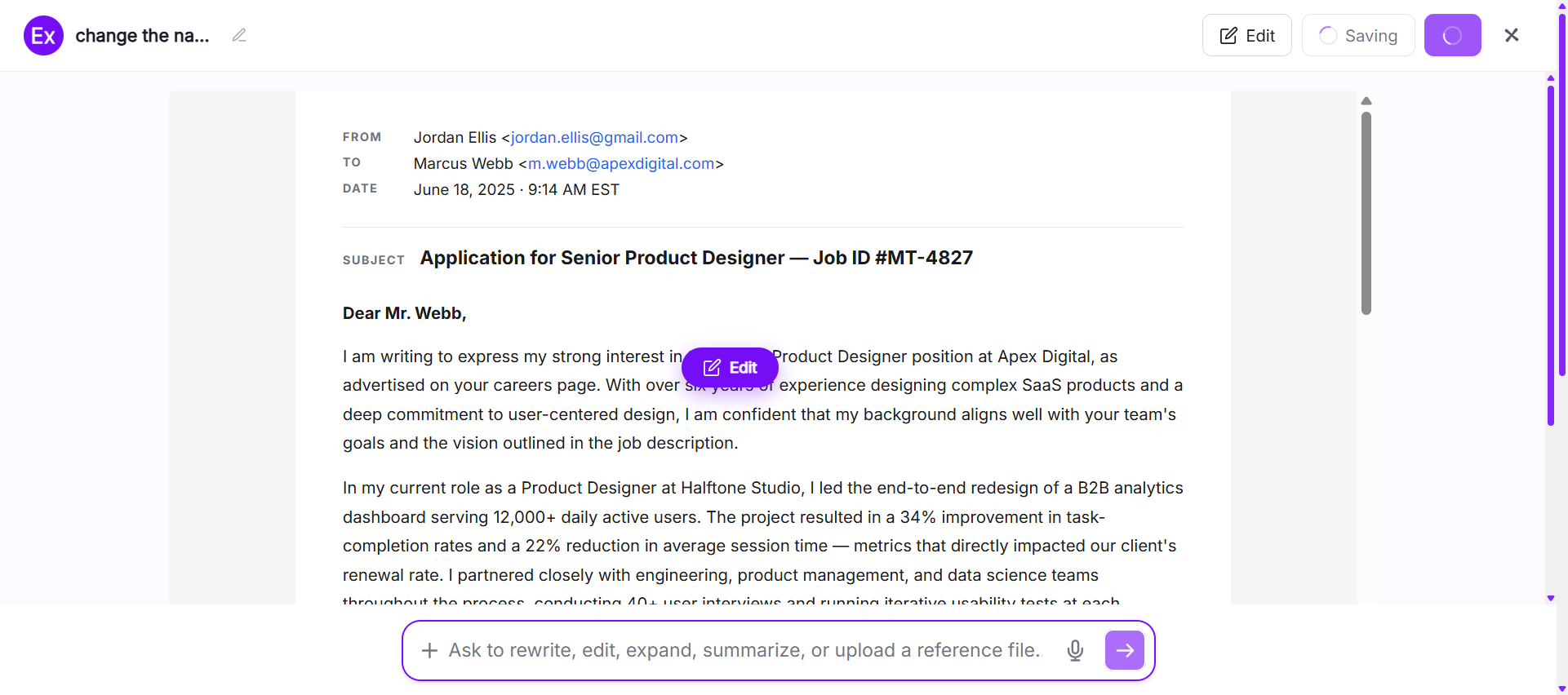
Download And Use The Final Email
Why Are Email Examples Important?
Email examples provide a reliable framework for writing messages that are clear, professional, and effective. Instead of starting from scratch, users can adapt proven templates to save time and avoid mistakes.
Email examples help you:
- Improve writing quality
- Save time
- Maintain professionalism
- Increase response rates
- Strengthen customer relationships
- Improve workplace communication
- Ensure consistency across teams
Essential Elements of an Effective Email
A well-written email contains several key components.
Subject Line
The subject line tells readers what the email is about.
Examples:
- Interview Confirmation for July 15
- New Product Launch Announcement
- Meeting Request for Project Review
Greeting
Start with an appropriate salutation.
Examples:
- Dear Hiring Manager,
- Hello Sarah,
- Hi Team,
Opening Statement
Introduce the purpose of the email.
Example:
"I hope you are doing well. I am writing to discuss the upcoming marketing campaign."
Main Message
Present the information clearly and concisely.
Call to Action
Tell the recipient what action to take.
Examples:
- Please review the document.
- Kindly confirm your attendance.
- Let me know your availability.
Closing
End politely.
Examples:
- Best regards,
- Sincerely,
- Thank you,
Best Practices for Writing Professional Emails
Writing effective emails requires more than good grammar. The following practices can improve readability and response rates.
Write a Clear Subject Line
Your subject line should immediately explain the purpose of the email.
Good examples:
- Interview Schedule for July 20
- Project Update for Q3 Campaign
- Request for Meeting Approval
Avoid vague subject lines like:
- Important
- Hello
- Update
Keep the Message Short and Focused
People receive dozens of emails every day. Keep paragraphs short and get to the point quickly.
Instead of:
"I hope you are having a wonderful day. I wanted to take some time to discuss several matters regarding our upcoming project."
Write:
"I am writing to discuss the timeline for our upcoming project."
Use a Professional Tone
Maintain a polite and respectful tone, especially in business emails.
Use phrases such as:
- Thank you for your time.
- I appreciate your assistance.
- Please let me know if you need additional information.
- I look forward to hearing from you.
Personalize Your Email
Personalization increases engagement.
Include:
- Recipient's name
- Company name
- Relevant details
- Specific requests
Example:
"Dear Ms. Johnson, I enjoyed speaking with you about the marketing role at BrightTech."
Proofread Before Sending
Check for:
- Grammar mistakes
- Typographical errors
- Broken links
- Incorrect names
- Missing attachments
A small mistake can affect professionalism.
Common Email Mistakes to Avoid
Avoiding these mistakes can improve your communication.
Writing Long Paragraphs
Large blocks of text make emails difficult to read.
Better approach:
- Use short paragraphs.
- Add bullet points.
- Highlight key information.
Using an Unclear Subject Line
Recipients may ignore emails with generic subject lines.
Avoid:
- Urgent
- Important Message
- Quick Question
Forgetting Attachments
Always confirm attachments before sending.
A useful checklist includes:
- File attached
- Correct recipient
- Subject line added
- Signature included
Using Informal Language in Professional Emails
Avoid phrases such as:
- Hey buddy
- What's up?
- ASAP please
Use professional alternatives.
Sending Emails Without a Call to Action
Tell recipients exactly what to do next.
Examples:
- Please confirm your availability.
- Kindly review the attached proposal.
- Let me know your feedback by Friday.
Tips to Increase Email Response Rates
A well-written email is more likely to receive a reply.
Keep Emails Mobile-Friendly
Many users read emails on smartphones.
To improve readability:
- Use short paragraphs.
- Limit sentence length.
- Add white space.
- Keep important information near the top.
Send Emails at the Right Time
While timing varies by audience, many business emails perform well during:
- Tuesday mornings
- Wednesday afternoons
- Thursday mornings
Avoid sending important emails late at night or during weekends unless necessary.
Add Value to the Reader
Before sending an email, ask:
- Is the information useful?
- Does it solve a problem?
- Does it answer a question?
- Is there a clear benefit?
Use Strong Calls to Action
Examples include:
- Download the guide.
- Schedule a meeting.
- Register for the webinar.
- Reply with your feedback.
How to Choose the Right Email Format
Choosing the right email format depends on your audience, purpose, and communication goals. A formal business email looks very different from a promotional newsletter or a personal message.
Use this guide to select the appropriate format.
| Purpose | Recommended Email Type |
|---|---|
| Applying for a job | Job application email |
| Requesting information | Inquiry email |
| Promoting a product | Marketing email |
| Following up after a meeting | Follow-up email |
| Contacting a professor | Academic email |
| Welcoming new customers | Welcome email |
| Handling complaints | Customer service email |
| Sending company updates | Business announcement email |
When writing an email, always consider:
- Who will read the message
- What action you expect
- The tone you should use
- The level of formality required
- Whether attachments or links are necessary
Email Writing Checklist
Before sending any email, review the following checklist to ensure accuracy and professionalism.
Content Checklist
- Write a clear subject line.
- Use the recipient's correct name.
- Explain your purpose early.
- Keep paragraphs short.
- Include all necessary information.
- Add a clear call to action.
Professionalism Checklist
- Check grammar and spelling.
- Use a professional tone.
- Avoid slang and abbreviations.
- Verify dates and names.
- Include a signature.
Technical Checklist
- Attach required files.
- Test all links.
- Confirm the recipient's email address.
- Optimize formatting for mobile devices.
Following these steps helps create polished and effective emails.
Future Trends in Email Communication
Email continues to evolve as businesses adopt new technologies and communication strategies.
AI-Powered Email Writing
Artificial intelligence tools now help users:
- Generate email drafts
- Improve grammar
- Personalize messages
- Create subject lines
- Translate content
- Optimize tone
AI email generators are making professional communication faster and more accessible.
Hyper-Personalization
Modern email campaigns increasingly rely on customer data to deliver personalized experiences.
Examples include:
- Product recommendations
- Personalized promotions
- Location-based offers
- Behavioral email sequences
Interactive Emails
Many companies are moving beyond plain-text emails by incorporating:
- Surveys
- Image carousels
- Product galleries
- Appointment scheduling
- Interactive forms
Mobile-First Email Design
As more users read emails on smartphones, businesses prioritize:
- Responsive layouts
- Larger fonts
- Faster loading times
- Simple designs
- Clear buttons