Free AI Introduction Paragraph Generator, 50+ Real Introduction Paragraph Examples
No Examples available yet
Check back soon, or browse other Examples to generate with.
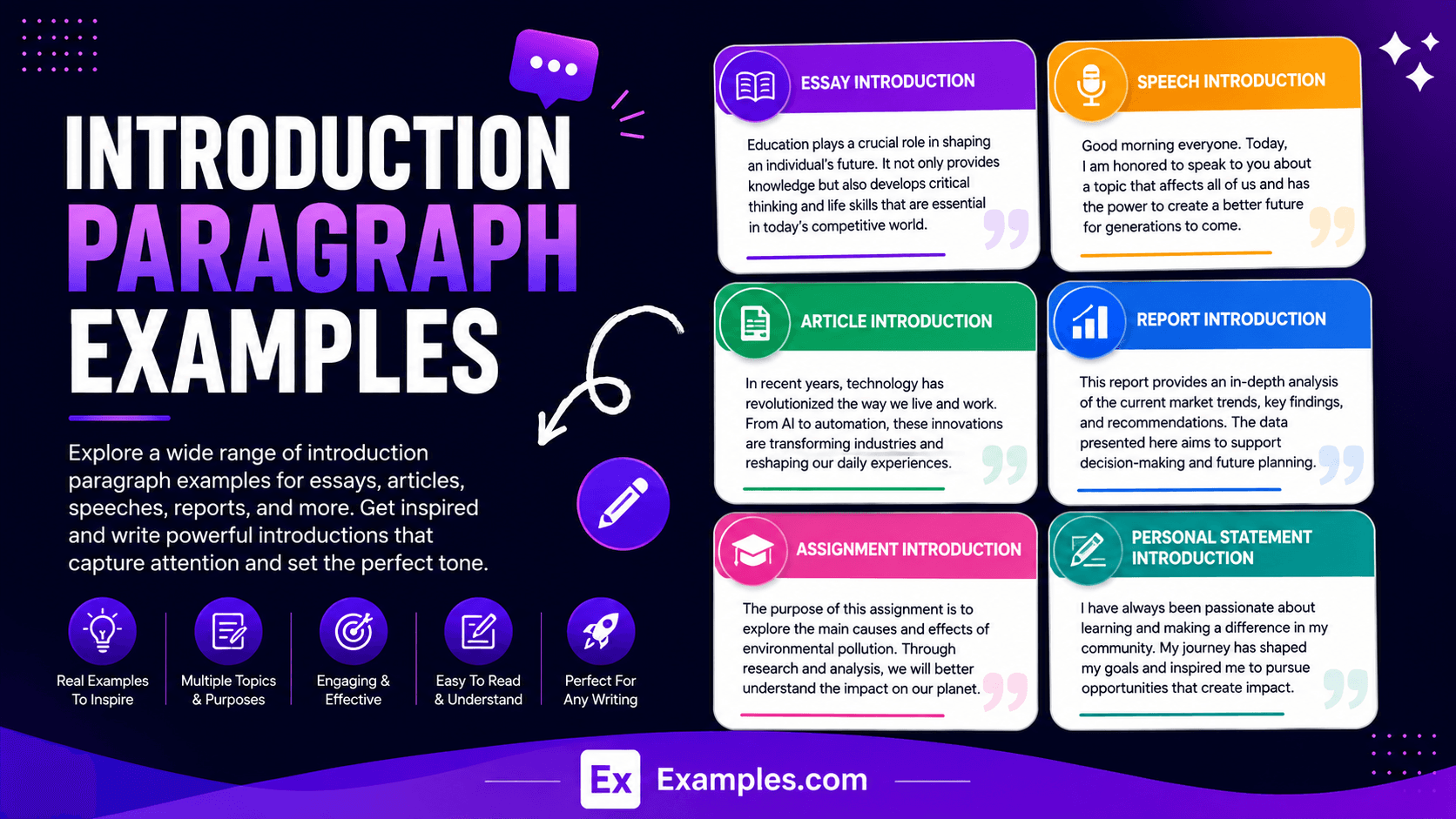
An introduction paragraph is the opening section of a piece of writing that introduces the topic, captures the reader’s attention, provides essential background information, and prepares readers for the main content. Strong introduction paragraph examples help students, professionals, writers, and researchers understand how to begin essays, articles, reports, speeches, blogs, and other documents effectively. Whether you are writing an academic paper, business proposal, personal statement, or online article, studying different introduction paragraph examples makes it easier to create engaging and well-structured openings.
What is a Introduction Paragraph?
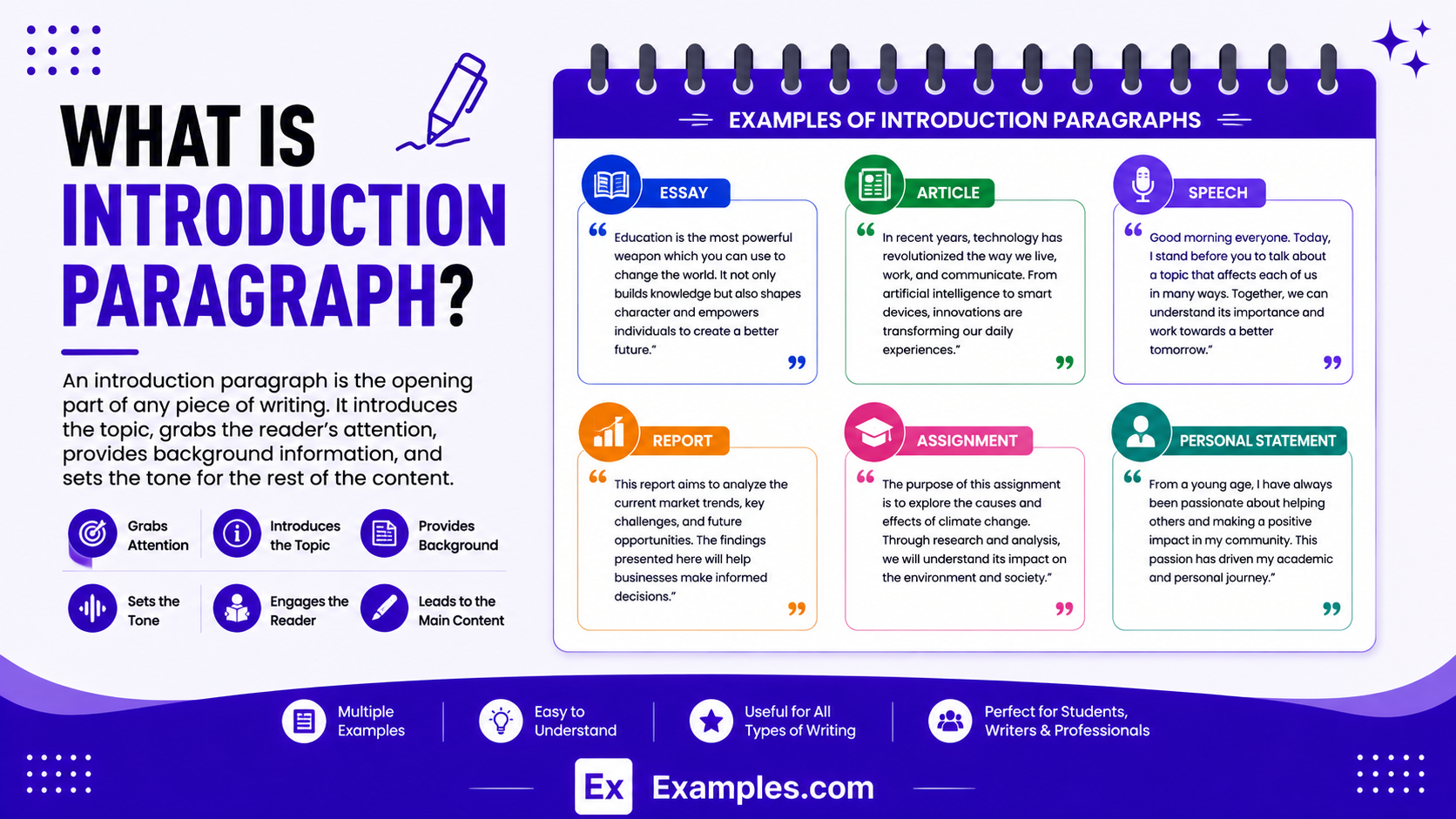
An introduction paragraph is the first paragraph of a written work. It introduces the main topic, gives readers context, presents the purpose of the content, and encourages them to continue reading. Depending on the type of writing, it may include a hook, background information, and a thesis statement or central idea.
A well-written introduction paragraph should:
- Capture the reader's attention
- Introduce the main subject
- Provide necessary background
- State the purpose or main argument
- Transition smoothly into the body paragraphs
Popular Types of Introduction Paragraphs
Introduction paragraphs can be written in many styles depending on the purpose, audience, and type of content. Here are some of the most common types
Academic Introduction Paragraphs
- Essay Introduction Paragraph
- Research Paper Introduction Paragraph
- Thesis Introduction Paragraph
- Dissertation Introduction Paragraph
- Literature Review Introduction Paragraph
- Assignment Introduction Paragraph
- Case Study Introduction Paragraph
- Lab Report Introduction Paragraph
- Book Report Introduction Paragraph
- Critical Analysis Introduction Paragraph
Professional Introduction Paragraphs
- Business Report Introduction Paragraph
- Proposal Introduction Paragraph
- Project Report Introduction Paragraph
- Executive Summary Introduction Paragraph
- White Paper Introduction Paragraph
- Company Profile Introduction Paragraph
- Business Plan Introduction Paragraph
- Marketing Plan Introduction Paragraph
- Sales Report Introduction Paragraph
- Consulting Report Introduction Paragraph
Career Introduction Paragraphs
- Resume Introduction Paragraph
- CV Introduction Paragraph
- Cover Letter Introduction Paragraph
- Personal Statement Introduction Paragraph
- Statement of Purpose (SOP) Introduction Paragraph
- Scholarship Essay Introduction Paragraph
- Internship Application Introduction Paragraph
- Job Application Introduction Paragraph
- Career Objective Introduction Paragraph
- Professional Bio Introduction Paragraph
Content Writing Introduction Paragraphs
- Blog Introduction Paragraph
- Article Introduction Paragraph
- News Article Introduction Paragraph
- Editorial Introduction Paragraph
- Magazine Article Introduction Paragraph
- Press Release Introduction Paragraph
- Newsletter Introduction Paragraph
- Product Review Introduction Paragraph
- How-to Guide Introduction Paragraph
- Tutorial Introduction Paragraph
Creative Writing Introduction Paragraphs
- Story Introduction Paragraph
- Novel Introduction Paragraph
- Short Story Introduction Paragraph
- Memoir Introduction Paragraph
- Biography Introduction Paragraph
- Autobiography Introduction Paragraph
- Travelogue Introduction Paragraph
- Children's Story Introduction Paragraph
- Script Introduction Paragraph
- Poetry Collection Introduction Paragraph
Speech and Presentation Introduction Paragraphs
- Speech Introduction Paragraph
- Presentation Introduction Paragraph
- Seminar Introduction Paragraph
- Webinar Introduction Paragraph
- Conference Speech Introduction Paragraph
- Graduation Speech Introduction Paragraph
- Welcome Speech Introduction Paragraph
- Motivational Speech Introduction Paragraph
- Debate Introduction Paragraph
- Persuasive Speech Introduction Paragraph
Digital and Web Content Introduction Paragraphs
- Website Introduction Paragraph
- Landing Page Introduction Paragraph
- About Us Page Introduction Paragraph
- Service Page Introduction Paragraph
- Email Introduction Paragraph
- Email Newsletter Introduction Paragraph
- Social Media Post Introduction Paragraph
- Video Script Introduction Paragraph
- Podcast Introduction Paragraph
- Online Course Introduction Paragraph
How Do I Generate Introduction Paragraphs Using Proven Examples from Top Sources?
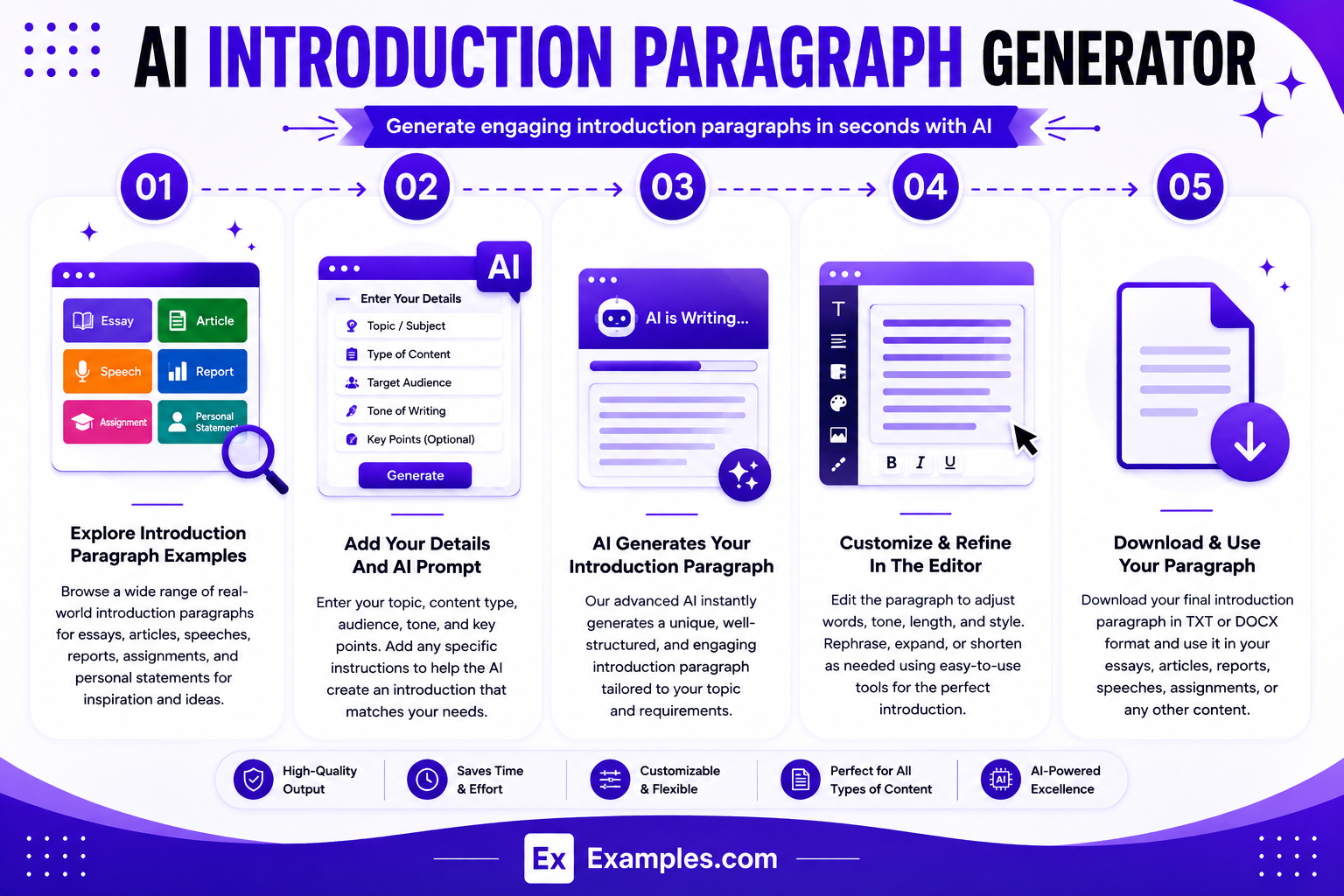 Create engaging introduction paragraphs in minutes with AI by using proven examples as inspiration, adding your topic and writing goals, and refining the generated content using built-in editing tools.
Explore Real-World Introduction Paragraph Examples
Browse professionally written introduction paragraph examples across essays, articles, reports, speeches, blogs, research papers, personal statements, and business documents. These examples help you understand different writing styles, opening techniques, and paragraph structures before creating your own.
Choose A Reference Example And Enter An AI Prompt
Select an introduction paragraph example that closely matches your writing purpose. Then enter an AI prompt describing your topic, audience, tone, writing style, purpose, key points, and any specific requirements to generate a customized introduction.
Generate A New AI Introduction Paragraph
The AI instantly creates a unique introduction paragraph based on your prompt and selected reference. Each paragraph is tailored to your subject while maintaining clarity, logical flow, and reader engagement.
Customize The Introduction Paragraph In The Online Editor
Edit the generated paragraph using the online editor. Adjust wording, improve sentence flow, rewrite sections, modify the tone, expand ideas, shorten content, or personalize the introduction to better suit your document.
Download And Use Your Final Introduction Paragraph
After making your edits, download the finished introduction paragraph and use it in essays, articles, reports, presentations, business documents, academic assignments, speeches, websites, or any other writing project.
Why Are Introduction Paragraph Examples Important?
Introduction paragraph examples show how experienced writers begin different types of content. Instead of wondering how to start writing, readers can study proven openings and apply similar techniques to their own work.
Benefits include:
- Improves writing confidence
- Makes introductions more engaging
- Demonstrates different writing styles
- Helps organize ideas logically
- Creates stronger first impressions
- Supports academic and professional writing
- Makes complex topics easier to introduce
- Encourages better reader engagement
Key Elements of an Effective Introduction Paragraph
Although introduction paragraphs vary by writing type, most successful introductions include several essential components.
Attention-Grabbing Opening
Start with an interesting sentence that encourages readers to continue reading.
Examples include:
- A surprising fact
- A question
- A quotation
- A brief story
- A bold statement
- A statistic
Background Information
Provide enough context so readers understand the topic before moving into the main discussion.
Main Idea or Thesis
Clearly explain what the writing will discuss or argue.
Smooth Transition
Lead naturally into the first body paragraph without abrupt changes.
Common Structures Used in Introduction Paragraphs
Different writing situations require different opening structures.
Hook → Background → Thesis
Commonly used in essays and research papers.
Problem → Solution Preview
Frequently used in business writing and reports.
Story → Lesson
Popular for speeches and personal statements.
Question → Answer
Useful for blogs and online articles.
Fact → Explanation
Works well for informative writing.
Quote → Interpretation
Often used in academic and motivational content.
How to Write an Effective Introduction Paragraph
Writing a strong introduction paragraph helps readers understand your topic from the beginning. Whether you're writing an essay, article, report, speech, or blog post, following a simple structure makes your introduction more engaging and organized.
1. Start with a Strong Hook
Begin with a sentence that immediately grabs the reader's attention.
You can use:
- An interesting fact
- A surprising statistic
- A thought-provoking question
- A relevant quotation
- A short anecdote
- A bold statement
2. Introduce the Topic
Briefly explain what your writing is about. Give readers enough context so they understand the subject without revealing every detail.
3. Provide Background Information
Include any necessary information that helps readers understand why the topic is important. Keep this section concise and directly related to your subject.
4. State the Main Idea
Clearly explain the purpose of your writing. In academic writing, this is often called the thesis statement. In business or content writing, it may simply introduce the main objective.
5. Transition to the Body Paragraph
End the introduction with a smooth transition that naturally leads into the next section of your content.
Best Practices for Writing Introduction Paragraphs
A great introduction does more than simply introduce the topic—it encourages readers to continue reading.
Follow these best practices:
- Know your audience before writing.
- Keep the introduction focused on one main topic.
- Use simple and clear language.
- Avoid unnecessary details.
- Make the first sentence engaging.
- Maintain a logical flow of ideas.
- Match the tone to your content type.
- Revise your introduction after completing the full draft.
Common Mistakes to Avoid
Even experienced writers sometimes weaken their introductions with avoidable mistakes.
Avoid these common errors:
- Starting with vague or generic statements
- Providing too much background information
- Making the introduction too long
- Introducing unrelated ideas
- Using confusing or complex language
- Failing to explain the purpose of the writing
- Repeating information later in the content
- Forgetting to include a clear transition
Tips for Creating Engaging Introduction Paragraphs
Small improvements can make a significant difference in how readers respond to your introduction.
Helpful tips include:
- Write the introduction after finishing the body if needed.
- Use active voice whenever possible.
- Include relevant keywords naturally.
- Focus on solving the reader's problem.
- Keep sentences concise and readable.
- Build curiosity without misleading the audience.
- Ensure every sentence supports the main topic.
- Edit for clarity and flow before publishing.
Where Are Introduction Paragraphs Commonly Used?
Introduction paragraphs appear in nearly every type of written communication.
Common uses include:
Academic Writing
- Essays
- Research papers
- Assignments
- Dissertations
- Literature reviews
Business Writing
- Reports
- Proposals
- Business plans
- Executive summaries
- Company profiles
Professional Documents
- Cover letters
- CVs
- Resumes
- Personal statements
- Statements of purpose
Digital Content
- Blog posts
- Articles
- Website pages
- Tutorials
- Online guides
Creative Writing
- Stories
- Novels
- Memoirs
- Biographies
- Scripts
Public Speaking
- Speeches
- Presentations
- Webinars
- Seminars
- Conference talks
Why Strong Introduction Paragraphs Matter
A strong introduction creates a positive first impression and sets expectations for the rest of the content.
Benefits include:
- Captures reader attention immediately
- Improves readability
- Establishes context
- Builds credibility
- Encourages continued reading
- Supports better organization
- Strengthens communication
- Improves overall writing quality