A letter of interest is one of the best ways to introduce yourself to an employer before a job opening is advertised. If you want to stand out, build professional connections, and show genuine interest in working for a company, a well-written letter of interest can give you an advantage over waiting for a vacancy to appear. It highlights your skills, experience, and enthusiasm while explaining why you're a strong fit for the organization. Whether you're exploring a new career, changing industries, or seeking future opportunities, a thoughtful letter of interest can help start meaningful conversations with employers. This guide explains what a letter of interest is, how to write one effectively, what to include, common mistakes to avoid, and how to create a polished, professional letter.
What Is a Letter of Interest?
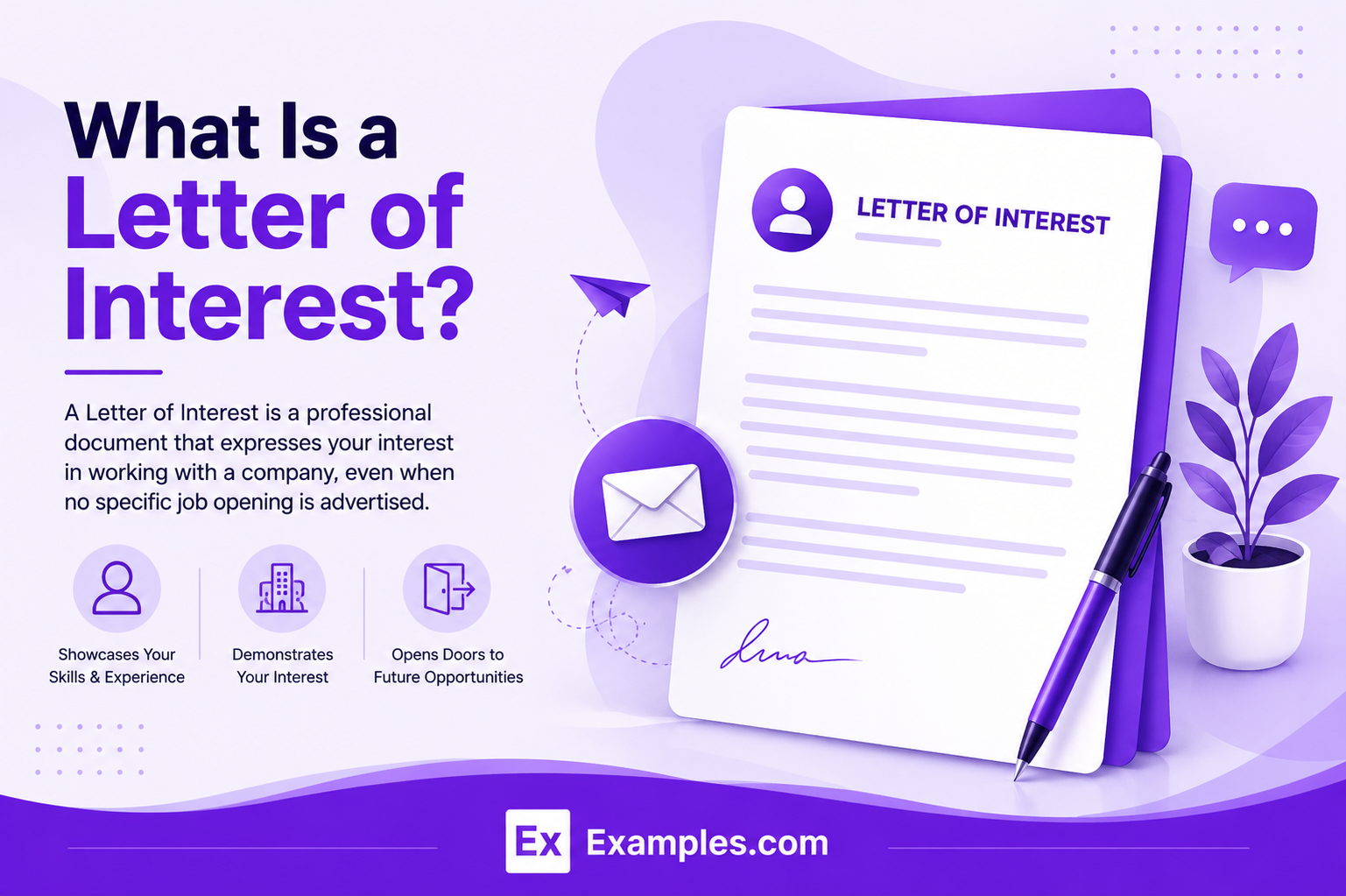
A letter of interest is a professional document you send to an employer to express your interest in working for their organization, even when no job opening is advertised. It introduces your qualifications, highlights your skills and experience, and explains why you would be a valuable addition to the company.
Types of Letters of Interest
💼
Job Letter of Interest
A Job Letter of Interest expresses your interest in working for a company, even when no job opening has been posted, while highlighting your qualifications and enthusiasm.
🔄
Career Change Letter of Interest
A Career Change Letter of Interest emphasizes your transferable skills and explains why you are a strong candidate for a role in a new industry or profession.
🎓
Internship Letter of Interest
An Internship Letter of Interest introduces your education, skills, and career goals while requesting consideration for future internship opportunities.
🤝
Networking Letter of Interest
A Networking Letter of Interest focuses on building professional relationships and expressing interest in future career opportunities within an organization.
📈
Promotion Letter of Interest
A Promotion Letter of Interest communicates your interest in advancing within your current organization by highlighting your achievements and qualifications.
❤️
Volunteer Letter of Interest
A Volunteer Letter of Interest explains your desire to support an organization by contributing your skills, experience, and time to its mission.
How Do I Write a Letter of Interest Using Real Letter of Interest Examples?
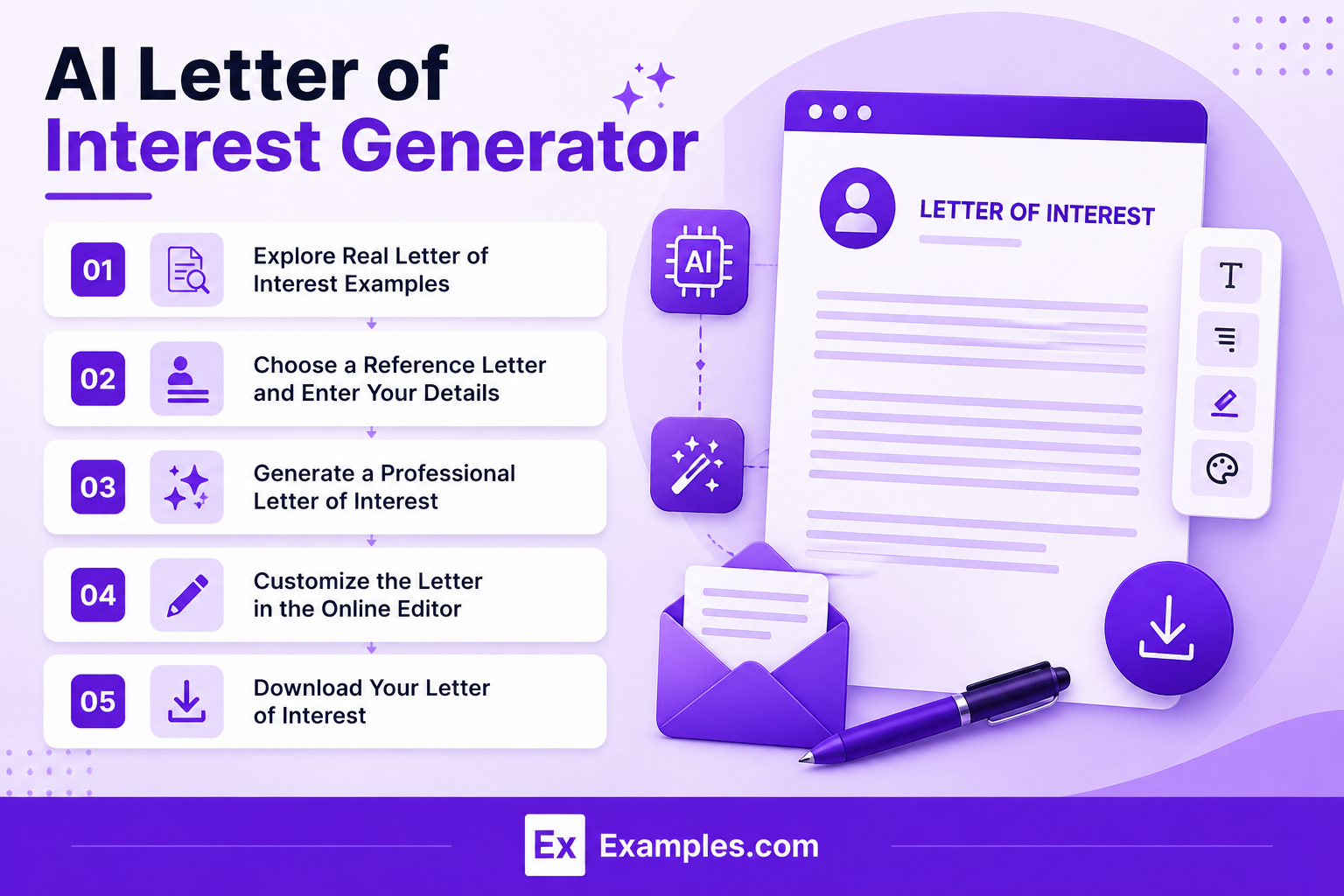
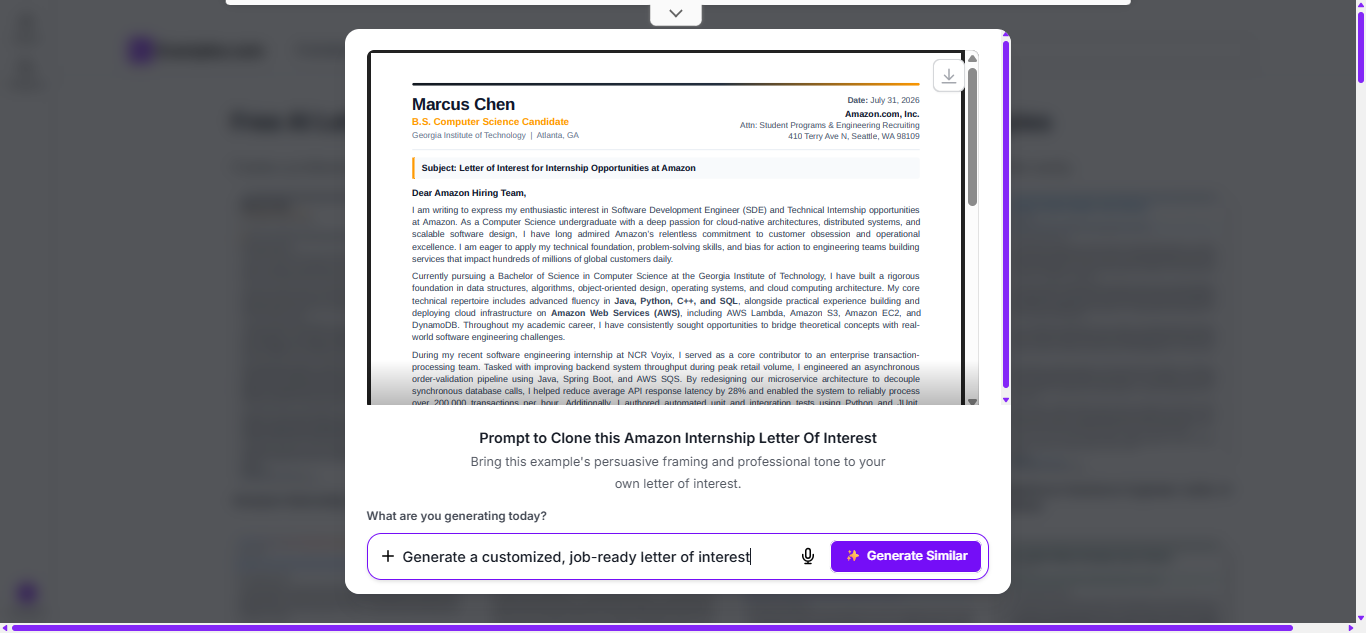
Explore Real Letter of Interest Examples
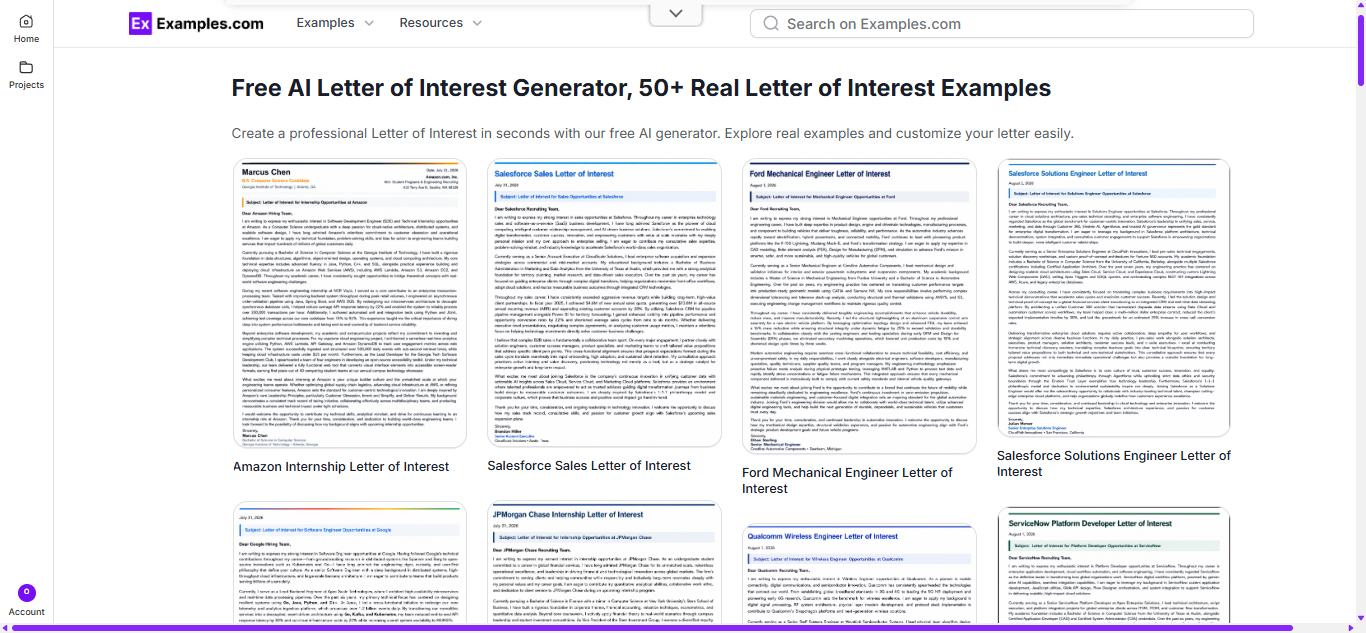
Browse professionally written letter of interest examples to understand the proper format, tone, structure, and content. Reviewing real examples helps you write a clear, personalized letter that effectively highlights your qualifications and interest in a company.
Choose a Reference Letter and Enter Your Details
Select a reference letter of interest and provide your information, including the company name, position or career field, relevant skills, work experience, achievements, and the reason you want to work for the organization.
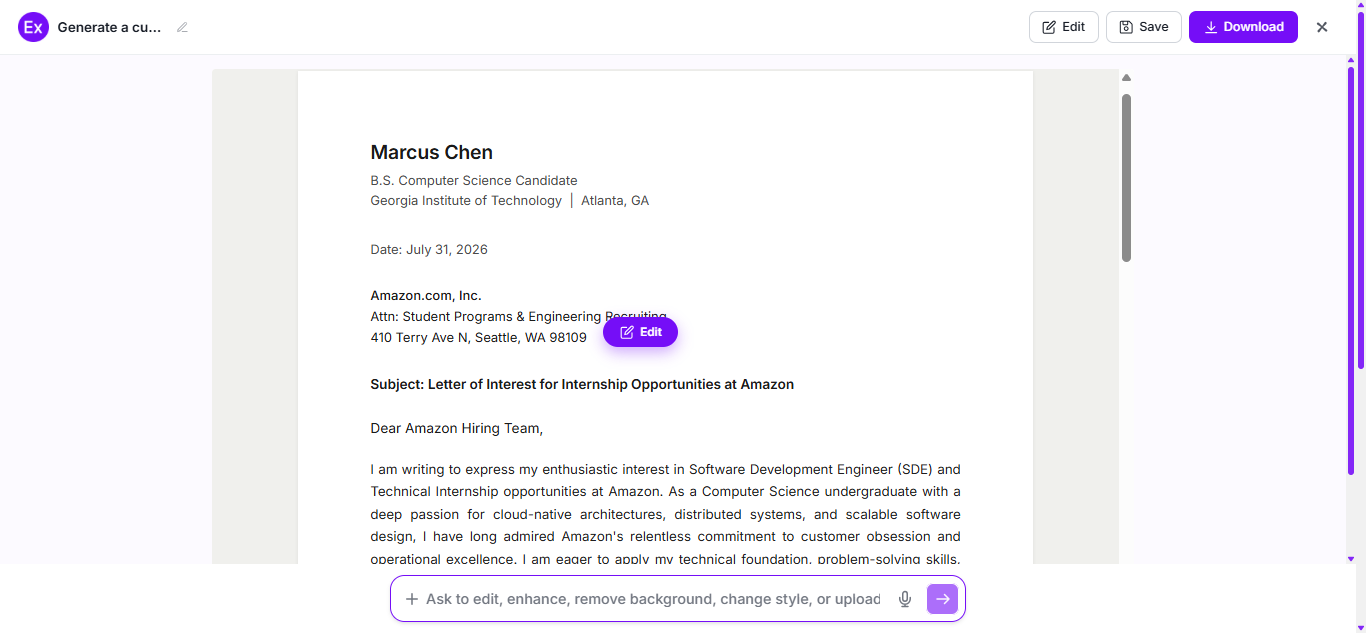
Generate a Professional Letter of Interest
Generate a well-structured letter of interest that introduces your qualifications, explains your interest in the company, and presents your experience in a professional and engaging format.
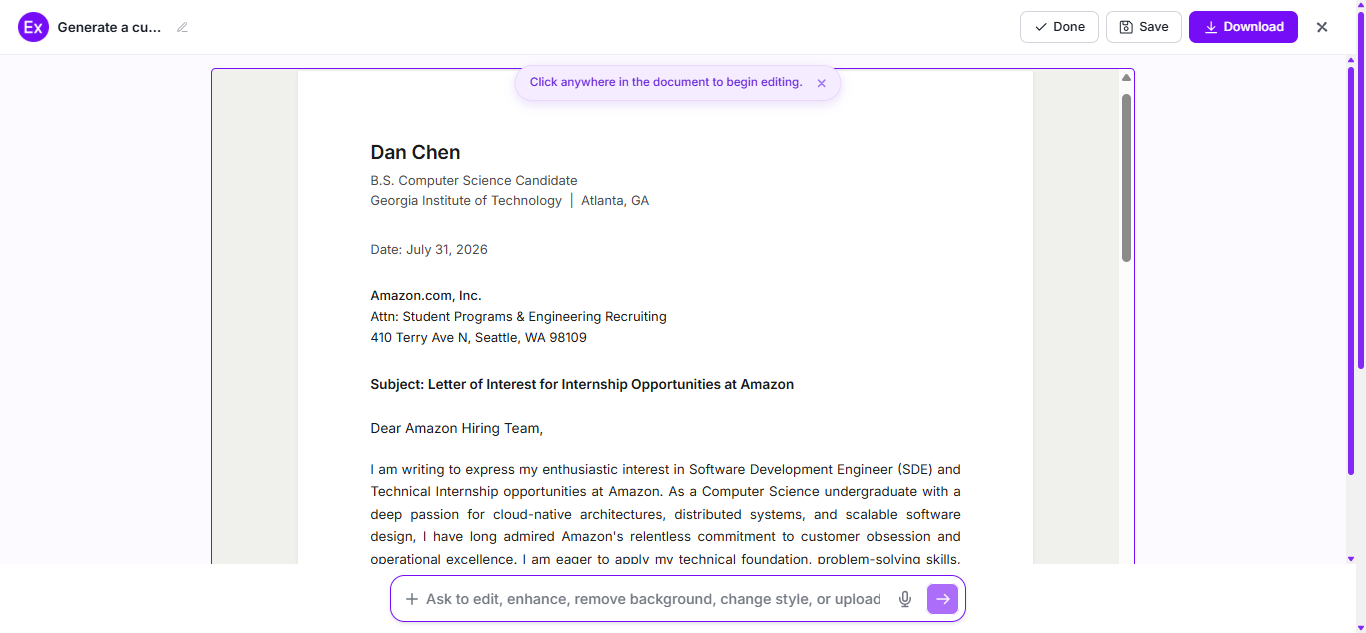
Customize the Letter in the Online Editor
Edit your contact details, introduction, skills, achievements, career goals, formatting, and other sections to personalize the letter for the employer and opportunity you are pursuing.
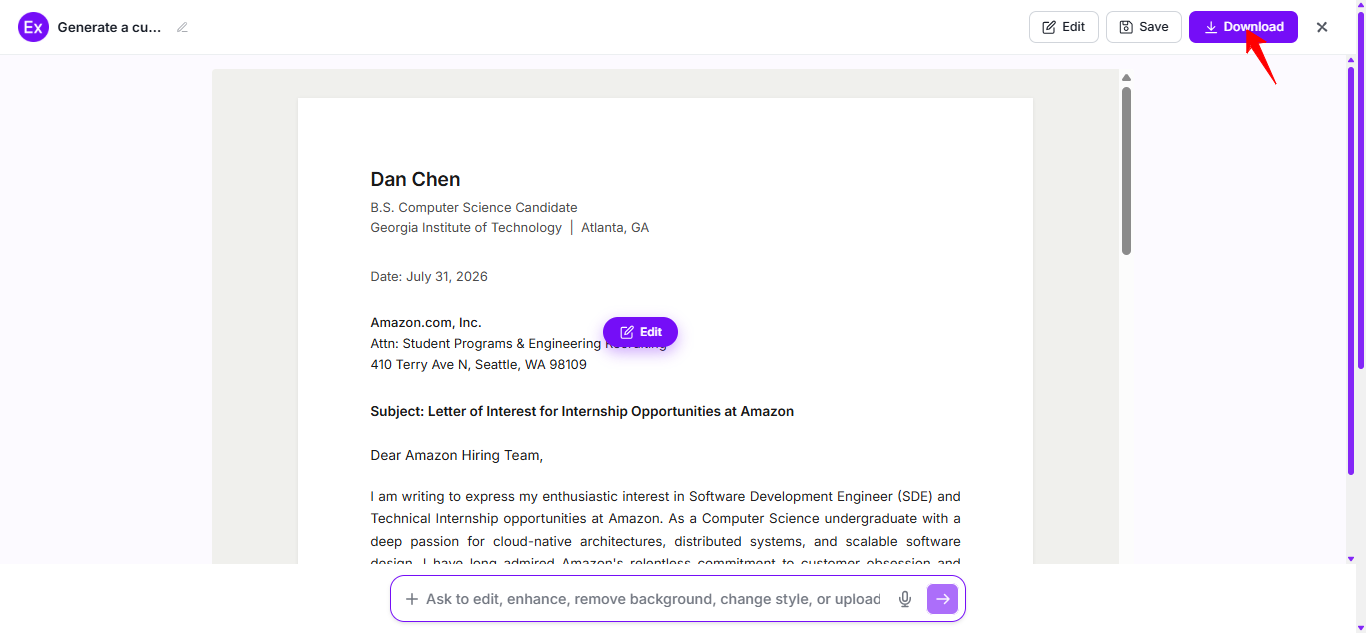
Download Your Letter of Interest
Download your completed letter of interest as a PDF, ready for review, printing, or submission when applying for future opportunities.
You should send a letter of interest when you're interested in working for a company that isn't actively hiring. It's an effective way to introduce yourself before a position becomes available, whether you're exploring future career opportunities, changing industries, applying for internships, seeking internal promotions, or expanding your professional network. Sending a well-crafted letter at the right time demonstrates initiative, showcases your qualifications, and helps you stay on an employer's radar for upcoming opportunities.
How Do I Customize a Letter of Interest?
Customize your letter of interest by tailoring it to the specific company and opportunity. Mention the organization's name, explain why you want to work there, highlight the skills and experience most relevant to its goals, and include examples of your achievements. Adjust the tone, formatting, and closing to reflect the role and company culture, ensuring your letter is personal, professional, and aligned with the employer's expectations.
AI Letter of Interest Editing Features
1
AI Content Generation
Generate a professional letter of interest tailored to your career goals, skills, experience, and the company you're applying to.
2
Smart Content Editing
Refine introductions, qualifications, achievements, and closing statements while maintaining a clear and professional tone.
3
Auto Formatting
Automatically organize your letter with proper spacing, headings, alignment, and a polished business-letter format.
4
Personalized Letter Customization
Update company details, job roles, career objectives, skills, and accomplishments to create a letter tailored to each opportunity.
5
Grammar And Tone Enhancement
Improve grammar, spelling, sentence clarity, and writing tone to create a more confident and professional letter.
6
Instant PDF Download
Download your completed letter of interest as a PDF, ready for printing or submitting with your job application.
Which Essential Elements Should I Include in Every Letter of Interest?
Contact Information: Include your name, phone number, email address, and the date so the employer can easily reach you.
Professional Greeting: Address the hiring manager or recruiter by name whenever possible to make the letter more personal.
Introduction: Introduce yourself, state why you're writing, and mention the company you're interested in.
Relevant Skills and Experience: Highlight your qualifications, achievements, and experience that make you a strong candidate.
Reason for Your Interest: Explain why you want to work for the company and how your goals align with its mission or values.
Call to Action: End with a polite request for an interview or future conversation and thank the employer for their time.
Professional Closing: Finish with a courteous closing followed by your name to leave a positive final impression.
How Do I Write a Better Letter of Interest?
Contact Information: Include your name, phone number, email address, and the date so the employer can easily reach you.
Professional Greeting: Address the hiring manager or recruiter by name whenever possible to make the letter more personal.
Introduction: Introduce yourself, state why you're writing, and mention the company you're interested in.
Relevant Skills and Experience: Highlight your qualifications, achievements, and experience that make you a strong candidate.
Reason for Your Interest: Explain why you want to work for the company and how your goals align with its mission or values.
Call to Action: End with a polite request for an interview or future conversation and thank the employer for their time.
Professional Closing: Finish with a courteous closing followed by your name to leave a positive final impression.
Why Should I Use Real Letter of Interest Examples to Create My Own Letter of Interest?
Learn the proper structure and professional format used in effective letters of interest.
Understand how to introduce yourself and express genuine interest in a company.
See how qualifications, skills, and achievements are presented naturally.
Discover effective ways to explain why you're a strong fit for an organization.
Improve your writing style, tone, and overall professionalism.
Avoid common mistakes by following proven real-world examples.
Save time by using successful examples as a starting point for your own letter.
Create a personalized letter that reflects your experience while meeting employer expectations.
What Common Letter of Interest Mistakes Should I Avoid?
Using a Generic Letter: Sending the same letter to every employer instead of tailoring it to the specific company and opportunity.
Weak Introduction: Failing to clearly explain who you are and why you're interested in working for the organization.
Irrelevant Information: Including skills or experiences that don't support your career goals or match the employer's needs.
Poor Company Research: Writing without understanding the company's mission, values, or industry.
Lengthy Content: Making the letter too long instead of keeping it concise, focused, and easy to read.
Grammar and Formatting Errors: Overlooking spelling, punctuation, or formatting mistakes that reduce professionalism.
Missing Call to Action: Ending the letter without expressing interest in discussing future opportunities or requesting a conversation.
Skipping Proofreading: Submitting your letter without reviewing it for clarity, accuracy, and consistency.
How Can I Improve My Chances of Getting Hired Using a Letter of Interest?
1
Research the Company
Learn about the company's mission, values, and goals so you can tailor your letter to its needs and culture.
2
Personalize Your Letter
Address the right person whenever possible and explain why you're specifically interested in working for the organization.
3
Highlight Relevant Qualifications
Focus on the skills, experience, and achievements that best demonstrate your ability to contribute to the company.
4
Show Your Value
Explain how your background and expertise can help support the organization's goals and future success.
5
End with a Clear Call to Action
Close your letter by expressing interest in discussing future opportunities and thanking the employer for their time and consideration.
Letter of Interest vs. Cover Letter: What's the Difference?
Feature
Letter of Interest
Cover Letter
Purpose
Expresses interest in working for a company even when no job opening is advertised.
Supports an application for a specific advertised job opening.
When to Use
When you want to introduce yourself and explore future opportunities.
When applying for a posted position.
Job Opening Required
No, it can be sent without an available vacancy.
Yes, it is typically written for an existing job listing.
Focus
Highlights your skills, experience, and interest in the company.
Explains why you're the best fit for a particular role.
Audience
Hiring managers, recruiters, or department leaders.
Hiring manager or recruiter responsible for the advertised position.
Content
Emphasizes long-term interest in the organization and your potential value.
Connects your qualifications directly to the job description.
Goal
Build professional relationships and be considered for future opportunities.
Secure an interview for a specific position.
Submission
Sent proactively before positions become available.
Submitted together with a resume as part of a job application.
Letter of Interest Examples by Industry or Use Case
Corporate Letter of Interest: Expresses interest in future employment opportunities with a company while highlighting relevant qualifications and professional experience.
Internship Letter of Interest: Introduces your education, skills, and career goals when seeking internship opportunities with an organization.
Career Change Letter of Interest: Explains your transition into a new field by emphasizing transferable skills and relevant accomplishments.
Healthcare Letter of Interest: Highlights clinical experience, certifications, and a commitment to providing quality patient care.
Education Letter of Interest: Demonstrates teaching experience, educational philosophy, and interest in joining a school or academic institution.
Technology Letter of Interest: Showcases technical skills, project experience, and enthusiasm for contributing to innovative technology teams.
Nonprofit Letter of Interest: Focuses on your passion for the organization's mission and the value you can bring through your skills and experience.
Internal Promotion Letter of Interest: Expresses interest in advancing within your current organization by highlighting achievements, leadership, and readiness for greater responsibility.
FAQs
Can I Send a Letter of Interest Without a Job Opening?
Yes. A letter of interest is specifically designed to express interest in future opportunities, even when no position is currently advertised.
How Long Should a Letter of Interest Be?
Keep your letter to one page, using concise paragraphs that clearly present your qualifications, interest, and professional value.
Who Should I Address a Letter of Interest To?
Whenever possible, address the hiring manager, department head, or recruiter instead of using a generic greeting.
Can I Use the Same Letter of Interest for Every Company?
No. Customize each letter to reflect the company's goals, values, and the skills most relevant to its needs.
Should I Attach a Resume with My Letter of Interest?
Yes. Including your resume provides employers with additional details about your qualifications, experience, and career achievements.
What Tone Should I Use in a Letter of Interest?
Use a professional, confident, and respectful tone while expressing genuine enthusiasm for working with the organization.
Can a Letter of Interest Help Me Build Professional Connections?
Yes. It introduces your qualifications, demonstrates initiative, and helps establish relationships with employers before positions become available.
How Often Should I Follow Up After Sending a Letter of Interest?
Follow up after one or two weeks with a polite message expressing continued interest and appreciation for their consideration.
What File Format Should I Use When Downloading My Letter of Interest?
PDF is the preferred format because it preserves formatting and ensures your letter appears professional on every device.
What Makes a Letter of Interest Stand Out?
Personalization, relevant achievements, clear writing, genuine enthusiasm, and a strong closing help create a memorable first impression.