Free AI Marketing Strategy Generator, 50+ Real Marketing Strategy Examples
Generate marketing strategies using AI with 50+ real examples from successful brands and companies.
No Examples available yet
Check back soon, or browse other Examples to generate with.
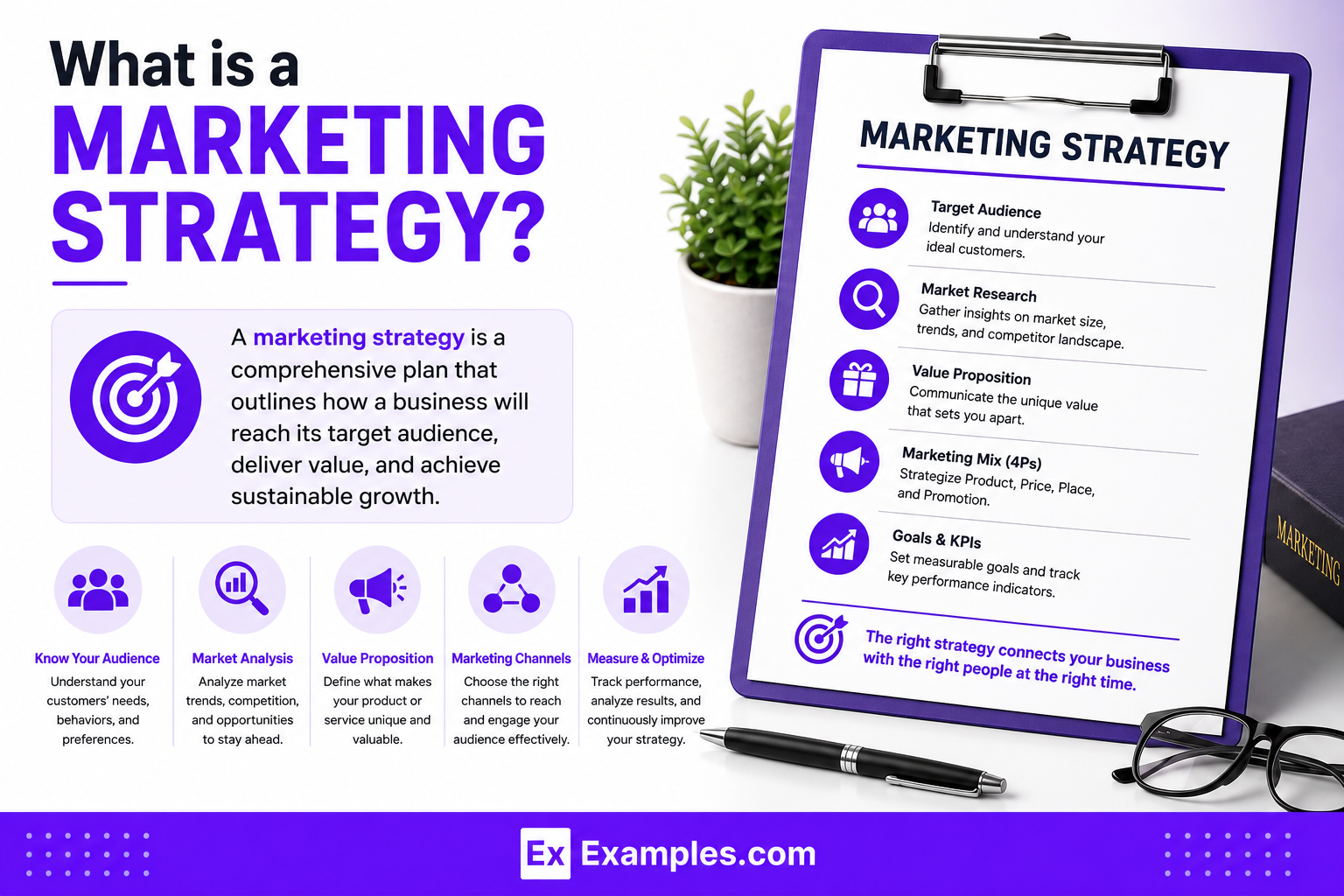
What Is a Marketing Strategy?
Popular Types of Marketing Strategies
Digital Marketing Strategy
Social Media Marketing Strategy
Content Marketing Strategy
Product Marketing Strategy
Brand Marketing Strategy
Growth Marketing Strategy
How Do I Generate Marketing Strategies Using Real Marketing Strategy Examples?
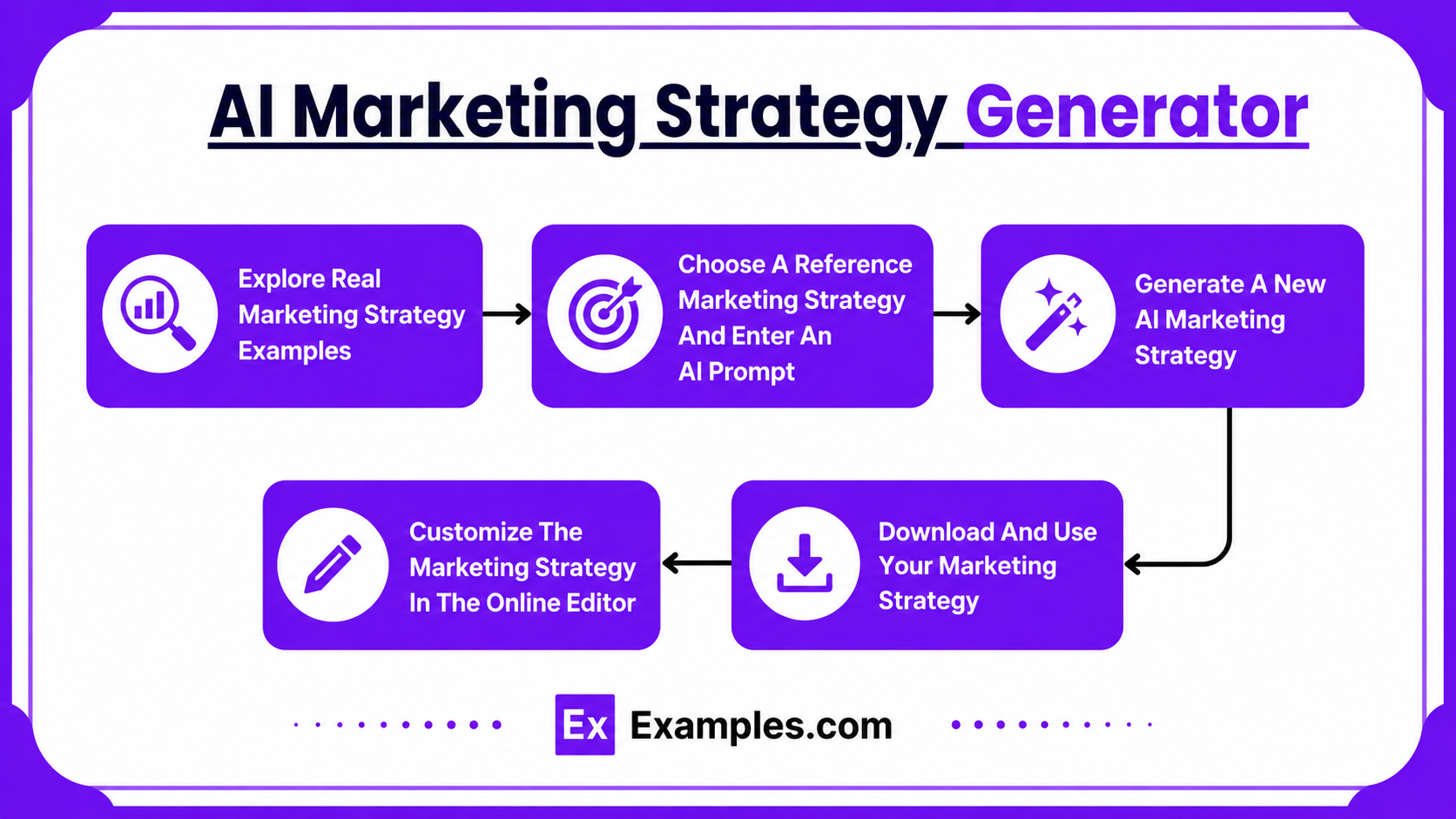
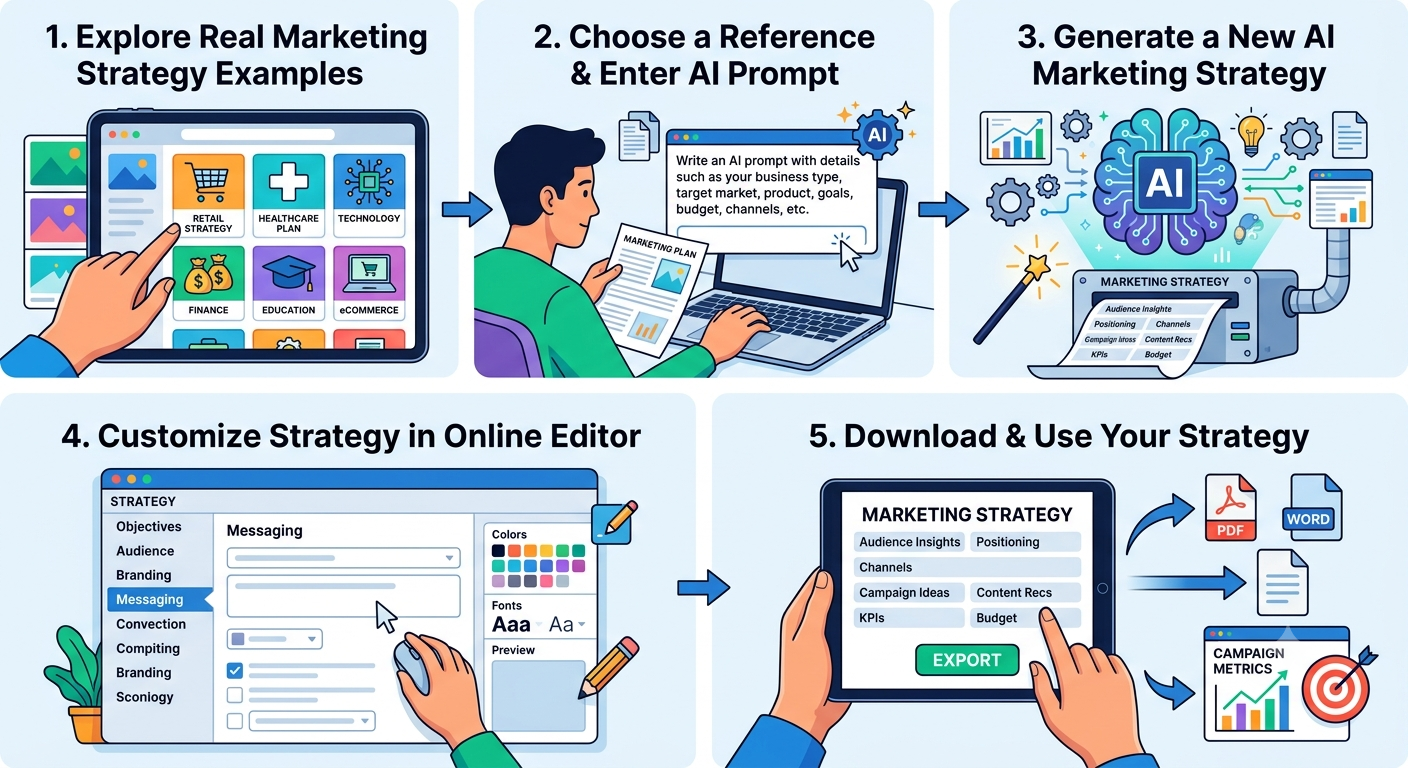
Explore Real Marketing Strategy Examples
Browse professionally created marketing strategy examples across industries such as retail, healthcare, technology, finance, education, and eCommerce. Select a strategy that closely matches your business goals, target audience, and marketing objectives.
Choose a Reference Marketing Strategy and Enter an AI Prompt
Use a real marketing strategy as your reference and provide an AI prompt with details such as your business, target market, products or services, marketing goals, budget, preferred channels, and competitive advantages.
Generate a New AI Marketing Strategy
AI analyzes your input and creates a customized marketing strategy that includes target audience insights, brand positioning, marketing channels, campaign ideas, content recommendations, KPIs, and budget considerations.
Customize the Marketing Strategy in the Online Editor
Edit objectives, audience segments, branding, messaging, marketing tactics, timelines, budgets, and performance metrics to align the strategy with your business needs and campaign goals.
Download and Use Your Marketing Strategy
Export your completed marketing strategy in PDF, Word, or other supported formats, then use it to guide campaigns, present to stakeholders, or implement your marketing initiatives.
How Do I Customize A Marketing Strategy Online?
Customize your marketing strategy by updating business goals, target audience, market research, competitive analysis, marketing channels, budget allocation, campaigns, and performance metrics to match your business objectives. You can also add or remove sections, modify strategies, adjust timelines, and personalize the plan for your industry or target market. Once complete, review the strategy, make final improvements, and download it for implementation, team collaboration, or business planning.
AI Marketing Strategy Editing Features
AI Strategy Generation
Generate professionally written marketing strategies, campaign ideas, positioning statements, and growth plans based on your business requirements.
Smart Strategy Editing
Add, remove, or modify marketing strategies, objectives, channels, and campaigns to match your business goals.
Auto Formatting
Automatically organize strategy sections, headings, marketing frameworks, and layouts for a clear, professional document.
Marketing Plan Customization
Update target audience, customer personas, marketing goals, budgets, campaign timelines, and promotional strategies with ease.
Collaboration And Review
Share your marketing strategy with teams, stakeholders, or clients for feedback, review, and approval before execution.
Instant Download Options
Download your completed marketing strategy in your preferred format for presentations, planning, implementation, or business reporting.
Which Essential Elements Should Every Marketing Strategy Include?
Business Goals And Objectives: Clearly define the marketing goals, growth targets, and outcomes the strategy aims to achieve.
Target Audience Analysis: Identify customer demographics, behaviors, needs, preferences, and buying patterns.
Market Research: Analyze industry trends, customer insights, market opportunities, and potential challenges.
Competitive Analysis: Evaluate competitors, their positioning, marketing tactics, strengths, and weaknesses.
Marketing Channels: Define the platforms and channels including digital marketing, social media, email, SEO, advertising, and offline marketing.
Content And Campaign Strategy: Outline campaigns, messaging, content plans, promotional activities, and customer engagement methods.
Budget And Resources: Include marketing investments, resource allocation, campaign costs, and expected returns.
Performance Metrics: Define KPIs, tracking methods, conversion goals, and measurement strategies to evaluate success.
How Do I Create A Better Marketing Strategy?
Understand Your Audience: Research customer needs, behaviors, challenges, and preferences to create effective marketing campaigns.
Set Clear Goals: Define measurable marketing objectives aligned with overall business growth.
Analyze Competitors: Study competitor strategies, market positioning, pricing, and customer engagement approaches.
Choose The Right Channels: Select marketing platforms that best reach your target customers.
Create Strong Messaging: Develop clear brand messages, value propositions, and content strategies.
Measure And Improve: Track campaign performance and optimize strategies based on results and market feedback.
Why Should I Use Real Marketing Strategy Examples Before Creating My Own?
Save time by using proven marketing strategy frameworks.
Understand how successful companies plan their marketing activities.
Identify effective campaigns, channels, and growth tactics.
Learn industry-specific marketing approaches and best practices.
Customize strategies based on your business goals and audience.
Create structured, data-driven, and professional marketing plans with confidence.
What Common Marketing Strategy Mistakes Should I Avoid?
- Using unclear marketing goals.
- Failing to understand the target audience.
- Ignoring competitor research.
- Choosing ineffective marketing channels.
- Creating content without a clear strategy.
- Not allocating the right marketing budget.
- Failing to track campaign performance.
- Not adapting strategies based on market changes.
How Can Marketing Strategies Grow Your Business?
Build Brand Awareness
Create consistent messaging and campaigns that help customers recognize and remember your brand.
Reach The Right Customers
Use customer research and segmentation to connect with audiences who are most likely to engage and buy.
Increase Customer Engagement
Develop valuable content, campaigns, and communication strategies that strengthen customer relationships.
Improve Marketing Performance
Use analytics, KPIs, and customer insights to optimize campaigns and increase return on investment.
Create Sustainable Growth
Build long-term marketing strategies that support customer loyalty, revenue growth, and competitive advantage.
Marketing Strategy Examples For Different Industries
Technology: Product launch strategies, SaaS marketing plans, digital campaigns, and customer acquisition strategies.
Retail: Brand positioning strategies, promotional campaigns, customer loyalty programs, and omnichannel marketing plans.
Healthcare: Patient acquisition strategies, healthcare branding plans, digital outreach campaigns, and awareness programs.
Finance: Customer engagement strategies, financial product marketing plans, digital banking campaigns, and trust-building strategies.
Automotive: Vehicle launch strategies, EV marketing plans, dealership campaigns, and brand positioning strategies.
Food And Beverage: Product promotion strategies, social media campaigns, influencer marketing plans, and customer retention strategies.
E-commerce: SEO strategies, paid advertising plans, conversion optimization strategies, and marketplace growth plans.
Hospitality: Destination marketing strategies, customer experience campaigns, loyalty programs, and online reputation strategies.