A media kit is the best way to showcase your brand, audience, and achievements in one professional document. Whether you are a creator, influencer, business, publisher, or agency, a media kit helps you present your brand story, audience insights, engagement metrics, and collaboration opportunities to potential partners and sponsors. A well-designed media kit makes it easier to build credibility, attract partnerships, secure advertising opportunities, and communicate your value clearly, which is why it has become an essential marketing tool for professionals and organizations across industries.

What Is a Media Kit?

A media kit is a professional document or digital portfolio that presents your brand, audience, and services to potential sponsors, advertisers, and business partners. It typically includes your brand story, audience demographics, social media statistics, engagement rates, past collaborations, and contact information to help build credibility and secure partnership opportunities.

Media Kit Examples

Why Is a Media Kit Important?

A media kit is important because it presents your brand, audience, and value in a professional and organized format, making it easier to attract sponsors, advertisers, clients, and business partners. It helps build credibility by showcasing your brand story, audience demographics, engagement metrics, and past collaborations in one place, allowing potential partners to quickly understand who you are and why your brand is a good fit for their marketing goals and partnership opportunities.

📱

Influencer Media Kit

An Influencer Media Kit showcases a creator’s audience demographics, social media statistics, engagement rates, collaboration history, and partnership opportunities to help attract sponsorships and brand collaborations.

🏢

Company Media Kit

A Company Media Kit presents an organization’s brand story, products or services, audience insights, achievements, and advertising opportunities for potential clients, investors, and partners.

📰

Press Media Kit

A Press Media Kit provides journalists and media professionals with company information, brand assets, executive profiles, press releases, and key facts to support media coverage and announcements.

🎙️

Podcast Media Kit

A Podcast Media Kit highlights listener demographics, download statistics, sponsorship options, and advertising opportunities to help podcasters secure brand partnerships and promotional deals.

🎉

Event Media Kit

An Event Media Kit includes event details, attendee demographics, sponsorship packages, marketing opportunities, and promotional benefits for potential sponsors and partners.

🛍️

Brand Media Kit

A Brand Media Kit showcases a business’s mission, target audience, products, marketing reach, and collaboration opportunities to build credibility and attract advertisers, affiliates, and strategic partnerships.

Who Needs a Media Kit?

  • Influencers – To attract sponsorships and brand partnerships.
  • Content Creators – To showcase their audience and collaboration opportunities.
  • Businesses – To present products, services, and company information.
  • Publishers – To share advertising opportunities and audience insights.
  • Podcasters – To secure sponsors and promote their shows.
  • Bloggers – To highlight traffic and partnership opportunities.
  • Agencies – To showcase services and expertise to clients.
  • Event Organizers – To attract sponsors and promotional partners.
  • Nonprofit Organizations – To communicate their mission and impact.
  • Startups – To introduce their brand to investors and partners.

How Do I Create a Media Kit Using Real Media Kit Examples?

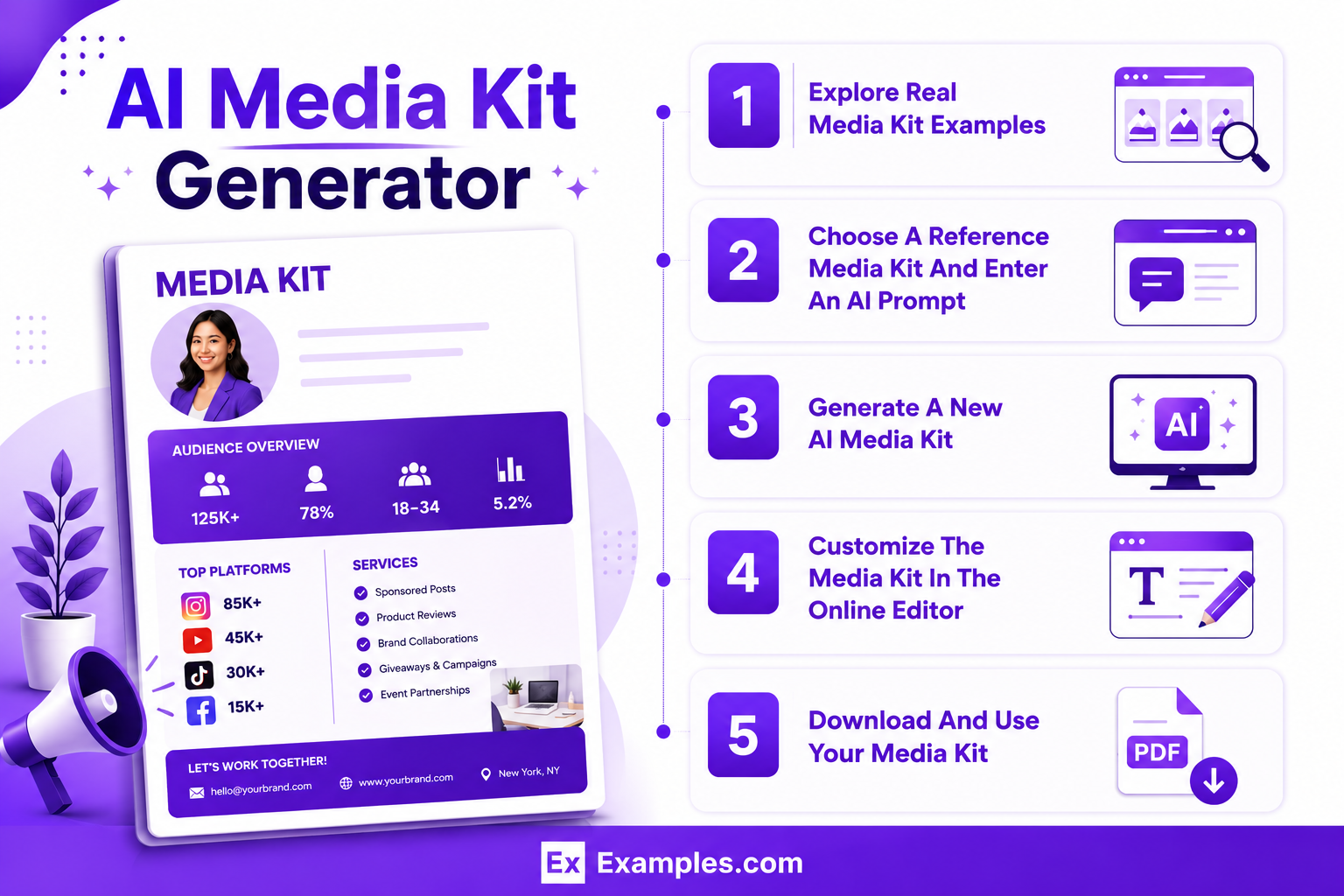
AI Media Kit Generator

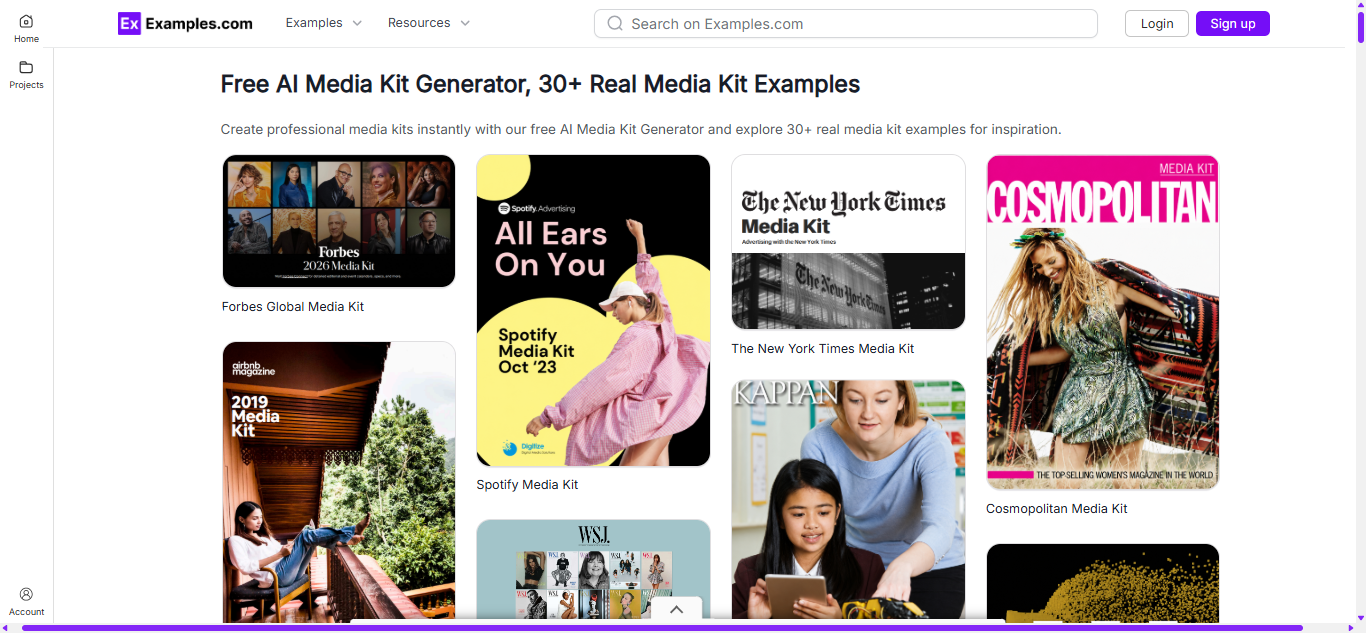
Explore Real Media Kit Examples

Browse professionally designed media kit examples to understand layouts, branding, audience insights, and the information typically included in a professional media kit. Reviewing real examples helps you create a polished and effective media kit for partnerships, sponsorships, and promotional opportunities.

Media Kit Examples
Media Kit Examples

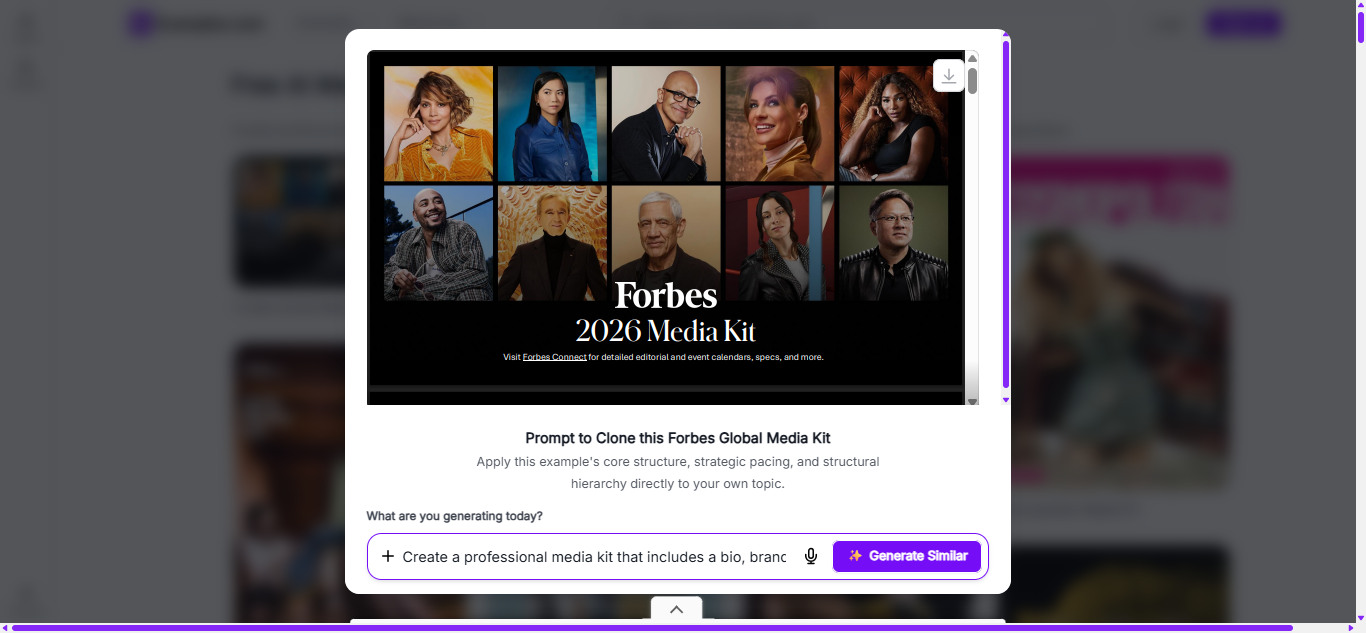
Choose A Reference Media Kit And Enter An AI Prompt

Select a reference media kit and describe your requirements, including your brand story, audience demographics, social media statistics, services, collaboration goals, and contact information.

Generate A New AI Media Kit

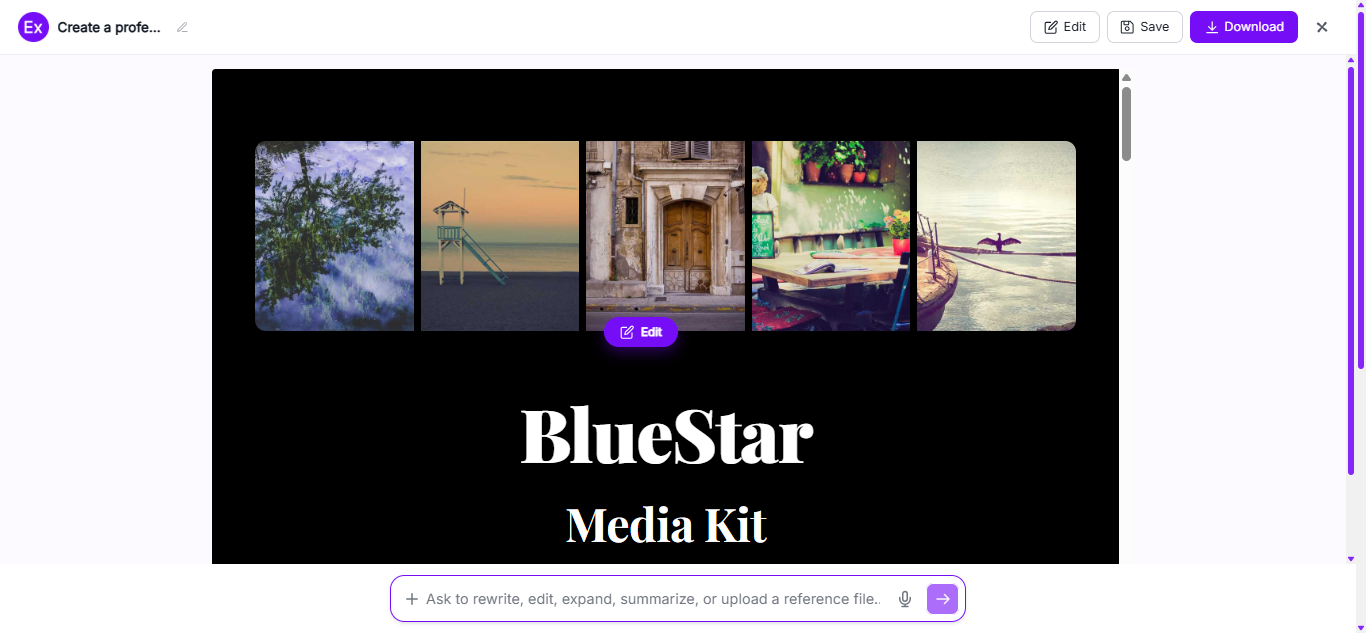
The AI generates a customized media kit based on your prompt, organizing your information into professionally designed sections that highlight your brand, audience, and partnership opportunities.

Media Kit Examples
Media Kit Examples

Customize The Media Kit In The Online Editor

Edit your branding, colors, images, audience statistics, collaboration details, pricing information, and layout to create a media kit that reflects your professional identity and goals.

Download And Use Your Media Kit

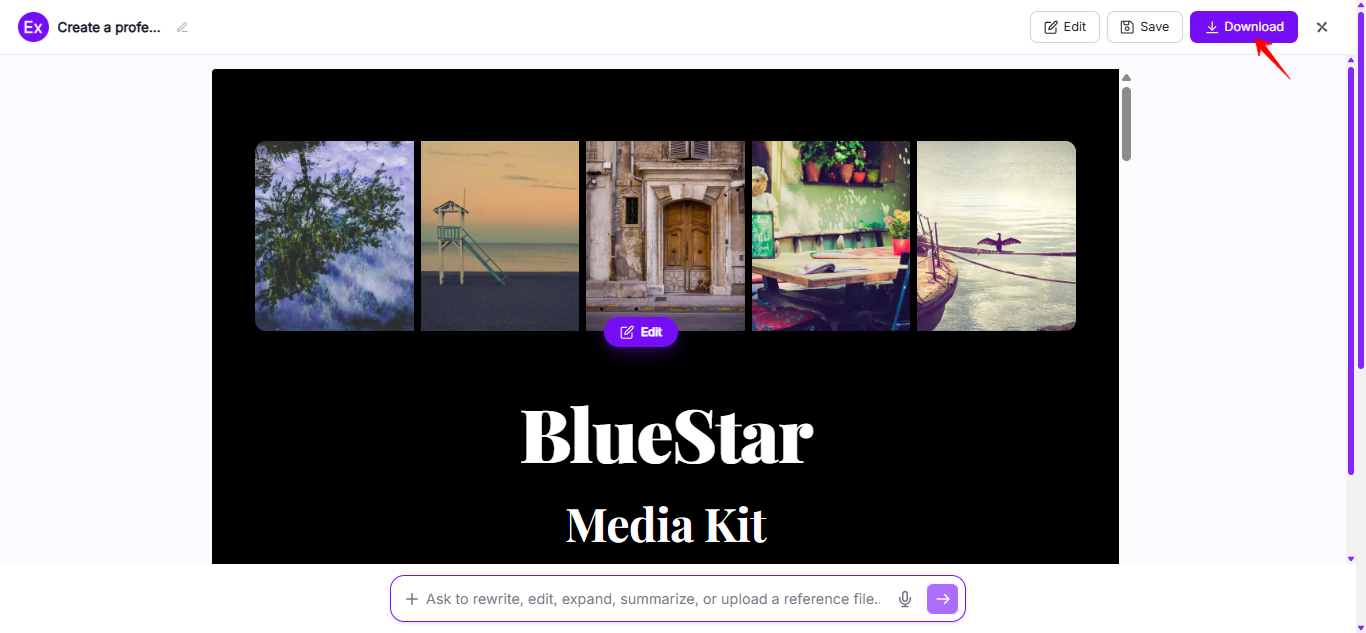
Download your completed media kit in your preferred format for sharing with brands, sponsors, advertisers, clients, and potential business partners.

Media Kit Examples
Generate Your Media Kit Examples

How Do I Customize a Media Kit Online?

You can customize a media kit online by updating your brand colors, logo, images, fonts, audience statistics, social media metrics, collaboration details, and contact information to match your professional identity and goals. Using an online editor also allows you to rearrange sections, add new content, and personalize the layout, making it easy to create a polished media kit that reflects your brand and appeals to potential sponsors, advertisers, and business partners.

AI Media Kit Creation Features

1

AI Content Generation

Generate professional media kit content, including your brand story, audience information, and partnership details based on your requirements.

2

Smart Section Editing

Add, remove, or update sections such as social media statistics, collaboration details, services, and contact information with ease.

3

Auto Formatting

Automatically organize layouts, headings, images, and content blocks to create a clean and professional media kit.

4

Media Kit Customization

Customize colors, fonts, branding elements, audience insights, and other details to match your personal or business identity.

5

Collaboration And Review

Share your media kit with team members or stakeholders for feedback, review, and approval before publishing.

6

Instant Download Options

Download your completed media kit in your preferred format for sharing with sponsors, advertisers, clients, and potential partners.

Which Essential Elements Should I Include in Every Media Kit?

  1. Brand Name and Logo – Identify your brand clearly.
  2. Bio and Brand Story – Explain who you are and what you do.
  3. Audience Demographics – Share key audience insights and interests.
  4. Social Media Statistics – Include followers, reach, and impressions.
  5. Engagement Rates – Show how active your audience is.
  6. Past Collaborations – Highlight previous partnerships and campaigns.
  7. Services or Sponsorship Options – Outline available opportunities.
  8. Packages and Rates (Optional) – Provide pricing information if applicable.
  9. Media Coverage or Testimonials – Add credibility and social proof.
  10. Contact Information – Make it easy for potential partners to reach you.

How Do I Design a Better Media Kit?

  • Keep the Design Simple – Use a clean and easy-to-read layout.
  • Use Consistent Branding – Include your logo, colors, and fonts throughout the document.
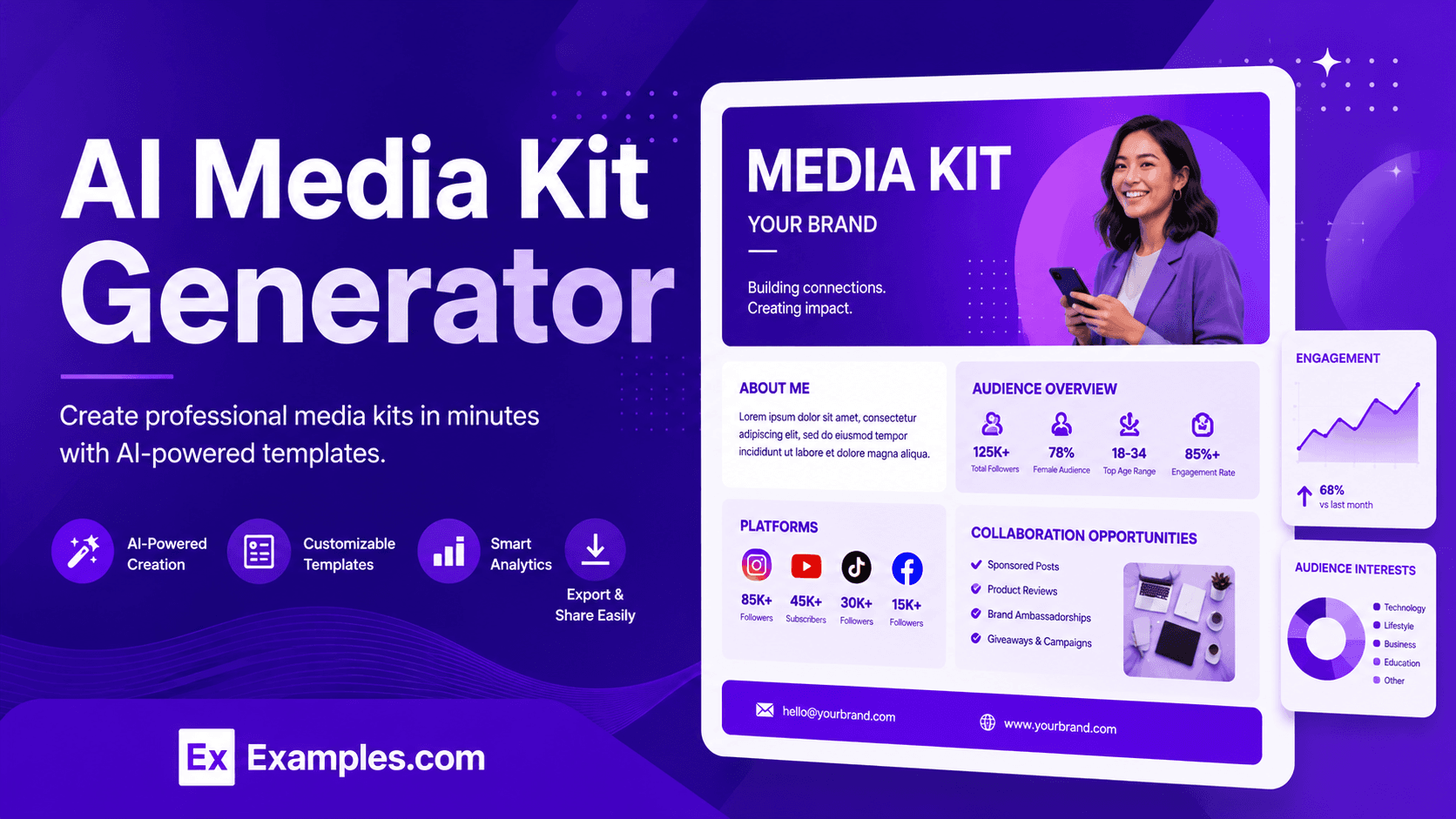
  • Highlight Key Statistics – Showcase audience demographics, reach, and engagement metrics.
  • Add High-Quality Images – Use professional photos and branded visuals.
  • Focus on Your Value – Clearly explain what makes your brand unique.
  • Showcase Past Collaborations – Include successful partnerships and campaigns.
  • Use Clear Headings – Organize information into easy-to-scan sections.
  • Include a Strong Call to Action – Encourage brands and partners to contact you.
  • Keep Information Updated – Regularly refresh your statistics and achievements.
  • Make It Easy to Share – Save your media kit in a professional and accessible format.

Why Should I Use Real Media Kit Examples to Create My Own Media Kit?

  • Learn how professional media kits are structured and organized.
  • Discover what information brands and sponsors expect to see.
  • Get ideas for layouts, designs, and content sections.
  • Save time by using proven formats and templates.
  • Avoid common design and formatting mistakes.
  • Understand how to present audience statistics effectively.
  • Find inspiration for showcasing your brand and achievements.
  • Create a more professional and credible media kit.
  • Improve your chances of attracting partnerships and sponsorships.
  • Build a media kit that clearly communicates your value and opportunities.

What Common Media Kit Mistakes Should I Avoid?

  • Using Outdated Statistics – Old audience data and engagement metrics can reduce credibility.
  • Including Too Much Information – Overloading your media kit makes it difficult to read.
  • Ignoring Design and Branding – Inconsistent visuals can make your media kit look unprofessional.
  • Missing Contact Information – Brands should be able to reach you quickly and easily.
  • Not Defining Collaboration Opportunities – Failing to explain your services can confuse potential partners.
  • Using Low-Quality Images – Poor visuals can weaken your brand presentation.
  • Exaggerating Numbers or Achievements – Inaccurate information can damage trust and credibility.
  • Leaving Out Audience Demographics – Sponsors often need demographic insights before partnering.
  • Forgetting to Update Past Collaborations – An outdated portfolio may not reflect your current value.
  • Creating a Complicated Layout – A cluttered design can make important information hard to find.

How Can I Use a Media Kit to Promote My Brand?

1

Showcase Your Brand Story

Introduce your brand, mission, and unique value to help potential partners understand who you are and what you represent.

2

Highlight Your Audience

Share audience demographics, reach, and engagement metrics to demonstrate your influence and market value.

3

Display Your Achievements

Include notable milestones, successful campaigns, and past collaborations to build credibility and trust.

4

Promote Your Services

Outline sponsorship opportunities, advertising options, and partnership packages available through your brand.

5

Make It Easy to Connect

Provide clear contact information so potential sponsors, advertisers, and partners can reach you quickly.

Media Kit Ideas for Different Industries

  • Influencer Media Kit – Showcase audience demographics, engagement rates, and partnership opportunities.
  • Business Media Kit – Highlight products, services, company information, and brand achievements.
  • Publisher Media Kit – Include readership statistics, advertising options, and audience insights.
  • Podcast Media Kit – Present listener demographics, download numbers, and sponsorship packages.
  • Blog Media Kit – Feature website traffic, audience interests, and collaboration opportunities.
  • Agency Media Kit – Showcase services, expertise, case studies, and client solutions.
  • Event Media Kit – Include event details, attendee demographics, and sponsorship benefits.
  • Nonprofit Media Kit – Share your mission, impact, and partnership opportunities.
  • Startup Media Kit – Highlight your vision, products, growth metrics, and investment opportunities.
  • Personal Brand Media Kit – Showcase your expertise, achievements, and professional services.

What Is the Difference Between a Media Kit and a Press Kit?

Feature Media Kit Press Kit
Purpose Promote a brand and attract partnerships, sponsors, or advertisers. Provide information to journalists and media outlets for news coverage.
Target Audience Brands, sponsors, advertisers, and business partners. Journalists, reporters, bloggers, and media professionals.
Primary Content Brand story, audience demographics, statistics, services, and collaboration opportunities. Company background, press releases, executive information, and media assets.
Focus Marketing, partnerships, and sponsorship opportunities. Public relations and media coverage.
Includes Statistics Yes, often includes audience and engagement metrics. Usually focuses on company facts and announcements rather than analytics.
Includes Pricing Information May include sponsorship packages and rates. Typically does not include pricing or advertising information.
Use Case Used to secure collaborations, sponsorships, and advertising deals. Used to announce events, product launches, or company news to the media.
Format Often designed as a branded presentation or digital portfolio. Usually includes press releases, fact sheets, and downloadable media resources.

FAQs

How Long Should a Media Kit Be?

Most media kits are one to two pages long and include only the most important information about your brand and audience.

How Often Should I Update My Media Kit?

Update your media kit whenever your audience statistics, services, pricing, or achievements change significantly.

Can I Create a Media Kit Without Sponsorship Experience?

Yes, you can create a media kit by highlighting your audience, content, and future collaboration opportunities.

Should I Include My Rates in a Media Kit?

Including rates is optional and depends on whether you want to share pricing information upfront.

Can a Small Business Benefit From a Media Kit?

Yes, a media kit helps small businesses showcase their brand and attract potential partners and advertisers.

What File Type Is Best for Sharing a Media Kit?

PDF is the most popular format because it is easy to share and maintains consistent formatting.

Can I Use One Media Kit for Every Partnership Opportunity?

You can, but customizing your media kit for specific opportunities often improves engagement and response rates.

Do I Need Design Skills to Create a Media Kit?

No, online templates and editors make it easy to create professional media kits without design experience.

Can a Media Kit Include More Than Social Media Statistics?

Yes, it can include testimonials, services, achievements, audience insights, and previous collaboration examples.

Why Do Brands Ask for a Media Kit Before Partnering?

Brands use media kits to evaluate audience fit, credibility, and potential collaboration opportunities before partnering.