Free AI Personal Statement Generator, 50+ Real Personal Statement Examples
Select or upload a product to enable generation.
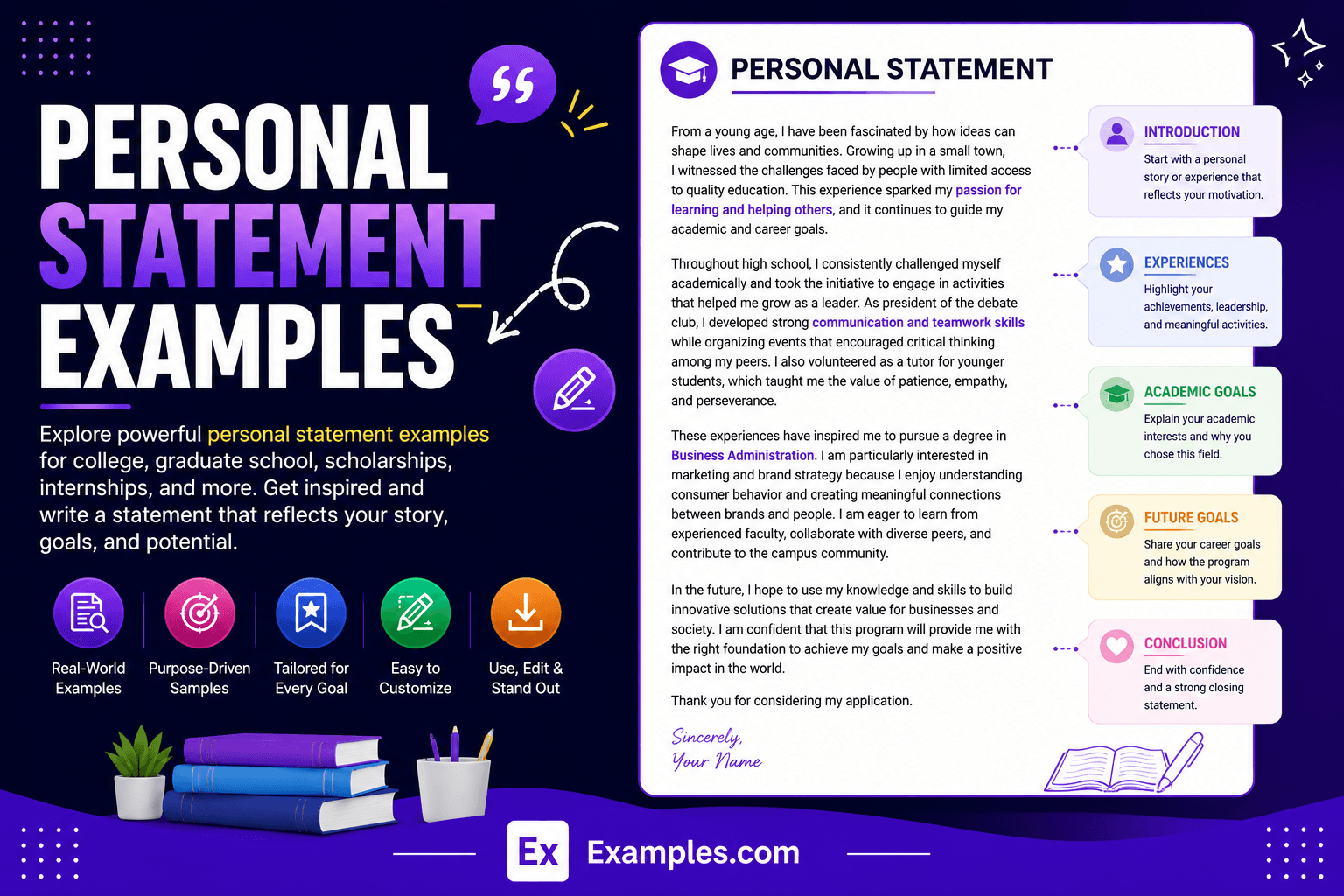
Personal statements help students and professionals understand how to present their experiences, goals, achievements, and personality in a compelling way. Whether you are applying to college, graduate school, scholarships, internships, or jobs, reviewing strong examples can help you write a statement that stands out and increases your chances of success.
What is a Personal Statement?
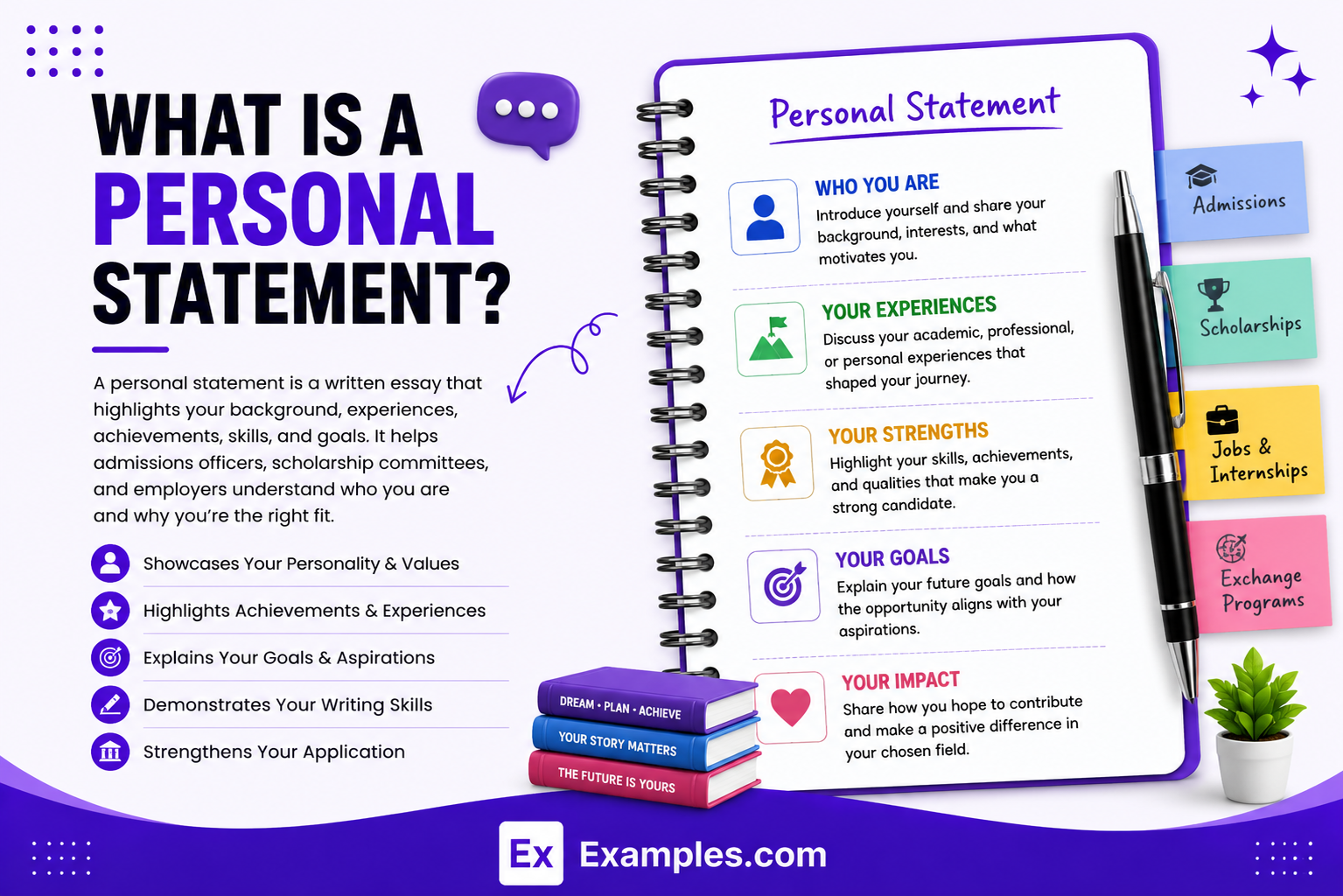
A personal statement is a written essay that introduces your background, accomplishments, interests, values, and future goals. Universities, scholarship committees, employers, and professional organizations often require personal statements as part of their application process.
Personal statements are commonly used for:
- College admissions
- University applications
- Graduate school programs
- Scholarships and fellowships
- Internships
- Medical and law school applications
- Exchange programs
- Professional opportunities
Popular Types of Personal Statements
Different opportunities require different types of personal statements. Some focus on academic achievements, while others emphasize professional goals or personal experiences.
Academic Personal Statements
- College Personal Statement
- University Personal Statement
- Undergraduate Personal Statement
- Graduate School Personal Statement
- Master's Program Personal Statement
- PhD Personal Statement
Professional School Personal Statements
- MBA Personal Statement
- Medical School Personal Statement
- Nursing School Personal Statement
- Dental School Personal Statement
- Pharmacy School Personal Statement
- Veterinary School Personal Statement
Healthcare and Science Personal Statements
- Physical Therapy Personal Statement
- Occupational Therapy Personal Statement
- Healthcare Administration Personal Statement
- Public Health Personal Statement
- Psychology Personal Statement
- Biology Personal Statement
Humanities and Social Sciences Personal Statements
- Law School Personal Statement
- Education Personal Statement
- English Literature Personal Statement
- Journalism Personal Statement
- Political Science Personal Statement
- Social Work Personal Statement
- International Relations Personal Statement
Creative and Specialized Personal Statements
- Fashion Design Personal Statement
- Film Studies Personal Statement
- Scholarship Personal Statement
- Internship Personal Statement
- Exchange Program Personal Statement
How Do I Generate Personal Statements Using Proven Examples from Top Universities?
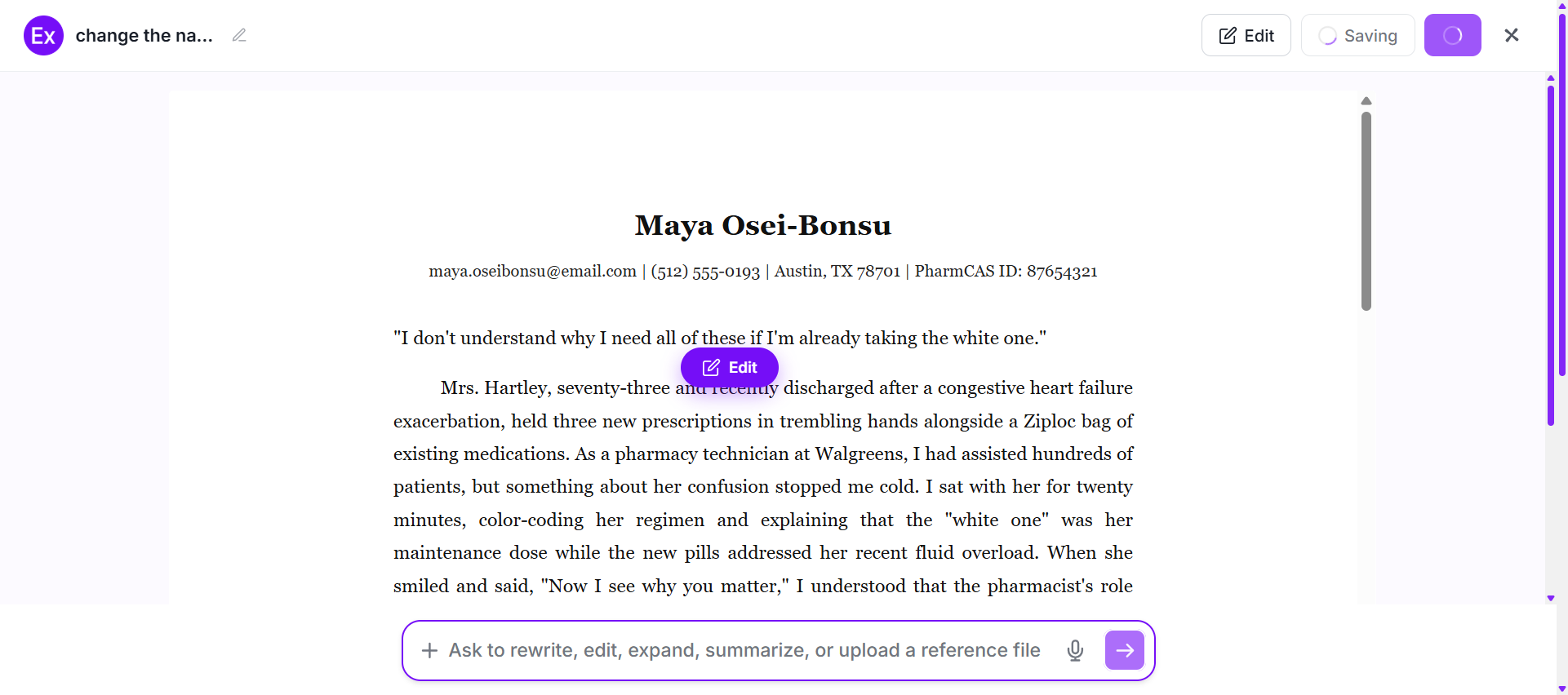
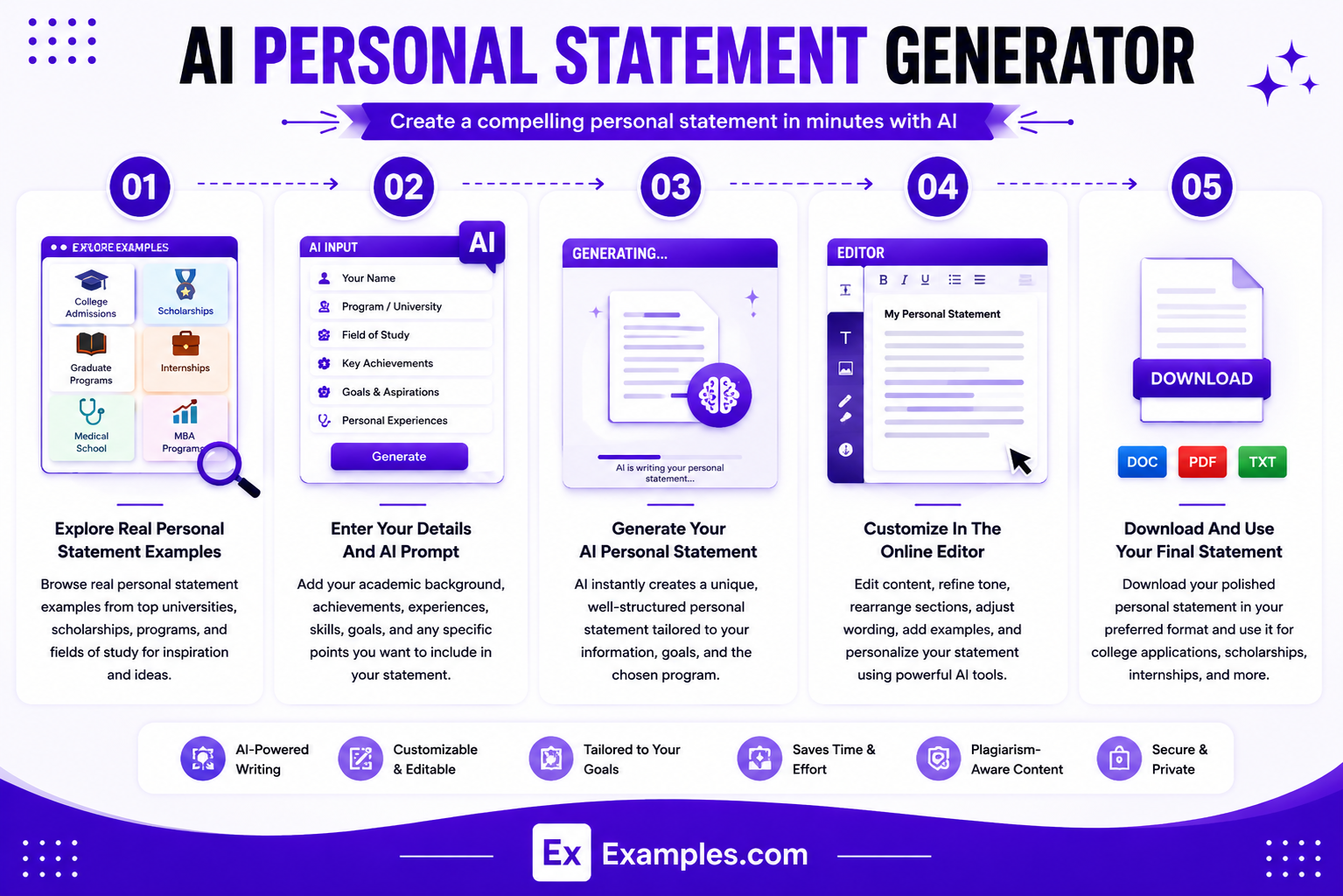 Creating personal statements with AI helps users quickly generate compelling and professional content using prompts, real-world examples, and built-in editing tools.
Explore Real-World Personal Statement Examples
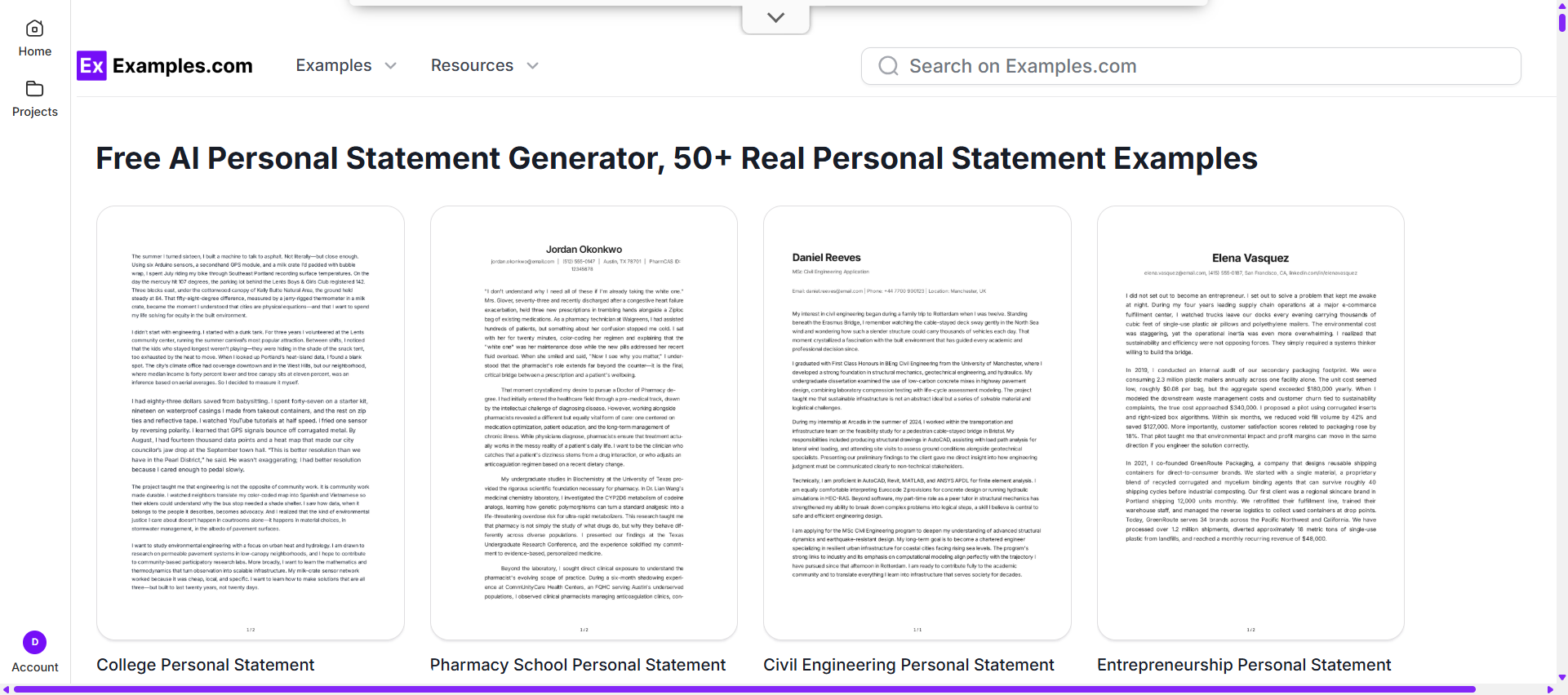
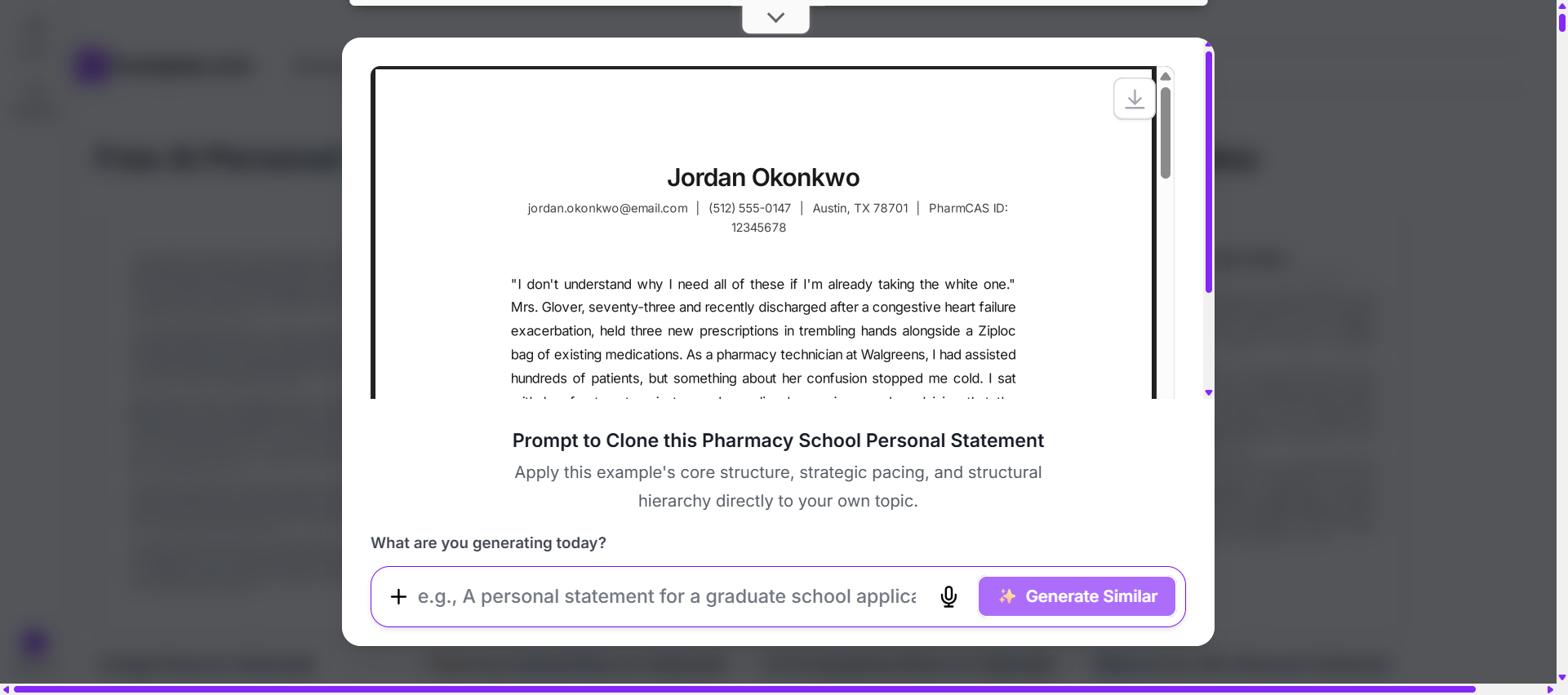
Choose A Reference Example And Enter An AI Prompt
Generate A New AI Personal Statement
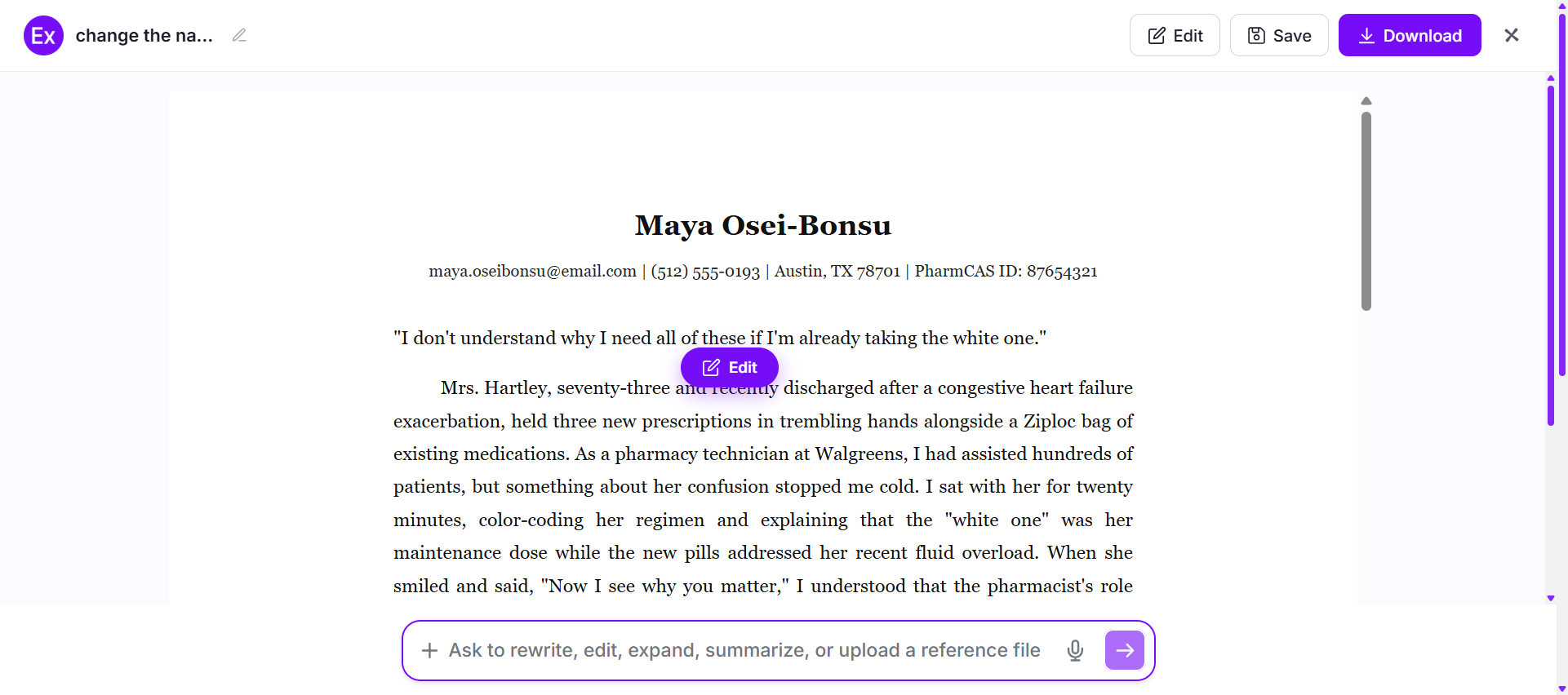
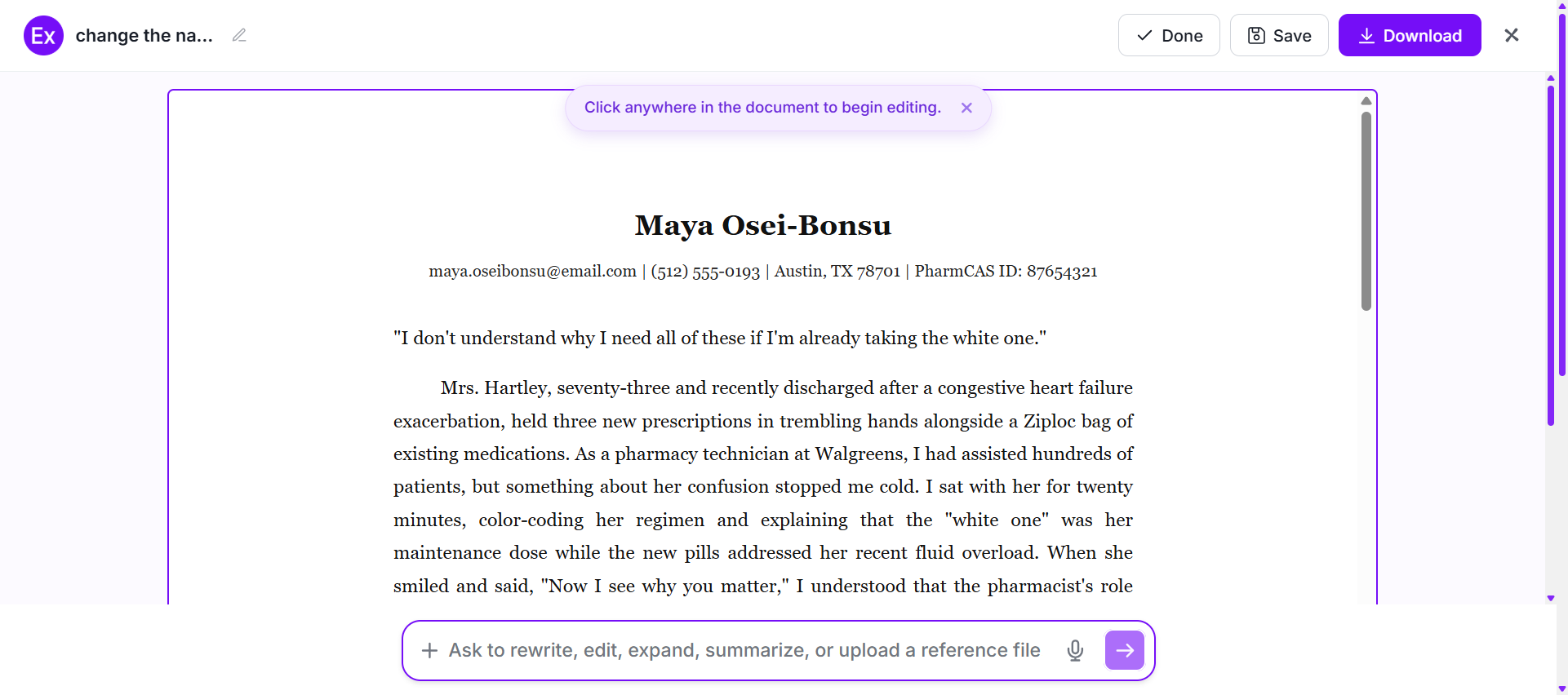
Customize The Personal Statement In The Online Editor
Download And Use The Final Personal Statement
Why Are Personal Statements Important?
A personal statement is often one of the most important parts of an application because it gives decision-makers a chance to understand the person behind the grades, test scores, and achievements.
Personal statements help applicants:
- Showcase their personality and values.
- Highlight academic and professional accomplishments.
- Explain career ambitions.
- Demonstrate communication skills.
- Share unique experiences.
- Stand out from other candidates.
A thoughtful personal statement can transform an application by providing context and showing genuine passion for a chosen field.
Key Elements of an Effective Personal Statement
The best personal statements combine storytelling with clear goals and specific examples.
Strong Introduction
Start with an engaging opening that captures attention and introduces a meaningful experience, passion, or goal.
Academic and Professional Achievements
Discuss important accomplishments, coursework, projects, internships, or leadership experiences that prepared you for the opportunity.
Skills and Strengths
Highlight qualities such as:
- Leadership
- Communication
- Creativity
- Problem-solving
- Teamwork
- Adaptability
Personal Experiences and Motivations
Explain the experiences that inspired your academic interests and long-term goals.
Clear Future Goals
Describe what you hope to achieve and how the program or opportunity aligns with your plans.
Memorable Conclusion
End with a confident statement that reinforces your enthusiasm and readiness.
How to Write a Personal Statement Step by Step
Writing a personal statement can feel challenging, but breaking the process into smaller steps makes it easier. A great personal statement tells your story while showing why you are a strong candidate.
Understand the Purpose of the Statement
Before you begin writing, identify the goal of the personal statement. Different institutions and organizations look for different qualities.
Ask yourself:
- Why am I applying?
- What qualities should I emphasize?
- What makes me unique?
- What experiences support my application?
Understanding the requirements helps you tailor your content to the audience.
Research the Institution or Organization
Take time to learn about the university, scholarship provider, or employer.
Research:
- Programs and courses
- Mission and values
- Faculty and opportunities
- Career pathways
- Scholarship objectives
Demonstrating that you understand the organization shows genuine interest.
Create an Outline
A clear outline keeps your writing organized.
A typical personal statement structure includes:
- Introduction
- Academic background
- Personal experiences
- Skills and achievements
- Career goals
- Conclusion
Planning before writing saves time and improves clarity.
Write an Engaging Introduction
The first paragraph should capture attention immediately.
You can start with:
- A meaningful experience
- A personal challenge
- An inspiring moment
- A long-term goal
- An important lesson
Avoid generic openings such as:
- "I have always wanted to..."
- "Since childhood..."
- "I am writing this statement because..."
Instead, focus on authentic experiences.
Include Specific Examples
Strong personal statements use concrete examples rather than broad claims.
Instead of writing:
"I am a good leader."
Write:
"As president of the student council, I organized fundraising events that supported local charities and increased student participation by 40 percent."
Specific examples make your statement more convincing.
Connect Your Experiences to Future Goals
Admissions officers want to understand how your past experiences connect to your future plans.
Explain:
- What inspired your interests.
- How your experiences prepared you.
- What skills you developed.
- What you hope to accomplish.
Show a clear connection between your background and your ambitions.
Edit and Proofread Carefully
Once the first draft is complete:
- Check grammar and spelling.
- Remove unnecessary details.
- Improve sentence flow.
- Verify that you answered the prompt.
- Ask someone else to review it.
Even strong content can lose impact if it contains mistakes.
Personal Statement Format and Structure
Although formats vary slightly, most personal statements follow a similar structure.
Header Information
Depending on the application, include:
- Full name
- Contact information
- Program name
- University or organization
Some institutions provide specific formatting guidelines, so always review the instructions.
Opening Paragraph
Introduce yourself and establish the main theme of your statement.
A strong introduction should:
- Capture attention.
- Introduce your motivation.
- Set the tone for the essay.
Body Paragraphs
The body typically includes:
Academic Background
Discuss:
- Degrees and coursework
- Research projects
- Academic achievements
- Relevant certifications
Professional and Extracurricular Experience
Highlight:
- Leadership roles
- Volunteer work
- Internships
- Clubs and organizations
- Community involvement
Personal Growth
Describe:
- Challenges you overcame
- Important lessons
- Skills you developed
- Experiences that shaped your goals
Closing Paragraph
The conclusion should:
- Reinforce your enthusiasm.
- Summarize your qualifications.
- Explain your future plans.
- Leave a memorable impression.
Avoid introducing completely new ideas in the final paragraph.
Recommended Word Count
Different applications have different requirements.
| Application Type | Recommended Length |
|---|---|
| College Application | 500–650 words |
| Scholarship Application | 500–1,000 words |
| Graduate School | 500–1,500 words |
| MBA Program | 500–1,000 words |
| Medical School | 4,000–5,300 characters |
| Internship Application | 300–800 words |
Best Tips for Writing a Powerful Personal Statement
A memorable personal statement balances honesty, clarity, and purpose.
Be authentic
Admissions committees value genuine stories more than exaggerated achievements.
Focus on one central theme
Choose a key message and build your statement around it.
Show growth and development
Discuss how your experiences changed your perspective and prepared you for future success.
Use active voice
Strong writing feels more confident and engaging.
For example:
- Weak: "Many opportunities were given to me."
- Strong: "I pursued opportunities that strengthened my leadership skills."
Tailor every statement
Avoid submitting identical statements to multiple institutions.
Customize:
- Program names
- Goals
- Relevant experiences
- Future plans
Keep your language simple
Clear writing is more effective than overly complex vocabulary.
Demonstrate passion
Show enthusiasm through stories and examples rather than simply stating it.
Proofread multiple times
Review your work several times to eliminate errors and improve readability.
Common Mistakes to Avoid in Personal Statements
Even highly qualified applicants make avoidable mistakes.
Writing generic content
Admissions officers read thousands of applications. Generic statements rarely stand out.
Repeating your resume
A personal statement should add context and personality, not duplicate your achievements list.
Exaggerating accomplishments
Be honest about your experiences and contributions.
Ignoring the prompt
Always answer the specific question or requirement.
Using clichés
Avoid phrases such as:
- "I have always dreamed of..."
- "I want to make a difference."
- "I work hard and never give up."
Focusing only on achievements
Talk about your values, motivations, and personal growth.
Making grammar and spelling mistakes
Errors can distract readers and weaken your application.
Exceeding the word limit
Concise writing demonstrates professionalism.
Personal Statement vs Statement of Purpose
Although many people use these terms interchangeably, they serve different purposes.
| Feature | Personal Statement | Statement of Purpose |
|---|---|---|
| Main Focus | Personal experiences and motivations | Academic and career goals |
| Tone | Personal and reflective | Professional and objective |
| Purpose | Show personality and background | Demonstrate academic readiness |
| Content | Stories, values, achievements | Research interests and goals |
| Typical Use | College and scholarship applications | Graduate and doctoral programs |
| Writing Style | Narrative | Analytical |
A personal statement emphasizes who you are, while a statement of purpose focuses on what you want to achieve.
How AI Can Help You Write Better Personal Statements
AI writing tools have transformed the way students and professionals create personal statements.
AI can help users:
- Brainstorm ideas.
- Organize thoughts.
- Improve grammar and clarity.
- Rewrite awkward sentences.
- Adjust tone and style.
- Generate multiple drafts.
- Save time during the writing process.
However, AI should be used as a support tool rather than a replacement for personal experiences and authentic storytelling.
For the best results:
- Add your own experiences.
- Personalize the final draft.
- Verify all details.
- Edit the content carefully.