Free AI Resume Summary Generator, 50+ Real Resume Summary Examples
No Examples available yet
Check back soon, or browse other Examples to generate with.
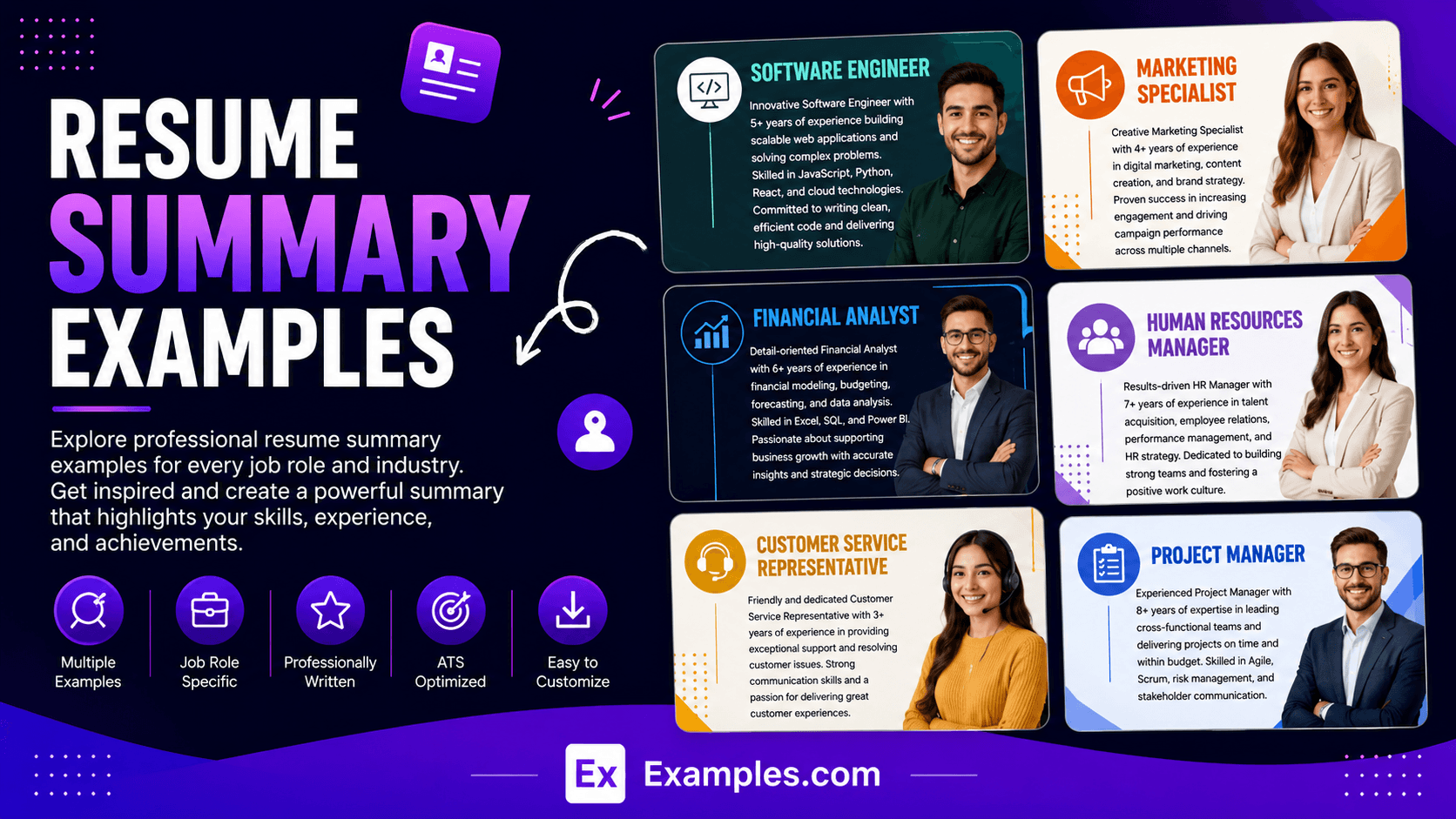
Resume summary examples help job seekers write a compelling introduction that quickly showcases their qualifications, experience, and career achievements. A strong resume summary appears at the top of your resume and gives hiring managers a clear overview of why you're a suitable candidate. Whether you're a recent graduate, experienced professional, career changer, or executive, reviewing resume summary examples can help you create a concise, impactful summary that captures attention and improves your chances of landing interviews.
What is a Resume Summary?
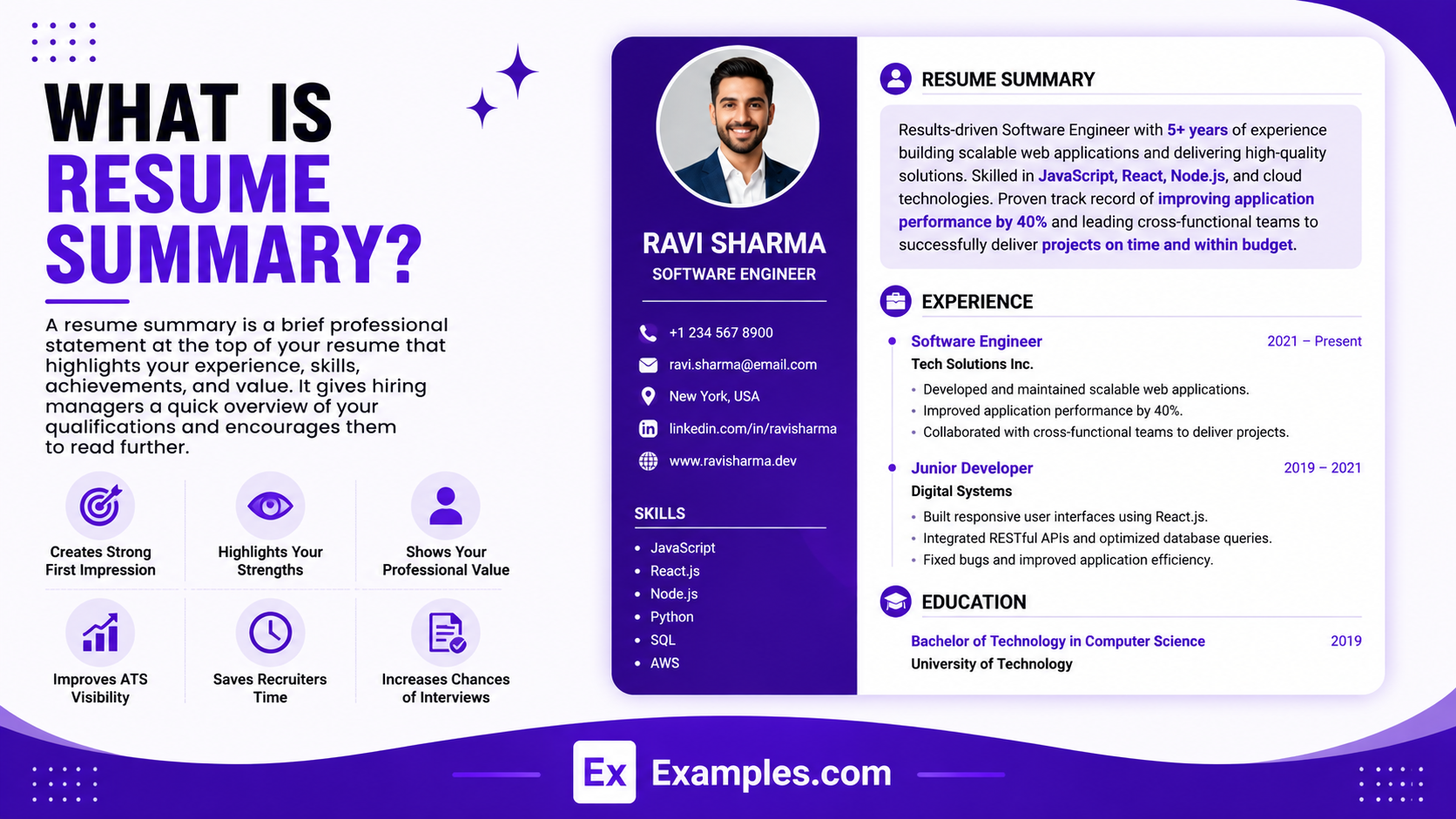
A resume summary is a brief professional statement placed at the beginning of a resume. It summarizes your work experience, key skills, accomplishments, and career goals in three to five sentences. Its purpose is to immediately demonstrate your value to employers and encourage them to continue reading your resume.
Unlike a resume objective, which focuses on career goals, a resume summary emphasizes your qualifications and achievements.
A strong resume summary typically includes:
- Years of professional experience
- Industry expertise
- Key technical and soft skills
- Major accomplishments
- Career highlights
- Professional strengths
- Value you bring to employers
Popular Types Of Resume Summaries
Resume summaries can be customized for different industries, experience levels, and career goals.
Entry-Level Resume Summaries
- Student Resume Summary
- Graduate Resume Summary
- Internship Resume Summary
- Fresher Resume Summary
- Career Change Resume Summary
Business Resume Summaries
- Administrative Assistant Resume Summary
- Office Manager Resume Summary
- Executive Assistant Resume Summary
- Business Analyst Resume Summary
- Project Manager Resume Summary
- Operations Manager Resume Summary
- Human Resources Resume Summary
- Recruiter Resume Summary
Technology Resume Summaries
- Software Engineer Resume Summary
- Web Developer Resume Summary
- Front-End Developer Resume Summary
- Back-End Developer Resume Summary
- Full Stack Developer Resume Summary
- Data Analyst Resume Summary
- Data Scientist Resume Summary
- Cybersecurity Analyst Resume Summary
- DevOps Engineer Resume Summary
- AI Engineer Resume Summary
Engineering Resume Summaries
- Civil Engineer Resume Summary
- Mechanical Engineer Resume Summary
- Electrical Engineer Resume Summary
- Chemical Engineer Resume Summary
- Industrial Engineer Resume Summary
- Manufacturing Engineer Resume Summary
- Quality Assurance Engineer Resume Summary
Healthcare Resume Summaries
- Registered Nurse Resume Summary
- Doctor Resume Summary
- Pharmacist Resume Summary
- Dentist Resume Summary
- Physical Therapist Resume Summary
- Medical Assistant Resume Summary
Creative Resume Summaries
- Graphic Designer Resume Summary
- Content Writer Resume Summary
- Copywriter Resume Summary
- Journalist Resume Summary
- Photographer Resume Summary
- Video Editor Resume Summary
- Social Media Manager Resume Summary
- Marketing Manager Resume Summary
Finance and Legal Resume Summaries
- Accountant Resume Summary
- Financial Analyst Resume Summary
- Auditor Resume Summary
- Investment Banker Resume Summary
- Tax Consultant Resume Summary
- Lawyer Resume Summary
How Do I Generate Resume Summaries Using Proven Examples from Top Companies?
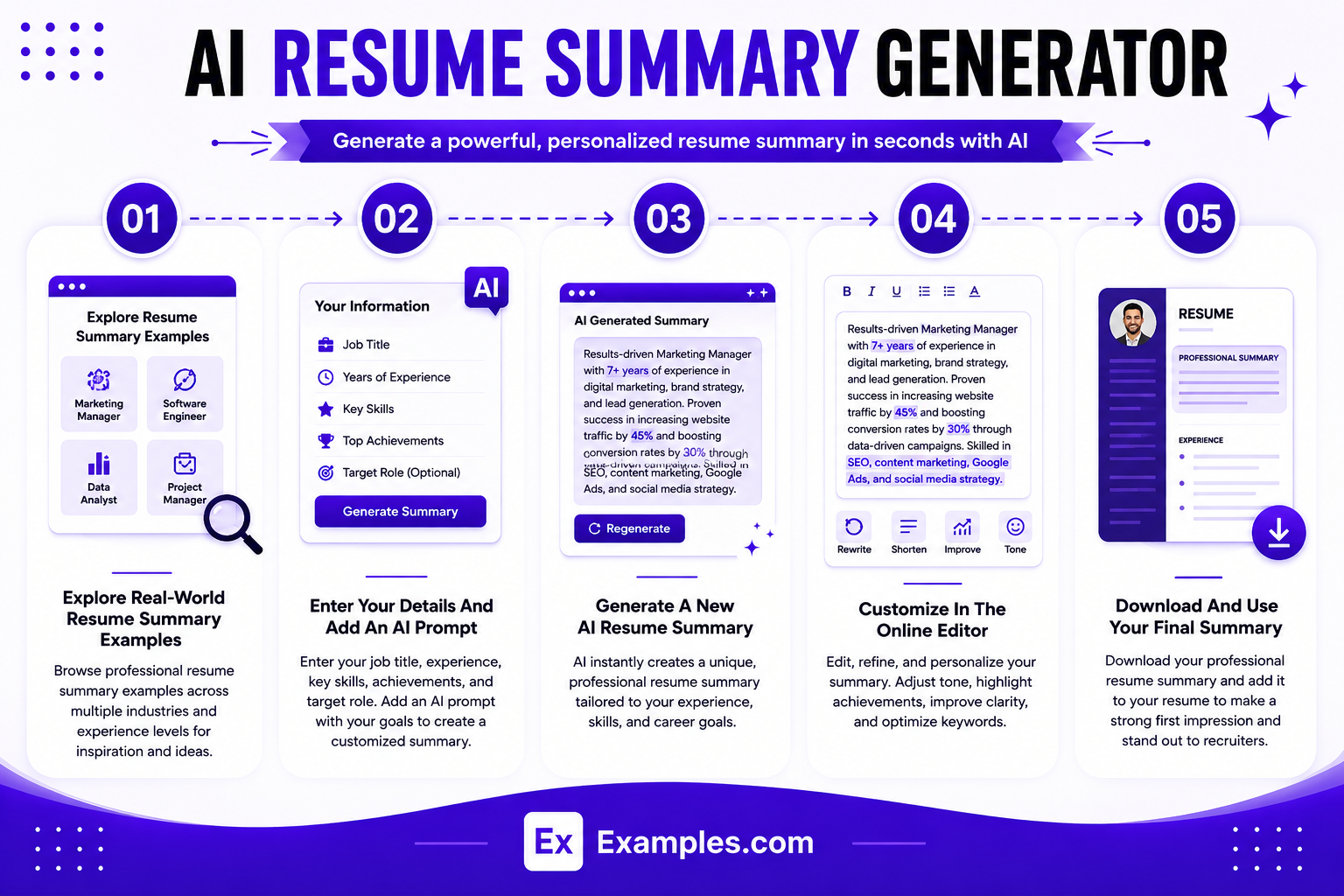 Create professional resume summaries with AI by exploring real-world examples, entering your experience and career goals, and generating personalized summaries that help your resume stand out.
Explore Real-World Resume Summary Examples
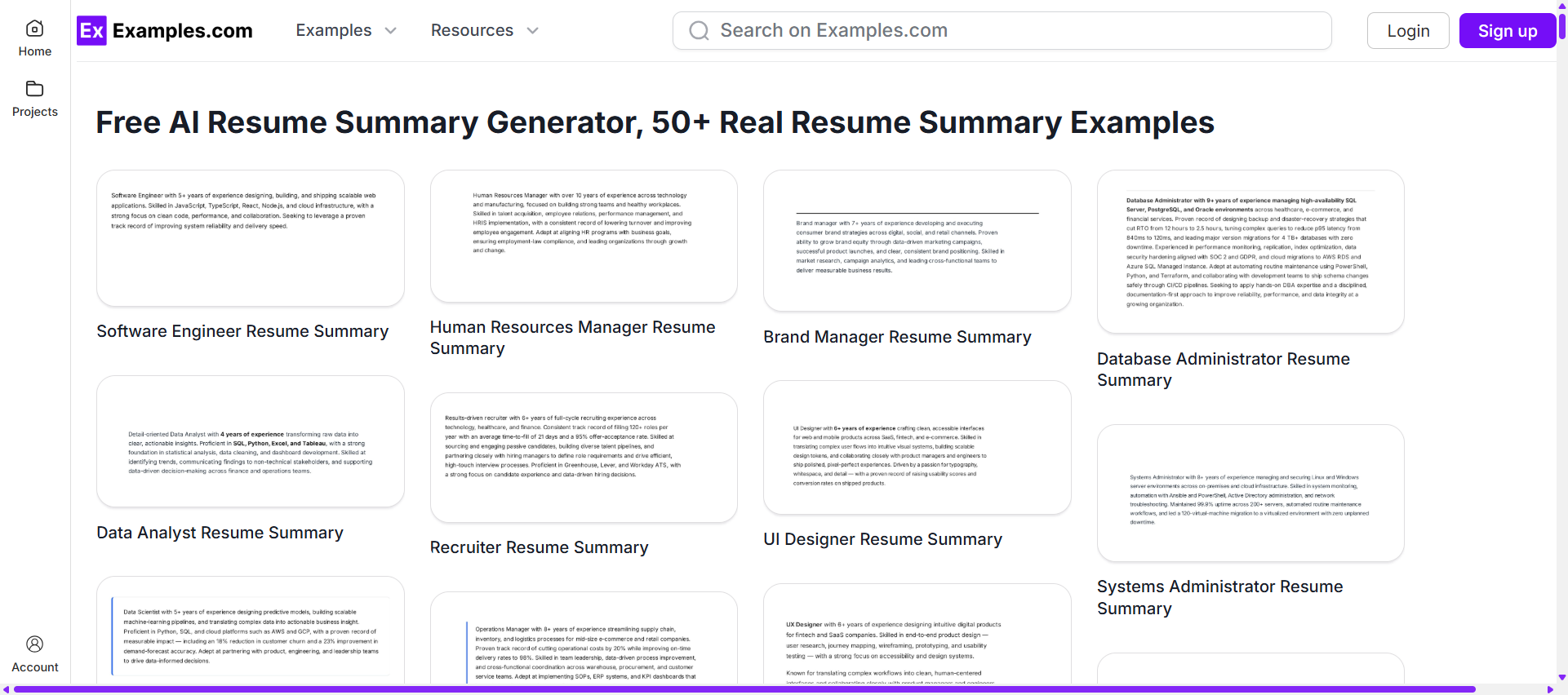
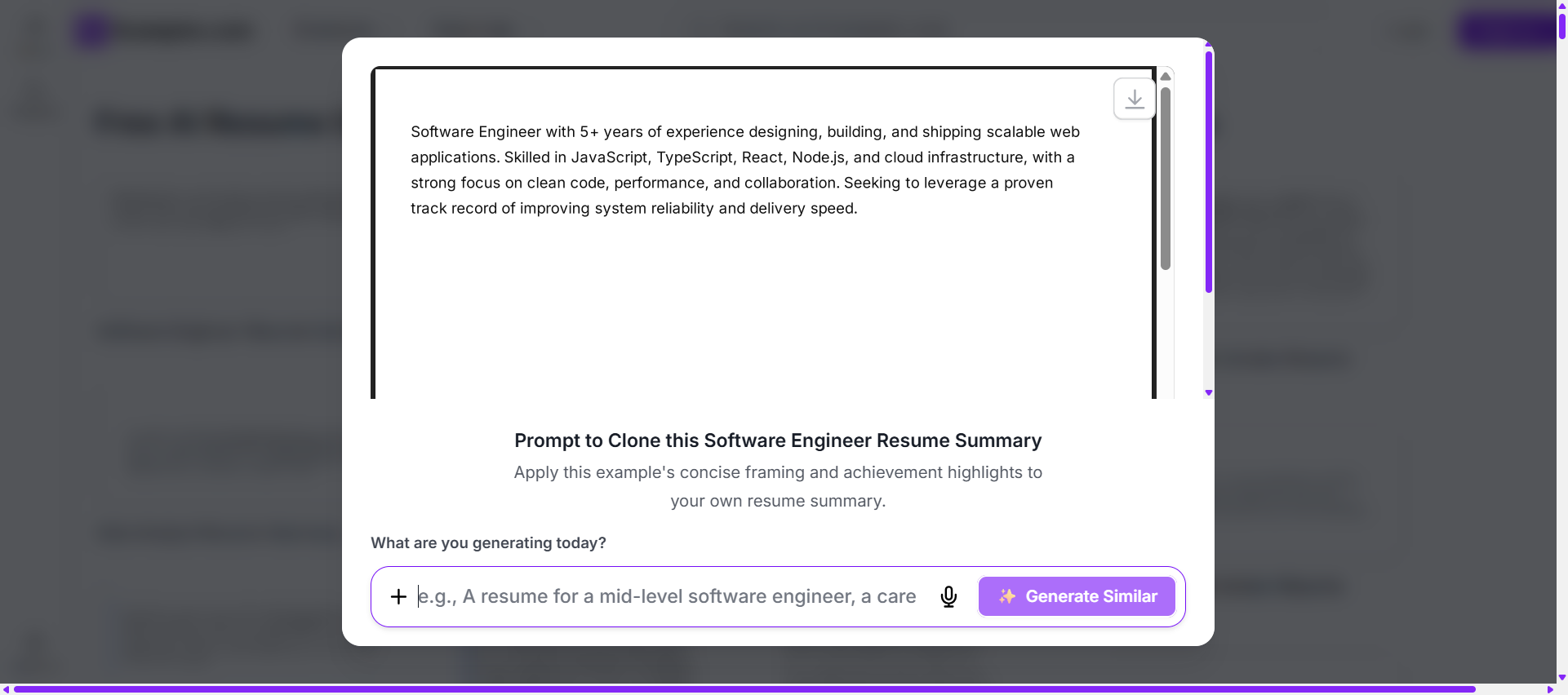
Choose A Reference Summary And Enter An AI Prompt
Generate A New AI Resume Summary
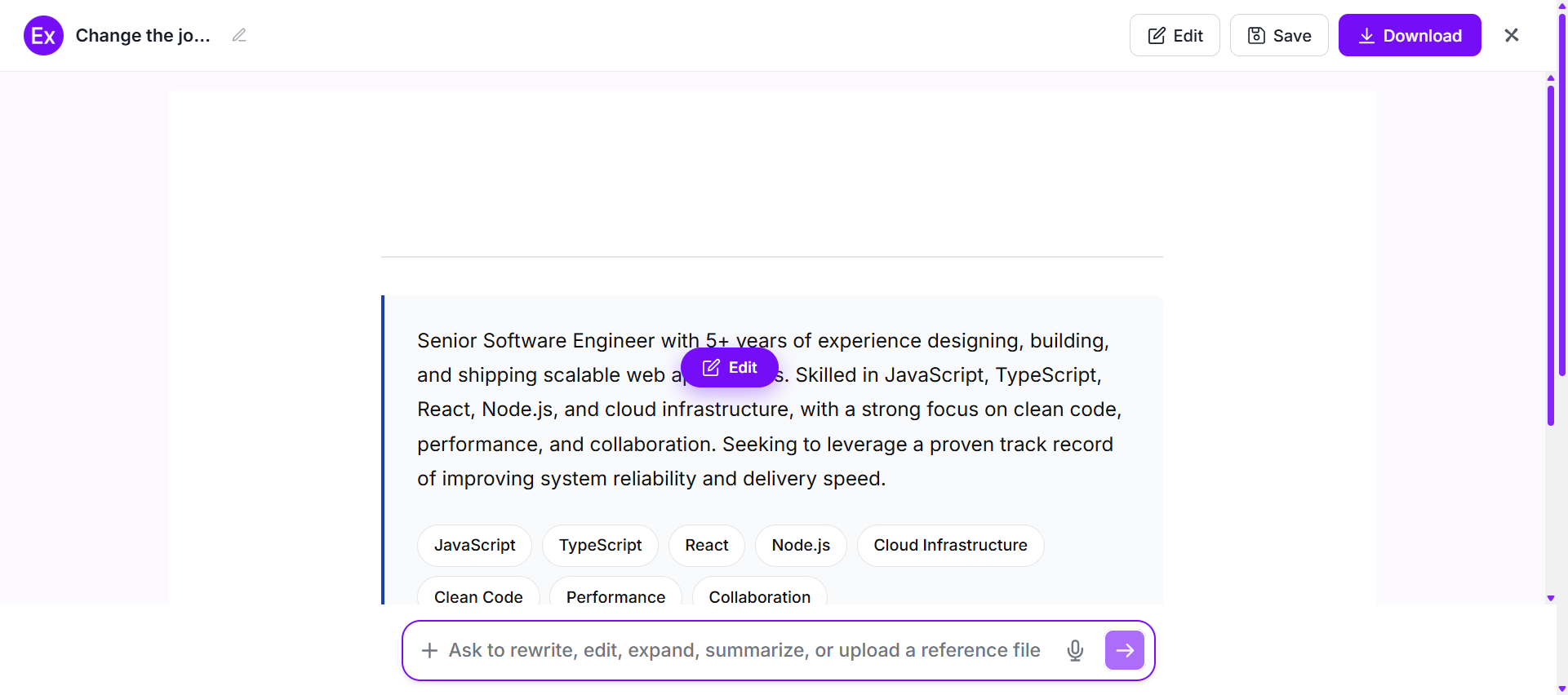
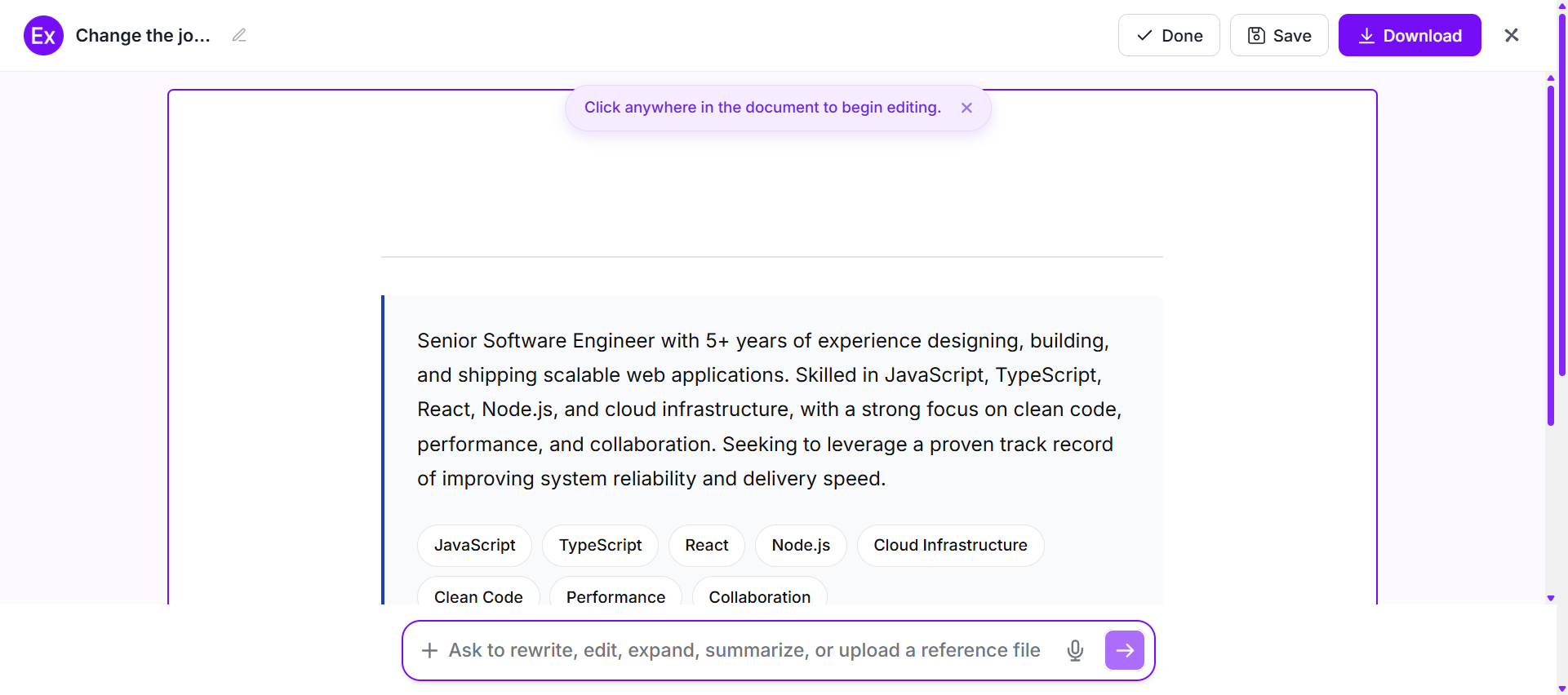
Customize The Resume Summary In The Online Editor
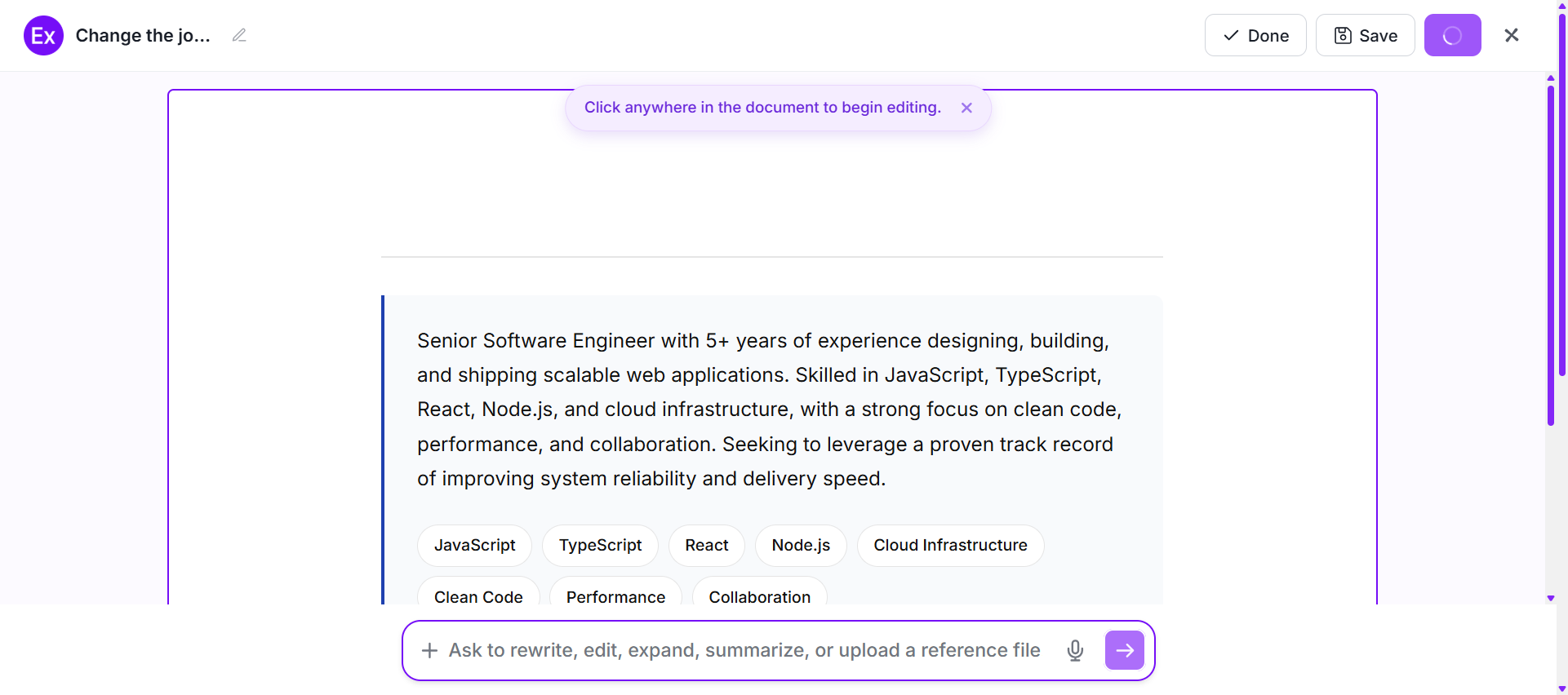
Download And Use Your Final Resume Summary
Why Is a Resume Summary Important?
A resume summary is often the first section recruiters read. A well-written summary immediately highlights your qualifications and helps employers quickly determine whether you're a strong candidate.
Benefits include:
- Creates a strong first impression
- Highlights your most valuable qualifications
- Demonstrates career achievements
- Improves ATS keyword relevance
- Saves recruiters time
- Increases interview opportunities
- Helps differentiate you from other applicants
- Strengthens your personal brand
Key Elements of a Strong Resume Summary
An effective resume summary includes concise, achievement-focused information that immediately communicates your value.
Professional Experience
Mention your years of experience or area of expertise.
Core Skills
Highlight technical and interpersonal skills relevant to the position.
Major Achievements
Include measurable accomplishments whenever possible.
Industry Knowledge
Showcase your expertise in a specific field or specialization.
Career Value
Explain how your experience and skills benefit potential employers.
Resume Summary vs Resume Objective
Although both appear at the top of a resume, they serve different purposes.
| Resume Summary | Resume Objective |
|---|---|
| Focuses on experience and achievements | Focuses on career goals |
| Best for experienced professionals | Best for students and entry-level candidates |
| Highlights measurable accomplishments | Explains future career aspirations |
| Demonstrates value to employers | Describes what the applicant hopes to achieve |
How to Write an Effective Resume Summary
A resume summary should quickly communicate who you are, what you have accomplished, and why you're the right candidate for the position. Most hiring managers spend only a few seconds reviewing a resume, making this section one of the most important parts of your application.
Follow these steps to write a compelling resume summary.
1. Start with Your Professional Identity
Begin by mentioning your profession and years of experience.
Examples:
- Software Engineer with 6 years of experience
- Marketing Manager with 10+ years of experience
- Registered Nurse with 5 years of clinical experience
This immediately tells recruiters who you are.
2. Highlight Your Core Skills
Include your strongest technical and professional skills that match the job description.
Examples include:
- Project Management
- Data Analysis
- Customer Relationship Management
- Digital Marketing
- Financial Reporting
- Software Development
- Leadership
- Problem Solving
Choose skills that are most relevant to the position.
3. Showcase Key Achievements
Instead of listing responsibilities, mention measurable accomplishments.
Examples:
- Increased sales by 30%
- Reduced operational costs by 18%
- Managed projects worth $5 million
- Led a team of 20 professionals
- Improved customer satisfaction by 25%
Numbers make your resume more credible and impactful.
4. Include Industry Expertise
Mention your area of specialization to help employers quickly understand your background.
Examples:
- Healthcare
- Information Technology
- Finance
- Education
- Manufacturing
- Retail
- Human Resources
- Engineering
5. Align Your Summary with the Job Description
Customize your summary for each application by incorporating relevant keywords from the job posting.
Tailored summaries improve both ATS compatibility and recruiter interest.
Resume Summary Writing Tips
A strong resume summary is concise, relevant, and achievement-focused.
Follow these best practices:
- Keep it between three and five sentences.
- Focus on your strongest qualifications.
- Include measurable achievements whenever possible.
- Use industry-specific keywords naturally.
- Write in active voice.
- Avoid unnecessary personal information.
- Update your summary for each job application.
- Make every sentence add value.
ATS-Friendly Resume Summary Tips
Many companies use Applicant Tracking Systems (ATS) to filter resumes before a recruiter reviews them.
To improve ATS compatibility:
Use Relevant Keywords
Include keywords from the job description such as:
- Business Analysis
- Cloud Computing
- Customer Service
- Python
- Financial Planning
- Project Management
Mention Recognized Skills
Include technical skills, certifications, and software proficiency that employers commonly search for.
Examples:
- Microsoft Excel
- SQL
- Salesforce
- Adobe Creative Suite
- Google Analytics
- AWS
- AutoCAD
Keep Formatting Simple
Avoid:
- Tables
- Graphics
- Icons
- Decorative symbols
- Complex layouts
Plain text is easier for ATS software to read.
Common Resume Summary Mistakes to Avoid
Avoiding these common mistakes will make your resume summary more effective.
Writing Generic Statements
Instead of:
"Hardworking professional seeking opportunities."
Write:
"Results-driven marketing manager with eight years of experience leading digital campaigns that increased customer engagement by 40%."
Making It Too Long
Your summary should be brief and easy to scan.
Avoid lengthy paragraphs filled with unnecessary details.
Repeating Information
Do not simply copy bullet points from your work experience section.
Your summary should provide a concise overview rather than repeating the same information.
Focusing Only on Responsibilities
Employers want to see achievements rather than job duties.
Always emphasize the value you created.
Using Weak Action Words
Replace weak words with stronger alternatives.
Examples:
- Led
- Developed
- Designed
- Improved
- Increased
- Managed
- Implemented
- Optimized
- Delivered
- Coordinated
AI Resume Summary Generator
AI-powered resume summary generators make it easy to create compelling professional summaries in minutes. Instead of struggling to write the perfect introduction, AI analyzes your experience, skills, achievements, and target role to generate a personalized summary that is clear, concise, and ATS-friendly.
AI tools can help you:
- Generate professional summaries instantly.
- Tailor summaries for specific job roles.
- Improve grammar and readability.
- Suggest industry-specific keywords.
- Highlight measurable achievements.
- Optimize content for Applicant Tracking Systems (ATS).
- Rewrite summaries in different tones.
- Save time while improving resume quality.
While AI provides an excellent starting point, reviewing and personalizing the generated summary ensures it accurately reflects your experience and career goals.
Frequently Asked Questions
What is a resume summary?
A resume summary is a brief introduction at the top of a resume that highlights your professional experience, key skills, achievements, and qualifications to quickly show employers why you are a strong candidate.How long should a resume summary be?
Most resume summaries are between three and five sentences or approximately 50 to 100 words. The goal is to provide a concise overview without overwhelming the reader.What should be included in a resume summary?
A strong resume summary typically includes:- Professional title
- Years of experience
- Core skills
- Key achievements
- Industry expertise
- Career value