A sales pitch is a persuasive message designed to show potential customers how a product or service can solve a specific problem and deliver meaningful value. The best sales pitches focus on the buyer’s pain points rather than simply listing features, using a clear story, strong value proposition, relevant proof, and compelling call to action to build interest and move the prospect toward the next step in the buying process.
What Is a Sales Pitch?
A sales pitch is a persuasive message that explains how a product or service can solve a prospect’s specific problem or meet a need. It focuses on the buyer’s pain points, presents a clear value proposition, provides relevant proof, and ends with a call to action that encourages the next step.
Popular Types of Sales Pitches
⚡
Elevator Pitch
An Elevator Pitch is a brief 30-to-60-second pitch that quickly communicates a problem, solution, and unique value to spark interest and start a conversation.
✉️
Sales Email Pitch
A Sales Email Pitch is a concise, personalized message that addresses a prospect’s needs, presents relevant value, and encourages a specific next step.
📊
Sales Presentation Pitch
A Sales Presentation Pitch uses a structured presentation to explain customer pain points, demonstrate a solution, provide supporting proof, and guide prospects toward a decision.
📞
Phone Sales Pitch
A Phone Sales Pitch is a direct conversation designed to identify a prospect’s needs, communicate value clearly, handle initial questions, and secure the next sales step.
🎯
Product Sales Pitch
A Product Sales Pitch shows how a product solves a specific customer problem by focusing on relevant benefits, practical value, and the results the buyer can expect.
🤝
Social Media Sales Pitch
A Social Media Sales Pitch uses short, engaging messages to connect with prospects, highlight a relevant solution, build interest, and encourage further conversation.
How Do I Generate Sales Pitches Using Real Sales Pitch Examples?
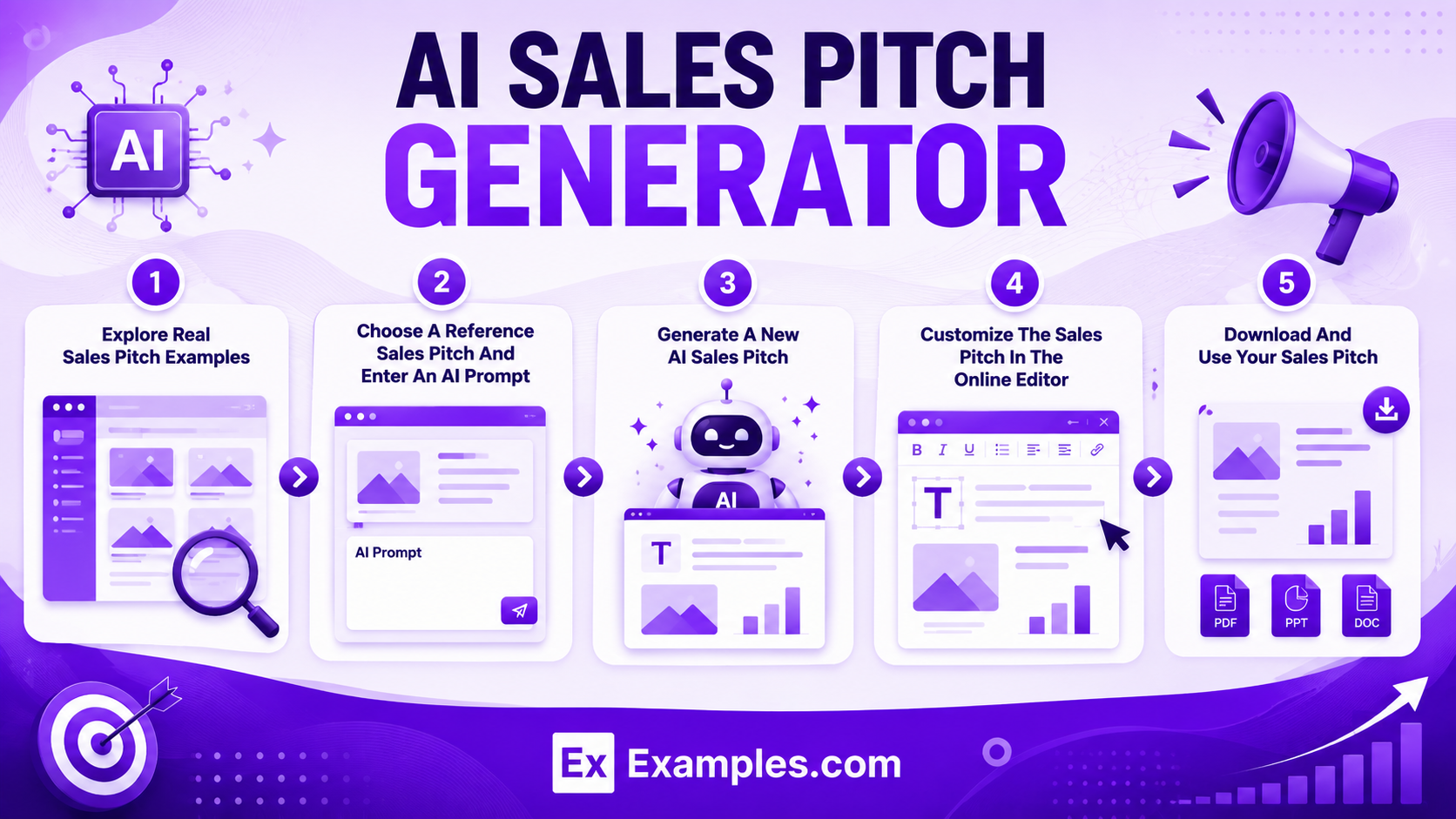
Explore Real Sales Pitch Examples
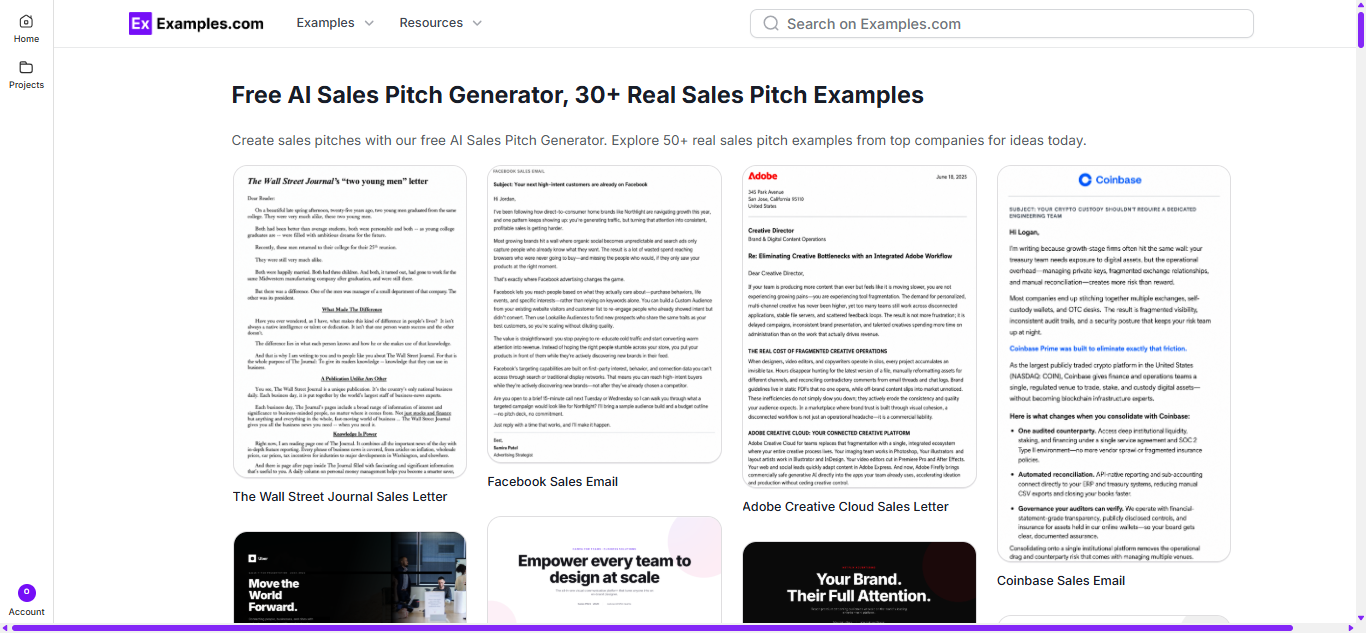
Browse real sales pitch examples to understand effective structure, messaging, value propositions, proof points, and calls to action. Reviewing successful approaches helps you identify how strong pitches address customer pain points and persuade prospects to take the next step.
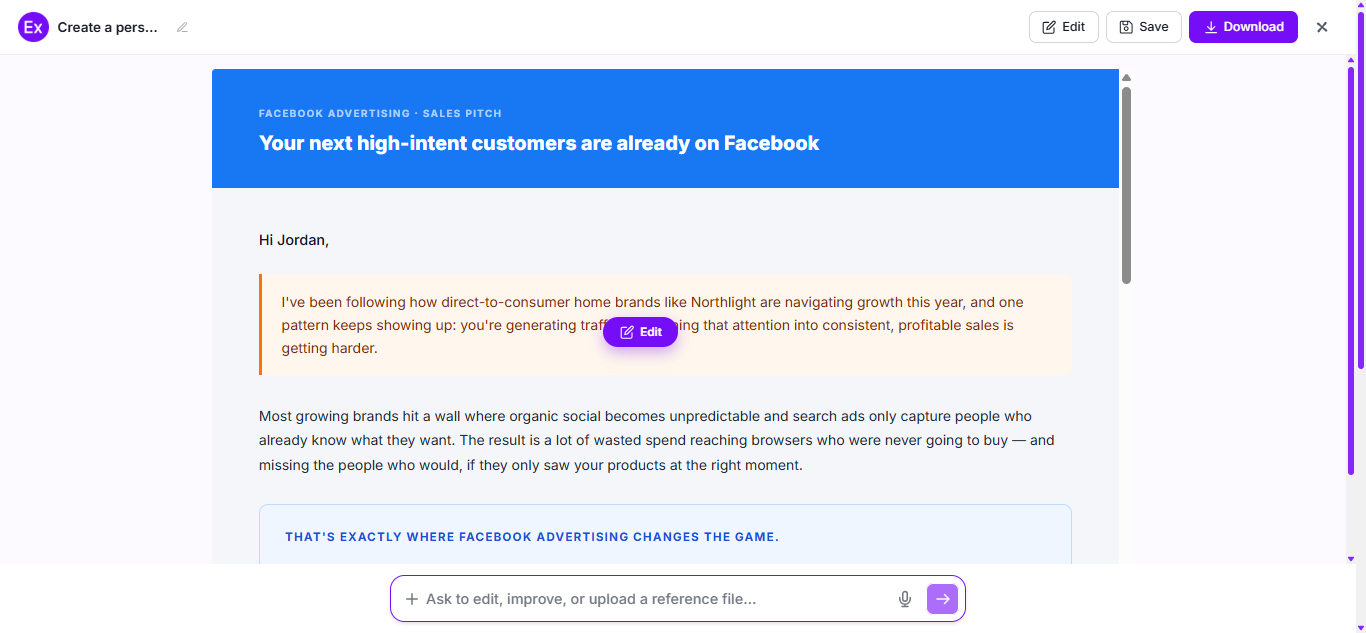
Choose A Reference Sales Pitch And Enter An AI Prompt
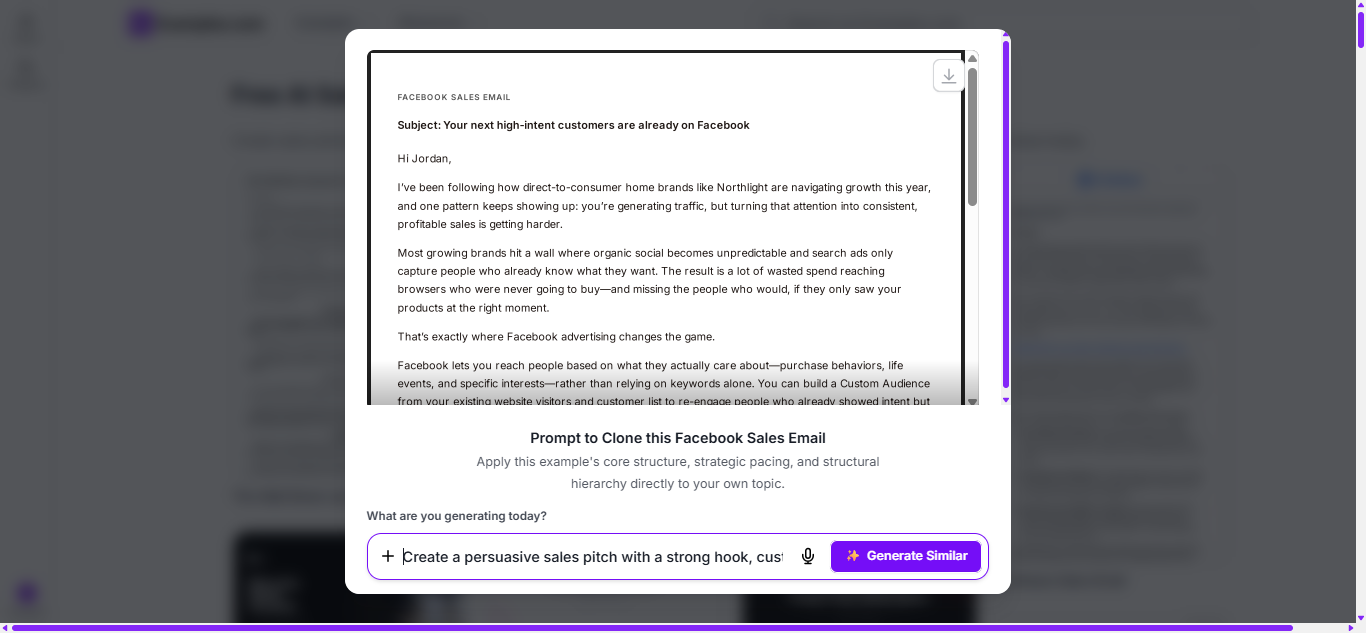
Select a reference sales pitch and enter a prompt describing your product or service, target audience, customer pain points, key benefits, value proposition, and desired call to action.
Generate A New AI Sales Pitch
AI generates a tailored sales pitch from your prompt, organizing the message with an engaging hook, customer problem, clear value proposition, relevant proof, and persuasive call to action.
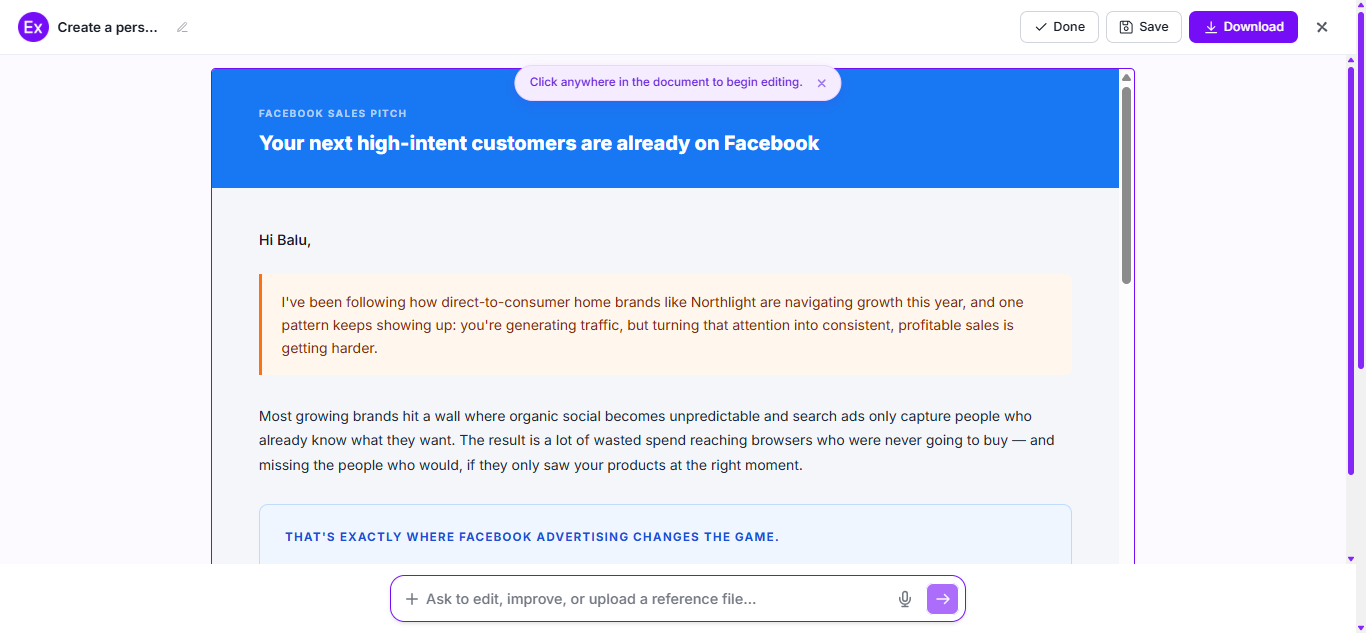
Customize The Sales Pitch In The Online Editor
Edit the messaging, customer pain points, benefits, supporting proof, call to action, tone, and formatting to create a sales pitch that fits your audience, product, and sales objective.
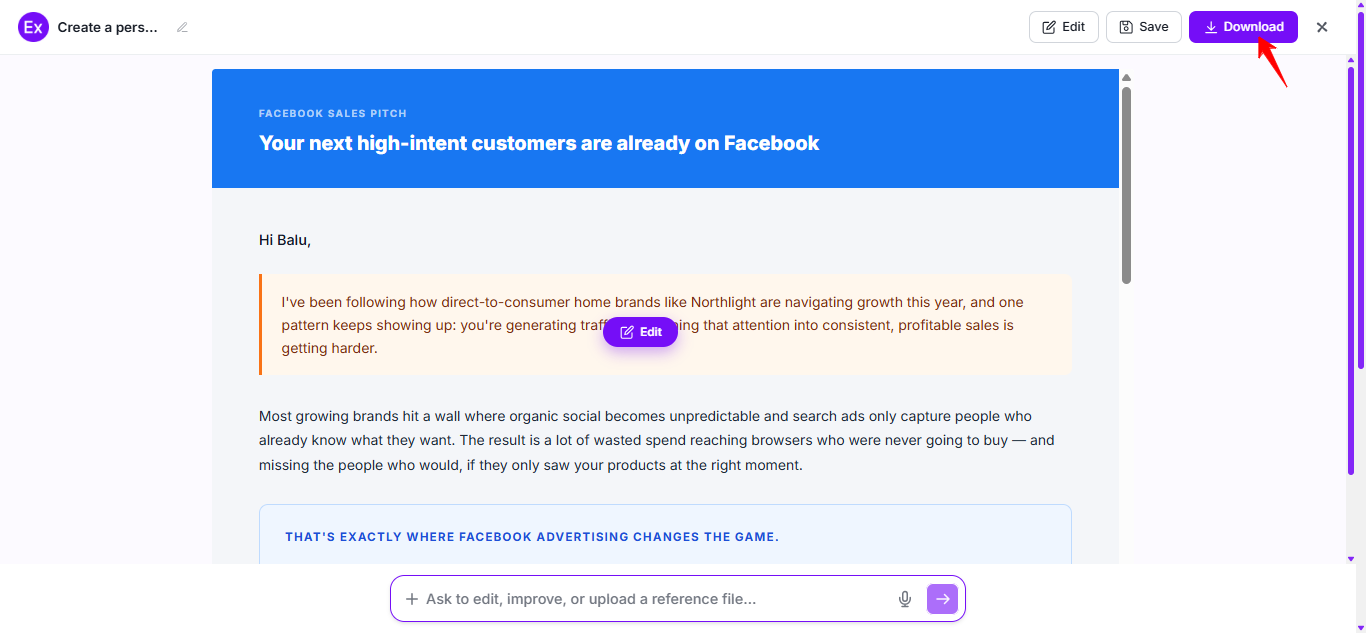
Download And Use Your Sales Pitch
Download your completed sales pitch for presenting, sharing, printing, or using in sales conversations, emails, presentations, and other customer outreach.
Customize a sales pitch by adapting the message to your target audience, their specific pain points, and the outcome they want to achieve. Refine the hook, value proposition, benefits, supporting proof, tone, and call to action so the pitch feels relevant and persuasive. Keep the message focused on the buyer’s needs and clearly show how your solution can help them take the next step.
AI Sales Pitch Editing Features
1
AI Content Generation
Generate persuasive sales pitch content tailored to your product, audience, customer pain points, and sales goals.
2
Smart Content Editing
Refine your hook, value proposition, benefits, proof points, and call to action to make your sales pitch clearer and more persuasive.
3
Tone Customization
Adjust the tone and messaging to match your target audience, sales situation, and communication style.
4
Sales Pitch Customization
Update product details, customer pain points, key benefits, value propositions, and calls to action to fit your sales objective.
5
Content Review And Refinement
Review and improve your sales pitch for clarity, relevance, consistency, and stronger customer-focused messaging before using it.
6
Instant Download Options
Download your completed sales pitch in your preferred format for presenting, sharing, printing, or customer outreach.
Which Sales Pitch Format Works Best?
The best sales pitch format depends on your audience, sales goal, and stage of the buying process. An elevator pitch works best for quick introductions, while a sales email is better for direct outreach and a sales presentation is ideal when a solution needs detailed explanation or demonstration.
Sales Pitch Format
Best Used For
Why It Works
Elevator Pitch
Networking and quick introductions
Communicates your core value in 30–60 seconds and creates interest quickly.
Sales Email
Prospecting and direct outreach
Delivers a personalized, concise message with a clear next step.
Sales Presentation
Meetings and complex solutions
Explains problems, solutions, benefits, and proof in a structured way.
Phone Sales Pitch
Direct prospect conversations
Allows immediate questions, responses, and personalized discussion.
Product or Demo Pitch
Product demonstrations
Shows how the solution works and connects features directly to customer needs.
Social Media Pitch
Starting online conversations
Uses short, relevant messaging to attract attention and begin engagement.
Which Essential Elements Should I Include in Every Sales Pitch?
Hook: Grab attention quickly with a relevant question, insight, or compelling statement.
Problem: Identify the customer’s specific pain point and show that you understand their challenge.
Value Proposition: Clearly explain how your solution helps the customer achieve a desired outcome.
Benefits: Highlight the most relevant results and value the customer can expect.
Proof: Support your claims with credible results, data, testimonials, or case studies.
Call to Action: Give the prospect one clear next step, such as scheduling a meeting or requesting a demo.
How Do I Create a Better Sales Pitch?
Understand Your Audience: Research your prospects, their needs, priorities, and specific pain points before creating your pitch.
Start With a Strong Hook: Open with a relevant question, insight, or statement that immediately captures attention.
Focus on the Problem: Show that you understand the customer’s challenge before introducing your solution.
Explain Your Value Clearly: Connect your solution directly to the outcome or benefit the customer wants to achieve.
Add Credible Proof: Support key claims with relevant data, results, testimonials, or case studies when available.
Keep It Concise: Remove unnecessary details and focus only on information that helps the prospect understand your value.
End With a Clear CTA: Ask for one specific next step, such as a meeting, demo, or follow-up conversation.
Why Should I Use Real Sales Pitch Examples to Create My Own Sales Pitch?
Understand how effective sales pitches are structured from the opening hook to the call to action.
Learn how to connect customer pain points with a clear solution and value proposition.
Identify persuasive ways to present benefits and supporting proof without overwhelming prospects.
Adapt proven sales approaches to your own product, audience, and sales goals.
Save time by using real examples as practical references instead of starting from scratch.
Create a clearer, more focused pitch that encourages prospects to take the next step.
What Common Sales Pitch Mistakes Should I Avoid?
Talking Too Much About Features: Focus on customer benefits and outcomes instead of listing every product feature.
Ignoring Customer Pain Points: Understand the prospect’s specific challenges before presenting your solution.
Using a Generic Pitch: Personalize your message to the prospect’s needs, goals, and situation.
Overloading With Information: Keep the pitch concise and include only details that support your core value proposition.
Making Unsupported Claims: Use credible proof, results, or evidence to strengthen important claims.
Using an Unclear Value Proposition: Explain clearly why your solution is relevant and what value it provides.
Forgetting the Call to Action: End with one specific next step so the prospect knows exactly what to do.
How Can I Sell My Product Using a Sales Pitch?
1
Identify Your Customer’s Problem
Understand the specific pain point, need, or goal your product can address before presenting your solution.
2
Start With a Strong Hook
Capture attention with a relevant question, insight, or statement that connects directly to the customer’s situation.
3
Present Your Product as the Solution
Explain clearly how your product solves the customer’s problem and focus on the benefits and outcomes that matter most.
4
Support Your Pitch With Proof
Use relevant results, data, testimonials, or other credible evidence to strengthen your claims and build confidence.
5
End With a Clear Call to Action
Ask the prospect to take one specific next step, such as requesting a demo, scheduling a meeting, or continuing the sales conversation.
Sales Pitch Ideas for Different Industries
Technology: Focus on solving technical challenges, improving efficiency, saving time, and simplifying workflows.
Retail: Highlight product value, customer benefits, convenience, quality, and the overall buying experience.
Healthcare: Emphasize practical outcomes, reliability, efficiency, accessibility, and how the solution addresses specific needs.
Real Estate: Focus on location, value, key property benefits, investment potential, and the buyer’s specific priorities.
Financial Services: Highlight security, convenience, cost savings, financial value, and solutions tailored to customer goals.
Education: Show how the product or service improves learning, accessibility, engagement, productivity, or educational outcomes.
Professional Services: Emphasize expertise, problem-solving, measurable value, and how the service helps clients achieve specific business goals.
Hospitality: Focus on guest experience, convenience, service quality, comfort, and the unique value offered to customers.
FAQs
How Long Should a Sales Pitch Be?
Keep a sales pitch brief enough to maintain attention while clearly communicating the problem, value, proof, and desired next action.
What Is the Main Goal of a Sales Pitch?
The main goal is to create interest, demonstrate relevant value, and persuade a prospect to take the next sales step.
How Do I Start a Sales Pitch?
Start with a compelling question, insight, or statement that immediately connects with the prospect’s needs, challenges, or current situation.
How Do I Make a Sales Pitch More Persuasive?
Make your pitch persuasive by focusing on customer needs, clear benefits, credible evidence, personalized messaging, and a specific next action.
Should I Memorize My Sales Pitch?
Learn the key points instead of memorizing every word so your delivery remains natural, flexible, conversational, and responsive to prospects.
How Do I Personalize a Sales Pitch?
Research the prospect’s needs, priorities, and challenges, then tailor your message, benefits, examples, and proposed solution to their situation.
What Makes a Sales Pitch Successful?
A successful sales pitch combines customer understanding, relevant value, concise messaging, credible proof, confident delivery, and a clear next step.
How Do I End a Sales Pitch?
End with a clear call to action that tells the prospect exactly what next step you want them to take.
Can a Sales Pitch Be Written or Spoken?
Yes. Sales pitches can be delivered through conversations, emails, presentations, calls, or other channels depending on the sales situation.
How Should I Practice a Sales Pitch?
Practice your key message aloud, refine unclear points, anticipate common questions, and adjust your delivery until it sounds confident and natural.