
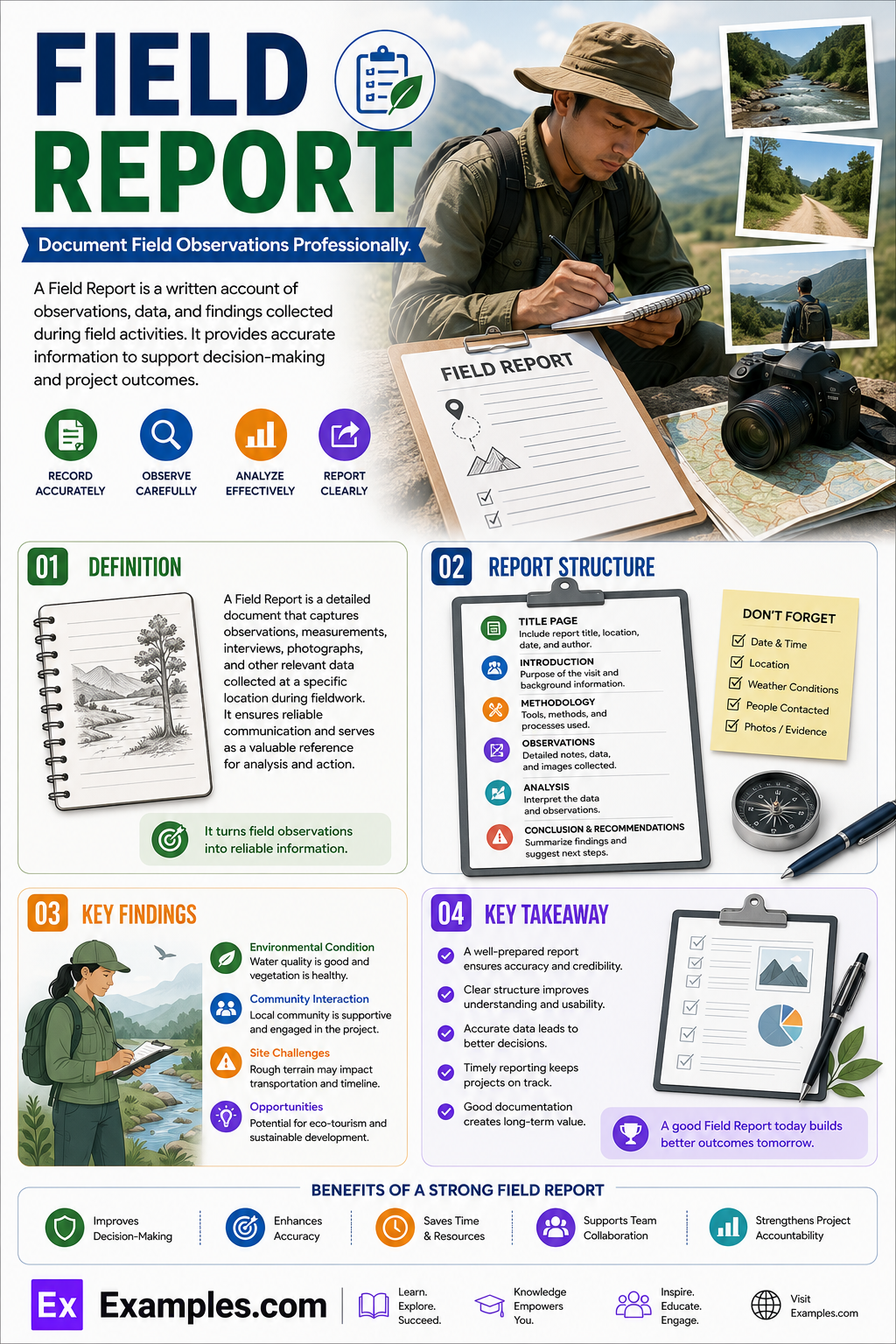
A field report documents observations and findings collected during on-site work or research. It records facts, evidence, and analysis from real-world activities. Field reports support accurate reporting and informed decisions.
What is Field Report?
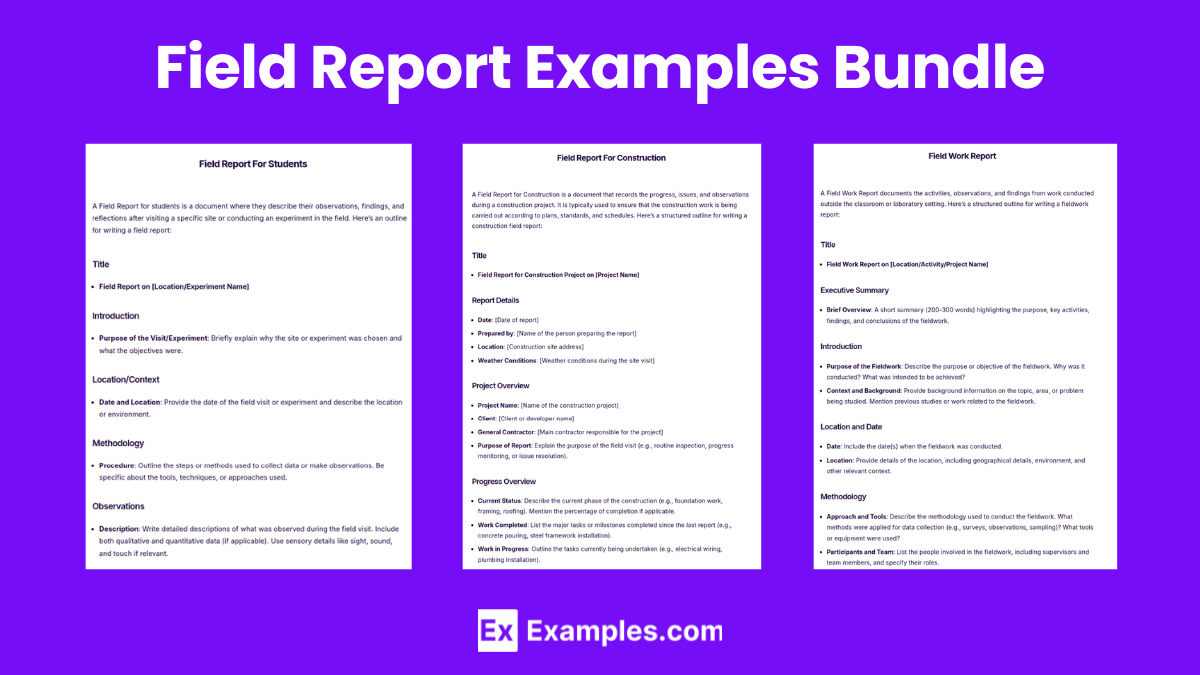
Field Report Examples Bundle
Field Report Format
Opening Remarks
Greeting: Begin with a polite and formal greeting.
Example: “Good morning, everyone.” or “Ladies and gentlemen,”
Introduction
Purpose: Briefly state the purpose of the field report.
Example: “I am here to present the findings from our recent field study conducted on [location].”
Methodology
Data Collection: Mention the methods used to gather data.
Example: “We employed a combination of observational techniques and sample collection to gather relevant data.”Tools and Techniques: Acknowledge any specific tools or approaches used.
Example: “Using GPS and soil analysis kits, we mapped the area and collected samples for laboratory testing.”
Results
Findings: Summarize the main observations or data collected.
Example: “Our analysis revealed significant variations in soil composition across the study site.”Visuals: Mention any visuals such as charts, tables, or photos.
Example: “Please refer to Table 1 for a detailed breakdown of our findings.”
Discussion
Interpretation: Discuss the meaning of the results and their implications.
Example: “These findings suggest that the area may be prone to erosion, which could affect future land use.”
Conclusion
Summary: Briefly summarize the key points of the field report.
Example: “In summary, our field study revealed critical insights into the environmental conditions at the site.”Recommendations: Offer suggestions for future action or study.
Example: “We recommend further monitoring of the area to assess long-term changes.”
Closing Remarks
Final Thanks: Offer a word of thanks to those who contributed to the fieldwork.
Example: “Thank you to the team and all involved for their efforts in making this study possible.”Farewell: End with a polite closing.
Example: “Thank you all for your attention.”
Field Report Example
Short Field Report Example
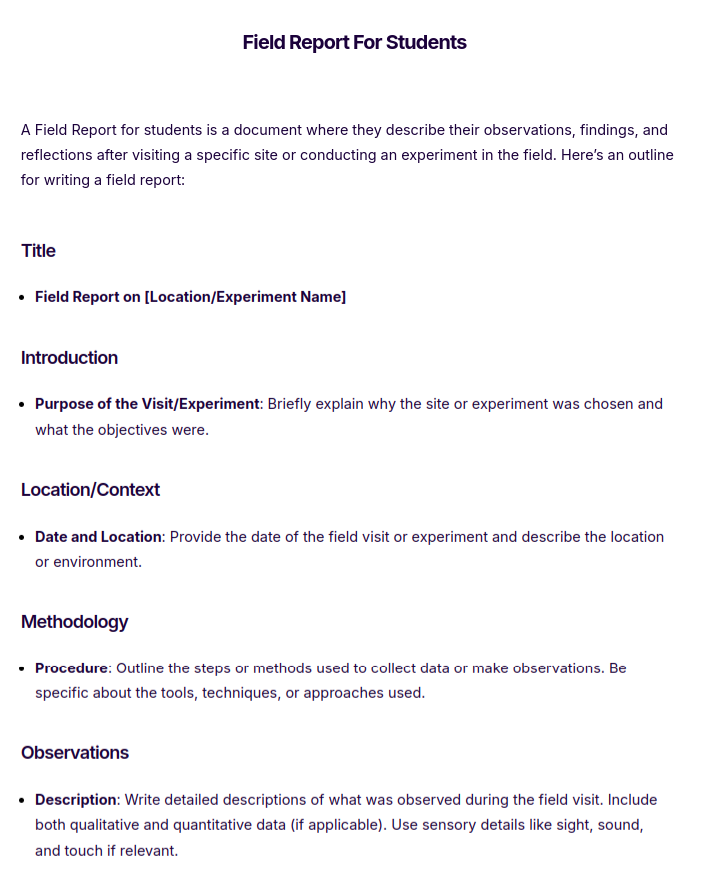
Field Report For Students
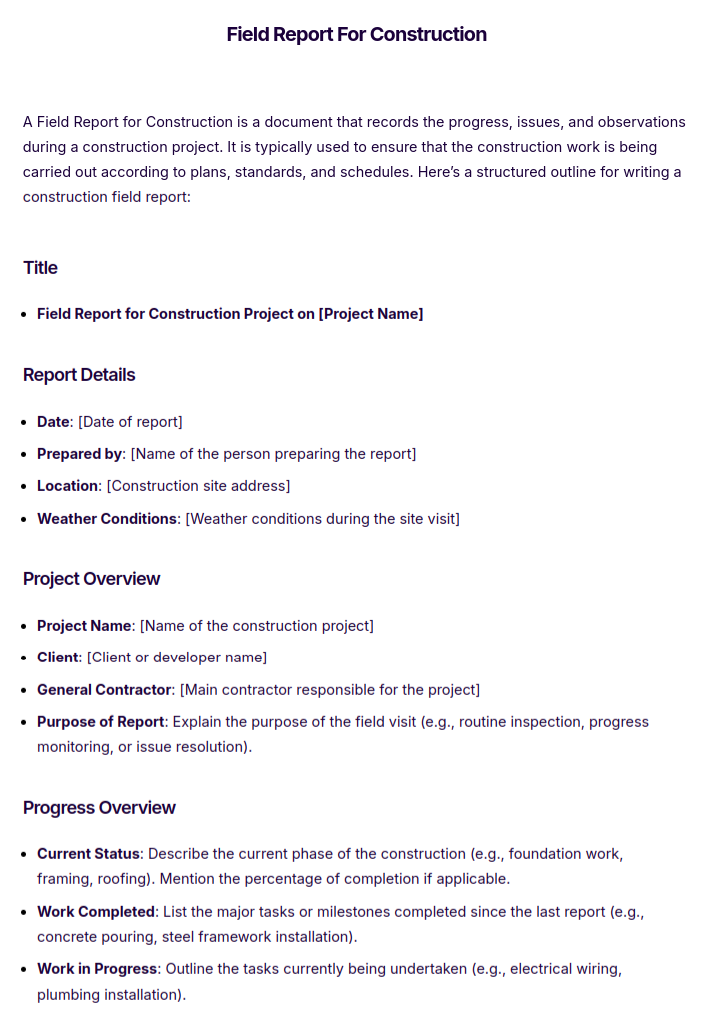
Field Report For Construction
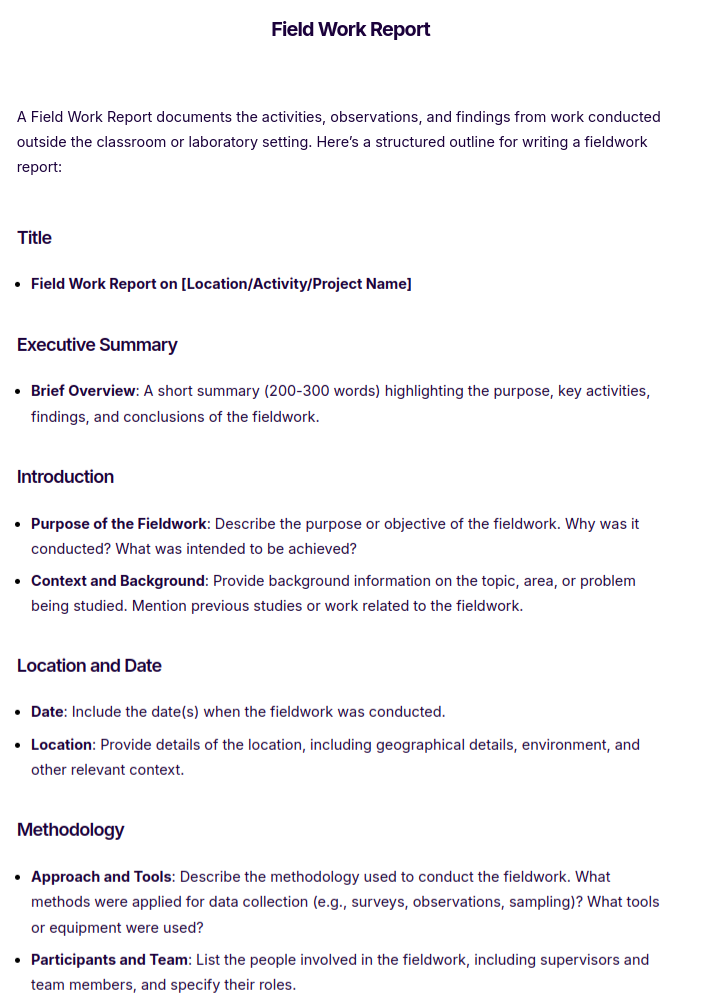
Field Work Report
More Field Report Examples and Samples
Field Report Examples
1. Field Report Template
2. Field Service Report Template
3. Construction Field Report Template
4. Field Report in PDF
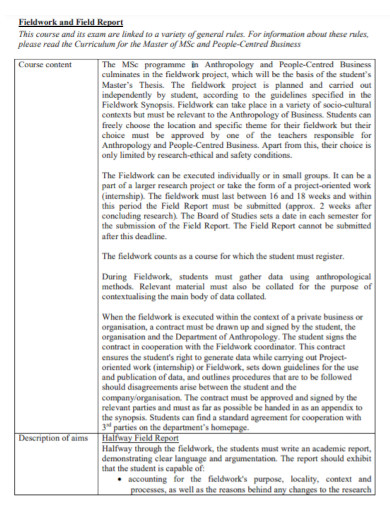
5. Architect Field Report
6. Electricity Field Report
7. Field Work Summary Report
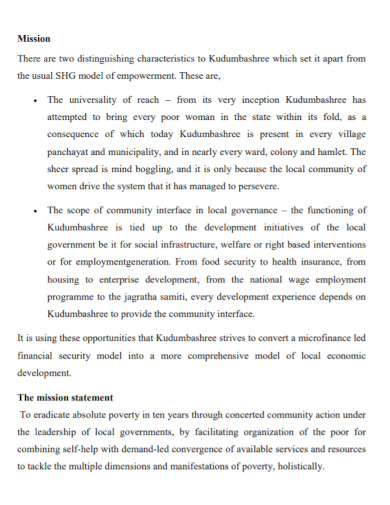
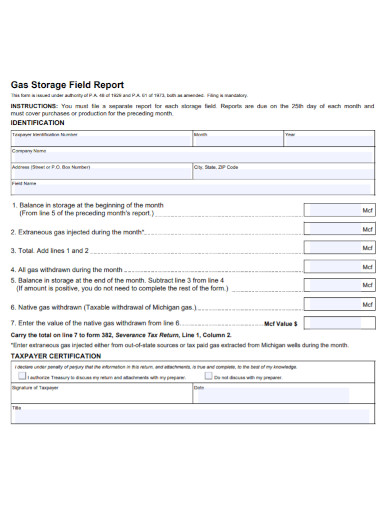
8. Gas Storage Field Report
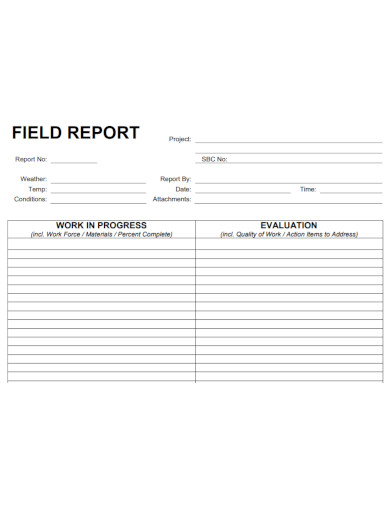
9. Field Report Template
How to Write Field Report?
A field report documents observations and analyses in a real-world environment, often involving fieldwork, research, or case studies. It generally includes factual data, analysis, and interpretations. Here’s a concise guide to writing an effective field report:
- Introduction
Provide context for your fieldwork.
State the purpose of your study.
Mention the location, time, and background information.
Identify key questions or objectives. - Methodology
Explain the methods used to collect data (e.g., observations, interviews, surveys).
Describe the tools and techniques applied.
Mention how and why specific subjects or environments were chosen. - Observations
Record factual observations objectively.
Structure the observations chronologically or thematically.
Include environmental conditions, behaviors, or patterns noticed. - Analysis
Interpret the observations in light of the research questions.
Compare your findings with existing theories or literature.
Discuss any trends, correlations, or deviations observed. - Conclusion
Summarize key findings.
Highlight the significance of your observations.
Suggest implications or recommendations based on your analysis. - References
Include citations for any research or theories referenced in your report.
- Appendices (Optional)
Attach any raw data, charts, or supplementary materials relevant to the report.
Types of Field Report
Field reports can vary depending on the discipline or purpose. Here are the main types of field reports:
1. Descriptive Field Report
- Focuses on providing detailed, objective descriptions of the environment, events, or phenomena observed.
- Common in natural sciences, anthropology, and geography.
- Purpose: To record accurate details for future reference.
2. Analytical Field Report
- Combines observations with analysis and interpretation of data.
- Often includes comparisons to theories, frameworks, or previous studies.
- Common in social sciences, business, and education.
- Purpose: To evaluate the observations and derive conclusions or insights.
3. Case Study Field Report
- Focuses on a specific case or individual(s) within a real-world context.
- Detailed analysis of a particular subject, such as an event, organization, or community.
- Common in fields like psychology, medicine, and business.
- Purpose: To provide an in-depth understanding of the subject within its real-world context.
4. Ethnographic Field Report
- Involves immersive, long-term observations of a community, group, or culture.
- Emphasizes participant observation and interviews.
- Common in anthropology, sociology, and cultural studies.
- Purpose: To explore cultural practices, beliefs, and social dynamics.
5. Environmental Field Report
- Documents observations and analysis of environmental conditions, such as ecosystems, weather, or landforms.
- Common in environmental science, ecology, and geography.
- Purpose: To monitor and analyze environmental changes or impacts.
6. Technical Field Report
- Focuses on specific technical processes, data collection, or equipment testing in the field.
- Common in engineering, geology, and other applied sciences.
- Purpose: To evaluate the performance of equipment, methods, or processes in real-world conditions.
Importance of Field Report
A field report is essential because it provides firsthand, practical insights and observations that are often unattainable from secondary sources. It plays a critical role in:
- Documenting Real-world Data: Field reports capture detailed information directly from the environment or situation being studied, ensuring accuracy.
- Supporting Research and Analysis: They serve as the basis for analyzing and interpreting conditions, behaviors, or trends observed in the field.
- Problem-Solving and Decision-Making: Field reports help identify issues, propose solutions, and make informed decisions based on actual findings.
- Improving Planning and Strategies: By understanding real-world conditions, organizations or researchers can refine their strategies or methodologies.
- Compliance and Accountability: Field reports are often required for regulatory compliance, providing a record of activities and their outcomes.
- Learning and Training: They are useful for educational purposes, allowing others to learn from practical experiences.
Tips for Field Report
Here are some concise tips for writing an effective field report:
- Clear Objective: Define the purpose of the fieldwork and what you’re aiming to document.
- Detailed Observations: Record accurate, objective, and detailed descriptions of the environment, events, or subjects.
- Organized Structure: Use a clear format with sections such as Introduction, Methodology, Findings, and Conclusion.
- Photographs and Sketches: Include visual evidence to support observations.
- Analysis: Link observations to relevant theories or concepts.
- Concise Writing: Be clear and precise in your writing, avoiding unnecessary details.
- Reflective Insights: Incorporate personal insights and evaluations of the field experience.
FAQS
The purpose of a field report is to describe and interpret the observations made during fieldwork, showing how the data gathered supports or challenges theories, and providing practical insights.
The length depends on the scope of the assignment or project. Most reports range from 3 to 10 pages.
Failing to clearly state the objective of the fieldwork.
Including irrelevant details or overly subjective opinions.
Lack of proper analysis linking observations to theory.
Poor organization and unclear headings.
Follow scientific methods for observation and documentation. Be precise with measurements, include reliable data, and avoid assumptions without supporting evidence.
Practice regularly, pay attention to feedback, review examples of well-written field reports, and ensure you stay organized throughout your fieldwork and writing process.