18
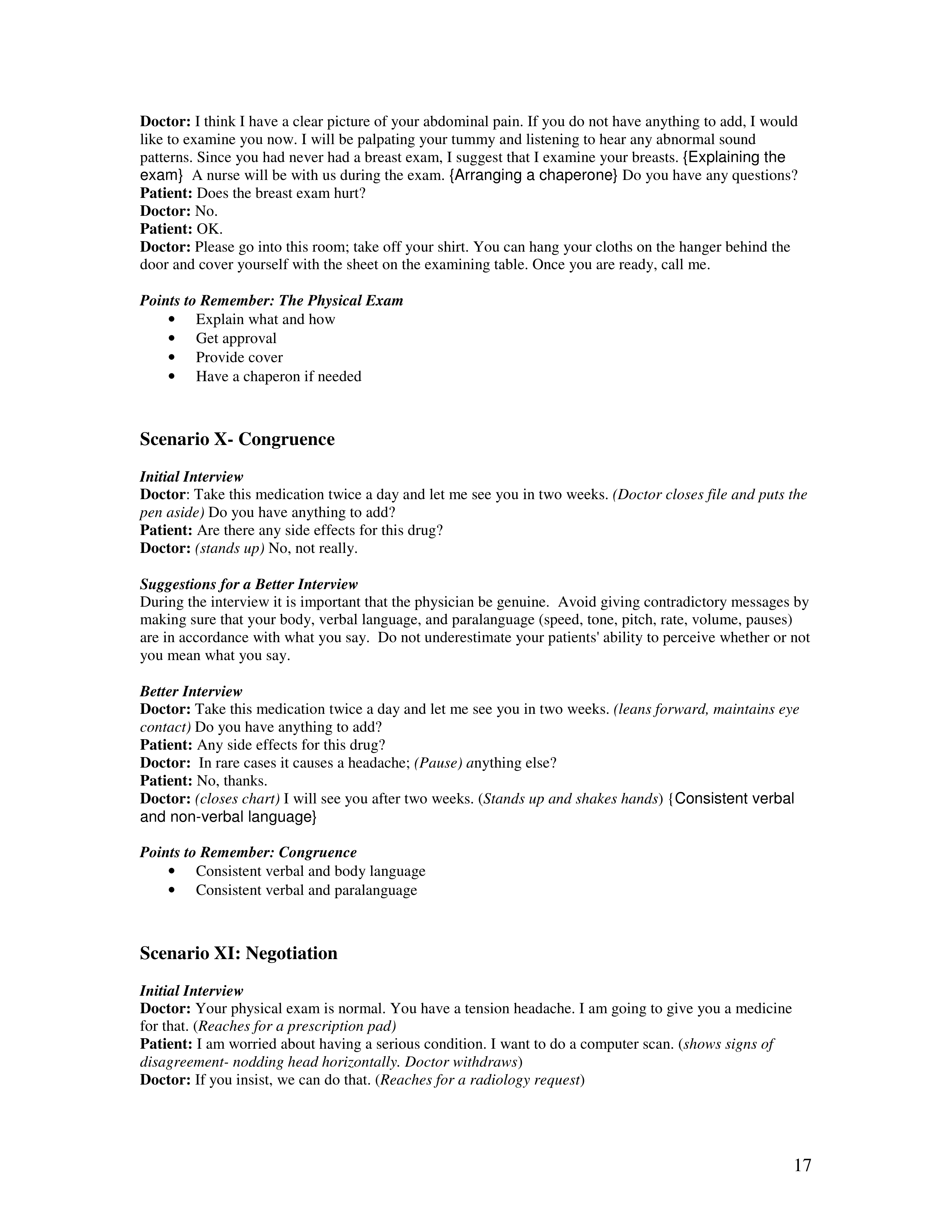
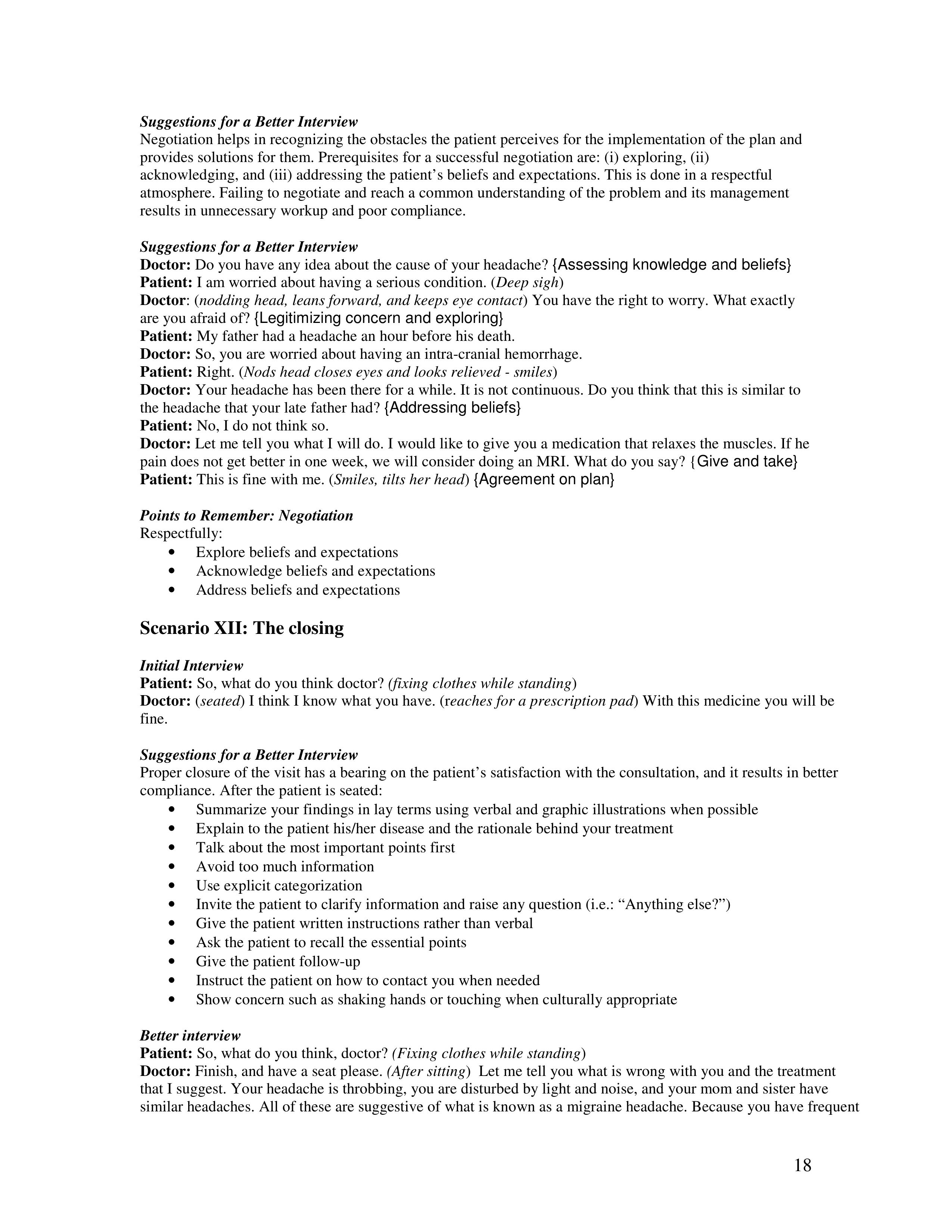
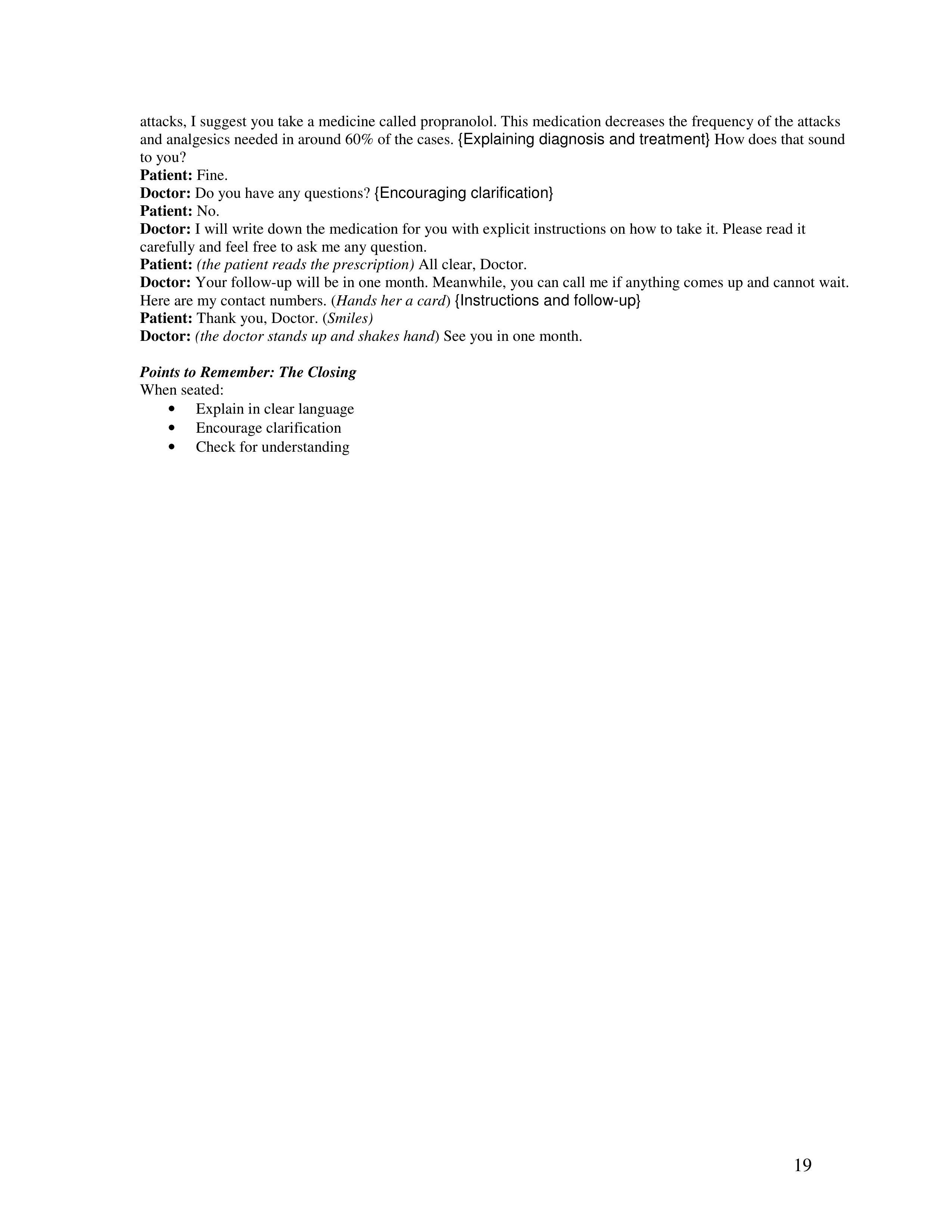
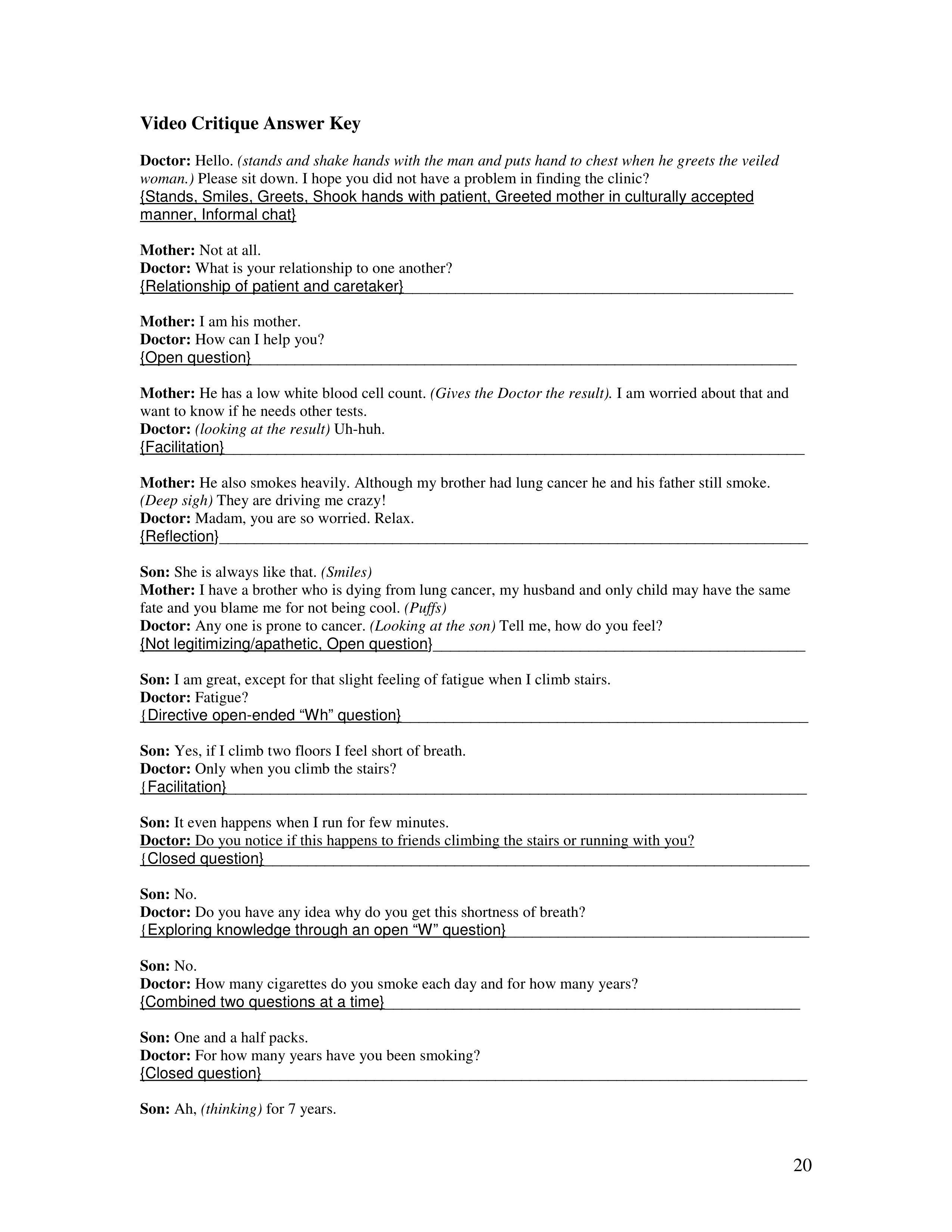
Suggestions for a Better Interview
Negotiation helps in recognizing the obstacles the patient perceives for the implementation of the plan and
provides solutions for them. Prerequisites for a successful negotiation are: (i) exploring, (ii)
acknowledging, and (iii) addressing the patient’s beliefs and expectations. This is done in a respectful
atmosphere. Failing to negotiate and reach a common understanding of the problem and its management
results in unnecessary workup and poor compliance.
Suggestions for a Better Interview
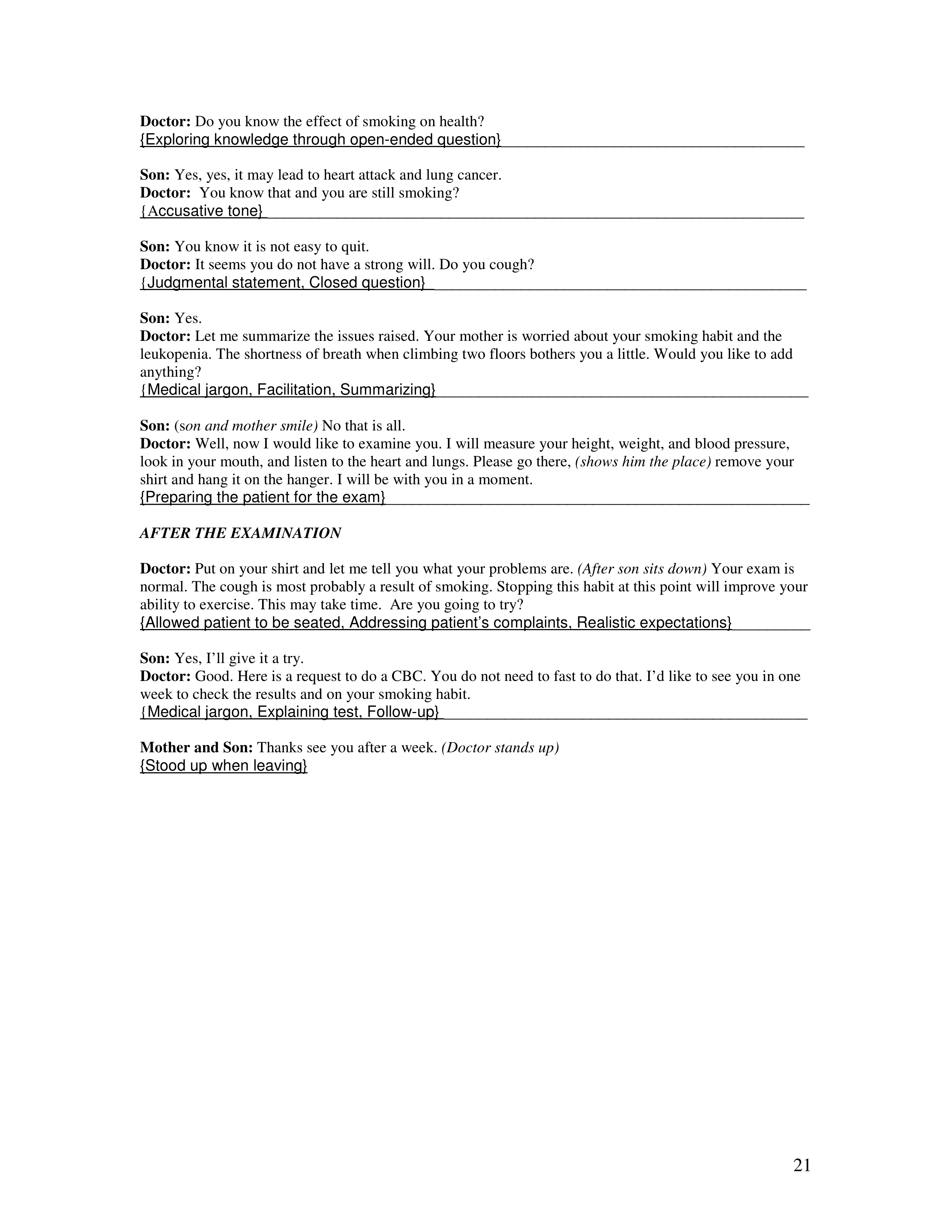
Doctor:
Do you have any idea about the cause of your headache?
{Assessing knowledge and beliefs}
Patient:
I am worried about having a serious condition. (
Deep sigh
)
Doctor
: (
nodding head, leans forward, and keeps eye contact
) You have the right to worry. What exactly
are you afraid of?
{Legitimizing concern and exploring}
Patient:
My father had a headache an hour before his death.
Doctor:
So, you are worried about having an intra-cranial hemorrhage.
Patient:
Right. (
Nods head closes eyes and looks relieved - smiles
)
Doctor:
Your headache has been there for a while. It is not continuous. Do you think that this is similar to
the headache that your late father had?
{Addressing beliefs}
Patient:
No, I do not think so.
Doctor:
Let me tell you what I will do. I would like to give you a medication that relaxes the muscles. If he
pain does not get better in one week, we will consider doing an MRI. What do you say? {
Give and take}
Patient:
This is fine with me. (
Smiles, tilts her head
)
{Agreement on plan}
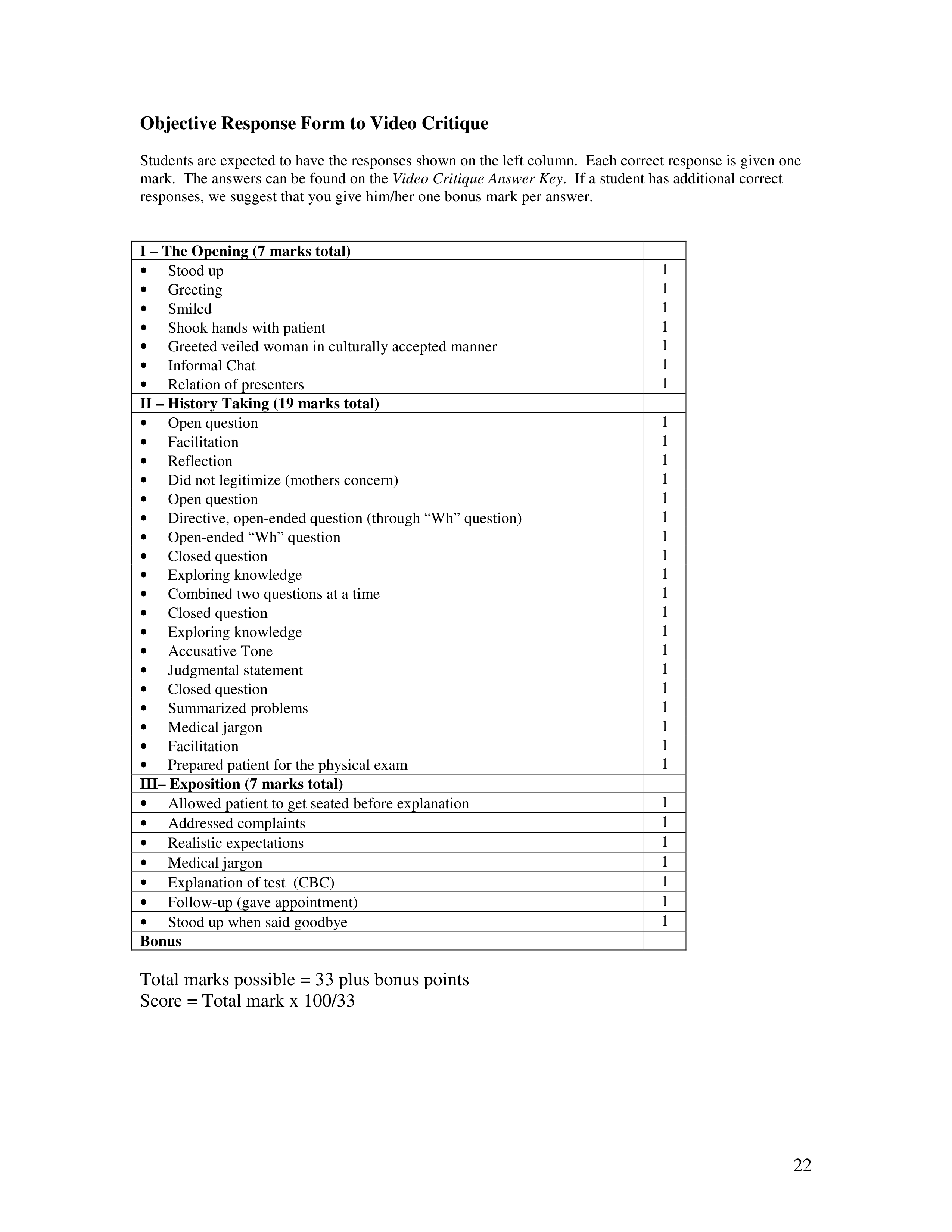
Points to Remember: Negotiation
Respectfully:
•
Explore beliefs and expectations
•
Acknowledge beliefs and expectations
•
Address beliefs and expectations
Scenario XII: The closing
Initial Interview
Patient:
So, what do you think doctor?
(fixing clothes while standing
)
Doctor:
(
seated
) I think I know what you have. (r
eaches for a prescription pad
) With this medicine you will be
fine.
Suggestions for a Better Interview
Proper closure of the visit has a bearing on the patient’s satisfaction with the consultation, and it results in better
compliance. After the patient is seated:
•
Summarize your findings in lay terms using verbal and graphic illustrations when possible
•
Explain to the patient his/her disease and the rationale behind your treatment
•
Talk about the most important points first
•
Avoid too much information
•
Use explicit categorization
•
Invite the patient to clarify information and raise any question (i.e.: “Anything else?”)
•
Give the patient written instructions rather than verbal
•
Ask the patient to recall the essential points
•
Give the patient follow-up
•
Instruct the patient on how to contact you when needed
•
Show concern such as shaking hands or touching when culturally appropriate
Better interview
Patient:
So, what do you think, doctor?
(Fixing clothes while standing
)
Doctor:
Finish, and have a seat please.
(After sitting
) Let me tell you what is wrong with you and the treatment
that I suggest. Your headache is throbbing, you are disturbed by light and noise, and your mom and sister have
similar headaches. All of these are suggestive of what is known as a migraine headache. Because you have frequent