


Sustainability by Design: IKEA's Eco-Friendly
Marketing Efforts
Mahalakshmi S
1
, Dr. Anitha Nallasivam
2
Hemanth Kumar S
3
,
Kalavathy K S
4
and Kavitha Desai
5
1,2,3 &4
Faculty of Management studies, Jain CMS (Deemed-to-be University), Bangalore,
India
5
SVKM’s Narsee Monjee Institute of Management Studies, Bangalore, India
Abstract.
IKEA, the global retail, and home furnishings giant, takes center stage
in this comprehensive case 0000-0002-2611-0780study, as we delve into the mul-
tifaceted realm of its sustainable marketing initiatives. IKEA has not only estab-
lished a remarkable presence in the industry but has also redefined the way we
approach sustainable living. This case begins with an exploration of IKEA's foun-
dational principles, featuring affordability, accessibility, and sustainability as
cornerstones that have not only defined the brand but have also shaped its unpar-
alleled market position. Delving further, we uncover the tangible efforts under-
taken by IKEA to minimize its environmental footprint, including the implemen-
tation of sustainable materials, energy-efficient practices, and the integration of
renewable energy sources within its operations. The study sheds light on the key
marketing strategies employed, such as transparent communication of product
sustainability, community involvement, and strategic partnerships with organiza-
tions promoting eco-conscious lifestyles. IKEA's success in encouraging recy-
cling, repurposing, and the adoption of circular economy practices through reso-
nant marketing campaigns comes to the fore, illustrating how it effectively
bridges sustainability with consumer engagement. IKEA's commitment to sus-
tainability shines through in its product range, characterized by a focus on renew-
able and recycled materials, energy-efficient appliances, and designs that priori-
tize sustainability. Furthermore, the study underlines how these sustainable prod-
ucts are marketed, effectively conveying their environmental advantages to con-
sumers. Beyond the realm of products, IKEA's social and environmental initia-
tives are explored, showcasing the brand's dedication to making a meaningful
impact in local communities. In sum, this case study encapsulates the remarkable
journey of IKEA, where sustainable marketing is not just a practice but a way of
life, fostering a global shift towards eco-friendly living and responsible consumer
choices.
Keywords:
sustainable marketing, eco-friendly, circular economy, energy-effi-
cient practices, transparent communication, environmental impact, eco-friendly
products First Section
© The Author(s) 2024
M. Rani Nimmagadda et al. (eds.), Proceedings of the 3rd International Conference on Reinventing Business
Practices, Start-ups and Sustainability (ICRBSS 2023), Advances in Economics, Business and Management
Research 277,
https://doi.org/10.2991/978-94-6463-374-0_14
1
INTRODUCTION
1.1
Background of IKEA
IKEA, the iconic Swedish brand, has a rich history that dates to 1943 when Ingvar
Kamprad founded it as a small mail-order business. The name "IKEA" is an acronym
of Ingvar's initials and the first letters of the farm and village where he grew up (Elmta-
ryd and Agunnaryd). From its modest beginnings, IKEA's vision was to offer well-
designed, functional, and affordable home furnishings to the masses. The brand's core
principles are:
Affordability:
IKEA's commitment to affordability means that their products are de-
signed to be budget-friendly without compromising on quality and style. This principle
makes stylish home furnishings accessible to a wide range of consumers, regardless of
their budget.
Accessibility:
IKEA's philosophy of accessibility goes beyond just the price point. The
brand aims to make its products easily accessible to customers through strategically
located stores, a user-friendly shopping experience, and innovative solutions for trans-
porting and assembling furniture.
Sustainability:
Sustainability is a cornerstone of IKEA's operations and product de-
sign. The brand is dedicated to reducing its environmental impact through sustainable
practices, such as using renewable and recycled materials, promoting energy efficiency,
and minimizing waste. IKEA also aims to inspire sustainable living among its
customers.
1.2
Market Position and Global Influence:
IKEA has evolved from its humble origins into a global retail powerhouse with a unique
market position and far-reaching influence. IKEA's market position is characterized by
a unique blend of factors that have made it a global leader in home furnishings. The
brand is renowned for its extensive range of well-designed, functional products that are
tailored to suit various lifestyles and home settings. This includes not only budget-con-
scious consumers but also those who seek both style and value. Furthermore, IKEA's
flat-pack, self-assembly model is a hallmark of its market strategy, setting it apart from
traditional furniture retailers and contributing to its distinctive position. In terms of
global influence, IKEA's impact extends far and wide, leaving an indelible mark on the
way people approach home furnishing and sustainability. The brand's innovative and
efficient retail model has not only been widely emulated by competitors but has also
redefined industry standards. Moreover, IKEA's unwavering emphasis on sustainable
practices and the use of eco-friendly materials has set the bar for responsible business
conduct, raising global awareness about eco-friendly living. Its extensive presence in
146 S. Mahalakshmi et al.
numerous countries has made its core principles of affordability, accessibility, and sus-
tainability accessible to a diverse and international customer base, thereby shaping the
global landscape of home furnishings and sustainable living.
2
IKEA and Sustainability
IKEA has emerged as a global frontrunner in both sustainable marketing and the home
furnishings industry. With a storied history that spans several decades, the brand has
established itself not only as a household name but also as an icon of sustainability and
innovation. The brand's journey from a modest Swedish enterprise to an international
retail giant is a testament to its unwavering commitment to affordable yet sustainable
home furnishings. The essence of sustainable business lies in an ever-evolving trans-
formation that has deep roots in IKEA's history and heritage, forging the very essence
of the IKEA culture [15] (Edvardsson & Enquist, 2009) Unlike many companies, sus-
tainability is not just a facet of IKEA's operations; it is woven into the very fabric of its
identity.
Within the realm of sustainable marketing, IKEA has set itself apart by embracing a
multifaceted approach that resonates with consumers worldwide. It encompasses sus-
tainable materials, energy-efficient practices, and the integration of renewable energy
sources in its operations. By doing so, IKEA minimizes its environmental footprint and
sets a precedent for eco-conscious business practices. The adoption of socially respon-
sible practices has not only resonated morally but has also proven financially beneficial,
notably for industry leader IKEA in the global furniture landscape [1]. The brand's mar-
keting strategies are equally remarkable. IKEA transparently communicates the sus-
tainability of its products, actively engages with local communities, and collaborates
with organizations dedicated to promoting eco-conscious living. These strategies not
only reinforce its brand but also inspire eco-friendly choices among consumers. IKEA's
dedication to sustainability is unmistakable in its product range. The brand has made
significant investments in using renewable and recycled materials, incorporating en-
ergy-efficient appliances, and prioritizing sustainable design. This ensures that custom-
ers have access to stylish yet eco-friendly home furnishings. The brand's commitment
to sustainability goes beyond just the products; it extends to how they are marketed.
IKEA effectively communicates the environmental advantages of its sustainable
products, educating consumers and enabling them to make environmentally responsible
choices. In addition to its product-driven sustainability, IKEA has embarked on various
social and environmental initiatives. Ethical values, sustainability, and corporate social
responsibility play a significant role in driving value resonance and service excellence,
particularly in the case of IKEA [12]. IKEA employed diverse strategies to infuse sus-
tainability into product development, mirroring their distinct corporate cultures and
management systems [8]. This approach has redefined not only the furniture industry
but also how consumers around the world engage with sustainability in their everyday
lives. IKEA's sustainability journey stems from its heritage of hard work and resource
Sustainability by Design: IKEA’s Eco-Friendly Marketing Efforts 147
efficiency. They've integrated sustainability into all their business strategies, with on-
going projects in responsible forestry, water treatment, and sustainable cotton. This
commitment reflects their focus on environmental and social responsibility. [13]
2.1
Sustainable Practices in Operations
IKEA's commitment to minimizing its environmental footprint is a central tenet of its
corporate ethos. This commitment is manifested in a variety of ways, reflecting the
brand's dedication to responsible and sustainable practices. McDonald's, Walmart, and
IKEA, among other notable brands, have earned accolades for their strong focus on
eco-friendly products, which not only enhances their corporate image but also posi-
tively impacts environmental well-being. Moreover, their commitment signals a prom-
ising future marked by innovation and unwavering dedication to sustainable practices
[2]. In line with their commitment to corporate responsibility, IKEA sources wood ma-
terials from highly sustainable origins, with over 98% of their wood used in products
meeting FSC certification or being recycled, underscoring their dedication to climate
preservation [15]. Incorporating environmental responsibility and ecological orienta-
tion into a company’s business strategy is essential for effectively and efficiently ad-
dressing environmental challenges [5].
Some of the key aspects of IKEA's efforts to reduce environmental impact are:
Sustainable Materials
: IKEA actively seeks out sustainable materials for its products.
This includes the use of wood from responsibly managed forests, which is certified by
organizations like the Forest Stewardship Council (FSC). The brand also utilizes other
renewable and recycled materials in its product range. As per the sustainable cotton
ranking report, 37 companies using 100% cotton as well as maintaining transparent
supply chain policy were subjected to thorough evaluation, none achieved the highest
possible score of 19.5 points, largely due to the absence of any company meeting the
criteria for 100% sustainable cotton usage or full transparency in their cotton supply
chain policies. Remarkably, only eight companies managed to score three points or
more. In this landscape, IKEA Group emerged as the frontrunner, boasting an impres-
sive score of 12.0, and is the sole company to earn a place in the coveted "green zone."
Energy Efficiency:
IKEA prioritizes energy efficiency in its operations. This includes
investments in energy-efficient lighting and appliances in stores, distribution centers,
and production facilities. The brand continually works to reduce its energy consump-
tion and dependence on fossil fuels.
Renewable Energy
: IKEA is a notable proponent of renewable energy sources. The
company has invested heavily in wind and solar power, both for its own use and for
contributing clean energy to the grid (Appendix 1& 2). This commitment to renewable
energy aligns with the brand's goal to be energy-independent by 2020.
148 S. Mahalakshmi et al.
Waste Reduction:
IKEA actively works to minimize waste generation. The company
aims to send zero waste to landfills and incineration by optimizing its operations, recy-
cling materials, and reusing resources. In addition, the brand encourages customers to
recycle or return old products for refurbishment.
Circular Economy:
IKEA has embraced the concept of a circular economy, where
products are designed to be reused, refurbished, or recycled rather than discarded. This
approach emphasizes product longevity and reduces environmental impact.
Transportation Efficiency:
IKEA has taken measures to enhance transportation effi-
ciency, reducing emissions associated with product distribution. This includes optimiz-
ing shipping routes and promoting the use of sustainable transport options. As per their
latest sustainability and climate report by 2025, they would have eco-friendly transpor-
tation system build across their supply chain.
Water Stewardship:
The brand is mindful of its water use and seeks to minimize water
consumption in its production processes, as well as in its suppliers' operations. It also
supports water conservation efforts in areas where it operates.
Sustainable Agriculture:
IKEA is committed to promoting sustainable and responsi-
ble agricultural practices, particularly in relation to the sourcing of food products in its
restaurants and Swedish Food Markets.
At IKEA, sustainability is not just a buzzword but a guiding principle deeply embedded
in its ethos. The brand's unwavering commitment to reducing its environmental foot-
print is evident through its conscientious approach to sustainable materials, energy-ef-
ficient practices, and the seamless integration of renewable energy sources into its op-
erations. From responsibly sourced wood and recycled materials to the transition to
energy-efficient LED lighting and appliances, it has sustainability built in it. Analyzing
the sustainable practices at IKEA it was revealed that the companies can effectively
implement sustainability practices throughout their entire supply chain, extending to
second and third-tier suppliers [7]. IKEA's product range exemplifies eco-conscious
design. The brand's investments in wind and solar power not only reduce its own carbon
emissions but also contribute clean energy to the grid. This dedication to sustainable
materials and energy-efficient solutions not only minimizes IKEA's ecological impact
but also empowers customers to make sustainable choices for their homes. By embrac-
ing renewable energy, IKEA sets a shining example for businesses and underscores its
commitment to a greener, more sustainable future. As per, Reuters report, dated 7th
September 2023 Ingka Investments (Ingka Group, which owns and operates most IKEA
stores) has invested 4 billion euros ($4.30 billion) in renewable projects such as wind
and solar farms out of 6.5 billion euros planned by 2030, and says it currently produces
more electricity than it consumes per Reuters.
Sustainability by Design: IKEA’s Eco-Friendly Marketing Efforts 149
3
IKEA’s key achievements in reducing
environmental impact.
IKEA's journey in reducing its environmental impact is marked by remarkable achieve-
ments that epitomize its dedication to sustainability. A standout accomplishment is the
brand's global shift to 100% renewable energy, a commitment realized in its operations
by 2020. Moreover, IKEA's resolute embrace of the circular economy principles has
led to the design of more durable, repairable, and recyclable products, effectively ex-
tending product lifecycles, and minimizing waste. Sustainable sourcing practices, in-
cluding an increased use of FSC-certified wood and sustainably sourced cotton, have
further underscored the brand's commitment to responsible material acquisition. Addi-
tionally, IKEA's focus on recycling, energy efficiency, and water stewardship has led
to tangible reductions in waste generation and energy consumption, contributing to its
substantial environmental achievements. Beyond its own initiatives, IKEA actively en-
gages and educates customers, fostering a collective commitment to eco-conscious liv-
ing. These milestones highlight IKEA's comprehensive approach to sustainability, in-
spiring both consumers and businesses alike to join in the quest for a greener, more
sustainable future. The IKEA People & Planet Positive Strategy 2030 serves as a cata-
lyst for profound change, addressing the pressing global issues of climate change, un-
sustainable consumption, and inequality. Aligned with the UN Sustainable Develop-
ment Goals (SDGs), IKEA's target for transformative change by 2030 is encapsulated
in their strategy declaration: "We aspire to create a positive influence on individuals,
society, and the environment. Our focus is on harmonizing economic growth, positive
social impact, and environmental conservation and rejuvenation" (IKEA, 2020, p. 3).
4
Sustainable Marketing Strategies
IKEA's sustainable marketing strategies revolve around principles that reflect its com-
mitment to affordability, accessibility, and sustainability. These strategies include:
Transparent Communication:
IKEA places a strong emphasis on transparent com-
munication of product sustainability. The brand provides customers with detailed in-
formation about the materials used in each product, their origin, and their environmen-
tal impact. IKEA's product labels, such as the "Better Cotton" tag, provide clear and
accessible information about sustainability, enabling customers to make informed
choices.
Educational Campaigns:
IKEA engages in educational campaigns to raise awareness
about sustainable living. Through its catalogs, website, and in-store displays, the brand
offers tips, ideas, and information to help customers make more eco-conscious choices
in their homes.
Sustainability Reports:
IKEA publishes annual sustainability reports that outline its
progress and goals in environmental and social sustainability. These reports serve as a
150 S. Mahalakshmi et al.
transparent account of the brand's initiatives and achievements, reinforcing its commit-
ment to openness.
In addition, IKEA's involvement with communities and partnerships with eco-con-
scious organizations are integral to its sustainable marketing approach. The "IKEA
Foundation" stands as a beacon of the brand's commitment to positive community im-
pact, channeling efforts into areas such as children's education and clean energy pro-
jects worldwide. Simultaneously, IKEA fosters alliances with eco-conscious organiza-
tions and environmental groups, exemplified through initiatives like "People & Planet
Positive." Such partnerships align with the brand's mission to inspire and enable indi-
viduals to live more sustainably. Furthermore, IKEA prioritizes sustainability certifica-
tion, collaborating with entities like the Forest Stewardship Council (FSC) to ensure
responsible wood sourcing, reaffirming its dedication to ethical and eco-conscious
practices. Additionally, the brand actively sources products locally whenever feasible,
reducing transportation emissions and providing vital support to local economies.
These interconnected strategies bolster IKEA's environmental stewardship and com-
munity involvement, fortifying its status as a leader in sustainable marketing. These
efforts not only reinforce the brand's commitment to sustainability but also inspire and
enable customers to make more eco-conscious choices for their homes and communi-
ties.
IKEA has executed several successful marketing campaigns that actively encourage
recycling and promote the principles of the circular economy. Here are a few notable
campaigns from IKEA:
The "Second Hand Collection"
: IKEA introduced a marketing campaign that encour-
ages customers to sell their used IKEA furniture through the brand. This initiative aligns
with circular economy principles by promoting the reuse and extension of product
lifecycles. The campaign's message revolves around giving pre-loved furniture a sec-
ond chance.
"The Wonderful Everyday" Campaign:
IKEA's "The Wonderful Everyday" market-
ing campaign emphasizes that sustainability can be an everyday practice. It encourages
customers to be mindful of waste reduction and recycling by featuring products and
solutions that contribute to sustainable living. This campaign fosters the idea that sim-
ple, eco-conscious choices can make everyday life more sustainable.
Upcycling and Customization:
IKEA encourages customers to take part in upcycling
and customizing furniture, demonstrating that a simple change or a new look can extend
the life of a product. The brand provides ideas and DIY instructions through various
marketing materials, illustrating how customers can breathe new life into their existing
furniture.
Mattress Recycling:
IKEA has promoted the recycling of mattresses through market-
ing campaigns, urging customers to bring back old mattresses to be disassembled and
Sustainability by Design: IKEA’s Eco-Friendly Marketing Efforts 151
recycled. This initiative aligns with circular economy principles and helps minimize
waste associated with discarded mattresses.
Textile Recycling:
IKEA has actively campaigned for textile recycling by introducing
in-store textile collection points. Customers are encouraged to bring in old textiles for
recycling. This campaign underscores the importance of diverting textiles from landfills
and reintroducing them into the manufacturing cycle. These marketing campaigns re-
flect IKEA's commitment to reducing waste and enhancing the sustainability of its
products, reinforcing the brand's position as a leader in eco-conscious marketing and
responsible consumption.
4.1
Sustainable Product Offerings by IKEA
IKEA's sustainable product range stands as a testament to the brand's unwavering
commitment to eco-conscious design and responsible consumer choices. This diverse
range encompasses furniture made from renewable and responsibly sourced materials,
including FSC-certified wood and recycled components. Energy-efficient appliances
and solar-powered products offer customers options to reduce their energy consump-
tion and transition to clean, renewable power sources. Water-saving fixtures and sus-
tainable textiles promote responsible resource use while ensuring quality and comfort.
Further, IKEA champions the circular economy by offering products made from recy-
cled materials and those designed for easy recycling at the end of their lifecycle. Also,
IKEA's sustainable product range not only demonstrates its commitment to sustainabil-
ity but also empowers customers to make responsible choices for their homes and life-
styles, making sustainable living both accessible and affordable.
IKEA's proactive use of renewable and recycled materials in its product range un-
derscores its commitment to sustainability. Whether its recycled PET plastic used in
rugs or sustainably sourced wood, these materials reduce the environmental impact of
production. Additionally, energy-efficient appliances, such as LED lighting and water-
saving faucets, are readily available to help customers lower their energy and water
consumption. Sustainable design choices, from circular economy principles to plant-
based textiles, ensure that IKEA's offerings not only enhance eco-conscious living but
also make responsible choices accessible to a diverse customer base. These measures
collectively reinforce IKEA's position as a global leader in sustainable design and prod-
uct innovation.
4.2
Marketing Sustainable Products
IKEA effectively markets sustainable products through a multifaceted and customer-
centric approach, incorporating various strategies to engage, educate, and inspire con-
sumers. Green pricing is a strategy that strives for equilibrium among social, environ-
mental, and economic dimensions, with a core emphasis on the welfare of employees
and communities without compromising productivity. Innovations in product aesthet-
ics, functionality, and personalization, exemplified by IKEA's initiatives like incentiv-
izing the use of eco-friendly alternatives such as the "Big Blue Bag" by imposing
152 S. Mahalakshmi et al.
charges for plastic bags, can significantly amplify the impact of green pricing, adding
value across the board [4]. Here are a few sustainable marketing techniques from IKEA:
Transparency and Information Sharing
: IKEA is transparent about the sustainability
of its products. Each IKEA product features a tag with information about the materials
used and their origin. The brand provides detailed information on its website about
sustainable practices, such as responsible wood sourcing. This transparency empowers
consumers to make informed choices, the "Better Cotton" initiative educates customers
on the sustainability of cotton production, allowing them to choose products made with
eco-conscious materials.
Educational Marketing
: IKEA's marketing campaigns actively educate customers
about sustainable living their "The Wonderful Everyday" campaign promotes the idea
that small, everyday actions can contribute to sustainability. It showcases products and
solutions that align with eco-conscious living, encouraging customers to integrate these
practices into their daily routines.
Demonstrative Initiatives
: IKEA sets an example by showcasing sustainable living in
its stores and catalogs. It provides ideas on sustainable design, recycling, and waste
reduction. IKEA’s “Second Hand Collection" campaign is a wonderful example where
it promotes the reuse and resale of IKEA furniture, illustrating the benefits of the cir-
cular economy in action.
Partnerships and Alliances:
IKEA collaborates with eco-conscious organizations and
environmental groups like the "People & Planet Positive" initiative seeks to inspire
people to live more sustainably. These partnerships enhance IKEA's credibility and en-
able it to leverage the expertise and resources of established sustainability organiza-
tions.
Product Diversity:
IKEA's product range includes a diverse selection of sustainable
options, from energy-efficient LED lighting to sustainable wood furniture. For instance,
the brand offers a "RÖNNINGE" LED work lamp with wireless charging that combines
convenience with sustainability.
Accessibility and Affordability:
IKEA's commitment to affordability ensures that sus-
tainable living is accessible to a wide audience. The brand strives to make eco-con-
scious products affordable, such as the "BILD LED work lamp" that is both cost-effec-
tive and energy-efficient.
IKEA can work to reduce ecological footprint and stay as a strong and unique leader in
sustainability in the furniture industry [9]. IKEA effectively communicates its com-
mitment to environmental sustainability through a customer-centric approach that in-
cludes clear product labels, informative website content, in-store displays, and catalog
sections. They also run recycling campaigns and circular economy initiatives, collabo-
rate with organizations, and offer third-party certifications to build trust. Moreover,
IKEA engages customers through workshops and design challenges, empowering them
to make eco-conscious choices. This holistic approach fosters a culture of sustainability
both within and beyond IKEA stores, making sustainable living accessible and appeal-
ing. Through transparency, education, accessibility, and demonstrative initiatives,
IKEA has emerged as a global leader in marketing sustainable products.
Sustainability by Design: IKEA’s Eco-Friendly Marketing Efforts 153
5
Social and Environmental Initiatives
IKEA's commitment to social and environmental projects is a core aspect of the brand's
mission. Global warming and climate change have negative impacts on agriculture,
ecosystems, and human health. Green production practices, exemplified by companies
like McDonald's, Walmart, Honda, and IKEA, reduce poverty, improve the economy,
and enhance agriculture. These organizations recognize the positive outcomes of green
marketing and their social responsibility [6]. IKEA actively engages in initiatives that
aim to create a more sustainable and equitable world. IKEA's "Live Lagom" project
aimed to encourage sustainable behaviors, resulting in positive effects on environmen-
tal actions and customer perceptions. This highlights the potential for businesses to
promote sustainability and strengthen customer relationships through similar initiatives
[14]. These efforts extend beyond its product offerings and include:
IKEA Foundation:
IKEA established the IKEA Foundation, a philanthropic organiza-
tion that focuses on supporting children's education, clean energy, and empowerment
programs in underprivileged communities around the world. The foundation has made
significant contributions to these causes, underscoring the brand's dedication to making
a positive impact on a global scale.
Renewable Energy Investment:
IKEA invests in renewable energy projects, including
wind and solar power. The brand's commitment to using 100% renewable energy in its
operations and contributing clean energy to the grid is a testament to its environmental
stewardship.
People & Planet Positive:
IKEA's "People & Planet Positive" program demonstrates
its ambition to inspire and enable people to live more sustainably. The initiative in-
volves a range of efforts, including reducing carbon emissions, responsible sourcing,
and enhancing product sustainability
IKEA's dedication to making a meaningful impact in local communities is a testament
to the brand's commitment to social responsibility and sustainable practices. Through
initiatives like the IKEA Foundation, the company actively supports projects that en-
hance the quality of life in underprivileged communities globally. By focusing on chil-
dren's education, clean energy access, and empowerment programs, IKEA extends its
positive influence to those in need. In addition, the brand collaborates with local organ-
izations and non-profits to address community-specific challenges, fostering stronger,
more resilient neighborhoods. IKEA's sustainable store designs, featuring energy-effi-
cient systems and responsible construction practices, not only reduce the brand's envi-
ronmental impact but also set an example for local communities, showcasing the pos-
sibilities of eco-conscious living. These efforts collectively highlight IKEA's dedication
to not only providing affordable and sustainable products but also actively working to
create a better, more sustainable world at the community level.
154 S. Mahalakshmi et al.
6
Impact and Results
Impact of IKEA's Sustainable Marketing Efforts: IKEA's sustainable marketing prac-
tices have ushered in a new era of responsible business, where affordability, accessibil-
ity, and eco-consciousness coexist seamlessly. This innovative approach goes beyond
marketing; it encompasses the brand's commitment to transparency, education, and en-
gagement. IKEA's sustainable initiatives have made a profound impact, not only on its
own image and reputation but also on customers and the environment. This impact re-
flects the potential of sustainable marketing to drive positive change and inspire indi-
viduals to make eco-conscious choices.
On the Brand:
IKEA's sustainable marketing efforts have significantly bolstered its brand image. The
brand is widely recognized as a leader in sustainability, fostering a positive perception
among customers and stakeholders. IKEA's commitment to eco-conscious living and
ethical practices has enhanced brand trust and loyalty. Sustainability is now a central
component of IKEA's identity, strengthening its market position and appeal to consum-
ers seeking responsible and environmentally friendly products.
On Customers:
IKEA's sustainable marketing efforts have a profound impact on customers. By offering
affordable, accessible, and sustainable choices, the brand empowers customers to make
eco-conscious decisions. The transparent communication of product sustainability and
educational campaigns have raised customer awareness, enabling them to lead more
sustainable lives. IKEA's initiatives inspire customers to adopt practices like recycling
and energy efficiency, positively influencing their consumption behavior and lifestyles.
On the Environment:
IKEA's dedication to sustainability in its products and operations has made a substantial
positive impact on the environment. By using renewable and recycled materials, reduc-
ing waste, and investing in renewable energy, the brand has decreased its carbon foot-
print and minimized its environmental impact. Additionally, IKEA's recycling and cir-
cular economy initiatives have contributed to the reduction of waste, demonstrating the
principles of a sustainable lifestyle. As a global brand, IKEA's commitment to sustain-
able practices has a ripple effect, influencing customers and other businesses to priori-
tize environmental responsibility. IKEA is making sustainable transitions in materials
to reduce their environmental impact and make strategic investments to maintain its
leadership in industry [10]. Developing a transformative wood sustainability strategy
would be a crucial lever in achieving their sustainability goals and guiding the business
in emerging markets [11]. A comprehensive study examining the green marketing strat-
egies of Swedish companies, with IKEA among its prominent participants, underscores
a compelling message: corporations can no longer afford to ignore the importance of
embracing eco-conscious practices to retain their competitiveness and fulfill their social
responsibilities. [3]
Sustainability by Design: IKEA’s Eco-Friendly Marketing Efforts 155
IKEA had been actively engaged in sustainable marketing and made several quantifia-
ble achievements and results in their sustainability efforts. Keep in mind that the com-
pany's initiatives and results may have evolved since then, so it is a good idea to check
their most recent reports and updates for the latest information. Here are some notable
achievements and results as per the latest IKEA Sustainability and Climate Report FY
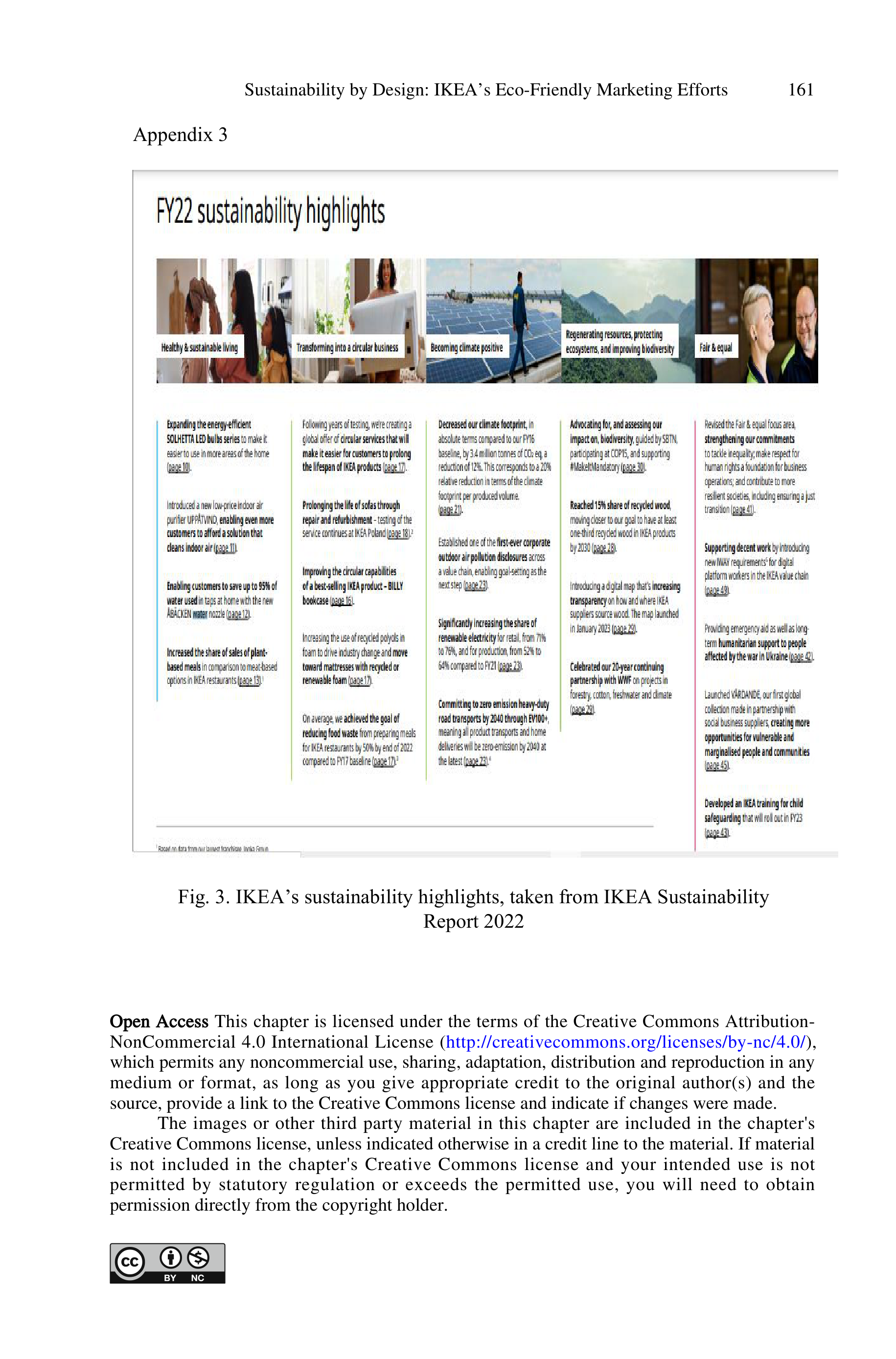
2022: [Refer Appendix 3]
Sustainable Sourcing:
IKEA committed to using 100% renewable and recycled mate-
rials in its products by 2030. By FY21, 56% of the materials we sourced were renewa-
ble, and 17% were recycled
Energy Efficiency
: In FY22, IKEA made significant strides in enhancing the propor-
tion of renewable electricity across its retail and operational facets, raising it to 76%,
marking an increase from the 71% achieved in FY21. Impressively, 24 IKEA retail
markets achieved the milestone of sourcing 100% of their electricity from renewable
sources during this period.
Circular Economy Initiatives:
IKEA launched a "Circular IKEA" strategy, aiming to
become a fully circular and climate-positive business by 2030. This involved designing
products with recycling and reusing in mind and creating a take-back and recycling
service for furniture.
Sustainable Products:
In FY22, IKEA expanded its range of energy-efficient LED
bulbs, particularly the SOLHETTA series, which plays a pivotal role in minimizing the
carbon footprint associated with household product use. Notably, the climate impact of
product use at home was reduced by an impressive 20% compared to FY21.
Reducing Emissions:
IKEA pledged to reduce its greenhouse gas emissions from its
own operations and across the value chain. They aimed to become climate positive,
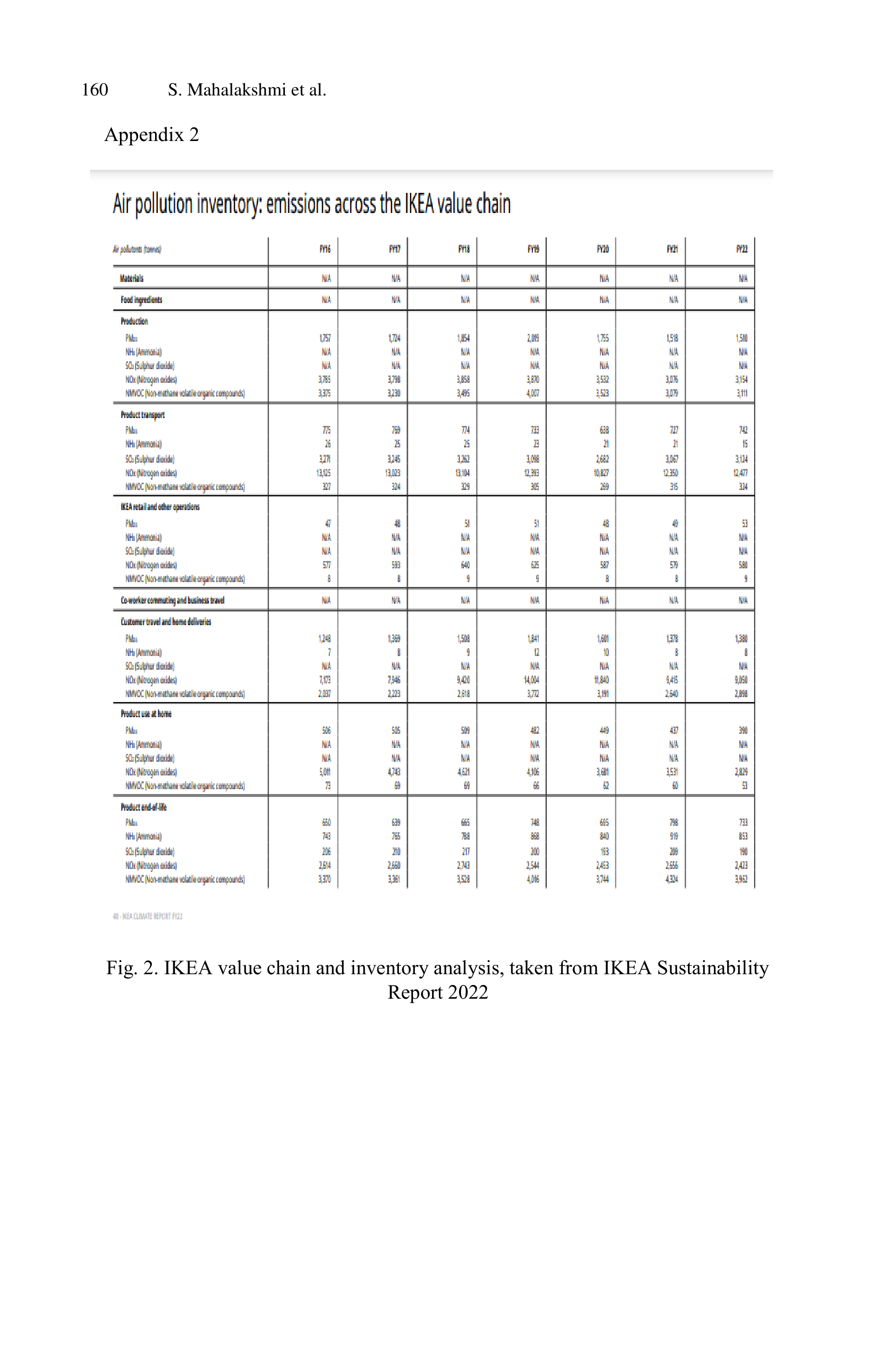
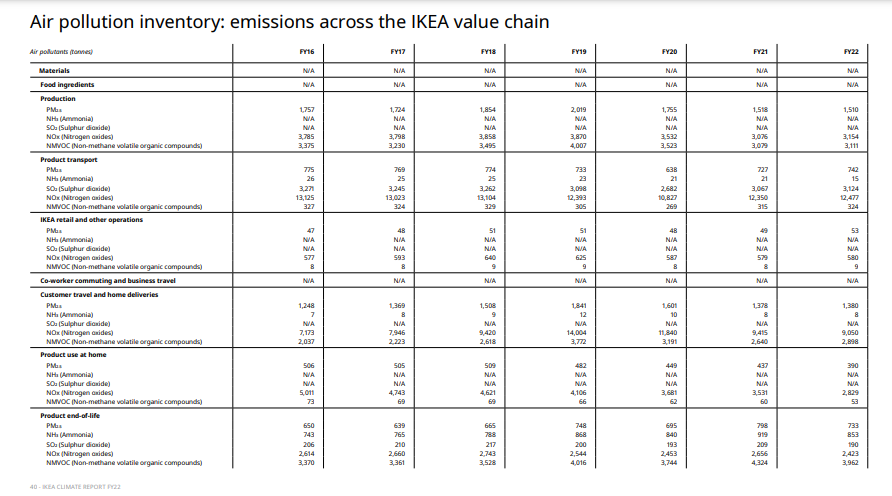
meaning they would reduce more emissions than they emit. (Refer Appendix 1 and
Appendix 2)
Forestry and Forest Certification:
IKEA aimed to have all wood used in its products
come from more sustainable sources and by 2020, 98% of the wood used met these
criteria. In 2023, IKEA has all its wood coming from sustainable sources.
Water Stewardship:
IKEA worked on responsible water use, setting goals to reduce
water consumption in production processes across entire vale chain.
Sustainable Transportation:
They also worked on sustainable transportation solu-
tions, aiming to make all home deliveries by electric vehicles by 2025.
In the pursuit of sustainability, IKEA has achieved significant milestones. They in-
creased the use of renewable electricity in their operations and retail stores to 76%, with
24 IKEA retail markets now using 100% renewable electricity. They have also boosted
renewable electricity in production to 64%, a notable rise from 52% in the previous
year. IKEA is also a pioneer in disclosing their outdoor air pollution footprint through-
out their value chain, showing their dedication to addressing air pollution alongside
reducing greenhouse gas emissions. They have expanded their range of energy-efficient
LED bulbs, contributing to a 20% reduction in the climate footprint of product use at
home in FY22 compared to FY21. Furthermore, IKEA continues to promote plant-
based food options, and they are working on global solutions to extend the lifespan of
their products, emphasizing sustainability throughout the product lifecycle. Andreas
156 S. Mahalakshmi et al.
Rangel Ahrens, Head of Climate at Inter IKEA Group, highlighted their leadership in
addressing air pollution, hoping to inspire other companies to take similar steps.
7
Conclusion
In conclusion, IKEA's sustainability-driven marketing efforts exemplify their commit-
ment to creating a greener and more eco-conscious future. By integrating renewable
energy, emphasizing transparency, promoting energy-efficient products, and influenc-
ing consumer choices, they have set a compelling example for the industry. Their ded-
ication to extending product lifespans and addressing social issues underscores their
holistic approach to sustainability. As a global leader, IKEA not only focuses on reduc-
ing its own environmental impact but also empowers and educates consumers, fostering
a culture of sustainability that extends well beyond their stores. In doing so, they show-
case how a customer-centric, transparent, and forward-thinking approach can drive pos-
itive change for the environment and society. IKEA not only transforms the way we
furnish our homes but also inspires a global shift towards a more conscientious and
environmentally responsible way of living.
References
1.
Alänge, S., Clancy, G., & Marmgren, M. (2016). Naturalizing sustainability in product de-
velopment: A comparative analysis of IKEA and SCA. Journal of Cleaner Production, 135,
1009-1022.
2.
Awan, U. (2011). Green marketing: Marketing strategies for the Swedish energy companies.
International Journal of Industrial Marketing, 1(2), 1.
3.
Cosmo, D. E., & Yang, K. (2017). A Further Strategic Move to Sustainability
—
A Case
Study on IKEA. Journal of Strategic Innovation and Sustainability, 12(2).
4.
Edvardsson, B., & Enquist, B. (2009). Values-based service for sustainable business: Les-
sons from IKEA. Routledge.
5.
Edvardsson, B., & Enquist, B. (2011). The service excellence and innovation model: lessons
from IKEA and other service frontiers. Total Quality Management & Business Excellence,
22(5), 535-551.
6.
Elf, P., Isham, A., & Gatersleben, B. (2021). Above and beyond? How businesses can drive
sustainable development by promoting lasting pro‐environmental behaviour change: An ex-
amination of the IKEA Live Lagom project. Business Strategy and the Environment, 30(2),
1037-1050.
7.
Fröding, K., & Lawrence, G. (2010). Sustainability at IKEA. Linnaeus Eco-Tech, 67-77.
8.
IKEA. (2020). People & planet positive: IKEA sustainability strategy. Inter IKEA Systems.
9.
Landua, I. (2008). Gaining competitive advantage through customer satisfaction, trust and
confidence in consideration of the influence of green marketing.
10.
Laurin, F., & Fantazy, K. (2017). Sustainable supply chain management: a case study at
IKEA. Transnational Corporations Review, 9(4), 309-318.
11.
Ojo, E., Mbohwa, C., & Akinlabi, E. (2015, September). Sustainability-competitive ad-
vantage. In Proceedings of the 2015 International Conference on Operations Excellence and
Service Engineering, Florida (pp. 592-600).
Sustainability by Design: IKEA’s Eco-Friendly Marketing Efforts 157
12.
Passaro, P., Perchinunno, P., & Schirone, D. A. (2015). Green marketing and sustainable
development: A stat
istical survey on Ikea customers’ perception. In Computational Science
and Its Applications--ICCSA 2015: 15th International Conference, Banff, AB, Canada, June
22-25, 2015, Proceedings, Part III 15 (pp. 130-145). Springer International Publishing
13.
Priti, C. (2021). Green Marketing: An Evolving Phenomenon. International Journal on Re-
cent Trends in Business and Tourism (IJRTBT), 5(2), 25-31.[8]
14.
RANGAN, V. K., TOFFEL, M. W., DESSAIN, V., & LENHARDT, J. (2014). Sustainabil-
ity at IKEA Group.
15.
Rathore, B. (2018). Navigating the Green Marketing Landscape: Best Practices and Future
Trends. International Journal of New Media Studies: International Peer Reviewed Scholarly
Indexed Journal, 5(2), 1-9.
16.
Shil, P. (2012). Evolution and future of environmental marketing. Asia Pacific Journal of
Marketing & Management Review, 1(3), 74-81.
17.
IKEA’s Sustainable Development Standards, Sustainability, and climate report 2022
-23
18.
https://unglobalcompact.ge/sustainability-spotlight/en/ikeas-mdgradi
19.
https://www.ikea.com/in/en/this-is-ikea/about-us/
20.
https://ikea.wwf.se/articles/sustainable-cotton-ranking/
21.
https://www.reuters.com/sustainability/reuters-impact-ingka-investments-looking-build-
recycling-platforms-executive-2023-09
22.
https://www.ikea.com/jp/en/files/pdf/b9/71/b9719683/ikea-sustainability-strategy-en-
202008.pdf
8
Appendices
Appendix 1
158 S. Mahalakshmi et al.
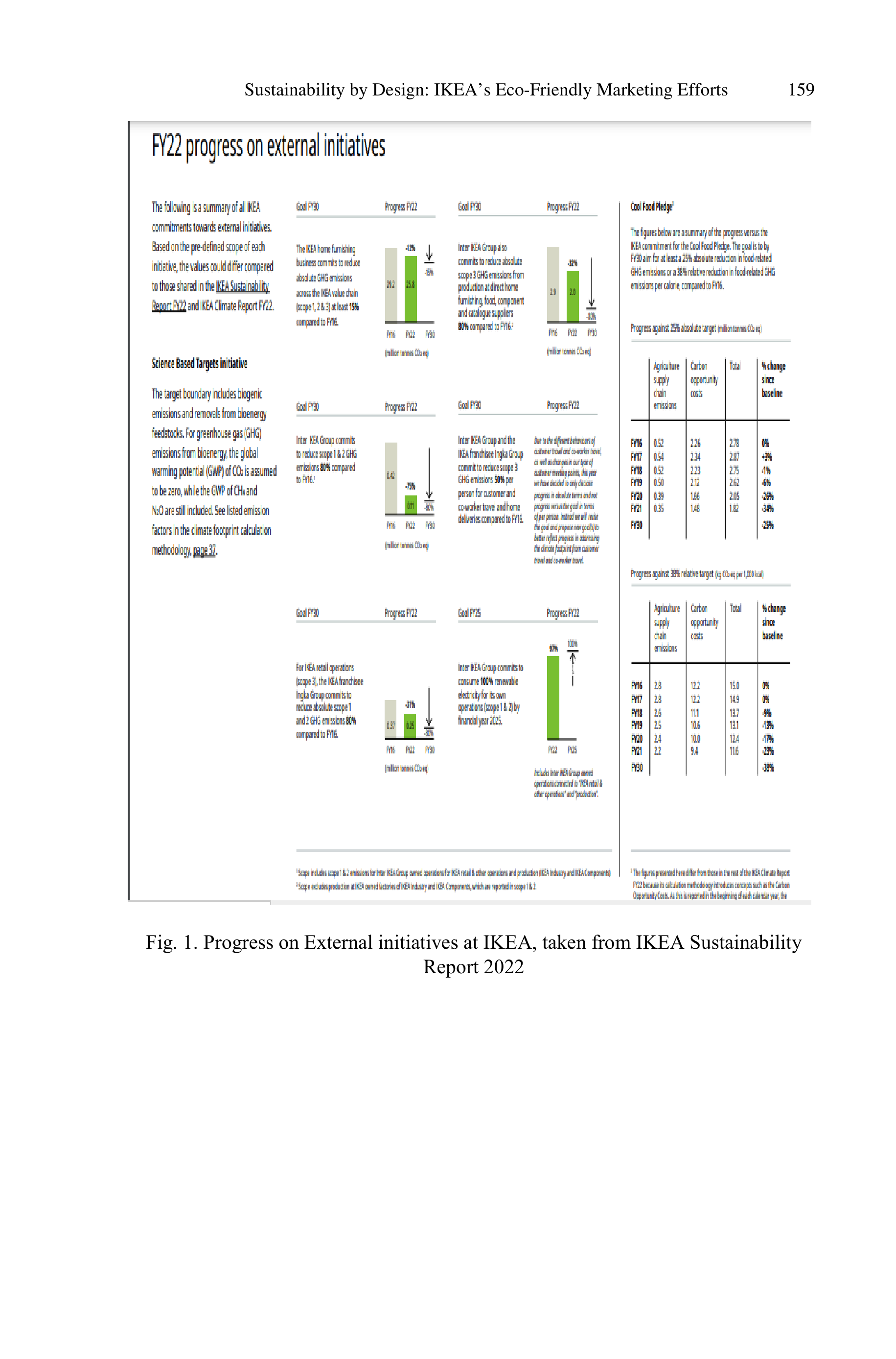
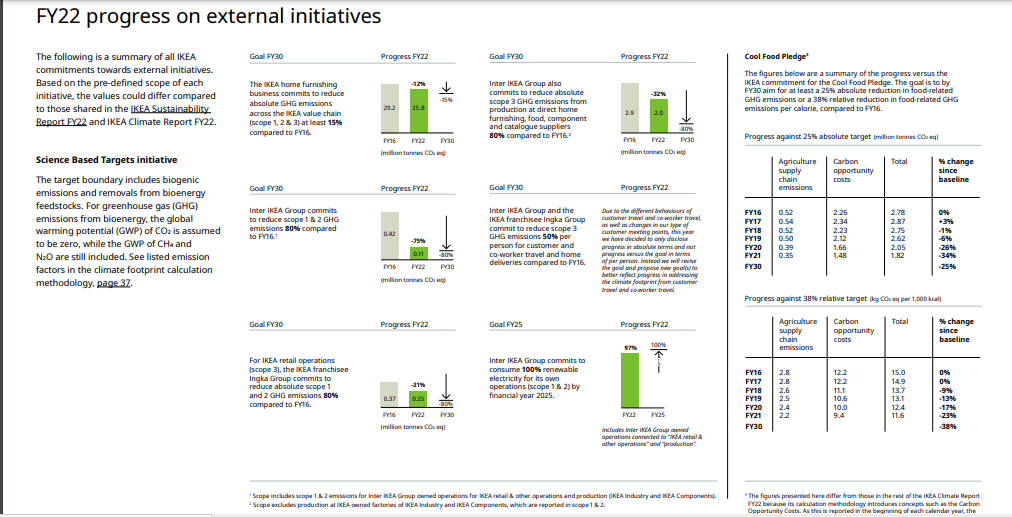
Fig. 1. Progress on External initiatives at IKEA, taken from IKEA Sustainability
Report 2022
Sustainability by Design: IKEA’s Eco-Friendly Marketing Efforts 159
Appendix 2
Fig. 2. IKEA value chain and inventory analysis, taken from IKEA Sustainability
Report 2022
160 S. Mahalakshmi et al.
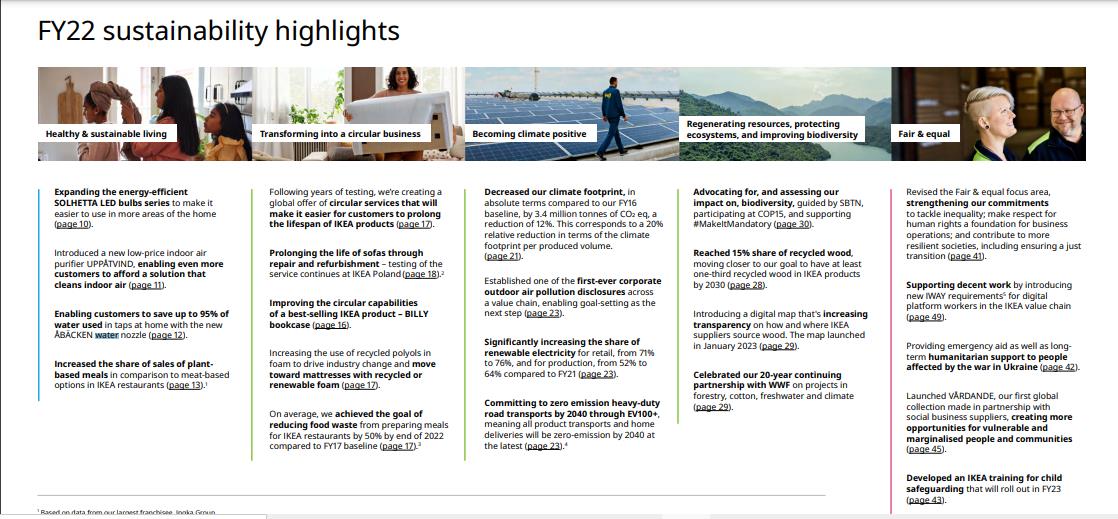
Appendix 3
Fig. 3. IKEA
’s sustainability
highlights, taken from IKEA Sustainability
Report 2022
Open Access This chapter is licensed under the terms of the Creative Commons Attribution-
NonCommercial 4.0 International License (
http://creativecommons.org/licenses/by-nc/4.0/
),
which permits any noncommercial use, sharing, adaptation, distribution and reproduction in any
medium or format, as long as you give appropriate credit to the original author(s) and the
source, provide a link to the Creative Commons license and indicate if changes were made.
The images or other third party material in this chapter are included in the chapter's
Creative Commons license, unless indicated otherwise in a credit line to the material. If material
is not included in the chapter's Creative Commons license and your intended use is not
permitted by statutory regulation or exceeds the permitted use, you will need to obtain
permission directly from the copyright holder.
Sustainability by Design: IKEA’s Eco-Friendly Marketing Efforts 161