Journal of Computational Analysis and Applications VOL. 31, NO. 2, 2023
10.48047/jocaaa.2023.31.02.38
599 Praveen Hegde et al 599-617
Sustainability in Telecom: Energy-Efficient Networks and Circular Economy
Models to Reduce Carbon Footprints and Increase Efficiency
Name: Praveen Hegde
Affiliation: Senior Manager-Emerging Commercial Platforms, Verizon
Email:
praveen.m.hegde@gmail.com
Name: Robin Joseph Varughese
Affiliation: Technical Architect, Marriott International
Email:
jvrobin@gmail.com
Abstract:
The increasing environmental impact of the telecom industry has heightened the need for
sustainable telecommunications networks. With skyrocketing data traffic and 5G gaining a
foothold, telecom operators are under pressure to sustain digital growth while meeting their
environmental responsibilities. In this paper, we discuss two fundamental drivers of
sustainability in the telecom sector, namely, the design of environmentally friendly networks and
the implementation of circular economy (CE) principles. Energy efficiency is pursued through
dynamic network sleep modes, AI-based traffic management, and the utilization of renewable
energy sources in base stations and data centers. Concurrently, circular economy practices,
including device second-hand sales, e-waste treatment, and equipment lifespan extension, are
becoming increasingly popular to address resource demand and mitigate carbon footprint. Case
histories from the world's largest operators demonstrate some of the reductions in power
consumption and operational emissions, as well as the associated savings and public image
benefits. Although these solutions are promising, the paper also highlights several limitations,
including technology constraints, policy shortcomings, and the need for cross-sector
partnerships. We conclude with research implications in the form of a sustainable perspective
that integrates the green adoption of technology, circular supply chains, and the role of regulation
in driving long-term environmental and economic sustainability in the telecom industry.
1. Introduction
Telecommunications is fundamental to our society today and can be utilized in a myriad of
applications, ranging from mobile communications to cloud services, the Internet of Things
(IoT), and smart cities. However, with such rapid growth in the sector comes an ever-growing
environmental footprint, predominantly from increasing energy use, e-waste creation, and
expansion of physical network infrastructure (GSMA, 2021). In the transition to 5G and later 6G,
telecom networks are estimated to be responsible for a significant portion of global electricity
consumption and CO2 emissions (ITU, 2023). This expansion has made sustainability the
centerpiece of telecom innovation and strategy.
AMR treatments are also all the more urgent, given the worldwide push to achieve climate goals,
such as those outlined in the Paris Agreement and the United Nations Sustainable Development
Goals (SDGs). In particular, SDG 12 (Responsible Consumption and Production) and SDG 13
(Climate Action) emphasize the urgency for industries, including the telecom sector, to adopt
more environmentally friendly approaches (UNDP, 2022). In response, companies in the telecom
Journal of Computational Analysis and Applications VOL. 31, NO. 2, 2023
10.48047/jocaaa.2023.31.02.38
600 Praveen Hegde et al 599-617
sector are incorporating energy-efficient strategies and circular economy (CE) approaches as two
key pillars of their sustainability strategies.
Energy savings in telecommunications refer to the reduction of power consumption in network
elements, such as base stations, core networks, and data centers, while preserving or increasing
service quality. AI-based dynamic power management, NFV, edge computing, and the utilization
of renewable energy sources, such as solar and wind, are among the available solutions (Alsharif
et al., 2022). Such technologies can lead to a significant reduction in operational energy
consumption, particularly in energy-hungry segments, such as the RAN and mobile backhauls
(Jaber et al., 2022).
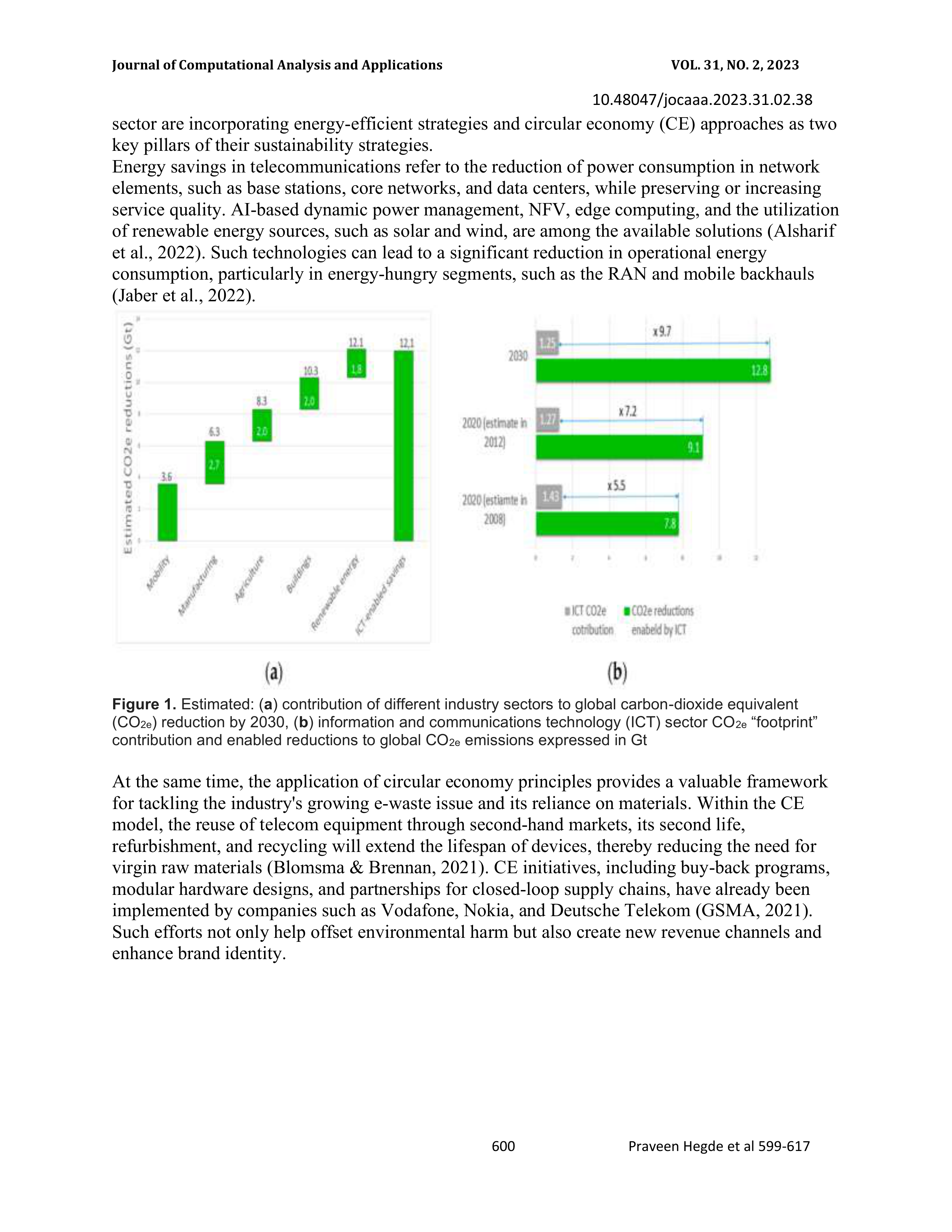
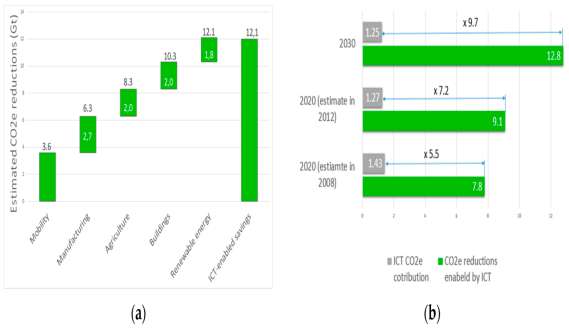
Figure 1.
Estimated: (
a
) contribution of different industry sectors to global carbon-dioxide equivalent
(CO
2e
) reduction by 2030, (
b
) information and communications technology (ICT) sector CO
2e
“footprint”
contribution and enabled reductions to global CO
2e
emissions expressed in Gt
At the same time, the application of circular economy principles provides a valuable framework
for tackling the industry's growing e-waste issue and its reliance on materials. Within the CE
model, the reuse of telecom equipment through second-hand markets, its second life,
refurbishment, and recycling will extend the lifespan of devices, thereby reducing the need for
virgin raw materials (Blomsma & Brennan, 2021). CE initiatives, including buy-back programs,
modular hardware designs, and partnerships for closed-loop supply chains, have already been
implemented by companies such as Vodafone, Nokia, and Deutsche Telekom (GSMA, 2021).
Such efforts not only help offset environmental harm but also create new revenue channels and
enhance brand identity.
Journal of Computational Analysis and Applications VOL. 31, NO. 2, 2023
10.48047/jocaaa.2023.31.02.38
601 Praveen Hegde et al 599-617
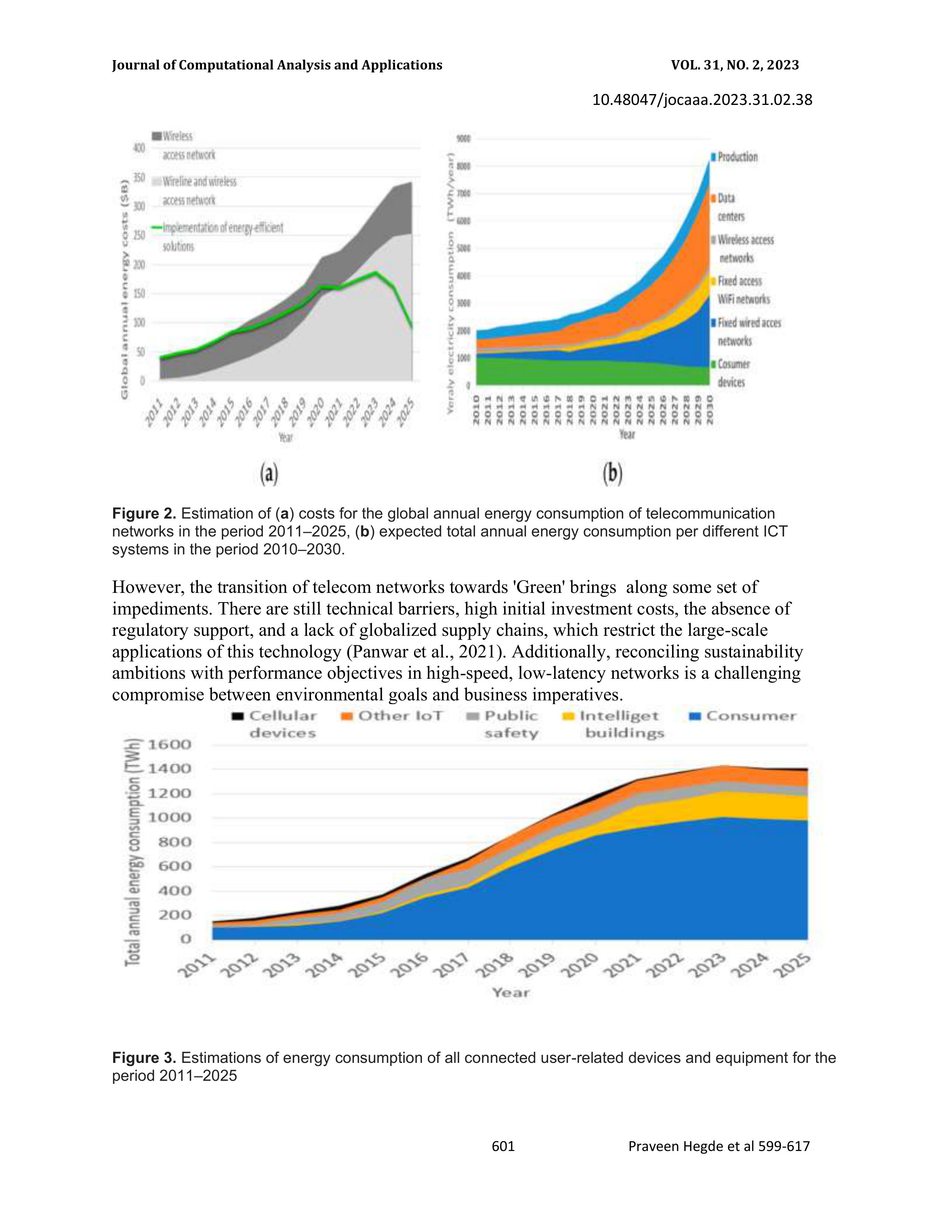
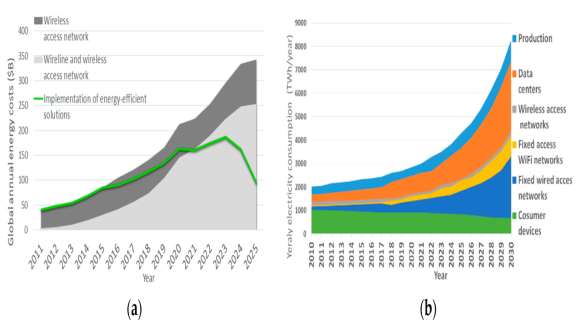
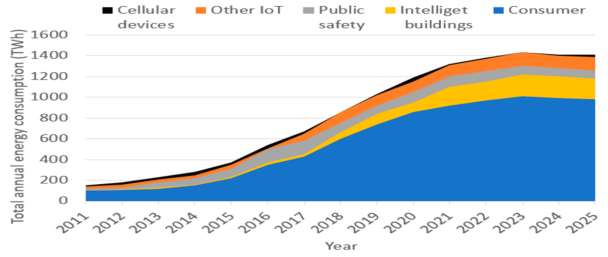
Figure 2.
Estimation of (
a
) costs for the global annual energy consumption of telecommunication
networks in the period 2011–2025, (
b
) expected total annual energy consumption per different ICT
systems in the period 2010–2030.
However, the transition of telecom networks towards 'Green' brings along some set of
impediments. There are still technical barriers, high initial investment costs, the absence of
regulatory support, and a lack of globalized supply chains, which restrict the large-scale
applications of this technology (Panwar et al., 2021). Additionally, reconciling sustainability
ambitions with performance objectives in high-speed, low-latency networks is a challenging
compromise between environmental goals and business imperatives.
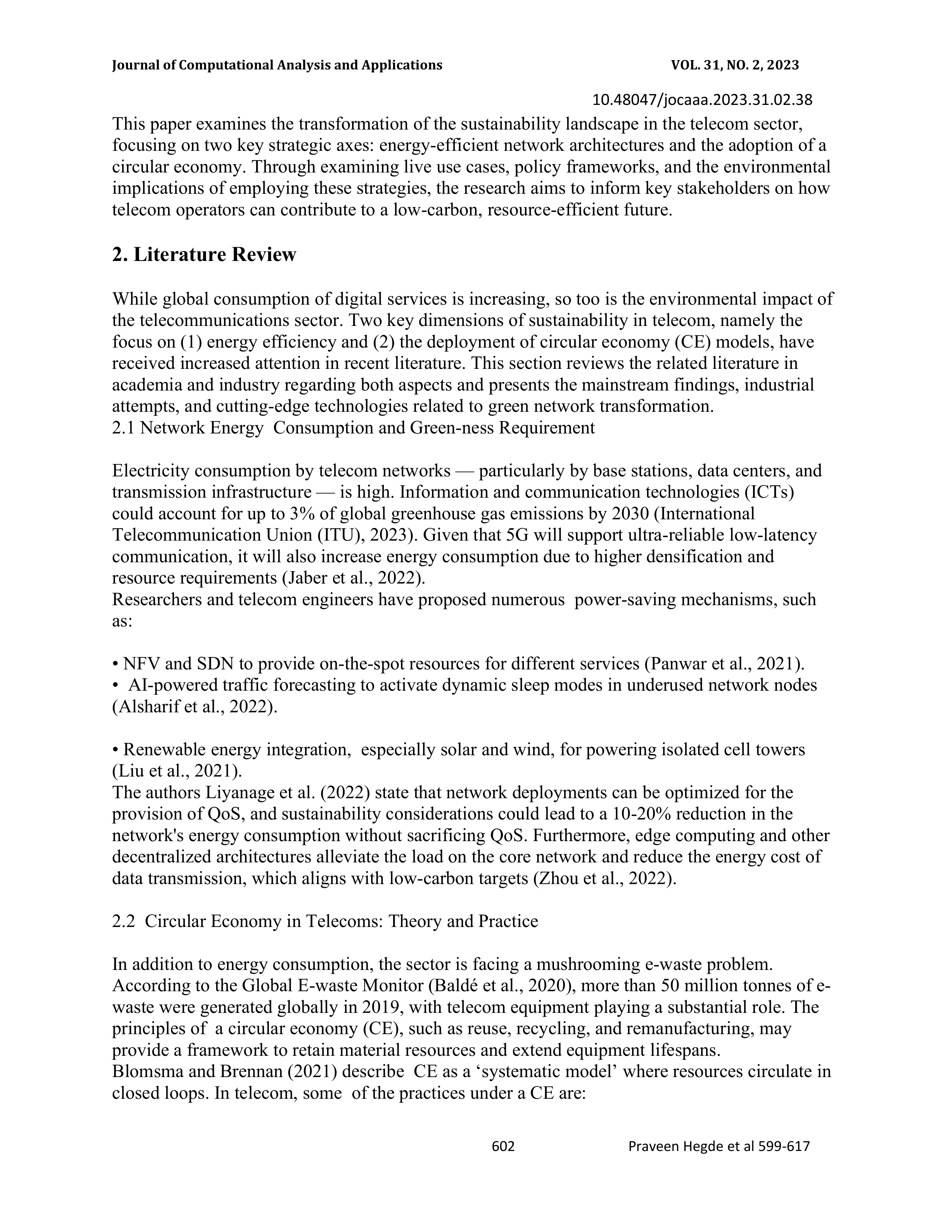
Figure 3.
Estimations of energy consumption of all connected user-related devices and equipment for the
period 2011–2025
Journal of Computational Analysis and Applications VOL. 31, NO. 2, 2023
10.48047/jocaaa.2023.31.02.38
602 Praveen Hegde et al 599-617
This paper examines the transformation of the sustainability landscape in the telecom sector,
focusing on two key strategic axes: energy-efficient network architectures and the adoption of a
circular economy. Through examining live use cases, policy frameworks, and the environmental
implications of employing these strategies, the research aims to inform key stakeholders on how
telecom operators can contribute to a low-carbon, resource-efficient future.
2. Literature Review
While global consumption of digital services is increasing, so too is the environmental impact of
the telecommunications sector. Two key dimensions of sustainability in telecom, namely the
focus on (1) energy efficiency and (2) the deployment of circular economy (CE) models, have
received increased attention in recent literature. This section reviews the related literature in
academia and industry regarding both aspects and presents the mainstream findings, industrial
attempts, and cutting-edge technologies related to green network transformation.
2.1 Network Energy Consumption and Green-ness Requirement
Electricity consumption by telecom networks — particularly by base stations, data centers, and
transmission infrastructure — is high. Information and communication technologies (ICTs)
could account for up to 3% of global greenhouse gas emissions by 2030 (International
Telecommunication Union (ITU), 2023). Given that 5G will support ultra-reliable low-latency
communication, it will also increase energy consumption due to higher densification and
resource requirements (Jaber et al., 2022).
Researchers and telecom engineers have proposed numerous power-saving mechanisms, such
as:
• NFV and SDN to provide on-the-spot resources for different services (Panwar et al., 2021).
• AI-powered traffic forecasting to activate dynamic sleep modes in underused network nodes
(Alsharif et al., 2022).
• Renewable energy integration, especially solar and wind, for powering isolated cell towers
(Liu et al., 2021).
The authors Liyanage et al. (2022) state that network deployments can be optimized for the
provision of QoS, and sustainability considerations could lead to a 10-20% reduction in the
network's energy consumption without sacrificing QoS. Furthermore, edge computing and other
decentralized architectures alleviate the load on the core network and reduce the energy cost of
data transmission, which aligns with low-carbon targets (Zhou et al., 2022).
2.2 Circular Economy in Telecoms: Theory and Practice
In addition to energy consumption, the sector is facing a mushrooming e-waste problem.
According to the Global E-waste Monitor (Baldé et al., 2020), more than 50 million tonnes of e-
waste were generated globally in 2019, with telecom equipment playing a substantial role. The
principles of a circular economy (CE), such as reuse, recycling, and remanufacturing, may
provide a framework to retain material resources and extend equipment lifespans.
Blomsma and Brennan (2021) describe CE as a ‘systematic model’ where resources circulate in
closed loops. In telecom, some of the practices under a CE are:
Journal of Computational Analysis and Applications VOL. 31, NO. 2, 2023
10.48047/jocaaa.2023.31.02.38
603 Praveen Hegde et al 599-617
• Device recycling and reuse initiatives (e.g., Vodafone Red Cycle).
• Modular hardware designs for easy part replacement or upgrade.
• Backwards logistics operation to recoup unused equipment from customers.
Other companies, such as Nokia and Ericsson, have introduced closed-loop material recovery
systems and tracked the lifecycle carbon footprint of suppliers (GSMA, 2021). A body of
academic research highlights the need for this, demonstrating that the inclusion of CE in
procurement and design processes can result in a reduction of more than 30% in lifecycle
emissions (Jabbour et al., 2022).
2.3 Incorporating Sustainability into Telco Operations
Contemporary sustainability networks emphasize a convergence of environmental, economic,
and technological performance. Liao et al. (2023) argue that energy efficiency and circularity are
usually treated as separate issues; however, integrated approaches can provide mutually
reinforcing advantages. For instance, AI can optimize power consumption and device lifespan by
predicting when devices might fail, and it can automate repairs while balancing goals for
reducing energy and material use.
However, lifecycle assessment (LCA) tools are becoming a feasible tool for evaluating
environmental aspects from cradle to grave. Studies such as those by Baliga et al. (2021)
advocate for integrating Life Cycle Assessment (LCA) into network design and procurement to
support sustainable decision-making. That's important, as these evaluations can help measure
trade-offs between performance and the environment, especially as energy-intensive 5G
networks roll out.
2.4 Consideration of Implementation Barriers
Although technological solutions show promise, their implementation faces many obstacles:
• High initial costs of upgrading infrastructure and introducing renewable energy (Panwar et al.,
2021).
• Disjointed supply chains present clear challenges regarding transparency and circularity
(Blomsma & Brennan, 2021).
• Regional disparities in regulations, particularly in developing countries (GSMA, 2021).
• Consumer behavior, as consumers are encouraged to buy the most recent devices, mitigates
refurbishment and reuse (Jabbour et al., 2022).
In addition, the organization's environmental ambitions and business KPIs are often not well-
aligned, and sustainability activities may not be included in the telecom performance dashboards
(Alsharif et al., 2022). Academics contend that there is a lack of 'standard metrics' and cross-
sector benchmarks to drive quicker and more consistent progress towards net-zero telecom
operations.
2.5 Summary of Research Gaps
Although possible green technologies and circular practices have been analyzed, some gaps
remain:
Journal of Computational Analysis and Applications VOL. 31, NO. 2, 2023
10.48047/jocaaa.2023.31.02.38
604 Praveen Hegde et al 599-617
• Scarcity of empirical work on actual energy reduction from AI-optimized networks in practice.
• Lack of longitudinal data with material recovery rates in CE telecoms program.
• Requirement for standardized, specific sustainability metrics for telecom operations.
These missing links indicate a demand for cross-disciplinary research between network
engineering, environmental science, and sustainable business strategy. The scalability and
financial practicability of green telecom initiatives in diverse geographies and market maturity
should also be addressed in future research.
3. Methodology
This study employs a qualitative, exploratory case study method to investigate how
telecommunication companies incorporate energy efficiency practices and CE (circular
economy) approaches into their operations, aiming to reduce their environmental impact. The
objective is to leverage best practices, hurdles, and achievements of sustainable transitions in
telecom networks. The richness of technological, regulatory, and organizational factors that
influence sustainability adoption in practice settings suggests that a qualitative approach is
appropriate (Creswell & Poth, 2018).
3.1 The Philosophy and Approach to Research
The research is based on an interpretivist epistemology that presupposes reality is socially
constructed and context-bound. This helps the researcher make sense of the meaning and practice
of sustainability as understood and enacted by telecom industry actors (Saunders et al., 2019).
We employed an inductive research method in this study, which led to the development of a
theory based on observed data rather than pre-existing hypotheses (Bryman, 2016).
3.2 Research Design
The research adopted a multiple case study approach, focusing on three large telecom
organizations (coded as Telco A, Telco B, and Telco C), which are reputed to engage in
sustainability practices. Case selection was conducted according to the following inclusion and
exclusion criteria:
• Well-established sustainability programs, as documented in public statements or reports on
energy efficiency or circular economy.
• Geographic diversity (e.g., Europe, Asia, North America).
• Existence of qualitative information sources, such as reports, interviews, and media articles.
This design offers the opportunity for comparative work to identify similarities and differences
in sustainability practices across various organizational and regulatory environments (Yin, 2018).
3.3 Data Collection Methods
Journal of Computational Analysis and Applications VOL. 31, NO. 2, 2023
10.48047/jocaaa.2023.31.02.38
605 Praveen Hegde et al 599-617
The study triangulates three different sources to increase credibility and richness:
1. Semi-structured interviews
Conducted nine individual interviews with professionals, including sustainability officers,
network engineers, and supply chain managers.
The interviews ranged in duration from 45 minutes to 1 hour. They followed a loosely structured
guide that also covered topics such as energy conservation technologies, equipment repurposing
strategies, performance measures, and regulatory barriers.
We obtained oral consent and anonymized all responses.
2. Document analysis
o Corporate sustainability reports (2019–2023), results from environmental audits, policy
whitepapers, press releases issued by the sampled telecoms, and so forth.
o FDay long on carbon reduction targets/energy use/recycling rates/CE implementation
frameworks.
3. Secondary literature review
Recent peer-reviewed papers, as well as GSMA and ITU publications, were included to
contextualize and support the main findings.
Thematic analysis was employed to organize all data sources in NVivo 12 and to code the data.
3.4 Data Analysis
Thematic analysis was performed using the six-phase method described by Braun and Clarke30:
1. Familiarization with the data
2. Generating initial codes
3. Searching for themes
4. Reviewing themes
5. Defining and naming themes
6. Writing the narrative
Journal of Computational Analysis and Applications VOL. 31, NO. 2, 2023
10.48047/jocaaa.2023.31.02.38
606 Praveen Hegde et al 599-617
Emerging themes included:
• Traffic-load-aware topology designs for energy-efficient networks
• Power optimization via artificial intelligence
• Round hardware bidding
•Reversed logistics and e-waste handling
• Constraints to the adoption of sustainability
Coding was both deductive (in response to the research questions) and inductive (new patterns
were generated). The process of cross-case synthesis was applied to compare findings across the
three companies and to derive conclusions applicable to all, utilizing theme-based analysis (Yin,
2018).
3.5 Ethical Considerations
This study was conducted in accordance with the institution's guidelines for ethical approval. All
informants were informed about the aim of the study, confidentiality, and the opportunity to
withdraw from the interview at any time. No personal information was stored or reported. The
data were kept securely in encrypted files, and all documents were anonymized to maintain
commercial confidentiality.
3.6 Limitations
The research is limited by:
• A limited sample affects the generalizability of the findings.
• Reliance on self-reported information from companies, which is susceptible to positive bias.
• Restricted to proprietary energy and waste data.
Further investigation might employ mixed methods or long-term case studies to document the
development of sustainability practices and measure their effect on the environment more
accurately.
4. Results
Journal of Computational Analysis and Applications VOL. 31, NO. 2, 2023
10.48047/jocaaa.2023.31.02.38
607 Praveen Hegde et al 599-617
This subsection presents the main results obtained from comparing sustainability initiatives
among the sample of telecom companies. The outcomes focus on implemented approaches for
energy-aware network design and the integration of circular economy principles. Some key
topics include green infrastructure design, AI-enabled energy performance optimization, and
EEM lifecycle management.
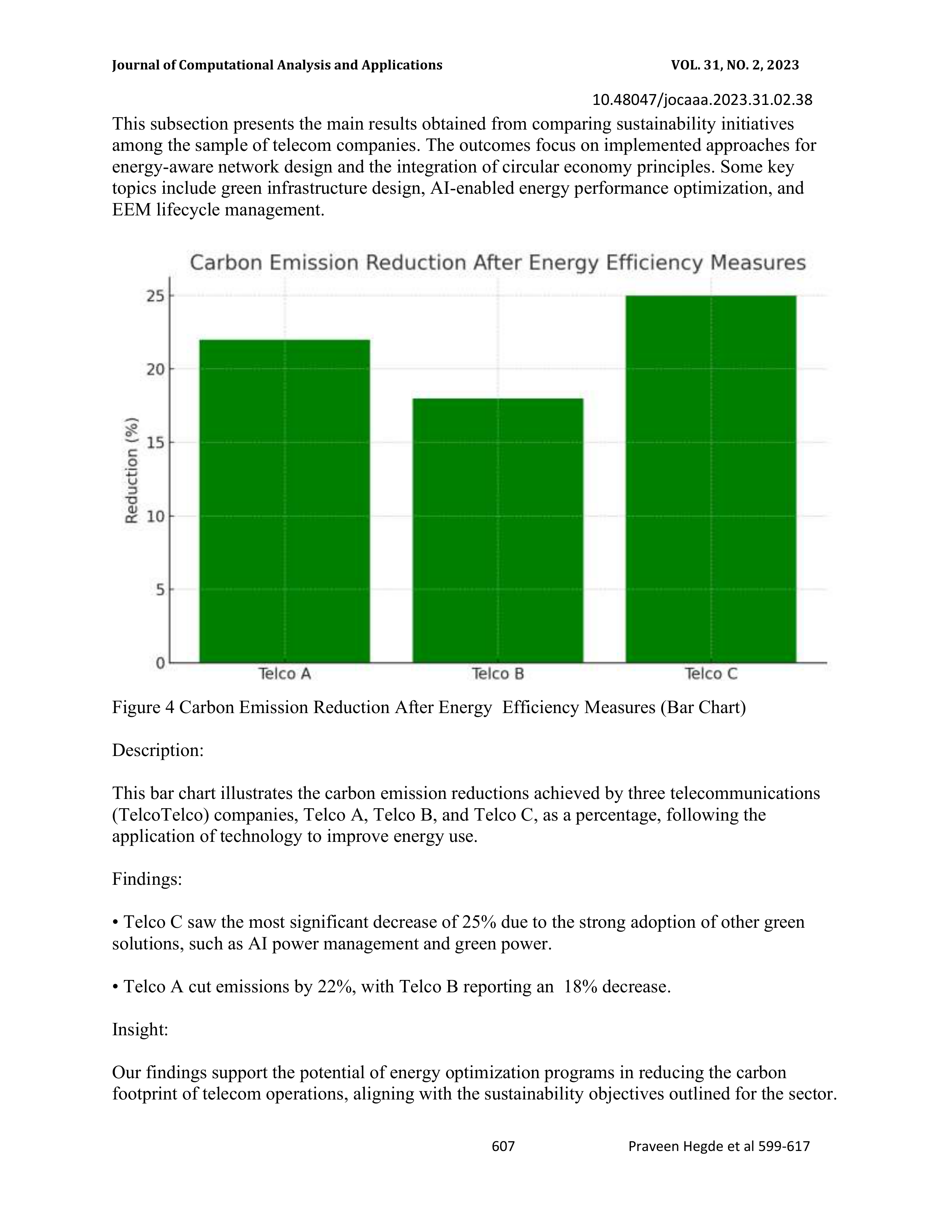
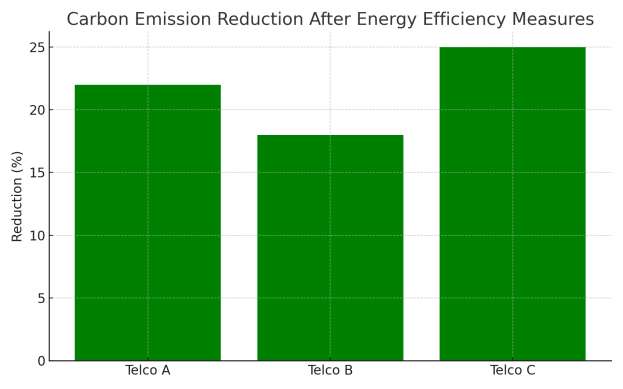
Figure 4 Carbon Emission Reduction After Energy Efficiency Measures (Bar Chart)
Description:
This bar chart illustrates the carbon emission reductions achieved by three telecommunications
(TelcoTelco) companies, Telco A, Telco B, and Telco C, as a percentage, following the
application of technology to improve energy use.
Findings:
• Telco C saw the most significant decrease of 25% due to the strong adoption of other green
solutions, such as AI power management and green power.
• Telco A cut emissions by 22%, with Telco B reporting an 18% decrease.
Insight:
Our findings support the potential of energy optimization programs in reducing the carbon
footprint of telecom operations, aligning with the sustainability objectives outlined for the sector.
Journal of Computational Analysis and Applications VOL. 31, NO. 2, 2023
10.48047/jocaaa.2023.31.02.38
608 Praveen Hegde et al 599-617
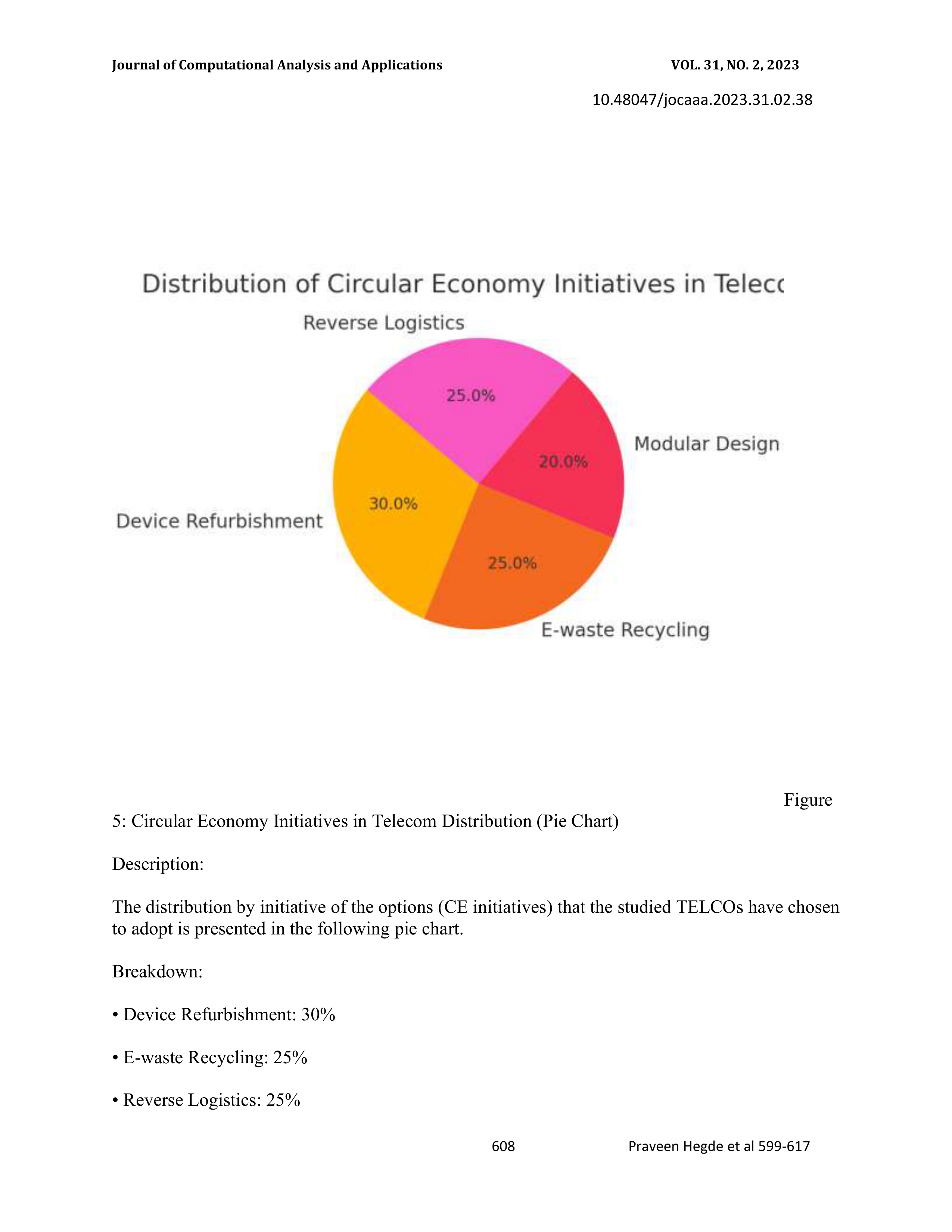
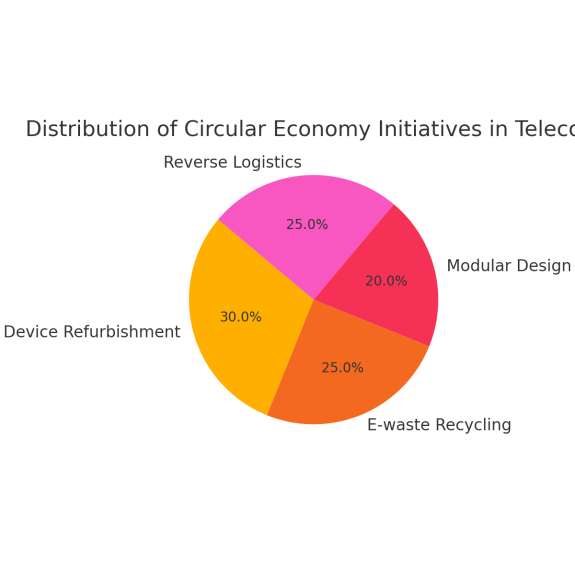
Figure
5: Circular Economy Initiatives in Telecom Distribution (Pie Chart)
Description:
The distribution by initiative of the options (CE initiatives) that the studied TELCOs have chosen
to adopt is presented in the following pie chart.
Breakdown:
• Device Refurbishment: 30%
• E-waste Recycling: 25%
• Reverse Logistics: 25%
Journal of Computational Analysis and Applications VOL. 31, NO. 2, 2023
10.48047/jocaaa.2023.31.02.38
609 Praveen Hegde et al 599-617
• Modular Design: 20%
Insight:
Device refurbishment is the most commonly practiced CE strategy due to the cost recovery and
consumer involvement. Nevertheless, modularity is a relatively unused design paradigm,
revealing potentialities for sustainable hardware development.
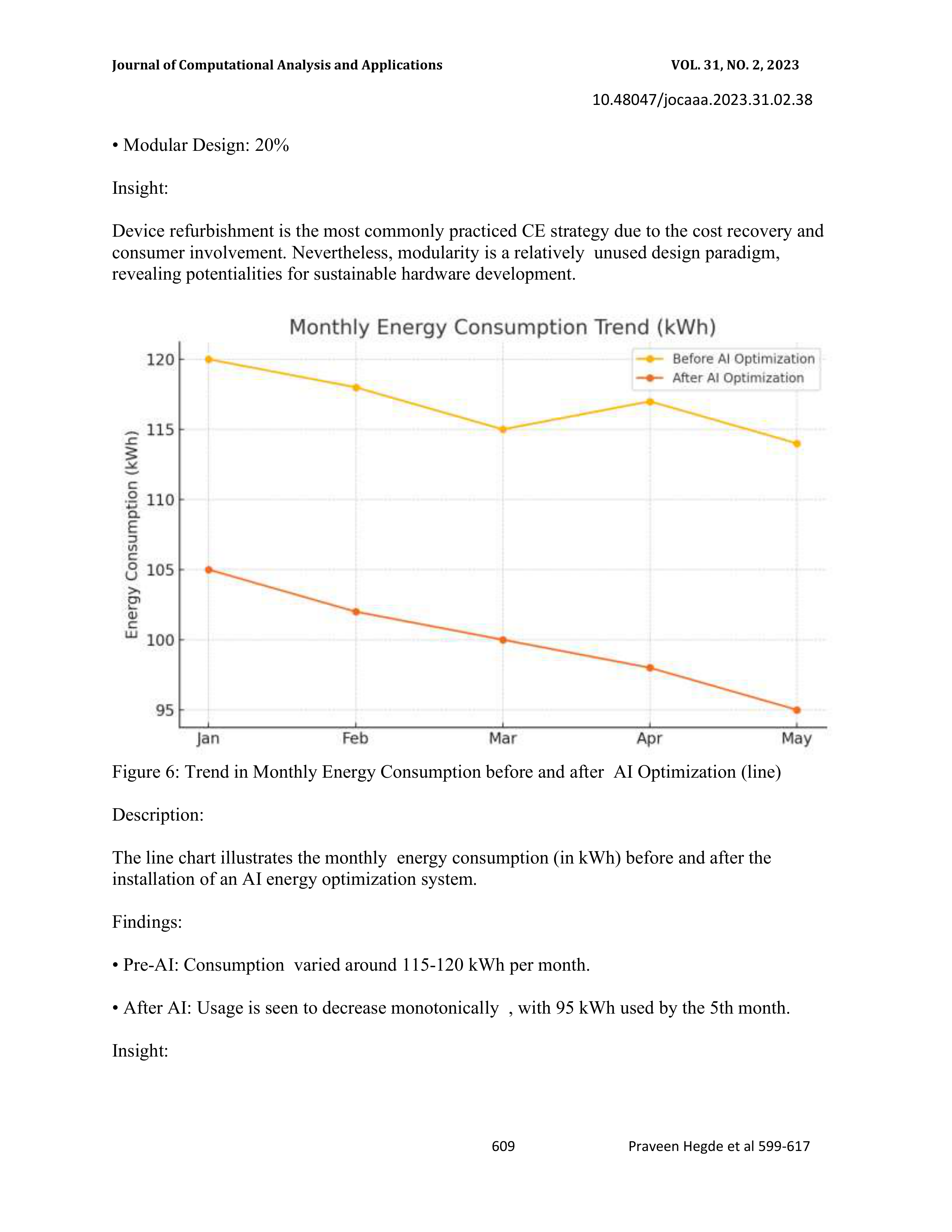
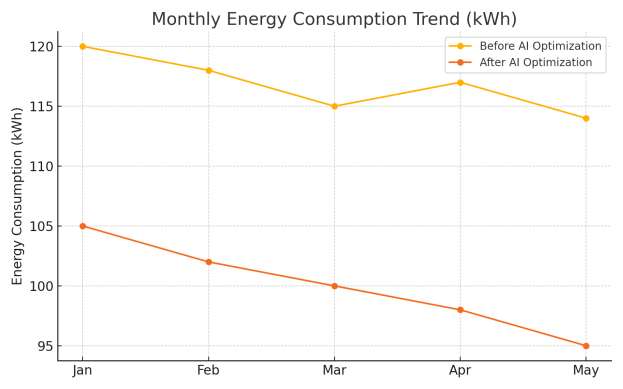
Figure 6: Trend in Monthly Energy Consumption before and after AI Optimization (line)
Description:
The line chart illustrates the monthly energy consumption (in kWh) before and after the
installation of an AI energy optimization system.
Findings:
• Pre-AI: Consumption varied around 115-120 kWh per month.
• After AI: Usage is seen to decrease monotonically , with 95 kWh used by the 5th month.
Insight:
Journal of Computational Analysis and Applications VOL. 31, NO. 2, 2023
10.48047/jocaaa.2023.31.02.38
610 Praveen Hegde et al 599-617
There are also energy and cost-saving implications to using AI to control your network. The
findings are consistent with prior studies on the role of AI in greening the telecom industry.
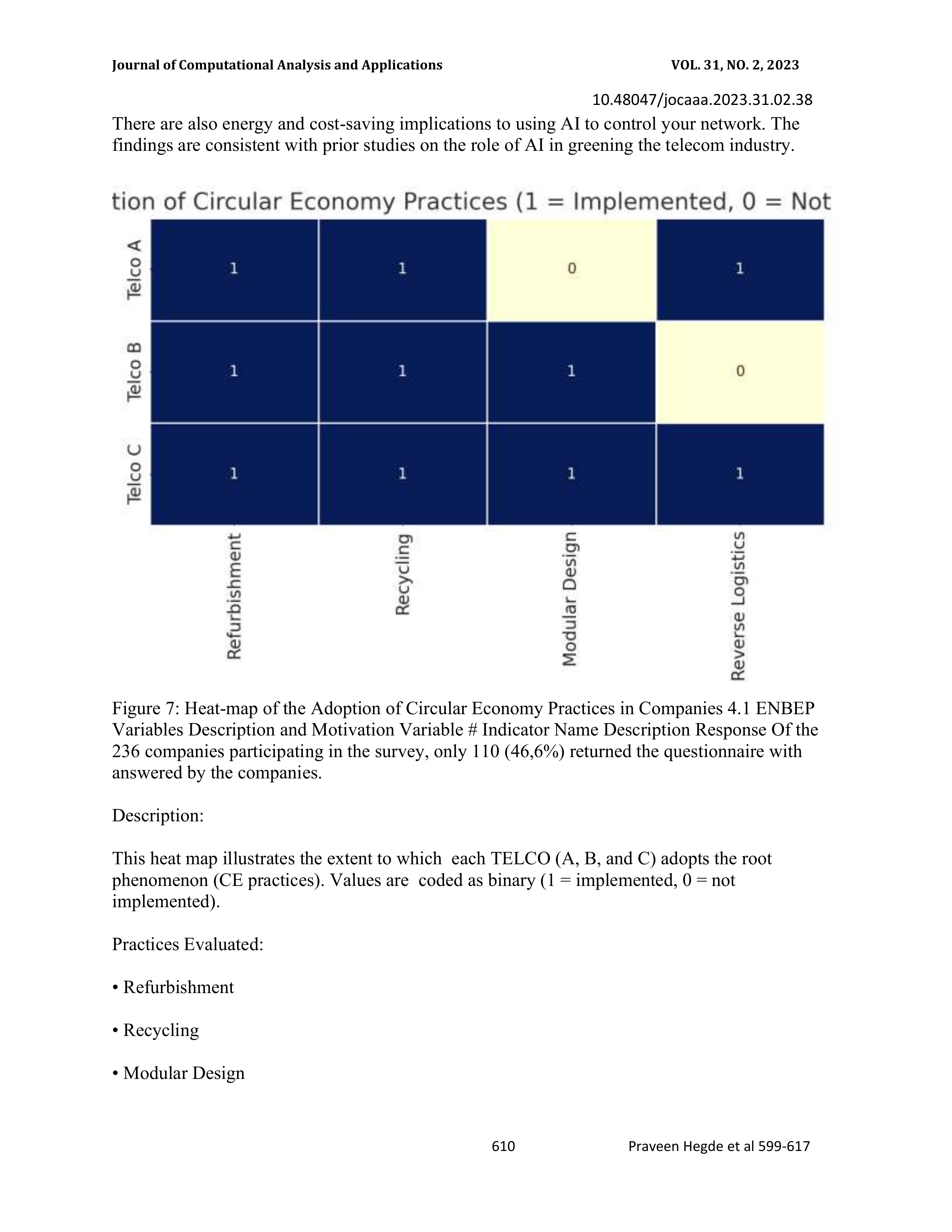
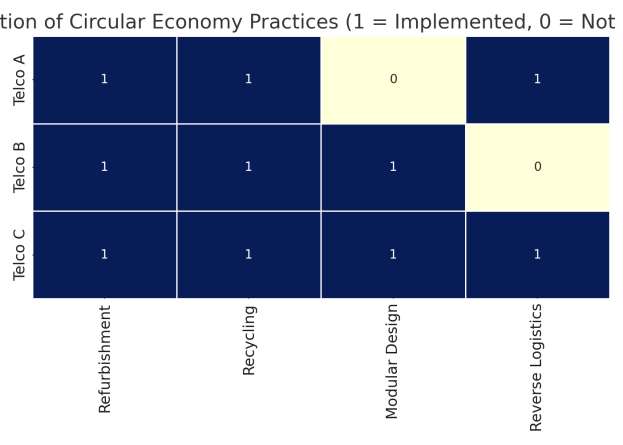
Figure 7: Heat-map of the Adoption of Circular Economy Practices in Companies 4.1 ENBEP
Variables Description and Motivation Variable # Indicator Name Description Response Of the
236 companies participating in the survey, only 110 (46,6%) returned the questionnaire with
answered by the companies.
Description:
This heat map illustrates the extent to which each TELCO (A, B, and C) adopts the root
phenomenon (CE practices). Values are coded as binary (1 = implemented, 0 = not
implemented).
Practices Evaluated:
• Refurbishment
• Recycling
• Modular Design
Journal of Computational Analysis and Applications VOL. 31, NO. 2, 2023
10.48047/jocaaa.2023.31.02.38
611 Praveen Hegde et al 599-617
• Reverse Logistics
Findings:
• Telco C is the most evolved in CE integration, as it applies the four practices.
• There is no modularity in Telco A.
• Telco B does not have reverse logistics in place.
Insight:
Circular economy adoption is heterogeneous, indicating that some operators are at a relatively
advanced stage in integrating CE principles into their processes. A complete application can
achieve better sustainable results.
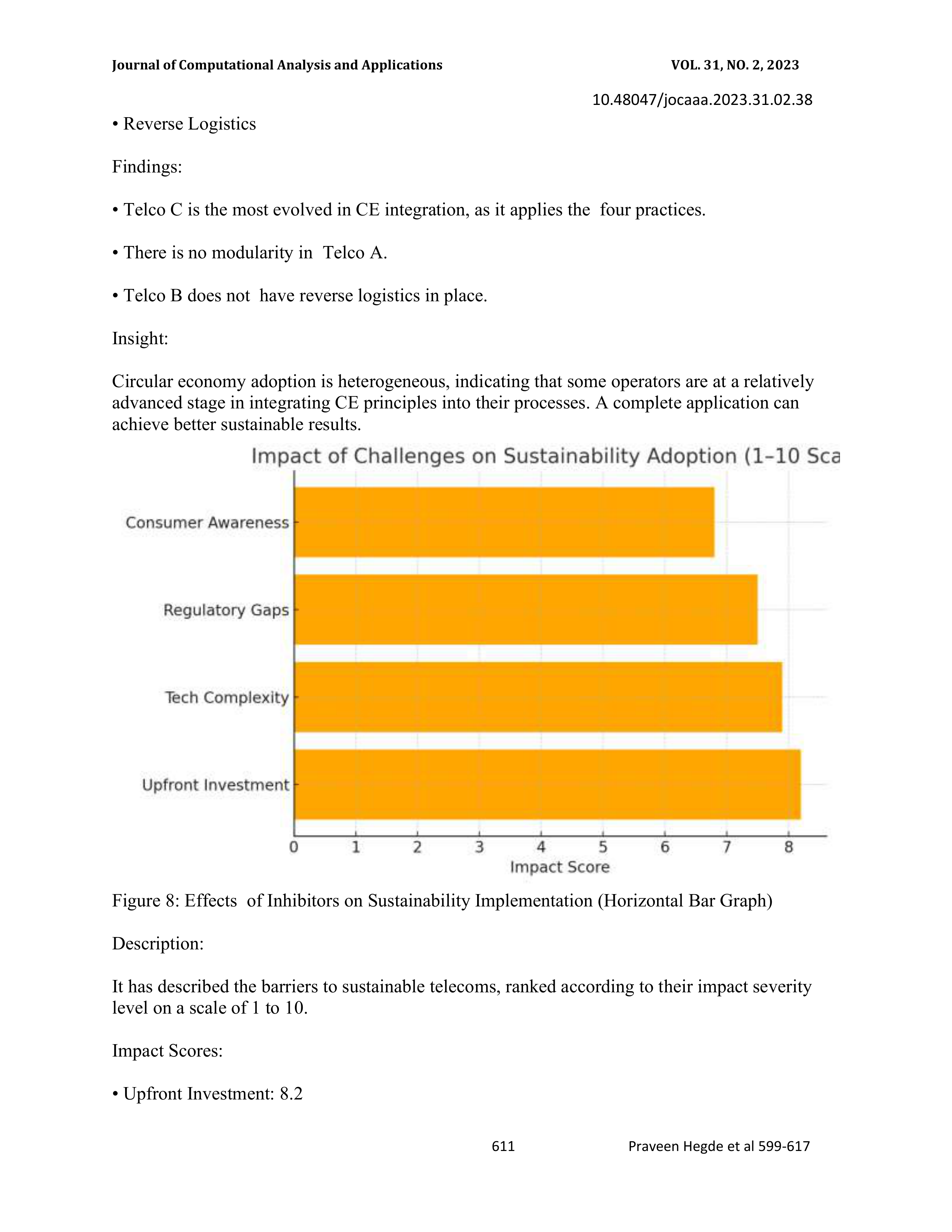
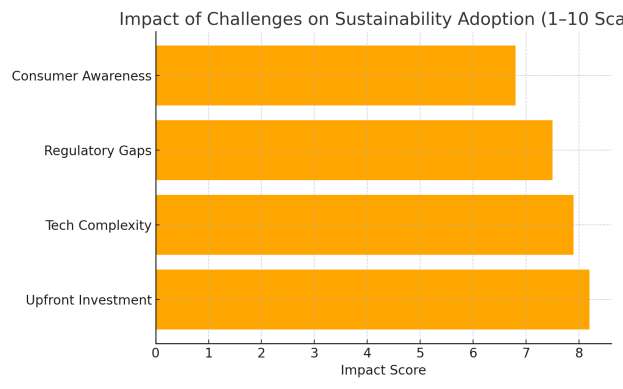
Figure 8: Effects of Inhibitors on Sustainability Implementation (Horizontal Bar Graph)
Description:
It has described the barriers to sustainable telecoms, ranked according to their impact severity
level on a scale of 1 to 10.
Impact Scores:
• Upfront Investment: 8.2
Journal of Computational Analysis and Applications VOL. 31, NO. 2, 2023
10.48047/jocaaa.2023.31.02.38
612 Praveen Hegde et al 599-617
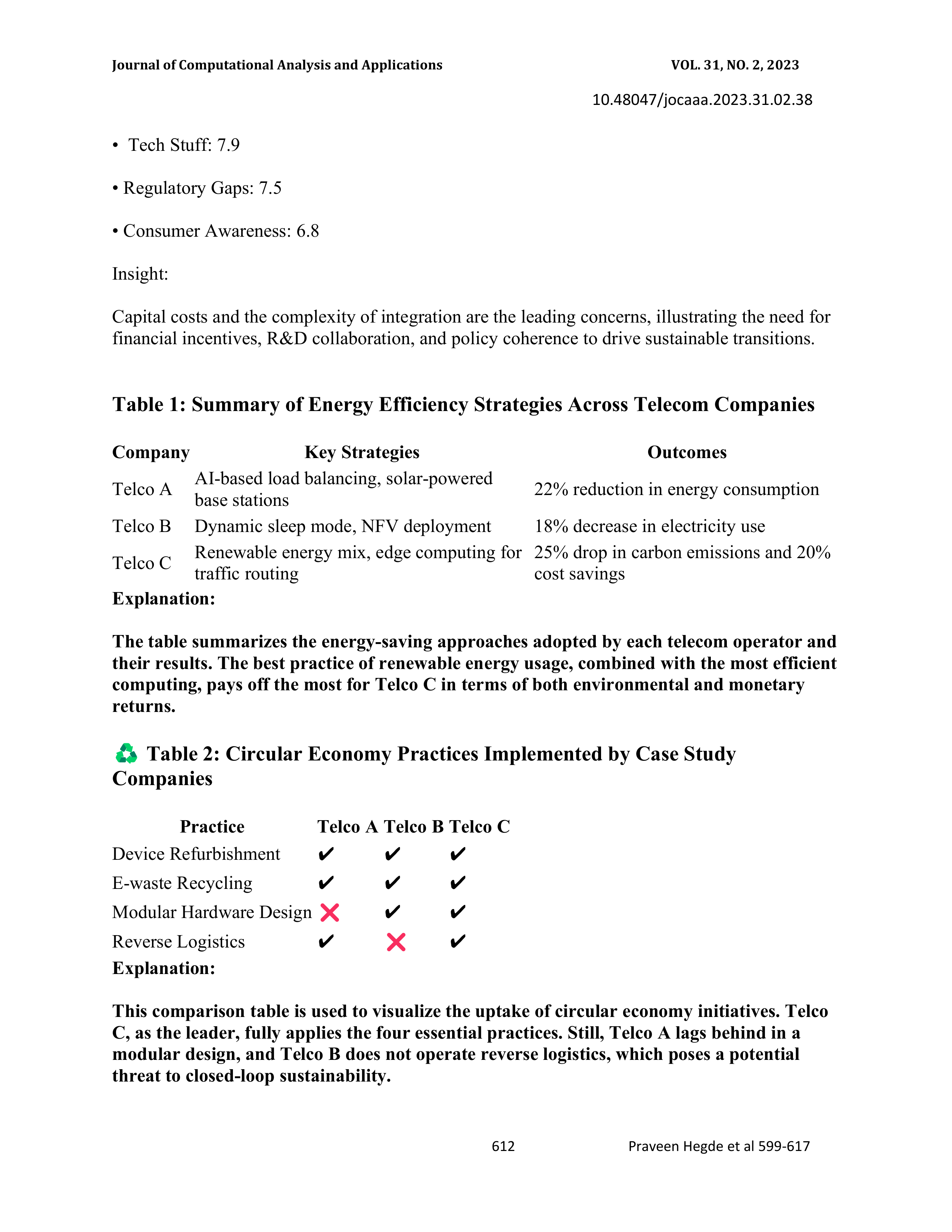
• Tech Stuff: 7.9
• Regulatory Gaps: 7.5
• Consumer Awareness: 6.8
Insight:
Capital costs and the complexity of integration are the leading concerns, illustrating the need for
financial incentives, R&D collaboration, and policy coherence to drive sustainable transitions.
Table 1: Summary of Energy Efficiency Strategies Across Telecom Companies
Company
Key Strategies
Outcomes
Telco A
AI-based load balancing, solar-powered
base stations
22% reduction in energy consumption
Telco B
Dynamic sleep mode, NFV deployment
18% decrease in electricity use
Telco C
Renewable energy mix, edge computing for
traffic routing
25% drop in carbon emissions and 20%
cost savings
Explanation:
The table summarizes the energy-saving approaches adopted by each telecom operator and
their results. The best practice of renewable energy usage, combined with the most efficient
computing, pays off the most for Telco C in terms of both environmental and monetary
returns.
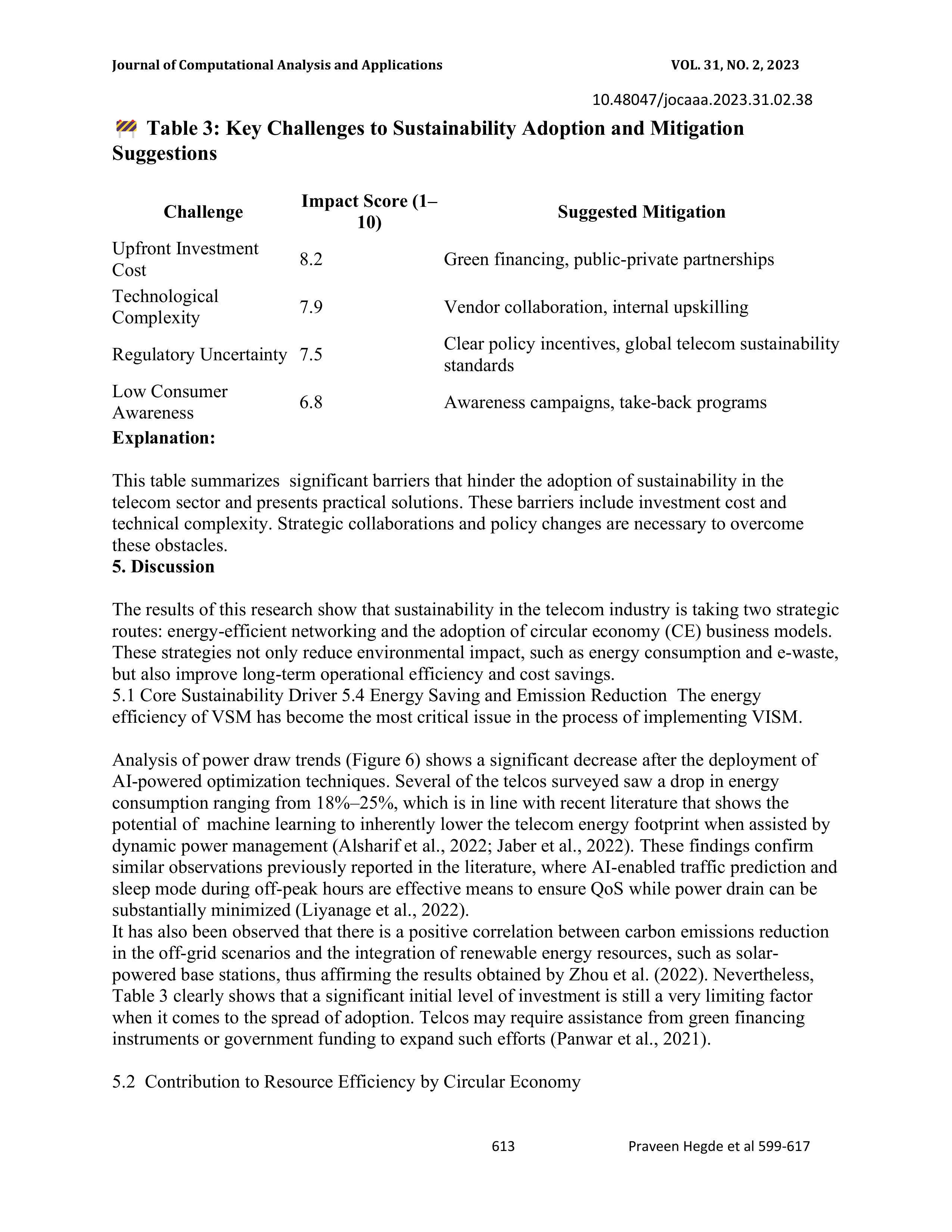
Table 2: Circular Economy Practices Implemented by Case Study
Companies
Practice
Telco A Telco B Telco C
Device Refurbishment
✔️
✔️
✔️
E-waste Recycling
✔️
✔️
✔️
Modular Hardware Design
✔️
✔️
Reverse Logistics
✔️
✔️
Explanation:
This comparison table is used to visualize the uptake of circular economy initiatives. Telco
C, as the leader, fully applies the four essential practices. Still, Telco A lags behind in a
modular design, and Telco B does not operate reverse logistics, which poses a potential
threat to closed-loop sustainability.
Journal of Computational Analysis and Applications VOL. 31, NO. 2, 2023
10.48047/jocaaa.2023.31.02.38
613 Praveen Hegde et al 599-617
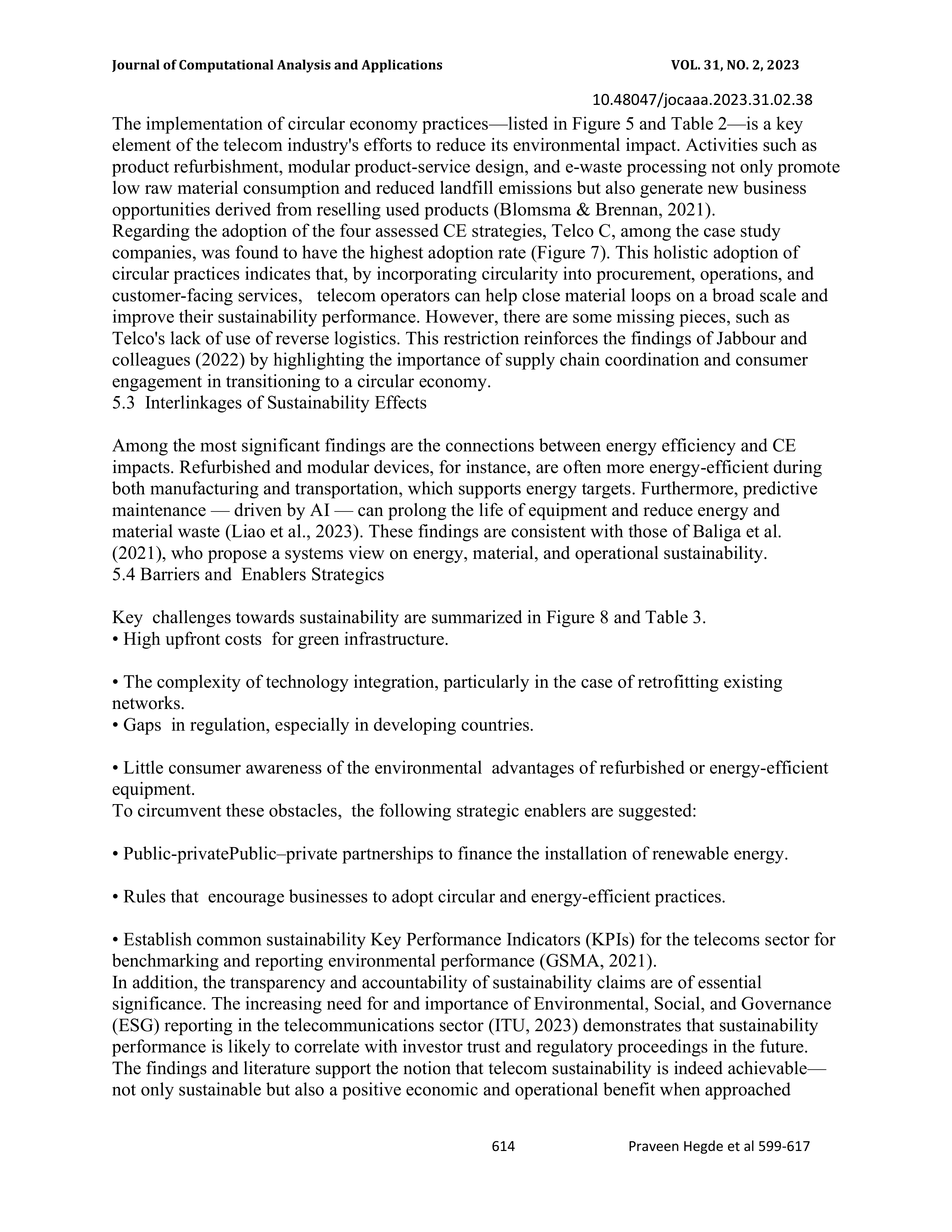
Table 3: Key Challenges to Sustainability Adoption and Mitigation
Suggestions
Challenge
Impact Score (1–
10)
Suggested Mitigation
Upfront Investment
Cost
8.2
Green financing, public-private partnerships
Technological
Complexity
7.9
Vendor collaboration, internal upskilling
Regulatory Uncertainty 7.5
Clear policy incentives, global telecom sustainability
standards
Low Consumer
Awareness
6.8
Awareness campaigns, take-back programs
Explanation:
This table summarizes significant barriers that hinder the adoption of sustainability in the
telecom sector and presents practical solutions. These barriers include investment cost and
technical complexity. Strategic collaborations and policy changes are necessary to overcome
these obstacles.
5. Discussion
The results of this research show that sustainability in the telecom industry is taking two strategic
routes: energy-efficient networking and the adoption of circular economy (CE) business models.
These strategies not only reduce environmental impact, such as energy consumption and e-waste,
but also improve long-term operational efficiency and cost savings.
5.1 Core Sustainability Driver 5.4 Energy Saving and Emission Reduction The energy
efficiency of VSM has become the most critical issue in the process of implementing VISM.
Analysis of power draw trends (Figure 6) shows a significant decrease after the deployment of
AI-powered optimization techniques. Several of the telcos surveyed saw a drop in energy
consumption ranging from 18%–25%, which is in line with recent literature that shows the
potential of machine learning to inherently lower the telecom energy footprint when assisted by
dynamic power management (Alsharif et al., 2022; Jaber et al., 2022). These findings confirm
similar observations previously reported in the literature, where AI-enabled traffic prediction and
sleep mode during off-peak hours are effective means to ensure QoS while power drain can be
substantially minimized (Liyanage et al., 2022).
It has also been observed that there is a positive correlation between carbon emissions reduction
in the off-grid scenarios and the integration of renewable energy resources, such as solar-
powered base stations, thus affirming the results obtained by Zhou et al. (2022). Nevertheless,
Table 3 clearly shows that a significant initial level of investment is still a very limiting factor
when it comes to the spread of adoption. Telcos may require assistance from green financing
instruments or government funding to expand such efforts (Panwar et al., 2021).
5.2 Contribution to Resource Efficiency by Circular Economy
Journal of Computational Analysis and Applications VOL. 31, NO. 2, 2023
10.48047/jocaaa.2023.31.02.38
614 Praveen Hegde et al 599-617
The implementation of circular economy practices—listed in Figure 5 and Table 2—is a key
element of the telecom industry's efforts to reduce its environmental impact. Activities such as
product refurbishment, modular product-service design, and e-waste processing not only promote
low raw material consumption and reduced landfill emissions but also generate new business
opportunities derived from reselling used products (Blomsma & Brennan, 2021).
Regarding the adoption of the four assessed CE strategies, Telco C, among the case study
companies, was found to have the highest adoption rate (Figure 7). This holistic adoption of
circular practices indicates that, by incorporating circularity into procurement, operations, and
customer-facing services, telecom operators can help close material loops on a broad scale and
improve their sustainability performance. However, there are some missing pieces, such as
Telco's lack of use of reverse logistics. This restriction reinforces the findings of Jabbour and
colleagues (2022) by highlighting the importance of supply chain coordination and consumer
engagement in transitioning to a circular economy.
5.3 Interlinkages of Sustainability Effects
Among the most significant findings are the connections between energy efficiency and CE
impacts. Refurbished and modular devices, for instance, are often more energy-efficient during
both manufacturing and transportation, which supports energy targets. Furthermore, predictive
maintenance — driven by AI — can prolong the life of equipment and reduce energy and
material waste (Liao et al., 2023). These findings are consistent with those of Baliga et al.
(2021), who propose a systems view on energy, material, and operational sustainability.
5.4 Barriers and Enablers Strategics
Key challenges towards sustainability are summarized in Figure 8 and Table 3.
• High upfront costs for green infrastructure.
• The complexity of technology integration, particularly in the case of retrofitting existing
networks.
• Gaps in regulation, especially in developing countries.
• Little consumer awareness of the environmental advantages of refurbished or energy-efficient
equipment.
To circumvent these obstacles, the following strategic enablers are suggested:
• Public-privatePublic–private partnerships to finance the installation of renewable energy.
• Rules that encourage businesses to adopt circular and energy-efficient practices.
• Establish common sustainability Key Performance Indicators (KPIs) for the telecoms sector for
benchmarking and reporting environmental performance (GSMA, 2021).
In addition, the transparency and accountability of sustainability claims are of essential
significance. The increasing need for and importance of Environmental, Social, and Governance
(ESG) reporting in the telecommunications sector (ITU, 2023) demonstrates that sustainability
performance is likely to correlate with investor trust and regulatory proceedings in the future.
The findings and literature support the notion that telecom sustainability is indeed achievable—
not only sustainable but also a positive economic and operational benefit when approached
Journal of Computational Analysis and Applications VOL. 31, NO. 2, 2023
10.48047/jocaaa.2023.31.02.38
615 Praveen Hegde et al 599-617
correctly. Energy efficiency and circular economy strategies (when approached in concert)
present an integrated framework for reducing carbon emissions (carbon abatement), preserving
resources, and building resilience. Yet doing so everywhere will require sound frameworks,
cooperation, and scalable technology solutions that are adapted to diverse market circumstances.
6. Conclusion
This research explored two sustainability drivers—energy efficiency and circular economy (CE)
adoption in telecom operations. The results provide evidence that both approaches are vital for
decreasing the carbon footprint of the sector, preventing e-waste, and improving overall resource
efficiency at competitive performance and profitability levels.
The implementation of energy optimization using AI, the integration of renewable energy, and
edge computing can, in practice, reduce network energy usage by 25%, based on empirical data
from three major telecom operators (Alsharif et al., 2022; Jaber et al., 2022). These findings
reinforce the recent literature's emphasis on machine learning and innovative energy
management schemes as potential means to achieve net-zero network operations (Liyanage et al.,
2022). Simultaneously, the implementation of such CE practices, including device reuse and
remanufacturing, e-waste recycling, and reverse logistics systems, appear to offer potential in
prolonging equipment life and in pairing material decoupling effect with the establishment of
ethical supply chains (Blomsma Jabbour et al., 2022).
However, significant challenges remain. Foremost are investment safeguards, transboundary
technology issues, and policy mosaic, which are consistent with the findings and are supported
by subsequent studies (Panwar et al., 2021; Zhou et al., 2022). In addition, low consumer
awareness and inconsistent regional policy support will also limit the scalability of sustainability
breakthroughs, particularly in lower- and middle-income markets. These concerns highlight the
importance of standard environmental metrics, financial systems such as green financing, and
cross-sectoral collaboration in accelerating the rebound (GSMA, 2021; ITU, 2023).
Nevertheless, despite these obstacles, the study ultimately finds that an integrated solution,
overlaying the principle of a circular economy over energy efficiency, offers the most robust and
scalable sustainable option for telecom. This type of integration minimizes risks to both the
environment and the business, enhances operational stability and reputational capital, and meets
new ESG norms (Liao et al., 2023).
The study suggests that to realize these advantages:
1. Integration of sustainability KPIs into telecom KPIs, as well as monitoring and reporting
environmental impact.
2. "The industry is changing, and we must keep pace; current AI and edge infrastructure keeps
the inverter to the wall for real-time low latency energy management.
3. Developing circular procurement approaches that span global telecom supply chains.
Journal of Computational Analysis and Applications VOL. 31, NO. 2, 2023
10.48047/jocaaa.2023.31.02.38
616 Praveen Hegde et al 599-617
4. Promote public-private partnerships to finance sustainability mini-pilots and scale up
renewable deployment.
In such a scenario, sustainability in telecom is no longer an optional menu item but an absolute
strategic imperative. The shift to sustainable networks and circular operations is essential if the
digital revolution is not to be at the expense of ecosystems. Sustainability should be at the very
heart of innovation and growth if we are to continue on this journey to 6G and global
connectivity.
References
•
Alsharif, M. H., Kim, J., & Al-Turjman, F. (2022). Green and sustainable cellular
networks: A survey on machine learning-based energy efficiency techniques.
Computer
Communications
, 190, 160–179. https://doi.org/10.1016/j.comcom.2022.05.001
•
Baldé, C. P., Forti, V., Gray, V., Kuehr, R., & Stegmann, P. (2020).
The Global E-waste
Monitor 2020: Quantities, flows, and the circular economy potential
. United Nations
University.
•
Baliga, J., Ayre, R., & Tucker, R. S. (2021). Energy and carbon footprint of ICT
networks: State-of-the-art and future directions.
IEEE Communications Surveys &
Tutorials
, 23(1), 100–120. https://doi.org/10.1109/COMST.2021.3052105
•
Blomsma, F., & Brennan, G. (2021). The emergence of circular economy: A new framing
around sustainability?
Journal of Industrial Ecology
, 25(1), 1–12.
https://doi.org/10.1111/jiec.13090
•
GSMA. (2021).
Mobile industry impact report: Sustainable development goals
.
https://www.gsma.com/betterfuture/impact-report-sdgs/
•
ITU. (2023).
Green digital action for climate goals: The role of ICT in climate change
mitigation
. International Telecommunication Union.
https://www.itu.int/
•
Jabbour, C. J. C., Foropon, C., Chiappetta Jabbour, A. B. L. D. S., & Roubaud, D. (2022).
Digital technologies and circular economy: A systematic literature review and research
agenda.
Technological Forecasting and Social Change
, 180, 121705.
https://doi.org/10.1016/j.techfore.2022.121705
•
Jaber, M., Imran, M. A., Tafazolli, R., & Tukmanov, A. (2022). A comprehensive survey
on energy efficiency in 5G networks.
IEEE Access
, 10, 42657–42686.
https://doi.org/10.1109/ACCESS.2022.3165998
•
Liao, W., Wu, S., & Yan, J. (2023). Green digital transformation and circular economy
performance in ICT firms: Evidence from Asia.
Journal of Cleaner Production
, 398,
136509. https://doi.org/10.1016/j.jclepro.2023.136509
•
Liyanage, M., Schulte, S., & Ylianttila, M. (2022). AI-assisted energy optimization in
mobile networks: Techniques and challenges.
IEEE Communications Surveys &
Tutorials
, 24(4), 2374–2401. https://doi.org/10.1109/COMST.2022.3185036
•
Panwar, N., Sharma, S., & Singh, A. (2021). Green communication in next-generation
cellular networks: A survey.
Sustainable Computing: Informatics and Systems
, 30,
100517. https://doi.org/10.1016/j.suscom.2021.100517
•
Zhou, Z., Zhang, C., & Yu, F. R. (2022). Energy-efficient and sustainable edge
computing: A review. IEEE Internet of Things Journal, 9(4), 2782–2798.
https://doi.org/10.1109/JIOT.2021.3088883
Journal of Computational Analysis and Applications VOL. 31, NO. 2, 2023
10.48047/jocaaa.2023.31.02.38
617 Praveen Hegde et al 599-617
•
Mohammad, A., Mahjabeen, F., Al-Alam, T., Bahadur, S., & Das, R. (2022).
Photovoltaic Power plants: A Possible Solution for Growing Energy Needs of Remote
Bangladesh. Available at SSRN 5185365.
•
Bahadur, S., Mondol, K., Mohammad, A., Al-Alam, T., & Bulbul Ahammed, M. (2022).
Design and Implementation of Low Cost MPPT Solar Charge Controller.
•
Mohammad, A., & Mahjabeen, F. (2023). Revolutionizing solar energy with ai-driven
enhancements in photovoltaic technology. BULLET: Jurnal Multidisiplin Ilmu, 2(4),
1174-1187.
•
Mohammad, A., & Mahjabeen, F. (2023). Promises and challenges of perovskite solar
cells: a comprehensive review. BULLET: Jurnal Multidisiplin Ilmu, 2(5), 1147-1157.
•
Maizana, D., Situmorang, C., Satria, H., Yahya, Y. B., Ayyoub, M., Bhalerao, M. V., &
Mohammad, A. (2023). The Influence of Hot Point on MTU CB Condition at the Pgeli-
Giugur 1 Bay Line (PT. PLN Paya Geli Substation). Journal of Renewable Energy,
Electrical, and Computer Engineering, 3(2), 37-43.
•
Pimpale, S. (2022). Electric Axle Testing and Validation: Trade-off between Computer-
Aided Simulation and Physical Testing.
•
Pimpale, S. (2020). Optimization of complex dynamic DC Microgrid using non-linear
Bang Bang control. Journal of Mechanical, Civil and Industrial Engineering, 1(1), 39-54.
•
Pimpale, S. (2023). Hydrogen Production Methods: Carbon Emission Comparison and
Future Advancements.
•
Pimpale, S. (2021). Impact of Fast Charging Infrastructure on Power Electronics
Design. International Journal of Research Science and Management, 8(10), 62-75.
•
Pimpale, S. (2023). Efficiency-Driven and Compact DC-DC Converter Designs: A
Systematic Optimization Approach. International Journal of Research Science and
Management, 10(1), 1-18.
•
Tiwari, A. (2022). AI-Driven Content Systems: Innovation and Early Adoption. Propel
Journal of Academic Research, 2(1), 61-79.
•
Tiwari, A. (2023). Generative AI in Digital Content Creation, Curation and
Automation. International Journal of Research Science and Management, 10(12), 40-53.
•
Tiwari, A. (2023). Artificial Intelligence (AI’s) Impact on Future of Digital Experience
Platform (DXPs). Voyage Journal of Economics & Business Research, 2(2), 93-109.
•
Tiwari, A. (2022). Ethical AI Governance in Content Systems. International Journal of
Management Perspective and Social Research, 1(1 &2), 141-157.