

1
Green supply chain approach towards the pharmaceutical industry:
a case study of Pfizer
Mohaiminul Islam
1
, Mumazzad Ahmed Al Razi
1
,
Khubayeb Ahmed Al Jami
2
1
Department of Industrial and Production Engineering, Jashore University of Science and Technology (JUST),
Jashore 7408, Bangladesh
2
Business school, University of Bedfordshire University Square Luton, LU1 3JU United Kingdom
E-mail:
mohaiminul.islam.ie@gmail.com
1
,
mumazzadahmed@gmail.com
1
,
jami2506@gmail.com
2
Abstract
The pharmaceutical industry's shift towards a Green Supply Chain (GSC) aims to reduce the environmental
impact of drug production and distribution. This report examines Pfizer's green supply chain practices,
highlighting their commitment to sustainability through projects like water conservation, waste reduction,
and greenhouse gas emission cuts. Despite these efforts, challenges persist, including sustainable raw
material sourcing, waste management, and cold chain logistics. The study reviews various green supply
chain management (GSCM) strategies, such as lean management and circular supply chains, emphasizing
their benefits in reducing emissions and resource consumption. Recommendations for Pfizer include
enhancing waste reduction, adopting intelligent scheduling systems, and utilizing renewable resources.
The report underscores the importance of integrating GSCM practices to balance economic,
environmental, and social goals, addressing sustainability challenges while ensuring the pharmaceutical
sector's long-term viability.
Keywords: Green supply chain, Logistics, Sustainability;
2
1: Introduction and Mind Map
In the pharmaceutical sector, incorporating eco-friendly techniques into supply chain procedures
is known as a "Green Supply Chain (GSC) in the medicine industry"(Lam et al., 2015, Eshkiki and
Homayounfar, 2024). This entails using eco-friendly techniques, supplies, and procedures to
mitigate the negative effects that the procurement, production, distribution, and disposal of
medications have on the environment (Ojo-Emmanuel et al., 2023).
In the pharmaceutical business, vaccines are very crucial for both the economy and the healthcare
system. In 2021, vaccines accounted for 8% of pharmaceutical sales, roughly $89 billion in global
sales, according to Statista (Richter, 2021). However, the production of vaccinations and the
inappropriate disposal of vaccine waste, including personal protective equipment, syringes,
needles, vaccine storage, and vials, may produce enormous volumes of greenhouse gases which
can contribute to global warming.
During the pandemic, the massive COVID-19 immunization campaign has led to an upsurge in
greenhouse gas emissions attributed to the ecological imbalance brought about by the vaccine’s
intensive packaging, transportation, and deep freezing (Hasija et al., 2022). According to
investigations, the injection of mRNA vaccinations in Germany led to the emission of 1100 kg
CO
2
(Kurzweil et al., 2021), in addition, the usage of disposable surgical masks in the UK produces
66,000 tons of hazardous waste yearly(Lee et al., 2021).
This report demonstrates Pfizer's green supply chain structure, current performance, major
GSC issues, and its solutions based on existing research. Pfizer is a renowned multinational
biopharmaceutical corporation that was founded in 1849. It emphasizes investigating, developing,
and producing medications and vaccines in many therapeutic domains. Pfizer's approach to
ecologically effective production demonstrates the organization's commitment to social
accountability and environmental sustainability (Pfizer, 2016).
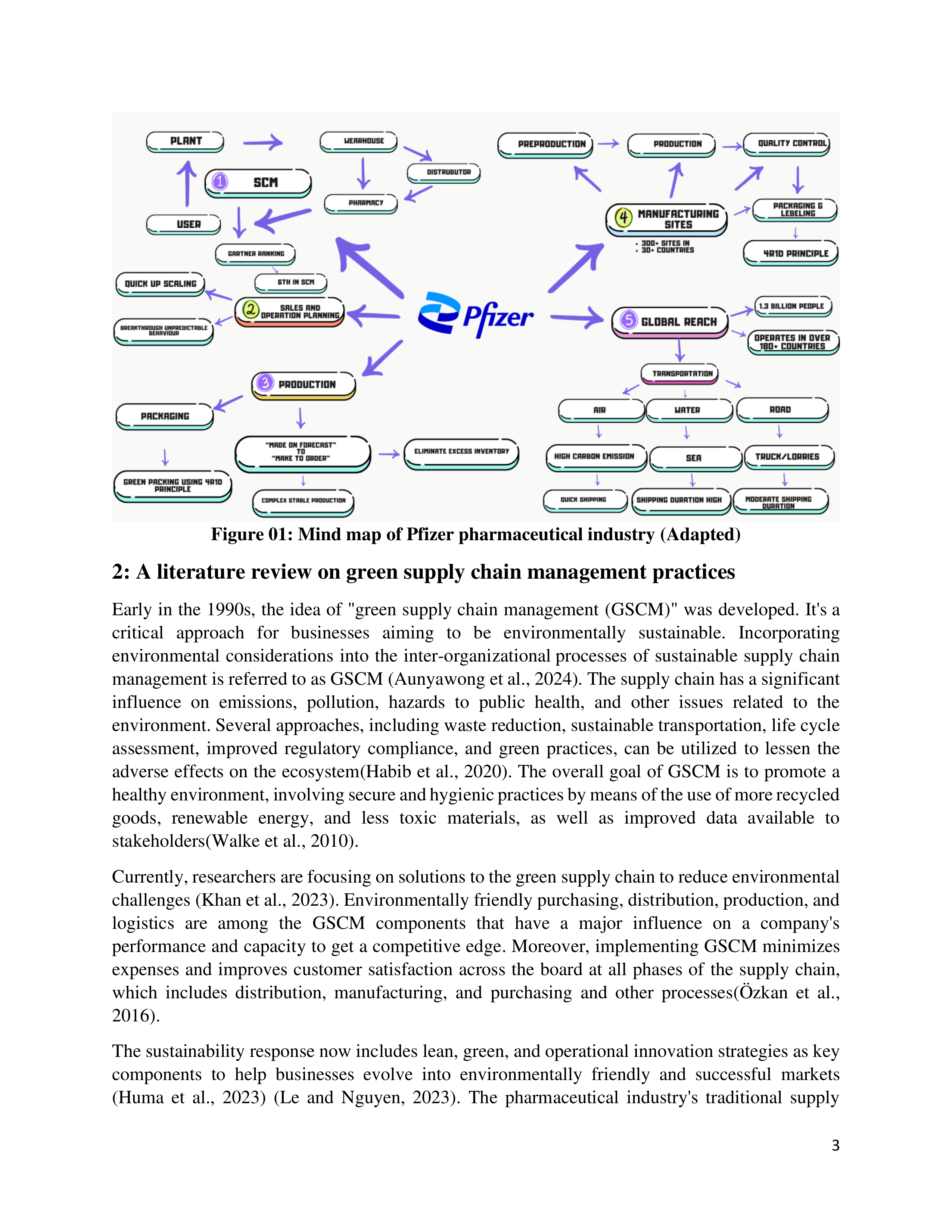
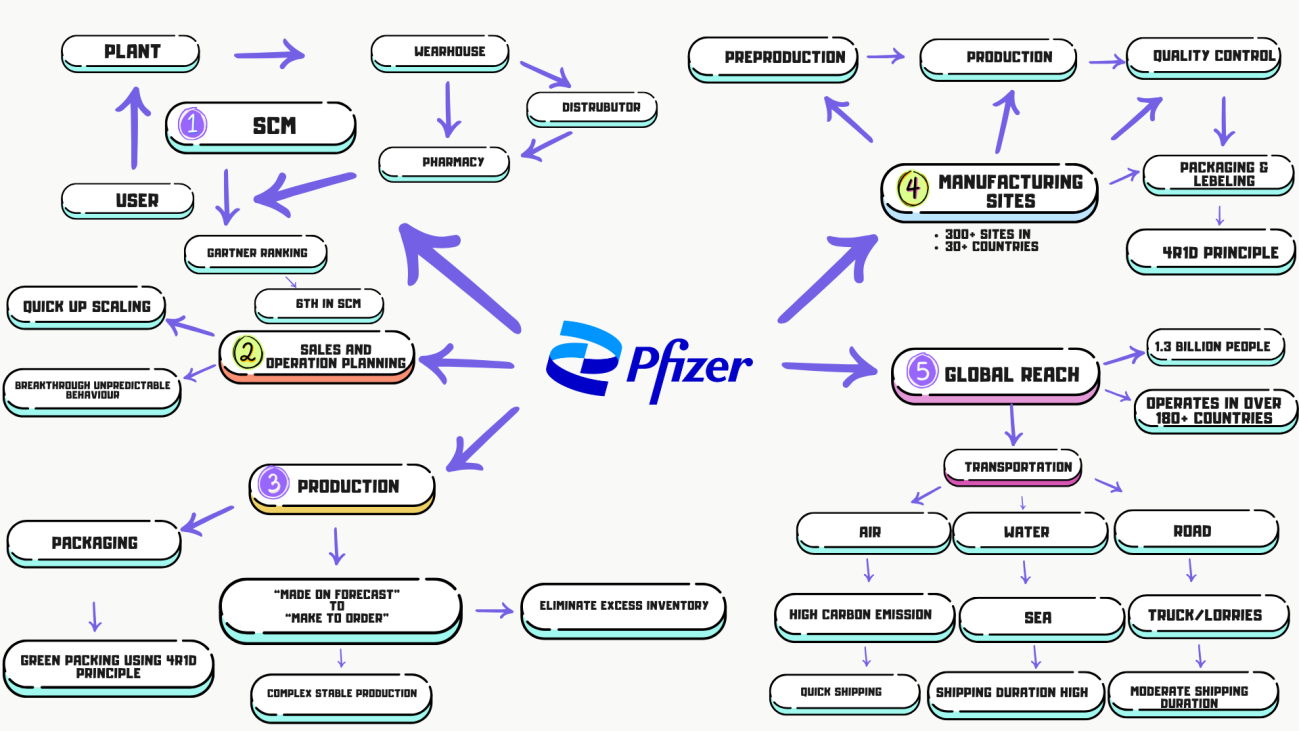
Figure 01 demonstrates the mind mapping of the Pfizer pharmaceutical industry.
Pfizer’s SCM:
•
Pfizer is dedicated to conserving water wherever it can, especially in areas with limited
water supplies.
•
Since 2012, Pfizer has implemented over 1500 sustainability projects.
•
They intend to cut 60–80% of greenhouse emissions by 2050 through a well-structured
program.
•
The strategy for reducing waste involves adopting recycling, reusing, and waste
minimization to cut down on the consumption of natural resources.
•
In order to preserve a sustainable environment and save water (45 percent), Pfizer
constructed the first LEED-NC Platinum-certified pharmaceutical plant (Magazine, 2017).
3
Figure 01: Mind map of Pfizer pharmaceutical industry (Adapted)
2: A literature review on green supply chain management practices
Early in the 1990s, the idea of "green supply chain management (GSCM)" was developed. It's a
critical approach for businesses aiming to be environmentally sustainable. Incorporating
environmental considerations into the inter-organizational processes of sustainable supply chain
management is referred to as GSCM (Aunyawong et al., 2024). The supply chain has a significant
influence on emissions, pollution, hazards to public health, and other issues related to the
environment. Several approaches, including waste reduction, sustainable transportation, life cycle
assessment, improved regulatory compliance, and green practices, can be utilized to lessen the
adverse effects on the ecosystem(Habib et al., 2020). The overall goal of GSCM is to promote a
healthy environment, involving secure and hygienic practices by means of the use of more recycled
goods, renewable energy, and less toxic materials, as well as improved data available to
stakeholders(Walke et al., 2010).
Currently, researchers are focusing on solutions to the green supply chain to reduce environmental
challenges (Khan et al., 2023). Environmentally friendly purchasing, distribution, production, and
logistics are among the GSCM components that have a major influence on a company's
performance and capacity to get a competitive edge. Moreover, implementing GSCM minimizes
expenses and improves customer satisfaction across the board at all phases of the supply chain,
which includes distribution, manufacturing, and purchasing and other processes(Özkan et al.,
2016).
The sustainability response now includes lean, green, and operational innovation strategies as key
components to help businesses evolve into environmentally friendly and successful markets
(Huma et al., 2023) (Le and Nguyen, 2023). The pharmaceutical industry's traditional supply
4
chains generate a lot of waste, which might endanger public health as well as the environment.
Hence, it's important to reduce and recycle waste products as much as possible(Su et al., 2021). A
research carried out by Khan F et al.(Khan and Ali, 2022) provides a foundation for the
pharmaceutical sector to use the circular supply chain management (CSCM) methodology,
applying techniques from both qualitative and quantitative studies. The research highlights
enabling factors, including industrial cooperation, reverse logistic infrastructure, and blockchain
technology to address market problems, the shortage of green resources, and GSC network issues.
In contrast, reverse logistic infrastructure emphasizes recovering expired drugs for treatment or
donation in order to promote sustainability, industrial symbiosis gives organizations an economic
advantage by employing trash as raw materials in other sectors.
A lean system's primary objective is to eliminate waste to create goods or services of higher
standards at the most affordable price and in the quickest possible period(Ejsmont et al., 2020). A
vital green supply chain method for attaining ecological sustainability throughout the supply chain
is lean management (LM). Garza-Reyes et al.(Garza-Reyes et al., 2018) reported that while
constant development can be beneficial in minimizing the consumption of resources and pollutant
emissions, lean techniques like Just-in-Time and Total Productive Maintenance have an
advantageous effect on environmental sustainability. In addition, TPM improves material
utilization as production machinery operating at peak efficiency will handle raw materials less
wastefully and more effectively. However, There are several noteworthy advantages to the
collaboration of the LM and GSC management systems, including reduced inventories, additional
capacity, shorter production and transportation times, higher degrees of inclusion, and more
frequent details exchange across the whole supply chain(Singh et al., 2022).
Supply networks should occasionally make trade-offs among strategies. For instance, Just-in-time
delivery might decrease inventories more quickly, but it also entails more frequent product
restocking and increase emissions from transportation. Trade-offs always occur in supply chains
which involve large distances. A mathematical model combining lean and green practices was
utilized in a study conducted by Carvalho et al.(Carvalho et al., 2017) to increase the eco-efficiency
of businesses and supply chains. The model takes into account the behaviors of individual
enterprises together, making it possible to choose practices that minimize adverse effects on the
environment and enhance economic performance without sacrificing the total eco-efficiency of the
supply chain. According to the concept, not every business can be totally green or lean, and
individual behavior adjustments are required to meet the financial and environmental restrictions
of the supply chain. However, the model is built on the presumption that the firm’s combined
adverse impacts on the environment and the economy may increase along the supply chain.
To attain the optimal balance between responsiveness and efficiency, GSC integration incorporates
sustainable manufacturing, inventory, the cold chain, transportation, and packaging. For a business
to operate well, GSCM must be aligned with marketing strategy(Safaei, 2020).
A cold chain network consists of up of several links for storage and transportation that are all
intended to maintain pharmaceutical products at a suitable temperature until they are delivered to
the intended recipients. Products that are not handled and stored properly might lose their
5
effectiveness, fail to elicit an immune response, and become ineffective in preventing illnesses that
can be prevented by vaccination(Buletin, 1998).
Shi Y et al.(Shi et al., 2022) developed an intelligent green scheduling system for cold chain
logistics (IGSS-CCL) to meet sustainable development demands. It integrates distribution,
demand, and external environment resources for efficient scheduling and urban governance. The
findings demonstrate that, in comparison to the conventional single-objective optimization
approach, multi-objective tactical optimization in the IGSS-CCL is advantageous for resource
conservation, environmental preservation, and the advancement of cold chain logistics in a
sustainable manner. The system may be used by managers to oversee and manage cold chain
logistics scheduling activities as a decision-support tool.
Furthermore, for Identifying the driving forces for the sustainable cold chain supplier Khan A. et
al.(Khan and Ali, 2021) uses interpretive structural modelling (ISM) and fuzzy VIKOR techniques
to identify driving factors for sustainable suppliers. The study identifies the use of renewable
resources as the most important factor, allowing suppliers to alter their production procedures and
services into sustainable resources. The study also selects eight suppliers in Pakistan based on
fifteen criteria using fuzzy VIKOR. Mitchell food is found to be the provider with the highest level
of social, environmental, and economic sustainability. The investigation suggests rewarding
vendors and creditors who adopt renewable resources, as well as relaxation of taxes and a job
creation through sustainable suppliers.
To manage the recycling of heterogeneous medicines with third-party logistics incentives and
service levels, a study by Liu W et al.(Liu et al., 2020) provides an integrated nonlinear bi-level
programming model. According to the concept, the producer is in charge, the third-party logistics
firm is a follower, and the government plays a crucial part in promoting sustainability. Numerous
significant management implications are applied, and case study and sensitivity assessment
indicate that the suggested technique effectively give ideal regulations for the complex
pharmaceutical restoration framework. The pharmaceutical recycling system could potentially
be more sustainable with the help of the established model and algorithm.
Moreover, Tat R. et al.(Tat and Heydari, 2021) introduces the concept of pharmaceutical donation
as a kind of corporate social responsibility (CSR) in a pharmaceutical supply chain. Under the
plan, extra prescription drugs are gathered before they expire, donated to underserved areas, and
then sold in other markets. The channel is coordinated using a bi-level optimization approach. The
numerical findings demonstrate that using the suggested collaborative bi-level optimization
strategy may both increase overall channel profit and encourage both members to make decisions
in
accordance
with
integrated
sustainable
PSC
goals.
This method is significantly effective for improving supply chain CSR and minimizing the amount
of pharmaceutical waste for long term sustainability.
To create an environmentally friendly pharmaceutical supply chain, an optimization model by
Levner et al.(Levner and Herbon, 2023) takes into account clean technologies, recycling, and
disposal. The model incorporates the viewpoints of the environmental, physical, and economical
domains into one extensive supply chain. Real-world information from a substantial health
6
services organization in Israel—more precisely, a nationwide influenza vaccination campaign
from 2018—is used to evaluate the findings. The model demonstrates that the financial returns on
investments made in green initiatives are less than anticipated. In addition, The
multi-objective
gray wolf optimizer
algorithm is used to develop a framework for a green vaccine supply chain
network, demonstrating trade-offs between green and hygienic aspects, designing a safe network,
constructing financial metrics for epidemic circumstances, and investigating vaccine supply chain
impacts on the economy and environment(Abbasi et al., 2023).
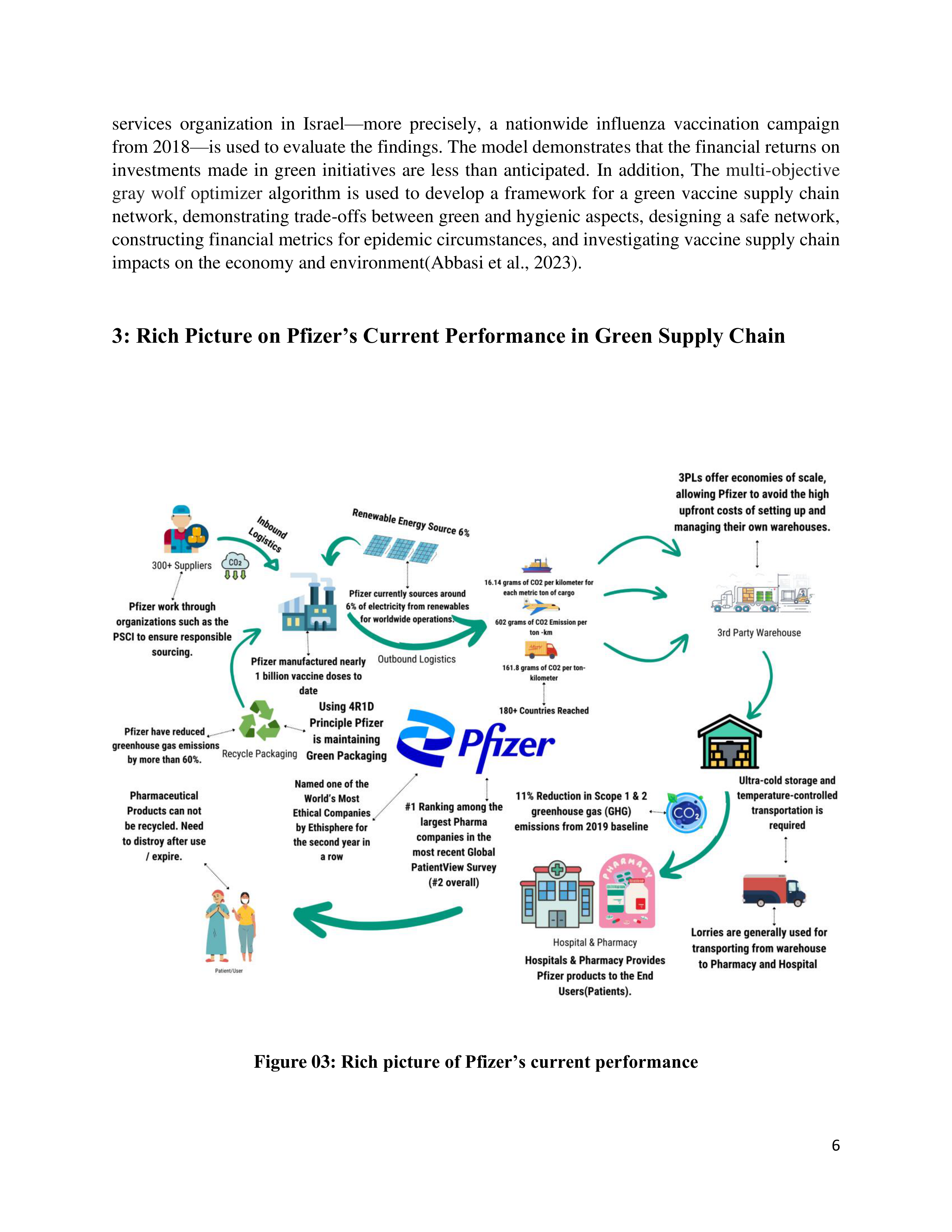
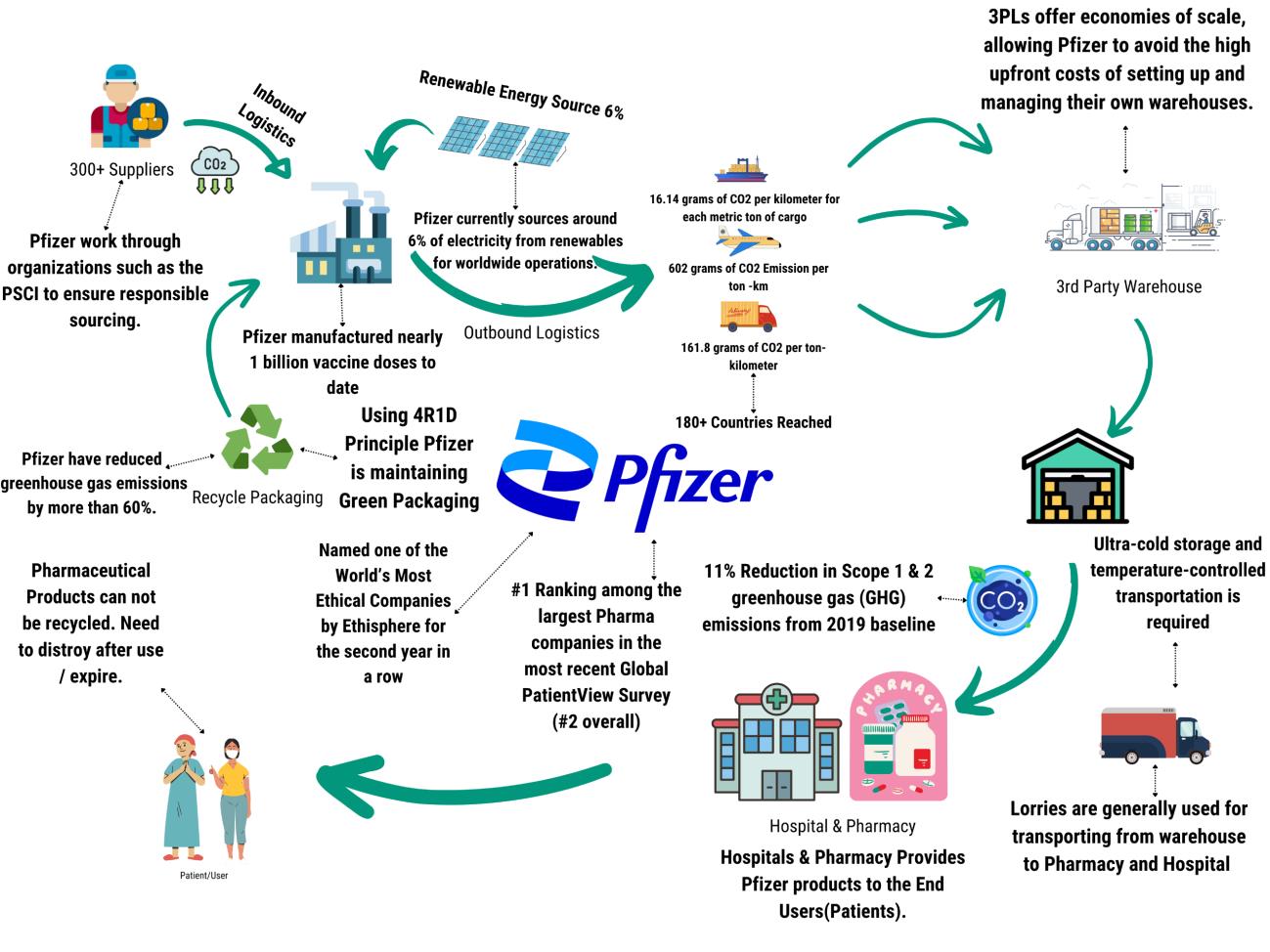
3: Rich Picture on Pfizer’s Current Performance in Green Supply Chain
Figure 03: Rich picture of Pfizer’s current performance
7
4: Key challenges of Pfizer’s Green supply chain and SCM strategy of main
competitors
The pharmaceutical sector has always been extremely important to our daily existence. It has made
significant financial and human resource investments, enabling individuals in need to easily obtain
life-saving medications and enhancing global health conditions(Scherer, 2000). According to a
recent study, the carbon emission intensity of the pharmaceutical industry is over 55 percent
greater than that of auto manufacturers and the automotive sector(Conversation, 2019).
Environmental problems including greenhouse gas emissions, energy use, and water consumption
are examples of key green supply chain issues to ensure sustainability.
Despite Pfizer's commitment to fostering innovative and extensive initiatives to promote
sustainability across its global supply, production, and distribution chain as a healthcare system
supplier, several issues occur in its green supply chain.
Pfizer's green supply chain strategies are impacted by a number of important issues, some of which
are industry-specific (Pfizer, 2023).
➢
Sustainable supply of raw materials
➢
Green practices
➢
Reverse logistics and product returns
➢
Greenhouse gas emissions
➢
Waste reduction and management
➢
Water Stewardship
➢
Energy consumption
➢
Lack of management commitment
➢
Competition and uncertainty
➢
Cold chain issue
Sustainable packaging and raw material procurement necessitate careful consideration and
collaboration with suppliers; strategies like recycling may result in higher costs than with
conventional methods. There are several approaches that may be used to deal with this issue,
including recognizing and correcting any potential weak points in the supplier network before they
become a problem, making plans to mitigate the impact of sudden price raise, acute ingredient
shortages to ensure supply continuity, and maintaining a steady supply of high-quality raw
materials(BALL, 2022).
Pfizer's key environmental, social, and governance objectives are being steadily attained, with an
emphasis on fostering long-term value generation and an ethical, sustainable, and patient-centered
business model. In order to ensure green practices, the use of renewable energy sources(Vujanović
et al., 2014) and the TPM strategy(Garza-Reyes et al., 2018) can help minimize the consequences
of climate change.
Now, Pfizer endeavors to develop more effective procedures that can mitigate the ecological
footprint of pharmaceuticals across the whole product life cycle, including the supply chain. Just-
8
in-time delivery might result in high greenhouse gas emissions, using electric cars can drastically
lower carbon emissions in transportation(Zhao et al., 2021).
A key component of Pfizer's sustainable pharmaceuticals initiative is waste minimization.
Businesses continuously look for ways to reduce waste in its production, research, and
development processes. Pfizer uses internal measurements that inform waste management
decisions to support objectives of reduce, reuse, repurpose, and recycle by increasing the
circularity of location’s waste streams and encouraging minimization. However, a significant
reduction in Pfizer's waste may be achieved by implementing a pharmaceutical donation plan(Tat
and Heydari, 2021) and recycling diverse medications using third-party logistics(Liu et al., 2020).
Pfizer is dedicated to reducing the amount of pharmaceutical active substances that are released
into wastewater from manufacturing facilities. To achieve this, they use emission control
technologies, procedures, and environmental risk assessment approaches. Furthermore, in order to
mitigate the effects of cold chain transport operations Pfizer may employ renewable
resources(Khan and Ali, 2021) and an effective green scheduling system(Shi et al., 2022) to
achieve sustainability.


9
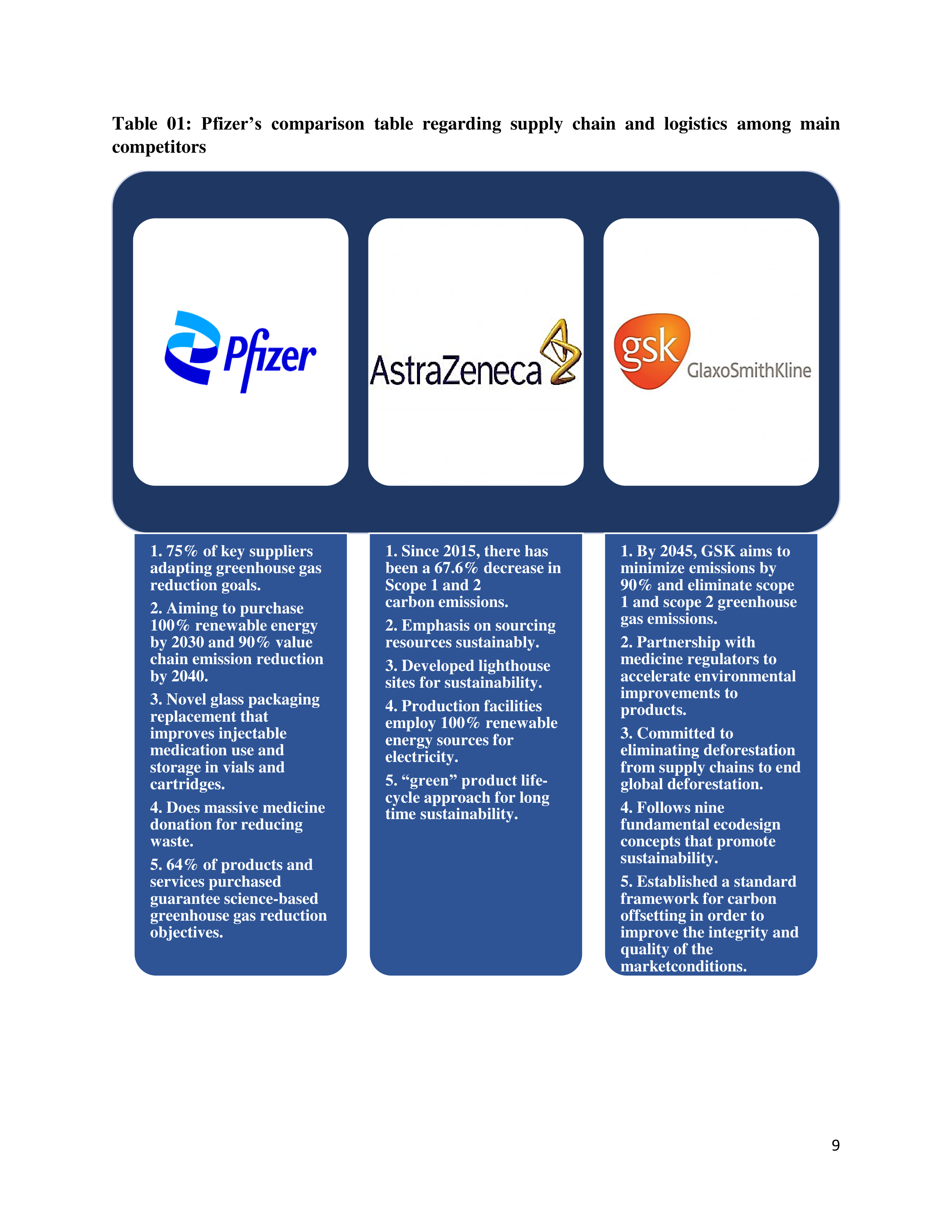
Table 01: Pfizer’s comparison table regarding supply chain and logistics among main
competitors
1. 75% of key suppliers
adapting greenhouse gas
reduction goals.
2. Aiming to purchase
100% renewable energy
by 2030 and 90% value
chain emission reduction
by 2040.
3. Novel glass packaging
replacement that
improves injectable
medication use and
storage in vials and
cartridges.
4. Does massive medicine
donation for reducing
waste.
5. 64% of products and
services purchased
guarantee science-based
greenhouse gas reduction
objectives.
1. Since 2015, there has
been a 67.6% decrease in
Scope 1 and 2
carbon emissions.
2. Emphasis on sourcing
resources sustainably.
3. Developed lighthouse
sites for sustainability.
4. Production facilities
employ 100% renewable
energy sources for
electricity.
5. “green” product life-
cycle approach for long
time sustainability.
1. By 2045, GSK aims to
minimize emissions by
90% and eliminate scope
1 and scope 2 greenhouse
gas emissions.
2. Partnership with
medicine regulators to
accelerate environmental
improvements to
products.
3. Committed to
eliminating deforestation
from supply chains to end
global deforestation.
4. Follows nine
fundamental ecodesign
concepts that promote
sustainability.
5. Established a standard
framework for carbon
offsetting in order to
improve the integrity and
quality of the
marketconditions.
10
5. Conclusion and Recommendations
To implement a green supply chain, particularly within the cold chain logistics, which are crucial
for pharmaceuticals industries, Pfizer should prioritize integrating Green Supply Chain
Management (GSCM) principles and practices across their operations. Pfizer can be advised to
focus on waste reduction, sustainable transportation, life cycle assessment, and the utilization of
recycled goods and renewable energy sources. (Aunyawong et al., 2024), (Habib et al., 2020), and
(Khan et al., 2023). Applying lean management, Pfizer can further minimize resource consumption
and emissions while enhancing operational efficiency (Ejsmont et al. 2020),(Garza-Reyes et al.
2018). Moreover, adopting the Intelligent Green Scheduling System for Cold Chain Logistics
(IGSS-CCL) suggested by Shi et al. (2022) and considering renewable resource usage as suggested
by Khan and Ali (2021) Pfizer can reduce environmental pollution and contribute in sustainable
development. Finally, considering the optimization model by Levner and Herbon (2023), Pfizer
can control emission by implementing clean technologies, recycling, and safe disposal. Controlling
emissions is crucial for creating an environment friendly supply chain that balances economic,
environmental, and social objectives.
In a nutshell, the pharmaceutical industry's journey to green supply chain management is an
important response to the environmental difficulties faced by drug sourcing, manufacture,
distribution, and disposal.
The literature study highlights the changing nature of green supply chain management, which
includes concepts such as circular supply chain management, lean management, and operational
innovation. These methods strive not just to reduce environmental effects, but also improve overall
efficiency and satisfaction.
Despite Pfizer's admirable efforts, issues remain in its green supply chain, including sustainable
raw material sourcing, waste reduction, energy usage, emission from transportation and the
specific limitations of the cold chain. As example, despite high emission, Pizer had to adopt Air
freight transportation during covid emergency to distribute the vaccine rapidly. However, Pfizer
claims that it is committed to finding alternatives, including renewable energy sources, green
scheduling systems, and waste management measures. As the pharmaceutical sector evolves,
addressing sustainability issues becomes increasingly important. It is evident that integrating green
supply chain management methods is not only a business duty, but also critical to the
pharmaceutical industry's long-term viability, guaranteeing a balance between economic success
and environmental stewardship.
However,
adopting greener methods is difficult for the pharmaceutical business because of tight
regulations, complicated supply networks, financial constraints, and a lack of standard criteria
(Barbosa-Póvoa et al., 2018). Consumers are now more concerned with cost and effectiveness than
with "green" drugs, and there isn't much public demand for them. Future suggestions include
boosting public awareness of the environmental impact of pharmaceuticals, standardizing
environmental impact measurement, standardizing partnerships between businesses, suppliers,
regulators, and research institutions, and investing in sustainable technologies
(Milanesi et al.,
2020). The development and acceptance of sustainable solutions may be accelerated up with the
aid of these strategies.
11
References:
ABBASI, S., ZAHMATKESH, S., BOKHARI, A. & HAJIAGHAEI-KESHTELI, M. 2023.
Designing a vaccine supply chain network considering environmental aspects. Journal of
Cleaner Production, 417, 137935.
AUNYAWONG, W., WAIYAWUTHTHANAPOOM, P., THITART, P., KERDPITAK, C.,
VAIYAVUTH, R., SRITAPANYA, K. & SHAHARUDIN, M. 2024. The effect of green
supply chain management practices on performances of herb manufacturers in Thailand.
Uncertain Supply Chain Management, 12, 417-424.
BALL, K. 2022. How to Secure a Sustainable Supply of Raw Materials. Available from:
https://www.pfizercentreone.com/insights-resources/expert-content/how-secure-
sustainable-supply-raw-materials.
BULETIN, W. H. O. 1998. Global programme for vaccine and immunization: expanded
programme on immunization: safe vaccine handling: cold chain and immunizations.
Geneva.
BARBOSA-PÓVOA, A.P., DA SILVA, C. AND CARVALHO, A., 2018. Opportunities and
challenges in sustainable supply chain: An operations research perspective. European
journal of operational research, 268(2), pp.399-431.
CARVALHO, H., GOVINDAN, K., AZEVEDO, S. G. & CRUZ-MACHADO, V. 2017.
Modelling green and lean supply chains: An eco-efficiency perspective. Resources,
Conservation and Recycling, 120, 75-87.
CONVERSATION, T. 2019. Big Pharma emits more greenhouse gases than the automotive
industry.
Available
from:
https://theconversation.com/big-pharma-emits-more-
greenhouse-gases-than-the-automotive-industry-115285.
EJSMONT, K., GLADYSZ, B., CORTI, D., CASTAÑO, F., MOHAMMED, W. M. &
MARTINEZ LASTRA, J. L. 2020. Towards ‘Lean Industry 4.0 ʹ–Current trends and future
perspectives. Cogent Business & Management, 7, 1781995.
ESHKIKI, M. F. & HOMAYOUNFAR, M. 2024. Green Supply Chain in Medicine. In:
ALLAHVIRANLOO, T., HOSSEINZADEH LOTFI, F., MOGHADDAS, Z. & VAEZ-
GHASEMI, M. (eds.) Decision Making in Healthcare Systems. Cham: Springer
International Publishing.
GARZA-REYES, J. A., KUMAR, V., CHAIKITTISILP, S. & TAN, K. H. 2018. The effect of
lean methods and tools on the environmental performance of manufacturing organisations.
International Journal of Production Economics, 200, 170-180.
HABIB, M. A., BAO, Y. & ILMUDEEN, A. 2020. The impact of green entrepreneurial
orientation, market orientation and green supply chain management practices on
sustainable firm performance. Cogent Business & Management, 7, 1743616.
HASIJA, V., PATIAL, S., KUMAR, A., SINGH, P., AHAMAD, T., KHAN, A. A. P., RAIZADA,
P. & HUSSAIN, C. M. 2022. Environmental impact of COVID-19 Vaccine waste: A
perspective on potential role of natural and biodegradable materials. Journal of
Environmental Chemical Engineering, 10, 107894.
HUMA, S., AHMED SIDDIQUI, D. & AHMED, W. 2023. Understanding the impact of Green
supply chain management practices on operational competitive capabilities. The TQM
Journal, 35, 796-815.
KHAN, A. U. & ALI, Y. 2021. Sustainable supplier selection for the cold supply chain (CSC) in
the context of a developing country. Environment, Development and Sustainability, 23,
13135-13164.
12
KHAN, F. & ALI, Y. 2022. Implementation of the circular supply chain management in the
pharmaceutical industry. Environment, Development and Sustainability, 24, 13705-13731.
KHAN, M., AJMAL, M. M., JABEEN, F., TALWAR, S. & DHIR, A. 2023. Green supply chain
management in manufacturing firms: A resource‐based viewpoint. Business Strategy and
the Environment, 32, 1603-1618.
KURZWEIL, P., MÜLLER, A. & WAHLER, S. 2021. The Ecological Footprint of COVID-19
mRNA Vaccines: Estimating Greenhouse Gas Emissions in Germany. International
Journal of Environmental Research and Public Health [Online], 18.
LAM, H. L., HOW, B. S. & HONG, B. H. 2015. Chapter 12 - Green supply chain toward
sustainable industry development. In: KLEMEŠ, J. J. (ed.) Assessing and Measuring
Environmental Impact and Sustainability. Oxford: Butterworth-Heinemann.
LE, P.-L. & NGUYEN, D.-T. 2023. Exploring Lean Practices’ Importance in Sustainable Supply
Chain Management Trends: An Empirical Study in Canadian Construction Industry.
Engineering Management Journal, 1-26.
LEE, A. W. L., NEO, E. R. K., KHOO, Z.-Y., YEO, Z., TAN, Y. S., CHNG, S., YAN, W., LOK,
B. K. & LOW, J. S. C. 2021. Life cycle assessment of single-use surgical and embedded
filtration layer (EFL) reusable face mask. Resources, Conservation and Recycling, 170,
105580.
LEVNER, I. & HERBON, A. 2023. An optimization model for distribution of influenza vaccines
through a green healthcare supply chain. Operations Research for Health Care, 37, 100387.
LIU, W., WAN, Z., WAN, Z. & GONG, B. 2020. Sustainable recycle network of heterogeneous
pharmaceuticals with governmental subsidies and service-levels of third-party logistics by
bi-level programming approach. Journal of Cleaner Production, 249, 119324.
MAGAZINE, F. E. 2017. Pfizer Builds World’s First LEED Platinum Pharmaceutical Factory.
Facility Executive Magazine.
MILANESI, M., RUNFOLA, A. AND GUERCINI, S., 2020. Pharmaceutical industry riding the
wave of sustainability: Review and opportunities for future research. Journal of cleaner
production, 261, p.121204.
OJO-EMMANUEL, G., AYANLADE, O. & JEGEDE, M. 2023. Level of Adoption of Green
Supply Chain Management Technologies and Practices in Selected Pharmaceutical and
Textile Firms in Southwestern Nigeria. Nigerian Journal of Environmental Sciences and
Technology (NIJEST) Vol, 7, 395-402.
ÖZKAN, O., AKYÜREK, Ç. E. & TOYGAR, Ş. A. Green supply chain method in healthcare
institutions. Chaos, Complexity and Leadership 2014, 2016. Springer, 285-293.
PFIZER 2016. Pfizer’s Green Journey
Environmental Sustainability Goals.
PFIZER. 2023. Pfizer’s Approach to Incorporating Sustainability in the Development of
Medicines. Available from: https://insights.pfizer.com/sustainablemedicines/.
RICHTER, F. 2021. Despite Covid, Vaccines Account for Minor Share of Pharma Sales.
SAFAEI, M. 2020. Investigating and Extracting Green Marketing Strategies for Eco-Friendly
Packaging in the Food and Pharmaceutical Supply Chain (Case Study of Arian Daru
Pharmaceutical Company). International Journal of Advanced Science and Technology,
29, 2304-2327.
SCHERER, F. M. 2000. The pharmaceutical industry. Handbook of health economics, 1, 1297-
1336.
13
SHI, Y., LIN, Y., LIM, M. K., TSENG, M.-L., TAN, C. & LI, Y. 2022. An intelligent green
scheduling system for sustainable cold chain logistics. Expert Systems with Applications,
209, 118378.
SINGH, R. K., KUMAR MANGLA, S., BHATIA, M. S. & LUTHRA, S. 2022. Integration of
green and lean practices for sustainable business management. Business Strategy and the
Environment, 31, 353-370.
SU, G., ONG, H. C., IBRAHIM, S., FATTAH, I. R., MOFIJUR, M. & CHONG, C. T. 2021.
Valorisation of medical waste through pyrolysis for a cleaner environment: Progress and
challenges. Environmental Pollution, 279, 116934.
TAT, R. & HEYDARI, J. 2021. Avoiding medicine wastes: Introducing a sustainable approach in
the pharmaceutical supply chain. Journal of Cleaner Production, 320, 128698.
VUJANOVIĆ, A., ČUČEK, L., PAHOR, B. & KRAVANJA, Z. 2014. Multi-objective synthesis
of a company's supply network by accounting for several environmental footprints. Process
Safety and Environmental Protection, 92, 456-466.
WALKE, R., TOPKAR, V. & KABIRAJ, S. 2010. Managing Risk for Green Supply Chain
Management: Competitive Strategies for Manufacturing Companies. Skyline Business
Journal, 6.
ZHAO, J., XI, X., NA, Q., WANG, S., KADRY, S. N. & KUMAR, P. M. 2021. The technological
innovation of hybrid and plug-in electric vehicles for environment carbon pollution control.
Environmental Impact Assessment Review, 86, 106506.