Highlights in Business, Economics and Management
EDMS 2023
Volume
23
(2023)
228
Research on the Consumer Behavior Characteristics and
Digital Marketing Strategy of Gucci
Ruochen Wang
*
University of Southampton, Southampton, SO17 1BJ, United Kingdom
* Corresponding Author Email: rw5a22@soton.ac.uk
Abstract.
The arrival and end of COVID-19 accelerated the development of the global digital field.
For the fashion industry, Gucci, as an established luxury brand, has captured the digital marketing
trend and the consumer behavior, psychology, and pain points of young consumers in the digital era.
Gucci’s digital marketing strategy is mainly reflected in social software and social media. The brand
uses well-known social media apps to increase product awareness and exposure. Then, Gucci
leverages the “celebrity culture” of young, top-ranking celebrities in social media to endorse and
promote its products to generate awareness of the product online quickly and consumer identification
with the brand. Ultimately, the digital marketing broadcasting advantage improves the brand effect
and performance and stimulates purchasing power. However, Gucci’s digital strategy also has
limitations, namely, digital marketing makes the brand neglect the importance of balancing “classic”
and “trendy,” as well as Gucci’s excessive pursuit of “youthfulness” fashion symbols. Therefore, this
article will take Gucci as a classic case to analyze how Gucci has used a digital marketing strategy
to capture the psychological and behavioral characteristics of consumers in the brand, as well as the
potential pitfalls of this strategy in the brand’s operation.
Keywords:
Gucci, Luxury Brand, Consumer Psychology, Digital Marketing Strategy.
1.
Introduction
1.1.
Research Background
Gucci was founded in 1921 by Guccio Gucci in Tuscany, Italy. Currently part of the Kering Group,
Gucci is one of the world’s leading luxury brands [1]. Gucci’s creative design philosophy is dedicated
to the artistic combination of mainstream fashion with social movements, schools of thought, or
subcultures, making them vital to appealing to a wide range of generations of consumers. For example,
the brand’s garments for the Design 2020 exhibition incorporated feminist ideas, calling for freedom
of choice and the need to protect female consumers’ reproductive rights while emphasizing Gucci’s
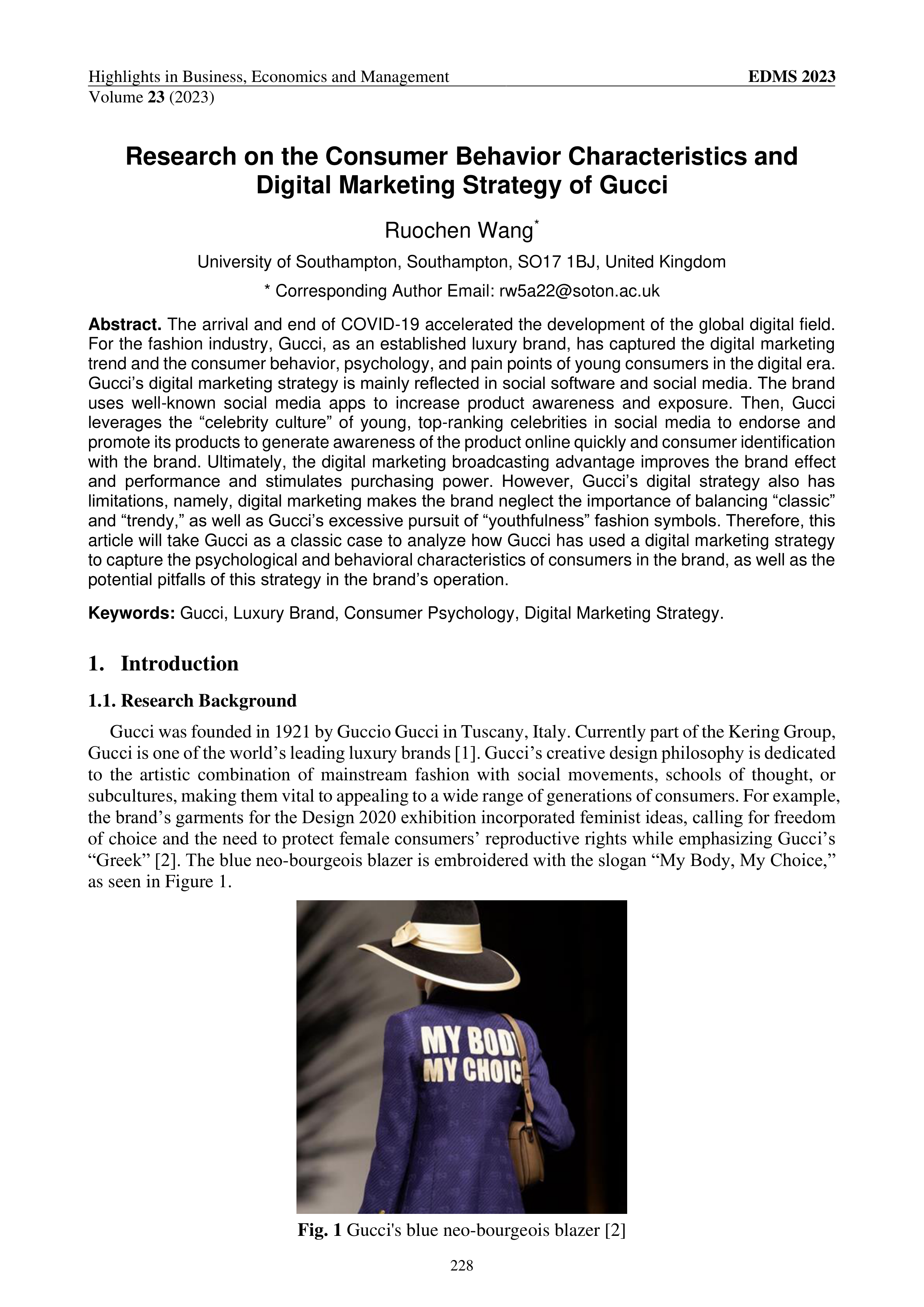
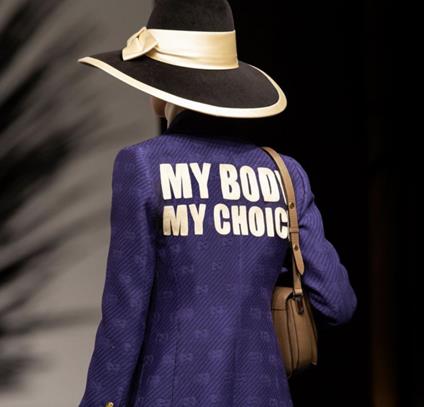
“Greek” [2]. The blue neo-bourgeois blazer is embroidered with the slogan “My Body, My Choice,”
as seen in Figure 1.
Fig. 1
Gucci's blue neo-bourgeois blazer [2]
Highlights in Business, Economics and Management
EDMS 2023
Volume
23
(2023)
229
1.2.
Literature Review
According to the Kering Group’s global revenues by brand for the period 2020, Gucci’s global
revenues are 7,440.6 million euros, which far exceeds the other brands in the group and ranks as the
group’s number one in terms of sales [3]. Thus, the data suggests that consumers buy a product when
it resonates with the ideology or social issues of the brand’s target consumers. On the other hand,
Gucci has captured such consumer behavioral traits to achieve the marketing objective of increasing
market share and building a positive brand image.
However, the end of Covid-19 has led to the rapid development of global digital technology
services [4]. Gucci, an established luxury brand, has balanced digital marketing services for the
fashion industry while maintaining its unique and rarity style [5]. This strategy has enabled the brand
to become close to consumers, making communication easy and the shopping experience smooth.
Ong & King found that Gucci has adapted to the social media trend and knows how to use new media
to boost brand sales and exposure, and then also details the specific digital areas in which Gucci has
made a significant contribution [6, 7]. Schatzberg, on the other hand, found that if a brand is marketing
a product design concept irrelevant to popular culture and audience, then the brand’s sales strategy
does not drive sales growth [8]. In contrast, most scholars have centered their research on how Gucci
has used digital marketing strategies to drive sales rather than considering the impact of the audience’s
consumer psychology and behavior on the brand’s marketing strategy.
1.3.
Research Framework
Therefore, this research examines how Gucci is consumer-centric and uses digital marketing
strategies to deepen customers’ purchasing power and loyalty to the brand while capturing consumers’
psychological and behavioral characteristics.
2.
Case Description
Compared to other established luxury brands in the digital space, Gucci is arguably the leading
fashion brand in its class. Firstly, Gucci redesigned its e-commerce website 2018 with new features
covering in-store product functionality, hot product information, gift-wrapping functionality, and
complimentary shipping and return policies [7]. This digital marketing strategy considers the
characteristics of today’s consumers living in a fast age. It saves the audience’s time costs, thus
opening up new sales avenues while improving shopping convenience.
Secondly, Gucci’s approach to advertising and marketing has evolved with the times, i.e., from
the original magazine and newspaper formats to digital media communications. Kastenholz showed
that 98% of affluent consumers use the Internet daily and want a sense of authenticity in digital media
[9]. As a result, Gucci has pioneered and innovated in its display technology, bidding technology,
targeting technology, and programmatic trading technology for its digital advertising content. In this
way, the differentiation between offline and online brand viewing and the shopping experience is
narrowed.
Therefore, Gucci takes consumers’ characteristics and behavioral preferences as the core of its
digital marketing strategy to achieve a comprehensive upgrade of the brand’s digital technology to
help the brand accurately grasp the consumer profile and complete the commercial purpose of driving
sales.
3.
Analysis of the problems
3.1.
Analysis of Gucci’s Consumer Behavioural Profiling and Digital Marketing Strategy:
Gucci’s Consumers and Social Media
Pinault, CEO of Kering Group, suggests that Generation Y (Born from 1976-1995) and Generation
Z (Born from 1995-2009) account for 50% of Gucci’s total sales and that they are Gucci’s target
Highlights in Business, Economics and Management
EDMS 2023
Volume
23
(2023)
230
consumer segments [10]. Thus, this data suggests that Gucci needs to focus on these two generations
of consumers when developing its marketing strategy program.
Smith found that both Generation Y and Generation Z were born in an era of digitalization and
have grown up with technology [11]. This external environment has led to the gradual penetration of
the “digital life” model into all areas of society and has influenced the innovation and development
of industries. For example, it refers to the all-encompassing social media, efficient communication,
omnichannel shopping, and diverse e-commerce platforms [12].
For Gucci, contemporary entertainment celebrities are one of the mainstays of the fashion and
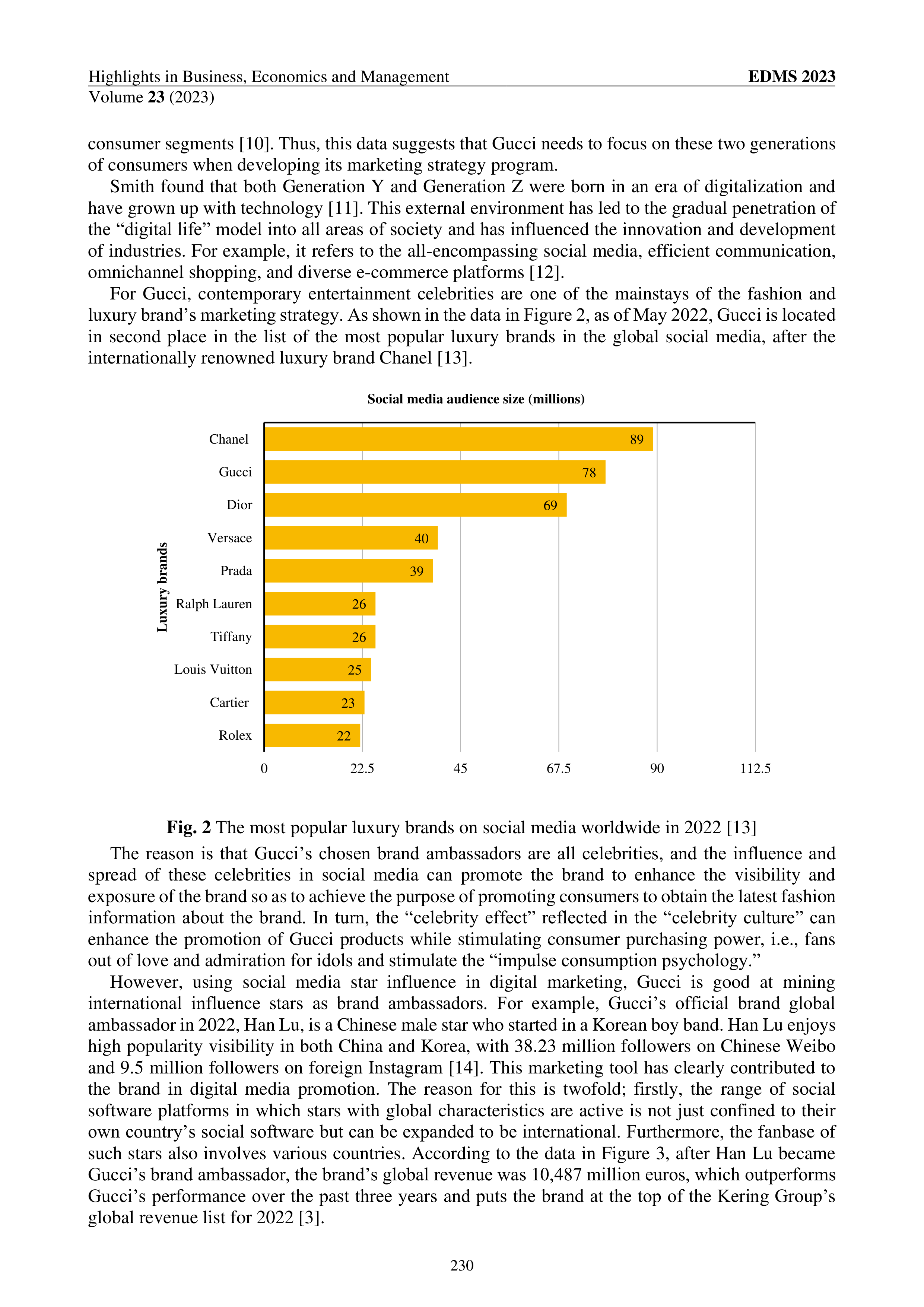
luxury brand’s marketing strategy. As shown in the data in Figure 2, as of May 2022, Gucci is located
in second place in the list of the most popular luxury brands in the global social media, after the
internationally renowned luxury brand Chanel [13].
Fig. 2
The most popular luxury brands on social media worldwide in 2022 [13]
The reason is that Gucci’s chosen brand ambassadors are all celebrities, and the influence and
spread of these celebrities in social media can promote the brand to enhance the visibility and
exposure of the brand so as to achieve the purpose of promoting consumers to obtain the latest fashion
information about the brand. In turn, the “celebrity effect” reflected in the “celebrity culture” can
enhance the promotion of Gucci products while stimulating consumer purchasing power, i.e., fans
out of love and admiration for idols and stimulate the “impulse consumption psychology.”
However, using social media star influence in digital marketing, Gucci is good at mining
international influence stars as brand ambassadors. For example, Gucci’s official brand global
ambassador in 2022, Han Lu, is a Chinese male star who started in a Korean boy band. Han Lu enjoys
high popularity visibility in both China and Korea, with 38.23 million followers on Chinese Weibo
and 9.5 million followers on foreign Instagram [14]. This marketing tool has clearly contributed to
the brand in digital media promotion. The reason for this is twofold; firstly, the range of social
software platforms in which stars with global characteristics are active is not just confined to their
own country’s social software but can be expanded to be international. Furthermore, the fanbase of
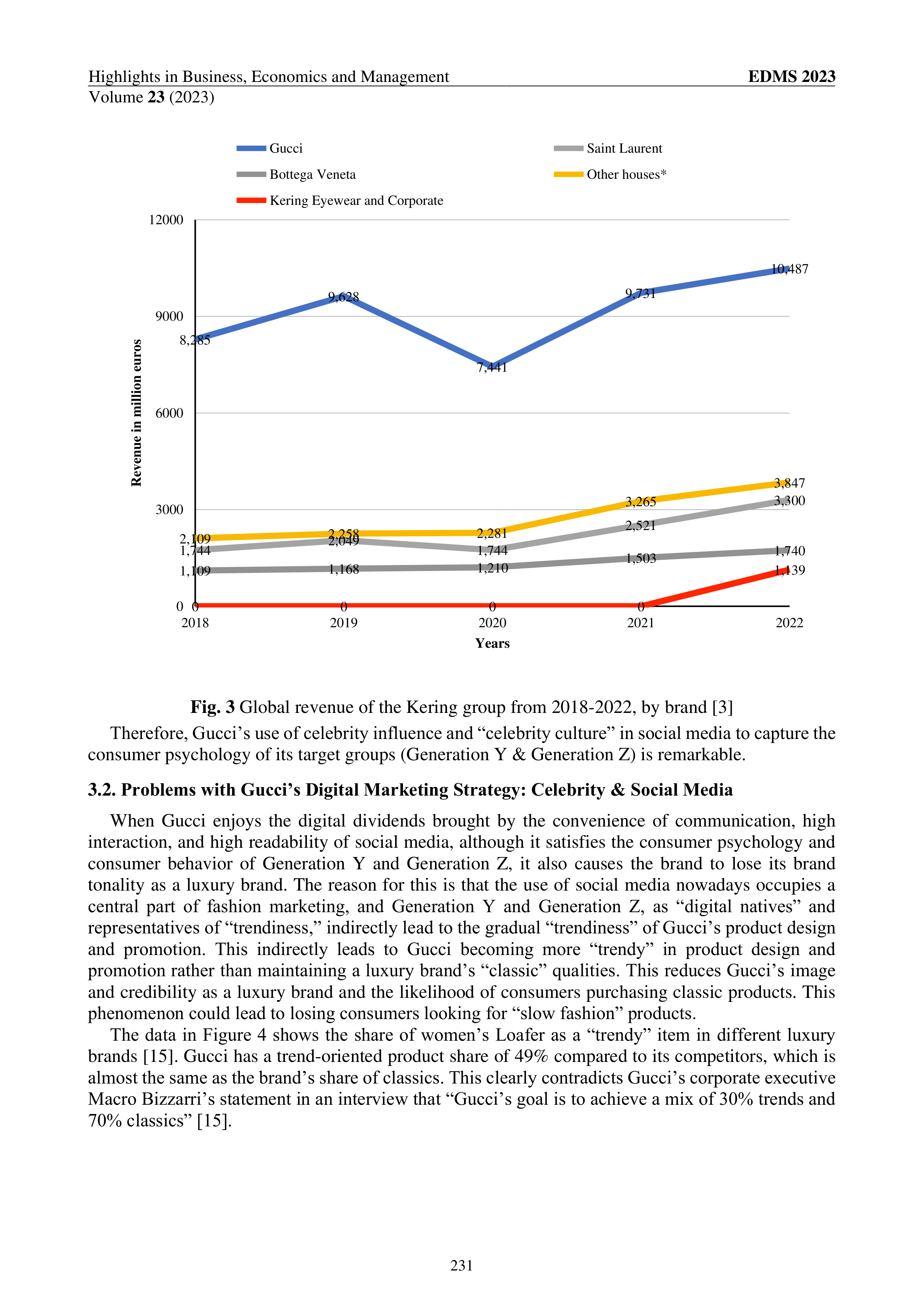
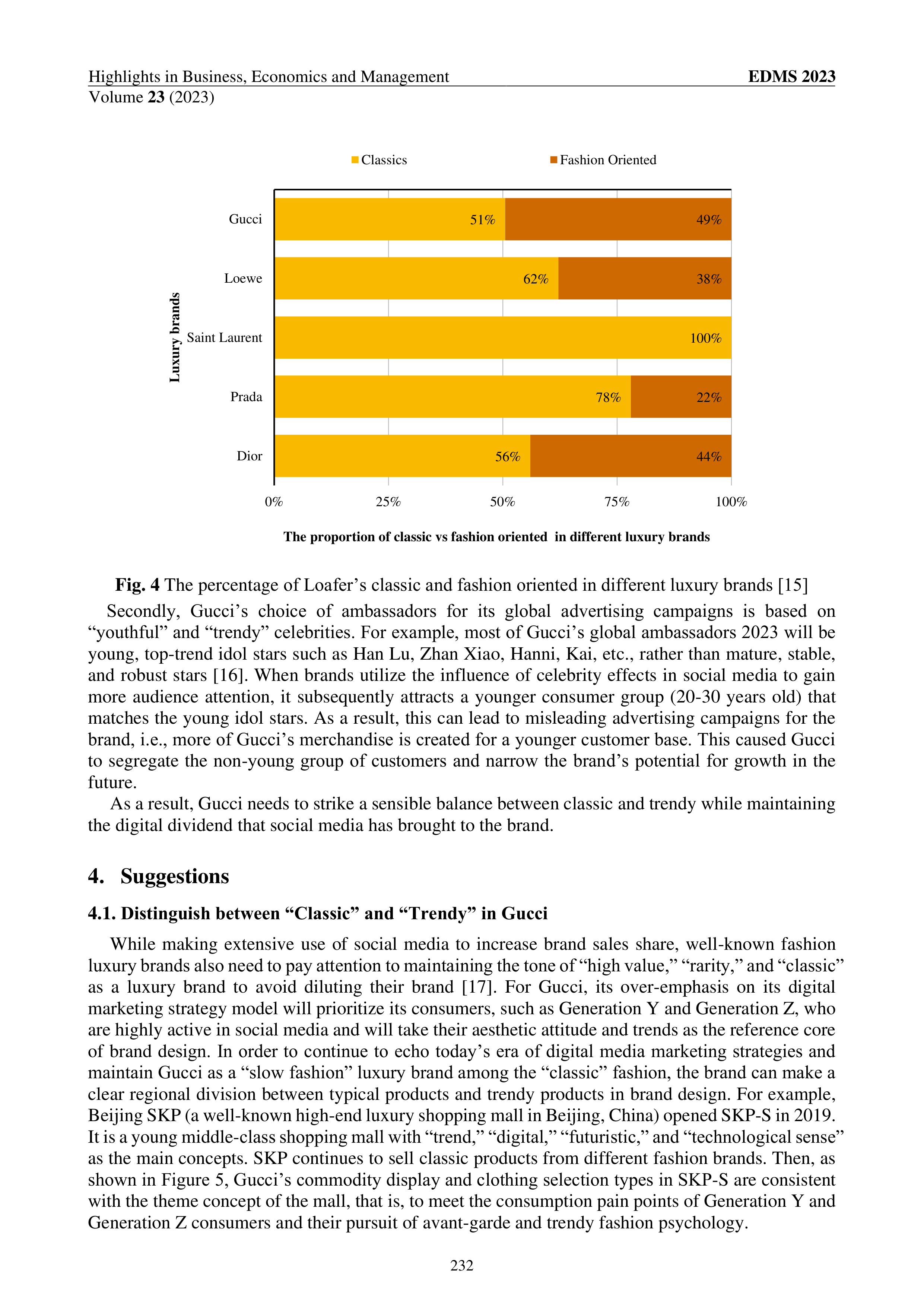
such stars also involves various countries. According to the data in Figure 3, after Han Lu became
Gucci’s brand ambassador, the brand’s global revenue was 10,487 million euros, which outperforms
Gucci’s performance over the past three years and puts the brand at the top of the Kering Group’s
global revenue list for 2022 [3].
89
78
69
40
39
26
26
25
23
22
0
22.5
45
67.5
90
112.5
Chanel
Gucci
Dior
Versace
Prada
Ralph Lauren
Tiffany
Louis Vuitton
Cartier
Rolex
Social media audience size (millions)
Luxury brands
Highlights in Business, Economics and Management
EDMS 2023
Volume
23
(2023)
231
Fig. 3
Global revenue of the Kering group from 2018-2022, by brand [3]
Therefore, Gucci’s use of celebrity influence and “celebrity culture” in social media to capture the
consumer psychology of its target groups (Generation Y & Generation Z) is remarkable.
3.2.
Problems with Gucci’s Digital Marketing Strategy: Celebrity & Social Media
When Gucci enjoys the digital dividends brought by the convenience of communication, high
interaction, and high readability of social media, although it satisfies the consumer psychology and
consumer behavior of Generation Y and Generation Z, it also causes the brand to lose its brand
tonality as a luxury brand. The reason for this is that the use of social media nowadays occupies a
central part of fashion marketing, and Generation Y and Generation Z, as “digital natives” and
representatives of “trendiness,” indirectly lead to the gradual “trendiness” of Gucci’s product design
and promotion. This indirectly leads to Gucci becoming more “trendy” in product design and
promotion rather than maintaining a luxury brand’s “classic” qualities. This reduces Gucci’s image
and credibility as a luxury brand and the likelihood of consumers purchasing classic products. This
phenomenon could lead to losing consumers looking for “slow fashion” products.
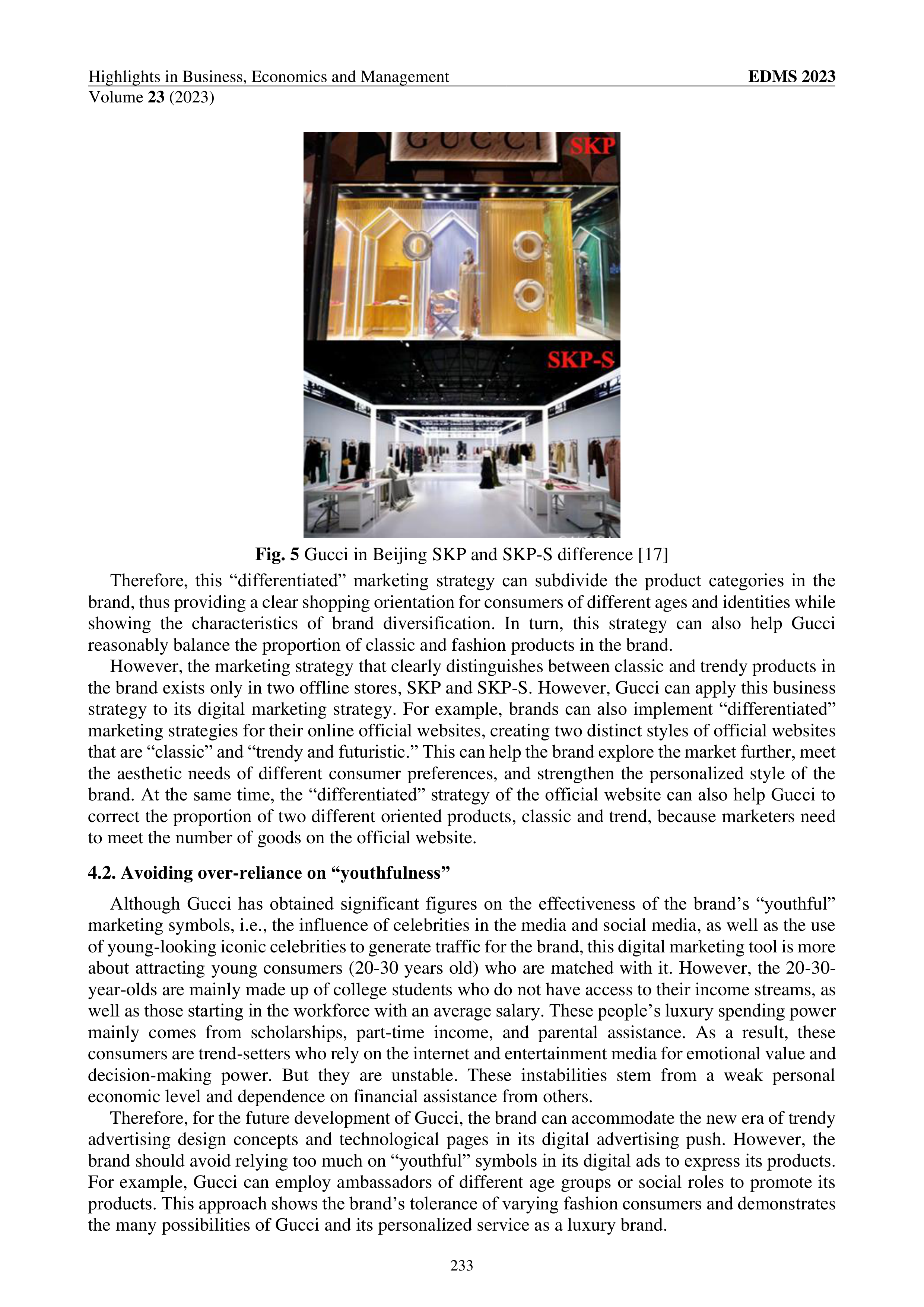
The data in Figure 4 shows the share of women’s Loafer as a “trendy” item in different luxury
brands [15]. Gucci has a trend-oriented product share of 49% compared to its competitors, which is
almost the same as the brand’s share of classics. This clearly contradicts Gucci’s corporate executive
Macro Bizzarri’s statement in an interview that “Gucci’s goal is to achieve a mix of 30% trends and
70% classics” [15].
8,285
9,628
7,441
9,731
10,487
1,744
2,049
1,744
2,521
3,300
1,109
1,168
1,210
1,503
1,740
2,109
2,258
2,281
3,265
3,847
0
0
0
0
1,139
0
3000
6000
9000
12000
2018
2019
2020
2021
2022
Revenue in million euros
Years
Gucci
Saint Laurent
Bottega Veneta
Other houses*
Kering Eyewear and Corporate
Highlights in Business, Economics and Management
EDMS 2023
Volume
23
(2023)
232
Fig. 4
The percentage of Loafer’s classic and fashion oriented in different luxury brands [15]
Secondly, Gucci’s choice of ambassadors for its global advertising campaigns is based on
“youthful” and “trendy” celebrities. For example, most of Gucci’s global ambassadors 2023 will be
young, top-trend idol stars such as Han Lu, Zhan Xiao, Hanni, Kai, etc., rather than mature, stable,
and robust stars [16]. When brands utilize the influence of celebrity effects in social media to gain
more audience attention, it subsequently attracts a younger consumer group (20-30 years old) that
matches the young idol stars. As a result, this can lead to misleading advertising campaigns for the
brand, i.e., more of Gucci’s merchandise is created for a younger customer base. This caused Gucci
to segregate the non-young group of customers and narrow the brand’s potential for growth in the
future.
As a result, Gucci needs to strike a sensible balance between classic and trendy while maintaining
the digital dividend that social media has brought to the brand.
4.
Suggestions
4.1.
Distinguish between “Classic” and “Trendy” in Gucci
While making extensive use of social media to increase brand sales share, well-known fashion
luxury brands also need to pay attention to maintaining the tone of “high value,” “rarity,” and “classic”
as a luxury brand to avoid diluting their brand [17]. For Gucci, its over-emphasis on its digital
marketing strategy model will prioritize its consumers, such as Generation Y and Generation Z, who
are highly active in social media and will take their aesthetic attitude and trends as the reference core
of brand design. In order to continue to echo today’s era of digital media marketing strategies and
maintain Gucci as a “slow fashion” luxury brand among the “classic” fashion, the brand can make a
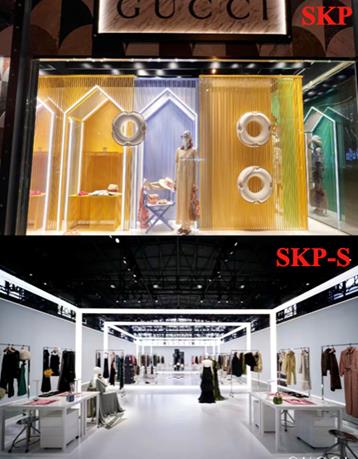
clear regional division between typical products and trendy products in brand design. For example,
Beijing SKP (a well-known high-end luxury shopping mall in Beijing, China) opened SKP-S in 2019.
It is a young middle-class shopping mall with “trend,” “digital,” “futuristic,” and “technological sense”
as the main concepts. SKP continues to sell classic products from different fashion brands. Then, as
shown in Figure 5, Gucci’s commodity display and clothing selection types in SKP-S are consistent
with the theme concept of the mall, that is, to meet the consumption pain points of Generation Y and
Generation Z consumers and their pursuit of avant-garde and trendy fashion psychology.
51%
62%
100%
78%
56%
49%
38%
22%
44%
0%
25%
50%
75%
100%
Gucci
Loewe
Saint Laurent
Prada
Dior
The proportion of classic vs fashion oriented in different luxury brands
Luxury brands
Classics
Fashion Oriented
Highlights in Business, Economics and Management
EDMS 2023
Volume
23
(2023)
233
Fig. 5
Gucci in Beijing SKP and SKP-S difference [17]
Therefore, this “differentiated” marketing strategy can subdivide the product categories in the
brand, thus providing a clear shopping orientation for consumers of different ages and identities while
showing the characteristics of brand diversification. In turn, this strategy can also help Gucci
reasonably balance the proportion of classic and fashion products in the brand.
However, the marketing strategy that clearly distinguishes between classic and trendy products in
the brand exists only in two offline stores, SKP and SKP-S. However, Gucci can apply this business
strategy to its digital marketing strategy. For example, brands can also implement “differentiated”
marketing strategies for their online official websites, creating two distinct styles of official websites
that are “classic” and “trendy and futuristic.” This can help the brand explore the market further, meet
the aesthetic needs of different consumer preferences, and strengthen the personalized style of the
brand. At the same time, the “differentiated” strategy of the official website can also help Gucci to
correct the proportion of two different oriented products, classic and trend, because marketers need
to meet the number of goods on the official website.
4.2.
Avoiding over-reliance on “youthfulness”
Although Gucci has obtained significant figures on the effectiveness of the brand’s “youthful”
marketing symbols, i.e., the influence of celebrities in the media and social media, as well as the use
of young-looking iconic celebrities to generate traffic for the brand, this digital marketing tool is more
about attracting young consumers (20-30 years old) who are matched with it. However, the 20-30-
year-olds are mainly made up of college students who do not have access to their income streams, as
well as those starting in the workforce with an average salary. These people’s luxury spending power
mainly comes from scholarships, part-time income, and parental assistance. As a result, these
consumers are trend-setters who rely on the internet and entertainment media for emotional value and
decision-making power. But they are unstable. These instabilities stem from a weak personal
economic level and dependence on financial assistance from others.
Therefore, for the future development of Gucci, the brand can accommodate the new era of trendy
advertising design concepts and technological pages in its digital advertising push. However, the
brand should avoid relying too much on “youthful” symbols in its digital ads to express its products.
For example, Gucci can employ ambassadors of different age groups or social roles to promote its
products. This approach shows the brand’s tolerance of varying fashion consumers and demonstrates
the many possibilities of Gucci and its personalized service as a luxury brand.
Highlights in Business, Economics and Management
EDMS 2023
Volume
23
(2023)
234
5.
Conclusion
5.1.
Key Findings
In conclusion, this thesis analyses the behavioural characteristics of Gucci’s target consumers and
their consumption psychology, as well as how the brand has mastered the characteristics of consumers
and applied them to its digital marketing strategy. It is found that Gucci nowadays tends to be “young”
and “trendy” in product design and marketing promotion mode. This is due to the fact that 50 percent
of Gucci’s customers are Generation Y and Generation Z. These two generations of consumers are
characterised by their youth, catching up with fashion and culture, and are at the forefront of the
digital age. So, Gucci in order to narrow the distance from the “Young Tech Savvy” consumers, began
to research and design products to meet the aesthetic standards of young people, that is, to put down
the high-end atmosphere of the “classic” image, but from punk, street, hip-hop and other young people
are keen on avant-garde trend concepts to draw design inspiration. In order to bring these fashion
elements to the attention of more young consumers, the brand makes extensive use of social software
(Weibo, Instagram) to promote its products, thereby increasing the brand’s exposure and popularity.
Then, Gucci is good at using the stars in digital media as the fashion influencers of the brand, through
the “star effect” and “fan effect” to increase the young audience’s brand identity to achieve the
marketing purpose of improving performance and triggering the audience’s “impulse consumption”
psychology.
5.2.
Research Significance
When Gucci obtains the dividend of the “young” consumption boom brought about by digital
marketing, it should also pay attention to avoid making the brand too “young.” Gucci needs to conduct
a deep analysis and mining of consumers of all ages rather than only focusing on a specific consumer
group. To strike a reasonable balance between classic and trend, to avoid the risk of Gucci losing
loyal customers of other age groups, and to maintain the tone of a luxury brand.
5.3.
Limitation and Future Study
However, this essay also has some limitations; the data used are secondary rather than primary.
This creates a bottleneck in the analysis of Gucci’s consumer characteristics. Therefore, the reliability
and accuracy of analyzing a specific group’s behavioral and psychological characteristics can be
increased through questionnaires, interviews, or ethnography in future studies. Finally, to achieve the
purpose of a comprehensive analysis of consumers in the brand and their digital marketing strategy.
References
[1]
Zhou Bichao. GUCCI Marketing Analysis -- Based on the Chinese market. Time-honored Brand
Marketing, 2022(17): 30-32.
[2]
Gucci took a stand in support of sexual & reproductive rights during its Cruise 2020 show, 2019-5-19,
2023-8-18,
https://www.vogue.fr/fashion/article/gucci-took-a-stand-in-support-of-sexual-and-
reproductive-rights-during-its-cruise-2020-show
[3]
Global revenue of the Kering Group from 2012 to 2022, by brand(in million euros). 2023-2-24, 2023-8-
28, https://www.statista.com/statistics/267476/global-revenue-of-the-kering-group-by-brand/
[4]
Huang Xinya. Research on transformation strategy of traditional luxury brands in fashion industry based
on IMC theory. Nanjing art institute, 2021. DOI: 10.27250 /, dc nki. Gnjyc. 2020.000079.
[5]
Tang Zixuan. Study on the image reconstruction of luxury brands and its Enlightenment in the digital Age.
East China normal university, 2021. DOI: 10.27149 /, dc nki. Ghdsu. 2020.002002.
[6]
Ye Qingqing. Research on Transnational Marketing Strategies of luxury brands under new media
environment -- Taking Gucci brand's marketing strategy in China as an example. Modernization, 2016
(25) : 76-78. The DOI: 10.14013 / j.carol carroll nki SCXDH. 2016.25.048.
Highlights in Business, Economics and Management
EDMS 2023
Volume
23
(2023)
235
[7]
Cheng Mingyue. On the marketing strategy of luxury clothing brand in the new economic era. Hunan
Normal University,2013.
[8]
Liu Jiayu. Metaverse and Brand: A Study of Luxury Brand Digital Marketing Strategy - Taking Gucci as
An Example. 2022 4th International Conference on Economic Management and Cultural Industry
(ICEMCI 2022). Volume 668, 2022. DOI: 10.2991/978-94-6463-098-5_214
[9]
Chen Yuxin Chen; Ma Yiming; Xu Jingtong. Research on the Marketing Strategy of the Fashion Luxury
Industry in the Post-epidemic Era——Taking GUCCI as a Case. Conference | [P] 2022 5th International
Conference on Financial Management, Education and Social Science. Volume 51, 2022
[10]
Tang Xinling, Chen Jia, Ma Haijing. A case study on experiential marketing of Luxury Brands and its
Impact: A case study of Gucci. Silk, 2011,58(10):52-59.
[11]
Yi Xin. On the transformation strategy of traditional luxury brands under the "millennial generation" --
taking GUCCI as an example. China business theory, 2019 (8) : 3-6. DOI: 10.19699 / j.carol carroll nki
issn2096-0298.2019.08.003.
[12]
China’s Gen Z are coming of age: Here’s what marketers need to know, 2020-11-25, 2023-8-28,
https://www.mckinsey.com/cn/our-insights/our-insights/chinas-gen-z-are-coming-of-age-heres-what-
marketers-need-to-know
[13]
Most popular luxury brands on social media worldwide as of May 2022, by social media audience size.
2023-1-19, 2023-8-28, https://www.statista.com/statistics/1256796/luxury-brands-with-most-followers-
on-social-media/
[14]
Yu Ming. Gucci: Keep the original heart. Modern Corporate Culture (First 10 days),2017(05):94-95.
[15]
Recovery of European luxury brands. Board of Directors,2017(08):11.
[16]
He Jing. Luxury brand Extension evaluation: The impact of fit and owner relationship. Zhejiang
University,2013.
[17]
Gabriele Fraccaro. Research and Suggestions on the challenges of Gucci brand equity in the current stage
of the Chinese market. Guangdong foreign studies university, 2021. DOI: 10.27032 /, dc nki. Ggdwu.
2020.001205.