
JURNAL LOCUS: Penelitian & Pengabdian
Volume 5 No. 5 Mei 2026
E-ISSN 2829-7334| P-ISSN 2829-5439
Hompage: https://locus.rivierapublishing.id/index.php/jl
3712
Analysis of The Perspective of Uses and Gratification Theory and The Aida
Model in Developing Spotify's Marketing Strategy
Amanda Ibel Anzela
Universitas Indonesia, Indonesia
Email: amanda.ibel@ui.ac.id
Keywords:
Abstract
AIDA; digital marketing
communications; Spotify; music
streaming; Uses and
Gratifications.
The rapid development of digital music streaming platforms has
fundamentally changed music consumption patterns, with Spotify
emerging as the dominant player in Indonesia. This study aims to
analyze Spotify's marketing strategy through the integrated lens of
Uses and Gratifications Theory (UGT) and the AIDA (Attention,
Interest, Desire, Action) model. A descriptive qualitative approach
was employed, combining literature review and digital observation
of Spotify's features, campaigns, and social media activities. The
findings reveal that Spotify successfully meets users' needs for
entertainment, personal identity, emotional escape, and ubiquity
through personalized features such as Discover Weekly, mood-based
playlists, and Spotify Wrapped. Simultaneously, Spotify implements
an effective AIDA-based marketing strategy: capturing attention
through viral campaigns like Wrapped and creative billboards,
building interest via personalized content, creating desire by
differentiating free and premium experiences, and encouraging
action through free trials and affordable plans. However, the study
also identifies weaknesses, including algorithmic filter bubbles that
limit musical exploration and a lack of deep social interaction
features compared to platforms like TikTok. The study concludes that
the integration of UGT and AIDA provides a comprehensive
framework for understanding Spotify's success in building user
engagement and loyalty. Practically, the findings offer insights for
digital platform managers to balance personalization with content
diversity and community-building features.
INTRODUCTION
The development of digital technology has transformed various aspects of people's lives,
including how they access and enjoy entertainment (Hamad & Jia, 2022; Islam & Bhuiyan,
2022; Sutrisno, 2023; Wanof, 2023). One of the most visible changes has occurred in the music
industry. While previously people listened to music through physical media such as cassettes,
CDs, radio, or downloaded files, now more people use digital music streaming services, which
can be accessed conveniently via the internet.(Özgün & Treske, 2021) The presence of music
streaming platforms makes it easy for users to listen to songs anytime and anywhere via
smartphones or other digital devices.(Webster, 2023)This change shows that digitalization has
created faster, more flexible, and technology-based music consumption patterns.
3713
Music streaming services are now an important part of the daily lives of modern society,
especially the younger generation who have high levels of internet and digital media
usage.(Webster, 2023). Music streaming platforms not only provide access to millions of
songs, but also offer various personalization features that make the listening experience more
comfortable and tailored to user preferences (AA Wulandari et al., 2025)The presence of these
digital platforms also demonstrates a shift in people's behaviour, who are increasingly relying
on digital media to meet their entertainment and information needs (Alzubi, 2023; Mayer et al.,
2025; Owilla et al., 2023; Wanof, 2023).
Spotify is one of the fastest-growing music streaming platforms dominating both the
global and Indonesian markets. Spotify is a Swedish digital audio streaming service founded
by Daniel Ek and Martin Lorentzon in 2006. It offers music streaming, podcasts, and various
other audio content, accessible through both free and paid (Premium) platforms. Since its
inception, Spotify has become one of the largest music streaming platforms in the world, with
millions of active users across various countries. Spotify's dominance is increasingly evident
in global and national music streaming market data. Based on MIDiA Research data cited
byGoodStats
(2024). In an article titled "Spotify Becomes the Music Streaming App of Choice
for Indonesians," Spotify successfully maintained its dominance in the third quarter of 2023,
with a global market share of 31.7%. This figure indicates that Spotify is the music streaming
platform with the largest number of users compared to other music streaming services.
In Indonesia, Spotify is also the most popular music streaming app. According to a
Populix survey published in a GoodStats article (2024), out of 2,086 respondents, 1,237 chose
Spotify as their favorite music streaming app. Meanwhile, YouTube Music came in second
with 515 respondents, followed by JOOX with 147 respondents, Apple Music with 43
respondents, and other music streaming apps with 144 respondents. The data shows that more
than 50% of respondents use Spotify as their primary platform for listening to digital music.
The high usage of Spotify in Indonesia demonstrates that the music streaming platform
has become part of people's digital culture. Ease of access, variety of music content, and
advancements in internet technology are factors driving the growth in music streaming service
usage.(Salwa et al., 2024). Furthermore, people now prefer digital platforms because they're
considered more convenient than traditional music media. Users no longer need to purchase
physical albums or manually download songs because all music content can be accessed
through a single app.
The music streaming industry in Indonesia is expected to continue growing. A GoodStats
article (2024) stated that the Indonesian music streaming market is projected to reach US$190
million by 2024. This growth is driven by changes in consumer behavior, with people
increasingly turning to digital platforms for accessing music and entertainment. In addition to
providing convenience for users, the development of music streaming platforms also opens up
new opportunities for the music industry, particularly for independent musicians, to promote
their work to a wider audience.
Through music streaming platforms and social media, musicians can now distribute their
work without relying entirely on physical distribution or major music labels. The presence of
digital platforms allows local musicians to reach listeners from various regions and even
internationally.(Webster, 2023)This situation shows that the development of digital technology
3714
not only influences audience behavior but also changes the distribution and promotion systems
in the music industry.
In the context of digital communication and marketing, Spotify's development is
interesting to study because this platform functions not only as an entertainment medium but
also as part of a modern digital communication strategy. Spotify utilizes various
personalization features, social media campaigns, and algorithmic technology to enhance the
user experience and maintain audience loyalty.(Annabell & Rasmussen, 2024)Spotify's various
digital campaigns, such as Spotify Wrapped, personalized playlists, and music
recommendation features, are part of a communications strategy that has captured the attention
of a wide audience.
The novelty of this research is threefold. First, it integrates UGT (which explains user
motivations) and AIDA (which explains the sequential marketing communication process) into
a single analytical framework for Spotify. Second, it provides empirical observations from the
Indonesian market, which has unique digital culture characteristics. Third, it not only highlights
Spotify's successes but also critically identifies weaknesses, such as filter bubbles and limited
social interaction, offering a balanced assessment.
This phenomenon demonstrates that the development of music streaming platforms is
inextricably linked to changes in communication and media consumption patterns in the digital
era. Audiences now have greater freedom in choosing the media and content they consume. At
the same time, digital platforms continue to develop strategies to maintain user attention and
engagement amidst increasingly fierce competition in the digital industry. Based on this
phenomenon, this study examines Spotify's marketing strategy through the perspective of the
Uses and Gratifications theory and the AIDA model. This research is crucial to understanding
how Spotify leverages digital media developments and audience behavior to establish its
position as the dominant music streaming platform in Indonesia and globally.
RESEARCH METHOD
This research used a qualitative approach with a case study research design to analyze
Spotify's marketing strategy based on the perspective of Uses and Gratifications (UGT) theory
and the AIDA Model. The case study design was chosen to gain an in-depth understanding of
Spotify's digital marketing communication strategy and user engagement. The data sources in
this study consist of primary and secondary data. Primary data was obtained through digital
observation of Spotify's features, campaigns, and social media activities on platforms such as
TikTok, Instagram, and YouTube. Meanwhile, secondary data was obtained from books,
scientific journals, previous research, and various academic references related to Uses and
Gratifications Theory, the AIDA Model, and digital marketing.
Data collection techniques were conducted through observation and documentation.
Researchers observed promotional content, personalization features, and audience interaction
patterns on the Spotify platform, then collected articles, campaign materials, and supporting
literature as research documentation. Data analysis used the Miles and Huberman interactive
analysis model, which includes:
a.
Data Reduction
3715
This is done by selecting and focusing on relevant data regarding Spotify's marketing
strategy, such as personalization features, social media campaigns, and Spotify Premium
promotions related to the Uses and Gratifications concept and the AIDA stages.
b.
Data Presentation
This is done by grouping findings based on theoretical indicators, such as entertainment
gratification, personal identity, attention, interest, desire, and action, so that the
relationship between Spotify's strategy and theory can be analyzed systematically.
c.
Conclusion Drawing
This is done by interpreting how Spotify's communication strategy is able to meet audience
needs while encouraging decisions to use premium services.
To maintain data validity, this study uses source triangulation by comparing the results
of observations of Spotify features and campaigns with academic references, scientific journals
and previous research discussing Uses and Gratifications Theory, AIDA Model, and digital
marketing strategies.
RESULTS AND DISCUSSION
Implementation of Uses and Gratifications on Spotify
Spotify used a user-cantered system of personalization and flexibility in media
consumption. In U&G theory, audiences are viewed as active individuals who use media to
fulfill specific needs, such as entertainment, self-identity, social interaction, and emotional
escape. Spotify represents this concept through algorithm-based features designed to
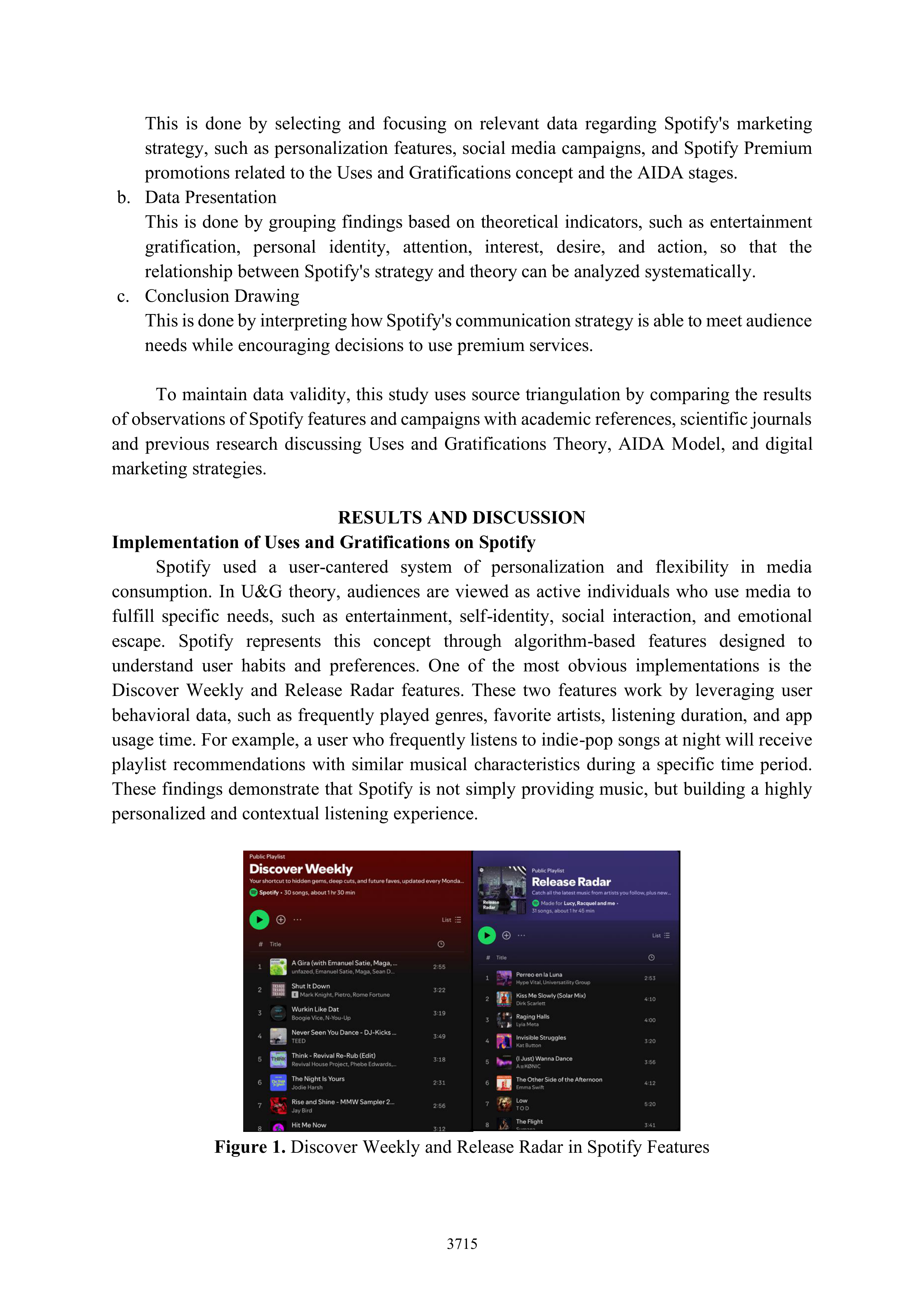
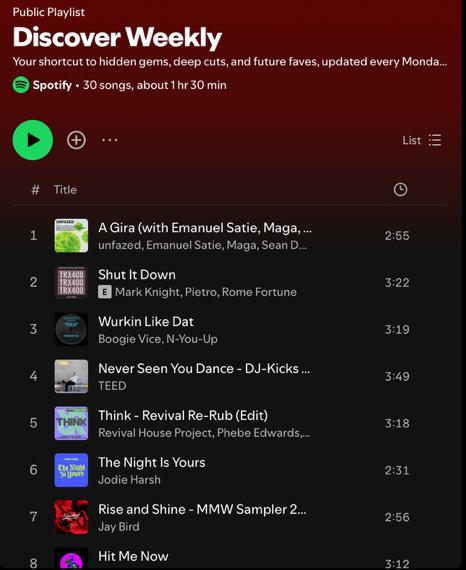
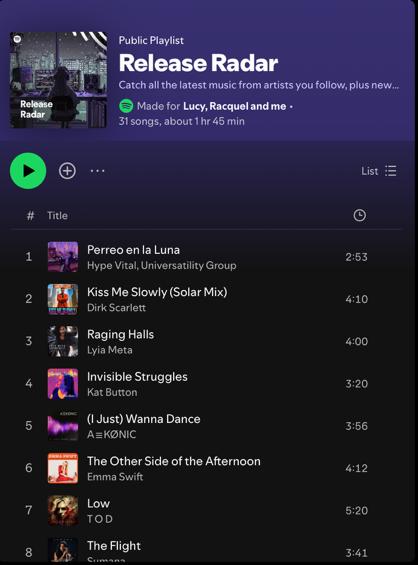
understand user habits and preferences. One of the most obvious implementations is the
Discover Weekly and Release Radar features. These two features work by leveraging user
behavioral data, such as frequently played genres, favorite artists, listening duration, and app
usage time. For example, a user who frequently listens to indie-pop songs at night will receive
playlist recommendations with similar musical characteristics during a specific time period.
These findings demonstrate that Spotify is not simply providing music, but building a highly
personalized and contextual listening experience.
Figure 1.
Discover Weekly and Release Radar in Spotify Features
3716
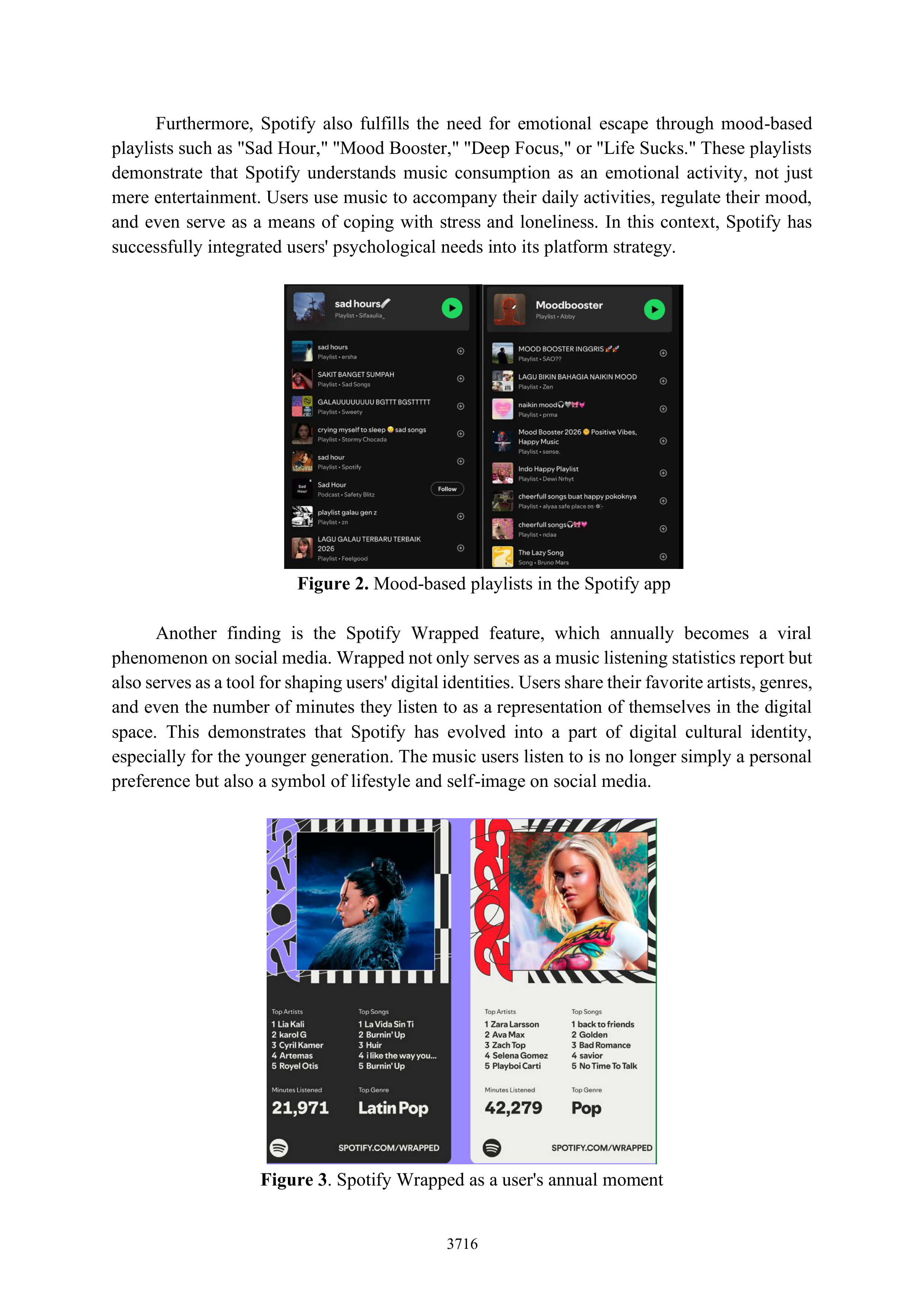
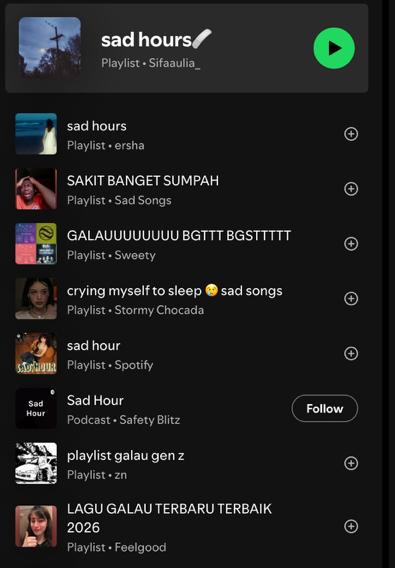
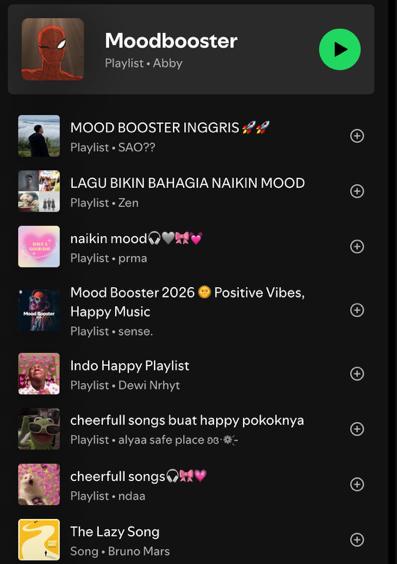
Furthermore, Spotify also fulfills the need for emotional escape through mood-based
playlists such as "Sad Hour," "Mood Booster," "Deep Focus," or "Life Sucks." These playlists
demonstrate that Spotify understands music consumption as an emotional activity, not just
mere entertainment. Users use music to accompany their daily activities, regulate their mood,
and even serve as a means of coping with stress and loneliness. In this context, Spotify has
successfully integrated users' psychological needs into its platform strategy.
Figure 2.
Mood-based playlists in the Spotify app
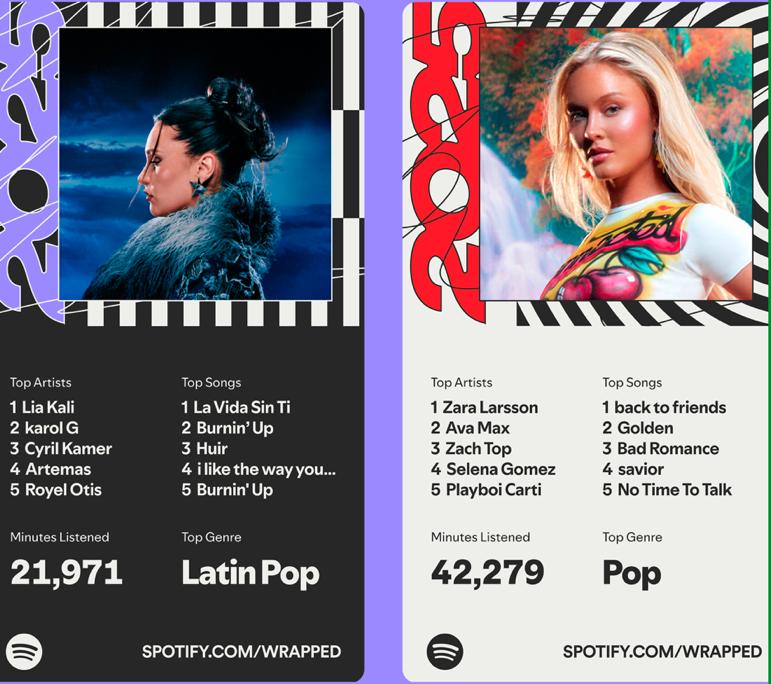
Another finding is the Spotify Wrapped feature, which annually becomes a viral
phenomenon on social media. Wrapped not only serves as a music listening statistics report but
also serves as a tool for shaping users' digital identities. Users share their favorite artists, genres,
and even the number of minutes they listen to as a representation of themselves in the digital
space. This demonstrates that Spotify has evolved into a part of digital cultural identity,
especially for the younger generation. The music users listen to is no longer simply a personal
preference but also a symbol of lifestyle and self-image on social media.
Figure 3
. Spotify Wrapped as a user's annual moment

3717
Spotify also fulfills the need for ubiquity, or unlimited accessibility. Users can listen to
music on multiple devices, anytime, and anywhere. The offline listening feature on Premium
accounts reinforces this need, as users can still access music without an internet connection. In
practice, Spotify has become an integral part of users' daily activities, from studying and
working to exercising and even traveling. Thus, Spotify has successfully positioned itself not
just as a music streaming app, but as part of users' digital routines and habits.
Implementation of the AIDA Model in Spotify's Marketing Strategy
Spotify systematically applies the AIDA (Attention, Interest, Desire, Action) model in
its marketing communications strategy. Each stage is designed to guide users from awareness
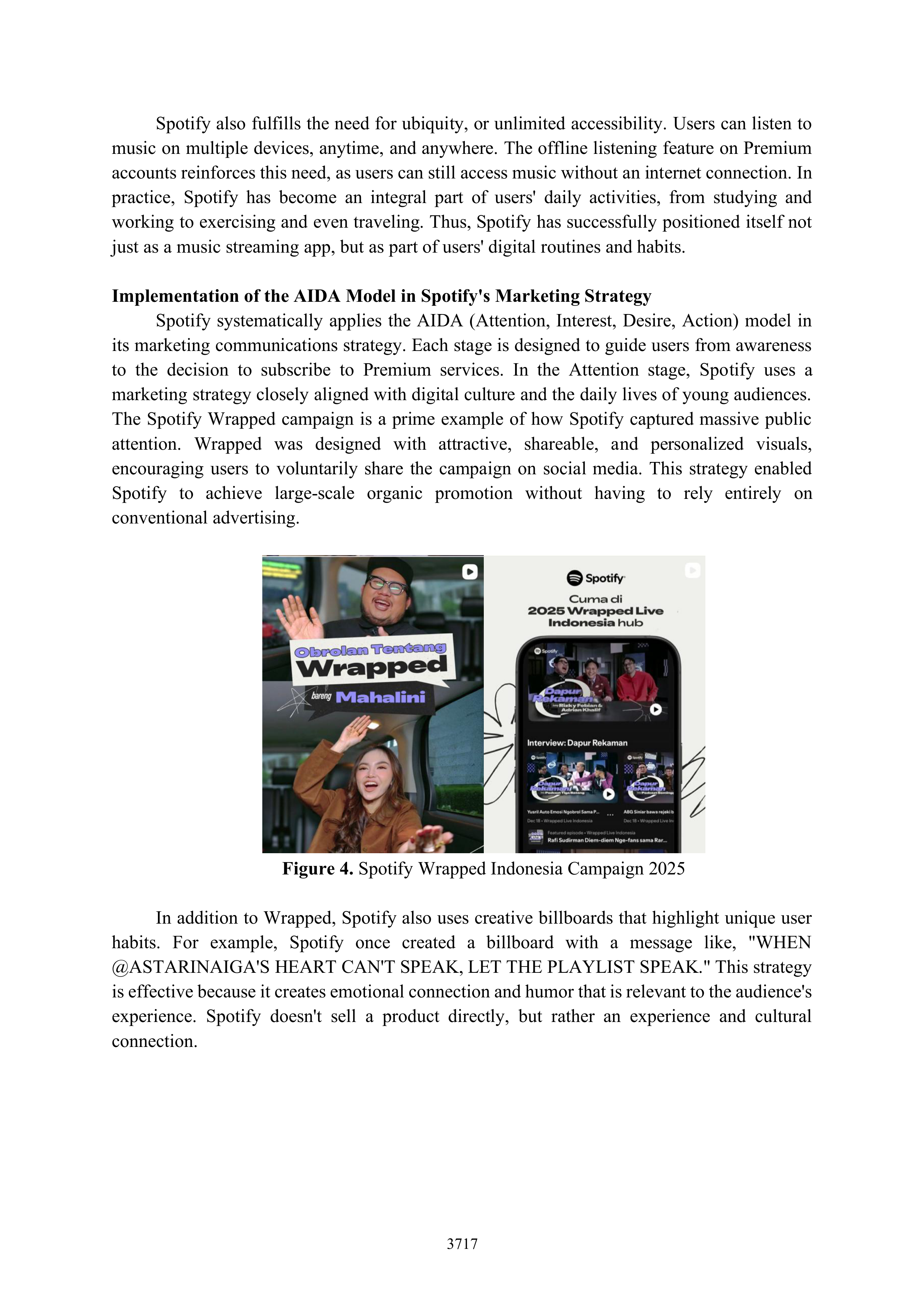
to the decision to subscribe to Premium services. In the Attention stage, Spotify uses a
marketing strategy closely aligned with digital culture and the daily lives of young audiences.
The Spotify Wrapped campaign is a prime example of how Spotify captured massive public
attention. Wrapped was designed with attractive, shareable, and personalized visuals,
encouraging users to voluntarily share the campaign on social media. This strategy enabled
Spotify to achieve large-scale organic promotion without having to rely entirely on
conventional advertising.
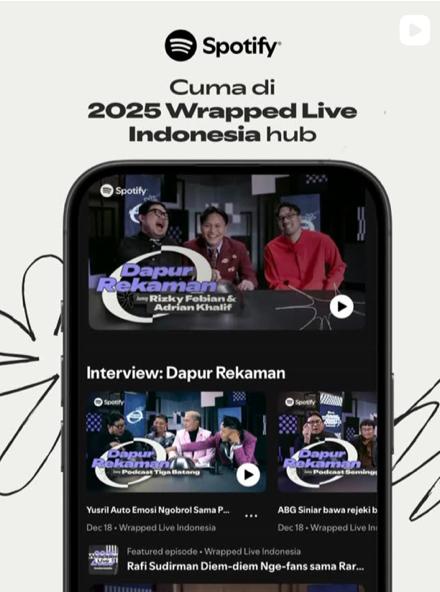
Figure 4.
Spotify Wrapped Indonesia Campaign 2025
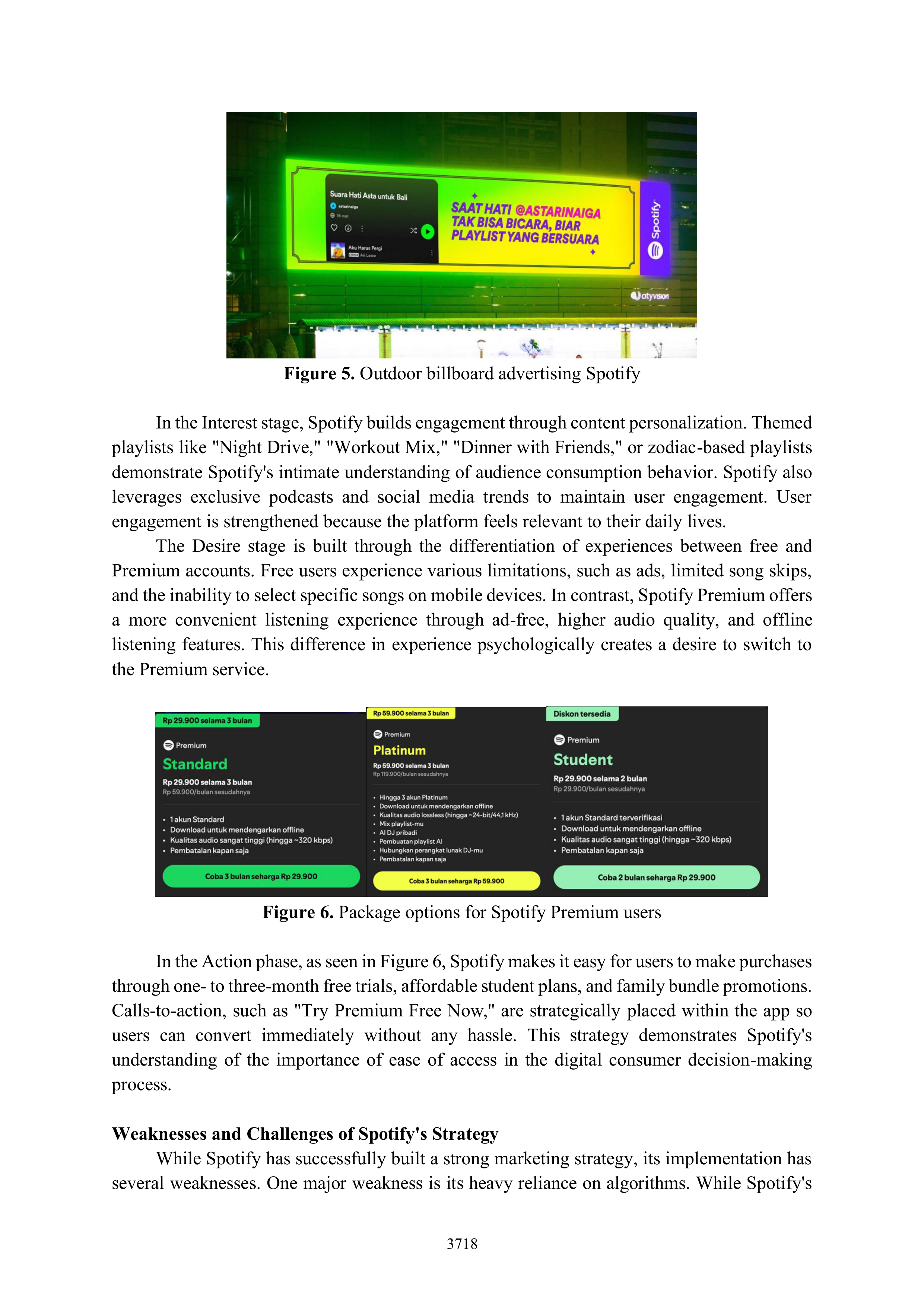
In addition to Wrapped, Spotify also uses creative billboards that highlight unique user
habits. For example, Spotify once created a billboard with a message like, "WHEN
@ASTARINAIGA'S HEART CAN'T SPEAK, LET THE PLAYLIST SPEAK." This strategy
is effective because it creates emotional connection and humor that is relevant to the audience's
experience. Spotify doesn't sell a product directly, but rather an experience and cultural
connection.
3718
Figure 5.
Outdoor billboard advertising Spotify
In the Interest stage, Spotify builds engagement through content personalization. Themed
playlists like "Night Drive," "Workout Mix," "Dinner with Friends," or zodiac-based playlists
demonstrate Spotify's intimate understanding of audience consumption behavior. Spotify also
leverages exclusive podcasts and social media trends to maintain user engagement. User
engagement is strengthened because the platform feels relevant to their daily lives.
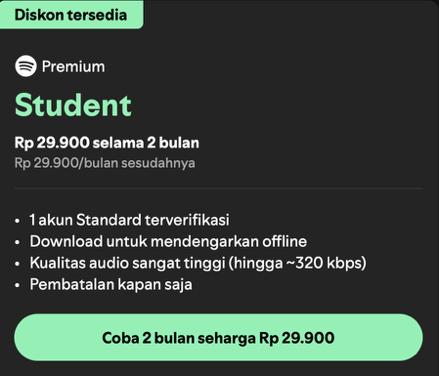
The Desire stage is built through the differentiation of experiences between free and
Premium accounts. Free users experience various limitations, such as ads, limited song skips,
and the inability to select specific songs on mobile devices. In contrast, Spotify Premium offers
a more convenient listening experience through ad-free, higher audio quality, and offline
listening features. This difference in experience psychologically creates a desire to switch to
the Premium service.
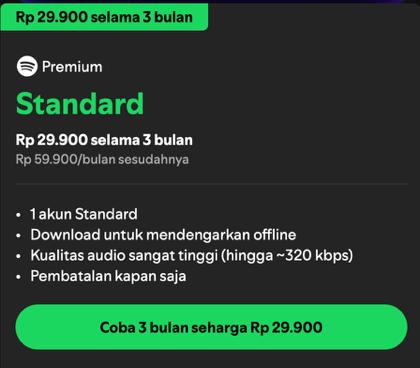
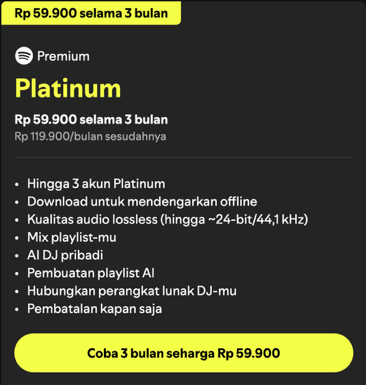
Figure 6.
Package options for Spotify Premium users
In the Action phase, as seen in Figure 6, Spotify makes it easy for users to make purchases
through one- to three-month free trials, affordable student plans, and family bundle promotions.
Calls-to-action, such as "Try Premium Free Now," are strategically placed within the app so
users can convert immediately without any hassle. This strategy demonstrates Spotify's
understanding of the importance of ease of access in the digital consumer decision-making
process.
Weaknesses and Challenges of Spotify's Strategy
While Spotify has successfully built a strong marketing strategy, its implementation has
several weaknesses. One major weakness is its heavy reliance on algorithms. While Spotify's
3719
recommendation system effectively enhances user experience, it also has the potential to create
a filter bubble. Users are continually directed to genres, artists, and music patterns similar to
their previous habits, limiting musical exploration.
For example, users who frequently listen to K-pop are more likely to continue receiving
recommendations for Korean artists and similar playlists. As a result, they may be less exposed
to other genres like jazz, folk, or independent local music. In the long run, this could narrow
the diversity of users' cultural consumption.
Furthermore, Spotify still has limitations in fostering deeper social interactions. Features
like Blend and collaborative playlists allow collaboration between users, but these interactions
are still limited and not real-time. Unlike TikTok or Discord, which allow users to actively
interact within digital communities, Spotify still focuses on individual consumption.
Spotify also tends to rely on data and statistics rather than a more humanistic, emotional
approach. While Wrapped does succeed in creating a personal connection, that connection is
largely built through visualization of user consumption data. Spotify hasn't fully created a
community space that allows users to actively build social relationships based on musical
interests.
Spotify and the Transformation of Digital Audience Behavior
The research results show that Spotify represents the transformation of modern digital
media which no longer only functions as an entertainment provider, but also as a data-driven
platform capable of shaping audience behavior and consumption patterns.(Li, 2022)From the
perspective of Uses and Gratifications, users are positioned as active audiences who have the
freedom to choose media according to their needs, whether for entertainment, self-identity,
emotional escape, or information.(Karunia et al., 2021)However, in practice, this freedom is
not completely neutral because Spotify uses an algorithmic system that continuously learns and
directs user preferences.(Sepnandito & Suharyati, 2024)This situation demonstrates a shift in
the relationship between audiences and media in the digital platform era. While in classic Uses
and Gratifications theory, audiences are considered to have dominant control over media, in
the context of Spotify, the platform actually has significant power in shaping audience choices
through automated recommendation systems.
Spotify uses user behavior data such as frequently played genres, favorite artists, listening
duration, app usage time, and song skipping habits to build a highly detailed personalization
system.(AA Wulandari et al., 2025)This system then generates recommendations such as
Discover Weekly, Release Radar, Daily Mix, and autoplay, making the listening experience
feel personalized and relevant. On the one hand, this strategy provides convenience because
users don't need to manually search for music. However, on the other hand, the algorithm
indirectly creates repetitive and homogenous consumption patterns. For example, users who
frequently listen to K-pop songs will continue to receive recommendations for Korean music
with similar genres and characteristics. As a result, the user's opportunity to discover new
genres outside of their preferences becomes increasingly small. In this context, Spotify not only
fulfills users' needs but also limits their space for cultural exploration through its algorithmic
system.
This phenomenon demonstrates that Spotify plays a significant role in shaping the culture
of digital music consumption. Users feel they are freely choosing music, when in fact, much of
3720
their choice is guided by the platform's recommendations.(Annabell & Rasmussen, 2024)This
demonstrates a new form of cultural control in the digital age: control through algorithms.
Unlike traditional media like radio, which mass-produces songs for all listeners, Spotify creates
a more personal and invisible form of control.(Salwa et al., 2024). Users don't feel like they're
being guided because the recommendations seem tailored to their tastes. In fact, because the
system feels convenient and relevant, users increasingly rely on Spotify's recommendations
rather than exploring music independently.
Beyond shaping music consumption patterns, Spotify also influences how audiences
construct their identities in the digital space. The Spotify Wrapped phenomenon is the clearest
example of how music consumption has become a part of a user's social identity. Wrapped not
only displays statistical data about their favorite songs and artists, but also encourages users to
share these results on social media platforms like Instagram, TikTok, and Twitter.(Annabell &
Rasmussen, 2024)The music that is listened to then becomes a symbol of a person's lifestyle,
cultural taste, and even personal image.(Sihabuddin et al., 2023)Users who share Wrapped
tracks dominated by indie, jazz, or alternative music, for example, are indirectly constructing
a specific identity within their digital audience. In this context, Spotify has successfully
transformed music listening into a social and cultural practice related to self-
image.(Hutagalung & Sinaga, 2022; Sihabuddin et al., 2023).
However, Spotify's success in personalization has also raised issues regarding filter
bubbles and cultural homogenization.(V. Wulandari et al., 2021)When users are constantly
directed to similar music, the diversity of cultural consumption becomes increasingly limited.
Users lose the opportunity to organically discover genres, local artists, or music from other
cultures. This situation has the potential to further center the music industry on genres and
artists deemed algorithmically safe. As a result, independent musicians or those in minority
genres find it more difficult to appear in user recommendations. In the long term, Spotify's
algorithm could influence the direction of the global music industry by prioritizing content that
aligns with the consumption patterns of the majority audience.
AIDA as a Soft Selling Strategy in the Digital Era
The analysis shows that Spotify's success in implementing the AIDA model lies in the
soft-selling approach used in its communication strategy. Spotify doesn't market its Premium
service through aggressive, pushy promotions, but rather builds a user experience that
gradually creates demand for the paid service. This strategy demonstrates that in the digital era,
marketing no longer relies solely on conventional advertising but also on user experience
design.(Geers, 2020)Spotify understands that modern users' purchasing decisions are heavily
influenced by the convenience, ease, and emotional experience of using the platform.
At the attention stage, Spotify successfully captured audience attention through a creative
campaign that resonated with the digital culture of the younger generation. Spotify Wrapped is
a prime example of how Spotify generated massive public attention without relying entirely on
traditional advertising media.(IA Wulandari et al., 2024). Wrapped is designed in an attractive,
colorful, and highly personalized visual form so that users are encouraged to share it on social
media.(Meidiva et al., 2023)This strategy indirectly turns users into Spotify's promotional tool.
In addition to Wrapped, Spotify also uses creative billboards with humor and pop culture
3721
context. This approach makes Spotify feel more relatable, relaxed, and relevant to the
audience's everyday lives.
At the interest stage, Spotify builds engagement through personalization and content
relevance. Playlists based on moods, activities, and digital culture trends make users feel like
Spotify understands their specific needs. User engagement increases as the platform delivers a
unique and personalized experience.(Meidiva et al., 2023)Spotify also leverages viral trends
from TikTok and other social media platforms to maintain relevance with a younger audience.
Songs that go viral on TikTok often find their way onto Spotify's popular playlists, keeping the
platform a part of the growing digital culture.
The desire stage is built through the differences in experience between free and Premium
accounts. Spotify consciously creates certain limitations in the free account, such as ads,
limited song skips, and inflexible playback controls. In contrast, the Premium account offers a
more comfortable listening experience through ad-free access, better audio quality, and offline
listening. This creates a slight frustration for free users, which then leads to a desire to subscribe
to Premium. This strategy is highly effective because users perceive the subscription decision
as stemming from their own personal needs, not being forced by advertising.
However, this strategy can also be criticized as a form of digital experience manipulation.
Spotify deliberately creates certain inconveniences to encourage users to pay for its Premium
service. In other words, the full enjoyment of music is made into an exclusive commodity
accessible only through payment. This approach demonstrates how digital platforms use user
experience design as a psychological marketing tool. Users are not forced to buy directly, but
are guided through an experience that makes the free service feel less satisfying than the paid
one.
The Need for a More Social and Humanistic Strategy
While Spotify excels at data-driven personalization, it still struggles to build more
interactive and humanized social experiences. Spotify remains focused on individualized
listening experiences, even though modern digital audiences, particularly younger generations,
are increasingly seeking community experiences and social interaction on media
platforms.(AA Wulandari et al., 2025)TikTok is an example of how music can be combined
with community participation through challenges, audio remixes, duets, and shared trends. In
contrast, Spotify is still more oriented toward personal consumption than collective interaction.
Features like Blend and collaborative playlists allow users to share playlists with friends,
but the interaction is still very limited and not real-time. Spotify doesn't yet have an active
community space like music forums, live listening parties, or user-to-user discussions about
specific artists and genres. As a result, the emotional connection between users and the platform
remains more individual than communal. Yet, social experiences can be a crucial factor in
building long-term user loyalty.
Spotify actually has a significant opportunity to develop a more social and participatory
strategy. For example, Spotify could introduce a live listening feature, genre-based community
spaces, or gamification, such as rewards for active users who frequently share playlists and
interact with the community. Such strategies could increase engagement while creating a
stronger emotional connection between users and the platform. Furthermore, Spotify needs to
reduce its reliance on algorithms by expanding its human-curated music exploration. Adding
3722
playlists from local curators, independent communities, or random recommendations could
help users discover a more diverse music experience. This would make Spotify not only a
technologically efficient platform but also a more inclusive platform in broadening the cultural
experiences of its digital audience.
CONCLUSION
Spotify demonstrates how modern digital platforms function not only as entertainment
media, but also as data-driven platforms capable of shaping audience behavior and
consumption patterns. From a Uses and Gratifications perspective, Spotify successfully meets
user needs through personalized features such as Discover Weekly, Spotify Wrapped, and
mood-based playlists that provide a flexible, emotional, and identity-based listening
experience. From an AIDA model perspective, Spotify implements an effective marketing
strategy through a soft-selling approach. Audience attention is built through creative and viral
campaigns, interest is strengthened through personalized content, desire is formed through the
differences in free and Premium account experiences, and purchasing actions are encouraged
through promotions and easily accessible free trials. However, Spotify's strategy also has
weaknesses, particularly its reliance on algorithms that can potentially create filter bubbles and
limit users' musical exploration. Furthermore, Spotify still lacks a social and interactive
experience compared to other digital platforms like TikTok. Therefore, Spotify needs to
develop a more humanistic and community-based strategy to increase long-term user
engagement and loyalty. Overall, the integration of Uses and Gratifications and AIDA
demonstrates that Spotify's success lies in its ability to understand audience needs and guide
their consumption behavior through a systematic digital marketing communication strategy
that is relevant to modern media culture.
REFERENCES
Alzubi, A. (2023). The evolving relationship between digital and conventional media: A study
of media consumption habits in the digital era.
The Progress: A Journal of
Multidisciplinary Studies, 4
(3), 1–13.
Annabell, T., & Rasmussen, N. V. (2024). Spotify (Un)wrapped: How ordinary users critically
reflect on Spotify’s datafication of the self within creative workshops.
Journal of Gender
Studies
, 1–17. https://doi.org/10.1080/09589236.2024.2433674
Geers, S. (2020). News consumption across media platforms and content: A typology of young
news
users.
Public
Opinion
Quarterly,
84
(S1),
332–354.
https://doi.org/10.1093/poq/nfaa010
Hamad, A., & Jia, B. (2022). How virtual reality technology has changed our lives: An
overview of the current and potential applications and limitations.
International Journal
of Environmental Research and Public Health, 19
(18), 11278.
Hutagalung, P. C. N., & Sinaga, T. (2022). Manfaat musik klasik sebagai media relaksasi.
Grenek Music Journal, 11
(1), 80. https://doi.org/10.24114/grenek.v11i1.34965
Islam, M. A., & Bhuiyan, M. R. I. (2022).
Digital transformation and society
. SSRN.
https://doi.org/10.2139/ssrn.4604376
Karunia, H., Ashri, N., & Irwansyah, I. (2021). Fenomena penggunaan media sosial: Studi pada
teori uses and gratification.
Jurnal Teknologi Dan Sistem Informasi Bisnis, 3
(1), 92–104.
3723
https://doi.org/10.47233/jteksis.v3i1.187
Li, J. (2022). Analysis of the trend of Spotify.
BCP Business & Management MEEA, 2022
,
919–926.
Mayer, A.-S., Kostis, A., Strich, F., & Holmström, J. (2025). Shifting dynamics: How
generative AI as a boundary resource reshapes digital platform governance.
Journal of
Management Information Systems, 42
(2), 400–430.
Meidiva, R. R., Novieningtyas, A., & Naumovska, L. (2023). The effectiveness of AI in
marketing “Spotify Wrapped”: How it affects Indonesian customer’s engagement.
International Journal of Business and Technology Management, 5
(3), 260–269.
https://doi.org/10.55057/ijbtm.2023.5.3.22
Owilla, H., Mogere, C., & Booker, N. A. (2023).
Media consumption in an evolving digital
world: Millennials and digital natives’ consumption habits and implications for legacy
media in Kenya
.
Özgün, A., & Treske, A. (2021). On streaming-media platforms, their audiences, and public
life.
Rethinking
Marxism,
33
(2),
304–323.
https://doi.org/10.1080/08935696.2021.1893090
Salwa, A., Asdini, I. S., Amanda, S., Putriku, A. E., & Saragih, L. S. (2024). Strategi pemasaran
aplikasi Spotify dalam global Spotify’s global marketing strategy.
Student Scientific
Creativity Journal (SSCJ), 2
(3), 100–108. https://doi.org/10.55606/sscj-amik.v2i3.3403
Sepnandito, P. D., & Suharyati. (2024). Pengaruh fitur Spotify social dan pemasaran
personalisasi terhadap loyalitas pelanggan Spotify dimediasi dengan kepuasan
pelanggan.
Journal of Young Entrepreneurs, 3
(2), 49–65.
Sihabuddin, S., Itasari, A. A., Herawati, D. M., & Aji, H. K. (2023). Komunikasi musik:
Hubungan erat antara komunikasi dengan musik.
Translitera: Jurnal Kajian Komunikasi
Dan Studi Media, 12
(1), 55–62. https://doi.org/10.35457/translitera.v12i1.2679
Sutrisno, S. (2023). Changes in media consumption patterns and their implications for people’s
cultural identity.
Technology and Society Perspectives (TACIT), 1
(1), 18–25.
Wanof, M. I. (2023). Digital technology innovation in improving financial access for low-
income communities.
Technology and Society Perspectives (TACIT), 1
(1), 26–34.
Webster, J. (2023). The promise of personalisation: Exploring how music streaming platforms
are shaping the performance of class identities and distinction.
New Media & Society,
25
(8), 2140–2162. https://doi.org/10.1177/14614448211027863
Wulandari, A. A., Xenora, O. D., & Rahmawati, A. A. (2025). Strategi digital marketing untuk
generasi muda studi kasus: Aplikasi Spotify di Indonesia.
Jurnal Komunikasi Dan Media,
5
(1), 9–16.
Wulandari, I. A., Putriana, M., Sari, W. P., Soegiarto, A., & Rizki, M. F. (2024). The role of
the Spotify Wrapped digital campaign on Spotify brand advocacy on social media
Instagram, Twitter (X), and TikTok.
Journal of Research in Social Science and
Humanities, 4
(1), 95–104. https://doi.org/10.47679/jrssh.v4i1.96
Wulandari, V., Rullyana, G., & Ardiansah, A. (2021). Pengaruh algoritma filter bubble dan
echo chamber terhadap perilaku penggunaan internet.
Berkala Ilmu Perpustakaan Dan
Informasi, 17
(1), 98–111. https://doi.org/10.22146/bip.v17i1.423

3724