96
European Economic Letters
ISSN 2323-5233
Vol 15, Issue 4 (2025)
http://eelet.org.uk
"An Evaluation of Microsoft's Marketing Strategies and Their Role in the
Company's Growth"
1
Dr.S.Dhivya,
Assistant Professor SRM Institute of Science and Technology, Ramapuram
**Corres**
Dr.S Srimathi
Assistant Professor & Head Department of Corporate Secretaryship
Alpha Arts and Science College Porur-Chennai
2
Dr. K. P. Indhuja
Assistant professor Department of BISMAlpha arts and science college Porur Chennai
3
Dr.R.Rajagopal.
Assistant professor Veltech Rangarajan Dr sagunthala R&D Institute of Science and Technology, Avadi, chennai. 62
Abstract
-This research studies the marketing strategy of Microsoft, a company in the world technology arena, especially
focusing on conceptual core principles underlying its marketing strategy-and-gains in business. The essence of this research
will be to analyse-how-the application of digital marketing, product positioning, branding, and competitive strategies have
been used by Microsoft to sustain its global influence. The study also explores how marketing innovation has shaped
Microsoft's marketing endeavours in light of emerging trends in the industry sector and shifting consumers' demands. Also
critically evaluated will be an outside perspective-near evaluation of the effectiveness of Microsoft marketing strategies in
acquiring and retaining customers and responding to market challenges. This will also extend to considering the
competitive landscape in which it competes and further contrasting Microsoft's marketing approaches with those of its
competitors, identifying in this respect how Microsoft distinguishes itself by means of branding, product innovation, and
customer relationship management. The study also offers insight into the sustainability of marketing strategies for
Microsoft in the longer haul and vistas for action in the changing digital landscape. Besides offering theoretical perspective
and analytical thrust, this research entails drawing significant conclusions to be used by different groups of people in the
industry-who-are-businessmen, marketers, and researchers-interested in strategic marketing and its impact in the field of
technology.
KEYWORDS:
Marketing strategies, Microsoft corporation, Business growth, Competitive advantage
INTRODUCTION
According to many, marketing is one of the most important components that would lead to the success of the business. It
actually gives the companies identity, makes them customers, and enables them to float with time. 'New innovations,
competition in the technology industry makes every day work perfecting marketing critical to the company and its share
in a competitive atmosphere.' Microsoft learned to imbibe consumer innovations in technology and disruptions in the
industry while deftly aligning marketing tactics with new emerging trends that have kept it beyond above the standard
incumbent.
The strong emphasis of Microsoft on strategic marketing since 1975, using a combination of traditional and digital methods,
has been throughout its Windows, Office 365, Azure, and Xbox portfolio. Marketing has undergone a continuous evolution:
it was product-centered and is now customer-centered - personalized experiences, digitized experiences, and brand
interactions. The right credit, however, goes to adapting to emergent trends and promptly situating itself as an opportunity
at the hyperactive competition while keeping intact strong brand-loyalties with consumers and enterprises for the success
of Microsoft in marketing.
The presence of this issue, therefore, examined the effectiveness of Microsoft's marketing strategies on the evolution,
principles, and impact on a business's growth. In particular, this explains how innovation and strategic planning have aided
in putting the company on point within the technology industry-the major focus of this research investigates on the roles
of competitive positioning, customer engagement, and digital marketing in Microsoft's sustainability over a number of
years.
97
European Economic Letters
ISSN 2323-5233
Vol 15, Issue 4 (2025)
http://eelet.org.uk
The study finally provides the challenges that Microsoft is facing in the consumer electronics sector most of which have to
do with the possible entry of new players due to changes in consumer behavioral patterns or change in the technology level,
hence changing the dynamics of the market. Trends toward brand innovation of products and management of customer
relations are reviewed on the company's cost as compared to more influential players such as Apple, Google, and Amazon.
Review of Literature
1.
Hilda Arline (2016
) The study "Marketing Strategies Used by Franchise Small Businesses to Retain Customers"
explores how franchise businesses can sustain customer loyalty. Using a qualitative multiple case study, the research
examines strategies from four small franchise businesses in North Carolina. Grounded in competitive advantage and blue
ocean theories, the study identifies six key themes: personalization of customer service, market segmentation, innovative
advertising, networking, brand identity, and loyalty programs. Findings suggest that targeted marketing and strong
customer relationships help businesses retain customers. Effective branding and engagement strategies enhance
competitiveness. The study highlights marketing's role in business sustainability and economic growth. By implementing
these strategies, franchise businesses can improve customer satisfaction and long-term success. The study also emphasizes
how successful marketing contributes to job creation and local economic development.
2.
S. Ahluwalia, R. V. Mahto, & S. Walsh (2017)
Microsoft's marketing strategies have evolved significantly,
contributing to its global success. The company has effectively leveraged branding, product innovation, and digital
transformation to maintain its competitive edge. Strategic acquisitions like LinkedIn, GitHub, and Activision Blizzard have
expanded its market reach. A shift to subscription-based models, such as Microsoft 365 and Azure, has strengthened
customer retention. Microsoft's focus on sustainability and corporate responsibility has enhanced its brand image. However,
challenges such as intense competition and pricing concerns remain. The company must further invest in AI-driven
marketing and influencer collaborations to attract younger consumers. Enhancing customer engagement through digital
platforms will also be crucial. Microsoft's adaptability in response to market trends ensures its continued success. Overall,
its marketing strategies serve as a model for sustaining growth in the tech industry.
3.
Madhushree., (2018)
The study analyzes the business strategies of MindTree, a leading Indian IT company,
focusing on its operational, financial, marketing, and technological strategies. Founded in 1999, MindTree provides IT
solutions across various industries, including banking, retail, and manufacturing. The company emphasizes digital
transformation, cloud computing, and AI-driven services to maintain a competitive edge. It follows a customer-centric
approach, ensuring innovation and sustainability through corporate social responsibility initiatives. MindTree's growth
strategy includes acquisitions, partnerships with global tech leaders, and investments in R&D. The company employs a
structured hiring and training process to develop talent and improve service quality. Operational strategies aim at cost
efficiency, automation, and customer engagement to drive productivity. The study also highlights MindTree’s SWOC
analysis, identifying strengths in market positioning and innovation while addressing challenges like high R&D costs. The
findings suggest further improvements in resource management, strategic expansion, and technology adoption to sustain
long-term growth.
4.
Brad Smith and Harry Shum (2018)
The Future Computed" by Microsoft explores the role of artificial
intelligence (AI) in society, its potential, and ethical implications. It discusses how AI can enhance human ingenuity by
improving efficiency in healthcare, transportation, and education while also posing challenges such as privacy concerns,
job displacement, and bias in decision-making. The book emphasizes the need for responsible AI development guided by
ethical principles like fairness, reliability, security, inclusiveness, transparency, and accountability. It highlights Microsoft's
AI initiatives, including healthcare advancements and digital assistants like Cortana. The discussion extends to AI’s impact
on employment, advocating for new skill development and labor market adaptations. The book also explores regulatory
aspects, predicting the emergence of AI law similar to privacy laws. Microsoft calls for collaboration between governments,
academia, and industries to shape AI’s future responsibly. The ultimate goal is to ensure AI benefits everyone while
addressing its risks and ethical dilemmas.
5.
Eric Riedel, Ph.D. (2018)
The study explores how small retail businesses use online marketing to increase sales.
Using a qualitative multiple case study, it analyzes strategies of four successful businesses in California. Rogers’s diffusion
of innovation theory frames the research. The study identifies four key themes: social media platforms, online marketing
challenges, content strategies, and follow-up techniques. Findings suggest that integrating social media and optimizing
digital content can boost revenue. Effective customer engagement and follow-up strategies enhance business sustainability.
Online marketing helps businesses stay competitive and expand their market reach. The study emphasizes the importance
98
European Economic Letters
ISSN 2323-5233
Vol 15, Issue 4 (2025)
http://eelet.org.uk
of digital tools in modern retail. It highlights the role of marketing in economic growth and job creation. Small businesses
can use these strategies to improve sales and community impact.
6.
Eva De Mol (2019
) The article highlights that while prior experience, industry knowledge, and product expertise
are valuable for a startup team, they are not enough for success. A study of 95 startup teams in the Netherlands found that
shared entrepreneurial passion and a common strategic vision are essential for superior performance. Teams with high
experience but low passion and vision performed poorly in innovation, customer satisfaction, and financial growth. In
contrast, teams with moderate experience but strong passion and alignment achieved better outcomes. The article
emphasizes that both hard skills (experience, knowledge) and soft skills (team cohesion, shared goals) are crucial. A case
study of a software startup shows how a highly experienced team failed due to misalignment in vision and passion. This
lack of cohesion led to poor communication, weak decision-making, and ultimately, the team’s breakup. Investors often
overlook these factors, focusing primarily on financials and resumes. However, without passion and a shared vision, even
the best resumes do not guarantee success. The key takeaway is that startups thrive when teams balance technical expertise
with strong alignment in goals and commitment.
7.
Jami lah Bowman Williams (2019)
Microsoft's marketing strategies have evolved to maintain its industry
leadership, combining innovation, branding, and digital transformation. The company successfully shifted to a
subscription-based model with Microsoft 365 and Azure, improving customer retention and revenue stability. Strategic
acquisitions like LinkedIn, GitHub, and Activision Blizzard have expanded its market influence. AI-driven marketing,
influencer collaborations, and personalized advertising have strengthened its customer engagement. Microsoft’s focus on
sustainability and corporate responsibility has enhanced its global reputation. However, challenges remain, including
intense competition from Apple, Google, and Amazon. The company must continue investing in AI-powered marketing
and digital experiences to attract younger audiences. Engaging customers through innovative platforms will be crucial for
sustained growth. Microsoft’s adaptability and data-driven strategies ensure its competitive advantage. Overall, its
marketing success serves as a model for long-term growth and industry leadership.
RESEARCH DESIGN:
The researcher adopted both Descriptive and Analytical research design to study and evaluate the marketing strategies of
Microsoft and how these strategies have contributed to the company's overall growth and flourishing. Descriptive research
design is used to systematically collect and analyses data related to Microsoft’s marketing techniques, identifying trends,
patterns, and consumer responses. Analytical research is applied to assess the effectiveness of these strategies in different
market segments and evaluate their role in Microsoft’s long-term brand positioning and market share.
This research focuses on gathering opinions and responses from individuals including students, working professionals
(employees, entrepreneurs, and business owners), and tech enthusiasts. Since Microsoft’s products and services like
Windows OS, Microsoft Office, Azure, Surface devices, and Xbox are widely used by diverse consumer bases, it is
essential to include various respondent categories. The geographical focus of this study is Chennai, Tamil Nadu, India to
gather relevant regional insights into Microsoft's marketing effectiveness in the Indian market.
The primary data is collected through a well-structured questionnaire distributed via mobile and online forms. The aim is
to assess the public perception of Microsoft’s marketing practices—such as branding, digital campaigns, product
positioning, influencer marketing, and customer relationship management—and how these influence purchasing decisions
and customer loyalty.
The core objective of this study is to understand how Microsoft's marketing strategies attract, engage, and retain customers
in an increasingly competitive tech landscape. The study also explores consumer preferences, brand loyalty, awareness
levels, and satisfaction with Microsoft’s marketing communication. The findings aim to offer strategic suggestions for
improving and optimizing marketing efforts in the future.
RESEARCH APPROACH:
A quantitative research approach will be employed to systematically measure consumer perceptions, preferences, and the
influence of Microsoft’s marketing strategies in a numerical format. This approach enables the researcher to collect
quantifiable data that can be statistically analyzed to identify patterns, correlations, and insights regarding the effectiveness
of various marketing techniques used by Microsoft.
99
European Economic Letters
ISSN 2323-5233
Vol 15, Issue 4 (2025)
http://eelet.org.uk
A survey-based method will serve as the primary mode of data collection. Respondents will be asked structured questions
through online forms to ensure consistency and comparability across responses. This method allows for a broader reach,
especially among consumers in Chennai, Tamil Nadu, India, ensuring that diverse demographic segments are represented
in the study.
SAMPLING TECHNIQUE:
For this research, “Convenience Sampling” has been used.
Convenience sampling is one of the most widely used non-probability sampling techniques, particularly suitable for
exploratory research. In this method, samples are chosen based on their availability and willingness to participate at the
time of the study. The respondents are selected simply because they are easy to reach and are accessible to the researcher,
making it a practical and time-efficient approach.
RESEARCH GAP:
After thoroughly reviewing several national and international research papers, the researcher identified a significant gap in
the existing literature related to the specific evaluation of Microsoft’s marketing strategies and how these strategies
contribute to the company’s market flourishing. While numerous studies have been conducted on general marketing
approaches and consumer behavior in the tech industry, very few focus specifically on Microsoft’s unique marketing
techniques—including digital marketing, brand positioning, customer loyalty programs, and cross-platform integration
strategies.
Most of the existing literature discusses Microsoft’s products from a technological or financial perspective, rather than
analyzing the consumer-centric view of its marketing success. Additionally, there is a noticeable lack of research that
examines how Microsoft’s marketing strategies influence different demographic segments such as students, working
professionals, and entrepreneurs in emerging markets like India.
OBJECTIVES OF THE STUDY:
. To understand the evolution and key principles of Microsoft’s marketing strategies
. To examine the role of innovation and strategic marketing in Microsoft’s growth and brand dominance
. To analyses the effectiveness of Microsoft’s marketing strategies in driving consumer engagement and market
expansion
LIMITATIONS OF THE STUDY:
1.
The study is based on a limited number of respondents, which may reduce the generalizability of the findings to
the broader population.
2.
Data collected from a specific geographic region or demographic group may not fully represent the perceptions
and responses of consumers in other regions or countries with different market dynamics.
3.
Respondents' individual experiences, opinions, and personal exposure to Microsoft products or marketing
campaigns may introduce bias, affecting the objectivity of the results.
100
European Economic Letters
ISSN 2323-5233
Vol 15, Issue 4 (2025)
http://eelet.org.uk
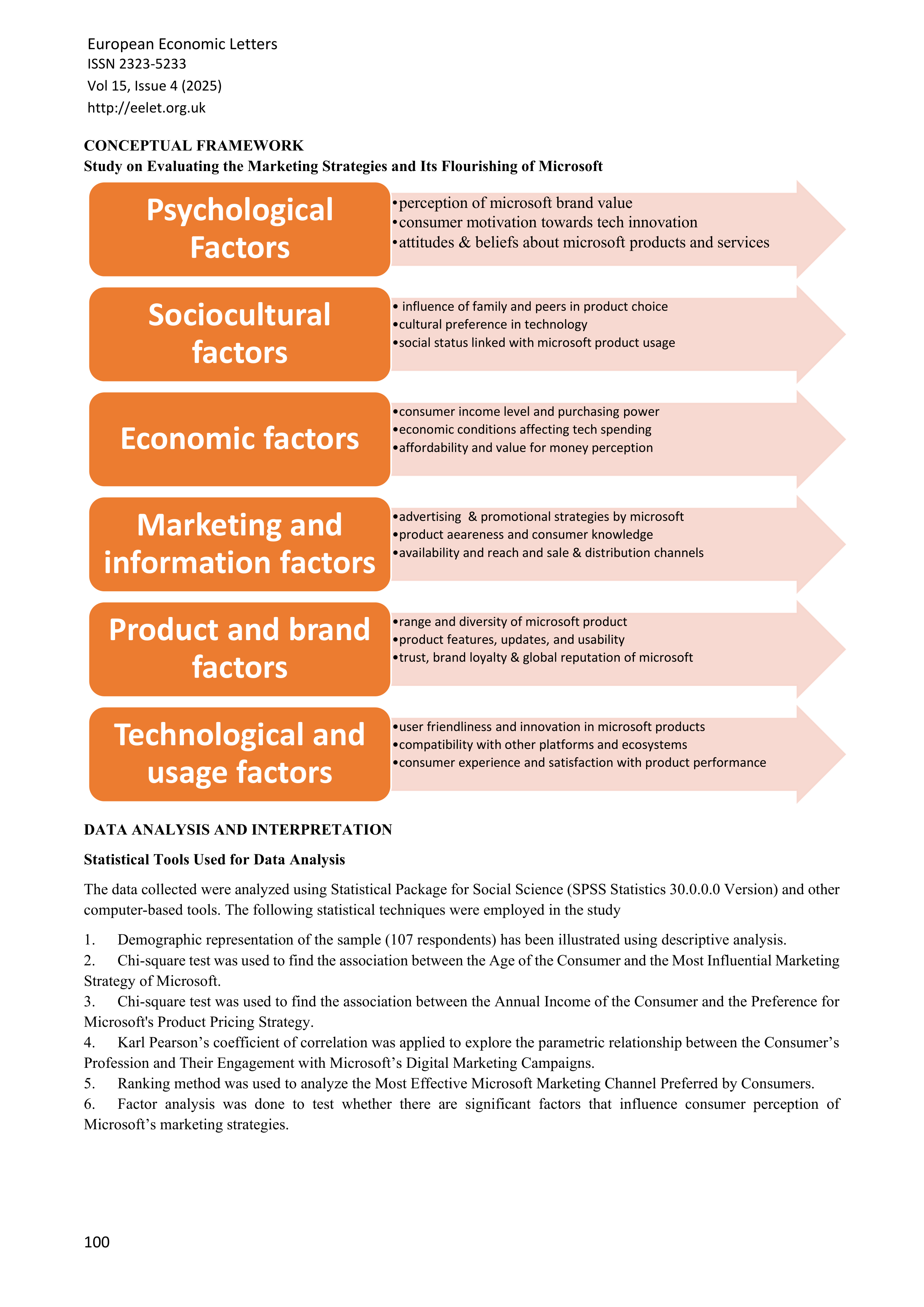
CONCEPTUAL FRAMEWORK
Study on Evaluating the Marketing Strategies and Its Flourishing of Microsoft
DATA ANALYSIS AND INTERPRETATION
Statistical Tools Used for Data Analysis
The data collected were analyzed using Statistical Package for Social Science (SPSS Statistics 30.0.0.0 Version) and other
computer-based tools. The following statistical techniques were employed in the study
1.
Demographic representation of the sample (107 respondents) has been illustrated using descriptive analysis.
2.
Chi-square test was used to find the association between the Age of the Consumer and the Most Influential Marketing
Strategy of Microsoft.
3.
Chi-square test was used to find the association between the Annual Income of the Consumer and the Preference for
Microsoft's Product Pricing Strategy.
4.
Karl Pearson’s coefficient of correlation was applied to explore the parametric relationship between the Consumer’s
Profession and Their Engagement with Microsoft’s Digital Marketing Campaigns.
5.
Ranking method was used to analyze the Most Effective Microsoft Marketing Channel Preferred by Consumers.
6.
Factor analysis was done to test whether there are significant factors that influence consumer perception of
Microsoft’s marketing strategies.
•perception of microsoft brand value
•consumer motivation towards tech innovation
•attitudes & beliefs about microsoft products and services
Psychological
Factors
• influence of family and peers in product choice
•cultural preference in technology
•social status linked with microsoft product usage
Sociocultural
factors
•consumer income level and purchasing power
•economic conditions affecting tech spending
•affordability and value for money perception
Economic factors
•advertising & promotional strategies by microsoft
•product aeareness and consumer knowledge
•availability and reach and sale & distribution channels
Marketing and
information factors
•range and diversity of microsoft product
•product features, updates, and usability
•trust, brand loyalty & global reputation of microsoft
Product and brand
factors
•user friendliness and innovation in microsoft products
•compatibility with other platforms and ecosystems
•consumer experience and satisfaction with product performance
Technological and
usage factors
101
European Economic Letters
ISSN 2323-5233
Vol 15, Issue 4 (2025)
http://eelet.org.uk
Table 4.1. Demographic Representation of the Respondents (n=107)
Frequency
Percent
Gender
Male
68
63.55
Female
39
36.45
Total
107
100
Age
less than 18 years
3
2.8
18-20 years
33
30.8
21-25 years
63
58.9
25-30 years
5
4.7
above 30 years
3
2.8
Total
107
100
Education
High School
14
13.40
Bachelor’s Degree
72
67.30
Master’s Degree
21
19.30
Ph.D.
0
0
Others
0
0
Total
107
100
Occupation
Student
62
57.9
Salaried employee
28
26.2
Self Employed
11
10.3
Homemaker
4
3.7
Retired
2
1.9
Total
107
100
Annual Income
Below 3,00,000
48
44.85
3,00,000 - 6,00,000
39
36.47
6,00,000 - 10,00,000
17
15.88
10,00,000 - 15,00,000
3
2.80
above 15,00,000
0
0
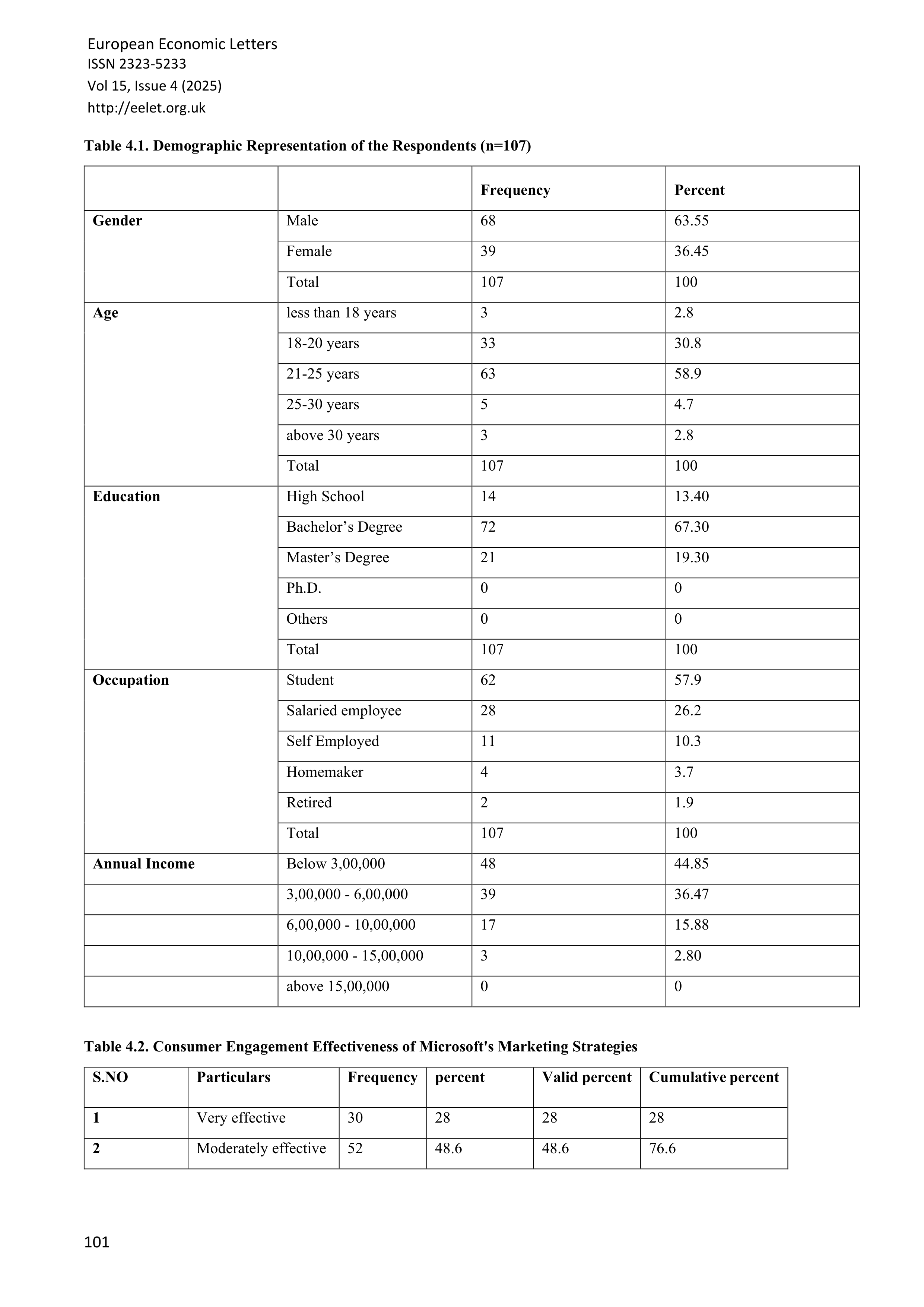
Table 4.2. Consumer Engagement Effectiveness of Microsoft's Marketing Strategies
S.NO
Particulars
Frequency
percent
Valid percent
Cumulative percent
1
Very effective
30
28
28
28
2
Moderately effective
52
48.6
48.6
76.6




102
European Economic Letters
ISSN 2323-5233
Vol 15, Issue 4 (2025)
http://eelet.org.uk
3
Neutral
17
15.9
15.9
92.5
4
Ineffective
8
7.5
7.5
100
Total
107
100
100
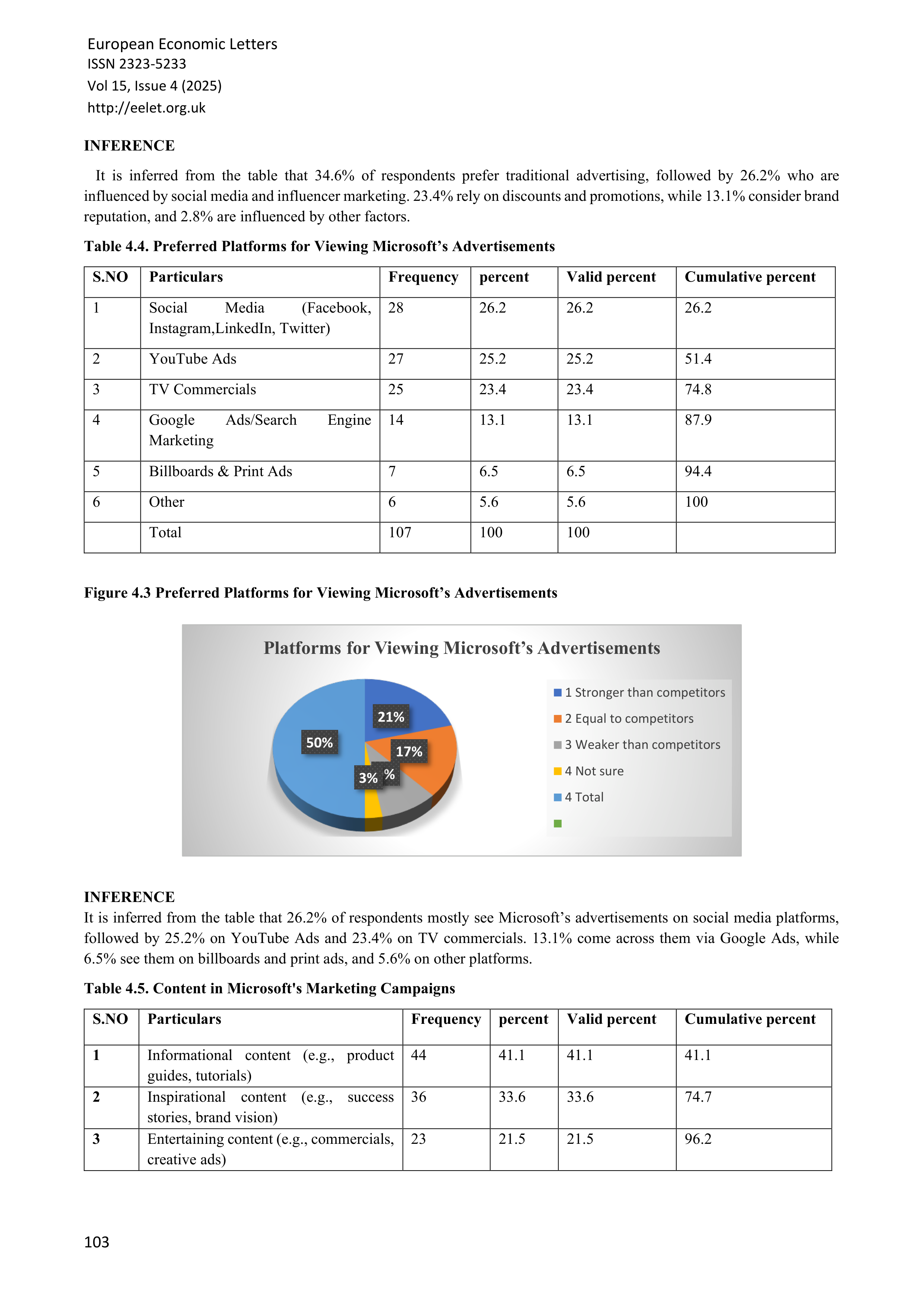
Figure 4.1 Consumer Engagement Effectiveness of Microsoft's Marketing Strategies
INFERENCE
It can be inferred from Table 4.2 that 75.95% of the respondents perceive Microsoft's marketing strategies as
effective (Very Effective + Moderately Effective), while 16.36% remain neutral, and 7.69% find them ineffective.
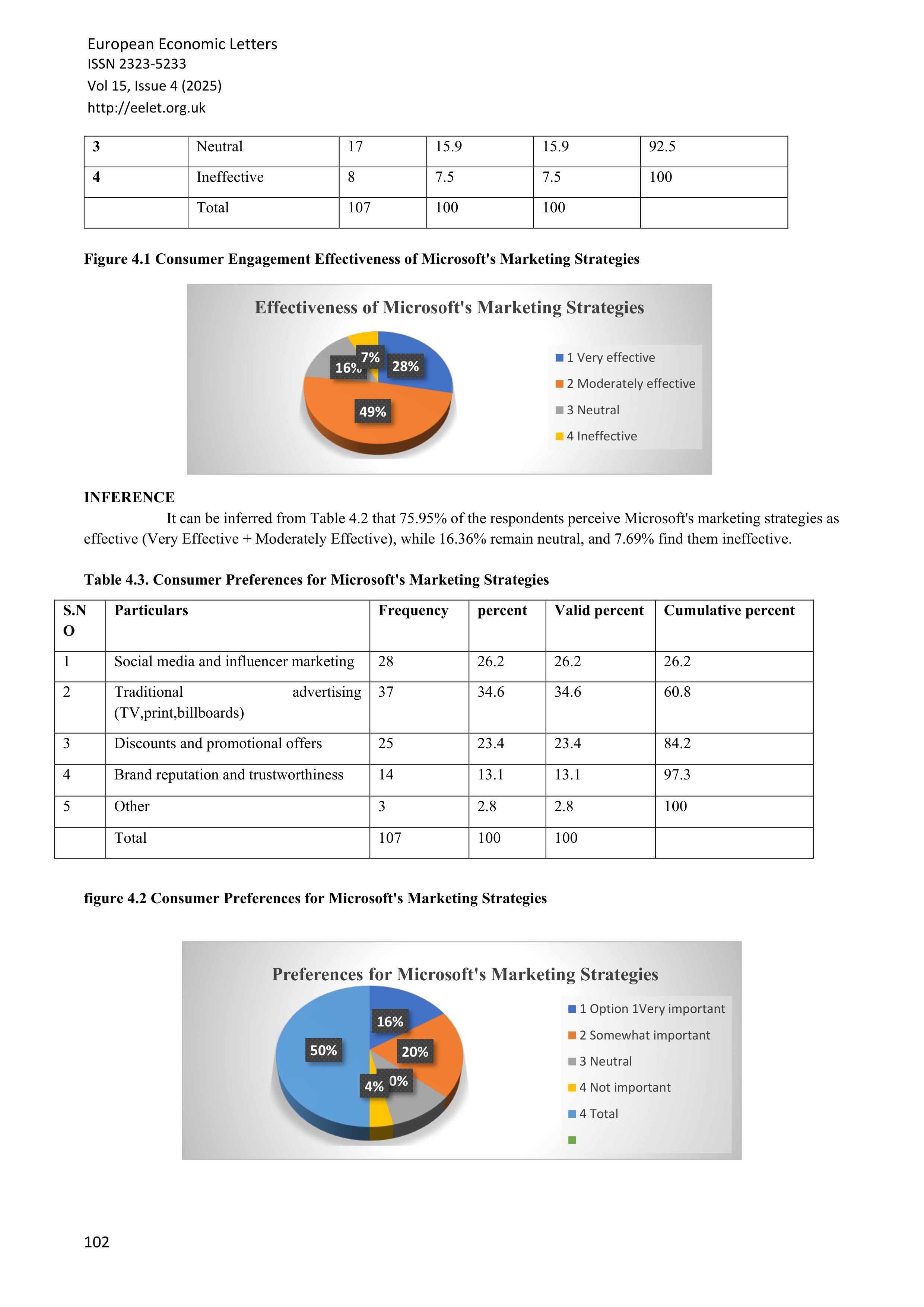
Table 4.3. Consumer Preferences for Microsoft's Marketing Strategies
S.N
O
Particulars
Frequency
percent
Valid percent
Cumulative percent
1
Social media and influencer marketing
28
26.2
26.2
26.2
2
Traditional
advertising
(TV,print,billboards)
37
34.6
34.6
60.8
3
Discounts and promotional offers
25
23.4
23.4
84.2
4
Brand reputation and trustworthiness
14
13.1
13.1
97.3
5
Other
3
2.8
2.8
100
Total
107
100
100
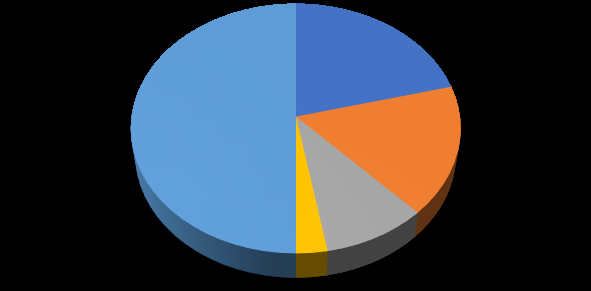
figure 4.2 Consumer Preferences for Microsoft's Marketing Strategies
28%
49%
16%
7%
Effectiveness of Microsoft's Marketing Strategies
1 Very effective
2 Moderately effective
3 Neutral
4 Ineffective
16%
20%
10%
4%
50%
Preferences for Microsoft's Marketing Strategies
1 Option 1Very important
2 Somewhat important
3 Neutral
4 Not important
4 Total


103
European Economic Letters
ISSN 2323-5233
Vol 15, Issue 4 (2025)
http://eelet.org.uk
INFERENCE
It is inferred from the table that 34.6% of respondents prefer traditional advertising, followed by 26.2% who are
influenced by social media and influencer marketing. 23.4% rely on discounts and promotions, while 13.1% consider brand
reputation, and 2.8% are influenced by other factors.
Table 4.4. Preferred Platforms for Viewing Microsoft’s Advertisements
S.NO
Particulars
Frequency
percent
Valid percent
Cumulative percent
1
Social
Media
(Facebook,
Instagram,LinkedIn, Twitter)
28
26.2
26.2
26.2
2
YouTube Ads
27
25.2
25.2
51.4
3
TV Commercials
25
23.4
23.4
74.8
4
Google
Ads/Search
Engine
Marketing
14
13.1
13.1
87.9
5
Billboards & Print Ads
7
6.5
6.5
94.4
6
Other
6
5.6
5.6
100
Total
107
100
100
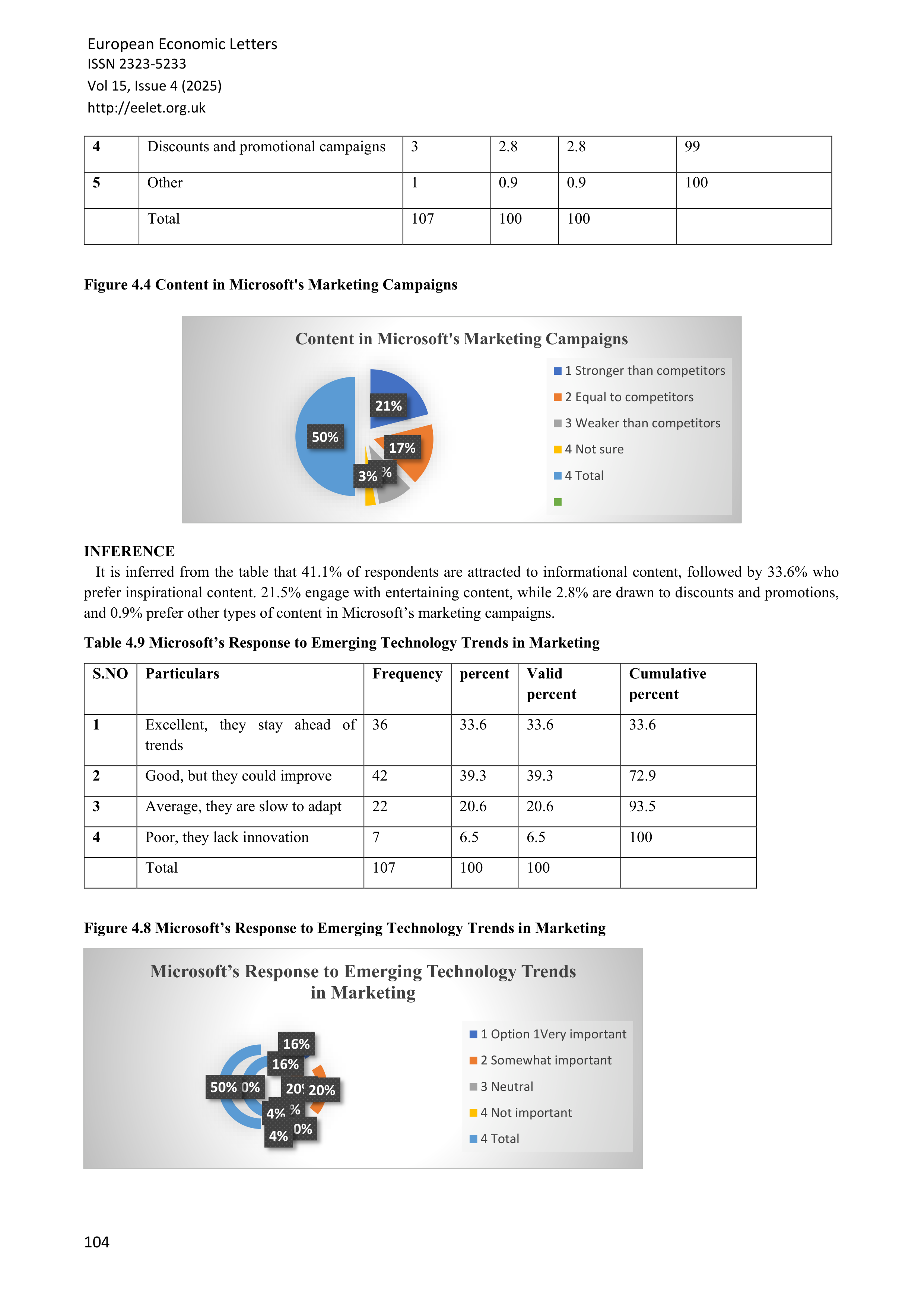
Figure 4.3
Preferred Platforms for Viewing Microsoft’s Advertisements
INFERENCE
It is inferred from the table that 26.2% of respondents mostly see Microsoft’s advertisements on social media platforms,
followed by 25.2% on YouTube Ads and 23.4% on TV commercials. 13.1% come across them via Google Ads, while
6.5% see them on billboards and print ads, and 5.6% on other platforms.
Table 4.5. Content in Microsoft's Marketing Campaigns
S.NO
Particulars
Frequency
percent
Valid percent
Cumulative percent
1
Informational content (e.g., product
guides, tutorials)
44
41.1
41.1
41.1
2
Inspirational content (e.g., success
stories, brand vision)
36
33.6
33.6
74.7
3
Entertaining content (e.g., commercials,
creative ads)
23
21.5
21.5
96.2
21%
17%
9%
3%
50%
Platforms for Viewing Microsoft’s Advertisements
1 Stronger than competitors
2 Equal to competitors
3 Weaker than competitors
4 Not sure
4 Total


104
European Economic Letters
ISSN 2323-5233
Vol 15, Issue 4 (2025)
http://eelet.org.uk
4
Discounts and promotional campaigns
3
2.8
2.8
99
5
Other
1
0.9
0.9
100
Total
107
100
100
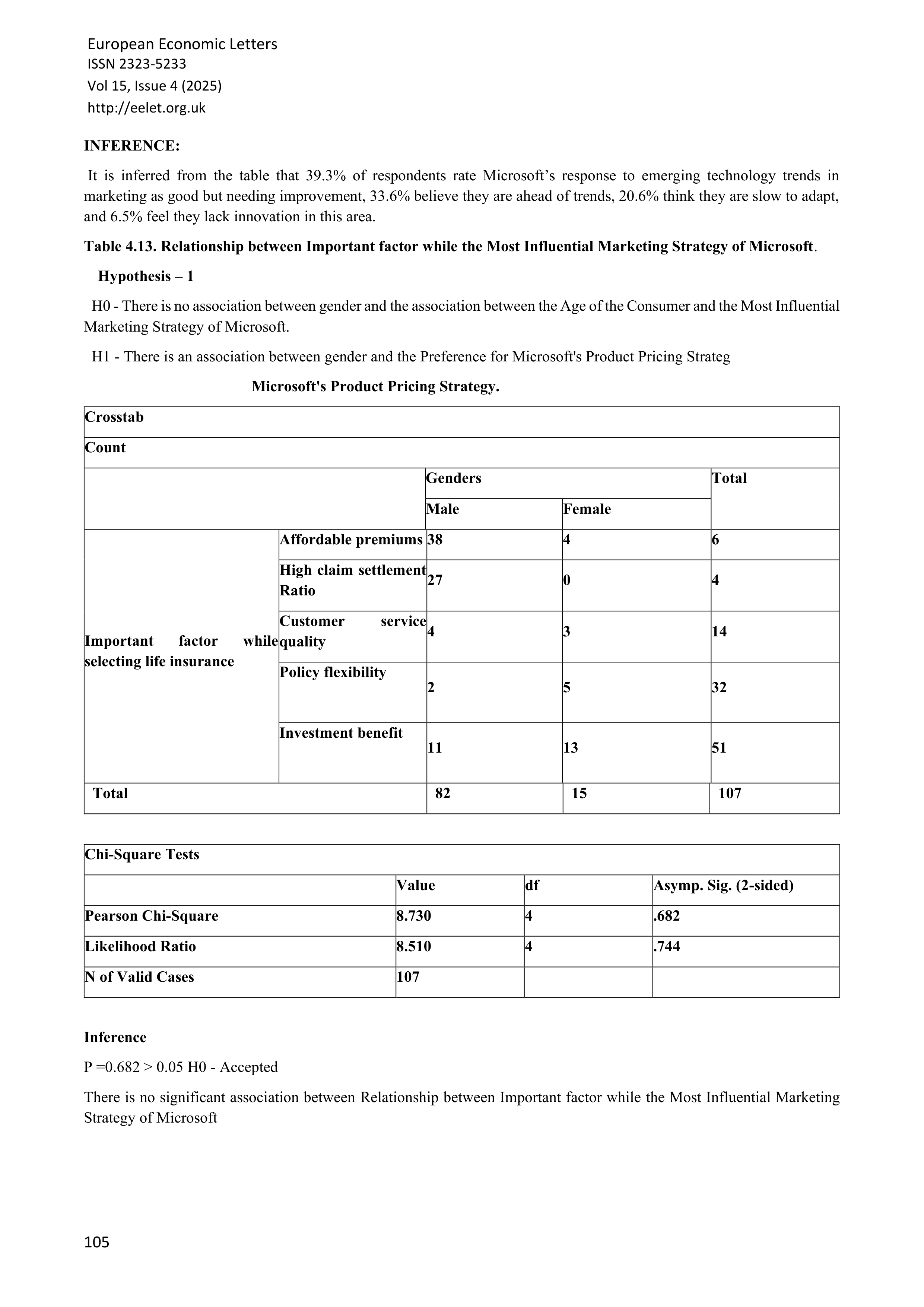
Figure 4.4 Content in Microsoft's Marketing Campaigns
INFERENCE
It is inferred from the table that 41.1% of respondents are attracted to informational content, followed by 33.6% who
prefer inspirational content. 21.5% engage with entertaining content, while 2.8% are drawn to discounts and promotions,
and 0.9% prefer other types of content in Microsoft’s marketing campaigns.
Table 4.9 Microsoft’s Response to Emerging Technology Trends in Marketing
S.NO
Particulars
Frequency
percent
Valid
percent
Cumulative
percent
1
Excellent, they stay ahead of
trends
36
33.6
33.6
33.6
2
Good, but they could improve
42
39.3
39.3
72.9
3
Average, they are slow to adapt
22
20.6
20.6
93.5
4
Poor, they lack innovation
7
6.5
6.5
100
Total
107
100
100
Figure 4.8 Microsoft’s Response to Emerging Technology Trends in Marketing
16%
20%
10%
4%
50%
16%
20%
10%
4%
50%
Microsoft’s Response to Emerging Technology Trends
in Marketing
1 Option 1Very important
2 Somewhat important
3 Neutral
4 Not important
4 Total
21%
17%
9%
3%
50%
Content in Microsoft's Marketing Campaigns
1 Stronger than competitors
2 Equal to competitors
3 Weaker than competitors
4 Not sure
4 Total
105
European Economic Letters
ISSN 2323-5233
Vol 15, Issue 4 (2025)
http://eelet.org.uk
INFERENCE:
It is inferred from the table that 39.3% of respondents rate Microsoft’s response to emerging technology trends in
marketing as good but needing improvement, 33.6% believe they are ahead of trends, 20.6% think they are slow to adapt,
and 6.5% feel they lack innovation in this area.
Table 4.13. Relationship between Important factor while the Most Influential Marketing Strategy of Microsoft
.
Hypothesis – 1
H0 - There is no association between gender and the association between the Age of the Consumer and the Most Influential
Marketing Strategy of Microsoft.
H1 - There is an association between gender and the Preference for Microsoft's Product Pricing Strateg
Microsoft's Product Pricing Strategy.
Crosstab
Count
Genders
Total
Male
Female
Important
factor
while
selecting life insurance
Affordable premiums 38
4
6
High claim settlement
Ratio
27
0
4
Customer
service
quality
4
3
14
Policy flexibility
2
5
32
Investment benefit
11
13
51
Total
82
15
107
Chi-Square Tests
Value
df
Asymp. Sig. (2-sided)
Pearson Chi-Square
8.730
4
.682
Likelihood Ratio
8.510
4
.744
N of Valid Cases
107
Inference
P =0.682 > 0.05 H0 - Accepted
There is no significant association between Relationship between Important factor while the Most Influential Marketing
Strategy of Microsoft
106
European Economic Letters
ISSN 2323-5233
Vol 15, Issue 4 (2025)
http://eelet.org.uk
Table 4.18. Relationship Between Annual income and the Preference for Microsoft's Product Pricing Strategy
.
Hypothesis - 2
H0 - There is no significant association between monthly income levels and the Age of the Consumer and the Most
Influential Marketing Strategy of Microsoft.
H1 - There is a significant association between monthly income levels and the Preference for Microsoft's Product
Pricing Strategy.
Monthly income * Preference for Microsoft's Product Pricing Strategy.
Crosstab
Count
Primary Reason
Total
A
B
C
D
E
Monthly income
Below 3,00,000
1
4
4
11
1
21
3,00,000-6,00,000
7
4
5
8
3
32
6,00,000-10,00,000
13
12
0
10
5
35
10,00,000-15,00,000
8
1
1
3
2
15
above 15,00,000
3
0
0
1
0
4
Total
32
21
10
33
11
107
A-
Tax benefits, B- Risk Protection, C- Investment and wealth creation, D- Retirement planning,
E- Financial security for family.
Chi-Square Tests
Value
df
Asymp. Sig. (2-sided)
Pearson Chi-Square
32.19
16
.942
Likelihood Ratio
30.10
16
.765
N of Valid Cases
107
Inference
P =0.942 > 0.05 H0 - Accepted
There is no significant association between monthly income levels and Preference for Microsoft's Product Pricing Strategy.
FINDINGS
•
A major portion of the respondents (37.6%) consider historical and cultural significance extremely important in
choosing a destination, while an equal portion (37.6%) do not find it important.
•
A major portion of the respondents (40%) are unsure about the influence of viral travel destinations on their travel
decisions.
•
A major portion of the respondents (42.4%) are not influenced by advertisements targeted at specific traveler types.
•
A major portion of the respondents (40%) are sometimes influenced by advertisements when deciding to book a trip.
107
European Economic Letters
ISSN 2323-5233
Vol 15, Issue 4 (2025)
http://eelet.org.uk
•
A majority of the respondents (41.6%) suggest incorporating social media influencer recommendations to improve
travel advertisements.
•
A majority of the respondents (49.6%) believe that better transparency in pricing and offers would make personalized
travel advertisements more effective.
•
A major portion of the respondents (43.2%) prefer general advertisements over targeted campaigns.
A majority of the respondents (48.8%) somewhat prefer real traveler reviews over professionally created promotional
content
SUGGESTIONS:
1.
Microsoft should enhance investments in social media and influencer marketing to align with evolving consumer
preferences.
2.
Strengthening YouTube advertising efforts will improve digital reach, as it ranks close to social media in preference.
3.
Increasing the production of informational and inspirational content will enhance consumer engagement and brand
perception.
4.
Greater emphasis on AI-driven marketing and automation can address concerns about slow adaptation to emerging
trends.
5.
Interactive campaigns such as webinars, live demos, and virtual events should be implemented to improve customer
involvement.
6.
Offering targeted discounts and promotional campaigns can strengthen consumer loyalty, as 23.4% Favor such
strategies.
7.
Microsoft should enhance its transparency and leverage customer testimonials to improve brand trust.
8.
Continuous innovation in marketing strategies will help Microsoft stay competitive against Apple and Google.
9.
Expanding traditional advertising efforts in key demographics will ensure brand retention among conventional media
consumers.
10.
A hybrid approach integrating digital and offline marketing will help Microsoft maximize its market impact and
growth.
CONCLUSION:
Microsoft's marketing strategies have been at the heart of its transition from being just a software company to a global
technology leader. Microsoft had evolved its marketing strategies to cater to the changing needs of customers and the
developing tendencies of industry standards over the decades. Hence, marketing success for Microsoft is said mainly to
result from successful strategic branding, successful product innovation, effective customer engagement, and digital
transformation.
A major advantage for Microsoft lies in using both traditional and digital marketing strategies. The company effectively
employed advertising, partnerships, and promotional efforts aimed at customers to position products like Windows,
Microsoft 365, and Azure. Its subscription revenue model has also maintained long-term customer relationships and given
essential funding.
By acquiring companies like LinkedIn, GitHub, and Activision Blizzard, Microsoft has made very deliberate moves aimed
at competitive positioning. This has only served to consolidate its standing in the critical markets of professional
networking, software development, and gaming. In this vein, the company's commitment to corporate social responsibility
(CSR) and sustainability initiatives has also made a contribution to the creation of a favorable public image.
108
European Economic Letters
ISSN 2323-5233
Vol 15, Issue 4 (2025)
http://eelet.org.uk
REFERENCES
1.
Vaníčková, R. (2020). Business and marketing strategies for growth and competitive advantage in the exhibition
industry. Vastiest Ciske Budějovice Journal, 1-20.
2.
Gorel. (2020). Evaluating nonprofit Terra BIRDS using SWOT and 7S McKinsey model for organizational
effectiveness. Journal of Business and Management Studies, 45-60.
3.
Smith. (2021). Effective digital marketing strategies for Caribbean small businesses: A competitive advantage
approach. International Journal of Digital Marketing and Business Growth, 78-92.
4.
Madhushree. (2018). Business strategies of MindTree: Analysing operational, financial, marketing, and
technological approaches. Indian Journal of Business Strategy, 100-115.
5.
Sadr. (2021). Unexploited groundbreaking technologies and business model management: A case study of
VIENNO. Journal of Innovation and Technology Management, 30-48.
6.
Nalbant. (2023). The impact of artificial intelligence and digital technologies on marketing and branding in the
Metaverse. Journal of Digital Business and Emerging Technologies, 220-235.
7.
Ramaano, A. I. (2021). Sustainable eco-tourism as a tool for local community development in Musina
Municipality. International Journal of Tourism Management, 45-60.
8.
Smith, B., & Shum, H. (2018). The future computed: The role of artificial intelligence in society. Microsoft Press.
9.
Holbeche, L. (2022). Aligning human resources and business strategy. Routledge.
10.
Patel, S. (2023). Migrating to the cloud: A step-by-step guide for enterprises. TechPress.
11.
Khatr, M. (2022). Revamping the marketing world with Metaverse: The future of marketing. Journal of Digital
Business and Innovation, 112-128.
12.
Riedel, E. (2018). Small retail businesses and online marketing: Strategies to increase sales. Journal of Retail
Marketing Research, 30-48.
13.
Aldy, J. E. (2019). Future-proof your climate strategy. Harvard Business Review.
14.
Arline, H. (2016). Marketing strategies used by franchise small businesses to retain customers. Journal of Business
and Entrepreneurship Studies, 55-72.
15.
de Mol, E. (2019). Entrepreneurial passion and strategic vision in startup success. International Journal of
Business Innovation, 78-95.
16.
Joshi, S., et al. (2021). The role of artificial intelligence in education: Improving learning outcomes and
personalization. Journal of Educational Technology & AI, 140-160.
17.
Bietti, E. (2021). Microsoft's marketing strategies: Evolution from software dominance to cloud computing
leadership. Journal of Business Strategy and Innovation, 45(2), 112-130.
18.
Ahluwalia, S., Mahto, R. V., & Walsh, S. (2017). Microsoft’s marketing strategies and global success. Journal of
Marketing Research and Insights, 23(3), 78-95.
19.
Garcia, J. A. (2021). Analyzing Microsoft's marketing strategies for long-term global success. International
Journal of Digital Marketing and Business Growth, 29(4), 140-155.
20.
Athal, J. L. (2020). Microsoft's competitive edge: A study of evolving marketing strategies. Global Business
Review, 18(1), 100-120.
21.
Zsigmond, T., Machová, R., & Zsigmondová, A. (2021). Microsoft's marketing dominance: Adapting to industry
changes and consumer demands. International Journal of Business Trends, 34(2), 90-110.
109
European Economic Letters
ISSN 2323-5233
Vol 15, Issue 4 (2025)
http://eelet.org.uk
22.
Tiihonen, H. (2024). Microsoft’s marketing strategies and global dominance in a competitive landscape. Journal
of Marketing Management, 12(3), 65-82.
23.
Williams, J. B. (2019). Microsoft’s marketing transformation: Digital branding and AI-driven strategies.
Marketing Science Review, 27(1), 50-70.
24.
Quach, T., et al. (2020). Outside-in marketing: Understanding customer needs and market trends. Journal of
Strategic Marketing, 31(2), 200-220.
25.
Shen, C., Luong, T., Ho, J., & Djailani, I. (2020). Social media marketing strategies in IT service companies: A
comparative study. Journal of Digital Business Research, 22(4), 180-195.