NVIDIA's Market Strategy and Innovation: The Fusion of
Technological Leadership and Brand Building
Yifan Song
1,a,*
1
Suzhou High School Affiliated to Xi’an Jiaotong University, Suzhou, Jiangsu, 215000, China
a. alex.syf@outlook.com
*corresponding author
Abstract:
With the rapid development of artificial intelligence (AI) and digital currencies, the
global demand for computing power has surged sharply, creating an urgent need for advanced
technological solutions. Graphics processing units (GPUs), as a key measure of a company's
computing capability, present unprecedented opportunities for manufacturers to innovate and
expand their market reach. However, these opportunities are accompanied by significant
challenges, including intense competition and the need for continuous technological
advancement. In this rapidly evolving landscape, standing out has become a pressing issue
for manufacturers striving for success. This article focuses on NVIDIA, a leader in the GPU
industry, analyzing its innovative strategies, effective marketing methods, and strategic
partnerships. By examining how NVIDIA navigates the complexities of the competitive GPU
market, the article explores the company's approach to maintaining its leading position while
addressing various challenges and seizing new opportunities. Ultimately, this analysis sheds
light on the essential factors that contribute to NVIDIA's sustained success in a dynamic
technological environment.
Keywords:
NVIDIA, GPU, marketing, innovation, brand building.
1.
Introduction
As AI and digital currencies evolve, the global demand for computing power has surged, with the
number of GPUs owned becoming a key standard for measuring a company's computing capability.
This presents a significant opportunity for manufacturers. However, risks often accompany
opportunities, and having the chance does not guarantee success. Therefore, how producers can seize
opportunities and achieve better development in this pivotal era has become a pressing issue.
This paper employs a literature review method to deeply explore how NVIDIA has achieved a
dominant position in the global GPU market through technological innovation and brand building.
The study finds that NVIDIA leverages its technological advantages in high-performance computing,
graphics rendering, and AI acceleration, along with deep collaborations with several computer
companies, to build a strong brand influence. Additionally, its flexible marketing strategies—
including precise market segmentation, collaborative marketing, and strategies that adapt to market
changes—provide robust support for the company's sustained growth.
The significance of this research lies in offering valuable insights for other enterprises regarding
technological innovation, brand building, and marketing strategies through the analysis of NVIDIA's
Proceedings of the 3rd International Conference on Financial Technology and Business Analysis
DOI: 10.54254/2754-1169/137/2024.18671
© 2024 The Authors. This is an open access article distributed under the terms of the Creative Commons Attribution License 4.0
(https://creativecommons.org/licenses/by/4.0/).
143
success case. At the same time, this paper also highlights the challenges NVIDIA may face in its
development process and provides corresponding suggestions to offer a reference for its future growth.
2.
Market situation and competitors
As the use of GPUs becomes increasingly prevalent in fields like gaming and AI, the overall trend in
the global GPU market is positive. In 2023, the total scale of the AI market reached $16 billion, and
the market size for GPUs related to autonomous driving has reached $4.389 billion. For companies
in the GPU sector, the profit brought by the rising demand for their products due to technological
advancements is significant [1].
In the current graphics processor market, NVIDIA has two main competitors—AMD and Intel—
while also facing threats from emerging Chinese companies. These companies often possess more
flexible market strategies and innovative technological approaches, posing a certain challenge to
NVIDIA. However, due to their limited scale and brand influence, these companies are unlikely to
pose a substantial challenge to NVIDIA in the short term, despite their growing presence, such as
Bitmain, Moore Threads, and Core Motion.
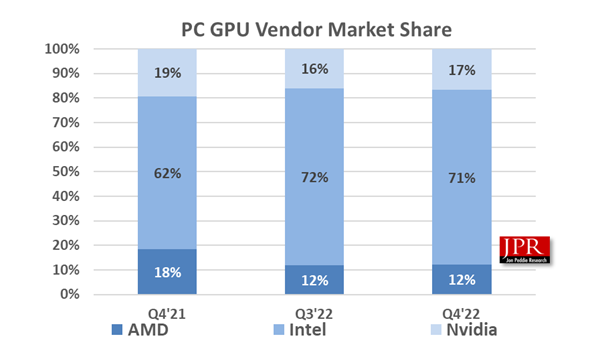
Despite the intense competition, NVIDIA still maintains an 80% market share in the GPU (discrete
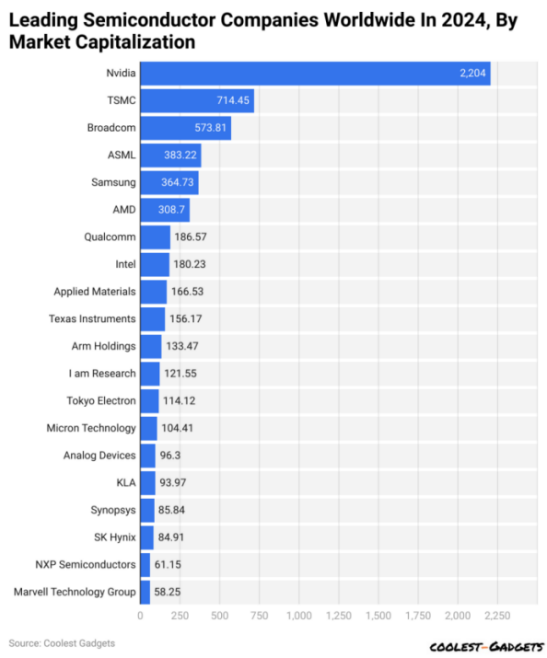
graphics card) sector (Figure 1). Clearly, NVIDIA holds a dominant position in this market (Figure
2), but whether this advantage can be sustained depends on its ability to leverage its R&D strengths
to empower its products and continually attract more consumers [2].
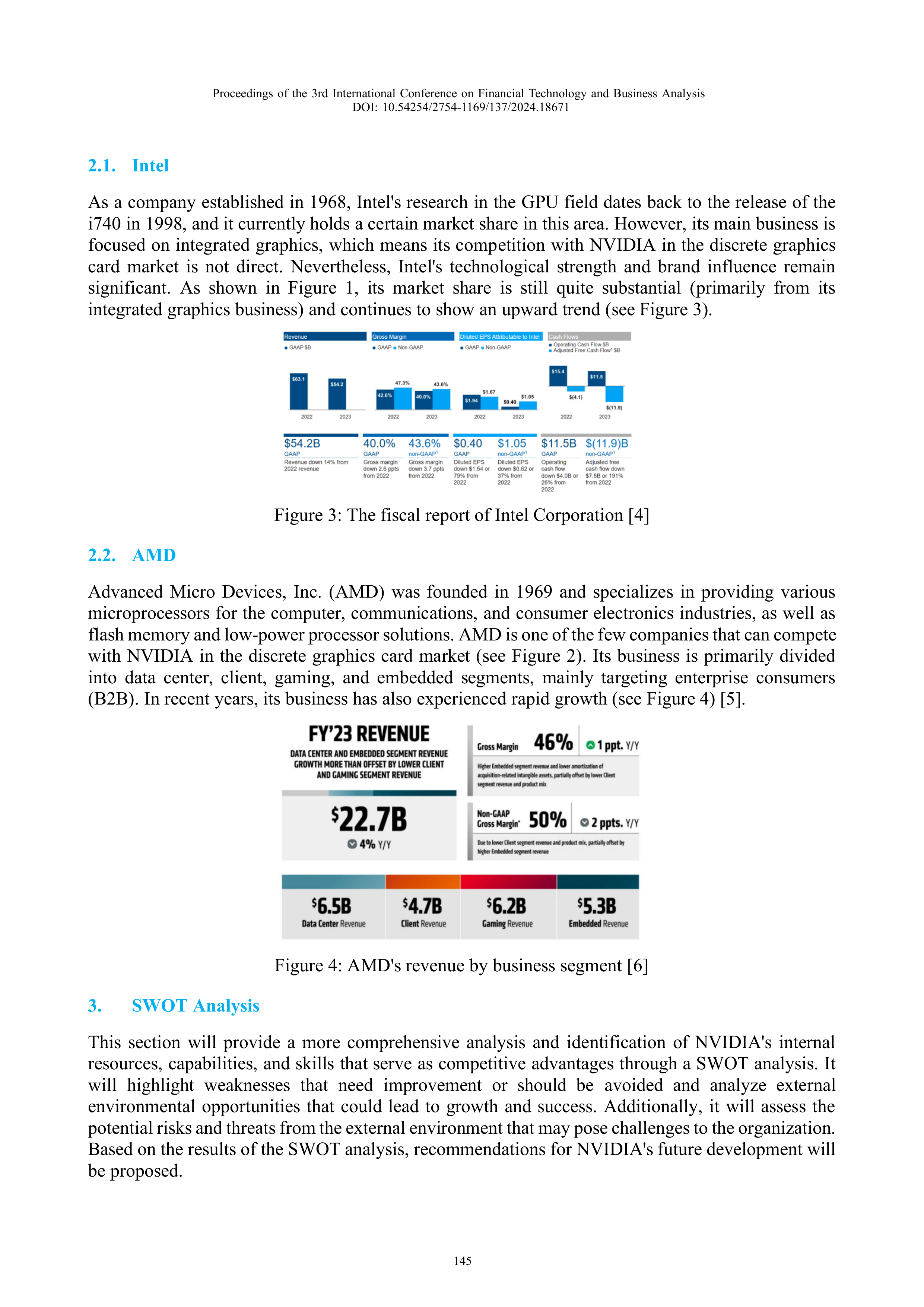
Figure 1: Quarterly shipments, market share percentages, and year-to-year results.[2]
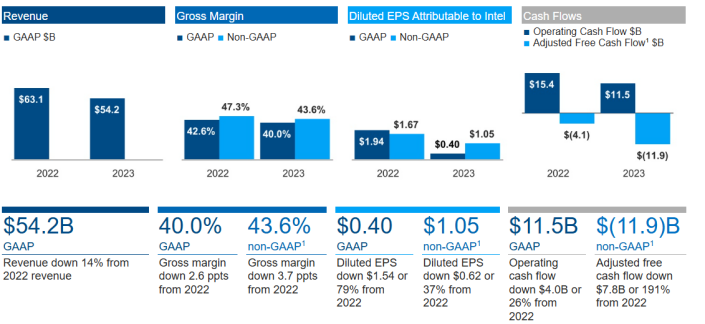
Figure 2: dominant position of Nvidia [3]
Proceedings of the 3rd International Conference on Financial Technology and Business Analysis
DOI: 10.54254/2754-1169/137/2024.18671
144
2.1.
Intel
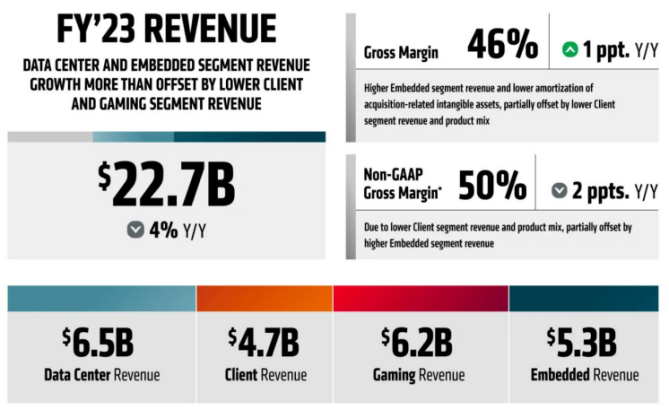
As a company established in 1968, Intel's research in the GPU field dates back to the release of the
i740 in 1998, and it currently holds a certain market share in this area. However, its main business is
focused on integrated graphics, which means its competition with NVIDIA in the discrete graphics
card market is not direct. Nevertheless, Intel's technological strength and brand influence remain
significant. As shown in Figure 1, its market share is still quite substantial (primarily from its
integrated graphics business) and continues to show an upward trend (see Figure 3).
Figure 3: The fiscal report of Intel Corporation [4]
2.2.
AMD
Advanced Micro Devices, Inc. (AMD) was founded in 1969 and specializes in providing various
microprocessors for the computer, communications, and consumer electronics industries, as well as
flash memory and low-power processor solutions. AMD is one of the few companies that can compete
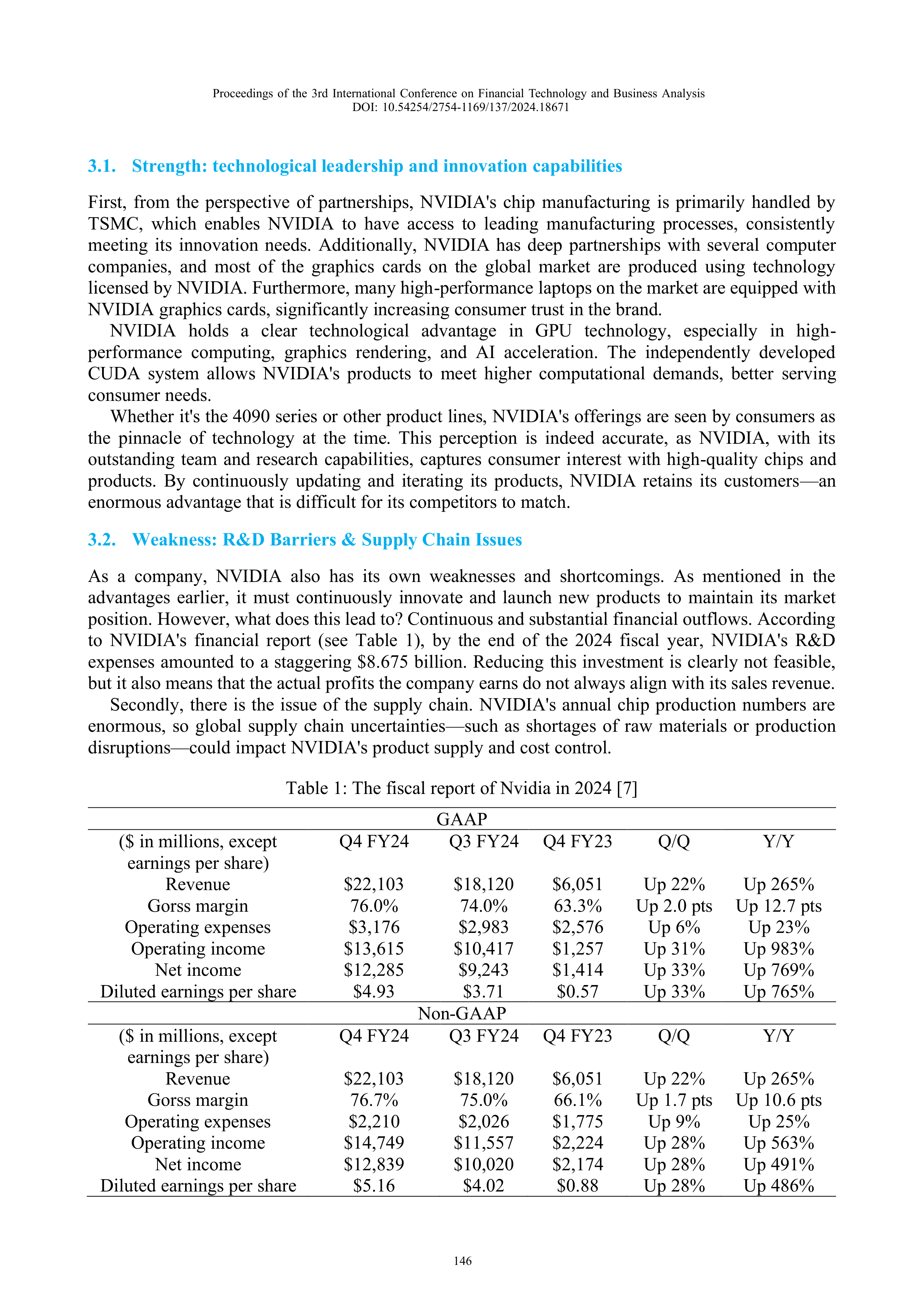
with NVIDIA in the discrete graphics card market (see Figure 2). Its business is primarily divided
into data center, client, gaming, and embedded segments, mainly targeting enterprise consumers
(B2B). In recent years, its business has also experienced rapid growth (see Figure 4) [5].
Figure 4: AMD's revenue by business segment [6]
3.
SWOT Analysis
This section will provide a more comprehensive analysis and identification of NVIDIA's internal
resources, capabilities, and skills that serve as competitive advantages through a SWOT analysis. It
will highlight weaknesses that need improvement or should be avoided and analyze external
environmental opportunities that could lead to growth and success. Additionally, it will assess the
potential risks and threats from the external environment that may pose challenges to the organization.
Based on the results of the SWOT analysis, recommendations for NVIDIA's future development will
be proposed.
Proceedings of the 3rd International Conference on Financial Technology and Business Analysis
DOI: 10.54254/2754-1169/137/2024.18671
145
3.1.
Strength: technological leadership and innovation capabilities
First, from the perspective of partnerships, NVIDIA's chip manufacturing is primarily handled by
TSMC, which enables NVIDIA to have access to leading manufacturing processes, consistently
meeting its innovation needs. Additionally, NVIDIA has deep partnerships with several computer
companies, and most of the graphics cards on the global market are produced using technology
licensed by NVIDIA. Furthermore, many high-performance laptops on the market are equipped with
NVIDIA graphics cards, significantly increasing consumer trust in the brand.
NVIDIA holds a clear technological advantage in GPU technology, especially in high-
performance computing, graphics rendering, and AI acceleration. The independently developed
CUDA system allows NVIDIA's products to meet higher computational demands, better serving
consumer needs.
Whether it's the 4090 series or other product lines, NVIDIA's offerings are seen by consumers as
the pinnacle of technology at the time. This perception is indeed accurate, as NVIDIA, with its
outstanding team and research capabilities, captures consumer interest with high-quality chips and
products. By continuously updating and iterating its products, NVIDIA retains its customers—an
enormous advantage that is difficult for its competitors to match.
3.2.
Weakness: R&D Barriers & Supply Chain Issues
As a company, NVIDIA also has its own weaknesses and shortcomings. As mentioned in the
advantages earlier, it must continuously innovate and launch new products to maintain its market
position. However, what does this lead to? Continuous and substantial financial outflows. According
to NVIDIA's financial report (see Table 1), by the end of the 2024 fiscal year, NVIDIA's R&D
expenses amounted to a staggering $8.675 billion. Reducing this investment is clearly not feasible,
but it also means that the actual profits the company earns do not always align with its sales revenue.
Secondly, there is the issue of the supply chain. NVIDIA's annual chip production numbers are
enormous, so global supply chain uncertainties—such as shortages of raw materials or production
disruptions—could impact NVIDIA's product supply and cost control.
Table 1: The fiscal report of Nvidia in 2024 [7]
GAAP
($ in millions, except
earnings per share)
Q4 FY24
Q3 FY24
Q4 FY23
Q/Q
Y/Y
Revenue
$22,103
$18,120
$6,051
Up 22%
Up 265%
Gorss margin
76.0%
74.0%
63.3%
Up 2.0 pts
Up 12.7 pts
Operating expenses
$3,176
$2,983
$2,576
Up 6%
Up 23%
Operating income
$13,615
$10,417
$1,257
Up 31%
Up 983%
Net income
$12,285
$9,243
$1,414
Up 33%
Up 769%
Diluted earnings per share
$4.93
$3.71
$0.57
Up 33%
Up 765%
Non-GAAP
($ in millions, except
earnings per share)
Q4 FY24
Q3 FY24
Q4 FY23
Q/Q
Y/Y
Revenue
$22,103
$18,120
$6,051
Up 22%
Up 265%
Gorss margin
76.7%
75.0%
66.1%
Up 1.7 pts
Up 10.6 pts
Operating expenses
$2,210
$2,026
$1,775
Up 9%
Up 25%
Operating income
$14,749
$11,557
$2,224
Up 28%
Up 563%
Net income
$12,839
$10,020
$2,174
Up 28%
Up 491%
Diluted earnings per share
$5.16
$4.02
$0.88
Up 28%
Up 486%
Proceedings of the 3rd International Conference on Financial Technology and Business Analysis
DOI: 10.54254/2754-1169/137/2024.18671
146
3.3.
Opportunity: technology development
NVIDIA's rapid development has two peaks, mainly the surge in Bitcoin and the rapid development
of AI in recent years. Their commonality is that they require huge computing power to support them,
which has also led to a surge in demand in the market, but this may also bring a problem, such as the
current Bitcoin explosion. If this wave passes, then demand may drop significantly, thus affecting the
company's sales market potential. Nevertheless, the digital transformation of emerging markets and
industries has also provided new growth points for NVIDIA's product sales.
Just like Sony and other companies, in the long-term development of NVIDIA, consumers have
undoubtedly developed loyalty to the company. Many computer users think of NVIDIA first when
buying graphics cards. This trust is undoubtedly closely related to NVIDIA's long-term excellent
product quality and performance and marketing strategy. When consumers trust NVIDIA's products
and services, this will form a good reputation in the market. This positive word-of-mouth
communication can attract more potential consumers to pay attention to NVIDIA, thereby increasing
its market share. At the same time, a trusted brand image can also help companies differentiate
themselves from other competitors and form a unique brand recognition.
3.4.
Threat: international turbulence and market competition
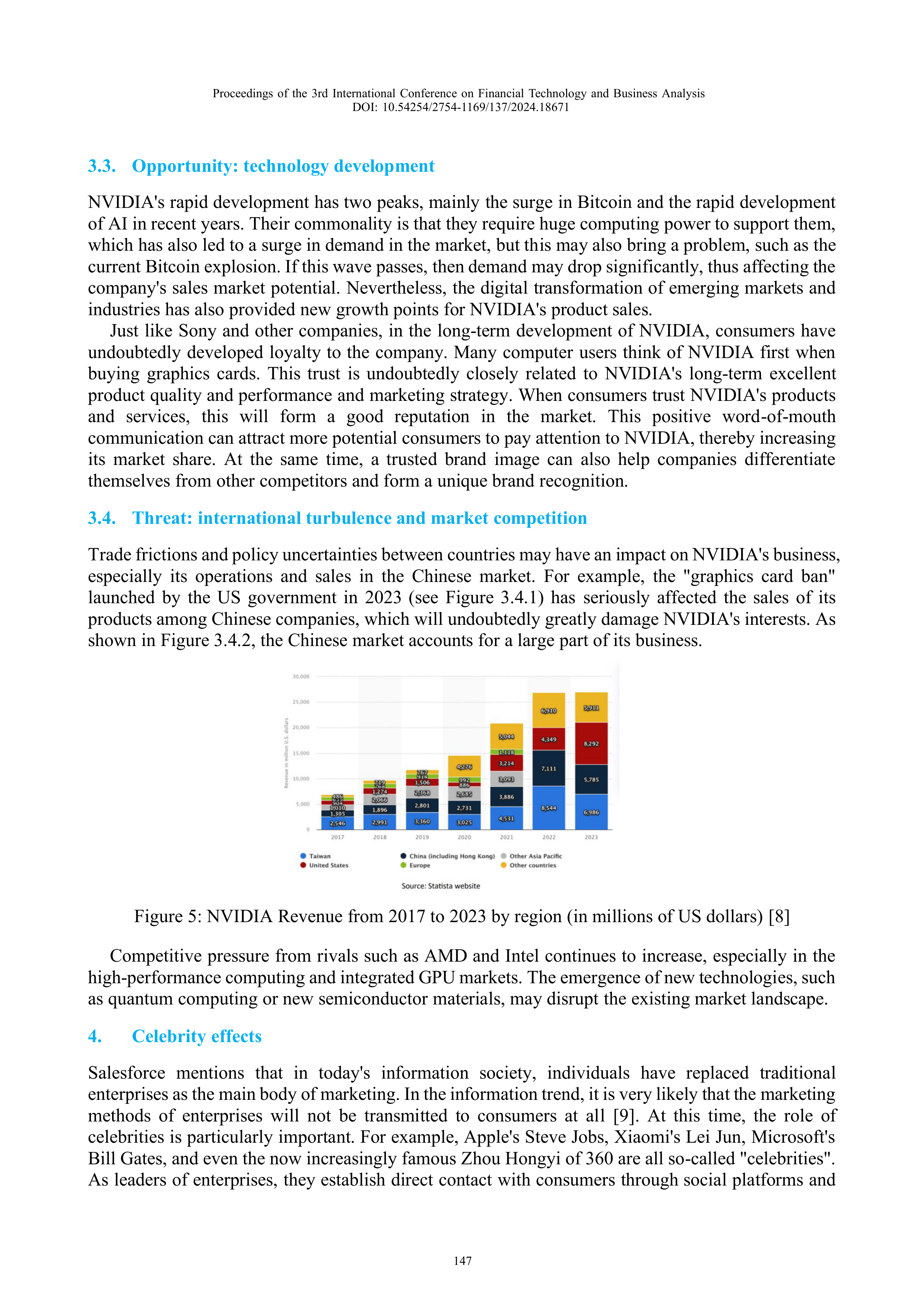
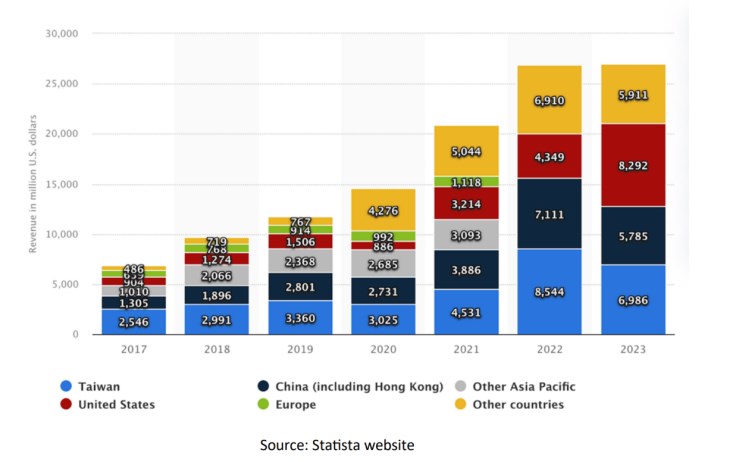
Trade frictions and policy uncertainties between countries may have an impact on NVIDIA's business,
especially its operations and sales in the Chinese market. For example, the "graphics card ban"
launched by the US government in 2023 (see Figure 3.4.1) has seriously affected the sales of its
products among Chinese companies, which will undoubtedly greatly damage NVIDIA's interests. As
shown in Figure 3.4.2, the Chinese market accounts for a large part of its business.
Figure 5: NVIDIA Revenue from 2017 to 2023 by region (in millions of US dollars) [8]
Competitive pressure from rivals such as AMD and Intel continues to increase, especially in the
high-performance computing and integrated GPU markets. The emergence of new technologies, such
as quantum computing or new semiconductor materials, may disrupt the existing market landscape.
4.
Celebrity effects
Salesforce mentions that in today's information society, individuals have replaced traditional
enterprises as the main body of marketing. In the information trend, it is very likely that the marketing
methods of enterprises will not be transmitted to consumers at all [9]. At this time, the role of
celebrities is particularly important. For example, Apple's Steve Jobs, Xiaomi's Lei Jun, Microsoft's
Bill Gates, and even the now increasingly famous Zhou Hongyi of 360 are all so-called "celebrities".
As leaders of enterprises, they establish direct contact with consumers through social platforms and
Proceedings of the 3rd International Conference on Financial Technology and Business Analysis
DOI: 10.54254/2754-1169/137/2024.18671
147
other means. This is not only an excellent marketing method, but also can enhance brand loyalty.
NVIDIA is also working in this direction. For example, on the Chinese Internet, people jokingly call
Huang Renxun (CEO) "Lao Huang", which is undoubtedly a manifestation of affinity. Through
consumers' understanding of the personal charm, talent, or insights of this corporate leader,
consumers' understanding of the brand is indirectly enhanced.
The book Tipping Point puts forward the concepts of marketer and expert. These concepts can also
be applied to NVIDIA’s marketing strategy. Nowadays, influence is not only affected by the single
factor of investment in advertising or marketing, but also by the influence of individuals (even
individuals who may have no connection with the company). For example, if a person feels unwell
after eating a certain brand of food and posts it online, it will inevitably cause irreversible damage to
the brand. Even if it is later proved that the person’s physical discomfort has nothing to do with the
food, the company’s sales will still be affected [10].
So the question is, how to do this? First, take advantage of the wide coverage of social media. Like
Lei Jun and others, actively interact with users on platforms such as Weibo, Bilibili, Xiaohongshu,
X, Facebook, Tiktok, etc., and establish connections with fans and consumers by posting content and
replying to comments. At the same time, we should also focus on shaping a unique personal brand.
Through consistent image shaping and information dissemination, we can build a unique personal
brand so that people can associate it with a specific celebrity when they mention the relevant field.
Finally, we should continue to interact and update. By regularly updating content and maintaining
continuous interaction with fans, we can maintain and enhance the celebrity effect. Through these
methods, NVIDIA's managers will become more well-known on the Internet and expand their
influence among those who don't understand this industry, which will undoubtedly have a positive
impact on the company.
5.
Advertisement marketing
NVIDIA's advertisements are mainly focused on introducing the performance of the products, so in
most cases it is difficult to leave consumers with an overall impression of the company. Of course,
this marketing method is also a desirable way to promote products, but for enterprises, the increase
in the number of consumers will not bring greater results. When competing companies launch more
advanced and high-end products, the original consumers may very likely turn to buy competing
company products, which is not conducive to the long-term development of the company. At this
level, NVIDIA can learn from NVIDIA, which is also in the chip field. This article divides its
advertising methods into two types: memorability and localization. The first level is memorability.
Consumers who are not familiar with computers may not know the specific products of Intel at all,
but they can definitely remember the unique voice in its advertisements, and such advertisements can
undoubtedly deepen people's impression of the brand, so that when consumers buy products, they
subconsciously choose those brands with advertisements that impress them. The second level is
localization. NVIDIA's advertisements in Japan cooperate with local anime works. This marketing
strategy also coincides with the practice of Lay's, a food company, launching localized flavors of
potato chips in China. This marketing strategy can help to open up the market in a specific country to
a certain extent, thereby increasing sales in the local market.
6.
Development suggestions
In view of NVIDIA's current market strategy and challenges, combined with the analysis of NVIDIA
AI Revolution: A Comprehensive Strategic Analysis-Second Edition, this paper proposes the
following suggestions in order to provide a useful reference for its future development [11].
Proceedings of the 3rd International Conference on Financial Technology and Business Analysis
DOI: 10.54254/2754-1169/137/2024.18671
148
First, continue to increase R&D investment and maintain technological leadership. From the paper,
we can see that NVIDIA's remarkable achievements in the fields of AI and high-performance
computing are inseparable from its continued high-intensity R&D investment. Therefore, it is
recommended that NVIDIA continue to increase its investment in R&D in the future, especially in
the fields of AI chips, high-performance computing and emerging technologies, in order to maintain
its technological leadership in these fields.
Second, deepen cooperation with upstream and downstream companies in the industrial chain. As
mentioned in this article, NVIDIA has established close cooperative relationships with many
companies during its growth, and these collaborations have played an important role in its business
expansion and market expansion. Therefore, it is recommended that NVIDIA continue to deepen
cooperation with upstream and downstream companies in the industrial chain in the future, jointly
promote technological innovation and product upgrades, and form a closer industrial chain ecosystem.
Secondly, strengthen market expansion and brand building. Although NVIDIA has achieved a
certain degree of popularity in the global market, its brand influence needs to be improved in some
regions and market areas. Therefore, it is recommended that NVIDIA strengthen market expansion
and brand building in the future, and increase its popularity and influence in the global market through
multi-channel marketing and brand promotion activities.
In addition, it is necessary to pay attention to emerging markets and segments. With the continuous
development of technology and the continuous changes in the market, new opportunities and
challenges will continue to emerge in emerging markets and segments. For example, the emergence
of medical robots allows AI to be used in the medical industry, and AI is inseparable from GPUs,
which brings benefits to technology companies such as NVIDIA. Therefore, it is recommended that
NVIDIA pay attention to the development trends of these emerging markets and segments in the
future, and adjust market strategies and product layouts in a timely manner to seize new market
opportunities.
Finally, optimize internal management and improve operational efficiency. With the continuous
expansion of the company's scale and the expansion of its business scope, the importance of internal
management has become increasingly prominent. Therefore, it is recommended that NVIDIA
optimize internal management processes in the future, improve operational efficiency, and ensure that
the company can continue to develop steadily.
In summary, NVIDIA should continue to increase R&D investment, deepen cooperation with
upstream and downstream enterprises in the industry chain, strengthen market expansion and brand
building, focus on emerging markets and niche areas, and optimize internal management in its future
development. These suggestions are expected to provide strong support for NVIDIA in future market
competition and promote its more sustainable development.
7.
Conclusion
Through an in-depth analysis of NVIDIA's market strategy, technological innovation, brand building
and marketing methods, this paper reveals how NVIDIA maintains its leading position in the global
GPU market. Through a SWOT analysis of NVIDIA, this paper identifies its advantages in terms of
technological leadership, innovation capabilities, market opportunities and celebrity effect, while also
pointing out its disadvantages and threats in terms of R&D barriers, supply chain issues, international
turmoil and market competition.
NVIDIA's success story provides valuable reference for other companies, especially in terms of
technological innovation and brand building. NVIDIA has successfully built a strong brand influence
and market competitiveness through continuous R&D investment, close cooperation with upstream
and downstream companies in the industrial chain, flexible marketing strategies and the use of
celebrity effects.
Proceedings of the 3rd International Conference on Financial Technology and Business Analysis
DOI: 10.54254/2754-1169/137/2024.18671
149
However, NVIDIA still faces many challenges in its future development. It is recommended that
NVIDIA continue to increase R&D investment to maintain its technological leadership; deepen
cooperation with upstream and downstream companies in the industrial chain to jointly promote
technological innovation and product upgrades; strengthen market expansion and brand building to
enhance global visibility and influence; pay attention to opportunities in emerging markets and
segments, and adjust market strategies and product layout in a timely manner; optimize internal
management and improve operational efficiency.
In addition, NVIDIA should also pay close attention to changes in the international situation and
flexibly respond to policy and market uncertainties. In terms of marketing, NVIDIA can further
leverage the influence of celebrities and social media to enhance its brand image and consumer loyalty.
At the same time, NVIDIA should also explore more diversified advertising and marketing strategies
to enhance the brand's memorability and localization.
In short, as a leader in the global GPU market, NVIDIA's successful experience is worth learning
from the industry. By continuously optimizing and adjusting its market strategy, NVIDIA is expected
to continue to maintain its leading position in future market competition and achieve sustainable
development.
References
[1]
Xueqiu. (2023). GPU industry in-depth: market analysis, competition landscape, industry chain and related
companies. https://xueqiu.com/3966435964/246795070
[2]
Jon Peddie Research (JPR). (2024). Adjustment to Q422 JPR dGPU Market Report – Jon Peddie Research. https:/
/www.jonpeddie.com/news/adjustment-to-q422-jpr-dgpu-market-report/
[3]
COOLEST GADGETS. (2024). Semiconductor Industry Statistics 2024 By Country, Demographics, Device, Import
and Export. https://www.coolest-gadgets.com/semiconductor-industry-statistics
[4]
Intel corporation. (2023). The fiscal report of Intel Corporation. https://www.sec.gov/Archives/edgar/data/50863/
000005086324000010/intc-20231230.htm
[5]
Božić, D., Buchberger, L., Bakotić, A., Andrešić, M., & Ančić, M. THE CASE STUDY OF INTEL CORPORATION
(INTC). COMPANY ANALYSIS, 127.
[6]
Tradingview. (2024). AMD's revenue by business segment. https://cn.tradingview.com/#main-market-summary
[7]
NVIDIA Corporation. (2024). NVIDIA Announces Financial Results for Fourth Quarter and Fiscal 2024. https://
investor.nvidia.com/news/press-release-details/2024/NVIDIA-Announces-Financial-Results-for-Fourth-Quarter-
and-Fiscal-2024/
[8]
Statista. (2024). NVIDIA Revenue from 2017 to 2023 by region. https://www.statista.com/site/
[9]
Sweezey, M. (2014). Salesforce. Harvard Business Press.
[10]
Gladwell, M. (2024). Revenge of the tipping point:Overstories, Superspreaders, and the Rise of Social Engineering.
Little, Brown and Company
[11]
Niero, B. NVIDIA's AI Revolution: A Comprehensive Strategic Analysis.
Proceedings of the 3rd International Conference on Financial Technology and Business Analysis
DOI: 10.54254/2754-1169/137/2024.18671
150