BCP Business & Management
EMFRM 2022
Volume
38
(2023)
2692
A Study of L’Oréal Group's Marketing Strategy in the Face of
the COVID-19 from a Macro Perspective
Yujing Liu *
Programme Bachelor in Management, Audencia Business School, Nantes, France
*Corresponding author: yujing.liu@audencia.com
Abstract.
Since the global crisis of COVID-19 in early 2020, the global economy has been seriously
affected. The consumers prefer to wear masks outside and have less desire to try make-up or buy
cosmetic products, leading to a reduction globally in the demand for the aspect of fast-moving
consumer goods. L'Oréal Group, a leading player in the makeup industry, quickly adapted its sales
strategy to turn a negative situation into a profitable performance, standing out from the crowd of
other cosmetic brands. In this paper, based on SWOT and 4P models, it will analyze L’Oréal Group's
market strategies in the face of the COVID-19 through its excellent coping ability. According to
different directions of analysis, it can find that L'Oréal Group's own huge competitive advantages in
company's investment and research & design can enable itself to recover quickly from the enormous
impact of the COVID-19 and the ensuing series of negative situations and return to the number one
position in the industry. In the end, the summary of this case study will focus on the entire cosmetics
industry. The analysis method in this work provides a paradigm to guide the marketing strategy
transition of cosmetic industry when facing the public health crisis
Keywords:
COVID-19; L’Oréal Group; Marketing strategy.
1.
Introduction
COVID-19 is viral pneumonia which had spread across the world, with an accumulated 17 million
cases and 675 thousand deaths as of 1 August 2020 (World Health Organization, 2020) [1]. In March
2020, International Monetary Fund (IMF) declared that the global economy has entered a recession
and the outcome can be worse than the effects of 2008 global financial crisis (Georgieva, 2020).
Although a recovery or sizable rebound is projected in 2021 by the IMF, this unprecedented crisis
has brought impacts on many firms of different sizes and in various industries (Cortez and Johnston,
2020) [2]. In 2019, the international cosmetics market amounted to $380.2 billion [3], However, the
emergence of the COVID-19 has profound and far-reaching impact on the cosmetics industry. In
2020, the market size of the global cosmetics industry is $484.03 billion, a year-on-year decline of
3.8%. Overall, global supply chain operations have been upset, impacting companies around the
world. Many millions of employees could lose their jobs in the following months. As well, customers
have already modified their patterns of spending, leading to shortages of many items in supermarkets
worldwide. Global financial markets have registered sharp falls, and volatility is at levels similar, or
above, the financial crisis of 2008 [4]. Although the impact brought by the COVID-19 pandemic is
destructive to most companies all over the world, L'Oréal Group performing excellent and has an
aggressive marketing campaign worldwide, as well as a unique advantage over its competitors and
efficient management, which makes the last year a decisive year for the L'Oréal Group.
L'Oréal Group is a global leader in cosmetics and fragrances, with four main divisions:
Professional Products, Customer Products, L'Oréal Luxury, and Active Cosmetics, located in France.
As of 2019, it owns more than thirty cosmetic brands for hair, skincare, cosmetics, and fragrances.
With operations in 150 countries and territories worldwide and 497 registered patents, it is one of the
fortune 500 enterprises, which became the top cosmetics brand in terms of market share above
Unilever. And in 2021 the turnover of L’Oréal Group ascended from a loss in 2020, which reached a
record high of 3.23 billion euros.
Existing research regarding the effects of COVID-19 on businesses has identified some reasons
that might affect the way businesses and consumers create brand equity online. These reasons
demonstrate the importance of researching and identifying possible long-term effects and changes in
BCP Business & Management
EMFRM 2022
Volume
38
(2023)
2693
brand strategies in the context of brand equity that have not been seen to this extent pre- COVID-
19[5]. Meanwhile, consumer purchasing behaviors also changed and contributed to a rapid increase
in demand for purchasing, which firms had to meet to maintain sales [6], and so on.
There is already a very large literature in the field of studying the marketing strategy of the L'Oréal
Group. In the article People sustainability and COVID-19: challenges, lessons learnt and the future
of health, safety & wellbeing in a VUCA world. A L’Oréal case study, the authors provide insight
about the ways in which L'Oréal adapted from a global perspective to meet the risks associated with
the COVID-19 pandemic and describe how their approach to the volatile, uncertain, and complex
world that preceded Covid helped them to be "prepared" and nimble for the unimaginable. and explore
the implications of this healthy approach for the industry. And for the article The Beauty During a
Pandemic: The Impact of COVID-19 on the Cosmetic Industry, In the face of the economic blow due
to the emergence of COVID-19, which led to a decline in the use of cosmetics, the industry's future
consumer intentions and behaviors were challenged. It collected information through questionnaires
on the purchasing habits of consumers (female university students) before and after the COVID-19,
which led to changes in consumer behavior and provided a definite reference for customer trends in
the cosmetics industry. And in the article COVID-19 and Performance of Cosmetics Companies, it
focuses on comparing the performance of several global cosmetic companies and analyzing the
impact of COVID-19 by comparing it with competitors and previous years. Finally, overall
conclusions are drawn. And the L’Oréal digital consumer operating system, this article combines
COVID-19 with instant digitalization. Lessons learned from L’Oréal’s digital acceleration to instill a
new digital operating system for marketing and sales. And conclude a universal methodology based
on the article.
For the current literature review, we found that the COVID-19, as a sudden social health and safety
crisis in recent years, has been a popular research context for papers in the past few years. Although
L'Oréal Group has been the top company in the cosmetic industry and about its marketing strategy
has always been analyzed. However, most of the articles prefer to analyze the current situation and
trends with the COVID-19 from the perspective of the entire cosmetic industry. This paper examines
the excellent market strategy adjustment of L'Oréal Group during the COVID-19. Firstly, using the
SWOT model, this paper analyzes in detail externally the market circumstances and internally the
strengths and weaknesses of L'Oréal Group, considering both macro and micro aspects, as well as
economic and social factors. Secondly, this study analyzes the main advantages and disadvantages of
L'Oréal Group to maintain excellent profit and market share in the face of the COVID-19 through
4Ps: product strategy, price strategy, marketing strategy and sales strategy. Finally, this paper will
summarize based on the above-mentioned L'Oréal Group's market strategies. And as the result, in the
face of the overall downturn in the cosmetics industry, this paper aims to certainly provide an
excellent reference and learning experience for other large companies.
2.
Dataset
The paper is mainly based on the data set of L'Oréal's annual reports, which includes data and
visual charts of the L'Oréal Group's annual turnover, market share, net profit, and specific business
objectives for the next ten years, both in general and for the four product segments. Data was also
collected from various websites such as Statista, Xerfi, and the Financial Times to ensure the accuracy
and comprehensiveness of the data. The data was then imported into the application excel to present
a concise visualization of the group's business decisions.
3.
Overview of the L'Oréal Group
L'Oréal Group, as a premium, visible, and aspirational century-old brand, its mission is to provide
the best beauty in terms of quality, efficiently, safely, sincerely, and responsibly to every person
anywhere in the world, to meet all their demands and desires in unlimited variety. L'Oréal Group has
BCP Business & Management
EMFRM 2022
Volume
38
(2023)
2694
chosen a unique strategy. Universalization. It is generalization with a fine comprehension and esteem
for diversity. Variations in requirements, wishes and heritage. Offering tailored aesthetics that fulfill
the desires of customers in the four corners of the planet.
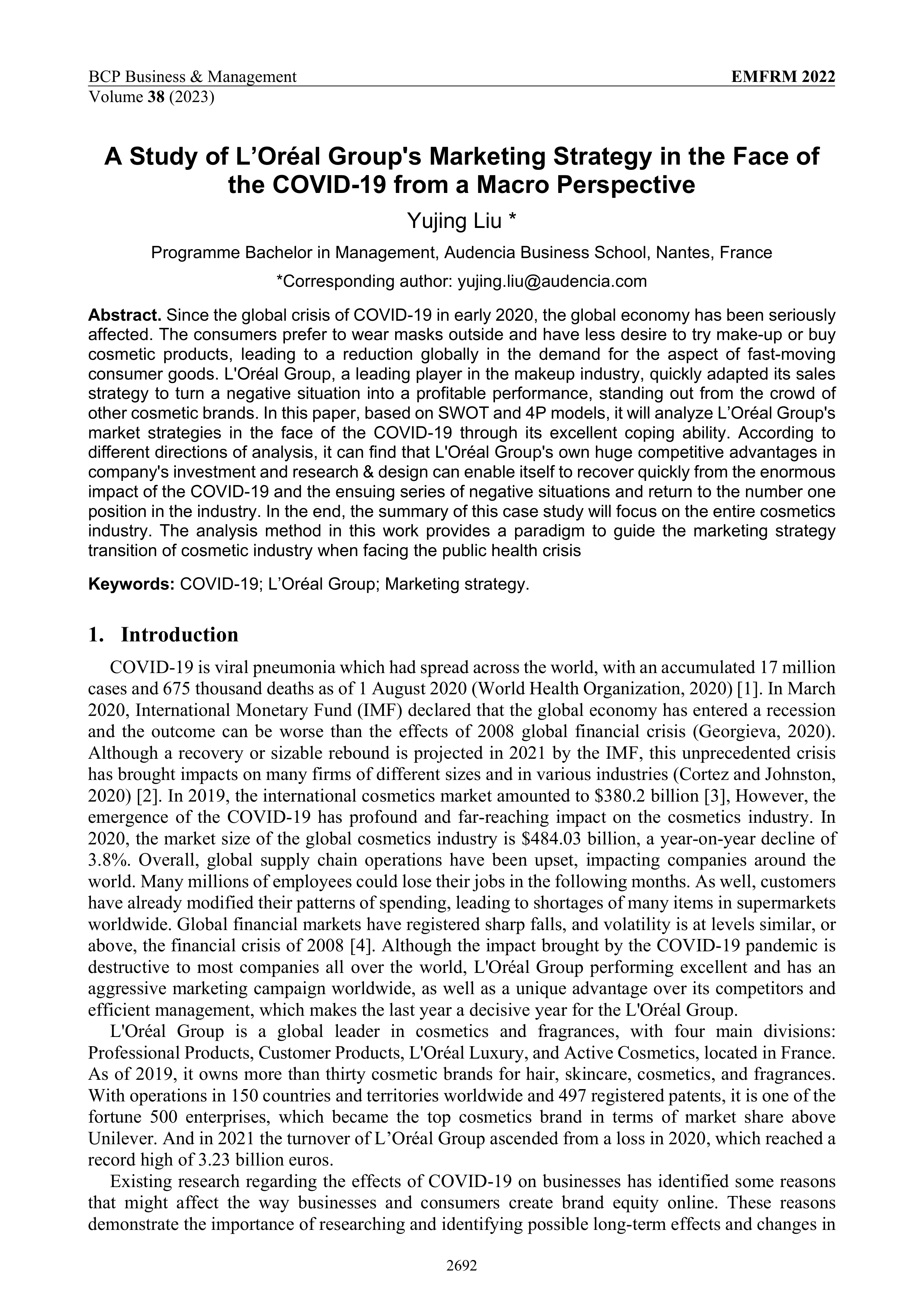
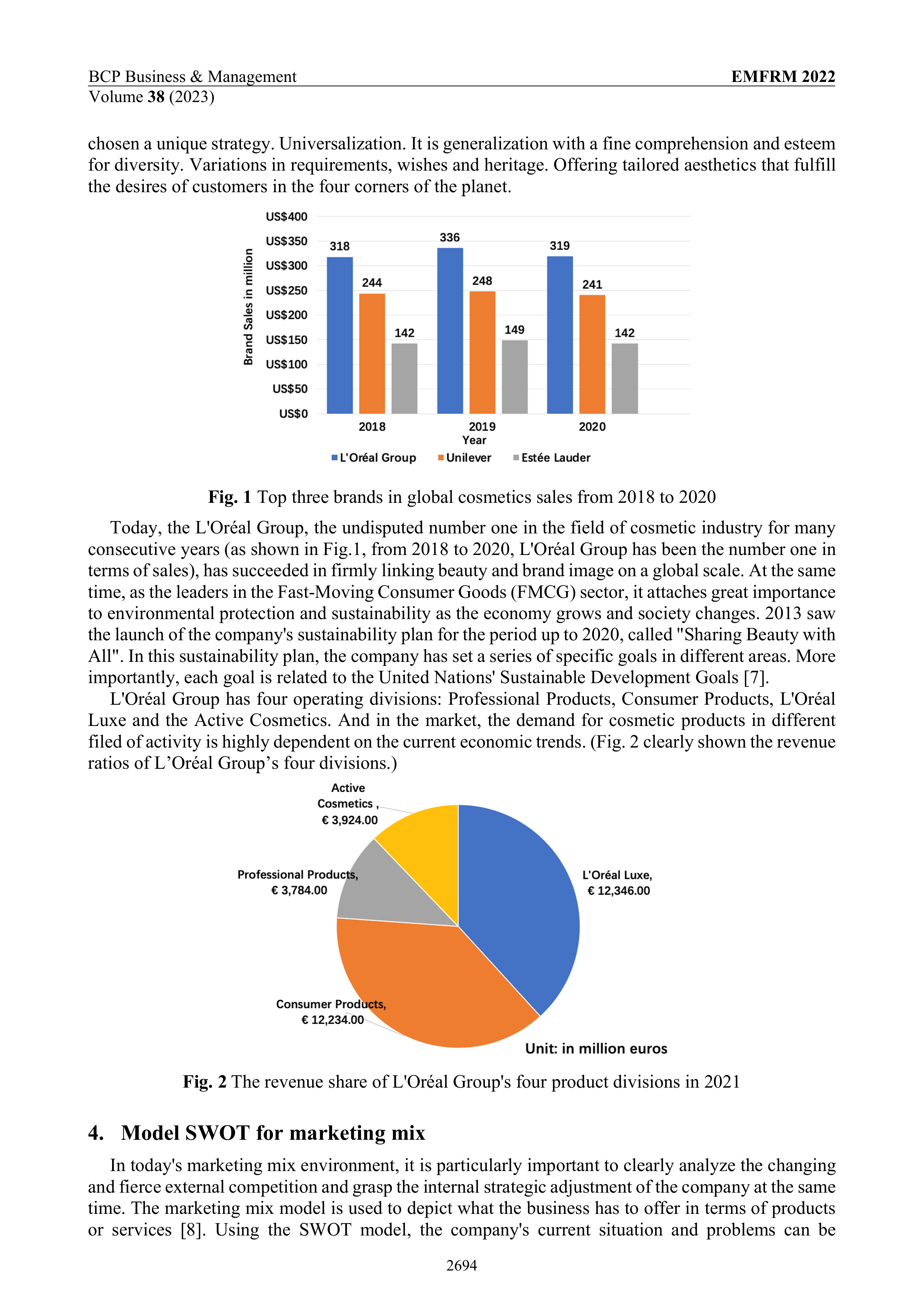
Fig. 1
Top three brands in global cosmetics sales from 2018 to 2020
Today, the L'Oréal Group, the undisputed number one in the field of cosmetic industry for many
consecutive years (as shown in Fig.1, from 2018 to 2020, L'Oréal Group has been the number one in
terms of sales), has succeeded in firmly linking beauty and brand image on a global scale. At the same
time, as the leaders in the Fast-Moving Consumer Goods (FMCG) sector, it attaches great importance
to environmental protection and sustainability as the economy grows and society changes. 2013 saw
the launch of the company's sustainability plan for the period up to 2020, called "Sharing Beauty with
All". In this sustainability plan, the company has set a series of specific goals in different areas. More
importantly, each goal is related to the United Nations' Sustainable Development Goals [7].
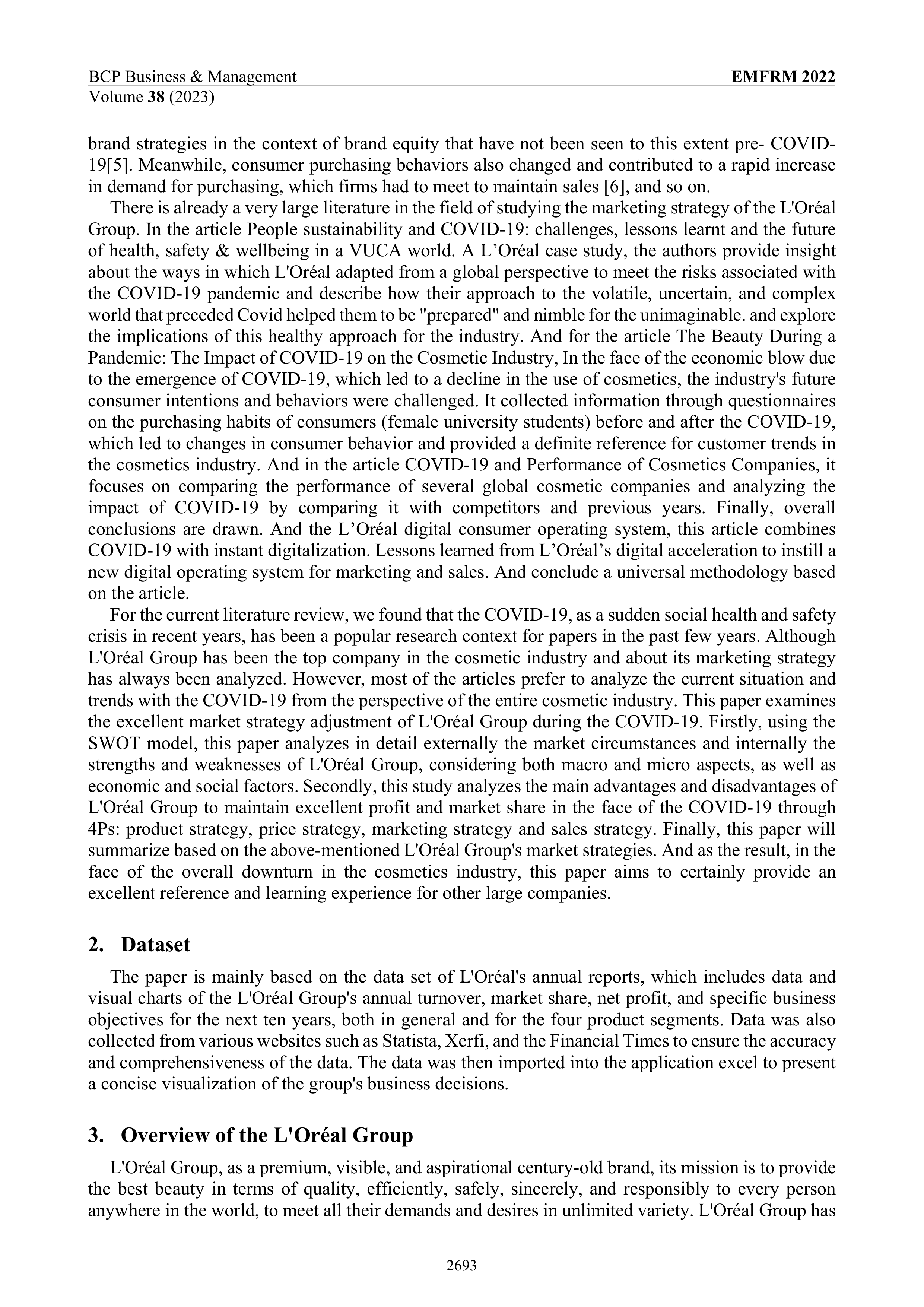
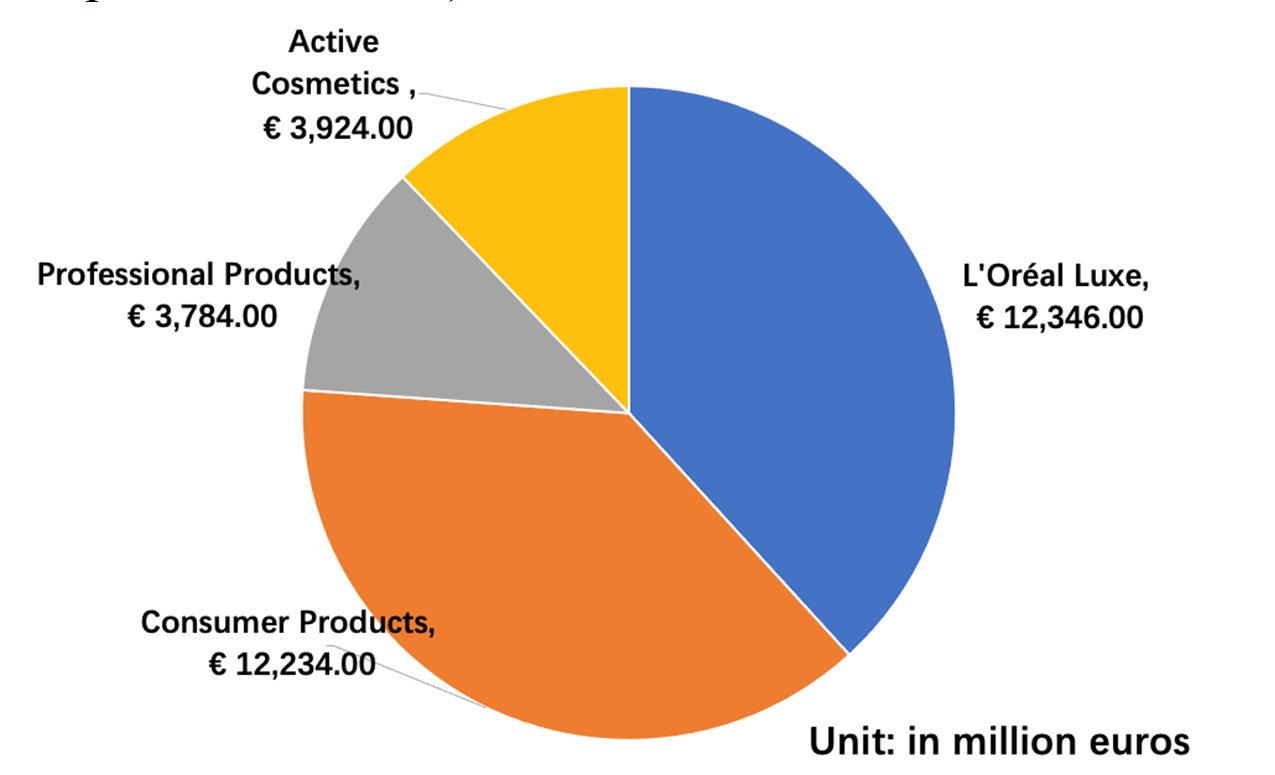
L'Oréal Group has four operating divisions: Professional Products, Consumer Products, L'Oréal
Luxe and the Active Cosmetics. And in the market, the demand for cosmetic products in different
filed of activity is highly dependent on the current economic trends. (Fig. 2 clearly shown the revenue
ratios of L’Oréal Group’s four divisions.)
Fig. 2
The revenue share of L'Oréal Group's four product divisions in 2021
4.
Model SWOT for marketing mix
In today's marketing mix environment, it is particularly important to clearly analyze the changing
and fierce external competition and grasp the internal strategic adjustment of the company at the same
time. The marketing mix model is used to depict what the business has to offer in terms of products
or services [8]. Using the SWOT model, the company's current situation and problems can be
BCP Business & Management
EMFRM 2022
Volume
38
(2023)
2695
analyzed in detail based on the strengths and weaknesses of both the company's own strengths and
the external environment.
4.1
Strength
As far as factual advantages are concerned, there is no doubt that the L'Oréal Group has great
advantages of its own. First, in the field of marketing, the L'Oréal Group is known for its brands and
high brand awareness as a captain of the beauty industry. Currently, the L'Oréal Group has a very
high market share, with more than 34 consumer brands of different grades in many areas such as
make-up and hairdressing, occupying a wide market share. It already has more than 250 million users
in more than 150 countries and territories. The main reason for the year-on-year growth in market
share is a solid and constantly innovative marketing strategy. L'Oréal Group is very accurate in
judging the market situation and adjusts its marketing strategy quickly every year or every quarter.
Along with the rise of the Internet, L'Oréal Group saw early on the vast market for e-commerce and
this fast way of communication, which was one of the reasons why the Group was later able to take
the lead in the e-market during the COVID-19.
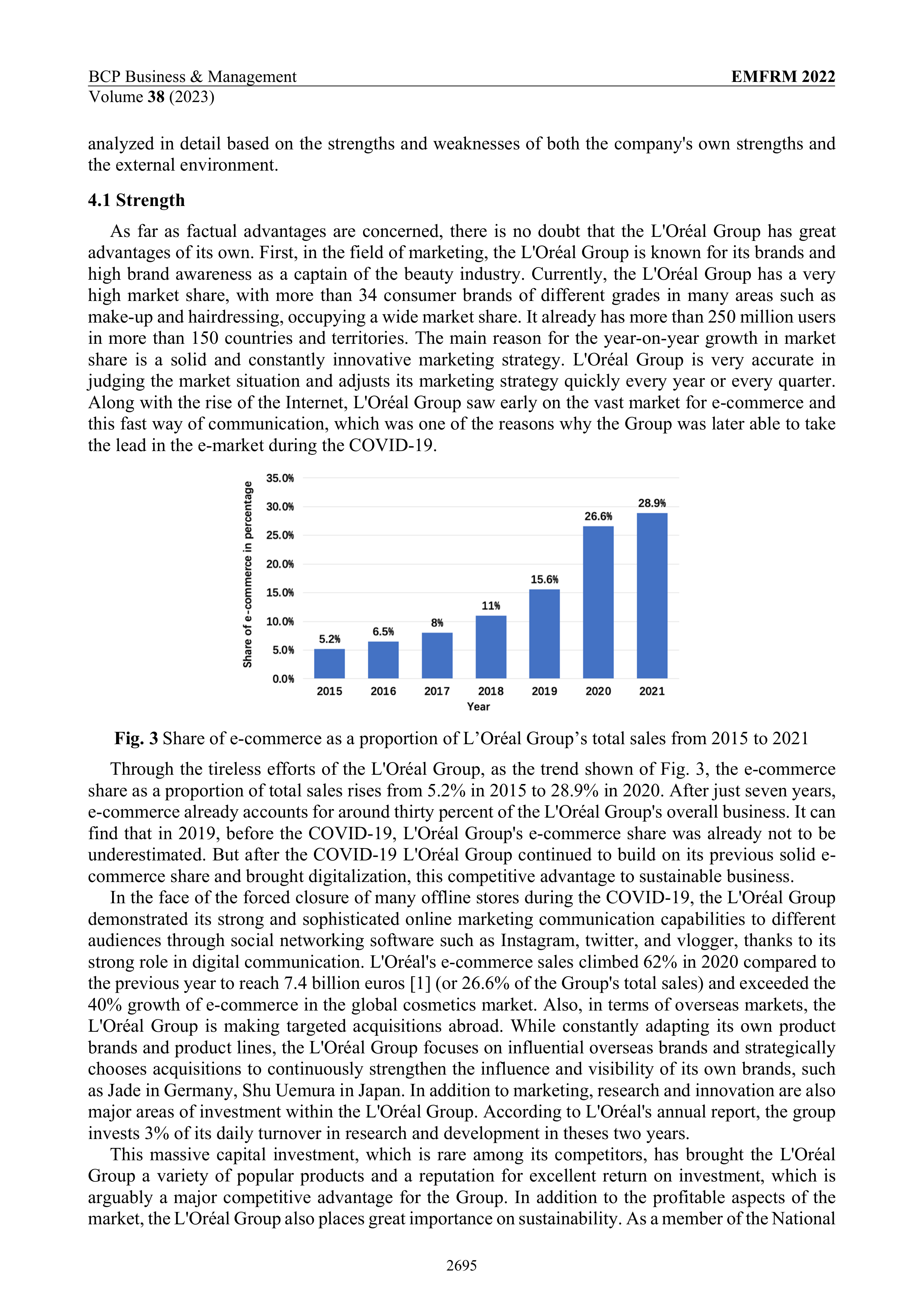
Fig. 3
Share of e-commerce as a proportion of L’Oréal Group’s total sales from 2015 to 2021
Through the tireless efforts of the L'Oréal Group, as the trend shown of Fig. 3, the e-commerce
share as a proportion of total sales rises from 5.2% in 2015 to 28.9% in 2020. After just seven years,
e-commerce already accounts for around thirty percent of the L'Oréal Group's overall business. It can
find that in 2019, before the COVID-19, L'Oréal Group's e-commerce share was already not to be
underestimated. But after the COVID-19 L'Oréal Group continued to build on its previous solid e-
commerce share and brought digitalization, this competitive advantage to sustainable business.
In the face of the forced closure of many offline stores during the COVID-19, the L'Oréal Group
demonstrated its strong and sophisticated online marketing communication capabilities to different
audiences through social networking software such as Instagram, twitter, and vlogger, thanks to its
strong role in digital communication. L'Oréal's e-commerce sales climbed 62% in 2020 compared to
the previous year to reach 7.4 billion euros [1] (or 26.6% of the Group's total sales) and exceeded the
40% growth of e-commerce in the global cosmetics market. Also, in terms of overseas markets, the
L'Oréal Group is making targeted acquisitions abroad. While constantly adapting its own product
brands and product lines, the L'Oréal Group focuses on influential overseas brands and strategically
chooses acquisitions to continuously strengthen the influence and visibility of its own brands, such
as Jade in Germany, Shu Uemura in Japan. In addition to marketing, research and innovation are also
major areas of investment within the L'Oréal Group. According to L'Oréal's annual report, the group
invests 3% of its daily turnover in research and development in theses two years.
This massive capital investment, which is rare among its competitors, has brought the L'Oréal
Group a variety of popular products and a reputation for excellent return on investment, which is
arguably a major competitive advantage for the Group. In addition to the profitable aspects of the
market, the L'Oréal Group also places great importance on sustainability. As a member of the National
BCP Business & Management
EMFRM 2022
Volume
38
(2023)
2696
Alliance Global Compact for the past 20 years, L'Oréal Group has not only strived to be green in the
packaging and shipping of its products, promoting environmental protection by reducing greenhouse
gas emissions such as CO2, but has also contributed to the fight against hunger and the mitigation of
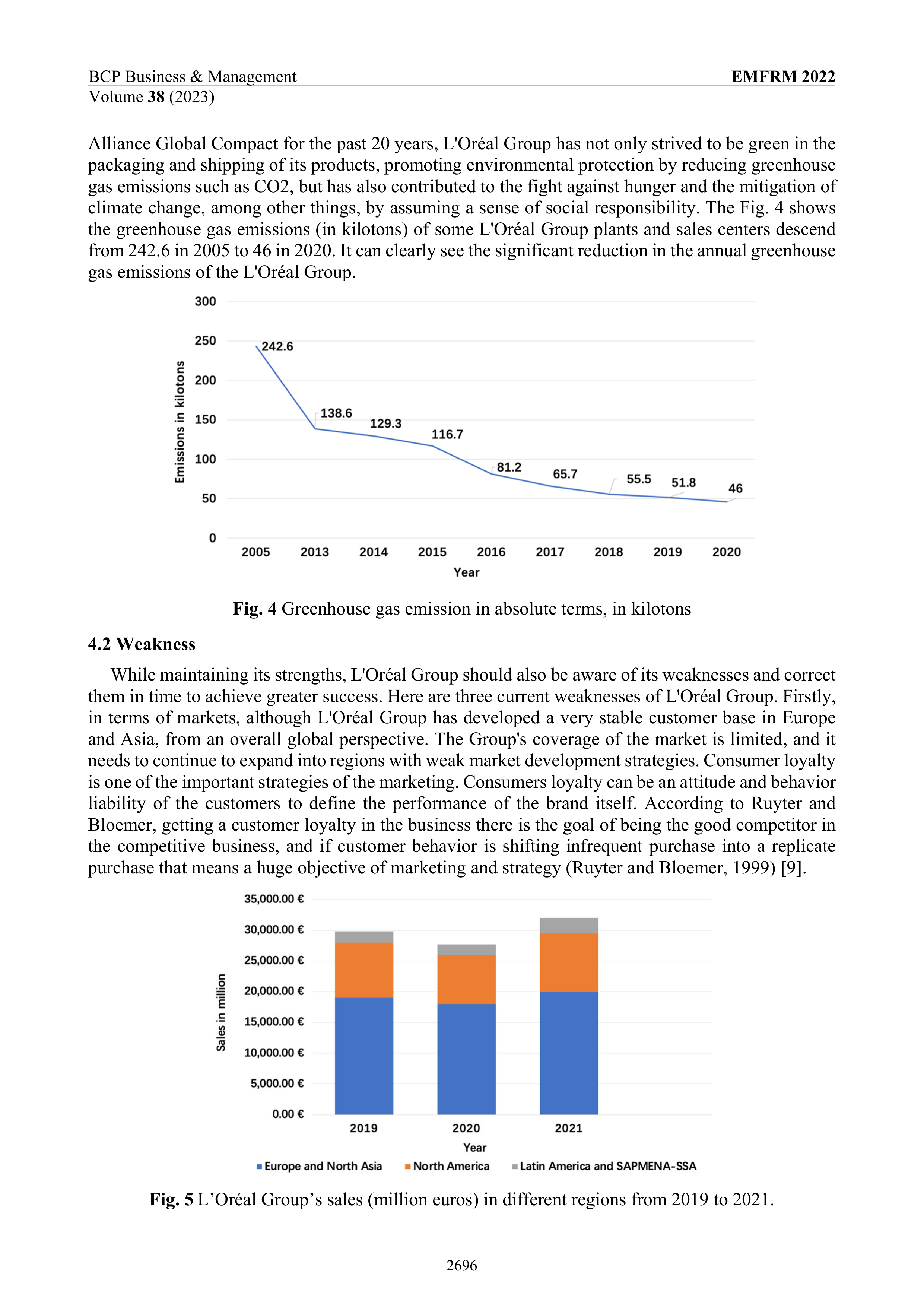
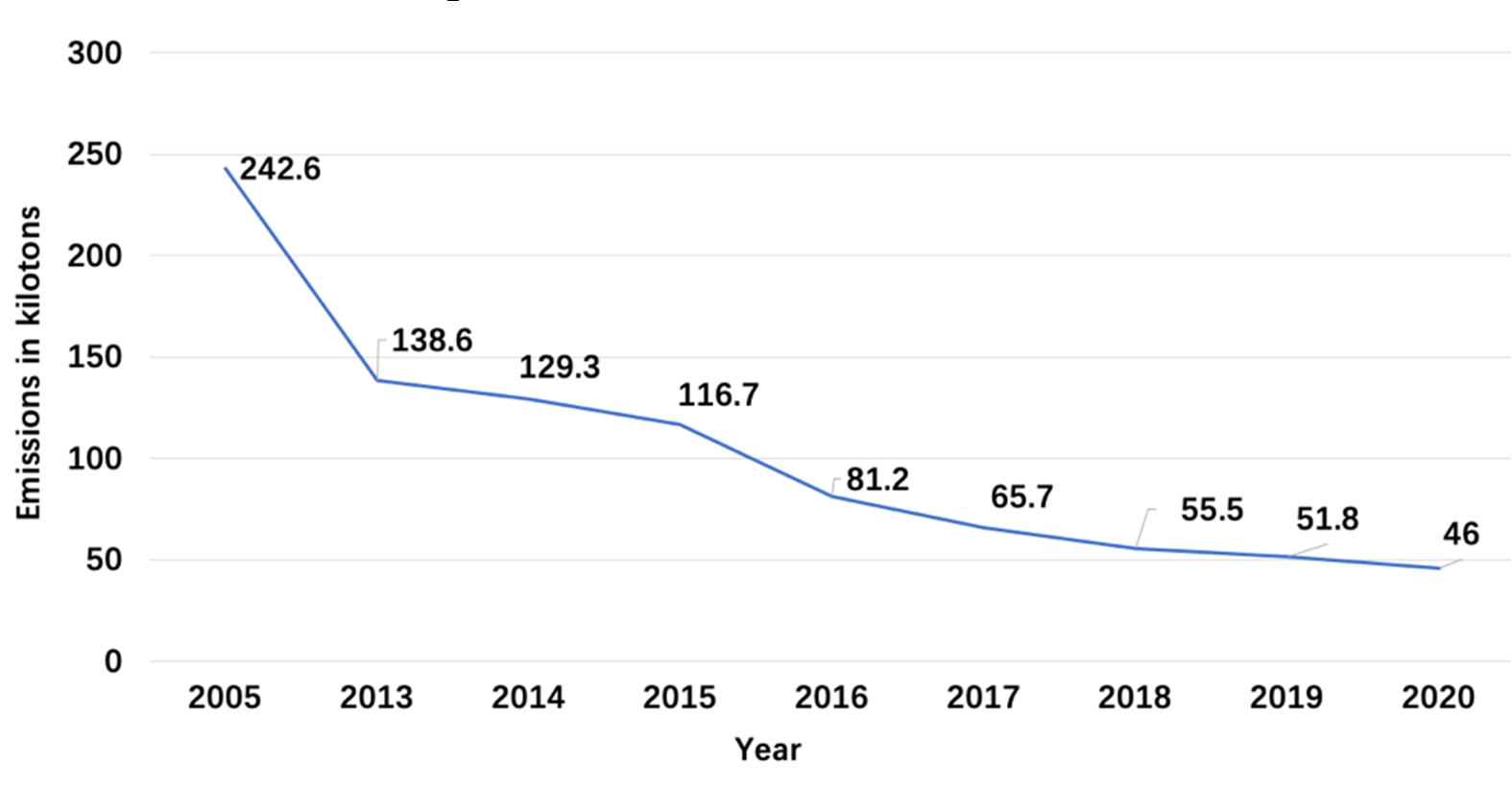
climate change, among other things, by assuming a sense of social responsibility. The Fig. 4 shows
the greenhouse gas emissions (in kilotons) of some L'Oréal Group plants and sales centers descend
from 242.6 in 2005 to 46 in 2020. It can clearly see the significant reduction in the annual greenhouse
gas emissions of the L'Oréal Group.
Fig. 4
Greenhouse gas emission in absolute terms, in kilotons
4.2
Weakness
While maintaining its strengths, L'Oréal Group should also be aware of its weaknesses and correct
them in time to achieve greater success. Here are three current weaknesses of L'Oréal Group. Firstly,
in terms of markets, although L'Oréal Group has developed a very stable customer base in Europe
and Asia, from an overall global perspective. The Group's coverage of the market is limited, and it
needs to continue to expand into regions with weak market development strategies. Consumer loyalty
is one of the important strategies of the marketing. Consumers loyalty can be an attitude and behavior
liability of the customers to define the performance of the brand itself. According to Ruyter and
Bloemer, getting a customer loyalty in the business there is the goal of being the good competitor in
the competitive business, and if customer behavior is shifting infrequent purchase into a replicate
purchase that means a huge objective of marketing and strategy (Ruyter and Bloemer, 1999) [9].
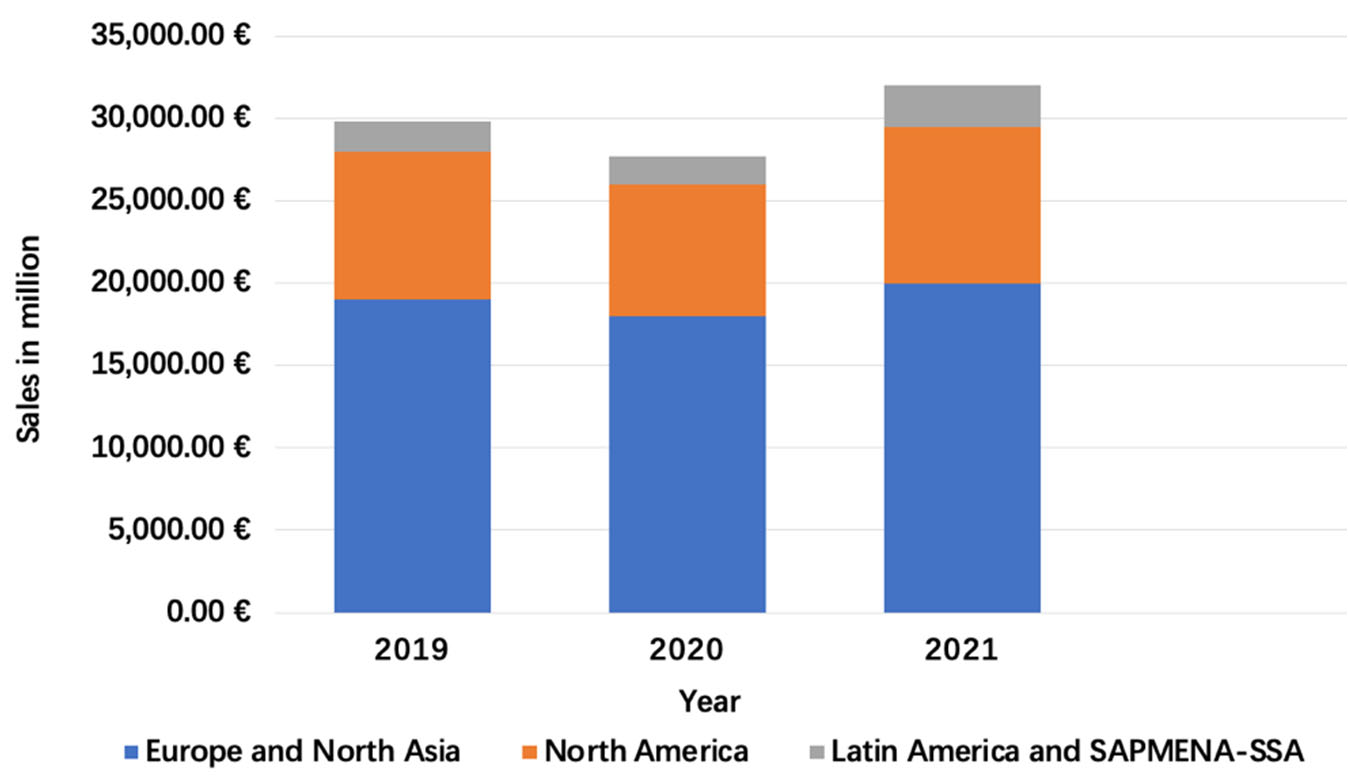
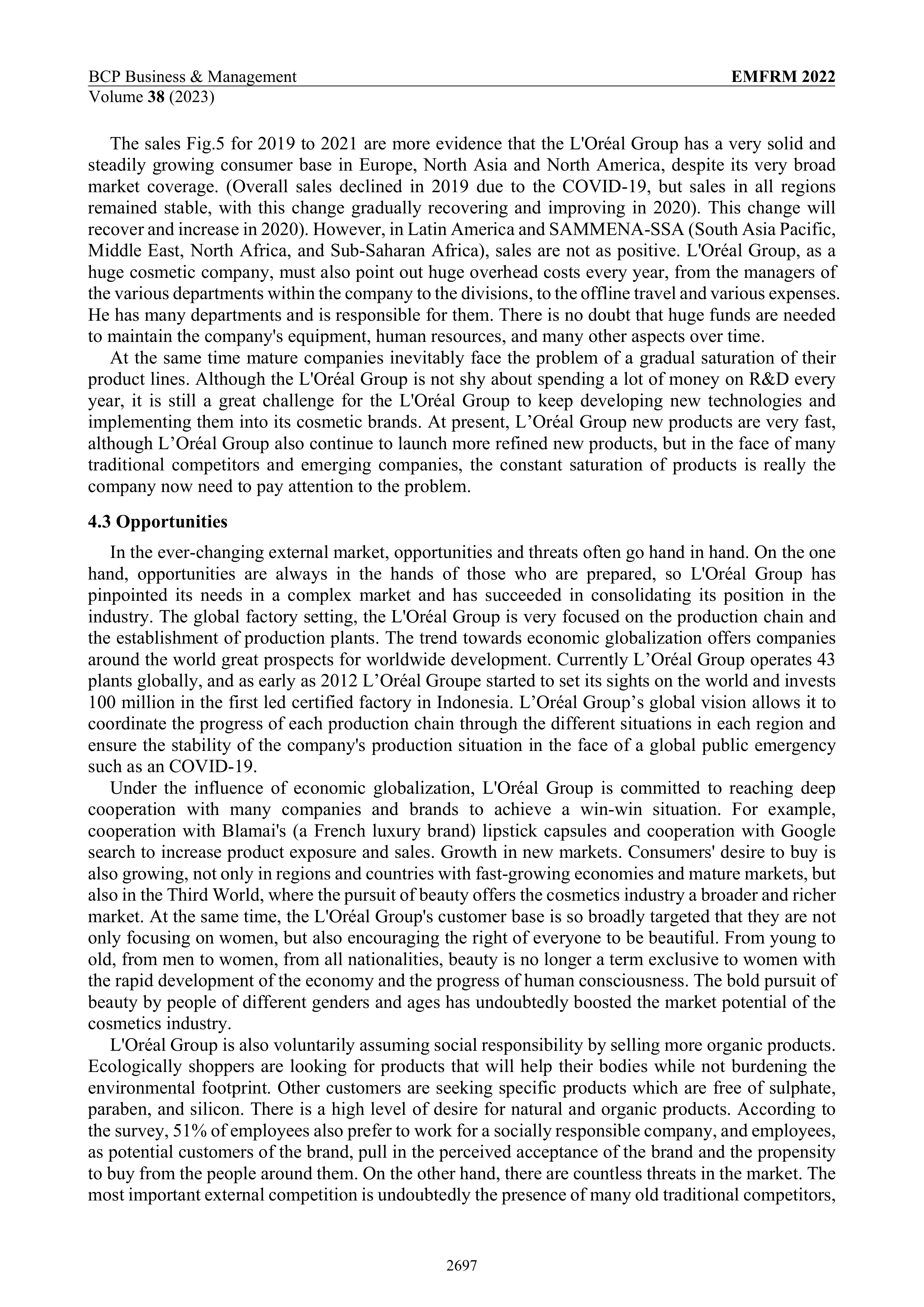
Fig. 5
L’Oréal Group’s sales (million euros) in different regions from 2019 to 2021.
BCP Business & Management
EMFRM 2022
Volume
38
(2023)
2697
The sales Fig.5 for 2019 to 2021 are more evidence that the L'Oréal Group has a very solid and
steadily growing consumer base in Europe, North Asia and North America, despite its very broad
market coverage. (Overall sales declined in 2019 due to the COVID-19, but sales in all regions
remained stable, with this change gradually recovering and improving in 2020). This change will
recover and increase in 2020). However, in Latin America and SAMMENA-SSA (South Asia Pacific,
Middle East, North Africa, and Sub-Saharan Africa), sales are not as positive. L'Oréal Group, as a
huge cosmetic company, must also point out huge overhead costs every year, from the managers of
the various departments within the company to the divisions, to the offline travel and various expenses.
He has many departments and is responsible for them. There is no doubt that huge funds are needed
to maintain the company's equipment, human resources, and many other aspects over time.
At the same time mature companies inevitably face the problem of a gradual saturation of their
product lines. Although the L'Oréal Group is not shy about spending a lot of money on R&D every
year, it is still a great challenge for the L'Oréal Group to keep developing new technologies and
implementing them into its cosmetic brands. At present, L’Oréal Group new products are very fast,
although L’Oréal Group also continue to launch more refined new products, but in the face of many
traditional competitors and emerging companies, the constant saturation of products is really the
company now need to pay attention to the problem.
4.3
Opportunities
In the ever-changing external market, opportunities and threats often go hand in hand. On the one
hand, opportunities are always in the hands of those who are prepared, so L'Oréal Group has
pinpointed its needs in a complex market and has succeeded in consolidating its position in the
industry. The global factory setting, the L'Oréal Group is very focused on the production chain and
the establishment of production plants. The trend towards economic globalization offers companies
around the world great prospects for worldwide development. Currently L’Oréal Group operates 43
plants globally, and as early as 2012 L’Oréal Groupe started to set its sights on the world and invests
100 million in the first led certified factory in Indonesia. L’Oréal Group’s global vision allows it to
coordinate the progress of each production chain through the different situations in each region and
ensure the stability of the company's production situation in the face of a global public emergency
such as an COVID-19.
Under the influence of economic globalization, L'Oréal Group is committed to reaching deep
cooperation with many companies and brands to achieve a win-win situation. For example,
cooperation with Blamai's (a French luxury brand) lipstick capsules and cooperation with Google
search to increase product exposure and sales. Growth in new markets. Consumers' desire to buy is
also growing, not only in regions and countries with fast-growing economies and mature markets, but
also in the Third World, where the pursuit of beauty offers the cosmetics industry a broader and richer
market. At the same time, the L'Oréal Group's customer base is so broadly targeted that they are not
only focusing on women, but also encouraging the right of everyone to be beautiful. From young to
old, from men to women, from all nationalities, beauty is no longer a term exclusive to women with
the rapid development of the economy and the progress of human consciousness. The bold pursuit of
beauty by people of different genders and ages has undoubtedly boosted the market potential of the
cosmetics industry.
L'Oréal Group is also voluntarily assuming social responsibility by selling more organic products.
Ecologically shoppers are looking for products that will help their bodies while not burdening the
environmental footprint. Other customers are seeking specific products which are free of sulphate,
paraben, and silicon. There is a high level of desire for natural and organic products. According to
the survey, 51% of employees also prefer to work for a socially responsible company, and employees,
as potential customers of the brand, pull in the perceived acceptance of the brand and the propensity
to buy from the people around them. On the other hand, there are countless threats in the market. The
most important external competition is undoubtedly the presence of many old traditional competitors,
BCP Business & Management
EMFRM 2022
Volume
38
(2023)
2698
such as brands like Estee Lauder and Unilever, whose performance in the market is almost on par
with that of the L'Oréal Group.
4.4
Threat
Facing external markets, the international situation has undoubtedly also had a particularly strong
impact on economic trends. First and foremost, the emergence of the 2019 COVID-19 as a key
variable in the macroeconomic environment caused global economic turmoil and the resulting
changes in geopolitical tensions, such as the war between Russia and Ukraine triggered by
fluctuations in economic resources due to the COVID-19. The global cosmetics industry was hit hard
by the COVID-19, which not only led to a significant drop in the L'Oréal Group's turnover in its main
regional markets, but also hit its export business or sales volume in other regions or countries.
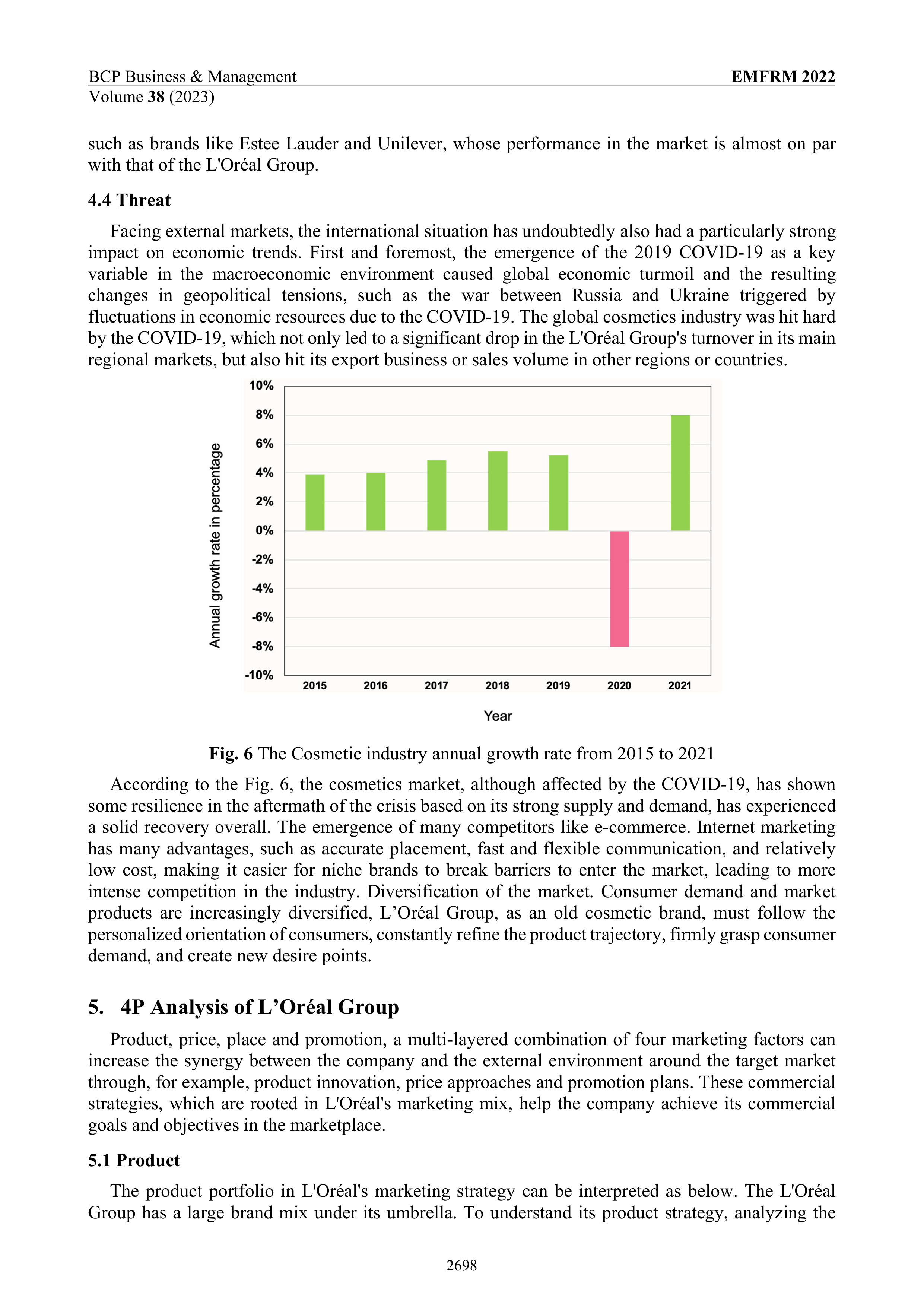
Fig. 6
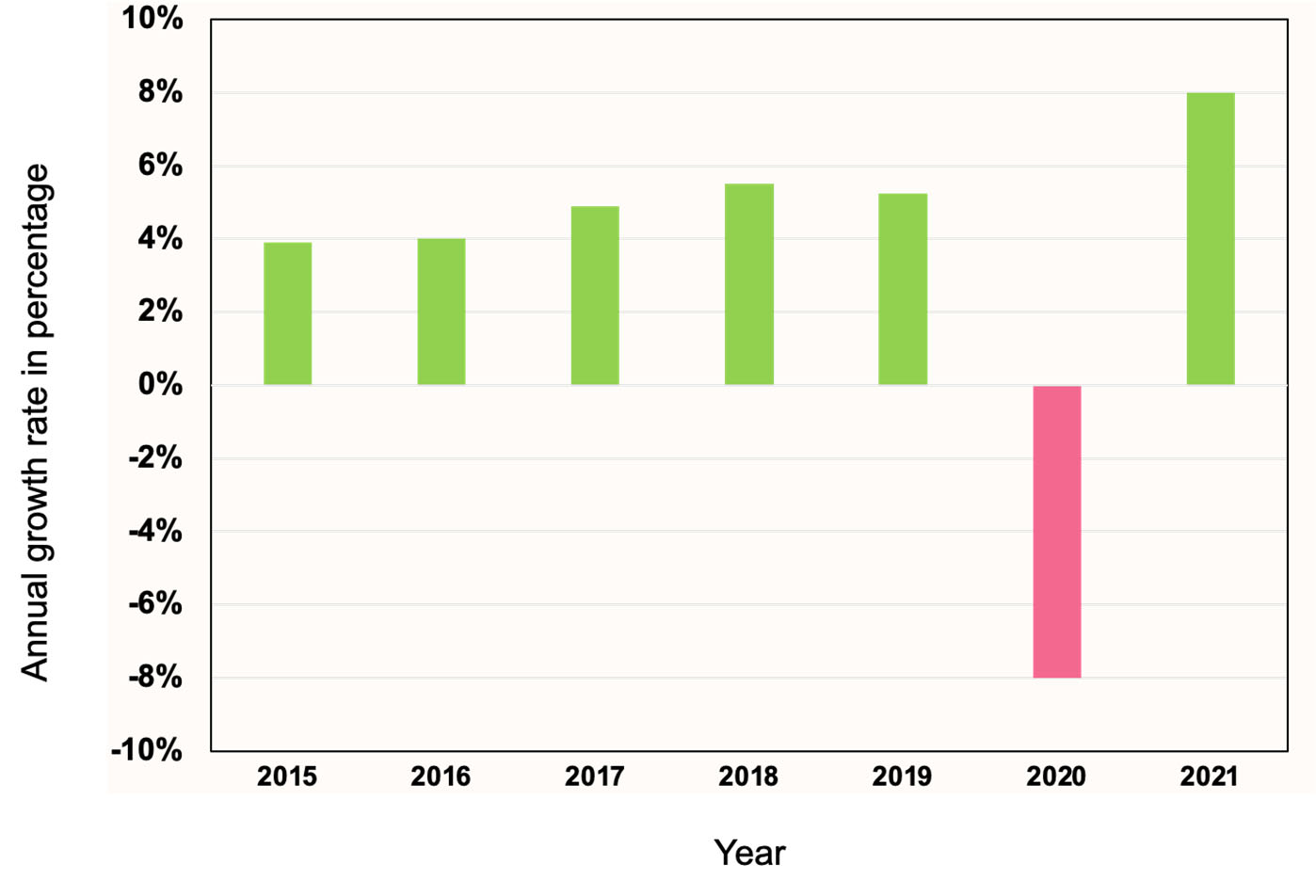
The Cosmetic industry annual growth rate from 2015 to 2021
According to the Fig. 6, the cosmetics market, although affected by the COVID-19, has shown
some resilience in the aftermath of the crisis based on its strong supply and demand, has experienced
a solid recovery overall. The emergence of many competitors like e-commerce. Internet marketing
has many advantages, such as accurate placement, fast and flexible communication, and relatively
low cost, making it easier for niche brands to break barriers to enter the market, leading to more
intense competition in the industry. Diversification of the market. Consumer demand and market
products are increasingly diversified, L’Oréal Group, as an old cosmetic brand, must follow the
personalized orientation of consumers, constantly refine the product trajectory, firmly grasp consumer
demand, and create new desire points.
5.
4P Analysis of L’Oréal Group
Product, price, place and promotion, a multi-layered combination of four marketing factors can
increase the synergy between the company and the external environment around the target market
through, for example, product innovation, price approaches and promotion plans. These commercial
strategies, which are rooted in L'Oréal's marketing mix, help the company achieve its commercial
goals and objectives in the marketplace.
5.1
Product
The product portfolio in L'Oréal's marketing strategy can be interpreted as below. The L'Oréal
Group has a large brand mix under its umbrella. To understand its product strategy, analyzing the
BCP Business & Management
EMFRM 2022
Volume
38
(2023)
2699
brand structure of the multilayer line is the best and quickest way. They are in four main divisions
related to all beauty and cosmetics related products, that being the L'Oréal Luxury Division: Kiehl's,
Lancôme, Yves Saint Laurent, Ralph Lauren, Giorgio Armani, Diesel, Clarins; Consumer Products
Division: L’Oréal Paris, Garnier, Maybelline New York, Shampoo; Active Cosmetics Division.
Vichy, La Roche-Posay. Sanofi; Professional Product Division: L'Oréal Professional Paris, Caresse,
Matrix Body Shop.
With these product divisions, L'Oréal has products such as eyeliners, nail polishes, concealers,
shampoos, and serums. All of them are constantly produced to innovate according to the changing
preferences and needs of customers. It can also find the L'Oréal Group's customer-centric marketing
philosophy with high quality, where the customer is the group that owns the brand. This is also an
important reason why L'Oréal Group was able to quickly turn the situation around through online
digital sales when offline marketing channels were interrupted during the COVID-19.
The L'Oréal Group has shown significant resistance during2020, which was signed by the
pandemic crisis of COVID-19. During this period, the consumers of cosmetic products were intensely
affected by the shutting down of several million sales points (parlors, perfumeries, department shops,
airport outlets, etc.), which created a truly supply crisis, not a demand crisis, as customers were
provisional prevented from being able to buy goods and services.
Under these particularly unfavorable conditions, every sector of the L'Oréal Group has shown
enormous resilience in its business. The Active Cosmetics department succeeded in maintaining its
strong expansion. The Consumer Products department managed to limit its decline thanks to its large
share in cosmetics, the category that experienced the greatest slowdown. The L'Oréal Luxury and
Professional Products Divisions also achieved significant success. Allowing the Group to adapt with
speed and agility to this terrible COVID-19 crisis and to accelerate all its transformations, allowing
the Group to return to growth in 2021 by becoming more powerful and tenacious in its ability to resist.
5.2
Price
L'Oréal Group targets different consumer groups by positioning different price ranges according
to different product divisions. Thanks to the pricing strategy of selling different product categories,
they get massive profits in this division. Professional products are mainly sold to the salons all over
the world, so the clients are prepared to give payment for the products because they are not so
expensive. Products from the luxury sector are sold in superstores, makeup stores, personal brand
stores, and even over the Internet. The prices of these products are high, but thanks to their high-level
positioning and superior quality, the audience willing to pay is still very wide. L'Oréal Group tends
to remain on a value-based price strategy for most of its offerings. The L'Oréal Group is striving to
penetrate the market at a variety of cost levels by increasing the number of stocks, and the L'Oréal
Group is always innovating in its various product divisions. As a result, the pricing strategy in the
L'Oréal Group's marketing mix is structured because of premium prices, competition, geographical
areas served and product demand.
5.3
Place
Depending on the production focus of the different product divisions, products are supplied to
customers all over the world. Today, the L'Oréal Group has an extensive distribution network,
achieving strong market coverage through the acquisition of several different firms worldwide to
grow its brand influence. Throughout the years, the L'Oréal Group has developed and now operates
in 130 nations on 5 different continents. L'Oréal's distribution strategy is selective distribution, and
because of their many products, they have a wide range of distribution channels and targets, including
perfumeries, department stores and other establishments. Every one of their offerings is accessible in
department stores, retailers, pharmacies, beauty salons, beauty stores, own-brand boutiques, and even
online sites. With the tremendous increase in the number of online shopping channels, the L'Oréal
Group's presence in all these online channels is guaranteed. According to the L'Oréal Group's annual
report, the Group has already started to implement a proven online marketing strategy in 2017 For
BCP Business & Management
EMFRM 2022
Volume
38
(2023)
2700
example, with 35% of digital media investments with 250 million followers on social networks, e-
commerce has reached 8% of consolidated sales. In China, for example, L'Oréal Group uses Weibo
to distribute news and express some ideas. 2021 L'Oréal Group made a public service video with the
theme "Say no to street harassment". This is one of the typical ways in which L'Oréal Group focuses
on women's issues. It tries to raise more public awareness and promotes the brand image of the
L'Oréal Group [10]. With the power of social networks and the development of data analytics, brands
can better target consumers. Global spending on digital advertising continues to increase year after
year. They reach around 54% of global advertising investment in 2020. In France, the birthplace of
the L'Oréal Group, offline L'Oréal Group has taken over retail stores to promote and sell its brands.
It is fair to say that without the impact of COVID-19, the L'Oréal Group's capital would have
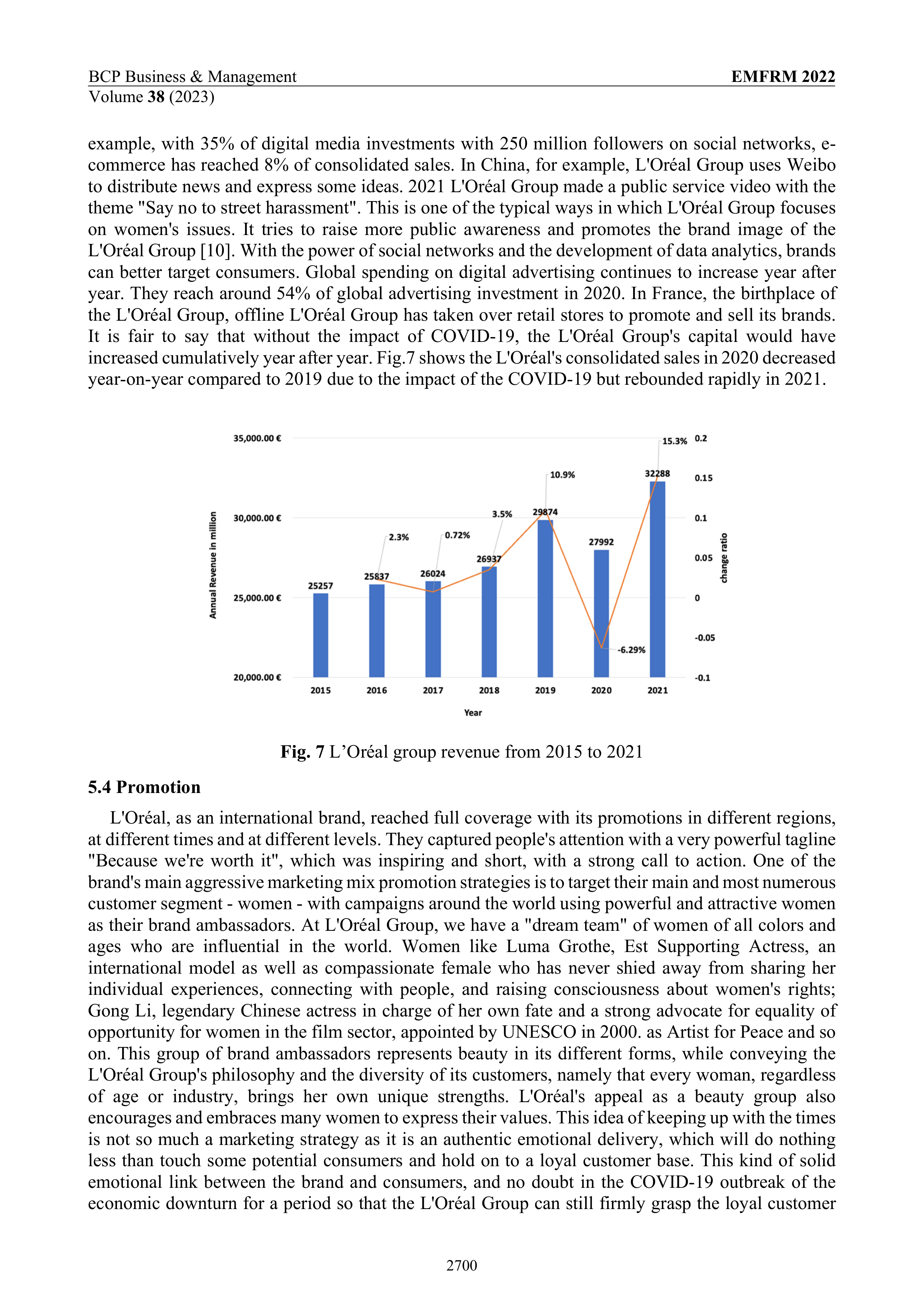
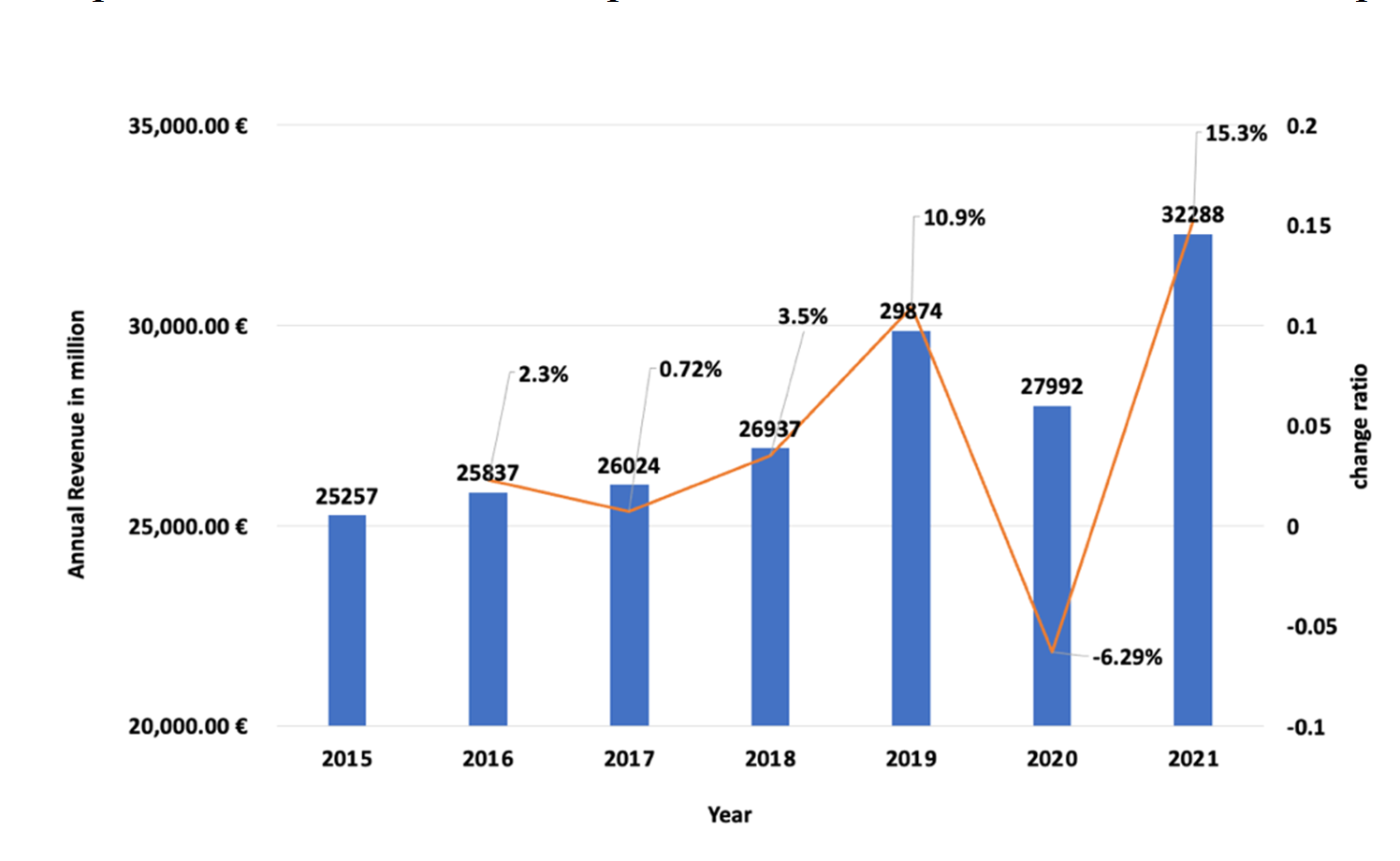
increased cumulatively year after year. Fig.7 shows the L'Oréal's consolidated sales in 2020 decreased
year-on-year compared to 2019 due to the impact of the COVID-19 but rebounded rapidly in 2021.
Fig. 7
L’Oréal group revenue from 2015 to 2021
5.4
Promotion
L'Oréal, as an international brand, reached full coverage with its promotions in different regions,
at different times and at different levels. They captured people's attention with a very powerful tagline
"Because we're worth it", which was inspiring and short, with a strong call to action. One of the
brand's main aggressive marketing mix promotion strategies is to target their main and most numerous
customer segment - women - with campaigns around the world using powerful and attractive women
as their brand ambassadors. At L'Oréal Group, we have a "dream team" of women of all colors and
ages who are influential in the world. Women like Luma Grothe, Est Supporting Actress, an
international model as well as compassionate female who has never shied away from sharing her
individual experiences, connecting with people, and raising consciousness about women's rights;
Gong Li, legendary Chinese actress in charge of her own fate and a strong advocate for equality of
opportunity for women in the film sector, appointed by UNESCO in 2000. as Artist for Peace and so
on. This group of brand ambassadors represents beauty in its different forms, while conveying the
L'Oréal Group's philosophy and the diversity of its customers, namely that every woman, regardless
of age or industry, brings her own unique strengths. L'Oréal's appeal as a beauty group also
encourages and embraces many women to express their values. This idea of keeping up with the times
is not so much a marketing strategy as it is an authentic emotional delivery, which will do nothing
less than touch some potential consumers and hold on to a loyal customer base. This kind of solid
emotional link between the brand and consumers, and no doubt in the COVID-19 outbreak of the
economic downturn for a period so that the L'Oréal Group can still firmly grasp the loyal customer
BCP Business & Management
EMFRM 2022
Volume
38
(2023)
2701
base, occupying the top of the industry. Also, the marketing strategy of spreading the brand image
through good word of mouth is something that needs constant attention for L’Oréal.
L’Oréal Group also has various corporate social responsibility commitments such as Care
programs to foster civic awareness through a variety of social welfare programs in the areas of
children's education, healthcare, safety, and the environment. A partnership with UNESCO to assist
in helping younger women to realize their goals and aspirations for a scientific career. Through all
these promotions and campaigns, L'Oréal Group has managed to gain a huge market in the world.
6.
Discussion
Opportunity is always reserved for those who are prepared. Based on the development of L'Oréal
Group in the recent years, it can be found that the brand has very long-term development goals and
strong execution capabilities, which can make the brand stand in the face of the COVID-19 in the
environment of the economic downturn in time. This shows that in the future changing market
environment, if L’Oréal Group can continue its own advantages and constantly make up for its own
minor shortcomings, then L’Oréal Group will certainly make further efforts to steadily advance and
maintain its position as a leader in the industry. At the same time, L’Oréal Group, as the industry
leader, is a very good example for other, especially emerging, makeup companies. In the face of the
changing and risky market environment, the only key to success is to rely on one's own excellent
ability and develop unique competitive advantages.
7.
Conclusion
As a mature cosmetics company, the L'Oréal Group can effectively plan the company's investment
and acquisition as well as R&D and other various capital allocation ratios internally, allowing the
company to achieve an almost perfect closed process of production investment and reproduction. It
can accurately judge the situation and quickly seize opportunities in the face of the market, relying
on advanced concepts such as the rapid development of digitalization in all divisions of the company,
the transformation of sales channels, and awareness of the social environment to make customers
truly feel valued in many ways, both socially and economically. This close bond between brand,
customer and market has made L'Oréal Group truly reach the hearts of its customers. It has allowed
L'Oréal Group to emerge once again in the test of this COVID-19 and to stand invincible in the
cosmetics industry with solid brand effects and robust results. This paper also uses this study to
summarize the reasons why the L'Oréal Group was instead able to emerge from a very battered
cosmetics industry in the face of a major public safety crisis such as the COVID-19.
References
[1]
Jia Yi Woong, Shao Hung Goh. Supply Chain Risk Management Strategies in the Face of COVID-19.
Proceedings of the 11th Annual International Conference on Industrial Engineering and Operations
Management Singapore, 2021, March 7-11.
[2]
Jun Kang, Zihe Diao. Marco Tulio Zanini. Business-to-business marketing responses to COVID-19 crisis:
a business process perspective. 2020 29 September.
[3]
Annu Gupta, Dr. Parikshit Kala. Impact Of Covid-19 Pandemic on Purchase and Usage Patterns Of
Cosmetics Among Women Of Gurugram. June 2021. pp. 250-259. 10.34218/IJM.12.6.2021.0022.
[4]
Fernandes Nuno Economic effects of coronavirus outbreak (COVID-19) on the world economy. 2020.
[5]
Sanne Ichelle Dubbelink, Carolina Herrando, Efthymios Constantinides. Social Media Marketing as a
Branding Strategy in Extraordinary Times: Lessons from the COVID-19 Pandemic Sustainability 2021,
13, 10310.
[6]
Timothy Manuel, Terri L. Herron. An ethical perspective of business CSR and the COVID-19 pandemic.
Society and Business Review Vol. 15 No. 3, 2020 pp. 235-253.
BCP Business & Management
EMFRM 2022
Volume
38
(2023)
2702
[7]
Dmitrievna, Koreneva Ksenia. Transformation of Business Sustainability Strategies of FMCG Companies
in the 21st Century on the Examples of Unilever and L’Oréal. 2021.
[8]
Kelly Steer, Lalit Garg, Vijay Parkash Soni, Vipul Gupta. SWOT Analysis of e-Marketing for e-business.
2019 June. ISSN: 2278-3075.
[9]
Krittiya Chaiyasit. Marketing Implication to Identified Factors That Influence Customer’S Loyalty
Towards L’Oreal Cosmetics at Siam Paragon Mall in Bangkok. K. M. B. A., 2019 March. 93pp.
[10]
Bingchan Xia, Minxuan Han, Yunxi Zhu. Experiential Marketing of L’Oréal in China: A Case Study
Based on Consumer Behavior of Chinese Female University Students. Advances in Economics, Business
and Management Research, volume 203. 2021. ICEMCI 2021.
[11]
imizer and fuzzy neural network model. Systems Engineering-Theory and Practice, 2010, 30(1): 158-160.