
SUMMARIES.COM
is a concentrated business information service. Every week, subscribers are e-mailed a
concise summary of a different business book. Each summary is about 8 pages long and contains the
stripped-down essential ideas from the entire book in a time-saving format. By investing less than one hour
per week in these summaries, subscribers gain a working knowledge of the top business titles. Subscriptions
are available on a monthly or yearly basis. Further information is available at http://www.summaries.com.
J
ACK
: S
TRAIGHT
F
ROM
T
HE
G
UT
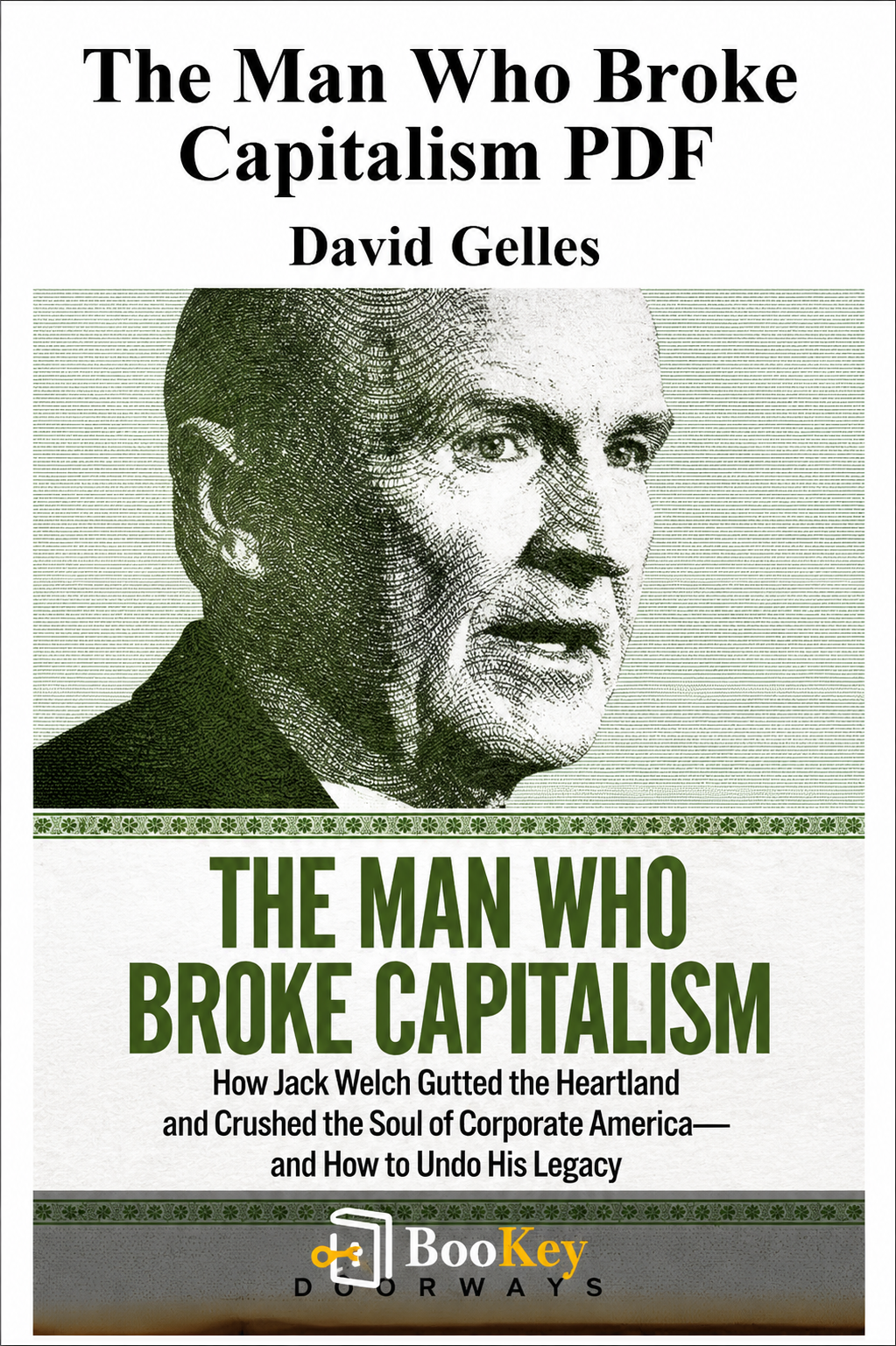
The Autobiography
JACK WELCH with JOHN BYRNE
JACK WELCH
joined General Electric in 1960 after graduating from the University of Massachusetts at
Amherst and the University of Illinois at Champaign. From 1981 to 2001, he served as chairman of the
company and CEO. He retired in the fall of 2001.
JOHN BYRNE
is a senior writer at
Business Week
magazine.

Jack Welch was born on November 19, 1935 in Peabody,
Massachusetts. Both his parents were second-generation
Americans of Irish descent. His father worked all his life as a
railroad conductor on the Boston & Maine commuter line
between Boston and Newburyport, leaving his mother to carry
the balance of the upbringing of Jack, their only child.
After graduating from the Salem High School, Jack applied to go
to the nearest state university, the University of Massachusetts
at Amherst, because “tuition was only fifty bucks a semester.
That meant I could get a degree for less than $1,000, including
room and board”. He began college in the fall of 1953 and by the
time he graduated in 1957 with a degree in chemical
engineering, Jack was one of the university’s two best
engineering students. He decided to enroll in the Ph. D. program
at the University of Illinois at Champaign because they offered
him a fellowship. By the time he left Illinois in 1960, not only did
he have a Ph.D. but he had also met and married his first wife,
Carolyn Osburn.
As a 24-year old graduate, Jack Welch had several offers of
work, but one that particularly interested him was an offer from
Dr. Dan Fox who was setting up a development group to work on
new plastics for General Electric in Pittsfield, Massachusetts.
They were working on a new thermoplastic called PPO
(polyphenylene oxide) which looked very promising. Jack was
hired to oversee the process of getting the new plastic out of the
lab and into production. So, Jack started at GE on October 17,
1960 as an engineer making $10,500 per year.
Within a year, Jack had become frustrated by the bureaucracy at
GE and decided to quit. He even handed in his notice and had
accepted another position when a young GE executive met with
him and persuaded Jack to stay at the company. He offered
more money, an increase in responsibility and cover from some
of the more obscure bureaucratic demands. Jack decided to
stay on and see how it worked out.
By the time GE decided to commit $10 million to building a pilot
plant for the manufacture of PPO in 1964, Jack Welch lobbied to
be appointed general manager of the plant to replace a more
experienced manager who was promoted to a strategic planning
position at corporate headquarters. Before Jack had a chance to
celebrate, however, a minor problem arose – it was found that
PPO had a serious flaw. The material cracked when exposed to
high temperatures which meant its proposed use as a
replacement for hot water pipes was out of the question. To
remedy the problem would take six months of intensive work in
the lab, but ultimately it was found blending polystyrene and
rubber into the PPO improved its performance characteristics.
(PPO would later become a winning product which is now
marketed as Noryl. Today, Noryl generates over $1 billion per
year in sales for GE).
With the success of the PPO project behind him, Jack Welch was
promoted in June 1968 to become general manager of GE’s $23
million plastics business.
“This was a big deal, making me at 32, the company’s youngest
general manager. The move put me into the big leagues with all
the trimmings – an annual invitation to the company’s top
management meeting every January in Florida and my first stock
options. I was on my way.”
–
Jack Welch
Naturally, the 32-year old Jack Welch had a number of rough
edges. As well as being proud and unwilling to acknowledge the
solid work of predecessors, Jack had little tolerance for protocol.
He encouraged open and vigorous debate, earning him a
reputation as a corporate maverick.
“I was blunt and candid and, some thought, rude. My language
could be coarse and impolitic. I didn’t like sitting and listening to
canned presentations or reading reports, preferring one-on-one
conversations where I expected managers to know their
business and have the answers. I loved ‘constructive conflict’
and thought open and honest debate about business issues
brought out the best decisions. If an idea couldn’t survive a
no-holds-barred discussion, the marketplace would kill it. Larry
Bossidy, a good friend and former GE vice chairman, would later
liken our staff meetings to Miller Lite commercials. They were
loud, raucous and animated.”
–
Jack Welch
Jack was also openly ambitious, writing in his 1973 performance
review that his long-term career objective was to become the
CEO of General Electric. Fortunately, this did not seem to hurt
his career, and in June 1973 Jack Welch was appointed group
executive for GE’s chemical and metallurgical division, a $2
billion in annual sales unit with 46,000 employees and 44
factories in 8 countries. Suddenly, this brash 36-year old was on
everyone’s radar screen at GE.
With the promotion, Jack was expected to move to GE’s
corporate headquarters in Fairfield, New York. That idea did not
appeal, however, and he was able to convince the vice chairman
of the company to allow him to work with a 5-person staff from a
suite of offices in the Berkshire Hotel in Pittsfield instead. Jack
made loads of mistakes running the group, but gradually started
developing a feel for how the GE system worked.
With his next promotion to sector executive in 1977, Jack was
forced to move to corporate headquarters. This suited him,
however, because it was now widely known Reg Jones, the CEO
of GE, was preparing to retire. All five sector executives and the
company’s CFO and senior vice president for corporate planning
were considered as candidates for the CEO position. Jack was
placed in charge of consumer products and services –
something he knew nothing about. It was a test of his ability to
run businesses he knew nothing about.
“From day one, the succession process was thick with politics.
You could feel the tension in the building every day. The five
sector heads were all located in the west building. Each of us had
a corner office, a conference room, and space for several
support staff. Whenever we were in town, we’d usually end up in
an uncomfortable situation in the corporate dining room for
lunch. We’d munch on sandwiches, always being careful about
what we said. It was awful. Fortunately, to do the job right, I
needed to spend as little time in Fairfield as possible. The field
became my refuge from the politics.”
–
Jack Welch
In contrast to his predecessors, Jack Welch trimmed back GE’s
forward plans for the long-term growth of the appliance market
size. He also took notice of GE Credit Corp. which was a small
$67 million business with 7,000 employees in 1977. Jack Welch
moved quickly to grow this business, which was met with
impressive rates of growth. (By 2000, GE Capital would have
$5.2 billion in earnings and 89,000 employees). Jack also tried
other initiatives with mixed results. He championed the
acquisition of the Cox Communications cable and broadcasting
Jack: Straight From The Gut - Page 1
The Early Years






































.Com
Summaries
The Ultimate Business Library
8-page
30 mins
dollars
300+ page
key ideas
We condense
business books into
summaries.
By reading summaries, you’ll get the
in
, so you can spend more time turning your
ideas into
.
Learn from the mistakes and success of the smartest people in business;
Get fresh ideas, strategies & motivation that could be worth millions to you;
Follow emerging trends, so you can catch the wave before your competitors do;
Catch up on the classics you always wanted to read.
>
>
>
>
$2 per week
For just
, you will...
Our catalog includes summaries on a range of topics for
aspiring entrepreneurs, managers, and consultants.
1,000 Top Business Book Summaries
Knowledge is Power — Invest in Your Future
AND MORE
SALES
MANAGEMENT
LEADERSHIP
MOTIVATION
STRATEGY
PRESENTATIONS
BUSINESS PLANS