
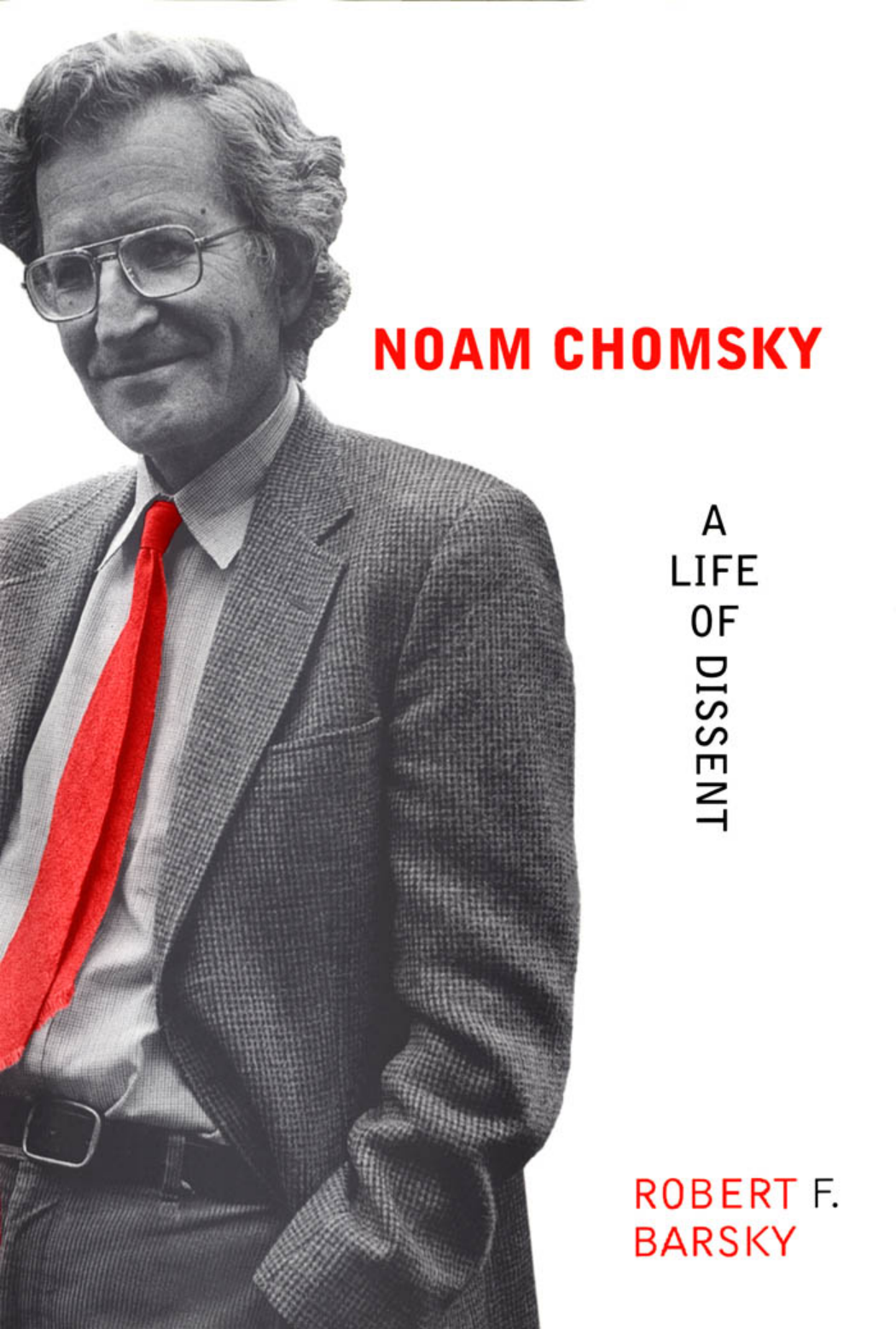



Noam
Chomsky
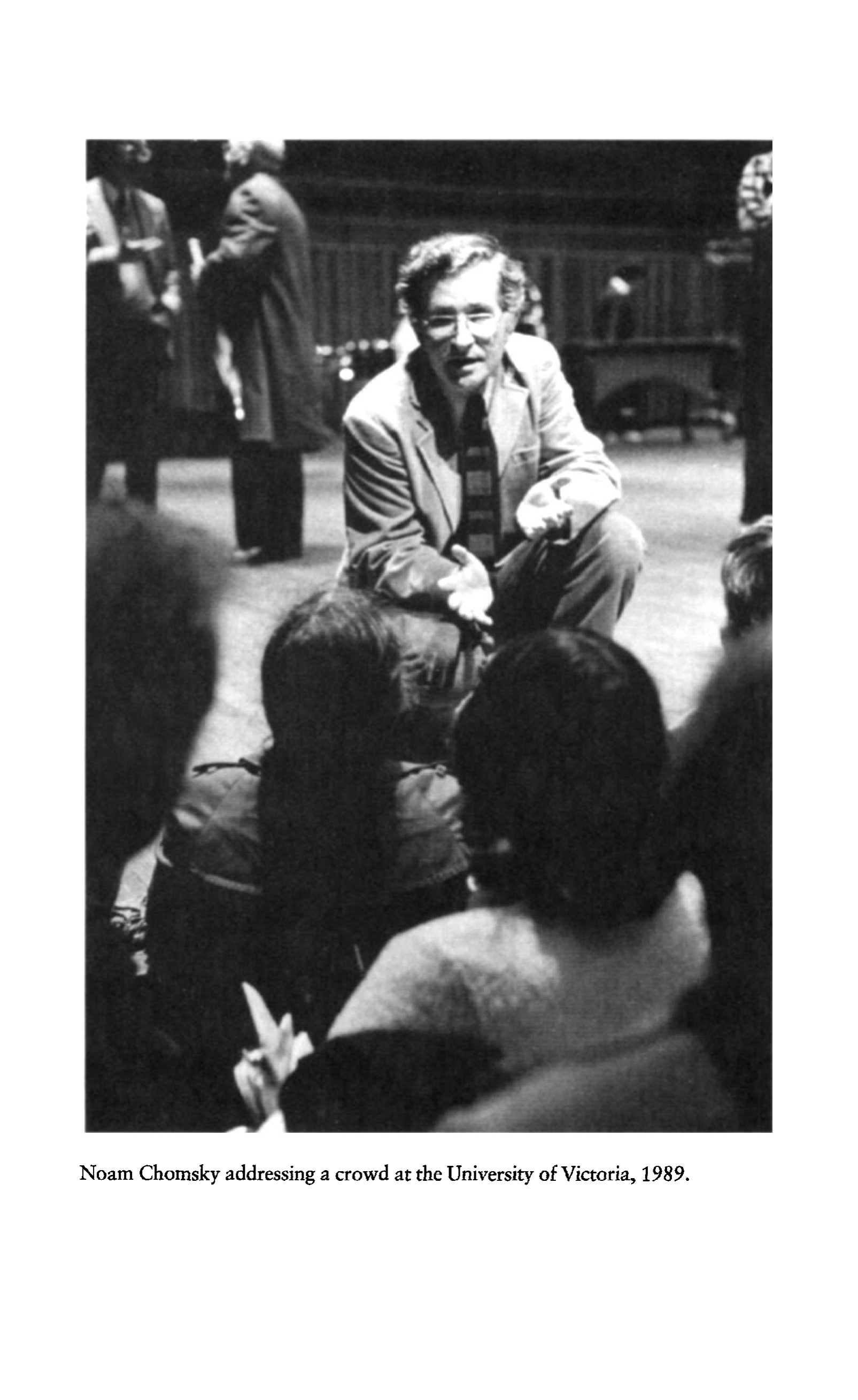
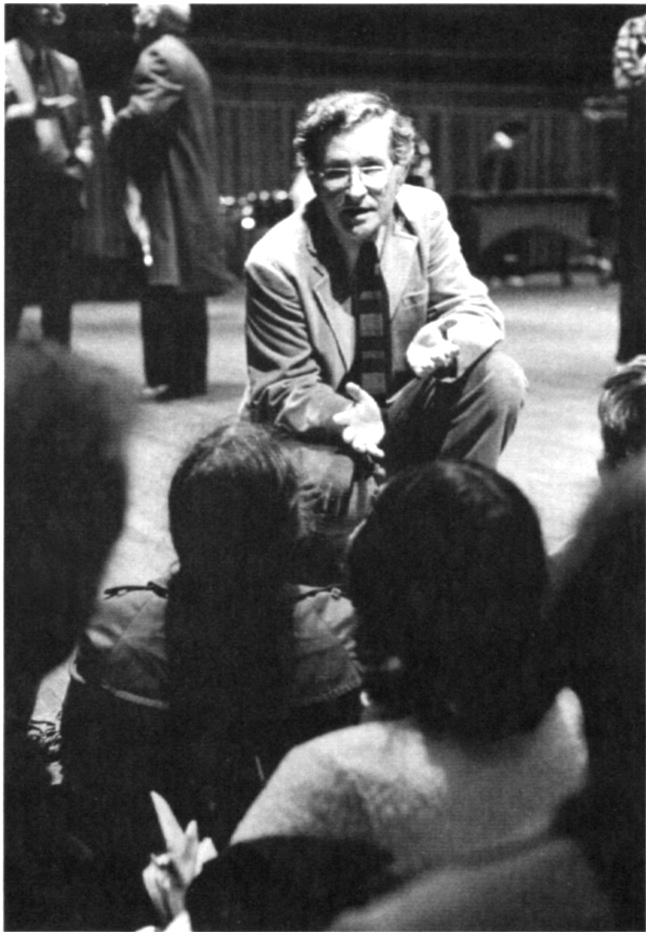

Noam Chomsky addressing
a
crowd
at the
University
of
Victoria, 1989.
Noam
Chomsky
A
Life
of
Dissent
Robert
F.
Barsky
ECW
PRESS
Copyright
©
ECW
PRESS,
1997
All
rights reserved.
No
part
of
this
publication
may be
reproduced,
stored
in a
retrieval system,
or
transmitted
in any
form
by any
process—electronic,
mechan-
ical, photocopying,
recording,
or
otherwise—without
the
prior written permission
of
the
copyright owners
and
ECW
PRESS.
CANADIAN CATALOGUING
IN
PUBLICATION DATA
Barsky, Robert
F.
(Robert Franklin), 1961-
Noam
Chomsky:
a
life
of
dissent
Includes bibliographical references
and
index.
ISBN
1-55022-282-1
(bound)
ISBN
1-55022-281-3
(pbk.)
1.
Chomsky, Noam.
2.
Linguists—United
States—Biography.
I.
Title.
P85.C47B371996
410'.92
C96-930295-9
This book
has
been published with
the
help
of a
grant
from
the
Humanities
and
Social Sciences
Federation
of
Canada,
using
funds
provided
by the
Social Sciences
and
Humanities Research Council
of
Canada,
and
with
the
assistance
of
grants
provided
by the
Ontario Arts Council
and The
Canada Council.
Distributed
in
Canada
by
General Distribution Services,
30
Lesmill
Road,
Don
Mills, Ontario
M3B
2T6.
Distributed
in the
United States
and
internationally
by The MIT
Press.
Photographs: Cover (1989), frontispiece (1989),
and
illustrations
18, 24, 25
(1989),
©
Elaine
Briere;
illustration
1
(1992),
©
Donna Coveney,
is
used
by
per-
mission
of
Donna Coveney; illustrations
2, 3, 4, 6, 7, 11, 12, 13, 14, 15, 16, 19,
20,21,22,23,26,
©
Necessary Illusions,
are
used
by
permission
of
Mark Achbar
and
Jeremy Allaire; illustrations
5, 8, 9, 10
(1995),
©
Robert
F.
Barsky; illus-
tration
17
(1995),
©
Sydney Barsky; illustration
27
(1990),
©
Derek Roger,
is
used
by
permission
of
Derek Roger.
Published
in
Canada
by
ECW
PRESS,
2120 Queen Street East, Suite
200
Toronto,
Ontario
M4E
1E2.
To Sam
Abramovitch
and
Noam Chomsky,
and the
"good
society" that
they have described
to me


This page intentionally left blank
List
of
Illustrations
ix
Acknowledgments
xi
I
The
Milieu
That
Formed Chomsky
1
Introduction
3
1
Family, Hebrew School, Grade School
9
2
Zellig
Harris,
Avukah,
and
Hashomer
Hatzair
47
3
Humboldt
and the
Cartesian
Tradition
95
n The
Milieu Chomsky Helped
to
Create
117
4
The
Intellectual,
the
University,
and the
State
119
5 The
Intellectual
as
Commissar
165
Conclusion
201
Notes
219
Works
Consulted
221
Index
229
Contents


This page intentionally left blank
Vancouver
Island,
1989
cover
University
of
Victoria,
1989
frontispiece
1.
Staff
photo taken
at
MIT,
1992
2.
Chomsky
as an
infant
3.
Chomsky,
age 8, and
brother David,
age
3,1936
4.
Chomsky,
age 12, and his
parents outside
of
Gratz College/Mikveh
Israel
School,
1940
5=
Chomsky's
office
at MIT
6.
Living Marxism
7.
Chomsky,
age 16, at his
high-school graduation
8.
Zellig
Harris
9.
Events
in
Montreal reported
in
Avukah
Student
Action
10.
Chomsky
at the
Institute
for
Advanced Studies, Princeton,
1959
11.
Chomsky's review
of the
work
of B. F.
Skinner,
in the
NYRB,
1971
12.
Chomsky giving
a
political talk
in the
1960s
13. A
report concerning
Nixon's
"enemy"
list
14.
South
End
Press
15.
Chomsky debating Michel Foucault, with Fons Elders
as
intermediary,
1971
16.
Building
20 at
MIT
17.
Chomsky attending
a
talk
18.
Robert Faurisson
19. The
Faurisson
affair
Illustrations
x
Illustrations
20.
Letters
from
Noam Chomsky
21.
Chomsky
at his
summer cottage
in
Wellfleet,
Massachusetts, 1986
22.
David Barsamian
and
Chomsky
23.
Kyoto Basic Sciences Awards ceremony,
1988
24.
Chomsky speaking
in
Nanaimo, British Columbia, 1989
25.
Chomsky receiving
a
piece
of
Native
art in
British Columbia,
1989
26. The
Chomsky
family
27. At the pub in
Govan, Scotland, 1990
Acknowledgments
I
would like
to
thank Noam Chomsky,
as
well
as
some
of the
people most
intimately
familiar
with
his
milieu, notably
Sam
Abramovitch, Norman
Epstein, Edward
S.
Herman, Seymour Melman,
and
Carlos
P.
Otero.
Their willingness
to
share their insights
and
experiences
is
further
testament
to
their
unfailing
commitment
to the
"good
society."
Marc
Angenot, Robert Freiden, Denise
Helly,
Martin
Kreiswirth,
Yzabelle
Martineau, Michel Meyer,
and
George Szanto have contributed
to
broadening
the
scope
and the
value
of
this book. Lisa Travis
and
Robert Lecker provided
me
with
the
long-awaited opportunity
to
discuss
the
ideas
it
contains.
Mark
Achbar, Jeremy Allaire, Elaine
Briere,
Jim
Kelman,
and
Derek Rodger generously assisted
me
with
the
difficult
task
of
assembling
the
photographs.
Benjamin
and
Tristan
offer
constant
inspiration.
The
Social Sciences
and
Humanities Research Council
of
Canada
funded
two
years
of
research
and
writing
in the
form
of a
postdoctoral
fellowship,
for
which
I am
very
grateful.
Amy
Pierce
of
MIT
Press
and
Mary Williams
of
ECW
PRESS
undertook
a
careful
and
thoughtful
edit
of the
manuscript.


This page intentionally left blank
The
Milieu
That
Formed Chomsky
We've
always tried
to
keep personal
and
other
lives
quite separate. We're actually
"very
private"
people (and quite conventional).
Not on the
party circuit, keep
pretty much
to
ourselves—which
is
kind
of odd for me to
say, since
I
spend
a
huge
amount
of my
time speaking
to
thousands
of
people.
But
that's
the way we
prefer
it.
—Noam
Chomsky,
letter
to the
author,
25
July
1995
1
I


This page intentionally left blank
The
task
of
writing
a
biography
of
Noam
Chomsky gives
new
meaning
to the
word
daunting.
Chomsky
is one of
this century's most important
figures,
and has
been described
as one who
will
be for
future
generations
what Galileo, Descartes,
Newton,
Mozart,
or
Picasso have been
for
ours.
He is the
most cited living
person—four
thousand citations
of his
work
are
listed
in the
Arts
and
Humanities Citation Index
for the
years 1980
through
1992—and
eighth
on a
shortlist, which includes
the
likes
of
Marx
and
Freud,
of the
most cited
figures of all
time.
2
Chomsky
is
also
a
vital
point
of
reference
in the
sciences;
from
1974
to
1992
he was
cited
1,619
times,
according
to the
Science Citation Index.
Among
the
innu-
merable
honors
he has
been awarded
is the
1988 Kyoto Prize, described
as
the
Japanese equivalent
of the
Nobel Prize,
for his
contribution
to
basic
sciences.
Chomsky
has
published over seventy books
and
over
a
thousand arti-
cles
in a
range
of
fields
including linguistics, philosophy, politics, cognitive
sciences,
and
psychology.
He was
made associate professor
at the
Massa-
chusetts Institute
of
Technology
at the age of
twenty-nine
and
full
pro-
fessor
at
thirty-two;
he was
given
an
endowed chair
at
thirty-seven,
and
became institute professor,
an
honor
reserved
for the
most distinguished
faculty,
at
forty-seven.
An
enormous array
of
awards
and
honors have
been
bestowed upon
him for his
work
in a
variety
of
disciplines
and
fields
including
those,
such
as
linguistics
and
cognitive sciences, that
he
himself
revolutionized.
A
multitude
of
articles
and
books have been devoted
to his
work,
and
recently
an
eight-volume collection containing over
a
hundred
such
articles
has
been published
by
Routledge
as
part
of its
Critical
Assessments
Series.
Introduction
4
Introduction
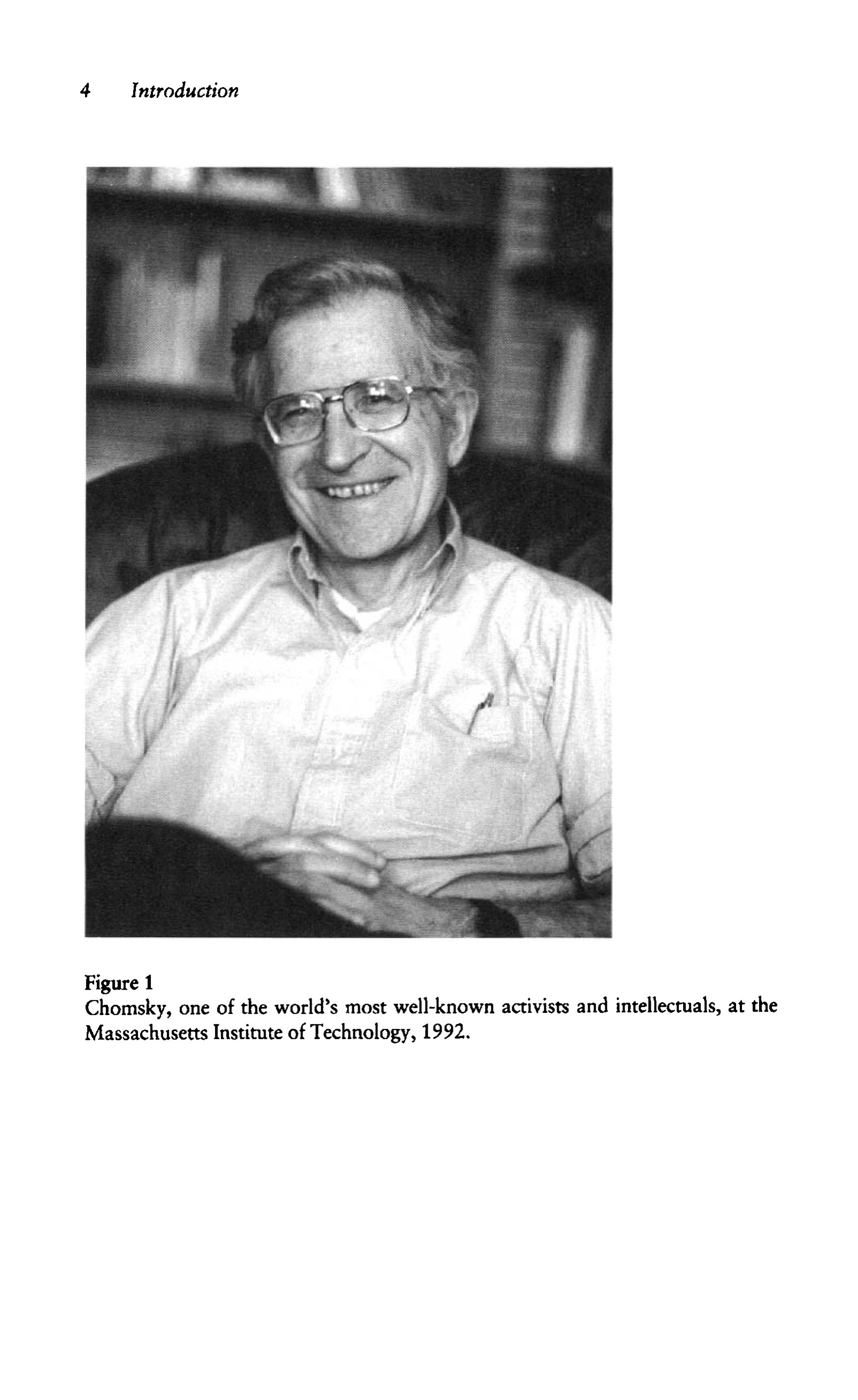
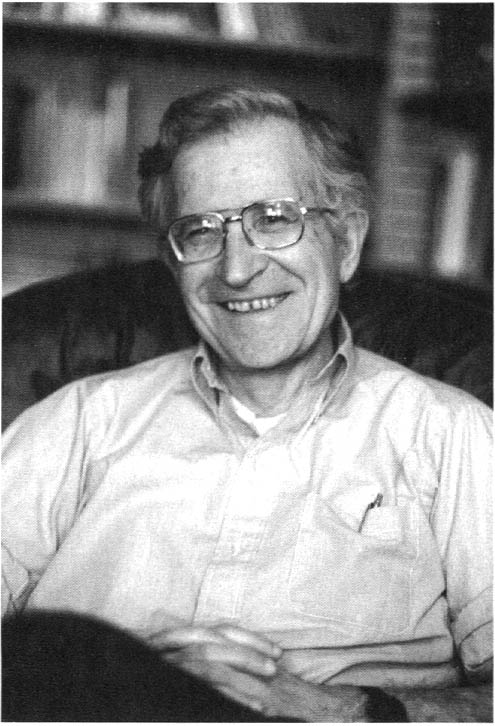
Figure
1
Chomsky,
one of the
world's most well-known activists
and
intellectuals,
at the
Massachusetts Institute
of
Technology, 1992.
Introduction
5
An
activist
who is
looked
to by
masses
of
left-leaning
individuals
and
groups
as one of the
truly inspirational
figures
of
this
century,
Chomsky
has
maintained
a
radical stance
for
more than
fifty
years,
and it has
embroiled
him in
controversy.
It has led
people
to
idolize him, debate
about him, arrest him, utter slanderous comments about him,
and
censor
his
work.
The
work
of the
Chomsky biographer
is in no way
simplified
by the
fact
that Chomsky
himself
deplores
the
biographical genre,
for
both political
and
personal reasons.
On the one
hand,
I
think
that
Chomsky
is
right
to
condemn personality cults;
on the
other,
I
believe
that
much
can be
learned
by
looking
at
Chomsky's
life
and
work
in the
context
of the
milieus
from
which
they have emerged
and to
which they have contributed.
For
that
reason, this book, although
an
exploration
of
Chomsky's
life
and
work,
is
also
a
portrait
of his
milieus.
My
premise
is
that Chomsky's ideas,
and
in
particular
his
political ideas, cannot
be
fully
understood without some
knowledge
of the
organizations,
movements,
groups,
and
individuals with
whom
he has had
contact,
either through study
or
discussion.
I
will look
at
Chomsky's incredible body
of
work
and
explore
its
relationship
to the
work
of
others
in
various
fields and
milieus.
For
Chomsky,
the
work
he has
produced
is
his
life.
In
response
to
com-
ments
I
made about
the
1992
film
Manufacturing
Consent: Noam
Chomsky
and the
Media?
Chomsky remarked
that
he had
not,
and
most
probably
would not,
go to see it:
[F]irst
s
I
hate watching
or
hearing myself.
I can
only think about
how I
should
have said things
better.
Second,
I'm not
happy with
the
personalized framework.
Things happen
in the
world
because
of the
efforts
of
dedicated
and
courageous
people whose names
no one has
heard,
and who
disappear
from
history.
I can
give
talks
and
write because
of
their organizing
efforts,
to
which
I'm
able
to
contribute
in
my own
ways.
Not
having seen
the film, I
don't
know whether this
is
brought
out.
I'm
concerned
that
it may not be.
(18
Feb. 1993)
Whenever
possible,
I
have recalled
in
this book "the
efforts
of
dedicated
and
courageous
people,"
the
people
who
have contributed
to the
ways
in
which
Chomsky perceives
the
world
and
construes
his own
work,
and to
that degree "the personalized framework,"
if not
eliminated
(this
would
make
for
something other than
a
biography),
is at
least mitigated.
It
could
be
argued that because there
is
already
a
huge amount
of
pub-
lished
work
on
Chomsky, there
is no
room
for a
biography.
But
while
his
6
Introduction
linguistic work
has
been reasonably well covered (despite
the
weaknesses
of
many historical studies), there
is
only
a
relatively small quantity
of
commentary available
on
Chomsky's
political
background
and his
con-
tribution
to the field of
political theory. This
may be
due,
in
part,
to the
prevailing belief
that
his
work
in
this domain
in
some ways speaks
for
itself.
Chomsky seldom mentions concurrent
or
competing schools
of
political theory
or
philosophy; when
he
does,
he'll
often
just
make passing
reference
to a
text
in
order
to
establish
his own
point. Some
may be
misled
by
this
and
fail
to
realize that Chomsky
has
been profoundly inspired
by
various sources
in his
political thinking.
The
ways
in
which
his
approach
to
this particular area
of
thought
differs
from
the
approach
he
takes
to
others
can be the
substance
of an
intriguing
and
politically valuable dis-
cussion. Therefore, while
I do
look
at
Chomsky's contribution
to
linguis-
tics
and
philosophy,
my
main focus
is the
political
milieus
that
provide
a
context
for
understanding
his
approach
to
societal relations
and the
structures that regulate them.
The
point
of
entry
for my
long-standing correspondence with Noam
Chomsky
and for my
growing interest
in his
politics
is Sam
Abramovitch,
who has
introduced
me to the
ideas
of
left
libertarianism
and to the
people
and
organizations that have struggled
to
promote them. Abramovitch
is
a
former
director
of
Hashomer
Hatzair
(in
Montreal),
a
left-wing Jew-
ish
organization whose relation
to
Chomsky
will
be
detailed
in the
fol-
lowing pages,
as
well
as a
close
friend
of
people associated with
a
number
of
groups
and
individuals that have
influenced
Chomsky, directly
or
indirectly. This book
is
therefore
filled
with names
of
organizations,
publications,
and
individual thinkers
that
have
not
been adequately dis-
cussed
in
relation
to
Chomsky's political work:
the
organizations
in-
clude
the
left
wing
of
Avukah,
the
Council Communists, Freie
Arbeiter
Stimme,
Hashomer Hatzair,
the
Independent Labor Party,
the
Institute
for
Workers'
Control,
the
League
for
Arab-Jewish Rapprochement,
the
Leninist League,
the
Marlenites,
and
Resist; among
the
journals
I
mention
are
International Council Correspondence, Living Marxism,
Avukah
Stu-
dent
Action,
Modern Occasions,
New
Politics, Politics,
and
The
Spokes-
man;
and
some
of the
individuals
I
look
at are
Chomsky contemporaries
Yehoshua
Bar-Hillel,
Ken
Coates,
David
Bellinger,
Peggy
Duff,
Mitchell
Goodman, Zellig Harris, Edward
S.
Herman,
Jim
Kelman, Denise
Introduction
7
Levertov,
Robert
Lowell,
Norman
Mailer,
Paul
Mattick,
Jerry
Rubin,
and
Howard
Zinn,
to
name
but a
few. While
the
work
of
another
set of
Chomsky
contemporaries—Sam
Abramovitch, Norman Epstein (whom
Chomsky
met fifteen
years
ago for the first
time), Karl Korsch, Christo-
pher Lasch, Dwight Macdonald (with whom Chomsky
had
contact
in the
1960s),
Seymour Melman (with whom Chomsky
had
casual
contact
early
on, and who
became
a
close
friend),
Karl
Polanyi,
and
Arthur Rosen-
berg—had
no
direct impact upon Chomsky's endeavors,
it
does pro-
vide
some important insight into
his
thinking,
and is
therefore
explored
here.
Reading
through these lists raises
the
issue
of the
relationship between
Chomsky
and
Judaism. Chomsky's
father,
William,
was a
Hebrew scholar
and
teacher
who
wrote
a
definitive
study
of the
history
of the
Hebrew lan-
guage.
Furthermore, Chomsky
was
influenced
by a
strain
of
left-leaning
Jewish intellectuals
and has
maintained contact with several
influential
Jewish thinkers.
In
short,
Chomsky grew
up in an
intensely Jewish-Hebraic
household,
he was
involved with
the
kibbutz movement,
and he has
always been interested
in the
actions
of the
Jewish
state;
nevertheless,
it
would
be
misleading
to
view
his
work solely
from
these perspectives,
for
reasons
that
will
be
discussed
further
on. So
only when questions
of his
Jewish heritage illuminate
his
approach
or
overlap with biographical
issues
have
I
mentioned them.
As
his
massive body
of
publications
attests,
Chomsky's restless intellect
has led him to
embrace many
fields,
including social activism, history,
the
history
of
ideas, linguistics, philosophy, politics, cognitive sciences,
and
psychology.
Due to the
complexity
of
each
of
these domains,
it
would
be
inappropriate
to
take
a
solely chronological approach
to the
writing
of
his
biography. Chomsky
has
pursued
a
range
of
distinct interests simulta-
neously,
and has
been drawn into controversy
and
intellectual debate
on
several
fronts
over
the
years. These interests
are
most clearly understood
when looked
at
thematically.
I
have
therefore
divided this book into sec-
tions
that
deal individually with
a
series
of
subjects
that
are
intimately
connected
to
Chomsky's growth
and
impact.
For the
most
part,
I've
written about each separately
and
chronologically,
but
when
the
sections
are
read
together,
they should combine
to
provide
an
overall sense
of
Chomsky's vast reach
as a
thinker
and
activist.
8
Introduction
Discrete
chapters can, then,
be
read
as
individual
and
autonomous
wholes that
reflect
vital aspects
of a
complex personality. Chapter
1
covers
Chomsky's youth
and the
milieu
with which
he
came into contact through
his
reading,
his
studies,
and his
affiliations;
chapter
2
describes
his
work
as
a
university undergraduate and, more particularly,
his
relationship
with Zellig
Harris;
chapter
3
explores
the
foundation
and the
impact
of
his
Cartesian
and
rational approach
to
linguistic
and
political thinking;
chapter
4
emphasizes
his
university career, achievements,
and
projects,
and
summarizes
his
thoughts concerning
the
role
of the
intellectual
in
contemporary society
and the
relationship
of the
individual
to the
institu-
tion;
chapter
5
addresses
his
role
as
dissenting voice within
the
American
political scene
by
considering
the
various struggles with which
he has
been involved
and
some
of the new
modes
of
thought,
notably post-
modernism, that have taken
root
around him.
The
conclusion looks
at the
relations
between Chomsky's current work
and the
contemporary socio-
political scene
to
which
it
speaks. Chomsky's intellectual
and
political
endeavors
do, of
course, tend
to
overlap
and
intersect,
and a
casual pat-
tern
of
these contact points gradually emerges
as
this biography
unfolds.
It
also becomes apparent
that
Chomsky
has
consistently applied
a
char-
acteristic
rigor,
sense
of
responsibility,
and
compassion
to his
pursuit
of
these
diverse interests: this
is the
common element that unites them all.
Family,
Hebrew
School,
Grade School
I was
very active
in all
sorts
of
left
Zionist (what would
now be
called
"anti-
Zionist")
mostly Hebrew-speaking
"groups,"
but the
groups scarcely merited
the
name,
and I was
pretty much
a
loner
even
in
them. Later,
I was
part
of a lot
of
movement activities
(like
Resist),
and
took part
in
tons
of
things,
but
usually
in
my
own
way. I've
often
been close
to
radical Christians,
for
example,
and
have
found
much
of
what they
did
inspiring
all
right
(even
stayed
in the
Jesuit
house when
I
visited Managua).
But it
would
be
absurd
to say I was
part
of
such
communities.
—Noam
Chomsky, letter
to the
author,
8
Aug. 1994
The
Chomsky
Household
Avram
Noam
Chomsky
was
born
7
December 1928
to Dr.
William
(Zev)
Chomsky
and
Elsie Simonofsky,
in
Philadelphia, Pennsylvania.
Dr.
Chomsky
had
fled
from
his
native Russia
to the
United States
in
1913
in
order
to
avoid being
drafted
into
the
Czarist army. Upon arrival,
he
worked
in
sweatshops
in
Baltimore, Maryland.
He
then managed
to
work
his
way
through
the
Johns Hopkins University supporting
himself
by
teaching
in
Baltimore Hebrew elementary schools.
After
moving
to
Phila-
delphia,
he and his
wife
began teaching
at the
religious school
of the
Mikveh
Israel congregation. Eventually,
Dr.
Chomsky
was to
become
principal
of
this school.
Dr.
Chomsky continued
to
pursue
his
research
in the field of
medi-
eval
Hebrew language
and
went
on to
become, according
to a 22
July
1977
New
York
Times
obituary, "one
of the
world's foremost Hebrew
grammarians."
He was the
author
of a
seminal study called
Hebrew,
the
Eternal
Language
(1957),
as
well
as
numerous other works, including
1
10
Chapter
1
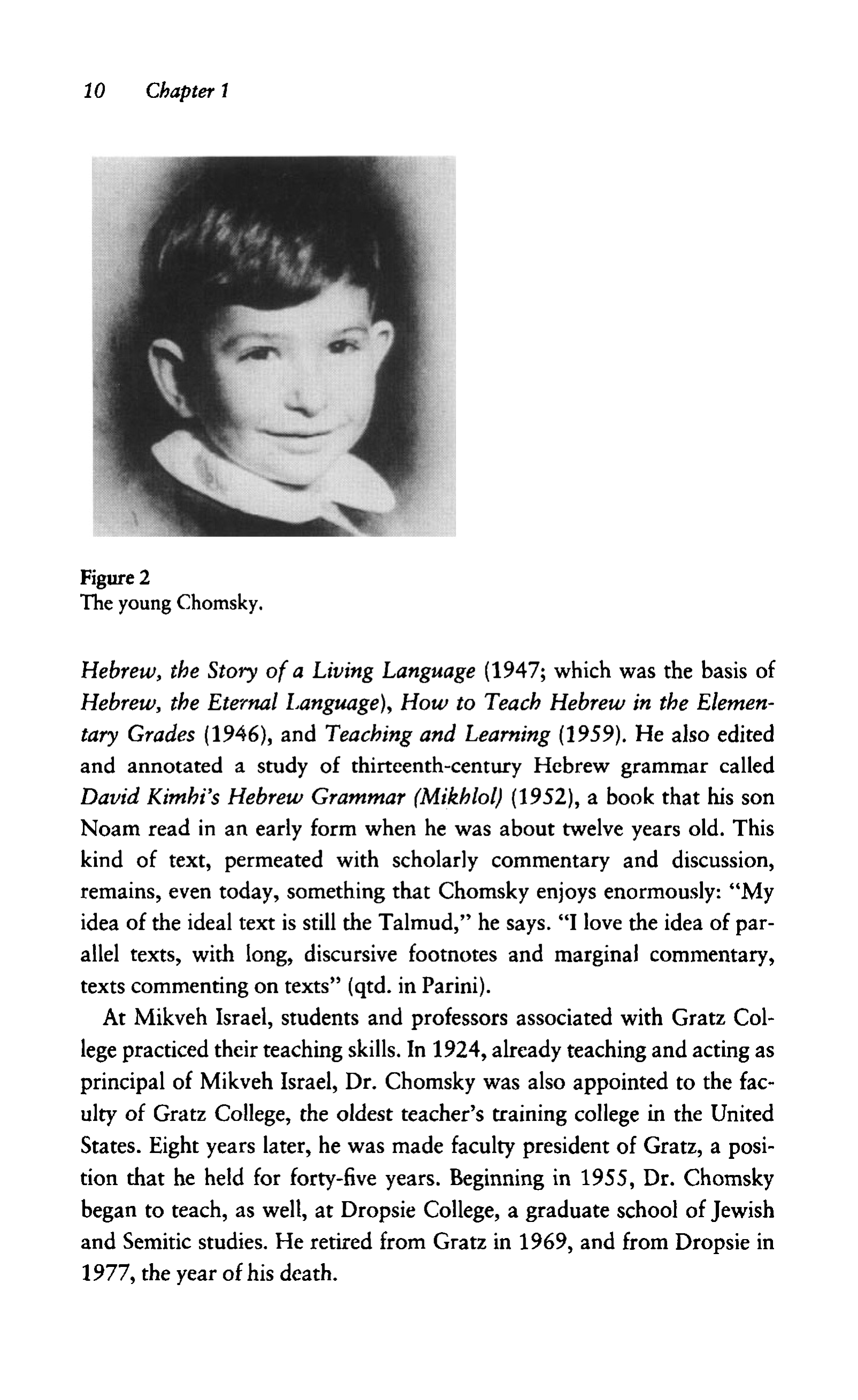
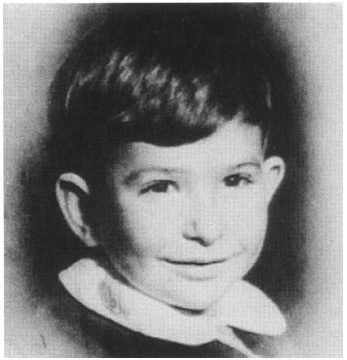
Figure
2
The
young
Chomsky.
Hebrew,
the
Story
of a
Living Language
(1947;
which
was the
basis
of
Hebrew,
the
Eternal
Language),
How to
Teach
Hebrew
in the
Elemen-
tary
Grades
(1946),
and
Teaching
and
Learning
(1959).
He
also
edited
and
annotated
a
study
of
thirteenth-century Hebrew grammar called
David
Kimhi's
Hebrew Grammar
(Mikhlol)
(1952),
a
book
that
his
son
Noam read
in an
early
form
when
he was
about twelve years old. This
kind
of
text,
permeated with scholarly commentary
and
discussion,
remains, even today, something that Chomsky enjoys enormously:
"My
idea
of the
ideal text
is
still
the
Talmud,"
he
says.
"I
love
the
idea
of
par-
allel
texts,
with
long,
discursive footnotes
and
marginal commentary,
texts commenting
on
texts"
(qtd.
in
Parini).
At
Mikveh Israel, students
and
professors associated with Gratz Col-
lege
practiced their teaching skills.
In
1924, already teaching
and
acting
as
principal
of
Mikveh Israel,
Dr.
Chomsky
was
also appointed
to the
fac-
ulty
of
Gratz College,
the
oldest
teacher's
training college
in the
United
States. Eight years later,
he was
made
faculty
president
of
Gratz,
a
posi-
tion
that
he
held
for
forty-five
years. Beginning
in
1955,
Dr.
Chomsky
began
to
teach,
as
well,
at
Dropsie College,
a
graduate school
of
Jewish
and
Semitic studies.
He
retired
from
Gratz
in
1969,
and
from
Dropsie
in
1977,
the
year
of his
death.
Family,
Hebrew School,
Grade
School
11
The
impact that Chomsky's
father
had
upon
him
seems clear
in
retro-
spect. Carlos
Otero
notes that
"shortly
before
his
death William Chomsky
described
the
major
objective
of his
life
as
'the
education
of
individuals
who are
well
integrated,
free
and
independent
in
their
thinking,
concerned
about improving
and
enhancing
the
world,
and
eager
to
participate
in
making
life
more
meaningful
and
worthwhile
for
all.'
It is
hard
to
improve
on
this
as a
description
of
Noam Chomsky
as an
individual" ("Chomsky
and
the
Libertarian
Tradition"
5).
William Chomsky
was,
furthermore,
described
by
friends
of the
family
as a
very
warm, gentle,
and
engaging
individual.
Bea
Tucker,
who
worked
as his
secretary
for a
period
of five
years
in the
1930s,
recalls that
he was a
warm individual, considerate
and
generous
with students
and
staff.
When
a
teaching position opened
up at
Jvfikveh
Israel
in the
mid-1930s,
Tucker asked
Dr.
Chomsky
if she
could
apply,
hoping
that
this would
be her
opportunity
to
embark
on a new
career.
He
hired her,
and she
went
on to
teach David
Eli
Chomsky,
Noam's
younger brother
and
only sibling,
as
well
as
Carol Schatz,
who
would eventually become
Noam's
wife.
Chomsky's mother, Elsie,
was
equally important
to his
development
as
a
thinker,
a
teacher,
and an
activist.
Her
political sensitivity motivated
him,
from
a
very young age,
to
look
far
beyond
his
immediate social con-
text
and
into
the
realm
of
political action
and
involvement.
She
also
taught Hebrew
at
Mikveh Israel,
and so by the
time
her son was
ready
to
enter
the
teaching profession
himself,
it had
become,
for
him,
a
very
familiar
domain. According
to
Otero,
"The
influence
of his
father
on him
is
easier
to
trace than
that
of his
mother,
nee
Elsie
Simonofsky,
who
was
more
left
oriented than
her
husband
and
appears
to
have made
an
impression
on her son
'in
the
area
of
general concern about social issues'
and
politics,
'one
major
part
of
[Chomsky's] intellectual
life'"
("Chomsky
and the
Libertarian
Tradition"
4). One can
only imagine
the
dinner-table
conversation
in
such
a
household.
As
Otero goes
on to
tell
us,
Chomsky
simply
reports: "During childhood, there
was
always plenty
of
discussion
in
[our] home about really interesting
and
important issues" (16nlO).
Among those issues
was a
form
of
Zionism,
at the
time considered main-
stream,
that
had
been inspired
by the
West European Enlightenment.
The
Chomskys, Otero says, were particularly
influenced
by
Asher Ginsburg
12
Chapter
1
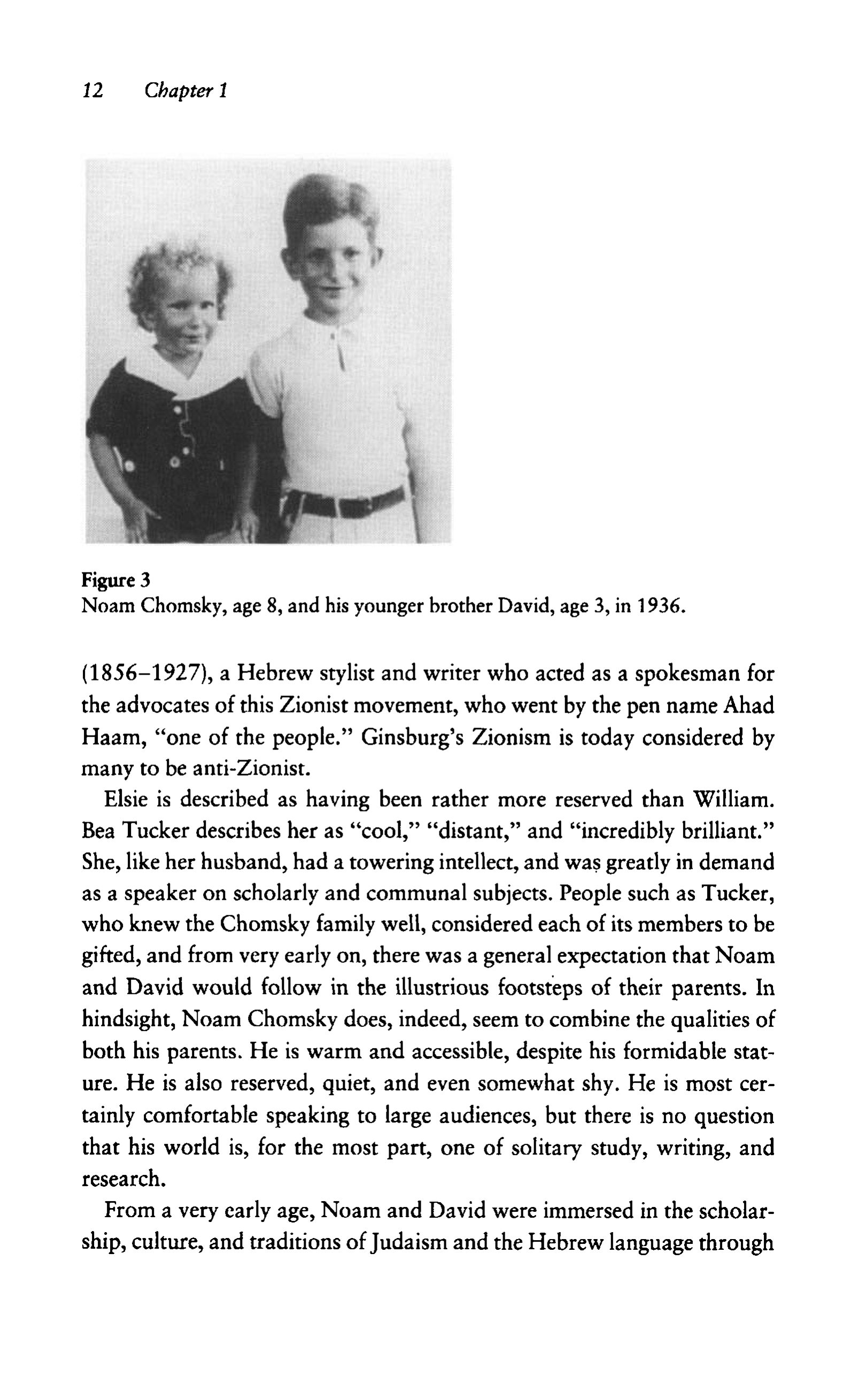
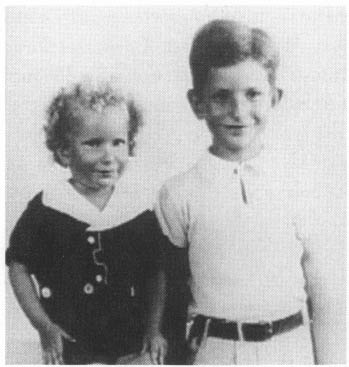
Figure
3
Noam
Chomsky,
age 8, and his
younger
brother
David,
age 3, in
1936.
(1856-1927),
a
Hebrew stylist
and
writer
who
acted
as a
spokesman
for
the
advocates
of
this Zionist movement,
who
went
by the pen
name Ahad
Haam,
"one
of the
people." Ginsburg's Zionism
is
today considered
by
many
to be
anti-Zionist.
Elsie
is
described
as
having been rather more reserved than William.
Bea
Tucker describes
her as
"cool,"
"distant,"
and
"incredibly brilliant."
She,
like
her
husband,
had a
towering intellect,
and was
greatly
in
demand
as a
speaker
on
scholarly
and
communal
subjects.
People such
as
Tucker,
who
knew
the
Chomsky
family
well, considered each
of its
members
to be
girted,
and
from
very early
on,
there
was a
general expectation that Noam
and
David would follow
in the
illustrious footsteps
of
their
parents.
In
hindsight, Noam Chomsky does, indeed, seem
to
combine
the
qualities
of
both
his
parents.
He is
warm
and
accessible, despite
his
formidable stat-
ure.
He is
also reserved, quiet,
and
even somewhat shy.
He is
most cer-
tainly
comfortable speaking
to
large audiences,
but
there
is no
question
that
his
world
is, for the
most
part,
one of
solitary study, writing,
and
research.
From
a
very early age, Noam
and
David were immersed
in the
scholar-
ship, culture,
and
traditions
of
Judaism
and the
Hebrew language through
Family,
Hebrew School,
Grade
School
13
the
work
of
both
of
their parents. David
was
also
an
exceptional
child,
and
also active
in
family
discussions. And,
of
course, Noam
and
David
spent lots
of
time
together.
They
enjoyed
playing "basketball
(of a
sort)
with some kind
of
rubber ball
we
found
and a
makeshift
bushel basket
with
the
bottom knocked
out
that
I
managed
to
tack
on to the
house wall
next
to a
driveway"
(16
Nov.
1995).
Those
who
knew both David
and
Noam
as
children agree
that
al-
though
the two
were close, David
did
keep
a
somewhat lower
profile
than
his
older
brother
and
possessed
an
easier temperament. Even
as a
young
child, Noam
was
very competitive, trying, according
to
Bea
Tucker,
to
"outdo
his
parents."
She
recalls
an
incident
that
occurred while
she was
visiting
the
Chomskys during
a
vacation they
took
in
1935.
Noam
was
just
seven years old. When William
and
Elsie
left
the
room,
Tucker
found
herself
alone with him.
To
make conversation,
she
pointed
to
Compton's
Encyclopaedia
and
asked Noam
if he had
looked through
any of the
vol-
umes.
"I've only read
half
of
them,"
was
Noam's
reply.
In
short, Noam
was,
in the
words
of Bea
Tucker,
the
"brain,"
while David
was the
"nice
guy." David
had the
easygoing character
of his
father, while Noam
was
more aloof,
like
his
mother. David went
on to
study medicine,
and
still
lives
and
works
in
Philadelphia.
Noam
and
David were deeply marked
by a
remarkable home
life.
The
entire Chomsky
family
was
actively involved
in
Jewish cultural activities
and
Jewish issues, particularly
the
revival
of the
Hebrew language
and
Zionism.
Chomsky told interviewer Eleanor Wachtel,
"I
would read
Hebrew literature with
my
father
from
childhood—nineteenth
and
twen-
tieth century Hebrew literature,
and of
course older sources.
I
spent
my
time
in
Hebrew school, later became
a
Hebrew
teacher,
and out of all of
this
my
political interests converged
to an
interest
in
Zionism"
(65). Carol
Doris Schatz recollects
that
in
Hebrew school Noam would take
the
lead
in
discussions. Carol
and
Noam remained close,
and
were eventually
married; they have stayed together
to
this day.
Bea
Tucker remembers
Carol Schatz
as a
very
bright
and
warm girl.
Carol's
father
was a
medical
doctor,
and her
family,
like
the
Chomskys,
was
highly regarded
in the
community. Chomsky says
that
he
"met"
Carol
"when
I was
about
five
and she was
about three, when
my
parents went
to
visit
her
parents
at
14
Chapter
1
a
summer cottage near Philadelphia. Probably occasionally
after
that.
I
doubt
if we
spoke
a
serious word until
she was
maybe fourteen
or
so.
Her
older sister
was a
classmate
of
mine
in
Hebrew school,
and her
still older
brother
was the
leader
of the
synagogue choir,
and in
that capacity,
taught
the
kids there
to
chant their
Bar-Mitzvah
portions
(me
too)"
(13
Feb.
1996).
It
is
certainly
not
surprising
that,
"as a boy of 9, in
1938, [Noam] used
to sit in the
front
row of the
Hebrew class
at
Mikveh
Israel...
paying little
attention
to the
teacher [who happened,
on
occasion,
to be his
mother].
He was not
being disrespectful;
he
happened
to
have covered
the
ground
long
before,
at
home, with
his
parents"
(Otero,
"Third
Emancipatory
Phase"
22). Said Itzhak Sankowsky,
one of his
Hebrew teachers,
"it was
expected
from
his
family
background
that
he
should know more Hebrew
than anybody else.
Superficially,
you
couldn't tell there
was
something
unusual there.
You had to
bring
it out
with
a
debate
or a bit of
knowl-
edge. Then
you
knew"
(qtd.
in
Yergin 41).
The
Extended Family
Politically,
Noam's
parents were
"normal
Roosevelt
Democrats,"
al-
though many members
of the
next level
of
family—cousins
and
aunts
and
uncles—were
part
of a
Jewish working class with ties
to
various strains
of
communism. Chomsky remarks
that
"several were seamstresses,
but
these were
the
days
of
union building. They were
in the
ILGWU,
which
was
then
finally
getting people
out of
sweatshops (when they
had
work,
that
is;
they were usually unemployed). Others were involved
in
everything
from
ordinary labo[r]
to
petty commerce
to
school teaching (for those
who
managed
to
work their
way
through school
themselves)"
(13
Feb.
1996).
Many were involved
in the
radical political movements
that
thrived during
the
Depression. Chomsky explains:
"Some
were
in the
Communist Party, some militantly anti-Communist Party
(from
the
left),
some Roosevelt Democrats,
and
everything
else
from
left-liberal
to
anti-
Bolshevik
left
(whether
the
Communist Party
fits in
that
spectrum
is not
obvious,
in my
opinion)"
(31
Mar.
1995).
That
such diversity
of
political
affiliation
should exist within
a
single
family
was not
unusual among
Russian emigres
of the
time,
and
Noam
and
David undoubtedly
benefited
Family,
Hebrew School, Grade School
15
from
being exposed
to a
wide range
of
opinion. Within
the
extended
Chomsky-Simonofsky
family,
issues were
not
resolved according
to a
narrow,
status
quo set of
principles, which meant
that
Noam
and
David
were given
freer
rein
in
their
own
choices. Their environment
as a
whole—parents,
relatives, school,
community—encouraged
the
brothers
to
engage
in
careful
observation
and
analysis;
no
single approach
to an
issue
was
deemed adequate.
Chomsky
was
further
marked
by the
socioeconomic situation
of the
period.
He
came
of age in
Quaker Philadelphia during
the
Depression;
he
told
Wachtel
that
his
early
childhood
memories included
"seeing
people coming
to the
door
and
trying
to
sell rags
or
apples,"
and
"
travel-
ling
in a
trolley
car
past
a
textile factory where women were
on
strike,
and
watching
riot
police beat
the
strikers"
(64).
And the
neighborhood
in
which
the
Chomsky
family
lived
was
inhabited mainly
by
Germans
and
Irish Catholics,
who
were,
for the
most
part,
anti-Semitic
and
pro-
Nazi.
Not all
children raised under such circumstances develop
a
social
conscience,
but it is
fair
to say
that Chomsky,
who was
immersed
in an
alien
cultural tradition within
a
community
of
immigrants,
had
many
occasions
to
stare hypocrisy
and
violence
in the
face
and
wonder about
their sources.
Elementary
School:
Exploration
and
Creation
Chomsky began
his
formal
education
at a
remarkably young age. Just
prior
to his
second birthday,
he was
sent
to a
Deweyite experimental
institution
in
Philadelphia called
the Oak
Lane Country
Day
School,
where
he
remained until
the age of
twelve. This school
was run by
Temple
University.
John
Dewey's progressive thinking about education
is
similar
to
that
of the
philosopher Karl
Wilhelm
von
Humboldt,
who was an im-
portant
early precursor
to
Chomsky
in
both linguistic
and
political work.
For
Dewey,
as for von
Humboldt,
"education
...
must provide
the
oppor-
tunities
for
self-fulfillment;
it can at
best provide
a
rich
and
challenging
environment
for the
individual
to
explore,
in his own
way" (Chomsky,
Chomsky Reader
149). Chomsky continues
to
support this position
be-
cause
he
feels
that
individuals develop best when given
the
opportunity
to
create
freely
and to
explore rather than
follow
rigid pedagogical principles.
16
Chapter
1
At
Oak
Lane
he was
able, with other children
of
various backgrounds
and
possessing
different
levels
of
talent,
to
expand
his
creative
faculties
without being intimidated
by a
competitive evaluation system. Chomsky
recalls
that students pursued their interests either individually
or in
groups,
and
that
each member
of the
class
was
encouraged
to
think
of
himself
or
herself
as a
very
successful
student. Since
the
standard
of
com-
parison
at Oak
Lane
was
creativity rather than grades,
no
activity
was
ever
considered more important than another,
and the
notion
of
"healthy
competition,"
often
promoted elsewhere
as a
sign
of
rigor,
was
derided.
"[A]t
least
as a
child,
that
was the
sense that
one
had—that,
if
competing
at
all,
you
were competing with yourself. What
can I
do?
But no
sense
of
strain about
it and
certainly
no
sense
of
relative ranking. Very
different
from
what
I
notice with
my own
children,
who as far
back
as the
second
grade knew
who was
'smart'
and who was
'dumb,'
and who was
high-
tracked,
and who was
low-tracked. This
was a big
issue"
(Chomsky
Reader
5).
At
this
point,
it is
already possible
to
recognize certain truisms
that
tend
to
recur
in
Chomsky's lectures, discussions,
and
publications. What
was
and is
important
to him
about
the
family
is its
diversity,
not its
single-
mindedness,
and
what marked
him as a
child were
his
memories
of
free
and
unstructured exploration rather than imposed curricula. Inspired
by
his
parents
and by his own
experience
in
school, Chomsky
tries,
in his
own
teaching,
to act as a
stimulator,
to
coax
the
latent enthusiasm
and
potential
of
each student into
the
light
of
day.
The
problem
of
teaching,
he
feels,
is not
that
students lack motivation,
but
rather that their motivation
is
crushed
by the
oppressive
pedagogic structures
that
exist
at all
levels
of
the
education system. This concern
hasn't
changed over
the
years;
as
Chomsky
has
achieved international recognition
it has
continued
to
inform
both
his
political
arid
his
linguistic writings.
One of the
many activities Chomsky participated
in at Oak
Lane
was
writing
for the
school newspaper. Shortly
after
his
tenth birthday,
he
published
his first
article,
an
editorial
on the
fall
of
Barcelona during
the
Spanish
Civil War. This event
he
describes
as "a big
issue
in my
life
at the
time"
(31
Mar. 1995).
He
found
himself preoccupied with
the
fall
of
Bar-
celona
and the
eventual crushing
of the
anarchosyndicalist movements
and the
Marxist Partido Obrero
de
Unification Marxista
(POUM)
group
Family,
Hebrew School,
Grade
School
17
that
had flourished in
Spain since
the
spontaneous uprisings following
the
Franco insurrection
of
July 1936.
It may
seem incredible that
a
ten-year-
old
child could
be so
enthralled
by a
distant
conflict
and the
complex
issues
upon which
it
hinged,
but if we
bear
in
mind
the
nature
of
Chom-
sky's
family
life
and the
kinds
of
interests
he was
encouraged
to
pursue,
we
may
begin
to
understand
how a
child such
as
Noam could
be
capable
of
making
the
sort
of
important connections found
in the
Barcelona edi-
torial.
In
fact, Chomsky
often
remarks that "even
a ten
year
old
could
understand such
a
notion";
and he
does
not
mean
to
imply
that
the
adult
is
stupider than
the
child,
but, rather, that
the
adult
has
been indoctri-
nated
by the
mainstream media
and
education system. This makes many
adults impervious
to
what Chomsky considers obvious truths
and
makes
politically
realizable goals, such
as the
establishment
of
libertarian social
movements, seem unattainable.
In
evaluating
how
Chomsky's home
life,
his
education,
and the
events
of the
period
led him
down particular
paths,
it
is
helpful
to
look
more closely
at the
Spanish Civil
War and at the
rea-
sons
he may
have been
so
drawn
to
investigate
and
speak
out
about that
conflict.
First Steps
toward
Libertarianism
At
a
conference held
in
Barcelona
on 25
November 1992, called Creation
and
Culture, Chomsky began
his
address
by
telling
the
audience that
it
was a
"particular pleasure"
to
speak
in
Barcelona because
he had
once
written
an
article
(by
that
time almost
fifty-four
years
earlier)
about
the
fall
of
Barcelona.
In his
words, "the events
of the
preceding years
had an
enormous impact upon
my
personal understanding
of the
world,
and on
my
political
and
moral consciousness,
and
have
left
an
impact upon
my
own
thinking
and
understanding
and
feeling
about things
that's
been
of
long
duration"
("Creation").
The
repercussions
of the
Spanish Civil
War
are
indeed present
in
many
of the
political articles that Chomsky went
on to
write, because
to him
they demonstrated that people can,
in the
absence
of a
"revolutionary vanguard," rise
up
against systems
of op-
pression
and
participate
in
spontaneous, loosely organized movements,
the
roots
of
which
lie "in
deeply
felt
needs
and
ideals
of
dispossessed
masses"
(Chomsky Reader
86).
18
Chapter
1
This
is an apt
description
of
anarchosyndicalist ideals,
as
these ideals
emphasize
the
inclusion
of all
individuals
in
projects that concern
the
generally
ignored masses rather than
the
ruling elite.
In a
1968 work
called "Objectivity
and
Liberal Scholarship," Chomsky describes
the
Spanish
conflict
as a
"predominantly anarchist revolution," which
was
"largely spontaneous, involving masses
of
urban
and
rural laborers
in a
radical transformation
of
social
and
economic conditions that persisted,
with remarkable success, until
it was
crushed
by
force"
(Chomsky
Reader
86).
The use of the
word
spontaneity
in the
context
of
this kind
of
revo-
lutionary activity does need some qualification, because
it
falsely
implies
that change
can be
effected
without
effort
on the
part
of
those
who are
fighting
against
oppressive structures.
Of
spontaneous revolutionary action
in
Germany
and
Italy
after
World
War I and in
Spain
in
1936,
for
example, Chomsky declares:
The
anarchosyndicalists,
at
least,
took
very seriously Bakunin's remark
that
the
workers' organizations must create "not only
the
ideas
but
also
the
acts
of the
future
itself"
in the
prerevolutionary
period.
The
accomplishments
of the
popular
revolution
in
Spain,
in
particular,
were based
on the
patient
work
of
many
years
of
organization
and
education,
one
component
of a
long tradition
of
commitment
and
militancy—
And
workers' organizations existed with
the
structure,
the
experience,
and the
understanding
to
undertake
the
task
of
social reconstruction
when, with Franco's coup,
the
turmoil
of
early 1936 exploded into social revolu-
tion,
(qtd.
in
Otero,
"Introduction"
38)
This kind
of
political action
is
underwritten
by a
belief
that only when
people address issues
of
widespread concern together
can
their
efforts
be
meaningful.
So, by the age of
ten, Chomsky
was
already convinced that
such action, exemplified
by the
Spanish uprising,
was not the
aberration
or
failure
it was
portrayed
to be, but
rather evidence that anarchist move-
ments
could
be
successful
and
brought
on
from
below. When they
do
succeed
in
this way,
to
judge
by
certain important examples, they
can
fulfil
the
fundamental
needs
of the
working class
and the
majority
of the
population. This
belief
has
permeated Chomsky's subsequent actions
and
work;
it
fuels
his
conviction that
efforts
in
this direction
are
worth pursu-
ing in
spite
of the
apparent utopianism
of
such
a
project.
One
might
ask
why, given
the
historical circumstances,
the
young
Chomsky
was not
passionate about Leninism,
a
movement that seemed
to
Family,
Hebrew School,
Grade
School
19
many
at
this time
to be a
possible panacea,
a
positive alternative
to the
status
quo.
After
all,
the
horrors
of
Leninism were,
for the
most
part,
uncovered later
on, and a
great number
of
people
had
been seduced
by it.
Chomsky describes
his
early interest
in
anarchism
as a
kind
of
"lucky
accident":
"I was
just
a
little
too
young
to
have ever
faced
the
temptation
of
being
a
committed Leninist,
so I
never
had any
faith
to
renounce,
or
any
feeling
of
guilt
or
betrayal.
I was
always
on the
side
of the
losers—
the
Spanish anarchists,
for
example"
(Chomsky Reader
13).
A
fortunate
accident,
as we
shall
see.
Informal
Education
Despite
the
merits
of Oak
Lane Country
Day
School,
no
single educa-
tional institution could ever
be
considered
the
principal source
of
Chom-
sky's education. From
a
tender
age,
he was an
avid reader, delving into
many
fields.
He
eagerly worked
his way
through Austen, Dickens,
Dostoevsky, Eliot, Hardy,
Hugo,
Tolstoy,
Turgenev, Twain,
and
Zola
(this
list
displays
the
young Chomsky's taste
for
realism
in
literature;
each
of
these writers attempted
to
describe
all
elements
and
strata
of the
societies
in
which their works
are
set),
as
well
as the
Bible
(in
Hebrew),
and
works
of the
nineteenth-century Hebrew renaissance
and
Yiddish-
Hebrew writers
of the
late nineteenth
and
early twentieth centuries such
as
Mendele
Mocher
Sfarim.
At the age of
twelve, Chomsky read
a
draft
of his
father's book
on
David Kimhi
(1160-1236),
a
Hebrew grammarian working
in the
golden
age of
Jewish cultural creativity. Robert
Sklar
remembers
a
con-
versation
he had
with Chomsky concerning
the
impact
his
father's book
had
upon
him.
Chomsky said that
he had
come
to the field of
linguistics
informed
by the
classical philology
that
he had
learned
from
his
father,
and
from
his own
readings,
rather than
by the
prevailing structuralist posi-
tion.
In a
sense,
he
became interested
in the
study
of
language without ben-
efit
of a
theoretical background;
but he was
equipped with
a
feeling
for,
and an
interest
in,
historical processes, which
led him to
seek explanations
rather than formulate descriptions:
"In
fact, giving explanations
was
regarded
as
some kind
of
infantile mysticism. Really
the
only innovation
I
20
Chapter
1
think
I
introduced into
the field
basically
was to try to
give
descriptive
explanations—to
try to
give
a
theory
of the
synchronic structure
of the
language
which would actually explain
the
distribution
of
phenomena.
In
my
early work,
at
least, this
was
very
self-consciously modeled
on the
kinds
of
explanations
that
people gave
in
historical linguistics
that
I
knew
about ever since
I was a
kid" (qtd.
in
Sklar
32).
A
passage
from
David
Kimhi's
Hebrew Grammar
gives
us
some
interesting insight into
two
lessons that were
to
mark Chomsky's thought:
first, the
young Chomsky learned
the
value
of a
grammarian's
work;
and
second,
he
apprehended
the
ways
in
which
useful
knowledge
is
forgotten
or
played down
in
later periods.
"
'The
knowledge
of
Hebrew
grammar',"
he
has
written,
"
'became
a
vital need
at
that time. Grammatical accuracy
served
as a
criterion
for the
recognition
of the
merits
of
literary
and
reli-
gious compositions,
and
grammatical knowledge constituted
the
measure
of
Jewish learning
and
scholarship. Interest
in
Hebrew grammar was,
therefore,
not
confined
to
professional grammarians,
but
gained vogue
among statesmen, poets
and
philosophers'"
(Language
and
Politics
79).
The
value
of
forgotten learning
and the
importance
of
language studies
became
key
issues
in
Chomsky's later work, particularly
in
books such
as
Cartesian
Linguistics.
To
what extent Chomsky
was
inspired
to
follow
this path
by his
father
is
impossible
to
know,
just
as it is
impossible
to
measure
the
impact that
realist literature
had
upon
him in his
youth.
But it is
clear
that
his
parents,
especially
his
father, nurtured
in him an
interest
in the
workings
of
lan-
guage,
and
that
his
parents, especially
his
mother,
fostered
in him a
com-
mitment
to
confront social issues.
It is
also apparent that
as a
child
Chomsky
was
immersed
in
Jewish
and
Hebraic
culture.
This
does
not
mean
that
he was a
product
of
Talmud-inspired questioning,
as
many
Jews have suggested,
but
rather that
the
atmosphere
of the
Chomsky
home
was
infused
with concern
for
Jewish
and
Hebraic issues:
"
I
grew
up
[with]
an
intense Jewish
and
Hebraic background,
but not one
where
the
Talmud played
any
special role (except
for
Agadah—the
legends
and
stories). Yes,
I
studied some Talmud,
and it was
kind
of
fun,
but
frankly
I
never
took
it
very seriously;
at
least, consciously. What
was
going
on
below,
I
can't
know,
of
course"
(31
Mar.
1995).
Family,
Hebrew
School,
Grade
School
21
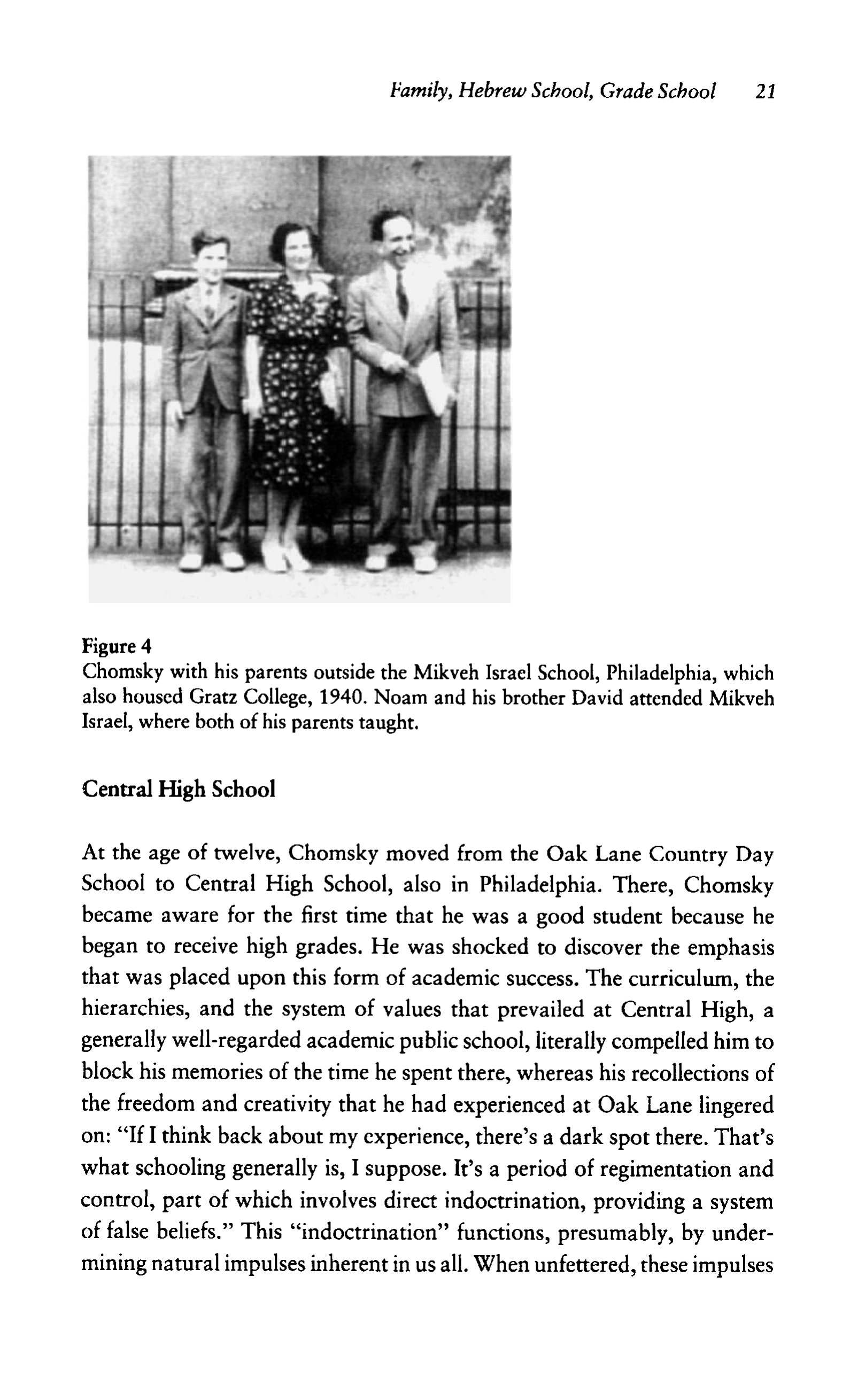
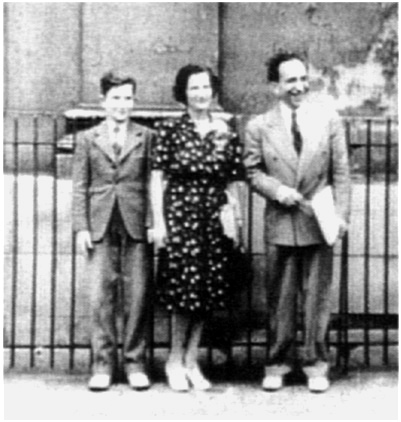
Figure
4
Chomsky with
his
parents outside
the
Mikveh Israel School, Philadelphia, which
also housed Gratz College, 1940. Noam
and his
brother David attended Mikveh
Israel, where both
of his
parents taught.
Central
High
School
At
the age of
twelve, Chomsky moved
from
the Oak
Lane Country
Day
School
to
Central
High
School, also
in
Philadelphia.
There,
Chomsky
became aware
for the first
time that
he was a
good student because
he
began
to
receive high grades.
He was
shocked
to
discover
the
emphasis
that
was
placed upon this
form
of
academic success.
The
curriculum,
the
hierarchies,
and the
system
of
values that prevailed
at
Central
High,
a
generally well-regarded academic public
school,
literally compelled
him to
block
his
memories
of the
time
he
spent there, whereas
his
recollections
of
the
freedom
and
creativity that
he had
experienced
at Oak
Lane lingered
on: "If I
think back about
my
experience, there's
a
dark spot there.
That's
what schooling generally
is, I
suppose. It's
a
period
of
regimentation
and
control,
part
of
which involves direct indoctrination, providing
a
system
of
false
beliefs." This
"indoctrination"
functions,
presumably,
by
under-
mining
natural impulses inherent
in us
all. When unfettered, these impulses
22
Chapter
1
prompt
us to
explore
in new and
unexpected ways. Also, playing
off
sys-
tems
of
"prestige
and
value," this process
of
indoctrination
reinforces
an
individual
student's desire
to
beat other students,
a
dynamic that Chomsky
sees
at
work
in
most educational institutions.
The
pedagogical practices
of
Central High were,
for
Chomsky,
"the
manner
and
style
of
preventing
and
blocking
independent
and
creative thinking
and
imposing hierarchies
and
competitiveness
and the
need
to
excel,
not in the
sense
of
doing
as
well
as
you
can,
but
doing better than
the
next
person"
(Chomsky
Reader
6).
The
shock Chomsky
felt
upon entering
the
world
of
high school
was
translated into
the
contention
that
society generally educates
its
constitu-
ents with
the aim of
meeting
or
furthering
the
needs
of the
ruling class.
Although
he is
convinced
that
all
schools could
be run
like
the
Deweyite
Oak
Lane,
he
does
not
think
"that
any
society based
on
authoritarian
hierarchic institutions would tolerate such
a
school system
for
very
long—
[I]t
might
be
tolerated
for the
elite, because they would have
to
learn
how to
think
and
create
and so on, but not for the
mass
of the
pop-
ulation"
(Chomsky
Reader
6).
Chomsky
was,
nevertheless, active
at
Central High.
He
belonged
to a
number
of
clubs
and was
well liked
by his
peers,
but his
interests were
not
those
of the
majority
of
students.
He
recalls,
for
example,
that
when
he
was
in
high school,
he was
"all
excited, passionate, about
the
high school
football
team"
(qtd.
in
Haley
and
Lunsford
7). But at
some point during
his
high-school years,
he had a
revelation about
the
all-important high-
school sporting events,
and
about those
who
became involved
in
them:
"I
remember
very
well
in
high school suddenly asking
myself
this kind
of
funny
question:
Why am
1
cheering
for my
high school
football
team?
I
don't
know
any of
those people. They
don't
know
me. I
don't
care about
them.
I
hate
the
high school.
Why am I
cheering
for the
high school foot-
ball team? Well
that
is the
kind
of
thing
you
just
do, you are
trained
to do.
It
is
ingrained.
And it
carries over
to
jingoism
and
subordination
and so
on"
("Creation").
The
notion
of
cheering
for the
right team
is one
that
generally
unnerves Chomsky,
and
even
at
this early point
in his
life
he was
not
afraid
of
going
it
alone. Another example.
The
Americans dropped
atomic bombs
on
Hiroshima
and
then
on
Nagasaki when Chomsky,
a
teenager,
was
attending summer camp.
He did not
respond
to the
call
of
patriotism
and
celebrate
the
actions that would mark
the end of
Family,
Hebrew School,
Grade
School
23
World
War II. He
could
not
identify
with
the
jubilant reactions
of
those
around him,
and was
unable
to find
anyone with whom
he
could share
his
thoughts, although there were,
of
course, groups
and
individuals holding
similar
views. Even today, historians continue
to
laud
the
American ini-
tiative,
justifying
it by
suggesting
that
one
massive slaughter
of
civilians
may
have averted
another.
This kind
of
reasoning, which demands
that
one
support
the
winning side
no
matter
what measures
it
decides
are
nec-
essary,
is
derided
and
condemned
by
Chomsky.
A
"Literary
Political
Salon"
It is
evident
that
Chomsky's passion
for
libertarian anarchism
and
politi-
cal
debate could
not be
accommodated
by the
school system.
So,
curious
and
free
spirited,
he
began,
at the age of
thirteen,
to
travel alone
by
train
to New
York City. There
he
visited relatives
and
haunted
the
secondhand
bookstores
on
Fourth Avenue.
In the
course
of
these visits
he
picked
up
lots
of
books, which
he
devoured
at
home
in
Philadelphia.
But he
also
spent many
of his
precious
New
York hours with
an
uncle (his
mother's
sister's
husband)
who ran a
newsstand
on
Seventy-Second Street.
He was
a
very bright, though little-educated
man
with
a
varied background.
He
taught Chomsky about Freud,
and
indeed, attracted
by his
grasp
of
Freud's theories, people came
to him for
analysis.
He had
also been
ex-
posed
to
"Marxist
sectarian
politics—Stalinist,
Trotskyite,
non-Leninist
sects
of one
sort
or
another"—things
about which Chomsky
himself
was
just
beginning
to
learn
(Chomsky Reader
11).
A
hunchback, Chomsky's
uncle
benefited
from
a
program
for
people with physical disabilities.
He
was
offered
employment selling newspapers; however, given
the
unfavor-
able
location
of the
stand,
he did
very little business. Instead,
the
stand
became
a
lively
"literary
political
salon"
for
Jewish professional
and
intel-
lectual
emigres.
Says
Chomsky, "The Jewish working-class culture
in New
York
was
very unusual.
It was
highly intellectual, very
poor;
a lot of
people
had no
jobs
at all and
others lived
in
slums
and so on. But it was a
rich
and
lively intellectual culture: Freud,
Marx,
the
Budapest String
Quartet,
literature,
and so
forth.
That
was,
I
think,
the
most
influential
intellectual
culture during
my
early
teens"
(Chomsky Reader
11).
Chomsky's
uncle
eventually
went
on to
become
a
successful
lay
psychiatrist,
but he
made
24
Chapter
1
his
most indelible mark upon
his
young nephew during this period
of
informal
contact
in New
York.
Deeply
influenced
by
what
he was
reading
and by the
discussions
he
was
having with
a
host
of new
acquaintances, Chomsky
was
moving more
and
more
in the
direction
of
anarchism
and
away
from
Marxism.
Otero
notes
that
since
a
number
of his
relatives were
on the
fringes
of the
Com-
munist Party,
the
young Chomsky
did
develop interests related
to
Marx-
ism, "but
by the
time
he was
twelve
or
thirteen
he had
already
'worked
out of
that
phase'"
("Chomsky
and the
Libertarian
Tradition"
4). So,
during
his
visits
to New
York, Chomsky also
frequented
the
office
of
Freie
Arbeiter
Stimme,
an
anarchist journal with notable contributors, such
as
Rudolf
Rocker.
Chomsky
was by
then reading everything that
he
could
find by
Rocker,
although
"there
wasn't
a
lot,
in
those days,
but I dug up
what
I
could"
(8
Aug.
1994).
Rocker
was an
important
figure for
many
of the
thinkers
in
Chomsky's early milieu.
"[F]rom
the
moment
of his
arrival
in the
United
States
...
[Rocker] became
a
force
within
the
Jewish anarchist movement
in
America, lecturing
from
coast
to
coast
...
and
producing
a
series
of
books
that
made
a
permanent contribution
to
anarchist philosophy
and
history"
(Avrich,
Anarchist Portraits
295). Chomsky
has
said
that
it was
a
1938 Rocker
text
that
first set him
thinking about
the
relationship
between anarchism
and
classical liberalism, which
set the
stage
for
many
of
the
ideas
that
he
would explore later
(13
Dec. 1994).
And
Moishe
Shtarkman,
who was
also writing
for
Freie
Arbeiter Stimme,
maintained
that
the
left-libertarian movement
that
Rocker
was
promoting
and
that
appeared
so
fresh
and
vital, actually
had its
roots
in
ancient Jewish
history:
These were
not
ideas
that
young Jews
had
absorbed
in
London
and New
York.
They were
a
revival
of the old
Jewish Messianic
faith.
The
Libertarian movement
used
a new
terminology
for
ancient Jewish ideas, which were near
to the
hearts
of
these young Jews.
If
such veterans
of
Jewish Anarchism
as
Zolotarov
and
Katz
afterwards
became spokesmen
of the
radical Zionist movement
and of
Poale
Zionism,
it was no
contradiction
to
their Anarchist
activity,
(qtd.
in
Rocker,
London
33)
Chomsky
was
reading other anarchist material
by, for
example, Diego
Abad
de
Santillan,
who,
a few
months
before
the
onset
of the
Spanish
Civil
War (in
March
of
1936),
wrote
a
book that
was
partially translated
Family,
Hebrew School,
Grade
School
25
and
republished
as
After
the
Revolution.
During this
period
Chomsky
also
read works
by
left
Marxists (non-Bolshevik
Marxists),
including Karl
Liebknecht, Rosa Luxemburg,
and
Karl Korsch. Korsch's work
was an
important source
of
inspiration
for
some
of the
more
theoretically'ori-
ented Marxist thinkers who,
in
turn, exerted various degrees
of
influence
upon Chomsky.
In
fact, Chomsky claims
that
Korsch
was a
Spanish-
anarchosyndicalist-movement
sympathizer, suggesting that
a
broad camp
of
left-thinking individuals
found
much that
was
worthwhile
in the
Span-
ish
anarchist actions:
"Marxism
also covers
a
pretty broad spectrum
and
there
is a
point
at
which some varieties
of
anarchism
and
some varieties
of
Marxism come very close together,
as for
example, people like Karl
Korsch,
who was
very sympathetic
to the
Spanish anarchist movement,
though
he
himself
was
sort
of an
orthodox
Marxist"
(Language
and
Politics
168).
These
orthodox
Marxists were generally less important
to
Chomsky
because
of the
extreme level
of
their commitment
to
Marxism
and
because
he
felt
their analyses were overly complex. This
is a
point
of
contention
for
others
who, though
in
pursuit
of
goals similar
to
Chomsky's,
none-
theless believe
that
the
mechanisms
and
strategies
of
capitalism must
be
subjected
to the
kind
of
deeply philosophical
and
complex reflection that
characterizes some Marxist
analysis—for
example,
the
works
of
Frank-
furt
School theorists. Chomsky comments: "The intellectuals around
the
Marxist tradition
(Lukacs,
Frankfurt School, etc.)
I
read
a bit but
wasn't
much interested
in,
frankly.
I
don't
find
that kind
of
work very illuminat-
ing,
to
tell
the
truth.
The
ideas
that
seem
useful
also seem pretty simple,
and I
don't
understand what
all the
verbiage
is
for"
(8
Aug. 1994).
His
early
attraction
to
anarchism
and
resistance
to the
Marxist tradition
was
eventually
translated into
a
strong interest
in
local activist work
and a
rejection
of
overly complexified studies class analysis, even though
he did
discover some crucial overlaps between
the
two.
Orwell
and the
Anarchist Position
Unlike
the
many members
of the
left
who
captivated
him as a
young
man
—such
as
Dwight
Macdonald,
George Orwell,
and
Bertrand
Russell—
Chomsky himself
did not
come
to
left-libertarian
or
anarchist thinking
as a
26
Chapter
1
result
of
his
disillusionment
with
liberal thought.
He
quite literally started
there.
At a
tender age,
he had
begun
his
search
for
information
on
con-
temporary left-libertarian movements,
and
did
not
abandon
it.
Among
those
figures he was
drawn
to,
George Orwell
is
especially fascinating,
both
because
of the
impact
that
he had on a
broad spectrum
of
society
and the
numerous contacts
and
acquaintances
he had
in
the
libertarian
left.
Chomsky
refers
to
Orwell
frequently
in
his
political writings,
and
when
one
reads Orwell's works,
the
reasons
for
his
attraction
to
someone
interested
in
the
Spanish Civil
War
from
an
anarchist perspective become
clear.
When Chomsky
was
in
his
teens
he
read Orwell's
Animal Farm,
"which
struck
me as
amusing
but
pretty
obvious";
but
in
his
later teens
he
read
Homage
to
Catalonia,
"and thought
it
outstanding (though
he
over-
did the
POUM
role
I
felt,
nol
surprisingly given where
he
was);
it
confirmed
beliefs
I
already
had
about
the
Spanish Civil War"
(31
Mar.
1995).
Hom-
age
to
Catalonia,
Orwell's description
of the
Spanish conflict, which
he
wrote
after
completing
a
stint
as an
active member
of the
POUM
militia,
is
still
a
book
to
which people (including Chomsky)
who are
interested
in
successful
socialist
or
anarchist movements
refer,
because
it
gives
an
accurate
and
moving
description
of a
working libertarian society.
The
"beliefs"
that
it
"confirmed"
for the
teenaged Chomsky were related
to
his
growing conviction
that
libertarian societies could function
and
meet
the
needs
of the
individual
and the
collective.
There
were three groups active
on the
scene
in
Barcelona during
the
1930s:
the
Partido
Obrero
de
Umficacion
Marxista,
or
POUM;
the
socialist
PSUC
(Partido
Sociahsta
Unificado
de
Catalunya), which
was
dominated
by
Stalinists;
and the
anarchist
CNT-FAI
(Confederacion
Nacional
de
Trabajadores-Federacion
Anarquista
Ibenca),
which honored Rudolf
Rocker
as
"their
teacher"
on the
occasion
of
his
eightieth birthday
(Rocker,
London
32).
Orwell
joined
the
POUM
militia
at the end of
1936
as
a
means
of
entering Spam
to
write newspaper articles.
His
description,
in
Homage
to
Catalonia,
of the
POUM
line
sets
up an
oversimplified
but
provocative relationship between bourgeois democracy, fascism,
and
capitalism:
Bourgeois
"democracy"
is
only
another
name
for
capitalism,
and so
is
Fascism;
to
fight
against
Fascism
on
behalf
of
"democracy"
is
to fight
against
one
form
of
Family,
Hebrew
School,
Grade School
27
capitalism
on
behalf
of a
second
which
is
liable
to
turn
into
the first at any
moment.
The
only real alternative
to
Fascism
is
workers'
control
If you set up any
less
goal
than
this,
you
will
either
hand
the
victory
to
Franco,
or, at
best,
let in
Fascism by the back door The war and the revolution are inseparable. (60-61)
Orwell maintains that revolution
is the
only
way to
remove
from
power
the
oppressive business-based ruling class
of the
type that
has
dominated
the
West since World
War II.
This concept
is a
difficult
one to
grasp
for
those
of us who
have been
programmed,
in
large measure
by the
main-
stream press,
to
think that battles must involve
two
opposing
forces—one
good
and one
evil. World
War II is
often
portrayed this way:
the
Allied
side
is
taken
to
represent
freedom
and
democracy, while
fascism
and
Nazism
are
considered synonymous with totalitarian oppression. Chom-
sky
knew early
on
that
there were other ways
to
conceive
of
contemporary
political structures.
He
tended
to
lean towards
the
left-libertarian inter-
pretation
of
events,
and
concluded that neither side deserved
the
support
of
those interested
in a
"good
society."
How
"good"
is the
society that
drops atomic bombs
on
Japanese civilians,
or
reduces German towns
to
rubble?
Isn't
there
an
alternative?
This
subject
is
still
hotly debated,
even
among members
of the
liber-
tarian
left.
Norman Epstein,
who has
been active
in
leftist
movements
for
many
years
and who is
otherwise generally sympathetic
to
Chomsky's
position, here dissents
by
taking exception
to
Orwell.
He
emphasizes that
"fascism
is
not
simply another name
for
capitalism.
It is a
form,
and a
particularly
brutal one, which capitalism takes under certain historical
circumstances
(including
today
in
many third world countries under
the
sponsorship
of
U.S. capital) which
is
different
from
bourgeois democracy.
Someone
like Chomsky
is
allowed
to
function
under bourgeois democ-
racy
but not
under fascism"
(20
Apr. 1995).
But we
must recognize
the
similarities between
a
fascist
agenda
and
that
of the
so-called democratic
West
if we are to
understand where Chomsky
is
coming
from
in his
polit-
ical
works,
and to do so we
have
to
engage with
the
anarchist position
that
he had
begun
to
develop
in his
youth.
The
most important point, perhaps,
is
that
the
anarchism
of the
type
that reigned,
in
various degrees,
in
Barcelona
in the
1930s,
was not an
anarchism
of
chaos,
of
random
acts;
it was not
purely individualistic
or
hedonistic
in
character. When Chomsky considered
the
anarchist position
as an
alternative
to the
status quo,
he may
well have appealed
to
Orwell's
description,
in
Homage
to
Catalonia,
of
Barcelona
in
1936.
He
refers
to
this passage
on a
number
of
occasions
in his
later works. Orwell begins
by
describing
his
arrival
in the
city, noting
the
physical changes that
had
been
effected
by the
anarchists
arid
the
workers.
Most
of the
buildings
had
been
seized
by the
workers, churches
had
been gutted
or
demolished, there
were
no
private motorcars
or
taxis, shops
and
cafes
had
been
collec-
tivized,
and
symbols
of the
revolution abounded.
But it was the
effect
that
this collectivization
had
upon
the
people that
was
most striking.
Waiters
and
shop-walkers looked
you in the
face
and
treated
you as an
equal.
Servile
and
even ceremonial forms
of
speech
had
temporarily disappeared.
Nobody said
"Sefior"
or
"Don"
or
even
"Usted";
everyone called everyone else
"Comrade"
and
"Thou,"
and
said
"Salud!"
instead
of
"Buenos
dias."
...
And it
was the
aspect
of the
crowds
that
was the
queerest thing
of
all.
In
outward
appearance
it was a
town
in
which
the
wealthy classes
had
practically ceased
to
exist.
Except
for a
small number
of
women
and
foreigners there were
no
"well-
dressed"
people
at
all. Practically everyone wore rough working-class clothes,
or
blue overalls
or
some variant
of the
militia uniform.
All
this
was
queer
and
mov-
ing. There
was
much
in it
that
I
didn't
understand,
in
some ways
I did not
even like
it, but I
recognized
it
immediately
as a
state
of
affairs
worth
fighting
for. (4-5)
But
how
does
one
achieve such
a
society?
How did the
young Chomsky
explain
to
himself
the
great distance between
his own
world
and the one
about which
he
read
in
books such
as
Homage
to
Catalonia"}
And why
didn't
he
look
to the
Bolshevists rather than
the
anarchists?
The
work
of
anarchist thinker Rudolf Rocker
was a
vital source
of
information
and
inspiration
for him as he
struggled
to
analyse these
complex
issues. Chomsky read Rocker's work, including
his
book
on the
Spanish
Civil
War
called
The
Tragedy
of
Spain,
as a
teenager. Rocker's
argument
was
that
the
Bolshevist rulers
justified
totalitarian practices
by
claiming
to
defend
proletarian interests against counterrevolutionary
actions. They were preparing society
for
socialism
in
accord with
the
teaching
of
Lenin.
But
Rocker's claim, which
is in
line with Chomsky's
thinking,
is
that dictatorship
and
tyranny,
even
when couched
in
appar-
ently
libertarian ideology
and
objectives,
can
never lead
to
liberation.
Says
Rocker:
"What
the
Russian autocrats
and
their supporters
fear
most
is
that
the
success
of
libertarian Socialism
in
Spain might prove
to
their
blind
followers
that
the
much vaunted
'necessity
of
dictatorship'
is
noth-
ing
but one
vast
fraud
which
in
Russia
has led to the
despotism
of
Stalin
28
Chapter
1
Family,
Hebrew School,
Grade
School
29
and
is to
serve today
in
Spain
to
help
the
counter-revolution
to a
victory
over
the
revolution
of the
workers
and the
peasants"
(35).
The
impor-
tance
of the
Spanish revolution
is
clear,
for it
served
as a
concrete example
of
how
powers such
as the
Soviet Union
and the
United
States,
despite
their apparent
differences,
did
converge
in
their mutual
fear
of
libera-
tion
movements.
In
this sense, apparent aberrations such
as the
Stalinist-
Fascist
pact
that
was
forged
during World
War II, or the
physical
and
verbal
attacks made against
the
Spanish anarchists
by
both
the
Soviets
and the
Americans, make sense.
The
misrepresentation
of
events persists
even
today
in
standard historical
texts.
Chomsky
was
fortunate
to
have made this connection early
on, for it
spared
him
from
experiencing
the
disillusionment that ultimately
afflicted
many
of his
contemporaries. This sense
of
betrayal
or
surprise
was
very
real
for
many members
of
Chomsky's generation.
His
friend
Seymour
Melman,
for
example, described
in a
personal interview
the
important
role
that
the
Spanish Civil
War
played
in
revealing
to him the
Stalinist-
Fascist relationship
and the
so-called Communist hand:
We
didn't
know
the
full
role
of the
Communists until 1939 when this famous
Russian
general
defected
and
wrote articles
in the
Saturday
Evening Post.
Therein
he
described
in
detail
how
Stalin
was
using
his
secret police
to
wage
a war
against
the
Anarchists.
He
described
Stalin's
war
within
the
war.
He
also described
how
the
Stalinists stole
the
gold reserve
of the
Spanish Republic.
He
layed
out a
detailed
analysis
and
prediction
of the
Nazi-Soviet
pact.
Notice
the
time
lag
between
the
events
of
1936
and the
realization
that
the
Soviets were
"wag[ing]
a war
against
the
Anarchists."
Even
more
remarkable,
of
course,
is
that
the
generally accepted
view,
subsequently
perpetrated
by the
Western press,
was
that
the
Spanish Civil
War was a
colossal
failure,
and had
achieved
no
concrete results.
It was
branded
as a
failure
of
socialist, anarchist,
or
Marxist principles, depending upon
who
was
doing
the
branding.
Orwell
had
noted,
in
Homage
to
Catalonia.,
the
obvious schism
be-
tween
the
events
as
they occurred
and as
they were reported,
and
pointed
to the way in
which media types
and
intellectuals tended
to
dismiss anti-
status-quo movements, such
as
socialism,
by
distorting
the
principles
that
supported them
or the
movements
that
grew
from
them:
"I am
well aware
that
it is now the
fashion
to
deny
that
Socialism
has
anything
to do
with
30
Chapter
1
equality.
In
every country
of the
world
a
huge tribe
of
party-hacks
and
sleek little professors
are
busy
'proving'
that socialism means
no
more
than
a
planned state-capitalism with
the
grab-motive
left
intact.
But
for-
tunately there also exists
a
vision
of
Socialism quite
different
from
this."
This
is the
crux
of the
matter; other visions
did
exist,
and
Chomsky
had
access
to
them
as a
young man.
But it did
take
a
certain amount
of
effort
to
uncover them, unless
one was
fortunate enough
to
have participated
directly
in
events
of the
time,
as
Orwell was.
"[I]t
was
here
that
those
few
months
in the
POUM
militia were valuable
to me. For the
Spanish militias,
while they
lasted,
were
a
sort
of
microcosm
of a
classless society.
In
that
community where
no one
was
on the
make, where there
was a
shortage
of
everything
but no
privilege
and no
boot-licking,
one
got,
perhaps,
a
crude
forecast
of
what
the
opening stages
of
Socialism might
be
like. And,
after
all, instead
of
disillusioning
me it
deeply attracted
me"
(104-06).
Detective Chomsky
So,
against
a
backdrop
of
Hitler's ascent
to
power,
the
Spanish Civil War,
and
World
War
II—which
were described
in
antirevolutionary ways
in
the
mainstream
press—the
teenaged Chomsky
was
reading about, dis-
cussing,
and
evaluating other ways
of
conceiving societal relations.
But
while Orwell
was
traveling
from
Wigan Pier
to
Paris
to
Barcelona
in
order
to
witness events
and
evaluate possible alternatives
firsthand,
Chomsky
was
doing
his own
exploration through
his
reading. This required
a
strong
commitment, particularly
on the
part
of a
teenager,
who
would
have
been tempted, presumably,
by
more immediate pleasures. Take,
for
example,
Chomsky's
interest
in the
CNT,
the
Spanish
anarchist
group:
I was
most interested
in the
CNT,
and the
anarchists generally,
from
the
early
1940s
when
I
really began
to
follow
these
things
beyond
the
press.
Even
to say
that
I was
interested
in the
CNT
is a bit
misleading.
I was
influenced
early
on by the
anarchist critique
of the
CNT
leadership.
What
I
really found inspiring
was the
original
"collectivization"
documents,
then available only
in
French (possibly
Spanish),
and
what
I
could pick
up
about Berneri
and
others.
And
also com-
mentary like Rocker, Korsch
in
Living Marxism,
and a
few
others.
(31
Mar. 1995)
What motivated
his
interest?
A
powerful
curiosity, exposure
to
diver-
gent
opinions,
and an
unorthodox
education have
all
been given
as
Family,
Hebrew School,
Grade
School
31
answers
to
this question.
He was
clearly struck
by the
obvious contra-
dictions between
his own
readings
and
mainstream press reports.
The
measurement
of the
distance between
the
realities presented
by
these
two
sources,
and the
evaluation
of why
such
a gap
exists, remained
a
passion
for
Chomsky.
He
persistently sought
out
marginalized left-libertarian
perspectives
on
current
and
historical events,
and
gradually became aware
that
the
monolithic world view that
is
propped
up
before
us by the
main-
stream media
is
suspiciously consistent,
and
that
it is
used
to
establish
the
status quo.
This insight
fueled
his
youthful
investigations,
and
ultimately formed
the
foundations
of
much
of his
later work
on
propaganda,
the
media,
and
the
ways
that
groups such
as the
Spanish anarchists
are
discredited
in
Western society.
In
"Language
in the
Service
of
Propaganda,"
one of his
many
later articles that draws upon George Orwell's writings
and the
reception
of his
work,
he
describes
the
"interesting
and
revealing"
pub-
lishing
history
of
Homage
to
Catalonia:
It
appeared
in
1937
but was not
published
in the
United States.
It was
published
in
England,
and it
sold
a
couple hundred copies.
The
reason
that
the
book
was
suppressed
was
because
it was
critical
of
communists.
That
was a
period when
pro-communist intellectuals
had a
great deal
of
power
in the
intellectual estab-
lishment It did appear about 10 years later, and it appeared as a Cold War
tract because
it was
anti-Russian
and
fashions
had
changed.
That
was a
really
important book.
I
think there were things wrong with
it, but it was a
book
of
real
great significance
and
importance. It's probably
the
least known
of
Orwell's
major
political books.
(Chronicles
21)
The
issue
of
ruling-class
or
corporate control
of
public access
to
infor-
mation
is a
divisive
one for
many
of
Chomsky's critics. Some
are
convinced
that
works are,
for the
most
part,
printed
and
distributed according
to
capitalist
profit
motives.
For
example,
another
Orwell
novel,
Keep
the
Aspidistra
Flying^
was not
distributed
in the
United States until many
years
after
its
publication
in
1936 because
it was
deeply rooted
in
English
life,
and
therefore considered
by
distributors
to be of
little interest
to
American
readers.
Yet
other critics endorse Chomsky's
belief
that
a
type
of
elite control does exist: Chomsky himself
has had his own
work sup-
pressed
by
publishers,
and
some media outlets have
refused
to
print
his
letters
and
interviews with him.
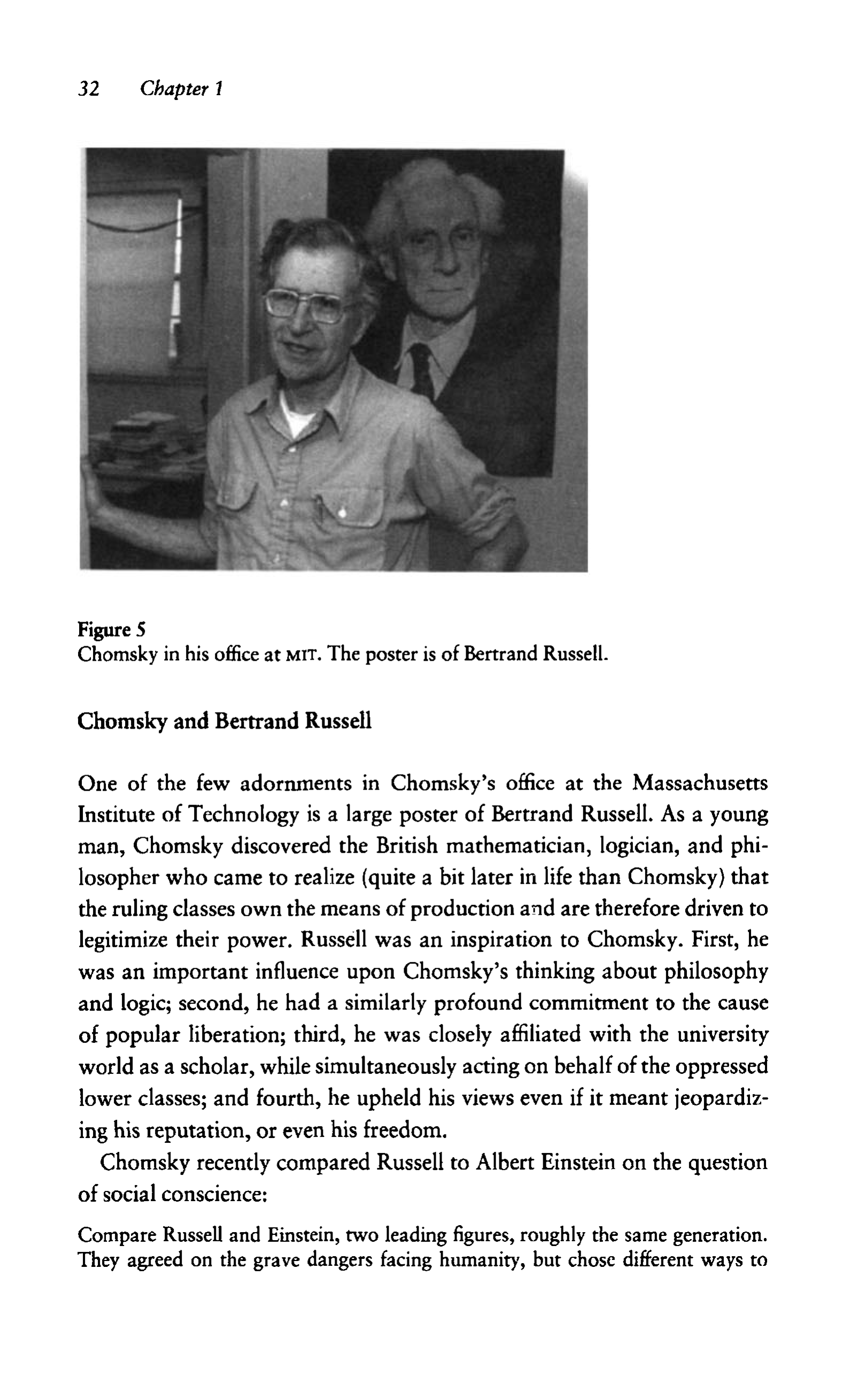
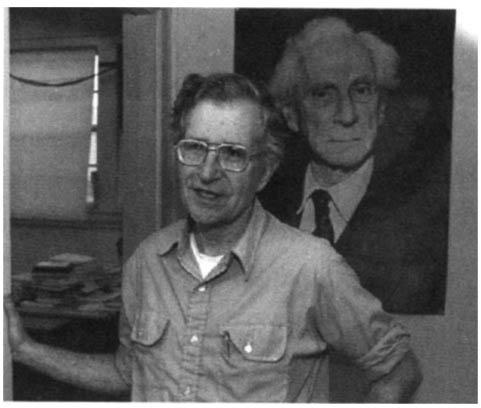
32
Chapterl
Figure
5
Chomsky
in his
office
at
MIT.
The
poster
is of
Bertrand Russell.
Chomsky
and
Bertrand Russell
One of the few
adornments
in
Chomsky's
office
at the
Massachusetts
Institute
of
Technology
is a
large poster
of
Bertrand Russell.
As a
young
man, Chomsky discovered
the
British mathematician, logician,
and
phi-
losopher
who
came
to
realize (quite
a bit
later
in
life
than Chomsky)
that
the
ruling classes
own the
means
of
production
and are
therefore driven
to
legitimize
their power. Russell
was an
inspiration
to
Chomsky. First,
he
was an
important
influence
upon Chomsky's thinking about philosophy
and
logic; second,
he
had
a
similarly profound commitment
to the
cause
of
popular liberation; third,
he was
closely
affiliated
with
the
university
world
as a
scholar, while simultaneously acting
on
behalf
of the
oppressed
lower classes;
and
fourth,
he
upheld
his
views even
if it
meant jeopardiz-
ing
his
reputation,
or
even
his
freedom.
Chomsky recently compared Russell
to
Albert Einstein
on the
question
of
social conscience:
Compare Russell
and
Einstein,
two
leading
figures,
roughly
the
same
generation.
They agreed
on the
grave dangers
facing
humanity,
but
chose
different
ways
to
Family,
Hebrew School,
Grade
School
33
respond. Einstein responded
by
living
a
very comfortable
life
in
Princeton
and
dedicating
himself
to
research
that
he
loved, taking
a few
moments
for an
occa-
sional oracular statement. Russell responded
by
leading demonstrations
and
get-
ting himself dragged
off by the
cops, writing extensively
on the
problems
of the
day, organizing
war
crimes trials, etc.
The
result? Russell
was and is
reviled
and
condemned, Einstein
is
admired
as a
saint. Should that surprise
us? Not at
all.
(31
Mar.
1995)
This comparison points
to the
deep sympathy Chomsky had,
from
very
early
on, for
those
who
involved themselves
in
activist work
and
concrete
political
action
such
as
marching, signing
petitions,
and
promoting
small-
and
large-scale libertarian movements.
In
remarking
on
Einstein,
he
also
hints
that
the
pursuit
of
personal comfort
and
gain,
although
not in
itself
contemptible,
can
nonetheless stem
from
a
pernicious wish
to
separate
oneself
from
the
rabble—the
very people
who are
oppressed
or
enslaved
by
the
system.
But
Chomsky
is
quick
to
state
that
marching
is not in
itself
a
virtuous activity, just
as
theorizing about social problems
is not
neces-
sarily
ivory
towerish;
what matters
is
which particular issue
is
being
promoted
by
these activities. Russell
was on the
right track,
and
this
is
perhaps
one
reason why,
in
Chomsky's opinion,
he was
vilified
"when
he
took
the
path
of
political activism once again
in the
late
'50s,
and to the
end
of his
life."
That
he
received such treatment "was pretty
shocking."
Chomsky
remarks,
"Of
course,
it was
never
a bed of
roses before, includ-
ing
a
jail
sentence during World
War I,
[being] kicked
out of his
Cam-
bridge
College (Trinity)
for
lack
of
sufficient
patriotism,
barred
from
teaching
at
City College
in New
York
as a
freethinker
and
other crimes,
and
on,
and
on,
through most
of his
life.
It
even
infects
professional phi-
losophy. He's known mostly
for his
work early
in the
century, when
he
was
still
a
nice gentlemanly
type"
(25
July
1995).
The
necessity
of
such personal
sacrifice
seems inevitable
to
Chomsky.
But
it
must
finally be
accepted
as
secondary
to the
larger work that
remains
to be
done, work that, while never losing sight
of the
ultimate
goal
of a
"good
society,"
has to
begin with local action:
"there
are all
sorts
of
people struggling
very
hard
to
make
the
world—if
not
'good,'
then
a
little better.
And
they desperately need
help"
(18 May
1995). Carlos
Otero,
Chomsky's good
friend,
sees
in
this kind
of
attitude what
is a
clearly
anarchosyndicalist
position.
34
Chapter
1
A
committed anarchosyndicalist
is not
satisfied
with being
a
good arm-chair rev-
olutionary—one
who has
made
every
effort
to
understand
the
contemporary
world
in the
light
of
what
is
best
in the
libertarian socialist tradition, drawing
from
the
achievements
of the
past
lessons
that
will enrich
the
culture
of
liberation.
Anarchosyndicalists
are
prepared
to
take their stand with those
who
wish
not
only
to
understand
the
world,
but
also
to
change
it.
They
are
perfectly
aware
of the
power
of
non-violent resistance
and
direct
action—
They
are
also more than
willing
to
participate anonymously
in the
spontaneous actions
of
popular
forces
that
are
capable
of
creating
new
social
forms
in the
course
of the
struggle
for
complete liberation,
fully
conscious that social creation enhances
and
promotes
the
very
intellectual creation that inspired
it.
("Introduction"
38)
Chomsky's early
life,
indeed
his
whole
life,
was and has
been literally
consumed
by a
desire
for
understanding
and a
penchant
for
political
commitment.
The
important events, passions,
and
alliances
in his
early
life
were almost
all
linked
to
intellectual pursuits. Chomsky recalls:
"I
had,
from
childhood, been deeply involved intellectually
in
radical
and
dissident politics,
but
intellectually.
At
that
point,
I was
feeling
so
uneasy
with
the
usual petition-signing
and the
like
that
I
couldn't stand
it any
longer,
and
decided
to
plunge
in. I
hated
the
decision.
I'm
really
a
hermit
by
nature,
and
would much
prefer
to be
alone working than
to be in
public"
(qtd.
in
Falk
596nl).
This description
of the
deeply involved
intellectual hermit applies
as
much
to
Chomsky
the
present-day activist
and
professor
as it
does
to the
child
and
teenager
of the
1930s
and
1940s.
The
Circle
Broadens
In
his
later teens, Chomsky's circle
of
influences
broadened
to
include
a
number
of
compelling
figures.
Among them were
Dwight
and
Nancy
Macdonald, publishers,
from
1944
to
1949,
of the New
York magazine
Politics.
Norman Epstein claims
that
Politics
"had
an
enormous
influ-
ence"
on him and
"most
of my
friends
and,
I
daresay, also
on
Chomsky"
(4
Feb.
1995).
Chomsky did,
in
fact,
read
Politics
in his
late teens
and
found
that
"in
some respects [it] answered
to and
developed"
his
interest
in
"anarchism,
American involvement
in the war and so
forth" (qtd.
in
Whitfield
113).
The
chief
contributors
to the
magazine were, with
the ex-
ception
of
Paul Goodman,
all
immigrants: Andrea
Caffi
(Italian-Russian),
Nicola
Chiaromonte
(Italian),
Lewis Coser (German), Peter Gutman
Family,
Hebrew School, Grade School
35
(Czech),
Victor Serge (Belgian-Russian), Niccola
Tucci
(Italian),
and
George Woodcock (English,
and
eventually Canadian).
In
1946,
the
magazine
dropped
its
Marxist
orientation
"to
whore
after
the
strange gods
of
anarchism
and
pacifism,"
as
Dwight Macdonald
put
it
(Memoirs
27);
and it
managed
to
maintain
its
respectable
but
money-
losing list
of five
thousand subscribers. Macdonald,
who was
also
a
lib-
ertarian critic, pamphleteer,
and
author, notes:
While
I was
editing
Politics
I
often
felt
isolated, comparing
my few
thousand
readers with
the
millions
and
millions
of
nonreaders—such
is the
power
of the
modern obsession with quantity, also
of
Marxism
with
its
sentimentalization
of
"the
masses."
But...
I
have
run
across
so
many nostalgic
old
readers
in so
many
unexpected
quarters
that
I
have
the
impression
I'm
better known
for
Politics
than
for
my
articles
in
The New
Yorker,
whose circulation
is
roughly seven times
greater.
This
is
curious
but
should
not be
surprising.
A
"little
magazine"
is
often
more intensively read (and circulated) than
the big
commercial magazines, being
a
more individual expression
and so
appealing with special force
to
other individ-
uals
of
like
minds.
(27)
Chomsky
could perhaps
be
described
as one of
these "nostalgic
old
readers,"
for
almost twenty years
after
its final
issue
he
mentioned
the
magazine
in a
piece called "The Responsibility
of
Intellectuals" (1966),
in
which
he
discussed
a
series
of
articles published
in
Politics
that deal with
this
subject,
These articles, although written
so
many years earlier,
had
"lost
none
of
their power
or
persuasiveness"
for
him, particularly
one by
Macdonald
himself
concerning
the
question
of war
guilt.
In
this piece, Macdonald
tries
to
assess
the
extent
to
which
the
German
or
Japanese people were
responsible
for the
atrocities committed
by
their governments,
and
then
goes
on to ask to
what extent
the
American
or
British people were
re-
sponsible
for
Allied atrocities such
as the
bombing
of
civilian targets,
the
atomic destruction
of
Hiroshima
and
Nagasaki,
and
other
war
crimes.
Chomsky writes:
"To an
undergraduate
in
1945-46—to
anyone whose
political
and
moral consciousness
had
been formed
by the
horrors
of the
1930s,
by the war in
Ethiopia,
the
Russian purge,
the
'China
incident,'
the
Spanish
Civil War,
the
Nazi atrocities,
the
Western reaction
to
these
events
and,
in
part, complicity
in
them—these
questions
had
particular
significance
and
poignancy"
(American
Power
324).
In his
book about
Macdonald, Stephen
Whitfield
points
out
"the resemblances between
Macdonald's
and
Chomsky's
criticism,"
and
claims that "Chomsky
sought
to
uphold
the
Politics
tradition
'that
the
policies
of
governments
should
be
judged
by
their
effects
and not by the
reasons advanced
to
justify
them'"
(114,115).
There
was a
certain cohesion
to
Chomsky's ever-widening
milieu
at
this
time; many
of
those individuals whose work
had
commanded
his
atten-
tion were bound together
in a web of
interrelations. Prime examples
are
Macdonald
and
George Orwell.
In a
letter
to
Philip Rahv, written
on 9
December 1943, Orwell mentions
that
"Dwight
Macdonald
has
written
telling
me he is
starting another review
[Politics]
and
asking
me to
con-
tribute.
I
don't
know
to
what extent
he
will
be in
competition with
PR
[Partisan
Review]"
(Collected
Essays
3:
53). Then,
in his "As I
Please"
column
for the
Tribune,
Orwell declared: "One cannot
buy
magazines
from
abroad nowadays,
but I
recommend anyone
who has a
friend
in
New
York
to try and
cadge
a
copy
of
Politics,
the new
monthly magazine,
edited
by the
Marxist
literary
critic,
Dwight
Macdonald.
I
don't
agree
with
the
policy
of
this paper, which
is
anti-war (not
from
a
pacifist
angle),
but I
admire
its
combination
of
highbrow political analysis with intelli-
gent
literary
criticism"
(Collected
Essays
1:
172). Orwell eventually con-
tributed
a
number
of
articles
to
Politics,
and
Chomsky,
as we
have seen,
admired
the
work that
was
published there.
Paul
Mattick
and
Karl
Korsch,
who
often
combined their
efforts
for
various
causes,
were also discovered
by
Chomsky during
the
late
1940s,
as
he
entered
his
twenties. Chomsky knew Mattick personally,
and de-
clared
him to be
"too orthodox
a
Marxist
for my
taste";
nevertheless,
it is
essential
that
we
understand what theorists such
as
Mattick
and
Korsch
were saying about
the
events surrounding Chomsky's youth
if we are to
comprehend Chomsky's developing attitudes
and
beliefs
(8
Aug. 1994).
Mattick
(1904-80)
immigrated
to the
United States
from
Germany
in
1926.
He
emerged
from
the
Council Communist movement
in
Germany,
and he
eventually edited
two
journals,
Living Marxism
(with
the
collabo-
ration
of
Korsch)
and
New
Essays,
that
were
important
sources
for the
young
Chomsky; another
journal
that Chomsky read
in his
late teens,
International
Council Correspondence,
also
benefited
from
his
input.
Sam
Abramovitch,
a
source
of
much information about
the
period, remembers
both Mattick
and
Korsch
very
well,
and
recalls that
Living Marxism
36
Chapter
1
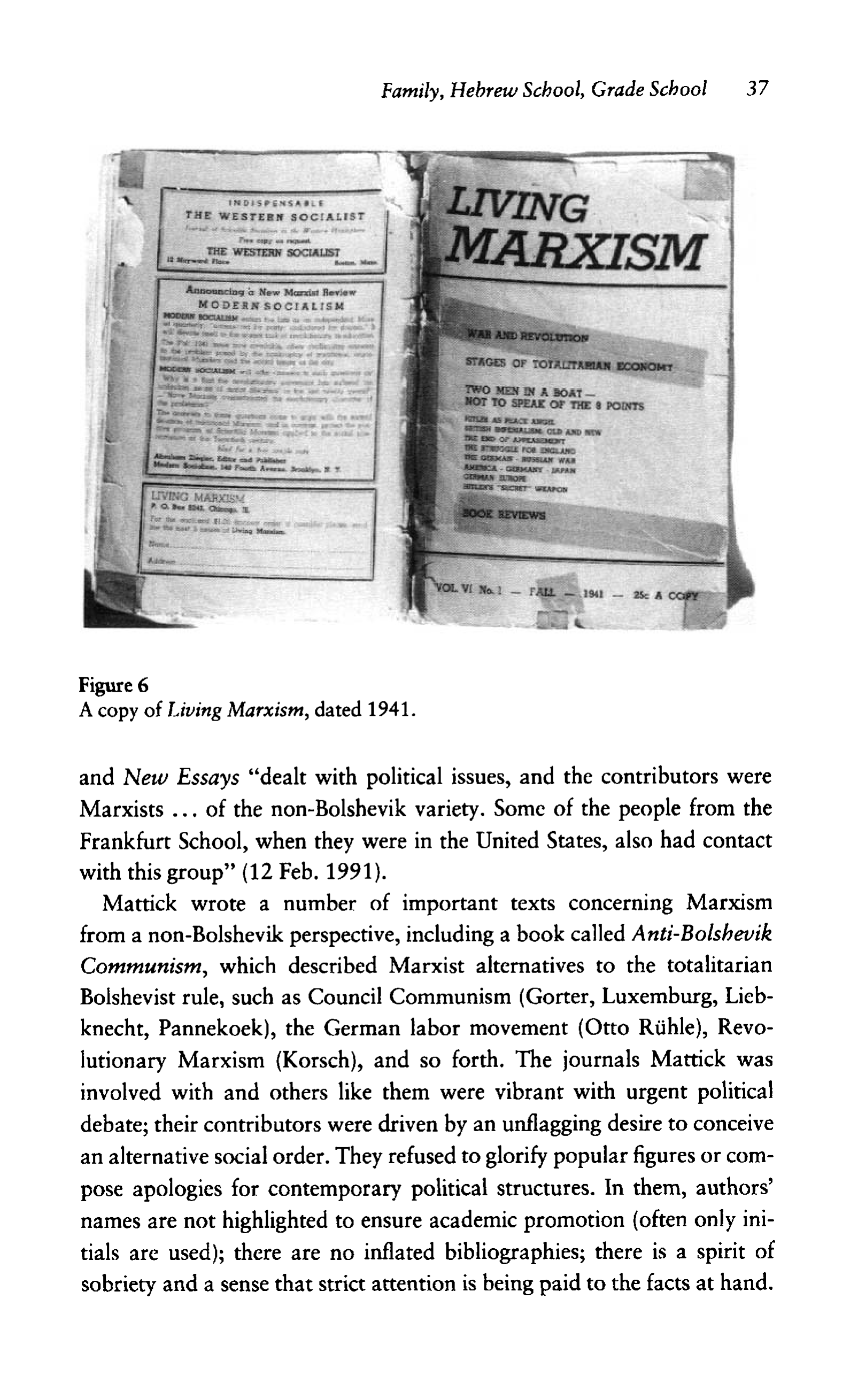
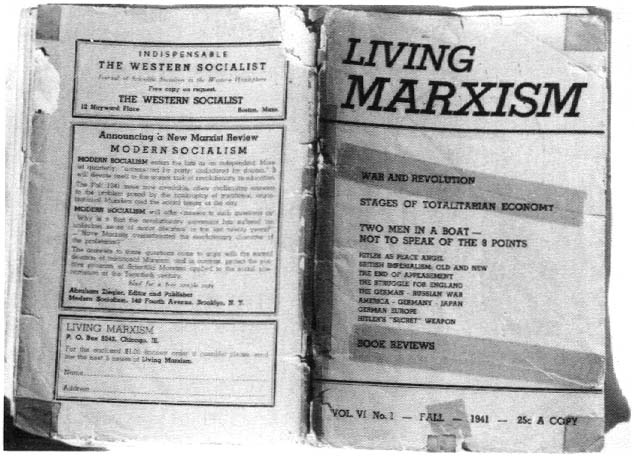
Family,
Hebrew School,
Grade
School
37
Figure
6
A
copy
of
Living Marxism,
dated
1941.
and
New
Essays
"dealt
with political issues,
and the
contributors were
Marxists
...
of the
non-Bolshevik variety. Some
of the
people
from
the
Frankfurt
School,
when they were
in the
United States, also
had
contact
with this
group"
(12
Feb.
1991).
Mattick wrote
a
number
of
important texts concerning Marxism
from
a
non-Bolshevik perspective, including
a
book called
Anti-Bolshevik
Communism,
which described Marxist alternatives
to the
totalitarian
Bolshevist
rule, such
as
Council Communism (Gorter, Luxemburg, Lieb-
knecht, Pannekoek),
the
German labor movement (Otto
Riihle),
Revo-
lutionary Marxism
(Korsch),
and so
forth.
The
journals Mattick
was
involved with
and
others like them were vibrant with urgent political
debate; their contributors were driven
by an
unflagging
desire
to
conceive
an
alternative social order. They
refused
to
glorify
popular
figures or
com-
pose apologies
for
contemporary
political
structures.
In
them,
authors'
names
are not
highlighted
to
ensure academic promotion
(often
only ini-
tials
are
used); there
are no
inflated
bibliographies; there
is a
spirit
of
sobriety
and a
sense
that
strict
attention
is
being paid
to the
facts
at
hand.
38
Chapter
1
A
perusal
of a
single issue
of
Living Marxism
provides insight into
what Chomsky
was
reading
in his
teens;
it is
even possible
to
trace,
in
this
magazine, some
of the
theoretical foundations
for
opinions that
he
would
later come
to
hold.
The
fall
1941 issue
featured
"War
and
Revolution,"
by
Karl Korsch; "Stages
of
Totalitarian Economy,"
by H.
Bruggers;
and a
long article called "Two
Men in a
Boat—Not
to
Speak
of the 8
Points"
(beginning
with
an
examination
of the
Churchill-Roosevelt Conference
of
1941,
and
moving into long discussions
of
"Hitler
as
Peace Angel,"
"British
Imperialism," "The
End of
Appeasement," "The Struggle
for
England,"
"The German-Russian War,"
"Arnerica-Germany-Japan,"
"German
Europe,"
and
"Hitler's
'Secret
weapon'"),
by
Mattick.
Living
Marxism
routinely took contemporary issues
(fascism,
imperialism, war,
Bolshevism)
and
reflected
upon them within their historical, social,
and
philosophical contexts.
So,
even
in
1941,
in the
midst
of the war
with
Germany, Korsch
was
writing about
the
real
issues
at
stake
in
this con-
flict:
"The struggle
for the new
order
of
society does
not
take place
on the
battlefields
of the
capitalist war.
The
decisive action
of the
workers begins
where
the
capitalist
war
ends"
("War
and
Revolution" 14).
Bruggers,
foreshadowing much
of
what Chomsky would later
say
about
monopoly-capitalist practices, describes
the
dominant economic
system
as a
'"corporate
community'
in
which state
and
party
officials
share
in
property
and
managerial functions";
a
"
'Keynesian
economy'
in
that
the
state
is the
greatest consumer
and
pyramid-building represents
a
considerable percentage
of
national
output";
a
"
'war
economy'
in
that
problems
of
autarchy
and of
establishing
new
large-scale industries
are
resolved with
the
help
of the
state";
and "a
capitalism based
on
'condi-
tioning measures'
in so far as its
development
and
expansion,
as
well
as
the
forms
and
symptoms under which
the
abstract laws
of
capitalist
economy
are
allowed
to
become
manifest,
are
determined
by
state inter-
vention
and the
monopolistic agreements
of
corporations."
If we
sub-
stitute
"Cold
War"
for
"war"
in
Bruggers's second description,
we may
see
how
valuable articles such
as
this
one
were. And, indeed, they con-
tinue
to be
relevant, despite
the
huge
shifts
that have occurred since
1941.
Looking
at
Bruggers's
definition
of
"managerial capitalism,"
the
total-
itarian nature
of the
corporation past
and
present—as
described
in our
time
by
Chomsky—becomes
clear
as the
basis
for a
merger
of
political
Family,
Hebrew
School,
Grade
School
39
and
economic power
is
laid out: "the totalitarian system
as we
know
it
today
may
also
be
called
'managerial
capitalism,'
since
the
decisions dic-
tated
by
technical
and
economic considerations
are no
longer hampered
by
the
rights
of
ownership
and
title holders.
Yet it
should
be
emphasized—
speaking
of
'managers'—that
the
true technical directors have nowhere
acquired
the
disposing power
of
technocrats;
the
real power rests mainly
with economic
and
business managers" (23).
Mattick's
Living Marxism
article sums
up the
issues
at
stake
in
World
War II in a way
that once
again anticipates many
of
Chomsky's views
of
contemporary interna-
tional
politics.
Here,
for the
word
"war,"
we
could
substitute
"any
war in
which First World powers play
a
part,"
or
even "any invasion undertaken
by
large
powers":
If
all the
other issues
of
this
war are
still clouded,
it is
perfectly clear that this
war is
a
struggle between
the
great imperialist contestants
for the
biggest share
of the
yields
of
world production,
and
thus
for the
control over
the
greatest number
of
workers,
the
richest resources
of raw
material
and the
most important
industries.
Because
so
much
of the
world
is
already controlled
by the
small competitive power
groups
fighting
for
supreme rule,
all
controlled groups
in all
nations
are
drawn
into
the
struggle.
Since
nobody dares
to
state
the
issues
at
stake,
false
arguments
are
invented
to
excite
the
population
to
murder.
The
powerlessness
of the
masses
explains
the
power
of
current ideologies.
(79)
Many other passages
of
Mattick's
article bolster Chomsky's anti-Leninist,
anti-Stalinist, anti-Bolshevik stance,
and his
more general
belief
that
the
revolution
in
Russia
had
simply
led to the
establishment
of
another
autocracy, this
one
with
lofty
sentiments
and
totalitarian practices.
Other options
to
that autocracy did,
of
course,
exist—options
that
clashed
with what
the
Bolsheviks wanted. Granting Soviet workers direct
participation
in the new
system, eliminating private property,
and
erad-
icating privilege based upon class
are all
positive steps that could have
been
taken towards
a
"good
society." Unfortunately,
the
ruling classes
in
the
Soviet Union were
far
more interested
in
maintaining their
own
power than
in
forming
a
union
of
Soviets according
to the
principles
just
described.
The
Soviet Union was,
and
still
is,
falsely
referred
to and
con-
demned
as a
communist
or
Marxist state
by
historians, journalists,
and
political
scientists.
It
was,
in
fact,
a
Bolshevik state
led by
ironfisted
totalitarian leaders
and
supported
by a
powerful
and
omnipresent army
committed
to
upholding interests
and
power structures that would never
have
been permitted
to
exist
in a
truly communist state.
40
Chapter
1
Chomsky
and
Pannekoek
Nor did the
Soviet regime conform
in any way to the
ideology
of
Council
Communism, which
had
been
of
great interest
to
Chomsky,
and
which
he
went
on to
explore
at
length (for example,
in
"Industrial Self-Manage-
ment"
in his
Radical
Priorities).
The
movement
was
generated
by
Anton
Pannekoek's International Council Communists
in
Amsterdam
and
Paul
Mattick's
Council Communist group,
and it had as
adherents Karl
Korsch
and
Antonio
Gramsci
(who, like Lenin, supported
the
workers'
councils
in
Turin
after
World
War I).
Lenin sensed
the
threat
that
Council
Communism posed
to the
Bolshevik Party,
and he
wrote
a
pamphlet
denouncing Pannekoek
and
Herman
Gorter's
position called
Left
Wing
Communism,
an
Infantile
Disorder.
Abramovitch's
description
of
workers
councils emphasizes
the
distance that existed between Lenin's Bolshevist-
directed version
of
organizing workers
and
that
which
was
proposed
by
Mattick,
Korsch,
and
Pannekoek. "The workers
had to
make
the
deci-
sions
in
terms
of the
workplace,
the
people
as a
whole
had to
develop
self-
consciousness
and a
self-decision-making
process,
and not
some
sort
of
group, party,
or
what have
you
making decisions
for the
bulk
of the
pop-
ulation
and
lead[ing] them
to the
millennium"
(12
Feb.
1991).
Pannekoek
and
Bertrand Russell were arguably
the
most important
role models
for
Chomsky,
and
indeed their work most clearly resembles
his
own
later
efforts.
An
astronomer
and
professor
of
astronomy
at the
University
of
Amsterdam, Pannekoek
was
also interested
in the
theoret-
ical relationship between science
and
Marxism.
He was
active
in
revolu-
tionary movements
in
Holland
and
Germany
from
1903 until
his
death
in
1960, having come
to the
left
through
his
early adherence
to
George Ber-
nard Shaw's Fabian movement. Chomsky says
that
"Pannekoek
is one
of
those whose work
I
found
very interesting.
I
learned
of it
from
Paul
Mattick,
who was
circulating
it in the
United States"
(31
Mar.
1995).
Pannekoek played
a
major
role
in the
Second International,
in
which
theoreticians
put
forth
"the assumption that
the way to
socialism
lay
through
the
building
of a
socialist party aiming
at the
capture
of
state
power
and
nationalization
of the
economy."
In the
years
before
World
War I,
Pannekoek,
together
with
Rosa Luxemburg, became involved
"in the
struggle
to
force
the
German socialist party
to
support mass
Family,
Hebrew School,
Grade
School
41
direct
action.
During
the
war,
he was
among
the first to
attack
the
socialist parties
of
Europe
for
supporting
the war and to
call
for
class
struggle
against
it" (J. B. and P. M.
iii).
Like
many members
of the
left
with whom Chomsky sympathized,
Pannekoek eventually broke with
the
Third International
(he did so in
1920),
and
then,
through
his
work with Council Communist groups
in
various
countries,
went
on "to
develop
the
theory
of the
self-organization
of
the
working class (through
the
council structure)
in
opposition
to all
forms
of
social organization distinct
from
those
of the
class
itself
as a
whole"
(J.
B.
and P. M.
iii).
It was
this later work that Chomsky
found
most interesting.
He
considered
the
Pannekoek pamphlet
Workers'
Councils
to be
"really
excellent,"
although
he
added
that
another
of
his
political books,
Lenin
as
Philosopher,
"I
thought
was
very
poorly rea-
soned,
frankly,
and the
topic struck
me as on par
with
'Gauss
as
poet'"
(31
Mar.
1995).
Workers'
Councils
contains Pannekoek's critiques
of
social democrats
and
Bolsheviks, which were prompted
by his
experiences
during
World
War I and
"the
failure
of
German
and
Russian revolutions
to
create
free
socialist societies"
(J. B. and P. M.
iii).
Although
the
pamphlet
was
written during
the war
years
1941
to
1942
when
the
Germans occupied Holland,
it
found
a new
audience
in the
late
1960s
and
early
1970s.
This audience
was
made
up of
members
of the
student-based antiauthoritarian
and
libertarian
New
Left,
who
were try-
ing
to find out
"how
to
organize
[them]selves,
how to find
forms
and
means
of
action adequate
to
[their]
desires, even
to be
clear about
the
content
of
[their]
desires"
(J. B. and P. M.
ii).
Chomsky's
own
remarks
on
Workers'
Councils
speak
to the
interests
of
these students:
The
workers, [Pannekoek]
wrote,
"must
be
masters
of the
factories, masters
of
their
own
labour,
to
conduct
it at
their
own
will."
Such "common ownership must
not be
confounded with public
ownership,"
a
system
in
which workers
are
com-
manded
by
state
officials
who
direct production. Rather, they must themselves
take over complete control
of the
means
of
production
and all
planning
and
dis-
tribution.
Capitalism
is a
"transitional
form," combining modern
industrial
tech-
nique
with
the
archaic social principle
of
private ownership. Advanced industrial
technology combined with common ownership "means
a
free
collaborating
humanity,"
the
proper goal
of the
workers movement. [Pannekoek] also wrote
that
"the idea
of
their common ownership
of the
means
of
production
is
beginning
to
take hold
of the
minds
of the
workers."
(Radical
Priorities
263)
42
Chapter
1
Chomsky emphasizes
that
Pannekoek's writing
on the
workers'
coun-
cils
was,
in
fact,
almost unknown beyond
a few
small circles.
He
links
Pannekoek
to
Orwell
in the
sense
that
each achieved
a
degree
of
fame
based upon
his
worst
work:
that
is, the
work most easily assimilated into
the
ruling-class line. Orwell
was
renowned
for
1984,
not
Homage
to
Catalonia-,
Pannekoek became known
for his
contribution
to the
Second
International,
not for his
post-World
War I
work
on
Council Commu-
nism, which
for the
left-libertarian cause
was far
more
significant.
Remarks
Chomsky: "The peak
of
[Pannekoek's]
influence
was
before
World
War I,
when
he was a
major
figure
in the
Second International.
He got a
different
sort
of
fame
when
he was
denounced
as an
ultra-leftist
by
Lenin. Virtually
no one
knew
of him in
subsequent years,
to my
knowledge, except
through
Mattick's
efforts
(and these reached
a
handful
of
people;
I
recall
going
to a
talk
of
Mattick's
in
Boston,
at
which about
5
people were
present, most
of
them personal friends"
(31
Mar.
1995).
The
Council Communists nevertheless kept alive
an
interest
in the
theory
and
practice
of
councils
after
the
failure
of the
revolutions
in
Cen-
tral
Europe
and the
decline
in
importance
of the
Soviets
in the
Soviet
Union (Epstein says
that
it is
important
to
differentiate
between
the two
bodies:
"Factory
Councils
are
quite
different
from
the
Russian Soviets,
which
cut
across factories
and
became municipal-type organizations
of
the
working
class"
[20
Apr.
1995]).
Both Pannekoek
and
Mattick
as-
cribed
a
central role
to the
councils, which they
identified
as a
spontaneous
form
of
working-class
organization.
They were also strong critics
of the
Soviet
Union, which
had
subordinated
the
councils
to the
dictates
of the
Bolshevik
Party, thereby eliminating their power.
The
social revolution
envisioned
by
Pannekoek would involve overturning systems
of
produc-
tion
present
in
both Bolshevik
and
capitalist societies
so
that
workers
would have complete power over their work
and
control
over their des-
tiny.
Pannekoek writes:
The
conquest
of
political power
by the
workers,
the
abolition
of
capitalism,
the
establishment
of new
Law,
the
appropriation
of the
enterprises,
the
reconstruction
of
society,
the
building
of a new
system
of
production
are not
different
consecutive
occurrences. They
are
contemporary, concurrent
in a
process
of
social events
and
transformations.
Or,
more precisely, they
are
identical. They
are the
different
sides,
indicated with
different
names,
of one
great social revolution:
the
organiza-
tion
of
labour
by
working humanity.
(Workers'
Councils
108)
Family,
Hebrew School, Grade School
43
Sam
Abramovitch
describes,
from
a
contemporary vantage point,
how
a
Council Communist program might
be set up.
People exchange
the
various commodities
that
they produce. Each factory
is
going
to
have
its own
committee,
and
they
are
going
to get
together,
discuss,
and
decide
that
this year
"We are
going
to
produce
ten
thousand pairs
of
shoes
and ten
thou-
sand automobiles,
and
we're going
to put
them into
a
pool
and
from
the
pool
we're
all
going
to get
what
we
need."
On a
theoretical basis,
that
is
very nice,
and
if
it
could work
that
way
then
it
would
be
ideal; everybody contributes
to
social
welfare
in
terms
of the
common good
of the
economy
and you
take whatever
you
need,
and
there
is an
abundance
of all of the
commodities,
so you
don't
have
to
hoard
or
accumulate.
But
this system requires,
as
well,
a
rather dramatic
shift
in
thinking about
commodities
and
their ownership.
"You
don't
need
four
bicycles
in
your
garage;
in
fact,
you
don't
need
any
bicycles
in
your
own
garage.
You
don't
have
to
hoard
bread because
it is
always
at the
store;
you
just
go and
pick
it up. You
just
go and
exchange your work
for the
commodities
you
need."
How
would decisions about production
and
working conditions
be
made? "The people themselves,
communally,
would make
the
decision
as
to
their working conditions, their hours,
how
they want
to
arrange
the
lighting
and
ventilation
of the
factory,
and so
forth."
Some might argue
that this
is
what
was
tried
in
China
or the
former
Soviet Union;
but
such
an
assessment
is far
from
the
truth.
"In
Russia
the
attempt
was
[made]
early
on
[with
the
creation
of the
Soviets]
but it was
immediately
put
down
by
Lenin
and the
Bolshevik Party"
(12
Feb.
1991).
Council Communism
as a
political alternative
is
rarely mentioned
in
the
West (except
in
terms
of
very
small-scale endeavors, such
as the
Israeli
kibbutz),
despite
the
support
it has
received
from
Chomsky
and
others.
If
it had
been evoked when Marxism
was
under
fire, the
task
of
anti-
Marxist
or
anticommunist propagandists would undoubtedly have been
more challenging.
Chomsky
and
the
Marlenites
In
1943,
Chomsky
was
also busy developing
a
whole
new
domain
of
interest.
He had
discovered some sectarian
leftist
literature
of a
very
strange
nature;
the
writings
of the
so-called Marlenites.
"I got
involved
44
Chapter
1
with Marlenite literature, partly
my own
reading
(at the
downtown Phil-
adelphia Public Library where
I
would hang
out
when
I
could,
a
pretty
impressive
collection
in
those
days),
partly through Rivkin.
I
recall being
impressed
that
some
of
their crazy predictions about
the war
were com-
ing
true"
(13
Feb. 1996). These people claimed that World
War II was
"phoney"
because
it had
been instigated
by
both Western capitalists
and
state capitalists
from
the
Soviet Union
in
order
to
crush
the
European
proletariat
(Chomsky
Reader
14). (This
is not
exactly
the
Living Marxism
perspective,
but
there
are
some parallels.)
The
Marlenite philosophy "fit
pretty well
into
the
kinds
of
things
I was
trying
to put
together
from
other
sources, probably
first my
newsstand operator uncle, then anarchist
offices
and
second-hand
bookstores,"
says Chomsky.
He was
introduced
to the
writings
of
George
Marlen
by
Ellis Rivkin,
a
student
of
Solomon Zeitlin
at
Dropsie College
who
went
on to
become
a
professor
of
history
at
Gratz
College (the Hebrew college
in
Philadelphia where Chomsky's
father
taught). Although
he had
lost contact with Rivkin
by the
late
1940s,
Chomsky recalls
that
he was an
"influential
figure (at
least
for me;
maybe
not for
anyone
else)."
But
their
contact,
which
had
been close
during Chomsky's teenage years,
had
ceased
by the
late
1940s.
"Very
few
people knew anything about Rivkin's
politics,"
Chomsky maintains.
"He was
extremely secretive,
and
didn't
publish
in
these areas (except
by
implication,
if one
understood what
he was
hinting at).
He was
very
knowledgeable
and
smart,
and we
spent
a lot of
time talking about
the
Bolsheviks, their background,
and
what they were
up
to—something
that
never
entered
his
writing
or
general
conversation"
(31
Mar. 1995).
The
Marlenite group
was
very
small, "probably about
3
people"
who
were,
as
the
name indicates,
"still
'Leninist'
in
some sense,
but
highly critical
of
Bolshevism
(including Trotsky),
to the
critical side
of the
Schachtmanites,
with whom
I
didn't
get
along well because
of
their lingering reverence
for
Trotsky (which
I
didn't
share)"
(31
Mar.
1995).
While still
in his
youth, then, Chomsky became committed
to
anar-
chism,
and
inaugurated that precocious commitment with
his
editorial
on
the
fall
of
Barcelona.
By the
time
he had
entered
his
late teens,
he had
read
widely
and had
ingested
a
voluminous amount
of
information about
the
tradition
he had
inherited;
he had
developed
affinities
with
a
variety
of
thinkers, groups,
and
movements,
had
studied
the
ideas they generated,
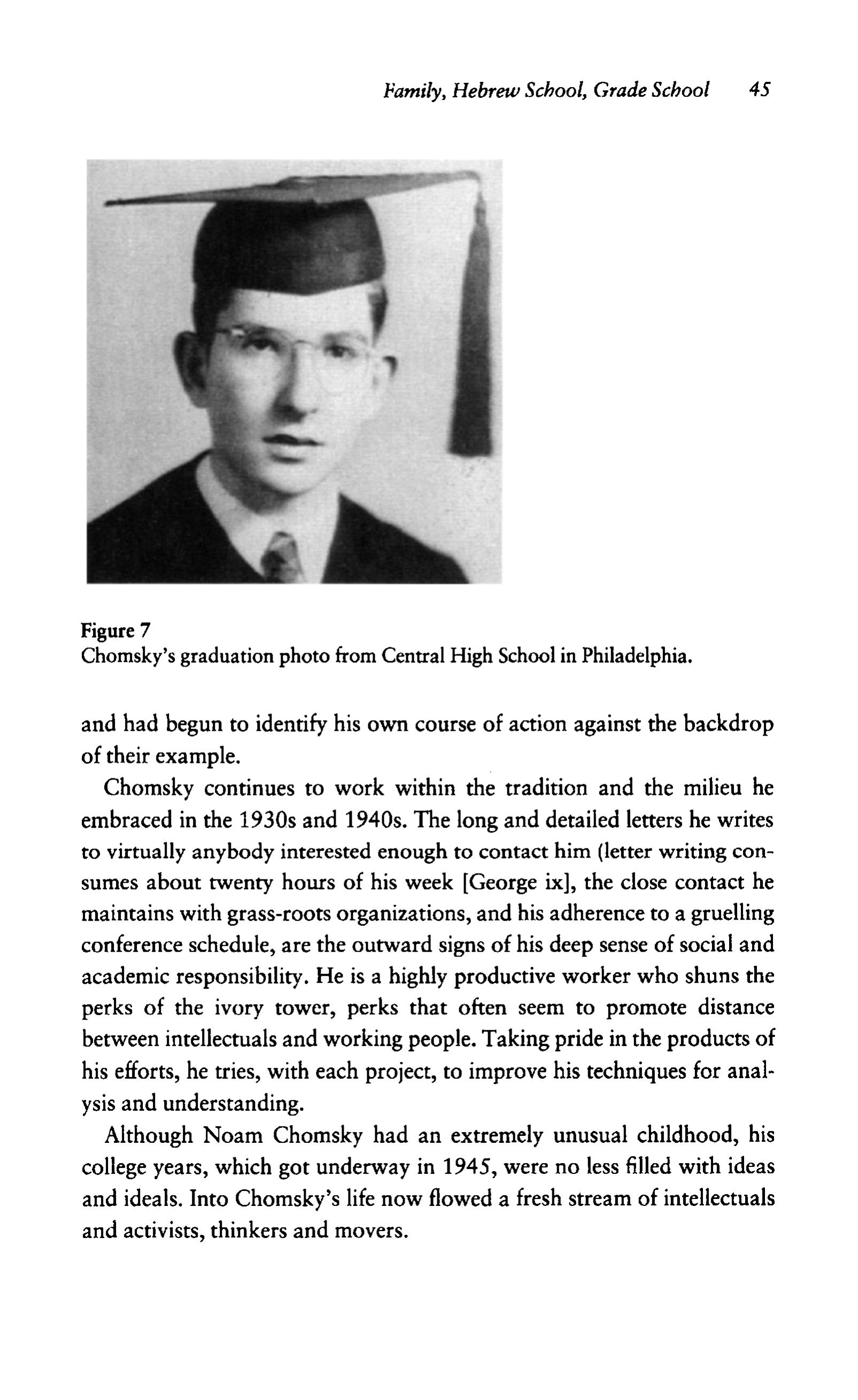
Family,
Hebrew
School,
Grade
School
45
Figure
7
Chomsky's graduation photo
from
Central High School
in
Philadelphia.
and had
begun
to
identify
his own
course
of
action
against
the
backdrop
of
their example.
Chomsky
continues
to
work within
the
tradition
and the
milieu
he
embraced
in the
1930s
and
1940s.
The
long
and
detailed letters
he
writes
to
virtually anybody interested enough
to
contact
him
(letter writing con-
sumes
about twenty hours
of his
week [George
ix],
the
close contact
he
maintains
with
grass-roots
organizations,
and his
adherence
to a
gruelling
conference
schedule,
are the
outward signs
of his
deep sense
of
social
and
academic
responsibility.
He is a
highly productive worker
who
shuns
the
perks
of the
ivory
tower,
perks that
often
seem
to
promote distance
between
intellectuals
and
working people. Taking pride
in the
products
of
his
efforts,
he
tries, with each project,
to
improve
his
techniques
for
anal-
ysis
and
understanding.
Although
Noam Chomsky
had an
extremely unusual childhood,
his
college
years, which
got
underway
in
1945, were
no
less
filled
with ideas
and
ideals. Into Chomsky's
life
now
flowed
a
fresh
stream
of
intellectuals
and
activists, thinkers
and
movers.


This page intentionally left blank
Zellig
Harris,
Avukah,
and
Hashomer
Hatzair
Things happen
in the
world because
of the
efforts
of
dedicated
and
courageous
people
whose names
no one has
heard,
and who
disappear
from
history.
—Noam
Chomsky, letter
to the
author,
18
Dec. 1993
Undergraduate Years
At
the age of
sixteen, Chomsky began undergraduate studies
at the
Uni-
versity
of
Pennsylvania.
It was
1945.
He
continued
to
live
at
home, paying
for
his
education
by
teaching Hebrew school
in the
afternoons,
on
Sun-
days,
and
sometimes
in the
evenings. Hoping
to
build
on the
reading
he
had
already done
in the
areas
of
philosophy, languages,
and
logic,
he
enrolled
in a
general program
of
study.
He
also resolved
to
study Arabic,
and was the
only undergraduate
in the
university
to do so at the
time.
Although
he
plunged into
his
work with typical
freshman
enthusiasm,
Chomsky
soon became discouraged because
he
discovered
that
the
insti-
tutional structure that
he had so
loathed
in
high school
was
largely repli-
cated
at
Penn.
There were some highlights:
he was
able
to
make contact
with
a few
stimulating scholars.
He met C.
West Churchman
in the
phi-
losophy department,
and his
Arabic teacher
was
Giorgio
Levi
Delia
Vida,
"an
antifascist exile
from
Italy
who was a
marvellous person
as
well
as an
outstanding
scholar"
(Chomsky Reader
7). It was not
simply
an
interest
in
their academic work that drew Chomsky
to
certain people;
he was
also,
and
perhaps more
powerfully,
attracted
by
their general attitude. Delia
Vida,
for
example, excited
him
more politically than
he did
academically.
Dismayed
by his
undergraduate experience, Chomsky
soon
began
to
reflect
on the
possibility
of
dropping
out of
college,
"to go to
Palestine,
2
Assl
perhaps
to a
kibbutz,
to try to
become involved
in
efforts
at
Arab-Jewish
cooperation within
a
socialist framework"
(Chomsky
Reader
7). The
decision
was a
crucial
one at
this stage
in his
life,
and it
also
has a
retro-
spective
significance,
given
the
lifelong
difficulties
he has had
with
the
Zionist movement.
Like
numerous mainstream Zionist individuals
and
organizations, Chomsky opposed
the
idea that there should
be a
Jewish
state
in
Palestine.
The
creation
of
such
a
state would necessitate carving
up the
territory
and
marginalizing,
on the
basis
of
religion,
a
significant
portion
of its
poor
and
oppressed population, rather than uniting them
on the
basis
of
socialist principles. Opponents
of the
establishment
of a
Jewish state still raise
the ire of the
many contemporary Zionists
who do
not
acknowledge
the
principles
that
underwrote mainstream Zionism
earlier this century,
and
who,
by
extension,
fail
to
recognize
the
problems
created when
a
state
is
established according
to
religious precepts.
While Chomsky
was
doing
his
undergraduate work, various social
movements were active
in
Palestine,
but the one
that interested
him was the
cooperative-labor movement.
The
approach
its
adherents
took
to
organiz-
ing
society, which
was
employed
in
numerous kibbutzim, bears important
similarities
to the
Catalonian model
as
described
by
Orwell
in
Homage
to
Catalonia.
So
Chomsky's very early tendency
to
sympathize with cooper-
ative
libertarian impulses rather than Stalinist
or
Trotskyite
visions—
which were popular among contemporary Zionist youth groups, notably
Hashomer
Hatzair—once
again prevailed.
As
far as I
recall, among
the
Zionist
youth groups
it was
only
Hashomer
Hatzair
that
could seriously
be
described
as
involved
in all of
this,
and in the
U.S.,
at
least,
it was
almost completely either Stalinist
or
Trotskyist.
I met
many activists
from
around
the
country
at
conferences, sometimes
at the
"Hachshara
farms" (where
young people would
go to
live
in
preparation
for
going
to the
kibbutzim), etc.
I
don't
recall anyone
in
Hashomer
Hatzair
who was
outside
that
framework.
(13
Feb.
1996)
In
1947,
at the age of
nineteen,
he
began
to
date Carol Doris Schatz,
whom
he had first met
when they were both young children. Today,
almost
fifty
years later, they
are
still together. Also
in
1947, Chomsky
met
Zellig Harris,
a
charismatic professor
who
shared many
of his
interests
and who
would have
a
profound
influence
upon
his
life.
As a
result
of
meeting
Harris,
Chomsky delayed
his
planned departure
from
university
48
Chapter
2
Zellig
Harris,
Avukah,
and
Hashomer
Hatzair
49
to
work
on one of the
cooperative-labor kibbutzim
and
prolonged
his
studies
at the
University
of
Pennsylvania. This change
of
plans
was to
have important consequences.
Zellig
Sabbetai
Harris
Harris
was
born
in
1909
in
Balta,
Russia;
he
left
there with
his
parents
in
1913. Completing
his
B.A., M.A.,
and
Ph.D. (1934)
at the
University
of
Pennsylvania,
he
began
to
teach there
in
1931.
He
eventually founded
the
first
department
of
linguistics
in the
United States
at
that
institution.
In
1966,
he was
named
to the
prestigious
position
of
Benjamin
Franklin
Professor
of
Linguistics.
Harris
is
known
for his
work
in
structural linguistics
and is
considered
to be the
father
of
discourse analysis.
His
work—which,
by the
time
he
died, included
Structural Linguistics
(1951),
Mathematical Structures
of
Language
(1968),
Papers
in
Structural
and
Transformational
Linguistics
(1970),
Papers
on
Syntax
(1981),
A
Grammar
of
English
on
Mathemat-
ical
Principles
(1982),
Language
and
Information
(1988),
and
The
Form
of
Information
in
Science
(1989)—was
described
in the
Times
Literary
Supplement as having a "fascinating consistency," and as being under-
written
by a
commitment
"to
study
the
forms
of
language
in
abstraction
from
their meanings" (Matthews, "Saying Something").
But
the
book
for
which
Harris
is
best remembered
is
Methods
in
Struc-
tural
Linguistics
(1951),
an
attempt
to
organize descriptive
linguistics
into
a
single body
of
theory
and
practice.
On the
back cover
of the
Midway
Reprints edition
(1986),
Norman
McQuown
makes
the
following
re-
marks:
"Harris's
contribution [is] epoch-marking
in a
double sense:
first in
that
it
marks
the
culmination
of a
development
of
linguistic methodology
away
from
a
stage
of
intuitionism, frequently culture-bound;
and
second
in
that
it
marks
the
beginnings
of a new
period,
in
which
the new
methods
will
be
applied ever more rigorously
to
ever widening areas
in
human
culture."
This book played
a
vital role
in
forging
the
Harris-Chomsky
relationship,
as
Chomsky himself maintains
in the
introduction
to his
own
great early
work,
The
Logical Structure
of
Linguistic Theory.
My
formal
introduction
to the field of
linguistics
was in
1947,
when Zellig Harris
gave
me the
proofs
of his
Methods
in
Structural Linguistics
to
read.
I
found
it
very
50
Chapter
2
intriguing and,
after
some stimulating discussions with
Harris,
decided
to
major
in
linguistics
as an
undergraduate
at the
University
of
Pennsylvania.
I had
some
informal
acquaintance
with
historical
linguistics
and
medieval
Hebrew
grammar,
based
on my
father's
work
in
these
fields, and at the
same time
was
studying
Arabic
with
Giorgio Levi Delia Vida. (25)
While
I do not
want
to
suggest
a
parallel here,
it is
still notable that
Marx
and
Engels contributed
to the
study
of
linguistics through their
explorations
of the
nature
and
essence
of
language;
Voloshinov
and
Bakhtin,
as
well
as
Lukacs,
also worked
in the
domain
of
linguistics
from
a
Marxist
perspective;
and
Gramsci
had a
background
in
linguistics.
But it
was not
Harris's
linguistics that
first
attracted Chomsky:
he was
tanta-
lized
by his
professor's politics. Indeed, Chomsky commented that
"in the
late
1940s,
Harris,
like most structural linguists,
had
concluded
that
the
field was
essentially
finished,
that
linguistics
was finished.
They
had
already done everything. They
had
solved
all the
problems.
You
maybe
had
to dot a
couple
of i's or
something
but
essentially
the field was
over"
(qtd.
in
Randy Allen Harris
31).
Harris was, according
to
Chomsky,
"a
really extraordinary person
who
had a
great
influence
on
many young people
in
those
days."
Although
a
linguistics professor,
"he had a
coherent understanding
of
this whole
range
of
issues, which
I
lacked,
and I was
immensely attracted
by it, and
by
him
personally
as
well, also
by
others
who I met
through him."
"[A]
person
of
unusual brilliance
and
originality," Harris encouraged Chom-
sky
to
take graduate courses
in
philosophy with Nelson Goodman
and
Morton
White,
and
mathematics with Nathan Fine. During this period
Chomsky
was
considering dropping out:
"I
suppose Harris
had in
mind
to
influence
me to
return
to
college, though
I
don't
recall talking about
it
particularly,
and it all
seemed
to
happen without much planning"
(Chomsky
Reader
7, 8).
Chomsky
had
also begun
to
read works suggested
to him by
Harris,
such
as
those
of the
Sullivan-Horney-Rapoport school
of
psychoanalysis.
The field of
psychoanalysis
was
familiar
to
Chomsky because
he had
read
Freud
on the
insistence
of his
uncle (the newsstand operator,
who
even-
tually
became
a
psychoanalyst).
His first
encounter with Freud's works
had
occurred when
he was an
adolescent,
and it had
left
Chomsky "much
impressed," although
"on
re-reading years later
I was
appalled,
frankly.
Zellig Harris,
Avukah,
and
Hashomer
Hatzair
51
So
I
didn't
re-do
that
when
Harris
talked
about
it (a
lot),
but did follow
his
particular interest"
(31
Mar.
1995).
Harris introduced
the
young Chomsky
to
some well-known
figures in
the field of
psychoanalysis:
"He
took
me to
visit Rapoport,
one of the
very
few
people
in his
circle
I
ever
met
(maybe
Erikson
was
there
too—it
was
at
their clinic
in
Connecticut,
I
think)."
A
passionate interest
in
psycho-
analysis
had
also
led
Harris
to the
Frankfurt
School, notably
to the
work
of
Erich
Fromm.
This approach, which included studying
on a
very
theo-
retical
level
the
relationship between psyche
and
social movements,
did
not
engage Chomsky, despite
his
bond with
Harris:
"I
could never
get
much
interested
in any of
this,
or in
most
of the
other things
that
were
of
interest
to
Harris
and his
circle apart
from
the
left-Zionist (anti-state)
things..."(31
Mar.
1995).
Drawn
in by his
professor's political work,
his
linguistic
studies,
and his
unacademic approach, Chomsky began
to
realize that Harris
had
become
his
main reason
for
remaining
in
university. Harris encouraged
the
kind
of
unstructured, lively,
and
creative debate that
had
been
a
mainstay
of
Chomsky's early education
and
upon which
he had
thrived
in the
com-
pany
of his
uncle
in New
York. Course requirements,
formal
relationships,
and
scholarly hierarchies were
rejected
in
favor
of
informal gatherings,
broad-based discussions,
and
intellectual exchange.
The
University
of
Pennsylvania's
linguistics department comprised,
at
that
time,
a
very
small
group
of
graduate students
who
shared
an
enthusiasm
not
only
for
linguistics,
but
also
for
politics. They shunned
the
classroom,
and met
either
at the
nearby
Horn
and
Hardart Restaurant
or at
Harris's
apart-
ment
in
Princeton
or New
York.
The
discussions could last
for
days,
and
Chomsky
remembers them
as
being "intellectually exciting
as
well
as
per-
sonally
very
meaningful
experiences"
(Chomsky
Reader
8).
Chomsky ultimately received
an
unconventional
B.A.
degree
from
the
University
of
Pennsylvania, which
reflected
his
interest
in
linguistics, phi-
losophy,
and
logic.
His
B.A.
honor's
thesis, "Morphophonemics
of
Mod-
ern
Hebrew,"
which
set the
stage
for
some
of his
later work
and
which
is
taken
to be the first
example
of
modern generative grammar,
was
com-
pleted
in
1949 when
he was
just
twenty years old.
That
same year, while they were both still students, Chomsky married
Carol Schatz, with whom
he
shared
an
array
of
interests, including Jewish
52
Chapter
2
culture
and
history, language studies,
and
philosophy. Carol
was
later
to
work
in the
area
of
linguistics herself.
At the
time
of her
marriage,
she
was
also active
in
political
issues,
but in
very
different
ways
from
Noam.
Graduate School
Inspired
by
people such
as
Harris,
and
experiencing
an
increasing intel-
lectual
fascination with
the
kind
of
work that
he had
undertaken
for his
B.A.
thesis, Chomsky decided
to
enter graduate school
at
Penn.
He
began
in
the
fall
semester
of
1949,
and
within
a
short period completed
a
master's thesis (his degree
was
granted
in
1951),
which
was a
revision
of
his
B.A. thesis.
The
work underwent
further
editing
in
1951,
and was
finally
published
in
1979
as
Morphophonemics
of
Modern
Hebrew.
His
friendship with Harris
was
growing
and it
took
on
what could
now be
described
as
mythic proportions. Chomsky seemed
to
have been
elected
to
follow
up on, and
expand, Harris's work,
and
Harris became
for
Chomsky
a figure
with whom,
and
ultimately against whom,
he
could
measure
his own
achievement. Much
has
been written about this relation-
ship,
and
much conjecture
has
been published
as to the
influence
that
each
man had
upon
the
other.
But
what
was the
real nature
of the
discussions
that
Chomsky
had
during this period with Harris
and
others? What
effect
did
these exchanges have upon Chomsky's intellectual development?
Chomsky notes
that
Harris
thought
of
linguistics
as a set of
procedures
for
organizing
texts,
and was
strongly
opposed
to the
idea
that
there
might
be
anything
real
to
discover.
He did
think
that
the
methods
of
linguistic
analysis
could
be
used
for
analysis
of
ideology,
and
most
of my
actual
graduate
courses
were
devoted
to
that;
you can see
some
of
the
fruits
in his
articles
on
discourse
analysis
in
Language
in the
early
'50s,
though
he
kind
of
downplayed
the
political
side
that
was
everyone's
main
interest.
(13
Dec.
1994)
His
attempts
to
make
Harris's
methods work constituted Chomsky's
early linguistic research.
Out of
these endeavors came
his first
published
article, which appeared
in
The
Journal
of
Symbolic Logic.
His
under-
graduate thesis also applied some
of
Harris's
ideas,
but he had by
then
totally abandoned
all of his
methods
and
adopted
a
"completely non-
Zellig
Harris,
Avukah,
and
Hashomer
Hatzair
53
procedural, holistic
(in
that
the
evaluation measure proposed
was a
mea-
sure
applied
to the
whole system),
and
realist"
approach
(31
Mar.
1995):
Phrase structure rules
can
generate representations
of
syntactic structure quite
successfully
...
for
quite
a
range
of
expressions,
and
were introduced
for
this pur-
pose
in the
earliest work
on
generative grammar.
It was at
once apparent, how-
ever,
that
phrase structure rules
...
are
insufficient
in
themselves
to
account
properly
for the
variety
of
sentence structures.
The
earliest approach
to
this prob-
lem, which
has a
number
of
subsequent
and
current variants,
was to
enrich
the
system
of
rules
by
introducing complex categories with
features
that
can
"perco-
late
down"
to the
categories contained within them, expressing global depen-
dencies
not
captured
in a
simple system
of
phrase structure
rules....
I
adopted this
approach
in an
undergraduate thesis
of
1949,
modifying
ideas
of
Zellig Harris
from a somewhat different framework. (Knowledge 64)
So
even
at
this early stage, Chomsky
was
producing highly original
work,
which diverged fundamentally
from
Harris's.
In his
B.A. thesis
he
was
doing things
that
were,
in his own
words, "radically
at
odds with
everything
in
structural linguistics
...
which
is why
[it,
and
Logical Struc-
ture
of
Linguistic
Theory]
were published only
30
years
later."
The
thesis
was "as
different
from
structural linguistics
as
anything could be," which
was
why
"Harris
never looked
at it and no one in the field
reacted
to
it."
In
fact.
Morphophonemics
of
Modern Hebrew
remains "the only text
in
existence,
to my
knowledge, that seeks
to
apply
an
evaluation measure
in
anything remotely like that
detail"
(31
Mar. 1995).
Beyond Contemporary Linguistics
One
reason
the
fruits
of
Chomsky's research
did not
even seem
to
belong
to the field of
linguistics
was
that
Chomsky
was
still reading widely
and
finding
some unexpected insights
in the
realm
of, for
example,
philoso-
phy: "Recall that
in
those days,
one
wasn't supposed
to
read anything
...
before
the
late Carnap,
and
that
was
read only
to
refute.
There were
exceptions
for
Frege
and
Russell,
but
limited ones.
And
there
had
been
guys
named Hume
and
Locke,
but one
didn't read them,
just
quoted
falsehoods
one had
learned
in
graduate school.
For
Harris, none
of
this
had any
interest either,
as far as I
know"
(13
Dec. 1994). Discussing lin-
guistics
and
philosophy
in
Chomsky's
work,
Otero
names German-born
philosopher Rudolf Carnap
as
"the best known representative
of the
54
Chapter
2
group
of
logical
positivists";
he was to
have
"a
direct
and
decisive
influ-
ence
on
Chomsky's
teachers,"
and was
"the only non-American philos-
opher Chomsky read
as a
student" ("Chomsky
and the
Rationalist"
3).
Carnap
was
deeply
influenced
by the
work
of
Bertrand Russell,
and
made
careful
studies
of
Frege,
Whitehead,
and
Wittgenstein,
who
were models
for
Chomsky,
as
well.
Just
as his
early readings
in
anarchism
had led to
revelations
in the
political domain,
the
readings Chomsky
now
undertook gave
him a
fresh
perspective that
his
teacher Nelson Goodman considered
to be
"com-
pletely
mad." When Goodman
found
out
about Chomsky's work
in
the
mid-1960s,
he
apparently ended their friendship, even though,
as
Chomsky says, they'd
"been
quite good
friends
until
he
learned about
this, which
he
regarded somehow
as a
personal betrayal"
(31
Mar.
1995).
His
thesis supervisor, Zellig
Harris,
considered this approach
"a
private hobby";
he
"never paid
the
slightest attention
to
[it]
and
prob-
ably
thought [it]
was
crazy"
(13
Dec. 1994).
The one
person
who did pay
attention
to
this early work
was the
Israeli
logician Yehoshua
Bar-Hillel,
a
colleague
of
Carnap's
and a
good
friend
of
Chomsky's
from
1951 onwards. Bar-Hillel
was
possibly
the
only
one
to
have read
Morphophonemics
of
Modern Hebrew
closely
at
this time.
He
suggested changes that Chomsky integrated
into
the
work. Writes
Chomsky,
"We had
very
different
views
on
many things, even some con-
troversy
in
print,
but
were always extremely close, even
on
politics."
He
further
recalls that Bar-Hillel
was
"one
of the first
people
in
Israel
to
pub-
licly
speak
up for the
civil
and
human rights
of
Arabs
and to
oppose
the
creeping annexation
after
1967."
Interestingly,
Bar-HillePs
work
on
this
subject
is
rarely mentioned. Chomsky's explanation
for
this follows
a by-
now-familiar
line: "He'd
be
well-known
to
activists
in
Israel (many
of
whom were
his
students,
or
influenced
by
him).
But he was
only
a
serious,
intelligent, dedicated
and
honourable person with
an
important
and
influential
role,
not a
'public
intellectual,'
so he is
unknown. These
are
again
the
kinds
of
facts
that never make
it
[into] intellectual history"
(31
Mar. 1995).
Another professor
at the
University
of
Pennsylvania
who
read Chom-
sky's B.A. thesis when Chomsky
was
still
an
undergraduate
was
Henry
Hoenigswald,
"a
very
good scholar
of
historical linguistics
who
also knew
Zellig
Harris,
Avukah,
and
Hashomer
Hatzair
55
the
Indie tradition,
and was a
committed
Harrisian
structuralist, also
knowledgeable
in
European structuralism"
(31
Mar.
1995).
Hoenigs-
wald—and
Harris,
as
well—likely
knew that there existed another exam-
ple
of
generative grammar
(albeit
a
less detailed
one
than
Chomsky's
1948
thesis work,
and
limited
to the
phonological
level)
that
had
preceded
Chomsky's
by
roughly eight years.
It was
called
"Menomini
Morpho-
phonemics,"
and was
published
by
American linguist Leonard
Bloomfield
in
the
Czech
Travaux
du
Cercle
Linguistique
de
Prague
in
1939.
It is re-
markable,
in
Chomsky's view, that neither Hoenigswald
nor
Harris
revealed
the
existence
of
this text
to his
student. "Menomini Morpho-
phonemics"
is an
extraordinary
text,
completely inconsistent with Bloom-
field's
other writings about language
and how
research
in the
area should
be
done. This, Chomsky believes,
was one of the
reasons
Bloomfield
decided
to
publish
it in
Europe.
Hoenigswald
and
Harris
were very close
to
Bloomfield,
and
certainly knew
his
work.
But
neither
of
them mentioned
to
their only undergraduate student
that
he
was
rediscovering, more
or
less,
what
Bloomfield
had
just done eight years before.
It's
not
surprising
in
Harris's
case,
because
he
didn't
know what
I was
doing.
But
Hoenigswald read
it, and
must have recognized
the
similarities, back
to
classical
India.
I
learned
nothing
of
this until
the
1960s,
when
Morris
Halle found
out
about
Bloomfield's
work.
(31
Mar. 1995)
The
Anxiety
of
Influence
A
complex teacher-student relationship
was
under construction
here—
one
that
has
provoked speculation, particularly among Harris's
friends
and
followers.
Harris's
involvement
in
Chomsky's political
and
linguistic
work,
and the
proximity between
his own and
Chomsky's approaches,
has
triggered debate about influence, authority,
and
power struggles.
Similarly,
speculation about
the
relationship between Chomsky
and
his
students
has
sparked discussion
and
even controversy
in
more recent
times.
A
number
of
commentators have talked about
the
proximity
of
Chomsky's linguistic theories
to
those
of
Harris.
In
"The Fall
and
Rise
of
Empiricism" (1976), Jerrold
Katz
and
Thomas
Bever
write,
"[C]ontrary
to
popular
belief,
transformations come into modern linguistics,
not
with
Chomsky,
but
with
Harris's
rules relating sentence forms. These
are
genuine
transformations, since they
are
structure-dependent mappings
of
phrase markers
onto
phrase markers.
That
this
is so can be
seen
from
the
examples
of
transformations
Harris
gives"
(292).
Even
the
1986 edition
of
the
New
Encyclopedia
Britannica
has
something
to say
about this
relationship: "Since [Zellig]
Harris
was
Noam Chomsky's teacher, some
linguists have questioned whether Chomsky's transformational grammar
is
as
revolutionary
as it has
been taken
to be, but the two
scholars devel-
oped their ideas
of
transformation
in
different
contexts
and for
different
purposes.
For
Harris,
a
transformation relates
surface
structure sentence
forms
and is not a
device
to
transform
a
deep structure
into
a
surface
structure,
as it is in
transformational
grammar."
This kind
of
anxiety-of-influence
inquiry, which
often
leads
to
psycho-
analytic-style postulations
and
projections
or
else
Foucauldian-style
power
analyses, excites
the
imaginations
of
some observers.
In a
recent gossipy
history
of
linguistics since
the
1940s
called
The
Linguistic Wars,
Randy
Allen
Harris
maintains
that
there have been huge power struggles over
the
years
between Chomsky
and his own
students
and
colleagues. Chomsky's
opinion
of
this type
of
thinking
in
general,
and of the R. A.
Harris book
in
particular,
is
predictably denunciatory,
to say the
least:
"There
[are]
a few
people (neither students
nor
colleagues
of
mine,
for the
most part)
who
see
themselves
as
having been involved
in
'power
struggles,'
but
that
is
part
of
their
life,
not
mine—actually,
their fantasy
life.
I was
never
in-
volved"
(14
Aug.
1995).
Any
close teacher-student relationship
is
bound
to
involve
an
exchange
of
influence,
and
will
often
give
rise
to
some
bad
feeling.
But
Chomsky
believes
that
the field of
linguistics
is
especially likely
to set the
stage
for
such interpersonal dynamics.
As he
sees
it, the
problem lies
in the
rift
between linguistics
as it is
described
by
historians
of
linguistics such
as
R.
A.
Harris,
Dell
H.
Hymes,
or P. H.
Matthews,
and as it is
actually
practiced
by
linguists: "All
of
this
has to do
with
the
extremely sharp
break
that
took
place
from
the
early
'50s
(and
if you
count
my
private
hobby,
from
the
late
5
40s)"
(31
Mar.
1995).
This break
is not
clearly
demarcated
in
well-known histories
of
linguistics, such
as
those
by P. H.
Matthews
or
Dell
H.
Hyrnes.
The
general impression conveyed
in
these
texts
is
that
Chomsky
was
following
up on,
rather than radically ques-
tioning, previous work
in the field.
56
Chapter
2
Zellig
Harris,
Avukah,
and
Hashomer
Hatzair
57
Chomsky deplores
the
stance that many
who are
active
in the
area
of
linguistics research have adopted towards
the
origins
and
development
of
their discipline:
By
the
early
'60s,
linguistics
was
going
off on a
totally
different
course,
and the
people actively engaged
in it
aren't interested
in
history
(I
disagree with
that
atti-
tude,
but
it's
a
fact,
just
as
people active
in
research
in
chemistry
don't
tend
to
care
much
about
the
history
of the
subject,
even
if
it's recent history).
The
result
is
that
history
is
often
written
by
outsiders most
of
whom have only
the
vaguest under-
standing
of
what
was
happening,
or
have special axes
to
grind.
(31
Mar. 1995)
R.
A.
Harris doesn't give
the
impression
that
he has an
"axe
to
grind/'
although
in his
historical chronicle
he
clearly takes sides against Chomsky
on
most issues.
More
striking, though,
is his
soap-opera style
of
fashion-
ing
a
narrative: intrigues
are
developed,
villains
are
created,
and
plots
thicken.
The
work
of R. A.
Harris
is an
example
of the
so-called Fou-
cauldian genre
of
history,
an
approach
that
emphasizes
the
power strug-
gles
among
key
players.
One has the
impression
in
reading this kind
of
work
that
these struggles
are
what drive researchers (including Chomsky)
to
pursue
one or
another avenue
of
research. This kind
of
work lends
an
air of
intrigue
to the field
but,
for
Chomsky, contributes little
to our
understanding
of it.
In
the
context
of his
studies, Chomsky continued
to
attempt
"to
make
sense
of
Harris's
Methods
and
procedural approaches
to
language alto-
gether
in the
operationalist style
of the
day"
(3
Apr.
1995),
while still
working
on
generative transformational grammar
as a
kind
of
hobby.
He
remained
at
Penn primarily because
of
Harris
and the
newfound stim-
ulation
of
political
and
philosophical discussion.
But he
strongly believed
that
the
things
he
really cared about, libertarian politics
and a new
vision
of
the
entire
field of
language studies, were essentially personal interests
(hobbies)
that ultimately
had to be
pursued beyond
the
institution.
"Keeping
to
Politics";
A
Relationship Evolves
Chomsky claims that
in the
area
of
linguistics
he and
Harris
"parted
ways
by about 1950 or so, definitively after I abandoned the Methods program
a
few
years
later."
They continued
to
meet regularly,
and
"remained good
friends,
but
kept
to
politics"
(13
Dec.
1994).
Despite this restriction, their
58
Chapter
2
common
ground
was
still
vast.
"My
picture
of the
world,
as a
teenager,"
Chomsky remarks, "was certainly shaped
very
strongly
by
[Harris's]
influence,
which
in
fact
fit
in
very well
to
commitments
I'd
already devel-
oped elsewhere (anarchist
and
left
anti-Bolshevik
and
anti-Marxist
sources,
particularly)"
(13
Dec. 1994).
Yet
the
basis
of
Harris's
beliefs,
and
their relationship
to
Chomsky's
later
work,
has
never
before
been elaborated.
One way of
doing this
is to
explore three related issues.
The first is
Zellig
Harris's
personality, which
is
mentioned
by
virtually
all who
knew him,
and
which has,
of
course,
a
direct bearing upon
how he
conceived
of
appropriate methods
for ex-
changing views
and
carrying
on
relationships within society.
The
second
concerns
the
history
and the
program
of the
group called
Avukah,
of
which Harris
was an
important
figure.
Finally,
the
third involves
the
Zionist
group
Hashomer
Hatzair,
as
well
as its
affiliated
community
in
Israel
called Kibbutz Artzi.
"A
Very Powerful
Personality"
Hilary Putnam,
in his
preface
to
The
Form
of
Information
in
Science,
recalls
a
graduate course that
he
took
at
Penn with Harris called Linguis-
tic
Analysis. There
was
only
one
other undergraduate
in the
class—Noam
Chomsky;
the
course material
was
difficult
and filled
with technicalities;
"but
the
powerful intellect
and
personality
of
Zellig Harris drew
me
like
a
lodestone, and, although
I
majored
in
Philosophy,
I
took every course
there
was to
take
in
Linguistic Analysis
from
then until
my
graduation"
(xi).
Now a
professor
at
Harvard, Putnam
has
been
a
friend
of
Chomsky's
since
high
school.
He
does
not
appear
to
have been part
of the
Harris
circle,
but his
observations coincide with those made
by
many
who
knew
Harris.
Willie Segal,
who now
teaches
at the
University
of
Colorado, also
knew Harris well,
and
speaks
in
reverential terms about
his
personality,
adding,
"No one
person
has had a
greater
influence
on my
personal
de-
velopment"
(24
Apr.
1995).
Seymour
Melman asserts
that
"Zellig
was a
very
powerful
personality
[who] functioned
for
many people
as a
mentor, apart
from
his
function
as
a
teacher.
He set a
standard
for
honesty
in
personal dealings,
and for a
Zellig
Harris,
Avukah,
and
Hashomer
Hatzair
59
very
unpretentious personal style that gave emphasis
to, on the one
hand,
intellectual achievement,
[and,]
on the
other,
to the
constructive activity
that
the
kibbutz represented"
(26
July 1994). Describing
Harris's
gen-
erosity, Melman remarks:
Harris
was
also very unassuming.
To
many people, that
may
have seemed
to be
almost reclusive.
For
example,
he
would rarely sign things.
He was
more inter-
ested
in the
intrinsic ideas,
and in
getting
the
cooperation
of the
whole group
in
thinking through political issues,
and
social issues broadly understood.
It
doesn't
require
a
giant leap
of
imagination
to see how
many
of
these
characteristics
are
mirrored
in
Noam Chomsky. Something else:
he
clearly stood
for
democratic
dealings
amongst people,
and was
never
a
friend
of
authoritarianism
of any
kind.
(26
July 1994)
This evocation
of
Harris does resonate with that
of
Chomsky,
and
the
sense that many
who
have been taught
or
influenced
by
him—such
as
Abramovitch,
Epstein,
Herman,
Melman,
and
Otero—have
of
him.
Harris's
attitude towards
the
importance
of the
movement rather than
individual
achievement
is
reflected
in
Chomsky's attitude towards bio-
graphical studies.
Harris's
teaching style,
so
clearly charged with
the
spirit
of
left
libertarianism,
and his
commitment
to
encouraging rather than
stifling
individual creativity,
are
echoed
in
Chomsky's
approach
to
peda-
gogy, group relations,
and
appropriate political frameworks.
Whether Chomsky inherited this
disposition
from
Harris,
or
whether
Harris's
values simply
fit
into
his own is
ultimately irrelevant. What mat-
ters
is
that
an
intriguing overlap
exists.
The
power
of
Harris's
personality
remains
vivid
in
Chomsky's recollection:
"he was a
much greater
influ-
ence
than
is
recognized, extending
to all
sorts
of
people.
The first
time
I
met
Nathan Glazer
[a
member
of
Avukah],
for
example,
after
a few
minutes
I
asked
him
whether
he
knew Harris.
He
said yes,
he'd
studied
with
him 25
years earlier.
I
didn't tell Glazer
why I'd
asked.
The
reason
was
that
he was
mimicking
all
sorts
of
idiosyncratic Harris gestures.
Not
the
only
case"
(13
Dec. 1994).
Avukah
is the
second context
for
this exploration
of the
link between
Harris's nature
and
beliefs
and the
kind
of
thinker Chomsky
was to be-
come.
It
serves
as a
kind
of
critical connection both between
Harris
and
Avukah
60
Chapter
2
Chomsky
and
between Chomsky's
present
values
and
views
and
those
held
by
others earlier
in
this century. Avukah
was
around
before
Harris
came
onto
the
scene,
but he had an
important
impact
on the
Pennsylvania
chapter,
and
many other chapters
in
North
America, beginning
in
about
1933.
Harris's
singular leadership made
the
University
of
Pennsylvania
Avukah
particularly
fascinating
and
somewhat unusual. Willie Segal,
who was the
president
of the
McGill University Avukah during this
period,
notes that
"there
is a
developmental distinction
to be
made
between
Avukah
and the
Zellig Harris group,
the
latter evolving
out of
the
former"
(24
Apr.
1995).
Due
to his
magnetic personality
and his
appeal
as an
intellectual,
Harris's
contribution
to
Avukah
led to a
surge
of
activity
at the
Penn-
sylvania
branch. Some remarkable people became involved, including
Kurt
Blumenfeld,
a
spokesperson
for
many German Jewish intellectuals,
and a
confidant
of
Hannah Arendt's. Arthur Rosenberg,
the
German
historian, also joined
forces
with
the
group,
as did
Seymour Melman,
who
later produced extremely forward-looking work
on the
military-
industrial complex
and
social responsibility
as
well
as on
worker
self-
management.
Documentation concerning Avukah
and its
activities
has all but
dis-
appeared
(except
for
that
contained
in the
Jewish
section
of the New
York
Public
Library,
a
gift
from
Seymour Melman),
and
even those
who
have
chronicled American
Zionism
or
libertarian movements have apparently
forgotten
its
existence,
so I
have relied heavily upon
firsthand
accounts.
In
a
letter concerning
my
biographical research, Chomsky said,
"it
would
be
interesting
to dig up the
history
of
Avukah,
far
more interesting than
writing about
me, in
fact."
I am, in a
sense, following
his
suggestion,
not
simply
because
the
subject
has
intrinsic
interest,
but
because
it
bears
in
direct ways upon
an
understanding
of
Noam Chomsky.
Avukah
was
based
at
111
Fifth
Avenue
in New
York City. According
to a
1938 pamphlet entitled
Program
for
American
Jews,
its
founders
felt
that
it
would
be
attractive
"to
Jews interested
in the
survival
of the
Jewish
people,
to
Zionists,
to
Jews
not
interested
in the
existence
of a
Jewish
Avukah's
Goals
Zellig
Harris,
Avukah,
and
Hashomer
Hatzair
61
group,
and to
socialists."
Specifically,
the
pamphlet
was
addressed
to
Jewish American students
and
broached
the
question
of
whether there
are
facts
or
problems that
specifically
apply
to
Jews.
The
group's goal, stated
on the
reverse side
of the
program itself, included determining "the rela-
tion
of the
Program
to
these interests
and
attitudes,
and
seeking
to
indi-
cate
to
what extent
it
coincides
or
differs
with
them."
The
premises
the
group accepted were that there existed
at
that time
four
million Jews
in the
United States
who
"constitute
a
group with spe-
cial
needs
and
special problems" (6); that Jews
are
confined
to
particular
activities
or, as in
Nazi Germany, thrown "out
of
their jobs
and
into con-
centration camps" (7);
that
there
is
latent
and
blatant anti-Semitism
in
American
society;
and
that
"the whole Jewish
environment,
the
society
which young American Jews
find
around them,
is not
suited
to
their
needs" (8). Avukah believed that
the
existing support
network—Jewish
groups, Jewish publications, Jewish systems
of
education
and
political
action—were
inadequate
in
light
of
such threats.
It
identified
for
itself
four
objectives:
first, the
"eventual liberation
from
the
difficulties
arising
out of
[the Jews'] minority
position"
(11); second,
the
creation
of "a new
type
of
organization"
(12);
third,
the
provision
of
"such
aid as
[we]
can to
Jews
in
countries where anti-Semitism
is
strong"
(13);
and
fourth, "the
definitive
construction
of the new
Jewish settlement
in
Palestine" (13).
The new
settlement that Avukah described
is an
important
manifes-
tation
of the
kind
of
Zionist position promulgated
by
Harris
and,
of
course,
by
Chomsky himself.
In the
view
of
Avukah, certain British,
feudal
Arab,
and
Italian interests were trying
to
exploit
the
situation
in
Palestine
for
their
own
ends. This
was
leading
to
significant
conflict
be-
tween
the
Arabs
and the
Jews:
"these
interests have obstructed
the
Arab
masses
from
the
liberation which Jewish immigration
can
bring them,
but
they
have
not
been able
to
stop
the
immigration
of
Jews."
According
to
Avukah,
the
Palestinian situation
had to be
"faced
by the
Jews
and
straightened
out on the
only possible basis
of
social equality.
For the
fundamental
interests
of
Jewish
and
Arab people
are the
same."
The
Program
for
American
Jews
goes
on to
insist that:
the
Jews
who
come
do not
displace
the
Arabs.
On the
contrary,
they
are
neces-
sarily
leading
the
Arab peasants
out of the
feudal system which holds them
as
62
Chapter
2
serfs.
Such
a
change
can not
come without
fighting,
without
the
attempt
of
reac-
tionary
forces
to
thwart
the
liberation
of
peasants
and to set
them against
the
Jews.
But the
fall
of
feudalism
in
Palestine
is
unavoidable,
and
with
it
will come
the
basis
for
cooperation
of the
masses
of
Arabs
and
Jews.
(16)
Norman Epstein remarks that this
is an
overly optimistic assessment
of
the
effects
of
Jewish immigration
to
Palestine:
"Avukah,
despite
its
good
intentions, contributed
to
Zionist
mythology—for
example, that Jewish
immigration
to
Palestine would
'liberate'
the
'Arab
masses'
and
that
'the
Jews
who
come
do not
displace
the
Arabs.'
In
fact,
the
Jews bought
the
land
and
'liberated'
them into unemployment,
a
result
amplified
by the
policy
of
favouring
employment
of
Jews over Arabs
in
Jewish enterprises"
(20
Apr.
1995).
Chomsky concurs that
the
Avukah position, which
in the
1940s
he
would have agreed with,
is
overenthusiastic—"to
put it
mildly."
Nevertheless,
he
continues, "I'm pretty sure
I
would have realized that
by
the
time
I
started speaking
out
publicly
on the
matter
in the
'60s.
In
retro-
spect,
I'm
surprised
at how
much
of the
mythology
I
believed back
in the
'40s,
including
my
failure
to
comprehend
the
racist elements
in
such mat-
ters
as the
'Jewish
labor'
slogan"
(18 May
1995).
Since
Chomsky
was
between twelve
and
twenty-two years
old in the
1940s,
it is
perhaps
not
surprising that
all of the
perspectives
on
Zionist mythology were
not
then
evident
to
him.
Avukah's
Program
By
the
time Chomsky
had
become
a
student
at the
University
of
Pennsyl-
vania,
he had
embarked
on his own
intellectual journey,
but he
remained
attuned
to his
family's
concerns—specifically,
those related
to
Jewish cul-
tural
and
political issues.
He was finding a new
level
of
autonomy during
these years,
but at the
same time
he was
establishing links with people
who
shared
his
particular fascinations, Zellig Harris among them.
But
Harris came
at
some
of
these issues
from
a
different
angle,
and
this angle
was,
in a
sense,
reflected
in
Avukah's program.
Avukah's
commitment
was to
"fight anti-Semitism,"
defend
civil
lib-
erties,
participate
in
"anti-fascist
action,"
"liberalize
and
modernize
the
Jewish environment,"
and
"organize
for
maximum assistance
in the
migration
of
Jews
to
Palestine."
(It is
interesting
that
this three-front
Zellig
Harris,
Avukah,
and
Hashomer
Hatzair
63
approach
was
criticized
as
"inappropriate,"
however,
in the
summer
1942 issue
of the
Avukah student newspaper
by
none other than
Bruria
Kaufman,
Einstein's brilliant young assistant,
who
eventually married
Zellig
Harris.) This program prompted Avukah members
to
initiate
an
array
of
activities.
For
example, they published
Avukah Student
Action,
"a
journal
of
progressive thought
and
action,"
throughout
the
early
1940s.
The
efforts
of
many young activists went into
the
periodical,
including
Nathan Glazer (managing editor),
Arlene
Engel,
Jerry Kaplan,
Lorraine Kruglov, Bernard Mandelbaum, Rachel Naimann, Jack
Osipo-
witz, Milton Shapiro, Margolith Shelubsky, Hannah Weil,
and
Rosalind
Schwartz. Avukah also produced pamphlets.
In an
unsigned article
that
appeared
in the
February 1942
Avukah Student
Action,
the
author notes
that
"when
frayed,
censored envelopes arrive with requests
for
literature
from
England, South
Africa
and
even
a
concentration camp
in
Canada [!],
the
work takes
on
zest."
Group members
also
engaged, later
on, in
research projects such
as one
described
by Sam
Abramovitch.
Based upon
the
Marxist hypothesis that
fewer
and
fewer
people
are
required
to
feed
the
entire
population,
the
project
was an
attempt
to
discover another
way of
organizing society's
resources. Abramovitch recalls that "the study divided
the
activity
of
society
into
three
parts,
the first one
being economic
relations
[of] output
[ERO],
which includes those activities necessary
for
people
to
eat, live,
and
what have you.
The
second
is
ERP,
the
economic relations
of
production,
which includes
the
essential organizational
functions
related
to
produc-
tion. The
third
one is
economic relations
of
capitalism
(ERC),
which
includes activities undertaken because
we
live
in a
peculiar
society;
in
other words, transcendental activities."
Defining
tasks according
to
utility
helped those involved
in the
project understand where
the
emphasis could
be
placed
in the
distribution
of
resources:
If
war is not
absolutely
necessary,
then
armies
and the
military-industrial
complex
become
a
component
of the
ERC—the
economic
relations
of
capitalism.
Insurance
companies
are
ERC.
If you
build
automobiles,
then
that
is
output.
If you
produce
food,
it is
output.
Things
that
are
neutral
were
considered
output—like
restau-
rants,
for
example.
Other
things
are
there
only
because
we
live
in
this
type
of
society.
If
society
could
change,
then
these
things
would
no
longer
be
necessary.
If
they
are not
necessary
for
people
to
survive,
then
they
would
change
under
a
different
system.
(12
Feb. 1991)
64
Chapter
2
In
Seymour Melman's opinion, Avukah received support
from
Zionist
leaders
because
it was the
only Zionist student organization around;
it was
their only conduit into
the
university community.
In
1939-40,
Melman
received
an
Avukah travel fellowship, which
he
used
to
attend
the
World
Zionist Congress
in
Geneva
and to
visit
the
Kibbutz Artzi near Haifa.
On
the
kibbutz,
he met up
with some
of his
friends
(such
as
Sylvia
Binder,
who had
been
the
secretary
of
Avukah
in
1935),
and
became acquainted
with Arabs, Poles (Poland
had
just been overrun
by the
Nazis),
and
Palestinians. Upon returning
to the
United States
in the
spring
of
1940,
Melman contributed
to a
special issue
of the
Avukah newspaper,
Avukah Student Action,
which focused
on the
condition
of the
Yishuv,
the
prestate Jewish settlement
in
Palestine,
and on the
Arab
and
British
reactions
to it.
Melman remembers that
The
American
Zionists
were taken aback
by the
stiff
demonstrations
that
the
Yishuv
ran
against
the
laws which prohibited land purchase.
There
were massive
riots
in all the big
cities.
The
support
to the
Yishuv
at the
time from American
Zionists
was
abridged, limited, constrained,
by
their unwillingness
to be
neg-
atively
critical
[of]
Roosevelt
and
Churchill.
That
was
dogma.
The
leadership
group
in
Avukah
had a
rather
different
view—that
of
critical
support,
not
uncon-
ditional
support.
That
marked
us
off
from almost
all the
rest
of the
mainstream
Zionist
organizations.
(26
July 1994)
The
views
of
Avukah's leadership group both mirror
and
reinforce
the
opinions that Chomsky held
on the
same issues
as an
undergraduate
and
later
on.
Avukah's Call
to
Action
Avukah
diverged
from
the
much larger B'nai B'rith Hillel Foundation
in
its
socialist
orientation
and in its
support
for a
binational
state.
Chomsky
describes
the
positions
of the two
groups: Avukah proposed
"a
binational
state that
is not a
Jewish
state,"
while B'nai B'rith
was in
favor
of "a
Jewish
state,"
period
(18 May
1995).
On 27
June 1942, Avukah rejected
Abram
Sachar's
proposal
that
Avukah
affiliate
nationally with
the
B'nai
B'rith Hillel Foundation
in
order
to
maintain
its
independence.
In a
summer
1942 article
in
Avukah Student Action
called
"Front
II:
Jewish
Organizations Don't Meet Real
Needs,"
Milton Shapiro claimed that
B'nai B'rith, like
the
American Jewish Committee, represented
the
upper-
Zellig
Harris,
Avukah,
and
Hashomer
Hatzair
65
class
and
upper-middle-class Jews
who
were
fighting
anti-Semitism "from
behind
cloaks"
and
failing
to
address
the
needs
of the
majority
of
Jews.
By
this
point,
the
early
1940s,
Chomsky
was
still
a
high-school student
and
Avukah
was
growing into
an
important organization
that
had
chapters
on at
least sixty
North
American university campuses.
In
1943,
Avukah
published another pamphlet, this
one
probably written
by
Zellig
Harris,
called
An
Approach
to
Action:
Facing
the
Social
Insecurities
Affecting
the
Jewish Position.
It
discusses
the
Jewish situation against
the
backdrop
of
World
War II and the
problems
that
"victory
alone cannot
solve."
The
author assumes that
two
million Jews
had
perished
in
Europe
thus far,
and
that
eight million more
had
been taken prisoner. Further-
more,
in the
United States there
was
discrimination against Jews
and "a
great social distance
and
frequent
mutual suspicion between Jews
and
non-Jews, which makes
the
Jews,
whether
'Jewish
financier' or
'Jewish
Communist,
3
ideal scapegoats
onto
which mass resentment
may be
deflected."
At
the
time
the
pamphlet
was
published, many
feared
that
not
only
Europe
but
also
the
United States would become fascist.
An
Approach
to
Action
sounded
a
warning: "the society
in
which
we
live
becomes more
authoritarian, more intolerant
of
minority
differences,
more regimented
and
militarized, with
the
freedom
of
individuals more
limited."
Its
author
declared
that
"the more democratic
the
society
in
which
we
live,
the
safer
we
are," because
fascism
is
intrinsic
to any
society
in
which under-
privilege,
poverty, working-class discontent,
and
monopoly capitalism
are
permitted
to
thrive.
The
pamphlet
is a
call
to
social
action,
to
resistance,
to
Jewish participation
in all
organizations committed
to
social
libertarianism.
Despite
its
cautionary
tone,
however,
An
Approach
to
Action
does
not
explicitly equate
the
fascism
of
Nazi Germany with
that
detected
in the
United States; such
an
equation would require huge qualifications.
But
Epstein
does note
that
both Avukah
and the
Council Communists (e.g.
in
Living
Marxism)
and,
at
times,
Dwight
MacDonald
(in
Politics)
predicted
fascism
ahead
in the
U.S. proper (we're
not
talking about countries dominated
by the
U.S.),
and
they were
all
dead wrong.
Fascism involves domestic militarism, dictatorship, negation
of
civil
liberties, sup-
pression
of
unions, suppression
of all
political
opposition,
and not
simply
"underprivilege,
poverty, discontent
of the
working
people,
and the
growth
of
monopoly,"
which
has
almost
always
been
endemic
to
capitalism.
As
Chomsky
has so
well
described,
control
of the
American
population
by
techniques
involving
the
"manufacture
of
consent"
has
been
more
effective
than
outright
repression.
(20
Apr.
1995)
Believing
that
it was
vital
to
establish
in
Palestine
a
viable
and
secure
alternative society
in
case
the
struggle against
fascism
failed, Avukah
encouraged Jews
to buy
land, settle, develop agriculture
and
industry,
and
maintain
"an
economically planned
and
progressive social structure
and
cooperative relations with
a
large part
of the
Arab
population"
in
that
country. This two-tiered
approach—promoting
social change
in
America
and
preparing Palestine
for
Jewish
immigration—was
compatible
and
desirable because
both
tiers
addressed,
to
quote
An
Approach
to
Action,
"the actual condition
of the
people
and
pose[d]
the
fundamental ques-
tion[s]:
How can we
improve
the
situation
of the
people?
How can we
prevent
it
from
becoming
worse?"
Chomsky
shared
the
growing desire among young
North
American
Jews, awakened
and
fueled
by the
efforts
of
organizations such
as
Avukah,
to
settle
in
Israel.
So did his
girlfriend, Carol
Schatz.
Chomsky
and
Arthur Rosenberg
Chomsky
was
never actually
a
member
of
Avukah.
It no
longer existed
by
the
time
he
arrived
at
university:
"I
only knew
it as a
kind
of
'aura'
in the
background"
(18 May
1995).
Nevertheless,
its
fundamental values were
clearly
in
line with
his
own,
and he
learned
of its
activities
from
Harris
and
from
the
writings
of
Arthur Rosenberg, among
others.
Chomsky
actually
read Rosenberg
on
Harris's
suggestion. Rosenberg,
who
died
in
1943 during World
War II, had
been closely involved with Avukah.
Avukah
ran a
summer school
for two
weeks each year, which
was
held
at the
training
farm
for the
Zionist group Hashomer Hatzair.
The
1941
lectures were given
by
Shmuel
Ben-Zvi,
D.
Mcdonald
(not
Dwight Mac-
donald),
I.
Mereminski,
Alfred
Kahn,
Nathan Glazer, Adrien Schwartz,
and
Arthur Rosenberg. Melman recalls Rosenberg's summer-school talk
and
several others
he
gave
at
about
the
same
time:
Arthur
Rosenberg
spoke
about
the
case
of the
Hitler-Stalin
pact,
saying
that
this
was not to be
taken
as an
omen
that
all was
lost.
In
fact,
there
were
dynamics
in
66
Chapter
2
Zellig
Harris,
Avukah,
and
Hashomer
Hatzair
67
both German
and
Russian society
that
gave
a
basis
for
continued internal politics
and
differences.
This
was not to be
taken
for a
signal
of a
deep
freeze
and
total
victory
of the
most conservative part
of the
Nazi movement.
A few
days
after
the
German invasion
of
Russia,
he
gave
a set of
remarkable lectures
on the
coming
character
of the
war, pointing
out
that
in
opposing
the
Soviet army,
the
Nazis
for
the first time
would
be
doing
battle
with
another
army
that
was
trained
and
equipped
for
armoured warfare.
That
in
fact
turned
out to be the
case, despite
the
catastrophic
failures
of the
Soviet government
in the first
days
of the
war.
(20
July 1994)
Rosenberg served
as a
kind
of
intellectual
leader,
a
touchstone
for the
Avukah
movement.
His
influence
as a
historian
and
social
thinker—upon
Chomsky
and
others—has
remained strong over
the
years.
There
are,
however, some
key
differences
between Rosenberg's ori-
entation
and
that adopted
by
Chomsky.
Abramovitch
says that "Rosen-
berg's approach
is
historical
and
Marxist without trying
to be
moral,"
while
Chomsky's
is
anarchist
(4
Apr. 1995).
Even
so,
there would have
been ample grounds
for
discussion between
the two
during this period
and
long afterwards. Rosenberg's position
on
World
War
II,
for
example,
is
one
that
upholds fundamental libertarian principles;
it
precluded
him
from
taking sides during
the
war. This position, which
is
rarely repre-
sented
in
contemporary examinations
of the
war,
is
well described
by
Abramovitch,
who
held
a
similar one.
He
maintains that Rosenberg
believed
Nazi society
could
not
stabilize itself,
and
would have
crises,
even
if
they were
to
emerge victorious
from
the
war.
It
isn't
a
"last
chance"
because
the
crisis
of
capi-
talism will persevere even with
a
Nazi
victory—
[Rosenberg's]
position
was one
whereby
if you are
against
the
status quo, then
you
have
to be
consistent
in
that
respect.
The
support
of a war
against Germany would
not
help
the
conditions
or
the
preparation
for a
change
in the
status
quo or in
people's attitudes against
a
status-quo
position.
(12
Feb.
1991)
Avukah Student Action
honored Arthur Rosenberg
in its
April 1943
issue,
two
months
after
his
death. Rosenberg's work
(The
Birth
of the
German
Republic,
A
History
of
Bolshevism,
The
History
of
the
German
Republic,
and
Democracy
and
Socialism)
is
commended
for its
contribu-
tion
to an
understanding
of
"how
the
greatest political changes
of
modern
times came
about."
This work
is
referred
to
regularly
in
Chomsky's later
writings. Despite their
differences,
both
men
emphasize
the
empirical,
describing
the
actual events that demonstrate
the
value
of
their theory.
68
Chapter
2
The
mechanism
of
social change proposed
by
Rosenberg
is
summarized
in
the
Avukah
Student Action
article "Prof. Rosenberg's Works
Analyze
the
Great Changes
of Our
Times:
His
Writings
on
Russian
and
German Rev-
olutions Have Lessons
for
Today."
Rosenberg
is
quoted
in the
article,
putting this suggestion
to the
journal's readers: "first,
the
particular social
class
gives
the
people
in
that class, sooner
or
later,
a
particular political
attitude which
is
aimed
at
improving their conditions
of
life." And,
"second,
the
political
attitudes
of
underprivileged classes lead them,
sooner
or
later,
to try to
change
the
political-economic system
to
their
own
betterment. Such attempts
are
almost always made
by
force,
that
is,
by
revolution, because
the
over-privileged class, which
is in
control
of the
political power will
not
normally
give
up its
power
and
privileged posi-
tion
of its own
free
will."
This vision
of how
social change comes about, which
in
retrospect
seems
so
optimistic,
is
picked
up in
Chomsky's work,
yet
modified
so
that
particular emphasis
is
placed upon
the
powerful
forces
utilized
by
Rosen-
berg's "privileged class"
to
protect
its
"power
and
privileged
position."
Chomsky
and
Rosenberg also intersect
on the
issue
of the
individual ver-
sus
the
collective: both
believe
that social processes constitute
a far
more
powerful
force
than individual
efforts.
Furthermore, each
man
initiates
his
analysis
of a
given
action
or
event
by
posing
a
single question:
"Does
it
strengthen
the
power
and the
political understanding
of the
working
class?"
There
is an
Avukah-Rosenberg-Harris connection,
as
well.
The two
prominent intellectuals were made faculty-advisory-committee members,
charged with guiding
and
directing Avukah groups throughout North
America—even
one as far
north
as
Montreal. Harris lectured during
the
Avukah
summer-school session
in
1942
as
Rosenberg
had
done
the
pre-
vious
year.
He
gave three lectures:
one on
"native fascism"
and two on
"how Jews should
be
political."
An
article
in
that
summer's
Avukah Stu-
dent
Action
summarizes these lectures,
and
sheds light
on
another link
between Harris's
and
Chomsky's political positions: their sense that
the
dangers
of
fascism
were
not
limited
to
Europe.
In his
native-fascism dis-
cussion, Harris addressed
the
dangers
of
fascism
in the
United States
and
the
misconception among Jews
that
"only
Axis agents
and fifth
colum-
nists
are a
menace
to
democracy."
Referring
to the
role that leaders
of the
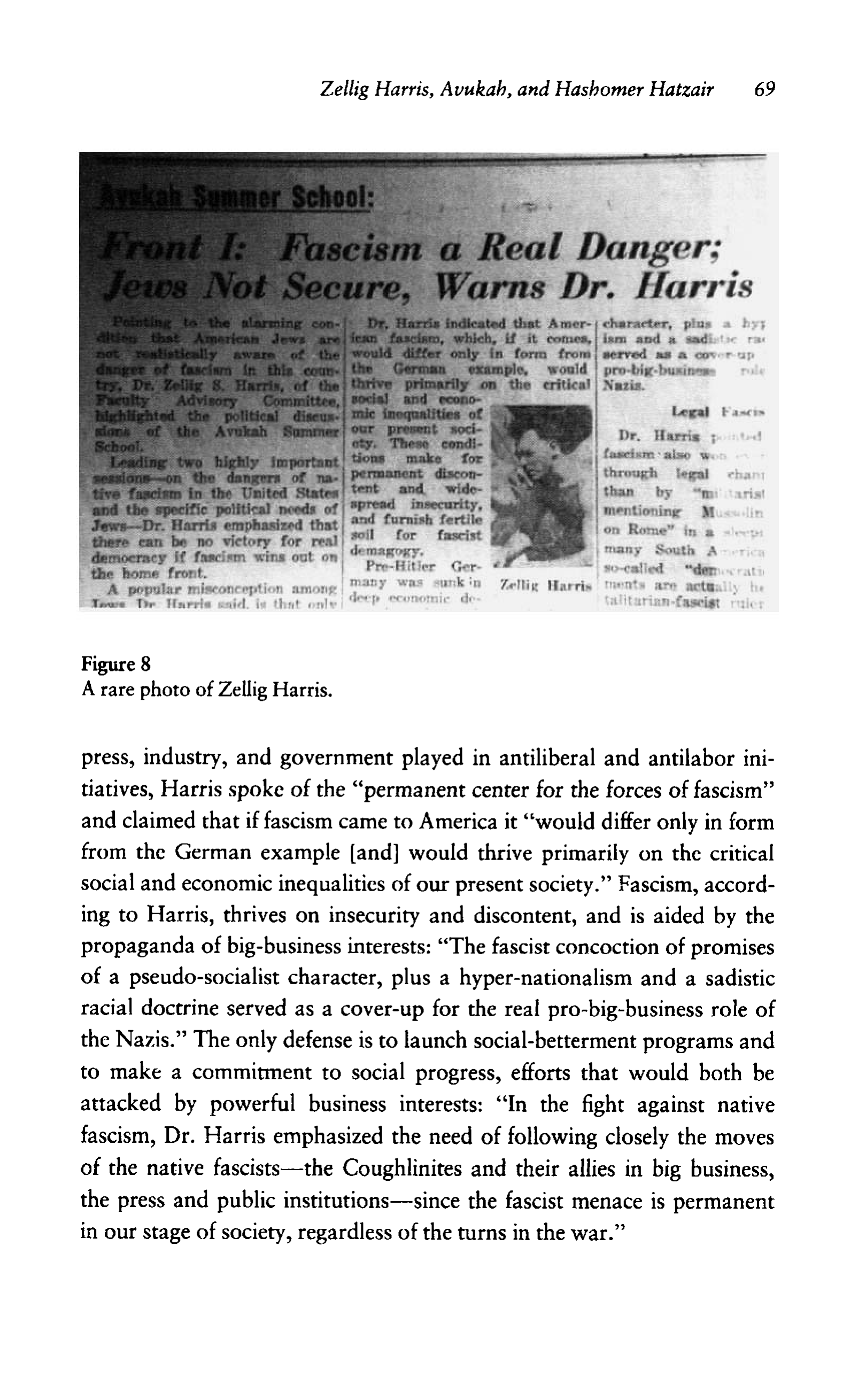
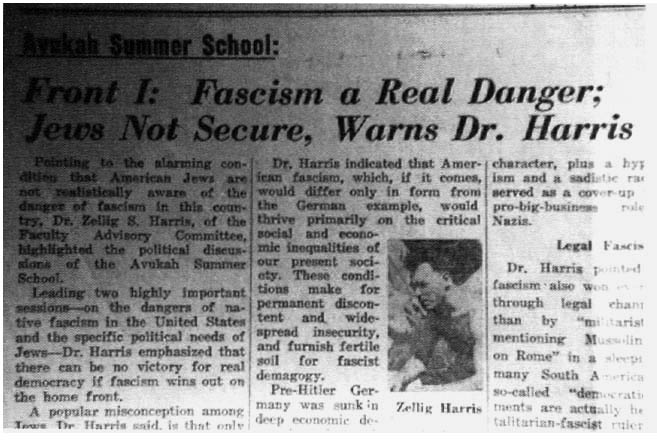
Zellig
Harris,
Avukah,
and
Hashomer
Hatzair
69
Figure
8
A
rare
photo
of
Zellig
Harris.
press,
industry,
and
government played
in
antiliberal
and
antilabor ini-
tiatives,
Harris
spoke
of the
"permanent
center
for the
forces
of
fascism"
and
claimed that
if
fascism
came
to
America
it
"would
differ
only
in
form
from
the
German example [and] would thrive primarily
on the
critical
social
and
economic inequalities
of our
present society." Fascism, accord-
ing
to
Harris, thrives
on
insecurity
and
discontent,
and is
aided
by the
propaganda
of
big-business
interests:
"The fascist
concoction
of
promises
of
a
pseudo-socialist character, plus
a
hyper-nationalism
and a
sadistic
racial
doctrine
served
as a
cover-up
for the
real pro-big-business role
of
the
Nazis."
The
only
defense
is to
launch social-betterment programs
and
to
make
a
commitment
to
social progress,
efforts
that would both
be
attacked
by
powerful
business interests:
"In the fight
against native
fascism,
Dr.
Harris emphasized
the
need
of
following closely
the
moves
of
the
native
fascists—the
Coughlinites
and
their allies
in big
business,
the
press
and
public
institutions—since
the
fascist
menace
is
permanent
in
our
stage
of
society, regardless
of the
turns
in the
war."
70
Chapter
2
In
his
second lecture,
Harris
described
the
failure
of
Jewish religious
and
cultural groups
to
address
the
fundamental
issues
facing
Jews, con-
cluding that
"Jews
need
a
political program pointing
out the
need
to
guarantee security
in
this country
and
indicating
the
steps
to be
taken.
Jews also need Palestine,
for
Jews
who
need
or
wish
to go to a
center
where they will
not be a
minority.
For
many American Jews Palestine
is a
potential
second
home."
Chomsky
and
Montreal
There
are
several lines, many
of
which
may be
traced through Avukah,
that connect Chomsky
and
Harris
to the
city
of
Montreal.
A
significant
number
of
Chomsky acquaintances
and
commentators were originally
from
Montreal,
among them
Sam
Abramovitch, Norman Epstein, Meyer
Mendelson,
and
Willie Segal.
One of the
presses that
has
published
or
reprinted
many
of
Chomsky's
political
works,
Black Rose (the
others
are
South
End, Pantheon,
and Z
Magazine),
is
located
in
Montreal.
Manu-
facturing
Consent,
the
National Film Board
of
Canada
film
about Chom-
sky,
was
produced
in
that
city
by two
Montrealers, Mark
Achbar
and
Peter
Wintonick.
There
are
quite
a few
Chomsky-trained linguists teaching
at
various Montreal universities
and
colleges, including McGill University.
In
May
1942,
an
article entitled
"McGill
Rallies Students
to
Fight Anti-
Semitism"
appeared
in
Avukah Student
Action.
It
described
an
anticon-
scription rally, held
in
Montreal
on 24
March 1942, which turned into
a
riot against Jews. McGill Avukah members claimed that
the
melee
was
part
of a
"well
coordinated plan
of
fascist
groups
in
Quebec," such
as
L'Ordre
de
Jacques Cartier
and the
Canadian Party
and
observed that
the
rally
had
been publicized
in the
violently anti-Semitic newspaper
Chez
Nous.
The
article also pointed
a finger at
certain individuals: Adrian
Arcand
(an
anti-Semitic fascist),
M.
Raymond,
M.P.,
and M.
Bourassa
(Quebec
isolationist nationalists),
and M.
Bouchard. Rather than simply
reporting
on the
activities
of
these profascists,
the
article asks, "Why
has
fascism
grown
in
Quebec?"
The
answer recalls Harris's analysis
of the
social basis
of
fascism: "Because
of the
atrociously
low
standard
of
living
in
Quebec,
the
poor
education system,
the
dire poverty, many thousands
were swayed
by
these reactionary movements.
The
underpaid
and op-
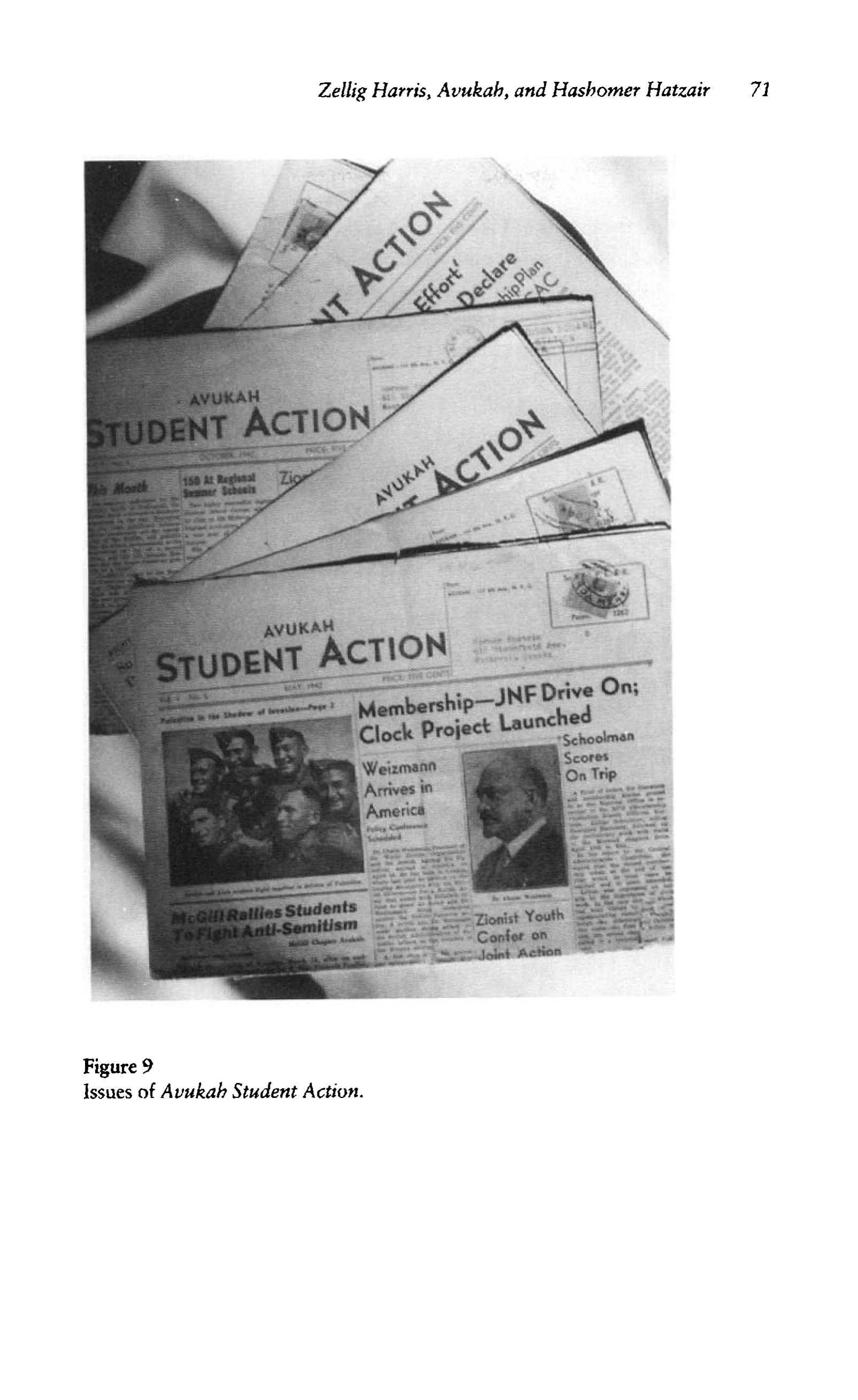
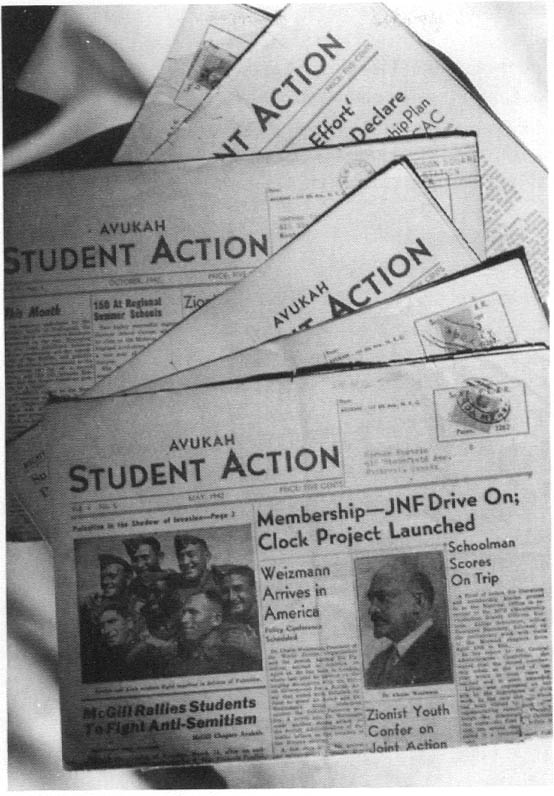
Figure
9
^°tAvukah
Student Action.
Zelli
71
72
Chapter
2
pressed
French-Canadian workers
in, for
example, Dominion Textiles,
took
faith
in
organizations which promised
to
alleviate this
condition."
The
approach taken
in
1942
to
address Quebec's problems
is
particularly
interesting
in
light
of
contemporary discussions concerning
the
future
of
Quebec
as a
province
of
Canada. Class analysis, which would emphasize
the
fascistic
aspects
of
corporate capitalism
and
nationalism,
is as
con-
spicuously
absent
from
the
debate today
as it was
then.
Zellig
Harris
and The
People
A
small, little-known group, "The
People,"
also
benefited
from
Harris's
involvement.
My
knowledge
of it
comes solely
from
a
single, unpublished,
typed
document—a
kind
of
manifesto—sent
to me by
Norman Epstein.
Harris
may
well
be its
author.
The
People, according
to the first
para-
graph
of the
document,
are in
various measures disturbed
by the
suffering,
inefficiency,
dishonesty,
in-
equality, lack
of
freedom, bourgeois
and
automaton character structures, etc.,
which occur
in
this culture;
feel
limited
and
insecure
in the
carrying
out of
their
own
work
and
career lines; believe
that
if
anything
can be
done
to
improve things
...
[it]
is
determinable only
by
careful
empirical observation
and
scientific analysis.
[Some
would]
be
prepared
to
change their present occupations, e.g.
to
enter
workers'
occupations.
Group members (despite
one or two
exceptions)
did not
"intend
to use
their
political interests
in
advancing their careers"; they vowed
to
"work
cooperatively, without
officers
or
orders";
and
they
often
functioned
in
groups. Authors
of
their reports
and
publications were "rarely named."
They
"assume[d]
nothing
as
being true
ex
cathedra,
no
person
as
reposi-
tory
of
authority
or
truth."
In the
domain
of
economic
and
historical
analysis,
they claimed,
"Marx
fits the
facts
and is
useful
for
prediction."
The
elements
of
this society that
the
group considered unsatisfactory
would continue
to
exist
"as
long
as
there
is a
controlling class, wages
and
profits,
and a
lack
of
complete
freedom
in the
utilization
of the
means
of
production."
The
People
did not
believe that
reform
is
possible within
the
framework
of the
capitalist
society,
or
that
any
bureaucratic structure,
any
attempt
to
manage
or
lead
the
people, "will
in the
long
run aid in the
development
in the
desired direction."
Zellig
Harris,
Avukah,
and
Hashomer
Hatzair
73
The
document makes
reference
to
historical-materialist works such
as
those
of
Erich
Fromm
(of the
Frankfurt
School)
and
Arthur Rosenberg,
as
well
as
works
of
American cultural anthropology, modern natural
sciences,
and
mathematical logic.
All of
this points
to a
vital connection
between
Harris
and The
People, since
Harris
also combined
his
interest
in
Rosenberg's anti-Bolshevik Marxism with
a
commitment
to
Fromm's
psychoanalytic-Marxist work.
The
People
had no
dogma,
Marxist
or
otherwise,
and
members pulled
together
as a
"way
of
resisting
the
present social
order,
of
helping spread
the
resistance
to
it." They
did not
consider themselves working-class
leaders, although they
did
agree
that
revolution
or
"collapse"
were
the
only means
of
ending present power relations.
Finally,
their route
to
social change
lay in the
compiling
of
such information about
the
economy
and
culture
and the
control
methods
and
development
of the
ruling class,
and
about
the
change
of
technology,
social relations, working-class attitudes,
etc.,
as
would
be
useful
to the
political
understanding
and
action
of an
increasingly restive working-class;
the
reduction
of
the
methods
of
science
to a
form
that will
be
graspable
and
usable
by
workers
in
the
understanding
and
control
of
their social
and
natural environment;
the
devel-
opment
of the
theory
and
prediction
of
social change;
and the
dissemination
and
elaboration
of
scientifically
valid social-political discussion among those
who may
be
expected
to
act,
in
terms
of
their position
and
times,
in the
direction
of a
free,
egalitarian, classless society.
The
tenets
and
values upheld
by
Chomsky
in his
work relate strongly
to
those
set
forth here either
by
Harris
or his
close associates
in The
People.
Chomsky resists
the
suggestion
that
he was
influenced
by
Frankfurt
School members such
as
Adorno,
Fromm, Horkheimer, Lowenthal,
or
Marcuse.
But the
importance
of
such
figures to
Zellig
Harris,
and by
extension
to
groups such
as
Avukah,
the
Council
for
Arab-Jewish
Co-
operation,
or The
People, does imply that
the
Frankfurt
School
had an
at
least indirect
effect
on
Chomsky's
development.
Chomsky, Seymour
Melman,
and the
Council
for
Arab-Jewish
Cooperation
Chomsky made contact with Avukah through
the
knowledge
and
ideas
of
Zellig
Harris,
and, later
on,
through
his
friendship with
former
Avukah
74
Chapter
2
members such
as
Seymour Melman (who served
as
executive secretary).
Melman
is
older than Chomsky
(by
about seven
or
eight years).
The two
became
reacquainted
in the
1960s,
when Chomsky discovered Melman's
work.
They then established
a
close friendship. Chomsky
now
knows
that
Melman
was
compiling accomplishments well
before
this time. Both
Harris
and
Melman were also associated with
a
group that grew
out of
the
left
wing
of
Avukah, known
as the
Council
for
Arab-Jewish Coopera-
tion.
Its
main activity
was
publishing
the
Bulletin
of
the
Council
on
Jewish-
Arab
Cooperation,
1944-1949.
Its
principal writers were Harris
and his
wife,
Bruriah.
The
bulletin, which also
had
some Hebrew
and
Arabic
issues,
was
respected
by
people like Hannah Arendt. Chomsky
has
expressed
his
respect
for
this organization
and its
publication
on
many
occasions,
notably
in a
passage
from
Peace
in the
Middle
East?
Reflec-
tions
on
Justice
and
Nationhood
in
which, citing
a
1947 issue
of the
bulletin,
he
comments that
the
council
focused
on
"the possibilities
for
independent political action
by
workers
as a
class,
as
contrasted
to
reli-
ance
on
decisions
of any of the big
powers"
(64).
In a
note Chomsky
adds,
"I
should emphasize that
my own
point
of
view
was
heavily
influ-
enced
by
this group
and a
number
of the
people associated with
it"
(89),
of
whom Seymour Melman
was the
most important. When asked about
Melman,
Chomsky replies
that
he did
"important
work
on
workers
self-
management
in the
'50s,
and was the
only person, along with Lawrence
B.
Cohen,
to
have developed
the
major ideas
that
animated Harris
and his
circle
in the
late
1940s,
when they were working intensively
on all
this,
within
the
framework that Harris describes
in his
posthumous [unpub-
lished
political]
manuscript"
(31
Mar.
1995).
Melman trained
in
economics
and
industrial engineering
and
worked
at
Columbia University.
In
1956, someone gave
the
university
a
grant
to
investigate
the
feasibility
of
developing
an
inspection procedure that
would prevent
the
violation
of a
disarmament system; Melman
ran the
project.
As a
result,
Inspection
for
Disarmament
was
published,
with
Melman
as
editor.
He
went
on to
become director
of a
wide-ranging series
of
studies
and
acquired
a
detailed understanding
of the
whole military
complex, which
he
described
in
Pentagon
Capitalism:
The
Political
Economy
of
War.
Zellig
Harris,
Avukah,
and
Hashomer
Hatzair
75
Chomsky
and the
League
for
Arab-Jewish Rapprochement
There were other attempts
to
encourage Arab-Jewish cooperation with
which
Chomsky
had
great sympathy.
For
example,
he
remembers that
he
"read
all the
stuff"
and had
"great sympathies"
for the
work
of the
League
for
Arab-Jewish Rapprochement. This
organization,
which
had
been
founded
in
Israel
and was
headed
by an
Israeli orange-grove
farmer
named
Chaim Kalvarisky, upheld
beliefs
in
Jewish-Arab working-class
cooperation
and
anti-imperialism;
its
members, like
Avukah's,
were
not
in
favor
of the
creation
of a
Jewish state.
In the
April 1942 edition
of
Avukah Student
Action,
Margolith
Shelubsky explained that
the
league,
which
was
founded
in
1938, "comprises Arab
and
Jewish indi-
viduals
and
groups
who see the
need
for
working
for
rapprochement
between
the two
peoples.
Its
activities
are
chiefly
in the
economic
and
social
fields."
Cited
in her
article
was a
report, written
by
Moshe Smilan-
sky,
that discussed
the
role
foreign
influences
played
in
promoting
the
"Arab
terror"
of
1936-39:
The
terror
was
never
an
outbreak
of
basic hatred towards Jews
but
rather
an
expression
of
temporary anger, inspired
by
foreign forces. Evidence
of
this
can be
found
in the
fact
that
when
the
terror
stopped Jews
and
Arabs
met
once again
as
good
friends
and
good neighbours. Even
after
the
long period
of
terror,
which
many
feared
was
permanent
and
deep
rooted,
Arabs literally
fell
into
the
arms
of
their Jewish neighbours
and
asked
for
peace. Even during
the
terror,
there
was
evidence
that
basic friendship
and
trust
existed. Arabs made
use of
Jewish medical
and
social services.
The
hostile relations stemmed
from
foreign influences.
Today
we
witness Arab-Jewish rapprochement taking place
naturally,
almost
sponta-
neously
in
many areas.
Regrettably,
the
league's
project
was not as
rosy
as one
would gather
from
this report. Chomsky himself notes that
"in
retrospect,
I'm
afraid
that most
of
this
was
wish-fulfillment,
including
the
whole Avukah-
League
for
Arab Rapprochement story,
but I did
believe
it at the
time"
(31
Mar. 1995).
Chomsky
and
Hashomer Hatzair
Chomsky
did
have direct contact (through many
of his
friends)
and
even
a
loose
affiliation
with another group that
was
related
to
Avukah:
76
Chapter
2
Hashomer Hatzair. Unlike
Avukah,
this group
was
still active when
Chomsky arrived
at the
University
of
Pennsylvania.
It
still exists today.
As
a
graduate student, Chomsky
was
sympathetic
to the
commitment
Hashomer
Hatzair
had
made
to
support
socialist
binationalism
in
Pales-
tine
and
kibbutz values.
He has
said that although
he
"was never
a
member
of any
group,"
he
was
"fairly close
to ...
Hashomer
Hatzair,
but
couldn't
join because
it was
split between Stalinists
and
Trotskyites
and I
very
strongly dis-
agreed with both
of
them
oh
Marxism-Leninism"
(31
Mar.
1995).
The
organization
was
founded
in
Lemberg, Poland,
in
1917. According
to
Norman Epstein,
"Hashomer
Hatzair
was a
strong, well-organized
Zionist-Socialist youth movement
in
Europe [and] North
and
South
America
which prepared young Jewish boys
and
girls
for
life
on a
kibbutz
in
Palestine (later, Israel), expedited their immigration
and
integration
into
a
kibbutz
('making
aliyah')
and
later became
the
main component
of
the
Zionist
left-wing
political party
in
Israel—MAP
AM
(which
is now
part
of
the
coalition known
as
Meretz)"
(15
Dec. 1994).
Hashomer
Hatzair's
similarities
to
Avukah
are
obvious.
The two
groups also interacted; Avukah,
for
example, distributed pamphlets
(such
as
Youth Amidst Ruins)
for
Hashomer Hatzair
from
its
office
in New
York City.
However,
while Avukah
was
concentrated within American
college
campuses, Hashomer Hatzair
had
(and continues
to
enjoy)
strong
working-class ties
and an
international
profile.
Zellig Harris, though
not
a
member
of
Hashomer Hatzair,
had
contact
with
its
members,
as did
Seymour Melman
and
Norman Epstein;
Sam
Abramovitch
was the
director
of the
Montreal-area branch. Members
of
the
organization played important roles
in the
Warsaw Ghetto uprising
against
the
Nazis
in
1943,
and
former
members went
on to
undertake
important
intellectual
and
political
work.
There seem
to
have been
differences
between
the
branches
of
Hasho-
mer
Hatzair. Like Chomsky, Epstein recollects that "the membership
of
Hashomer Hatzair
and
subsequently
MAPAM
was
various
in its
ideol-
ogy,
but the
leadership
for a
long time
was
Leninist
and
even
Stalinist
(except when Stalin showed anti-Semitic tendencies
or was
explicitly anti-
Zionist)"
(15
Dec. 1994).
He
further
remembers that "around 1942 there
was a
short-lived
Left
Jewish Youth Alliance
in
Montreal, consisting
of
Zellig
Harris,
Avukah,
and
Hashomer
Hatzair
77
Avukah,
the
Outremont
Cooperative Commonwealth Youth Move-
ment (ie.
CCF
Youth), Hashomer Hatzair,
and
ex-members
of
Hashomer
Hatzair"
(20
Apr.
1995).
Abramovitch,
on the
other hand, recalls
no
such political
affiliation
in the
Montreal branch, suggesting that
it
upheld
ostensibly Zionist socialist ideals,
and
citing
its
connection with
the
anti-
Stalinist
Second-and-a-Half
International. This particular International
is
little known, although
its
members, according
to
Epstein, included
a
number
of
influential
groups, such
as
"Hashomer
Hatzair,
the
Austrian
Socialists,
the
Independent Labour Party
in
Britain and,
I
believe,
the
Sozialistische
Arbeiter Partei
of
Germany, which broke away
from
the
Social
Democratic Party around 1930"
(20
Apr.
1995).
Chomsky himself
had
no
contact with
the
Montreal group:
"I
knew
the
people
in
Phila-
delphia
and New
York mostly. Remember,
in
those days people
of our
income level rarely traveled anywhere.
I
didn't
get to
West Philadelphia
until
I
went
to
Penn,
and
regarded Gettysburg
as far
West"
(15
Dec.
1994).
Whatever ideological
differences
existed between
the
branches
of
Hashomer
Hatzair,
its
various members
and
associates
worked
to in-
crease
working-class participation
in the
organization
itself,
to
encourage
emigration
to its
affiliated
kibbutzim
in
Israel (notably Kibbutz Artzi),
and to
promulgate communist ideals
for
Israeli kibbutzim. Hashomer
Hatzair
was
particularly active
in
Europe,
where anti-Semitism
was
well
entrenched
and
menacing.
Like
Avukah—and
indeed like Chomsky
(from
a
Jewish perspective)
and
Edward Said
(from
a
Palestinian
perspective)—Hashomer
Hatzair
believed
in
Arab-Jewish cooperation,
first in
Palestine
and
then
in
Israel.
An
example
of
this kind
of
cooperation
is
given
in a
report issued
by
the
League
for
Arab-Jewish Cooperation
and
relayed
in an
April 1942
Avukah Student Action
article. According
to the
article,
the
Kibbutz
Artzi,
of the
National Federation
of
Hashomer Hatzair,
recently
started activity which
is
significant
in
establishing contact with neighbor-
ing
Arab villages.
The
Kibbutz Artzi
has
organized courses
to
train agents
who
will establish contact with Arab villages that
are
near Kibbutzim
...
[and
who
will]
seek
to
strengthen favorable attitudes
to
Zionism among Arabs. Some
300
are
now
taking courses which teach Arabic, Arab customs,
and
Arab community
life.
It is
hoped that about one-seventh
of the
Arab village communities will
be
reached
by
workers trained
in
these courses.
78
Chapter
2
Chomsky's
"Anti-Zionism,"
Then
and Now
Despite
his
loose,
often
indirect, connections
to
such Jewish organizations
as
Avukah
and
Hashomer Hatzair, Chomsky has,
for
many years, been
branded
an
anti-Zionist
by a
large segment
of
American Jews. This
has
happened because
he
evaluates Israeli government actions according
to
the
same criteria
he
uses
to
judge
the
actions
of any
government, and,
moreover, because
he
does
not
support
the
idea
that
Israel should
be
a
Jewish state. Reactionary Zionists
confuse
apology
for
Israeli state-
sponsored terror
and
aggression against Palestinians
or
Arabs
(or
other
out-groups) with Zionism, and,
further,
misconstrue Chomsky's position
as
anti-Zionist.
When Chomsky talks about
a
binational state,
he is
talking about
the
former
Palestine,
and
thus
refers
back
to
pre-1948
plans
to
establish
a
socialist state
in
Palestine that would include equal participation
of
Arabs
and
Jews.
If
these plans, which were furthered
by
then-Zionist groups,
had
been realized, much
of the
violence that
has
occurred
in the
Middle
East,
and in
Israel itself, might have been prevented. Just
as a
close look
at
the
Spanish Civil
War
shows
the
power
and the
libertarian nature
of
anarchosyndicalism,
an
examination
of
Jewish labor movements
in
Israel
shows
the
viability
of
efforts
to
establish
a
workers' socialist republic.
Many so-called
Zionists
don't
recognize this,
and
accordingly condemn
Chomsky's work
in
this area.
In
June
of
1995,
a
press named
after
Avukah launched
its first
pub-
lication:
Partners
in
Hate:
Noam
Chomsky
and the
Holocaust
Deniers,
by
Werner Cohn, professor emeritus
at the
University
of
British Columbia.
Norman Epstein explains
how
something such
as
this could occur:
"In the
later years
of
Avukah,
the
organization split into
a
Centre Right (e.g.,
Nat
Glazer, Seymour Lipset)
and a
Left
(e.g., Melman, Harris); apparently
the
[Centre] Right
has now
captured
the
name"
(6
July
1995).
The
suggestion
that there
is any
relationship between
the
now-defunct organization
named Avukah
and
Avukah Press,
is,
according
to
Chomsky,
"sheer
fraud."
He
correctly notes that
Glazer-Lipset have
not had the
remotest connection with anything associated with
Avukah
or its
ideals
for
half
a
century
(in
Lipset's case, ever,
to my
knowledge).
Zellig
Harris,
Avukah,
and
Hashomer
Hatzair
79
The
name
"Avukah"
was
dredged
up in
recognition
of the
fact
that
it
would
be
more
effective
to
pretend that
the
criticism
is
coming
from
the
left
than
from
where
it
really
is, the
ultra-right
and
extreme jingoist sector
of
pro-Israel fanaticism, with
neo-Nazi connections
via its
support
for
Kahane.
I
presume that
it was
Glazer's
idea
to
resurrect
the
name
"Avukah."
No one
else
in
those circles would have
heard
of it.
What they
are
hoping,
of
course,
is
that someone will catch
the
association
(or if
not,
they'll bring
it up
themselves)
[.]
[They want]
to
insinuate
that
even
the
good
leftie
libertarian anti-Jewish state people
are
appalled
by my
awful
doings—far
more
effective
than
to say
that Kahanist ultrarightists
are.
(14
Aug.
1995)
A
Place
of His Own
In
the
meantime,
Chomsky's unconventional graduate education con-
tinued.
Due to the
efforts
made
on his
behalf
by
Nelson Goodman
and
others, Chomsky was,
in
1951,
named
to the
Society
of
Fellows
at
Harvard.
One
might imagine that despite
the
intellectual promise such
a
position must have held
for
him,
a
person with Chomsky's social back-
ground
and
views
on
education would have experienced
feelings
of
revul-
sion
at the
thought
of
entering such
an
institution. Chomsky does,
in
fact,
relate
a
humorous anecdote about this:
I
grew
up in a
lower-middle class urban environment without
any
particular social
graces,
and
when
I
went
to
Harvard
as a
graduate student
in the
early
1950s,
in a
special
high-class research
outfit
that
had all
sorts
of
prestigious elite people,
I
dis-
covered that
a
large part
of the
education
was
simply refinement, social
graces,
what kinds
of
clothes
to
wear,
how to
have polite conversation that
isn't
too
seri-
ous,
all the
other things that
an
intellectual
is
supposed
to do. I
remember
a
couple
of
years later asking
a
distinguished English professor
from
Oxford, which
was
the
model that this organization
was
attempting
to
imitate,
how he
thought that
Harvard's imitation compared with Oxford's original.
He
thought
for a
while
and
he
said that
he
thought
it was the
difference
between genuine superficiality
and
phoney superficiality.
We
only
had
phoney superficiality, while they
had
genuine
superficiality.
This
is a
large part
of
what
is
called education.
And it is
teaching
conformity
to
certain norms that keeps
you
from
interfering with people
in
power
and
all
sorts
of
other things. ("Creation")
Upon arriving
in
Cambridge, Chomsky discovered which intellectual
trends ruled
the
day,
and the
disquiet this discovery
filled him
with would
later
contribute
to his
critiques
of
behaviorism.
He
was, however,
also
very
happy
to
learn that
at
Harvard
he
would
be
able,
for the first
time
in
80
Chapter
2
his
life,
to
devote himself entirely
to
study
and
research.
The
stipend that
accompanied
his
position meant that
he no
longer
had to
support
himself
with nonacademic jobs.
In
the
early
1950s,
debate
was
raging over
the
breakthroughs that
new
technology
was
promising
in the
understanding
of
human behavior.
Computers, electronics, acoustics, mathematical theories
of
communica-
tion
and
cybernetics were
all in
vogue,
and
researchers were busy exploit-
ing
them. Chomsky,
a
graduate student
in his
early twenties,
was
uneasy
with this activity: "Some people,
myself
included, were rather concerned
about these developments,
in
part
for
political reasons,
at
least
as far
as my
motivations were concerned because this whole complex
of
ideas
seemed linked
to
potentially quite dangerous
political
currents:
manipu-
lative,
and
connected with behaviorist concepts
of
human
nature"
(Lan-
guage
and
Politics
44).
He had no way of
confirming
his
suspicions about this type
of
research.
Instead,
he
began
to
pursue what
he
thought
of as
hobbies; these were,
specifically,
concerted attempts
to
rethink
the
nature
of
human language
in
ways that would
refute
behaviorist currents.
Two
years later,
it
dawned
on him
that
this work
was far
more promising than
the
research being
conducted
in the
academy.
"[O]nly
about 1953
did I
realize that
the
hobby
was on the
right
track,
and the
whole structuralist
approach,
including
everything
I had
thought
was the
real
stuff,
was
beside
the
point—in
fact,
pretty worthless,
to be
honest"
(13
Dec. 1994).
On the
heels
of
this realization (which occurred while
he was en
route
to
Europe
by
boat
and
"desperately seasick"),
the
twenty-five-year-old
Chomsky broke
"almost
entirely
from
the field as it
existed"
(3
Apr.
1995).
It was a
dramatic break,
and one
that
he has
never regretted.
In
some
of
his
later
work
(Syntactic
Structures
and
Logical Structure
of
Linguistic
Theory],
Chomsky
even
insists
that
linguists should abandon their hope-
less
quest
for
discovery procedures (that
is,
structural linguistics),
"at
least
insofar,"
he has
remarked
in a
letter,
"as it
[goes] beyond parts
of
pho-
nology
and
ha[s] theoretical
aspirations";
they should instead shoulder
the
"more
modest task
of finding
evaluation procedures"
(as he did for
the first
time
in
Morphophonemics
of
Modern Hebrew).
"The methods
they were
proposing
could
not
possibly lead
to
evaluation
procedures,
a
concept unknown
to
structural linguistics
and
remote
in
conception
from
Zellig
Harris,
Avukah,
and
Hashomer
Hatzair
81
it, at a
very
fundamental
level;
it
assumes
a
realist rather than operation-
alist
stand,
for one
thing.
The
'principles
and
parameters' approach
did
make
it
possible
to
reconstitute something like
'discovery
procedures,'
but
now in a
framework
so
radically
different
that comparison
is
meaningless"
(31
Mar.
1995).
During this
period,
Chomsky
not
only deepened
his
commitment
to
linguistic studies
but
also continued
to
work
in
related
fields. He was
making contact with
a
great number
of
influential
Cambridge-area
teachers
and
students, including Yehoshua
Bar-Hillel,
Peter
Elias,
Anatol
Holt,
Eric Lenneberg, Israel
Scheffler,
W.
V. O.
Quine,
and
Roman
Jakobson. Chomsky
and
Jakobson,
one of the
founders
of the
formalist
approach
to
literary criticism,
met at
Harvard
in
1951. Although they
differed
profoundly
in
approach
(Chomsky says
that
Jakobson
"hadn't
the
faintest
interest
or
understanding
of
anything
I was
doing"
[13
Dec.
1994],
they became
friends
and
remained
so
until
Jakobson's
death.
Chomsky's closest
friend
was
fellow
student Morris Halle,
at the
time
one
of
Jakobson's
"main"
students (and
a
researcher
at the MIT
electronics
laboratory).
Quine
is
frequently
mentioned
in
discussions
of
Chomsky's philosoph-
ical work, because Chomsky eventually renounced Quine's dispositions
on the
acquisition
of
knowledge
of
language:
[I]t took Chomsky several years
to
come
to the
realization that
no
inductive pro-
cess
ever proposed could lead
from
the
kind
of
data that
are
available
to the
child
to
principles
of the
abstraction required
in the
theory
of
language, which
can
only
mean
that
these principles
are not
determined
by the
data
by
anything resembling
induction,
a
conclusion
which
is in
sharp
contrast
with
Quine's
view
that
"the
philosophy
of
inductive
logic"
is "in no way
distinguishable
from
philosophy's
main
stem,
the
theory
of
knowledge,"
as he
puts
it in the
opening lines
of his
Philosophy
of
Logic.
(Otero, "Chomsky
and the
Rationalist"
4)
In
the
summer
of
1954 Chomsky
was
asked
to
present material
on
grammaticality
and
degrees
of
grammaticality
to the
Linguistics Institute
in
Chicago;
he was
also invited
to
give
a
series
of
talks
at
Yale
by
Bernard
Bloch,
who had
taken
an
interest
in his (as yet
unpublished)
work.
But
although Chomsky's early
linguistic
work
was
fresh
and
promising,
much
of
what
he was
doing remained relatively unknown within
the
academy.
Chomsky
was
still
an
outsider
to the field,
and, despite these signals
of
recognition
from
Chicago
and
Yale,
was
most
often
limited
to
speaking
at
82
Chapter
2
computer centers
and
psychology seminars.
He did
manage
to
publish
a
few
reviews
and
articles,
often
outside
the field of
linguistics.
The
Chomskys
in
Israel
In
1953, while
Noam
was still a member of
Harvard's
Society of Fellows,
he
and
Carol decided
to
spend some time
in
Israel,
a
country
in
which
both,
for a
long time,
had
thought
of
settling.
In the
end, however, they
simply
went
and
lived
on a
kibbutz
for
about
six
weeks. This experience
was
still
an
important
one for the
couple, because
it
allowed them
to see
what
life
could
be
like
in a
successful
left-libertarian
community where
people engaged
in
manual labor
and
intellectual work. Noam
was as-
sessed
as
unskilled upon
his
arrival
at the
kibbutz, which
was
called
Ha-
Zorea,
and so he
became
a
supervised agricultural laborer. This
was a
very
poor
kibbutz. There
was
little food, lots
of
hard
work,
and, most
importantly, what
Noam
described
as an
"ideological conformity."
He
became
uneasy with "the exclusiveness
and the
racist institutional set-
ting"
(Chomsky Reader
9); he was
even
more
disturbed
that
"these
highly
educated
and
perceptive
left
Buberites couldn't
see it" (31
Mar.
1995).
The
Israeli state
had
been established
in
1947-48.
Noam
had
been
opposed
to its
creation
as he
feared
the
socialist institutions
of the
Yishuv
and the
potentially binational character
of
Palestine would
be
rejected
in
favor
of the
state system. While
in
Israel,
he had
withessed non-Jews being
marginalized
and
"treated
rather shabbily, with
a
good deal
of
contempt
and
fear"
(Chomsky Reader
9), and his
personal experience
of
this double
standard
justified
his
doubts about
the
virtues
of a
religious state.
The
kibbutz where
the
Chomskys stayed
had a
Buberite
orientation,
and was
populated
by
well-educated German Jews.
The
Chomskys'
stay
there coincided with
the
Slansky trials
in
Czechoslovakia
and the
last
stages
of the
Stalin purges, which, strangely enough,
found
supporters
even
on
this kibbutz. Although
the
ideological
differences
that
Noam
had
with some
fellow
kibbutzniks were
not
what motivated
him to
leave,
and
although Carol
had
hoped
to
stay
on,
they
both returned
to
Cambridge,
and
Noam
received
an
extension
from
the
society until 1955. Carol
did
go
back
for six
months
in
1955,
and
then
returned
to
Cambridge
with
the
intention
of
moving permanently
to
Israel with
Noam;
but
"for
one
Zellig
Harris,
Avukah,
and
Hashomer
Hatzair
83
or
another
reason,"
Noam
writes,
"I'm
not
sure exactly
why,
it
never
happened"
(31
Mar.
1995).
Dr.
Noam
Chomsky
On the
strength
of
having submitted
just
one
chapter
of his
thesis, Chom-
sky
received
his
Ph.D.
from
the
University
of
Pennsylvania
in
1955. Except
for
the
relationships
he
maintained with Goodman
and
Harris, Chom-
sky's ties
to
that
university
had
been severed
in
1951,
and
other than pre-
senting
this chapter
he
fulfilled
no
formal obligation
for the
degree.
The
period during which
he had
written
his
thesis, which delineated
the
basics
of
much
of his
later
work,
had
been
an
intense
but
solitary
one for
him.
In
virtual isolation,
he
labored with "incredible
intensity."
"In
looking back,
I
don't
see how it was
possible.
In
just
a few
months
I
wrote
my
book
of
close
to
1,000 pages,
and it had in it
just about everything
that
I've done
since,
at
least
in a
rough form"
(Language
and
Politics
129).
This huge work
was
finally
published (minus some
of the
technical
material)
in
1975
as
The
Logical Structure
of
Linguistic
Theory.
Its
origins
have,
for a
long time, been
a
source
of
confusion, although
the
history
of the
manuscript
has
been
set out in the
book's
introduction:
"During
the
fall
semester
of
1955
I
revised several chapters
of
The
Logical
Structure
of
Linguistic Theory.
At
that
time,
two
microfilms were made
by
Harvard Libraries,
one of the
1955 version
and one of the
partially
edited
and
revised January 1956 version.
It is
these
two
microfilms
and
the
duplicated 1955 version
that
have been distributed over
the
years.
I
have
not
kept
count,
but
there must
be
well over 1000
copies"
(Logical
Structure
3).
Chomsky
did
submit portions
of the
work
to the
Technology Press
of
MIT
(which later became
The
MIT
Press),
but "it was
rejected, with
the not
unreasonable observation that
an
unknown author taking
a
rather
un-
conventional approach should submit articles based
on
this material
to
professional
journals
before
planning
to
publish such
a
comprehensive
and
detailed manuscript
as a
book"
(Logical
Structure
3). The
reason
Chomsky
had not
tried
to
have sections
of the
work published
in
profes-
sional (that
is,
linguistic) journals
"is
that what
I was
actually doing
had
virtually
no
detectable relation
to
linguistics—at
least, structural linguistics
84
Chapter
2
as
practiced
in the
U.S.
and
Europe.
That
includes
all of
Harris's
work"
(31
Mar.
1995).
The
manuscript that
was
eventually published
in
1975
contained portions
of
both
the
1955 version
and the
1956 version.
In
1958, Chomsky
was
made
a
National
Science Foundation fellow
at the
Institute
for
Advanced Study
at
Princeton University, during which time
he
revised
six
chapters
of
Logical
Structure.
The
strange
history
of
this
text
is
recounted
by
Frank Heny
in his
1979
review
of the
book
for the
journal
Synthese.
Heny points
out
that
the
book
was
written twenty years before
its
publication,
and
that
it
laid
the
foundations
for an
entirely
new field of
research: what
has
come
to be
known
as
transformational grammar.
The
manuscript
of
Logical Struc-
ture
circulated within
a
small group
of
academics,
and
therefore remained
"little
more than
a
vague rumor.
Yet the
arguments
for
Chomsky's par-
ticular brand
of
transformational analysis, even
in
that confusing, degen-
erate
and
often grossly
distorted
form
in
which they were passed
from
hand
to
hand somehow
won the
day.
The
grammatical transformation very
soon achieved undisputed
dominance—at
least
in
American linguistics"
(308).
So, by the
mid-1950s,
Noam Chomsky,
a
newly minted
scholar,
stood
at the
forefront
of a
nonexistent
field. He was
also unemployed.
Wherefore
Zellig Harris?
During
the
tenure
of his
Harvard
fellowship
(1951-55)
Chomsky spent
much
of his
time
in
Cambridge,
but
still maintained
his
relationship with
Zellig Harris,
who
continued
to
teach
at the
University
of
Pennsylvania.
From
the
mid-1950s
on,
however, Chomsky
had
little
contact
with
Harris,
and
from
the
mid-1960s
none
at
all.
Harris's
linguistics project,
as
we
have seen, became
of
marginal interest
to
Chomsky,
who had by
then taken
off
in a
different
direction. Linguistics,
at
that time, looked
to
Chomsky
as
though
it
were destined
to
reproduce
the
same exercise
to the
point
of
absurdity:
I
remember
as a
student
being
intrigued
[by
linguistics]—the
problems
were
fun
and
everything—but
we
weie
all
wondering
what
we
were
going
to do in ten
years.
Suppose
you've
done
a
phonemic
analysis
of
every
language.
Suppose
you've
done
an
ic
[immediate
constituent]
analysis
of
every
language.
It's
fun to
do.
It's
like
a
cross-word
puzzle.
It's
challenging
and
hard.
But
it's
going
to be
over
Zellig
Harris,
Avukah,
and
Hashomer
Hatzair
85
in
ten
years.
That's
the way the field
looked.
It
looked
as if it
were essentially
over,
(qtd.
in R. A.
Harris
83)
Zellig
Harris,
Chomsky
recalls,
"had this idea
of
trying
to do
some-
thing
new by
looking
at the
structure
of
discourse.
He
tried
to use the
features
of
linguistic analysis
for
discourse analysis" (qtd.
in R. A.
Harris
83).
From this project discourse analysis
was
born. Chomsky
was in
search
of
transformations
"to
model
the
linguistic knowledge
in a
native
speaker's
head,"
while Harris
was
interested
in
"such
practical purposes
as
machine translation
and
automated information retrieval"
(R. A.
Harris
84).
Their linguistic interests were irrevocably diverging. Chomsky's last
communications with Harris were
in the
early
1960s,
"when
[Harris]
asked
me to
[approach] contacts
at the
[National Science Foundation]
for
a
research contract
for
him, which
I
did.
We
then spent
a
couple
of
days
together
in
Israel,
in
1964.
After
that,
there
was no
contact.
No
falling
out,
just
a
mutual understanding, better
left
unsaid"
(23
June
1994).
Prior
to his
death
in the
early
1990s,
Harris completed
a
political
book,
which
he
wanted
to
publish
in
England because
he
felt
that
the
working
classes
there were more highly developed.
It has
just recently been
ac-
cepted
for
publication,
thanks
to the
efforts
of
Harris's
wife, Bruria,
and
those
of
Seymour Melman, Norman Epstein,
and
others. Both Chomsky
and
Melman read
the
book
in
manuscript form,
and
Chomsky remarked
that
it
contained "many interesting
things."
Melman assisted with
the
scholarly apparatus
of the
manuscript
and
sent
it on to
Chomsky,
who
contributed
"a few
missing references
and the
like"
(18
Feb.
1993).
For
those
who
know Chomsky
and
knew
Harris,
their relationship,
despite
its
early demise, remains important
for
many reasons.
The
values,
the
intellectual rigor,
and the
concern
for
emancipatory movements that
pervade
the
many works
of
both
men
testify
to
their tenacity
and
integrity
as
intellectuals
and
individuals. They inspired
one
another. Russell Jacoby
does
not
mention Harris
in his
work
The
Last
Intellectuals:
American
Culture
in the Age of
Academe,
but
what
he
says about Chomsky,
Murray
Bookchin,
Paul Goodman,
and
Isaac Rosenfeld could
be
applied
equally
to
Harris:
"to the
extent that they
are
anarchists, they distrust
large
institutions,
the
state,
the
university,
and its
functionaries. They
are
less
vulnerable
to the
corruptions
of
title
and
salary because their resis-
tance
is
moral, almost
instinctual."
Marxists charge that anarchists think
86
Chapter
2
ethically,
not
strategically. Jacoby, however,
is
convinced that this
is one
source
of
their power:
"Marxist
intellectuals
can and do
convince them-
selves
to
subordinate mind
and
ethics
to a
larger goal
or
distant cause that
frequently
slips
out of
sight. Anarchist intellectuals
are
less susceptible
to
this logic.
To use the
language
of
historical materialism,
it is no
accident
that
currently
an
anarchist, Noam Chomsky,
is the
most energetic critic
of
intellectuals apologizing
for
American
foreign
policy"
(96-97).
Chomsky Arrives
at
MIT
In
1955, Chomsky's
friend
Roman Jakobson arranged
for him to
work
as
a
researcher
at the
Massachusetts Institute
of
Technology. Chomsky,
in
his own
words, "had
no
identifiable
field or
credentials
in
anything"
(13
Dec. 1994),
but
MIT,
"a
scientific
university which didn't care much
about credentials,"
was
willing
to
overlook
his
lack
of
certifiable
"pro-
fessional
competence"
(23
June
1994).
Chomsky
was
made
an
assistant
professor
and
assigned, ironically,
to a
machine translation project
of the
type
he had
often
criticized.
The
project
was
directed
by
Victor
Yngve
and
was
being conducted
at the MIT
Research Laboratory
of
Electronics,
which
was
subsidized
by the
U.S. military.
While
he was
being interviewed
by
laboratory director Jerome
Wiesner
for
the
position, Chomsky stated that
the
project
had "no
intellectual
in-
terest
and was
also
pointless."
Perhaps
due to his
candor,
but
also because
Wiesner thought that
his
ideas were intriguing, Chomsky
was
hired
as a
full-time
faculty member, which meant
that
he was
required
to
spend half
his
time working
in the
research
lab and the
other
half
teaching—"pretty
standard,"
he
says, "for
MIT
faculty"
(27
June
1995).
He
actually
"never
touched
the
translation project,"
and
still speaks
of it
dismissively:
"It
may
have [had] some utility;
it
could
be on the par
with building
a
bigger
bulldozer, which
is a
useful
thing. It's nice
to
have
big
bulldozers
if you
have
to dig
holes"
(23
June
1994).
The
immediate problem Chomsky
faced
was,
as he
puts
it:
"What
was
I
going
to do
with
my
half-time
teaching?"
(27
June
1995).
He
started
by
giving
"cram
courses
to
graduate students
offered
by the
Modern
Languages Department
as a
service
to
help them
fake
their
way
through
Ph.D. reading exams (now
thankfully
abandoned)"
(31
Mar.
1995),
even
Zellig Harris,
Avukah,
and
Hashomer
Hatzair
87
though
he had
never studied French
and
barely knew German.
He was
"also
allowed
to
take over
a
course
on
language that
had
been
in the
undergraduate catalogue,
and run it as I
liked"
(27
June
1995).
Teaching
this course
was to be an
extremely important experience
for
Chomsky;
while doing
so, he was
able
to
elucidate some
of his own
ideas;
it
provided
him
with
the
opportunity
to
discuss with
his
students
the
idea
of a
gen-
erative grammar.
The
institute
was a
comfortable place
for the
twenty-seven-year-old
Chomsky:
"I
also began
to
teach undergraduate philosophy courses
there,
and
later
was
able
to
help establish what became
a
very
distinguished
philosophy department.
The
Massachusetts Institute
of
Technology
has
always been
a
pretty
free
and
open place, open
to
experimentation
and
without
rigid
requirements.
It was
just perfect
for
someone
of my
idio-
syncratic interests
and
work"
(27
June
1995).
This
was a
fruitful
time
for
Chomsky.
He
writes
that
(machine trans-
lation
project
aside)
"the Research laboratory
of
Electronics
...
provided
a
most stimulating interdisciplinary environment
for
research
of the
sort
that
I
wanted
to
pursue"
(Logical
Structure
2).
Here,
his
Aspects
of
the
Theory
of
Syntax
was
hatched.
In the
acknowledgments
of
that work,
he
describes
the
facility
as "an
interdepartmental laboratory
in
which
faculty
members
and
graduate students
from
numerous academic departments
conduct
research."
The
funding
for the
research published
in
Aspects
was
provided
by
"the
Joint Services Electronics Programs (U.S. Army, Navy
and Air
Force),
the
Electronics Systems Division
of the
U.S.
Air
Force,
the
National
Science
Foundation,
the
National
Institutes
of
Health,
and
NASA."
The
link
between these
organizations
and the
university,
the
role
of the
intellectual,
and the
relationship between
scientific
and
nonscientific
research
are all
issues
that
have been raised with regard
to
Chomsky's
own
connection
to
MIT
and to the
university environment
as a
whole.
They take
on a
greater
urgency
at a
later stage
in his
academic career.
The
Birth
of
Cognitive Science
and the
Publication
of
Syntactic
Structures
The
importance
of
Chomsky's work became evident quite soon
after
he was
hired
by
MIT.
In
September
of
1956,
the
twenty-seven-year-old
88
Chapter
2
Chomsky delivered
a
paper entitled
"Three
Models
for the
Description
of
Language"
as
part
of a
three-day
MIT
symposium
on
information
theory. According
to
Otero,
the
paper contained "the essential elements
in
[Chomsky's] innovative approach
to
language" ("Chomsky
and the
Cog-
nitive
Revolution"
14-15).
Allen
Newell
and
Herbert Simon presented
work
on
problem
solving
with
a
"logic
machine,"
and
there
were papers
on
signal detection
and
human information processing. This sympo-
sium—and
these papers
in
particular—has
been considered
by
some
to
mark
the
launch
of the
study
of
cognitive science.
At the
suggestion
of
Morris
Halle,
Chomsky then showed some
of his
lecture notes
for the
undergraduate course
on
language
he was
teaching
to
Cornelis
Van
Schoonefeld,
the
editor
of a
series entitled Janua Lingua-
rum, which
was put out by
Mouton,
a
Dutch press. Schoonefeld
offered
to
publish
the
notes. They appeared
in
1957
in the
form
of a
monograph
called
Syntactic Structures.
Like
Morphophonemics
of
Modern Hebrew
and
The
Logical Structure
of
Linguistic Theory,
it
radically opposes
the
entire
Harris-Bloomfield
tradition,
though
it
does
contain
this frequently
quoted remark: "During
the
entire period
of
this research
I
have
had
the
benefit
of
very
frequent
and
lengthy conversations with Zellig
S.
Har-
ris.
So
many
of his
ideas
and
suggestions
are
incorporated into
the
text
below
and in the
research
on
which
it is
based that
I
will make
no
attempt
to
indicate them
by
special reference" (6).
It is
apparent that Chomsky
said
this
out of his
great respect
for
Harris, but,
as he
explains,
"on the
understanding that every linguist
who
reads [the monograph] would
understand, without
my
saying
so
explicitly,
that
I'm
urging that
the
entire picture should
be
abandoned,
from
the
ground
up. I
just
didn't
want
to say
that explicitly,
for
personal reasons.
But it is
explicit
in the
texts,
and was
obvious
to
professional linguists right
away"
(31
Mar.
1995).
Chomsky's work during this period, described
in
Morphophonemics,
Logical
Structure,
and
Syntactic
Structures,
was a
rejection
of the
prevail-
ing
mandate
of
procedural linguistics
(to
seek
an
array
of
operations that
can be
employed
to
reduce
a
corpus
to an
organized
form
suited
to a
given
analyst's goals).
He was
looking, instead,
for
ways
to
"find
the
truth
about
language
and
linguistic
theory"
(31
Mar.
1995)—that
is, he
sought
a
universal grammar.
It was
clear
to
others
in the field
that Chomsky
was
Zellig
Harris,
Avukah,
and
Hashomer
Hatzair
89
posing
a
very serious challenge. Otero claims that among linguists "the
reaction
in the
early years ranged
from
indifference
to
hostility,"
depend-
ing
upon
the
domain. There
was
"great
hostility with regard
to the
work
on
phonology (where
the
efforts
were concentrated when
he
appeared
on
the
scene), either hostility
or
total incomprehension with regard
to the
general picture (which
was
well beyond their purview),
and
indiffer-
ence
for the
most part with regard
to the
work
on
syntax,
a field
which
until
then
had not
received
too
much attention
..."
("Chomsky
and the
Challenges"
13-14).
Just
as
Orwell's
Homage
to
Catalonia
was,
for a
long
time,
not
accepted
for
distribution
in
North America because
it
contradicted
the
accepted view
of the
Spanish Civil
War,
Chomsky's
Syntactic
Structures
diverged
so
radically
from
the
standard opinion that
it was not
even men-
tioned
in
current reviews
of
American linguistics. Chomsky recalls
a
soli-
tary exception, perhaps
by
Harold Allen,
"which
did
mention
Syntactic
Structures,
but as
Dutch, probably thinking
that
I was
Dutch. It's also
the
reason
why
nothing could
be
published here,
for
years"
(31
Mar.
1995).
The
most important early review
was by
Robert
Lees,
who had
asked
to
review
the
book
before
it was
available, even
in
galleys.
Lees
was
com-
mitted
to the
Harris model
but
nevertheless went
to
MIT
in
1956
to
work
on the
mechanical translation project. Encountering Chomsky
there,
he
became
convinced
by his
approach
and
went
on to
publish,
in
I960,
a
book
on
transformational generative grammar entitled
The
Grammar
of
English
Nominalizations,
which
was
based
on his
dissertation. Lees's
review
was
published
in the
influential
journal
Language
in
1957;
at
that
time,
the
journal
was
being edited
by
Bernard
Bloch,
who,
"almost alone
in
the
profession,
was in
favour
of
expression
of a
position that radically
departed
from
the
orthodoxy"
(42).
"Chomsky's book
on
syntactic
structures,"
Lees
wrote,
"is one of
the
first
serious attempts
on the
part
of a
linguist
to
construct within
the
tradition
of
scientific
theory-construction
a
comprehensive theory
of
lan-
guage
which
may be
understood
in the
same sense that
a
chemical, bio-
logical
theory
is
ordinarily understood
in
those
fields."
Lees
anticipated
the
dramatic
shift
that this book would generate, noting
that,
it is not a
mere
reorganization
of the
data
into
a new
kind
of
library
catalogue,
nor
another
speculative
philosophy
about
the
nature
of Man and
Language,
but
rather
90
Chapter
2
a
rigorous explication
of our
intuitions about
our
language
in
terms
of an
overt
axiom system,
the
theorems derivable
from
it,
explicit results which
may be
com-
pared with
new
data
and
other
intuitions,
all
based plainly
on an
overt theory
of
the
internal structure
of
languages;
and it may
well provide
an
opportunity
for the
application
of
explicit measures
of
simplicity
to
decide preference
of one
form
over
another
form
of
grammar. (42)
Although,
as
Chomsky
has
remarked,
Lees
"did what
he
thought
was
important,"
he was
later thrown
out of his
research position
for
insub-
ordination. Chomsky explains:
What happened
is
that
[Victor] Yngve's project
was
continually hiring very good
linguists,
but
they
all
went
the
same
way I
did,
at
various rates.
I'd
made
it
clear
even
before
I was
appointed that
I
didn't
think
the
project made
any
sense. Others
(Lees,
Matthews,
Lukoff
...)
had
varying views about
the
matter,
and did
work
on
aspects
of it. But
gradually they
all
reached
the
same conclusion,
and
began
to
concentrate more
and
more
on
straight linguistics, then
in a
real ferment
at
MIT.
Yngve
wasn't
happy
about
it: he was
dedicated
to
machine
translation.
He's
the
one who fired
Lees,
in a
pretty ugly way.
(13
Feb. 1996)
Lees
was
finally
admitted, thanks
to the
intervention
of
Chomsky
and
Halle, into
the
electrical-engineering department, where
he
eventually
got
a
Ph.D.
in
linguistics, although
he was
regarded
in the field as a
kind
of
"traitor"
(31
Mar. 1995).
Another review
of
Syntactic
Structures.,
this
one by
John Lyons (who
went
on to
write
a
very early study
of
Chomsky,
in
1970),
concludes with
the
statement: "Chomsky's whole discussion
of the
relations between
syntax
and
semantics will stimulate
the
interest
of
linguists
in
these prob-
lems
and
that
is all to the
good.
His
treatment
of the
external criteria
of
adequacy
and the
internal properties
of
grammars
of the
kind considered
in
this book makes
a
definite
contribution
to the
theory
of
their con-
struction"
(87).
In
fact, Chomsky's
own
sense, then
as
now,
was
that
the
significance
of
Syntactic
Structures
was
quite small, even "almost irrelevant."
After
all,
the
monograph
was
simply
a
collection
of the
notes
that
he had
made
for
the
undergraduate course
he had
been
teaching. This course
had
been
"geared
to
[the students']
interests";
Chomsky had,
he
maintains, been
"trying
to
lead them
from
standard
beliefs
about Markov sources,
infor-
mation theory, automata,
and the
like,
to an
interest
in
language, which
demonstrably
could
not
fall
within
the
range
of the
ideas then considered
orthodox
in
'hard
science'
(which
had
little relation
to
structuralism,
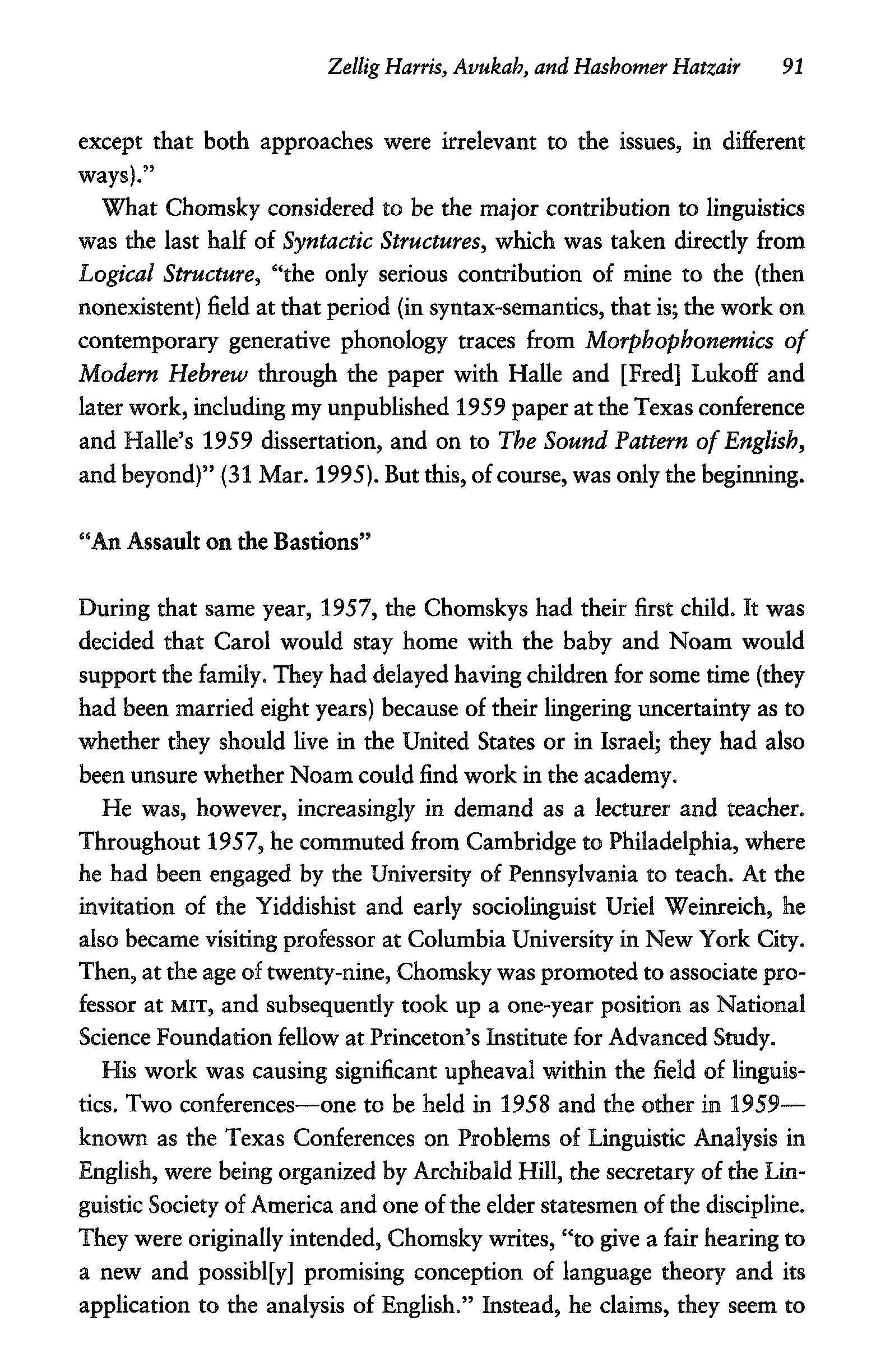
Zellig Harris,
Avukah,
and
Hashomer Hatzair
91
except
that
both approaches were irrelevant
to the
issues,
in
different
ways),"
What
Chomsky
considered
to be the
major
contribution
to
linguistics
was the
last half
of
Syntactic
Structures,
which
was
taken directly
from
Logical
Structure,
"the only serious
contribution
of
mine
to the
(then
nonexistent)
field at
that period
(in
syntax-semantics,
that
is; the
work
on
contemporary generative phonology traces
from
Morphophonemics
of
Modern
Hebrew
through
the
paper with Halle
and
[Fred]
Lukoff
and
later work, including
my
unpublished 1959 paper
at the
Texas conference
and
Halle's 1959 dissertation,
and on to
The
Sound Pattern
of
English,
and
beyond)"
(31
Mar.
1995).
But
this,
of
course,
was
only
the
beginning.
"An
Assault
on the
Bastions"
During
that
same year, 1957,
the
Chomskys
had
their
first
child.
It was
decided
that
Carol would stay home with
the
baby
and
Noam would
support
the
family.
They
had
delayed having children
for
some time
(they
had
been married eight
years)
because
of
their lingering uncertainty
as to
whether they should
live
in the
United States
or in
Israel; they
had
also
been
unsure whether Noam could
find
work
in the
academy.
He
was, however, increasingly
in
demand
as a
lecturer
and
teacher.
Throughout
1957,
he
commuted
from
Cambridge
to
Philadelphia, where
he
had
been engaged
by the
University
of
Pennsylvania
to
teach.
At the
invitation
of the
Yiddishist
and
early sociolinguist Uriel
Weinreich,
he
also became visiting professor
at
Columbia University
in New
York City.
Then,
at the age of
twenty-nine, Chomsky
was
promoted
to
associate pro-
fessor
at
MIT,
and
subsequently
took
up a
one-year position
as
National
Science
Foundation
fellow
at
Princeton's Institute
for
Advanced Study.
His
work
was
causing significant upheaval within
the field of
linguis-
tics.
Two
conferences—one
to be
held
in
1958
and the
other
in
1959—
known
as the
Texas Conferences
on
Problems
of
Linguistic Analysis
in
English, were being organized
by
Archibald
Hill,
the
secretary
of the
Lin-
guistic
Society
of
America
and one of the
elder statesmen
of the
discipline.
They were originally intended, Chomsky writes,
"to
give
a
fair
hearing
to
a new and
possibl[y] promising conception
of
language theory
and its
application
to the
analysis
of
English." Instead,
he
claims, they seem
to
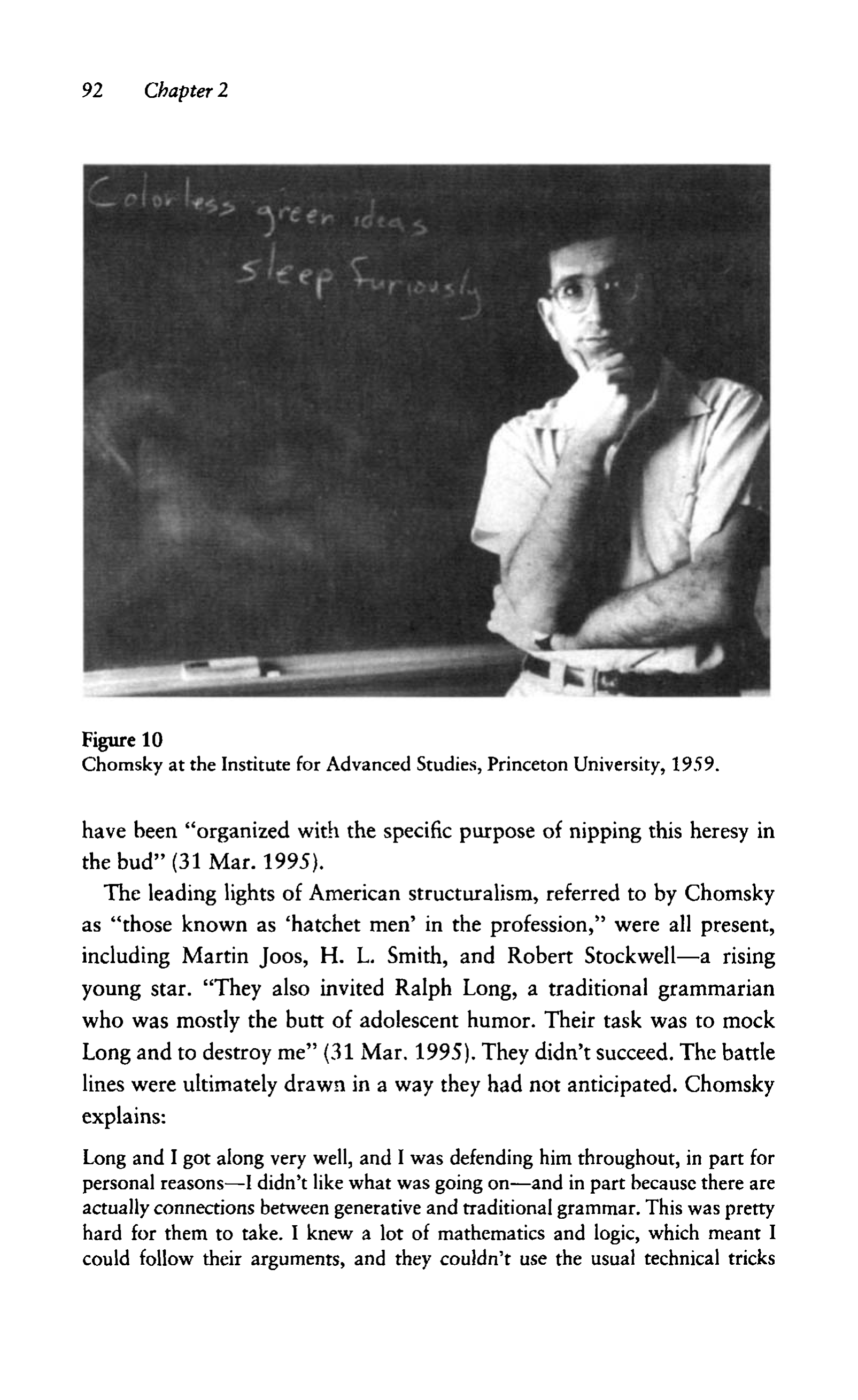
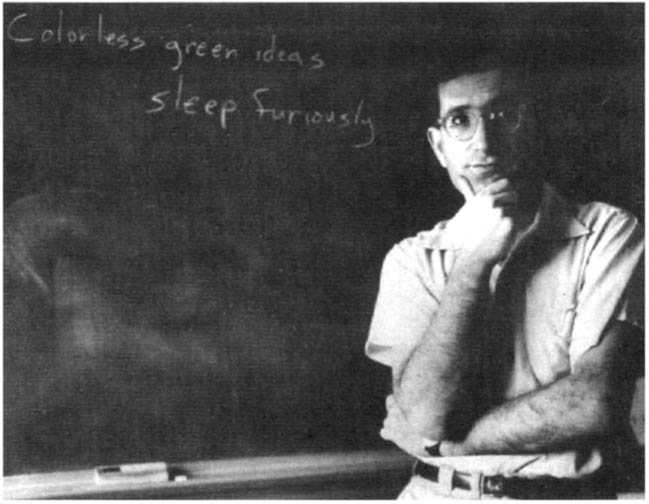
92
Chapter!
Figure
10
Chomsky
at the
Institute
for
Advanced Studies, Princeton University,
have
been
"organized with
the
specific
purpose
of
nipping this
heresy
in
the
bud"
(31
Mar.
1995).
The
leading
lights
of
American structuralism,
referred
to by
Chomsky
including
Martin Joos,
H. L.
Smith,
and
Robert
Stockwell—a
rising
young
star. "They also
invited
Ralph
Long,
a
traditional grammarian
who
was
mostly
the
butt
of
adolescent humor. Their task
was to
mock
Long
and to
destroy
me" (31
Mar. 1995). They didn't
succeed.
The
battle
lines
were ultimately drawn
in a way
they
had not
anticipated. Chomsky
explains:
personal
reasons-I
didn't like what
was
going
on—and
in
part
because
there
are
actually
connections
between generative
and
traditional
grammar.
This
was
pretty
hard
for
them
to
take.
I
knew
a lot of
mathematics
and
logic, which meant
I
could
follow their arguments,
and
they
couldn't
use the
usual technical tricks
thebud" (31 Mar. 1995
explains
could follow their arguments, and they couldn't use the usual technical tricks
Zellig
Harris,
Avukah,
and
Hashomer
Hatzair
93
to
steamroller
opposition.
Also,
it
became pretty clear
that
they simply couldn't
deal
with
the
arguments
and
issues,
and
their whole stand (presented
at the
time
with huge self-confidence
and
pride) collapsed
on
inspection. Stockwell under-
stood
it, and
pretty much switched sides
in the
middle.
(31
Mar. 1995)
The end
result
of all of
this
was
that people
in the field
were eventually
compelled
to
choose sides. Bernard
Bloch
was
"intrigued,
though
he
didn't
believe
a
word"
of it.
W.
V. O.
Quine
"lost
interest"
in
him, Chomsky
writes.
Yehoshua
Bar-Hillel
and
Morris Halle "did agree" with him,
and
"were
supportive";
"ditto"
Robert Lees,
who
then "completely abandoned
the
Bloomfieldian
program"; Robert Stockwell responded
in
"more
or
less
the
same" way;
and
George Miller
was
"very
supportive,
after
he
abandoned
the
'behavioral
science'
framework"
(31
Mar.
1995).
The
second conference, held
in
1959,
was
"pretty
much
a
replay"
of the
first. The
rift
within
the
profession that these conferences encapsulated
was
exacerbated
yet
again when
the
question
of
whether
to
publish
the
proceedings
was
raised. Hill
finally
agreed
to
publish
the
1958 proceed-
ings
"after
a lot of
pressure"
was
brought
to
bear upon him,
but the
1959
proceedings have, Chomsky points out, "never seen
the
light
of
day,
including
my first
extensive paper
on
generative phonology
of
English,
which
was
really
an
assault
on the
bastions—phonology."
The
basic
material discussed
in the
1959 conference
did finally
appear
in the
quar-
terly
report
of the
Research Laboratory
of
Electronics
at
MIT,
and was
later worked into
The
Sound Pattern
of
English.
But by
then, recalls
Chomsky,
"Halle
and I
(with Fred
Lukoff,
another
former
Harris student
who had
found
his way to
MIT)
had
already published
a
paper
on
gen-
erative phonology
of
English,
on
stress (the
major
pride
of
American lin-
guists), showing
that
the
vast descriptive apparatus
of
which [mainstream
linguists] were
so
proud
was a
pointless artifact, which could
be
explained
in
terms
of
some extremely simple generative rules"
(31
Mar.
1995).
The
type
of
linguistics
that
Chomsky
had
conceived during this period
was
concerned with issues
so
dramatically
different
from
those that pre-
occupied
his
colleagues
in
most university linguistics departments that
one
might think
he had
invented
an
entirely
new field.
However, Chomsky
was to
take great pains demonstrating
the
links between
his
ideas
and
work undertaken hundreds
of
years earlier.


This page intentionally left blank
Humboldt
and the
Cartesian Tradition
Science
is a bit
like
the
joke
about
the
drunk
who is
looking
under
a
lamppost
for a
key
that
he has
lost
on the
other
side
of the
street,
because
that's
where
the
light
is.
It has no
other choice.
—Noam
Chomsky,
letter
to the
author,
14
June
1993
Fundamental
Values
and
Theories
There
is a
remarkable consistency
to
Chomsky's political work.
His
fun-
damental values have remained virtually unchanged since
childhood.
He
has
supported
and
looked
for
ways
to
nourish
the
libertarian
and
creative
character
of the
human
being,
and has
sought
the
company
of
those
who
share
his
commitment
to do so.
Once
one
becomes familiar
with
the
basic
impulses
that guide
Chomsky—and,
to a
certain extent,
the
others
who
populate
the
broad milieu
to
which
he has
contributed
and
from
which
he
has
taken—it
becomes possible
to
predict
the
approach
that
he
will take
to a
particular issue,
if not the
substance
of his
response.
The
same cannot,
of
course,
be
said
of
Chomsky's linguistic
work.
In
this domain, Chomsky
has
distinguished himself
by
moving forward
in
his
research
on the
basis
of new
data. Nevertheless, much
of
what
has
come
to be
considered Chomsky's
major
contribution
to the field he
pro-
duced quite early
in his
career:
Morphophonemics
of
Modern
Hebrew,
his
1956 paper with Halle
and
Lukoff,
his
(unpublished) 1959 Texas-
conference
paper
on
contemporary generative
phonology,
and the
linguis-
tic
parts
of
The
Logical Structure
of
Linguistic Theory.
Linguistic research
has
since been deemed
a
scientific
area
of
study,
and has
been enriched
by
new
insights into
the
nature
of
speech
and
language.
But
this innovation
zyxwvuts
3
96
Chapters
owes
a
great deal
to
Chomsky,
who had the
courage
to
reconceive
the
implications
of
what
he had
learned
in the
academy.
The
details
of
Chomsky's
early contribution
to the field are
complex,
and
have caused much
confusion
among historians
(especially
linguistic
historians), particularly when
it
comes
to the
relationship between
his
early
work
and
other work undertaken
in the field.
This confusion
may be
somewhat alleviated
if we
consider that except
for
"Systems
of
Syntactic
Analysis,"
his
1953 article
on
procedural-constructional
approaches
that
appeared
in the
Journal
of
Symbolic Logic,
virtually
all of
Chomsky's
work
is a
rejection
of the
Bloomfield-Harris
school,
particularly
in
terms
of
his
emphasis
on the
generativity
of
human language
and the
tenet that
any
theory
of
grammar must account
for the
speaker's ability
to
under-
stand sentences that
he or she
hears
for the first
time. This
is not to
suggest
that there
is in
Chomsky's work
an
emphasis
on the
often-mentioned
"distinction"
between grammatical
and
ungrammatical sentences;
in
fact,
as
Chomsky
points
out,
in
Logical Structure
and
Syntactic
Structures
"there
is no
such bifurcation: there
are
just varying degrees
of
gramma-
ticalness."
Every expression "falls among them somewhere
and
there
is
no
special two-way
split"
(27
June
1995).
In the
area
of
discovery pro-
cedures, another
frequently
discussed issue
is
that
"a
linguistic theory
should
not be
identified
with
a
manual
of
useful
procedures,
nor
should
it
be
expected
to
provide mechanical procedures
for the
discovery
of
gram-
mars"
(Syntactic
Structures
55n6).
The
aim, instead, becomes
to
develop
a
grammar
that
is
able
to
generate
sentences,
just
as the
speaker
of a
lan-
guage
is
able
to
produce
a
virtually
infinite
number
of
sentences using
the
finite
number
of
words
and
grammatical rules known
to him or
her.
Antibehaviorism
There
is
another
difference
between Chomsky
and the
Bloomfieldians
who
preceded
him
that
ultimately proves
to be of
monumental impor-
tance:
Bloomfield's
model
was
based
on
behaviorism
and its
associated
learning theory. Chomsky's rejection, political
and
intellectual,
of
such
a
notion
became clear,
and
public,
in the
course
of his
"savage
and
exhila-
rating review"
of B. F.
Skinner's 1957 book
Verbal
Behavior
(Goreing 15).
This review appeared
in
1959
in the
journal
Language,
and it
received
a
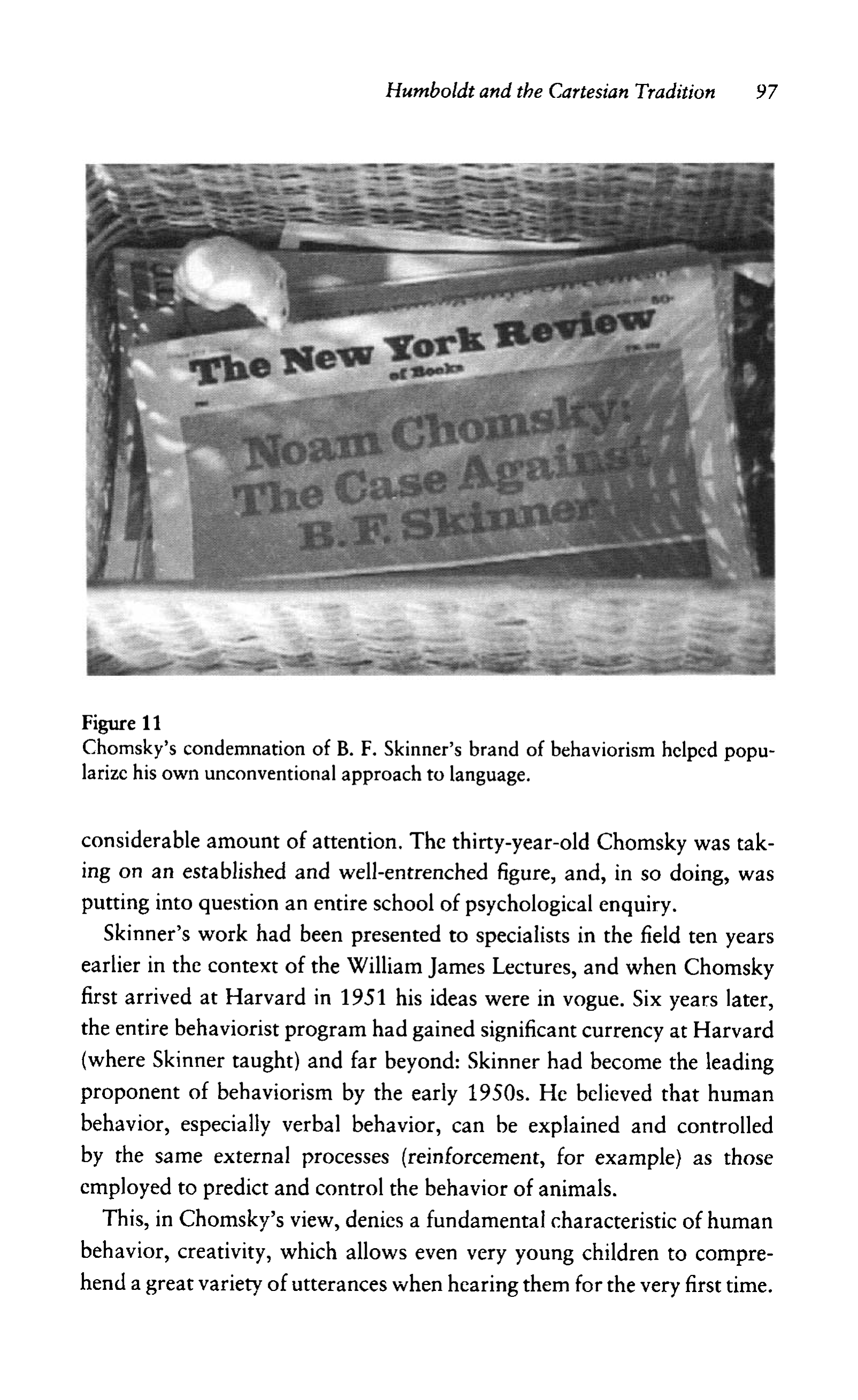
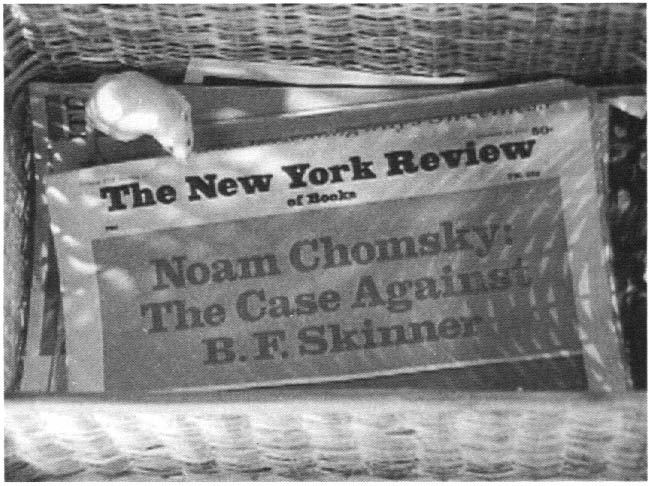
Humboldt
and
the
Cartesian
Tradition
97
Figure
11
Chomsky's condemnation
of B. F.
Skinner's brand
of
behaviorism helped
popu-
larize
his own
unconventional approach
to
language.
considerable amount
of
attention.
The
thirty-year-old Chomsky
was
tak-
ing
on an
established
and
well-entrenched
figure,
and,
in so
doing,
was
putting into question
an
entire school
of
psychological enquiry.
Skinner's work
had
been presented
to
specialists
in the field ten
years
earlier
in the
context
of the
William James Lectures,
and
when Chomsky
first
arrived
at
Harvard
in
1951
his
ideas were
in
vogue.
Six
years later,
the
entire behaviorist program
had
gained
significant
currency
at
Harvard
(where
Skinner taught)
and far
beyond: Skinner
had
become
the
leading
proponent
of
behaviorism
by the
early
1950s.
He
believed that human
behavior, especially verbal behavior,
can be
explained
and
controlled
by
the
same external
processes
(reinforcement,
for
example)
as
those
employed
to
predict
and
control
the
behavior
of
animals.
This,
in
Chomsky's
view, denies
a
fundamental characteristic
of
human
behavior, creativity, which allows even very young children
to
compre-
hend
a
great variety
of
utterances when hearing them
for the
very
first
time.
Furthermore, Chomsky
felt
that
the
application
to
language processes
of
behaviorist-psychology terminology, such
as
"stimulus,"
"response,"
"habit,"
"conditioning,"
and
"reinforcement,"
was so
ambiguous
and
empirically vapid
that
it
could
be
made
to
cover anything. What,
for
example, does paraphrasing
"X
wants
Y"
with
"X is
reinforced
by
Y"
suggest?
In
Chomsky's view, "reinforced"
can
imply such
a
wide variety
of
responses that
it is
meaningless;
the
notion
of
reinforcement does
not
clarify
or
objectify
descriptions
of
liking, wishing, wanting.
John
Lyons
writes:
"In the
absence
of any
overt
'response,'
the
behaviorist
takes
refuge
in an
unobserved
and
unobservable
'disposition
to
respond';
and
having accounted,
in
principle,
for the
association
of
words
(as
'responses')
with objects
(as
'stimuli')
and for the
learning
of a
limited
set
of
sentences
in the
same way,
he
either says nothing
at all
about
the
for-
mation
of new
sentences
or at
this point appeals
to
some
undefined
notion
of'analogy'"
(84-85).
In
short,
the
examination
of
external conditions
to
explain verbal
be-
havior
"is
simply dogma, with
no
scientific
basis." Raphael Salkie sum-
marizes Chomsky's viewpoint well:
If
we
want
to
account
for the
fact
that
the
language
of
English
speakers
has
certain
regularities
in it, we
must
look
at the
external
environment
and at the
internal
structure
of
English
speakers—that
is,
their
knowledge
of the
language.
If we
want
to
look
at how
English
speakers
acquire
knowledge
of
their
language,
we
need
to
take
into
account
their
innate
knowledge,
genetically
determined
changes,
and
changes
due to
their experience.
Insisting
at the
outset that
one of
these
factors
cannot
be
relevant
is
simply
dogmatism,
and has no
place
in
science.
(87)
The
point
of
Chomsky's critique
of
Skinner
was
not,
as
many believed,
to
attack behaviorism, because this would import
to the
project
a
credi-
bility
that Chomsky denies.
He
writes:
"It
wasn't Skinner's crazy variety
of
behaviorism
that
interested
me
particularly,
but the way it was
being
used
in
Quinean empiricism
and
'naturalization
of
philosophy,'
a
gross
error
in my
opinion.
That
was
important, Skinner
was
not.
The
latter
was
bound
to
collapse shortly under
the
weight
of
repeated failures"
(31
Mar.
1995).
Kenneth
MacCorquodale
published
a
counterattack called
"On
Chom-
sky's Review
of
Skinner's
Verbal
Behavior"
in a
1970 issue
of
the
Journal
of
the
Experimental Analysis
of
Behavior.
He
fails, however,
to
address
the
issues raised
by
Chomsky relating
to
language
and
verbal behavior:
98
Chapter
3
Humboldt
and the
Cartesian
Tradition
99
"The hypothesis
of
Verbal
Behavior
is
simply that
the
facts
of
verbal
be-
havior
are in the
domain
of the
facts
from
which
the
system
has
been
constructed. Skinner's stratagem
is to find
plausible
referents
in the
speech
episode
for the
laws
and
terms
in his
explanatory system: stimulus,
re-
sponse, reinforcement,
and
motivation.
The
relevance
of
these laws
and
their component variables
for the
verbal events
is
hypothesized only;
it is
not
dogmatically
claimed"
(185).
Chomsky himself replied
in the
journal
Cognition
that
"MacCorquodale
assumes that
I was
attempting
to
disprove Skinner's
theses,
and he
points
out
that
I
present
no
data
to
disprove them.
But my
point, rather,
was to
demonstrate that when
Skinner's assertions
are
taken literally, they
are
wrong
on the
face
of
it...
or
else quite vacuous" ("Psychology" 11).
An
Early
Leitmotif
This
attack
on
behaviorist assumptions
was the
work
of a
confident
and
competent young scholar.
By the age of
thirty, Chomsky
had
already
developed manifestly original views
on
numerous
political,
philosophical,
and
linguistic concerns.
But
some
of his
challenges
to
contemporary
dogma
had
roots
in
long-forgotten
texts.
And
just
as his
political work
was
informed
by the
nineteenth-
and
twentieth-century radical libertarian
left,
his
work
on
language
was
eventually informed
by
studies that
had
been
undertaken
as far
back
as the
seventeenth century.
Chomsky
was
also developing
a
series
of
leitmotifs.
He
asserted,
for
example,
that
the
error
of
Skinner's ways
was
symptomatic
of a
larger
problem:
determinism
and
behaviorism,
as
well
as
other intellectual ploys,
were being used
on a
much
broader
scale
to
control
the
masses
and
jus-
tify
abhorrent acts.
A
representative Chomsky interview
on
this
subject,
"Class
Consciousness
and the
Ideology
of
Power"
(1974),
may be
used
to
gauge
the
force
of his
argument,
and to
illustrate
the
sarcastic humor
of
his
approach:
As
far as the
Skinner thing
is
concerned
...
I
think it's
a
fraud,
there's
nothing
there.
I
mean,
it is
empty. It's
an
interesting
fraud.
See,
I
think that there
are two
levels
of
discussion here.
One is
purely intellectual: What does
it
amount
to? And
the
answer
is
zero,
zilch
...
I
mean, there
are
no
principles there that
are
non-
trivial, that even exist Now the other question is, why so much interest in it?
And
here
I
think
the
answer
is
obvious.
I
mean,
the
methodology that they
are
100
Chapter3
suggesting
is
known
to
every good prison guard,
or
police
interrogator.
But, they
make
it
look
benign
and
scientific,
and so on;
they
give
a
kind
of
coating
to it,
and
for
that
reason it's very valuable
to
them.
I
think both these things have
to be
pointed
out.
First
you
ask,
is
this
science?
No,
it's fraud.
And
then
you
say,
OK,
then
why the
interest
in it?
Answer: because
it
tells
any
concentration camp guard
that
he can do
what
his
instincts tell
him to do, but
pretend
to be a
scientist
at the
same time.
So
that
makes
it
good,
because science
is
good,
or
neutral,
and so on.
(Language
and
Politics
190)
Chomsky here reiterates
his
belief
that there
can be a
strong relation
between ruling-class interests
and the
promotion
of
particular
theories.
Skinner
himself
never
offered
a
response
to
Chomsky's review,
or to
other
remarks
he has
made, although
in
1990
he did
write
a
letter
to the
Times
Literary
Supplement
in
which
he
suggested
that
Chomsky
did not
address
"the production
of
speech,"
and
instead "was
on the
side
of
compre-
hension."
He
insisted that Chomsky's "contribution
to an
understanding
of
verbal behaviour
was as
'negligible'
then
as it is
now" ("Verbal Behav-
iour").
Chomsky's sense
is
that
"there's
no
particular reason
why he
should have responded.
We
knew each other,
and got
along quite well,
but
virtually never discussed these issues"
(13
Feb. 1996).
The
Skinner-Chomsky debate emphasized Skinner's empiricist assump-
tions, "which restrict innate qualities
of the
mind
to
simple capacities
of
induction, comparison
and so on"
(Goreing 15). From Chomsky's per-
spective,
these assumptions render Skinner's brand
of
behaviorism inca-
pable
of
explaining even simple elements
of
human behavior, never mind
the
almost
infinite
variations
of
language. Chomsky's perspective
is
essen-
tially
a
rationalist one;
it
encompasses ideas developed during
the
seven-
teenth century.
As he
extended linguistic frontiers,
he was
also reaching
towards
the
realm
of
intellectual history.
The
Founding
of
MIT'S
Graduate Program
in
Linguistics
At
thirty-one, Chomsky seemed
to be on the
brink
of a
glittering career
in
the
academy.
As
well,
he and
Carol were becoming deeply involved
in
domestic
life;
they were determined
to
provide
a
serene
and
comfortable
environment
for
their young children.
But the
Skinner review
in
Language
had
been
a first
step towards
the
establishment
of
Chomsky
as a
con-
troversial public
figure, and the
political views
for
which
he
would soon
Humboldt
and the
Cartesian
Tradition
101
become infamous were rapidly taking shape,
fueled
by his
voracious
reading habit. Chomsky
had
managed
to
maintain
his
interest
in
Jewish
cultural issues,
as
well;
he was
still close
to his
parents
and
brother,
and
during
his
frequent
treks home
to
Philadelphia
to see
them,
he was
able
to
renew
his
involvement
in
these issues.
In
the
spring
of
1959, Chomsky began working
on a
project involving
generative
phonology, applying
to the
English language theories that
he
had
previously developed
for
analyzing Hebrew
in
Morphophonemics
of
Modern
Hebrew.
He
also continued
to
explore
the
wider implications
of
his
work,
and was
therefore becoming
a
point
of
reference
for
researchers
in
numerous
fields,
including philosophy, psychology, and,
of
course, lin-
guistics. Chomsky's growing eminence
was
also
the
result
of his
having
begun
a
graduate program
in
linguistics
at MIT
with like-minded col-
leagues,
notably Morris Halle.
The
time
was
ripe
for
such
a
program.
An
evolution
was
occurring
within
the field of
linguistics,
and
MIT
was
pre-
pared
to
allow Chomsky
and
Halle
to
circumvent
the
usual
red
tape.
As
Chomsky
recalls:
[W]e
were able
to
develop
our
program
at
MIT
because,
in a
sense,
MIT
was
out-
side
the
American university system. There were
no
large departments
of
human-
ities
or the
related social sciences
at
MIT. Consequently,
we
could build
up a
linguistics department
without
coming
up
against
problems
of
rivalry
and
aca-
demic
bureaucracy. Here
we
were really part
of the
Research Laboratory
of
Elec-
tronics.
That
permitted
us to
develop
a
program very
different
from
any
other
and
quite independent.
(Language
and
Responsibility
134)
The
program immediately
attracted
a
number
of
gifted
scholars,
in-
cluding
Robert Lees,
who had by
then completed
his
Ph.D.
in
electrical
engineering
at
MIT; Jerry Fodor
and
Jerry Katz, graduates
of the
Ph.D.
program
at
Princeton;
and
Paul Postal,
who had
completed
his
Ph.D.
at
Yale.
All
were eventually named
to the MIT
faculty—Lees
and
Postal
in
linguistics,
Fodor
and
Katz
in
philosophy;
Lees,
of
course,
was
hired
to
work
on the
mechanical translation project. There were also John Viertel,
a
personal
friend
of
Chomsky's
who was
not,
and
never
had
been,
a
grad-
uate student ("an interesting
guy—an
associate
of
Brecht's,
among other
things"
[31
Mar.
1995]),
and M. P.
Schutzenberger,
a
well-established
mathematician
and
biologist
who had
often
visited
MIT
("where
we be-
came
friends
and to a
certain extent colleagues, applying mathematical
102
Chapter3
ideas
of his to
formal languages
in
published
work"
[31
Mar.
1995]).
Fodor
comments upon this era:
It's
not
much
of a
hyperbole
to say
that
all
of the
people
who
were interested
in
this
kind
of
linguistics
were
at
MIT.
That's
not
quite true. There were others scat-
tered
around.
But for a
while,
we
were pretty nearly
all
there was.
So
communica-
tion
was
very
lively,
and I
guess
we
shared
a
general
picture
of the
methodology
for
doing,
not
just
linguistics,
but
behaviorial
science
research.
We
were
all
more
or
less nativist,
and all
more
or
less mentalist. There
was a lot of
methodological
conversation
that
one
didn't
need
to
have.
One
could
get
right
to the
substantive
issues.
So,
from
that point
of
view,
it was
extremely
exciting,
(qtd.
in R. A.
Harris
68)
At the age of
thirty-three, Chomsky
was
made professor
of
foreign
languages
and
linguistics
at
MIT.
He
found himself emerging
from
the
shadows
of
what
had
initially been
a
personal hobby
and
entering
the
newly revitalized
and
promising
field of
linguistic studies.
Chomsky's
"Classic
Period"
In
his
1993 history
of
linguistics,
P. H.
Matthews
characterizes
the
early-
to-mid-1960s
as
"Chomsky's
classic
period,"
a
time
of
enormous pro-
ductivity
(see
Grammatical
Theory}.
In
1962, Chomsky gave
a
paper
at
the
Ninth International Congress
of
Linguists entitled "The Logical Basis
of
Linguistic
Theory,"
which outlined
an
approach
to
language known
as
transformational generative grammar.
The
plenary speaker
for
this con-
gress—who
was,
in a
sense, supposed
to
represent American
linguistics—
was
to
have been
Zellig
Harris,
but
Harris
delayed deciding whether
to
accept
the
invitation,
and finally
turned
it
down
shortly
before
the
congress
was
scheduled
to
take place. Three
of the
congress organizers,
Morris
Halle, Roman Jakobson,
and
William Locke (all
MIT
linguists),
convinced Chomsky
to
replace
Harris.
"Chomsky,
never
an
avid confer-
ence
goer,
agreed, though
his
entire
contact
with
the
meeting
was
limited
to the
drive into Cambridge
the
morning
of his
presentation, staying
for a
late afternoon reception,
and
driving back that evening" (Anderson
et
al.
692).
Chomsky
was
suddenly
thrust
into
the
position
of
being
"de
facto
spokesperson
for
American linguistics" (Anderson
et al.
692).
He did not
Humboldt
and the
Cartesian
Tradition
103
disappoint;
he
gave
a
paper
that
introduced
the
topics
covered
in
Current
Issues
in
Linguistic
Theory
to an
international audience
and
represented
a
clean
break
from
structural linguistics
of all
varieties. This paper turned
out to be
"the initial germ
of the
research programme which
was to
lead
to the
principles-and-parameters
modular
theory,
which
in
fact
amounts
to a
discovery procedure,
'a
scientific
advance
of the
highest
importance'
that seemed
to be
'hopelessly
out of the
question'
at
that
time"
(Otero,
"Chomsky
and the
Challenges"
14). There was, however,
a
negative
backlash
to his
presentation. Otero reports:
"As
often
happens, some
of
the
participants, including
a
variety
of
European professors, were appar-
ently
more concerned with defending what they took
to be
their territory
than
with
any
intellectual
issues"
("Chomsky
and the
Challenges"
14).
In
June
of
1964, Chomsky delivered
a
series
of
lectures
at the
Linguistic
Institute
of the
Linguistic Society
of
America (published
in
1966
as
Topics
in the
Theory
of
Generative Grammar).
He
also published
Aspects
of
the
Theory
of
Syntax
(1965)
and
Cartesian
Linguistics:
A
Chapter
in the
History
of
Rationalist Thought
(1966).
He
gave another
set of
lectures
to
a
general
audience,
in
Berkeley,
in
January
of
1967,
which
was
expanded
and
published
as
Language
and
Mind
in
1968
(an
enlarged
edition—
several
later essays were
added—came
out in
1972).
And he
completed
The
Sound Pattern
of
English
with Halle
in
1968.
In
Matthews's words,
"few scholars
can
have published
so
much,
of
such value
and on
such
varied
topics,
in
such
a
short
time"
(Grammatical
Theory
205).
But
this
"classic
period"
was
also
a
time
of
mounting worldwide ten-
sions;
the
Cuba Crisis erupted
and was
defused,
bringing
the
world
to the
brink
of
nuclear war.
That
very year,
the
United States began
a
systematic
bombardment
of
rural Vietnam. Chomsky
was to
become increasingly
discontent
in the
wake
of
such upheaval,
and the
seeds
of
what
was to be
a
lifelong commitment
to
active
political
resistance were sown. Chomsky
offers
a
snapshot
of his
activities
at
this time:
"Those
were pretty hectic
days.
I was
often
giving many political talks
a day all
over
the
place, get-
ting arrested, going
to
meetings about resistance
and
other things, teach-
ing
my
classes, playing
with
my
kids, etc.
I
even managed
to
plant
a lot of
trees
and
shrubs, somehow. Looking back,
I
can't imagine
how it was
possible"
(13
Feb. 1996).
104
Chapters
Cartesian Linguistics
The
topics that were
of
interest
to
Chomsky during this period
are
interconnected
in
various ways.
In
Cartesian
Linguistics,
for
example,
Chomsky elaborates
the
relationship between empiricist
and
rationalist
approaches.
The
book
is
part
of the
Studies
in
Language Series, which
Chomsky
and
Halle edited
for
Harper
and
Row,
and
which
was
intended
"to
deepen
our
understanding
of the
nature
of
language
and the
mental
processes
and
structures
that
underlie
its use and
acquisition"
(Cartesian
Linguistics
ix).
Chomsky
wrote
the
text while
he was a
fellow
of the
American Council
of
Learned Societies;
he did so
with
the
assistance
of the
National Insti-
tutes
of
Health
at
Harvard University,
the
Center
for
Cognitive Studies,
and a
grant
from
the
Social Science Research Council. Prior
to
publica-
tion,
he
presented
his findings in the
context
of the
Christian Gauss Semi-
nars
in
Criticism
at
Princeton
at the
invitation
of R. P.
Blackmur
and on
the
suggestion
of
Edward Cone
from
the
music department
and
Richard
Rorty
from
philosophy.
His
presentation took
the
form
of six
weekly lec-
tures,
running
from
25
February until
8
April 1964. Chomsky
had
been
asked
to
link
his
interests
in
formal language
and the
analysis
of
syntax
to
literature;
but
since
he did not
consider himself
to be "in a
position
to say
anything
significant relating
to
literature,"
he
instead
offered
to
address
"the topic
of
structure
of
language
and
philosophy
of
mind, and,
in
par-
ticular,
to try to
develop some
notions
that
were extensively discussed
in
the
seventeenth through early nineteenth centuries, though rarely since"
(Otero, "Chomsky
and the
Challenges" 15). Seminar participants made
some
useful
comments
in
response
to the
lectures,
as did
several
of
Chom-
sky's
friends
and
colleagues, such
as
William Bottiglia, Roman Jakobson,
Louis Kampf, Jerry Katz,
and
John
Viertel. According
to
Otero,
"the
audience
included very sophisticated people
and
...
the
lectures were well
received" ("Chomsky
and the
Challenges" 16).
In
a
letter
he
wrote
to
Chomsky
a few
weeks
after
the
seminars
had
ended, Cone wrote: "It's almost unheard
of for a man to
keep
his
entire
audience through
all six
sessions. Your ideas
are
still resounding through
the
halls
of the
Philosophy Department here. Please come
again!"
(qtd.
in
Otero, "Chomsky
and the
Challenges"
15-16).
The
resulting text, which
Humboldt
and the
Cartesian
Tradition
105
was
substantially written
up in a
number
of
weeks,
is an
extremely origi-
nal
piece
of
research,
and
ranges beyond
the field of
linguistics;
it
stands
as
a
contribution
to the field of
intellectual history, what
is
sometimes
called
the
history
of
ideas.
And it
created
a
tremendous stir
at the
time—
as
it did
later
on.
The
year after
Cartesian Linguistics
appeared,
Hans
Aarslef, regarded
as
a
leading scholar
in the field,
published
a
major
book
"in
which,"
Chomsky writes,
"he
described traditional universal grammar
as
solely
'Cartesian'
in
origin, completely ignoring
the
quite obvious Renaissance
and
earlier origins that
are
emphasized
in
Cartesian
Linguistics"
(31
Mar.
1995).
He had not
seen
Cartesian Linguistics
when
he
wrote
his
book,
"though
he
knew
I was
working
on it, and had
lectured about
the
topics
at
Princeton—he
was
away" when Chomsky's lectures were given.
But
Aarslef
did
respond
to
Chomsky's book later,
in a way
that "shows
something about
the
intellectual state
of the field" (14
Aug. 1995). Chom-
sky
recounts subsequent events:
"a few
years later
...
[Aarslef]
wrote
savage
denunciations
of
Cartesian Linguistics
(in
Language,
and
else-
where),
claiming that
I had
made this idiotic error, which
he did
make
[himself]
a
year
after
Cartesian
Linguistics,
and
which
is
explicitly
and
unambiguously
rejected
in
Cartesian
Linguistics"
(31
Mar.
1995).
As
Chomsky writes, Aarslef identified
the
error
as the
failure
of
Cartesian
Linguistics
"to
recognize
the
pre-Cartesian sources
of
Port Royal
and
later
work,
which
was not
only
false
(they were explicitly
and
carefully
mentioned)
but
pretty audacious, since
in his
independent book
a
year
after
Cartesian Linguistics
he had
referred
to all of
this
work
as
solely
Cartesian, without
any
mention
of the
earlier sources"
(14
Aug.
1995).
Such
"absurdity
and
falsification,"
in
Chomsky's view,
is
only
to be ex-
pected. "Furthermore,
[Aarslef's]
version
has
become accepted Truth. I've
never
bothered
to
respond, because
...
my
contempt
for the
intellectual
world reaches such heights that
I
have
no
interest
in
pursuing them
in
their
gutters,
unless there
are
serious human interests involved,
as
[there
often
are]
in the
political realm
..."
(31
Mar. 1995).
Two
other scholars
(Use
Andrews
and
Henry Bracken) picked
up on
Aarslef's
"audacity,"
but
their published remarks
had no
impact.
Chomsky's opening hypothesis
in
Cartesian Linguistics
is
that con-
temporary linguistics
had
lost touch with
an
earlier European tradition
of
106
Chapters
linguistic studies, which
he
identified
as
Cartesian.
The
term
"Cartesian"
is
not
used here according
to its
generally accepted definition; Chomsky
extends that
definition
to
encompass,
as he
puts
it, "a
certain collection
of
ideas which were
not
expressed
by
Descartes, [were] rejected
by
followers
of
Descartes,
and
many
first
expressed
by
anti-Cartesians"
(31
Mar.
1995).
The
work
that
Chomsky assigned
to the
Cartesian corpus,
and the
tradi-
tion
of
research that
the
Cartesians
had
upheld, was,
in
Chomsky's opin-
ion, more pertinent than
the
research
of
contemporary scholars,
and
certainly more
useful
than
that
which
was
being produced
in the field of
the
history
of
linguistics.
To
provide
a
"preliminary
and
fragmentary sketch
of
some
of the
lead-
ing
ideas
of
Cartesian linguistics with
no
explicit analysis
of its
relation
to
current work that seeks
to
clarify
and
develop these ideas"
was
Chom-
sky's goal.
His
"primary aim"
was
"simply
to
bring
to the
attention
of
those involved
in the
study
of
generative grammar
and its
implications
some
of the
little-known work which
has
bearing
on
their concerns
and
problems
and
which
often
anticipates some
of
their
specific
conclusions"
(Cartesian
Linguistics
2).
Chomsky
was
reaching back
to
sources
of
knowledge that date
from
the
Renaissance. Especially drawn
to the
seventeenth
and
eighteenth cen-
turies,
he
embraced
the
works
of,
among
others,
Rene Descartes
(1596-
1650)
and
Wilhelm
von
Humboldt
(1767-1835).
To
understand this
impulse
is to
comprehend Chomsky's
frequent
claim that, despite
his
loathing
of
labels,
he
would
be
satisfied
to be
labeled
a
contributor
to an
anarchist
(if
properly
defined)
or an
eighteenth-century rationalist tradi-
tion.
In
other
words,
in the
same
way
that left-libertarian values
run
through much
of
Chomsky's political work
from
the
1940s
on,
rationalist
ideas permeate much
of his
linguistic work
from
the
late
1950s
to the
present.
An
Emphasis
on
Human Creativity
Chomsky came
to
realize
in the
early
1960s
that
the
emphasis
he
placed
upon creativity was,
in
some ways, simply
a
renewal
of a
similar emphasis
applied
in
earlier centuries, particularly
in the
works
of
Humboldt.
He
also recognized
that
the
concept
itself
was
based upon largely unarticu-
Humboldt
and the
Cartesian
Tradition
107
lated
presuppositions
"dating
back
to the
very beginnings
of
Western
linguistic
theory
in the
ancient world" (Lyons,
Chomsky
37). Acknowl-
edging
that
he
found
Humboldt's work compelling,
if not
illuminating,
Chomsky
remarks:
"I
read Humboldt
for the first
time around 1960
or
so,
I
guess. Yes,
I was
surprised
and
delighted,
but not
really enlightened.
That
is,
I
didn't
learn anything new, except about intellectual history,
a
topic that happens
to
interest
me a
lot"
(13
Dec.
1994).
Chomsky
also admits that
a
thread
of
rational thinking
is
woven
through
his
work:
"I
didn't begin writing about intellectual history until
the
early
'60s,
not
until
Current
Issues
in
Linguistic
Theory
[written
in
1962, while
he was a
resident fellow
at the
Harvard Cognitive Studies
Center], though
you can see the
beginnings
in my
review
of
Skinner
(written
in
1957)"
(13
Dec. 1994). Intellectual history
had
hooked
Chomsky
and
drawn
him in; it was to
have
a
lasting
influence
upon
his
work.
He
reflects:
I
haven't
convinced anyone,
but I
think
there
is an
important
and
detectable
"thread"
(to
borrow
your term)
that
runs
from
Cartesian rationalism through
the
romantic
period
(the
more
libertarian
Rousseau,
for
example),
parts
of the
enlightenment (some
of
Kant, etc.), pre-capitalist classical liberalism (notably
Humboldt,
but
also
Smith),
and on to the
partly
spontaneous
tradition
of
popular
revolt against industrial capitalism
and the
forms
it
took
in the
left-libertarian
movements,
including
the
anti-Bolshevik
parts
of the
Marxist
tradition.
I
also
dis-
agree with lots
of
things along
the
way,
and
putting
all of
that
material
in a
lump
yields immense internal inconsistencies (even within
the
writing
of a
single
person,
say
Humboldt
or,
notoriously, Rousseau, most
of
them pretty
unsystematic).
But
I'm
speaking here
of a
thread
that
can be
extricated,
and
that
may
have only been
dimly
perceived
(as is
standard,
even
in
one's
own
scientific
work,
when
one
thinks
it
over
in
retrospect).
(8
Aug. 1994)
One way to
trace
the
series
of
connections that Chomsky alludes
to
here
is
simply
to
look
at the
material
he
quotes
in
Cartesian Linguistics.
Here,
in
what amounts
to a
historical discussion,
but
which could still
be
understood
as a
continuation
of his
diatribe against Skinner's vision
of
behaviorism
(particularly "the
way it was
being used
in
Quinean empiri-
cism
and
'naturalization
of
philosophy'"
[31
Mar.
1995]),
Chomsky also
notes
that
Descartes,
in the
course
of
studying
the
limits
of
mechanical
explanation, "arrived
at the
conclusion that
man has
unique abilities that
cannot
be
accounted
for on
purely
mechanistic grounds, although,
to a
very
large extent,
a
mechanistic explanation
can be
provided
for
human
bodily
function
and
behavior" (3).
The
difference
between
man and
ani-
mals,
in
Descartes's view,
is
most clearly exhibited
in
human
language—
specifically
in the
phenomenon previously
referred
to as
creativity.
To
illustrate
his
point,
Descartes cites
the
machine's limited ability
to
speak
in
response
to
stimuli. Although
he
imagines that
a
machine could
be
set up to
make particular responses
to
particular actions performed
upon
it, "it
never happens
that
it
arranges
its
speech
in
various ways,
in
order
to
reply appropriately
to
everything
that
may be
said
in its
presence,
as
even
the
lowest type
of man can do"
(qtd.
in
Chomsky,
Cartesian
Linguistics
4).
But, unlike
a
machine,
a
human being
is
"incited"
or
"inclined"
to act in
certain ways,
and not
compelled.
It is due to
this,
Chomsky says,
that
"prediction
of
behavior
may be
possible within
a
cer-
tain range,
and a
theory
of
motivation might
be
within range,
but all of
these endeavors miss
the
central point.
The
person could have chosen
to
act
otherwise, within
the
limits
of
physical capacity, even
in
ways that
are
harmful
or
suicidal"
("Creation").
So, he
continues, even
if
theories
elaborated
to
predict human behavior
or
motivation
are
deemed suc-
cessful
in
their
own
terms, they "would
not
qualify
as
serious theories
of
behavior. Human action
is
coherent
and
appropriate,
but
uncaused,
apparently These considerations lie at the heart of the dualist
metaphysics
of the
Cartesians, which again accords rather well with
our
common-sense understanding" ("Creation").
Despite
its
accordance with "our common-sense understanding," how-
ever, much
of
what
was
postulated
by
Cartesian dualist metaphysics
has
subsequently
been thrown into doubt.
"[B]ut,"
Chomsky asserts,
"it is
important
to
recall that what collapsed
was the
Cartesian theory
of
matter;
the
theory
of
mind, such
as it
was,
has
undergone
no
funda-
mental
critique"
("Creation").
Chomsky remarks
on the
notion Descartes
put
forward that
we can
train
the
smartest animals
to
perform various tasks
and
tricks,
but no
matter
how
high their
level
of
competence they will never equal even
the
least skilled human
in
terms
of
linguistic ability. Descartes
wrote:
"[I]t
is a
very
remarkable
fact
that there
are
none
so
depraved
and
stupid, without
even
excepting idiots, that they cannot arrange
different
words together,
forming
of
them
a
statement
by
which they make known their thoughts;
while,
on the
other hand, there
is no
animal, however perfect
and
for-
108
Chapters
Humboldt
and the
Cartesian
Tradition
109
tunately
circumstanced
it may be,
which
can do the
same"
(Cartesian
Linguistics
116-17).
Nonhuman primates
and
other animal species
do
not
all
necessarily lack
the
physiological characteristics
and
general
in-
telligence
needed
to use
language creatively; they nonetheless lack this
human-specific
capacity because
of the
particular organization
of
their
minds.
This observation
and
others made
by
Cartesians were
not
addressed
by the
Bloomfieldian
linguistic framework.
Chomsky
and
Humboldt
All
of
this
is
crucial
to an
understanding
of
Chomsky's position
on
human
nature,
human language,
and
even politics.
And in
order
to
comprehend
his
intellectual
development,
it is
vital
to
relate
his
earlier work
to his
Cartesian historical studies. Chomsky traces
the
Cartesian viewpoint
through
the
Enlightenment
and the
Romantic
period,
and
stresses
its
value
as a
means
of
grasping creative discourse.
He
ultimately dwells upon
the
work
of
Humboldt,
who
serves
as
another context
for
Chomsky's work
on
linguistics
and his
postulations
on
what constitutes appropriate societal makeup.
Humboldt
focuses
on the
creative aspects
of
human language
from
what could
be
construed
as
a
Cartesian perspective
in
that
he
considers language
to be a
manifes-
tation
of
thought
and
self-expression rather than simply
a
form
of
func-
tional communication.
Perusing
his
writings,
one may find
that
they yield
a
sense
of his
insight
and
range,
as
well
as—by
extension—the
key to the
relationship between
Humboldt's
work
and
that
of
Chomsky.
For
example, Humboldt claims
that "language
...
must
be
looked upon
as
being
an
immediate given
in
mankind....
Language could
not be
invented
or
come upon
if its
archetype
were
not
already
present
in the
human
mind.
For man to
understand
but a
single word
truly,
not as a
mere sensuous stimulus
(such
as an
animal understands
a
command
or the
sound
of the
whip)
but as an
articulated sound designating
a
concept,
all
language,
in all its
con-
nections, must already
lie
prepared within him. There
are no
single sepa-
rate
facts
of
language. Each
of its
elements announces itself
as
part
of a
whole"
(Humanist
239-40).
110
Chapters
It is
rather
startling
to
compare
this kind
of
reflection with
the
behav-
iorist
and
structuralist approach
that
dominated
the field
during this
time. Here
is
Humboldt
on
language acquisition: "Everyone when
he
learns
a
language, most notably children
who
create
far
more than they
memorize, proceeds
by
darkly
felt
analogies which allow
him to
enter
the
language actively, as it were, instead of just receptively" (Humanist 243).
On the
relationship
of
language
to the
functions
of the
mind: "The mutual
interdependence
of
thought
and
word illuminates clearly
the
truth
that
languages
are not
really means
for
representing already known truths
but are
rather instruments
for
discovering previously unrecognized
ones"
(Humanist
246).
On
general
considerations
of
human development: "The
production
of
language
is an
inner need
of
mankind,
not
merely
an
exter-
nal
vehicle
for the
maintenance
of
communication,
but an
indispensable
one
which
lies
in
human nature, necessary
for the
development
of its
spir-
itual energies
and for the
growth
of a
Weltanschauung which
man can
attain
only
by
bringing
his
thinking
to
clarity
and
definition
by
communal
contact with the thinking of others" (Humanist 258). On the nature and
attributes
of
language: "the whole
of
language lies within each human
being, which only means that each
of us
contains
a
striving, regulated
by a
definitely
modified
capacity, which both stimulates
and
restricts, gradu-
ally
to
produce
the
entire language,
as
inner
or
outer demands dictate,
and
to
understand
it as it is
produced
by
others"
(Humanist
290-91);
also:
"A
further
proof
that
children
do not
mechanically learn their native lan-
guage
but
undergo
a
development
of
linguistic capacity
is
afforded
by the
fact
that
all
children,
in the
most
different
imaginable circumstances
of
life,
learn
to
speak within
a
fairly
narrow
and
definite
time span,
just
as
they
develop
all
their main capacities
at
certain
definite
growth
stages"
(Humanist
292).
And
finally,
adopting
a
generative approach
to
linguistics,
von
Hum-
boldt,
in
Chomsky's words, suggests that
the
lexicon
is
"based
on
certain
organizing generative principles that produce
the
appropriate items
on
given
occasions,"
and he
develops "the notion
of
'form
of
language'
as a
generative
principle,
fixed and
unchanging, determining
the
scope
and
providing
the
means
for the
unbounded
set of
individual
'creative'
acts
that
constitute normal language use," thereby making
"an
original
and
significant
contribution
to
linguistic
theory...
that
unfortunately
remained
Humboldtand
the
Cartesian
Tradition
111
unrecognized
and
unexploited
until
fairly
recently"
(Cartesian
Linguistics
20,
22),
Discussing deep
and
surface
structures
in
Cartesian
Linguistics,
Chom-
sky
points
out the
value
of a
universal
or
philosophical theory
for a
study
of
transformational generative grammar.
He
does
so
with
reference
to
both
the
grammar
and the
logic described
in the
Port-Royal
Grammaire
generate
et
raisonnee,
which dates back
to
1660:
Such
a
theory
is
concerned precisely with
the
rules
that
specify
deep structures
and
relate them
to
surface
structures
and
with rules
of
semantic
and
phonological
interpretation
that
apply
to
deep
and
surface
structures respectively.
It is, in
other
words,
in
large measure
an
elaboration
and
formalization
of
notions
that
are
implicit—
In
many respects,
it
seems
to me
quite accurate, then,
to
regard
the
theory
of
transformational generative grammar,
as it is
developing
in
current
work,
as
essentially
a
modern
and
more explicit version
of the
Port-Royal theory.
(38-39)
This theory
was
formulated
by a
group
that
was
associated with Port-
Royal,
a
Parisian monastery. Daniel Yergin explains:
"In
1660,
influenced
by
Descartes, [the Port-Royal group] produced
a
'philosophical
grammar'
that
suggested
a
distinction between deep
and
surface
structures,
and
argued
for
psychological rules which, like Chomsky's, would permit
us to
make
infinite
use of finite
means"
(53).
Chomsky elaborates
the
ways
in
which
the
rationalist theory
of
mind
and the
Cartesian approach
to
linguistics
offer
valuable support
for
studies
of the
acquisition
and
utilization
of
language
as
described
by
certain factions
of the
linguistic community (most
of
whom worked
in
building
20 at
MIT). Such
studies—of
common
forms
of
language,
of
general grammars,
and of the
conditions
that
prescribe
the
forms
of
human
language—build
on
work undertaken
by
Cartesian linguists, and,
in
the
process, acknowledge "the quite obvious
fact
that
the
speaker
of a
language knows
a
great deal
that
he has not
learned"
(Chomsky,
Lan-
guage
and
Responsibility
60). Making
reference
to the
work
of
Herbert
de
Cherbury,
and
then
to
works
by
Descartes,
the
English Platonists, Leibniz,
Kant,
and the
Romantics—notably
Schlegel
and
Humboldt—Chomsky
takes
a
fresh
look
at
"the preconditions
for
language acquisition
and at
the
perceptual function
of
abstract systems
of
internalized
rules"
in
order
to
demonstrate
the
ways
in
which contemporary linguistic studies were
112
Chapters
"foreshadowed
or
even explicitly formulated
in
earlier
and now
largely
forgotten
studies"
(Language
and
Responsibility
73).
Politics
and the
Cartesians
But
no
matter
how
valuable they were
to
Chomsky
as he
rediscovered
the
study
of
language,
it is not
solely through their power
to
illuminate con-
temporary linguistic concerns, theories
of
deep
and
surface structures,
and
questions concerning
the
acquisition
and use of
language (which
Chomsky also discusses
in
Cartesian
Linguistics]
that
the
Cartesians enter
Chomsky's realm
of
influences. There
is a
political connection
as
well.
Plenty
of
political
issues were commanding public
attention
at
this time.
The
United States supported
a
military coup
in
Brazil
in
1964,
the
same
year
it
initiated bombing
raids
on
Laos.
The
following year,
a
constitu-
tionalist coup occurred
in the
Dominican Republic against
the
country's
military dictatorship,
and
once again
the
United States sent
in
troops.
A
few
months later,
a
pro-American general
led a
military coup
in
Indo-
nesia, precipitating
the
slaughter
of
over half
a
million people.
As
the
work
of the
Cartesians (and
of
Humboldt,
in
particular) dem-
onstrates, both social
and
political theory must
be
addressed
in any
worthwhile
attempt
to
determine
the
best
way to
allow
the
creative
impulses
of man
free
rein.
In
other words, once
we
accept
the
Cartesian
perspective
on
language,
the
next step
is to
support
natural
rights
and to
oppose authoritarianism.
In the
course
of the
Barcelona conference,
Chomsky remarked:
the
principles
of
people
like
von
Humboldt
and
Adam
Smith
and
others were that
people
should
be
free.
They shouldn't
be
under
the
control
of
authoritarian
in-
stitutions.
They shouldn't
be
subjected
to
things
like
division
of
labor, which
destroys
them,
and
wage labor, which
is a
form
of
slavery. They should, rather,
be
free.
Now, back
in the
eighteenth century
the
forms
of
centralized authority that
people
saw in
front
of
their eyes were
the
feudal
system,
the
Church
and the
abso-
lutist
State,
and so on.
They
didn't
see the
industrial corporation
because
it
wasn't
around. ("Creation")
In
a
dramatic
bid to
link Cartesian ideals with anarchism, Chomsky then
insists:
if
you
take their principles
and you
apply them
to the
modern period,
I
think you'd
come
pretty
close
to the
revolutionary principles that animated
Barcelona
in the
Humboldt
and the
Cartesian
Tradition
113
1930s.
And I
think that
is
about
as
high
a
level
as
human beings have achieved
in
trying
to
achieve these principles,
and I
think that they were
the
right ones.
Not to
say
that everything
was
done
was
right,
but...
the
idea
of
developing
the
kind
of
society
that
Orwell
saw and
described
...
with popular control over
all
institu-
tions,
economic, political
and so on ... is the
right direction
to
move. This
is not a
new
idea;
in
fact,
its
roots
are as old as
classical
liberalism.
("Creation")
In
light
of
these remarks, so-called radical political theory
is a
mis-
nomer. Radical theory
is, in
Humboldt's
sense,
or in
Chomsky's sense,
a
truism: human beings require liberty
and a
nurturing environment
in
which
to
express their humanity.
On
artists,
for
example, Humboldt
writes
that,
when
free
of
external
control,
"all
peasants
and
craftsmen
could
be
transformed into
artists,
i.e., people
who
love their
craft
for its
own
sake,
who
refine
it
with their self-guided energy
and
inventiveness,
and who in so
doing cultivate their
own
intellectual energies, ennoble
their character,
and
increase their
enjoyments"
(Humanist
45).
On
free-
dom
of
thought: "Let
no one
believe
...
that
the
many
are so
exhausted
by
activities dictated
by the
need
for
earning
a
living,
that
freedom
of
thought
is
useless
to
them,
or
even disturbing.
Or
that they
can
best
be
activated
by the
diffusion
of
principles handed down
from
on
high, while
their freedom
to
think
and to
investigate
is
restricted"
(Humanist
33).
Humboldt's vision, shared,
in
various ways,
by
other Enlightenment
thinkers,
is
another
kind
of
leitmotif
in
Chomsky's
work.
It
surfaces,
for
example,
in his
commentary
on
language
and
freedom.
In a
lecture
he
delivered
to the
University Freedom
and the
Human Sciences Symposium
in
January
of
1970, Chomsky explored
the
language-freedom bond
in
relation
to
historical
texts,
notably works
from
the
Enlightenment period.
Citing
Rousseau
(especially
his
Discourse
on
Inequality
[1755]),
Kant,
Descartes, Cordemoy, Linguet, and,
of
course, Humboldt, Chomsky
describes
how
Enlightenment thinkers anticipated
a
society
set up to
encourage rather than
stifle
human potential. Humboldt
is
particularly
important
here, because
he
forges
a
link between
characteristic
human
traits,
an
appropriate social setting,
and the
language that sets
man
apart
from
animals.
He
also
"looks
forward
to a
community
of
free
association
without coercion
by the
state
or
other authoritarian institutions,
in
which
free
men can
create
and
inquire,
and
achieve
the
highest development
of
their
powers";
"far ahead
of his
time,
[Humboldt] presents
an
anarchist
114
Chapters
vision
that
is
appropriate,
perhaps,
to the
next
stage
of
industrial
society"
(Chomsky Reader
152).
Chomsky,
in
fact,
looks
forward
to
a day
when these various strands will
be
brought together within
the
framework
of
libertarian socialism,
a
social form that barely exists today though
its
elements
can be
perceived:
in the
guarantee
of
individual rights that
has
achieved
its
highest
form—though
still tragically
flawed—in the
Western democracies;
in the
Israeli
kibbutzim;
in the
experiments with workers councils
in
Yugoslavia;
in the
effort
to
awaken
popular consciousness
and
create
a new
involvement
in the
social process
which
is a
fundamental
element
in the
Third World revolutions, coexisting uneas-
ily
with
indefensible
authoritarian practice.
(Chomsky
Reader
152)
This
is
where common sense meets intellectual
history,
anarchism
meets
creative
output,
pedagogical
practice
meets
contemporary
linguistic
theory,
and the
kibbutz meets Enlightenment thinking.
Humboldt
and
other
Enlightenment
thinkers
don't
join
the
intellectual milieu
surround-
ing
and
influencing Chomsky, they were always already
there,
waiting
to
be
reilluminated.
Cartesian
Common
Sense
An
appeal
to
rationality
and
common
sense—which
he
defined
in his
1992
Barcelona
talk
as
"things
that
are
obvious
to us if we pay a
little
attention
to
what
we
experience
and
what
we do"
("Creation")—recurs
regularly
in
Chomsky's
work.
Its
source
is in
Cartesian
thought.
In
explaining
what
he
means
by
Cartesian common sense, Chomsky
expands
on the
notion
in a
modern-day
context:
[I]t does
not
require very far-reaching, specialized knowledge
to
perceive
that
the
United
States
was
invading South Vietnam. And,
in
fact,
to
take apart
the
system
of
illusions
and
deception which
functions
to
prevent understanding
of
con-
temporary reality [is]
not a
task that requires extraordinary skill
or
understanding.
It
requires
the
kind
of
normal skepticism
and
willingness
to
apply one's analytical
skills
that almost
all
people have
and
that they
can
exercise.
It
just happens that
they
exercise them
in
analyzing what
the New
England Patriots ought
to do
next
Sunday
instead
of
questions
that
really matter
for
human
life,
their
own
included.
(Chomsky
Reader
35)
Chomsky employs this appeal
to
reason
in
probing
two
important
issues:
the
relevance
of the
irrational
and the
role
of the
intellectual
in
society.
To the
irrational
he
consigns "fundamentalist religion;
JFK
con-
Humboldt
and the
Cartesian
Tradition
115
spiracy
cults; realist theory
in
International
Relations—Morgenthau,
etc.;
loony invocation
of
Stalin's genius
or the
'free
market'
or
'Wilsonian
ide-
alism
5
and
other forms
of
secular fanaticism, such
as
most
of
Marxology"
(31
Mar.
1995). These "forms"
are not
only ignored
by
Chomsky (and
those
who
comprise
his
milieu),
but are
also,
on
occasion,
linked
to
reac-
tionary
movements,
primarily because they promulgate
a
belief
that
understanding
is for the
initiated.
Rational thinking,
of
course, does
not
necessarily protect
us
against
authoritarian politics, but,
as
Chomsky notes, "irrationality leaves open
the
door
to
anything, hence
in
particular
to the
worst
forms
of
authori-
tarianism"
(13
Dec. 1994).
And
viewpoints that deviate
from
one's
own
—whether
they
be
judged
irrational,
reactionary,
or
even morally
un-
acceptable—should
clearly not,
for
that reason,
be
subject
to
con-
trols.
Chomsky suggests, instead, that
we pay
attention
to
right-wing
ideologues:
"if
their arguments hold
up to
scrutiny [they] should
be
respected;
I
don't
regard this
as
even
a
matter
of
dispute.
I do
that
all the
time,
and
often
find
arguments
of
'the
right'
much more impressive
than those
of
'the
left.'
Why
should this
be
surprising?"
(15
Dec. 1992).
Should
we,
nevertheless, play down certain kinds
of
knowledge
or
limit
research
in
some areas? Chomsky
is
skeptical:
The
idea that some kinds
of
knowledge should
be
"played down because
of
neg-
ative
implications"
is one
that
I find a bit
frightening.
Who
makes
the
decision
to
"play
down
the
truth?"
Who
determines
the
"implications"?
Where does
that
power lie,
and
what
are its
sources
or its
justification?
I see
here
the
road
to
fas-
cism
and
Stalinism,
ideas that have great appeal
to the
intellectual
class—includ-
ing
those
who
call themselves anti-Stalinist, anti-fascist, liberal, etc.
[—and
this
is]
something
I've attempted
to
document.
(15
Dec. 1992)
The
second issue that prompts
the
appeal
to
reason—the
role
of the
intellectual
in
society—is
reflected
in
Chomsky's teaching, lecturing,
and
research
habits.
His
approach
to
work,
and
indeed
his
very manner
of
living, derives from
a
rationalist perspective
that
emphasizes ideas
and
their
advancement rather than honors
and
their procurement,
or
power
and its
accumulation.
In
1971,
one of his
former classmates, Israel
Shenker,
wrote:
At
the
Massachusetts Institute
of
Technology, where
he is the
Ferrari
P.
Ward
Professor
of
Modern Languages
and
Linguistics, Noam Chomsky could pass
as an
aging
student.
His
office
is
unkempt
and
weary—torn
green shades, dusty
vol-
umes,
a
chair
in the final
stages
of
disintegration—but
he
presides
with
blithe
unconcern
over
such
externals,
and
with intense devotion
to
what
he
considers
essentials.
("Noam Chomsky" 105)
This,
of
course,
is
typical
of the
many testimonials
to
Chomsky's uncon-
cern with appearances,
his
lack
of
interest
in the
star status
that
has
been
accorded
to
him,
and his
fierce
determination
to
identify
and
concentrate
upon what
is
most important
on
numerous fronts.
116
Chapters
The
Milieu Chomsky
Helped
to
Create
I'm
usually working
on
quite
a
number
of
different
things
at the
same time,
and I
guess
that during most
of my
adult
life
I've been spending quite
a lot of
time read-
ing
in
areas where
I'm not
working
at
all.
I
seem
to be
able, without
too
much
trouble,
to
work pretty intensively
at my own
scientific
work
at
scattered intervals.
Most
of the
reasonably defined problems have grown
out of
something accom-
plished
or
failed
in an
early stage.
—Noam
Chomsky, "Creative Experience"
(71)
II


This page intentionally left blank
The
Intellectual,
the
University
5
and the
State
[T]here
is a
middle ground which
I
would like
to
occupy,
and I
think people
are
going
to
have
to find
ways
to
occupy: namely,
to try to
keep
up a
serious commit-
ment
to the
intellectual values
and
intellectual
and
scientific
problems that really
concern
you and yet at the
same time make
a
serious
and one
hopes
useful
contri-
bution
to the
enormous extra-scientific questions. Commitment
to
work
on the
problems
of
racism, oppression, imperialism,
and so on, is in the
United States
an
absolute necessity.
Now
exactly
how one can
maintain that sort
of
schizophrenic
existence
I am not
sure;
it is
very
difficult.
It's
not
only
a
matter
of too
much
demand
on
one's
time,
but
also
a
high degree
of
ongoing personal
conflict
about
where your next outburst
of
energy should
go. And
unless people somehow
resolve
the
problem
I
think
the
future
is
rather
dim.
If
they
do
resolve
it I
think
it
might
be
rather
hopeful.
—Noam
Chomsky,
Language
and
Politics
(98-99)
"Soldier,
Scholar, Horseman
He
..."
The
individuals
and
institutions
that
have
in
various ways shaped Chom-
sky's thinking
and his
approach
to
social
and
linguistic issues have been
emphasized
up to
this point.
It may
seem
odd
that
we
now,
at
this rela-
tively
early stage
in
Chomsky's
life
and
career, turn
to
those individuals
and
institutions that Chomsky
has had a
hand
in
forming.
The
primary reason
for
doing this
is
that
most
of the
basic philosophy
and
underlying tendencies that inform Chomsky's work were
set in
place
by
1961, when
he was
just thirty-three years old. Second,
it was at
this
juncture
that Chomsky achieved
the
stature
of
established intellectual
and
became
a
tenured professor
at
MIT.
Issues relating
to the
role
of the
aca-
demic,
and to the
relationship between
the
academy
and the
broader
social
context,
now
began
to
take
on
greater importance
for
him.
Third,
zyxwvut
4
120
Chapter
4
Chomsky entered
the
public debate concerning American
foreign
policy
during this
period,
and in so
doing assumed
the
role
of
political
observer—and
"muckraker."
His
burgeoning involvement
in the
ongoing
critique
of
domestic
and
foreign policy provoked
a
general interest
in the
relationship between
his
linguistic work
and his
political commentary.
Although Chomsky himself
was
quick
to
dismiss
the
notion
that
such
a
link existed, there
was
much interesting discussion
on the
subject, which
broadened
to
include
an
examination
of the
relationship between
the
nat-
ural sciences
and the
social sciences.
The
discussion also encompassed
speculation about Chomsky's engagement
at a
scientific
university,
his
attraction
to
Enlightenment thinking, and, ultimately
the
distinction
he
drew between
the
knowable (and therefore
worth
studying)
and the
obvi-
ous
(and therefore
worth
commenting upon).
In
short,
Chomsky
was now
prepared
to put his
accumulated knowl-
edge
to
work
for
scientific
advancement
in the field of
linguistics
and for
social advancement
in the
realm
of the
community.
In
Demand
Growing famous
in the
academy
for his
revolutionary work
in the fields
of
linguistics
and
philosophy, Chomsky found himself
the
recipient
of
many invitations
to
speak
and
lecture.
He
continued
to
travel frequently.
In
1966,
he
visited
a
number
of
institutions
in
California,
first as the
Lin-
guistics Society
of
America Professor
at the
University
of
California
in
Los
Angeles,
and
then
as the
Beckman Professor
at the
University
of
California,
Berkeley. Awards
and
honorary degrees were bestowed upon
him—notably
an
honorary
D.
Litt.
from
the
University
of
London
in
1967
and an
honorary
D.H.L.
from
the
University
of
Chicago
in
1967.
It
therefore
comes
as no
surprise
that
Chomsky
was
increasingly immersed
in
debates about
the
role
of the
university
in
society.
An
academic
of
Chomsky's stature could quite easily have
benefited
from
the
perks
that
are
available
to
academic superstars.
He
chose,
in-
stead,
to
forgo them, because they seemed incompatible with
the
political
and
social concerns
that
had
preoccupied
him
since
his
youth,
and
that
remained centrally important
to his
existence.
He was now
speaking
out
against human-rights violations,
the
invasion
of
Vietnam,
the
oppressive
The
Intellectual,
the
University,
and the
State
121
actions
of the
ruling elite.
And he was
doing
so in all
kinds
of
forums,
from
classroom
to
lecture hall,
from
correspondence
to
personal discus-
sion.
He
didn't
mix
politics into
his
linguistics courses,
and
indeed
he
notes that
he has
always been
"superscrupulous
at
keeping
my
politics
out
of
the
classroom."
But he did at
this time begin
to
teach undergraduate
courses
in the
humanities program with Louis Kampf: "For
me it was
just
extra courses, outside
my
teaching responsibilities
and
department,
on
social
and
political issues
of
various
kinds."
These courses were, however,
not in the
mainstream
of
political
sciences
and not
under
the
auspices
of
the
political-science department
at
MIT.
In
fact,
says Chomsky,
"that
department
ran a
course
for a
while,
for
graduate students, which
was
lit-
erally
devoted
to finding
errors
in
things
I had
written
(so I was
informed
by
graduate students
and
young
faculty)."
One of his
courses
was
called
Intellectuals
and
Social Change,
and he
describes
it as
"partly history
and
'sociology
of
intellectuals,'
and
about
half
about alternative
lives
in
some
way
other than
an
academic
career—all
sorts
of
fascinating people.
An-
other course
was on
politics
and
ideology
...
the
contents
of
which
can
be
found
in, for
example,
American Power
and
the
New
Mandarins"
(13
Feb. 1996).
The
student-protest movement
was
exploding
in the
United States,
and
within
it
Chomsky
found
allies
and
audiences.
But
this
is not to say
that
universities
were
the
focal
point
for
political discussions. Chomsky says:
"My first
talks about
the war
were
in
churches (with maybe
four
people:
the
organizer,
some drunk
who
walked
in, the
minister,
and
some
guy
who
wanted
to
kill
me) or
someone's living room, where
a few
neighbors
were
gathered."
There were talks
at
colleges, "but then usually
in a
class-
room,
and we
would
mix up a
dozen topics
in the
hope
that
someone
would come.
You
could
get as
many students
out
about Venezuela
as
about Vietnam
in
those
days"
(13
Feb.
1996).
The
student interest came
later
on.
The first big
public
event
was in
October
of
1965,
on the
Boston
Common
(sort
of
a
Hyde
Park
institution).
I was to be a
speaker,
but the
demonstration
was
attacked
by
raging
crowds
(many
of
them
students,
marching
over
from
uni-
versities),
and I was
more
than
thankful
that
hundreds
of
cops
were
there—not
very
sympathetic,
as you can
guess,
but the
city
didn't
want
people
murdered
on
the
common.
The
press,
including
the
most
liberal
press,
was
extremely
hostile;
radio
was
hysterical.
It's
true
that
a
couple
of
years
later
there
were
many—some-
122
Chapter
4
times
thousands—of
people
in
lecture
halls.
But
even
then,
most
of the
talks were
elsewhere; open
air
demonstrations, churches, etc.
(13
Feb. 1996)
While
he
admired "the challenge
to the
universities" that
the
students
were
so
vehemently presenting, Chomsky thought their rebellions were
"largely misguided,"
and he
"criticized [them]
as
they were
in
progress
at
Berkeley
(1966)
and
Columbia (1968) particularly. Same
at
MIT,
later"
(27
June
1995).
He
maintained that
it was not
sufficient
merely
to
speak
out
against
the
ruling classes; drawing upon
his
knowledge
of
previous
revolutionary activities,
he
gauged
the
actions
and
effects
of the
current
uprisings.
"It was
rather complex because
the
students generally consid-
ered
me a
natural ally
and
were
often
surprised
at my
skepticism about
how
they were focusing their protests,
and
criticism
of
what they were
doing—sympathetic
in
spirit,
but
quite critical.
Led to
considerable con-
flict,
in
fact"
(27
June
1995).
The
Responsible
Intellectual
The
tenacity with which Chomsky
has
upheld
his
position
on the
role
of
the
academic institution
and the
conformity that
it
enforces
is
extra-
ordinary. Many
leftists,
even
radical ones, eventually revise their posi-
tions:
witness
the
cliche
of the
sixties hippie-turned-stockbroker. Never
one
to
sacrifice
his
viewpoints
to
peer recognition
or
material reward,
Chomsky came
out
more
and
more strongly against
the
apparently will-
ing
collaboration
of the
intellectual community with
the
state.
He now
turned
to
assembling
the
Beckman
lectures—which
trace his-
torical
developments concerning
the
study
of
language
and
mind with
particular
reference
to
rationalist
philosophy—for
publication
(they
ap-
peared
as
Language
and
Mind
in
1968).
At the
same time,
he
worked
on a
series
of
political articles. "Responsibility
of
Intellectuals,"
the first of
these articles, which were published
in the
New
York
Review
of
Books,
excited
considerable
interest.
This
article
had
appeared
one
year earlier
in
the
Harvard student journal
Mosaic,
published
by the
Hillel Association,
and had
been brought
to the
attention
of the
NYRB'S
editor
by
Chomsky's
friend
Fred Crews. Through
his
contributions
to the
NYRB,
Chomsky
solidified
his
public persona
and his
power
as a
political renegade. These
writings
would,
especially
after
the
1969 publication
of his
book
Ameri-
The
Intellectual,
the
University,
and the
State
123
can
Power
and the New
Mandarins
(which contained
a
number
of
them),
facilitate
his
association with
the
vocal dissenters
of
America's
New
Left.
One
characteristic
of the
articles, and,
in
fact,
of all
Chomsky's writ-
ings,
is the
clarity
of the
prose. There
are
very
few
obscure passages
in his
work;
no
matter
how
complex
the
philosophical issue
in
question,
and no
matter
how
much prior knowledge must
be
assumed
on the
part
of the
reader,
Chomsky provides readable analyses accompanied
by
easy-to-
grasp
examples. From
an
early age,
he had
suspected
that
obscurity
is
generally
self-serving
or
deliberately deceptive.
In
this sense,
the
clarity
of
his
prose
is, in
itself,
a
consistent political position:
It's true
that
I
don't
appeal
to
philosophical
texts,
in
[political
analysis],
because
I
don't
find
them terribly revealing. Sometimes they
are
suggestive,
but
usually
I find
that when I've cleared away
the
usually unnecessary rhetoric
and
complexity,
what remains
is
pretty straightforward.
I
feel
the
same about
the
areas
of
philoso-
phy
where
I
have done
a
fair
amount
of
writing
and
research (philosophy
of
mind,
philosophy
of
language).
(8
Aug. 1994)
This tendency
to
reject
complex philosophical arguments raises ques-
tions, even
from
those otherwise sympathetic
to
Chomsky, concerning
the
degree
to
which issues
of
individual liberty
are
straightforward.
There
is no
doubt
that
corporate
agendas,
military-backed regimes,
and
individual-interest-driven
institutions
can be
analyzed
and
understood
as
such.
But
people's
willingness
to
tolerate
high levels
of
personal
re-
striction
or
persecution, even
in the
face
of
possible alternatives,
is
arguably
a
phenomenon
of
considerable complexity. Some theoreticians
—members
of the
Frankfurt
or
Birmingham
schools—suggest
that aes-
thetic media such
as
visual arts, theater, literature
or
music
offer
spaces
within which alternative forms
of
expression
can be
contemplated
or
realized. Such issues
are
linked
to the
science-versus-nonscience distinc-
tion
and its
implications
for
useful
social engagement.
"Deeper
and
Deeper"
Now
frequently
solicited
to
lend
his
support
to
radical causes,
and
often
soliciting
the
support
of
others
for the
same purpose, Chomsky
was
acutely
conscious
of the
price
one had to pay for
being
a
dissenting voice
on
the
domestic scene.
He
knew what
had
happened
to figures
such
as
Rosa Luxemburg (murdered), Antonio Gramsci
(jailed),
Bertrand Russell
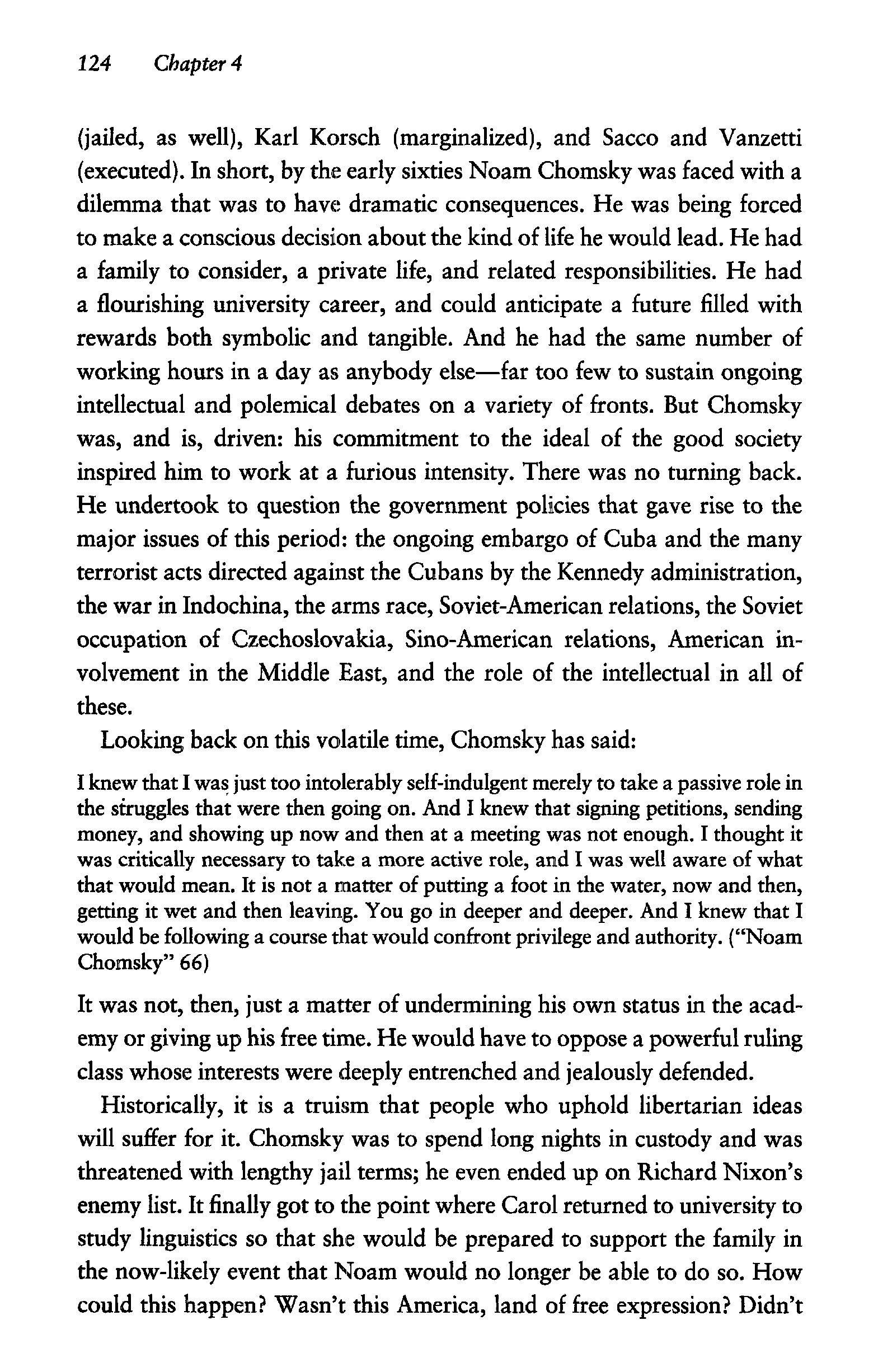
(jailed,
as
well), Karl
Korsch
(marginalized),
and
Sacco
and
Vanzetti
(executed).
In
short,
by the
early sixties Noam Chomsky
was
faced
with
a
dilemma
that
was to
have dramatic consequences.
He was
being forced
to
make
a
conscious
decision
about
the
kind
of
life
he
would lead.
He had
a
family
to
consider,
a
private
life,
and
related responsibilities.
He had
a
flourishing university career,
and
could anticipate
a
future
filled
with
rewards both symbolic
and
tangible.
And he had the
same number
of
working
hours
in a day as
anybody
else—far
too few to
sustain ongoing
intellectual
and
polemical debates
on a
variety
of
fronts.
But
Chomsky
was,
and is,
driven:
his
commitment
to the
ideal
of the
good society
inspired
him to
work
at a
furious
intensity. There
was no
turning back.
He
undertook
to
question
the
government policies
that
gave rise
to the
major
issues
of
this
period:
the
ongoing embargo
of
Cuba
and the
many
terrorist acts directed against
the
Cubans
by the
Kennedy administration,
the war in
Indochina,
the
arms race,
Soviet-American
relations,
the
Soviet
occupation
of
Czechoslovakia, Sino-American
relations,
American
in-
volvement
in the
Middle East,
and the
role
of the
intellectual
in all of
these.
Looking back
on
this volatile time, Chomsky
has
said:
I
knew that
I was
just
too
intolerably
self-indulgent
merely
to
take
a
passive role
in
the
struggles that were then going
on. And I
knew that signing petitions, sending
money,
and
showing
up now and
then
at a
meeting
was not
enough.
I
thought
it
was
critically necessary
to
take
a
more active
role,
and I was
well aware
of
what
that
would mean.
It is not a
matter
of
putting
a
foot
in the
water,
now and
then,
getting
it wet and
then leaving.
You go in
deeper
and
deeper.
And I
knew that
I
would
be
following
a
course that would confront privilege
and
authority. ("Noam
Chomsky"
66)
It
was
not, then,
just
a
matter
of
undermining
his own
status
in the
acad-
emy
or
giving
up his
free
time.
He
would have
to
oppose
a
powerful ruling
class whose interests were deeply entrenched
and
jealously defended.
Historically,
it is a
truism that people
who
uphold libertarian ideas
will
suffer
for it.
Chomsky
was to
spend long nights
in
custody
and was
threatened
with lengthy jail
terms;
he
even ended
up on
Richard
Nixon's
enemy
list.
It finally got to the
point where Carol returned
to
university
to
study
linguistics
so
that
she
would
be
prepared
to
support
the
family
in
the
now-likely event
that
Noam would
no
longer
be
able
to do so. How
could this happen?
Wasn't
this America, land
of
free
expression?
Didn't
124
Chapter
4
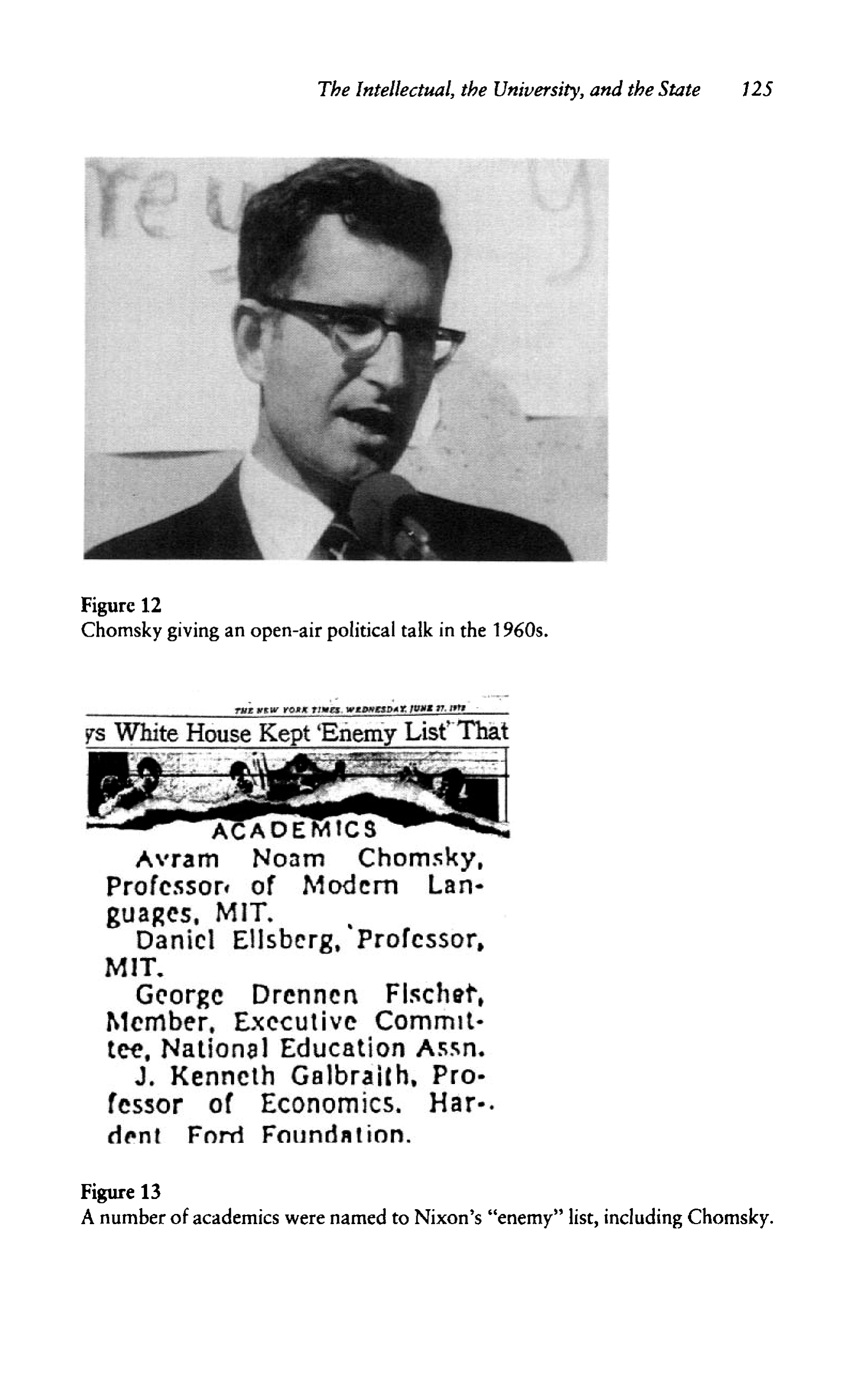
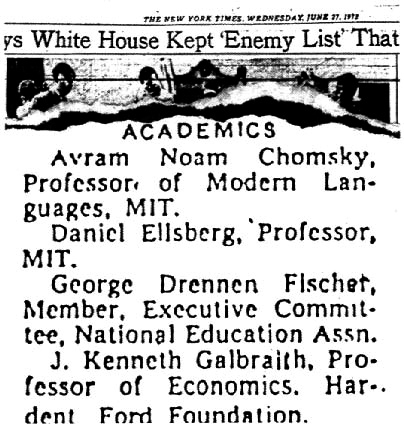
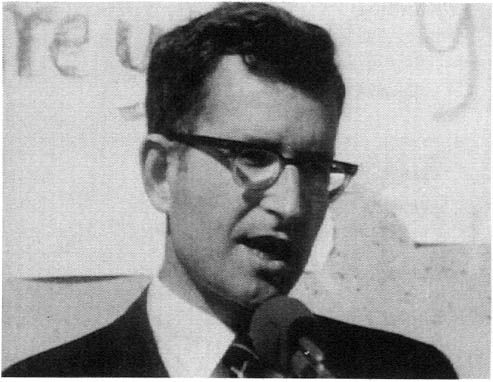
The
Intellectual,
the
University,
and the
State
125
Figure
12
Chomsky giving
an
open-air political talk
in the
1960s.
Figure
13
A
number
of
academics were named
to
Nixon's
"enemy"
list, including Chomsky.
126
Chapter
4
all
citizens have
the
right
to
voice their opinions?
And
wouldn't Noam
Chomsky, prodigy
at
MIT, that prestigious institution,
be
protected
by
virtue
of his
position
in the
academy? Judging
by the
experience
of
others
in
similar situations,
the
simple answer
is
"No."
Says
Chomsky:
We
confidently
expected
thai:
I'd be in
jail
in a few
years.
In
fact,
that
is
just
what
would
have
happened
except:
for two
unexpected
events:
(1)
the
utter
(and
rather
typical)
incompetence
of the
intelligence
services,
which
could
not find the
real
organizers
of
resistance
though
it was
transparent,
and
kept
seeking
hidden
con-
nections
to
North
Korea,
Cuba,
or
wherever
we
must
have
been
getting
our
orders
from,
as
well
as
mistaking
people
who
agreed
to
appear
at
public
events
as
"leaders"
and
"organizers";
and
(2),
the Tet
Offensive,
which
convinced
Ameri-
can
business
that
the
game
wasn't
worth
the
candle,
and led to the
dropping
of
prosecutions—
(31
Mar. 1995)
Carol's decision
to
work toward attaining
a
Ph.D. and, eventually,
an
academic career,
was as
difficult
to
make
as
Noam's decision
to
remain
politically
active.
The
couple worried about
the
effect
it
would have
on
their children
to be
raised
by
working parents; but,
of
course, both
of
Noam's parents
had
taught school throughout
his
childhood.
Back
at
school, Carol resumed research
in a
domain
to
which
she had
been
attracted years earlier: language acquisition. Now,
after
having
had
three
children,
her
efforts
were enriched
by
personal experience.
She
finally
secured
a
position
at
Harvard's School
of
Education,
and has
gone
on to
enjoy
a
successful
career.
In
1969,
she
published
Linguistic Development
in
Children
from
6 to
10,
which explores those aspects
of
grammar
acquisition that
are
delayed
to
later childhood (most grammar
is
acquired
before
the age of five). She has
also worked
on the
language ability
of
deaf-blind
subjects
in the
Sensory Communication Group
of
MIT'S
Research Laboratory
of
Electronics
and
studied
the
invented spelling
of
children
who
began writing
before
learning
how to
read. Carol's major
focus
in the
past
fifteen
years
has
been
on
educational technology, which
she
taught
at the
Graduate School
of
Education
at
Harvard until last year,
and she has
consistently done independent work
as
well.
Marching
with
the
Armies
of the
Night
There
are
rewards
for
working
for the
common
good,
not
least
of
which
is
the
sense
of
personal satisfaction
that
comes
from
having
a
long-standing
The
Intellectual,
the
University,
and the
State
127
commitment
to the
struggle against exploitation
and to a
good society.
Many seasoned activists date their initiation into
the
cause
from
the
late
1960s,
particularly
from
the
spring
of
1968;
but
Chomsky,
and a
small
army
of
others,
had
made their commitment much earlier still.
In
recognition
of his
friend's
long experience with activism, Paul Lauter
asked Chomsky (who
had
been trying
to
organize
a
national
tax-resistance
movement with Harold Tovish,
a
well-known sculptor)
to
team
up
with
him
and
others
to
support
draft
resistance.
It was
1966. This
was one
factor
leading
to the
formation
of
Resist,
which, Chomsky remembers,
"very quickly became involved
in
other
forms
of
resistance
to
illegitimate
authority"
(31
Mar.
1995).
One of the
activities
in
which Resist became
involved
was the
March
on the
Pentagon.
The
march
is
described
by
Norman Mailer
in his
book
The
Armies
of
the
Night: History
as a
Novel,
The
Novel
as
History.
According
to
Mailer,
it all
began
in
September
of
1967, when
he
received
a
phone call
from
Mitchell Goodman,
a
novelist
who was
married
to
poet
and
fellow
activist Denise Levertov. Goodman
had led
antiwar protests
in the
past,
and
was on
this
day
calling
to
urge Mailer
to
participate
in
Resist.
He
said:
"On
Friday
...
we're going
to
have
a
demonstration
at the
Depart-
ment
of
Justice
to
honor students
who are
turning
in
their
draft
cards"
(Mailer
9). A
week later, Mailer
was
asked
to
write
and
sign
a
form
letter
in
support
of
these students,
and a
week
after
that,
he was
invited
to
speak
at a
meeting;
fellow
speakers were
to be
Robert Lowell (the poet),
Dwight
Macdonald (Mailer claims that
he
was,
"of all the
younger American
writers
...
the one who had
probably been influenced
most
by
Mac-
donald"
[25]),
Ed
de
Grazia (the leading lawyer
for the
Mobilization's
Legal
Defense
Committee),
and
Paul Goodman (who "had been
the
first to
talk
of the
absurd
and
empty nature
of
work
and
education
in
America"
[24]).
The
meeting took place
on
Thursday,
the day
before
the
demonstration
to
support
draft
resisters,
and two
days prior
to a
planned
march
on the
Pentagon aimed
at
crippling some
of its
operations.
Chomsky was,
of
course,
the
right person
to
call upon
to
lend support
to
such activities. During
the
week leading
up to the
demonstration,
Chomsky
and
others
had put
forth
a
"call
to
resist illegitimate authority,"
which
was
published
in the 12
October 1967 edition
of the
New
York
Review
of
Books,
and
which
was
signed
by
thousands
of
people interested
128
Chapter
4
in
participating.
The
stage
was
thus
set for the 20
October March
on the
Pentagon,
led by the
likes
of
David Dellinger
and
Jerry Rubin, "serious
men, devoted
to
hard detailed
work"
(Mailer 53).
The
leaflet
promoting
the
march reads:
WE
ARE
PLANNING
AN ACT OF
DIRECT CREATIVE RESISTANCE
TO
THE WAR AND THE
DRAFT
IN
WASHINGTON
ON
FRIDAY, OCTOBER
20. The
locale
of our
action will
be the
Department
of
Justice.
We
will gather
at
the
First United Congregational Church
of
Christ, 10th
and G
Streets, N.W.,
Washington
...
at 1
P.M.
We
will appear
at the
Justice Department together with
30 or 40
young
men
brought
by us to
Washington
to
represent
the 24
Resistance
groups
from
all
over
the
country. There
we
will present
to the
Attorney General
the
draft
cards turned
in
locally
by
these groups
on
October
16—
We
will,
in
a
clear, simple ceremony, make concrete
our
affirmation
of
support
for
these
young
men who are the
spearhead
of
direct resistance
to the war and all of its
machinery
[Signed]
Mitchell
Goodman, Henry Braun, Denise Levertov, Noam Chomsky,
William Sloane
Coffin,
Dwight
Macdonald.
NOTE:
Among
the
hundreds already committed
to
this action
are
Robert Lowell,
Norman Mailer, Ashley Montagu, Arthur Waskow,
and
professors
from
most
of
the
major colleges
and
universities
in the
East. (qtd.
in
Mailer
59-60)
The
resistance-group representatives were
to
turn
in the
draft
cards,
and
then Mitchell Goodman, Reverend William Sloane
Coffin,
Dr.
Benjamin
Spock,
and
seven others would give speeches;
the
marchers would next
make
their
way to the
Office
of the
Attorney
in the
Department
of
Justice
Building, where they would inform
the
attorney general
that
they were
planning
to
assist
draft
dodgers.
All
went according
to
plan,
and 994
draft
cards were turned over
to the
assistant
attorney general.
The
next day,
the
demonstrators congregated
for the
March
on the
Pentagon.
On
arriving
at
their
destination,
they were
met by
military
police
who
squirted mace into
the
eyes
of
anyone
who
attempted
to
enter
the
building. Mailer
was
intent
on
either getting inside
the
Pentagon
or
being
arrested.
He was
arrested. Chomsky, along with Dwight Mac-
donald, Robert Lowell, Dave Dellinger, Dagmar Wilson,
Dr. and
Mrs.
Benjamin
Spock, Sidney Lens,
and
Barbara Deming,
had
been
turned
away
by the
military police,
so
they instead committed acts
of
symbolic
disobedience,
including conducting
a
teach-in. Dellinger, Wilson,
and
Chomsky were arrested
and
hustled
off to a
police station. Chomsky
The
Intellectual,
the
University,
and the
State
129
remembers
the
scene: "the Pentagon
was
surrounded
by
troops,
the
marchers approached,
and
then
all
sorts
of
things happened,
from
young
women putting
flowers
in
rifles,
to
prayers,
to the
'teach
in,'
and on,
and
on.
Those were pretty chaotic days,
and
there
was no
direction
at
all
to
this
thing,
apart
from
following
the
route
from
Washington across
the
river that
had
been settled with
the
police,
and a few
large rallies
where
no one
could hear
the
speakers."
And
what
did
this whole scene
look
like
from
the
other side
of the
blockades? "Dan Ellsberg later told
me," Chomsky recalls,
"that
he'd been standing next
to
McNamara
up
in the
Pentagon somewhere,
the two of
them ridiculing
the
tactics
of
the
protestors
and
talking about
how
they would have done
it
more
efficiently.
Hate
to
think how"
(13
Feb. 1996).
Arrested,
Questioned,
and
Charged
Most
of the
people
who had
been brought
to
that police station with
Mailer were released.
But
after
many hours
of
waiting
in a
cell, word
finally
came
through
to
Mailer that
he was to
remain
in
prison
for at
least
a
night.
He
resigned himself
to his
fate,
and
chose
a
bunk. Mailer recounts
these
events
in the
third person,
but
they
are
based
on his own
experi-
ences.
He
found
himself
next
to
Noam Chomsky,
a
slim sharp-featured
man
with
an
ascetic expression,
and
an air of
gentle
but
absolute
moral
integrity.
Friends
...
had
wanted
him
[Mailer]
to
meet Chomsky
at a
party
the
summer
before—he
had
been told
that
Chomsky, although barely thirty,
was
considered
a
genius
at
MIT
for his new
con-
tributions
to
linguistics—but
Mailer
had
arrived
at the
party
too
late. Now,
as he
bunked down next
to
Chomsky, Mailer looked
for
some
way to
open
a
discussion
on
linguistics—he
had an
amateur's
interest
in the
subject,
no,
rather,
he had a
mad
inventor's interest, with several wild theories
in his
pocket which
he had
never
been able
to
exercise since
he
could
not
understand what
he
read
in
linguis-
tics
books....
[Mailer] cleared
his
throat
now
once
or
twice, turned over
in
bed,
looked
for a
preparatory question,
and
recognized
that
he and
Chomsky might
share
a
cell
for
months,
and be the
best
and
most civilized
of
cellmates, before
the
mood would
be
proper
to
strike
the first
note
of
inquiry into what
was
obviously
the
tightly packed conceptual
coils
of
Chomsky's
intellections.
Instead
they
chatted mildly
of the
day,
the
arrests (Chomsky
had
also been arrested with
Bellinger),
and of
when they would
get
out.
Chomsky—by
all
odds
a
dedicated
teacher—seemed
uneasy
at the
thought
of
missing class
on
Monday.
(180)
130
Chapter
4
One
month
later,
Dr.
Spock, along with
Coffin,
Marcus Raskin, Michael
Ferber,
and
Mitchell Goodman, were
all
indicted
by a
grand
jury.
They
were charged with advocating resistance
to the
draft
law,
a
felony
pun-
ishable
by up to five
years
in
prison.
Chomsky,
in
Radical Priorities,
doesn't
fail
to
point
out the
absurdity
of
this case.
"As
becomes
perfectly
obvious when
you
look
at the
latest government list
of
co-conspirators,
of
whom
I am
one, this
is a
group
of
people
who did
exactly
one
thing
in
common: namely, they appeared
at a
press conference
on
October
2 to
state
independently their views against
the war and in
support
of
resis-
tance,
and
then separated, many
of
them never
to
meet again" (193).
It is,
of
course, ironic, given
the
events
of the
time, that this
peaceful
gathering
intended
to
demonstrate
resistance
to
authority
and to
inform
the
public
about
the
reality
of the war was
considered
a
conspiracy.
It is
even more
ironic that
it was
these
specific
individuals
who
were singled
out for
their
participation.
"But this
is the
government's concept
of
'conspiracy,'"
Chomsky remarks, "and it's quite possible,
I
don't
know
if
it's likely, that
a
number
of
them will
face
several years
in
jail
for
their participation
in
the
conspiracy
of
which this
was the
central event
and in
fact
the
only
event
that
unites
all
conspirators"
(Radical
Priorities
193-94).
Chom-
sky's
own
involvement with
the
indictment stemmed
from
his
having
signed
a
statement, along with
560
others (including Norman Mailer),
"implicating themselves
legally
to aid and
abet
draft
resisters"
(Radical
Priorities
286).
The
trial
of
Spock
and the
others attracted national media attention
and, according
to
Chomsky,
the
entire
focus
of the
news reports
was
pur-
posefully
misdirected. "The idea that Spock
and
Coffin
were involved
in
forming
Resist
was
invented
by the
FBI,
and
lent
a
comical touch
to the
Spock-Coffin
trial.
In
fact,
Ben
Spock
and
Bill
Coffin
were very decent
and
honest people,
who
were willing
to
appear
at our
press conferences
and
meetings
to try to
draw some press
and a
crowd. Neither
of
them
had
anything
to do
with
Resist,
apart
from
that"
(31
Mar.
1995).
The
FBI
had
overestimated
the
role
of
Spock
and
Coffin,
but
they nonetheless
put the
two on
trial. Chomsky maintains that they initiated
the
proceedings
"by
announcing publicly
that
I was
next
in
line,
and if the
FBI
had
even
a
clue
as
to
what
was
going
on, I
would have been
a
defendant,
not a
named
co-
conspirator,
at
that trial
arid
Spock
and
Coffin
would have been reading
The
Intellectual,
the
University,
and the
State
131
about
it in the
papers.
But one can
only speculate about what would have
happened"
(13
Feb.
1996).
Chomsky
and the
'68ers
From accounts
of
this particular October weekend
in
1967 emerges
a
compelling portrait
of
Chomsky
the
activist.
The
hallowed events
of
1968
were
not of
monumental consequence
to
people such
as
Chomsky, pre-
cisely
because
he,
like many others,
had
been
at the
center
of
similar
events
the
year before. Moreover,
he had
been fascinated
by
politics
all his
life,
and
politically active throughout
the
late
1950s
and
early
1960s.
He
had,
in
fact, great reservations
about
the
form
that
the
1968
student
uprisings
ultimately
took.
Chomsky (like others
on the
left,
notably
Theodor
Adorno) questioned
the
objectives
of the
student activists.
He
even publicly criticized
the
Columbia University strike
at a
public
forum
in
1968:
There,
and in
meetings afterwards,
I was
very harshly criticized
for
that
by
student
leaders
and
their adult supporters;
and I
paid virtually
no
attention
to
what
was
going
on in
Paris
as you can see
from
what
I
wrote—rightly,
I
think.
SDS
[Students
for
a
Democratic Society]
had by
then "self-destructed";
its
leaders were running
around saying that
the war is a
"liberal issue"
and
they have
to get on
with revo-
lution.
I
kept
my
connections with serious activists
and
organizations,
which were
expanding rapidly, though they
are
beyond
the
view
of
most historians
and
those
who
bother
to
write memoirs,
most
of
them (not
[Mike]
Albert, Dellinger,
and
others
who are
rarely mentioned).
(31
Mar. 1995)
The
events
of the
late
1960s
are,
however,
fondly
recalled
by
nostalgic
leftists,
and the
mainstream historical record
is filled
with evocations
of
the
period. Certainly, some
of the
advancements made
at
this time were
of
great significance,
and it
looked,
for a
brief
moment,
as
though
the
student-worker links that
had
begun
to
form
could advance
the
cause
of
radical social change. Students
and
workers
had
found
a
common cause,
and had
taken
to the
streets
of
Paris
in the
spring
of
1968; students
throughout
Europe
and
America were becoming vocal
in
their disillusion-
ment with
the
institutions that they claimed
stifled
the
individual. Workers
had
been
fighting for
control over their
own
labor conditions through-
out the
century,
but
now, suddenly,
it
seemed possible that cohesion
and
mutual support could
be
achieved among
a
number
of
disenchanted
132
Chapter
4
groups.
Ken
Coates quotes
one of the
many posters that appeared
in
Paris
during
the
uprising:
I
participate
Thou participatest
He
participates
We
participate
You
participate
They
profit.
(Quality
5)
Also
in
1968, Bertrand Russell spoke
at
Nottingham University
in
England
on the
occasion
of the
Sixth National Conference
on
Workers'
Control.
He
talked about
the
relationship between contemporary events
and
earlier socialist ideals:
I
welcome
the
growing importance
of the
workers'
control
movement because
its
demands
go to the
heart
of
what
I
have always understood socialism
to
mean.
The
Prime
Minister
and his
friends have developed
a
quite
new
definition
of
socialism,
which includes
the
penalising
of the
poorest,
capitulating
to
bankers, attacking
the
social services, banning
the
coloured
and
applauding naked imperialism. When
a
government makes opportunism
the
hallmark
of its
every
action,
it is the
duty
of
all
socialists
to cry
"halt"
and to
help
create
an
alternative
based
on
socialist
prin-
ciples,
(qtd.
in
Coates,
et
al.,
9-10)
The
workers',
peace, civil-rights, Black Power,
and
women's-liberation
movements
all
looked forward
to
making
important
gains.
In
England,
Ken
Coates
was
writing incendiary pamphlets
on
workers' control
and
Raymond Williams
was
offering
another take
on
social history.
In
Ger-
many, colleagues
and
workers, members
and
associates
of the
Frankfurt
School
(Adorno,
Fromm,
Horkheimer,
Lowenthal,
and
Marcuse,
all of
whom
had
spent time
in the
United States during
or
following World
War
II)
were still publishing
powerful
Marx-inspired works
on
psychological,
sociological, legal,
and
aesthetic issues.
In
France, Simone
de
Beauvoir
was
claiming
for
women
a
more dominant place
in
society.
In the
United
States, Abbie
Hoffman,
Malcolm
X, and
Martin Luther
King
seemed
to
offer
proof that change within particular disenfranchised sectors
of
soci-
ety,
and in
society
as a
whole,
was not
only essential,
but
also possible
(although Malcolm
X and
King tended more towards liberal reform than
radical change). Activists recognized that there were common obstacles.
In his
1973 pamphlet
The
Quality
of
Life
and
Workers'
Control
Coates
states:
The
Intellectual,
the
University,
and the
State
133
When
Malcolm
X and his
friends
began
to
preach "Black
is
beautiful,"
and the
movement
for
Black
Power started rolling,
the first and key
element
in the
upsurge
of
the
black population
was a new
self-recognition.
Black
people
had to
recognize
themselves,
but
they also
had to
learn
to
like
what they recognized.
In the
same
way,
the
movement
for
Women's Liberation
has to
begin with
an
attack
on all the
complex attitudes
held
by
women
which contribute
to
their subordination.
And
with working people, things
are not
fundamentally
different.
Whilst workers take
for
granted their right
to
political
suffrage,
they
are
prevented,
by
attitudes which
pervade
their whole upbringing,
from
conceiving industrial
suffrage
as
natural
or
just.
(10-11)
Noam
Chomsky
was one
particularly articulate voice among
many,
a
single
note
in a
growing chorus. Carol Chomsky also became politically
active
at
this
time,
but
entirely
on her own
terms. Noam writes:
"in the
sixties,
she
took part
in
anti-war activities
as she
chose,
and in her own
way;
not as
part
of my
activities. Thus when
she
took
the
children
to a
demonstration
in
Concord
of
women
and
children
in
about 1966
or so
(where
they were attacked with
tin
cans,
abuse,
etc.),
that
was her
initia-
tive,
not
mine. Same with other things.
We
have both always
felt,
strongly,
that
one
should
not
simply assume that
X's
wife
is
automatically inter-
ested
in and
participant
in
what
X
happens
to be
doing"
(14
Aug.
1995).
Though
he was
courted
by
activists
and
students
who
valued
his
advice
on finding
appropriate venues
and
strategies
for
expressing their urgent
concerns, Chomsky
was not an
American
Che
Guevara
who
would take
up
arms
and
lead
his
band towards self-government
on
horseback.
And
he
was not a Mao or a
Lenin
who
promised
to
show
faithful
followers
the
way to a
workers'
paradise—and
to
exact
from
the
unfaithful
the
price
of
dissent.
He was a
scientist
who had
rational ideas
that
had
made
him
famous
in his field, and a
social conscience
that
gave
him the
courage
and the
confidence
to
recognize that rationality could also
be
employed
to a
greater social end: encouraging people
to
think for,
and
believe
in,
themselves.
Public
Intellectuals
and
Radicalism
The
fact
that Chomsky
was
immersed, primarily,
in a
scientific
environ-
ment
had a
profound impact
on his
perception
of the
role
of the
intellectual,
the way
that institutions
in
this society
function,
and the
value
to
society
134
Chapter
4
of
science.
His
extremely well-developed, libertarian-inspired political
sensibilities,
and his
awareness
of
individuals
and
groups
far
more radical
than those
of the
late
1960s,
was the
source
of his
acute skepticism about
the
ability
of
many high-profile
contemporary
activists
to
contribute
any-
thing
of
lasting value. Chomsky therefore involved himself
in
popular
struggles
with activist communities, rather than with
the
endeavors
of
well-known
figureheads of the
left.
"I
knew Marcuse [who
was the
guru
of
the New
Left
and
certainly
the
most politically active
of the
Frankfurt
School members
in the
United States]
and
liked him,"
he
writes,
"but
thought
very
little
of his
work.
I
liked
Fromm's
attitudes
but
thought
his
work
was
pretty
superficial.
Abbie
Hoffman
I
knew
a bit (I
lent
him
some
money,
in
fact,
expecting that he'd probably
use it to
jump bail,
as he
did).
King
was an
important
figure,
thanks primarily
to the
platforms created
for
him by
SNCC
[the Student
Nonviolent
Coordinating
Committee]
workers
and
other activists. Guevara
was of no
interest
to me;
this
was
mindless
romanticism,
in my
view"
(31
Mar.
1995).
It
is
interesting that
the
people Chomsky mentions here, although
all
important contemporary
figures,
vary tremendously
in the
approaches
they
took
to the
social
unrest
of the
1960s.
It is
also
interesting
that
heading Chomsky's list
are
Herbert Marcuse
and
Erich Fromm.
The two
men
were highly regarded intellectuals associated with prestigious uni-
versities,
and
they were political
activists—much
like Chomsky. (Fromm,
incidentally,
had
been
an
inspiration
to
Zellig Harris.) But, unlike
Chomsky, they directed their
efforts
towards conducting complex,
and
ultimately
influential,
analyses
of
revolution
and
history (Marcuse)
and
violence
and
psychology
(Fromm),
which Chomsky evidently considered
to be of
little real value.
Here, again,
we see the
peculiar strain
of
anti-obfuscation—or,
better still,
anti-intellectualization—that
Chomsky deploys against those
who
speculate
in
what
he
considers
to be
unscientific
ways about behavior.
This trait
gives
many
who are
familiar
with Chomsky's linguistics
and his
politics pause; they cannot come
to
grips with
the
vast distance between
Chomsky
the
philosopher, linguist,
and
cognitive scientist,
who
formulates
intellectual
concepts
of the
most complex kind,
and
Chomsky
the
activist,
who
denigrates
the
activities
of
those
who
speculate
from
a
non-scientific
The
Intellectual,
the
University,
and the
State
135
perspective
about revolutions,
the
social psychology
of the
masses,
and
the
underpinnings
of
violent behavior.
Had
Chomsky
not
refused
the
role
of
activist oracle, which
he
probably could have played successfully
had
he
adopted
a
more appeasing political stance,
he
might have proceeded
to
engage
in the
kind
of
clement rabble-rousing
to
which Americans
are
accustomed.
He did
reject
that option,
and
those
on the
left
who
chose
to
support status-quo
positions
suffered
for it.
There
is no
simple rationale
for
this dichotomy that Chomsky embodies,
but
somewhere
in the
ongo-
ing
debate about science versus nonscience, self-aggrandizement versus
serious
work,
the
knowable versus
the
unknowable,
we may
discover
some answers.
Chomsky
and
Irving Howe
By
contrasting Chomsky's views with those
of
Irving Howe
we may
reach
a
better understanding
of the
public intellectual. Chomsky knew
Howe
personally—they
were next-door neighbors
for a few
years. Howe
was
the
founder
of the
magazine
Dissent,
and
functioned
as a
kind
of
guiding
light
in
"left-ish"
circles
for
decades.
In the
end, however,
he may
have
done more harm than good
to
genuinely left-wing causes because
he
became
an
acceptable version
of a
left-winger.
For
example, although
he
criticized
the
Vietnam War,
he did so in
such narrow terms that,
in the
eyes
of
some,
he
eventually lent credibility
to its
instigators,
and to
those
of
other such
atrocities.
It was
partly
to
avoid,
at all
costs,
such
a
derail-
ment
that Chomsky opted
to
affiliate
himself
with
the
activist community
rather than
the
Marxologists,
the
intellectual
left,
or the
ivory-tower
theoreticians
of
emancipation. Such
a
concern also prompted
him to
maintain
consistent viewpoints
and to
choose
his
battles
carefully.
Howe's role
as a
left-wing
intellectual evolved
from
the
1930s
to the
1970s.
In
Chomsky's view,
it is not
Howe's
work
for
Dissent
(which that
journal
first
began
to
publish
in the
1950s)
that
was
significant. Chomsky
was
impressed
by the
even earlier work
Howe
submitted
to the
little-
known journal
Commentary,
and the
work that
he had
done
for yet
another
journal
called
Labor Action
(now virtually unknown) when
he
was
still quite young.
Says
Chomsky:
"[Howe]
and Hal
Draper particu-
larly
had
quite interesting commentary
on
current
affairs
[in
Labor Action
136
Chapter
4
during
the
1940s]
(though
I
didn't
go
along with
the
Leninist line,
of
course).
I was
never part
of the
Dissent
circle, though
I
read
it and
occa-
sionally would
go to a
meeting"
(14
Aug.
1995).
Journals such
as
Dissent,
The
Nation,
The New
Left
Review,
and
newspapers such
as
The
Village
Voice,
The
Manchester
Guardian,
and
Liberation
do
serve
a
useful
pur-
pose
on the
left,
but
they often veer
far too
close
to the
status
quo to be the
organs
of
radical change. Chomsky remarks:
It's
too
strong
to say
that
Dissent
was of no
interest
to me,
then
or
now. I've
always read
it, and
sometimes
find
interesting
things—much
more
so in the
1950s,
before
Howe's
bitter resentment
of the
student movement
and the New
Left
for
failing
to pay
enough attention
to
him,
and the
post-1967
switch
to
unthinking
Zionist
commitments
(largely
as a
weapon
against
the New
Left,
it
seems), which
changed
the
character
of the
journal quite sharply,
as you can
tell
by
reading
it
(try
to find
something about Israel
or
Zionism
pre-1967,
for
example).
(14
Aug. 1995)
The
Example
of
Peggy
Duff
The
activist community Chomsky entered during this period
was
vast
and
loosely knit. Many have attempted
to
draw
a
portrait
of
this
milieu—
David Dellinger
and
Howard
Zinn have each written about
it.
Here,
however, with
the aim of
exemplifying
what Chomsky considers
to be
useful
activist work, I've chosen
to
focus
on one
important individual:
Peggy
Duff.
Chomsky's
own
lists
of key
activists generally contain names
that
are
rarely mentioned beyond certain small circles.
Duff
was for
dec-
ades
a
serious activist who, despite
her
enormous output,
has re-
mained relatively obsure (especially
in the
United States).
One of the
most influential
figures in the
British peace movement
from
the
1940s
onward,
and
general secretary
of the
Campaign
for
Nuclear
Disarmament
(CND)
from
1958
to
1967,
Duff
was
deeply involved
in the
Israel-Palestine issue; moreover, according
to
Chomsky,
she
kept "the
international
opposition
against
the
Vietnam
War on
some kind
of
seri-
ous
and
useful
track,
and she
helped organize some
of the
most impor-
tant aspects
of it"
(13
Feb. 1996).
She was
also
the
general secretary
of
the
International Confederation
for
Disarmament
and
Peace
(ICDP—a
grouping
of
independent movements
in
Europe, North America, Asia,
and
Australasia);
one of the
leading
figures in
CND,
and
antinuclear work
generally;
the
editor
of two
journals,
Vietnam International
and
Peace
The
Intellectual,
the
University,
and the
State
137
Press-,
a
contributor
to the
Peace
Press
and the
Tribune;
editor
of
War or
Peace
in the
Middle
East?
(to
which Chomsky contributed); author
of
Left,
Left,
Left
—in
short,
Duff
was,
in
Chomsky's assessment, "one
of
the
people
who
really
changed modern history."
[S]he
is a
woman,
an
activist,
a
serious intellectual,
a
knowledgeable
and
informed
writer—and
therefore unknown outside
the
universe
of
others
who are
actually
engaged
in the
problems
of the
world.
She has
disappeared from history. She's
not a
"public
intellectual";
she was far too
important
in
modern history
for
that.
She
spent
no
time posturing before other intellectuals
or
inhabiting
the
various
cocoons
of the
literary
intellectual
culture.
She
belongs
to the
same
category
as
the
SNCC
[Student Nonviolent Coordinating Committee] workers
who
carried
out the
civil rights movement
in the
U.S.,
or the
dedicated Christian activists
who
were
at the
core
of the
solidarity movements
of the
'80s,
or the
unknown
people
who
created
the
labor movements,
or the
other people
who
have mattered
in
history,
and are
therefore unknown
and
forgotten
(if
ever known
in
respect-
able—i.e.,
intellectually
and
morally
corrupt—circles)—
[Duff
is]
typical
of
people
who
make
a
difference
in
history. She's also typical
of the
people
in my
actual milieu, since childhood, except
for her
unusual international
prominence....
(31
Mar.
1995)
True
intellectuals, like
Peggy
Duff,
are
unattractive
to the
ruling elite
because
they
reveal
things that those
in
power would
prefer
to
conceal.
Unlike
(say)
Irving
Howe,
Duff
was not
relied upon
by the
popular
media
for
commentary
on
current events;
she is not
mentioned
in
mainstream
history
books;
and her
work
has
been
played
down
or
ignored.
The
mainstream
historical record
of the
late 1960s,
like
that
of
virtually
any
period,
contains
very
few
references
to
really
important activist
work.
The
prevalence
of
this kind
of
willful
ignorance
is
another leitmotif
for
Chomsky.
If
it
weren't
for
Howard Zinn
and a few
others,
few
(apart
from
actual partic-
ipants)
would even know about
the
SNCC,
the
leading element
in the
civil rights
movement. Similarly,
the
truth about
the
Black Panthers
is
not,
and
never will
be,
made
known,
I
suppose. Resist
was
supporting elements
of the
Panthers
from
very
early
on,
discriminating quite
carefully
between
the
serious organizers
(like
Fred
Hampton)
and the
criminal elements
and
hustlers.
(31
Mar. 1995)
Of
course, resistance
has a
price—as
Mailer, Spock,
and
Coffin,
among
so
many others, learned during this
era—and
people such
as
Black
Pan-
ther
Fred
Hampton ended
up by
paying with their
lives.
Chomsky writes:
"I was one of the few
white
faces
at
Fred Hampton's
funeral
in
Chicago
in
1969,
after
he was
murdered
by the
Chicago police
and
FBI"
(31
Mar.
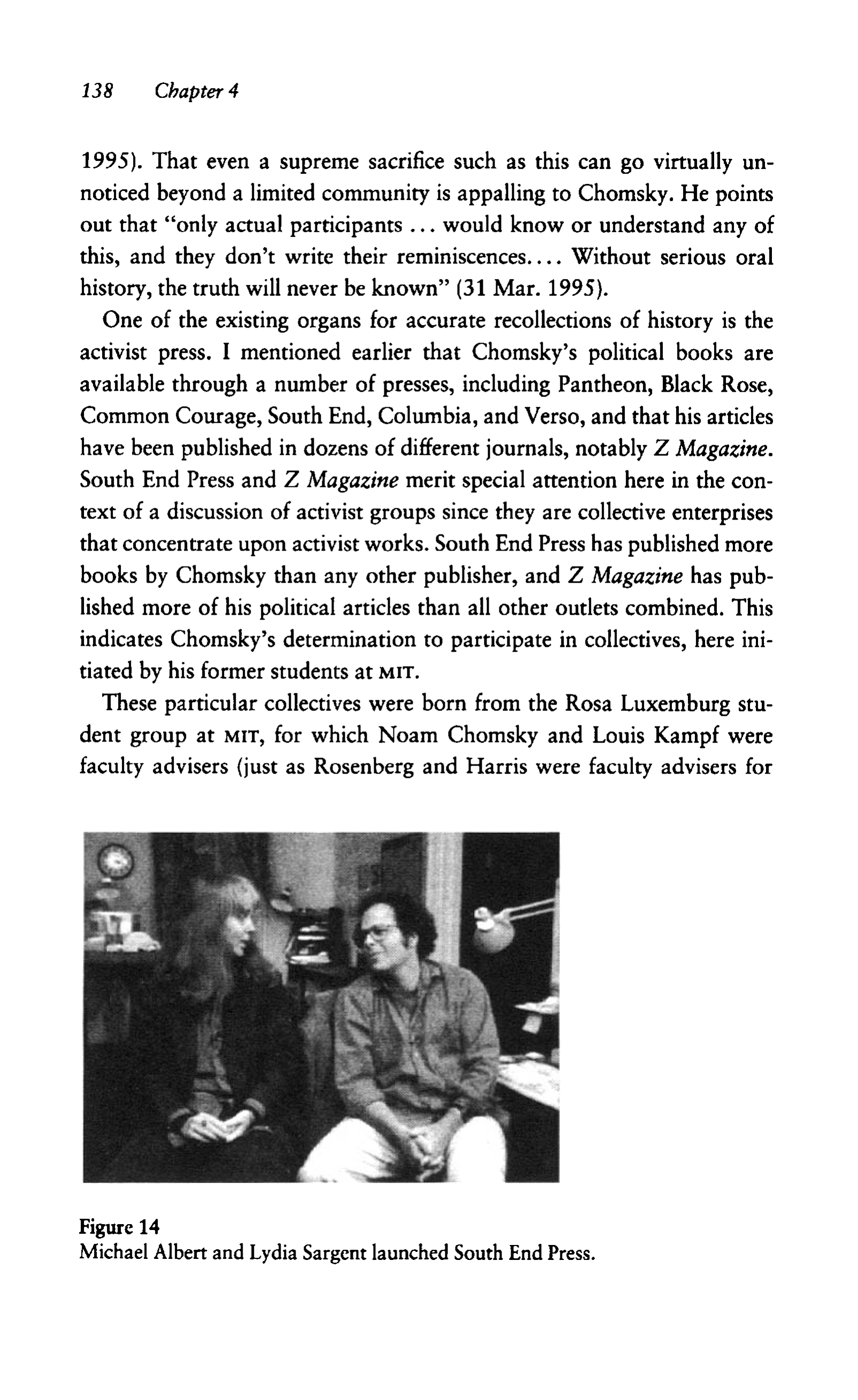
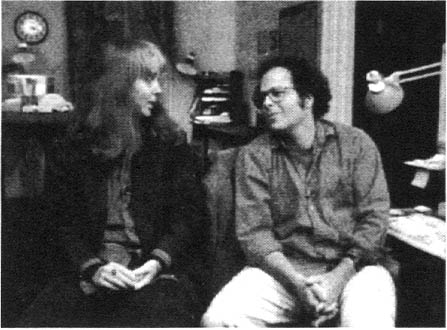
1995).
That
even
a
supreme
sacrifice
such
as
this
can go
virtually
un-
noticed beyond
a
limited community
is
appalling
to
Chomsky.
He
points
out
that
"only
actual participants
...
would know
or
understand
any of
this,
and
they
don't
write their
reminiscences....
Without serious oral
history,
the
truth will never
be
known"
(31
Mar.
1995).
One of the
existing organs
for
accurate recollections
of
history
is the
activist press.
I
mentioned earlier
that
Chomsky's
political books
are
available
through
a
number
of
presses, including Pantheon, Black Rose,
Common Courage, South End, Columbia,
and
Verso,
and
that
his
articles
have
been published
in
dozens
of
different
journals, notably
Z
Magazine.
South
End
Press
and Z
Magazine
merit special attention here
in the
con-
text
of a
discussion
of
activist groups since they
are
collective enterprises
that
concentrate upon activist works. South
End
Press
has
published more
books
by
Chomsky than
any
other publisher,
and Z
Magazine
has
pub-
lished
more
of his
political articles than
all
other outlets combined. This
indicates Chomsky's determination
to
participate
in
collectives, here ini-
tiated
by his
former students
at
MIT.
These particular collectives were born
from
the
Rosa Luxemburg stu-
dent group
at
MIT,
for
which
Noam
Chomsky
and
Louis
Kampf
were
faculty
advisers
(just
as
Rosenberg
and
Harris were
faculty
advisers
for
Figure
14
Michael Albert
and
Lydia
Sargent launched South
End
Press.
138
Chapter
4
The
Intellectual,
the
University,
and the
State
139
Avukah).
Kampf
and
Chomsky
had
been teaching
the
previously
de-
scribed
social-sciences courses
at
MIT,
and
some
of the
students studying
with them were leaders
of the
intellectual/political-activist
ferment
in and
around Cambridge.
The
most active
of
these students
was
Mike Albert,
who
became student president
and
then
went
on to
participate
in the
launching
of
South
End
Press
and Z
Magazine.
Other students, including
Steve
Shalom
and
Peter
Bohmer,
also went
on to
participate
in the
col-
lectives.
"In
fact," notes Chomsky, "it's
a
more cohesive
and
politically
active
group than Avukah
and
what came
out of
it—which
was
interest-
ing
and
important,
but
mainly
a
small group
of
intellectuals with narrow
concerns,
very
Jewish-Palestine
centered—and
has had far
more
of an
impact
on the
political scene,
for 30
years now"
(31
Mar. 1995).
Serendipity
and
Self-Justification
To the
degree
that
Chomsky's activism
was the
product
of his
very
con-
scious
determination
to be
instrumental
in the
creation
of a
good
society,
his
scientific
achievement
was
serendipitous. While,
in
retrospect,
it may
seem
as
though
he
moved smoothly
from
one
academic triumph
to
another,
Chomsky's ascent
to the
status
of
recognized
figure
within
the
academy was,
at
times, haphazard:
he got
into
linguistics
"more
or
less
by
accident";
he
became
a
Harvard Fellow
and was
subsequently
offered
the
research
position
in the
electronics
lab at
MIT
thanks
to the
intervention
of
friends;
Morris Halle
put him in
contact with
an
editor
who
agreed
to
publish
the
results
of his
"hobby"
(Syntactic
Structures);
he was
praised
in
a
long
and
detailed review, which attracted
the
attention
of
many
key
people
in the field. If we
take into account
his
approach
to
institutions
(particularly
places
of
higher learning),
his
renegade attitude towards
academia
in
general,
and the
broad number
of fields
that interested
him
(logic,
mathematics, philosophy, linguistics, languages,
literature),
it is
surprising
that
his
career
has
been such
a
success.
The
most frequently discussed aspect
of
Chomsky's career
path
is his
having
chosen/been chosen
by
MIT,
an
institution that
didn't
even
have
a
linguistics department when Chomsky
first
arrived
(or for
that
matter
a
department
of
philosophy
or
even
psychology),
and
that,
moreover,
was the
epicenter
of
research
for the
United States military. Some have
140
Chapter
4
suggested
that
Chomsky's institutional
affiliation
has
hampered
his
work
because
it has
compelled
him to
defend
its
scientificity
while
forcing
him
into
a
direct collaboration with
the
military.
In
1969,
the
Pentagon
and
NASA
were financing
two
MIT
laboratories;
one
(now called Draper)
was
working
on
inertial guidance systems, while
the
other
(Lincoln)
was (to the
best
of
Chomsky's recollection) "engaged
in
some things
that
involved ongoing
counterinsurgency"
(13
Feb.
1996).
Chomsky
maintains that
it was
impossible
at
that time
for MIT and its
researchers
to
sever ties with
the
military-industrial complex
and
con-
tinue
to
function. What
he
proposed then
he
stands
by
even today: uni-
versities
with departments that work
on
bacterial warfare should
do so
openly,
by
developing departments
of
death.
His
intention
was to
inform
the
general population
of
what
was
going
on so
that individuals could
make informed
and
unencumbered decisions about their
actions.
Such
thinking
was
behind
his
response
to the
Pounds Committee, which
was
formed
to
defuse
the
tension that
was
mushrooming between
the MIT
administration
and a
group
of
students
who
were adamantly opposed
to
the
military connection: "The students
and I
submitted
a
dissident report
disagreeing
with
the
majority.
The way it
broke down
was
that
the
right-
wing faculty wanted
to
keep
the
labs,
the
liberal faculty wanted
to
break
the
relations
(at
least
formally),
and the
radical students
and I
wanted
to
keep
the
labs
on
campus,
on the
principle that what
is
going
to be
going
on
anyway ought
to be
open
and
above board,
so
that
people would
know what
is
happening
and act
accordingly"
(31
Mar.
1995).
Of
course, there
was
resistance
to the
report
from
the
majority
of
fac-
ulty
members, "including
all the
liberal faculty, [who] were smart enough
to
understand
just
what that implied,
and
wanted what amounted
to a
formal
administrative change,
so
that technically
the
labs weren't part
of
the
Institute,
hence
the
connections remained pretty much invisible,
though
not
much changed"
(31
Mar.
1995).
In
short, Chomsky's position
on
this issue
is
that
no
formal
constraints should
be put on
research.
So at
this time
he
took
what
he
calls
"a
pretty extreme
position,"
and
indeed
"one that might
be
hard
to
defend
had
anyone ever criticized it," which
he
describes
as
follows:
Nothing
should
be
done
to
impede people from teaching
and
doing their research
even
if at
that
very moment
it was
being used
to
massacre
and
destroy.
That
was
The
Intellectual,
the
University,
and
the
State
141
not
academic.
At the
time,
the
MIT
political science department
was
doing just
that
(in
my
opinion),
and the
issue
was
very much alive
as
Kennedy-Johnson
"action
intellectuals" started returning
to the
universities
after
Nixon's
election.
In
fact,
as
a
spokesman
for the
Rosa Luxemburg collective,
I
went
to see the
President
of
MIT
in
1969
to
inform
him
that
we
intended
to
protest publicly
if
there turned
out to be
any
truth
to the
rumours then circulating that Walt
Rostow
(who
we
regarded
as a
war
criminal)
was
being denied
a
position
at
MIT
on
political grounds (claims
that
were
hardly
plausible,
and
turned
out to be
utterly
false).
(13
Feb. 1996)
So,
according
to
Chomsky,
no
institution should legislate what people
are
permitted
to
work
on.
Instead,
"people have
a
responsibility
for the
fore-
seeable
consequences
of
their actions,
and
therefore have
the
responsibil-
ity
of
thinking about
the
research they undertake
and
what
it
might lead
to
under existing conditions"
(13
Feb. 1996).
When berated
for
accepting
a
salary
from
an
institution
so
intimately
involved
in the
business
of
death
and
destruction,
Chomsky pointed
out
that receiving
financing
from
an
institution only limits one's ability
to
speak
out if
that institution
is
totalitarian
in
nature. Interestingly, most
of
the
criticism came
from
the
left,
prompting Chomsky
to
ask:
"Did
you
ever
hear anyone suggest that Marx shouldn't have worked
in the
British
Museum,
the
very
symbol
of
British Imperialism?"
(31
Mar.
1995).
Chomsky
has
also
defended
his
affiliation
with
MIT
in the
context
of the
hard-sciences-versus-social-sciences
debate. Defining
the
parameters
of
that discussion,
he
writes:
[TJhere
is a
noticeable general
difference
between
the
sciences
and
mathematics
on
the
one
hand,
and the
humanities
and
social sciences
on the
other.
It's
a first
approximation,
but one
that
is
real.
In the
former,
the
factors
of
integrity tend
to
dominate more over
the
factors
of
ideology. It's
not
that scientists
are
more honest
people. It's
just
that
nature
is a
harsh
taskmaster.
You can lie or
distort
the
story
of
the
French Revolution
as
long
as you
like,
and
nothing will happen. Propose
a
false
theory
in
chemistry,
and
it'll
be
refuted
tomorrow.
Fakery
in
scientific
experiment
is a
very marginal phenomenon, contrary
to
what
you
read
in the
press,
and is
quickly discovered,
for a
very simple reason: people
replicate,
and
it's their professional task
to
check results
and the
thinking
that
leads
to
them.
(22
July 1992)
The
natural
or
"hard"
sciences
are
"driven
by
internal considerations,
by
what
can be
studied
next,
what
is on the
fringes
of
understanding"
(14
June 1993). Advancement
in
science progresses
in an
incremental
fashion,
and
while
a
given
end may be
morally reprehensible
to
some,
the
accidental discoveries made
in the
process
of
attaining that
end may be of
142
Chapter
4
enormous
benefit
to
many.
For
example, although
a
government might
decide
to
give massive
funding
to a
researcher
who is
working
on a
truth
serum
so
that
its
agents
can
extract information
from
captured spies, that
researcher will
be
obliged,
in
formulating
the
serum,
to
analyze
how
par-
ticular drugs
affect
the
thinking process,
and
thus
be of use to the
pop-
ulation
at
large
in a
variety
of
crucial ways.
Such
considerations
lead
Chomsky
to
compare Harvard
and
MIT—the
institutions within which
he has
worked.
He
describes them
as two of the
most
influential
universities
in the
world. "Harvard
is
humanities based:
it's
the
place where people
are
trained
to
rule
the
world,"
while "MIT
is
science-based: it's
the
place where people
are
trained
to
make
the
world
work"
(18
Feb. 1993). Although Chomsky's linguistic research clearly
belongs
to the
domain
of the
hard sciences,
it may be
consigned
to its
softer
edges
as it is
still
far
from
having
the
depth
of
mathematics
or
physics
according
to his
own
definition.
It is
obvious, however, where
his
sympathies lie:
For
political
dissidents,
MIT is a far
more
friendly
place.
Virtually
all the
faculty
peace
activism
in
Cambridge,
for
example,
has
come
from
MIT,
with
some drifters
occasionally
from
Harvard.
My own
experience
is
typical.
If I
walk
into
the
Har-
vard
Faculty
Club,
you can
feel
the
chill
settle,
literally. It's inconceivable
that
I
could
be
asked
to
give
a
talk
at the
Kennedy School
of
Government
(ADA-style
liberalism,
in
large measure), unless it's organized
by
some group they
can't
con-
trol
(like
the
foreign
press,
which runs regular programs),
in
which case they
grit
their
teeth
and
bear
it. In
contrast,
I've
had a
very friendly
and
supportive
envi-
ronment
at
MIT,
no
matter
what
I've been
doing.
(18
Feb. 1993)
This
is a
contentious point,
for
there are,
of
course, exceptions
to the
rule
that Chomsky
is at
pains
to
illustrate.
One
such exception
is the
case
of
Elaine Bernard: although
she is not a
Harvard
faculty
member,
she
finds the
atmosphere
of
that institution reasonably supportive. Bernard
moved
from
Canada
to the
United States
in
1989.
She had
been
an
activist
for
many years
and had
served
as
president
of the
British Columbia
New
Democratic Party.
She is now the
executive director
of the
Harvard Trade
Union Program
and a
member
of the
New
Politics
editorial board.
An-
other
is the
case
of
David Noble,
a
historian
who
taught
for
nine years
at
MIT
and
conducted research
on how
science
and
technology develop
as
products
not
only
of
accumulated knowledge
and
skills,
but
also
of
social
power
and
conflict. Noble, like Chomsky,
is, as
well,
an
activist
and
social
The
Intellectual,
the
University,
and the
State
143
critic
who
assists
rank-and-file
groups
in
several industries
in
their strug-
gle
with
new
technologies.
He was the
cofounder, with Ralph Nader,
of
the
National Coalition
for
Universities
in the
Public Interest.
In
1984,
he
was fired by
MIT
"for
his
ideas
and his
actions
in
support
of
those
ideas."
He
subsequently
"brought
a
suit against
MIT
to
obtain
and
make public
the
documentary record
of his
political
firing and on the
basis
of
this
record
the
American Historical Association subsequently condemned
MIT
for
the firing"
(Noble,
Progress
165). Chomsky comments:
"As for
David
Noble, it's always hard
to
make
judgments
about such issues,
but my own
is
that
it
wasn't
primarily
his
(quite
outstanding) dissident work that
led
to the
tenure
denial—in
a
department
that
considers
itself
rather
to the
left-liberal
side,
I
suppose"
(27
June
1995).
The
basis
of
Chomsky's reputation
at
MIT
is his
scientific
research.
He
is
acclaimed within
the
university
for
being
a
valuable contributor
to the
scientific
fields
within which
he
works—not
for his
actions
and
writings
in
the
political
realm.
This
gives
him a
certain leverage
and a
freedom
from
ideological control
that
he
would
not
enjoy
if he had
become attached
to a
humanities-based university.
Chomsky
the
"Muckraker"
At
the
beginning
of the
1970s,
Chomsky,
now in his
early
forties,
con-
tinued
to
lecture,
receive honors,
and
hone
his
linguistic works.
He
pub-
lished
Studies
on
Semantics
in
Generative Grammar
in
1972;
he
received
honorary
D.H.L.'s
from
Loyola University
in
Chicago
and
Swarthmore
College
in
1970, Bard College
in
1971, Delhi University
in
1972,
and the
University
of
Massachusetts
in
1973.
He
also debated Michel Foucault
on
Dutch television
in
1971,
and
criticized
Richard Herrnstein's work (the
early
version
of
The
Bell
Curve]
in the
journal
Cognition.
On the
political
side,
he was
increasingly active, giving
the
Bertrand Russell Memorial
Lectures
in
Cambridge
in
1971, which were published
the
same year
as
Problems
of
Knowledge
and
Freedom.
At War
with Asia
appeared
in
1970,
and
For
Reasons
of
State
in
1973 (published
in two
volumes
in
Britain,
For
Reasons
of
State
and
The
Backroom Boys).
The
focus
of
much
of his
political work during this period, aside
from
the
relationship between
the
intellectual
and the
state,
was the
Vietnam
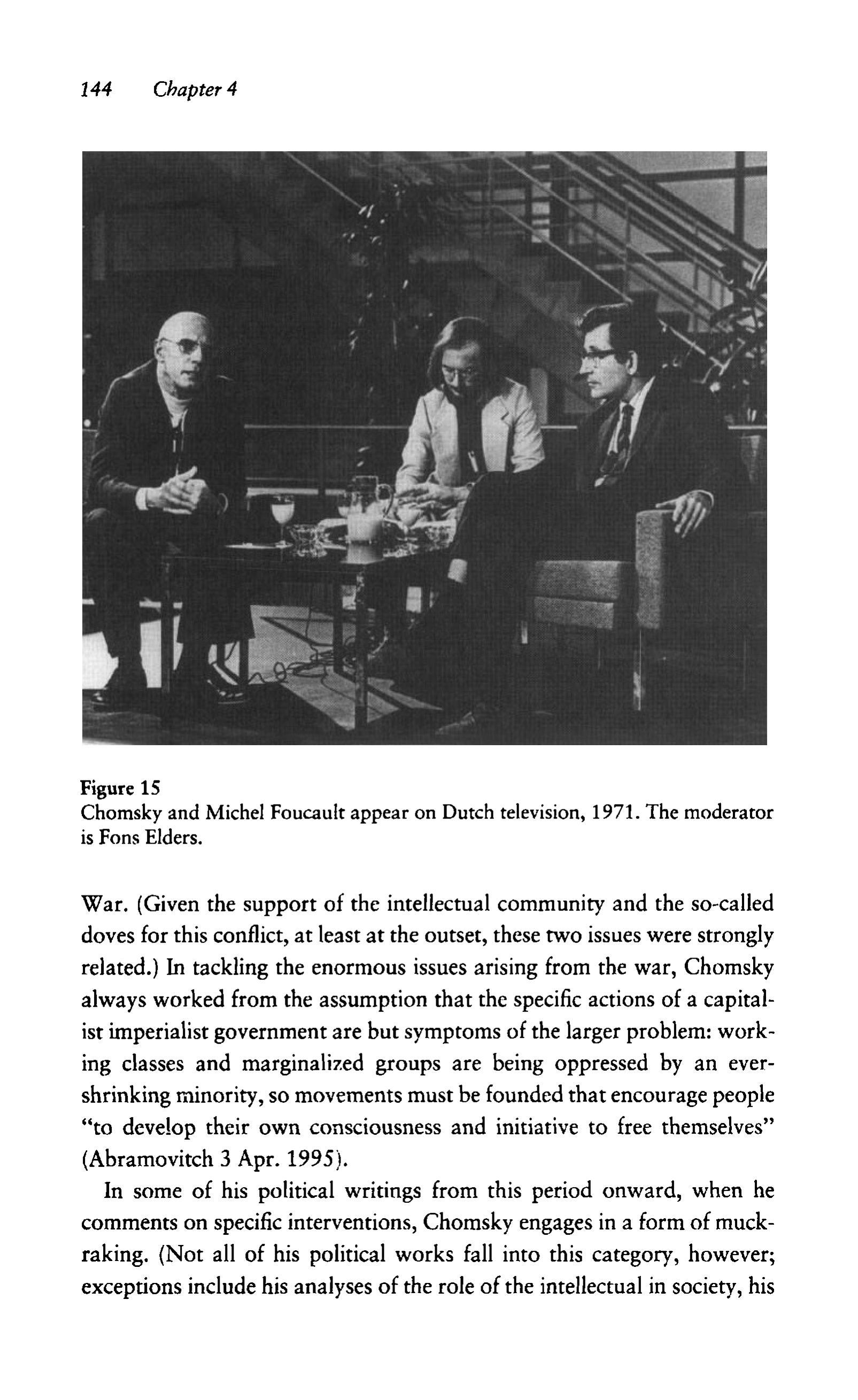
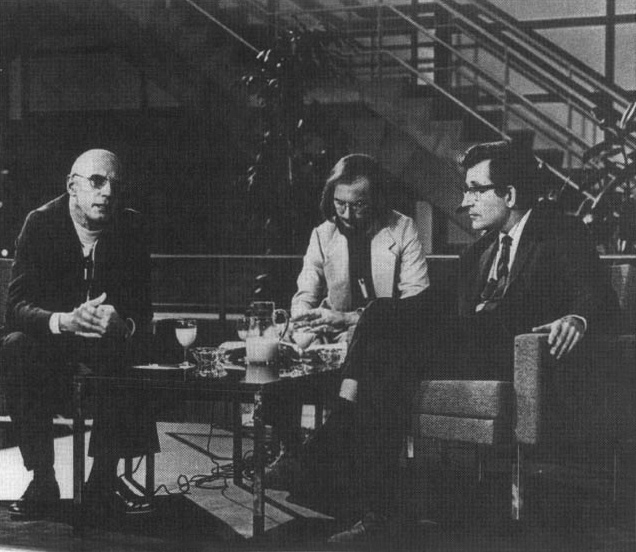
144
Chapter
4
Figure
15
Chomsky
and
Michel
Foucault
appear
on
Dutch television, 1971.
The
moderator
is
Fons Elders.
War. (Given
the
support
of the
intellectual community
and the
so-called
doves
for
this conflict,
at
least
at the
outset, these
two
issues were strongly
related.)
In
tackling
the
enormous issues arising
from
the
war, Chomsky
always worked
from
the
assumption
that
the
specific
actions
of a
capital-
ist
imperialist government
are but
symptoms
of the
larger problem: work-
ing
classes
and
marginalized
groups
are
being oppressed
by an
ever-
shrinking minority,
so
movements must
be
founded
that
encourage people
"to
develop their
own
consciousness
and
initiative
to
free
themselves"
(Abramovitch
3
Apr.
1995).
In
some
of his
political writings
from
this period
onward,
when
he
comments
on
specific
interventions, Chomsky engages
in a
form
of
muck-
raking. (Not
all of his
political works
fall
into this category, however;
exceptions
include
his
analyses
of the
role
of the
intellectual
in
society,
his
raking. (Not all of his political works fall into this category, however
The
Intellectual,
the
University,
and the
State
145
studies
of the
history
and
ideology
of the
left,
and
some
of his
historical
writings, including those concerned with Cartesian thought,
the
Spanish
Civil
War, World
War II in the
Pacific,
and the
Arab-Jewish relationship.)
Muckraking
is
spreading
the
dung around
in an
attempt
to
make
it
more
evident.
The
practice actually became
a
kind
of
movement with
a
history.
In
his
autobiography, Lincoln
Steffens
recalls that
he was
once told
by a
professor
of
history: "You were
the first of the
muckrakers.
If you
will tell
now how you
happened
to
start muckraking
not
only
will
you
contribute
to our
knowledge
of an
important chapter
of
American history;
you may
throw light upon
the
rise
and the run of
social movements" (357).
In
fact,
Steffens
refutes
the
"original
muckraker"
label, claiming that "the
prophets
of the Old
Testament were ahead
of
me,
and—to
make
a big
jump
in
time—so
were
the
writers,
editors,
and
reporters (including
my-
self)
of the
1890s
who
were
finding
fault
with
'things
as
they
are'
in the
pre-muckraking
period"
(357).
Furthermore,
Steffens
claims that
his
contribution
to
history
was but "a
story,
a
confession
of
innocence" because
"I did not
intend
to be a
muck-
raker;
I did not
know
that
I was one
till President Roosevelt picked
the
name
out of
Bunyan's
Pilgrim's
Progress
and
pinned
it on us; and
even
then
he
said that
he did not
mean
me"
(357). Chomsky,
as
well,
rejects
the
label
(as he
does virtually
all
labels),
because
it is
used
to
undermine those
who
speak
out
against
the
powers that
be: "We
don't
call critical dis-
cussion
of the
Soviet Union
'muckraking.'
The
term, with
its
connota-
tions
of
gossip
and
unseriousness, serves
as one of the
many devices used
by
Western power
to
protect
itself
from
scrutiny,
in my
opinion"
(30
May
1994).
Distancing himself even further,
he
writes:
"There
is
another
activity—political
analysis, diplomatic history, social
and
intellectual his-
tory,
etc.—which
is
sometimes called
'muckraking'
if it
departs
from
the
doctrine
and the
style that
is
used
by
professionals
to
make simple things
look obscure
and
profound.
But
it's
not a
terminology
I
favor....
and
[I]
do
virtually nothing
of
that
sort"
(8
Aug. 1994).
And
Edward
S.
Herman
responds
to the
suggestion that Chomsky's work
has a
muckraking ele-
ment with words
of
caution:
[I]n
dealing with
Noam
Chomsky
as a
muckraker,
I
would urge giving weight
to
the
scholarly component, intellectual
power,
and
originality
of
much
of his
politi-
cal
writing.
Time
and
again
he has
taken
up a
subject like
the
Cold War,
Haiti,
146
Chapter
4
the
Central American peace process, East Timor,
and
even
western colonialism
(chapter
1 of
Year
501)
and
produced original materials, laid
out
with remarkable
exhaustiveness,
in a
compelling
frame
that
is
very convincing.
His
dredging
up the
1954
and
1965
documents
on
U.S.
policy
in
Central America
(see
his
Managua
Lectures)
is a
case
in
point;
his
sections
in
Necessary
Illusions
on
"Demolishing
the
Accords,"
and "On
Critical Balance,"
are
devastating.
He has to be
ignored
because
he
can't
be
handled
by
honest debate.
(2
Aug. 1994)
But
what concerns Chomsky
first and
foremost
is the
danger
of
losing
sight
of
what
is
truly important
in a
given situation.
If, for
example,
one
criticizes
the
individual decisions
of a
particular government administra-
tion,
one
implies
that
some
decisions
are-
better
than
others
within
the
existing framework
of
that administration,
and
therefore tacitly endorses
it. The
goal should
be to
test
the
ideological soundness
of the
framework,
to
free
oneself
from
its
limitations
and
constraints. There
is an
echo here
of
the
hard-science-versus-social-science
debate: political analysis
is
situated
in
the
realm
of the
obvious; virtually anybody
who
stops watching tele-
vision, paying attention
to
sporting events,
or
playing
the
stock market,
and
concentrates, instead,
on the
society
in
which
he or she
lives, could,
in
Chomsky's view,
effect
an
appropriate political critique.
He
writes:
"Intellectuals
try to
make
it
look
difficult;
postmodernism carries this
to
extremes,
in my
opinion.
But
outside
the
hard sciences
and
mathematics,
there really
isn't
a lot
that
is
beyond
the
reach
of
people without special
training"
(8
Aug.
1994).
Chomsky's disdain
for
those
who
practice this type
of
obfuscation,
who
divert
public attention
from
what
is
essential,
is
often
palpable:
[Theodore] Draper's work
on
Iran-contra
[A
Very
Thin Line:
The
Iran-Contra
Affairs
(1991)]
is, to
answer your question,
a
good example
of
"muckraking,"
highly respected although
it
scrupulously ignores everything
important—such
as
the
fact
that
the
sale
of
U.S.
arms
to
Iran
via
Israel with Saudi Arabian
funding
began
in the
early
1980s,
when there were
no
hostages,
and the
reasons were
clearly
and
explicitly explained
by
high Israeli
officials
and fit
precisely within
standard operating procedure
for
overthrowing civilian governments;
and
that
the
illegal
funding
of the
contras
was
well known
as
well,
but
suppressed until
the
shooting down
of the
Hasenfus
plane made suppression
impossible—
[Such
an
approach
is]
standard,
and
entirely understandable
in a
corrupt intellectual
culture.
(31
Mar. 1995)
To go
beyond political critique,
to go
beyond muckraking,
one
must
have
an
understanding
of the
mechanisms—economic,
psychological,
legal,
sociological—that
limit
our
ability
to
comprehend,
or act in
favor
The
Intellectual,
the
University,
and the
State
147
of,
a
left-libertarian
society. From
the
standpoint
of
adherents
to
radical
critique, these mechanisms
are
extremely complex
and
require
a
general
analysis
of the
conditions
(sociopolitical,
for
example) that promote cer-
tain kinds
of
behavior, rather than
the
details
of
particular events. Chom-
sky, however, does
not
pretend
that
such deeper analysis
is, at
present,
possible.
He
applies
himself
to
exposing
the
events that
he
considers
to be
not
very
well understood,
or
else distorted
by
(for example)
the
media.
As
Abramovitch
has
remarked:
I
always enjoy reading
stuff
by
these
muckrakers;
one of the
best
recent
examples
is
I. F.
Stone,
and the
things that
he
discovered about
the
Vietnam
War are
really
mind-boggling.
Not
that
anybody
should
be
surprised
that
governments
are
capa-
ble
of
doing these things;
it is
always interesting
to
read about them
and to
have
these events
exposed.
That
is
something
that
Chomsky
does
very well
in
terms
of
American society.
But
that
is
only
one
aspect.
The
other aspect
is
trying
to
under-
stand
more
fully,
if one
can,
how
society functions; more specifically,
what
kinds
of
crises will society
undergo?
"Will
society
be
able
to
circumvent complete break-
downs
of
their
structures?
Until
now
they have been able
to
survive; many radicals
predicted
for so
long
that
"the
end has
arrived,"
and
tomorrow morning
a new
society will emerge.
That
does
not
seem
to
happen. This suggests
that
society
has a
way of
temporarily resolving some
of its
problems
so
that
it can
maintain
its
momentum
or its
existence
or its
structure.
It
would
be
interesting
to try to
dis-
cover whether this
is a
nonending type
of
process.
(12
Feb. 1991)
In
Chomsky's opinion, there
are no
theories that
can
address such
issues:
"I'm
not
aware
of the
existence
of any
theories,
in any
serious sense
of
the
term,
that
yield insight
in the
analysis case, including work
on
the
nature
of
totalitarianism, internal
filtering, and all the
rest."
This,
of
course, separates
him
from
theoreticians with whom
he
would otherwise
be
sympathetic,
in
terms
of
their interests, such
as
Erich
Fromm
or
Her-
bert
Marcuse.
In
fact,
he
continues, this kind
of
work "seems
to me
pretty
obvious,
and
frankly,
I get
irritated when intellectuals dress
it up as
something more than
that.
Furthermore,
I
think
we can
give
an
analysis
of
that
as
well: that's
the way you
become
a
respected public intellectual,
who can
preen
before
others
of the
same type.
But if
there
is
anything that
can't
be
told
to
high school students
in
monosyllables,
I
haven't
yet
heard
it" (18 May
1995).
This
all
raises
a
perhaps unresolvable distinction.
One
could claim
that
Chomsky's political
efforts,
initiated
in the
late
1960s
and
clearly
on
course
by the
early
1970s,
are
designed
to
alert
the
population
to
crucial
148
Chapter
4
events about which they know very little because they have been success-
fully
diverted
by
highly organized propaganda campaigns
and
numerous
other consciously,
and
sometimes unconsciously, employed tactics.
Or,
alternatively,
one
could claim that Chomsky's political work
is
built upon
particular precepts that
are
explained with regard
to
individual issues
(Vietnam, Cambodia,
the
Middle East),
but
that
it
implicitly poses, with-
out
fully
answering, questions such
as: Why we are at
this
point
in our
political history?
How is
change possible
in the
face
of
such
powerful
impediments?
What steps
can we
take
to
free
ourselves
from
manifestly
oppressive structures?
Chomsky will
not
tell
us how to
act.
We are
faced
with
the
problems
of
determining what
is
appropriate
action
at a
particular historical juncture
and
deciding what kind
of
work
should
be
undertaken
in
order
to en-
courage
the
creative possibilities inherent
in all
human beings: these
problems
may
prove
to
have
the
same solution.
Ken
Coates suggests,
in a
1973 pamphlet entitled "Socialists
and the
Labour
Party,"
that neither
complex political philosophy
nor
accessible, straightforward prose
is
suf-
ficient;
what workers must
do in
order
to
take control
of
their lives
is to
work
in
both
areas. Beginning with
the
argument
that
workers
can
learn
from
particular movements (the revolutions
in
China
or
Russia
are
good
examples,
but his
list does contain
a few
dubious choices)
and
that workers
require
an
international leadership
and
perspective, Coates goes
on to
claim that workers also need both
a
philosophical
and a
practical point
of
entry
into
debates concerning their
own
interests:
It is
obviously implied
in all
this
that
we
need
to
study
Marx,
Lenin, Luxemburg,
Lukacs,
Trotsky,
Gramsci,
Mao and
many other great
figures in the
history
of
socialist thought:
but it is
equally implied that
we
need
to
think
for
ourselves,
and
that
this
is a
most
difficult
task
to
perform
in the
manner
required
to
help
ordinary
workpeople
in
their struggles,
if we
remain artificially disengaged
from
all the
major
problems which confront
the
working-class movement,
as it is
constituted
at
present,
in the
organizations
which
it has
evolved
in the
attempt
to
meet
those
problems.
(7)
Where
the
emphasis should lie,
and
what relation exists between
"socialist
thought"
and
efforts
to
encourage workers
to
think
for
themselves
is un-
clear,
but
Coates does
offer
a
context
in
which
to
negotiate
the
seem-
ingly insurmountable distance between, say,
Che
Guevara
and
Theodor
Adorno.
The
Intellectual,
the
University,
and the
State
149
Linguistic Wars
In
the field of
linguistics,
and
specifically
in
Chomsky's department
at
MIT,
the
late
1960s
was a
period
of
dissension
and
discord among
faculty
and
students.
A
September 1972
New
York
Times
article called
"Former
Chomsky Disciples Hurl Harsh Words
at the
Master"
quotes Chomsky's
colleague
John
Ross
as
saying
that
Chomsky
was so
committed
to the
framework
he had
elaborated that
"he
can't
see
where
it's
inadequate"
(70).
Ross
and
other
"schismatics"
insisted
that
"you
can't
do
syntax
without doing semantics
as
well,"
a
premise that "transformational
grammarians"
such
as
Chomsky
did not
accept.
The
article also quotes
George
Lakoff,
another
MIT
colleague: "Since Chomsky's syntax does
not
and
cannot
admit
context,
he
can't
even account
for the
word
'please.'...
Nor can he
handle hesitations like
'oh'
and
'eh.'
But
it's virtually impos-
sible
to
talk
to
Chomsky about these things. He's
a
genius,
and he fights
dirty
when
he
argues.
He
uses every trick
in the
book,
and
he's
the
best
debater I've ever met."
The
linguistic wars took
on
such momentum that they broke
out
of
academic circles
and
became known
to the
public. They were well
rehearsed
in the
mainstream
media—including
the
New
York
Times,
roughly
six
years
after
the
fact.
A
great number
of
persistent miscon-
ceptions arose
from
the
schism these skirmishes created within
the field of
linguistics. Perhaps
it is for
these reasons
that
the
public perception
of
lin-
guistics
is
both
frozen
in
time
and
based upon inaccuracies; knowledgable
people
working outside
the field are
likely
to
have heard
of
deep structure
and
generative grammar,
but
remain unaware
of the
substantial advances
made
by
Chomsky
and
others since.
At
first,
those people
who
were working with Chomsky
at MIT in the
late
1960s
on the
work
that
was
overturning
Bloomfield-inspired
linguis-
tics
rallied around him.
He was
calling into question
a
whole
field as it
had, until that point, been understood. Paul Postal recalls:
It
was
really
a
psychologically painful
situation,
because
[Bloomfieldian
linguis-
tics]
was
itself
a
revolutionary linguistics
that
had
gained
its
ascendancy
by
pro-
claiming
that
it was the
scientific
way to
study language,
and
that
traditional
linguistics
was
unscientific. [The followers
of
Bloomfield]
had, themselves, tram-
pled
on
people rather
forcefully,
made
a lot of
enemies,
did a lot of
unpleasant
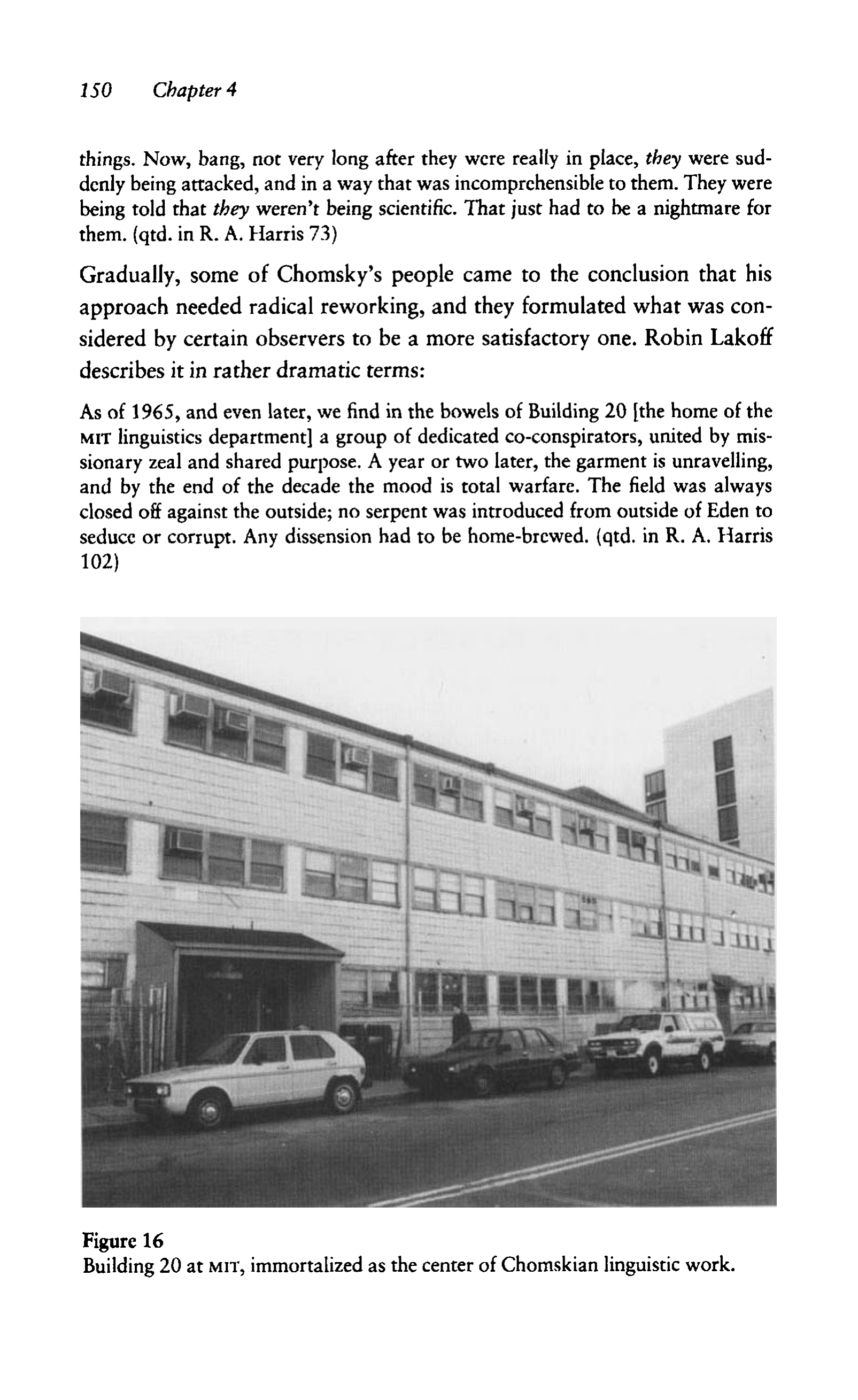
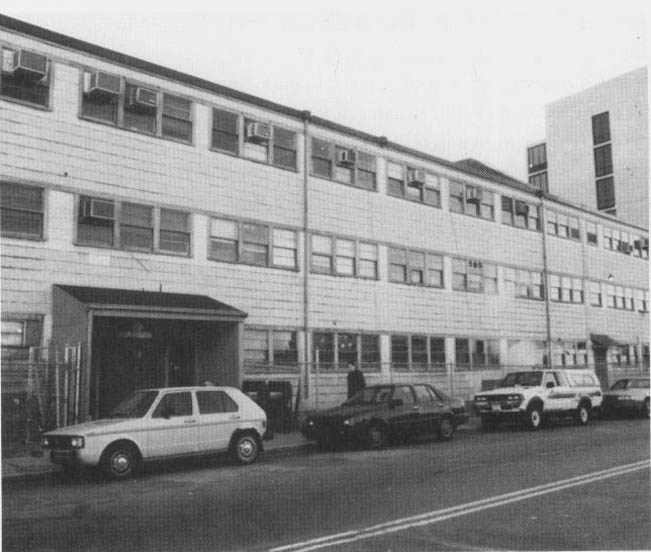
250
Chapter
4
things.
Now,
bang,
not
very
long
after
they
were really
in
place,
they
were sud-
denly
being attacked,
and in a way
that
was
incomprehensible
to
them. They were
being
told
that
they
weren't
being scientific.
That
just
had to be a
nightmare
for
them. (qtd.
in R. A.
Harris
73)
Gradually,
some
of
Chomsky's people came
to the
conclusion that
his
approach needed radical reworking,
and
they formulated what
was
con-
sidered
by
certain observers
to be a
more satisfactory one. Robin
Lakoff
describes
it in
rather dramatic terms:
As
of
1965,
and
even later,
we find in the
bowels
of
Building
20
[the home
of the
MIT
linguistics department]
a
group
of
dedicated co-conspirators, united
by
mis-
sionary zeal
and
shared purpose.
A
year
or two
later,
the
garment
is
unravelling,
and by the end of the
decade
the
mood
is
total warfare.
The field was
always
closed
off
against
the
outside;
no
serpent
was
introduced
from
outside
of
Eden
to
seduce
or
corrupt.
Any
dissension
had to be
home-brewed,
(qtd.
in R. A.
Harris
Figure
16
Building
20 at
MIT,
immortalized
as the
center
of
Chomskian linguistic work.
102
The
Intellectual,
the
University,
and the
State
151
Much
has
been made
of
this dissension;
in
fact,
a
recent book argues
that
the
rift
between
the
interpretivists (Chomsky)
and the
generative
semantics program (George
Lakoff,
McCawley, Postal,
and
Ross)
was not
quite
so
clear. "The
two
programs were
in
fact
quite complementary,
and
the
tensions between them
not
only bound each
to the
other,
but
also
steered them jointly
on to a
more productive path than either
of
them
individually
might otherwise have
taken"
(Huck
and
Goldsmith
3). But
Chomsky downplays
its
importance
and his own
part
in
this
"war."
And
he
especially condemns
R. A.
Harris's
view
that
"everything must
be a
power play,
a
religion....
The
real world
has no
resemblance
to
these
fantasies,
a
fact
easily demonstrated
by a
look
at the
published literature"
(31
Mar.
1995).
Chomsky continues:
The
"dissension"
between,
say,
Jackendoff
and
others
(many
of
them
not my
stu-
dents:
Lakoff,
Postal,
etc.)
was
from
about
1966
or so. I was
never
really
part
of
it—
my one
participation
in the
debate
was in
1969,
at a
conference
in
Texas,
where
I flew in and flew out
immediately
at the
impassioned
request
of a
former
student
there,
Stanley
Peters,
who
wanted
me to
make
some
public
response
to
the by
then
rather
hysterical
tone
of the
generative
semanticists,
all
pretty
childish
in
my
opinion,
and in
1969
I had
quite
different
things
on my
mind.
(3
Apr.
1995)
What kind
of
things? While
the
battle raged
at
MIT, Chomsky reached
"the
peak"
of his
antiwar activity. Between
fulfilling
this
commitment,
conducting
his
linguistic research,
and
publishing
the
results,
he
"hardly
would have
had
time
for
'power
struggles' even
if I had
been interested"
(14
Aug.
1995).
It is
also notable that "every single appointment
in my
own
area
in
those years
in my own
department
was a
generative semanti-
cist (Postal, Ross,
Perlmutter,
Kiparsky—insofar
as he
worked
on
these
topics)
and not a
single person
who I was
actually working with (Lasnik,
Jackendoff,
Emonds, Kayne, etc.)
was
appointed—facts
always omitted
by
the
'postmodern
historians' (i.e.,
R. A.
Harris)
of
this period, though
they
know them
perfectly
well"
(14
Aug.
1995).
The
other issue
that
was
generated
by
this conflict involved
the
left's
perception
of
Chomsky's
scientific
work: many began
to
consider
it
rigid
because
it was
founded upon principles
of
inherited genetic abilities
and
immutable categories,
the
anathema
of
left-wing
thinking, which stresses
the
role that environment plays
in
individual development. Chomsky
dismisses
this point
of
view
as
"completely
irrational"
for the
following
reasons:
152
Chapter
4
First,
the
denial
of
inherited genetic abilities
is
simply ridiculous. Looking beyond
truisms,
we find, as
everywhere
in the
biological
world,
that
the
effects
of
inherited
genetic
abilities
are
enormous.
Second,
why the
enormous
prevalence
and
success
of
ideas
that
could
not
conceivably
be
correct, like
the
various
"empty
organism"
theories?
That
question arises
after
one has
shown these theories
to be
wrong,
in
this
case,
scarcely more
than
absurd.
I
also
suggested
an
answer:
empty organism
theories
are
very
useful
to
those
who are
engaged
in
manipulation
and
control,
because they remove
all
moral barriers
to
such actions (for
the
good
of the
tar-
gets,
of
course!).
I
suggested
that that
is one
likely
reason
for the
appeal
of
these
absurd notions
to
what
is
called "the left"
...
and to the
other advocates
of en-
gineering of consent and social management Third, not only is it very clear
that
there
are
highly significant
genetic
factors
in the
mental
(as all
other)
domains,
but we
should
be
delighted
to
discover
the
fact, since without such ini-
tial constraints, there
can be no
significant development, creative
acts,
and so
on. (13
Feb.
1996)
Another
row
erupted
in
1972 that
had a
familiar
echo
to it. In
Decem-
ber
of
1971, Chomsky
had
reviewed, once again
(in the
New
York
Re-
view
of
Books),
the
work
of B. F.
Skinner, this time
his
extremely popular
Beyond
Freedom
and
Dignity.
The
book advocated applying
the
tech-
niques
of
behavioral science
to
mute antisocial tendencies
in
society with
the
objective
of
creating
a
more benign civilization. Skinner
had
been
denounced
by
numerous libertarians
and
humanists
as
authoritarian,
but
it was
Chomsky who,
after
a
long
and
detailed analysis
of the
alleged
substantive content
of the
work under review, described
his
envisioned
society
as
akin
to "a
well-run concentration camp with inmates spying
on
one
another
and the gas
ovens smoking
in the
distance."
An
article
in the
London Times
in
Februaiy
of
1972, "America's Great Intellectual Prize-
fight,"
quoted Skinner:
"I
wonder
how a man of
such intelligence
can do a
thing like
that,"
he
said sullenly.
"We are on
opposite sides
of the
debate,
and
I'm
very content with
that.
I
can't take
him
seriously
as a
critic. He's
a
mentalist
and
refuses
to
accept that there
is a
science
of
behaviour. He's
unaware
of
what's going
on in the field of
behaviour modification,
and
he's having trouble with
his
linguistics."
A
Modern-Day Soothsayer
Chomsky
was by now a
famous,
but
marginalized
(by the
mainstream
press)
critic
of
American policy.
As
always,
he
challenged mainstream
The
Intellectual,
the
University,
and the
State
153
organs
to
justify
their methods
of
presenting facts,
but
with
limited
suc-
cess: scarcely
any of his
letters
to the
editor,
for
example, were ever pub-
lished.
The
exceptions were
often
those missives authored
by
others
that
he
cosigned, such
as one to the
editor
of the
New
York
Times,
dated
16
February
1972,
in
which
he,
along with Mark
Sacharoff,
Robert
Jay
Lifton,
and
Fred
Branfman
expressed
the
following opinion:
"No
doubt,
the
destruction
of
Indochina
by the
U.S. passed [the point
of
atrocity]
long ago. Nevertheless, another intense
and
highly visible outbreak
of
deranged obliteration, concentrated into
a few
weeks
and
conducted
brazenly
before
the
eyes
of the
world,
would
add a new
dimension
of
repellent conduct
to our
shameful
record
in
Southeast
Asia."
So
Chomsky
continued
to
write,
march,
and
collaborate with
a
range
of
groups
and
individuals
in
pursuit
of
well-established goals.
In
1973,
for
example,
Chomsky, Dellinger,
Hentoff,
Spock, Boyle, Ginsberg, Macdonald,
and
Day
headed
a
committee
to
commemorate
the fiftieth
anniversary
of the
War
Resisters' League.
From
the
hundreds
of
articles
and
rebuttals
that
he
wrote during this
period
concerning
Vietnam,
Cambodia,
and
Laos,
emerges
an
image
of
Chomsky
as a
kind
of
modern-day soothsayer. Unlike many
leftists
of
his
generation, Chomsky never
flirted
with movements
or
organizations
that were later revealed
to be
totalitarian, oppressive, exclusionary, anti-
revolutionary,
or
elitist. Leninism, Stalinism, Trotskyism,
and
Maoism
offered
to
many
of
Chomsky's disillusioned contemporaries
an
alternative
to
what they
saw as
blatantly exclusionary American-style capitalism.
When
reports
about what
had
actually occurred
in the
former
Soviet
Union
and
China began
to filter
through, many
felt
betrayed.
We now
hear
a lot
about
how the
left
has
been discredited,
the
hopelessness
of
Utopian
thinking,
the
futility
of
activist struggle,
but
little about
the
libertarian options that Chomsky
and
others have
so
consistently
presented.
The
type
of
dismay
that
has
permeated contemporary intellectual cir-
cles
has not
touched Chomsky.
He has
very little
to
regret.
His
work,
in
fact,
contains some
of the
most accurate analyses
of
this century.
And
yet,
most
of his
criticisms
of
American policy, past
and
present,
are
seldom
mentioned
in the
mainstream
press
or by the
instructors
and
professors
who
teach history
or
politics. Political science departments rarely
use his
154
Chapter
4
material
on
Vietnam,
the
Cold War, Central America,
or
Israel. Com-
menting
on
this with regard
to
Vietnam, Chomsky says:
"I
think you'll
find
virtually
no one
anywhere near
the
mainstream
who is
even
familiar
with,
let
alone admits,
any
aspect
of my
criticism
of the
war. That extends
to the
left.
Thus
on the
left,
who
described,
or now
describes,
the war as a
U.S.
war
against South Vietnam, which
the
U.S.
had
largely
won by the
early
1970s?"
(31
Mar.
1995).
The
prevailing critical viewpoint
on the
bombardment
and
destruction
of
Vietnam Chomsky summarizes this
way:
"At the
critical
end of the
mainstream spectrum,
the war
began with
'blundering
efforts
to do
good'
and
ended
as a
'disaster'
because
the
costs
were
too
high.
Dissent,
which supported
the
U.S. attack
in
1964
(calling
it
'defense')
concluded
after
the war
that
its
position
had
been right
all
along.
On the
left,
the
standard view
is
that
the
Vietnamese
won and the
U.S.
lost."
And
again
he
stresses
his
exclusion:
"My own
view, shared
with Edward Herman,
is
virtually non-existent
in the
debate,
and our
(together
and
separately) detailed documentation
of
what
in
fact
hap-
pened
in
crucial periods,
from
the
beginning through
the
1973 peace
accords,
is
unknown"
(31
Mar. 1995).
Of
course,
in the first
days
of
opposition
to
American policies
on
Viet-
nam, Chomsky
and
those sympathetic
to his
views were
even
more severely
marginalized.
He
foresaw
the
government ensuring
that
Indochinese-style
invasions
launched
to
protect domestic interests would become
the
norm
(think
of El
Salvador, Nicaragua,
Tripoli,
the
Gulf War).
Most
of the re-
evaluation
of the
Vietnam
War
concerns
the
mistakes, generally tactical
mistakes, that
the
American government made. These assessments
are
often
considered radical; their acceptance
by
policy makers
is
also taken
to be an
indication that
the
American political system
is
working—after
all,
it has the
capacity
to
admit
its own
errors.
But
this
is a
long
way
from
Chomsky's view:
I
never criticized United States planners
for
mistakes
in
Vietnam. True, they made
some mistakes,
but my
criticism
was
always aimed
at
what they aimed
to do and
largely achieved.
The
Russians doubtless made mistakes
in
Afghanistan,
but my
condemnation
of
their aggression
and
atrocities never mentioned those mistakes,
which
are
irrelevant
to the
matter—though
not for the
commissars.
Within
our
ideological system,
it is
impossible
to
perceive
that
anyone might criticize anything
but
"mistakes"
(I
suspect
that
totalitarian
Russia
was
more open
in
that
regard).
(31
Mar.
1995)
The
Intellectual,
the
University,
and the
State
155
Even
when opponents
of
Chomsky's position came around
to
ques-
tioning American involvement
in
Vietnam
(still
a
long
way
from
ques-
tioning
the
fundamentally immoral objectives
that
the
United States
had
for
Indochina), they
found
ways
to
overlook
the
underlying message
of
his
work
in
favor
of
tangentially related matters.
For
example,
the
author
of
a
generally positive review
of
For
Reasons
of
State
and
The
Backroom
Boys,
published
in the 21
December 1973 edition
of the
Times
Literary
Supplement,
objects
to the
fact
that
the
material
was
written some time
before
it was
published
(even
though
it was
based
on
documentation
that
appeared just
as the
book
did—notably
the
Pentagon Papers);
that
it was
brought
out as two
books rather than
one
(the publisher's decision);
and
that Chomsky
did not
revise
the
text more completely.
In
another review
of
The
Backroom
Boys,
this time
in the 5
April 1974 edition
of the
Times
Higher
Education Supplement,
Nigel Young also takes
on
Chomsky's
style; though
it
resembles scholarship,
he
maintains, Chomsky's book
is
polemical. And, much
later,
in a
Times Literary Supplement
review
of
The
Chomsky
Reader,
Charles Townshend indulges
in a
long tirade
on
Chomsky's style;
he
condemns
the
fevered
pace,
the
overabundance
of
reference
and
detail,
and the way
that
the
reader
is hit
over
the
head
at the
beginning
of a
piece,
before
the
argument
is
brought
to a
climax.
This obsession with issues
of
style
or
genre seems
to
serve
as a
means
of
avoiding
the
essential arguments
in
Chomsky's
work,
and may
there-
fore
lend,
further
credibility
to his
claim that
the
intelligentsia cannot
resist conforming
to
official
doctrine.
The
author
of the 21
December
1973
TLS
review does
recall,
near
the end of the
piece,
that
Chomsky lays
bare America's real interests
in
Indochina
and
reveals
the
ways
in
which
consecutive American administrations have played
God in
Asia.
The re-
viewer also condones Chomsky's decision
to
expose
the
deliberateness
and the
ferocity
of
those administrations' attacks against Asia's rural
communities.
But
this review does
not
accurately
reflect
its
subject,
be-
cause
it
seems
to
suggest
that
there
are
less
arrogant
and
more imaginative
ways
to
slaughter people;
it
also ignores Chomsky's (and Herman's) view
that
the
price America
has
paid
is
negligible
in
light
of the
fact
that
it
largely achieved
its
goals
in
Indochina
(just
as it did in the
long Cold War;
although
the
exercise
may
have appeared pointless,
it
ultimately allowed
156
Chapter
4
America
to
divide
up the
world according
to its
interests
and to
subsidize
its
industries
for
defense
purposes).
What distinguishes Chomsky's work (and these books
are
good exam-
ples)
from
the
work
of the
muckrakers
who
might have said similar things
is
the
degree
to
which
he has
consistently described
the
kind
of
thinking
that
brought
on the
Vietnam
War as
endemic
to the
system.
No
official
is
likely
to
have learned anything that could prevent
future
regimes
from
committing such
atrocities;
humanistic approaches
and
lessons have been
banned
from
playing
a
part
in
imperialist power struggles.
All
these
offi-
cials
have proven themselves capable
of
learning
is how to
make
fewer
tactical errors and, therefore,
how to be
more murderous. Chomsky's
reviewers have, almost universally,
failed
to
mention
this.
The
1973
TLS
reviewer
was no
exception,
and
actually ended
by
suggesting that
the end
of
imperialism
was
nigh.
Plato's
Problem,
Orwell's
Problem,
and
Life
in the
Spotlight
In
the
mid-to-late
1970s,
Chomsky's
Reflections
on
Language
and
Essays
on
Form
and
Interpretation
appeared,
as did
Logical Structure
of
Lin-
guistic
Theory
(although
it had
been written between 1955
and
1956).
Studies
that Chomsky
had
been working
on for
years entered
the
public
domain.
He was
also lecturing widely:
he
delivered
the
Whidden Lectures
at
McMaster University
in
Hamilton, Ontario;
the
Huizinga Memorial
Lectures
at
Leiden;
the
Woodbridge Lectures
at
Columbia University;
and
the
Kant Lectures
at
Stanford University.
He was
named Corresponding
Fellow
of the
British Academy
in
1974.
But it was
Reflections
on
Lan-
guage
that sparked
the
greatest amount
of
discussion within
the field,
partly because
of
John
Searle's
review article "The Rules
of the
Language
Game,"
which appeared
in the 10
September 1976 edition
of the
Times
Literary
Supplement.
In
Searle's opinion,
Reflections
confirmed
that
Chomsky
was
retreating
from
his
previous positions,
in
particular
the
idea
that
a
sentence's meaning
is
determined
by its
syntactical deep
structure. Searle argued that Chomsky
was now
seeking
to
determine
meaning
through
an
altered notion
of
surface
structure. Chomsky merely
remarked that
the
review proved Searle
had
lost interest
after
Aspects
came out.
The
Intellectual,
the
University,
and the
State
157
Reflections
—comprised
in
part
of the
Whidden
Lectures—addresses
the first of
three problems
that
Chomsky
has
explored
in a
number
of
contexts.
He has
called
it
"Plato's
problem,"
and
Bertrand
Russell,
in his
later
works,
poses
it
like
this:
"[H]ow
comes
it
that
human beings, whose
contacts with
the
world
are
brief
and
personal
and
limited,
are
able
to
know
as
much
as
they
do
know?"
(qtd.
in
Chomsky,
Language
in a
Psy-
chological
Setting
3-4).
The
second problem, more
often
addressed
in the
course
of
political rather than linguistic discussions,
is
what Chomsky
(in
Knowledge
of
Language)
has
called
"Orwell's
problem":
How is it
that
human beings know
so
little given
the
amount
of
information
to
which
they
have
access?
The
third problem, which
was
examined
in the
previous
chapter,
is
what Chomsky
refers
to as
"Descartes's
problem":
How can
we
account
for the
many "mysteries
for
humans,"
or
even determine what
lies
beyond epistemic bounds?
The first
problem
is
taken
up in
Reflections
on
Language
as a
means
of
gaining
insight into universal grammar. Searle
differs
with Chomsky
not
over
the
problem itself,
but
over Chomsky's approach
to it,
particularly
what Searle calls Chomsky's "thesis
of the
autonomy
of
syntax."
But,
Chomsky writes, "It's
a
logical impossibility
for
Searle,
or
anyone,
to
dif-
fer
with
my
'thesis
of the
"autonomy
of
syntax,"'
because I've never held
any
such thesis. There
is a
very large
'debate'
about
it,
with many people
attacking
the
thesis (but without telling
us
what
it is) and no one
defend-
ing
it,
surely
not me,
because
I
have
no
idea what
it is" (31
Mar.
1995).
According
to
Searle, Chomsky's argument
in
support
of
this
"thesis"
is
that
"the rules
of
syntax
of
natural languages,
that
is the
rules
of
sentence construction,
can be
stated using only syntactical notions:
the
rules,
for
him, make
no
reference
to
meaning
or
function
or any
other
non-syntactical notions:
all the
rules
of
syntax
of all
natural languages
are
in
this sense formal." Searle counters this argument that
he
attributes
to
Chomsky
by
stating:
"if,
as
seems probable, language evolved
in
human
prehistory
to
serve certain needs
of
communication,
it is
likely both that
there will
be
some rules that make reference
to the
communicative
func-
tions
of
language
and to the
meanings
of
syntactical elements,
and
that
many
of the
purely syntactical rules
of
language will have
a
deeper
explanation
in
terms
of the
functions that
the
syntactical forms serve
"
This review, which contains fundamental misreadings
of
Chomsky's
158
Chapter
4
work, prompted
further
discussion, which,
in
Chomsky's view, concerned
nothing more than
"what
might
be
shown
if
such proposals [about
the
role
of
functions] could
be
formulated"
(31
Mar.
1995).
At
least part
of
the
fallout
from
the
review
took
the
form
of
letters
to the
editor
of the
Times
Literary
Supplement.
The
issue
of
"the unargued assumptions
about
the
nature
of
language" (Searle, letter),
and the
question
of how
meaning
and
function
are
related
to the
rules
for the
distribution
of
syntactical features
of
sentences,
continued
to
fuel
linguists
and
other
language theoreticians
for
years.
In
the
mid-1970s, Chomsky
was
approaching
the age of fifty. His
chil-
dren were teenagers,
and
Carol
was
teaching half-time
at the
Harvard
Graduate School
of
Education.
The
children,
all
excellent students,
un-
doubtedly
benefitted
from
the
rich conversation
and the
intense cultural
environment
of
their home.
But
they also lived
in the
shadow
of the
Chomsky name. Family
life
was
also somewhat
difficult,
at
times, because
the
spotlight,
frequently shining
on
Noam,
also sought
out his
wife
and
children. Carol
and
Noam held
fast
to
their decision
to
allow their chil-
dren
the
freedom
to
choose their
own
career paths
and to
shield them
from
the
controversies surrounding Noam's political work.
And so
very
little
information concerning
the
Chomsky
family
has
been circulated
over
the
years,
and
even
colleagues
of the
Chomskys were routinely kept
at an
arm's length
from
their domestic
life.
But
whatever trepidation
he
might have
felt
about
the
dangers that
he
faced
as an
individual
and the
difficulties
that
his
family
might encounter
as
a
result
of the
intensifying
spotlight, Chomsky
did not
relinquish
his
beliefs
or
soften
his
stance.
In his
political work
of the
mid-to-late
1970s,
he
maintained
his
focus
on
issues
that
he had
talked about since
the
late
1950s:
the
Middle East,
the
Spanish Civil War,
the
background
to
World
War II, the
framework
of
American global planning, global order, Indo-
china,
and so on. But he was
also becoming more
and
more absorbed
by
Orwell's
problem, paying special attention
to the
question
of
why,
after
almost
a
century
of
destruction
and
invasion
that
had
been heavily
re-
ported
as a
result
of the new
technologies (television images
of the
Viet-
nam War
were beamed into living rooms across America),
and
after
events
that should have shaken American
confidence
in
their institutions
(the
social
unrest
of the
1960s,
the
war,
the oil
crisis),
the
population
did
The
Intellectual,
the
University,
and the
State
159
not
rise
up.
Nevertheless, "the movements
of the
1960s
really expanded
in
the
1970s,
and
even more
in the
1980s.
They also became much more
deeply
rooted
in the
mainstream society"
(13
Feb. 1996).
At
this
point,
in the
early
1970s,
Chomsky began
to
collaborate with
Edward
S.
Herman,
who
shared
his
interests
and who had
also
published
books
on the
Vietnam
"War
in
1966
and
1971. This marked
the
beginning
of
a new
phase
in
Chomsky's work,
one in
which
he
would complement
his
previous political analysis with closer scrutiny
of the
institutions
that
manufacture
consent.
Chomsky
and
Edward
S.
Herman
Herman,
who was
working
on
media analysis, wrote
to his
friend
David
Peterson:
My
collaborations
with
Chomsky
arose
out of
shared
interests
and
views,
and a
perceived
synergy
in
working
together—we
could
meld
together
our
individual
ideas
and
ways
of
saying
things,
benefit
from
mutual
editing,
and get
things
done
faster
and
better
working
collectively.
From
the
beginning
we
rarely
saw one
another,
but had an
active
correspondence,
exchanging
papers
and
ideas
and
comments
on the
passing
scene.
(12
Aug. 1992)
In
summarizing
the
advantages
of
working with
Chomsky,
Herman vali-
dates Chomsky's
belief
in the
value
of
collective endeavors:
"There
is
also
a
psychological
benefit
in
occasional
joint
work,
knowing
that
your ideas
are
appreciated
and
that
you are not
alone
in
your otherwise marginalized
thoughts."
In his
1992 talk "Creation
and
Culture," Chomsky makes
a
similar point
in a
typically droll
and
ironic manner: "People
are
just
too
dangerous when they
get
together"
because then
"they
can
have
thoughts,
and
ideas,
and put
them
forth
in the
public arena,
and
they begin
to
enter
that area where they
don't
belong, namely
influencing
public
affairs."
He
then goes
on to
discuss various aspects
of
thought control,
a
subject
that
also held fascination
for
Herman.
"Separating
people,
and
isolating
people, is a technique of control Television is inherently an isolating
device.
You are
alone watching
the
tube. That
is
very
advantageous
for
control
of
people.
As
long
as you can
keep people isolated
...
as
long
as
each person thinks thoughts individually
and
nobody else knows
that
they have this crazy idea, it is not a problem "
160
Chapter
4
The
Chomsky-Herman collaboration ultimately netted several articles
and
books,
including
Counter-Revolutionary
Violence:
Bloodbaths
in
Fact
and
Propaganda
(1973),
The
Political
Economy
of
Human Rights
(1979),
and
Manufacturing
Consent:
The
Political
Economy
of
the
Mass
Media
(1988).
Censorship
Counter-Revolutionary
Violence
describes
in
intimate detail
the
blood-
bath
that
the
United States
was
perpetrating
in
Vietnam. Chomsky
had
long been suspicious that certain elite groups were combining their
efforts
to
suppress anti-status-quo versions
of
events,
but he was
about
to
learn
that,
if
anything,
he had
underestimated
the
lengths that these powers
would
go to
quell their opposition.
Counter-Revolutionary
Violence
was
suppressed
by
Warner Commu-
nications,
the
giant parent company
of the
publisher Warner Modular.
This,
in
itself, sounds implausible:
an
American megacorporation decides
to
destroy
a
book
it has
already published. Furthermore, because Warner
Modular
refused
to
stop distributing
the
book
after
Warner Commu-
nications issued
the
order
to
kill
it, the
parent company actually
put the
publisher
out of
business.
It
gets worse.
The
book appeared
in
French
translation
(Bains
de
sang)
the
following year (1974), but, Chomsky
insists,
it was
"mistranslated
to
satisfy
the
ideological needs
of the
French
left
at
that
time"
(31
Mar.
1995).
The
idea that
a
corporation
would
be
willing
to
forgo profits
in the
name
of
ideology,
or
that
a
work would
be
tampered with
in
translation
because
it
doesn't conform
to
specific
ideological needs, invariably raises
the
eyebrows
of
those
who
have come
to
believe
in the
sanctity
of the
free
market
and
such concepts
as
freedom
of
expression.
It
also raises nagging
questions.
Why did
Warner
feel
that
in
order
to
suppress
a
single book
(a
book, moreover,
by two
established intellectuals employed
by
leading
American universities)
it was
worth
it to
cripple
one of its own
subsid-
iaries?
Ben
Bagdikian's book
The
Media
Monopoly
(published
by
Beacon
Press
in
1983)
confirms
Chomsky's account
of the
incident
and is an
important source
in the
canon
of
references
that Chomsky cites
in his
The
Intellectual,
the
University,
and the
State
161
later condemnation
of,
among other things, media collusion with power-
ful
elites.
Warner Communications
had
acquired Warner Modular
in
order
to
capitalize
on the
surge
in
university enrollment
and the
concomitant
growth
in
interest
in the
country's institutions. Located
in
Andover, Mas-
sachusetts,
and
therefore close
to the
large intellectual community
in and
around Boston, Warner Modular published books, pamphlets,
and
mono-
graphs
that
could
be
used
to
supplement required-reading lists
for
uni-
versity
courses.
Its
publisher
was
Claude McCaleb,
who
"was developing
a
list
to
meet
the
growing request
for
fresh
analyses
of
national
and
world
events" (Bagdikian 33).
The
Chomsky-Herman book
was a
part
of
this
list.
It
upheld
the
thesis
that
"the United States,
in
attempting
to
suppress
revolutionary movements
in
underdeveloped countries,
had
become
the
leading
source
of
violence against native people" (Bagdikian
33).
When
the
president
of
Warner Communications, William
Sarnoff,
saw the ads
for
the
book
in
August
of
1973,
he
phoned Warner Modular
to find out
if
"this
was
another Pentagon Papers case that would embarrass
the
parent
firm"; the
answer
was no, it was a
book written
by two
respected
intellectuals.
Later
on in the
day,
Sarnoff
called again, asking that McCaleb bring
a
copy
of
Counter-Revolutionary
Violence
to him in New
York City that
night. This
was not
possible,
as the
book
was
just
being printed because
advance copies were scheduled
to be
delivered
to the New
York meeting
of
the
American Sociological Association
in a few
days.
So the
next
morning, someone
from
McCaleb's
office
delivered
the
manuscript
to
Sarnoff.
Shortly thereafter, McCaleb
was
summoned
to
Sarnoff's
office.
An
incensed
Sarnoff
attacked McCaleb
for
having published
the
book.
In
McCaleb's
words,
Sarnoff
claimed
that
Counter-Revolutionary
Violence
was
"a
pack
of
lies,
a
scurrilous attack
on
respected
Americans,
undocu-
mented,
a
publication unworthy
of a
serious
publisher."
He
then
an-
nounced
that
the
book
was not to be
released, cancelled
the ads for
it
s
and
"ordered
the
destruction
of the
Warner catalogue listing
the
Chomsky-
Herman
book
and its
replacement
by a new
catalogue with
the
book
omitted"
(Bagdikian 34).
McCaleb,
not
surprisingly,
was
stunned
by the
news.
He
reminded
Sarnoff
about previous agreements between Warner Communication
and
162
Chapter
4
Warner Modular concerning
who
would
be
responsible
for
making pub-
lication decisions,
and
cautioned
him
about
the
impact that this deci-
sion would have
on the
academic community. According
to
McCaleb,
"Sarnoff
answered that
'he
didn't give
a
damn what
I, my
staff,
the
authors,
or the
academic community thought
and
ended
by
saying
we
should
destroy
the
entire inventory
of
[Counter-Revolutionary Vio-
lence]
7
"
(qtd.
in
Bagdikian 34). Warner Modular
was
subsequently sold
to
another
firm,
only
to
disappear shortly thereafter.
But
the
censorship wasn't over yet.
Efforts
continued that year
to
seal
off
the the few
small access routes
that
Chomsky
had to the
mainstream
press. Herman explains:
During
the
Vietnam
war
era,
a
period
of a
sizable
and
active anti-war movement,
roughly from 1965
to
1972, Chomsky
wrote
and
spoke extensively,
but
even then
his
access
was
confined
to
radical publications like
Ramparts
and
Liberation,
plus
the
New
York Review
of
Books,
the
mainstream
exception
through 1972. Chom-
sky
has
never
had an Op Ed
column
in the
Washington Post,
and his
lone opinion
piece
in the
New
York Times
was not an
original
contribution
but
rather
excerpts
from
testimony before
the
Senate Foreign Relations Committee.
The
New
York
Review
of
Books
exception
closed
down
in
1973,
not as a
result
of any
change
in
Chomsky
but
following
a
sharp move
to the
right
by the
editors
of the
journal,
who
thereafter excluded
a
number
of
left
critics.
("Pol Pot" 599)
That
one of
America's most well-known intellectuals
and
dissidents
would
be
thus ignored
and
even ostracized
by the
mainstream press seems
quite remarkable. But, according
to
Chomsky, this kind
of
thing
had
been
going
on
since
he first
became publicly involved
in
political issues:
When
wasn't
I
ostracized?
In
the
'60s
and
early
'70s,
I was
indeed virtually
ignored,
with
the
sole
exception
of the
New
York Review
of
Books,
which, from
about
1968-1972,
allowed
an
opening
for
dissident opinion, reacting
to
currents
among young
intellectuals
and
academics
that
they couldn't
ignore;
when these
subsided,
the
window closed. During
that
period, they also
ran
articles
by
Paul
Lauter,
Peter
Dale
Scott,
and
many
other
dissidents.
Since then, they've
kept
almost entirely
to
exactly
the
types
who
were criticized
by the
dissidents they for-
merly
allowed
(they were always open
to
mainstream liberals
and the
right,
of
course).
(31
Mar. 1995)
This seems
to
suggest that
the
late 1960s
and
early 1970s were periods
during which diversity, debate,
and
dissent were permitted
to flourish.
Certainly, such
a
view would coincide with
official
accounts
of the
period.
Chomsky
disagrees:
"In the
'80s,
as
popular movements became more
The
Intellectual,
the
University,
and the
State
163
vigorous
...
the
press opened
up
too,
to
some extent.
So,
I've
had far
more
media opportunities since
the
early
'80s
than ever before, though
the
national media
in the
U.S.
(New York Times, Washington
Post,
national
public TV-radio) remain
as
closed
as
ever"
(31
Mar.
1995).
In
sharp contrast
to the
increasingly enthusiastic interest
in
Chomsky's
political work demonstrated
by a
growing segment
of the
population,
the
intellectual elite seems
to
have been broadly influenced
by
easily digested
generalizations: he's
anti-Zionist,
he's
a
Communist,
and so on.
Those
who
have
not
actually read
his
political
works express
total
disbelief
that
Chomsky
has
been ostracized
on the
basis
of his
dissident opinions.
The
standard line
is
that such opinions
are the
very backbone
of the
main-
stream press,
and
that
people with various perspectives
are
regularly given
the
opportunity
to
attack
the
government.
Those
who are
more familiar
with
Chomsky
and his
work,
and who
have
a
better understanding
of his
relationship with mainstream media organs, have
a
different
view.
Chomsky's
own
assessment
of all
this
is
characteristically
insightful,
acer-
bic,
and
humorous:
There
are
many
illusions...
concocted
for
obvious reasons ("we
used
to
allow
him
to
appear
all
over,
but
then
he
went crazy,
so
what
can we
do..."
etc.).
And
much
of
this
is
actually
believed
by
people
who
don't know
the
facts,
which
can
easily
be
ascertained.
In the
late
'70s,
for
example,
after
the
collapse
of
Ramparts
and
Lib-
eration,
just
about
the
only
journal
in
which
I
could publish regularly
was
Inquiry,
the
journal
of the
ultra-right Cato Institute. Remember: that
was
before
my
alleged
crimes. Again, easily checked,
but not
known....
(31
Mar. 1995)


This page intentionally left blank
The Intellectual as Commissar
The
Function
of the
Academic
Chomsky
has,
over
the
years, pursued
his
early interest
in the
academic's
role
and the
university's function
in
contemporary society.
He is
quick
to
note
the
degree
of
collusion between intellectuals
and
state policies,
even
when these policies
are
clearly oppressive, violent,
or
illegal.
The
rea-
sons academics
often
assume this managerial role
in
relation
to
society,
Chomsky
feels,
are
related
to
their quest
for
power,
their belief
(carefully
cultivated
by
those institutions closest
to the
centers
of
power)
in the
fun-
damentally benign nature
of
Western institutions,
and the
high
level
of
indoctrination
to
which they have been submitted
as
members
of the
ruling
elite. Chomsky's views
on
these matters
are
often
similar
to
those
of
the
thinkers
who had a
formative
influence
on his
outlook,
notably
Bakunin
and
Pannekoek. Typically, these views
are
based
on
values such
as
social responsibility, academic integrity,
and
commitment
to a
truthful
and
undistorted representation
of
facts.
They lead Chomsky
to
con-
frontations
with groups
and
individuals
who are
concerned only with
serving
the
interests
of
power,
who
promote
the
cause
of one
group while
turning
a
blind
eye to the
larger principles
at
stake.
By
the
mid-
to
late
1970s,
Chomsky
had
already experienced such
clashes
on
numerous fronts.
He had
faced
pro-Israeli groups, anti-
Communist groups,
pro-Cold
War
groups,
just
as,
during
the
Second
World
War,
people such
as
Dwight
Macdonald
had
faced
anti-Nazi
groups
who
denounced
the
refusal
of
Macdonald
and the
others
to
sup-
port
the
Allied
side. Chomsky adamantly rejected
the
assumption that
a
given
group might have
an
intrinsic right
to act
aggressively simply
5
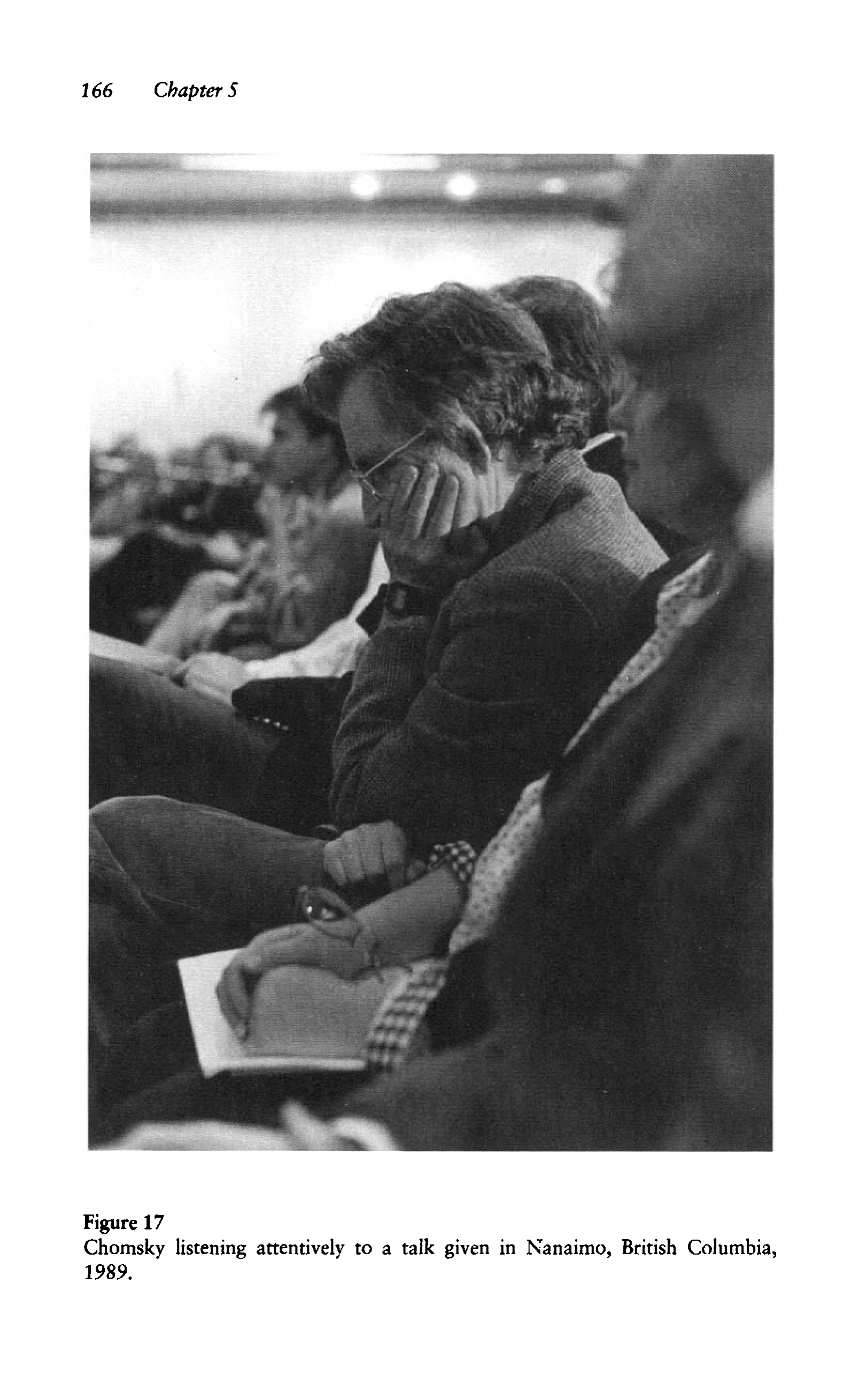
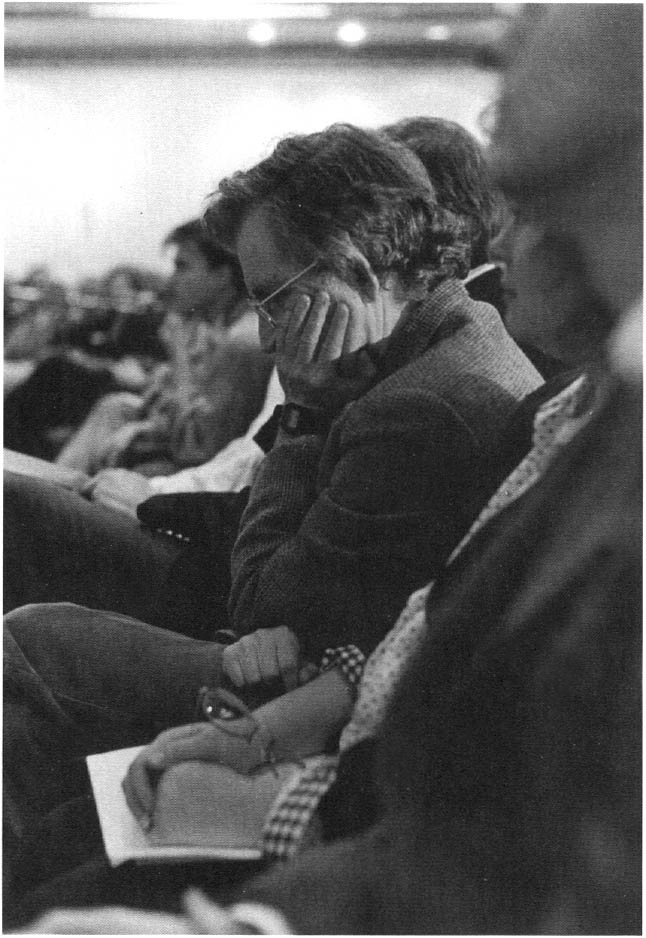
166
Chapters
Figure
17
Chomsky listening attentively
to a
talk given
in
Nanaimo, British Columbia,
1989.
The
Intellectual
as
Commissar
167
because
of its
history: Israelis
do not
have
the
right
to
employ
brutal
tactics against
the
Palestinians because they themselves have been perse-
cuted,
the
American government should
not get
away with terrorist
ac-
tivities because
it
allows
for
more debate than
the
Bolsheviks did,
and
the
fundamental rights
of
individuals should
not be
expunged because
their views
don't
correspond with those
of the
ruling elites. Though they
may
seem
to be
truisms, these basic tenets
led
Chomsky
to
engage
in a
number
of
high-pitched debates
that
began
in the
early
1960s
and
still
continue.
In the
case
of
Israel,
the
earliest public confrontation occurred
in
1969, during
a
public talk
at
MIT. Chomsky recalls:
"I was
embar-
rassingly
mild,
and
elicited
a
huge
furor,
including very sharp criticism
from
what
was
considered
the
dovish
left,
even delegations coming
to my
house
to
talk
me out of my
evil
ways (namely, suggesting
that
maybe
Palestinians were human,
and
recalling
the
actual history
of
Zionism)"
(13
Feb.
1996).
Beginning
in the
early
1970s,
Chomsky's university talks
on
this subject began
to
elicit violent reactions.
As a
consequence,
he
has
had to
take precautions, "including undercover police protection
(when
I
refuse
uniformed police protection)
at
universities,
if I am
giving
a
talk
on the
Middle
East"
(13
Feb.
1996).
There
is a
rhetorical side
to
these issues. Much
of the
debate they spark
exploits
a
similar kind
of
language: words such
as
"subtleties,"
"com-
plexities,"
and
"niceties"
keep
the
uninitiated
at
arm's length
from
the
decision-making process.
The
American people,
the
line
goes, cannot
be
directly involved
in
foreign
affairs
because they
don't
understand
the
"subtleties"
of the
international situation. Individuals should
not
have
a
voice
in
government finance because they
don't
comprehend
the
stakes—
the
"complexities"
are
beyond their grasp. Citizens should
not
have direct
access
to the
institutions
that
control their lives, notably corporations
and
governments, because they
don't
have
the
highly technical knowledge
required
to
appreciate
the
"niceties"
of
domestic
and
foreign
trade.
Chomsky naturally abhors these views; there
is, he
assures
us, a
delib-
erate attempt
on the
part
of
intellectuals
and
government representa-
tives (and journalists,
but in
different
ways)
to
shroud simple facts
in
obtuse language
in
order
to
keep
the
"rabble"
out. This deliberate obscur-
ing of
facts
is, in his
view, typical
of the
so-called postmodern
period.
168
Chapters
and
symptomatic
of a
much larger problem concerning social control.
Another striking
feature
of
postmodernism
is, he
writes,
its
"extreme
character
and the
fact
that
it
absorbs elements that consider themselves
'on
the
left'—the
kind
of
people
who
years earlier would have been orga-
nizing
and
teaching
in
worker
schools"
(31
Mar.
1995).
Chomsky's disparaging descriptions
of the
ivory-tower
mentality—
which dictates
not
only that academics will
be
allowed intellectual
free-
dom,
but
that they will also
be
worshiped, given special privileges,
and
encouraged
to
speak only
to
other
full-fledged
members
of the
elite—are
probably best understood within
the
kind
of
framework envisioned
by
Bakunin.
He
maintained
that
intellectuals
in a
good society should
be
workers
whose primary
tools
happen
to be
their intellects.
By
extension,
laborers
in the
same society would also employ
the
necessary tools, but,
like
the
intellectuals, would
be
called upon
to do
tasks traditionally exe-
cuted
by
managers; they would organize, plan,
and
control
the
products
of
their
own
work.
The
prestige normally associated with select kinds
of
work
would evaporate
in the
same
way as it had in the
Deweyite school
that Chomsky
had
attended until
the age of
twelve.
This
is not to say
that
the
advantages
of one
kind
of
work
as
opposed
to
another would disappear. Intellectuals,
by the
very nature
of
their job,
would continue
to
have access
to
certain kinds
of
information. But,
just
as
the
product
of the
miners' work
is
shared
for the
collective (and individ-
ual)
good,
so,
too, would
the
product
of the
intellectuals' work.
And the
miners,
now
more accustomed
to
perceiving themselves
as
people capable
of
analyzing
and
planning, would
be in a
better position
to
make
use of
the
knowledge
that
would help
to
improve their
own
lives (this
is the
kind
of
argument proposed
by, for
example,
Ken
Coates).
Consistent with Chomsky's overriding approach
is a
rejection,
as
well
(for
virtually
the
same reasons),
of
authoritarian socialism,
of
enlightened
rulers,
and of
other organs, benign
or
not, that attempt
to
dictate
to
peo-
ple
what they should consider
to be in
their
own
best interests. Chomsky
utilizes this
approach
on
several occasions during this
period—such
as in
the
paper "Equality: Language Development, Human Intelligence,
and
Social
Organization," delivered
at the
Conference
on the
Promise
and
Problems
of
Human Equality held
at the
University
of
Illinois
in
1976;
The
Intellectual
as
Commissar
169
and an
interview with Chomsky that
was
published
in a
1978 edition
of
Working
Papers
in
Linguistics.
It can
also
be
found,
however,
in
many
of
his
linguistic
texts.
In
fact, because
of the
interest
manifested
by a
growing segment
of
aca-
demia
in
Chomsky's linguistic
work,
and due to the
increasing recogni-
tion
among
activists
of his
political
work,
many
of the
talks
that
he
gave
from
this point onward included discussions
of
both linguistic
and
politi-
cal
issues.
Sometimes
both
would
be
included
in the
same
talk,
and
some-
times they would
be
covered
in
back-to-back talks: Chomsky
often
speaks
to
both linguistic
and
political issues wherever
he
goes.
But he is
careful
never
to set up
these talks like academic conferences:
What
are
called
"conferences"—gatherings
of
intellectuals—I
almost
never
attend.
I do
give
endless
talks
and
take
part
in
many
forums,
but not the
kind
that
would
be
called
conferences.
I
almost
always
turn
down
invitations
to
these.
Thus
I
almost
never
go to the
Socialist
Scholars
Conference
(though
I
have
a lot of
per-
sonal
friends
there),
or to
academic
and
professional
conferences,
etc.
Virtually
all
of
my
talks
are for
popular
and
activist
groups,
though
typically,
they
are
com-
bined
with
talks
at
universities,
sometimes
seminars,
but
more
often
for
mass
audiences
interested
in the
general
area.
(31
Mar. 1995)
In
the
kind
of
talks that
he is
referring
to
here
are
represented
an
astonish-
ing
diversity
of
concerns:
"To
mention some current
and
typical examples,
I've been
on
several
forums
with local organizers trying
to
react
to the
Gingrich assault
(welfare
mothers, etc.),
a
panel organized
by the
Decatur
Illinois strikers seeking broader understanding
of the
very
fundamental
issues involved
in
that
attempt
to
destroy
the
last
functioning
industrial
union, local community groups, etc."
(31
Mar.
1995).
The
texts
Chomsky published during this
period,
particularly
Lan-
guage
and
Responsibility
(1979)
and
Radical
Priorities
(1981), contain
wide-ranging discussions
of the
many disciplines
that
have interested
him
since
his
youth; they also, quite separately, demonstrate
the
development
of
his
ideas
on
politics
and
linguistics.
He
continued
to
discourage
his
audience's tendency
to
identify
overlaps between
the two
realms.
But he
did
employ
his own
method
of
prioritizing
the two
subject
areas:
"I
have
a
rule
of
thumb
to
determme
how
serious
a
place
it is:
relative audience size.
In
a
sane community, most would come
to the
political talks.
Often
it's
the
other
way
around"
(18
Feb.
1993).
170
Chapters
Provoking
Ire
Chomsky's political talks during this time stirred
up
considerable con-
troversy
in
different
sectors.
In
some instances, this
was
exacerbated
by
"experts"
who
seemed
to be
suffering
from
amnesia. Alan
Dershowitz,
for
example, claims
in his
best-selling book
Chutzpah
(1991)
that
he had had
a
public discussion with Chomsky immediately following
the Yom
Kip-
pur
War in
1973, during which Chomsky
had
proposed
a
"hare-brained
scheme" that involved abolishing
the
state
of
Israel
and
replacing
it
with
"a
secular, binational
state."
Calling Chomsky
a
"false prophet
of the
left," "who would willingly sacrifice Jewish values
and the
Jewish
state
to
some Marxist view
of the
world,"
Dershowitz declared
that
neither
his
"children,
friends,
[n]or students" could accept such
a
vision (199). There
are
two
points here.
First,
Chomsky's alleged position
is a
restatement
of
that
put
forward
by the
Zionist organizations Avukah
and
Hashomer
Hatzair
in the
1930s
and
1940s,
and
this "hare-brained scheme"
had
been
elaborated
and
discussed
by
Zionist
Jews prior
to the
creation
of
Israel.
In a
properly historical
context,
in
other
words,
Dershowitz
is
no
more Zionist than Chomsky. Second, Chomsky's opinions concern-
ing
Israel
and the
Israeli-Arab situation
are not
accurately reflected
in
Dershowitz's book; this
is
evident
to
those
who
have read
and
retained
Chomsky's
Peace
in the
Middle
East?
Reflections
on
justice
and
Nation-
hood
(1974)
and
Towards
a New
Cold War:
Essays
on the
Current
Crisis
and
How We Got
There
(1982). Chomsky remarks: "the
fact
that
he
cites
an
alleged statement that
is
uncheckable (his 20-year
old
memory
of
something
he
claims
he
heard) rather than
the
easily checkable articles
I
was
writing about
the
topic
at
just that time tells
any
sane person
all
they
need
to
know"
(27
June
1995).
The
views Chomsky upheld were consistent with
the
traditional
left
binationalist program,
and
were directed towards resolving
the
Israeli
question
in the
long term:
In
the
short term,
everyone's
interests
(including
Israeli
Jews)
would
be
best
served
by
steps towards some kind
of
federalism
in
cis-Jordan, leading eventually
to
closer
integration
and
cooperation
as the two
communities
involved
determined
through
choices that
are as
free
and
uncoerced
as
possible. Interestingly, that
was
the
position that
Shimon
Peres
and
others also
reached
many
years
later, when
it
The
Intellectual
as
Commissar
171
was far too
late,
after
they
saw the
consequences
of
their extreme
rejectionism.
All
that
is
readily checked; it's been
in
print
for 25
years.
(27
June 1995)
Chomsky recalls that
at the
time
to
which
Dershowitz
refers
in his
book,
Israel's leading civil libertarian, Israel
Shahak,
then chairman
of the
Israeli League
for
Civil
and
Human Rights,
was
interviewed
by the
Bos-
ton
Globe
during
a
visit
to
that city. Dershowitz wrote
to the
Globe
to
denounce
him,
claiming
that
he had
been
thrown
out of his
position
in the
league, when,
in
fact,
it had
been demonstrated
in
court that during
its
annual meeting,
the
league,
a
small group,
had
been overwhelmed
by a
large
mob of
people
who
wanted
to
oust Shahak.
As
they
had
paid
the
registration fee, these people were able
to
claim
the
right
to
vote against
Shahak.
Chomsky elaborates:
The mob was
organized
by the
governing Labor Party,
who
offered
(in a
secret
document that
was
quickly leaked)
to pay the
registration
fees
for the
people
who
stormed
the
meeting. It's rather
as
though
the
Communist Party
in
Russia
had
secretly organized people
to
break
into
the
annual meeting
of
some tiny Amnesty
International group
and
vote
out the
leadership, then pass
a
resolution denounc-
ing
the
United
States,
the
Communist Party paying
their
membership
fees.
That's
what
Dershowitz—the
great civil
libertarian—was
endorsing, putting aside
the
shocking lies
about
Shahak
and the
Israeli
Courts.
One can see why he
doesn't
want
the
truth exposed.
(27
June
1995)
As
he
already knew
the
details
of the
Shahak
affair,
Chomsky wasted
no
time
in
replying
to
Dershowitz's letter
to the
Globe,
which,
in
turn,
incited Dershowitz
to
denounce Chomsky
and ask for
proof
in the
form
of
court
records.
Chomsky happened
to be in
possession
of
these:
I ...
wrote
a
letter quoting them, which showed that
he was a
complete liar,
as
well
as a
Stalinist-style thug (that
was
implicit;
I
didn't bother saying it).
He
con-
tinued to try to
brazen
his way
out,
and was finally
told
by the
Globe
ombudsman
that
they would publish
no
more
of his
lies
on the
matter (that
was
after
I'd
sent
the
original Court records
and a
translation
to
English
to the
Globe,
who had
requested documentation
so
they could assess
Dershowitz's
increasingly hysterical
charges).
Ever
since then, Dershowitz
has
been
on a
crazed jihad, dedicating much
of
his
life
to
trying
to
destroy
my
reputation.
(31
Mar. 1995)
So
Chomsky became
the
lightning
rod for the
pro-Israel lobby:
he was
seen
as the
anti-Zionist,
the
pro-Arab,
the
anti-Semite. This,
of
course,
was
not
all.
His
criticism
of
American policies
in
Vietnam
and
Cambodia
had
alienated
him
from
establishment intellectuals
and
politicians;
his
172
Chapters
condemnation
of
Cold
War
policies
had led to his
ostracization
by the
proponents
of
America's "free-world" vision. Those bent
on
questioning
or
ignoring
him
persisted
in
their
efforts.
Edward Herman claims
that,
as
a
consequence
of his
refusal
to toe the
line, Chomsky's work
was
"sub-
jected
to an
ongoing
and
intense scrutiny
for any
literal errors
or
bases
of
vulnerability,
a
scrutiny
from
which establishment experts
are
entirely
free.
This
search
was
perhaps more intense
in the
United States
and
among
its
allies
in the
late
1970s
and
early
1980s,
with
a
growing body
of
hard-liners anxious
to
overcome
the
Vietnam syndrome, revitalize
the
arms race, strengthen support
for
Israel's rejectionism
and
policy
of
force
and
involve
the
United States
in
more aggressive
actions
towards
the
Soviet
bloc
and
Third
World"
("Pol Pot" 596).
It
became obvious that Chomsky
was a
threat
and a
source
of
embar-
rassment
to
many:
he was a Jew
arguing
for a
democratic state
in
Israel
(rather
than
"the sovereign State
of the
Jewish
people");
he was a
Zionist
arguing
for a
gradual move
towards
binationalism;
he was an
intellectual
exposing collusion between governments
and
intellectual elites;
he was a
linguist
taking
aim at the
cherished assumptions
of
respectable
fellow
lin-
guists,
philosophers,
psychologists,
and
historians;
he was a
scientist con-
ducting political analysis
and
denigrating
as
fraud
most
of the
work done
by
political scientists; and, moreover,
he was a
privileged American call-
ing
into question what were taken
to be
fundamental
American values
while noting
that
basic
rights,
even those entrenched
in the
American
constitution, were consciously being squelched
by
those elected
to
prop-
agate them because they were
not in the
best interests
of the
ruling elites.
Chomsky
was not the
only person making these observations. Zinn
and
Dellinger
had a
similar
orientation,
and,
of
course, Chomsky
had in-
herited
a
tradition
from
a
series
of
earlier
left-intellectuals—those
who
populated
the
milieu
from
which
he had
emerged. Yet,
he was
marginal-
ized,
as
many others
who had
preceded
him had
been. Unlike some pre-
vious
and
still-active dissenters, though, Chomsky
was
recognized
as
being
the
most important thinker
in his field, and
this both allowed
him
some
latitude
and
increased
his
responsibilities:
to his
students,
to his
peers,
to his
community, and, perhaps most
of
all,
to
himself.
Respect within one's
own field of
expertise
is
not,
and
never really
has
been,
a
guarantee
of
safe
haven within
the
university.
In
1919,
Harold
The
Intellectual
as
Commissar
173
Laski
wrote
to
Bertrand
Russell
His
words take
on
particular poignancy
in
light
of
Chomsky's position:
There
is a
more private thing
about
which
I
would like
you to
know
in
case
you
think there
is a
chance
that
you can
help.
I
know
from
your
Introduction
to
Mathematical
Logic
that
you
think well
of
Sheffer
who is at
present
in the
Philos-
ophy Department here
[at
Harvard],
I
don't
know
if you
have
any
personal
acquaintance with him.
He is a jew and he has
married someone
of
whom
the
University
does
not
approve;
moreover
he
hasn't
the
social
qualities
that
Harvard
so
highly prizes.
The
result
is
that
most
of his
department
is
engaged
on a
deter-
mined
effort
to
bring
his
career here
to an
end—
Myself
I
think
that
the
whole
thing
is a
combination
of
anti-semitism
and
that
curious university worship
of
social prestige which plays
so
large
a
part over here. (qtd.
in
Russell,
Autobiog-
raphy!:
112)
Russell
Jacoby recounts similar incidents that involved Paul
Starr,
David Abraham, Henry Giroux, and, perhaps most remarkably,
the
editor
of
TWos,
respected historian Paul Piccone.
He
concludes:
The
ordinary realities comprise
the
usual pressures
and
threats;
the final
danger
in
a
liberal society
is
unemployment: denial
of
tenure
or
unrenewed contract.
In a
tight market this might spell
the end of an
academic career.
The
years
of
academic
plenty were long enough
to
attract
droves
of
would-be professors; they were
brief
enough
to
ensure
that
all saw the "No
Vacancy"
sign. Professionalization pro-
ceeded
under
the
threat
of
unemployment.
The
lessons
of the
near
and far
past,
from
McCarthyism
to the first
stone thrown
at the first
outsider, were clear
to
anyone: blend
in; use the
time allotted
to
establish scholarly credentials; hide
in the
mainstream.
(135)
Chomsky
would
not
adopt these tactics
for
academic survival, and,
as
a
consequence,
he was
denigrated
by the
organs
of
mainstream propa-
ganda, ostracized
or
ignored,
and
scrutinized
on all
fronts.
Language
Acquisition
in the
Animal
World
In
the
mid-
to
late
1970s,
linguists seemed,
at
least publicly,
fascinated
by
language
acquisition. Chomsky
was no
exception,
and
applied
himself
to
distinguishing between animals
and
humans
by
means
of his
theory
of
innate language ability.
A 25
September 1975
New
York
Times
article, "Experts Labor
to
Communicate
on
Animal
Talk,"
outlined
the
basic
issues involved
and
brought them into
the
public domain.
It
also
cited
experts
from
various
fields
commenting
on the
possibility that
174
Chapters
chimpanzees, baboons,
and
even laughing gulls communicate
in
unex-
pectedly complex ways (but,
as
Chomsky notes,
"don't
all
living
beings?").
Efforts
to
teach animals
to
speak captured
the
scientific
and
public
imaginations (perhaps because
of the
central role that cute
and
fuzzy
ani-
mals
play
in
children's stories,
fables,
and
myths).
The
work
referred
to in
the
article, however, like much heavily hyped
scientific
research,
was
con-
sidered,
in
Chomsky's
words,
"an
absurdity
by
every serious
biologist
I
know
of" (31
Mar.
1995).
Indeed
a 7
July 1980 London Times article
by
Michael Leaman, called "Diary
of the
Clever
Me
Phenomenon,"
addressed
the
hype surrounding
the
talking-animals issue; Leaman
re-
marked that
"experiments
in
teaching chimpanzees
and
gorillas
to
com-
municate using sign language
or
coloured bits
of
plastic
to
denote words,
have
become some
of the
most publicized
in
modern science."
Chomsky
was
quoted
in the
1975
New
York
Times
article
as
saying,
"chimpanzee communication
differed
fundamentally
from
human speech,
particularly
in
mode
of
use, structural properties
and
mode
of
acquisition.
'Human
language
is
acquired
by
exposure,
not
training
...
just
as
breath-
ing
is.'"
His
opinion
did not
change
in the
ensuing years, although
the
1980 London
Times
reports
his
observations
on the
public's
concern with
the
issue: "for reasons that
are
unclear
to me
...
this topic
has
aroused
considerable emotion,
at
least
in
popular discussion." More recently,
he
has
added,
"this
work
has not the
remotest relation
to
science, though
people
in
white
coats
and
with equipment sometimes
do it" (31
Mar.
1995).
The
London
Times
also reported,
in an
article entitled "Chomsky
Debate
Absorbs
the
Royal Society," that during
a
1981 Royal Society
conference
on
human acquisition
of
language,
the
question
of
innate abil-
ities
and
universal grammar
was
linked
to a
variety
of
practical projects
for
researchers "seeking
to
perfect machines
for
automatic language trans-
lation,
to
develop computer systems with
artificial
intelligence,
or
simply
to
make vending machines
that
will dispense tickets
at a
spoken com-
mand."
Chomsky,
who in
fact
only attended
the
conference
briefly,
pre-
ferring
to
spend
his
time engaged
in the
subject
in the
context
of
"talks
to
popular audiences," insists that
the
Times
misrepresented what
had
occurred
at the
meetings:
"There
was
scientific
interest,
but it had
nothing
whatsoever
to do
with language translation
(MT)
and
artificial
intelligence
The
Intellectual
as
Commissar
175
(AI).
MT
is a
very
low
level
engineering project,
and
so-called classic strong
AI
is
largely vacuous, dismissed
by
most serious scientists
and
lacking
any
results,
as its
leading exponents
concede"
(31
Mar. 1995).
Entire research projects,
on
language
acquisition
and
other
topics,
were
now
being conducted with
the aim of
either establishing
or
disproving
Chomsky's theories. Chomsky himself
fuelled
these enterprises
by
main-
taining
a
high level
of
productivity:
he
published
Reflections
on
Language
(1975),
Essays
on
Form
and
Interpretation
(1977),
Rules
and
Repre-
sentations
(1980),
and
Modular Approaches
to the
Study
of the
Mind
(1984).
These works include essays
and
lectures that expand
and
clarify
previous work, address issues raised
by his
critics,
and
update grammat-
ical theory based upon
his own
recent work
and
that
of
others.
All the
while,
he was
developing
a
thesis that
he had
articulated some years
earlier: "language (and other mental abilities) should
be
seen
as
'growing'
in
the
individual's mind, under genetic control, rather than
as
'learned'
by
organisms lacking
any
initial
predisposition
to
develop
the
particular
kinds
of
mental faculty which
are
eventually
acquired"
(Sampson 14).
Chomsky's remarkable output
reflected
his
constant interaction with
professional
milieus, such
as the
GLOW
circle
in
Europe
and
their coun-
terparts
in the
United States.
The
acronym
GLOW
stands
for
Generative
Linguistics
in the Old
World(s).
The
organization's
aim is to
ensure
that
the
intellectual
and
social issues that
are of
concern
to
transformation-
alists
are
communicated
to
other. Participants include Hans Bennis,
Anneke Groos,
Henk
van
Riemsdijk,
and
Jean-Yves
Pollock,
and
they
produce
a
GLOW
newsletter
in
Amsterdam
that
is
circulated worldwide.
The
GLOW
manifesto includes this passage:
"In our
opinion,
generative
linguistics
acquired
a new
momentum
in
Europe
after
Chomsky's
'Con-
ditions
on
Transformations'
(1973).
This
epoch-making paper shifted
the
interest
of
linguists
from
rather arbitrary rules
to
simple well-constrained
rules
operating under general conditions.
A
significant number
of
mem-
bers
of
GLOW
have
found
their common ground
in the
research pro-
gramme
that
grew
out of
'Conditions'"
(qtd.
in
Otero,
ed.
1:
345).
This kind
of
collaboration
has led to
significant advances
in the field
of
linguistics,
in
particular
the
principles-and-parameters
approach,
de-
scribed
in
Lectures
on
Government
and
Binding.,
the
printed text that
emerged
from
conferences Chomsky gave
at
Pisa's Scuola Normale
in
176
Chapters
1979. "The lectures
in
Pisa
began,"
he
says,
"by
considering some work
of
a fine
young Norwegian linguist,
and
then went
on to
very significant
work done mainly under Richie Kayne's
influence
in
Europe, including
[that
of] the
people
who
invited
me to
Pisa, some
of the
most outstanding
scholars
in the field (at
that time
not yet
with
faculty
appointments)"
(14
Aug.
1995).
Chomsky's description
of the
Pisa lectures
and the
GLOW
conference
that
was
held there afterwards
gives
us
some sense
of how
advances
are
made
in the field of
linguistics:
"I
gave
a
workshop
[in
Pisa] with some
of
the
most outstanding (mostly
young)
people
in the field
taking part, run-
ning
through this material, which later turned into
Lectures
on
Govern-
ment
and
Binding.
Very
much
a
collective
effort,
as
always, including
a
remarkably
good group
of
students
at
MIT
in
those years.
That's
a
real
'milieu'"
(14
Aug. 1995).
Slinging
the
Mud:
An
"Elementary Moral
Principle"
This period
was
also marked
by the
appearance
of
many contentious
reviews, which questioned (among other things)
the
scientific
status
of
Chomsky's linguistic work. Christine Carling
and
Terence Moore,
for
example, argued
in the 10
December 1982 issue
of the
Times
Higher
Education
Supplement
that Chomsky's theories
had
encouraged linguists
to
move "not closer
to but
further
away
from
the
fundamental
issues
in
language acquisition, understanding
and
production they initially
appeared
to be
confronting"; they cited "Chomsky's
own
attempts
to
turn
linguistics
into
a
'hard'
science"
(13). Chomsky, these critics
asserted,
wanted
to
"introduce
into linguistics
a
scientific method
that
was
novel
in
the
human
sciences."
His
competence/performance distinction drew
linguistics away
from
concerns with language
and
nudged them
towards
a
"methodology
of
science."
Carling
and
Moore
concluded that Chomsky
was
on the
wrong track,
and
should instead
adopt
a
"problem
based
approach,"
which would make explanation
in the field of
linguistics
"teleological"
rather than
"reductive"
(14).
Otero
states
that
the
review
betrays
its
authors'
"total
inability
to
understand Chomsky's
work—and
much
else"
(5
Apr.
1995).
Reading through journals such
as the
THES,
one
is
struck
by the
number
of
rebuttals
that
Chomsky
has
made
to
those
who
The
Intellectual
as
Commissar
177
quarrel
with
his
approach.
Is
there
a
cut-off
point? Chomsky
has
sug-
gested
in
correspondence that
the
decision
to
respond depends
not
only
upon time constraints
but
also upon
the
seriousness
of the
criticism
and
the
competence
of the
reviewer.
In
this case,
Otero's
comments suggest
one
reason
why
Chomsky never rose
to the
challenge.
In
the
political
domain,
Chomsky added substantially
to his
growing
body
of
writing during this period, publishing
Human Rights
and
American
Foreign
Policy
(1978),
Language
and
Responsibility
(1979),
and,
with Edward
S.
Herman,
The
Political Economy
of
Human
Rights
(1979). There
was—partly
because
his
position
was
anathema
to
mem-
bers
of
certain elites,
who
recognized that
his
popularity
as a
speaker
among some segments
of the
disillusioned public
was on the
rise—an
effort
to find
fault
with Chomsky's work
in the
form
of
factual
errors.
But,
aside
from
some trivial slips, Chomsky stood
up to the
test. Some-
times, however, support
for
fundamental principles
can
lead
to
conflict.
And
people
who
search
for
errors
in
order
to
discredit Chomsky's view-
point play
up
these conflicts
to
their
own
advantage.
Freedom
of
expression
is
extremely precious
to
Chomsky,
and he up-
holds
his
commitment
to
preserving
it,
even
in the
face
of
provocation
from
the
critics
who
seem bent
on
misrepresenting him.
It is
also
an
issue
that
has a
complex aspect. Chomsky does not,
of
course,
believe
in
despots,
enlightened
or
otherwise, either
for
government
or
institutions.
Ideas
and
possibilities should
be
uttered,
and
their
net
worth determined
in
the
public domain
or in the field to
which they belong.
Muffling
argu-
ments
or
gagging people simply because they
say
things somebody doesn't
want
to
hear,
or
playing down certain kinds
of
knowledge
due to
their
negative
implications,
is not an
acceptable
way of
proceeding.
At the
same
time, however,
it is not
merely
a
question
of
allowing
people
to
speak
their
minds, though
at first
glance this
appears
to be a
suitably
benevolent
approach. Chomsky explains:
[N]o
one
should
have
the
authority
to
"allow"
anything,
and—crucially—I
don't
at all
argue
that
the
reason
for
"allowing"
free
expression
of
thought
is
that
things
that
work
(or are
valuable)
might
be
suppressed
otherwise.
The
right
of
freedom
of
thought
is far
more
fundamental
than
that,
and the
right
of
free
expression
of
what
one
thinks
(however
crazy)
is
also
far
beyond
these
pragmatic
considerations.
I
simply
do not
agree
that
the
state,
or any
other
system
of
organized
power
and
violence,
should
have
the
authority
to
determine
what
people
think
or
say.
If the
state
is
granted
the
power
to
shut
me up, my
counterargument
is not
that
what
I
178
Chapters
am
saying might
be
valuable. That would
be a
contemptible position,
in my
view
(though
I
recognize that
it is the
standard
one of the
people called "libertarians,"
back
very
far).
(31
Mar. 1995)
This
is the
overriding
principle.
It
does
not,
however,
preclude
moral
judgments
of
human concerns; knowledge
is
value-ridden
in
this regard,
and
each
individual
must
be
responsible
for
identifying
a
focal
point:
"True,
individuals have
to
make their
own
decisions about what
to
'play
down'
and
what
to
'play
up.'
The
marginal fringe
of
intellectuals
who are
more
or
less honest [will make] moral judgments
as to
human con-
sequences"
(15
Dec.
1992).
Regrettably,
this
is
seldom
the
case
for
what
Chomsky calls "the general
run of
commissars."
They make their deci-
sions
"on the
basis
of
career
and
power
interests":
Thus
in
every society that
I
know
of,
surely Stalinist Russia
and the
West, intellec-
tuals
feign
great indignation over
(often
real) crimes
of
official
enemies
and are
silent, dismissive,
or
apologetic about those
of
their
own
states, those
for
which
they bear some responsibility
and
those they could help mitigate
or
overcome
if
they
were honest
(leading,
as
they know,
to
loss
of
respectability
and
privilege).
The
most elementary moral principles would lead
to
"playing
up" the
crimes
of
domestic
origin
in
comparison
to
those
of
official
enemies, that
is,
"playing
up"
the
crimes that
one can do
something about.
But
that elementary moral principle
is
so
utterly foreign
to
commissar culture
that
anyone
who
expresses
it
simply calls
upon
him/herself
instant denunciation
as an
apologist
for the
enemy's crimes. That
is
a
reflex
of the
commissar culture,
in
Stalinist Russia,
in the
United States
and
England,
etc.
For
good, institutional reasons.
(15
Dec. 1992)
A
great deal
of the
mudslinging
that
Chomsky
has
endured
was
prompted
by the
failure,
in
some quarters,
of
this "elementary moral
principle."
For
taking issue with
the
American government,
he has
been
accused
of
being pro-Soviet;
for
taking issue with Bolshevism
and the
Soviet government,
he has
been accused
of
being anti-Soviet;
for
taking
issue with
the
Jews,
he has
been accused
of
being pro-Arab,
and for
apply-
ing
similar
principles
to
Arab
actions,
he has
been accused
of
being
anti-Arab;
for
taking issue with
the
Israelis,
he has
been accused
of
being
anti-Semitic;
for
taking
issue
with
the
propaganda
campaign
in the
West concerning Cambodia,
he has
been accused
of
being
pro-Khmer
Rouge;
and for
taking
issue
with
those
who
would
enforce
censorship
(against those,
for
example,
who
assert
that
the
Holocaust never hap-
pened,
rather
than
allowing
the
absurdity
of
their
arguments
to
become
self-evident),
he has
been accused
of
conspiring with
the
enemy
(in
this
The
Intellectual
as
Commissar
179
case
the
Nazis).
The
controveries that rage around
him are
invariably
more complex than they
are
portrayed
to be, and the
facts
are
often
diffi-
cult
to
procure.
The
Israeli situation
is a
good example:
A
personal
friend,
Edward Said,
has
also criticized
me for not
paying attention
to
Arab
sources
and
looking
at
things always
from
the
Jewish-Israeli-Western
point
of
view,
and
there's
a lot
more. Last time
I was in
Israel,
I
gave
a lot of
political
talks,
very
critical
of
Israel
(in Tel
Aviv)
and
including some criticism
of the PLO
(for
Bir
Zeit,
in the
West
Bank—the
talk
was in
East Jerusalem because
the
col-
lege
was
closed).
The
only serious hassle developed with Palestinian intellectuals,
because
of my
criticism
of the
PLO.
That
was
accurately reported
by the
Israeli
press, which
is
much more honest
that
anything
I
know
of in the
West.
(31
Mar.
1995)
Chomsky
was
also attacked,
at
this time,
for his
views
on the
Faurisson
affair
and
Cambodia's
Pol Pot
regime;
on
both occasions
his
detractors
failed
to
come
to
terms with
his
message
in
their zeal
to
silence him.
The
Faurisson
Affair
Robert
Faurisson,
a
professor
of
French literature
at the
University
of
Lyon,
France,
was
relieved
of his
duties
"on the
grounds
that
he
could
not
Figure
18
Robert Faurisson.
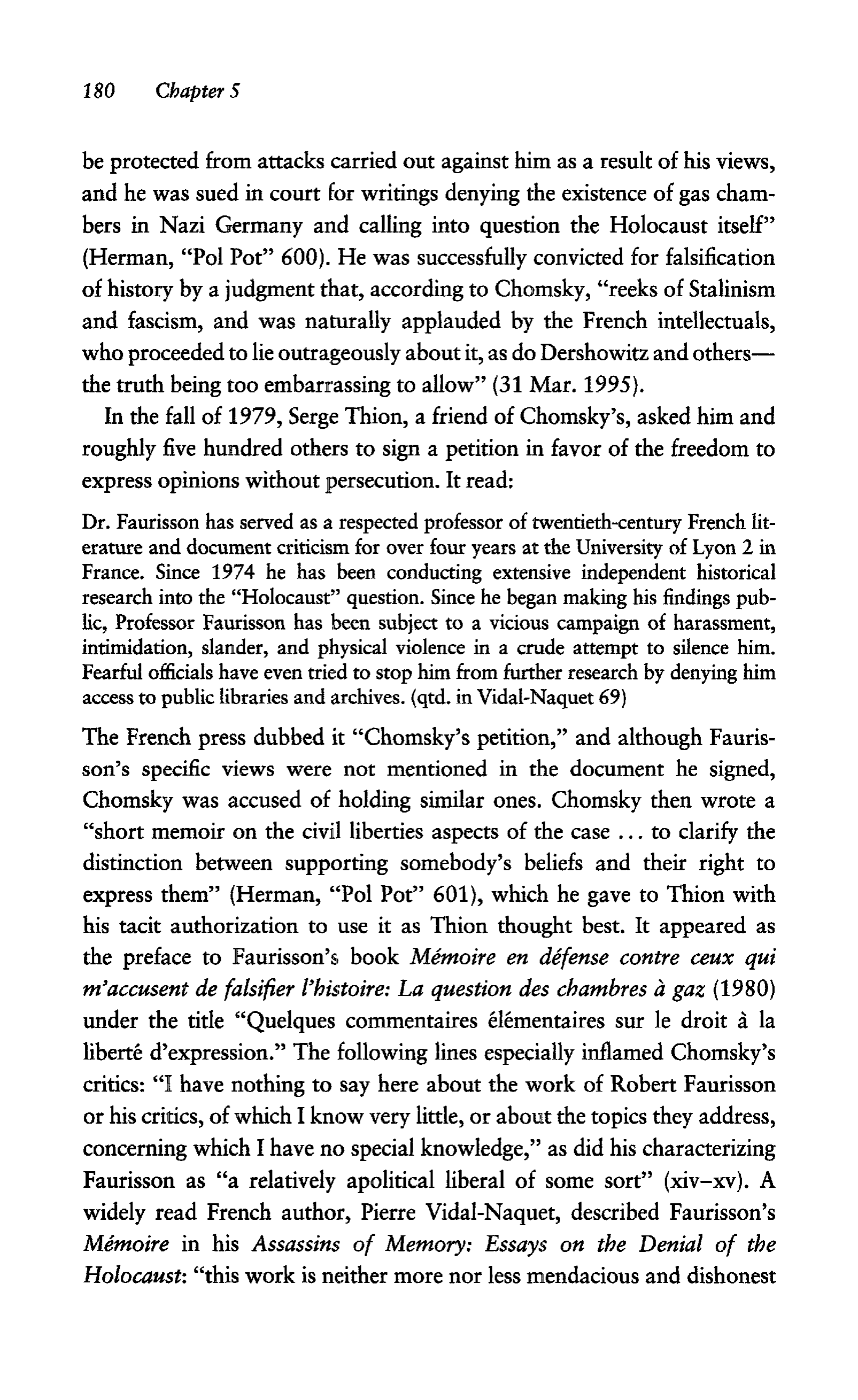
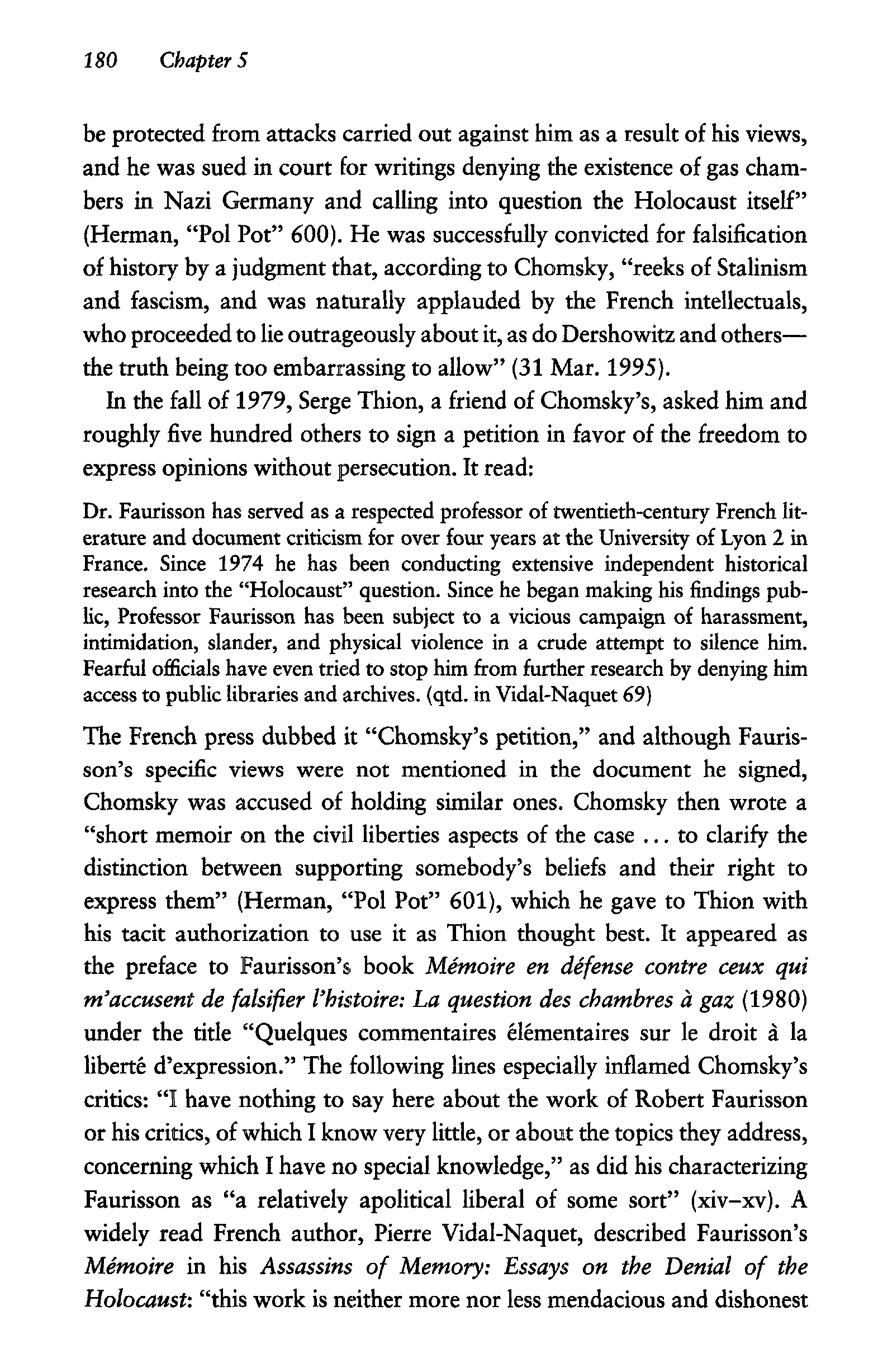
180
Chapters
be
protected
from
attacks
carried
out
against
him as a
result
of his
views,
and he was
sued
in
court
for
writings denying
the
existence
of gas
cham-
bers
in
Nazi Germany
and
calling into question
the
Holocaust itself"
(Herman, "Pol Pot" 600).
He was
successfully
convicted
for
falsification
of
history
by a
judgment
that,
according
to
Chomsky,
"reeks
of
Stalinism
and
fascism,
and was
naturally applauded
by the
French intellectuals,
who
proceeded
to lie
outrageously
about
it, as do
Dershowitz
and
others—
the
truth being
too
embarrassing
to
allow"
(31
Mar.
1995).
In
the
fall
of
1979, Serge
Thion,
a
friend
of
Chomsky's, asked
him and
roughly
five
hundred others
to
sign
a
petition
in
favor
of the
freedom
to
express opinions without persecution.
It
read:
Dr.
Faurisson
has
served
as a
respected
professor
of
twentieth-century
French
lit-
erature
and
document criticism
for
over
four
years
at the
University
of
Lyon
2 in
France.
Since
1974
he has
been
conducting extensive independent historical
research
into
the
"Holocaust" question.
Since
he
began
making
his findings
pub-
lic, Professor Faurisson
has
been subject
to a
vicious campaign
of
harassment,
intimidation,
slander,
and
physical
violence
in a
crude
attempt
to
silence
him.
Fearful
officials
have
even
tried
to
stop
him
from
further
research
by
denying
him
access
to
public libraries
and
archives,
(qtd.
in
Vidal-Naquet
69)
The
French press dubbed
it
"Chomsky's
petition,"
and
although Fauris-
son's
specific
views were
not
mentioned
in the
document
he
signed,
Chomsky
was
accused
of
holding similar ones. Chomsky then wrote
a
"short
memoir
on the
civil liberties aspects
of the
case
...
to
clarify
the
distinction between supporting somebody's
beliefs
and
their right
to
express
them"
(Herman, "Pol Pot" 601), which
he
gave
to
Thion with
his
tacit
authorization
to use it as
Thion thought best.
It
appeared
as
the
preface
to
Faurisson's book
Memoire
en
defense
contre
ceux
qui
m'accusent
de
falsifier
I'histoire:
La
question
des
chambres
a gaz
(1980)
under
the
title
"Quelques
commentaires
elementaires
sur
le
droit
a la
liberte
d'expression."
The
following lines especially inflamed Chomsky's
critics:
"I
have nothing
to say
here about
the
work
of
Robert Faurisson
or his
critics,
of
which
I
know very
little,
or
about
the
topics
they address,
concerning which
I
have
no
special knowledge,"
as did his
characterizing
Faurisson
as "a
relatively apolitical liberal
of
some
sort"
(xiv-xv).
A
widely
read French author, Pierre Vidal-Naquet, described Faurisson's
Memoire
in his
Assassins
of
Memory:
Essays
on the
Denial
of the
Holocaust:
"this
work
is
neither more
nor
less mendacious
and
dishonest
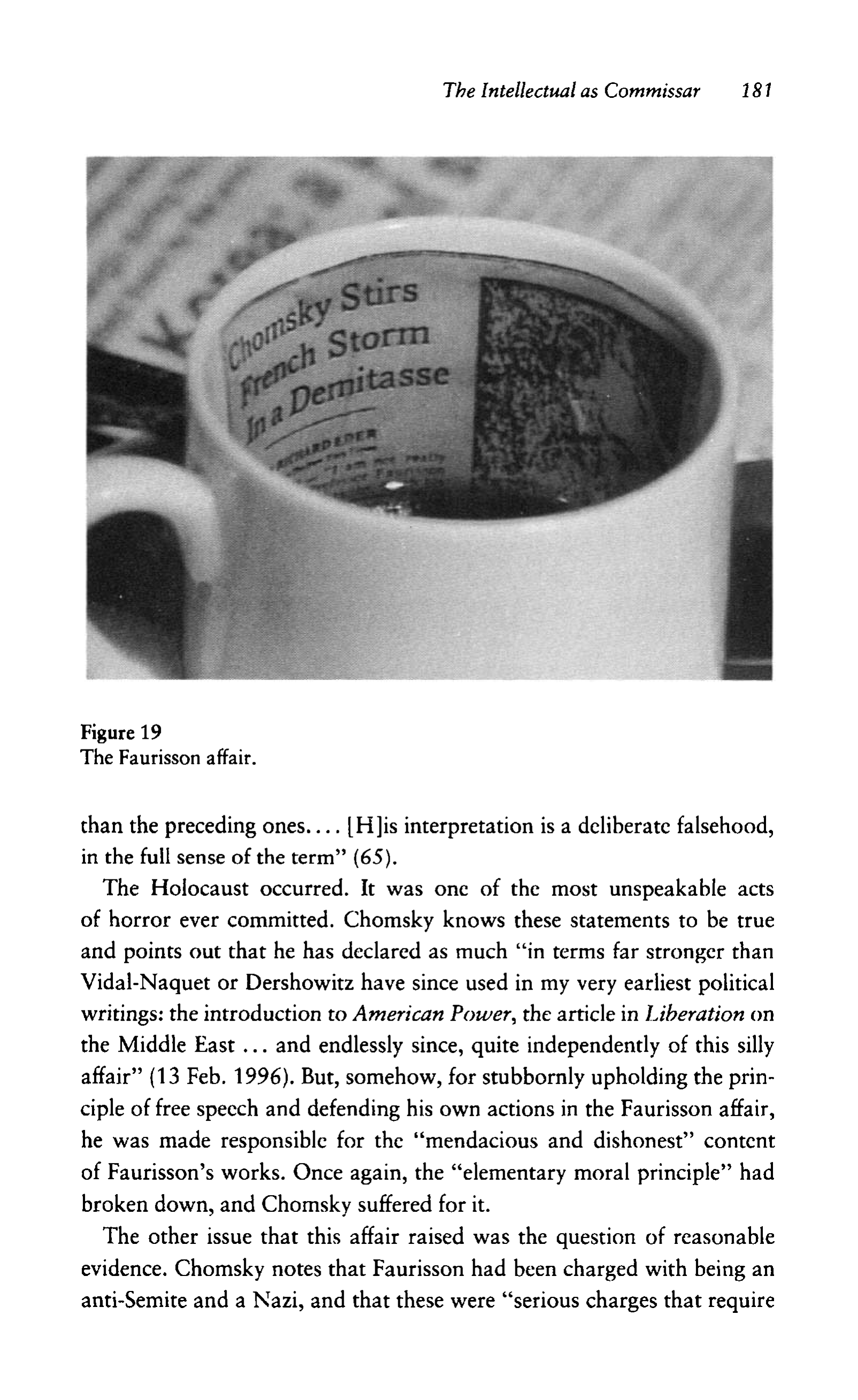
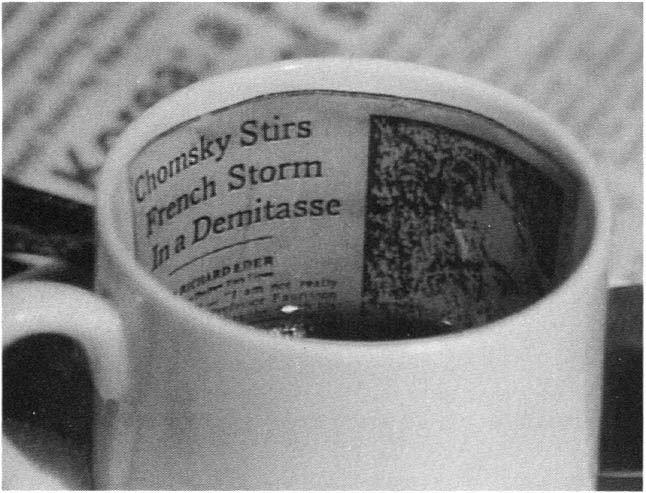
The
Intellectual
as
Commissar
181
Figure
19
The
Faurisson
affair.
than
the
preceding
ones—
[H]is
interpretation
is a
deliberate falsehood,
in the
full
sense
of the
term"
(65).
The
Holocaust occurred.
It was one of the
most unspeakable acts
of
horror ever committed. Chomsky knows these statements
to be
true
and
points
out
that
he has
declared
as
much
"in
terms
far
stronger
than
Vidal-Naquet
or
Dershowitz have since used
in my
very earliest political
writings:
the
introduction
to
American
Power
^
the
article
in
Liberation
on
the
Middle East
.
„ .
and
endlessly
since,
quite independently
of
this
silly
affair"
(13
Feb.
1996).
But,
somehow,
for
stubbornly upholding
the
prin-
ciple
of
free
speech
and
defending
his own
actions
in the
Faurisson
affair,
he
was
made responsible
for the
"mendacious
and
dishonest" content
of
Faurisson's works. Once again,
the
"elementary moral principle"
had
broken down,
and
Chomsky
suffered
for it.
The
other issue that this
affair
raised
was the
question
of
reasonable
evidence.
Chomsky notes that Faurisson
had
been charged with being
an
anti-Semite
and a
Nazi,
and
that these were "serious charges that require
182
Chapters
evidence."
He
claims
that
he
knew
very
little
about
Faurisson's
writings
and had no
interest
in
them.
After all,
he had
"felt
no
need
to
read
Satanic
Verses
before signing endless
petitions
made
for
Rushdie."
In
formulating
his
position
on the
Faurisson
case,
Chomsky
relied
"mainly
on
charges
conveyed
to me by his
harshest
critics,
which
I
then cited
in
full,
pointing
out,
correctly,
that
they
were
utterly
meaningless"
(14
Aug.
1995).
One of
these
critics
was
Vidal-Naquet,
whom
Chomsky
did not
name.
[B]ut
Vidal-Naquet later
identified
himself (correctly)
as the
person
who had
con-
veyed
those charges
to me as his
strongest evidence, then charging that
I had
betrayed
a
confidence
by
identifying
him (a
lie,
as he
knows,
one of
many, which
he
also knows
he can get
away with). Since Vidal-Naquet, Faurisson's harshest
and
most knowledgeable critic, could come
up
with
no
evidence suggesting that
he
was an
anti-Semite
or had any
political views
at
all, that charge seemed rather
weak.
(14
Aug. 1995)
What
Chomsky
did
know
about
Faurisson "was
that
he had
written
letters
to the
press
(which they refused
to
publish, apparently)
praising
the
hero-
ism
of the
Warsaw
ghetto
fighters and in
general,
praising
those
who
fought
the
'good
fight'
against
the
Nazis;
and
that
he had
privately pub-
lished
pamphlets
denying
the
existence
of gas
chambers"
(14
Aug.
1995).
In
the
United
States,
the
charge
has
been
led by
Dershowitz
and
Werner
Cohn.
In his
version
of the
Faurisson
affair,
Dershowitz
describes
Chom-
sky
as an
"anti-Zionist
zealot"
who
"welcomed
the
opportunity"
to
pro-
test
Faurisson's
suspension
"because
Faurisson's
writings
and
speeches
are
stridently
anti-Zionist
as
well
as
anti-Semitic.
Indeed,
Professor
Chom-
sky
has
himself
made
statements
about
Zionist
exploitation
of the
tragedy
of
World
War II
that
are
not,
in my
view,
so
different
from some
of
those
of
Faurisson"
(174).
And
Cohn's
book,
Partners
in
Hate:
Noam
Chom-
sky
and the
Holocaust
Deniers,
was
issued
with
the
following
release,
written
by
Nathan
Glazer:
When Noam Chomsky came
to the
defense
of the
French Holocaust-denier Robert
Faurisson,
he
astonished
friends
and
enemies alike. Chomsky
has
vigorously
de-
fended
his
action
as
being nothing more than
the
protection
of an
individual's civil
liberties,
quite unconnected with that individual's views
and
writings. Werner
Cohn,
in
this meticulously documented study, shows that Chomsky's
defense
of
Faurisson
is
much more than that,
and
indeed that
it is
connected
to
some
of
Chomsky's deepest political orientations,
in
particular
his
unwavering animus
toward
the
United States
and
Israel.
In
doing
so, he
sheds surprising light
on
Chomsky's politics.
The
Intellectual
as
Commissar
183
I
attended
a
lecture
Cohn
gave
on
this matter
in
which
he
was,
in my
opinion,
at
best
confused
and at
worst incoherent.
His
talk
was
riddled
with errors concerning Chomsky's work (for example,
he
claimed that
it
had
never been published
by a
major
publishing house), Avukah (that
it
was
the
same
as
Hashomer
Hatzair),
Thion (that Chomsky
and
Thion
had
cowritten
a
book
on
Vietnam),
and
linguistics (that Chomsky's work
in
the field was
wholly unfounded). Furthermore, during
the
question
period
he
seemed unable
to
recall many details
of his own
"meticulously
documented
study,"
which suggested
to me
that perhaps somebody
else
had
written
the
book.
Cohn
has
claimed
elsewhere,
specifically
in
The
Hidden
Alliances
of
Noam Chomsky
(1988), that Chomsky's
affiliation
with Faurisson
is
rooted
in
Chomsky's
own
sympathy
for
anti-Semitism
and
anti-Zionism.
Attempting
to
demonstrate this, Cohn sketches
a
series
of
tenuous con-
nections between Chomsky
and
Faurisson, placing special emphasis
on a
number
of
comments that
the
former
has
made
in
defense
of the
latter's
actions.
When
all the
facts
are set
forth,
the
Faurisson
affair
does tend
to
throw
some
of
Chomsky's character
flaws
into
relief,
most clearly
his
unwill-
ingness
to
practice simple appeasement when
it
comes
to
resolving
his
differences
with those
who
attack
him. Another remarkable aspect
of
the
affair
is the
fact
that
it is
used
by
Chomsky's detractors
to
divert
attention away
from
his
actual statements. Much energy
has
been
expended quibbling over
his use of
certain words
or
particular argu-
mentative
strategies. Some
of
Chomsky's critics
are
more balanced
and
restrained:
Vidal-Naquet,
while
he
claims
that
"Chomsky
is
scarcely
sensitive
to the
wounds
he
inflicts,
but
extremely attentive
to
whatever
scratches
he is
forced
to put up
with"
(68),
is
honest enough
to
recognize
the
obvious:
"To be
sure,
it is not the
case
that
Chomsky's thesis
in any
way
approximates those
of the
neo-Nazis"
(73).
But
others
are
somehow
able
to
overlook
the
dozens
of
books
and
hundreds
of
articles Chomsky
has
written—as
well
as
countless discussions
and
letters—which
always
take
the
side
of the
oppressed
and the
downtrodden. Such critics accuse
him
of
alliances with neo-Nazis
or
with
the
German National Socialist
Party,
the
very
mandate
of
which
was
totalitarian oppression
and
gen-
ocide. Chomsky's tactics
may not
always
be the
most appropriate
in
light
of the
causes that
he
supports,
but the
values transmitted
by his
work are, according
to
virtually
any
reasonable measure, consistent
with those
of the
libertarians.
The
French
reaction
to
Chomsky's
participation
in the
Faurisson
affair
was
equally
forceful,
and, particularly
in the
case
of the
media,
propa-
gandistic.
In
1981,
an
interviewer
for
Nouvel
Observateur
modified
the
replies
to
questions
he had
sent Chomsky
in
order,
as
Chomsky himself
put
it, "to
accord with [the newspaper's] ideological needs"
(31
Mar.
1995).
Attempts
to
publish
the
questions with Chomsky's original replies
failed;
Chomsky's responses
to
articles implicating
him in the
affair
that
appeared
in
Matin
de
Paris
(1979),
Le
Monde
(1981),
and
Nouvelles
lit-
teraires
(1982) were
not
published;
and
Liberation,
according
to
Chom-
sky,
"demanded that
I cut out
criticisms
of
France
and
Marxism,
and
when
I
refused, they wouldn't
print"
his
rebuttal
(31
Mar.
1995).
Overall,
Chomsky
remarks,
"It is
striking that
in
France, alone
in
Europe,
the
press
has
regularly
refused
to
grant
me the
right
of
response
to
lies
and
slander, though
I
read about
a
'debate'
that
is
supposedly
in
progress"
(Language
and
Politics
316).
In
short,
his
experience with
the
French
press
and
intelligentsia
was a
memorable one,
but his
treatment
at
their
hands
did not
surprise him.
He
points out,
in a
December 1982
Boston
Magazine
article,
that
"for
one
thing, France does
not
have
a
civil-
libertarian tradition
of the
Anglo-Saxon variety.
For
another thing, there
simply
is a
totalitarian strain among large segments
of the
French intelli-
gentsia. Marxism-Leninism
and
Stalinism,
for
example, were much more
viable
and
significant doctrines among
the
French than
in
England
or the
United
States. What's called
the
left,
especially
in
France,
has a
large seg-
ment
that
is
deeply authoritarian"
(Language
and
Politics
309). This cri-
tique
appears
reductive
and
perhaps sounds like sour grapes,
but a
review
of
Chomsky's
Towards
a New
Cold
War:
Essays
on the
Current
Crisis
and
How We Got
There,
written
by C. M.
Woodhouse
for the
Times Lit-
erary
Supplement
in
July
of
1982, makes
a
similar point:
The
Americans have
a
talent
for
self-criticism which they
no
doubt inherited
from
the
British. Noam Chomsky's
new
book
is a
striking example.
In any
other coun-
try
such
a
forthright
and
sustained diatribe against
a
national policy
by a
prom-
inent academic would
be
nearly unthinkable.
A
French professor would
not
have
written such
a
book about
his
government's foreign policy;
a
Russian could
not
184
Chapters
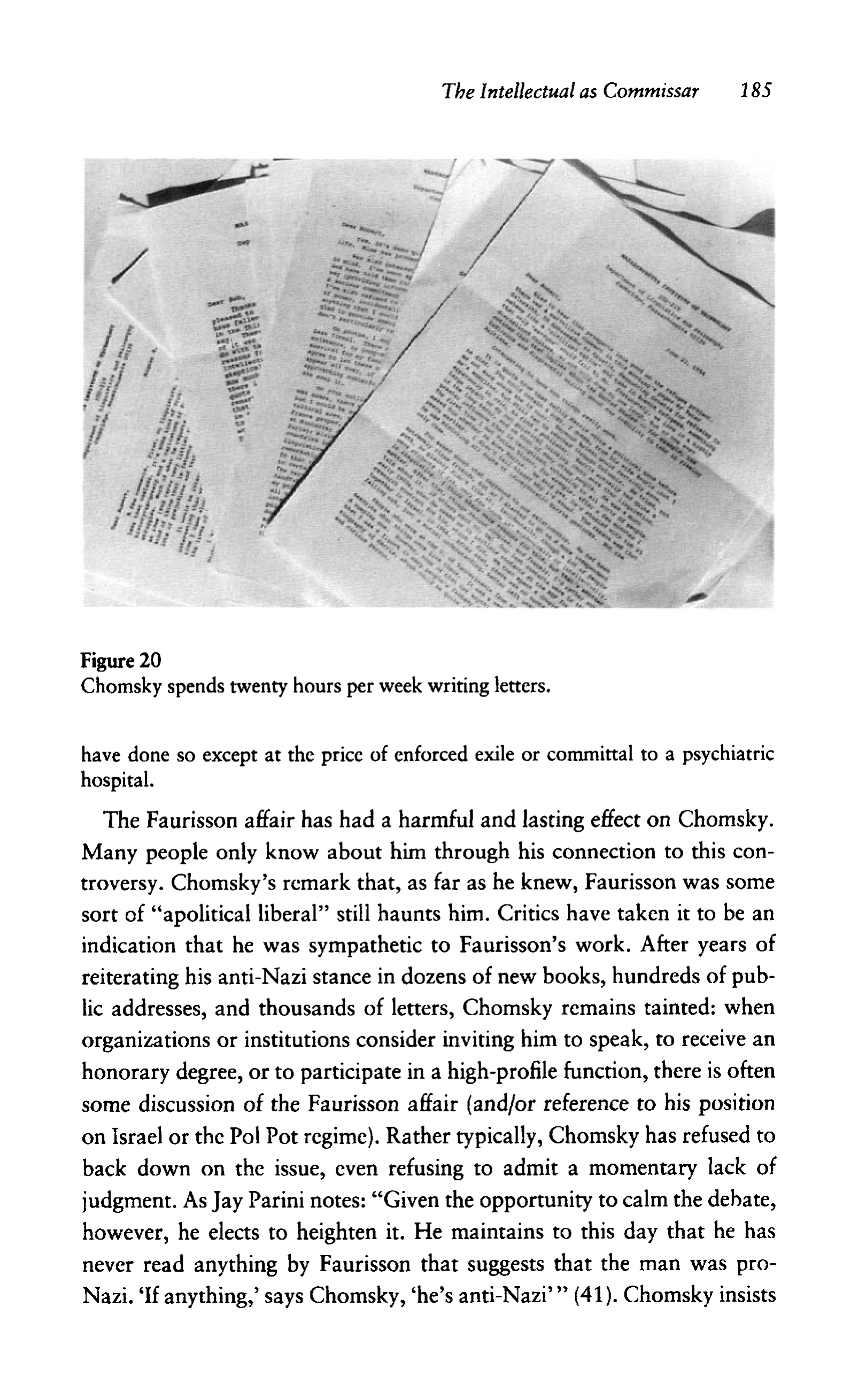
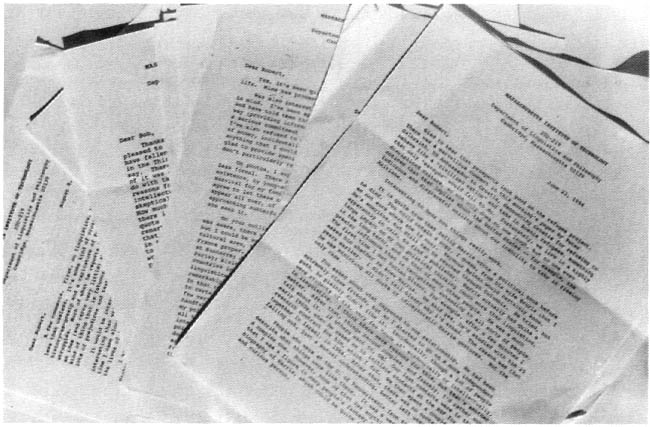
The
Intellectual
as
Commissar
185
Figure
20
Chomsky
spends
twenty
hours
per
week
writing
letters.
have
done
so
except
at the
price
of
enforced
exile
or
committal
to a
psychiatric
hospital.
The
Faurisson
affair
has had a
harmful
and
lasting
effect
on
Chomsky.
Many people only know about
him
through
his
connection
to
this con-
troversy. Chomsky's remark
that,
as far as he
knew,
Faurisson
was
some
sort
of
"apolitical
liberal" still haunts him. Critics have taken
it to be an
indication
that
he was
sympathetic
to
Faurisson's work.
After
years
of
reiterating
his
anti-Nazi stance
in
dozens
of new
books, hundreds
of
pub-
lic
addresses,
and
thousands
of
letters, Chomsky remains tainted: when
organizations
or
institutions consider inviting
him to
speak,
to
receive
an
honorary degree,
or to
participate
in a
high-profile function, there
is
often
some discussion
of the
Faurisson
affair
(and/or reference
to his
position
on
Israel
or the Pol Pot
regime).
Rather
typically,
Chomsky
has
refused
to
back down
on the
issue, even
refusing
to
admit
a
momentary lack
of
judgment.
As Jay
Parini notes: "Given
the
opportunity
to
calm
the
debate,
however,
he
elects
to
heighten
it. He
maintains
to
this
day
that
he has
never
read anything
by
Faurisson that suggests that
the man was
pro-
Nazi.
'If
anything,'
says Chomsky,
'he's
anti-Nazi'"
(41).
Chomsky insists
that even
to
engage
in a
discussion
of
this nature
is to
give
an
unaccept-
able
legitimacy
to the
position
of his
opponents. Furthermore:
[M]y statement about
the
disgust
one
must
feel
at
even entering into debate with
apologists
for the
Nazis
and
Holocaust
deniers
has
been widely quoted
But
it's
been
quoted
to
show that
I
oppose
freedom
of
speech!
(By
refusing
to
debate
you,
I
deny
your freedom
of
speech!)
And of
course they systematically
and
without
exception delete
the
fact
thai:
I was
talking about Nazis
and
Holocaust deniers.
That's
quite something. You'd have
to
explore rather deep into
the
Stalinist
archives
to find
something similar,
and
recall that
all of
these people know
all of
this perfectly well.
(14
Aug.
1995)
Was
signing
the
petition
on
behalf
of
Faurisson therefore
a
mistake?
In
light
of the
principle involved, Chomsky would
say
that
it was
not. What
does
it
mean
to
sign
a
petition? Chomsky notes that included
in
many
petitions
for
Salman Rushdie
was
praise
for his
banned book,
The
Satanic
Verses:
"irrelevent
on a
freedom
of
speech statement,
and
improper, since
many
of the
signers (I'm one)
hadn't
even looked
at
[the
book]."
So why
sign?
Because
if one
were
to
sign only statements that
are
formulated
the way one
thinks
proper,
no one
would sign anything, except
the
author.
It's
understood that
a
sig-
nature means support
for the
general gist
of the
statement,
not the
specific
for-
mulations.
I
have
no
doubt that Mullas
in
Qom
and
Stalinist extremists
fumed
about
the
other petitions, analyzing every word
for a
possible connotation, much
in
the way
that
Vidal-Naquet,
Dershowitz,
and
other clones
of the
commissars
and
Mullahs
do in
this
case.
(14
Aug. 1995)
In
1969, Chomsky described
the
Holocaust
as
"the most fantastic
outburst
of
collective insanity
in
human history"
(Peace
57-58).
He
also
noted that
the
moment
we
enter into
"a
technical debate with
the
Nazi
intelligentsia,"
the
moment
we
consider such questions
as,
"[I]s
it
true
that
the
Jews
are a
cancer eating away
at the
vitality
of the
German peo-
ple?"
"What
is the
evidence that
the
Slavs
are
inferior
beings?"
we are
plunged
into
"this
morass
of
insane
rationality."
He
then voiced
his
most
impassioned
and
powerful plea
of
all:
"By
entering into
the
arena
of
argu-
ment
and
counterargument,
of
technical
feasibility
and
tactics,
of
foot-
notes
and
citations,
by
accepting
the
presumption
of
legitimacy
of
debate
on
certain issues,
one has
already lost
one's
humanity"
(American
Power
9).
Yet it is a
petition,
not the sum
total
of his
writings, that
is
taken
as
the
measure
of
Chomsky's commitment.
186
Chapters
The
Intellectual
as
Commissar
187
The Pol Pot
Affair
Collaborators once more, Chomsky
and
Edward Herman
published
The
Political
Economy
of
Human Rights
in
1979.
In the
second volume
of
this two-volume work,
After
the
Cataclysm:
Postwar Indochina
and the
Reconstruction
of
Imperial
Ideology,
they compared
two
sites
of
atroc-
ity—Cambodia
and
Timor—and
evaluated
the
diverse media responses
to
each.
It
embroiled Chomsky
in an
entirely
new
controversy.
In
a 7
November 1980
Times
Higher
Education Supplement
article
called
"Chomsky's Betrayal
of
Truths,"
Steven Lukes accused Chomsky
of
intellectual irresponsibility.
He was
contributing
to the
"deceit
and
distortion
surrounding
Pol
Pot's
regime
in
Cambodia,"
Lukes charged,
because, "obsessed
by his
opposition
to the
United States' role
in
Indo-
china,"
he had
"lost
all
sense
of
perspective" (31). Lukes concluded that
there
was
"only
one
possible thing
to
think":
Chomsky
had
betrayed
his
own
anarchist-libertarian principles.
"It is sad to see
Chomsky writing
these things.
It is
ironic,
given
the
United
States'
government's
present
pursuit
of its
global role
in
supporting
the
seating
of Pol Pot at the
[United
Nations].
And it is
bizarre, given Chomsky's previous stand
for
anarchist-
libertarian principles.
In
writing
as he
does about
the Pol Pot
regime
in
Cambodia, Chomsky betrays
not
only
the
responsibilities
of
intellectuals,
but
himself" (31).
Lukes
makes
no
mention here
of the
subject
of the
book, which
is
clearly
stated
in the
introduction
to
volume
1,
which
is
entitled "Cam-
bodia:
Why the
Media Find
It
More Newsworthy than Indonesia
and
East
Timor."
It is an
explicit comparison between Cambodia
and
Timor—the
latter being
the
scene
of the
worst slaughter, relative
to
population
size,
since
the
Holocaust.
Now if the
atrocities perpetrated
in
Timor were
comparable
to
those
perpetrated
by Pol Pot in
Cambodia (and Chomsky
claims
that they were), then
a
comparison
of Pol
Pot's
actions
to
those
committed
in
Timor could
not
possibly constitute
an
apology
for Pol
Pot.
Yet
somehow Lukes suggested that
it
did.
If
such comparisons cannot
be
made without
the
intellectual community rising
up in
protest, then
the
entire issue
of
state-instigated murder
can
become lost inside
the
polemics
of
determining which team
of
slaughterers represents
a
lesser
evil.
188
Chapters
That
Lukes could ignore
the
fact
that Chomsky
and
Herman were
comparing
Pol Pot to
East Timor "says
a lot
about him,"
in
Chomsky's
opinion:
By
making
no
mention
of the
clear,
unambiguous,
and
explicit comparison
[of Pol
Pot and
East
Timor],
he is
demonstrating
himself
to be an
apologist
for the
crimes
in
Timor. That
is
elementary
logic:
if a
comparison
of Pol Pot to
Timor
is
apol-
ogetics
for Pol
Pot,
as
Lukes claims
(by
omission
of the
relevant context, which
he
could
not
fail
to
know),
then
it
must
be
that
the
crimes
in
Timor were
insignificant.
Lukes,
then,
is an
apologist
for the
worst slaughter
relative
to
population
since
the
Holocaust. Worse, that
is a
crime
for
which
he,
Lukes, bears responsibility;
UK
support
has
been
crucial.
And it is a
crime
that
he,
Lukes, could
have
always
helped
to
terminate,
if he did not
support
huge
atrocities;
in
contrast, neither
he
nor
anyone
else
had a
suggestion
as to
what
to do
about
Pol
Pot.
(13
Feb. 1996)
The
vigor
of
Chomsky's remarks
reflects
the
contempt that
he
feels
for
this kind
of
by-now-familiar tactic. Decorum must
not
take precedence
over
decrying slaughter
arid
falsity,
arid
Chomsky
is
compelled
to
dem-
onstrate this: "Let
us say
that someone
in the us or
UK
... did
deny
Pol Pot
atrocities.
That
person would
be a
positive
saint
as
compared
to
Lukes,
who
denies comparable
atrocities
for
which
he
himself shares responsibil-
ity
and
knows
how to
bring
to an
end,
if he
chose.
That's
elementary.
Try
to find
some intellectual
who can
understand
it.
That tells
us a lot
...
about
the
intellectual culture"
(13
Feb. 1996).
The
point
of
course goes
beyond
Lukes,
and
extends into
a
general discussion concerning
the
intel-
lectual
community, which itself,
in
Chomsky's opinion,
"cannot
compre-
hend
this kind
of
trivial, simple, reasoning
and
what
it
implies. That really
is
interesting.
It
reveals
a
level
of
indoctrination vastly beyond what
one
finds
in
totalitarian states, which rarely were able
to
indoctrinate intellec-
tuals
so
profoundly that they
are
unable
to
understand real
trivialities"
(14
Aug.
1995).
Within weeks,
two
long
and
lucid replies
to
Lukes's piece were sent
in
to the
Times Higher Education Supplement,
accusing
him of
selective
reading,
of
missing
the
entire point
of
both
volumes
of
Political
Economy,
of
ignoring
the first
volume,
of
trivializing
the
moral potency
of
Chom-
sky's thesis,
of
cold-bloodedly manipulating
the
truth,
of
misrepresent-
ing
Chomsky
and
Herman's
work,
and of
disrespect. Neither reply came
from
Chomsky;
one was
from
Laura
J.
Summers,
the
other
from
Robin
Woodsworth
Carlsen.
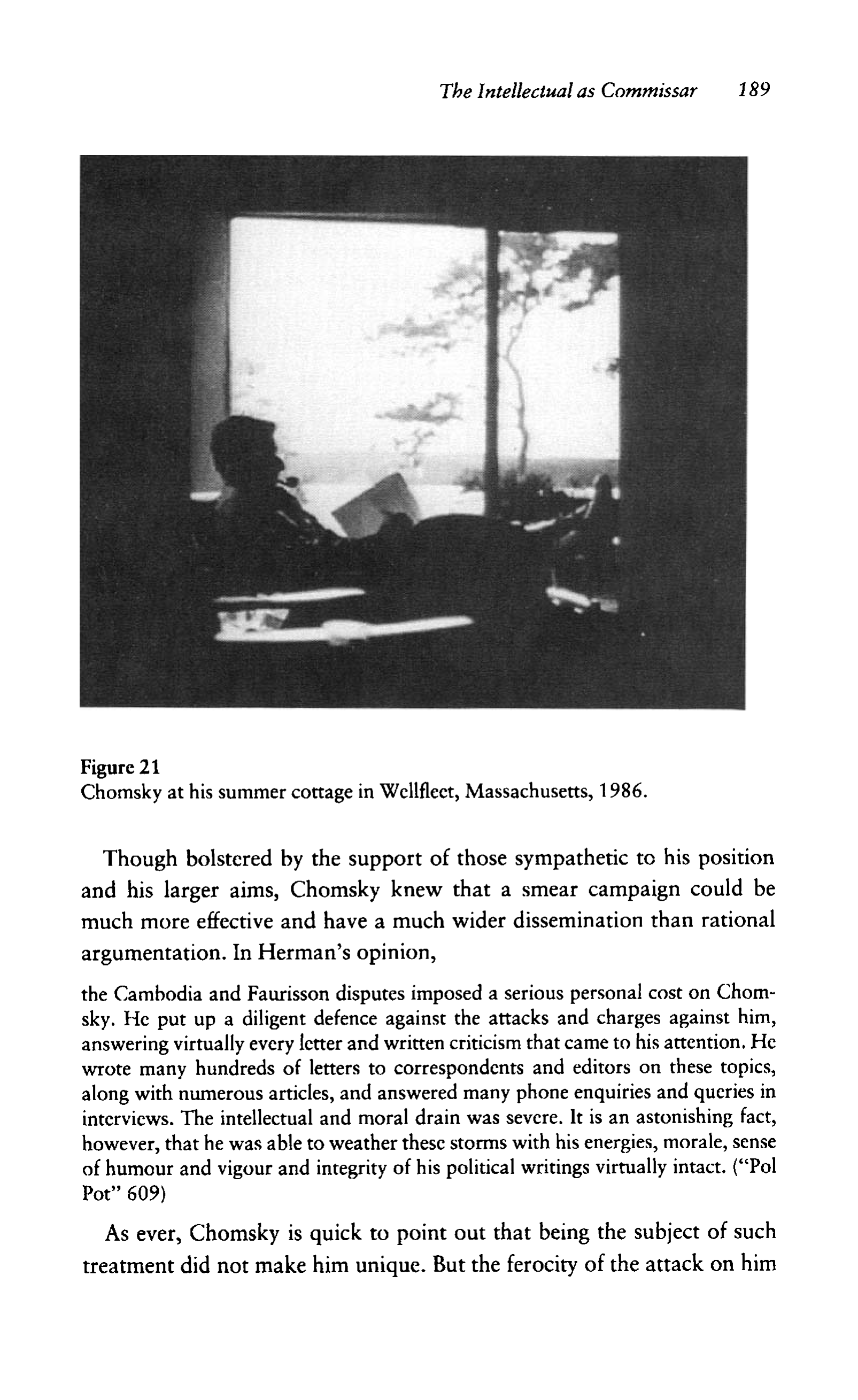
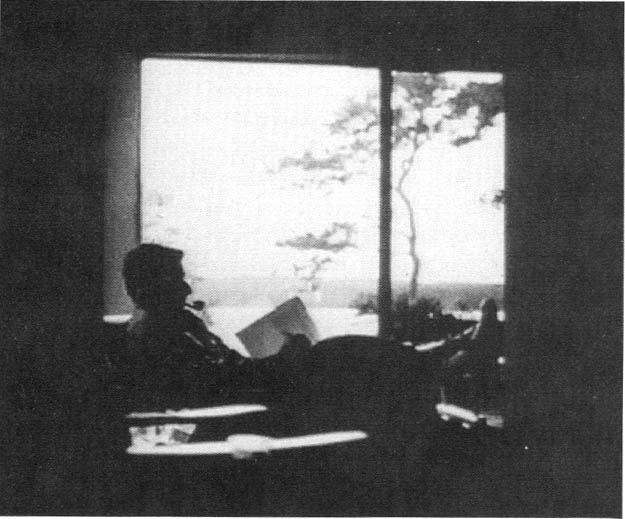
The
Intellectual
as
Commissar
189
Figure
21
Chomsky
at his
summer cottage
in
Wellfleet,
Massachusetts,
1986.
Though bolstered
by the
support
of
those sympathetic
to his
position
and his
larger
aims,
Chomsky knew
that
a
smear campaign could
be
much more
effective
and
have
a
much wider dissemination than rational
argumentation.
In
Herman's opinion,
the
Cambodia
and
Faurisson disputes imposed
a
serious personal
cost
on
Chom-
sky.
He put up a
diligent defence against
the
attacks
and
charges against
him,
answering virtually every letter
and
written criticism
that
came
to his
attention.
He
wrote many hundreds
of
letters
to
correspondents
and
editors
on
these topics,
along with numerous articles,
and
answered many phone enquiries
and
queries
in
interviews.
The
intellectual
and
moral drain
was
severe.
It is an
astonishing fact,
however,
that
he was
able
to
weather these storms with
his
energies, morale, sense
of
humour
and
vigour
and
integrity
of his
political writings virtually intact.
("Pol
Pot" 609)
As
ever,
Chomsky
is
quick
to
point
out
that being
the
subject
of
such
treatment
did not
make
him
unique.
But the
ferocity
of the
attack
on him
190
Chapters
does reveal something about
the
power
of
popular media,
the
lengths
to
which endangered elites will
go to
eliminate dissent,
and the
nature
of
what passes
for
appropriate professional behavior.
In a
letter
he
wrote
to
the
Times
Literary
Supplement
in
January
of
1982—a
reply
to an
article
by
Paul Johnson
in
that same publication
in
which
he,
like Lukes, accused
Chomsky
and
Herman
of
sympathizing with
the
Khmer
Rouge—Chom-
sky
examined
one of the
tactics used against him:
"[A]
standard device
by
which
the
conformist intellectuals
of
East
or
West deal with irritating dis-
sident opinion
is to try to
overwhelm
it
with
a
flood
of
lies. Paul Johnson
illustrates
the
technique with
his
reference
to my
'prodigies
of
apologetics
...
for the
Khmer
Rouge'
(December 25).
I
have stated
the
facts
before
in
this
journal,
and
will
do so
again,
not
under
any
illusion that they will
be
relevant
to the
guardians
of the
faith." Chomsky asserted that
the
smear
campaign
was a
side issue;
the
larger concern was,
of
course,
the
intellec-
tual
apologists'
ability
to
forgo reasonable analysis when their
own
gov-
ernment
was at
fault:
The
context
was
extensive documentation
of how the
mainstream intelligentsia
suppressed
or
justified
the
crimes
of
their
own
states during
the
same period. This
naturally outraged
those
who
feel
that
they should
be
free
to lie at
will concerning
the
crimes
of an
official
enemy while concealing
or
justifying
those
of
their
own
states—a
phenomenon that
is,
incidentally,
far
more significant
and
widespread
than
the
delusions about so-called
"socialist"
states that Johnson discusses,
and
correspondingly quite generally evaded. Hence
the
resort
to the
familiar
technique
that
Johnson,
and
others, adopts.
("Political
Pilgrims")
Otero even goes
so far as to
describe
(in a
note
he
added
to
Language
and
Politics)
the
reaction
to
Chomsky's positions
on
Faurisson
and Pol
Pot as a
coordinated attempt
to
undermine
his
credibility
and
thereby
sabotage
his
powerful critique
of
policies
on
Indochina:
The
major international campaign orchestrated against Chomsky
on
completely
false
pretexts
was
only
part—though
perhaps
a
crucial
part—of
the
ambitious
campaign launched
in the
late
70s
with
the
hope
of
reconstructing
the
ideology
of
power
and
domination which
had
been partially exposed during
the
Indochina
war.
The
magnitude
of the
insane attack against Chomsky, which aimed
at
silenc-
ing
him and
robbing
him of his
moral stature
and his
prestige
and
influence,
is of
course
one
more tribute
to the
impact
of his
writings
and his
actions—not
for
nothing
he was the
only
one
singled out.
(310)
Such
commentary assigns
to the
ruling elite
a
uniformity that
is
based
on
the
values shared
by its
members. Evidence
for
this
may be
found
in the
The
Intellectual
as
Commissar
191
heavy media coverage given
to the
Lukes camp
and the
general reluctance
to
allow Chomsky space
for
rebuttal (particularly
in
France).
Chomsky
as
Teacher
As
he
tackled
the
enormous
job of
fending
off his
attackers,
Chomsky
refused
to put
aside
any of his
scientific,
political,
and
libertarian projects:
he
gave conferences, wrote letters, completed
his
books,
and
taught
his
classes.
He
was,
and is, for
generations
of
dissenters
a figure of
enlighten-
ment
and
inspiration;
for
students
of
linguistics
he
was,
and is, a
leader
in
the field.
Chomsky
has
spoken about
the
role
of the
teacher,
and his
remarks
offer
insight
into
the
style
he has
developed over
the
years—a
style grounded
in his own
experience
as a
student:
Most
problems
of
teaching
are not
problems
of
growth
but
helping cultivate
growth.
As far as I
know,
and
this
is
only
from
personal experience
in
teaching,
I
think about ninety percent
of the
problem
in
teaching,
or
maybe ninety-eight
percent,
is
just
to
help
the
students
get
interested.
Or
what
it
usually amounts
to is
to not
prevent them
from
being interested. Typically they come
in
interested,
and
the
process
of
education
is a way of
driving that
defect
out of
their minds.
But if
children['s]...
normal interest
is
maintained
or
even aroused, they
can do all
kinds
of
things
in
ways
we
don't understand. ("Creation")
There
is a
wide range
of
opinion about Chomsky's abilities
as a
teacher,
but
certain observations
do
recur
in the
recollections
of
students
he has
taught
in the
course
of his
long career. Many,
for
example, report that
Chomsky answers
all
questions
carefully
and
thoughtfully,
no
matter
what
the
intellectual level
of his
interrogator.
His
classes
are
sometimes
attended
by
upwards
of one
hundred people,
and
within
any
given audi-
ence
one is
likely
to find
leading
scholars—from
the fields of
linguistics,
philosophy, psychology,
or
mathematics—sitting
arm-to-arm with inter-
ested individuals
from
all
walks
of
life.
There
are
people
who
have
not
missed more than
a
handful
of
Chomsky's lectures
in
twenty years; some
travel great distances
to
hear what
he has to
say.
As one
might imagine,
this makes
for a
classroom atmosphere that
can be
intimidating
for his
own
graduate students. Following
his
open seminars,
he
spends
an
hour
alone with
his
graduate students
and
offers
prolific
and
penetrating com-
ments
on
each student submission. Former Chomsky student Lisa Travis,
now a
professor
of
linguistics
at
McGill University, says,
"Though
it's
192
Chapters
hard
to
describe,
he
generates
an
atmosphere
of
intense
rationality,
a
sense
of
discovery. Whatever he's thinking about
is the
leading edge
of
his
discipline" (qtd.
in
Parini 39). Others claim, however, that towards
those
who
pursue research that doesn't interest
him
Chomsky displays
little enthusiasm. Robin
Lakoff,
a
linguistics professor
at the
University
of
California, remarks that
"he
thinks he's
in
possession
of the
Truth,
and
that
everybody should listen when
he
speaks.
But not
everyone goes
along with
him
nowadays"
(qtd.
in
Parini 39).
There have,
as
well, been complaints
of
traditionalism
in the
MIT
lin-
guistics department,
and
these
led to
strife
in
1983.
A
student
who was
present
in the
department
at
that time says, "Chomsky thinks
he is a
fem-
inist,
but—at
heart—he's
an
old-fashioned patriarch.
Of
course, he's
a
very
good
person.
He
just
has
never really
understood
what
the
feminist
movement
is
about"
(qtd.
in
Parini 39). Chomsky disagrees:
The
students
have been
pressuring
for
years
for
more women faculty. They
are
pushing
an
open
door,
however. It's long been
a
faculty
initiative, along with
efforts
to
bring
in
minority faculty. When push comes
to
shove, [these students]
make
the
same
recommendations
faculty has.
In the
early
'80s,
the one
woman
faculty
member
(Joan
Bresnari,
who was
brought
in at my
personal initiative, over
lots
of
objections
from
younger faculty members
who
didn't
agree), decided
to
leave
for
Stanford.
Not
long
after,
Donna
Steriade
was
hired,
and
then
left
because
we
weren't able
to find a job in the
area
for her
husband.
But
there have been
no
faculty-student disagreements
to
speak
of
about
the
issue, either
at the
general
level
or on
specifics. There have been periodic student initiatives over
the
years,
some even pretty heated,
but on
other matters;
how to run the
general exams,
course
requirements, etc.
(25
July 1995)
The
sheer volume
of
graduate
students with whom Chomsky
has had
contact
over
the
years, and,
by
extension,
the
number
of
Chomsky-trained
linguists teaching
in
universities around
the
world,
is
quite incredible.
Otero calculates that
by
1991 Chomsky
had had a
hand
in
supervising
more than sixty-seven Ph.D. theses
and two
M.S. theses ("Background"
819).
He has
also participated
in the
supervision
of
other theses, both
at
MIT
and
other universities
(as of
1996, over eighty
at
MIT).
The
Postmodern
Era
Between
the
late
1970s
and the
early
1980s,
French-theory-driven post-
modernism took
the
milieu
of
American social sciences
and
humanities
by
The
Intellectual
as
Commissar
193
storm. Chomsky formed strong opinions
on
this school
of
thought,
and
these were directly related
to his
ideas
about
what
intellectuals
do
in the
academy,
and why
much
of
what they
do is
trivial and/or self-serving.
It may
seem ironic, then,
that
his
work
has
been
an
important resource
for
those interested
in
structural approaches
to
texts,
and
continues
to
be
used
by
.theorists,
including postmodern theorists,
who are
grappling
with issues emerging
from
the
study
of
structuralism, poststructuralism,
poetics, linguistic approaches
to
literature,
and
linguistic argumentation.
Language
studies (excluding linguistics)
in
North America have been
profoundly influenced
by
French
theoreticians
ever since Saussure,
but by
the
early 1980s
the
canon
of
French theory
had
expanded considerably:
the
popularity
of
Baudrillard, Bourdieu, Derrida, Deuleuze, Foucault,
Guattari,
Lacan,
and
Lyotard
was on the
rise (although Barthes,
Todorov,
and
Kristeva remained contenders
in the
battle
of the
bibliographies).
These were
the new
stars
on the
theory scene,
and
although other thinkers
were
allowed into
the
canon
of
literary
and
language studies,
it was the
postmodernists
who
shone brightest.
Theorists seldom agree
on how to
define
postmodernism,
and the
problem
is
compounded when
one
moves
from
one
discipline
to
another
(from
postmodern architecture
to
postmodern poetry,
for
example).
Chomsky's
own
definition
of the
term does
not
accord
with
that
used
by
many
other
academics,
and has
thus been
a
source
of
tension.
One of the
most
useful
references
to
postmodernism
and its
theorists
as
they
are
related
to
Chomsky
is
Christopher
Norris.
Norris's
detailed criticism
of
the
overall
movement—and
in
particular works
by
Baudriilard,
de
Man,
Derrida,
Lyotard—is
a
careful
and
well-reasoned version
of
Chomsky's
own
rather dramatic assessment. Norris's critique
of
Jean Baudrillard's
postmodernism,
in
particular, serves
to
contextualize Chomsky's stance.
In his
Uncritical
Theory:
Postmodernism, Intellectuals
and the
Gulf
War
(1992),
Norris responds
to
Baudrillard's article "The
Gulf
War Has Not
Taken Place" with
a
sustained polemic aimed
at the
excesses
and
errors
of
postmodernism.
He
begins
by
summarizing Baudrillard's
position:
[I]t
is
Baudrillard's
contention
that
we now
inhabit
a
realm
of
purely
fictive or
illusory
appearances;
that
truth
has
gone
the way of
enlightened
reason
and
such-
like
obsolete
ideas;
that
"reality"
is
nowadays
defined
through
and
through
by the
play
of
multiplied
"simulacra"
or
reality-effects;
that
there
is no
point
criticizing
194
Chapters
"false"
appearances
(whether
on
epistemological
or
socio-political
grounds)
since
those
appearances
are all
that
we
have,
like
it or
not;
and
that
henceforth
we had
better
make peace with this so-called "postmodern condition" rather than cling
to
an
outworn paradigm
whose
truth-claims
no
longer
possess
the
least
degree
of
operative
(i.e.
persuasive
or
rhetorical)
force.
(14-15)
It is
easy
to
imagine what Chomsky would have
to say
about Baudril-
lard's
postmodernism: think
of his
Cartesianism,
his
concern with social
and
individual responsibility,
and his
commitment
to
intervene
on
behalf
of
the
oppressed
(such
as
those natives
of
Baghdad upon whom
the
coali-
tion dropped bombs during
the
so-called Gulf War).
While
Norris condemns Baudrillard's ideas
as
"absurdities" based
upon
"ludicrous
theses"
(17),
he
also makes
it
clear that
he
feels
Bau-
drillard does
not
represent postmodern thinking
as a
whole. Consigning
Baudrillard
to the
category
of
extremist,
he
presents Derrida
as an
exam-
ple of
postmodern lucidity. Norris
refutes
the
notion that Derrida
is
"falling
into that
facile
strain
of
postmodernist rhetoric that
cheerfully
pronounces
an end to the
regime
of
reality, truth,
and
enlightenment cri-
tique,"
suggesting instead
that
his
work
"raises
issues
of
ethical account-
ability
(along with epistemological questions) which
are
rendered invisible
by
the
straightforward appeal
to
reference, intentions, textual author-
ity, right reading, authorial warrant
and so
forth." Derrida "carries
the
argument
by
sheer force
of
reasoning
and
meticulous
attention
to the
blind-spots
in his
opponents' discourse,
as
well
as
through
his
quite
ex-
traordinary skill
in
turning their charges back against themselves
in a
tour
de
force
of
sustained
tu
quoque
polemics." Nevertheless, Norris admits,
postmodernism
has
been rejected
"by
many
who
lack
the
time
or
interest
to
examine
the
relevant
texts
at first
hand,
or to
read them with anything
like
an
adequate sense
of
their complex philosophical prehistory, their
implicit
axiomatics, specialized modes
of
argument, etc."
He
adds: "And
a
further
source
of
misunderstanding
is the
fact
that these texts have
been
taken
up
with enthusiasm
by the
members
of a
different
'interpretive
community'—U.S.
and
British literary
theorists—who
approach them
with quite
a
different
set of
motivating interests
and
priorities"
(18).
Chomsky, however,
has
taken Baudrillard
as a
kind
of
touchstone
for
postmodernism,
and
therefore does
not
agree with Norris's contention
that there
is
value
to
postmodern work, even though
the two
have
often
The
Intellectual
as
Commissar
195
been
in
accord: Chomsky maintains
that
they
are "on the
same
side,"
and
that
he
knows
of
Baudrillard "from Chris
Norris's
critique"
(31
Mar.
1995);
Norris writes,
in
Uncritical
Theory,
"it
seems
to me
that
the
supe-
rior cogency
of
Chomsky's arguments should
be
obvious
to any
reader
whose mind remains open
to
persuasion
on
rational
grounds"
(110).
It is
true that Chomsky does
not
claim
to be an
expert
on
postmodernism;
he
could,
in
fact,
have ignored
the
entire movement,
as
neither main-
stream linguistics
nor the
domain
of
political dissension
has
been
signifi-
cantly
touched
by it the
way,
for
instance, literary studies was.
But
post-
modernism nonetheless says something,
in its own
obfuscated
language,
that
is an
affront
to
Chomsky's sensibilities.
He
does grant
that
"Derrida
and
Lacan
at
least should
be
read;
in
fact,
I
quoted early work
of
Lacan
in
essays based
on
talks
for
psychoanalysts, reprinted
in
Rules
and
Representations"
However, "The others
I
don't
mention because
I
don't
regard them
as
even minimally serious
(to the
extent that
I'm
familiar
with their work, which
is
very
slight). Kristeva
I met
once.
She
came
to
my
office
to see me
about
20
years ago, then some kind
of
raving
Maoist,
as
I
recall.
I was
never tempted
to
read further"
(31
Mar.
1995).
One
postmodern thinker with whom Chomsky
has
successfully
en-
gaged, however,
is
Michel Foucault. Since
his
death Foucault
has
emerged
as one of the figureheads of
postmodernism. Chomsky
has met and
dis-
cussed
issues with him,
and has
also made congenial comments about
some
of his
work.
In
1971, Chomsky
and
Foucault appeared together
on
Dutch public television. Foucault
has
emerged relatively unscathed
from
his
encounters with Chomsky, despite
the
scorn
the
latter
has
exhibited
for
what
he
sees
as the
historical relativism, self-indulgence,
and
self-
serving
language Ludditism
of
postmodern theory.
In
fact, except when
the
question
of
whether
justice
and
human nature
are
historically con-
tingent
is
concerned,
Chomsky
and
Foucault
are
often
on the
same wave-
length. Norris writes:
[T]here
is a
measure
of
agreement
between
Foucault's
and
Chomsky's
posi-
tions—
Thus
Chomsky
goes
some
way
toward
conceding
the
point
that
our
ideas
of
truth
are
very
largely
the
product
of
"internalized
preconceptions";
that
sub-
jects
may
indeed
be
conditioned
to
accept
certain
facts
as
"self-evident"
merely
by
virtue
of
their
fitting in
with
some
established,
consensual,
or
professionalized
code
of
belief;
that
censorship
often
operates
not so
much
"from
above"
as
through
forms
of
self-imposed
discipline
and
restraint
that don't
involve
the
exer-
196
Chapters
else
of
overt,
coercive
powers;
that
there
may be
"honest,"
"right-thinking"
indi-
viduals
(as
Chomsky
is
willing
to
describe
them)
who are
none
the
less
involved
in
propagating
falsehoods
that
service
the
"political
economy
of
truth";
and
more-
over,
that
resistance
to
those
falsehoods
or
abuses
of
power
must
always
be
to
some
extent
reliant
on the
"discourses"—the
available
sources
of
information—
that
circulate
at any
given
time.
(113-14)
While emphasizing, again,
the
trivial
and
self-interested character
of
most political-science theory, Chomsky mentions Foucault's contribution
to
historical studies:
One can
learn
a lot
from
history,
as
from
life,
as
long
as it
avoids
the
pretentious
tomfoolery
required
by
intellectuals
for
career
and
power
reasons.
Take
Foucault,
whom
you
mention.
With
enough
effort,
one can
extract
from
his
writings
some
interesting
insights
and
observations,
peeling
away
the
framework
of
obfuscation
that
is
required
for
respectability
in the
strange
world
of
intellectuals,
which
takes
on
extreme
forms
in the
weird
culture
of
postwar
Paris.
Foucault
is
unusual
among
Paris
intellectuals
in
that
at
least
something
is
left
when
one
peels
this
away.
(15
Dec. 1992)
Chomsky
on the
French Intellectual
Tradition
France
has
become
the
site
of the
kind
of
intellectual work that Chomsky
most abhors.
He
observes:
"almost
no one in
France
has
ever
had any
idea
of
what
my
political
or
academic
work
is
about.
Of
course they write
about
it all the
time,
but
that
is the
standard infantilism
of
French intel-
lectual
life." Although,
he
persists, they
may
boast
"a few
very
fine
lin-
guists
and
other
scientists,
anarchist circles,
and a
handful
of
others,"
the
French
have
"a
highly parochial
and
remarkably illiterate culture."
For
this reason, "during
the 60s and
70s,
I
almost never gave political talks
in
France the distorting effects of dogma were so extreme that it was
a
waste
of
time"
(30 May
1994).
Althusser, Bachelard,
de
Beauvoir,
Camus, Levinas, Levi-Strauss, Sartre,
or
Serres,
all
highly respected
in
certain circles, Chomsky does
not
mention specifically,
but his
intention
is
to
question
the
star status assigned
to
certain French theorists
and the
reverence
bestowed upon
the
dogma that
is
generated
by the
schools
of
thought that they have established
(in
Language
and
Politics,
for
example,
he
mentions existentialism, structuralism, Lacanianism,
and
deconstruction
[310-11]).
Americans, incidentally, seem equally guilty
of
The
Intellectual
as
Commissar
197
fomenting
the
type
of
cultishness
that
Chomsky decries.
It is
often
the
American
academics that latch onto these trends, hire
the
leading lights
at
exorbitant
salaries,
and
prolong
the
life
spans
of
particular movements
by
recruiting
their
faithful
followers.
Many French
(or
French-style) intellectuals
believe
that Chomsky's
work employs outdated strategies that
are
unable
to
accommodate
the
subtleties
of
political movements. Chomsky's reply
to
this
is
that
the
French
are
unwilling
to see
what
is set out
clearly
before
them,
and
should
learn
"how
to
tell
the
truth,
to pay
attention
to
facts,
and to
reach stan-
dards
of
minimal rationality"
(31
Mar.
1995).
He
also charges that
the
French
intellectual scene
has
refused
to
interact with work undertaken
outside
of
France—its
elite
is
insular
and
backward. Numerous examples
are
proffered:
Viennese positivism, studied around
the
world since
the
1930s,
is
virtually unknown
in
France (the school's
major
works were
only
published
in
French translation
in the
1980s); most French biologists
were,
in the
1970s,
still pre-Darwinian; most German philosophy
is
still
unknown
in
France. There
is, in
Chomsky's view,
a
parochialism
and a
level
of
suppression existing
in
France
that
is
virtually unparalleled,
and it
extends through
all
domains.
"When
the
truth about France under
the
Nazis began
to
appear
in
studies
in the
U.S., there
was
astonishment
and
turmoil
in
France because
the
facts
had
been almost completely sup-
pressed—and
still
largely are"
(31
Mar.
1995).
Chomsky's
objections
to
French studies
of
language
and
interaction
apply,
in a
more general way,
to
postmodernism.
Many observations
made
by its
practitioners
are
couched
in
vague terminology
and
then
elevated
to the
status
of
"theory."
Chomsky
has
made some devastating
remarks
about
the
kind
of
postmodern theory that passes
for
academic
achievement
in the
present era. With
reference
to
Bourdieu
and
Lyotard,
he
writes:
Doubtless
there
is a
power
structure
in
every
speech
situation;
again,
that
is a
tru-
ism
that
only
an
intellectual
could
find
surprising
and
seek
to
dress
up in
appro-
priate
polysyllables.
As
honest
people,
our
effort
should
be to
unmask
it and
diminish
it, as far as we
can,
and to do so in
association
with
others,
whom
we can
help
and who can
help
us in
this
necessary
libratory
task.
Will
it
ever
end?
I
pre-
sume
not.
As for
Lyotard
and the
post-modern
age,
I
await
some
indication
that
there
is
something
here
beyond
trivialities
or
self-serving
nonsense.
I can
perceive
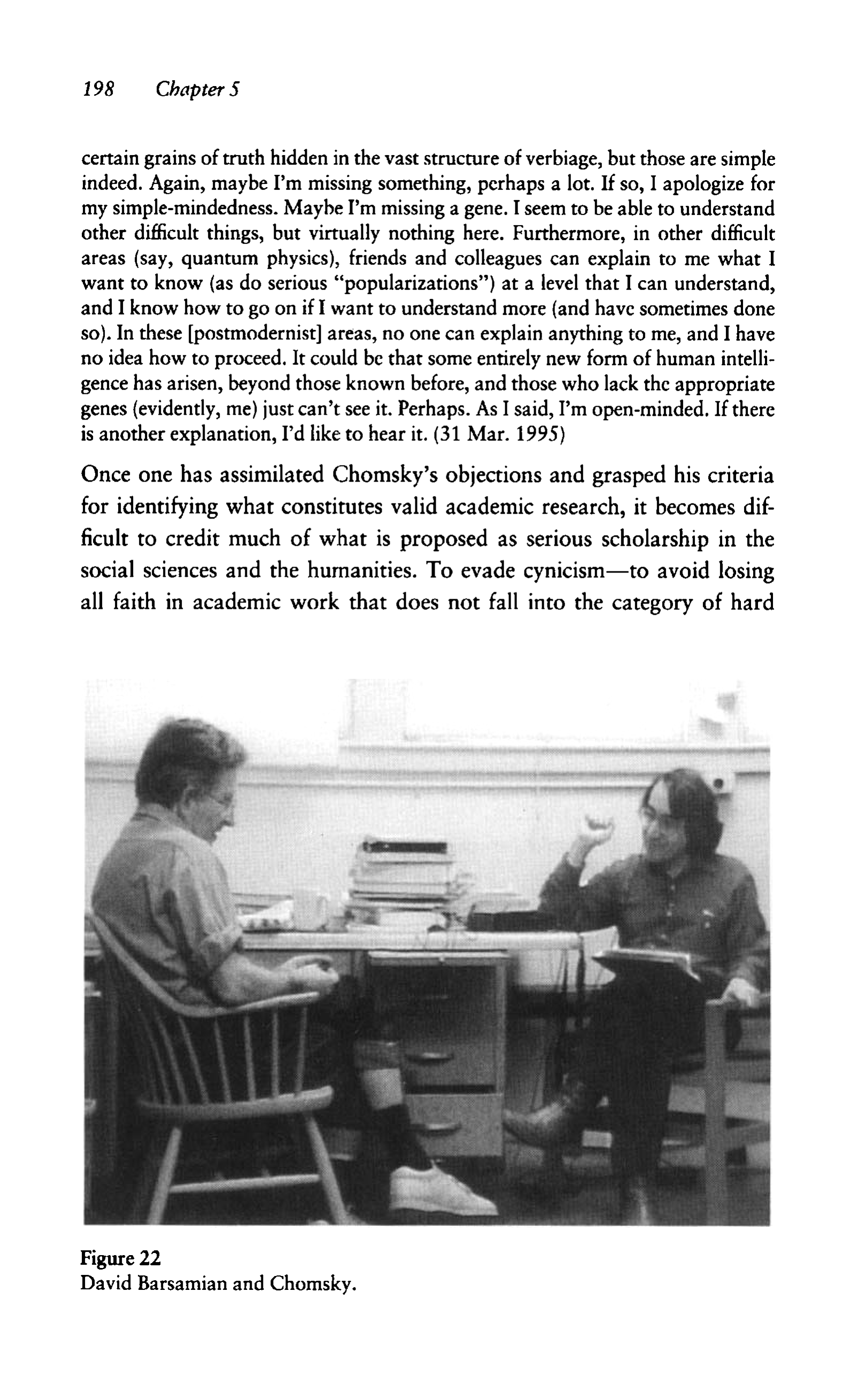
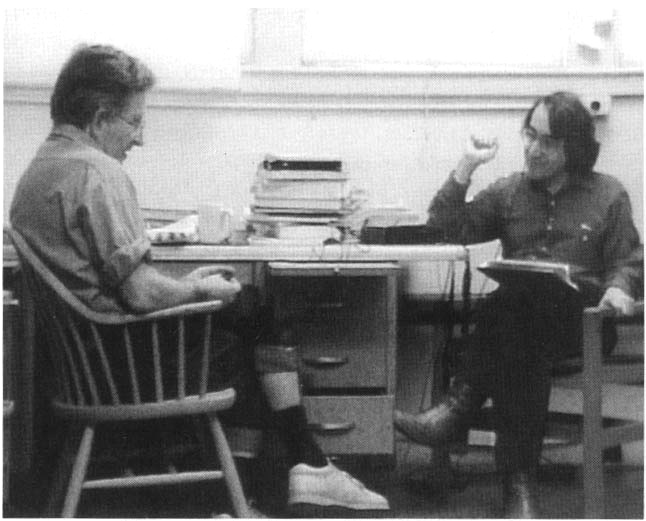
198
Chapters
certain grains
of
truth hidden
in the
vast structure
of
verbiage,
but
those
are
simple
indeed. Again, maybe
I'm
missing something, perhaps
a
lot.
If so, I
apologize
for
my
simple-mindedness. Maybe
I'm
missing
a
gene.
I
seem
to be
able
to
understand
other
difficult
things,
but
virtually nothing here. Furthermore,
in
other
difficult
areas
(say,
quantum physics),
friends
and
colleagues
can
explain
to
me
what
I
want
to
know
(as do
serious "popularizations")
at a
level
that
I can
understand,
and I
know
how to go on if I
want
to
understand more (and have sometimes done
so).
In
these [postmodernist] areas,
no one can
explain anything
to me, and I
have
no
idea
how to
proceed.
It
could
be
that
some entirely
new
form
of
human intelli-
gence
has
arisen, beyond those known before,
and
those
who
lack
the
appropriate
genes
(evidently,
me)
just
can't
see it.
Perhaps.
As I
said,
I'm
open-minded.
If
there
is
another explanation,
I'd
like
to
hear
it. (31
Mar. 1995)
Once
one has
assimilated Chomsky's objections
and
grasped
his
criteria
for
identifying what constitutes valid academic research,
it
becomes dif-
ficult to
credit much
of
what
is
proposed
as
serious scholarship
in the
social sciences
and the
humanities.
To
evade
cynicism—to
avoid losing
all
faith
in
academic work
that
does
not
fall
into
the
category
of
hard
Figure
22
David
Barsamian
and
Chomsky.
The
Intellectual
as
Commissar
199
science—one
must nurture
the
intellectual skill
of
distinguishing between
what
is
useful
and
what
is
simply
self-serving,
retrograde,
or
dangerous.
Armed
with
his
dry, laconic
wit
Chomsky devotes
himself
to
making
this distinction.
His use of
such terms
as
"fascist,"
"lawless,"
"corrupt,"
and
"fraudulent"
when speaking
of
highly respected government
or
aca-
demic
figures
raises eyebrows;
it
also elicits nervous laughter
from
the
audiences
he
goads into recognizing
the
absurdity
of
positions
or
actions
that
we
have come
to
consider normal,
and
provokes
the
intense animos-
ity
of
those
who
consider
his
sweeping generalizations inappropriate
or
ill
informed. David Barsamian's alternative
radio
station
in
Colorado
dis-
tributes tapes
of
conversations with Chomsky
(as
well
as
other margin-
alized
thinkers such
as
Samir
Amin,
Alex Cockburn, Edward Herman,
Christopher Hitchens,
and
Howard
Zinn), which
offer
the
listener
the
opportunity
to
experience
the
eloquence
of
Chomsky's speech.
The
viva-
cious humanity
of
Chomsky's
prose
is
reinforced
by
powerful articula-
tion, provocative rhetorical techniques,
and a
tangible enthusiasm
for
intellectual engagement.
He has
employed these strategies
to
force
his
readers
to
consider their
own
humanity through
reference
to the
creative
aspects
of
human beings
and to the
environments most suited
to
their
development.


This page intentionally left blank
In
the
early
1980s,
Chomsky made
important
progress
in his
linguistic
work,
which
led him to
embark upon what
has
been described
as a
"new
program."
The
products
of
this
are
recorded
in
Lectures
on
Government
and
Binding:
The
Pisa
Lectures
(1981),
Knowledge
of
Language:
Its
Nature,
Origin,
and Use
(1986),
Barriers
(1986), and,
finally, in a
more
accessible form,
in
Language
and
Problems
of
Knowledge:
The
Managua
Lectures
(1988),
which also includes some political discussion arising
out
of
questions posed
by the
Managua audience.
The
Minimalist
Program.,
although
not
published until 1995,
took
shape around questions
that
came into
focus
in
1980 with
the
principles-and-parameters
model.
These texts emerge
from
the
postulate that languages have
no
language-
particular rules
or
grammatical
constructions
of the
traditional
sort,
but
rather universal principles
and a finite
array
of
options
for
application.
They represent significant advances
in the field. In
1988, Chomsky stated
that contemporary insights into "empty categories
and the
principles that
govern them
and
that determine
the
nature
of
mental representations
and
computations
in
general," "the principles
of
phrase structure, binding
theory,
and
other subsystems
of
universal grammar,"
are
allowing
us "to
see
into
the
hidden nature
of the
mind
...
really
for the first
time
in
his-
tory."
These discoveries were,
he
insisted, comparable
"with
the
discov-
ery
of
waves, particles, genes
and so on and the
principles that hold
of
them,
in the
physical sciences"; furthermore,
"we are
approaching
a
sit-
uation
that
is
comparable with
the
physical sciences
in the
seventeenth-
century, when the great scientific revolution took place ..." (Language
and
Problems
91-92).
And,
in the
introduction
to
The
Minimalist
Pro-
gram,
he
continued along this trajectory, claiming that
"it is, I
think,
of
Conclusion
202
Conclusion
considerable importance that
we can at
least formulate such questions
today,
and
even
approach
them
in
some areas with
a
degree
of
success.
If
recent thinking along these lines
is
anywhere near accurate,
a
rich
and
exciting
future
lies ahead
for the
study
of
language
and
related dis-
ciplines"
(9).
Chomsky's
political
work continued
to
evolve. While
he
consistently
maintained
the
principles
he had
adopted
so
many years before,
he now
broadened
his
scope
to
address
a
larger number
of
issues.
He
delved
deeper
into
media research
(Manufacturing
Consent:
The
Political Econ-
omy of the
Mass
Media
[1988],
with Edward
S.
Herman;
Necessary
Illusions
[19891,
and
explored other areas, such
as
Cold War, post-Cold
War,
and
terrorist-style politics
(Towards
a New
Cold War:
Essays
on the
Current
Crisis
and How We Got
There
[1982];
Pirates
and
Emperors:
International
Terrorism
and the
Real World
[1986];
The
Culture
of
Ter-
rorism
[1988];
Terrorizing
the
Neighbourhood: American
Foreign
Policy
in
the
Post-Cold
War Era
[1991];
World Orders,
Old and New
[1994];
Powers
and
Prospects
[1996]),
Israel
(The
Fateful
Triangle:
The
United
States,
Israel
and the
Palestinians
[1983]),
Latin America
(Turning
the
Tide:
U.S. Intervention
in
Central America
and the
Struggle
for
Peace
[1985]),
Vietnam
(Rethinking
Camelot:
JFK,
the
Vietnam War,
and
U.S.
Political
Culture
[1993]),
and
imperialism
(Deterring
Democracy
[1991];
Year
501:
The
Conquest Continues
[1993]).
Two of the
best anthologies
of
his
work were also published during this
period,
Language
and
Politics
(1988)
and
The
Chomsky Reader
(1987);
two
excellent introductions
to
his
work were written
by
Carlos Otero
(Radical
Priorities
[1981]
and
Language
and
Politics
[1988]);
and
collections
of
interviews such
as
Chronicles
of
Dissent
(1992)
and
Keeping
the
Rabble
in
Line: Interviews
with David Barsamian
(1994) gave
the
reader access
to
interviews
on
wide-ranging subjects.
Scanning this incomplete list
of
publications—produced
during
an era
dominated
by a
virtual president named Ronald Reagan,
an
absurd
arms race,
the
decline
and
dismantling
of the
Soviet Union,
and
super-
power engagements with such world-menacing despots
as
Noriega, Hus-
sein,
Khaddafi,
and
Castro,
as
well
as
threats
to the
stability
of the
free
world
from
Grenada, Nicaragua,
and
East
Timor—it
becomes evident
that
a
synopsis
of
Chomsky's output over even
a
relatively short period
Conclusion
203
would only amount
to a
scratch
on the
surface
of an
enormous body
of
work.
A
better
way to
determine where Chomsky
is
standing
at the
present
juncture,
to
communicate
a
sense
of his
current
milieu,
is to
look
at
three
issues
in
which
he has
become implicated. First, Chomsky
has in
recent
times observed
a
growing cynicism
in the
American people,
a
conviction
that
the
political system
is
manifestly
biased against them
and
that
real
political power
has
eluded their grasp.
Out of
this cynicism they have,
for
example, voted against their
own
best interests (Chomsky cites
a
poll
in
which people were asked
if
they voted
for
Reagan;
the
majority responded
"Yes,"
but
when asked
if
they
thought
Reagan's
policies
would
be
bene-
ficial to
them they replied
"No").
Second, Chomsky
has
noticed
a
related
increase
in the
distance between
the
rulers
and the
ruled. This
is the
result
of
both
the
increased accumulation
of
power within
a
shrinking segment
of
the
population,
and the
widely heralded
"world
market economy"
(frequently
described
by
Chomsky
as a
fraudulent label employed
by the
elite),
which
has
been expanded thanks
to the
European Union,
the
North
American
Free Trade Agreement,
and a new
General Agreement
on
Tariffs
and
Trade treaty. Third, Chomsky
has
begun,
in his
political
writings,
to
cite primary sources
and
media reports rather than
the in-
fluential
figures to
whom
he had
once regularly
turned.
This
phenomenon
reflects
the
growth
of
popular movements
and
Chomsky's involvement
in
them. Also, Chomsky admits, "virtually
no one
shared
my
interest
in
anarchism (and Spanish anarchism)
...
and the
deepening
of my own un-
derstanding
of the
(left)
libertarian tradition back
to the
Enlightenment
and
before
was
completely isolated
from
anyone
I
knew
or
know
of"
(31
Mar.
1995).
Pushing
the
Limits
of
Understanding
Despite
the
fact
that
he has
been
so
often
mired
in
controversy,
Chomsky
continues
to
receive respect
and
admiration
from
his
peers. They have
rewarded
him for his
many accomplishments with such honors
as:
the
Distinguished
Scientific
Contribution Award, American Psychological
Association (1984);
the
Kyoto Prize
in
Basic Science, Inamori Foundation
(1988);
and the
Orwell Award,
National
Council
of
Teachers
of
English
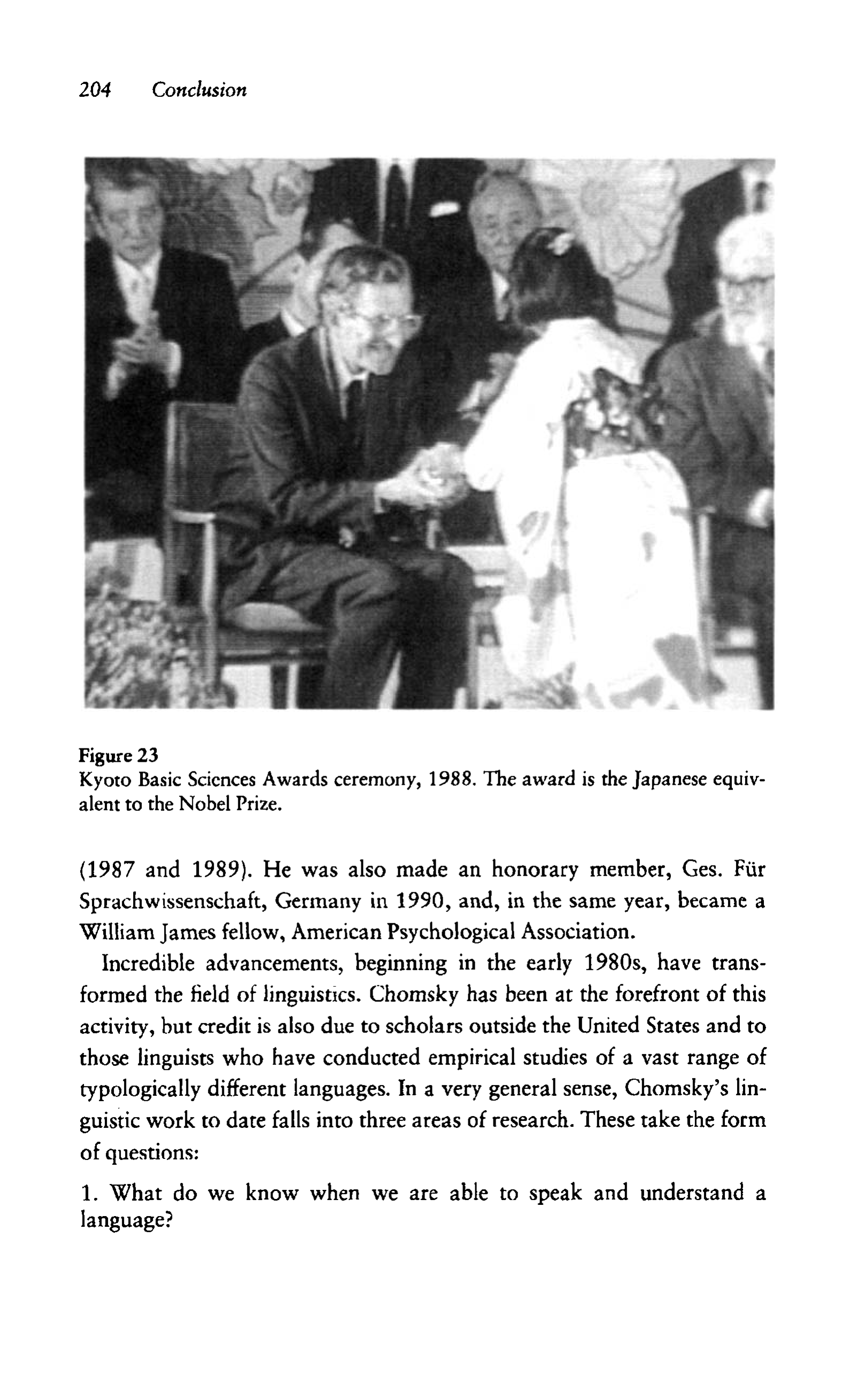
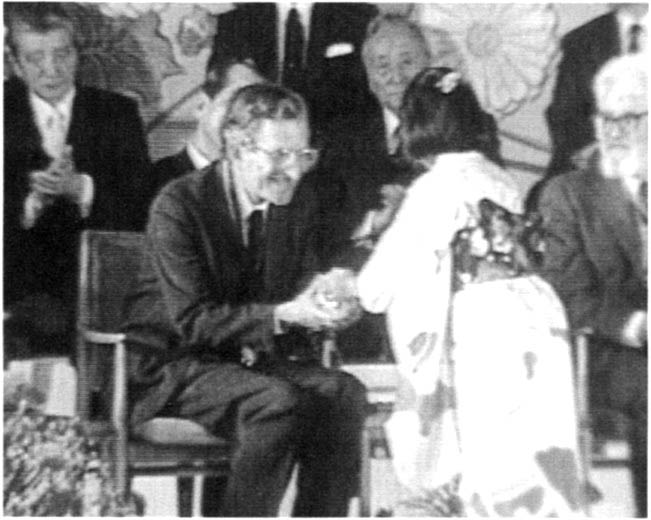
204
Conclusion
zyxwvutsrqponmlkjihgfedcbaZYXWVUTSRQPONMLKJIHGFED
Figure
23
Kyoto Basic Sciences Awards ceremony, 1988.
The
award
is the
Japanese
equiv-
alent
to the
Nobel Prize.
(1987
and
1989).
He was
also made
an
honorary member, Ges.
Fur
Sprachwissenschaft,
Germany
in
1990, and,
in the
same year, became
a
William James fellow, American Psychological Association.
Incredible advancements,
beginning
in the
early
1980s,
have trans-
formed
the field of
linguistics.
Chomsky
has
been
at the
forefront
of
this
activity,
but
credit
is
also
due to
scholars outside
the
United States
and to
those linguists
who
have conducted empirical studies
of a
vast range
of
typologically
different
languages.
In a
very general sense, Chomsky's lin-
guistic work
to
date
falls
into three areas
of
research. These take
the
form
of
questions:
1.
What
do we
know when
we are
able
to
speak
and
understand
a
language?
Conclusion
205
2. How is
this language acquired?
3. How do we use
this knowledge?
(Language
and
Problems
133)
To
question
one,
the
answer
is
descriptive,
so to
pursue
it we
must
"attempt
to
construct
a
grammar,
a
theory
of a
particular language
that
describes
how
this language assigns
specific
mental representations
to
each
linguistic expression, determine
its
form
and
meaning."
Next,
we
have
to
explain
it by
constructing
"a
theory
of
universal grammar,
a
theory
of the fixed and
invariant principles
that
constitute
the
human lan-
guage
faculty
and the
parameters
of
variation associated with
them"
(Language
and
Problems
133).
If we are
able
to
construct
a
universal
grammar,
we can
then approach
the
second question, because "language
learning
...
is the
process
of
determining
the
values
of the
parameters
left
unspecified
by
universal
grammar,
of
setting
the
switches
that
make
the
network
function...."
The
third question involves
the
study
of
"how peo-
ple
who
have acquired
a
language
put
their knowledge
to use in
under-
standing
what
they hear
and in
expressing their
thoughts"
(Language
and
Problems
134). What remains
for the
future
is a
fouth
question:
"What
are
the
physical mechanisms involved
in the
representation, acquisition,
and the use of
this knowledge?"
(Language
and
Problems
133).
This question concerns
the
limits
of
human understanding. Even
as he
is
making breakthroughs
in.his
field,
Chomsky
is
also becoming more
and
more concerned
with
the
biological limits
of the
human being
as
they
pertain
to the
fundamental questions
of
existence. Although
the
physical
sciences
have
afforded
us
great insight into
the
workings
of
matter, studies
of
the
mind have
not
yielded anywhere near
as
much
useful
and
scientifi-
cally
proven information about
the
basics
of
human nature. Questions
posed
by the
Greeks,
and
repeated with variations
by
generation upon
generation
of
thinkers ever since, remain unanswered. Humankind will
perhaps never
be
able
to
unravel these mysteries,
but
this does
not
mean
that
they cannot motivate research
or
generate
other
questions
that
might
bring researchers closer
to
their goals.
In
pursuit
of
answers
to the
overarching fourth question, Chomsky
has
asked,
in the
lectures
he has
given
at
MIT
since
the
late
1980s:
(1)
What
are the
general
conditions that
the
human
language
faculty
should
be
expected
to
satisfy?
(2) to
what extent
is the
language
faculty
determined
by
these
conditions,
without
special
structure
that
lies
beyond
them?
The first
question
in
206
Conclusion
turn
has two
aspects: what conditions
are
imposed
on the
language
faculty
by
vir-
tue of (A) its
place within
the
array
of
cognitive systems
of the
mind/brain,
and (B)
general
considerations
of
conceptual naturalness that have some independent
plausibility, namely: simplicity, economy, symmetry, non-redundancy,
and the
like?
(The Minimalist Program
1).
He has
proceeded along these lines with apparent success,
but
notes that
"what
looks reasonable today
is
likely
to
take
a
different
form
tomorrow"
(The
Minimalist
Program
10).
Though
we
have moved closer
to
uncover-
ing
some secrets that were previously thought
to be
impenetrable, there
is,
of
course,
no way of
knowing where
the
limits
to
human knowledge lie.
Chomsky's
own
scientific
work
is
dependent upon
new
empirical
and
theoretical ideas;
the
minimalist program,
for
example, owes
its
successes
to the
bold speculation
that
characterized
the
principles-and-parameters
approach coupled with massive empirical data. This
is not to say
that
Chomsky's most recent linguistic
efforts
represent
a
total break
from
his
earlier
work.
Indeed, "the minimalist
program
shares several underlying
factual
assumptions with
its
predecessors back
to the
early
1950s,
though
these have taken somewhat
different
forms
as
inquiry
has
proceeded,"
and
it
borrows "from earlier work
the
assumption that
the
cognitive system
interacts with
the
performance systems
by
means
of
levels
of
linguistic
representation,
in the
technical sense
of
this
notion"
(The Minimalist
Program
2).
Art and
Literature:
An
Undefinable
Influence
On
occasion, Chomsky
has
suggested that
the
mysterious aspects
of
human existence
and the
limits
of our
knowledge are,
in
some ways, best
explored
in
works
of
art.
But he
does not, like Adorno,
Benjamin,
Green-
berg,
or
Hauser,
seek within
the
domain
of
music, visual art,
sculpture,
or
photography visions that
offer,
for
example, alternatives
to our
present
society:
I
seem
to
have
a tin ear for
atonal music,
I'm
afraid:
past some
Berg
I
mostly listen
out of a
sense
of
duty
(I
have some
friends
who are
well-known composers,
and I
go to
their concerts,
for
example).
As for
abstract art,
my
tastes also tend
to
fade
out
after
cubism, mainly.
Do I find
"motivation, inspiration
or
philosophical
truths"
in any of
this?
As for
motivation
and
inspiration,
who
knows, maybe
unconsciously.
As for
philosophical truths,
not as I
understand
the
term
at
least
(in
fact,
I'm not
convinced that
the
category
exists—maybe
my
Wittgensteinian
youth
[is]
showing).
(8
Aug. 1994)
Conclusion
207
There are,
however,
frequent
references
to
literature
in
Chomsky's
writings,
and
several intersections exist between
his
work
and
literary
texts. First, Chomsky-inspired linguistics
has
been employed
by
some
critics
in
formulating their approaches
to
literary texts, particularly
in
areas
such
as
semiotics,
structuralism,
and
narratology. Second, Chom-
sky's philosophical work
on
creativity
and
performance
has
been used
to
enhance
or
critique theoretical treatments
of
literary
texts.
Third,
the
popularity
of
particular authors
or
literary texts,
and the
degree
of
ease
or
difficulty
with which
an
author publishes
a
particular work
in a
particular
place
and
time,
are
taken
by
Chomsky
as
gauges
of the
control exerted
over
public expression
and the
institutions
that
channel
it.
Chomsky's
many
remarks
on
Orwell bear upon this issue.
For
example:
If
Orwell, instead
of
writing
1984
—which
was
actually,
in my
opinion,
his
worst
book,
a
kind
of
trivial caricature
of the
most totalitarian society
in the
world,
which
made
him
famous
and
everybody loved
him,
because
it was the
official
enemy—if
instead
of
doing that easy
and
relatively unimportant thing,
he had
done
the
hard
and
important thing, namely talk about Orwell's problem
...
[how
is
it
that
we
know
so
little given
the
amount
of
evidence
we
have],
he
would
not
be
famous
and
honored:
he
would
be
hated
and
reviled
and
marginalized.
("Creation")
Finally,
Chomsky
has
suggested that literature
can
offer
a far
deeper
insight
into
the
whole human person than
any
mode
of
scientific
inquiry.
This notion
is an
interesting anomaly, given
his
fundamental
belief
in the
power
and
value
of
pure sciences over social sciences.
He
nevertheless
remains
reticent about drawing
"tight
connections"
between literature
and
knowledge because
he
can't
really
say
whether literature
has
ever
"changed [his] attitudes
and
understanding
in any
striking
or
crucial
way":
[I]f
I
want
to
understand, let's
say,
the
nature
of
China
and its
revolution,
I
ought
to be
cautious about literary renditions. Look, there's
no
question that
as a
child, when
I
read about China, this
influenced
my
attitudes—Rickshaw
Boy,
for
example. That
had a
powerful
effect
when
I
read
it. It was so
long
ago I
don't
remember
a
thing about
it,
except
the
impact
Literature
can
heighten your
imagination
and
insight
and
understanding,
but it
surely doesn't provide
the
evi-
dence
that
you
need
to
draw conclusions
and
substantiate conclusions.
(Chomsky
Reader
4)
Literature
from
this standpoint
is a
means through which experiences
can
be
reread and, potentially, reviewed.
It
would
be
difficult
to
determine
208
Conclusion
whether certain attitudes precede someone's reading
of
literary texts
(thus
allowing certain ideas
to
resonate),
or
whether
the
literary texts them-
selves
help
form
the
attitudes
(as
Chomsky implies
in his
discussion
of the
role
that
these texts played
for him as a
child).
But the
actual relationship
between literary knowledge
and
empirical
fact
is
clearly problematic
for
Chomsky,
to the
point where
he
consciously blocks
out any
effects
that
literary texts might have
for his
analysis
of
particular
situations.
Never-
theless, Chomsky was,
and
continues
to be,
"powerfully influenced"
by
his
broad
readings
of
literary
texts
(8
Aug.
1994),
although
the
nature
of
this
influence
is
undefinable:
"We
learn
from
literature
as we
learn
from
life;
no one
knows how,
but it
surely happens.
In
fact,
most
of
what
we
know about things that matter comes
from
such sources, surely
not
from
considered rational inquiry
(science),
which sometimes reaches unparal-
leled depths
of
profundity,
but has a
rather narrow
scope—a
product,
I
assume,
of
special properties
of
human cognitive
structure"
(15
Dec.
1992).
These
"properties,
5
'
1
like
the
physical mechanisms involved
in the
representation, acquisition,
and the use of
knowledge,
are
some
of the
areas
of
human nature that have always been virtually impenetrable. But,
as his
research
and his
remarks about literature imply, Chomsky consid-
ers
that
human nature
may
someday
be
describable,
and
aspects
of it may
even
be
understood—a
possibility that many
of his
contemporaries
don't
admit, because they
refuse
to
recognize that
a
human nature exists.
To
Chomsky,
this
kind
of
thinking
is
absurd:
"Yes,
I
speak
of
human
nature,
but not for
complicated reasons.
I do so
because
I am not an
imbecile,
and
do not
believe that others should
fall
into culturally imposed imbecility.
Thus,
I do not
want
to
cater
to
imbecility.
Is my
granddaughter
different
from
a
rock? From
a
bird?
From
a
gorilla?
If so,
then there
is
such
a
thing
as
human nature.
That's
the end of the
discussion:
we
then turn
to
asking
what human nature
is" (15
Dec.
1992).
He
goes
on to
speculate about
the
source
of the
denials
of
human nature:
For
intellectuals—that
is,
social, cultural, economic
and
political
managers—it
is
very
convenient
to
believe
that
people
have
"no
nature,"
that
they
are
completely
malleable.
That eliminates
any
moral barrier
to
manipulation
and
control,
an
attractive idea
for
those
who
expect
to
conduct
the
manipulation,
and to
gain
power,
prestige
and
wealth thereby.
The
doctrine
is so
utterly foolish
that
one has
to
seek
an
explanation. This
is the one
that intellectual
and
social history seem
to
me
to
suggest.
(15
Dec. 1992)
Conclusion
209
There
is, in the
attitude expressed here, some indication
of
Chomsky's
linguistic theory (all people have
a
characteristic creative capacity
and
share particular innate abilities),
his
opinion
of
most intellectuals
(he
uses
the
term
"managers"
in the
same sense that Bakunin
and
Pannekoek did),
his
thoughts concerning appropriate environments
for
human develop-
ment (beyond control
and
manipulation),
and his
suspicions about
a
col-
lusion between elite powers
and
those
who
promote certain doctrines.
Also
evident
in his
commentary
is the
characteristic
goad—the
quality
that
nudges
his
readers
to
evaluate
and
reevaluate their basic assumptions
in
the
name
of
both common sense (the granddaughter-rock comparison)
and
social autonomy (preaching
"no
nature"
paves
the way for
social
control
a la, for
example, Skinner). Chomsky
the
worker never lets
up—
his
long product list
testifies
to
this—and
Chomsky
the
thinker doesn't
let
things pass without scrutiny, because
to do so
would
be to
risk
falling
into
some
carefully
designed trap,
the
type
of
pitfall
that
left
libertarians have
long been
at
pains
to
expose.
Fighting
for
Control
So
what remains
to be
done? Struggle. Struggle
in the
face
of
biases that
dog
research
of all
types,
of
accepted dogma,
of
manipulation
and
pro-
paganda; struggle
to
promote human
freedom.
Although
the
obstacles
seem great, there
are
enough success
stories
from
which
to
draw strength:
We
don't
live under slavery because
of
popular struggles.
We
have freedom
of
speech
because
of
popular
struggles.
It is
never
a
gift
from
above.
James
Madison,
one of the
founding fathers,
put it
very clearly.
He
said
a
parchment barrier will
never protect against tyranny nor are you ever going to get any gifts from
above.
Protection
against
tyranny comes from
struggle,
and it
doesn't
matter
what
kind
of
tyranny
it is. And if
that
is
carried out,
it can
achieve many gains. There
has
been
a
considerable expansion
of the
sphere
of
freedom over
the
centuries,
and
it
has a
long
way to go.
("Creation")
But
while Chomsky
has
made progress
in
recent years
on the
linguistics
front,
he
cannot rest
on his
political-activist laurels.
He is
compelled
to
point continuously
to the
ways
in
which oppressive structures such
as
fascism
and
totalitarianism (which
we
like
to
believe have been dis-
mantled,
at
least within
our own
society),
as
well
as
concentration
camps,
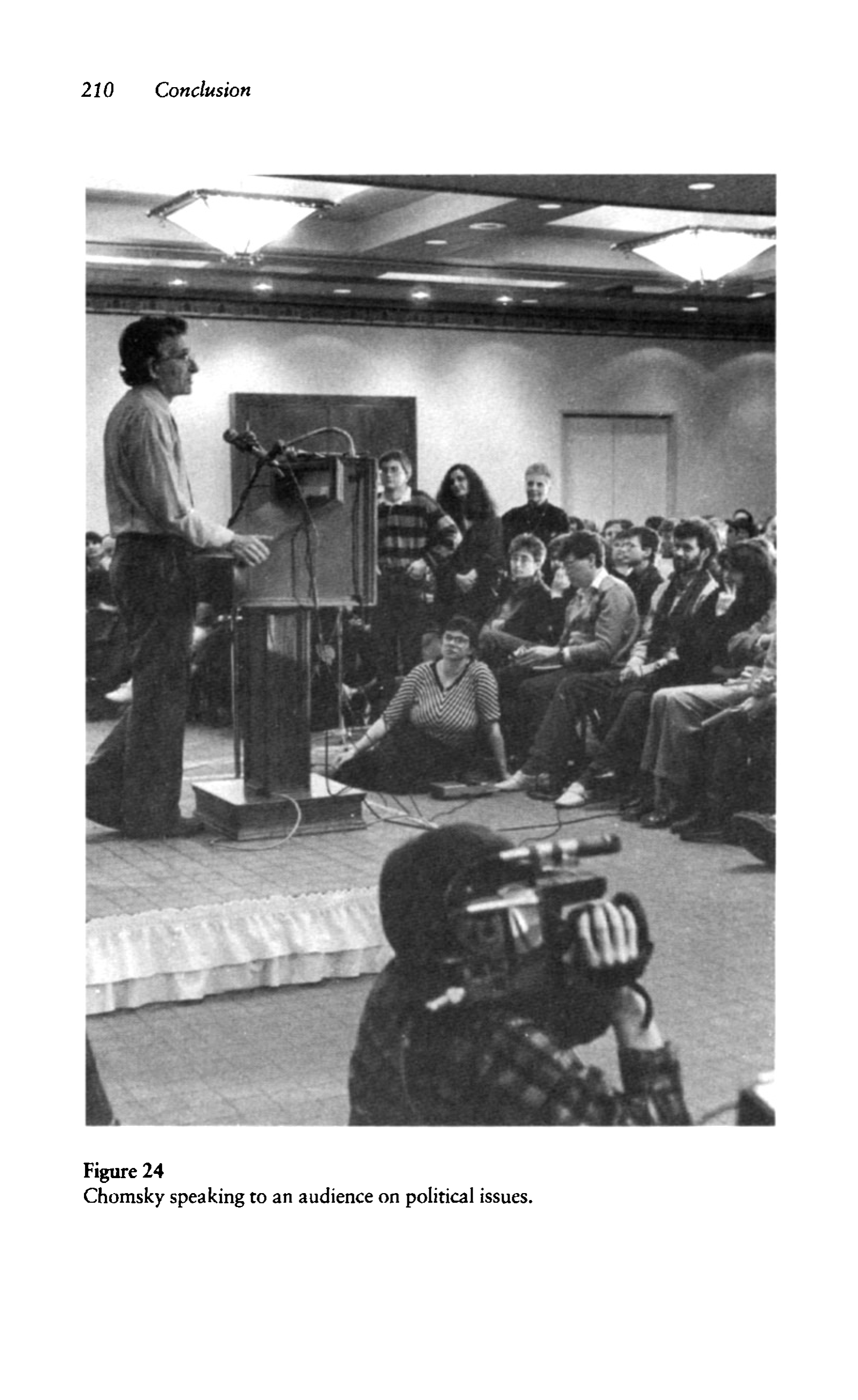
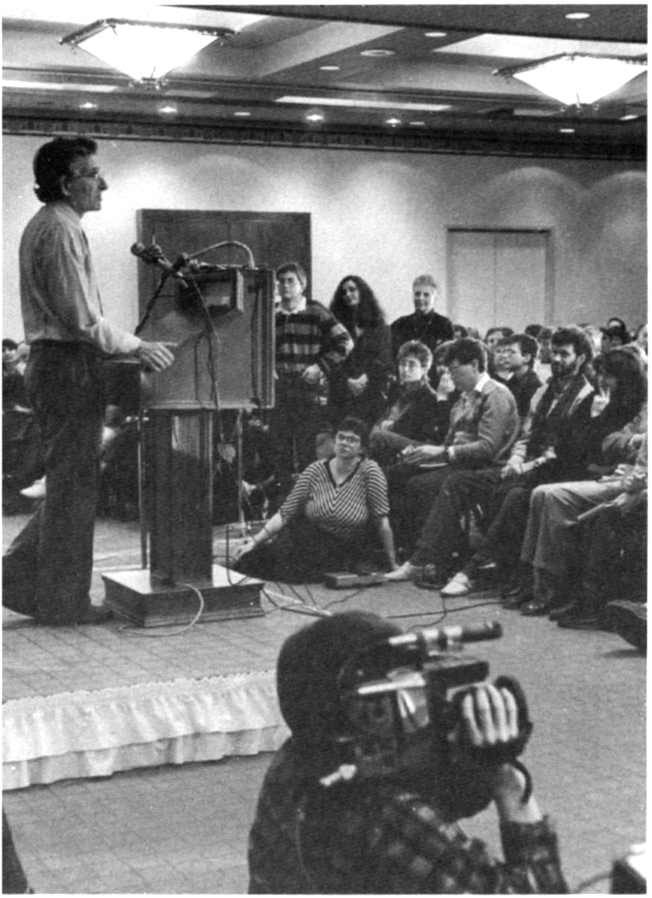
210
Conclusion
Figure
24
Chomsky speaking
to an
audience
on
political
issues.
Conclusion
211
torture chambers,
and
"ethnic-cleansing"
campaigns,
still exist. Certainly
anyone willing
to
take
the
time
to
examine
the
nature
of
governments,
corporations—even
leisure
activities—knows
this
to be
true:
"Take
pro-
fessional
sports....
It is
hard
to
imagine anything that contributes more
fundamentally
to
authoritarian attitudes.
In
professional sports
you are a
spectator,
and
there
is a
bunch
of
gladiators beating each other
up, or
something.
And you are
supposed
to
cheer
for
your gladiators. That
is
something
you are
taught
from
childhood" ("Creation").
Unfortunately,
the
task
of
publicly
identifying
such structures
is
ardu-
ous
and
time-consuming. Those
who
undertake
it are
also,
in
Chomsky's
opinion,
likely
to be
thwarted
by a
coerced
and
manipulative media,
by
government,
and by
corporate interests bent
on
obscuring pertinent
information.
While government
may
seem
the
most obvious culprit
in
such
attempts
at
suppression, Chomsky stresses that
the
impression
is
purposefully
constructed:
The
problem
isn't
"governments,"
at
least
in the
West. They
are not
much
in-
volved
in
doctrinal management (though there
are
exceptions, like
Woodrow
Wilson
and the
Reaganites, both
of
whom
ran
huge state propaganda
systems—
illegal
in the
latter case; there were
no
relevant laws
in the
Wilson
era).
Doctrinal
management
is
overwhelmingly
the
task
of
corporate propaganda, which
is
extraordinary
in
scale
and
very
significant
in
impact;
and [it is
also]
the
task
of the
general intellectual community, including
the
acceptable
dissidents
(Irving
Howe,
founder
of
Dissent,
etc.)
who
perform
a
very important service
by
setting
the
bounds
of
discussion
and
thus entrenching
the
unspoken presuppositions
of the
doctrinal system,
a
matter again that I've discussed
at
length. Anyway, govern-
ments
are
marginal, outside
of
totalitarian states, though attention
is
always
focused
on
them,
to
direct
it
away
from
what matters.
(31
Mar. 1995)
Extra-governmental
organizations—the
IMF,
the
World Bank,
the
GATT
council,
and the G-7
executive—are
also implicated
in the
campaign
to
exclude
what Chomsky
refers
to as the
"rabble"
from
the
process
of
making
the
decisions
and
creating
the
policies
that
directly concern them:
[A]
technique
of
control which
is
actually being sort
of
pioneered
in the
con-
temporary
period, both
in the
United States
and
Europe,
is
raising
the
level
of
decisions
to be so
remote
from
people's knowledge
and
understanding
that
they
don't
even know what
is
going
on.
They can't
find out
what
is
happening,
and
certainly
can't
influence
it
even
if
they
do.
That
is
part
of the
meaning
of the
"
de
facto
world government"
[a
citation
from
the
Financial
Times
that
refers
to a new
set of
emerging institutions outside
of the
national state] that
is
developing.
("Creation")
212
Conclusion
This kind
of
argument
has
familiar echoes,
at
least
in
terms
of the
values
that
underwrite
it. It is, in
spirit,
the
argument that Chomsky
has
always
put
forward,
and it
exists,
in
embryonic form,
in the
work
of
those
who
populate
the
milieu
from
which
he
emerged.
There
is a
sense that Chomsky's political work
is, in its
stubborn reiter-
ation
of
fact
and its
insistence upon
the
absolute relevance
of
particular
events, somehow untheoretical.
In
light
of his
previous commentary
on
intellectual obfuscation,
the
trivial observations that pass
for
political
science,
and
unnecessarily complex language,
his
reply
to
such
a
charge
is
perhaps predictable:
If
someone
can
come
up
with
a
nontrivial theory that
has
some bearing
on
matters
of
human concern, with conclusions
of any
credibility
that
would alter
the
ways
in
which
I or
others view these matters without access
to the
"theory,"
I'd be the first
to
immerse myself
in it,
with delight. What
I find,
however,
is
intellectuals
postur-
ing
before
one
another. Maybe that's
my
inability
to
discern important things,
but
if
so, it
should
be
possible
to
explain this
to me.
Many people
in the
academic
and
intellectual
left
complain
at
length about
my
"non-theoretical" stance,
as do
those
elsewhere.
But so
far,
no one has
even tried
to
respond
to
this very simple chal-
lenge
that
any
sane person would make,
as far as I can
see. What
am I to
conclude
from
that?
(31
Mar. 1995)
And
so,
Chomsky continues
to
publish political works that
are as
powerful
and
consistent
as
ever.
In all of
these, right
up to the
recent
World
Orders,
Old and New
(1994),
may be
found resonances
of
fun-
damentally left-libertarian values.
As
ever, though, there
are
those
who
object
violently
to
Chomsky's
offerings.
Ken
Jowitt,
for
example,
who
reviewed
World
Orders
for the 10
February 1995 edition
of the
Times
Literary
Supplement,
declared that
the
book
is an
expression
of its
author's "unrelenting
anger";
it
also communicates
his
belief
in a
trans-
national corporate conspiracy,
his
dismissal
of
ideology
as
anything more
than
a
"disguise"
to be
"unmasked,"
his
prophetlike scorn
for
intellectual
pharisees,
his
ahistorical view
of
history,
and his
"one-dimensional con-
ception
of
power
as
violence."
But
this work,
like
Chomsky's other recent
political publications,
is
better understood
as
speaking
to
libertarian
an-
archist
groups, popular organizations, inchoate movements,
as
well
as
concerned
and
even desperate people; indeed, writes Chomsky,
"that's
the
milieu
I
want
to be a
part of." These groups, unlike
the
narrower
one
composed mainly
of
intellectuals
to
which
he
spoke earlier
in his
career,
are
less thoroughly indoctrinated
by
systems
of
power, including corpo-
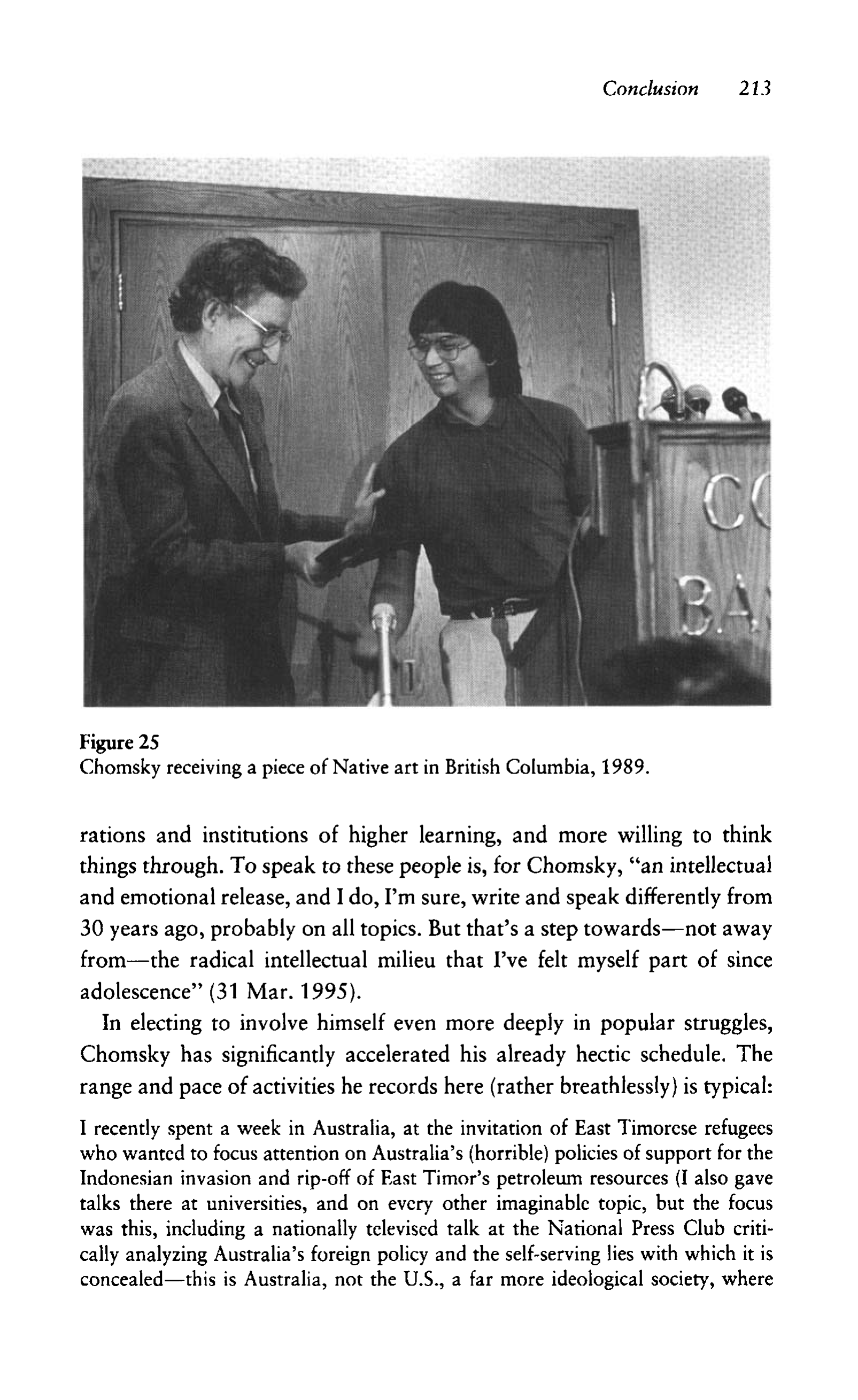
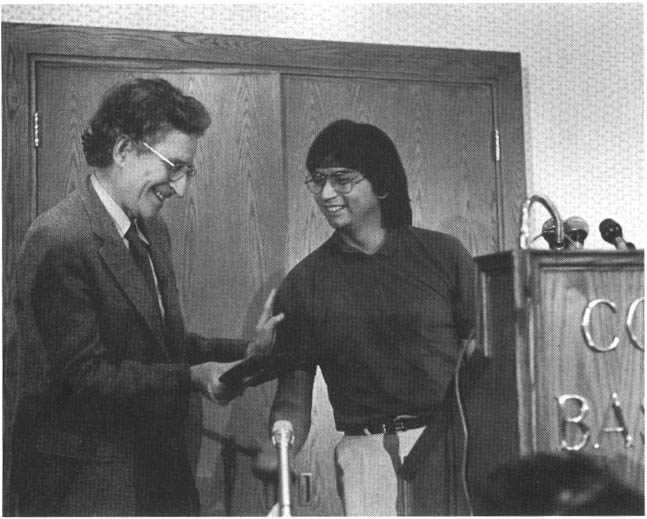
Conclusion
213
Figure
25
Chomsky receiving
a
piece
of
Native
art in
British Columbia, 1989.
rations
and
institutions
of
higher learning,
and
more willing
to
think
things
through.
To
speak
to
these people
is, for
Chomsky,
"an
intellectual
and
emotional release,
and I do, I'm
sure, write
and
speak
differently
from
30
years ago, probably
on all
topics.
But
that's
a
step
towards—not
away
from—the
radical intellectual milieu that I've
felt
myself
part
of
since
adolescence"
(31
Mar. 1995).
In
electing
to
involve himself even
more
deeply
in
popular
struggles,
Chomsky
has
significantly
accelerated
his
already hectic schedule.
The
range
and
pace
of
activities
he
records here (rather breathlessly)
is
typical:
I
recently spent
a
week
in
Australia,
at the
invitation
of
East Timorese
refugees
who
wanted
to
focus
attention
on
Australia's
(horrible)
policies
of
support
for the
Indonesian invasion
and
rip-off
of
East Timor's petroleum resources
(I
also gave
talks there
at
universities,
and on
every
other imaginable topic,
but the
focus
was
this,
including
a
nationally televised talk
at the
National Press Club criti-
cally
analyzing Australia's
foreign
policy
and the
self-serving
lies
with which
it is
concealed—this
is
Australia,
not the
U.S.,
a far
more ideological society, where
214
Conclusion
nothing
of
this sort would
ever
be
allowed).
Before
that
I
spent
a
week
in
Cal-
ifornia,
at the
invitation
of the
Berkeley
philosophy
department
for
several
lectures
and the
Stanford
University
program
on
ethics
and
public policy,
but
with most
of
my
time devoted
to
talks
in
Oakland organized
by
Catholic Worker
(which
works
in
the
slums,
mainly
with
illegal
refugees),
another
organized
by
Timorese stu-
dents,
a
third
for the
biggest
and
oldest
peace
and
justice
group around
(Palo
Alto),
another
for the
Middle East Children's
Alliance,
etc.
All of
these
were
benefits—that's
a
major
way for
such
groups
to
raise
money
and
increase
public
outreach, since
the
audiences
are
usually huge, with people
who are
interested.
(31
Mar.
1995)
This
is
where Chomsky
chooses
to be; in
both
word
and
action,
he has
embraced activism more closely than ever before,
and has
turned
his
back,
for
the
most
part,
on
discussions
of
social theory.
But
while
his
heart
is
with those
who
share
in the
struggle,
he
continues
in his
academic work.
Yet
another glimpse
at his
full-tilt itinerary serves
to
demonstrate
the way
Chomsky prioritizes
the two
worlds within which
he
operates
and how he
manages
to
strike
an at
times delicate balance between them:
The
last
time
I was in
Europe,
a few
months ago,
was at the
invitation
of the U. of
London
for
philosophy lectures,
but
that
was
combined
with talks
for
popular
audiences
and
activist groups
at a
town hall
and
downtown theatre,
a
visit
to
Portugal
at the
invitation
of the
Socialist Party,
and a
talk
at
Geneva organized
by
Women's
International
League
for
Peace
and
Freedom,
mainly
third world women
and
activist
NCOS
[non-governmental
organizations].
(31
Mar. 1995)
Chomsky also gave
the
keynote address
at a
conference that
he
otherwise
did
not
attend.
A
Last Look
So,
as he
works
on the
minimalist
program—conducting
linguistic
re-
search that could lead
us to a
better understanding
of the
mind/brain—
Chomsky
is
also
participating
in
activist initiatives
around
the
world
that
call
into question
the
tyrannical
and
oppressive structures that limit indi-
vidual freedom
and
creativity.
All
this
is
bolstered
by fifty
years
of
com-
mitment
to
ideas that
in
both
the
linguistic
and
political domains have
stood
the
test
of
time
by
remaining topical
and
applicable. Generations
of
scholars have been trained
by
Chomsky.
The
Chomskys'
lives today
are
simple, comfortable,
and filled
with
the
rewards
of
passionate teaching
and
research,
and of
dedication
to a
consistent
set of
values.
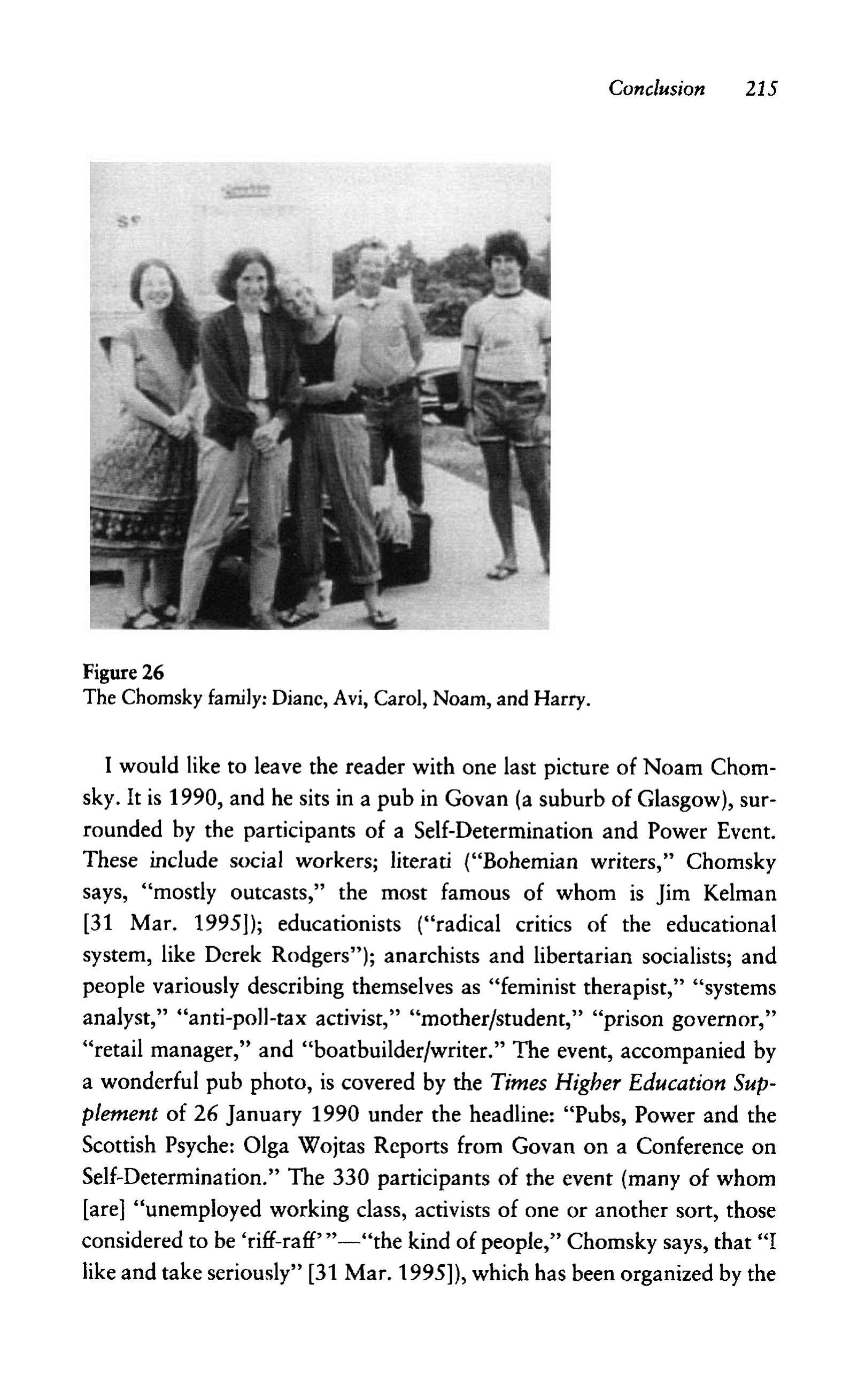
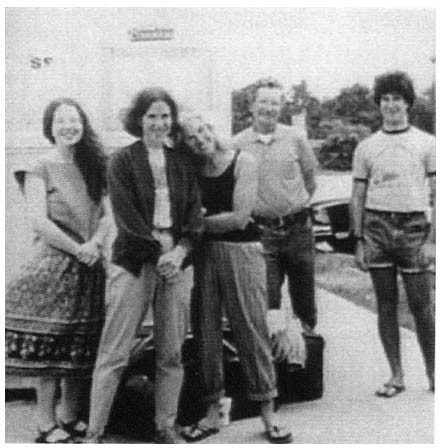
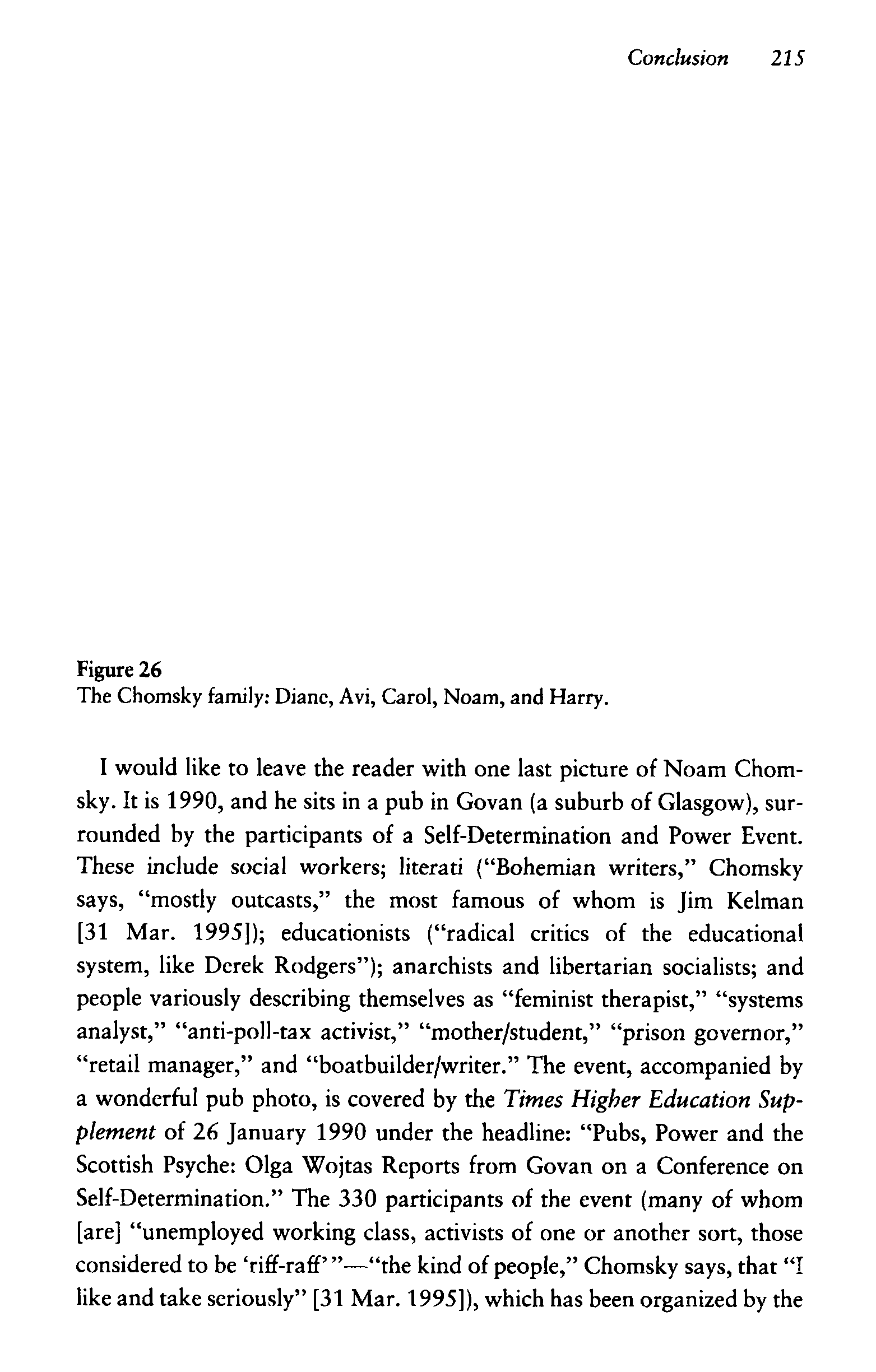
Conclusion
215
Figure
26
The
Chomsky
family:
Diane,
Avi, Carol, Noam,
and
Harry.
I
would like
to
leave
the
reader with
one
last picture
of
Noam Chom-
sky.
It is
1990,
and he
sits
in a pub in
Govan
(a
suburb
of
Glasgow), sur-
rounded
by the
participants
of a
Self-Determination
and
Power Event.
These include
social
workers;
literati
("Bohemian
writers,"
Chomsky
says,
"mostly
outcasts,"
the
most famous
of
whom
is Jim
Kelman
[31
Mar.
1995]);
educationists ("radical critics
of the
educational
system, like Derek
Rodgers");
anarchists
and
libertarian socialists;
and
people variously describing themselves
as
"feminist
therapist,"
"systems
analyst,"
"anti-poll-tax
activist,"
"mother/student,"
"prison
governor,"
"retail
manager,"
and
"boatbuilder/writer."
The
event, accompanied
by
a
wonderful
pub
photo,
is
covered
by the
Times Higher
Education
Sup-
plement
of 26
January 1990 under
the
headline: "Pubs, Power
and the
Scottish Psyche:
Olga
Wojtas
Reports
from
Govan
on a
Conference
on
Self-Determination."
The 330
participants
of the
event (many
of
whom
[are]
"unemployed working class, activists
of one or
another
sort,
those
considered
to be
'riff-raff'"—"the
kind
of
people,"
Chomsky says, that
"I
like
and
take seriously"
[31
Mar.
1995]),
which
has
been organized
by the
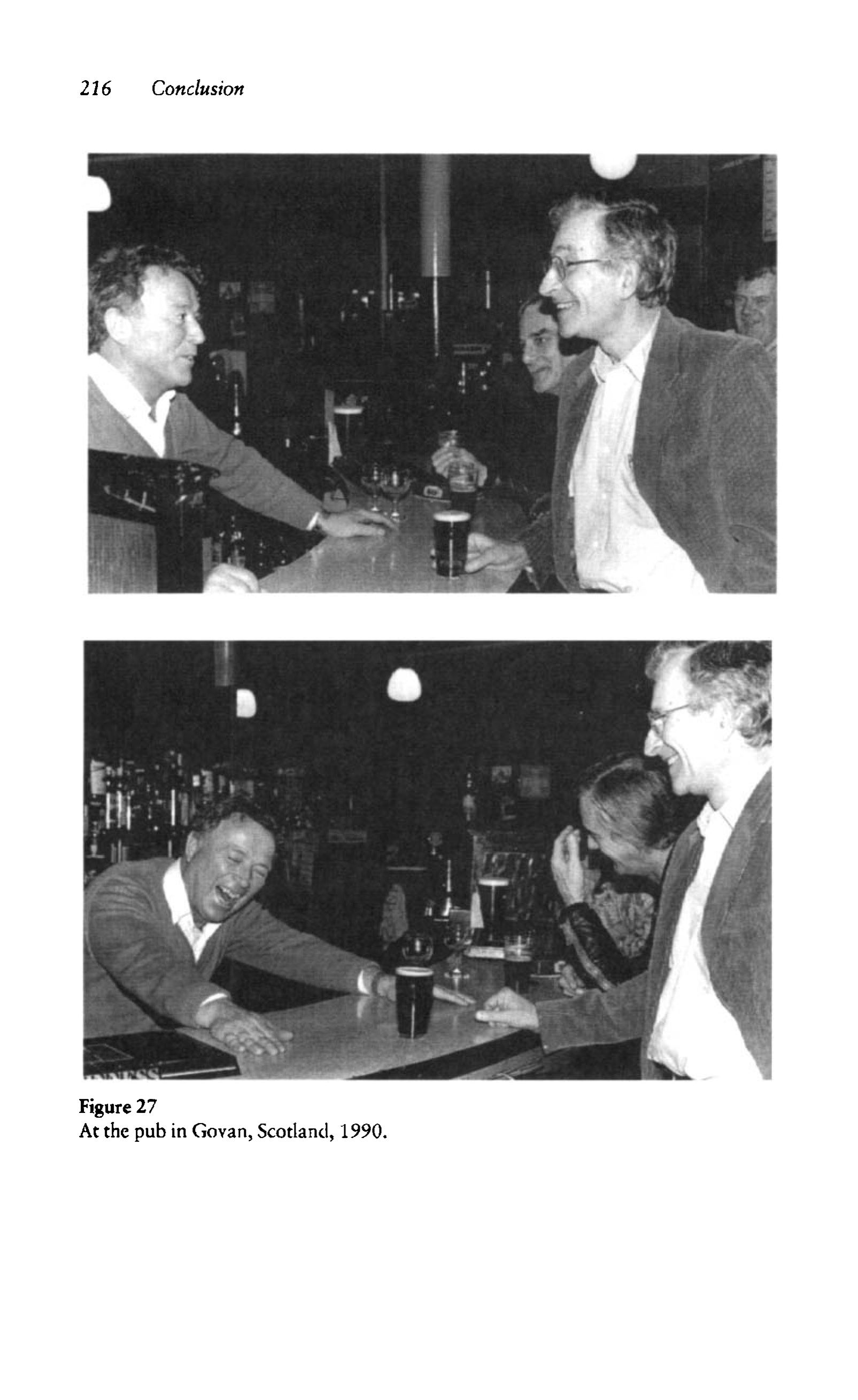
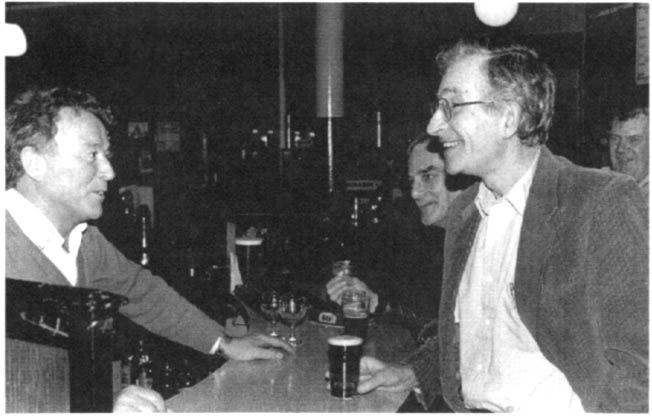
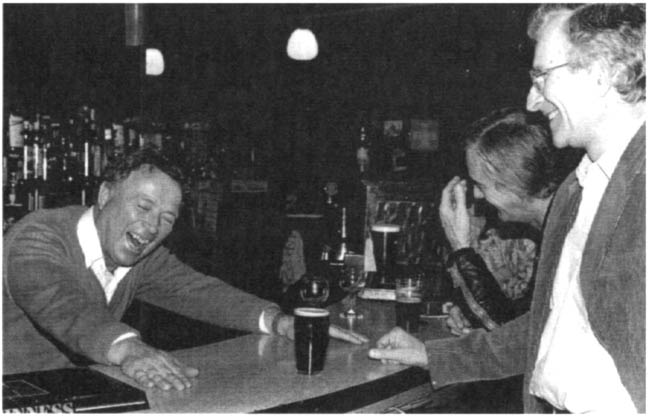
216
Conclusion
Figure
27
At
the pub in
Govan, Scotland, 1990.
Conclusion
217
magazines
Scottish
Child
and
Edinburgh Review
and the
Free University
of
Glasgow (not
a
university
in the
accepted sense
of the
term),
are
interested
in
self-determination
and a
guru named Noam Chomsky,
self-
described "scourge
of
United States policies
and
champion
of the
ordinary
person."
Chomsky gives keynote speeches
on
both days
of the
event.
The
fact
that
he has
decided
to
attend
at all
mystifies
both
the
press
and the
establishment.
Thus
when
an
announcement
came
that
I was
going
to be in
Glasgow,
I got a
letter
on
very
fancy
letterhead
from
something
called
"the
Scottish
Foundation"
inviting
me
to
give
a
talk
for
them
on
Nicaragua.
I of
course
agreed.
Shortly
after,
I got
another
letter
saying
they'd
just
learned
that
I'd
also
be
giving
a
talk
organized
by
the
free
university,
Kelman,
and
other
scum,
and
they
insisted
that
I
cancel
that
invitation
because
they
wouldn't
tolerate
the
guilt
by
association.
I
don't
recall
whether
I
even
bothered
answering.
(31
Mar. 1995)
In
his
talks, Chomsky disparages nationalism,
the
exercise
of
political
power
by
leaders
who do not
answer
to
citizens,
instruments
of
social
control
and
isolationism such
as
television,
and the
collusion
of
media
in
the
process
of
oppression
and the
spreading
of
lies. There remains,
at the
end
of the
event,
the
problem
of
"how
to
take
on the
bastards,"
as
well
as
"an
imbalance
in
that
people seemed
to
feel
they
had to
stay
on an
intel-
lectual
plane."
Said
one
participant,
"If I
sound
a bit
frustrated, it's
because
I'm a bit
frustrated"
(Wojtas).
But
Chomsky
is not
there
to
lead.
He's sitting
in the
Govan
pub,
and,
as
always,
he's
insisting that
the
participants consider their
own
situation
as
clearheadedly
as
possible,
and
that they make their
own
decisions.
The
Times Higher Education
Supple-
ment
has
reported: "Professor Chomsky continued
to
duck
the
role
of
oracle, denying
the
need
for
oracles
at
all. There
had
been
a
sense,
he
rec-
ognized, that there
was
something deeply unsatisfying about general
and
abstract discussion which
did not
direct itself
to
concrete discussion
of
oppression
and
justice." Somebody recalls Vaclav Havel's dictum that
"truth
and
love will triumph over hatred
and
lies."
Chomsky's response?
"It's
a
nice
thought."
Yes,
but is it
true
or
false?
"Neither.
It
could become
true,
to the
extent
that
people struggle
to
make
it
come
true."
Noam
Chomsky, sixty-eight years old, Institute Professor, linguist, philosopher,
grandfather,
champion
of
ordinary people.


This page intentionally left blank
1.
Since
1991,
I
have corresponded with Noam Chomsky
on a
wide range
of
subjects.
I
quote these letters throughout this biography; each quote
is
followed
by
the
date
(in
parentheses)
of the
letter
from
which
it is
taken. Accordingly,
the
quoted
letters written
to me by
others
and the
personal interviews
I
conducted
in
preparing
to
write this book will
be
documented with
the
date
in
parentheses,
rather than
a
reference
to the
works-consulted section.
2. The first ten
entries
on the
list are,
in
order:
Marx,
Lenin, Shakespeare,
Aris-
totle,
the
Bible, Plato, Freud, Chomsky, Hegel,
and
Cicero.
3. For
information
on the
two-part video version
of
Manufacturing
Consent:
Noam
Chomsky
and the
Media
write
to:
Necessary Illusions,
24
Mount
Royal
Blvd.
W.,
Ste. 1008, Montreal,
QC,
Canada,
H2S
2P2.
The
company
may
also
be
contacted
by
phone: (514)
287-7337;
fax: (514)
287-7620;
or
email:
mail@Necessary!llusions
.ca
[.]
Notes


This page intentionally left blank
Works
Consulted
Abramovitch,
Sam. Interviews with
the
author.
1
Aug.
1990-12
Apr.
1993.
.
Letter
to the
author.
4
Apr.
1995.
"America's Great Intellectual Prizefight."
Times
[London]
5
Feb.
1972:14.
Anderson,
Stephen
R.,
Sandra Chung, James McCloskey,
and
Frederick
J.
New-
meyer.
"Chomsky's
1962
Programme
for
Linguistics:
A
Retrospective."
In
Otero,
Noam Chomsky
1:
691-707.
Avrich, Paul.
Anarchist Portraits.
Princeton: Princeton University
Press,
1988.
Avukah.
An
Approach
to
Action:
Facing
the
Social
Insecurities
Affecting
the
Jewish
Position.
Avukah Pamphlet Service.
New
York: Avukah,
1943.
.
Program
for
American Jews.
Avukah Pamphlet Service.
New
York: Avu-
kah,
1938.
Bagdikian,
Ben H.
The
Media
Monopoly.
3rd ed.
Boston: Beacon,
1990.
Barsky,
Robert. "Arguing
the
Choice
of
Host
Country: Jewish
Refugees
from
Israel
and the
Multicultural Society."
Multiculturalism,
Jews
and the
Canadian
Identity.
Ed.
Howard
Adelrnan
and
John Simpson. Jerusalem: Magnus,
1996.
Bruggers,
H.
"Stages
of
Totalitarian Economy."
Living Marxism
6.1
(1941):
15-
24.
Carling, Christine,
and
Terence
Moore.
"After Chomsky's Revolution."
Times
Higher
Education Supplement
10
Dec.
1982:13-14.
Carlsen, Robin
Woodsworth.
Letter.
Times Higher Education Supplement
26
Dec.
1980:18.
"Chomsky Debate Absorbs the Royal Society." Times [London] 12 Mar. 1981: 3.
Chomsky,
Noam.
American Power
and the New
Mandarins.
New
York:
Pan-
theon,
1969.
.
Aspects
of
the
Theory
of
Syntax.
Cambridge:
MIT
Press,
1965.
.
At
War
with Asia.
New
York: Pantheon,
1970.
.
Barriers.
Cambridge:
MIT
Press,
1986.
.
Cartesian Linguistics:
A
Chapter
in the
History
of
Rationalist Thought.
New
York: Harper,
1966.
222
Works Consulted
.
The
Chomsky Reader.
Ed.
James Peck.
New
York: Pantheon, 1987.
.
Chronicles
of
Dissent.
Monroe,
ME:
Common Courage; Stirling, Scot-
land:
AK,
1992.
.
"Creation
and
Culture." Audiotape. Alternative Radio. Rec.
25
Nov.
1992.
.
"The Creative Experience."
The
Creative Experience.
Eds. Stanley Ros-
ner
and
Lawrence
E.
Abt.
New
York:
Grossman, 1970.
71-87.
.
The
Culture
of
Terrorism.
Boston: South End; Montreal: Black Rose,
1988.
.
Current
Issues
in
Linguistic Theory.
The
Hague: Mouton, 1964.
.
Deterring Democracy.
New
York: Verso,
1991.
.
Ecrits
politiques,
1977-1983.
Peyrehorade: Acratie, 1984.
.
Essays
on
Form
and
Interpretation.
New
York:
North-Holland,
1977.
.
The
Fateful
Triangle:
The
United
States,
Israel
and the
Palestinians.
Bos-
ton: South End, 1983;
Montreal:
Black Rose, 1984.
.
For
Reasons
of
State.
New
York: Pantheon, 1973.
.
Generative Grammar:
Its
Basis, Development
and
Prospects.
Kyoto:
Kyoto University
of
Foreign Studies, 1987.
.
Human Rights
and
American
Foreign
Policy.
Nottingham: Spokesman,
1978.
.
Keeping
the
Rabble
in
Line: Interviews with David Earsamian.
Monroe,
ME:
Common Courage,
1994.
.
Knowledge
of
Language:
Its
Nature, Origin,
and
Use.
New
York:
Praeger, 1986.
.
Language
and
Information: Selected
Essays
on the
Theory
and
Applica-
tion.
Reading,
MA:
Addison-Wesley;
Jerusalem: Jerusalem Academic Press, 1964.
.
Language
and
Mind.
New
York: Pantheon, 1968.
Enl.
ed. New
York:
Harcourt,
1972.
.
Language
and
Politics.
Ed. C. P.
Otero.
Montreal: Black Rose, 1988.
.
Language
and
Problems
of
Knowledge:
The
Managua Lectures.
Cam-
bridge:
MIT
Press, 1988.
.
Language
and
Responsibility.
Trans. John Viertel
[Dialogues
avec Mitsou
Ronat.
Paris: Flammarion,
1977].
New
York:
Pantheon,
1979.
.
Language
in a
Psychological
Setting.
Tokyo: Sophia University, 1987.
.
Lectures
on
Government
and
Binding:
The
Pisa
Lectures.
Dordrecht:
Foris,
1981.
Corrected
ed.,
1982.
.
Letters from Lexington:
Reflections
on
Propaganda.
Monroe,
ME:
Com-
mon
Courage, 1993.
.
Letters
to the
author.
22
July
1992-13
Feb. 1996.
Works
Consulted
223
.
"Linguistics
and
Politics."
New
Left
Review
57
(1969):
21-34.
.
The
Logical Structure
of
Linguistic Theory.
New
York: Plenum,
1975
[1955-56].
.
The
Minimalist Program.
Cambridge:
MIT
Press,
1995.
.
A
Minimalist Program
for
Linguistic Theory.
Cambridge:
MIT
Depart-
ment
of
Linguistics,
1992.
.
Modular Approaches
to the
Study
of
the
Mind.
Distinguished Graduate
Research Lecture Series
1,
1980.
Long Beach: California State University Press,
1984.
.
Morphophonemics
of
Modern Hebrew.
New
York: Garland,
1979.
.
Necessary Illusions.
Boston: South End,
1989.
.
"Noam
Chomsky Interviewed
by
Eleanor
Wachtel."
Queen's Quarterly
101.1
(1994):
63-72.
.
On
Power
and
Ideology:
The
Managua Lectures.
Boston: South
End;
Montreal: Black Rose,
1987.
.
Peace
in the
Middle East?
Reflections
on
Justice
and
Nationhood.
New
York: Pantheon,
1974.
.
Pirates
and
Emperors: International
Terrorism
and the
Real World.
New
York: Claremont,
1986;
Montreal: Black Rose,
1987.
.
"Political Pilgrims." Letter.
Times Literary Supplement
22
Jan.
1982:
81.
.
Problems
of
Knowledge
and
Freedom:
The
Russell Lectures.
New
York:
Pantheon,
1971.
.
The
Prosperous
Few and the
Restless Many.
Berkeley: Odonian,
1993.
.
"Psychology
and
Ideology."
Cognition
1
(1972):
11-46.
.
"Quelques
commentaires
elementaires
sur
le
droit
a la
liberte
d'expres-
sion"
[introduction].
Memoire
en
defense
contre ceux
qui
m'accusent
de
falsifier
I'histoire:
La
question
des
chambres
a
gaz.
By
Robert Faurisson. Paris: Vieille
Taupe,
1980. i-xxiii.
.
Radical Priorities.
Ed. C. P.
Otero.
Montreal: Black Rose,
1981.
EnL
ed.
1984.
.
Reflections
on
Language.
New
York: Pantheon,
1975.
.
Rethinking
Camelot:
JFK,
the
Vietnam War,
and
U.S. Political Culture.
Boston:
South End;
Montreal:
Black
Rose,
1993.
.
Rev.
of
Beyond Freedom
and
Dignity,
by
B.F. Skinner.
New
York Review
of
Books
30
Dec.
1971:18-24.
.
Rev.
of
Verbal
Behavior,
by
B.F.
Skinner.
Language
35
(1959):
26-
58.
.
Rules
and
Representations.
New
York: Columbia University
Press,
1980.
.
Secrets, Lies
and
Democracy.
Berkeley: Odonian,
1994.
224
Works Consulted
.
Studies
on
Semantics
in
Generative Grammar.
The
Hague:
Mouton,
1972.
.
Syntactic Structures.
The
Hague: Mouton,
1957.
.
"Systems
of
Syntactic
Analysis."
Journal
of
Symbolic Logic
18
(1953):
242-56.
.
Terrorizing
the
Neighbourhood: American
Foreign
Policy
in the
Post-
Cold
War
Era.
Stirling, Scotland:
AK,
1991.
.
Topics
in the
Theory
of
Generative Grammar.
The
Hague:
Mouton,
1966.
.
Towards
a New
Cold War:
Essays
on the
Current
Crisis
and How We
Got
There.
New
York: Pantheon,
1982.
.
Turning
the
Tide:
U.S. Intervention
in
Central America
and the
Struggle
for
Peace.
Boston: South End,
1985.
Enl.
ed.
[subtitled
The
U.S.
and
Latin Amer-
ica],
1987.
.
What
Uncle
Sam
Really
Wants.
Berkeley: Odonian,
1992.
.
World Orders,
Old and
New.
New
York: Columbia University Press,
1994.
.
Year
501:
The
Conquest Continues.
Boston: South End; Montreal: Black
Rose,
1993.
,
and
Morris Halle.
The
Sound Pattern
of
English.
New
York: Harper;
Cambridge:
MIT
Press,
1968.
,
and
Edward
S.
Herman.
After
the
Cataclysm:
Postwar Indochina
and the
Reconstruction
of
Imperial
Ideology.
Vol.
2 of
Chomsky
and
Herman,
Political
Economy.
,
and
Edward
S.
Herman.
Counter-Revolutionary
Violence:
Bloodbaths
in
Fact
and
Propaganda.
Andover,
MA:
Warner Modular,
1973.
,
and
Edward
S.
Herman.
Manufacturing
Consent:
The
Political Economy
of
the
Mass
Media.
New
York: Pantheon,
1988.
,
and
Edward
S.
Herman.
The
Political Economy
of
Human Rights.
2
vols.
Boston: South End; Montreal: Black Rose,
1979.
,
and
Edward
S.
Herman.
The
Washington Connection
and
Third World
Fascism.
Vol.
1 of
Chomsky
and
Herman,
Political Economy.
,
Riny Huybregts,
and
Henk
van
Riemsdijk.
The
Generative Enterprise.
Dordrecht: Foris,
1982.
,
Mark
Sacharoff,
Robert
Jay
Lifton,
and
Fred Branfman. Letter.
New
York
Times
16
Feb.
1972:10.
Coates,
Ken.
The
Quality
of
Life
and
Workers' Control.
Nottingham: Spokes-
man,
1973.
.
Socialists
and the
Labour Party.
Nottingham: Spokesman,
1975.
Works
Consulted
225
Coates,
Ken,
et
al.
"Bertrand
Russell
and
Industrial Democracy."
Bertrand
Russell
and
Industrial Democracy.
Nottingham: Institute
for
Workers' Control,
1970.
Cohn, Werner.
The
Hidden Alliances
of
Noam
Chomsky.
New
York: Americans
for
a
Safe
Israel,
1988.
.
Partners
in
Hate: Noam Chomsky
and the
Holocaust Deniers.
Cam-
bridge:
Avukah,
1995.
Dershowitz, Alan
M.
Chutzpah.
Boston: Little, Brown,
1991.
Epstein, Norman. Letters
to the
author.
15
Dec. 1994-20
Apr.
1995.
"Experts
Labor
to
Communicate
on
Animal
Talk."
New
York Times
25
Sept.
1975:
74.
Falk,
Richard. "Letters
from
Prison—American
Style:
The
Political Vision
and
Practice
of
Noam Chomsky."
In
Otero,
Noam Chomsky
3:
578-97.
"Former
Chomsky Disciples
Hurl
Harsh
Words
at the
Master."
New
York Times
10
Sept.
1972:
70.
George, Alexander. Introduction.
Reflections
on
Chomsky.
Ed.
George. Oxford:
Basil
Blackwell,
1989. v-ix.
Goreing, Andrew. "Enduring Champion of Ordinary People." Times Higher
Education Supplement
3
Feb.
1989:15.
Haley, Michael
C., and
Ronald
F.
Lunsford.
Noam
Chomsky.
New
York:
Twayne,
1994.
Harris, Randy Allen.
The
Linguistics Wars.
New
York: Oxford University Press,
1993.
Harris,
Zellig
S.
Methods
in
Structural
Linguistics.
Chicago: University
of
Chi-
cago Press,
1951.
Heny, Frank.
Rev.
Logical Structure
of
Linguistics
Theory,
by
Noam Chomsky.
In
Otero,
Noam
Chomsky
1:
308-39.
Herman,
Edward
S.
Letter
to
David Peterson.
12
Aug.
1992.
.
Letter
to the
author.
2
Aug.
1994.
.
"Pol Pot,
Faurisson
and the
Process
of
Derogation."
Otero,
ed. 3:
598-
615.
Huck,
Geoffrey
J., and
John
A.
Goldsmith.
Ideology
and
Linguistic
Theory:
Noam
Chomsky
and the
Deep Structure Debates.
London: Routledge,
1995.
Humboldt, Wilhelm
von.
Humanist
without
Portfolio:
An
Anthology
of the
Writing
of
Wilhelm
von
Humboldt.
Trans. Marianne Cowan. Detroit: Wayne
State University Press,
1963.
Jacoby, Russell.
The
Last Intellectuals: American Culture
in the Age
of
Academe.
New
York: Basic Books,
1987.
J. B. and P. M.
Introduction.
In
Pannekoek,
Workers' Councils
i-iv.
Jowitt,
Ken. "Our
Republic
of
Fear: Chomsky's Denunciation
of
America's
For-
eign
and
Economic Policy."
Times Literary Supplement
10
Feb.
1995: 3-4.
Katz,
Jerrold
J., and
Thomas Bever.
"The
Fall
and
Rise
of
Empiricism."
In
Otero,
Noam Chomsky
1:
286-307.
Korsch
Karl.
"On
Socialization."
Self-Governing
Socialism.
Ed.
Branko
Horvat,
Mihailo
Markovic,
and
Rudi Supek.
2
vols.
White
Plains:
International
Arts
and
Sciences,
1975.1:201-07.
.
"War
and
Revolution."
Living Marxism
6.1
(1941):
1-14.
Leaman, Michael. "Diary
of the
Clever
Me
Phenomenon."
Times
[London]
7
July
1980:14.
Lees, Robert. Rev.
Syntactic Structures,
by
Noam
Chomsky.
Otero,
ed. 1:
39-80.
Lukes,
Steven. "Chomsky's Betrayal
of
Truths."
Times Higher Education
Supple-
ment
7
Nov.
1980:
31.
Lyons,
John.
Chomsky.
3rd
expanded
ed.
London: Collins,
1991.
.
Rev.
of
Syntactic Structures,
by
Noam Chomsky.
In
Otero,
Noam
Chomsky
1:
81-87.
MacCorquodale, Kenneth.
"On
Chomsky's Review
of
Skinner's
Verbal
Be-
havior." Journal
of
the
Experimental Analysis
of
Behavior
13
(1970):
183-199.
Macdonald, Dwight.
Memoirs
of a
Revolutionist:
Essays
in
Political Criticism.
New
York:
Farrar,
1957.
Mailer, Norman.
The
Armies
of
the
Night: History
as a
Novel,
The
Novel
as
His-
tory.
New
York:
New
American Library,
1968.
Matthews,
P. H.
Grammatical Theory
in the
United
States from
Bloomfield
to
Chomsky.
Cambridge: Cambridge University Press,
1993.
.
"Saying
Something
Simple."
Rev.
of
Language
and
Information,
by
Zellig
Harris.
Times Literary Supplement
23-29
Dec.
1988:1430.
Mattick,
Paul.
"Two
Men in a
Boat—Not
to
Speak
of the 8
Points."
Living
Marxism
6.1
(1941):
24-79.
Melman, Seymour. Interview with
the
author.
26
July
1994.
Noble, David.
Progress without
People:
New
Technology, Unemployment,
and
the
Message
of
Resistance.
Toronto:
Between
the
Lines,
1995.
Norris,
Christopher.
Uncritical
Theory: Postmodernism, Intellectuals
and the
Gulf
War.
London: Lawrence,
1992.
Orwell,
George.
The
Collected Essays, Journalism
and
Letters
of
George Orwell.
Eds. Sonia Orwell
and Ian
Angus.
5
vols. London: Seeker,
1968.
.
Homage
to
Catalonia.
San
Diego: Harcourt,
1980.
Otero,
Carlos
P.
"Background
and
Publication
History
of the
Dissertations Writ-
ten
under
the
Supervision
of
Noam Chomsky,
1964-1991"
[appendix].
In
Otero,
Noam Chomsky
1:
819-39.
.
"Chomsky
and the
Challenges Ahead:
A
Model
for the
Cognitive Sciences
and
a
Beacon
for the
Humanities"
[introduction].
In
Otero,
Noam Chomsky
4:1-
33.
226
Works Consulted
Works
Consulted
227
.
"Chomsky
and the
Cognitive Revolution
of the
1950s:
The
Emergence
of
Transformational Generative Grammar."
In
Otero,
Noam Chomsky
1:
1-36.
.
"Chomsky
and the
Libertarian Tradition:
A
Renewed Egalitarian Vision,
a
Coherent Social Theory
and
Incisive,
Up-to-Date
Analysis"
[introduction].
In
Otero,
Noam Chomsky
3:1-26.
.
"Chomsky
and the
Rationalist Tradition: Support
for
Innateness, Meta-
physics
Vindicated
and a
Rare Kind
of
Intellectual
History"
[introduction].
In
Otero,
Noam Chomsky
2:
1-27.
.
"Introduction
to
Chomsky's Social Theory." Chomsky,
Radical Priorities
11-58.
.
Letter
to the
author.
5
Apr.
1995.
.
"The
Third Emancipatory Phase
of
History"
[introduction].
In
Chomsky,
Language
and
Politics,
22-81.
Otero, Carlos
P. ed.
Noam Chomsky:
Critical
Assessments.
4
vols.
London:
Routledge,
1994.
Pannekoek, Anton.
Workers' Councils.
Cambridge: Root,
1970.
Parini, Jay.
"Noam
Is an
Island."
Mother Jones
Oct. 1988: 36-41.
Putnam, Hilary. Preface.
The
Form
of
Information
in
Science:
Analysis
of an
Immunology Sublanguage.
By
Zellig Harris, Michael Gottfried, Thomas
Ryck-
man, Paul
Mattick,
Jr.,
Anne Daladier,
T. N.
Harris,
and S.
Harris.
Dordrecht:
Kluwer,
1989.
i-xvii.
Rev.
of
For
Reasons
of
State
and
The
Backroom Boys,
by
Noam Chomsky.
Times
Literary
Supplement
21
Dec. 1973: 1565-66.
Rocker, Rudolf.
The
London
Years.
Trans. Joseph
Leftwich.
London: Anscombe,
1956.
—.
The
Tragedy
of
Spain.
New
York: Freie Arbeiter Stimme,
1937.
Russell,
Bertrand.
The
Autobiography
ofBertrand
Russell.
3
vols. London: Allen,
1968.
Salkie,
Raphael.
The
Chomsky
Update:
Linguistics
and
Politics.
London: Unwin-
Hyman,
1990.
Sampson,
Geoffrey.
"Human Language Debates." Rev.
of
Rules
and
Representa-
tions,
by
Noam Chomsky.
Times Higher Education Supplement
19
Sept.
1980:
14.
Searle,
John
R.
Letter.
Times Literary Supplement
22
Oct.
1976:1330.
.
"The
Rules
of the
Language
Game."
Rev.
of
Reflections
on
Language,
by
Noam Chomsky.
Times Literary Supplement
10
Sept.
1976:1118-20.
Segal,
Willie. Letter
to the
author.
24
Apr.
1995.
Shenker,
Israel.
"Noam
Chomsky."
Horizon
13. 2
(1971):
104-09.
Skinner,
B. F.
"Verbal Behaviour." Letter.
Times Literary Supplement
9-15 Mar.
1990:
253.
228
Works Consulted
Sklar,
Robert. "Chomsky's Revolution
in
Linguistics."
In
Otero,
Noam Chomsky
3:
27-37.
Steffens,
Lincoln.
The
Autobiography
of
Lincoln
Steffens.
New
York:
Harcourt,
1931.
Summers,
Laura
J.
Letter.
Times Higher Education Supplement
19
Dec.
1980:
22.
Townshend, Charles.
"In the
Name
of
Liberty." Rev.
of
The
Chomsky Reader,
by
Noam Chomsky.
Times Literary Supplement
15-21
July
1988:
777.
Tucker, Bea. Interviews with
the
author.
Nov. 1995.
Vidal-Naquet,
Pierre.
Assassins
of
Memory:
Essays
on the
Denial
of the
Holo-
caust.
Trans.
Jeffrey
Mehlman.
New
York: Columbia University Press,
1992.
Whitfield,
Stephen
J.
A
Critical
American:
The
Politics
of
Dwight
Macdonald.
Hamden,
CT:
Archon,
1984.
Wojtas,
Olga.
"Pubs,
Power
and the
Scottish Psyche:
Olga
Wojtas
Reports
from
Govan
on a
Conference
on
Self-Determination."
Times Higher Education Sup-
plement
26
Jan.
1990:15.
Woodhouse,
C. M.
"The
Anti-American
Case."
Rev.
of
Towards
a New
Cold
War,
by
Noam Chomsky.
Times Literary Supplement
23
July
1982: 784.
Yergin,
Daniel.
"The
Chomskyan Revolution."
In
Otero,
Noam Chomsky
3: 38-
53.
Young, Nigel.
Rev.
of
The
Backroom Boys,
by
Noam Chomsky.
Times Higher
Education Supplement
5
Apr.
1974:20.
Aarslef,
Hans,
105
Abraham,
David,
173
Abramovitch,
Sam,
40,43,
59, 63, 67,
70,
76,
77,144,147
Achbar,
Mark,
70
Activism,
25,
33,127-131,134,136-
138,142,151,212,214-215
Adorno,
Theodor,
73,131,206
Afghanistan,
154
Albert, Mike,
131,139
Allen,
Harold,
89
Althusser, Louis,
196
Amin,
Samir,
199
American
Jewish Committee,
64
Anarchism,
19,23-29,
31,
34-35,44,
54, 58, 67, 85.
See
also
Anarcho-
syndicalism;
Libertarianism
Anarchosyndicalism,
16,18,25,
33-
34
Andrews,
Use,
105
Arabic language,
44, 50
Arab-Jewish cooperation,
48, 62, 74-
75,77
Arabs,
54, 61, 62, 64, 66, 75,
77-78,
170,179
Arcand,
Adrian,
70
Arendt, Hannah,
60, 74
Art,
206
Artificial
intelligence
(AI),
174,175
Austen, Jane,
19
Australia,
213
Austrian
Socialists,
77
Avukah,
58-66,68,70,
73-78,139,
170,183
Avukah Student
Action,
63,
67-68,
75
Bachelard,
Gaston,
196
Bagdikian, Ben,
160-161
Bakhtin, Mikhail
Mikhailovitch,
50
Bakunin, Mikhail
Alexandrovitch,
18,
164,168,209
Bar-Hillel,
Yehoshua,
54, 81, 93
Barsamian, David,
199
Barthes,
Roland,
193
Baudrillard, Jean,
193-195
Beauvoir, Simone
de,
132,196
Behaviorism,
80, 93,
96-102
Benjamin,
Walter,
206
Bennis,
Hans,
175-175
Ben-Zvi,
Shmuel,
66
Bernard,
Elaine,
142
Berneri,
Camillo,
30
Bever,
Thomas,
55
Bible,
19
Binational state
in
Israel,
64, 75
Binder, Sylvia,
64
Birmingham
School,
123
Black
Panthers,
137
Black
Power,
132-133
Black
Rose Press,
70,138
Blackmur,
R. P., 104
Bloch,
Bernard,
81, 89, 93
Blumenfeld,
Kurt,
60
Index
230
Index
Bloomfield,
Leonard [Menomini
Morphophonemics],
55
Bloomfieldian
approach,
87, 93, 96,
149
B'nai B'rith Hillel Foundation,
64
Bohmer, Petr,
139
Bolsheviks, Bolshevik Party,
14,28,
38-40,42-44,
58
Bookchin, Murray,
85
Boston Globe,
171
Bottiglia,
William,
104
Bouchard,
M., 70
Bourassa,
M.,
70
Bourdieu,
Pierre,
193,197
Bracken,
Henry,
105
Branfman,
Fred,
153
Braun,
Henry,
128
Bruggers,
H., 38
Budapest
String
Quartet,
23
Bulletin
of
the
Council
on
Arab-Jewish
Cooperation,
74
Caffi,
Andrea,
34
Campaign
for
Nuclear Disarmament
(CND),
136
Camus, Albert,
196
Canadian Party,
70
Capitalism,
26, 30,
38,153
Carling, Christine,
176-177
Carlsen, Robin
Woodsworth,
188
Carnap, Rudolf,
53-54
Cartesian
linguistics,
107-108,111-
112
Catholic Worker,
214
Cato
Institute,
163
Censorship,
177
Central High School,
21-22
Cherbury, Herbert
de,
111
Chez
Nous,
70
Chiaromonte,
Nicola,
34
China
incident,
35
Chomsky, Carol.
See
Schatz, Carol
Chomsky,
David Eli,
11-12,14
Chomsky, Noam, books:
After
the
Cataclysm:
Postwar Indochina
and
the
Reconstruction
of
Imperial
Ideology,
187;
American Power
and
the
New
Mandarins,
121-123;
Aspects
of
the
Theory
of
Syntax,
87;
The
Backroom Boys,
155;
Barriers,
200;
Bains
de
sang,
160;
Cartesian
Linguistics,
105-107;
The
Chomsky
Reader,
155,200;
Chronicles
of
Dis-
sent,
200;
Counter-revolutionary
Violence:
Bloodbaths
in
Fact
and
Propaganda,
160,162-163;
The
Culture
of
Terrorism,
200;
Current
Issues
in
Linguistic Theory,
107;
Deterring
Democracy,
200;
Essays
on
Form
and
Interpretation,
175;
The
Fateful
Triangle:
The
United
States,
Israel
and the
Palestinians,
200;
For
Reasons
of
State,
155;
Human Rights
and
American
Foreign
Policy,
177;
International
Terrorism
and the
Real World,
200;
Keeping
the
Rabble
in
Line: Inter-
views
with David Barsamian,
200;
Knowledge
of
Language:
Its
Nature,
Origin
and
Use,
53,157,200;
Lan-
guage
and
Mind,
122;
Language
and
Politics,
200;
Language
and
Prob-
lems
of
Knowledge:
The
Managua
Lectures,
200,205;
Language
and
Responsibility,
169,177;
Lectures
on
Government
and
Binding,
175-
176,200;
Logical Structure
of
Lin-
guistic
Theory,
49, 53, 80,
83-84,
87,
91,
95,156;
Manufacturing
Consent:
The
Political
Economy
of
Mass
Media,
160,200;
The
Mini-
malist
Program,
200;
Modular
Approaches
to the
Study
of
the
Mind,
175;
"Morphophonemics
of
Modern
Hebrew,"
[B.A. thesis],
51;
Morphophonemics
of
Modern
Hebrew,
52-54,
80, 87, 91, 95;
Necessary
Illusions,
200;
Peace
in
the
Middle
East?
Reflections
on
Jus-
tice
and
Nationhood,
74,170;
Pirates
and
Emperors,
200;
The
Political
Economy
of
Human Rights,
Index
231
160,177,187,188;
Powers
and
Prospects,
200;
Radical Priorities,
130,169,200;
Reflections
on
Lan-
guage,
156-157,175;
Rethinking
Camelot:
JFK,
the
Vietnam War,
and
US.
Political
Culture,
200;
Rules
and
Representations,
175;
The
Sound
Pattern
of
English,
91, 93;
Syntactic
Structures,
80, 87,
89-91;
Terrorizing
the
Neighborhood:
American
Foreign
policy
in the
Post-
Cold
War
Era,
200;
Towards
a New
Cold
War:
Essays
on the
Current
Crisis
and How We Got
There,
170,
184,200;
Turning
the
Tide:
U.S.
Intervention
in
Central America
and
the
Struggle
for
Peace,
200;
World
Orders,
Old and
New,
200,211;
Year
501:
The
Conquest Continues,
200
Chomsky, William
[Dr.
William (Zev)
Chomsky],
9-13,20
Churchill,
Winston,
64
Churchill-Roosevelt Conference,
38
Churchman,
C.
West,
47
Classical liberalism,
24,107,113
CNT-FAI.
See
Confederacion Nacional
de
Trabajadores-Federacion
Anar-
quista Iberica
Coates,Ken,
132,148
Cockburn, Alex,
199
Cognitive science,
87
Coffin,
William Sloane (Dr.),
128,130,
137
Cohn, Werner,
78,182-183
Cold
War,
31,124,155
Columbia University Press,
138
Columbia University strike,
131
Commentary,
135
Commissar,
154,178.
See
also
Intel-
lectual
Common Courage Press,
138
Common sense,
209
Communism,
14,29,
31, 39, 65
Communist Party,
14,24
Cone, Edward,
104
Confederacion
Nacional
de
Traba
j
adores-Feder
acion
Anarquista Iberica,
26, 30
Cordemoy,
Geraud
de, 113
Coser,
Lewis,
34
Coughlinites,
69
Council
for
Arab-Jewish
Cooperation,
73-74
Council Communism,
36-37,40,42-
43,65,114
Creativity,
15-16,21-22,
95,
97,106,
108-110,113,152,206
Crews, Fred,
122
Cuban Crisis,
124
Deconstruction,
196
Delia Vida, Giorgio Levi,
47, 50
Deleuze, Gilles,
193
Dellinger, David,
127-128,131,136,
172
DeMan, Paul,
193
Deming, Barbara,
128
Democracy,
26
Depression, Great,
14-15
Derrida, Jacques,
193-195
Dershowitz, Alan,
170-171,180-182,
186
Descartes, Rene,
106-108,
111
Descartes
s
problem,
157
Dewey,
John,
15,
22,168
Dickens, Charles,
19
Discourse analysis,
49, 85
Dissent,
135-136,154
Dominion
Textiles,
71
Dostoevsky, Fyodor,
19
Draper,
Hal,
135
Draper Laboratory,
140
Dropsie College,
10, 44
Duff,
Peggy,
136-137
East
Timor,
187-188,213-214
Edinburgh
Review,
217
Einstein,
Albert,
32-33,
63
Elias,
Peter,
81
Eliot,
George,
19
Ellsberg, Daniel,
129
"Empty
organism" theories,
152
Emonds,
Joseph,
151
Engel,
Arlene,
63
Engels,
Frederick,
50
Epstein, Norman,
27, 34, 59, 62, 65,
70-71,
74, 76, 78, 85
Erikson, Erik,
51
Existentialism,
196
Fabians.
See
Shaw, George Bernard
Factory councils.
See
Council commu-
nism
Fascism,
26-27,
38,
69,209
Faurisson
Affair,
179-186,189
Federal
Bureau
of
Investigation
(FBI),
130,137
Ferber, Michael,
130
Fine,
Nathan,
50
Fodor,
Jerry,
101-102
Foucault, Michel,
143,193,195-196
Foucauldian
history,
56, 57.
See
also
Postmodernism
France,
160,180,184,191,196,197
Franco, Francisco,
17-18,27
Frankfurt
School,
25, 37, 51, 73,
123,
132,134
Free
University
of
Glasgow,
217
Freedom
of
speech,
180-181,186
Frege,
Gottlob,
53-54
Freie
Arbeiter
Stimme,
24
Freud, Sigmund,
23, 50
Fromm,
Erich,
51,
72-73,-134
General Agreement
on
Trade
and
Tariffs
(GATT),
211
Generative
grammar,
51, 53, 55, 57,
96,106,110-111
Generative
Linguistics
in the Old
World(s)
(GLOW),
175
Generative semantics,
151
German Labor Movement,
37
German Socialist Party,
40,41
Ginsberg, Asher [Ahad
Haam],
11-12
Giroux,
Henry,
173
Glazer, Nathan,
59, 63, 66,
78,182
Goodman, Mitchell,
127-128,130
Goodman, Nelson,
50, 54, 83
Goodman, Paul,
34, 79,
85,127
Gorter,
Herman,
37,40
Gramsci, Antonio,
40,
50,123
Gratz College,
10,44
Grazia, Edward
de, 127
Great Depression.
See
Depression,
Great
Greenberg, Clement,
206
Groos, Anneke,
175
Guattari,
Felix,
193
Guevara,
Che,
133-134
Gutman, Peter,
34
Halle, Morris
55, 81, 91,
93,102,139
Hampton,
Fred,
137
Hardy,
Thomas,
19
Harris,
R.
A.,
56,
57,151
Harris, Zellig,
48-60, 62-63,
65, 68,
70-71,
76, 78,
83-85,
87, 89, 93,
96,102,134,138
Hashomer Hatzair,
48, 58, 66,
75-77,
78,170,183
Hebrew language,
9-14,19-20,47,
50
Heny,
Frank,
84
Herman, Edward
S.,
59,145,154,
155,159,161,172,187,189,190,
199
Herrnstein, Richard,
143
Hill,
Archibald,
91
Hiroshima,
22, 35
Hitchens, Christopher,
199
Hitler, Adolph,
30, 38
Hoenigswald,
Henry,
54, 55
Hoffman,
Abbie,
132,134
Holocaust,
180-181,186-188
Holt,Anatol,
81
Horkheimer,
Max,
73
Howe,
Irving,
135,137,
211
Hugo, Victor,
19
Human nature,
108,152,205,208
Humboldt, Karl
Wilhelm
von,
15,
106-114
Hume, David,
53
Hymes,
Dell
H., 56
232
Index
Index
233
Imperialism,
38
Independent Labor Party,
77
Indoctrination,
17
Information theory,
90
Inquiry,
163
Intellectual,
role
of,
119-122,124,
133-134,144,153,155,163,168-
169,172,178,180,184,186,193,
196-198,208,211
International Confederation
for
Dis-
armament
and
Peace
(ICDP),
136
International
Council Correspondence,
36
International Council Communists.
See
Council communists
International
Monetary
Fund (IMF),
211
Israel,
75, 78, 82,
91,170,172,179.
See
also
Palestine
Israeli League
for
Civil
and
Human
Rights,
171
Jackendoff,
Ray,
151
Jacoby,
Russell,
85-86,173
Jakobson,
Roman,
81,
85,102,104
Jameson, Fredric,
214
Johnson, Paul,
190
Joos
s
Martin,
92
Jowitt,
Ken,
212
Judaism,
Jewish
studies,
10,12-13,20,
51-52,
60, 62,
70,170.
See
also
Hebrew language; Talmud; Zionism
Kahn,
Alfred,
66
Kampf,
Louis,
104,121,139
Kant, Immanuel,
107,
111
Kaplan,
Jerry,
63
Katz,
Jerrold,
55,101,104
Kaufman,
Bruria
[later Bruria Harris],
63,85
Kayne, Richie,
151,176
Kelman,
Jim,
215,217
Kennedy
School
of
Government,
Harvard,
142
Khmer
Rouge,
190
Kibbutz,
43,
48-49,
59, 76,
82,114
Kibbutz
Artzi,
58, 64, 77
King,
Martin Luther,
132,134
Kiparsky,
Paul,
151
Korsch, Karl,
25, 30,
36-38,
40,124
Kristeva,
Julia,
193,195
Kruglov,
Lorraine,
63
Labor
Action,
135
Lacan, Jacques,
193,195,196
Lakoff,
George,
149,151
Lakoff,
Robin,
150,192
Language
acquisition,
110,173
Lasnik,
Howard,
151
Lauter, Paul,
127,162
League
for
Arab Jewish Cooperation,
77
League
for
Arab-Jewish Rapproche-
ment,
75
Leaman,
Michael,
174
Lees,
Robert,
89-90,
93,101
Left-Wing
Jewish Alliance,
76
Leibniz,
Wilhelm
Gottfried,
111
Le
Monde,
184
Lenin,
Vladimir Hitch,
23,28,40,42-
43,133
Leninism,
18,19,44,153
Lenneberg,
Eric,
81
Lens,
Sydney,
128
Levertov, Denise,
127-128
Levi-Strauss,
Claude,
196
Liberation,
136,184
Liberation,
162,163
Libertarianism,
libertarian anarchism,
17,23-27,
31, 82,
95,107,113,
134,153,184,187,212,215.
See
also
Anarchism
Liebknecht,
Karl,
25, 37
Lifton,
Robert
Jay,
153
Lincoln
Laboratory,
140
"Linguistic
wars,"
149
Linguet, Simon
Nicolas
Henri,
113
Lipset, Seymour,
78
Literature
23,
206-208
Living Marxism,
30, 36,
38-39,44,
65
Locke,
John,
53,102
Lond, Ralph,
92
234
Index
Lowell,
Robert,
127
Lukacs,
Georg,
25, 50
Lukoff,
Fred,
90-91,
93
Lowell,
Robert,
128
Lowenthal, Leo,
73
Lukes,
Steven,
187-188,190,191
Luxemburg, Rosa,
25,
37,40,123
Lyons,
John,
90, 98
Lyotard,
Francois,
193,197
MacCorquodale, Kenneth,
98
Macdonald, Dwight,
25,
34-36,
65-
66,127-128,164
Macdonald, Nancy,
34
Madison, James,
209
Mailer, Norman,
127-130,137
Malcolm
X, 132
Manchester
Guardian,
136
Mandelbaum, Bernard,
63
Manufacturing
Consent
[the
film], 70
Mao
Tse-Tung,
133
Maoism,
153
March
on the
Pentagon,
127
Marcuse, Herbert,
73,134
Marlen, George,
44
Marlenites,
43, 44
Marx,
Karl,
23, 50, 71
Marxism,
23-25,29,
35,
39,43,
67,
72,
76,107
Marxist Partido Obrero
de
Unification
Marxista (POUM),
16
Massachusetts Institute
of
Technology
(MIT),
31,
83,
86-87, 89-101,
111,
115,119,121,126,129,138-
139,141-142,149,151,167,176,
192
Matin
de
Paris,
184
Matthews,
P. H.,
56-57,
90,103,140
Mattick,
Paul,
36-40,42
McCaleb, Claude,
161-162
McCawley, James,
151
McDonald,
D., 66
McNamara,
Robert,
129
Media,
31
Melman,
Seymour,
29, 58, 60, 64, 66,
74, 76, 78,
85
Mereminski,
I.,
66
MIT.
See
Massachusetts Institute
of
Technology
MIT
Press,
The,
83
Middle East Children's Alliance,
214
Mikveh
Israel Congregation
and
reli-
gious
school,
9-11,14
Miller, George,
93
Minimalist program,
206,214
Miyoshi, Massao,
214
Montagu, Ashley,
128
Moore,
Terence,
176-177
Muckraking,
120,143-147,156
Nader, Ralph,
143
Nagasaki,
22, 35
Naimann, Rachel,
63
Nation, The,
136
National Aeronautics
and
Space
Administration
(NASA),
140
Nationalism,
69,
71,217
National Public Radio
(NPR),
163
Nazism,
27, 35
New
Essays,
36-37
New
Left,
41,134,136
New
Left
Review,
136
New
Politics,
142
New
York
Review
of
Books,
122,127,
162
New
York
Times,
162-163
Nixon's
"enemy
list,"
124
Noble, David,
142
Norris,
Christopher,
193-195
Nouvel
Observateur,
184
Nouvelles
litteraires,
184
Oak
Lane Country
Day
School,
15-16,
19,21-22
Ordre
de
Jacques
Carrier,
70
Orwell, George,
25,27,
36
[Animal
Farm],
26,
[Homage
to
Catalonia],
26,28-29,
31,42,48-89,113
[Keep
the
Aspidistra
Flying],
31
[1984],
41
Orwell's Problem,
156-158
Osipowitz, Jack,
63
Index
235
Otero,
Carlos,
11,18,24,
33,
53,
59,
87,103,104,176
Outremont
Cooperative
Common-
wealth
Youth Movement,
77
Palestine,
47,48,
62, 64, 66, 70, 78,
82,167,179
Palestine Liberation Organization
(PLO),
178-179
Pannekoek, Anton,
37,40-42,164,
209
Pantheon Press,
70,138
Parini, Jay,
185
Partido Obrero
de
Unification
Marx-
ista,
26
Partido Socialista
Unificado
de
Cata-
lunya,
26
Partisan
Review,
36
Peace
Press,
136-137
Pedagogy,
15-16,21-22,
79,
87,115,
121,191.
See
also
Intellectual, role
of;
Teaching
Pentagon,
140
Pentagon Papers,
155,161
People,
The,
72, 73
Perlmutter,
David,
151
Peters, Stanley,
151
Philology,
classical,
19-20
Phonology,
89, 93
Piccone,
Paul,
173
Plato's
Problem,
156-157
Politics,
34-36,
65
Pollock, Jean-Yves,
175
^
Pol
Pot,
179,185,187-190
Port Royal,
105,111
POUM.
See
Partido Obrero
de
Uni-
ficacion
Marxista
Postal, Paul,
101,149,151
Postmodernism,
167-168,192-
198
Pounds
Committee,
140
Principles
and
parameters approach,
81,103
Propaganda,
31
PSUC.
See
Partido Socialista
Unificado
de
Catalunya
Psychoanalysis,
50
Public
intellectual,
137.
See
also
Intel-
lectual,
role
of
Putnam, Hilary,
58
Quine,
W.
V. O.,
81,93,107
Rahv, Philip,
36
Ramparts,
162-163
Raskin, Marcus,
130
Rationalism,
106,115
Raymond,
M., 70
Reagan, Ronald,
211
Realist literature,
19-20
Resist,
128-130,137
Revolutionary
Marxism,
37
Rivkin, Ellis,
44
Rocker, Rudolph,
24,26,28,
30
Rodgers, Derek,
215
Rorty,
Richard,
104
Rosa Luxemburg student group,
138,
141
Rosenfeld,
Isaac,
85
Roosevelt, Theodor,
64,145
Rosenberg,
Arthur,
60,
66-68,
72,
138
Ross, John,
149,151
Rostow, Walt,
141
Rousseau, Jean-Jacques,
107,113
Rubin,
Jerry,
127
Ruble,
Otto,
37
Rushdie,
Salman,
182,186
Russian
purge,
35
Russell,
Bertrand,
25,
32-33,40,
53-
54,123,132,157,173
Sacco, Nicola,
124
Sachar, Abram,
64
Sacharoff,
Mark,
153
Said, Edward,
77,179
Salkie,
Raphael,
98
Santillan,
Diego Abad
de, 24
Sarnoff,
William,
161,162
Sartre, Jean-Paul,
196
Saussure,
Fernand
de, 193
Schachtmanites,
44
236
Index
Schatz, Carol [later Carol Chomsky],
11,14-15,48,
51, 66,
82,124,126,
133,158
Scheffler,
Israel,
81
"Schismatics,"
149-151
Scott, Peter Dale,
162
Schutzenberger,
M. P., 101
Schwartz, Adrien,
66
Schwartz, Rosalind,
63
Schlegel,
Friedrich,
111
Scottish
Child,
217
Scottish Foundation,
217
Searle,
John,
156,158
Second-and-a-Half
International,
77
Second
International,
40,41
Segal,
Willie,
58, 60, 70
Semantics,
90
Semiotics,
207
Serge,
Victor,
35
Sfarim,
Mendele
Mocher,
19
Shahak, Israel,
171-172
Shalom, Steve,
139
Shapiro, Milton,
63-64
Shaw,
George Bernard,
40
Shelubsky,
Margolit,
63, 75
Shenker,
Israel,
115
Shtarkman,
Moishe,
24
Simonofsky,
Elsie,
9,11-13
'68ers,
131.
See
also
Student move-
ments
Skinner,
B. F.,
96-100,107,152.
See
also
Behaviorism
Sklar,
Robert,
19
Slansky
trials,
82
Smilansky,
Moshe,
75
Smith, Adam,
107,112
Smith,
H. L., 92
Social Democratic Party,
77
Socialism,
26,29,
30,
34,40,48,
61,
64,
76,
77
Socialistische
Arbeiter
Partei,
77
Society
of
Fellows, Harvard
79, 82,
84
South
End
Press,
70,138-139
Soviets,
42-43
Soviet
Union,
39-40,124
South
End
Press,
137
Spanish
Civil War,
16-18,24-26,28-
30,35,44,78,112-113
Spock,
Benjamin,
128,130,137
Sports,
22,114,211
Stalin, Joseph,
23,28-29
Stalinism,
39,48,
76,115,153
Stalinist-Fascist pact,
29, 66
Starr, Paul,
173
Steffens,
Lincoln,
145
Stockwell, Robert,
92-93
Stone,
I.
F.,
147
Structuralism, structuralist linguistics,
19, 50,
53,55,
80, 83,
90,196,
207
Student
movements,
121-122,136
Student Nonviolent Coordinating
Committee (SNCC),
134,137
Students
for a
Democratic
Society
(SDS),
131
Summers,
Laura
J.,
188
Syntax,
89-90
Talmud,
10,20
Television, role
of, 159
Tet
Offensive,
126
"Thesis
of the
autonomy
of
syntax,"
157
Thion, Serge,
180,183
Third International,
41
Todorov, Tzvetan,
193
Tolstoy, Leon,
19
Totalitarianism,
39,209
Tovish, Harold,
127
Transformational grammar,
84
Transformations
[in
linguistics],
55,
56
Travis, Lisa,
191
Tribune,
137
Trotskyism,
23,44,48,
76
Tucci, Niccola,
35
Tucker, Bea,
11-13
Turgenev, Ivan,
19
Twain, Mark,
19
Index
237
U.S.
military,
86-87,139-140
Z
Magazine,
70,138-139
Zeitlin, Solomon,
44
Van
Riemsdijk,
Henk,
175
Zinn,
Howard,
136-137,172,199
Van
Schoonefeld,
Cornells,
88
Zionism,
11-13,
24,48,
51,
58, 60-
Vanzetti,
Bartolomeo,
124
62, 64, 66,
76-78,136,167,170,
Verso Press,
138
172,179
Vidal-Naquet,
Pierre,
180,181,182,
Zola,
Emile,
19
183,186
Viertel,
John,
101,104
Vietnam,
103,124,135-136,143-
144,147,153-156,162
Vietnam
International,
136
Viennese
positivism,
197
Village
Voice,
136
Volosinov,
V. N., 50
Wachtel,
Eleanor,
15
Warner Communications,
160-161
Warner Modular,
160-162
Warsaw Ghetto uprising,
76
Washington
Post,
162-163
Waskow, Arthur,
128
Weil,
Hannah,
63
Weinreich, Uriel,
91
White, Morton,
50
Whitehead,
Alfred
North,
54
Whitfield,
Stephen,
35
Williams, Raymond,
132
Wilson, Dagmar,
128
Wilson, Woodrow,
211
Wintonick,
Peter,
70
Wittgenstein, Ludwig Josef,
54
Women's International League
for
Peace
and
Freedom,
214
Women's liberation,
132-133
Woodcock, George,
35
World
War
1,40,42
World
War II,
22-23,27,29-30,
35,
39,44,
65,
67,164
World Zionist Congress,
64
Yergin,
Daniel,
111
Yishuv,
64
Yngve,
Victor,
86, 90