
In the competitive world of recruitment, interview feedback plays a crucial role in shaping the hiring process. Providing constructive and well-articulated feedback not only helps candidates understand their performance but also reflects positively on your organization’s professionalism and commitment to growth. In this article, we will explore the definition of interview feedback, delve into the step-by-step process of writing effective feedback, address common FAQs, and conclude with key takeaways for mastering this essential skill.
Table of Contents
- Interview Feedback To Candidates Email Template
- Interview Feedback Log Template
- Sample Feedback Scenarios
- Interview Feedback Form
- Introductory Interview Feedback Form
- Interview Feedback and Questions
- Feedback to Job Applicants After Interview
- Interview Feedback Guide
- Candidate Interview Evaluation Form
- Post Interview Feedback
- Mock Interview Feedback Form
- Standard Interview Feedback
- Modern Mock Interview Feedback
- Job Interview Feedback Form
- Creative Interview Feedback Form
- Internship Interview Feedback Form
- Editable Mock Interview Program
- Exit Interview Feedback Form
- Mock Interview Evaluation and Feedback Form
- What is Interview Feedback?
- How to Write an Interview Feedback
- Step 1: Begin with a Brief and Concise Introduction
- Step 2: Highlight Strengths and Areas of Improvement
- Step 3: Use Clear and Simple Language
- Step 4: Structure Your Feedback
- FAQs
- Should I focus only on the candidate's weaknesses in the feedback?
- How do I ensure my feedback is objective and fair?
- Should I provide feedback on personal attributes or focus solely on job-related skills?
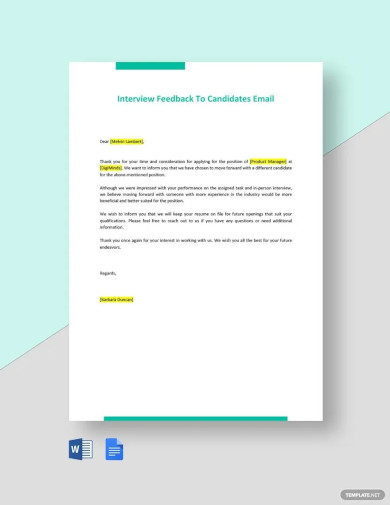
Interview Feedback To Candidates Email Template
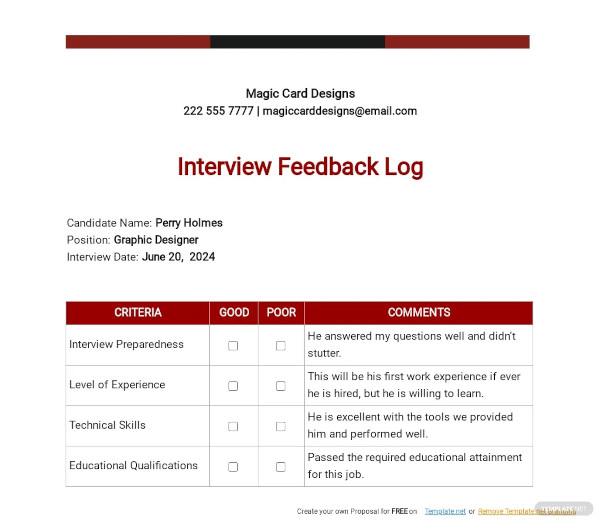
Interview Feedback Log Template
Sample Feedback Scenarios
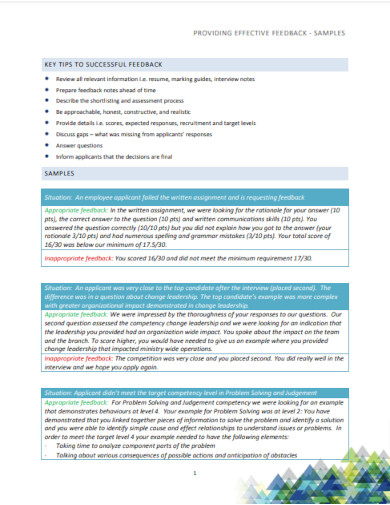
www2.gov.bc.ca
Interview Feedback Form
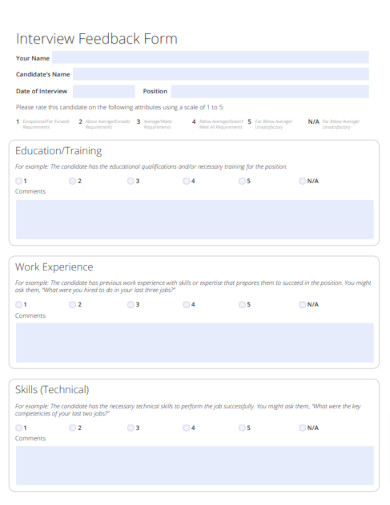
bestpractices.clearcompany.com
Introductory Interview Feedback Form
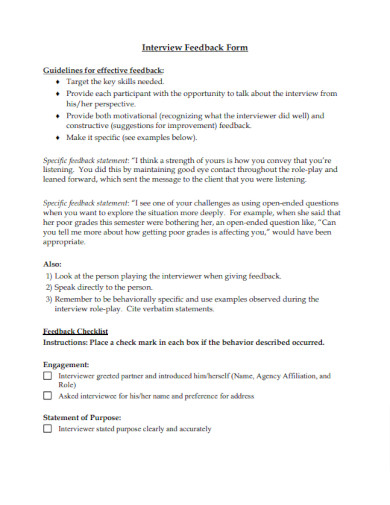
pacwrc.pitt.edu
Interview Feedback and Questions
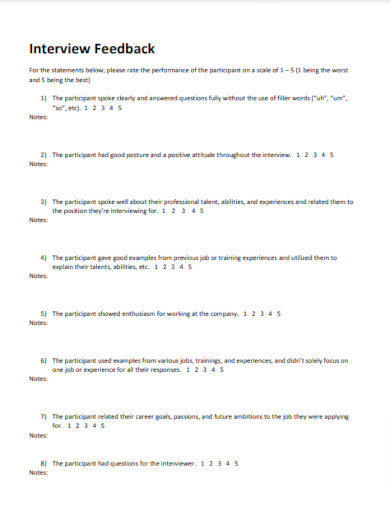
gridalternatives.org
Feedback to Job Applicants After Interview
psc.nsw.gov.au
Interview Feedback Guide
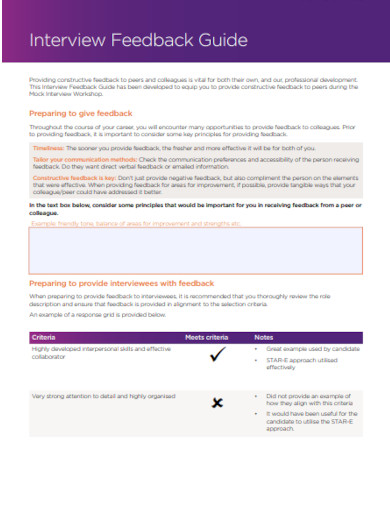
employability.uq.edu.au
Candidate Interview Evaluation Form
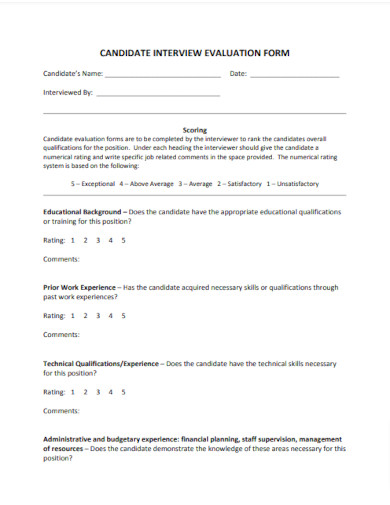
case.edu
Post Interview Feedback
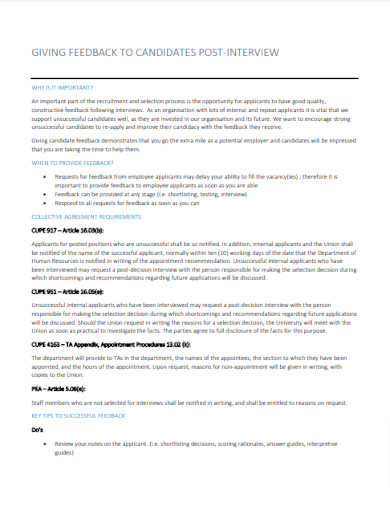
uvic.ca
Mock Interview Feedback Form
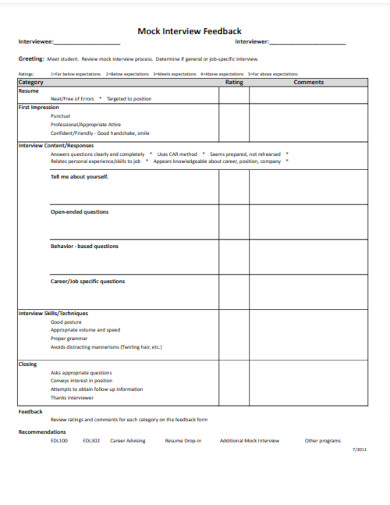
miamioh.edu
Standard Interview Feedback
whatdotheyknow.com
Modern Mock Interview Feedback
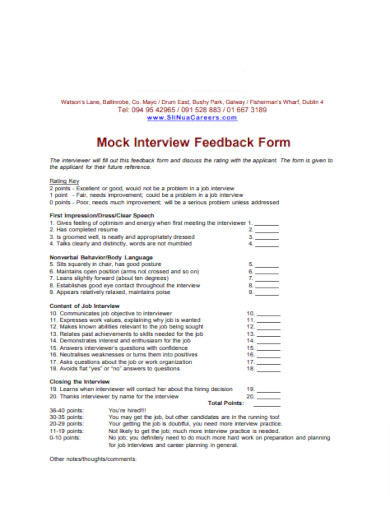
slinuacareers.com
Job Interview Feedback Form

Creative Interview Feedback Form
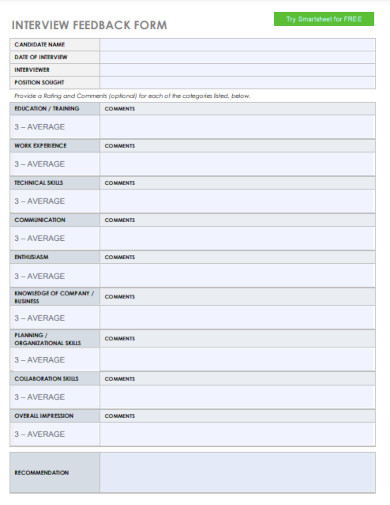
smartsheet.com
Internship Interview Feedback Form
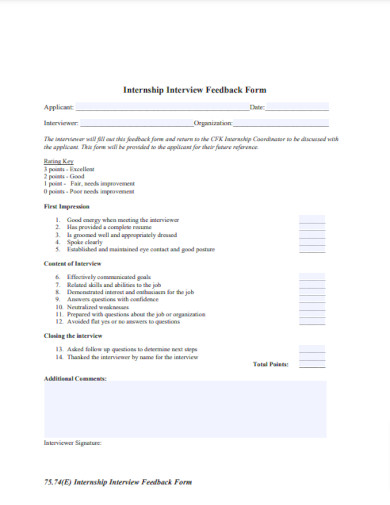
cfk.edu
Editable Mock Interview Program
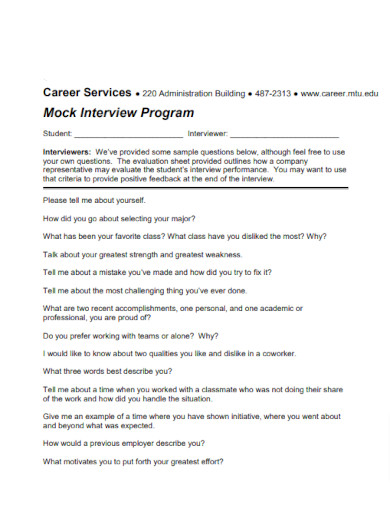
mtu.edu
Exit Interview Feedback Form
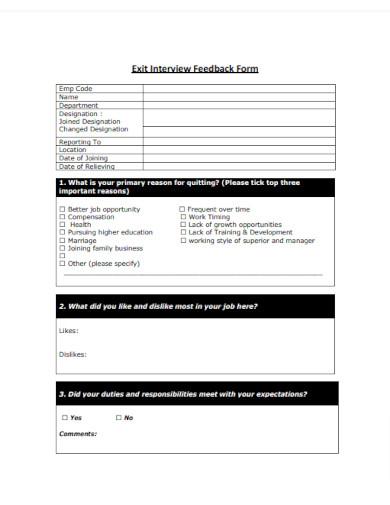
intranet.siyaram.com
Mock Interview Evaluation and Feedback Form
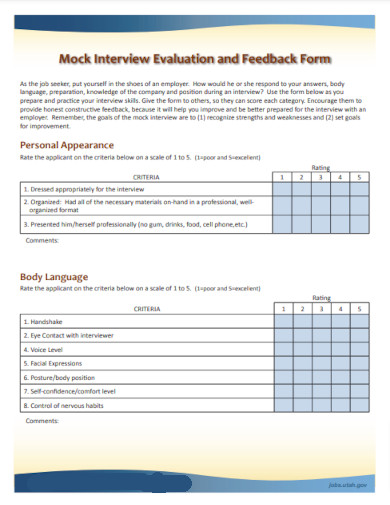
ceiutah.com
What is Interview Feedback?
Interview feedback is an essential communication tool used to provide candidates with an assessment of their performance during the interview process. It offers valuable insights into their strengths, weaknesses, and areas for improvement. By providing constructive feedback, you can help candidates understand how they can enhance their skills and increase their chances of success in future interviews.
How to Write an Interview Feedback
Deliver impactful interview feedback with our step-by-step guide. From setting the right tone to highlighting strengths and areas for improvement, master the art of providing comprehensive feedback that fosters professional growth. Let’s get started!
Step 1: Begin with a Brief and Concise Introduction
Start your feedback by acknowledging the candidate’s effort and expressing appreciation for their interest in the position. Set a positive tone and establish a context for the feedback you are about to provide.
Step 2: Highlight Strengths and Areas of Improvement
In this step, focus on the candidate’s strengths and highlight the skills and qualities they demonstrated during the interview. Use specific examples to support your observations and provide actionable feedback on areas where they can improve. Be sure to strike a balance between constructive criticism and encouragement.
Step 3: Use Clear and Simple Language
When writing interview feedback, it is important to use simple sentences, common nouns, and verbs to ensure clarity and ease of understanding. Avoid using jargon or technical terms that may confuse the candidate. Maintain a professional and respectful tone throughout.
Step 4: Structure Your Feedback
Organize your feedback using a clear and logical text structure. Consider using outline formats or bullet points to present your observations systematically. This helps the candidate easily navigate through the feedback and grasp the key points you are conveying.
FAQs
Should I focus only on the candidate’s weaknesses in the feedback?
No, it is important to strike a balance between highlighting strengths and areas for improvement. Providing constructive feedback on weaknesses helps candidates understand where they can grow, while acknowledging their strengths boosts their confidence.
How do I ensure my feedback is objective and fair?
To ensure objectivity, base your feedback on specific observations and examples from the interview. Avoid making assumptions or generalizations. Use data and evidence to support your feedback whenever possible.
Should I provide feedback on personal attributes or focus solely on job-related skills?
While it is important to focus on job-related skills, providing feedback on personal attributes can also be valuable. However, ensure that your feedback is constructive and relevant to the role and organization.
Mastering the art of interview feedback is a valuable skill for any marketing manager. By providing thoughtful and constructive feedback, you contribute to the growth and development of candidates while upholding your organization’s reputation. Remember to maintain a professional tone, highlight strengths, address weaknesses, and offer actionable suggestions for improvement. With practice and attention to detail, you can become a proficient provider of interview feedback, positively impacting both candidates and your organization’s hiring process.