
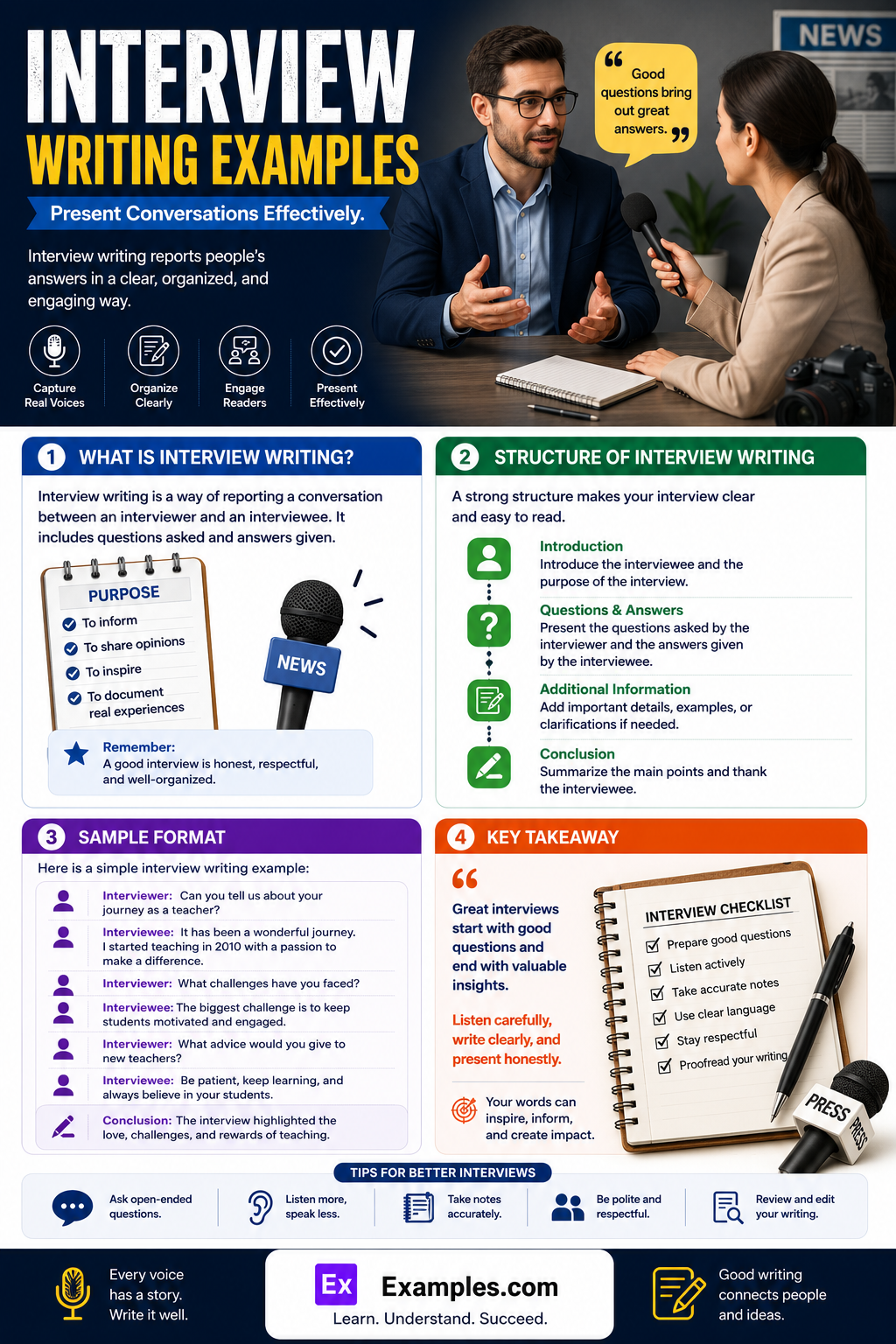
Interview writing presents questions and answers in a structured written format. It helps communicate insights, experiences, and expert perspectives clearly.
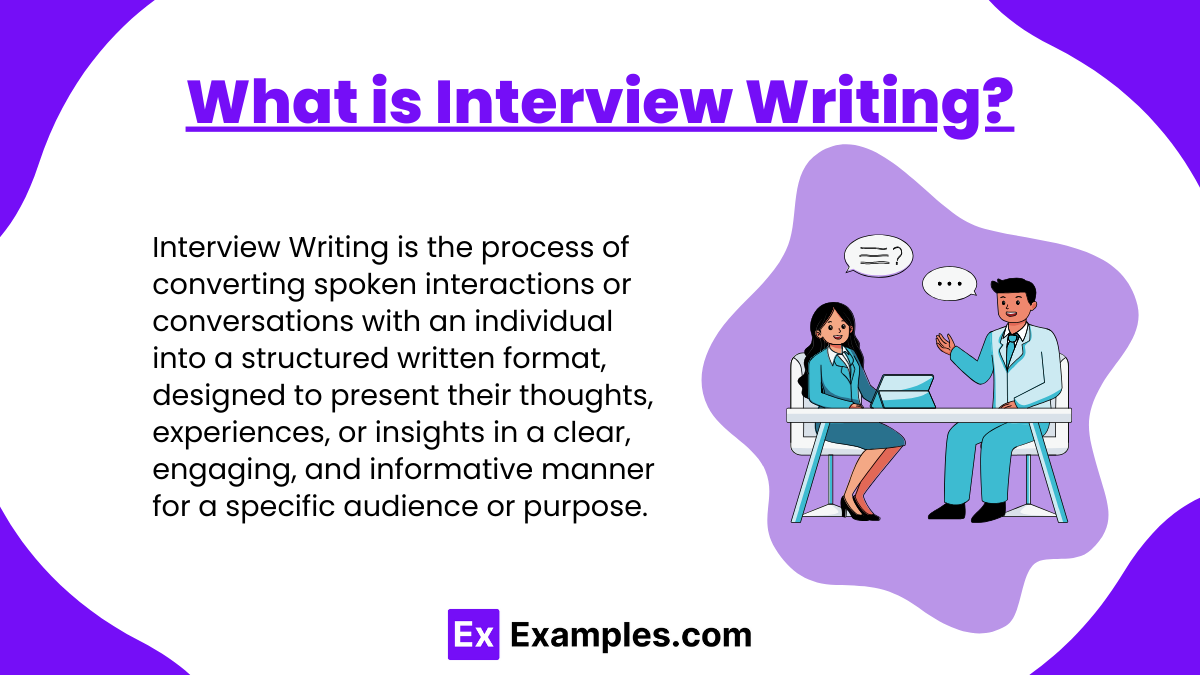
What is Interview Writing?
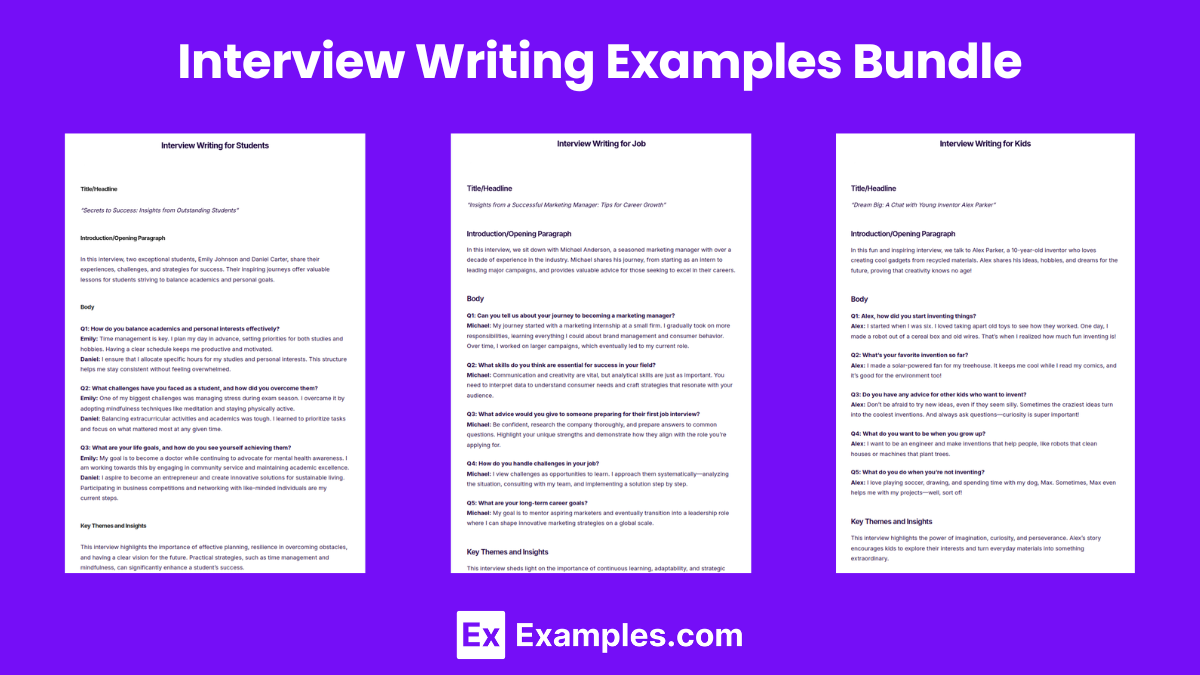
Interview Writing Examples Bundle
Interview Writing Format
Title/Headline
A catchy and relevant title that summarizes the main focus of the interview.
Example: “Achieving Dreams: A Conversation with a Young Entrepreneur”
Introduction/Opening Paragraph
Briefly introduce the interviewee, including their name, background, and why they are being interviewed. Provide context about the topic or purpose of the interview. Hook the reader with an engaging start. A strong introduction sets the tone for the entire interview. If you need inspiration for writing compelling opening paragraphs, the AI Content Idea Generator can provide fresh topics and creative approaches for different interview subjects.
Body
In the question-answer format, write the interview with each question followed by the interviewee’s response.
Example:
Q1: What inspired you to pursue this career?
A: I always had a passion for helping others and wanted to make a difference.In the narrative format, summarize the key points of the interview as a flowing story. Integrate quotes from the interviewee to maintain authenticity.
Example: John explained that his passion for helping others started in childhood, saying, “I always knew I wanted to make a difference.”
When transforming spoken conversations into polished written content, it’s important to maintain clarity while improving readability. The AI Readability Checker helps ensure interview responses remain easy to understand without losing their original meaning.
Key Themes and Insights
Highlight significant ideas, challenges, or achievements shared by the interviewee. Focus on their life goals, unique experiences, or perspectives relevant to the topic. Once you’ve identified the main discussion points, writing a concise summary helps readers quickly understand the interview’s most valuable ideas. The AI Conclusion Generator can help create strong closing summaries that reinforce the interview’s key messages.
Conclusion/Closing Paragraph
Summarize the main takeaways from the interview. Share the interviewee’s message, advice, or future aspirations. End with a positive or thought-provoking note.
Attribution
Include the name of the interviewer (your name) and date if applicable.
Example: Interview conducted by [Your Name] on [Date].
Choosing an effective title is an important part of interview writing because it immediately captures the reader’s attention. An AI Title Generator can help create engaging and relevant headlines that match the purpose and tone of your interview.
Interview Writing Examples
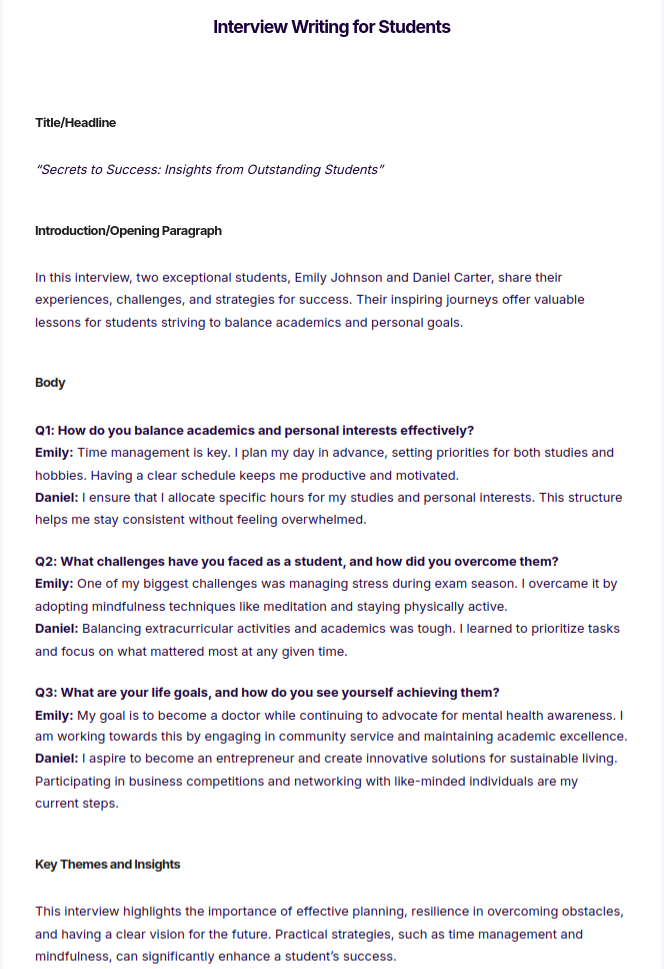
Interview Writing for Students
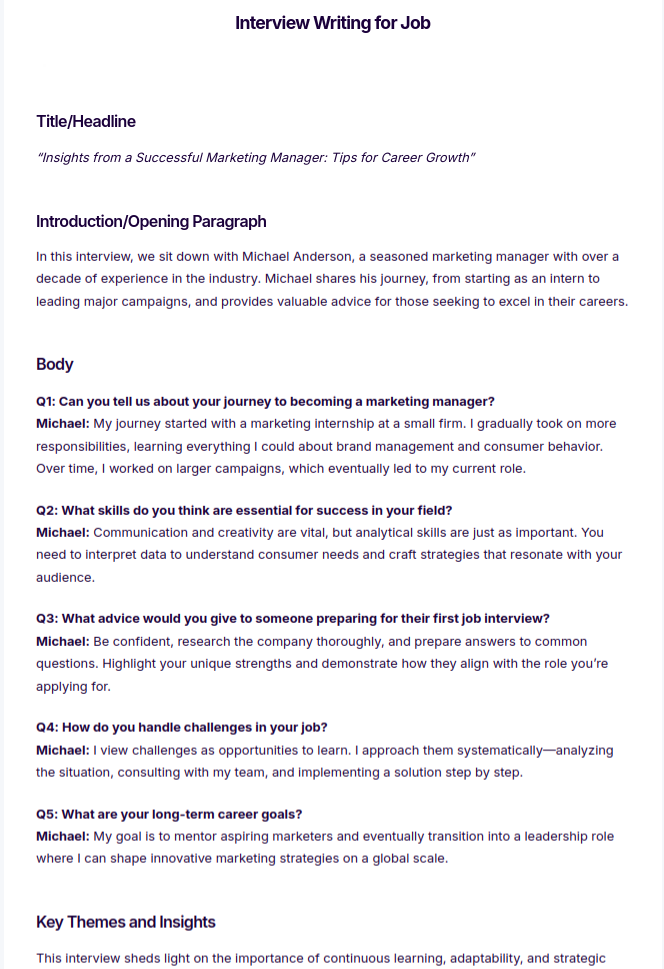
Interview Writing for Job
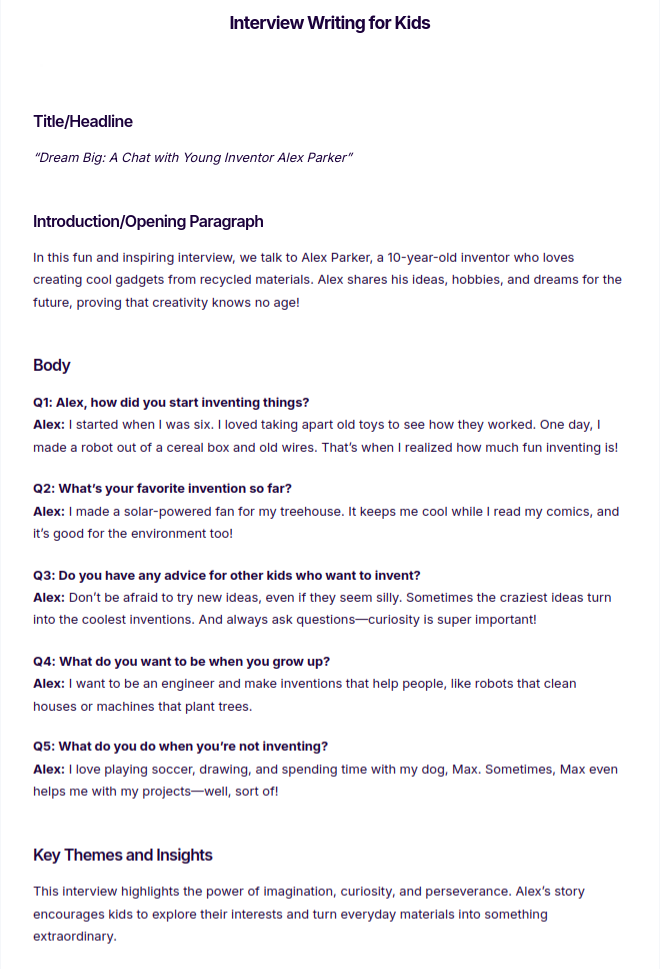
Interview Writing for Kids
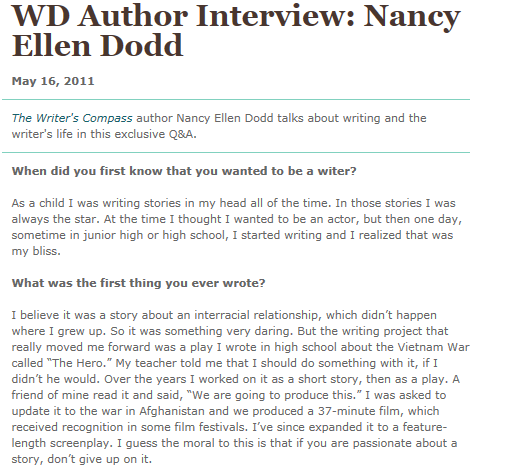
WD Author Interview: Nancy Ellen Interview Dodd Example
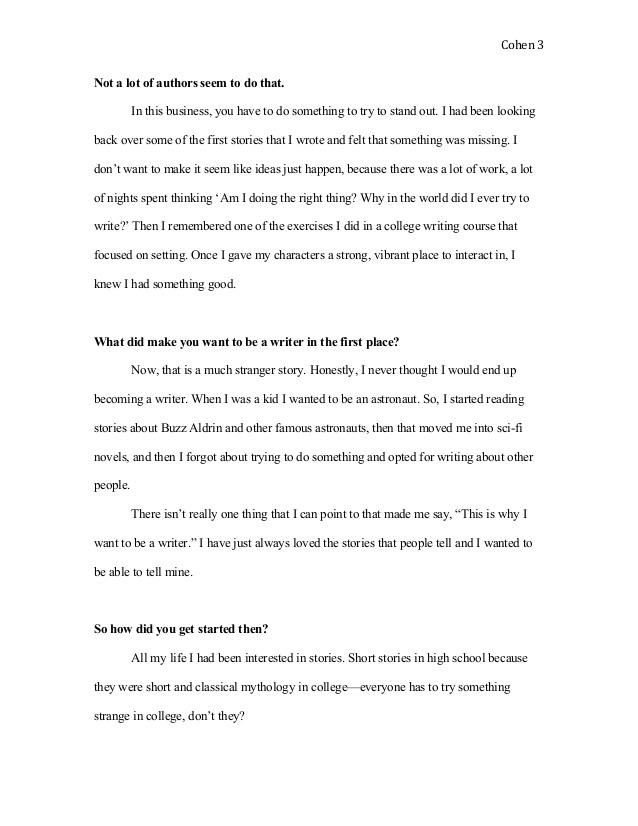
Sample Interview Guide Interview Example
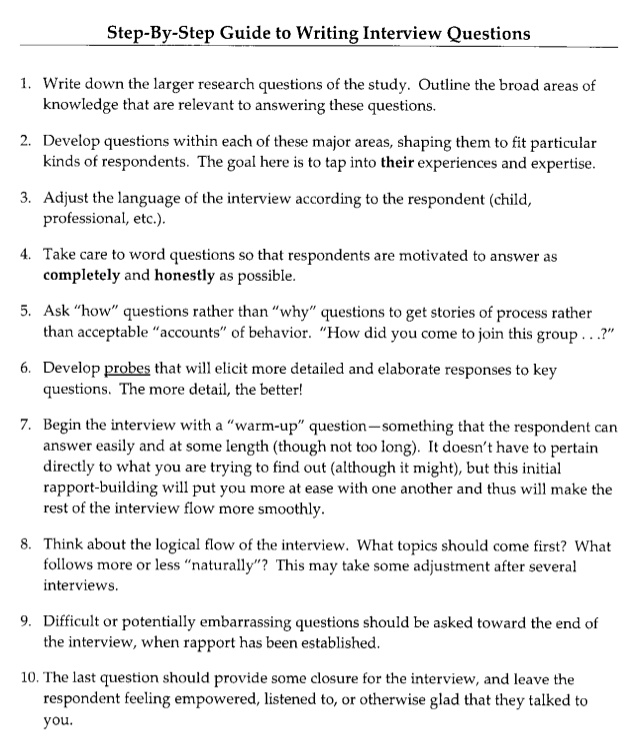
Example of a Step-by-Step Guide to Writing Interview Questions
How to Write Interview Writing
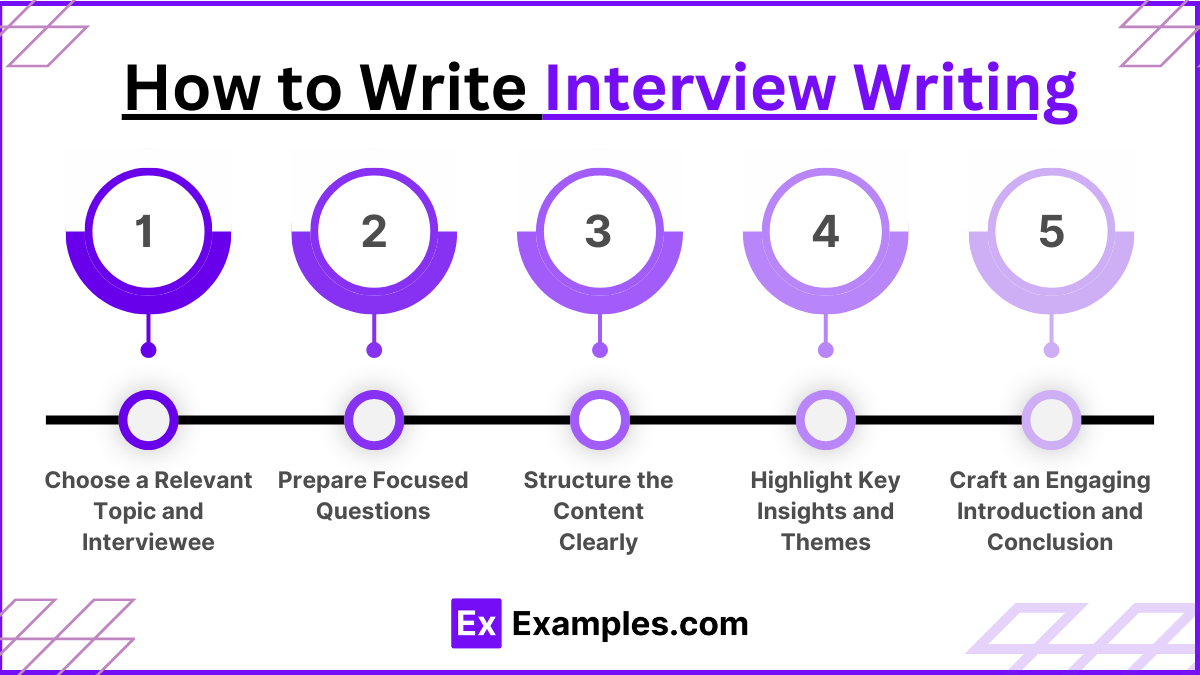
- Choose a Relevant Topic and Interviewee
Select a subject that interests your audience and an interviewee with expertise or a compelling story related to the topic. - Prepare Focused Questions
Create open-ended questions that encourage detailed and insightful responses, allowing the interviewee to share their perspective fully. - Structure the Content Clearly
Decide between a Q&A format or a narrative style, ensuring the flow is logical and engaging for the reader. - Highlight Key Insights and Themes
Emphasize the most valuable takeaways from the interview, connecting them to the topic’s purpose and the audience’s interests. - Craft an Engaging Introduction and Conclusion
Introduce the interviewee and topic in an interesting way and end with a strong summary or a memorable takeaway.
Tips for Interview Writing
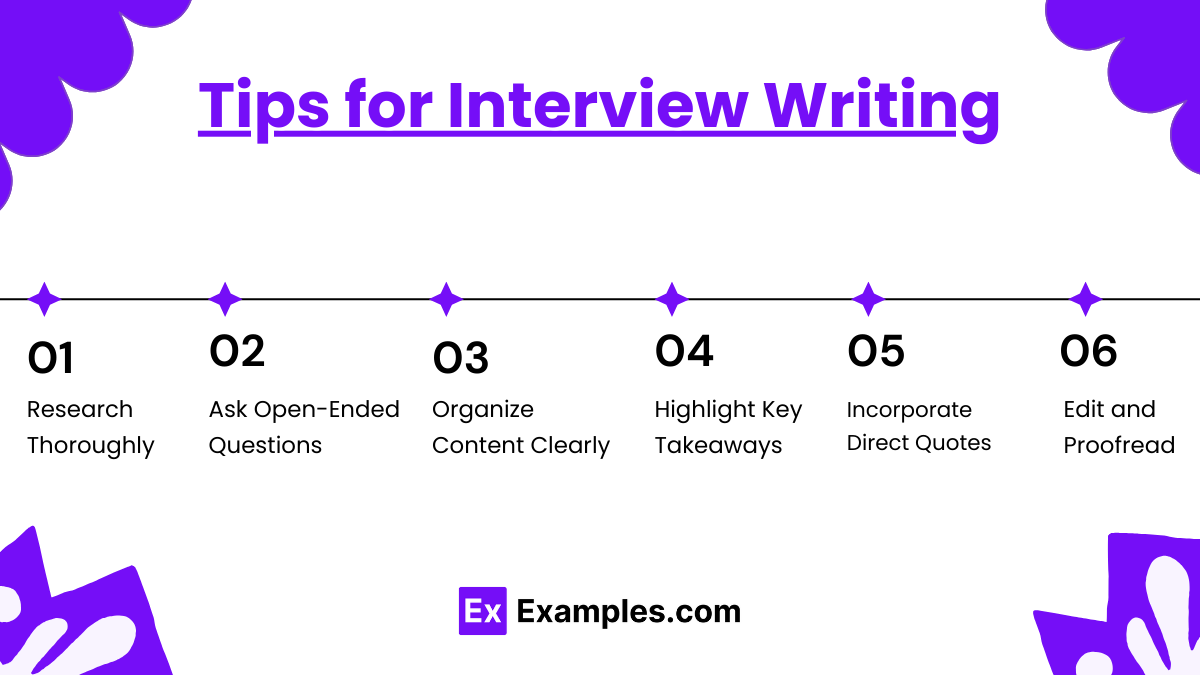
- Research Thoroughly
Understand the interviewee’s background and the topic to ensure relevant and engaging questions. - Ask Open-Ended Questions
Frame questions that encourage the interviewee to provide detailed responses and share personal insights. - Organize Content Clearly
Choose a structure—Q&A format or narrative—and ensure the flow is logical and easy to follow. - Highlight Key Takeaways
Emphasize the most significant points or lessons from the interview to engage your audience effectively. - Incorporate Direct Quotes
Use the interviewee’s words authentically to make the writing credible and relatable. - Edit and Proofread
Review for accuracy, coherence, and grammar to present a polished and professional piece.
Interview writing often involves refining responses while preserving the speaker’s original intent. The AI Rewording Tool is useful for improving sentence flow, reducing repetition, and making interview transcripts more engaging for readers. Before publishing an interview, it’s good practice to review the article for originality and writing quality. The AI Content Detector helps evaluate AI-generated text, making it easier to maintain authentic and trustworthy interview content.
FAQs
The two main formats are Question-and-Answer (Q&A) and narrative style.
It aims to present the interviewee’s insights, experiences, or expertise in an informative and compelling way. Interview articles often need engaging introductions and polished headlines to attract readers. The AI Blog Title Generator can generate compelling blog titles that encourage more people to read your interview.
Use engaging questions, highlight key takeaways, and include direct quotes from the interviewee.
Research helps create relevant questions and ensures the content is accurate and well-informed.
Strong research, active listening, clear writing, and the ability to highlight key insights are essential skills for effective interview writing.
Whether you’re creating interviews for school assignments, journalism, or professional publications, tools like the AI Article Generator, AI Content Idea Generator, and AI SEO Title Generator can help streamline research, improve organization, and create engaging interview content.