


“The EUrASEANs: journal on global socio-economic dynamics”
Volume 2 (51), March-April, Year 2025;
ISSN 2539 – 5645 (Print)
on-line access: https://www.euraseans.com/2(51)
All issues of this journal are alternatively stored and archived by: the National Library of Thailand, Russian E-library and Index Copernicus
library of journals, Poland
Kingsley Tochukwu Amatanweze
Researcher, Department of Materials Science and Engineering, Missouri University of
Science and Technology, Rolla, USA
Research interests: corporate management, business administration
E-mail: ktanbz@mst.edu
Martha Afua Bentil
Researcher, Department of Business and Information Technology, Missouri University of
Science and Technology, Rolla, USA
Research interests: competitiveness, marketing
E-mail: mabrgw@mst.edu
Mulenga Mutema Chibesa
Researcher: Department of Materials Science and Engineering, Missouri University of
Science and Technology, Rolla, USA
Research interests: business administration, management
E-mail: mc2hz@mst.edu
Johnbosco Ikechi Okoro
Researcher, School of Business, George Washington University, Washington DC, USA
Research interests: business administration, business design, business processes
E-mail: johnbosco.ikechi@gmail.com
Felix Terngu Nyikwagh
Researcher, Department of Interdisciplinary Studies, Clemson University, South Carolina,
USA
Research interests: organizational behavior, marketing management
E-mail: felixnyikwagh6@gmail.com
STRATEGIC ANALYSIS OF COMPETITIVE BUSINESS MODELS:
A CASE STUDY OF AMAZON
Kingsley Tochukwu Amatanweze
Martha Afua Bentil
Mulenga Mutema Chibesa
Missouri University of Science and Technology, Rolla, USA
Johnbosco Ikechi Okoro
George Washington University, Washington DC, USA
Felix Terngu Nyikwagh
Clemson University, South Carolina, USA
The EUrASEANs: journal on global socio-economic dynamics, № 2 (51), 2025
69
Amazon has continuously refined its mission and vision to align with its goal of becoming
Earth's most customer-centric company. Its original mission - “to be Earth's most customer-
centric company, where customers can find and discover anything they might want to buy
online, and endeavors to offer its customers the lowest prices” - has evolved, but the core focus
on customer satisfaction remains unchanged. By offering an extensive selection of products,
competitive pricing, and swift delivery, Amazon consistently achieves its strategic objectives.
This case study examines Amazon's corporate strengths, weaknesses, opportunities, and
threats and reviews its competitive advantage, business and corporate-level strategies,
customer analysis, and corporate governance. The study identifies areas where Amazon excels
and opportunities for improvement despite its current success and diversification.
Recommendations provided in the study are designed to enhance Amazon's operational
efficiency and financial performance. These actionable strategies align with Amazon's
commitment to innovation and customer-centricity, positioning the company for sustained
growth in an increasingly competitive market.
Keywords:
Amazon; vertical integration; corporate governance; SWOT analysis; business-
level strategies; competitive advantage
JEL Classification:
L10: Market Structure, Firm Strategy, and Market Performance:
General;
M
21: Business Economics; L81: Retail and Wholesale Trade; E-Commerce; G34: Corporate
Governance
Introduction
Amazon.com Inc. is an American multinational technology corporation that specializes
in e-commerce, digital streaming, cloud computing, internet advertising, and artificial
intelligence. The company, which started as an online bookstore in July 1994, expanded its
product offerings and became one of the world’s largest online retailers (Flamand et al., 2020;
Onyeshuva & Seenalasataporn, 2018).
With a market capitalization of an astounding $2.335 trillion, Amazon ranks fifth
globally (CompaniesMarketCap.com). Currently, the company has over 185 fulfillment
centers worldwide and over 100 in the US (Sullivan, 2023). Amazon sells its goods via physical
and online stores that it owns, but it also lets independent merchants list and sell goods on its
marketplace. Furthermore, Amazon Web Services (AWS) currently provides cloud services
for both governments, corporations, and private customers. The following three pillars
comprise its target market: merchants on Amazon.com Marketplace, consumers on
Amazon.com Prime, and developers on Amazon Web Services (Wu & Gereffi, 2019; Malik,
2017).
Researchers have classified organizations into one of four business models based on the
way they create value. These four business models were classified as follows: asset builders -
create value through physical goods, for example, manufacturers and retailers; service
providers - deliver value through skilled people, for example, consulting firms and financial
services; technology creators - create value through intellectual capital/ideas, like internet and
pharmaceutical companies; network orchestrators—deliver value via connectivity or
relationships (Libert et al., 2016; Wu & Gereffi, 2019).
STRATEGIC ANALYSIS OF COMPETITIVE
70
Amazon and Alibaba may be described as network orchestrators if consideration is
limited to e-commerce business, since e-commerce represents the most significant source of
the companies’ revenue and the core of their business models. However, in reality, the two
companies create value via multifarious ways, interconnecting the four various classifications
in their business models (Wu & Gereffi, 2019).
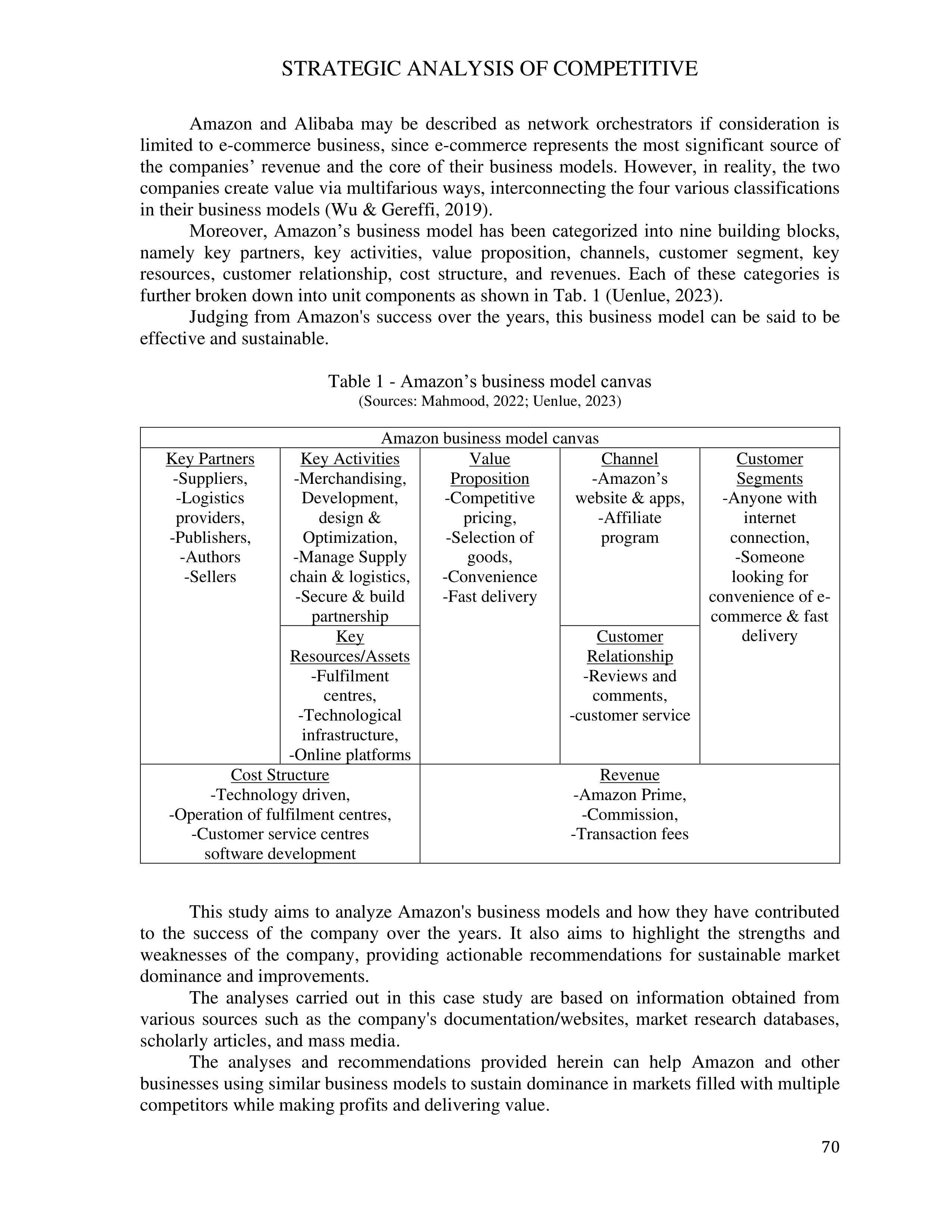
Moreover, Amazon’s business model has been categorized into nine building blocks,
namely key partners, key activities, value proposition, channels, customer segment, key
resources, customer relationship, cost structure, and revenues. Each of these categories is
further broken down into unit components as shown in Tab. 1 (Uenlue, 2023).
Judging from Amazon's success over the years, this business model can be said to be
effective and sustainable.
Table 1 - Amazon’s business model canvas
(Sources: Mahmood, 2022; Uenlue, 2023)
Amazon business model canvas
Key Partners
-Suppliers,
-Logistics
providers,
-Publishers,
-Authors
-Sellers
Key Activities
-Merchandising,
Development,
design &
Optimization,
-Manage Supply
chain & logistics,
-Secure & build
partnership
Value
Proposition
-Competitive
pricing,
-Selection of
goods,
-Convenience
-Fast delivery
Channel
-Amazon’s
website & apps,
-Affiliate
program
Customer
Segments
-Anyone with
internet
connection,
-Someone
looking for
convenience of e-
commerce & fast
delivery
Key
Resources/Assets
-Fulfilment
centres,
-Technological
infrastructure,
-Online platforms
Customer
Relationship
-Reviews and
comments,
-customer service
Cost Structure
-Technology driven,
-Operation of fulfilment centres,
-Customer service centres
software development
Revenue
-Amazon Prime,
-Commission,
-Transaction fees
This study aims to analyze Amazon's business models and how they have contributed
to the success of the company over the years. It also aims to highlight the strengths and
weaknesses of the company, providing actionable recommendations for sustainable market
dominance and improvements.
The analyses carried out in this case study are based on information obtained from
various sources such as the company's documentation/websites, market research databases,
scholarly articles, and mass media.
The analyses and recommendations provided herein can help Amazon and other
businesses using similar business models to sustain dominance in markets filled with multiple
competitors while making profits and delivering value.
The EUrASEANs: journal on global socio-economic dynamics, № 2 (51), 2025
71
Amazon’s market
Amazon operates in various markets and has a diverse business portfolio. Its market
presence spans across several key segments: e-commerce, cloud computing, digital content
and streaming, hardware devices, logistics and fulfillment, and subscription services.
Amazon’s products and services may be grouped under two main categories: retail and non-
retail. Retail includes computers, appliances, books, music, office equipment, household items,
home improvement, toys, clothing, jewelry, kids, toddlers, movies, video games, sports,
electronics, and automotive products.
The non-retail part includes Amazon Web Services (AWS), commission-based selling,
and fulfillment by Amazon. Amazon is growing its media offerings, including online e-books,
and is entering the Kindle tablet manufacturing business.
The firm operates warehouses and provides delivery services in over 12 countries,
including the US, UK, Ireland, France, Italy, Australia, India, Germany, Canada, Japan,
Mexico, China, and Spain. The company also has an option for worldwide delivery for those
living outside the above-mentioned regions (Adcock, 2023; Wu & Gereffi, 2019; Synder et al.,
2022).
Market competition
Like any other company, Amazon faces competition in various sectors of its business
operations. We can identify companies like Google, Apple, and Walmart as Amazon's major
competitors. This can be seen in Amazon Echo vs Google Home, Kindle Fire vs Apple iPad,
Amazon Smart Home Devices vs Siri Smart Home Devices, and Google Cloud Computing
Services vs Amazon AWS.
Within the e-commerce sector, Walmart and Alibaba are Amazon's major competitors,
each with their own strengths and focus areas. Within physical retail, Walmart remains a
significant competitor in traditional brick-and-mortar retail. Target® is another major retailer
competing with Amazon in physical and online retail.
Regarding advertising, Amazon competes with these tech giants (Google and Facebook)
in the digital advertising space. However, Alibaba's advertising business competes with
Amazon, particularly in the Chinese market. Amazon's main rivals, according to Pereira,
include Walmart, Alibaba, eBay, Microsoft Azure, Google Cloud Platform, Target, Netflix,
Disney+, and others (Pereira, 2023a).
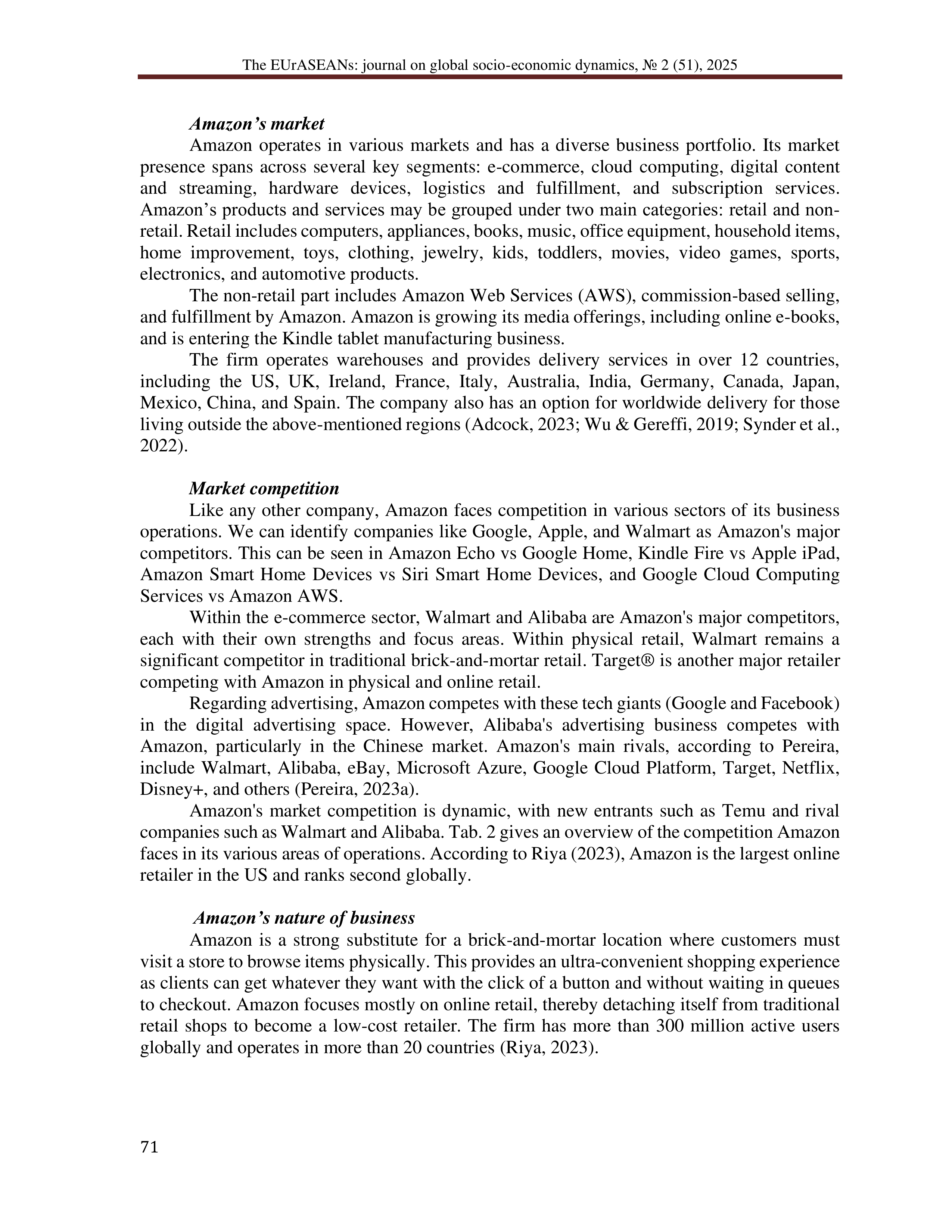
Amazon's market competition is dynamic, with new entrants such as Temu and rival
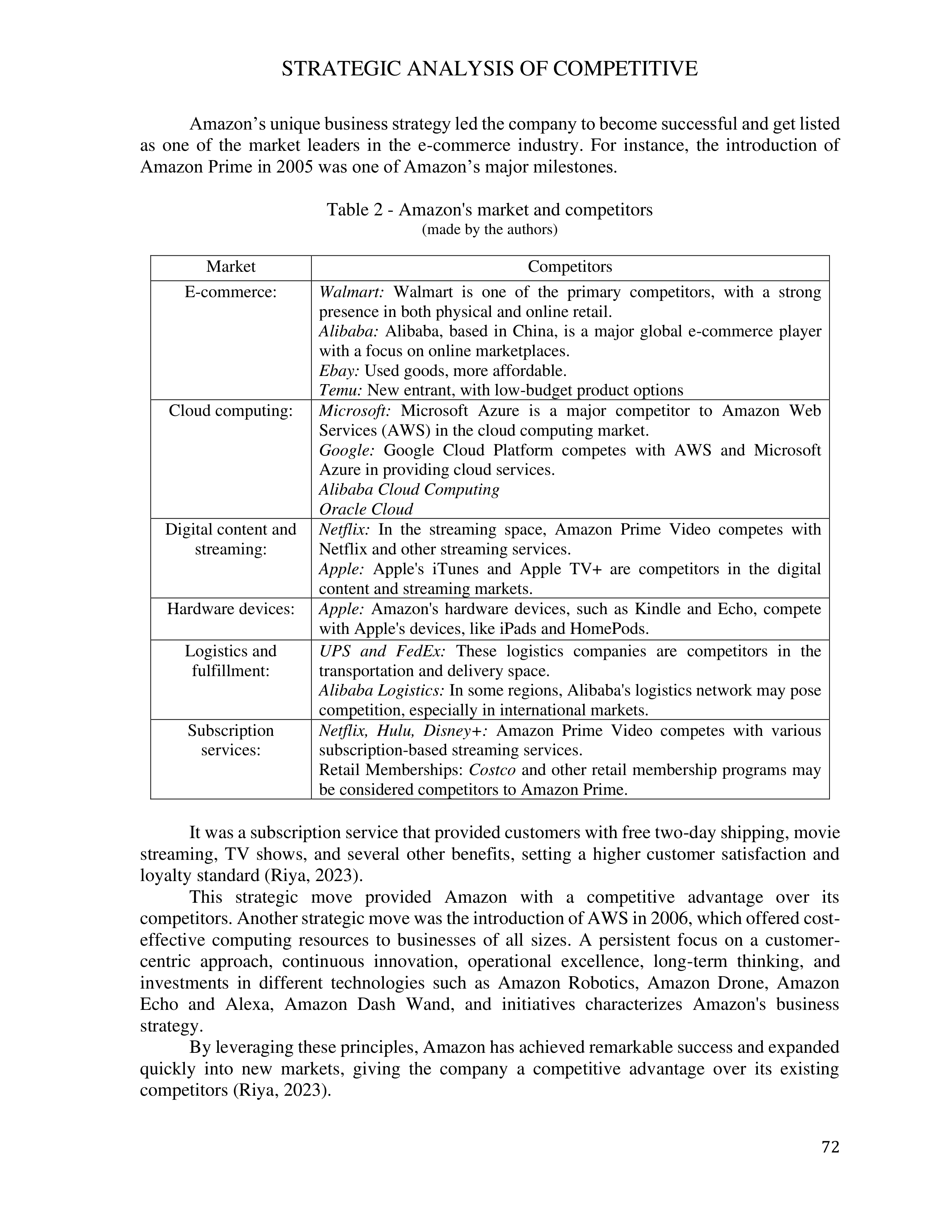
companies such as Walmart and Alibaba. Tab. 2 gives an overview of the competition Amazon
faces in its various areas of operations. According to Riya (2023), Amazon is the largest online
retailer in the US and ranks second globally.
Amazon’s nature of business
Amazon is a strong substitute for a brick-and-mortar location where customers must
visit a store to browse items physically. This provides an ultra-convenient shopping experience
as clients can get whatever they want with the click of a button and without waiting in queues
to checkout. Amazon focuses mostly on online retail, thereby detaching itself from traditional
retail shops to become a low-cost retailer. The firm has more than 300 million active users
globally and operates in more than 20 countries (Riya, 2023).
STRATEGIC ANALYSIS OF COMPETITIVE
72
Amazon’s unique business strategy led the company to become successful and get listed
as one of the market leaders in the e-commerce industry. For instance, the introduction of
Amazon Prime in 2005 was one of Amazon’s major milestones.
Table 2 - Amazon's market and competitors
(made by the authors)
Market
Competitors
E-commerce:
Walmart:
Walmart is one of the primary competitors, with a strong
presence in both physical and online retail.
Alibaba:
Alibaba, based in China, is a major global e-commerce player
with a focus on online marketplaces.
Ebay:
Used goods, more affordable.
Temu:
New entrant, with low-budget product options
Cloud computing:
Microsoft:
Microsoft Azure is a major competitor to Amazon Web
Services (AWS) in the cloud computing market.
Google:
Google Cloud Platform competes with AWS and Microsoft
Azure in providing cloud services.
Alibaba Cloud Computing
Oracle Cloud
Digital content and
streaming:
Netflix:
In the streaming space, Amazon Prime Video competes with
Netflix and other streaming services.
Apple:
Apple's iTunes and Apple TV+ are competitors in the digital
content and streaming markets.
Hardware devices:
Apple:
Amazon's hardware devices, such as Kindle and Echo, compete
with Apple's devices, like iPads and HomePods.
Logistics and
fulfillment:
UPS and FedEx:
These logistics companies are competitors in the
transportation and delivery space.
Alibaba Logistics:
In some regions, Alibaba's logistics network may pose
competition, especially in international markets.
Subscription
services:
Netflix, Hulu, Disney+:
Amazon Prime Video competes with various
subscription-based streaming services.
Retail Memberships:
Costco
and other retail membership programs may
be considered competitors to Amazon Prime.
It was a subscription service that provided customers with free two-day shipping, movie
streaming, TV shows, and several other benefits, setting a higher customer satisfaction and
loyalty standard (Riya, 2023).
This strategic move provided Amazon with a competitive advantage over its
competitors. Another strategic move was the introduction of AWS in 2006, which offered cost-
effective computing resources to businesses of all sizes. A persistent focus on a customer-
centric approach, continuous innovation, operational excellence, long-term thinking, and
investments in different technologies such as Amazon Robotics, Amazon Drone, Amazon
Echo and Alexa, Amazon Dash Wand, and initiatives characterizes Amazon's business
strategy.
By leveraging these principles, Amazon has achieved remarkable success and expanded
quickly into new markets, giving the company a competitive advantage over its existing
competitors (Riya, 2023).
The EUrASEANs: journal on global socio-economic dynamics, № 2 (51), 2025
73
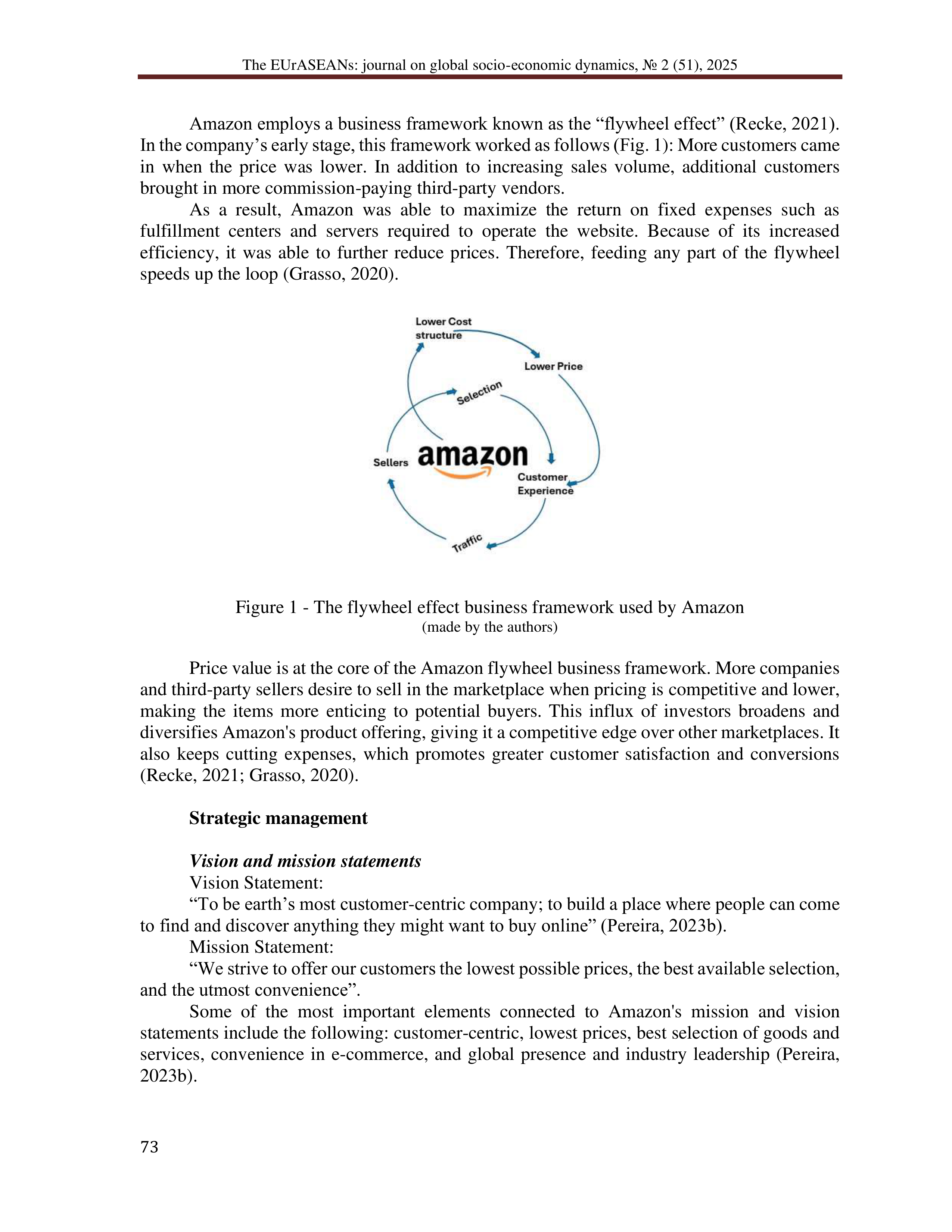
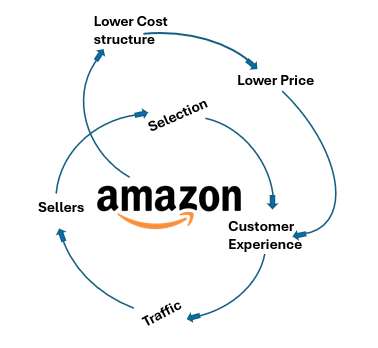
Amazon employs a business framework known as the “flywheel effect” (Recke, 2021).
In the company’s early stage, this framework worked as follows (Fig. 1): More customers came
in when the price was lower. In addition to increasing sales volume, additional customers
brought in more commission-paying third-party vendors.
As a result, Amazon was able to maximize the return on fixed expenses such as
fulfillment centers and servers required to operate the website. Because of its increased
efficiency, it was able to further reduce prices. Therefore, feeding any part of the flywheel
speeds up the loop (Grasso, 2020).
Figure 1 - The flywheel effect business framework used by Amazon
(made by the authors)
Price value is at the core of the Amazon flywheel business framework. More companies
and third-party sellers desire to sell in the marketplace when pricing is competitive and lower,
making the items more enticing to potential buyers. This influx of investors broadens and
diversifies Amazon's product offering, giving it a competitive edge over other marketplaces. It
also keeps cutting expenses, which promotes greater customer satisfaction and conversions
(Recke, 2021; Grasso, 2020).
Strategic management
Vision and mission statements
Vision Statement:
“To be earth’s most customer-centric company; to build a place where people can come
to find and discover anything they might want to buy online” (Pereira, 2023b).
Mission Statement:
“We strive to offer our customers the lowest possible prices, the best available selection,
and the utmost convenience”.
Some of the most important elements connected to Amazon's mission and vision
statements include the following: customer-centric, lowest prices, best selection of goods and
services, convenience in e-commerce, and global presence and industry leadership (Pereira,
2023b).
STRATEGIC ANALYSIS OF COMPETITIVE
74
These outline the fundamental objectives of Amazon as a business and aid in
determining its strategic course. All customers want the greatest product at the lowest possible
price, delivered in the most efficient manner feasible, regardless of their target market.
Nevertheless, it's unclear from reading the mission statement what Amazon provides or even
if it's a technological firm. Amazon wants to be the most customer-centric corporation on
Earth, according to its vision statement, which speaks directly to their largest stakeholder-its
consumers.
Amazon's vision statement makes its aim to become the finest firm in the e-commerce
sector very evident. The company places a high priority on its global reach, product selection,
and client base. The mission and vision statements, which aim to provide the finest experience
for its clients, are long-lasting (Flamand et al., 2020).
Competitive advantage
Amazon's organizational resources and competencies suggest that the company has a
robust competitive advantage. Amazon’s market capitalization helped the firm rise to the status
of one of the most valuable companies in the world. Over time, Amazon made a number of
investment decisions and acquired emerging firms in an effort to diversify and increase its
product offerings. This resulted in a formidable barrier to entry for other online businesses,
which are similarly challenging to replicate.
The company's affiliate networks are yet another impressive feature of Amazon. Not
only did these networks, such as Amazon Associates, increase traffic and improve the
company's marketing efforts, but they also made a significant financial contribution. As a result
of the current trend of using various social media platforms to link the website, many affiliate
groups are receiving incentives, which expands the company's potential.
The company’s brand equity is characterized by its strong awareness, emotional
connection, relevant differentiation, values to customers, and accessibility, which has given
the company an attractive image. Particularly in the online retail sector, the brand equity they
established offers a significant competitive advantage that is unassailable. In terms of
accessibility, customers and Amazon users or retailers found it simpler to transact and conduct
business with each other thanks to the one-click shop 24/7 access system and the launch of
Fulfillment by Amazon (FBA).
Under the Fulfillment by Amazon (FBA) program, Amazon stores, packages, ships, and
takes care of customer service for the goods one sells on Amazon, while partners can sell goods
on Amazon Prime with the help of FBA (Sullivan, 2023).
Other competitive advantages Amazon has over its competitors include the use of AI in
doing business. The cost implications of getting this technology pose a barrier for competitors.
Therefore, Amazon has become a leading AI powerhouse by utilizing robots in their
warehouse, sensors in their stores, and drones for certain deliveries. Other factors contributing
to Amazon’s competitive advantage include its growth strategies via market development and
penetration, product development, and diversification. The geographical spread of the
company from the US to the UK, China, and Australia has enabled it to have a substantial
market share in the eCommerce business.
Additionally, the company maximized the increase in consumption habits by running
many marketing efforts to increase traffic. Amazon has become a major force in eCommerce
as a result of its quick adaptability to the rapidly changing landscape of online marketing and
its implementation of all these growth strategies.
The EUrASEANs: journal on global socio-economic dynamics, № 2 (51), 2025
75
Five Forces Model analysis
In e-commerce, Amazon has Best Buy, eBay, Walmart, Alibaba, Temu, and Flipkart as
their major rivals. These companies also serve as substitutes for Amazon. Amazon’s
competitive advantage lies in a vast product selection, maintenance of an efficient logistics
outfit, and customer-centricity. Because of the low force of forwarding integration and the
significant disparity in size between suppliers and Amazon, suppliers have little negotiating
leverage. Furthermore, Amazon’s FBA program has strengthened its position by allowing
third-party sellers into Amazon’s robust infrastructure, creating a level of supplier dependency
on the platform.
The bargaining power of buyers is relatively high due to the presence of these
substitutes. Information about products is also readily available online. However, Amazon’s
targeted recommendations and membership program – Prime - and its overall customer-centric
approaches have proven effective in gaining customer loyalty, creating a perceived switching
cost. Thus, the threat of substitutes is strong. Amazon has been proactive in handling possible
threats emanating from traditional brick-and-mortar retailers through omnichannel strategies.
However, the threat of entry is the weakest in this business model owing to the cost of
brand development and high economies of scale. The e-commerce industry today heavily
invests in technology infrastructure and logistics, and Amazon, with its customer base and
technological capacity, remains a formidable force for new entrants.
New rivals pose a danger to online titles. This is evident in Amazon's attempts to
overtake other companies in the Indian market, like Flipkart, Snapdeal, Paytm, and others. As
a result, Amazon Overseas operates on a paid and free service differentiation strategy, but in
India, intense competition forces them to adopt a free model. India is a market that is expanding
and has a large number of differentiating online retail shops. Customers have negotiating
power because they can switch online retailers if the products and services don't meet their
expectations. Price-related variables can now directly affect customers thanks to price
comparison websites.
There may be a serious threat to Amazon from the increasing quantity of coupon code
websites (Onggowidjojo & Ellitan, 2023). Walmart has been employing what is known as
EDLP (Everyday Low Prices) as a competing price strategy. Walmart spends a lot of time
researching what other companies charge for a certain item or service to cut their own rates. In
the early 2000s, Walmart ran advertisements featuring consumers requesting price matching
or a reduction on goods that were available at other locations for a different price. Additionally,
Alibaba provides "Alibaba Cloud", a cloud computing service that is similar to Amazon. As
part of their competitive pricing strategy, they continue to provide their products at a somewhat
cheaper price than their rivals. By doing this, they maintain the profit margin and allow robust
competition (Flamand et al., 2020).
Customer analysis
Amazon employs both behavioral and psychographic market segmentation techniques.
Amazon collects enough information about a customer's psychographics from past orders,
learning about their beliefs, way of life, and personality type before making purchasing
recommendations. Behavioral psychology, on the other hand, is concerned with customers'
purchasing decisions in order to ascertain what they bought and why. Also, in order to let other
consumers relate to one another and make decisions about purchases based on differing
opinions, they let users rate and review items.
STRATEGIC ANALYSIS OF COMPETITIVE
76
By using cookies on a customer's hard drive, Amazon has perfected the art of tracking
customers. Based on previous product views and transactions, this integrated marketing tool
tailors each customer's online experience.
Amazon's email marketing approach is likewise advanced, leveraging over 300 million
accounts kept on Amazon.com, a huge chance to keep sending emails and suggestions for other
products to both current and former consumers (Flamand et al., 2020).
Internal and external analyses
We conducted internal and external analyses of the company using the SWOT analysis,
IFE and EFE matrices, and key performance index.
Internal analysis
We primarily used SWOT analysis for our internal analysis of the business.
Strengths:
- Amazon's robust user identification program assists customers in choosing what to
buy. This service is a strength for Amazon since it keeps customers from switching to new,
unknown businesses that don't yet have a history of customer purchases. Moreover, it is an
essential capability that is hard to imitate (Aversa et al., 2021; Jain et al., 2023).
- Expansion on the creation of Amazon's proprietary brands and promoting them to their
devoted consumer base. Approximately 7,217 private label items are now available on
Amazon, with 86% of them priced under $50 and having an average rating of 4.04 out of 5.
They can compete in the market because of their low prices and high quality (Flamand et al.,
2020).
- Outstanding ability to innovate technology quickly, particularly in the field of web
services (Aversa et al., 2021).
Weaknesses:
- Data security: Amazon ensures the security of its users' data during their purchases on
the platform. AWS hosted unprotected customer records from the EU and the UK as recently
as March 2020 due to a database leak (Flamand et al., 2020).
-For many of its items, Amazon has contracted out the delivery and distribution. As a
result, it is dependent on these third parties for the effective supply of goods to its customers
(Vasiliauskas & Jakubauskas, 2007).
-Amazon’s work environment has been described as hostile to workers (Perrigo, 2023).
-Fewer physical stores (Mahmood, 2023).
Opportunities:
To maintain its position in the thriving e-commerce industry, Amazon could expand into
other international regions (Sadq, 2018).
-Walmart is expanding its range of goods and services by opening more physical
locations in underserved local and foreign markets. Right now, Walmart dominates the
physical retail space (Mahmood, 2023).
Amazon also has the option of “developing and selling its own products” (Hassan et al.,
2014).
The EUrASEANs: journal on global socio-economic dynamics, № 2 (51), 2025
77
The company is applying its current business expertise to create an effective grocery
delivery service as it ventures into the grocery store industry (Vasiliauskas & Jakubauskas,
2007).
Threats:
-Every time, e-commerce experiences predictable adjustments. A rival as strong as
Amazon will inevitably arise and destroy everything the company has worked so hard to
establish over the years (Sadq, 2018).
-Amazon is experiencing strong competition in most of the industries, from e-commerce
to cloud service (Lai et al., 2018; Ritala et al., 2014).
-Local stores might offer lower prices than Amazon, and lawmakers might impose a tax
on online business that isn't there now (Hassan et al., 2014).
-Exorbitant shipping costs have made customers of the e-commerce business less likely
to be from underdeveloped countries (Reardon et al., 2021).
-Packing and delivery methods that are harmful to the environment (Bertram & Chi,
2018).
IFE Matrix
A strategic tool called the Internal Factor Evaluation (IFE) Matrix is used to assess an
organization's internal environment and identify both its strengths and deficiencies. According
to Flamand et al. (2020) the two greatest assets of Amazon were its loyal customer base and
its competitive price strategy, while the company's two biggest problems were declining
profitability and brand damage resulting from tax evasion.
Key Performance Indicators (KPIs)
- Customer Acquisition Cost (CAC): The strong brand recognition Amazon commands,
coupled with its efficient marketing strategies, contributes to a low CAC enjoyed by the
company with respect to industry standards (Sandhya & Kunte, 2023).
- Customer Lifetime Value (CLTV): Amazon’s strategic approaches through Amazon
Prime to cross-sell, up-sell, and retain customers are very likely to drive a high CLTV.
- Conversion Rate: AI and data-driven personalized recommendation systems at
Amazon contribute to high conversion rates.
- Average Order Value: Amazon has a diverse product offering and an effective
upselling approach, which is key to driving a competitive average order value.
- Net Promoter Score (NPS): Amazon’s customer-centricity as well as its overall
efficiency likely result in a high NPS.
Amazon's high return on investment (ROI) is largely due to the money it spends on
technology infrastructure and improving the efficiency and cost-effectiveness of its supply
chain systems through strong supply chain solutions.
External analysis
We conducted an external analysis of the firm under the following circumstances:
Social factors
Social and cultural changes are impacting Amazon's e-retail expansion. For instance,
the number of people using mobile devices is growing at a high rate these days, which helps
STRATEGIC ANALYSIS OF COMPETITIVE
78
companies like Amazon expand further because their products are believed to be more
convenient (Pratap, 2017).
However, because of disparities in disposable income, Amazon's success is threatened
by the wealth and poverty gaps that exist in so many nations around the globe. Nonetheless,
the growing market potential with its focus on more active online buying behavior is brought
up by the growing demand in emerging nations (Greenspan, 2023).
Technological factors
In the current era of improved service delivery, technology is a critical success
component of Amazon. This is because of their respective capacities to deliver more customer
loyalty. Consequently, superior customer service, artificial intelligence, and cognitive
intelligence are progressively emerging as the new competitive advantage (Pratap, 2017).
Political factors
From a political perspective, large online retailers such as Amazon and eBay have the
potential to cause many problems, particularly for Asian nations. Taxation is a mixed political
and economic concern (Pratap, 2017).
Yet, Amazon effectively handles its governmental and political sway. Because stable
political regimes typically allow businesses to expand, especially in highly urbanized
economies, the corporation always benefits from their stability (Greenspan, 2023; Onyeshuva
& Seenalasataporn, 2018).
Economic factors
Amazon's success was predetermined by the relative economic stability of most
industrialized nations since the company's financial performance was boosted by the rise of
online retail businesses and the availability of disposable cash. However, the Chinese recession
poses a danger to Amazon's sales volumes due to the new competitor's emergence (Greenspan,
2023; Onyeshuva & Seenalasataporn, 2018).
Environmental factors
In the context of online retail, environmental sustainability is vital. Better packaging,
less waste, more intelligent energy use, and other aspects of sustainable business practices are
required for this enterprise. Business sustainability indirectly leads to standardization, higher
brand recognition, and the attractiveness of the corporate image. Corporate social
responsibility (CSR) initiatives, among other things, influence customer satisfaction with a
firm and its marketing efforts (Greenspan, 2017).
Legal factors
Product regulations are becoming more stringent in most of the nations where the firm
conducts business. These rules have an impact on shipping as well as quantity and quality.
Therefore, to reduce litigation expenses, it is imperative that the company make sure they are
aware of and compliant with their legal requirements (Business-essay.com).
EFE Matrix
Using an External Factor Evaluation (EFE) Matrix, analysts may compile and assess
business data related to economics, environment, politics, government, law, society, culture,
The EUrASEANs: journal on global socio-economic dynamics, № 2 (51), 2025
79
demography, technology, and competition. Amazon's EFE illustrates the company's
opportunities and threats. According to Flamand et al. (2020) Amazon’s two biggest
opportunities were to enter a new market and capitalize on the unexpected need for online
shopping brought on by the pandemic, while the organization's biggest concerns were a
cybersecurity attack and a competitor replicating its business strategy.
Amazon strategies
Business-level strategies
Amazon's business success largely stems from its strategic focus on cost leadership,
often referred to as a Type One Strategy. This approach enables Amazon to serve a broad
customer base, spanning various socioeconomic groups, while addressing an expansive global
market. By leveraging economies of scale, advanced supply chain management, and
technological innovation, Amazon consistently offers products at competitive prices,
solidifying its position as a leader in the e-commerce sector.
A key pillar of Amazon’s strategy is its extensive product portfolio, which spans
categories such as electronics, clothing, home goods, media, and services. This vast selection
ensures that Amazon appeals to a wide range of customers, further strengthening its market
reach. The platform’s diverse catalog is supported by its cost leadership strategy, where sellers
compete intensively to attract buyers by lowering prices. This competition drives down costs
for customers, reinforcing Amazon’s reputation as a value-oriented marketplace (Urtasker,
2022).
The psychological appeal of having a wide array of choices also plays a role, as
customers enjoy the autonomy of selecting from countless options rather than being
constrained by limited choices. This combination of affordability and variety has positioned
Amazon as the preferred shopping destination for millions of consumers worldwide.
Beyond its broad product range, Amazon differentiates itself through its Prime
membership program, a cornerstone of its competitive strategy. Prime offers subscribers
benefits such as early access to deals, free monthly e-books, and, most notably, expedited
shipping options. The flagship feature-free two-day shipping-has redefined customer
expectations for online shopping. Additionally, Prime members gain access to one-day and
same-day delivery for select products, providing an unmatched level of convenience. This
innovation has set a new industry standard, conditioning customers to expect rapid delivery
times. Businesses that fail to offer comparable shipping options risk losing customer
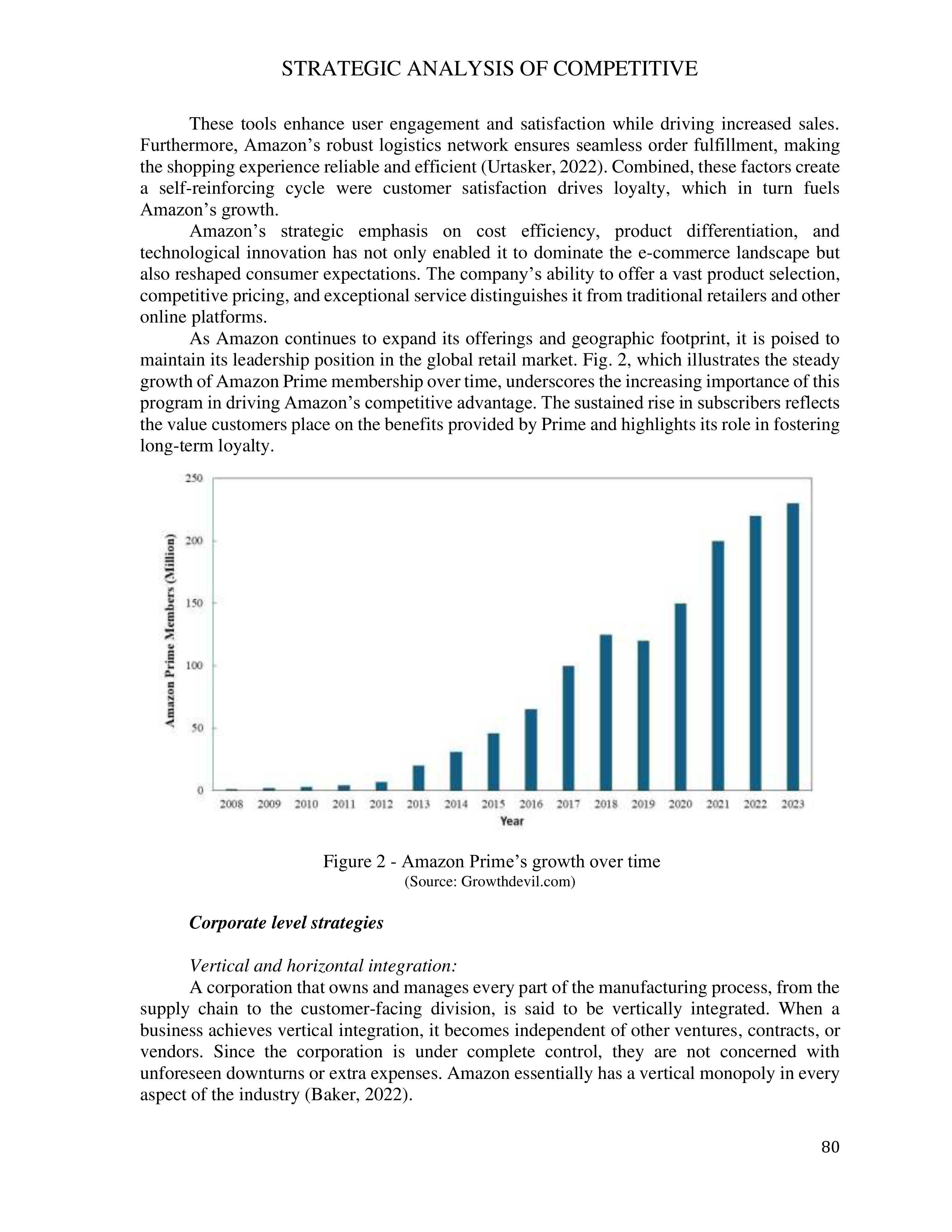
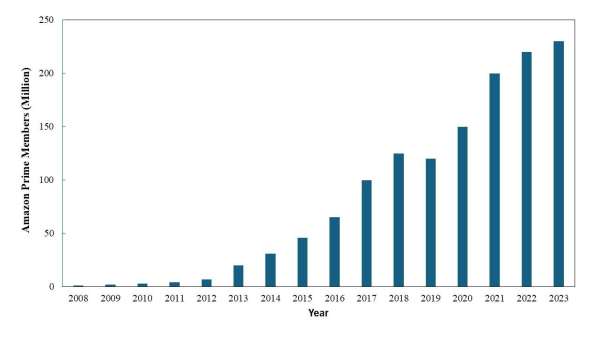
satisfaction and loyalty. As of 2020, Amazon had approximately 200 million Prime subscribers
globally, and this number continues to grow as the platform expands its reach.
Prime not only enhances customer loyalty but also generates predictable revenue
through its subscription fees. This stable income stream allows Amazon to reinvest in its
logistics infrastructure, technology, and other growth areas. For example, Amazon has
expanded its capabilities through advanced warehouses, efficient delivery systems, and
cutting-edge artificial intelligence (Urtasker, 2022). These investments ensure that Amazon
remains ahead of competitors in both operational efficiency and customer satisfaction.
In addition to cost leadership and differentiation, Amazon’s use of technology plays a
vital role in sustaining its competitive edge. The platform employs sophisticated algorithms
and recommendation systems to personalize the shopping experience, encouraging customers
to discover and purchase more products.
STRATEGIC ANALYSIS OF COMPETITIVE
80
These tools enhance user engagement and satisfaction while driving increased sales.
Furthermore, Amazon’s robust logistics network ensures seamless order fulfillment, making
the shopping experience reliable and efficient (Urtasker, 2022). Combined, these factors create
a self-reinforcing cycle were customer satisfaction drives loyalty, which in turn fuels
Amazon’s growth.
Amazon’s strategic emphasis on cost efficiency, product differentiation, and
technological innovation has not only enabled it to dominate the e-commerce landscape but
also reshaped consumer expectations. The company’s ability to offer a vast product selection,
competitive pricing, and exceptional service distinguishes it from traditional retailers and other
online platforms.
As Amazon continues to expand its offerings and geographic footprint, it is poised to
maintain its leadership position in the global retail market. Fig. 2, which illustrates the steady
growth of Amazon Prime membership over time, underscores the increasing importance of this
program in driving Amazon’s competitive advantage. The sustained rise in subscribers reflects
the value customers place on the benefits provided by Prime and highlights its role in fostering
long-term loyalty.
Figure 2 - Amazon Prime’s growth over time
(Source: Growthdevil.com)
Corporate level strategies
Vertical and horizontal integration:
A corporation that owns and manages every part of the manufacturing process, from the
supply chain to the customer-facing division, is said to be vertically integrated. When a
business achieves vertical integration, it becomes independent of other ventures, contracts, or
vendors. Since the corporation is under complete control, they are not concerned with
unforeseen downturns or extra expenses. Amazon essentially has a vertical monopoly in every
aspect of the industry (Baker, 2022).
The EUrASEANs: journal on global socio-economic dynamics, № 2 (51), 2025
81
Vertical integration is the combining of various value chain links, from raw materials to
the final customer. On the other hand, horizontal integration is the expansion of the value chain
at the same level via increasing market share or through mergers and acquisitions. Amazon is
reputed to be the pioneer of a combined horizontal and vertical integration strategy.
By horizontal integration, Amazon expanded from being a bookselling outfit to selling
every category of consumer goods that fall under mail order shipping. Amazon applied vertical
integration when it expanded along the value chain, sourcing and developing its products and
services such as AmazonBasics and AWS, acquiring other businesses, and expanding its
distribution capacities (improved warehouses, shipping, and delivery) (Recke, 2021).
Diversifications, mergers, and acquisitions
The corporation had expanded in areas other than its retail division, venturing into other
industries from entertainment to technology. For instance, the 2021 report showed that
Amazon Web Services recorded phenomenal growth because of companies' increased
expenditure on computing, storage, and database services due to the acceleration of the digital
transition (Malinesi, 2022).
An important component of Amazon's rapid expansion is diversification. For instance,
Amazon acquired Audible to diversify the e-book market into audiobooks and other goods.
Given that its primary business is aggressively acquiring market shares to expand its market
share, Amazon's cost leadership also helps it draw in more consumers (Simthson, 2023).
The businesses acquired so far by Amazon include IMDb (1998), Joyo (2004), Zappos
(2009), Audible (2009), Kiva Systems (2012), Goodreads (2013), Twitch (2014), Whole Foods
(2017), PillPack (2018), and MGM (2022) (Malik, 2017).
The time and effort required to integrate Amazon's mergers and acquisitions is a
drawback. However, before the next round of mergers and acquisitions, which would likely
include growing into other nations and integrating logistics systems, Amazon must in any case
combine its technological advantages and competitive advantages. This will impact both the
complexity of operations and the financial statements (Onggowidjojo & Ellitan, 2023).
Corporate governance
The Board of Directors oversees Amazon's governance structure, guiding the company's
strategic direction and ensuring accountability to stakeholders. The company’s governance
philosophy emphasizes balancing customer satisfaction with shareholder value. In its 1997
letter to shareholders, Amazon stated, “A fundamental measure of our success will be the
shareholder value we create over the long term”.
This principle is reinforced in their investor relations materials, where they assert that
shareholder interests are intrinsically tied to customer satisfaction: “If we do our jobs right,
today’s customers will buy more tomorrow, we’ll add more customers in the process, and it
will all add up to more cash flow and more long-term value for our shareholders”. This dual
focus on customers and shareholders has cemented Amazon’s position as a leader in customer-
centric innovation while delivering strong financial returns.
Beyond financial success, Amazon has made notable progress in corporate social
responsibility (CSR) and sustainability. The company addresses global challenges such as
reducing carbon emissions and managing resources efficiently. By integrating circular
economy principles into its operations and product design, Amazon demonstrates its ability to
balance profitability with environmental stewardship.
STRATEGIC ANALYSIS OF COMPETITIVE
82
Technologies like evaporative air-cooling systems and AWS solutions enable the
company to tackle water usage challenges, further underscoring its commitment to
sustainability. Additionally, Amazon’s contributions to community development highlight its
role as a global corporate citizen striving to create a better society for all (Yu et al., 2022).
However, while Amazon’s environmental efforts are commendable, its social
responsibility initiatives, particularly those concerning employee welfare, face significant
criticism. With a global workforce of approximately 1.5 million employees across regions such
as Africa, Asia-Pacific, Europe, India, Latin America, the Middle East, and North America,
Amazon has launched initiatives to improve workforce development. These include a $1.2
billion investment in education and skills training for over 300,000 employees
(sustainability.aboutamazon.com) and emphasizing stock ownership as a key element of
employee compensation to foster long-term retention. These measures reflect Amazon’s intent
to align governance policies with employee growth and satisfaction.
Despite these efforts, Amazon continues to face challenges in workplace safety and
employee well-being. In January 2023, the Occupational Safety and Health Administration
(OSHA) identified safety violations at three U.S. warehouses, with 51% of workers reporting
injuries over a three-year period (Gutelius & Pinto, 2023). Workers faced risks such as lower
back injuries and musculoskeletal disorders due to repetitive lifting, awkward postures, heavy
packages, and extended work hours. OSHA’s Assistant Secretary, Doug Parker, criticized
Amazon’s prioritization of speed over safety, stating, “While Amazon has developed
impressive systems to ensure efficient and quick shipping, the company has failed to show the
same level of commitment to protecting the safety and well-being of its workers” (Perrigo,
2023). This disparity highlights a critical gap in Amazon’s governance practices, where
operational efficiency takes precedence over worker safety.
Concerns about employee well-being extend beyond physical safety. A survey of over
2,000 Amazon employees revealed dissatisfaction with the company’s productivity monitoring
practices. More than half reported negative impacts on their physical health, while 57% stated
these practices harmed their mental health. Respondents described relentless performance
pressure, including criticism for failing to meet goals despite physical limitations or personal
hardships (Gutelius & Pinto 2023; Perrigo, 2023). These findings reveal a workplace
environment where employees often feel unsupported, contradicting Amazon’s stated
commitment to workforce welfare.
The COVID-19 pandemic further exacerbated these challenges. Managing the rights and
welfare of Amazon’s vast workforce during this period proved difficult, as globalization’s
social challenges appeared to outweigh the company’s current efforts. Lessons from the
pandemic could guide Amazon in implementing stronger measures to safeguard employee
rights and foster a more supportive work environment in the future (Yu et al., 2022).
However, in its supply chain operations, Amazon showcases the ability to integrate CSR
principles effectively. By aligning profitability with social responsibility, the company reflects
the practices of a mature and well-established enterprise. However, the persistent issues
surrounding employee welfare highlight a critical area for governance improvement. While
Amazon’s contributions to environmental sustainability and community development are
commendable, addressing workplace safety, fostering a healthier work environment, and
reassessing productivity monitoring practices are essential to better align governance practices
with employee well-being (Yu et al., 2022).
The EUrASEANs: journal on global socio-economic dynamics, № 2 (51), 2025
83
To sustain its long-term success and reputation as a global leader, Amazon must adopt
a more balanced approach that prioritizes employee welfare alongside customer satisfaction
and shareholder value. By addressing these challenges, Amazon can reinforce its position as a
socially responsible organization while laying the foundation for continuous growth and
innovation.
Recommendations
Amazon is facing new competitors as a result of growing markets and emerging
industries. We have carefully analyzed Amazon's business models and proposed the following
strategic recommendations to fortify the company's competitive advantage and sustainable
growth:
-Amazon is actively promoting and expanding its exclusive brands to their devoted
consumer base. Selling their own branded goods on the Amazon marketplace is a smart move
that will increase Amazon's value at a minimal expense. Amazon is threatened by both
competition and substitution; it can counteract substitutes by establishing its own brands.
-Apply Amazon's present business experience to expand into the grocery sector and
create an effective grocery delivery service that serves more Amazon consumers. At the
moment, Amazon offers two grocery-based services: AmazonFresh and Amazon Go. This
would require a more physical presence. By acquiring Whole Foods, Amazon may be able to
grow the business and attract additional consumers who use the stores for grocery delivery.
-Even with Amazon's best efforts, it remains extremely challenging for the clothes sector
to be successful online. This is especially true given the increasing competition in this space.
There is a significant return rate, no way for customers to feel the cloth, and they can only
assume how well the product fits. This underscores the necessity for the establishment of
additional physical stores.
-Invest more in cloud security/cybersecurity research and innovation; this will make
customers more comfortable using their financial details to pay for products and services online
and make AWS services more appealing to cloud services users.
-Establish a new work culture throughout the board, from management to warehouse
workers. In addition to lowering attrition rates and warehouse strikes, this will help Amazon
gain positive publicity, improve its marketing, and change the perception of its brand among
consumers who might otherwise believe that it is a corporate entity that does not care about its
workers.
- The IFE matrix showed tax evasion as one of the threats to the company’s strategies;
hence, Amazon should endeavor to keep an impeccable tax record to avoid breaching its legal
obligations and maintain a good brand image.
-Work toward packing and delivery methods that are less harmful to the environment.
Introduce novel packaging materials, reduce waste, and cut back on the amount of fossil fuels
required to transport goods.
-Increase their physical presence: increase their number of warehouses and physical
stores and extend to more countries, especially underdeveloped countries, to reduce the cost of
shipping, which discourages customers from these regions from eCommerce activities.
-Further enhance supplier relationship management using the Vendor Lead Time
technology. This will be key to even better inventory management and reduced costs with the
real-time visibility into performance and real-time deviations.
STRATEGIC ANALYSIS OF COMPETITIVE
84
-Expanding the adoption of the current sophisticated algorithms and robotics at Amazon
into fulfillment centers, making them more accessible to third-party sellers in the FBA
program, will further optimize warehouse operations.
-Expand AWS-powered route optimization technology to cater end-to-end for the
middle mile and enhance efficiency in delivery. This will keep Amazon ahead of the
competition for delivery times and costs.
-Conversion rates could be further improved through enhancing the AI capabilities of
the current dynamic pricing strategies and individualized marketing campaigns.
Conclusion
Amazon's sustained success is driven by its innovative business strategies, customer-
centric approach, continuous investments in technology and infrastructure, and long-term
thinking. Its ability to integrate cost leadership with differentiation through services like
Amazon Prime and AWS has reinforced its competitive advantage.
However, challenges such as workforce management, cybersecurity, and regulatory
concerns call for strategic adjustments. By addressing these areas while continuing to expand
its market presence and optimize operations, Amazon can maintain its dominance in the global
digital economy with sustainable growth.
Acknowledgment
The authors wish to thank Prof. Hanqing Fang of the Department of Business and
Information Technology, Missouri University of Science and Technology, for invaluable
guidance and knowledge shared through the course: Integration of Business Areas.
References:
Adcock, P. (2023).
How many countries does Amazon operate in?
Available online:
https://www.sbxl.com/how-many-countries-does-amazon-operate-in/
Aversa, P., Haefliger, S., Hueller, F. & Reza, D. G. (2021). Customer complementarity in the digital
space: Exploring Amazon’s business model diversification.
Long Range Planning
, 54(5).
Baker,
C.
(2022).
How
vertical
integration
works
in
Amazon
.
Available
online:
https://leaders.com/articles/business/vertical-integration/
Bertram, R. F. & Chi, T. (2018). A study of companies’ business responses to fashion e-commerce’s
environmental impact.
International Journal of Fashion Design, Technology and Education
,
11(2): 254–264.
Flamand,O., Riley, S. & Wisher, A. (2020).
Strategic analysis and recommendations: Amazon
.
Undergraduate Thesis, University of Montana.
Grasso, C, (2020).
The Amazon flywheel explained: learn from Bezos business strategy
. Available
online: https://feedvisor.com/resources/amazon-trends/amazon-flywheel-explained/
Greenspan, R. (2023).
Amazon.com Inc. PESTEL/PESTLE analysis, recommendations
. Available
online: https://panmore.com/amazon-com-inc-pestel-pestle-analysis-recommendations
The EUrASEANs: journal on global socio-economic dynamics, № 2 (51), 2025
85
Gutelius, B. & Pinto, S. (2023).
Pain points: data on work intensity, monitoring, and health at Amazon
warehouses
. Center for Urban Economic Development, University of Illinois Chicago.
Hassan, M. S., Sistani, J. A. & Raju, S. R. (2014). Top online shopping e-companies and their strenghts
and weaknesses (SWOT).
Research Journal of Recent Sciences
, 3 (9): 102-107.
Jain, V., Sheth, J. N., Mogaji, E. & Ambika, A. (2023). Customer-centric support services: an
introduction to the next frontier for competitive advantage in the digital era. In
Customer centric
support services in the digital age: the next frontier of competitive advantage
(1–10). Springer.
Lai, G., Liu, H., Xiao, W. & Zhao, X. (2018).
Fulfilled by Amazon: a strategic perspective of
competition at the e-commerce platform.
Available online: https://ssrn.com/abstract=3270958
Libert, B., Beck, M. & Wind, J. (2016).
The network imperative: how to survive and grow in the age
of digital business models.
Boston, MA: Harvard Business Review Press.
Mahmood, A. (2022).
Amazon an organizational review of an e-commerce company
. Okan
Universitesi, Istanbul.
Malik,
E.
(2017).
Amazon
history
timeline.
Office
Timeline.
Available
online:
https://www.officetimeline.com/blog/amazon-history-timeline
Malines, C. (2022). Amazon’s business is growing and so is sustainability strategy. Forbes. Available
online: from https://www.forbes.com/sites/carolinamilanesi/2022/08/01/safamazons-business-is-
growing-and-diversifying-and-so-is-its-sustainability-strategy/?sh=739327e85977
Onggowidjojo, V. & Ellitan, L. (2023). Strategies for achieving competitive advantage: the case of
Amazon.
International Journal of Research
, 11.
Onyeshuva, I. & Seenalasataporn, T. (2018). Strategic analysis of global e-commerce and
diversification technology: a case of Amazon.Com Inc.
The EUrASEANs: journal on global socio-
economic dynamics,
1 (8).
Pereira, D. (2023a).
Top 10 Amazon competitors and alternatives in 2023
. Available online:
https://businessmodelanalyst.com/amazon-competitors/
Pereira,
D.
(2023b).
Amazon
vision
and
mission
statements
.
Available
online:
https://businessmodelanalyst.com/amazon-mission-and-vision-statement/#:~:text=Amazon's% .
Perrigo, B. (2023).
Survey shows health toll of working for Amazon: exclusive
. Available online:
https://time.com/6248340/amazon-injuries-survey-labor-osha/#
Pratap, A. (2017).
Amazon Pestel analysis
. Available online: https://www.cheshnotes.com/amazon-
pestel-analysis/
Reardon, T., Belton, B., Liverpool-Tasie, L. S. O., Lu, L., Nuthalapati, C. S. R., Tasie, O. & Zilberman,
D. (2021). E-commerce’s fast-tracking diffusion and adaptation in developing countries.
Applied
Economic Perspectives and Policy
, 43(4): 1243–1259.
Recke, M. (2021).
Amazon, the pioneer of vertical and horizontal integration
. Available online:
https://nextconf.eu/2021/11/amazon-the-pioneer-horizontal-vertical-integration/
Ritala, P., Golnam, A. & Wegmann, A. (2014). Coopetition-based business models: the case of
Amazon.com.
Industrial Marketing Management
, 43(2): 236–249.
Riya,
J.
(2023).
Understanding
Amazon
business
strategy
.
Available
online:
from
https://www.feedough.com/understanding-amazon-business-strategy/
Sadq, Z. M. (2018). Analyzing the Amazon success strategies.
Journal of Process Management and
New Technologies,
6.
STRATEGIC ANALYSIS OF COMPETITIVE
86
Simthson, N. (2023).
Amazon.com Inc.’s generic competitive strategy, growth strategies
. Available
online: http://panmore.com/amazon-com-inc-generic-strategy-intensive-growth-strategies
Snyder, E. A., Canaday, J. & Hughes, M. (2022). Amazon's three major lines of business.
New
Working Paper Series,
319.
Sullivan, E. (2023).
Amazon fulfillment center locations: the worldwide list.
Available online:
https://tinuiti.com/blog/amazon/amazon-fulfillment-centers-map/#:~:text=Amazon%20currently
% 20has% 20over%20100,and%20over%20185%20centers%20globally.
Uenlue, M. (2023).
Amazon Business Model: eCommerce
. DigitalBizModels.com
Urtasker,
K.
(2022).
What
is
Amazon's
low-cost
strategy?
Available
online:
https://www.urtasker.com/amazons-low-cost-strategy/
Vasiliauskas, A. V. & Jakubauskas, G. (2007). Principle and benefits of third party logistics approach
when managing logistics supply chain.
Transport
, 22(2): 68–72.
Wu, X. & Gereffi, G. (2019). Amazon and Alibaba: internet governance, business models, and
internationalization strategies.
International Business in the Information and Digital Age,
Progress in International Business Research
, 13: 327-356.
Yu, W., Hassan, A. & Adhikariparajuli, M. (2022). How did Amazon achieve CSR and some
Sustainable Development Goals (SDGs)-Climate change, circular economy, water resources and
employee rights during COVID-19?
Journal of Risk and Financial Management
, 15(8).
Paper submitted
16 January 2025
Paper accepted for publishing
25 February 2025
Paper revised
11 March 2025
Paper published online
30 March 2025