


Balancing Cost and Quality: A Case Study on
Burger King Finland’s Pricing Strategy
Ranjita Tiwari, Hemangi Pandya
Year of publication
Laurea
Laurea University of Applied Sciences
Balancing Cost and Quality: A Case
Study on Burger King Finland’s Pricing
Strategy
Ranjita Tiwari, Hemangi Pandya
Bachelor of business management
Thesis
April 2025
Laurea University of Applied Sciences
Abstract
Bachelor of business management
Bachelor
Ranjita Tiwari, Hemangi Pandya
Balancing Cost and Quality: A Case Study on Burger King Finland’s Pricing Strategy
Year
2025
Number of pages
39
The competitiveness in the fast-food industry is an ever-growing aspect that greatly relies on
the customer experience because it indicates both business performance, customer satisfaction
levels, and the loyalty of customers. This thesis focuses on the study of Burger King Finland’s
pricing strategy, quality of service, and customer experience to determine the factors affecting
customer preference in making the choice among its competitors. This research includes survey
data from customers and an interview with the representative member of the partner company
to gather insights. The obtained responses were analysed and about 50 people participated in
the survey and only 1 representative of the case company gave an interview and insights. Also,
benchmarking was done to have a clear comparison of the case company with other competitive
companies such as Hesburger and McDonalds.
This research evaluates how people see Burger King’s prices in comparison to its competitors
McDonald’s and Hesburger. The research activities are focused on the factors that are
considered, the deciding factors in selecting fast-food brands by the customers, whether it is
the quality of food and service or the product price.
Based on responses from customer surveys and internal insights from the company
representative the deciding factor for the customers was the quality of food followed by price
and size of the portion. This research is not just to provide useful information for Burger King
but is also suitable for a better understanding of pricing methods in the fast-food industry. The
research outcomes help the business in creating a better balance between customer experience
and pricing.
Keywords: Fast-Food Industry, Service Quality, Customer Satisfaction, Consumer Behaviour,
Pricing Perception, Consumer Preferences, Burger King Finland.
Contents
1
Introduction ............................................................................................ 5
1.1
Overview ...................................................................................... 5
1.2
Background of Burger King .................................................................. 5
1.3
Purpose ........................................................................................ 6
1.4
Research Question ........................................................................... 7
2
Literature Review ..................................................................................... 8
2.1
Pricing strategies for fast food ............................................................. 8
2.2
Consumer Behavior in pricing and brand loyalty......................................... 9
2.3
Enhancing customer experience through service and pricing .......................... 9
3
Methodology.......................................................................................... 10
3.1
Research Design ............................................................................ 10
3.2
Primary data collection: interview ...................................................... 10
3.3
Primary data collection: Survey .......................................................... 10
3.4
Bechmarking ................................................................................ 11
4
Results and findings ................................................................................. 15
4.1
Interview insight ........................................................................... 16
4.2
Survey Data Reflection .................................................................... 17
4.3
Suggestions for Effective Cost-Reduction ............................................... 27
4.3.1
Ingredient Customization-Based Pricing ......................................... 27
4.3.2
Reducing Portion Size of large Burgers .......................................... 28
4.3.3
Quality Optimization Based on Sales Data ...................................... 28
5
Conclusions and Recommendations ............................................................... 29
5.1
Summary of Key finding ................................................................... 29
5.2
Recommendation for burger King Finland .............................................. 30
5.3
Limitations of the study and for future research ...................................... 31
References ................................................................................................. 31
Figures ..................................................................................................... 35
Tables ...................................................................................................... 35
Appendices ................................................................................................ 35
5
1
Introduction
1.1
Overview
The expansion of the fast-food industry all over the world has been driven by urbanization and
changes in the living standards of the customers which created the need for fast food options.
The market of global fast food was valued at USD 784.24 billion in 2023 which is projected to
grow at a compounding annual rate of 4.9% from the year 2023 to 2030 and estimated to reach
USD 1,096.22 billion. The expansion of food delivery services and quick service restaurants with
the advancement of technology for changing customer preference is increasing in the case of
ready-to-eat meals, according to (Fast Food Market – Global Industry Analysis and Forecast
2024).
The fast-food industry in Finland is influenced by global trends, driven by the increasing number
of fast-food customers and the growth of outlets. The increasingly busy routine of the Finns
and the growth of international fast-food franchises have greatly contributed to the growth of
the fast-food market. The current Finnish market is dominated by Burger King, McDonald's, and
Hesburger. Although Burger King is a globally established brand, it faces intense market
competition in Finland, particularly in terms of customer perceptions and pricing strategies
(Watson 2024).
Customers in the fast-food industry are becoming more and more selective while going for fast-
food options by considering the quality of food, fairness of pricing, dining environment, and
smoother services. Among the customers, the pricing of products at Burger King is perceived to
be higher than its competitors which is one of the reasons that Burger King fails to retain the
price-sensitive customers. Moreover, the requirement for sustainable practices in addition to
health-conscious eating habits has led to continuous innovation and adaptation unavoidable in
the fast-food sector. (Alexander 2022).
1.2
Background of Burger King
Burger King is a globally recognized fast-food brand whose outlets are widespread across the
globe and serving customers. Originally, it was established by Keith J. Kramer and Matthew
Burns in the year 1954 under the name Insta-Burger King in Jacksonville, Florida. One of the
most creative cooking equipment that was used by the restaurant was the Insta-Broiler to cook
several burgers at the same time. This technology helped the business to meet the needs of
the consumers and at the same time ensure that the food was prepared in the right manner.
However, Insta-Burger King had its own set of financial issues to deal with even if it was able
to introduce this innovation. James McLamore and David Edgerton bought the business in 1954
6
located in Miami and changed the name to Burger King. Flam-grilling is one of the burger-
making techniques that Burger King adopted as one of its specialties, which was new in their
preparation technique. Also, they came up with the Whopper, a bigger burger that would offer
the customers more value for their money. The burger that is still popular today, gradually rose
up to become the company’s favorite Whopper (Garcia 2020).
Burger King Corporation expanded rapidly in the 1960s. McLamore and Edgerton made it
convenient for other restaurants to open by assuming full franchising responsibilities for the
business. Burger King operated 274 outlets by 1967. Due to this success, Burger King was sold
to Pillsbury for $18 million. Burger King continued to grow during Pillsbury’s ownership, but it
also encountered some problems. The variations in the way franchise owners conducted their
business made it difficult to achieve consistency across all the outlets. To solve this issue,
Burger King hired Donald N. Smith from McDonalds in 1978. Smith has made the business more
competitive, enhanced the menu, and set new rules for the franchise owners. These changes
were beneficial to Burger King in the fast-food sector. ( DairyNews 2024).
Burger King experienced some changes of ownership in its operations in the past. Pillsbury sold
Burger King to the British corporation Grand Metropolitan in 1989. Later in 1997, Grand
Metropolitan and Guinness merged to form Diageo which comprised Burger Kings. However,
Burger King could not match McDonalds and therefore Diageo sold the company to TPG Capital
and other investors in 2002. To enhance the image of Burger King, the new owners started new
marketing strategies and new products on their menu. Burger King was acquired by 3G Capital,
a Brazilian investment company at $3.26 billion in 2010. From this, big changes were made such
as the efforts to redesign the brand and enhance operational efficiency. Currently, Tim
Hortons, a famous coffee shop in Canada, merged with Burger King to form Restaurant Brands
International, which was in 2014. This merger helped both businesses expand to new markets
(Panter 2004).
Burger King is a company that is famous for its unique advertising strategies and its flexibility
towards different markets around the globe. Currently, the firm attends to about 15.7 million
clients daily through more than 14,000 outlets in almost 100 countries. Flame-grilled burgers,
brand image, and speed are the key factors that have contributed to the success of the
organization. Over the years, Burger King has enhanced the quality of its products, the prices
it charges for its meals, and the services it offers to its clients to fit in the fast-food market
(Mandaliya 2024).
1.3
Purpose
The focus of this thesis is to study the pricing strategy of Burger King as it is seen to be quite
expensive in comparison to their rival companies from a customer’s perspective. This difference
in pricing has raised questions about the company’s ability to retain consumers especially those
7
in the low-income bracket and sustain a competitive advantage in the Finnish fast-food
industry.
With regards to the below-stated research questions, this study aims to address the following
concerns: The impact of pricing strategies on the customer’s behavior and decision-making
process when choosing between fast-food restaurants. The purpose of the study is to establish
the factors that can be utilized by Burger King to enhance its pricing policies without affecting
the quality of the products in the market. The primary focus would be regarding the consumer
perception of price concerning quality and identifying ways to alter the pricing strategies to
gain more market share and customer satisfaction.
Besides, this study will provide Burger King with insight into how it can increase its prices and
at the same time enhance its services to meet the needs of the customers. The results are
based on the data collected through the surveys and interviews conducted among the Burger
King customers in Finland and both qualitative and quantitative data will be used. This paper
seeks to establish the perception that customers have about prices to determine the factors
that influence their buying decisions and the recommendations that Burger King could
implement to align its prices with the customers’ perceptions.
The purpose of this thesis is to assist Burger King Finland in striking a balance between price
and quality to increase customer satisfaction, loyalty, and business outcomes in a competitive
environment.
1.4
Research Question
The research-based thesis entails the proper formulation of research questions concerning
challenges faced by the company for data collection for possible solutions. The aspects of
research for this project are as follows:
1.
How does Burger King’s pricing is perceived by customers in comparison to Hesburger
and McDonald's?
2.
What factors do customers prioritize when choosing between fast-food brand's price
and quality?
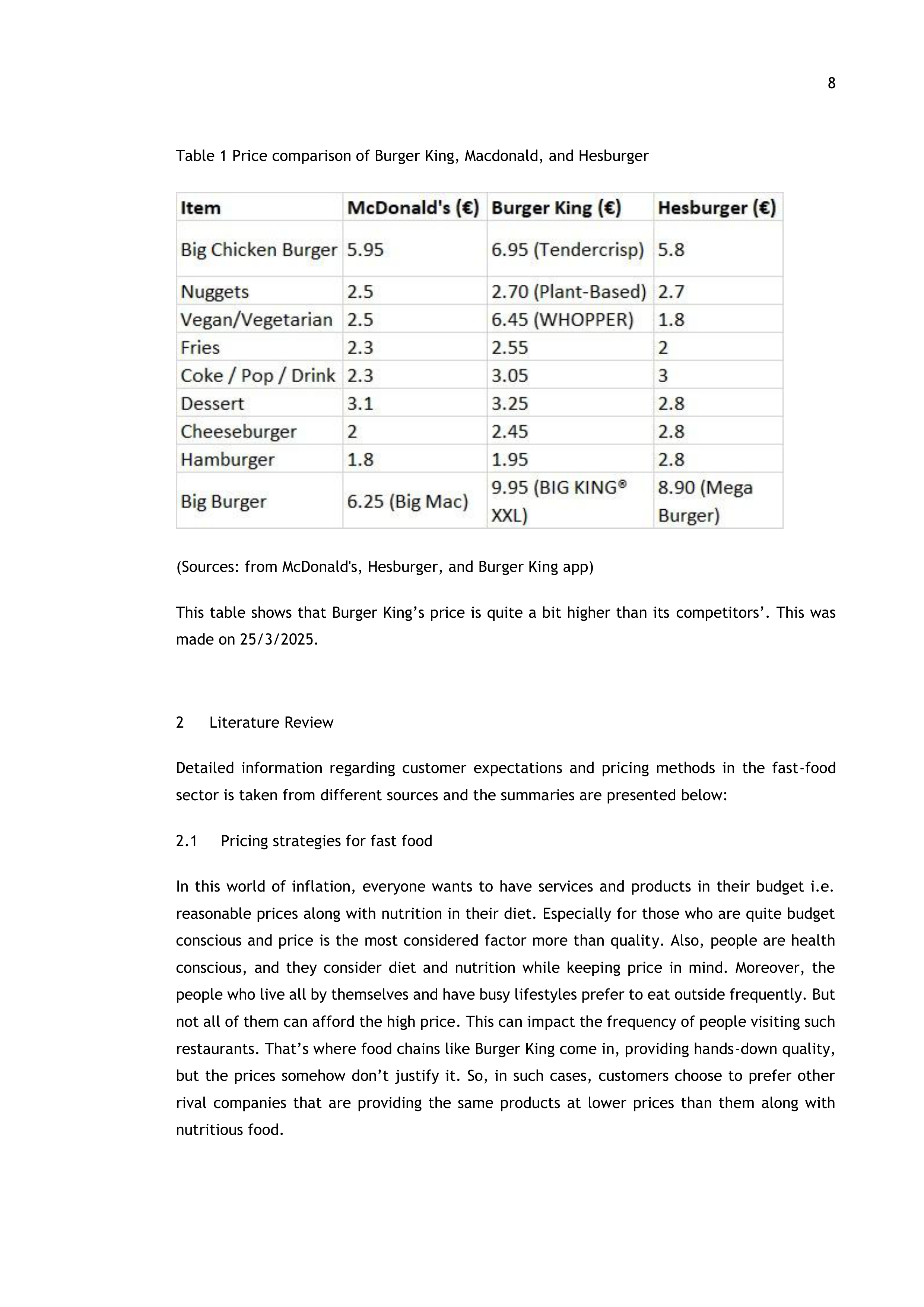
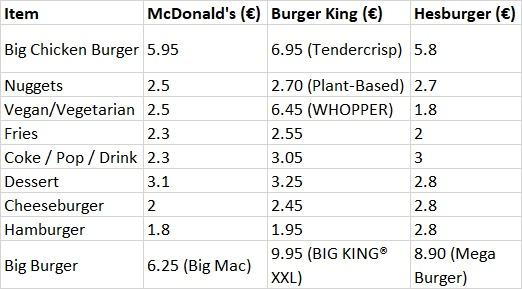
Table 1. Price comparison of Burger King, Macdonald, and Hesburger
8
Table 1 Price comparison of Burger King, Macdonald, and Hesburger
(Sources: from McDonald's, Hesburger, and Burger King app)
This table shows that Burger King’s price is quite a bit higher than its competitors’. This was
made on 25/3/2025.
2
Literature Review
Detailed information regarding customer expectations and pricing methods in the fast-food
sector is taken from different sources and the summaries are presented below:
2.1
Pricing strategies for fast food
In this world of inflation, everyone wants to have services and products in their budget i.e.
reasonable prices along with nutrition in their diet. Especially for those who are quite budget
conscious and price is the most considered factor more than quality. Also, people are health
conscious, and they consider diet and nutrition while keeping price in mind. Moreover, the
people who live all by themselves and have busy lifestyles prefer to eat outside frequently. But
not all of them can afford the high price. This can impact the frequency of people visiting such
restaurants. That’s where food chains like Burger King come in, providing hands-down quality,
but the prices somehow don’t justify it. So, in such cases, customers choose to prefer other
rival companies that are providing the same products at lower prices than them along with
nutritious food.
9
According to Noopur Saxena, 2020, the need for restaurants was mentioned to have risen
especially among young people because of the change in their lifestyle and diet. Therefore,
there was not just one reason to go to a restaurant, there were many factors that influenced
the decision. To measure the utility of the factors conjoint analysis was done on the attributes
of the fast-food restaurant. A structured questionnaire was administered to 204 youth
customers (16 – 25 years) of Delhi/NCR regions who have dined in a fast-food restaurant in the
last three months. It was also observed that young people mostly care about how the food is
cheaper rather than caring about other things like health, ingredients, and taste.
2.2
Consumer Behavior in pricing and brand loyalty
This research work focused on the influence of price on consumer behavior and perception.
According to Hussain Al-Salamin (2016), a cross-sectional study was conducted among the
people in the Al-Hassa region, and 433 participants responded to the survey, which was
analyzed using the Statistical Package for the Social Sciences (SPSS). This research also shows
that there is an increased tendency to buy as the price decreases. No differences were observed
in response to the questions according to age, marital status, education level, and income,
except for gender differences in response to odd pricing. The study offers recommendations to
retailers and dealers on how odd pricing, bundle pricing, and discount pricing influence
consumers’ buying behavior.
Chi Kin Yim (1999) outlined that the existing market was characterized by many products that
differentiate loyalty between the competing brands. Researchers introduce a new way to
measure loyalty by comparing two types: hard-core loyalty, where customers always choose or
buy the same brand and product, and reinforcing loyalty, where customers switch between a
few preferred brands. To analyze this, researchers use a mathematical model called linear logit
latent class modeling loyal customers, including those who might switch brands. By studying a
special product known as Cracker purchase, they found that combining both types of loyalty
gave a more accurate picture of brand commitment. This product was used to analyze whether
the company can retain its customers or whether the customers are loyal and committed to the
brand.
2.3
Enhancing customer experience through service and pricing
Hanaysha (2016) outlined that customer satisfaction is one of the most crucial factors that
determine the success of a business organization in the current world market. It is important
for companies to determine which factors affect the satisfaction of customers. The objective
of this research was to establish the impact of food quality, price fairness, and physical
environment on customer satisfaction in Malaysian fast-food outlets. The respondents were 242
customers from fast-food restaurants from the international chain restaurants on the east coast
of Malaysia. The information collected was further assessed using statistical techniques such as
10
SPSS and structural equation modeling (SEM). The findings of the study affirmed that food
quality has a positive effect on the level of customer satisfaction. The study also found that
price fairness as well as the physical environment had a positive impact on customer
satisfaction. The analysis presented in this paper provides the marketing of fast-food
restaurants with practical implications and affirms the importance of the selected factors for
customer satisfaction.
3
Methodology
3.1
Research Design
The research design offers an understanding of competition in the fast-food industry and
consumers’ attitudes in the Finnish context. In this research, we will use interviews, surveys,
and benchmarking as our methods for this research.
3.2
Primary data collection: interview
The interview with the manager provides concrete information about the extent of
comprehension of the issues of the company and the operational advantages and issues. This
research method helped in understanding the dynamics of the organization and the perception
of the workforce. The application of interviews as a research approach meant focusing on the
crucial aspects of the subject that may not be noticed when using purely quantitative methods.
The participants are allowed to express their experiences and opinions, which results in more
detailed information. This method was more useful to the researchers than questionnaires
because the researchers were able to follow up with the respondents with additional questions.
(Karen Dunwoodie 2022).
3.3
Primary data collection: Survey
The research method involves the use of questionnaires for customers who have visited fast-
food restaurants. The data collection process uses this survey to measure customer satisfaction
as well as their perception of the fast-food industry. Surveys offer the surveyor a general idea
of the customers’ feelings because it covers many people. The method enabled the researchers
to gather data from several respondents and hence increased the generalization of the study.
The structure of survey questions also facilitates researchers' ability to compare answers and
perform statistical analysis. Closed and open-ended questions enable the researchers to collect
quantitative data in addition to qualitative data to get a full picture of the customer’s attitude.
(PONTO 2015).
11
3.4
Bechmarking
Benchmarking helps the organization to evaluate the competitive environment of Burger King
Finland concerning McDonald’s, and Hesburger. According to Mohammed Saleh Alosani 2016,
Benchmarking is a strategic management technique that involves comparing prices with
customer satisfaction and service quality to determine the level of success of an organization.
It includes a comparison of the pricing strategies of three main fast-food industries such as
Burger King, McDonald’s, and Hesburger-based on their pricing models, value offerings, and
regional adaptations.
Burger King adopts market-oriented pricing strategies which always compete favorably with
the prices that other fast-food brands offer. This pricing method sets price ranges and price
points according to existing market conditions and changes with numerous factors like supply
availability, demand levels, and prices at competing fast food companies (Sheridan Nina 2024).
The market-based pricing formula thus makes sure of the competitiveness of company prices.
Following this strategy, the price strategy shift in 2015, the brand employed a more aggressive
pricing strategy, which is a bundle pricing strategy that features value meals, to appeal to
price-conscious consumers.
Burger King is known for its flame-grilled burgers, making it a superior alternative to its
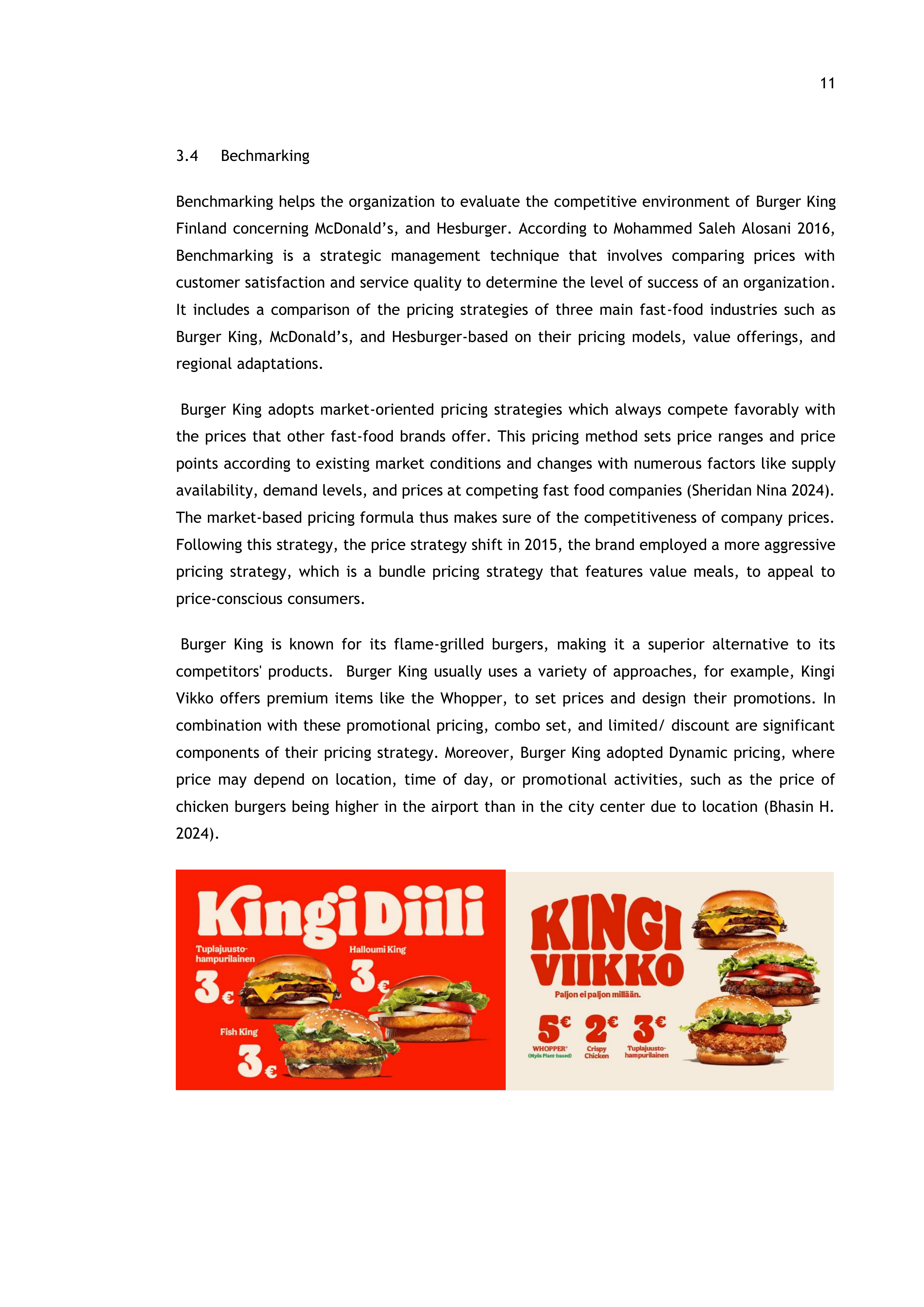
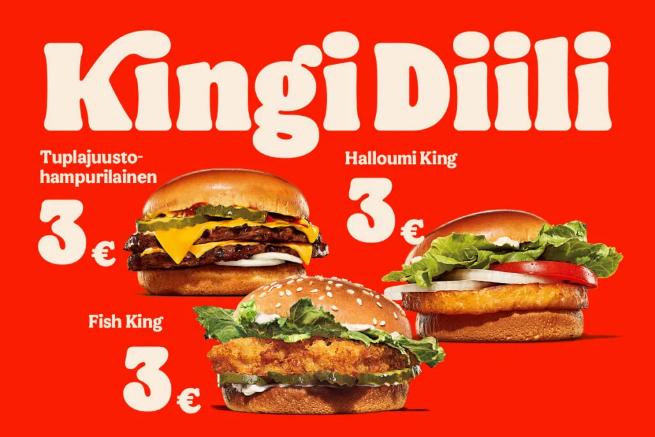
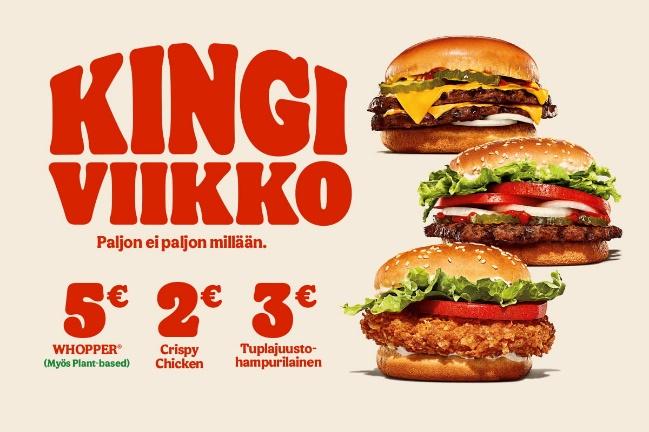
competitors' products. Burger King usually uses a variety of approaches, for example, Kingi
Vikko offers premium items like the Whopper, to set prices and design their promotions. In
combination with these promotional pricing, combo set, and limited/ discount are significant
components of their pricing strategy. Moreover, Burger King adopted Dynamic pricing, where
price may depend on location, time of day, or promotional activities, such as the price of
chicken burgers being higher in the airport than in the city center due to location (Bhasin H.
2024).
12
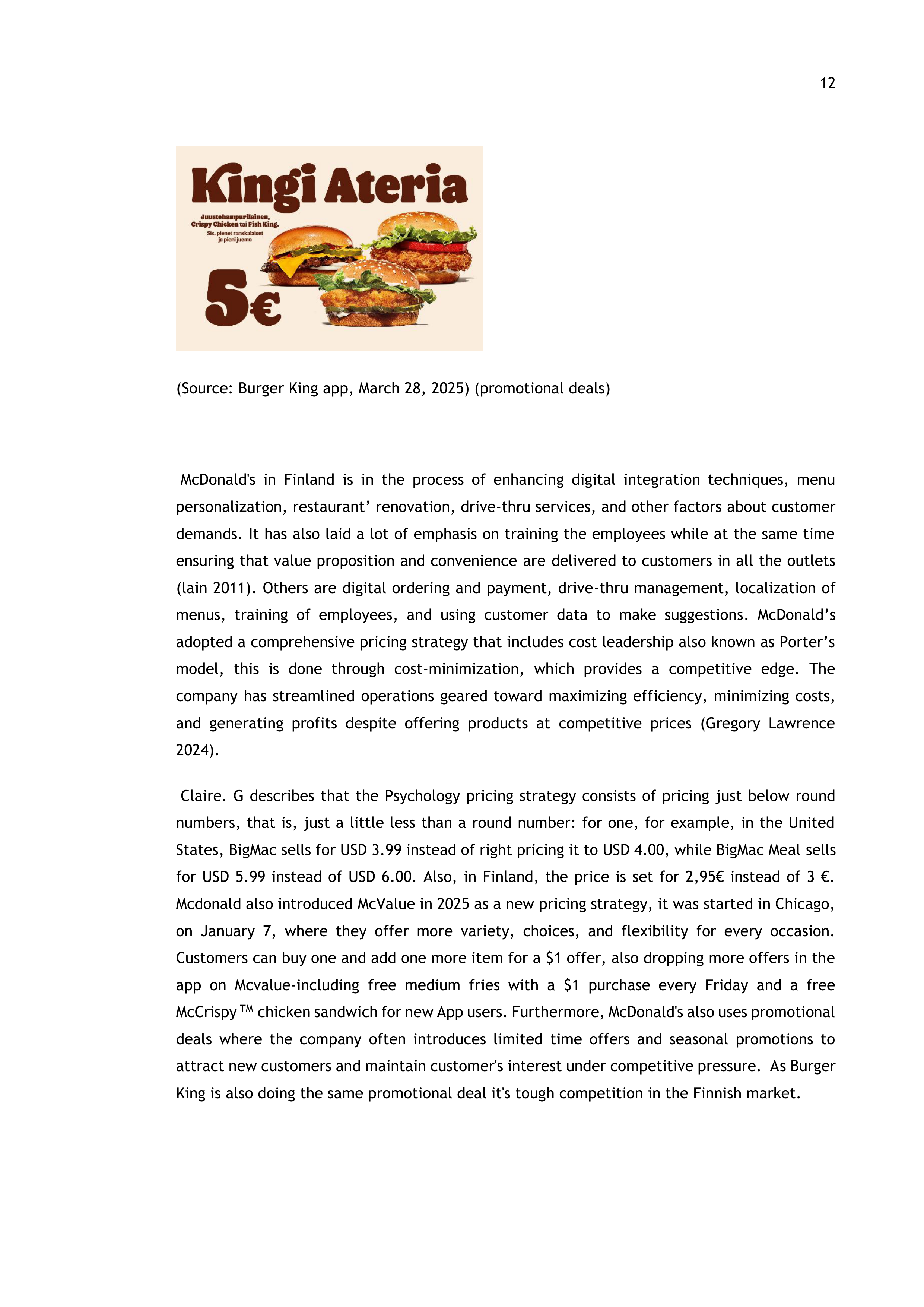
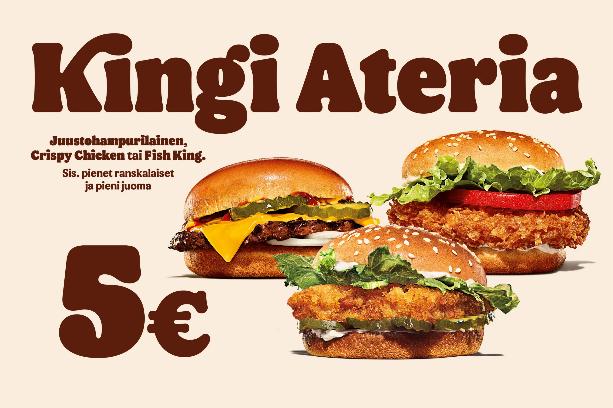
(Source: Burger King app, March 28, 2025) (promotional deals)
McDonald's in Finland is in the process of enhancing digital integration techniques, menu
personalization, restaurant’ renovation, drive-thru services, and other factors about customer
demands. It has also laid a lot of emphasis on training the employees while at the same time
ensuring that value proposition and convenience are delivered to customers in all the outlets
(lain 2011). Others are digital ordering and payment, drive-thru management, localization of
menus, training of employees, and using customer data to make suggestions. McDonald’s
adopted a comprehensive pricing strategy that includes cost leadership also known as Porter’s
model, this is done through cost-minimization, which provides a competitive edge. The
company has streamlined operations geared toward maximizing efficiency, minimizing costs,
and generating profits despite offering products at competitive prices (Gregory Lawrence
2024).
Claire. G describes that the Psychology pricing strategy consists of pricing just below round
numbers, that is, just a little less than a round number: for one, for example, in the United
States, BigMac sells for USD 3.99 instead of right pricing it to USD 4.00, while BigMac Meal sells
for USD 5.99 instead of USD 6.00. Also, in Finland, the price is set for 2,95€ instead of 3 €.
Mcdonald also introduced McValue in 2025 as a new pricing strategy, it was started in Chicago,
on January 7, where they offer more variety, choices, and flexibility for every occasion.
Customers can buy one and add one more item for a $1 offer, also dropping more offers in the
app on Mcvalue-including free medium fries with a $1 purchase every Friday and a free
McCrispy
TM
chicken sandwich for new App users. Furthermore, McDonald's also uses promotional
deals where the company often introduces limited time offers and seasonal promotions to
attract new customers and maintain customer's interest under competitive pressure. As Burger
King is also doing the same promotional deal it's tough competition in the Finnish market.
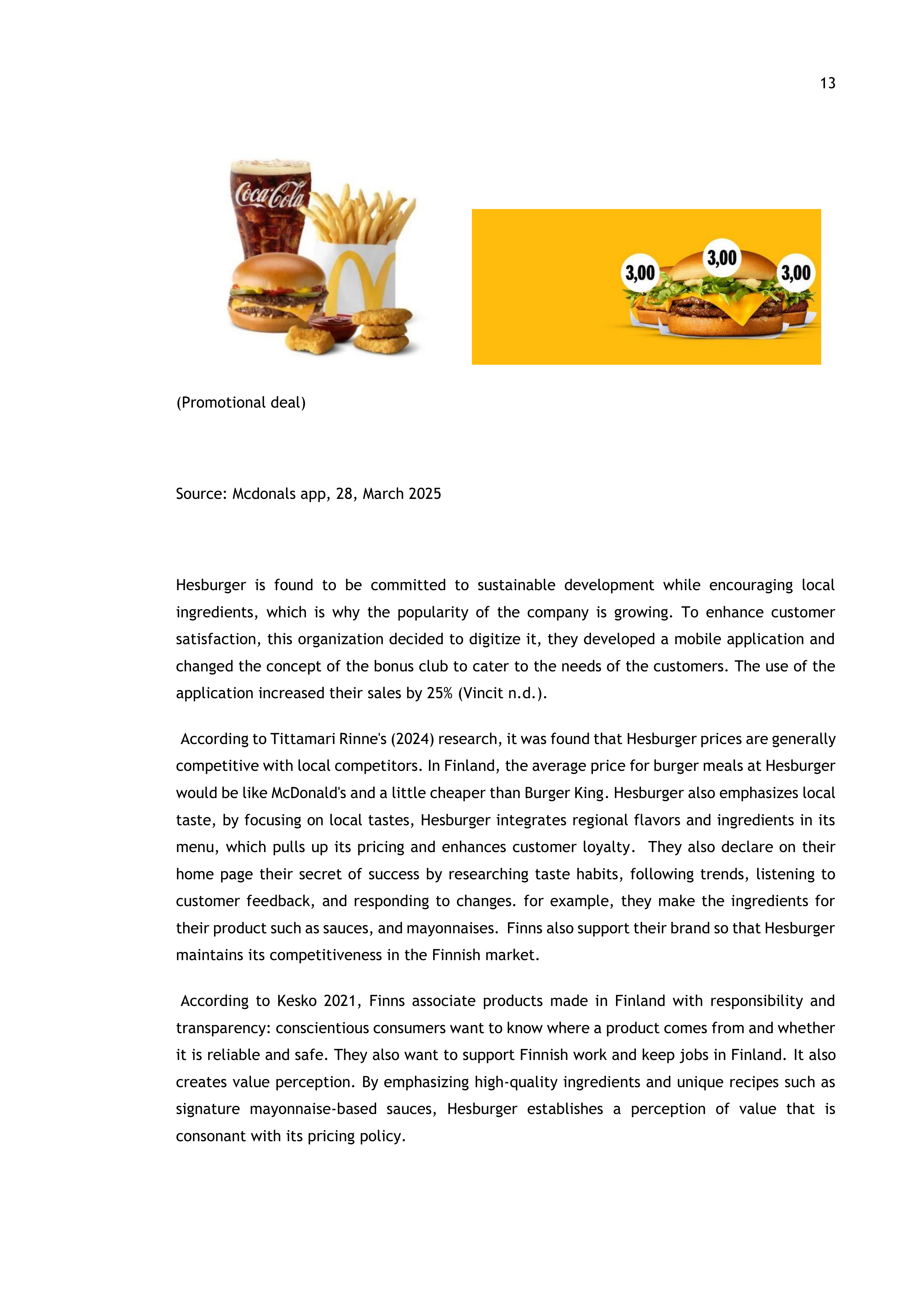
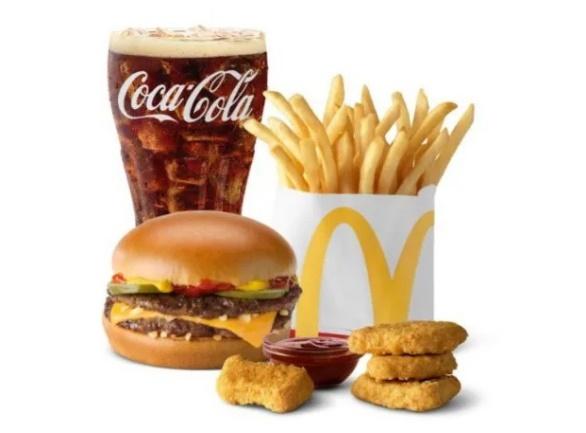

13
(Promotional deal)
Source: Mcdonals app, 28, March 2025
Hesburger is found to be committed to sustainable development while encouraging local
ingredients, which is why the popularity of the company is growing. To enhance customer
satisfaction, this organization decided to digitize it, they developed a mobile application and
changed the concept of the bonus club to cater to the needs of the customers. The use of the
application increased their sales by 25% (Vincit n.d.).
According to Tittamari Rinne's (2024) research, it was found that Hesburger prices are generally
competitive with local competitors. In Finland, the average price for burger meals at Hesburger
would be like McDonald's and a little cheaper than Burger King. Hesburger also emphasizes local
taste, by focusing on local tastes, Hesburger integrates regional flavors and ingredients in its
menu, which pulls up its pricing and enhances customer loyalty. They also declare on their
home page their secret of success by researching taste habits, following trends, listening to
customer feedback, and responding to changes. for example, they make the ingredients for
their product such as sauces, and mayonnaises. Finns also support their brand so that Hesburger
maintains its competitiveness in the Finnish market.
According to Kesko 2021, Finns associate products made in Finland with responsibility and
transparency: conscientious consumers want to know where a product comes from and whether
it is reliable and safe. They also want to support Finnish work and keep jobs in Finland. It also
creates value perception. By emphasizing high-quality ingredients and unique recipes such as
signature mayonnaise-based sauces, Hesburger establishes a perception of value that is
consonant with its pricing policy.
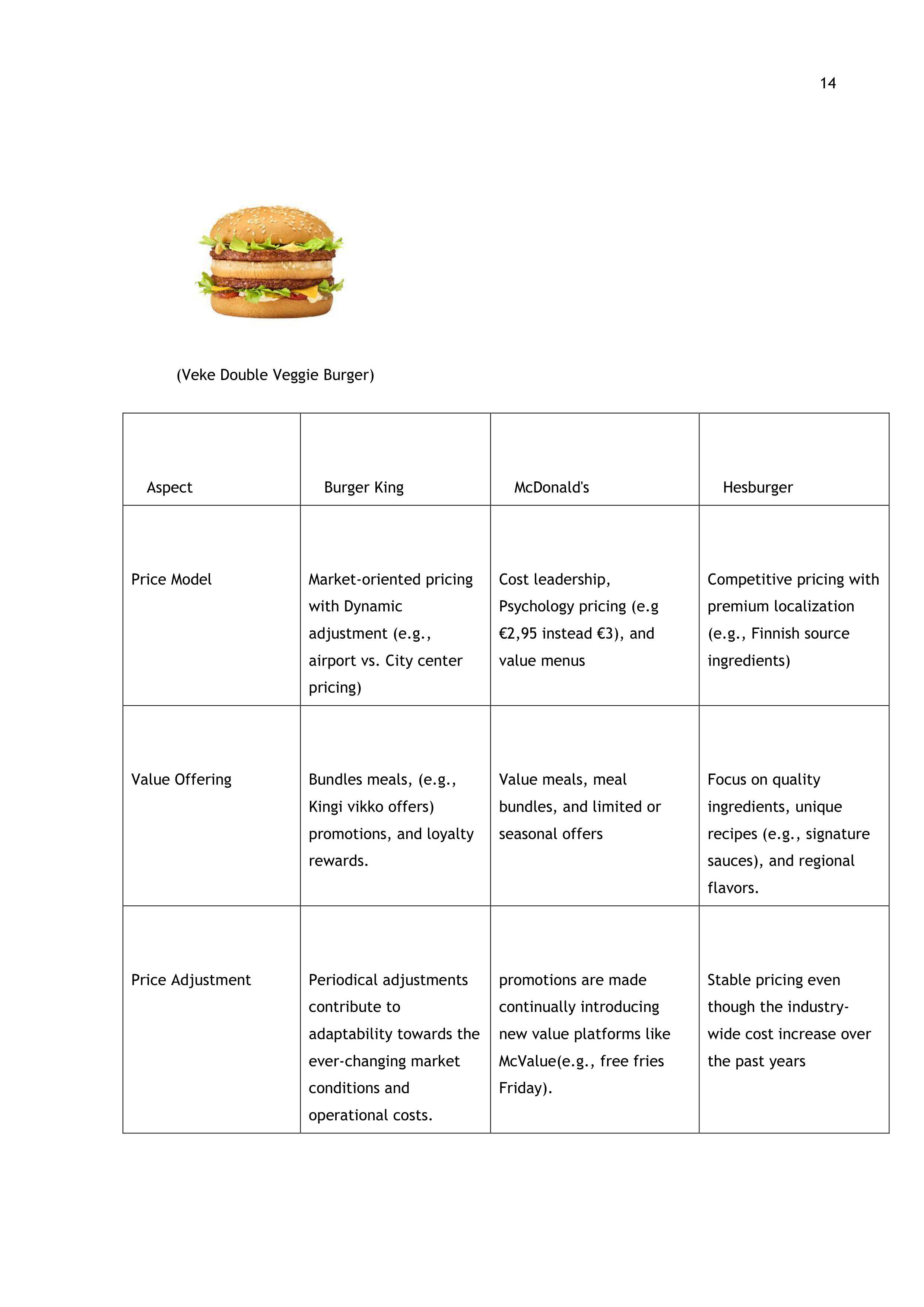
14
(Veke Double Veggie Burger)
Aspect
Burger King
McDonald's
Hesburger
Price Model
Market-oriented pricing
with Dynamic
adjustment (e.g.,
airport vs. City center
pricing)
Cost leadership,
Psychology pricing (e.g
€2,95 instead €3), and
value menus
Competitive pricing with
premium localization
(e.g., Finnish source
ingredients)
Value Offering
Bundles meals, (e.g.,
Kingi vikko offers)
promotions, and loyalty
rewards.
Value meals, meal
bundles, and limited or
seasonal offers
Focus on quality
ingredients, unique
recipes (e.g., signature
sauces), and regional
flavors.
Price Adjustment
Periodical adjustments
contribute to
adaptability towards the
ever-changing market
conditions and
operational costs.
promotions are made
continually introducing
new value platforms like
McValue(e.g., free fries
Friday).
Stable pricing even
though the industry-
wide cost increase over
the past years
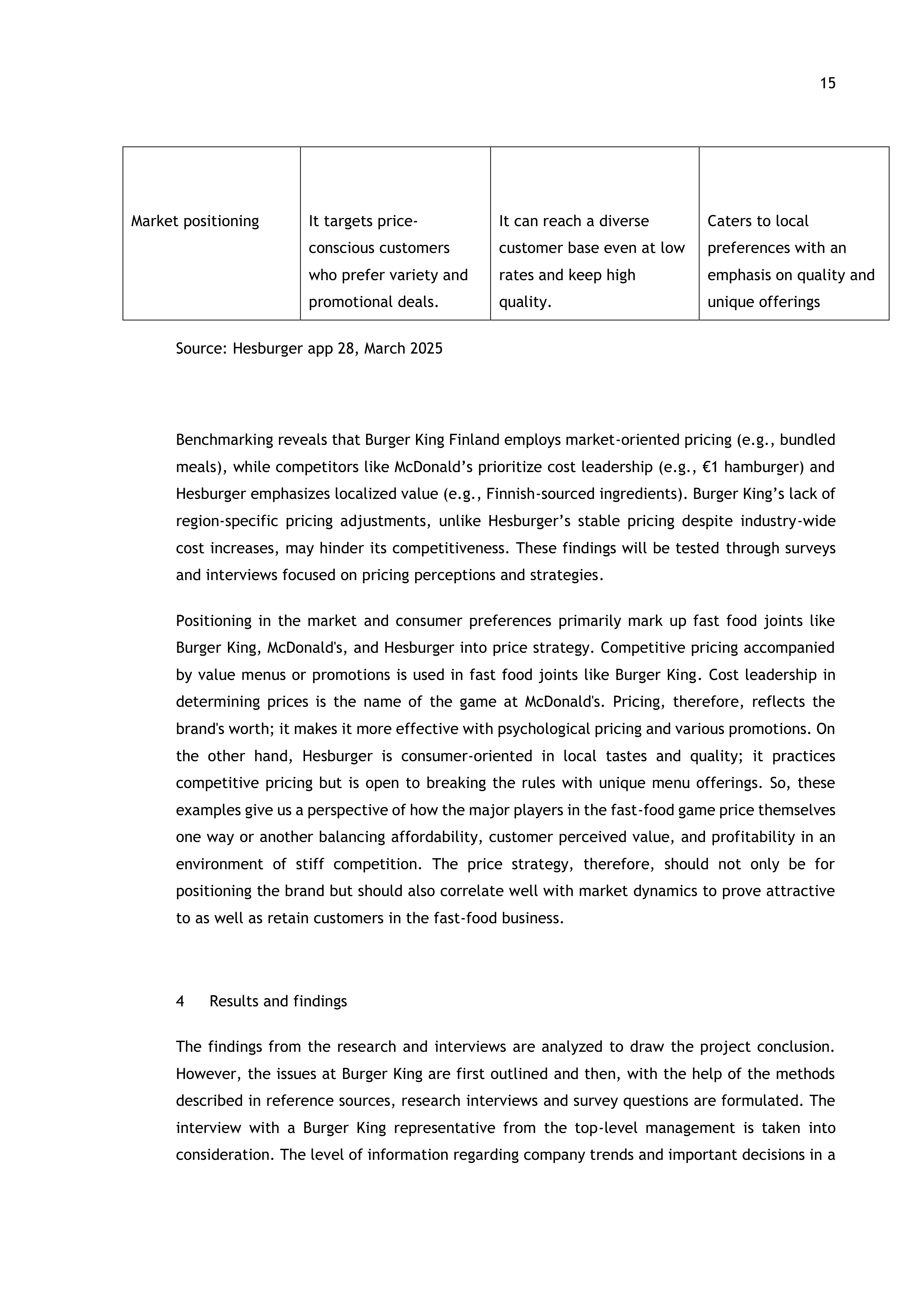
15
Source: Hesburger app 28, March 2025
Benchmarking reveals that Burger King Finland employs market-oriented pricing (e.g., bundled
meals), while competitors like McDonald’s prioritize cost leadership (e.g., €1 hamburger) and
Hesburger emphasizes localized value (e.g., Finnish-sourced ingredients). Burger King’s lack of
region-specific pricing adjustments, unlike Hesburger’s stable pricing despite industry-wide
cost increases, may hinder its competitiveness. These findings will be tested through surveys
and interviews focused on pricing perceptions and strategies.
Positioning in the market and consumer preferences primarily mark up fast food joints like
Burger King, McDonald's, and Hesburger into price strategy. Competitive pricing accompanied
by value menus or promotions is used in fast food joints like Burger King. Cost leadership in
determining prices is the name of the game at McDonald's. Pricing, therefore, reflects the
brand's worth; it makes it more effective with psychological pricing and various promotions. On
the other hand, Hesburger is consumer-oriented in local tastes and quality; it practices
competitive pricing but is open to breaking the rules with unique menu offerings. So, these
examples give us a perspective of how the major players in the fast-food game price themselves
one way or another balancing affordability, customer perceived value, and profitability in an
environment of stiff competition. The price strategy, therefore, should not only be for
positioning the brand but should also correlate well with market dynamics to prove attractive
to as well as retain customers in the fast-food business.
4
Results and findings
The findings from the research and interviews are analyzed to draw the project conclusion.
However, the issues at Burger King are first outlined and then, with the help of the methods
described in reference sources, research interviews and survey questions are formulated. The
interview with a Burger King representative from the top-level management is taken into
consideration. The level of information regarding company trends and important decisions in a
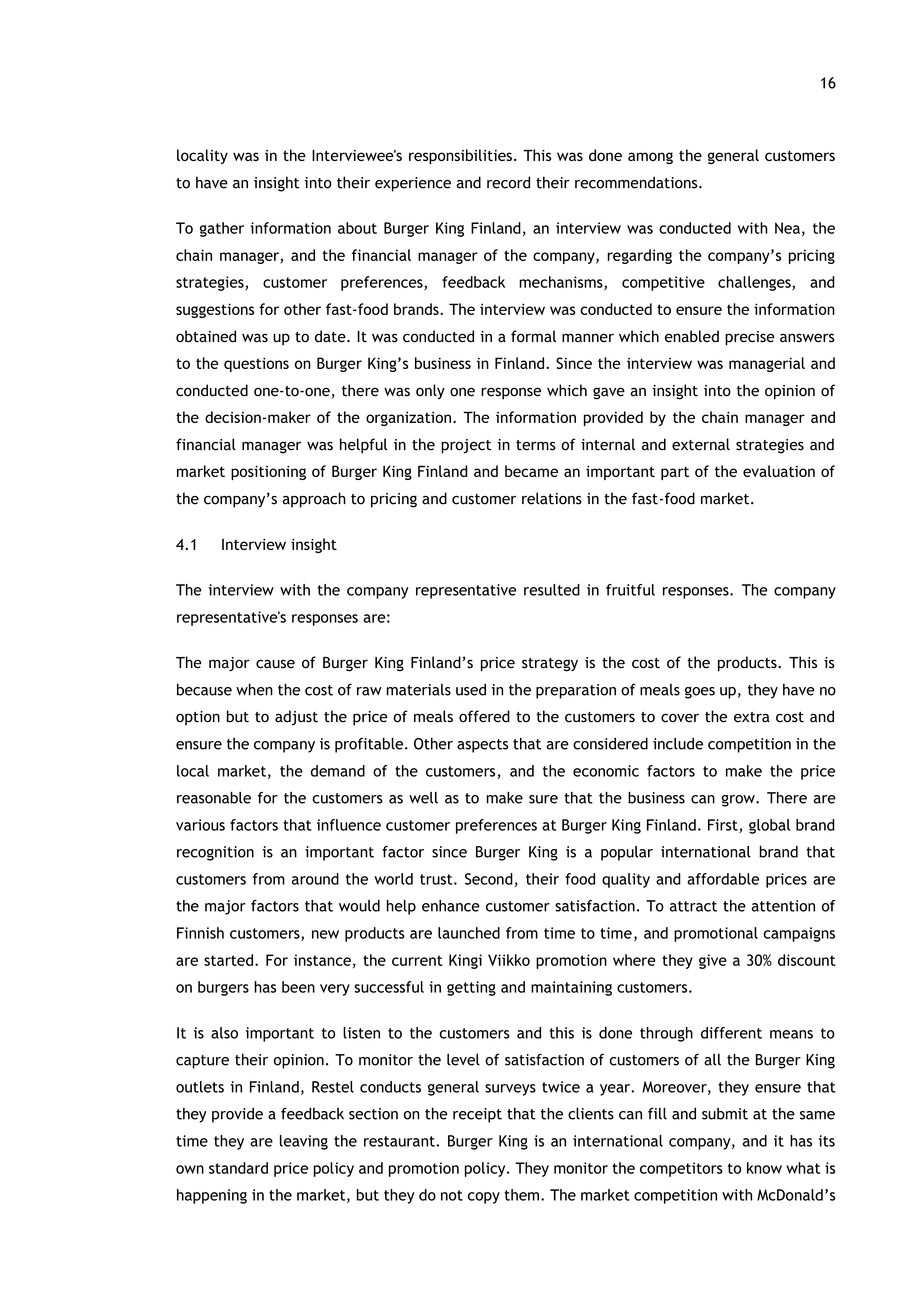
Market positioning
It targets price-
conscious customers
who prefer variety and
promotional deals.
It can reach a diverse
customer base even at low
rates and keep high
quality.
Caters to local
preferences with an
emphasis on quality and
unique offerings
16
locality was in the Interviewee's responsibilities. This was done among the general customers
to have an insight into their experience and record their recommendations.
To gather information about Burger King Finland, an interview was conducted with Nea, the
chain manager, and the financial manager of the company, regarding the company’s pricing
strategies, customer preferences, feedback mechanisms, competitive challenges, and
suggestions for other fast-food brands. The interview was conducted to ensure the information
obtained was up to date. It was conducted in a formal manner which enabled precise answers
to the questions on Burger King’s business in Finland. Since the interview was managerial and
conducted one-to-one, there was only one response which gave an insight into the opinion of
the decision-maker of the organization. The information provided by the chain manager and
financial manager was helpful in the project in terms of internal and external strategies and
market positioning of Burger King Finland and became an important part of the evaluation of
the company’s approach to pricing and customer relations in the fast-food market.
4.1
Interview insight
The interview with the company representative resulted in fruitful responses. The company
representative's responses are:
The major cause of Burger King Finland’s price strategy is the cost of the products. This is
because when the cost of raw materials used in the preparation of meals goes up, they have no
option but to adjust the price of meals offered to the customers to cover the extra cost and
ensure the company is profitable. Other aspects that are considered include competition in the
local market, the demand of the customers, and the economic factors to make the price
reasonable for the customers as well as to make sure that the business can grow. There are
various factors that influence customer preferences at Burger King Finland. First, global brand
recognition is an important factor since Burger King is a popular international brand that
customers from around the world trust. Second, their food quality and affordable prices are
the major factors that would help enhance customer satisfaction. To attract the attention of
Finnish customers, new products are launched from time to time, and promotional campaigns
are started. For instance, the current Kingi Viikko promotion where they give a 30% discount
on burgers has been very successful in getting and maintaining customers.
It is also important to listen to the customers and this is done through different means to
capture their opinion. To monitor the level of satisfaction of customers of all the Burger King
outlets in Finland, Restel conducts general surveys twice a year. Moreover, they ensure that
they provide a feedback section on the receipt that the clients can fill and submit at the same
time they are leaving the restaurant. Burger King is an international company, and it has its
own standard price policy and promotion policy. They monitor the competitors to know what is
happening in the market, but they do not copy them. The market competition with McDonald’s
17
and Hesburger presents unique challenges. McDonald’s has been in the market for 30 years now
and has had time to capture the loyalty of the consumers. Hesburger has a local appeal and
offers a menu that is aligned to the Finnish palate and culture through a burger double
cheeseburger. Moreover, while Hesburger has more than 274 restaurants to Burger King’s 60
restaurants, this means that Hesburger is more accessible to consumers.
As much as they acknowledge the moves of the other fast-food brands, they strongly hold the
view that Burger King has a different approach to the price model and customer relations.
Concerning the above objectives, the following are the strategic priorities: In this case, other
brands, suggest that they should maintain their brand identity and keep on adapting to the
market needs. Some of the information that the representative of Burger King Finland provided
during the interview was regarding the company’s pricing strategies, as well as the preferences
of the market and the industry positioning. The price determination of Burger King in Finland
involves three main aspects, namely the cost of the product, competition, and customer buying
habits to ensure the company gains competitiveness in the market as well as profits. Customers
develop their perception of the brand due to its global reach as well as the quality of food it
offers and the prices it sets. The 30% burger discount during Kingi Viikko promotional events is
crucial to Burger King Finland in gaining and maintaining customers.
4.2
Survey Data Reflection
The survey data was collected from 51 users actively fast-food consumers through an online
questionnaire, and their responses were studied and evaluated to understand the customer
needs.
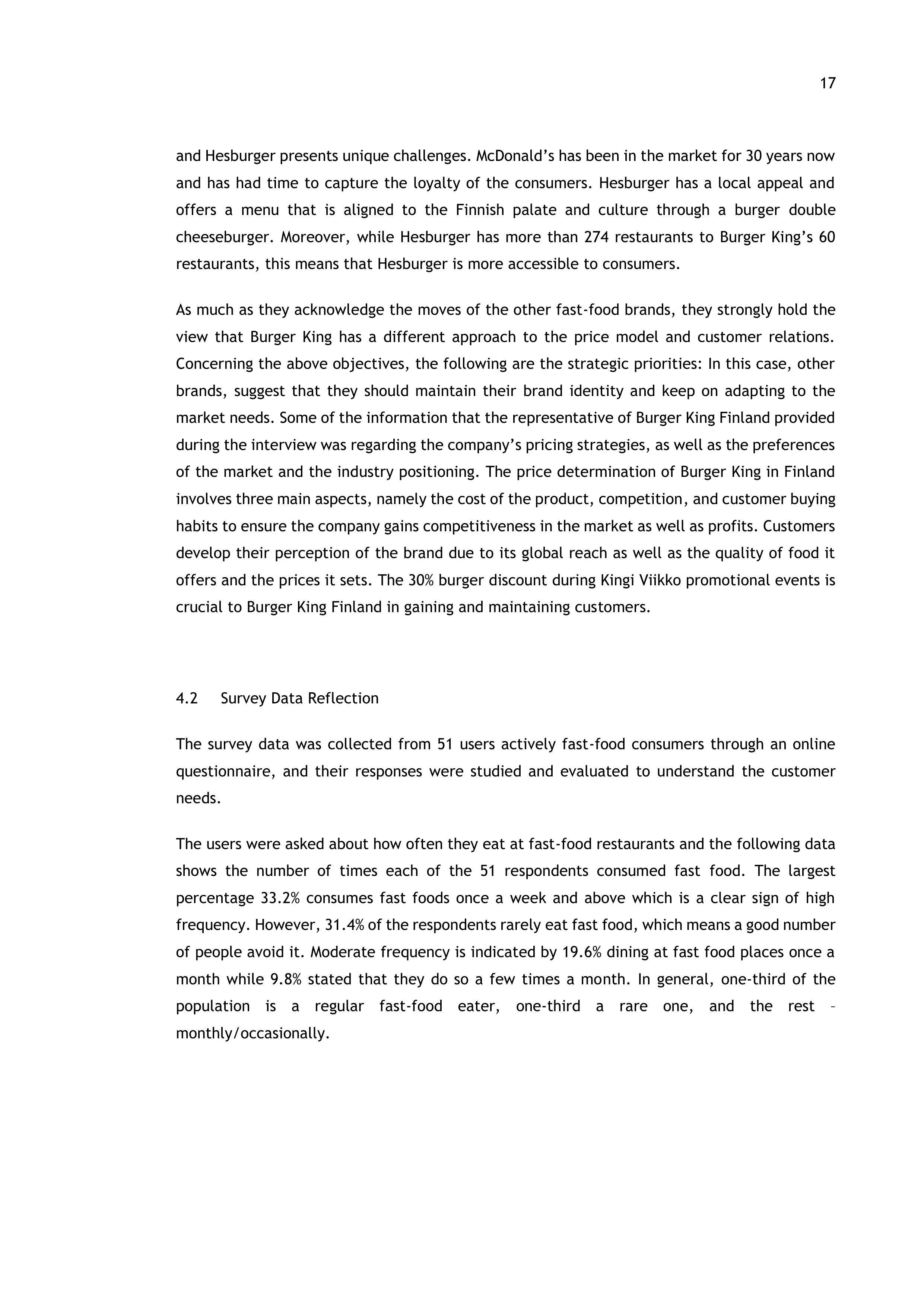
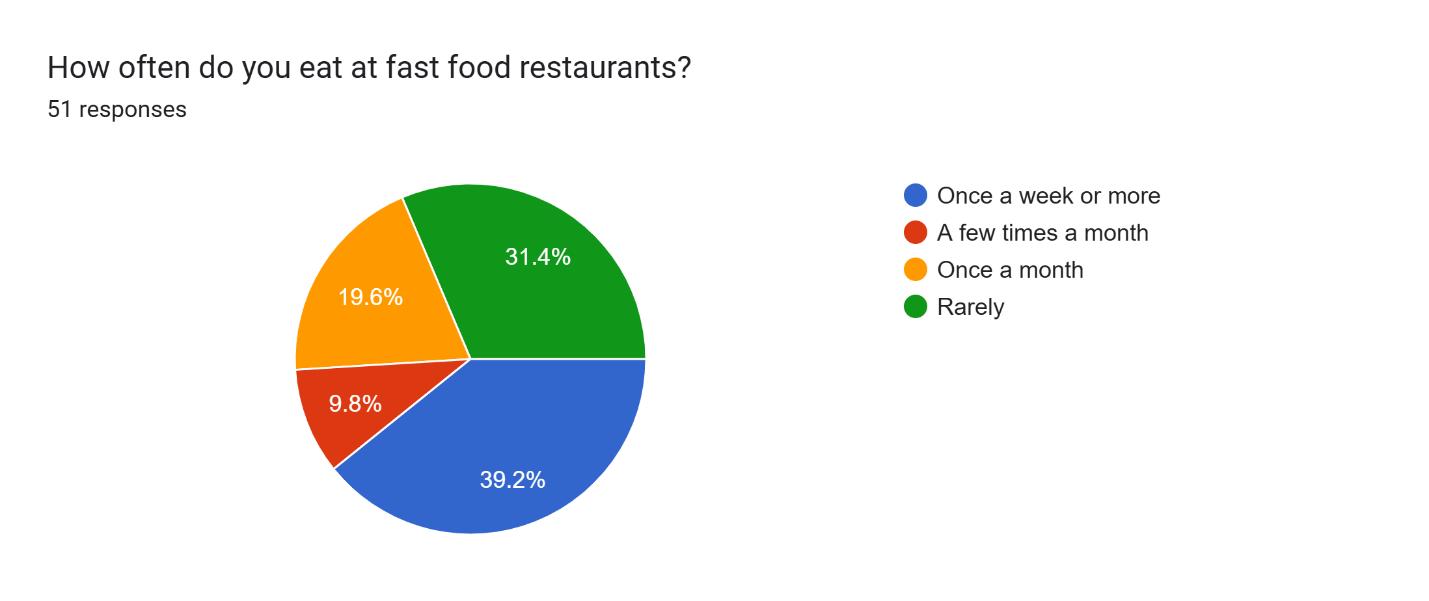
The users were asked about how often they eat at fast-food restaurants and the following data
shows the number of times each of the 51 respondents consumed fast food. The largest
percentage 33.2% consumes fast foods once a week and above which is a clear sign of high
frequency. However, 31.4% of the respondents rarely eat fast food, which means a good number
of people avoid it. Moderate frequency is indicated by 19.6% dining at fast food places once a
month while 9.8% stated that they do so a few times a month. In general, one-third of the
population is a regular fast-food eater, one-third a rare one, and the rest –
monthly/occasionally.
18
Figure 1: Users' frequency of using fast food Monthly
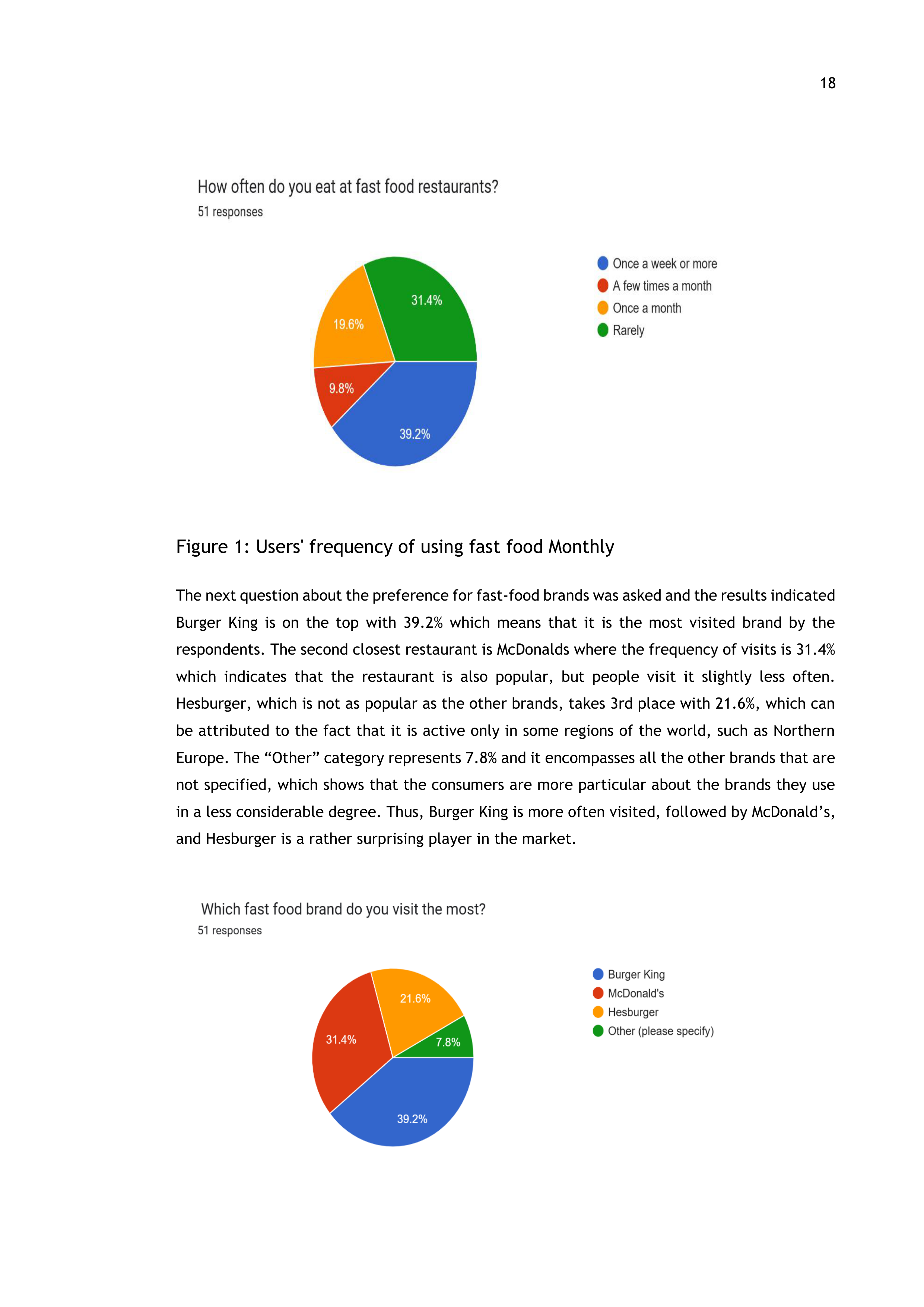
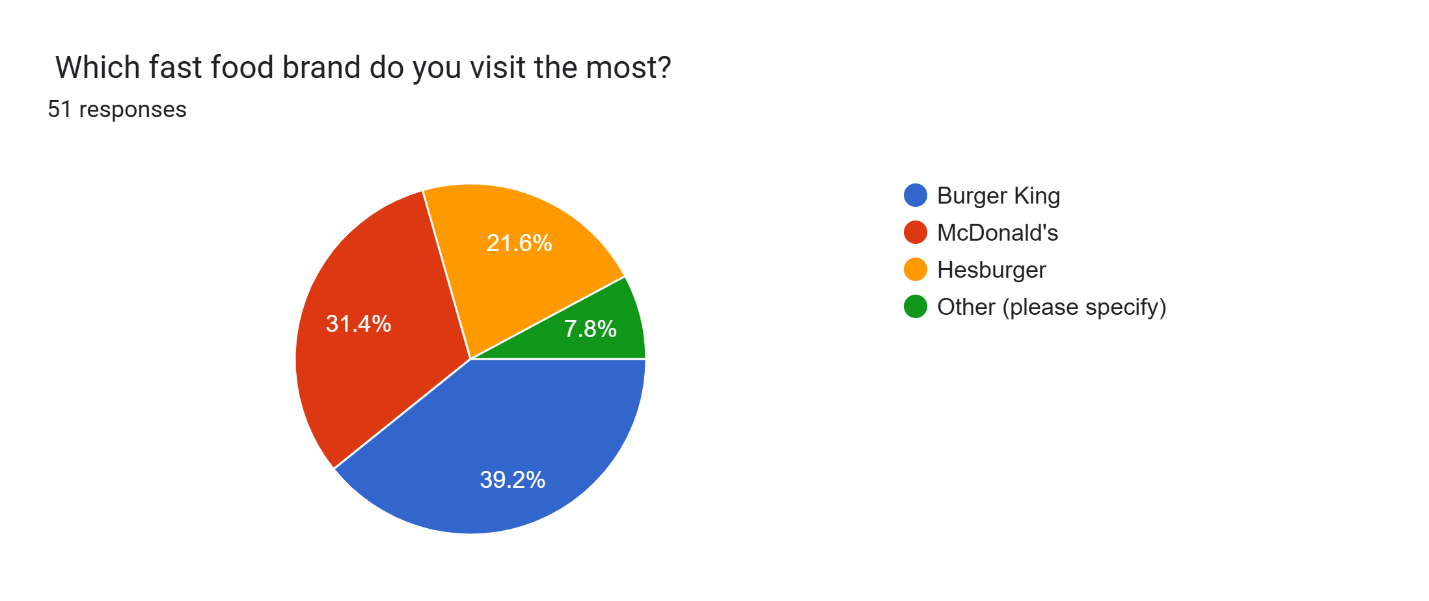
The next question about the preference for fast-food brands was asked and the results indicated
Burger King is on the top with 39.2% which means that it is the most visited brand by the
respondents. The second closest restaurant is McDonalds where the frequency of visits is 31.4%
which indicates that the restaurant is also popular, but people visit it slightly less often.
Hesburger, which is not as popular as the other brands, takes 3rd place with 21.6%, which can
be attributed to the fact that it is active only in some regions of the world, such as Northern
Europe. The “Other” category represents 7.8% and it encompasses all the other brands that are
not specified, which shows that the consumers are more particular about the brands they use
in a less considerable degree. Thus, Burger King is more often visited, followed by McDonald’s,
and Hesburger is a rather surprising player in the market.
19
Figure 2: Fast food brand preference
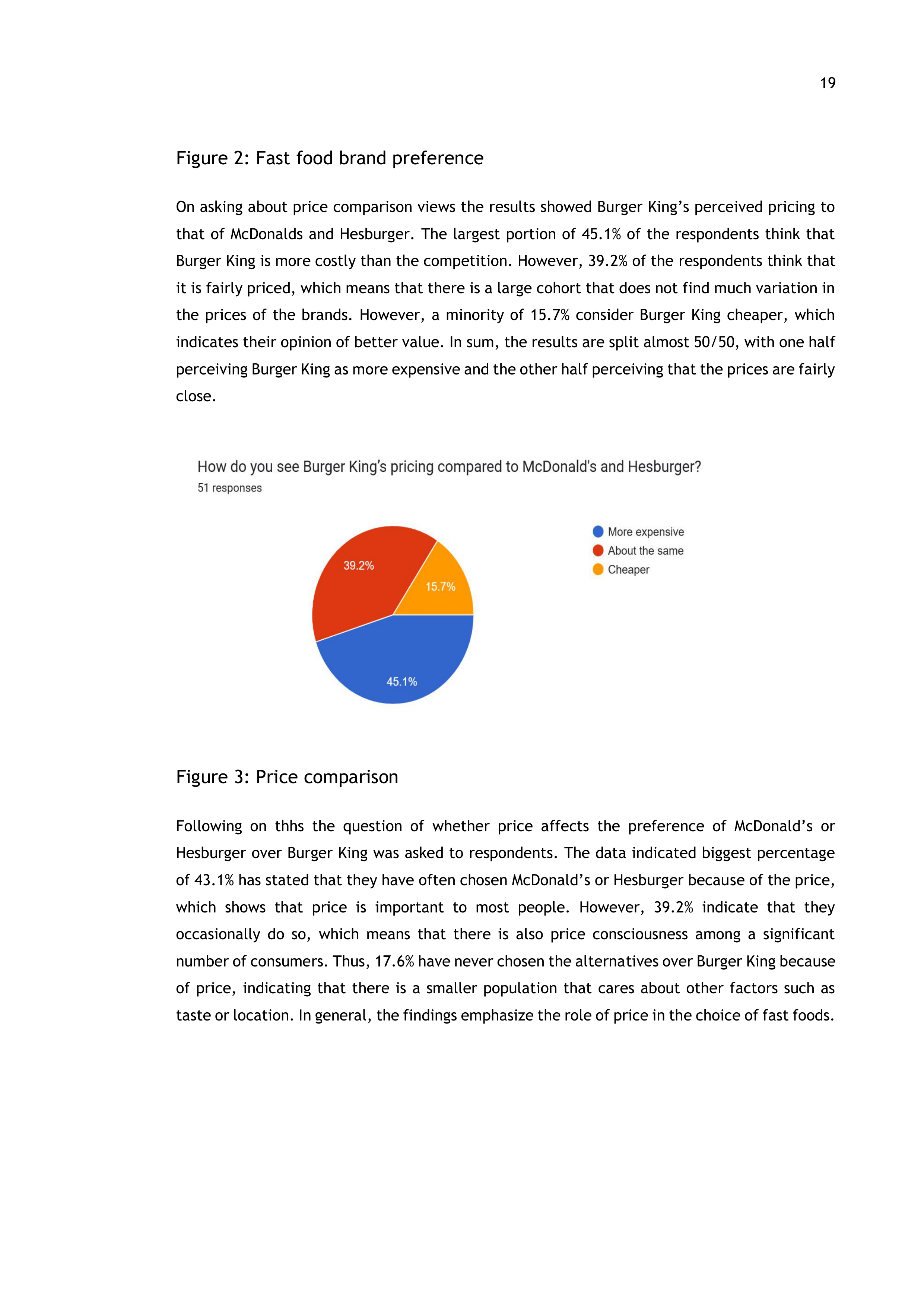
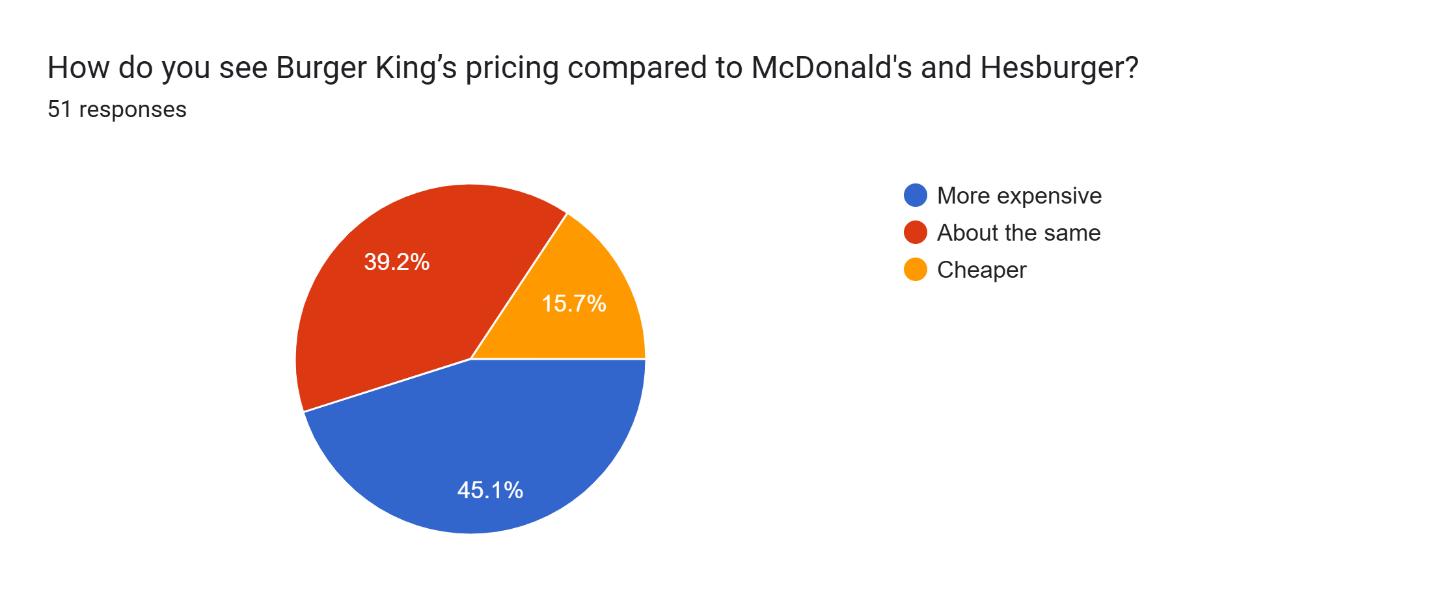
On asking about price comparison views the results showed Burger King’s perceived pricing to
that of McDonalds and Hesburger. The largest portion of 45.1% of the respondents think that
Burger King is more costly than the competition. However, 39.2% of the respondents think that
it is fairly priced, which means that there is a large cohort that does not find much variation in
the prices of the brands. However, a minority of 15.7% consider Burger King cheaper, which
indicates their opinion of better value. In sum, the results are split almost 50/50, with one half
perceiving Burger King as more expensive and the other half perceiving that the prices are fairly
close.
Figure 3: Price comparison
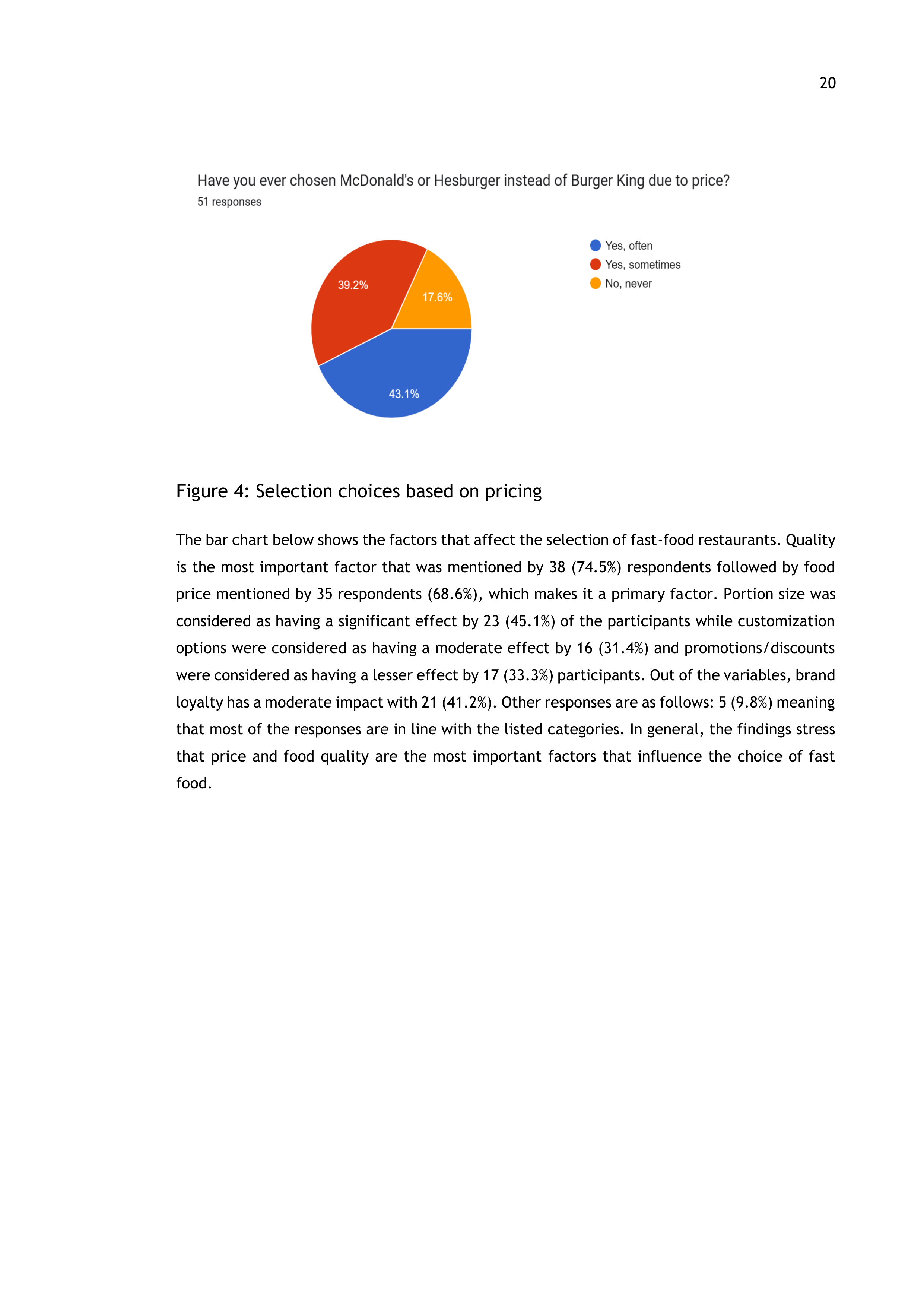
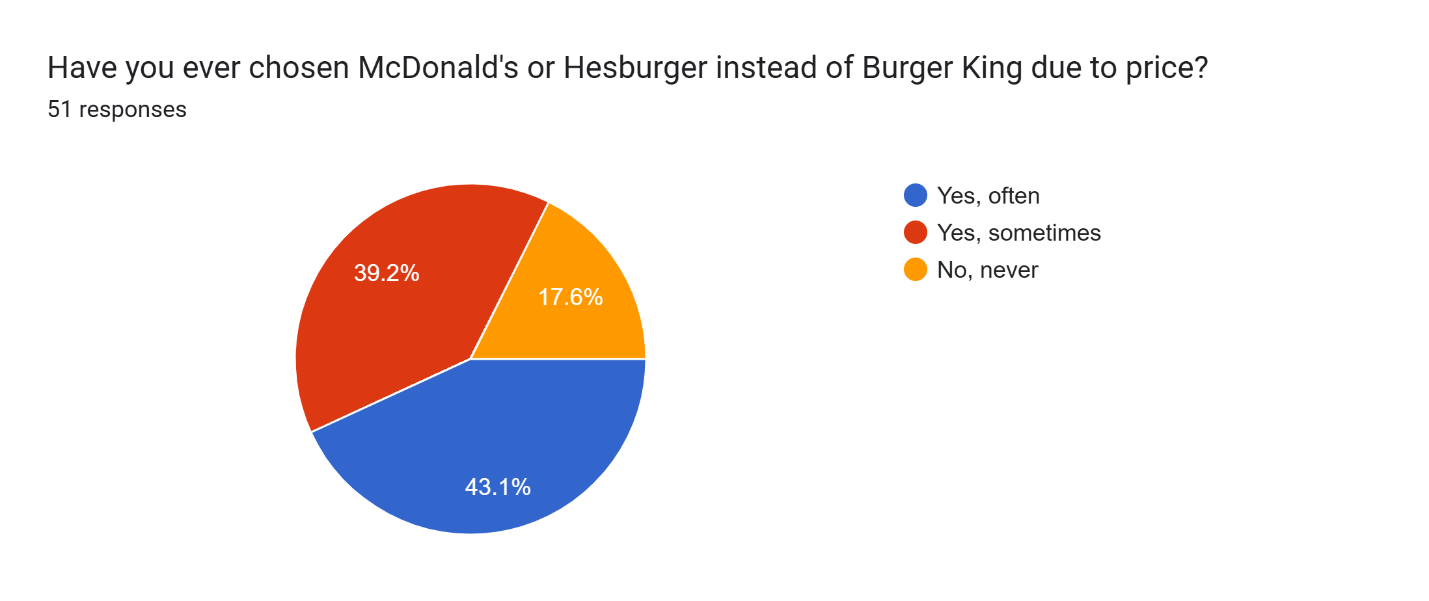
Following on thhs the question of whether price affects the preference of McDonald’s or
Hesburger over Burger King was asked to respondents. The data indicated biggest percentage
of 43.1% has stated that they have often chosen McDonald’s or Hesburger because of the price,
which shows that price is important to most people. However, 39.2% indicate that they
occasionally do so, which means that there is also price consciousness among a significant
number of consumers. Thus, 17.6% have never chosen the alternatives over Burger King because
of price, indicating that there is a smaller population that cares about other factors such as
taste or location. In general, the findings emphasize the role of price in the choice of fast foods.
20
Figure 4: Selection choices based on pricing
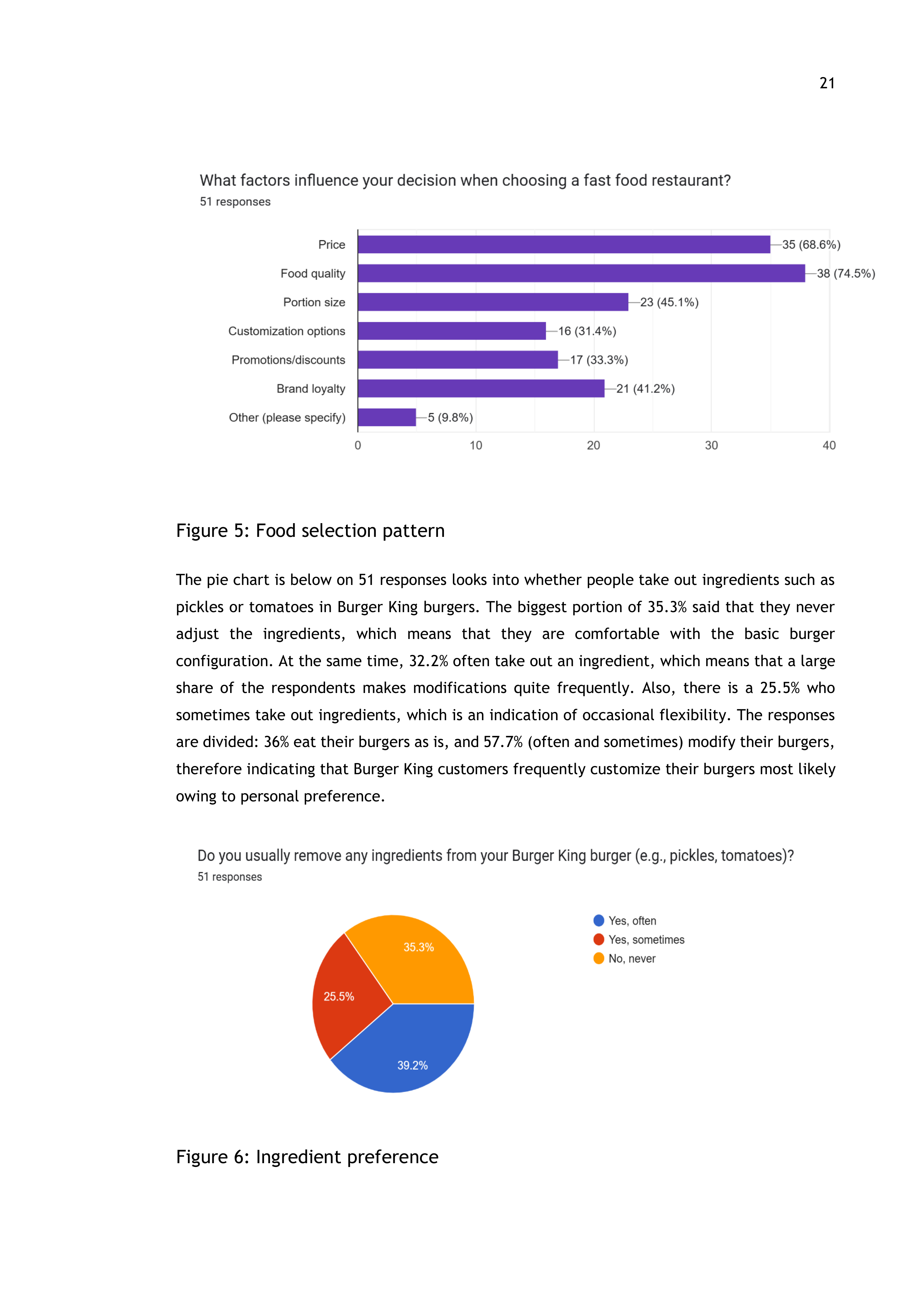
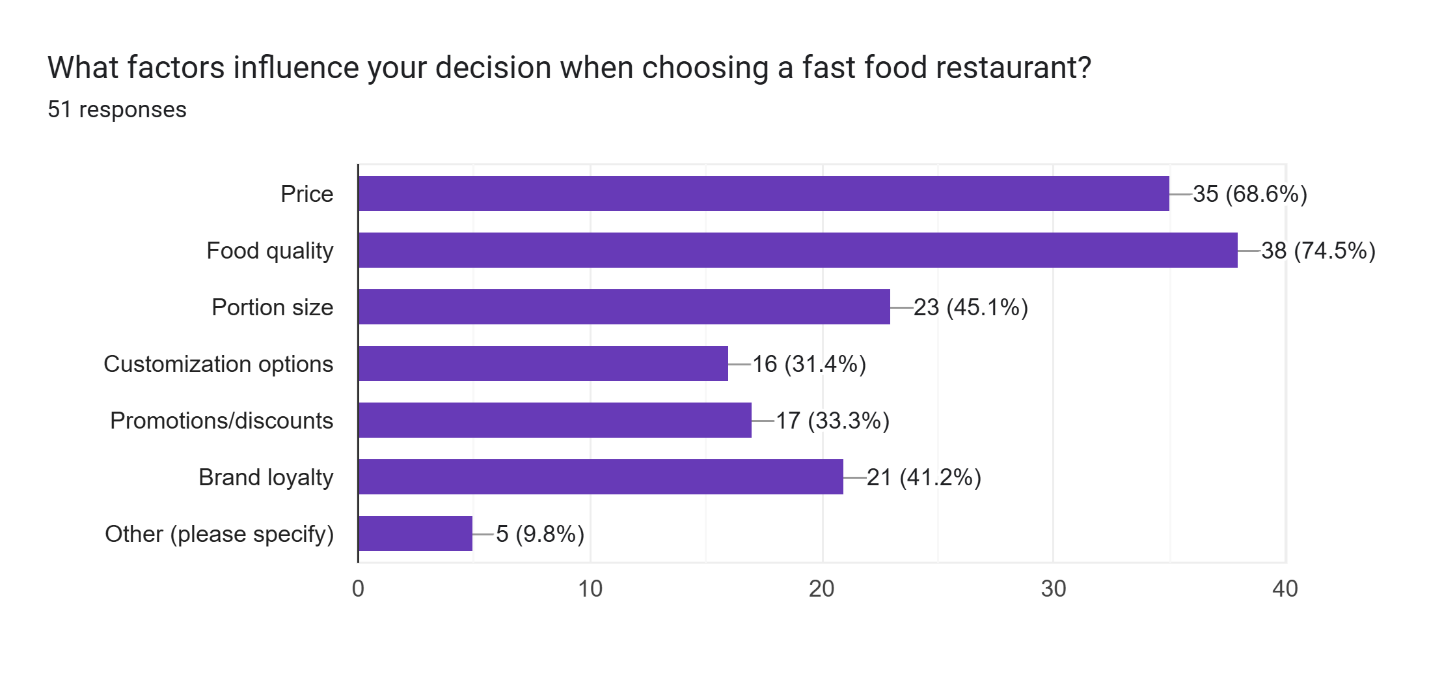
The bar chart below shows the factors that affect the selection of fast-food restaurants. Quality
is the most important factor that was mentioned by 38 (74.5%) respondents followed by food
price mentioned by 35 respondents (68.6%), which makes it a primary factor. Portion size was
considered as having a significant effect by 23 (45.1%) of the participants while customization
options were considered as having a moderate effect by 16 (31.4%) and promotions/discounts
were considered as having a lesser effect by 17 (33.3%) participants. Out of the variables, brand
loyalty has a moderate impact with 21 (41.2%). Other responses are as follows: 5 (9.8%) meaning
that most of the responses are in line with the listed categories. In general, the findings stress
that price and food quality are the most important factors that influence the choice of fast
food.
21
Figure 5: Food selection pattern
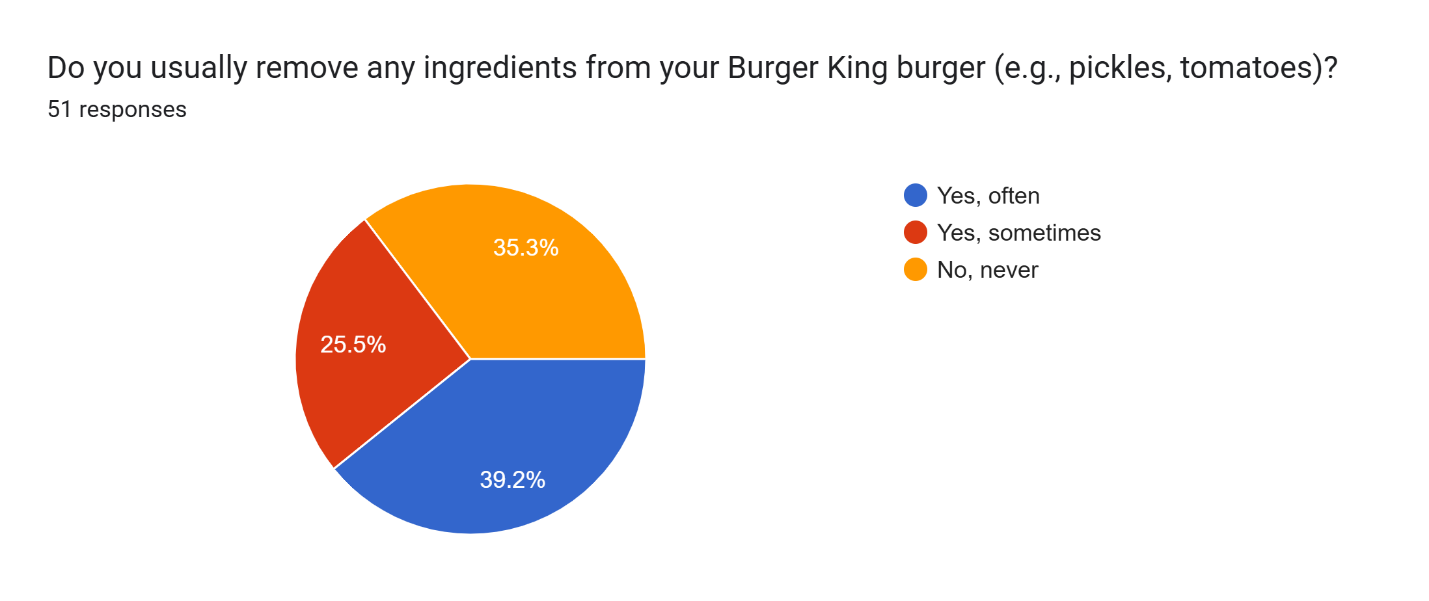
The pie chart is below on 51 responses looks into whether people take out ingredients such as
pickles or tomatoes in Burger King burgers. The biggest portion of 35.3% said that they never
adjust the ingredients, which means that they are comfortable with the basic burger
configuration. At the same time, 32.2% often take out an ingredient, which means that a large
share of the respondents makes modifications quite frequently. Also, there is a 25.5% who
sometimes take out ingredients, which is an indication of occasional flexibility. The responses
are divided: 36% eat their burgers as is, and 57.7% (often and sometimes) modify their burgers,
therefore indicating that Burger King customers frequently customize their burgers most likely
owing to personal preference.
Figure 6: Ingredient preference
22
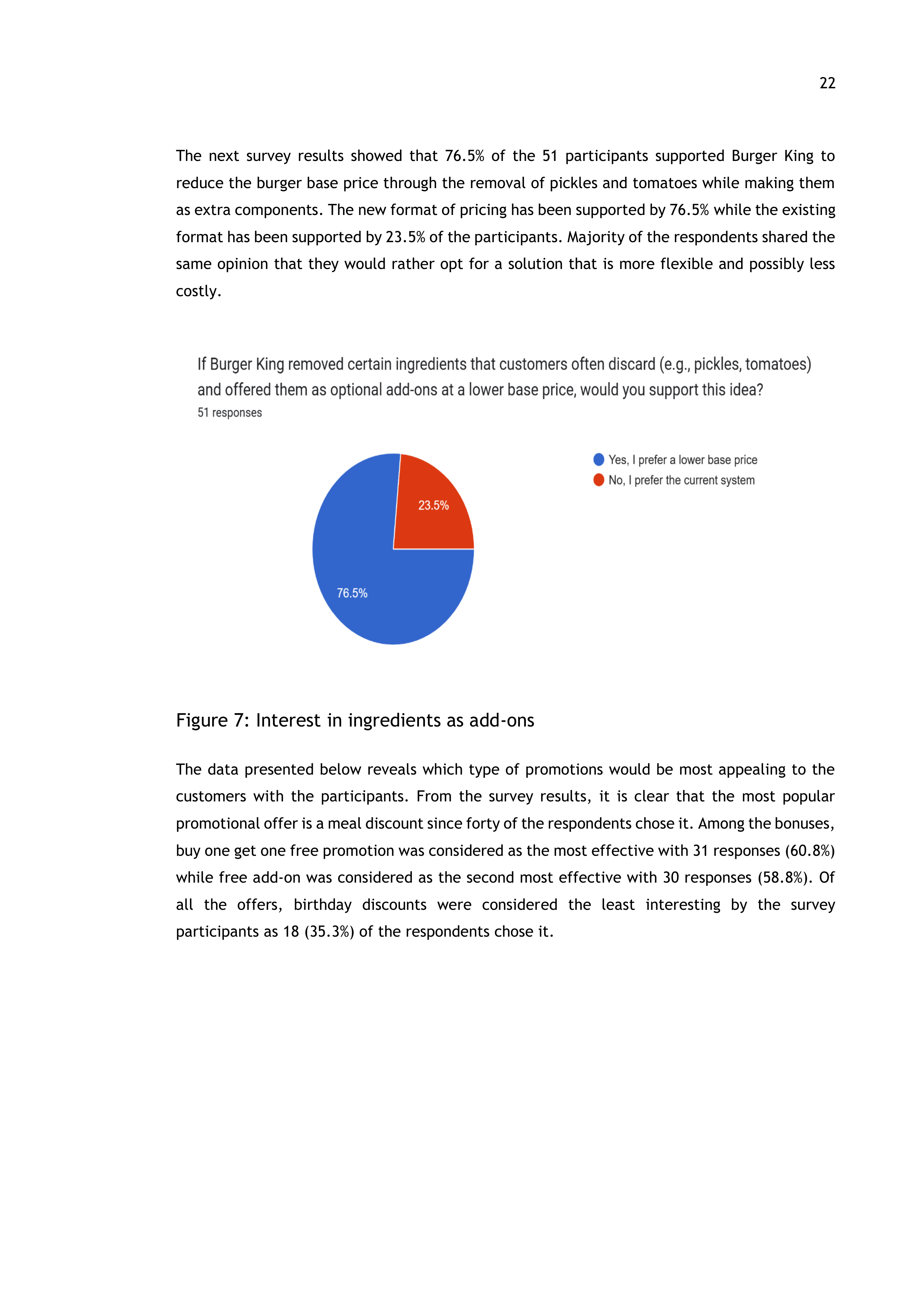
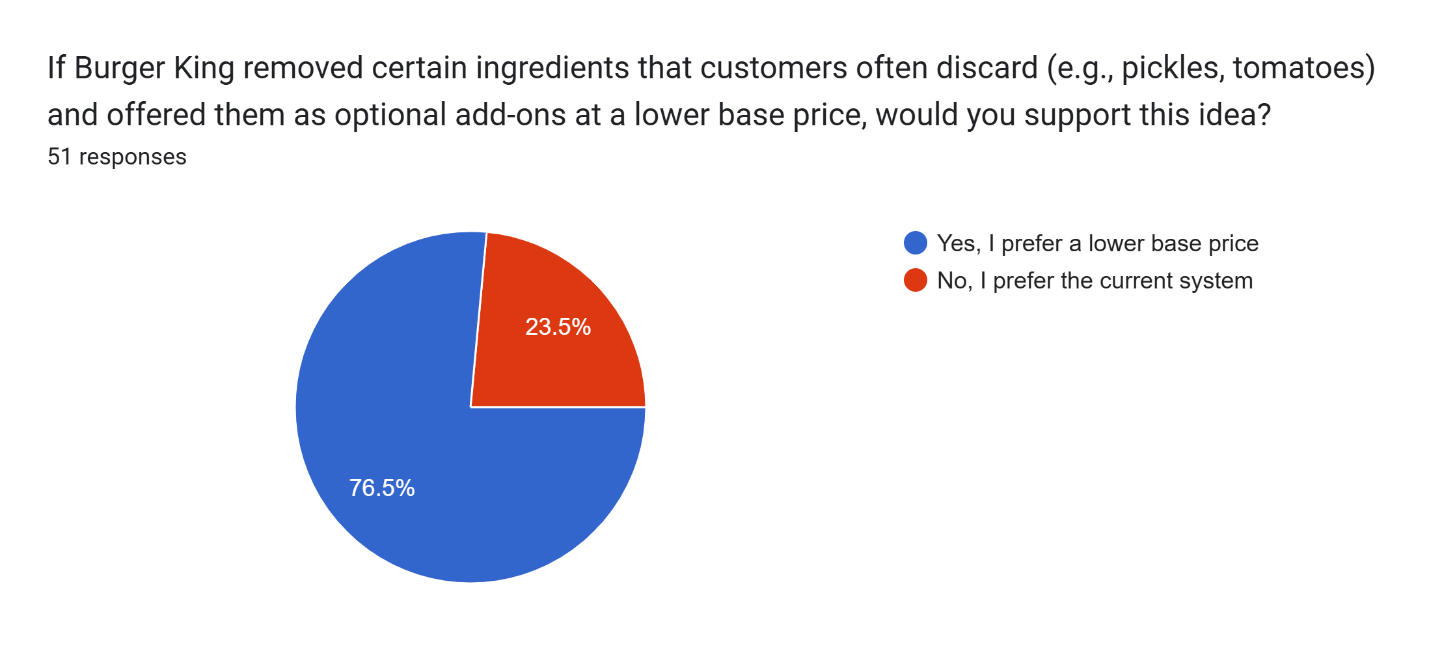
The next survey results showed that 76.5% of the 51 participants supported Burger King to
reduce the burger base price through the removal of pickles and tomatoes while making them
as extra components. The new format of pricing has been supported by 76.5% while the existing
format has been supported by 23.5% of the participants. Majority of the respondents shared the
same opinion that they would rather opt for a solution that is more flexible and possibly less
costly.
Figure 7: Interest in ingredients as add-ons
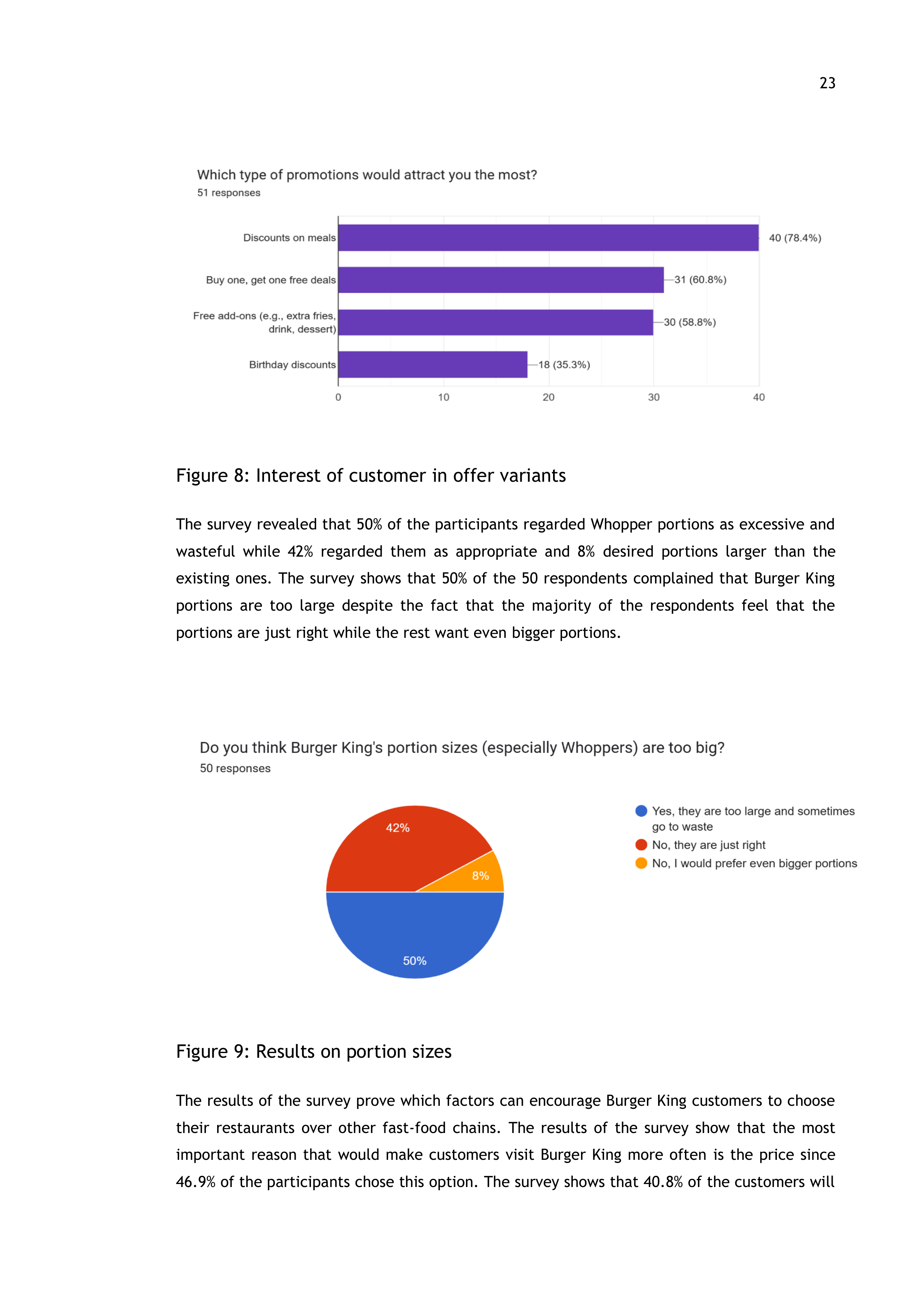
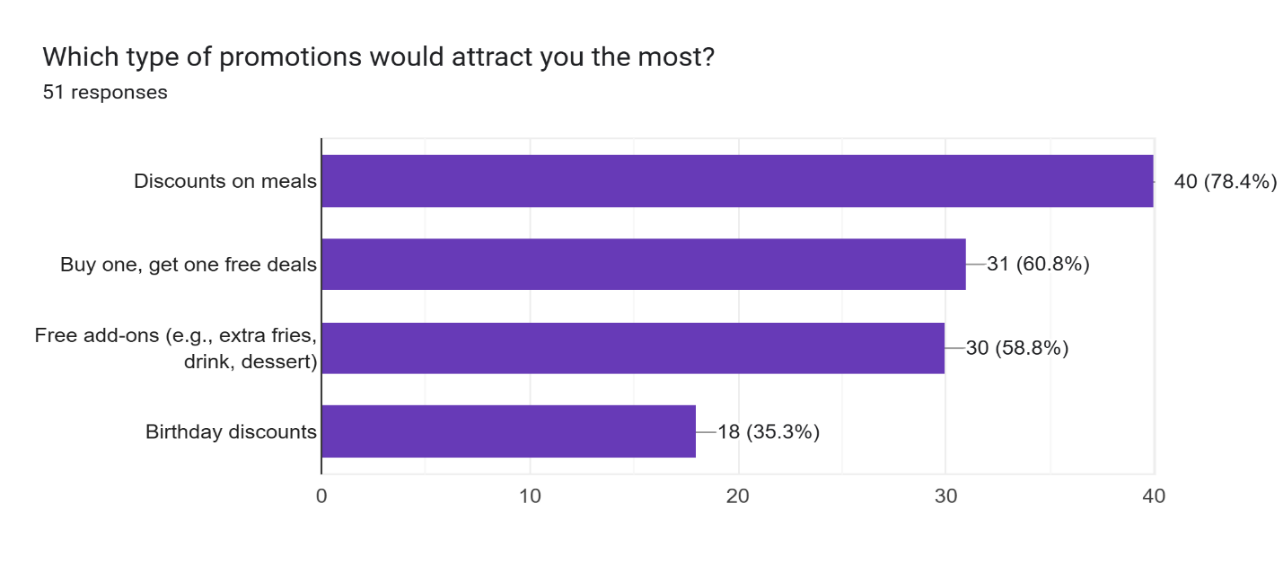
The data presented below reveals which type of promotions would be most appealing to the
customers with the participants. From the survey results, it is clear that the most popular
promotional offer is a meal discount since forty of the respondents chose it. Among the bonuses,
buy one get one free promotion was considered as the most effective with 31 responses (60.8%)
while free add-on was considered as the second most effective with 30 responses (58.8%). Of
all the offers, birthday discounts were considered the least interesting by the survey
participants as 18 (35.3%) of the respondents chose it.
23
Figure 8: Interest of customer in offer variants
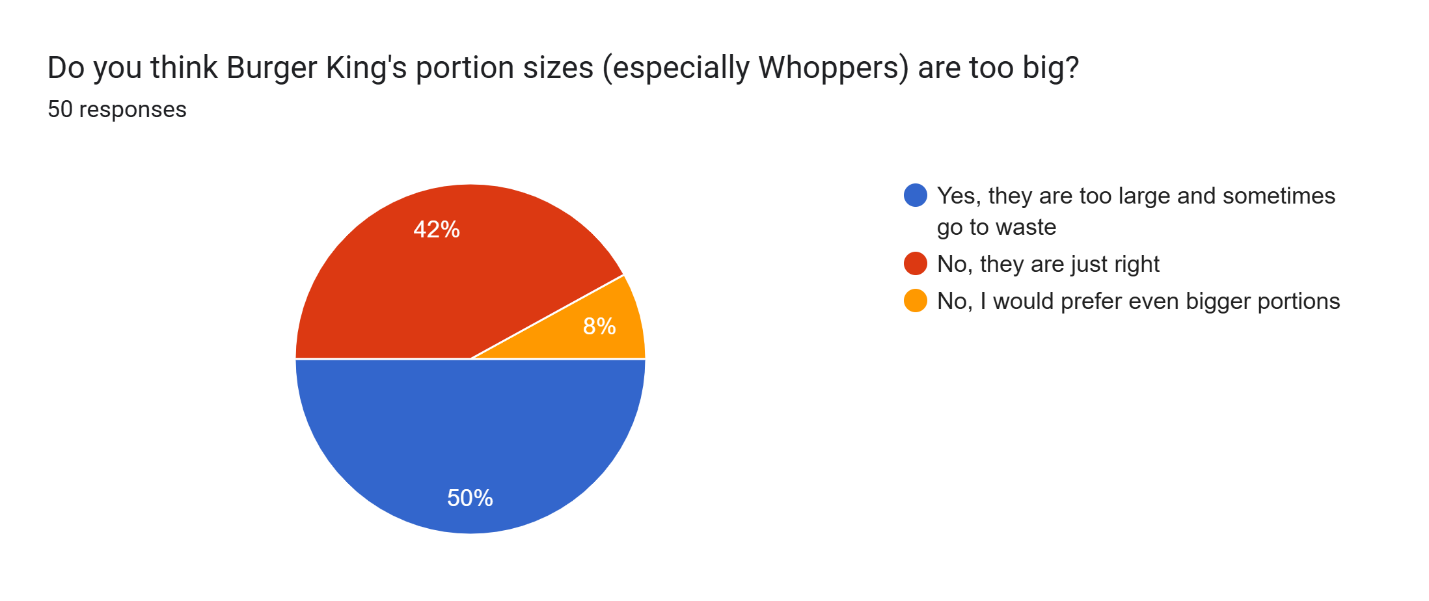
The survey revealed that 50% of the participants regarded Whopper portions as excessive and
wasteful while 42% regarded them as appropriate and 8% desired portions larger than the
existing ones. The survey shows that 50% of the 50 respondents complained that Burger King
portions are too large despite the fact that the majority of the respondents feel that the
portions are just right while the rest want even bigger portions.
Figure 9: Results on portion sizes
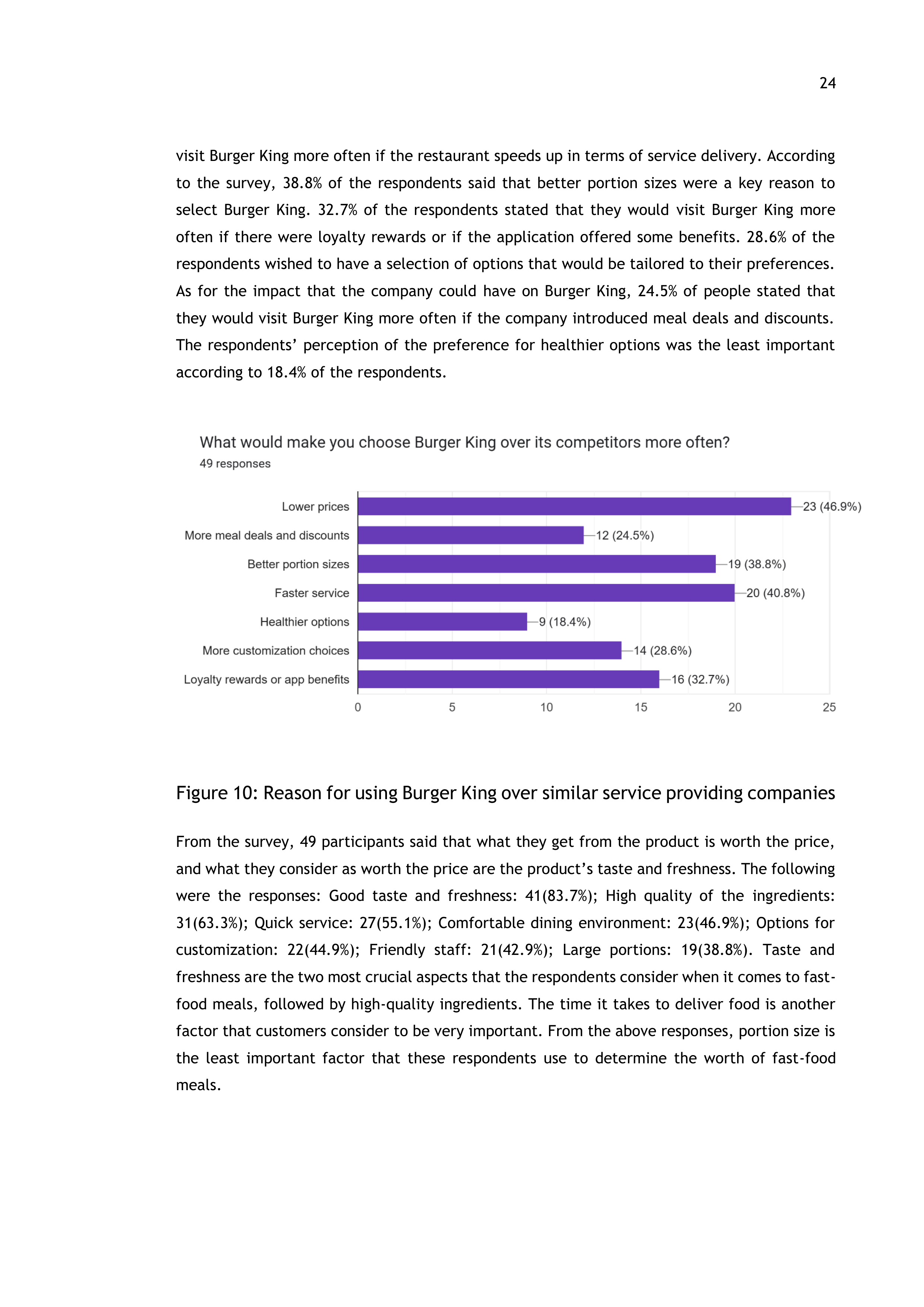
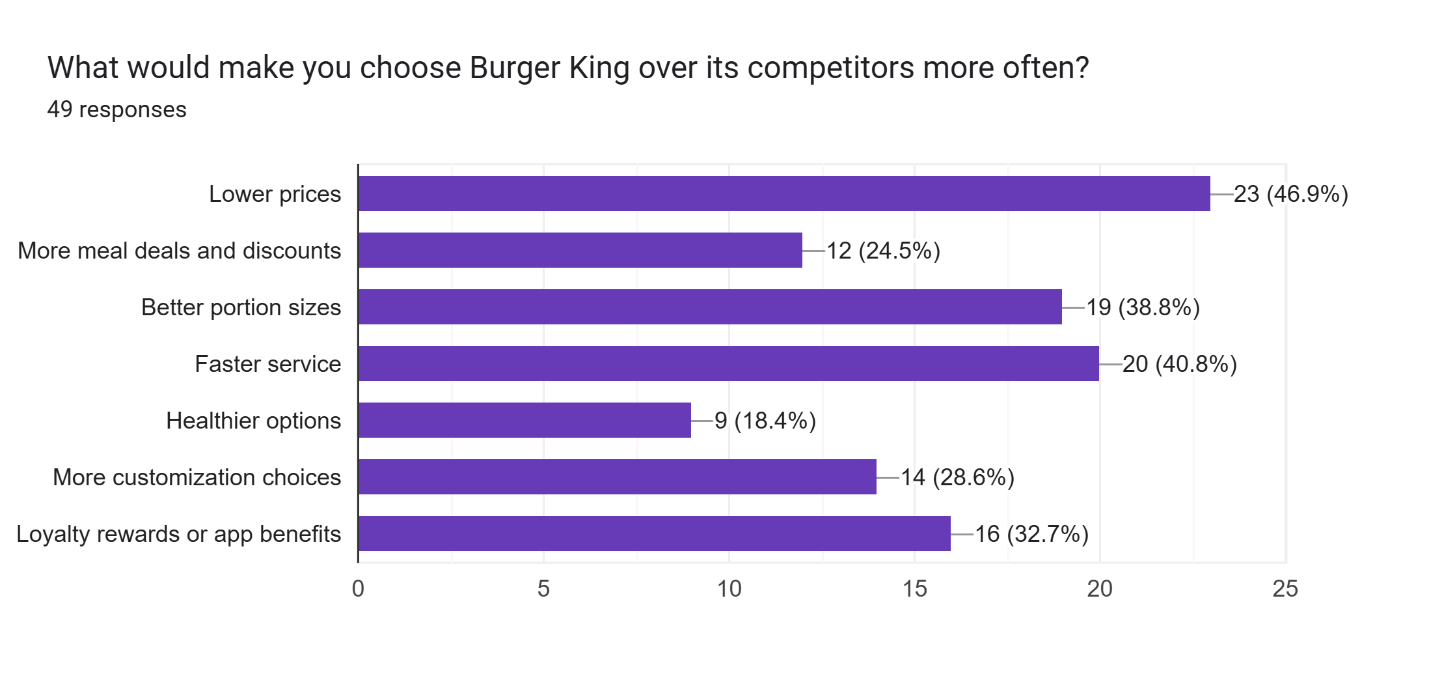
The results of the survey prove which factors can encourage Burger King customers to choose
their restaurants over other fast-food chains. The results of the survey show that the most
important reason that would make customers visit Burger King more often is the price since
46.9% of the participants chose this option. The survey shows that 40.8% of the customers will
24
visit Burger King more often if the restaurant speeds up in terms of service delivery. According
to the survey, 38.8% of the respondents said that better portion sizes were a key reason to
select Burger King. 32.7% of the respondents stated that they would visit Burger King more
often if there were loyalty rewards or if the application offered some benefits. 28.6% of the
respondents wished to have a selection of options that would be tailored to their preferences.
As for the impact that the company could have on Burger King, 24.5% of people stated that
they would visit Burger King more often if the company introduced meal deals and discounts.
The respondents’ perception of the preference for healthier options was the least important
according to 18.4% of the respondents.
Figure 10: Reason for using Burger King over similar service providing companies
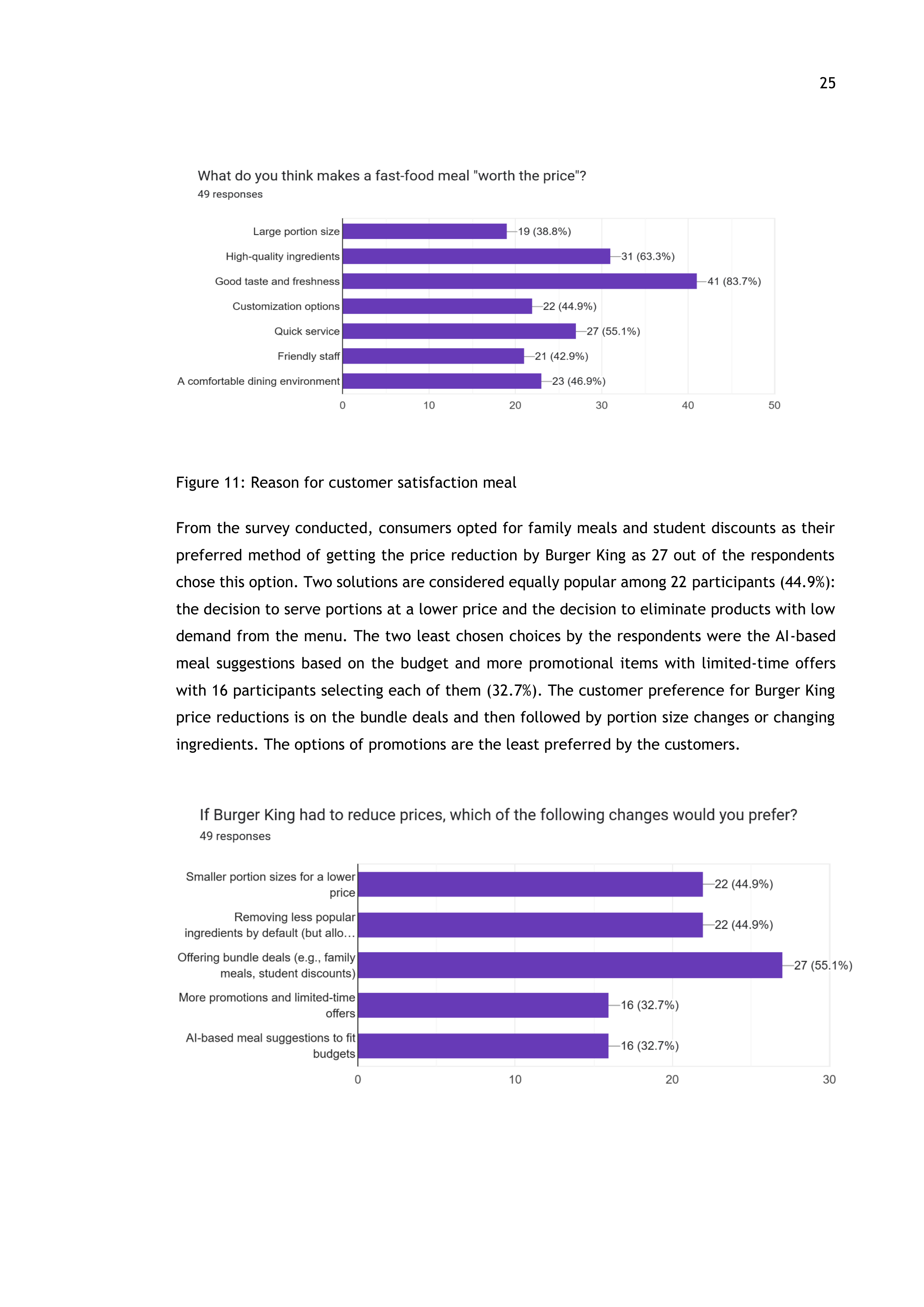
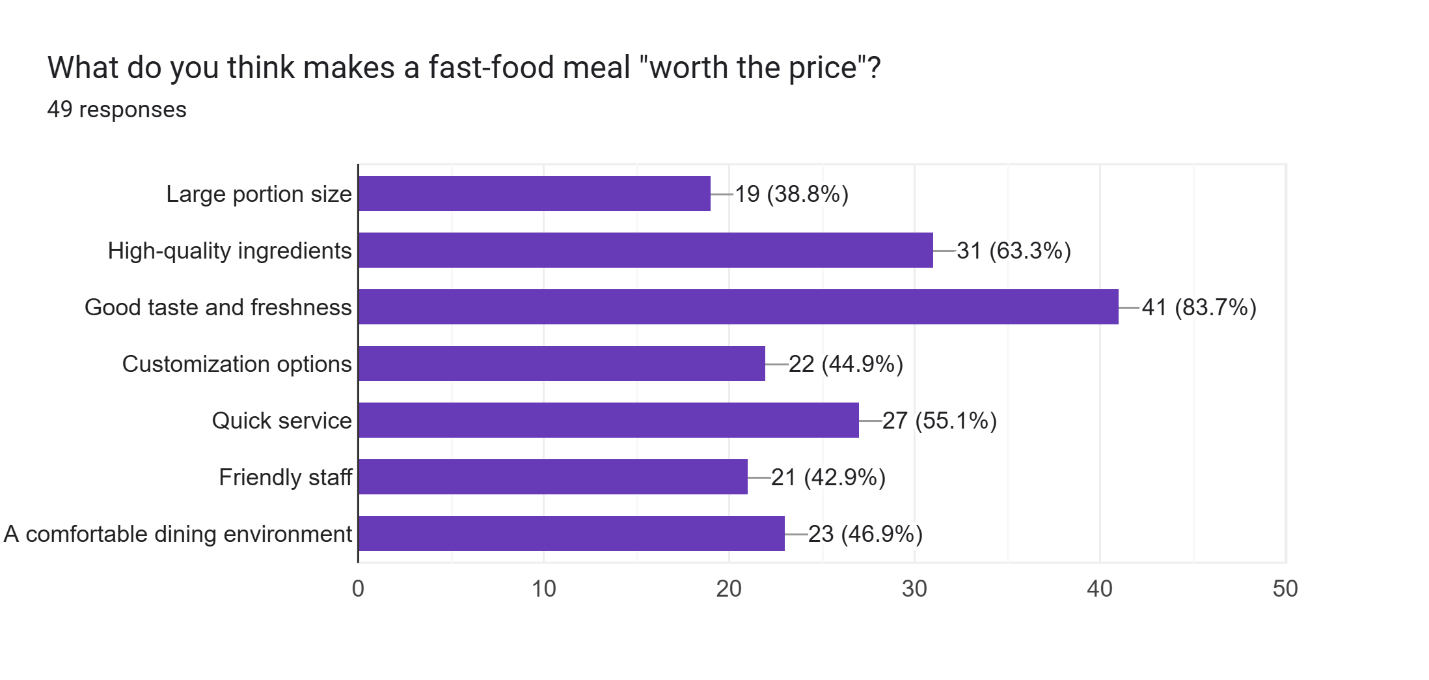
From the survey, 49 participants said that what they get from the product is worth the price,
and what they consider as worth the price are the product’s taste and freshness. The following
were the responses: Good taste and freshness: 41(83.7%); High quality of the ingredients:
31(63.3%); Quick service: 27(55.1%); Comfortable dining environment: 23(46.9%); Options for
customization: 22(44.9%); Friendly staff: 21(42.9%); Large portions: 19(38.8%). Taste and
freshness are the two most crucial aspects that the respondents consider when it comes to fast-
food meals, followed by high-quality ingredients. The time it takes to deliver food is another
factor that customers consider to be very important. From the above responses, portion size is
the least important factor that these respondents use to determine the worth of fast-food
meals.
25
Figure 11: Reason for customer satisfaction meal
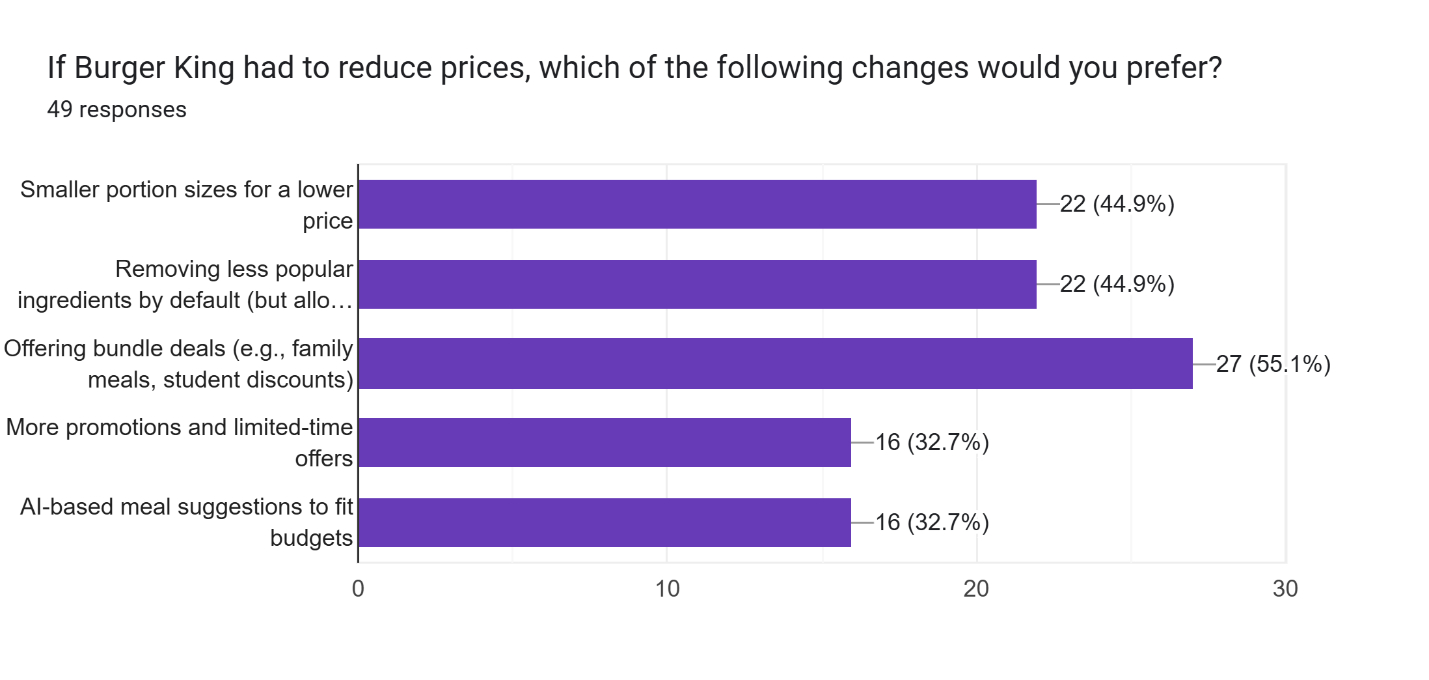
From the survey conducted, consumers opted for family meals and student discounts as their
preferred method of getting the price reduction by Burger King as 27 out of the respondents
chose this option. Two solutions are considered equally popular among 22 participants (44.9%):
the decision to serve portions at a lower price and the decision to eliminate products with low
demand from the menu. The two least chosen choices by the respondents were the AI-based
meal suggestions based on the budget and more promotional items with limited-time offers
with 16 participants selecting each of them (32.7%). The customer preference for Burger King
price reductions is on the bundle deals and then followed by portion size changes or changing
ingredients. The options of promotions are the least preferred by the customers.

26
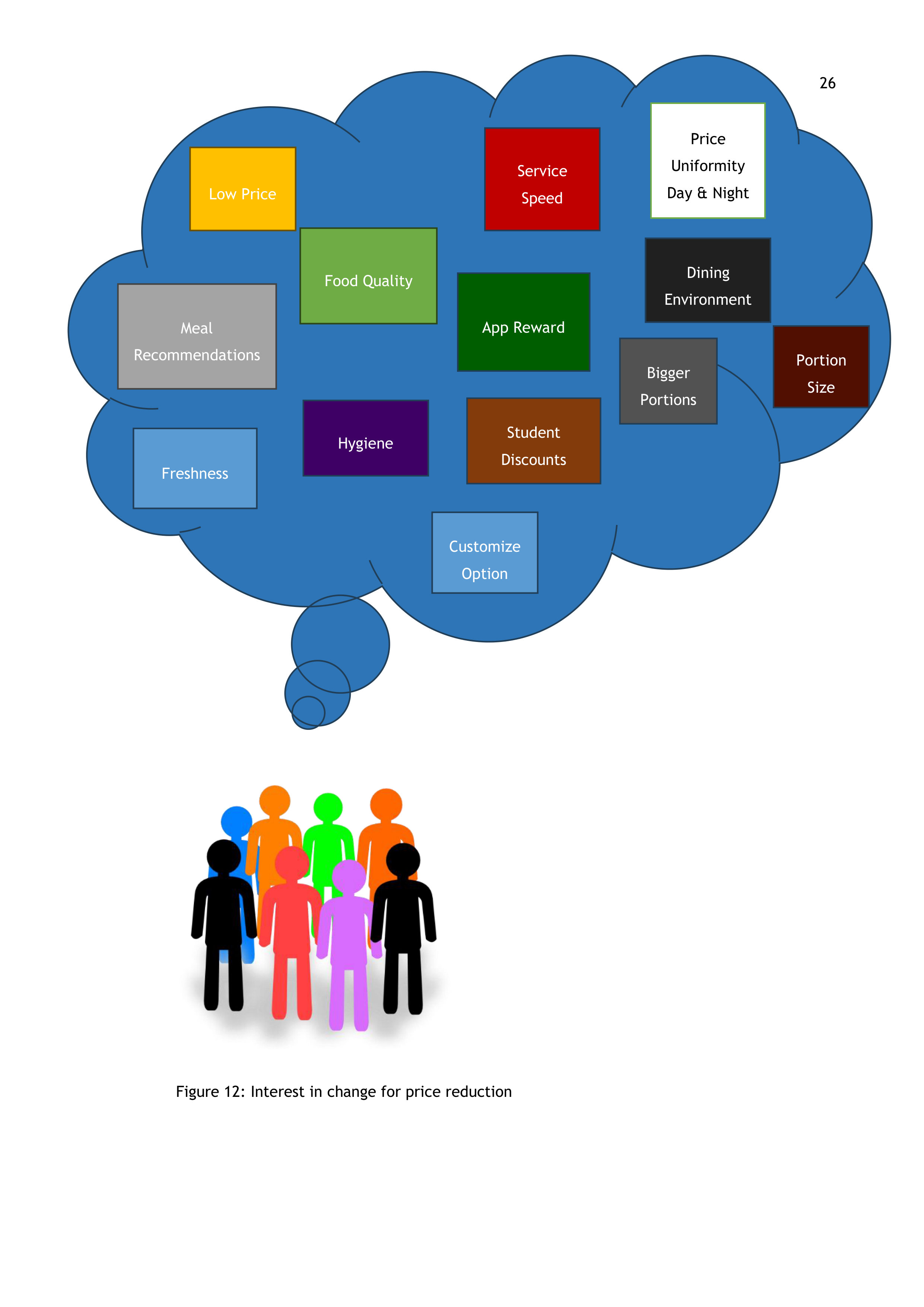
Figure 12: Interest in change for price reduction
Low Price
Price
Uniformity
Day & Night
Meal
Recommendations
Food Quality
Service
Speed
App Reward
Dining
Environment
Hygiene
Student
Discounts
Freshness
Bigger
Portions
Customize
Option
Portion
Size
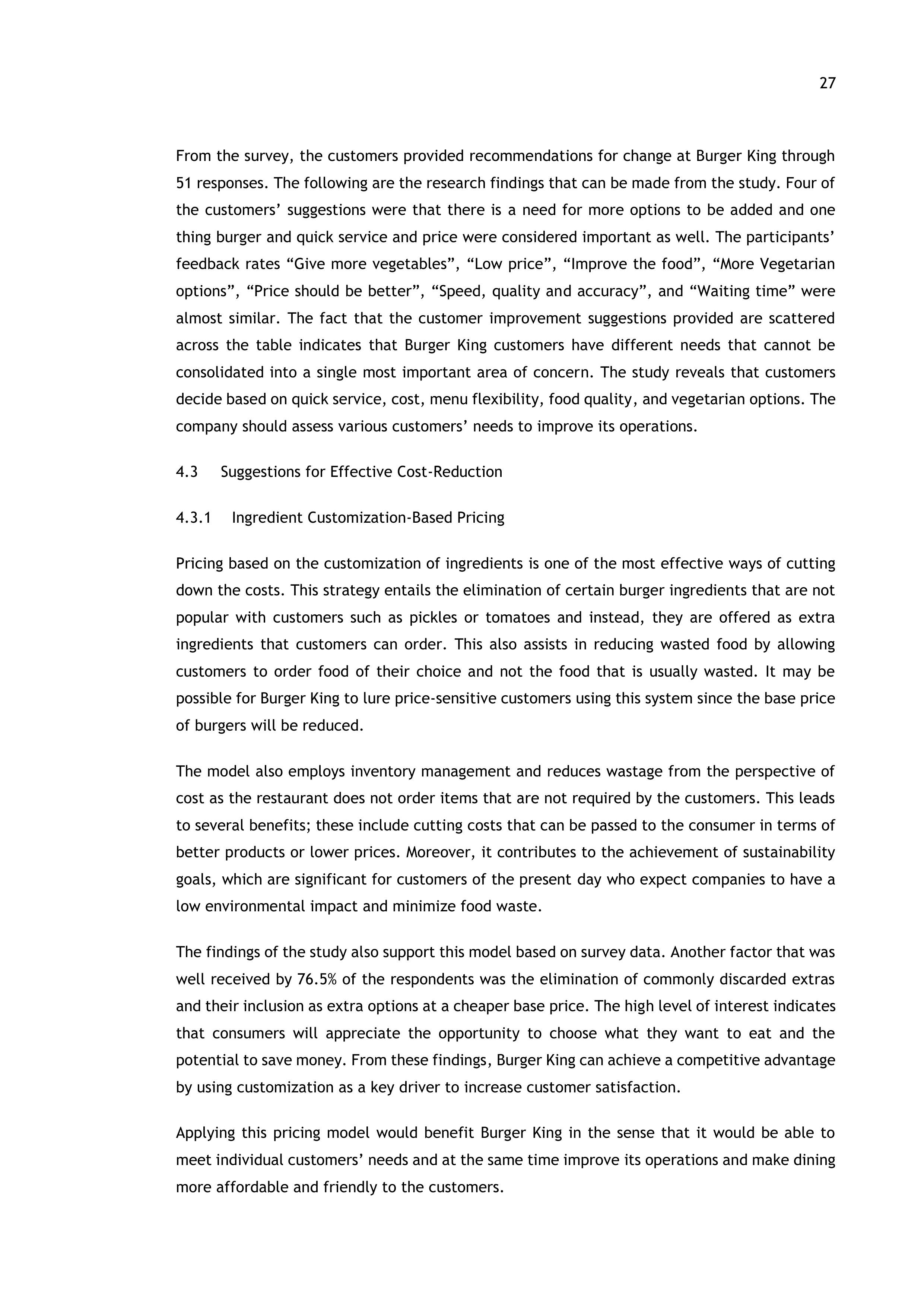
27
From the survey, the customers provided recommendations for change at Burger King through
51 responses. The following are the research findings that can be made from the study. Four of
the customers’ suggestions were that there is a need for more options to be added and one
thing burger and quick service and price were considered important as well. The participants’
feedback rates “Give more vegetables”, “Low price”, “Improve the food”, “More Vegetarian
options”, “Price should be better”, “Speed, quality and accuracy”, and “Waiting time” were
almost similar. The fact that the customer improvement suggestions provided are scattered
across the table indicates that Burger King customers have different needs that cannot be
consolidated into a single most important area of concern. The study reveals that customers
decide based on quick service, cost, menu flexibility, food quality, and vegetarian options. The
company should assess various customers’ needs to improve its operations.
4.3
Suggestions for Effective Cost-Reduction
4.3.1
Ingredient Customization-Based Pricing
Pricing based on the customization of ingredients is one of the most effective ways of cutting
down the costs. This strategy entails the elimination of certain burger ingredients that are not
popular with customers such as pickles or tomatoes and instead, they are offered as extra
ingredients that customers can order. This also assists in reducing wasted food by allowing
customers to order food of their choice and not the food that is usually wasted. It may be
possible for Burger King to lure price-sensitive customers using this system since the base price
of burgers will be reduced.
The model also employs inventory management and reduces wastage from the perspective of
cost as the restaurant does not order items that are not required by the customers. This leads
to several benefits; these include cutting costs that can be passed to the consumer in terms of
better products or lower prices. Moreover, it contributes to the achievement of sustainability
goals, which are significant for customers of the present day who expect companies to have a
low environmental impact and minimize food waste.
The findings of the study also support this model based on survey data. Another factor that was
well received by 76.5% of the respondents was the elimination of commonly discarded extras
and their inclusion as extra options at a cheaper base price. The high level of interest indicates
that consumers will appreciate the opportunity to choose what they want to eat and the
potential to save money. From these findings, Burger King can achieve a competitive advantage
by using customization as a key driver to increase customer satisfaction.
Applying this pricing model would benefit Burger King in the sense that it would be able to
meet individual customers’ needs and at the same time improve its operations and make dining
more affordable and friendly to the customers.
28
4.3.2
Reducing Portion Size of large Burgers
One more idea is to reduce the price by downsizing the portion size of the product, for example,
the Whopper burger. Many customers have complained that the serving sizes are large,
especially for standard products such as the Whopper, thus leading to wastage. Besides
providing customers with a cheaper substitute that retains the core value and feel of the
original product, downsizing portions may also aid in lessening these waste issues.
It also helps customers who may not wish to consume such large meals due to their dietary
requirements or choices, thus making it a more suitable option. It would also help Burger King
to attract more customers, who are in search of lighter meals or meals that are cheaper than
those that are currently being offered in the market.
A mere 42% of the respondents are satisfied with the size and 50% of the respondents believe
that the current portion sizes, especially the Whopper, are too large and are usually thrown
away. This goes a long way in proving that a large proportion of the customers would most
likely opt for the small portions option. That is because offering smaller portions may attract
price-sensitive customers or those who have concerns about wastage.
On the financial side, this strategy may be beneficial for the business to reduce expenditure
and, at the same time, meet customer needs for smaller and more affordable portions. In
addition, it minimizes food wastage, which is becoming a concern to both consumers and
business entities. Burger King would be able to address consumer complaints and support
sustainability efforts by introducing a mini-Whopper or similar products, aligning with the
general population, and enhancing the brand image.
As a result, this approach is in line with the survey in that half of the consumers prefer smaller
portions. It is also a practical way of enhancing customer satisfaction, reducing costs,
eliminating unnecessary costs, and offering an economical solution to its budget-savvy
customers.
4.3.3
Quality Optimization Based on Sales Data
Another realistic cost reduction strategy that Burger King could employ is quality usage
according to the sales volume. This strategy entails maintaining a high quality of those products
that have a high demand while diluting the quality of those products that are not so popular.
Since popular and often selling items contribute to most of the sales and customer satisfaction,
this strategy aims to guarantee that they retain their quality. At the same time, small
improvements in the quality of the ingredients used in the products that are not very popular
among the customers can lead to a decrease in the overall costs of the ingredients while the
customers will not notice that.
29
This way, Burger King will be able to make better decisions on resource distribution since it will
be able to identify which products are not selling well. Thus, to maintain the quality of the
burger that people like, such as the Whopper or Chicken Friends, a low-selling burger, for
instance, might be prepared using cheaper ingredients like a different type of cheese or sauce.
For the best-selling products, this data-oriented strategy allows to application of the cost
structure without compromising the customer’s expectations.
The results revealed that food quality and price were the most significant factors influencing
eating decisions, and food quality was the most important factor that the consumers considered
when choosing a fast-food restaurant (74.5%). Thus, while there is a need to cut costs, it is also
necessary to ensure that the quality of the products offered meets the expectations of the
customers, especially in the case of key products or products with high demand.
This is because it is always economical to make the best use of the ingredients and to simplify
the production process in products that have low sales turnover. Moreover, the preservation of
the capacity of popular products makes sure that customer satisfaction remains elevated, thus
creating more repeat business and brand loyalty. This is because Burger King can experiment
with new products or promotions without the burden of losing money on such products by using
the ingredients of low-selling products.
All things considered, quality optimization supported by sales data can help cut expenses while
maintaining the core product offering's customer appeal, which will ultimately benefit the
company and its customers by providing a better balance between price and quality.
5
Conclusions and Recommendations
5.1
Summary of Key finding
The research findings showed that the two key factors that influence the customers’
preferences in Burger King Finland are the price and quality of the products offered. As seen in
the survey, 45.1% of the participants perceive Burger King to be more costly than McDonalds
and Hesburger, and this has made many customers not choose Burger King due to its high costs.
According to the survey, 83.7% of respondents responded that food quality and freshness are
the basis of the value for money. Consumers consider promotional strategies that involve
discounts on meals because 78.4% of the respondents agreed to it. The survey indicates that
Whopper portion sizes are a worry to 50% of the respondents since they are too large for the
price. It is recommended that portion adjustments may help in enhancing the perception of
pricing. The number of customers visiting Burger King Finland increases when people are given
offers and vouchers along with fast service and loyalty cards. The findings of the study show
30
that Burger King Finland must set the right price level and offer high-quality services to
customers to gain a competitive edge in the market.
5.2
Recommendation for burger King Finland
The following recommendations are proposed based on the findings of this thesis to assist
Burger King Finland in improving its competitive position and achieving a better balance
between price and quality of service in the Finnish fast-food sector.
•
Offer Ingredient Options at a Base Price: As per the survey, 76.5% of the respondents
agreed that ingredients that are usually excluded from the burger must be removed
and offered as extra at a lower price than the basic burger price. This model should be
adopted by Burger King to help cut down on food waste, lower costs, attract price-
conscious consumers, and not compromise on the quality of the staple products. This
is in line with the 68.6% of the respondents who considered price as an important factor,
and therefore the company can target the market with cheap products without
necessarily posting poor profits.
•
Reduce Portion Sizes: As 50% of the respondents felt that portions were too large,
Burger King should consider downsizing its portions at a lower price, for instance, the
“Mini Whopper.” This would be good for customers who are looking for lighter meals or
cheaper meals to address the 43.1% who often opt for competitors because of the
latter’s cheaper meals. It also contributes to sustainability by minimizing wastage of
food, thus making the brand more attractive to the growing numbers of conscious
consumers.
•
Improve service speed: From the survey, 40.8% of the respondents said that they would
be more frequent visitors if the speed of service delivery was increased. Burger King
should focus on operational strategies like efficiency in order to take and preparation
time to meet the fast-food service expectations of the customers. The major factors
that can enhance the dining experience include training the staff to manage the peak
hours and implementing technology to complete the orders quickly.
Furthermore, Burger King should focus on value-based promotions, 78.4% of the respondents
said that they would prefer a meal discount as a promotional offer. Offering more often and
targeted promotions, for example, family meals or student’s special offers (preferred by 44.9%
for the lower price), would attract price-sensitive consumers while keeping the business
profitable due to the bundle offers.
Although 74.5% of the respondents are concerned with food quality, Burger King must ensure
that cost-cutting measures, such as quality improvement based on sales data, do not reduce
the quality of food products such as the Whopper. In the case of slow-moving products, it is
31
possible to use cheaper materials to cut costs but still retain 83.7% of the consumers who are
concerned with taste and freshness.
5.3
Limitations of the study and for future research
The study was a cross-sectional study that only looked at customers at a certain time while
customers changed their behaviour over time. As for further research, it is possible to focus on
the dynamics of customer loyalty, satisfaction, and price sensitivity during a longer period of
time. This would enable Burger King to determine the long-term impact of the implemented
strategies such as loyalty programs or changes in the price of the burgers and the necessary
adjustments to make.
Limitations: The current study failed to consider some factors such as the macro environment
factors, inflation, and supply chain factors that influence the pricing strategies. Future research
could examine how these issues affect the Burger King company’s prospect of keeping the prices
low while at the same time being profitable. For instance, assessing the effects of increasing
raw material prices on the pricing strategies would assist in finding ways of reducing the costs
without necessarily affecting the consumers.
A larger and more diverse sample should have been used in the study; the study used a sample
of 51 respondents which is not enough to represent the diverse customers of Burger King
Finland. Future research should include a larger and more diverse sample of participants with
a focus on the age, income, and geographical location of the participants across the country of
Finland. This would help Burger King to have a better understanding of the customers in terms
of their preferences and perceptions towards the brand and the products of the company to be
able to formulate specific strategies for the different demographic segments and the market
conditions in the different regions.
References
Alexander, S., 2022.
Analysis of the Effect of Food Quality, Price, Location and Environment,
and Service Quality on Customer Loyalty through Customer Satisfaction of Burger King
Customers in Surabaya during the Pandemic.
Journal of Economics, Finance and Management
Studies
, pp. 619–632.
Bhasin, H., 2024.
Marketing mix of Burger King and 7Ps.
Accessed on 28 March 2025.
https://www.marketing91.com/marketing-mix-of-burger-king/?utm_source
32
Burger King Corporation – Company History. (n.d.).
In Company-Histories.com.
Accessed on 12
March 2025.
https://www.company-histories.com/Burger-King-Corporation-Company-
History.html
Burger King Corporation. (n.d.).
In Encyclopedia Britannica.
Retrieved from
https://www.britannica.com/money/Burger-King-Corporation
Burger King. Accessed on 28 March 2025.
https://burgerking.fi/
Chi Kin Yim, P. K., 1999.
Consumer Behavioral Loyalty: A Segmentation Model and Analysis.
Journal of Business Research
, pp. 75–92.
Claire, G., 2022.
Pricing Strategy of McDonald’s Corporation, Article.
Accessed on 27 March
2025.
https://www.konsyse.com/articles/pricing-strategy-of-mcdonalds-corporation/
DairyNews, T., 2024.
The history of Burger King's tough brand policy.
Accessed on 2 March
2025.
https://dairynews.today/global/news/istoriya-zhestkoy-politiki-brenda-burger-
king.html
Dr. P. Deivanai, 2016.
Factors influencing to Preference of Fast Food Restaurants.
IOSR
Journal of Business and Management (IOSR-JBM)
, pp. 20–25.
Fast Food Market – Global Industry Analysis and Forecast (2024–2030). Accessed on 2 March
2025.
https://www.maximizemarketresearch.com/market-report/global-fast-food-
market/28718/
Fransiska Johan, N. L. J. K. L., 2023.
The Impact of Price on Consumer Buying Behavior.
Accessed on 12 March 2025.
https://papers.ssrn.com/sol3/papers.cfm?abstract_id=4508503
Garcia, G. J., 2020.
An Analysis of the Major Business Process of an Organization: The Case
of Burger King Corporation
, Cabuyao, Laguna: ResearchGate.
Greenspan, Roberta, 2024.
Burger King’s 4Ps Marketing Mix Analysis.
Panmore Institute.
Accessed on 28 March 2025.
https://panmore.com/burger-king-marketing-mix-4ps-
analysis#:~:text=Burger%20King%20uses
...
Hanaysha, J., 2016.
Testing the Effects of Food Quality, Price Fairness, and Physical
Environment on Customer Satisfaction in the Fast-Food Restaurant Industry.
Journal of Asian
Business Strategy
, pp. 31–40.
Haslindar Ibrahim, C. G. C. G. E. C. C., 2024.
Analysis of the Factors Affecting Customer
Preference Towards McDonald’s.
International Journal of Tourism and Hospitality in Asia
Pacific
, pp. 129–142.
33
Hesburger. Accessed on 28 March 2025.
https://www.hesburger.com/products/hamburgers/veke---double-veggie-burger
History of Burger King. (n.d.).
In Wikipedia.
Retrieved from
https://en.wikipedia.org/wiki/History_of_Burger_King
Hussain Al-Salamin, E. A.-H., 2016.
The Impact of Pricing on Consumer Buying Behavior in
Saudi Arabia: Al-Hassa Case Study.
European Journal of Business and Management
, pp. 62–73.
Ingrid HM Steenhuis, W. E. W. A. d. M., 2011.
Consumer food choices: the role of price and
pricing strategies.
Public Health Nutrition
, pp. 2220–2226.
Jörg Hecker, N. K., n.d.
The Guide to Interview Analysis.
Accessed on 11 March 2025.
https://atlasti.com/guides/interview-analysis-guide/analyzing-interviews
?
Karen Dunwoodie, L. M. A. N., 2022.
Qualitative interviewing in the field of work and
organizational psychology: Benefits, challenges, and guidelines for researchers and
reviewers.
Applied Psychology
, pp. 863–889.
Kesko, 2021.
Finns favor domestic products at a level that is exceptional on a global scale.
Accessed on 28 March 2025.
https://www.kesko.fi/en/media/news-and-
releases/news/2021/finns-favour-domestic-products
...
Kohi, K., 2020.
Measuring the Effectiveness of Green Strategies in the Fast Food Industry – A
Consumer Attitude Perspective
, Espoo, Finland: Aalto University.
lain, 2011.
McDonald’s Finland Revamps Branches to Enhance Customer Experience.
Accessed
on 8 March 2025.
https://foodchainmagazine.com/news/mcdonalds-finland-revamps-
branches-to-enhance-customer-experience/#:~:text=Investing%20to%20improve
...
Liu, Y., 2011.
Finnish Market Entry Planning of Franchising
, Pori, Finland: Satakunta
University of Applied Sciences.
Mandaliya, D., 2024.
Burger King's Marketing Strategies (and Bold Campaigns).
Accessed on 3
March 2025.
https://www.marketingmonk.so/p/burger-king-s-marketing-strategies-and-bold-
campaigns
Maria Mohd Salleh, M. Z. K. P. M. N. N. M. S. M. S., 2023.
Price, Service Quality, and Food
Quality: Which has the most influence on Malaysian Customer's Purchase Behaviour of Fast
Food?
International Journal of Academic Research in Business & Social Sciences
, pp. 422–433.
McDonald’s. Accessed on 28 March 2025.
https://www.mcdonalds.com/fi/fi-fi.html#carousel-
5d9afd24e1-item-00da838d10
34
Mohammed Saleh Alosani, H. S. A.-D. R. Z. Y., 2016.
Mechanism of Benchmarking and Its
Impact on Organizational Performance.
International Journal of Business and Management
,
pp. 172–183.
Noopur Saxena, M. T., 2020.
Youth preferences for the fast food industry: a conjoint
approach.
International Journal of Public Sector Performance Management
, pp. 456–466.
Panter, J., 2004.
Burger King: The First 50 Years.
s.l.: The FLAME Magazine.
Peters, B., 2024.
The Ratings Game.
Accessed on 3 March 2025.
https://www.marketwatch.com/story/restaurants-are-struggling-as-price-increases-backfire-
but-these-chains-are-feeling-pretty-good-7afae237
?
Ponto, J., 2015.
Understanding and Evaluating.
Journal of the Advanced Practitioner in
Oncology
, p. 168–171.
Reuter, D., 2024.
Fast-food chains are locked in a 'value war' for US customers.
Accessed on
27 March 2025.
https://www.businessinsider.com/mcdonalds-chipotle-starbucks-fast-food-
chains-value-meal-war-customers-2024-11
?
Sheridan, Nina.
Burger King marketing mix 2025.
Latterly.org.
Accessed on 28 March 2025.
https://www.latterly.org/burger-king-marketing-mix/
The History of Burger King. (n.d.).
In Mental Itch.
Accessed on 13 March 2025.
https://mentalitch.com/the-history-of-burger-king/
Tittamari Rinne, 2024.
YLE.
According to McDonald's in the US, hamburger prices are too high
– in Finland, the situation is seen differently. Accessed on 28 March 2025.
https://yle.fi/a/74-
20102584?origin=rss
Vincit, n.d.
Our-work/hesburger.
Accessed on 26 March 2025.
https://www.vincit.com/our-
work/hesburger
Watson, J., 2024.
How Many People Visit Fast Food Restaurants in Finland.
Accessed on 12
March 2025.
https://meplusfood.com/how-many-people-visit-fast-food-restaurant-in-finland/
Wikipedia, 2025.
Burger King.
Accessed on 13 March 2025.
https://de.wikipedia.org/wiki/Burger_King
Unpublished Source
Tuomainen, N. 2025. Finance Manager. Burger King Finland. Interview with a manager. 26
February 2025. Helsinki. Personal interview.
35
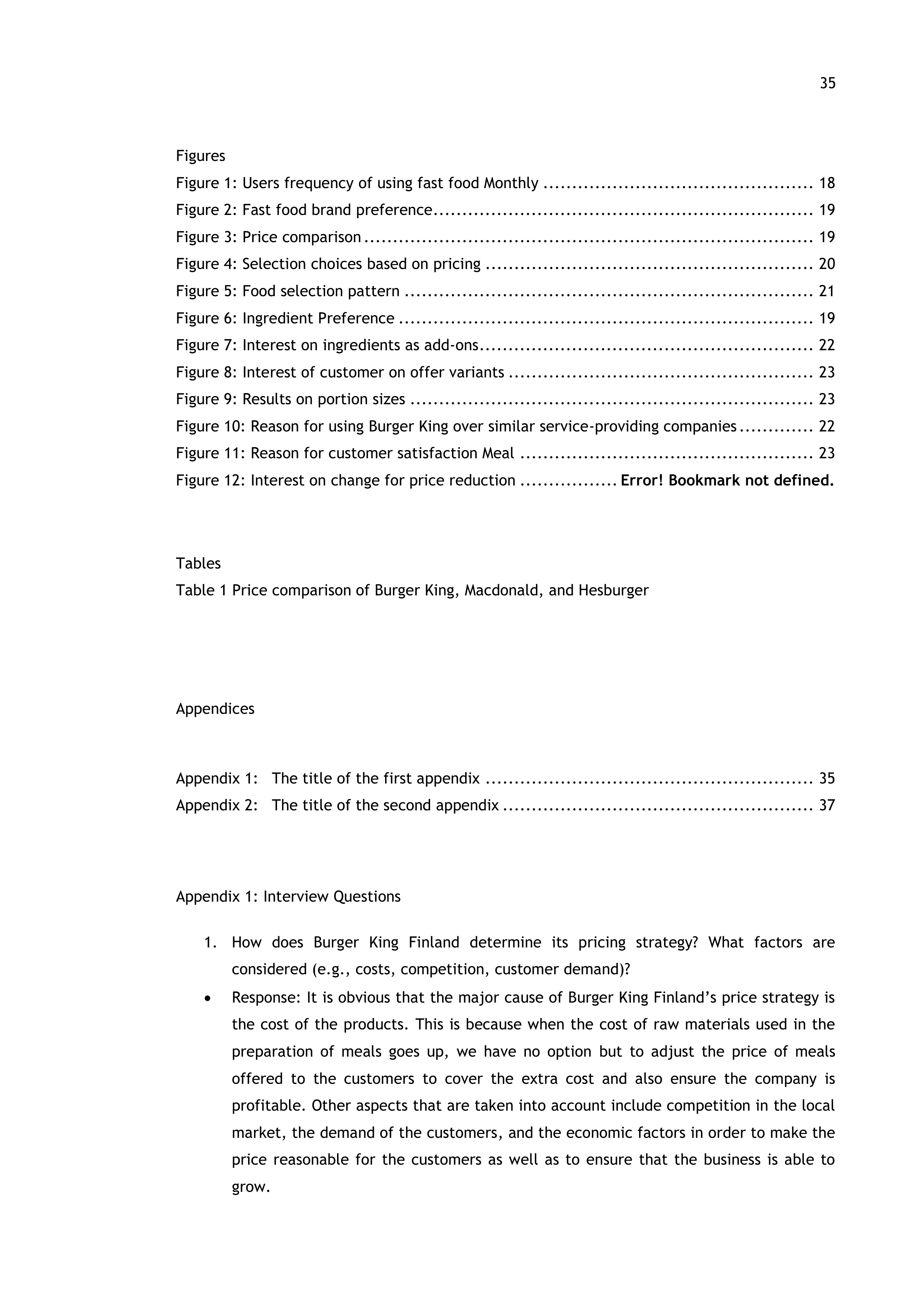
Figures
Figure 1: Users frequency of using fast food Monthly ............................................... 18
Figure 2: Fast food brand preference .................................................................. 19
Figure 3: Price comparison .............................................................................. 19
Figure 4: Selection choices based on pricing ......................................................... 20
Figure 5: Food selection pattern ....................................................................... 21
Figure 6: Ingredient Preference ........................................................................ 19
Figure 7: Interest on ingredients as add-ons .......................................................... 22
Figure 8: Interest of customer on offer variants ..................................................... 23
Figure 9: Results on portion sizes ...................................................................... 23
Figure 10: Reason for using Burger King over similar service-providing companies ............. 22
Figure 11: Reason for customer satisfaction Meal ................................................... 23
Figure 12: Interest on change for price reduction .................
Error! Bookmark not defined.
Tables
Table 1 Price comparison of Burger King, Macdonald, and Hesburger
Appendices
Appendix 1:
The title of the first appendix ......................................................... 35
Appendix 2:
The title of the second appendix ...................................................... 37
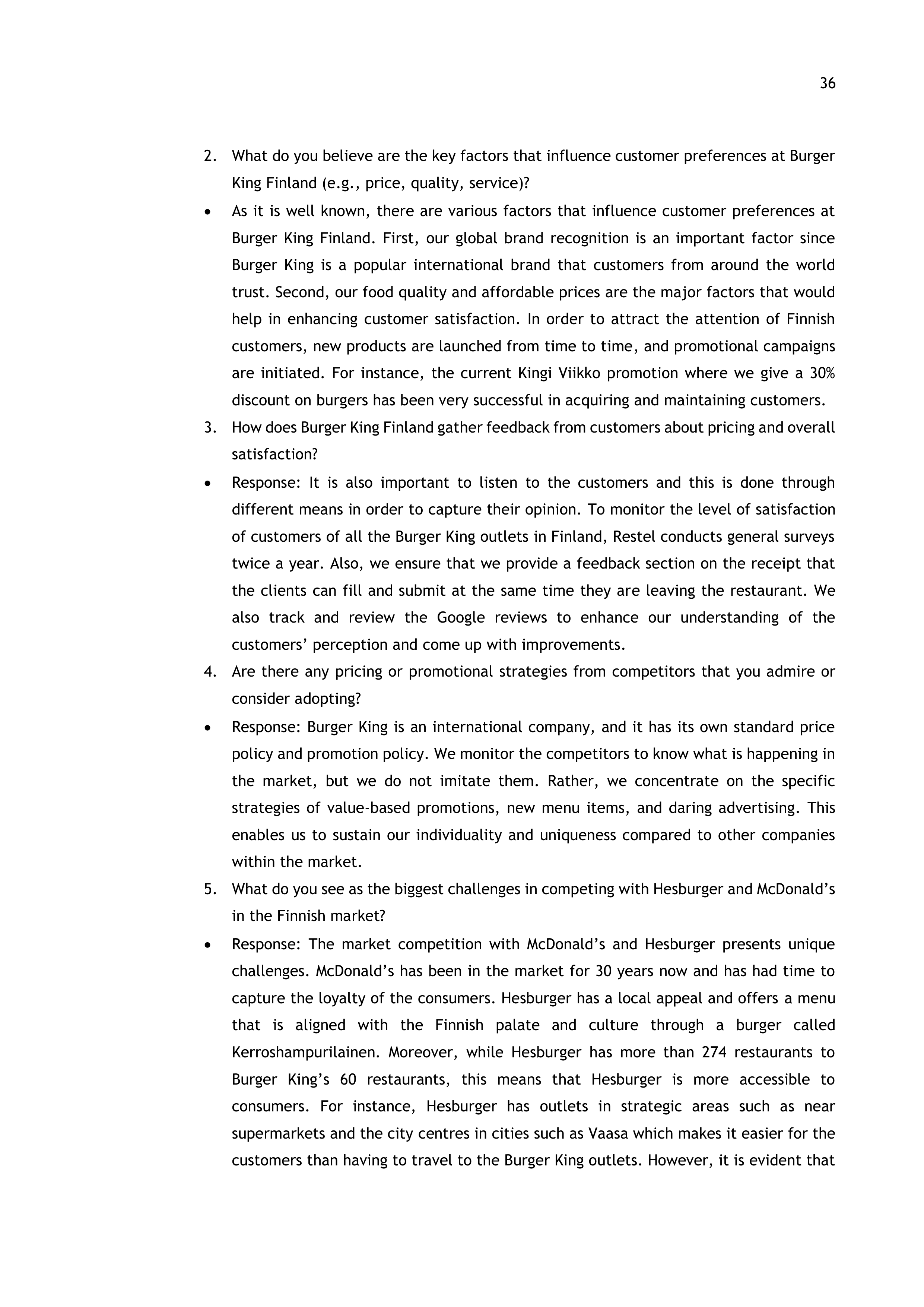
Appendix 1: Interview Questions
1.
How does Burger King Finland determine its pricing strategy? What factors are
considered (e.g., costs, competition, customer demand)?
•
Response: It is obvious that the major cause of Burger King Finland’s price strategy is
the cost of the products. This is because when the cost of raw materials used in the
preparation of meals goes up, we have no option but to adjust the price of meals
offered to the customers to cover the extra cost and also ensure the company is
profitable. Other aspects that are taken into account include competition in the local
market, the demand of the customers, and the economic factors in order to make the
price reasonable for the customers as well as to ensure that the business is able to
grow.
36
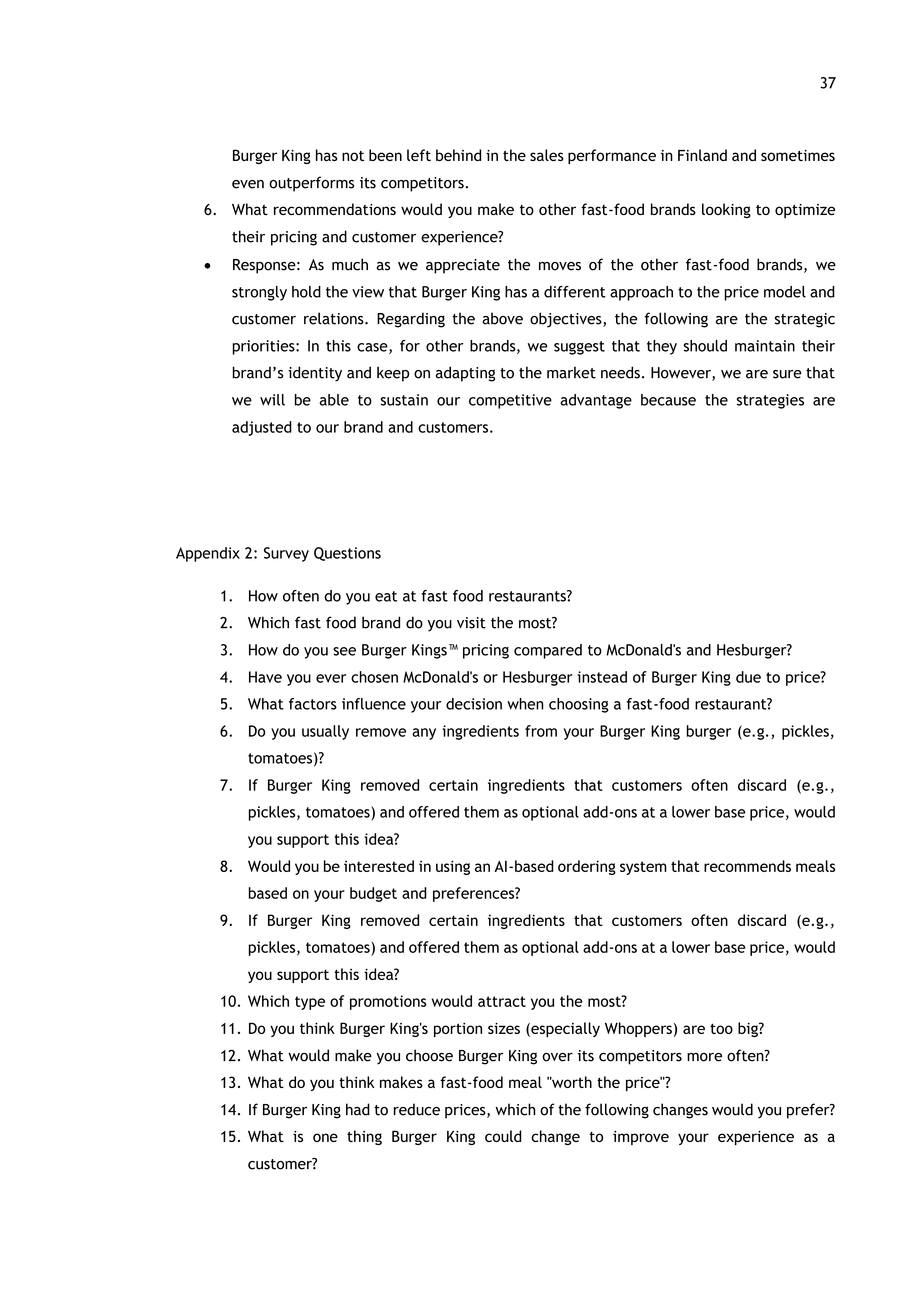
2.
What do you believe are the key factors that influence customer preferences at Burger
King Finland (e.g., price, quality, service)?
•
As it is well known, there are various factors that influence customer preferences at
Burger King Finland. First, our global brand recognition is an important factor since
Burger King is a popular international brand that customers from around the world
trust. Second, our food quality and affordable prices are the major factors that would
help in enhancing customer satisfaction. In order to attract the attention of Finnish
customers, new products are launched from time to time, and promotional campaigns
are initiated. For instance, the current Kingi Viikko promotion where we give a 30%
discount on burgers has been very successful in acquiring and maintaining customers.
3.
How does Burger King Finland gather feedback from customers about pricing and overall
satisfaction?
•
Response: It is also important to listen to the customers and this is done through
different means in order to capture their opinion. To monitor the level of satisfaction
of customers of all the Burger King outlets in Finland, Restel conducts general surveys
twice a year. Also, we ensure that we provide a feedback section on the receipt that
the clients can fill and submit at the same time they are leaving the restaurant. We
also track and review the Google reviews to enhance our understanding of the
customers’ perception and come up with improvements.
4.
Are there any pricing or promotional strategies from competitors that you admire or
consider adopting?
•
Response: Burger King is an international company, and it has its own standard price
policy and promotion policy. We monitor the competitors to know what is happening in
the market, but we do not imitate them. Rather, we concentrate on the specific
strategies of value-based promotions, new menu items, and daring advertising. This
enables us to sustain our individuality and uniqueness compared to other companies
within the market.
5.
What do you see as the biggest challenges in competing with Hesburger and McDonald’s
in the Finnish market?
•
Response: The market competition with McDonald’s and Hesburger presents unique
challenges. McDonald’s has been in the market for 30 years now and has had time to
capture the loyalty of the consumers. Hesburger has a local appeal and offers a menu
that is aligned with the Finnish palate and culture through a burger called
Kerroshampurilainen. Moreover, while Hesburger has more than 274 restaurants to
Burger King’s 60 restaurants, this means that Hesburger is more accessible to
consumers. For instance, Hesburger has outlets in strategic areas such as near
supermarkets and the city centres in cities such as Vaasa which makes it easier for the
customers than having to travel to the Burger King outlets. However, it is evident that
37
Burger King has not been left behind in the sales performance in Finland and sometimes
even outperforms its competitors.
6.
What recommendations would you make to other fast-food brands looking to optimize
their pricing and customer experience?
•
Response: As much as we appreciate the moves of the other fast-food brands, we
strongly hold the view that Burger King has a different approach to the price model and
customer relations. Regarding the above objectives, the following are the strategic
priorities: In this case, for other brands, we suggest that they should maintain their
brand’s identity and keep on adapting to the market needs. However, we are sure that
we will be able to sustain our competitive advantage because the strategies are
adjusted to our brand and customers.
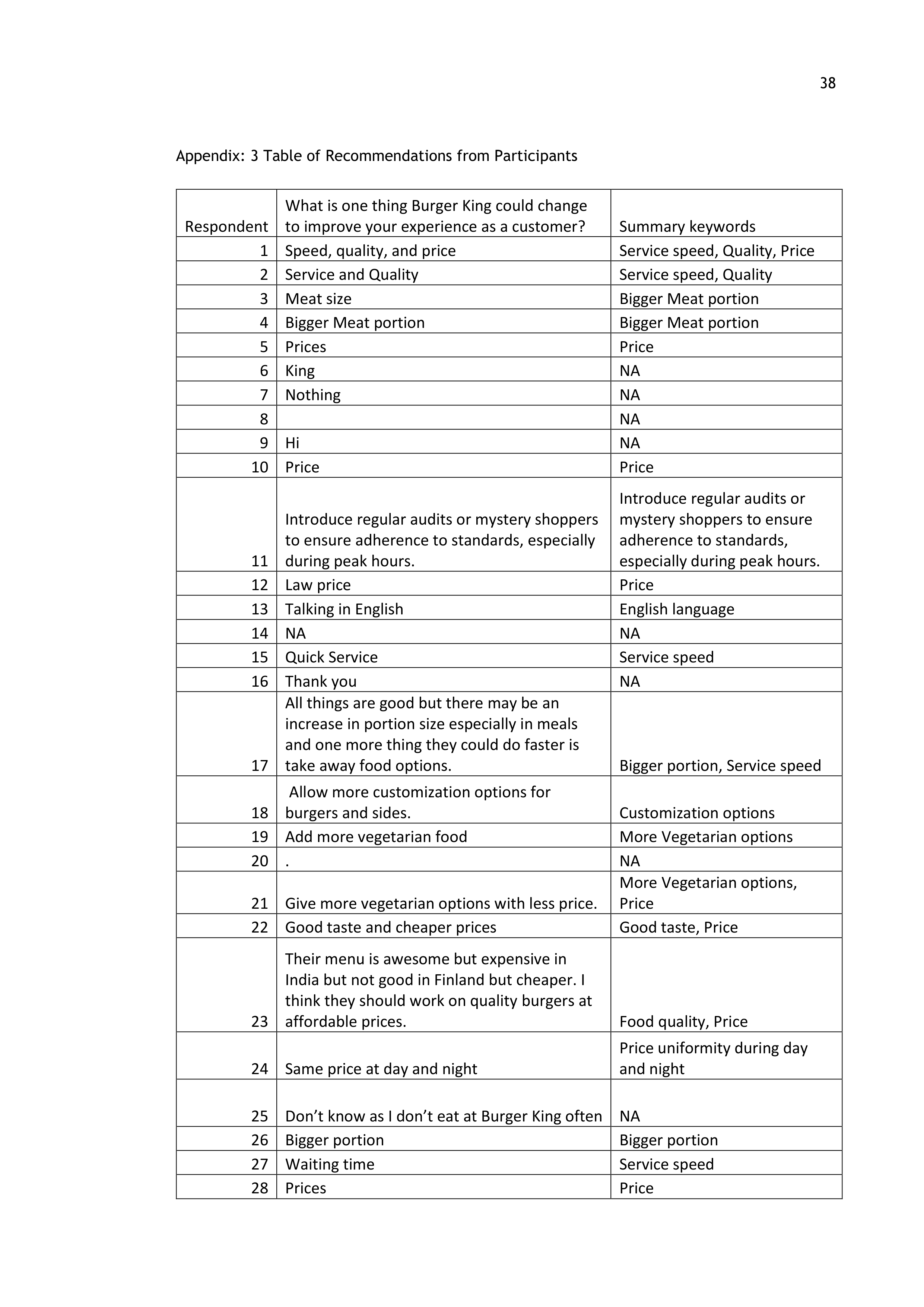
Appendix 2: Survey Questions
1.
How often do you eat at fast food restaurants?
2.
Which fast food brand do you visit the most?
3.
How do you see Burger Kings™ pricing compared to McDonald's and Hesburger?
4.
Have you ever chosen McDonald's or Hesburger instead of Burger King due to price?
5.
What factors influence your decision when choosing a fast-food restaurant?
6.
Do you usually remove any ingredients from your Burger King burger (e.g., pickles,
tomatoes)?
7.
If Burger King removed certain ingredients that customers often discard (e.g.,
pickles, tomatoes) and offered them as optional add-ons at a lower base price, would
you support this idea?
8.
Would you be interested in using an AI-based ordering system that recommends meals
based on your budget and preferences?
9.
If Burger King removed certain ingredients that customers often discard (e.g.,
pickles, tomatoes) and offered them as optional add-ons at a lower base price, would
you support this idea?
10.
Which type of promotions would attract you the most?
11.
Do you think Burger King's portion sizes (especially Whoppers) are too big?
12.
What would make you choose Burger King over its competitors more often?
13.
What do you think makes a fast-food meal "worth the price"?
14.
If Burger King had to reduce prices, which of the following changes would you prefer?
15.
What is one thing Burger King could change to improve your experience as a
customer?
38
Appendix: 3 Table of Recommendations from Participants
Respondent
What is one thing Burger King could change
to improve your experience as a customer?
Summary keywords
1 Speed, quality, and price
Service speed, Quality, Price
2 Service and Quality
Service speed, Quality
3 Meat size
Bigger Meat portion
4 Bigger Meat portion
Bigger Meat portion
5 Prices
Price
6 King
NA
7 Nothing
NA
8
NA
9 Hi
NA
10 Price
Price
11
Introduce regular audits or mystery shoppers
to ensure adherence to standards, especially
during peak hours.
Introduce regular audits or
mystery shoppers to ensure
adherence to standards,
especially during peak hours.
12 Law price
Price
13 Talking in English
English language
14 NA
NA
15 Quick Service
Service speed
16 Thank you
NA
17
All things are good but there may be an
increase in portion size especially in meals
and one more thing they could do faster is
take away food options.
Bigger portion, Service speed
18
Allow more customization options for
burgers and sides.
Customization options
19 Add more vegetarian food
More Vegetarian options
20 .
NA
21 Give more vegetarian options with less price.
More Vegetarian options,
Price
22 Good taste and cheaper prices
Good taste, Price
23
Their menu is awesome but expensive in
India but not good in Finland but cheaper. I
think they should work on quality burgers at
affordable prices.
Food quality, Price
24 Same price at day and night
Price uniformity during day
and night
25 Don’t know as I don’t eat at Burger King often NA
26 Bigger portion
Bigger portion
27 Waiting time
Service speed
28 Prices
Price
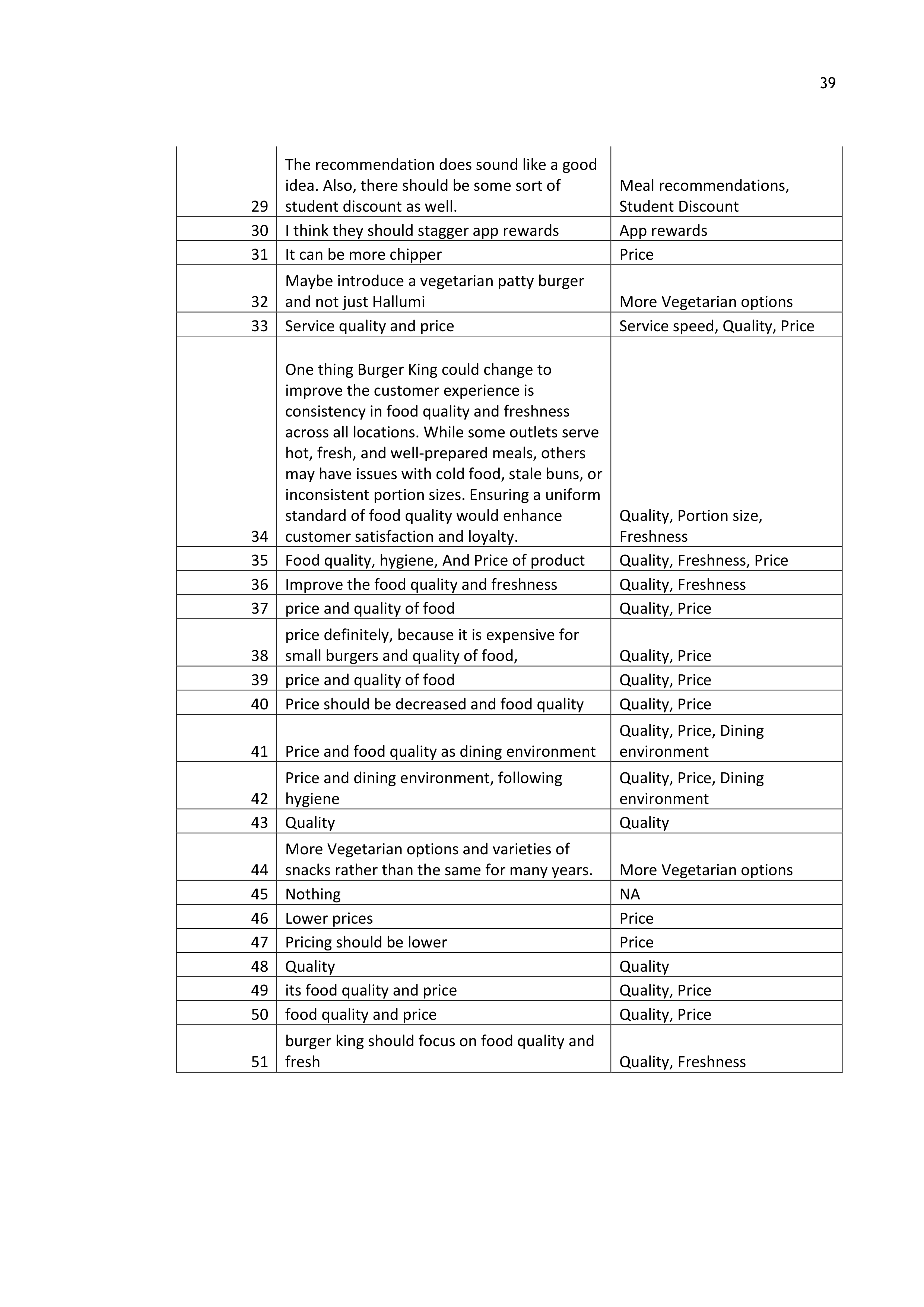
39
29
The recommendation does sound like a good
idea. Also, there should be some sort of
student discount as well.
Meal recommendations,
Student Discount
30 I think they should stagger app rewards
App rewards
31 It can be more chipper
Price
32
Maybe introduce a vegetarian patty burger
and not just Hallumi
More Vegetarian options
33 Service quality and price
Service speed, Quality, Price
34
One thing Burger King could change to
improve the customer experience is
consistency in food quality and freshness
across all locations. While some outlets serve
hot, fresh, and well-prepared meals, others
may have issues with cold food, stale buns, or
inconsistent portion sizes. Ensuring a uniform
standard of food quality would enhance
customer satisfaction and loyalty.
Quality, Portion size,
Freshness
35 Food quality, hygiene, And Price of product
Quality, Freshness, Price
36 Improve the food quality and freshness
Quality, Freshness
37 price and quality of food
Quality, Price
38
price definitely, because it is expensive for
small burgers and quality of food,
Quality, Price
39 price and quality of food
Quality, Price
40 Price should be decreased and food quality
Quality, Price
41 Price and food quality as dining environment
Quality, Price, Dining
environment
42
Price and dining environment, following
hygiene
Quality, Price, Dining
environment
43 Quality
Quality
44
More Vegetarian options and varieties of
snacks rather than the same for many years.
More Vegetarian options
45 Nothing
NA
46 Lower prices
Price
47 Pricing should be lower
Price
48 Quality
Quality
49 its food quality and price
Quality, Price
50 food quality and price
Quality, Price
51
burger king should focus on food quality and
fresh
Quality, Freshness