Received:
6
November
2023
|
Accepted:
11
December
2023
DOI:
10.1111/1468-5973.12527
C A S E
S T U D Y
Levi's
and
Lalaland.ai
collaboration
crisis
Lila
Maiolo
University
of
Georgia,
Athens,
Georgia,
USA
Correspondence
Lila
Maiolo,
University
of
Georgia,
Athens,
GA,
USA.
Email:
lilamaiolo@icloud.com
Funding
information
None
Abstract
Levi
Strauss
& Co.,
a popular fashion
label commonly known as
Levi's, was
involved
in a crisis situation in March 2023 as a result of their partnership with Lalaland.ai, an
artificial intelligence (AI) company. The partnership was created with the intention of
using AI
‐
generated models to show more diversity in Levi's modelling. However, the
brand received intense backlash and criticism following the partnership's announce-
ment
for
cheapening
diversity
by
failing
to
use
real
models.
In
the
format
of
a
case
study,
this
paper
describes
the
situation
and
evaluates
Levi's
crisis
response
in
this
relevant
and
dynamic
dilemma.
K E Y W O R D S
AI,
artificial
intelligence,
crisis
management,
diversity,
Levi's
1
|
OVERVIEW
AND
BACKGROUND
The
growth
of
new
technologies,
such
as
artificial
intelligence
(AI),
provides
unique
opportunities
in
the
field
of
media
and
communica-
tions.
However,
they
also
leave
the
door
open
for
unprecedented
challenges and criticisms as the public evaluates their opinions of this
rapidly
evolving
technology.
As
these
situations
unfold,
PR
practi-
tioners
and
communications
experts
are
forced
to
re
‐
evaluate
how
they
communicate
with
stakeholders
to
remain
transparent
and
progressive.
In
the
realm
of
crisis
communication,
the
growing
importance
of
being
sensitive
when
addressing
diversity
cannot
be
overstated.
As
our
world
becomes
increasingly
interconnected
and
diverse,
crises
often
affect
individuals
from
various
backgrounds,
cultures,
and
identities.
Failing
to
acknowledge
and
respect
this
diversity
can
lead
to miscommunication, alienation, and exacerbation of the crisis. As AI
technology
develops,
the
communications
industry
is
forced
to
redefine
what
is
considered
ethical
and
best
practices.
In
relation
to
diversity
and
fair
representation,
AI
presents
a
unique
issue
that
has
emerged
as
a
keystone
in
crisis
communication.
A
particularly
nuanced
example
of
a
crisis
situation
that
exemplifies
this
concept
is
that
of
the
Levi's
and
Lalaland.ai
partnership
in
March
2023.
On
March
22,
2023,
Levi's
put
out
a
press
release
announcing
their new partnership with Lalaland.ai (Levi Strauss & Co). Lalaland.ai
was founded in Amsterdam in 2019. The
company's goal is to use AI
to help fashion retailers create realistic models of various body types,
ages,
and
skin
tones
to
bring
more
diversity
to
the
fashion
industry
(Vanity
Teen,
2023
).
The
initial
partnership
announcement
loosely
explained
plans
to
use
these
AI
‐
generated
models
to
enhance
customers'
digital
shopping
experience.
In
the
press
release,
Dr.
Amy Gershkoff Boles, global head of digital and emerging technology
strategy
at
Levi
Strauss
&
Co,
stated
that
‘
while
AI
will
likely
never
fully
replace
human
models
for
us,
we
are
excited
for
the
potential
capabilities
this
may
afford
us
for
the
consumer
experience
’
.
The
future
of
the
partnership
was
briefly
explained,
stating
that
these
models
would
be
used
to
supplement
real
models
and
potentially
unlock
‘
a future where we can enable customers to see our products
on
more
models
that
look
like
themselves,
creating
a
more
personal
and
inclusive
shopping
experience
’
.
(Levi
Strauss
&
Co)
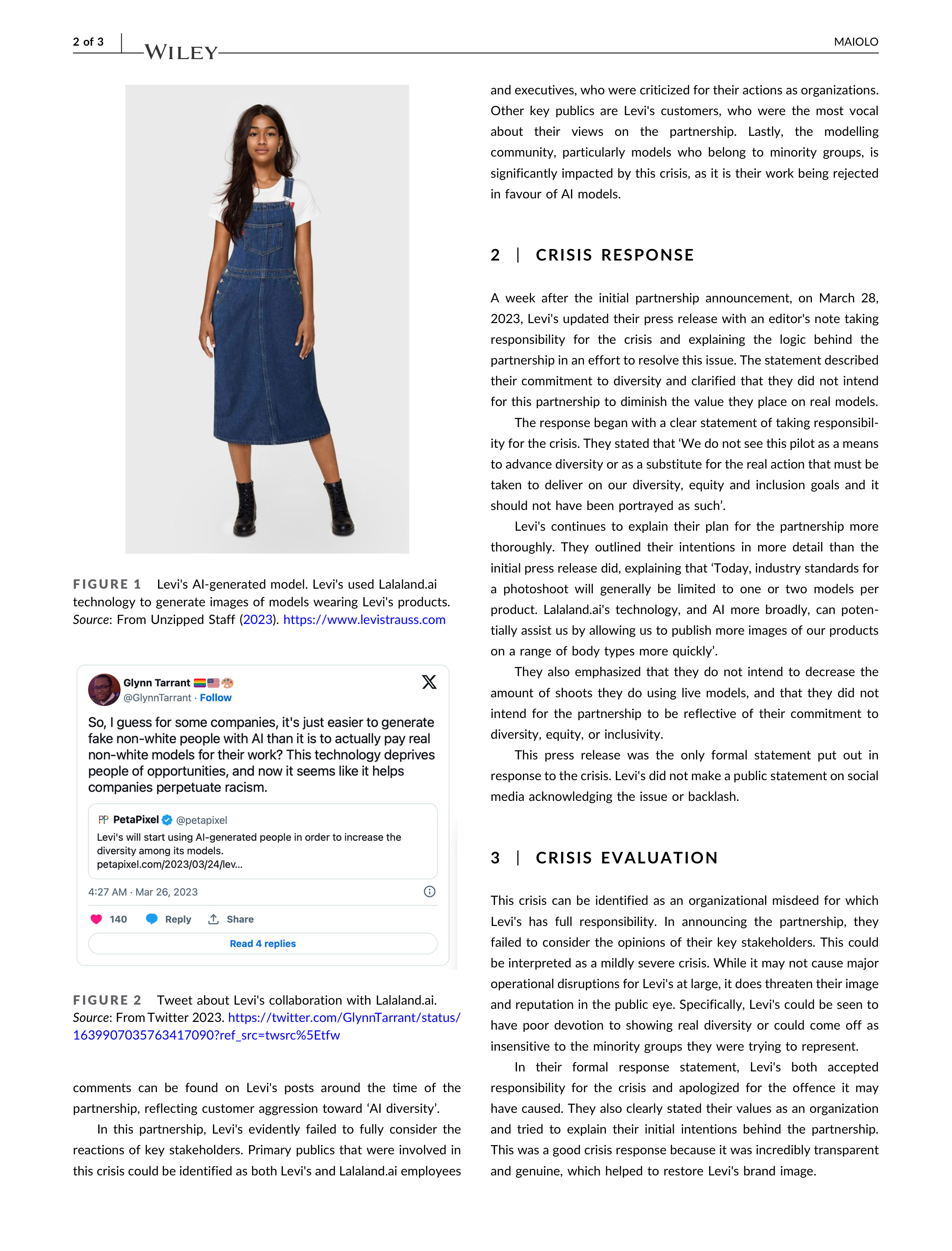
(Figures
1
and
2
).
In
the
week
following
the
announcement,
criticisms
arose
on
a
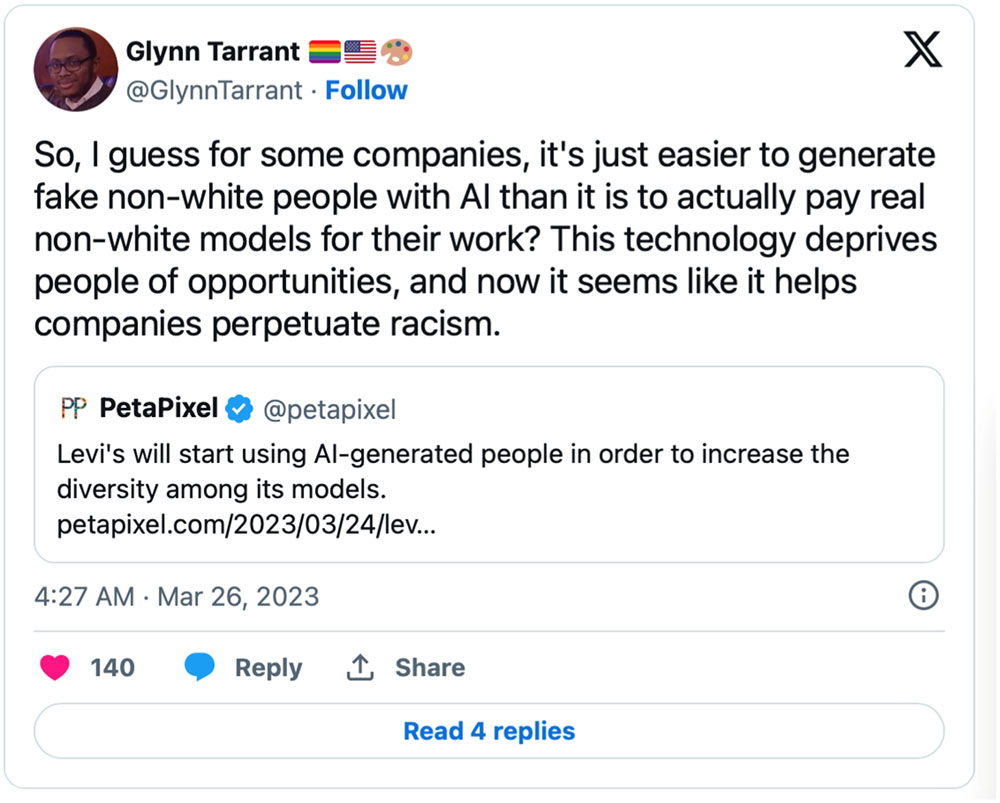
number of social media platforms. For instance, several critics took to
Twitter to
comment
on Levi's
neglect
of
the plethora
of
real,
diverse
models
in
the
industry
that
could
have
been
used.
On
Instagram,
J.
Contingencies
Crisis
Manag
.
2024;32:e12527.
wileyonlinelibrary.com/journal/jccm
|
1
of
3
https://doi.org/10.1111/1468-5973.12527
This
is
an
open
access
article
under
the
terms
of
the
Creative
Commons
Attribution
License,
which
permits
use,
distribution
and
reproduction
in
any
medium,
provided
the
original
work
is
properly
cited.
©
2024
The
Authors.
Journal
of
Contingencies
and
Crisis
Management
published
by
John Wiley
&
Sons
Ltd.
comments
can
be
found
on
Levi's
posts
around
the
time
of
the
partnership,
reflecting
customer
aggression
toward
‘
AI
diversity
’
.
In
this
partnership,
Levi's
evidently
failed
to
fully
consider
the
reactions
of
key
stakeholders.
Primary
publics
that
were
involved
in
this crisis could be identified as both Levi's and Lalaland.ai employees
and executives, who were criticized for their actions as organizations.
Other
key
publics
are
Levi's
customers,
who
were
the
most
vocal
about
their
views
on
the
partnership.
Lastly,
the
modelling
community,
particularly
models
who
belong
to
minority
groups,
is
significantly
impacted
by
this
crisis,
as
it
is
their
work
being
rejected
in
favour
of AI
models.
2
|
CRISIS
RESPONSE
A
week
after
the
initial
partnership
announcement,
on
March
28,
2023,
Levi's
updated
their
press
release
with
an
editor's
note
taking
responsibility
for
the
crisis
and
explaining
the
logic
behind
the
partnership in an effort to resolve this issue. The statement described
their
commitment
to
diversity
and
clarified
that
they
did
not
intend
for
this
partnership
to
diminish
the
value
they
place
on
real
models.
The response began with a clear statement of taking responsibil-
ity for the crisis. They stated that
‘
We do not see this pilot as a means
to advance diversity or as a substitute for the real action that must be
taken
to
deliver
on
our
diversity,
equity
and
inclusion
goals
and
it
should
not
have
been
portrayed
as
such
’
.
Levi's
continues
to
explain
their
plan
for
the
partnership
more
thoroughly.
They
outlined
their
intentions
in
more
detail
than
the
initial press release did, explaining that
‘
Today, industry standards for
a
photoshoot
will
generally
be
limited
to
one
or
two
models
per
product.
Lalaland.ai's
technology,
and
AI
more
broadly,
can
poten-
tially assist us by allowing us to publish more images of our products
on
a
range
of
body
types
more
quickly
’
.
They
also
emphasized
that
they
do
not
intend
to
decrease
the
amount
of
shoots
they
do
using
live
models,
and
that
they
did
not
intend
for
the
partnership
to
be
reflective
of
their
commitment
to
diversity,
equity,
or
inclusivity.
This
press
release
was
the
only
formal
statement
put
out
in
response to the crisis. Levi's did not make a public statement on social
media
acknowledging
the
issue
or
backlash.
3
|
CRISIS
EVALUATION
This
crisis
can
be
identified
as
an
organizational
misdeed
for
which
Levi's
has
full
responsibility.
In
announcing
the
partnership,
they
failed
to
consider
the
opinions
of
their
key
stakeholders.
This
could
be interpreted as a mildly severe crisis. While it may not cause major
operational disruptions for Levi's at large, it does threaten their image
and
reputation
in
the
public
eye.
Specifically,
Levi's
could
be
seen
to
have
poor
devotion
to
showing
real
diversity
or
could
come
off
as
insensitive
to
the
minority
groups
they
were
trying
to
represent.
In
their
formal
response
statement,
Levi's
both
accepted
responsibility
for
the
crisis
and
apologized
for
the
offence
it
may
have
caused.
They
also
clearly
stated
their
values
as
an
organization
and
tried
to
explain
their
initial
intentions
behind
the
partnership.
This was a good crisis response because it was incredibly transparent
and
genuine,
which
helped
to
restore
Levi's
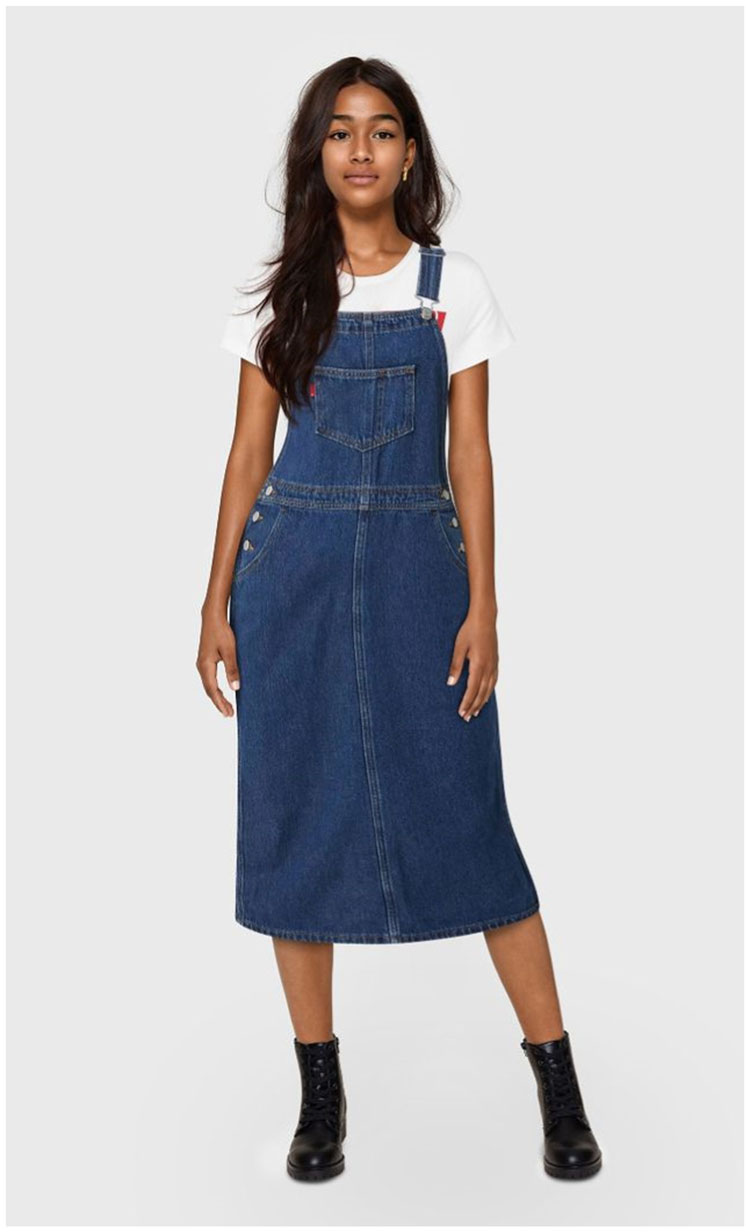
brand
image.
FIGURE
1
Levi's
AI
‐
generated
model.
Levi's
used
Lalaland.ai
technology
to
generate
images
of
models
wearing
Levi's
products.
Source
:
From
Unzipped
Staff
(
2023
).
https://www.levistrauss.com
FIGURE
2
Tweet
about
Levi's
collaboration
with
Lalaland.ai.
Source
: From Twitter 2023.
https://twitter.com/GlynnTarrant/status/
1639907035763417090?ref_src=twsrc%5Etfw
2
of
3
|
MAIOLO
On the other hand, Levi's neglected to acknowledge the crisis on any
social
media
channels.
This
may
be
interpreted
as
a
missed
opportunity
since
the
majority
of
the
backlash
took
place
on
their
social
media
platforms. Not all customers frequently check the Levi's website or follow
their press releases, and therefore may have missed their crisis response
entirely. If Levi's had posted that they updated the press release on social
media
or
even
responded
to
the
hateful
comments
left
on
their
posts,
their
crisis
response
might
have
been
viewed
as
more
transparent.
4
|
KEY
THEMES
Although
this
case
was
unique
to
Levi's,
the
intersection
of
AI
and
diversity is emerging as a key sector in crisis communication. It can be
gleaned
from
this
situation
that
while
AI
is
a
beneficial
technology
that
can
allow
companies
to
get
work
done
quickly
and
efficiently,
it
is
important
to
remember
the
value
of
human
input
to
an
audience.
Particularly
in
the
fashion
industry,
it
is
critical
to
represent
diversity
thoroughly
and
accurately.
This
case
exemplifies
how
meaningful
diversity
is
to
an
audience.
As
AI
advances
beyond
image
and
text
generation, it will be increasingly important for companies to consider
how
pulling
back
on
human
input
will
reflect
on
their
organization.
DATA
AVAILABILITY
STATEMENT
Data
sharing
is
not
applicable
to
this
article
as
no
new
data
were
created
or
analyzed
in
this
study.
ORCID
Lila
Maiolo
http://orcid.org/0009-0008-6717-5872
REFERENCES
Unzipped
Staff.
(2023,
March
28).
LS&Co.
partners
with
Lalaland.ai.
Levi
Strauss
&
Co
.
https://www.levistrauss.com/2023/03/22/lsco-
partners-with-lalaland-ai/
Vanity Teen. (2023,
March 28).
Levi's partners
with
AI Studio
lalaland.ai
for
diverse,
sustainable
modeling
.
https://www.vanityteen.com/levis-
partners-with-ai-studio-lalaland-ai-for-diverse-sustainable-
modeling/#:~:text=Levi%20Strauss%20%26%20Co%20has%
20teamed,models%20with%20AI%2Dgenerated%20counterparts
How
to
cite
this
article:
Maiolo,
L.
(2024).
Levi's
and
Lalaland.ai
collaboration
crisis.
Journal
of
Contingencies
and
Crisis
Management
,
32
,
e12527.
https://doi.org/10.1111/1468-5973.12527
MAIOLO
|
3
of
3