Highlights in Art and Design
ISSN: 2957-8787 | Vol. 14, No. 1, 2026
6
Digital Transformation and Reform of Fashion Brands
in the Digital Age: A Case Study of Gucci
Jiarui Zhang
Dalian University of Foreign Languages, Dalian Liaoning, 116044, China
Abstract:
This paper aims to explore the inevitability and complexity of the transformation faced by traditional luxury brands
against the backdrop of the digital technology revolution. Taking the Italian luxury brand Gucci as a focal case, through a
systematic analysis of its public strategies, marketing practices and industry reports, the paper deeply dissects the multi-
dimensional motivations, core paths and inherent conflicts of its digital transformation. The study finds that Gucci's
transformation is not a simple online migration of channels, but a systematic revolution that reconstructs the brand narrative,
consumer interaction and value delivery system with a "digital native mindset". The key to its success lies in integrating the spirit
of digital experimentation into the brand gene, and effectively reaching and engaging the new generation of consumers through
omni-channel experience integration, social content creation and virtual product exploration. However, this process also exposes
the profound tensions between craft tradition and digital efficiency, classic image and avant-garde experimentation, as well as
hierarchical organization and agile culture. This study finally refines the strategic insights of Gucci's transformation, providing
a reference framework and warnings for Chinese fashion brands in balancing inheritance and innovation, physical and virtual,
elite and mass markets, and points out future research directions on the long-term performance evaluation and ethical boundaries
of digital transformation.
Keywords:
Digital Transformation; Luxury Brands; Gucci; Brand Experience; Integration of Virtual and Real; Fashion
Industry.
1.
Introduction: The Fashion Industry
Enters the Digital Critical Point
We are in an era where the meaning of luxury is redefined
by algorithms, social media and immersive technologies.
Digital technology has evolved from a marginal tool to the
core infrastructure driving the transformation of the global
fashion industry. It not only reshapes every link from design,
production to marketing and distribution, but also completely
changes consumers' desire structure, communication methods
and experience expectations. In particular, the COVID-19
pandemic, as an unprecedented stress test, has accelerated the
Darwinian evolution of retail models, turning digital
transformation from a "strategic option" into a "survival
necessity".
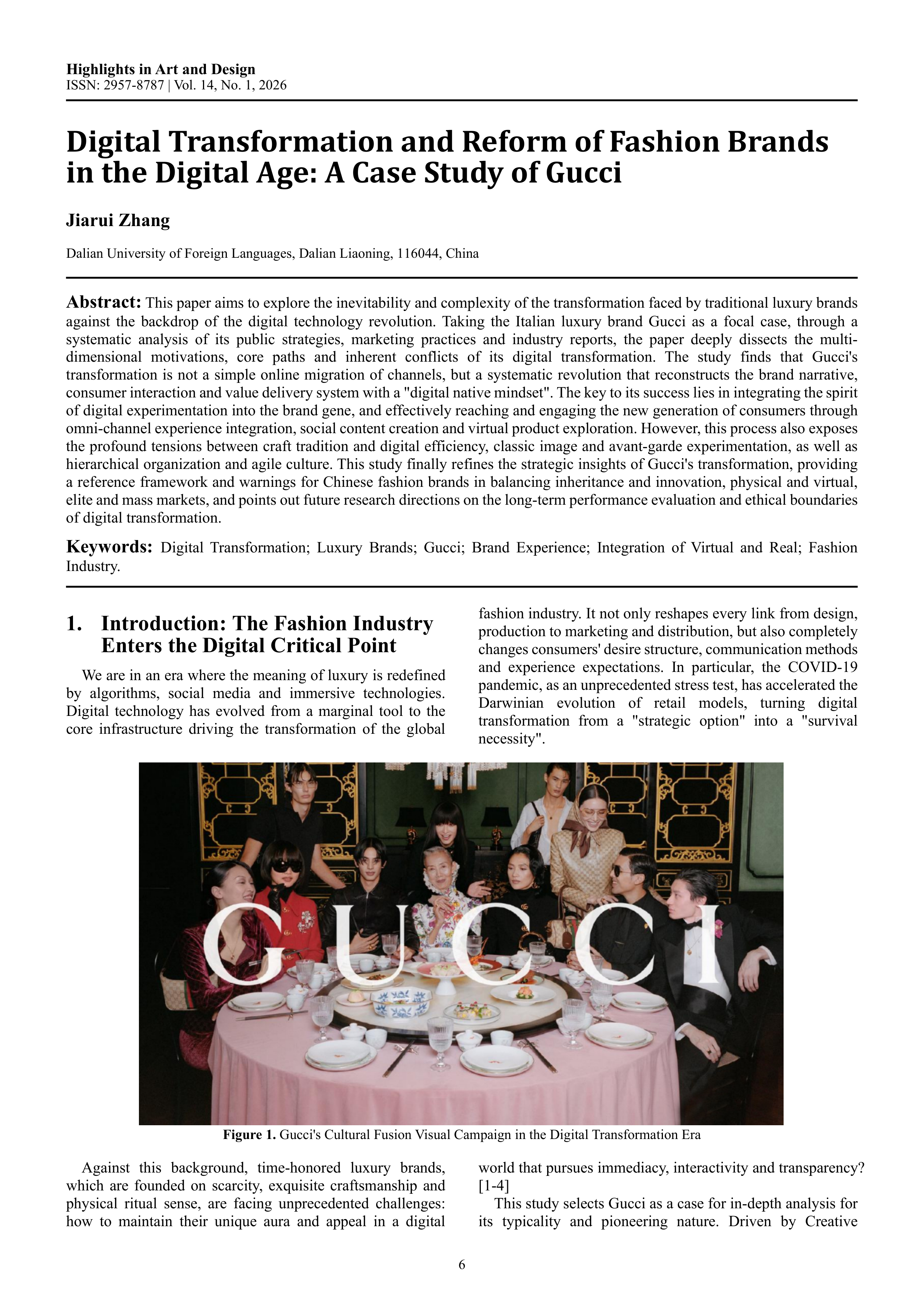
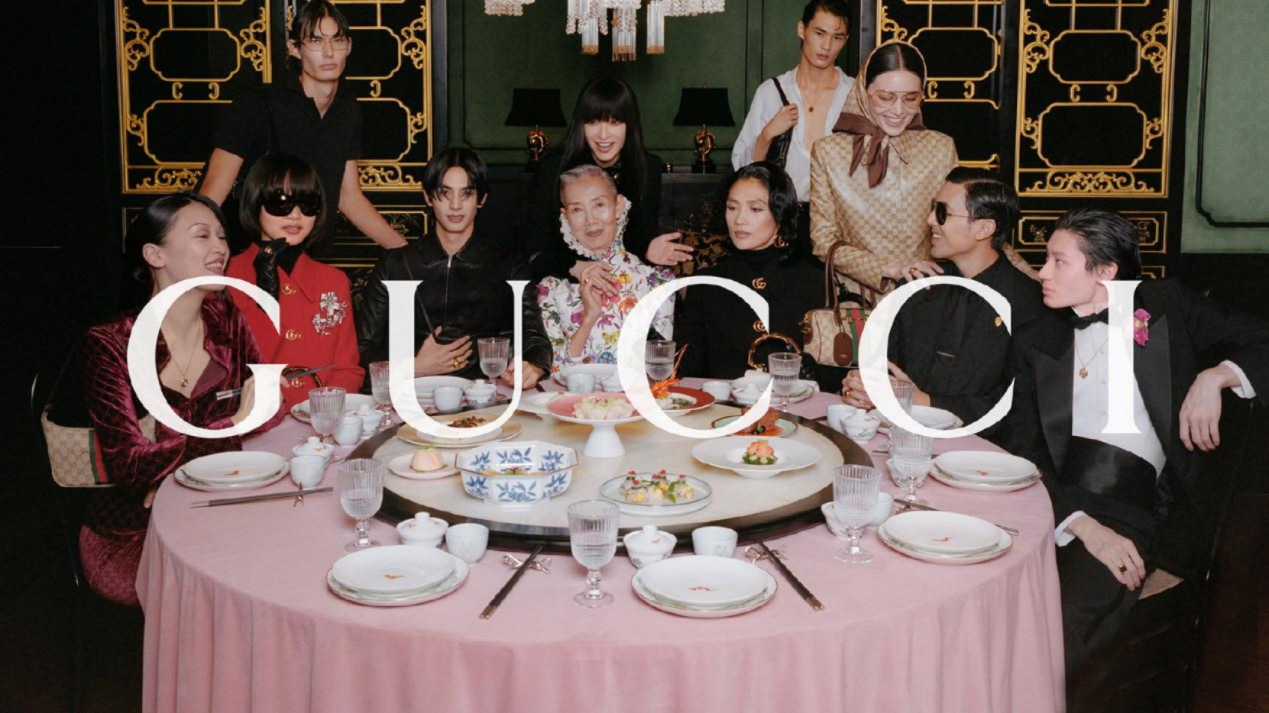
Figure 1.
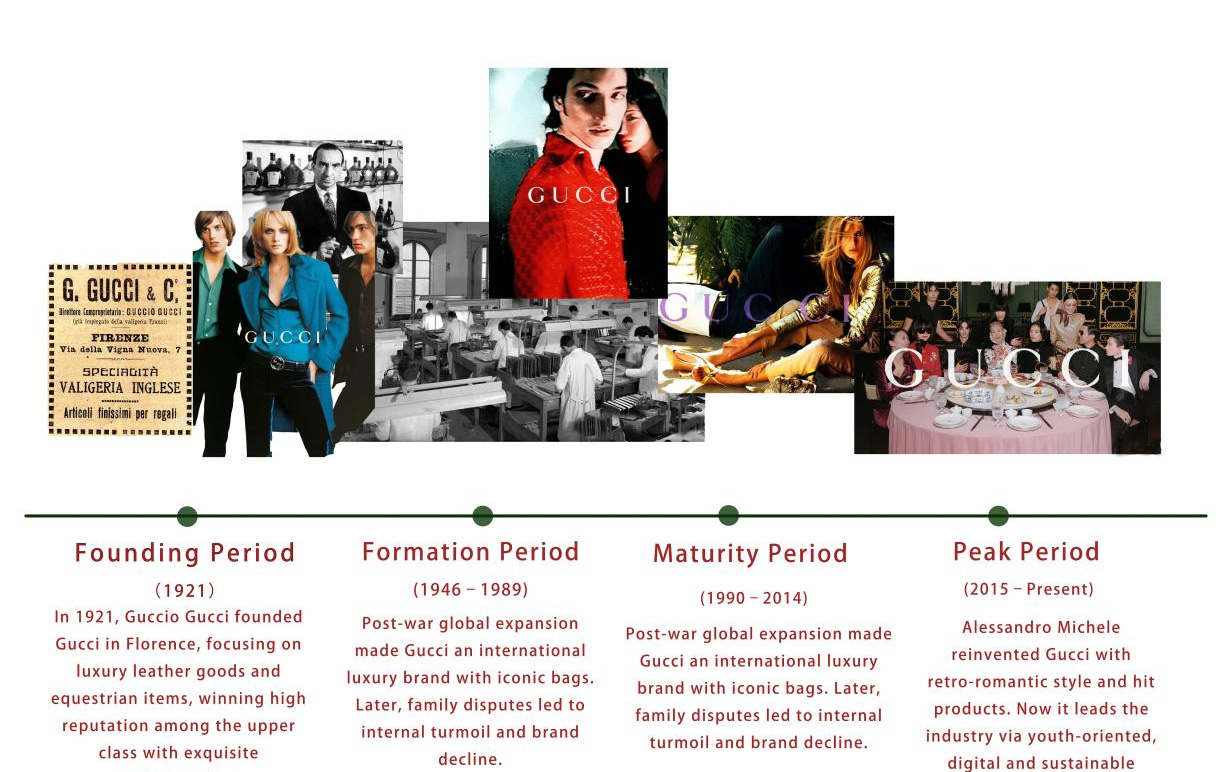
Gucci's Cultural Fusion Visual Campaign in the Digital Transformation Era
Against this background, time-honored luxury brands,
which are founded on scarcity, exquisite craftsmanship and
physical ritual sense, are facing unprecedented challenges:
how to maintain their unique aura and appeal in a digital
world that pursues immediacy, interactivity and transparency?
[1-4]
This study selects Gucci as a case for in-depth analysis for
its typicality and pioneering nature. Driven by Creative
7
Director Alessandro Michele and former Chief Executive
Officer Marco Bizzarri, Gucci has not only achieved an epic
revival of its performance, but also been regarded as a pioneer
and benchmark for the digitalization of luxury brands. It has
radically embraced social media, experimented with the
virtual world and reconstructed retail experiences, providing
the industry with an excellent sample to observe how
traditional brands adapt to the digital age. Therefore, the core
questions of this paper are: Why and how did Gucci launch
and advance its digital transformation? What key paths has it
explored and what deep-seated conflicts has it encountered in
this process? What insights can its experiences and lessons
offer to Chinese fashion brands that are also at a crossroads?
By answering these questions, this study aims to enrich the
interdisciplinary field of luxury management and digital
brand building at the theoretical level, and provide
operational strategic thinking for the industry at the practical
level.
2.
The Dual Forces Driving the
Transformation
Gucci's digital transformation stems from the combined
effect of its inherent brand genes and drastic changes in the
external environment. Internally, since Alessandro Michele
took charge of the creative direction in 2015, Gucci has
launched an aesthetic revolution marked by the keywords of
"eccentric, romantic and inclusive". This "contemporary
modernist" style, which emphasizes self-expression and
blends retro and contemporary trends, is inherently highly
communicable and topical, providing abundant materials for
digital narrative. More importantly, the concept of "fashion
democratization" advocated by Michele, though controversial
in the traditional luxury circle, is partially consistent with the
equal and open atmosphere of the Internet in its spiritual core,
laying a cultural foundation for the brand to carry out bold
digital experiments. At the same time, the brand clearly
recognizes that the traditional model relying on fashion week
shows, physical stores in top business districts and magazine
advertisements is increasingly ineffective in reaching the
younger generation, collecting real-time feedback and
creating personalized experiences. [5-7]
The external pressures are more direct and intense. The
main consumer group of luxury goods is irreversibly shifting
towards digital-native Millennials and Gen Z. Born and raised
in the online world and social media, their purchasing
decisions are deeply influenced by Key Opinion Leaders
(KOLs) and User-Generated Content (UGC) on platforms
such as Instagram, Xiaohongshu and TikTok. They expect
brands to provide not only products, but also shareable
experiences, participatory communities and identifiable
values. The black swan event of the COVID-19 pandemic has
physically isolated consumers from physical stores, forcing
all brands to hastily conduct a comprehensive review of their
online capabilities, and the omni-channel layout has urgently
changed from a "future plan" to an "immediate necessity". In
addition, the emergence of a number of "challengers" that
have understood digital rules since their inception (such as
Off-White, Fear of God, and even virtual fashion brands) is
constantly eroding the competitive barriers of traditional
luxury brands. Under the combined pressure of these internal
and external forces, Gucci's digital transformation is
essentially a strategic expedition aimed at seizing the minds
of the next generation of consumers and reshaping the brand's
market competitiveness. [8-12]
3.
Practical Paths: Building a Brand
Ecosystem in the Digital Age
Gucci's digital transformation practices are all-round, and
its core logic lies in building a seamlessly connected,
continuously interactive, and virtual-real integrated brand
ecosystem.
At the channel and experience level, Gucci is committed to
breaking the boundary between online and offline. It has not
only built a highly visual and user-friendly e-commerce
platform on its official website, but also actively cooperated
with the world's top luxury e-commerce platforms such as
Net-a-Porter and Farfetch to expand digital touchpoints. The
transformation of its physical stores focuses on digital
empowerment, for example, introducing interactive screens
in flagship stores to tell product stories, or realizing real-time
inventory transparency through RFID technology. More
importantly, through the integration of technical backends,
Gucci has enabled online ordering with in-store pickup or
return, as well as personalized in-store service reservations
based on customer data, transforming physical stores from
simple transaction venues into hubs of brand experience and
services.
At the content and communication level, Gucci has carried
out a thorough revolution. It is one of the earliest and most
proficient luxury brands in leveraging social media. On
Instagram, its account is like an ever-updating digital
magazine, building an immersive visual world with a strong
and consistent aesthetic output. On TikTok and China's
Xiaohongshu and WeChat, it adopts a more localized and
lively language to cooperate with KOLs and KOCs (Key
Opinion Consumers) to stimulate user-generated content. For
instance, its #GucciGram project invites artists to re-create
the classic Logo, and #TFWGucci uses meme culture for
communication. In addition, the brand has transformed
fashion shows into digital events—such as the 2020
"Epilogue" collection presented through a 12-hour live
broadcast, which blurs the boundary between backstage and
front stage, creating topicality while practicing the "see now,
buy now" model.
Gucci has been particularly radical in the cutting-edge
exploration of products and user interaction. It has boldly
stepped into the virtual world, launching virtual sneakers for
digital wear only, releasing NFT digital dolls in cooperation
with Superplastic, and creating a metaverse concept space
named "Gucci Vault" for displaying and selling limited-
edition retro items and digital collectibles. These attempts not
only create new revenue streams, but more importantly, they
help the brand take an early position in the digital territory
symbolizing the future and establish emotional connections
with young consumers. Meanwhile, Gucci uses data insights
to drive personalized recommendations, and through the
development of WeChat mini-program games, online AR
makeup trials and other tools, it transforms one-way
communication
into
two-way
interaction,
allowing
consumers to deepen their cognition and affection for the
brand in a fun way.
4.
Conflicts and Reflections in the
Transformation
Despite the remarkable achievements of Gucci's digital
journey, its process is not smooth, and it embodies several
8
fundamental paradoxes and conflicts faced by the luxury
industry in the digital age. First is the value conflict: the
tension between craft tradition and digital efficiency. One of
the core values of luxury goods lies in the extraordinary
craftsmanship and scarcity refined by time, while the core
logic of the digital world is immediacy, replication and
dissemination. When Gucci promotes virtual products or fast-
response digital marketing, how can it maintain the aura of
"ingenuity" and "rarity" in the minds of consumers? The
brand's reconciliation strategy is a sublimation in narrative: it
defines digital creation itself as a new form of
"craftsmanship" in the new era, and interprets NFT and
blockchain technology as a new way to guarantee the
"uniqueness" and "ownership" of digital assets, attempting to
redefine the connotation of luxury in the digital field.
Figure 2.
Timeline of Gucci's Brand Development and Digital Transformation Journey
Second is the image conflict: the balance between classic
heritage and digital experimentation. For a brand with a
century-old history, its Logo, patterns and historical archives
are precious assets, but they may also become a burden for
innovation. Gucci's approach is not to abandon tradition, but
to conduct "digital deconstruction and re-creation" of it.
Whether integrating the classic horsebit and green-red-green
webbing into AR filter design, or replicating historical items
in the virtual space, it strives to ensure that every digital
experiment is rooted in the brand's aesthetic code, making
avant-garde expression an extension of the classic narrative
in the new era rather than a rupture.
Finally is the organizational conflict: the integration of
hierarchical culture and agile demands. Traditional luxury
groups have a rigorous organizational structure and long
decision-making chains, emphasizing absolute control over
brand image. However, the digital world requires rapid trial
and error, flexible response and data-driven decision-making.
According to reports, in the early stage of transformation,
Gucci specially set up an independent digital team and
endowed it with a high degree of autonomy to break
bureaucratic barriers. Nevertheless, how to achieve efficient
collaboration between the long-established design and
marketing departments and the emerging digital team, and
how to cultivate a "digital culture" that embraces change and
tolerates failure across the company, remain ongoing
governance challenges for its internal management.
5.
Conclusion and Insights
The case of Gucci's digital transformation shows that for
traditional luxury brands, digitalization is far more than just
opening online stores or operating social media accounts. It is
a profound and systematic brand reshaping project that
requires brands to place digital thinking at the core at the
strategic level, build agile response capabilities at the
organizational level, and have the courage to reconcile
tradition and the future at the cultural level. The essence of
Gucci's success lies in its ability to repackage and convey the
emotional value of luxury with "digital native" creativity,
transforming shopping into an explorable, shareable and
participatory cultural experience.
This journey provides highly valuable insights for Chinese
fashion brands, especially those with profound cultural
heritage or aspiring to build a high-end image. First, digital
transformation must start with top-level design—it is a CEO-
led project that requires a clear vision and sustained
investment. Second, content is king, and aesthetics is strategy.
In an information-overloaded digital environment, only
brands with the ability to output unique, consistent and high-
quality aesthetics can stand out. Gucci's strong visual
narrative system is the cornerstone of all its digital activities.
Third, be user-centric and build an interactive ecosystem.
Brands need to transform from one-way communicators to
community operators and experience designers, using data
and tools to create personalized and gamified interactive
journeys for consumers. Fourth, innovate through integration
and adhere to core values. Online and offline are not
alternative relationships, but complementary and symbiotic
ones. Physical stores should strengthen experience and
services, while online platforms should expand narrative and
social interaction. No matter how technology evolves, the
brand's core values—whether craftsmanship, quality or a
unique spiritual connotation—are always the anchor, and
digital means should serve to amplify this core rather than
9
dilute it.
Future research can further track and evaluate the
quantitative impact of digital transformation on brand equity
and financial performance, or compare the gains and losses of
digital strategies of different luxury brands (such as Chanel,
which adheres to a conservative route, and Balenciaga, which
is more radical). In the digital age, the greatest luxury may no
longer be unattainability, but the opportunity to write a unique
story together with an evolving brand that respects the past
and embraces the future.
References
[1]
Lanner B. The Growth Engine of China's Luxury Market -
Overall sales maintain a healthy growth rate of 20% with huge
differences between different brands[J]. China Cosmetics
Review, 2019(05):82-87.
[2]
Bai Y H, Wang H F. Analysis of Co-branding Marketing
Strategies of Clothing Brands[J]. Journal of Clothing Research,
2019,4(04):366-371.
[3]
Niu S J, Shen L. Current Situation and Development Trend of
Clothing Brand Transformation and Upgrading under the New
Retail Model[J]. Journal of Clothing Research, 2020,5 (02):
178-182.
[4]
Huang X Y. Research on Transformation Strategies of
Traditional Luxury Brands in the Fashion Industry Based on
IMC Theory[D]. Nanjing University of the Arts, 2020.DOI: 10.
27250/d.cnki.gnjyc.2020.000079.
[5]
Xie H X. Research on Art Marketing Strategies of Luxury
Goods from the Perspective of Brand Culture - A Case Study
of the Gucci Fashion Brand[J]. Modern Marketing (Business
Edition), 2020(25):174-175.DOI:10.19921/j.cnki.1009-2994.
2020. 09.085.
[6]
Tang Z X. Research on the Image Remodeling of Luxury
Brands in the Digital Age and Its Enlightenments[D]. East
China Normal University, 2020.DOI:10. 27149/d. cnki. ghdsu.
2020. 002002.
[7]
Liang C. Research on the Immersive Experience of Art
Exhibitions from the Perspective of the Metaverse - A Case
Study of the Gucci Garden Archetypes Virtual Exhibition[J].
New Art Field, 2023(01):92-94.
[8]
Ji X F, Zhao Y, Xiao Z R. The Influence of Short Video
Content Marketing of Clothing Brands on Consumers'
Purchase Intention and Communication Intention[J]. Journal of
Clothing Research, 2023,8(05):457-464.
[9]
Hu Y M. Fashion Brand Marketing in the Context of the
Metaverse - A Case Study of Gucci[J]. China Journal of
Commerce,
2023(24):90-93.DOI:10.19699/j.cnki.issn2096-
0298. 2023. 24.090.
[10]
Zhao Y J. Research on Sustainable Transformation Strategies
of Fashion Brands[J]. Fashion Design and Engineering,
2024(02):36-38.
[11]
Peng X. Research on the Influence of Digital Transformational
Leadership and TMT Cognitive Framework on the Digital
Transformation of New Ventures[D]. Jilin University, 2025.
DOI:10.27162/d.cnki.gjlin.2025.000275.
[12]
Zhou C J, Cheng T. Research on Communication Strategies of
Fashion Brands under the Consumption Characteristics of Gen
Z[J]. Journal of Lanzhou Vocational Technical College,
2025,41(04):23-27.