

Introduction
Building real fluency starts with vocabulary you can recall instantly. Gre Vocabulary turn new words and grammar rules into quick, repeatable practice sessions that stick. For a quicker start, a set of flashcards can be generated for this topic automatically.
What Are Gre Vocabulary?
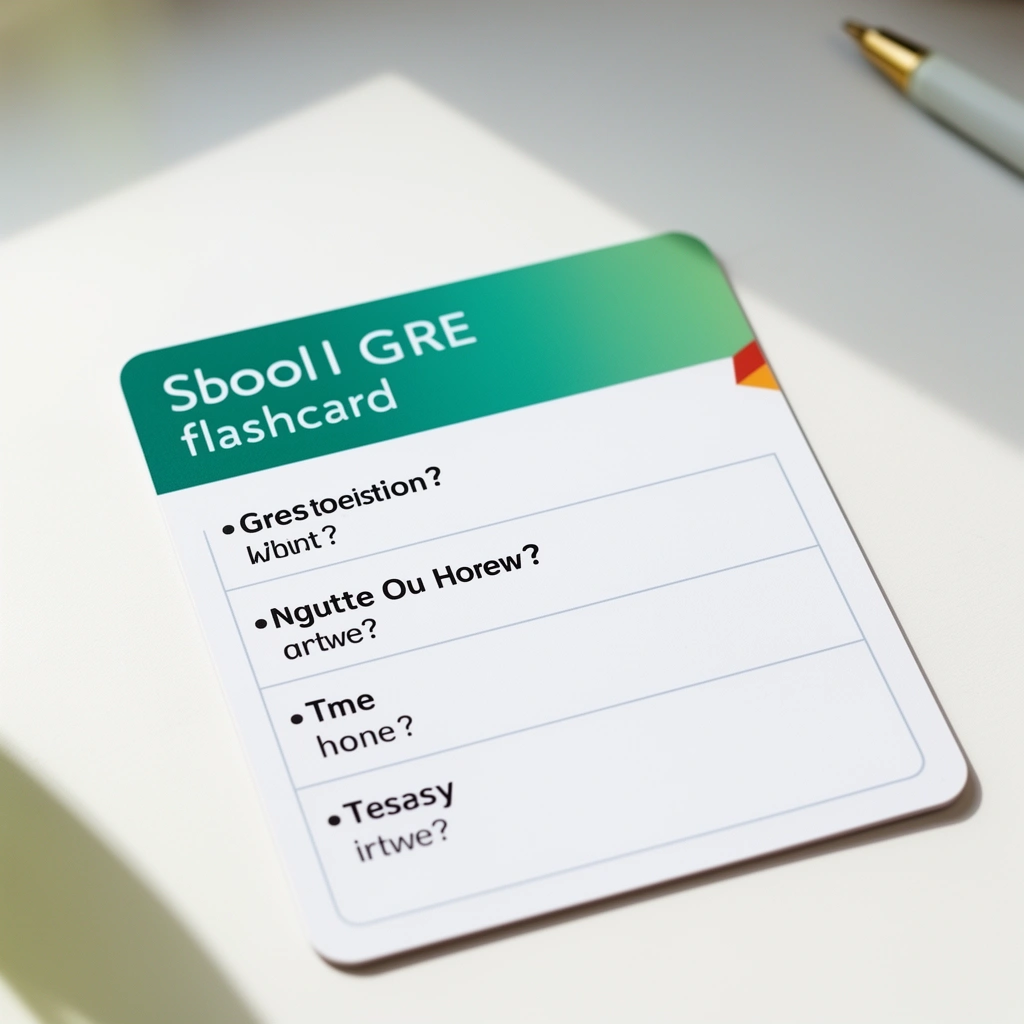
Gre Vocabulary pair a word, phrase, or grammar concept in the target language with its translation or usage example, giving learners a fast way to test recall in both directions — recognition and recall. Looking at real gre vocabulary flashcard examples can help clarify what a well-built card should look like before you start your own deck.
Why Flashcards Work for Language Learning
Building Vocabulary Through Repetition
Vocabulary retention depends heavily on repeated, spaced exposure. Seeing a word once in a textbook rarely moves it into long-term memory; testing yourself on it repeatedly does. Using a flashcard maker is often the fastest way to turn this kind of material into a study-ready deck.
Two-Way Practice
Good flashcard practice tests both directions — seeing the target-language word and recalling the translation, and seeing the translation and recalling the target-language word. This prevents learners from only recognizing words passively without being able to produce them.
Easy to Personalize
Gre Vocabulary can be built around the specific vocabulary you’re learning in class, a textbook chapter, or words you personally keep forgetting, rather than a generic list that may not match your course.
Tips for Getting the Most Out of Gre Vocabulary
- Include example sentences, not just single words, so you learn usage and context together.
- Group by theme (food, travel, family, verbs) so related words reinforce each other.
- Review in short daily bursts rather than long infrequent sessions.
- Say answers aloud to build pronunciation alongside recall.
- Revisit “difficult” cards more often using a simple spaced-repetition system.
Physical Cards vs. Apps
Handwriting your own cards can actually improve retention, since the act of writing reinforces memory. Digital apps add convenience and automatic spaced repetition, making them useful for daily review between physical study sessions. For a faster approach, an AI flashcard generator can generate this entire deck automatically, hints and all.
FAQs
How many new words should I add to my gre vocabulary deck each week?
Around 15–25 new words per week is manageable for most learners, allowing time to also review and reinforce previously learned vocabulary.
Should flashcards include example sentences?
Yes, where possible. Seeing a word in context helps with both meaning and correct usage, not just translation.
Can gre vocabulary help with grammar, not just vocabulary?
Yes, cards can also cover verb conjugations, grammar rules, or sentence patterns, tested the same way as vocabulary.
Conclusion
Gre Vocabulary offer a simple, proven way to build stronger recall and confidence around Gre Vocabulary. Used consistently — in short, regular sessions rather than occasional cramming — they can turn what feels like a mountain of material into steady, manageable progress.