Faculty of Business Economics and Entrepreneurship
International Review (2022 No.3-4)
157
©
Filodiritto Editore
PROFESSIONAL PAPER
HOW AMAZON WENT FROM AN UNCERTAIN ONLINE
BOOKSTORE TO THE LEADER IN E-COMMERCE
DORIO Michelle
1
1
Cal Campus, NH (UNITED STATES OF AMERICA)
E-mail:michelle.dorio3110@gmail.com
ABSTRACT
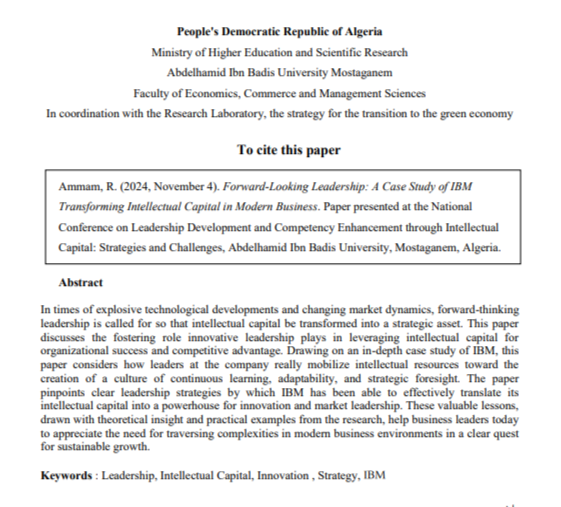
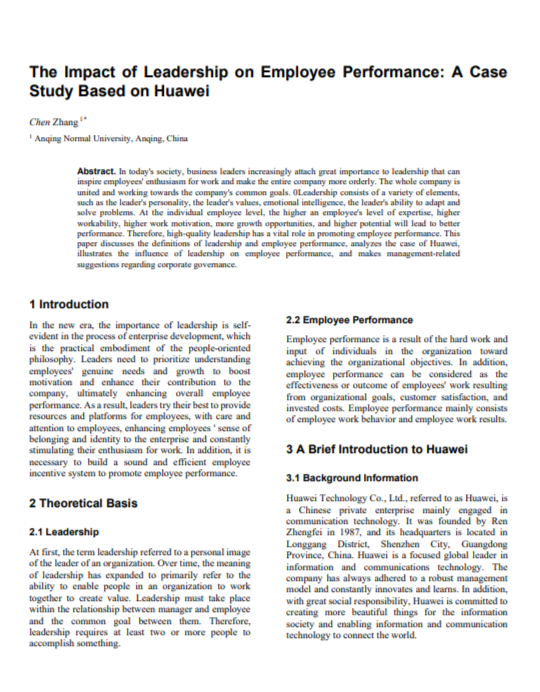
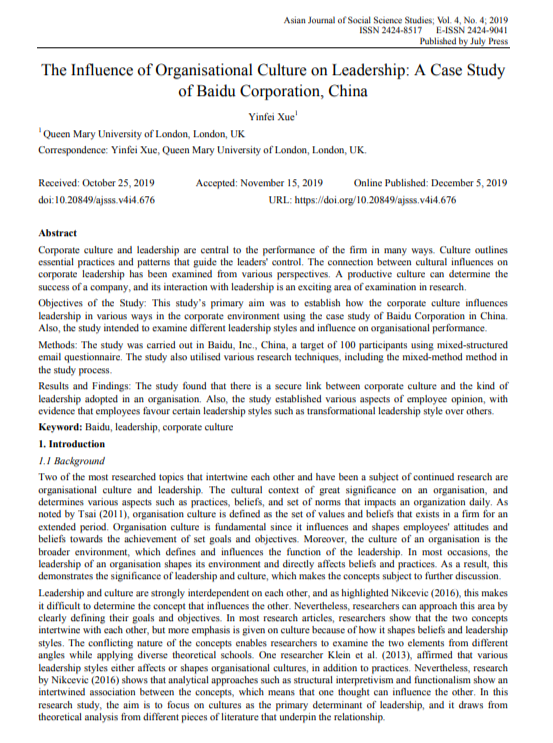
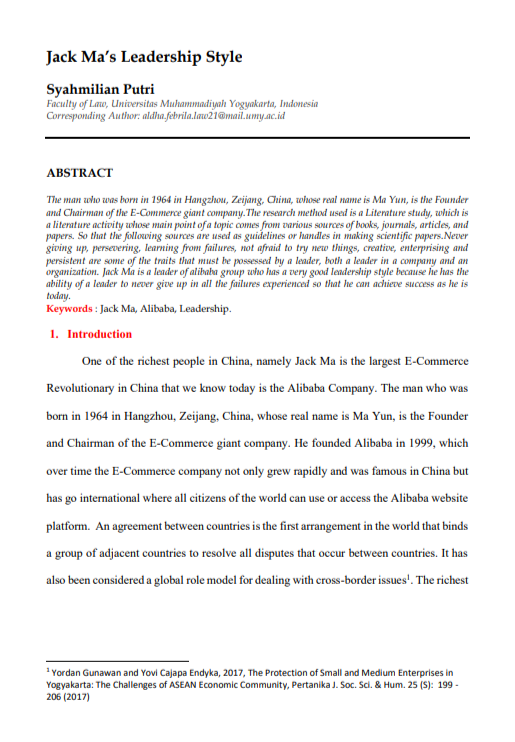
Amazon.com is one of the most well-known, well-respected companies in the world. When the company
first started as an online bookstore, many people doubted its future. Jeff Bezos applied fourteen leadership
principles that emphasize the importance of a good company-consumer relationship. This firm has become
known for its top-tier customer service and for being a community of consumers. From efficient contact
centers to well written customer guidelines, Amazon has proven that their number one priority is their
consumer. Jeff Bezos’ fourteen leadership principles have propelled Amazon to have efficient, and
successful leaders. Each principle helps Amazon’s leaders reflect on their own skills, as well as look for
leaders that meet their business philosophy.
Keywords:
E-commerce, Amazon.com, customer service, leadership, management
JEL: L81
DOI: 10.5937/intrev2204164D
UDC: 334.726:339.5]:004.738.5(73)
COBISS.SR-ID 83816457
INTRODUCTION
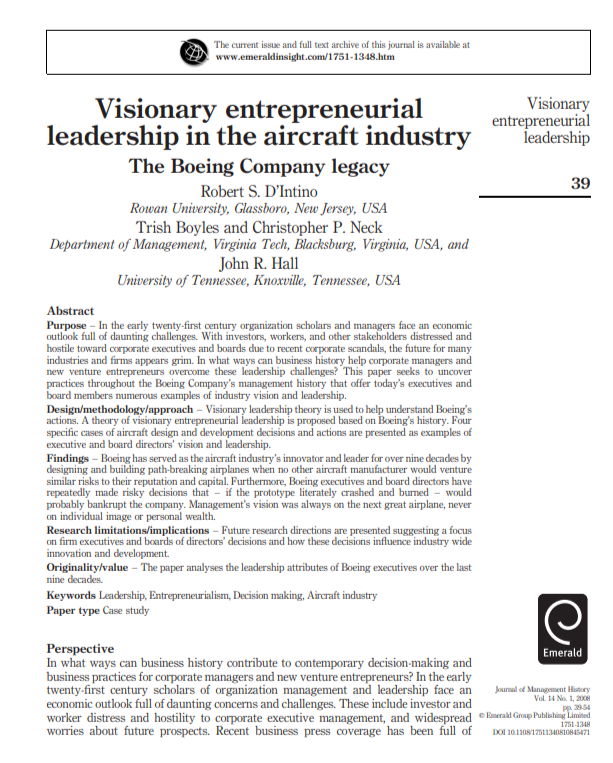
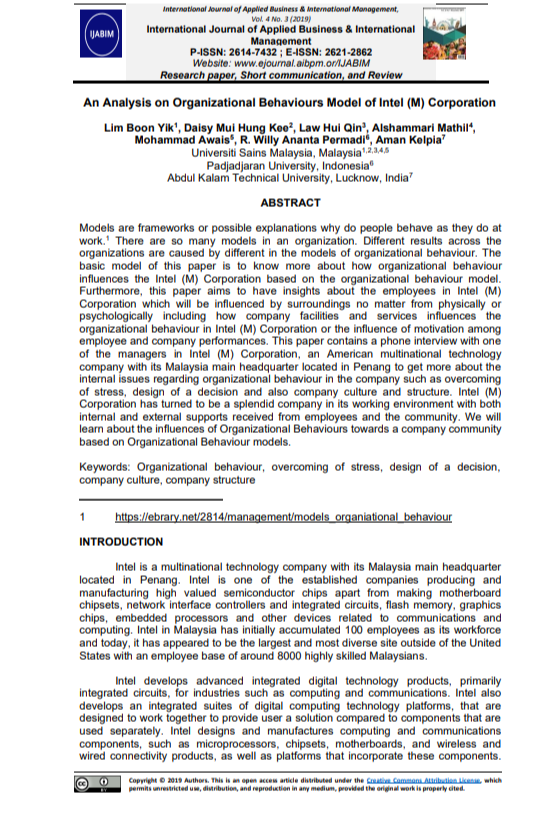
Amazon.com has become one of the largest online retailers in the world. They sell a variety of goods
such as books, music, electronics, and other household items. The company was founded by Jeff Bezos in
1994 and originally started as an online bookstore [1]. The company was originally met with skeptics
believing it could not compete with large booksellers, such as Barnes & Noble. However, Amazon grew
with the internet and went from a revenue of $15.7 million in 1996 to $610 million in 1998 [1]. In less than
a decade, Amazon became a Fortune 500 company. They have expanded their market and now sell new,
used, and refurbished items [2]. Amazon is known for their advanced technology, stellar customer service,
and convenience [1][9]. These factors along with their business principles make them one of the most
successful companies in the world.
THEORETICAL OVERVIEW
“
The crisis caused by the COVID-19 virus is not just a global health crisis. The impact of the pandemic,
caused by this virus, has strongly affected almost all vital economic sectors of the United States, which has
seriously affected the global economy and other financial markets around the world
”
[10].
However, it was
not the case of Amazon
.
The success of Amazon.com can be attributed to three main factors. Their customer
service has always been a top priority and continues to be an example to other companies. Amazon.com is
the leader in e-commerce, utilizing customer reviews to benefit them. They also use advanced technology to
market and sell their products, specifically their main market which is books. Finally, Jeff Bezos established
fourteen leadership principles that direct the company to success [6].
Faculty of Business Economics and Entrepreneurship
International Review (2022 No.3-4)
158
©
Filodiritto Editore
DISCUSSION
High quality customer service has always been at the forefront of Amazon’s mission. Amazon has
categories of contacts that help manage customer concerns. They have mostly primary contacts, as well as
specialty contacts such as hard lines, digital, wireless, institutional buying, community helper, community
specialty and gift certificates [2]. Amazon uses these contacts makes sure that a specific percentage of all
calls are answered in a certain amount of time and all e-mails are responded to in a timely matter. Each
category is meant to help resolve issues specific to the customer’s concern. For example, the community
helper category is meant to help with issues regarding posting reviews and other web-site issues [2]. In
2001, 2002, and 2003, the American Customer Satisfaction Index gave Amazon the highest score in any
service industry [2]. In addition to the contact centers at Amazon, they have also added certain features to
their website that helps make the customer experience easier and more efficient. These features include
tracking orders, cancelling items, and reporting if an item is damaged or missing from an order. These
features not only help Amazon cut down on the volume of calls and emails they receive, but it also gives
the customer an immediate satisfaction and/or answer to their concern. When customers cannot receive an
immediate answer through the features, then they are able to turn to the 24-hour customer contact centers
that specifically will cater to their needs [2].
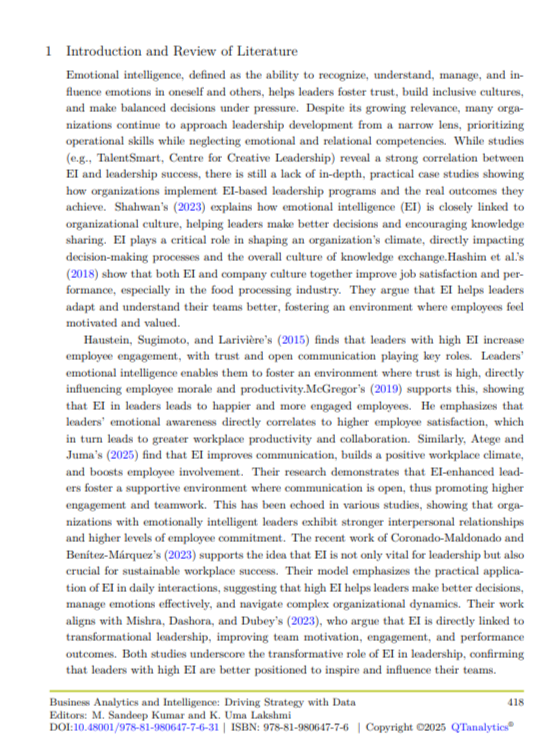
In line with customer service, customer reviews help to propel Amazon to success. Amazon is considered
a “community of consumers”. This is because it is easy for customers to read real reviews about a product
before purchasing so they can make an educated decision [1]. Amazon is considered a leader in e-commerce.
E-commerce can be defined as “the use of the internet and the web to transact business…” [3]. This includes
transferring ownership through the internet, buying or selling online, and any other electronic transactions
that a company has. B2C e-commerce specifically refers to the online selling of goods and services between
a company and a consumer. Amazon falls into this type of e-commerce [4]. Customer reviews are a large
part of what makes Amazon so successful in the world of e-commerce. Customer reviews help give the
consumer a first-hand report on what the product or service is like. This has been shown to positively
influence consumers’ perception of the product or service [5]. Amazon gives guidelines for writing reviews,
which makes for a better evaluation. In addition to having customer reviews listed for each product sold on
Amazon, they also have a helpfulness feature. This is when the customer review can get a “thumbs up” and
show that other consumers have found it to be a good, helpful review. The more “helpful” the review, the
higher on the page it will appear, making it more visible to the consumer [5].
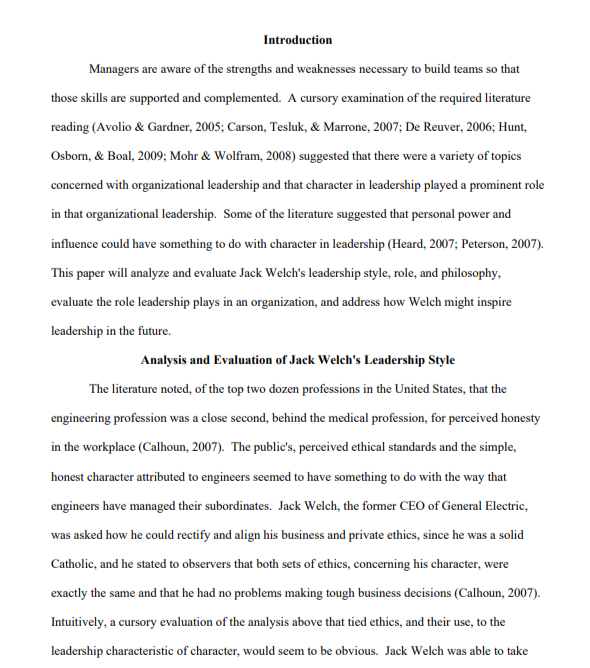
Finally, Amazon would most likely not be as successful as it is today if it weren’t for the founder and
former CEO, Jeff Bezos. Jeff Bezos has stated that the three main ideas at Amazon are “put the customer
first, invent, and be patient” and have been in place since the beginning of the company [6]. He established
fourteen leadership principles that provide the basis for what Amazon, or any company, needs to be
successful. Each leadership principle leads to efficient problem solving and decision making. The first
principle is “customer obsession”. Customer obsession refers to gaining the consumer’s trust. Rather than
assume the customer is always right, customer obsession refers to making sure the customer is understood
[6]. The second principle is “ownership”. In this principle, this refers to any leader within the company. It
is about holding employees accountable and looking toward the long-term goals of the company. The third
principle is “invent and simplify”. This principle refers to looking for new ideas that are easy for the
consumer to use [6]. The fourth principle is “are right, a lot”. According to Bezos, a leader is not
automatically right because they are leading, but because they are able to see different viewpoints that an
employee cannot. The fifth principle is “learn to be curious”. This is considered the most important
principle because it sets the tone for the business that there is always room for improvement. This principle
states that a leader should look at all the possibilities and should seek to improve [6].
The sixth principle is “hire and develop the best”, which refers to a good leader being able to recognize
talent in future employees that will prove to be productive for the company. It is the leaders’ responsibility
to teach the right employee. The seventh principle is “insisting the highest standards”. This principle refers
to leaders needing to have high standards. They should always be motivating their employees to reach new
goals, sell new products and fix whatever problems may arise [6]. The eighth principle is “think big”,
which refers to going beyond the task at hand and think outside the box. The ninth principle is “bias for
action”. This refers to taking a calculated risk. It is important to make fully thought-out decisions, but to
make them in a timely manner [6]. The tenth principle is “frugality”, which refers to knowing how to
Faculty of Business Economics and Entrepreneurship
International Review (2022 No.3-4)
159
©
Filodiritto Editore
achieve higher goals with restraints such as limited time and resources. The eleventh principle is “earn
trust”. It is important for a leader to earn the trust of not only their employees but also their consumers [5].
This is done through motivating their team, as well as being up front with them concerning all matters
about the company [6]. The twelfth principle is “deep dive”, which refers to looking deeper into the tasks
at hand and understanding all details of a situation. The thirteenth principle is “disagree and commit”,
which refers to accepting constructive criticism from employees and listening to the potential alternative.
They can accept that their employee disagrees with them, while also being able to commit to a decision.
The fourteenth and final principle is “deliver results”. It is extremely important for leaders to take initiative,
adapt to changes, and produce the best results [8].
CONCLUSION
In conclusion, Amazon has become successful through their innovative customer service techniques,
customer review system, and leadership principles. Many companies have their own customer service,
reviews, and management styles [8], but Amazon has created a blueprint for many companies to follow.
Amazon rapidly grew from being an online bookstore that many people had doubts towards, to being one
of the largest online retailers in the world. Amazon has never strayed from their business philosophy and
continues to grow and adapt to make the consumer experience more enjoyable.
REFERENCES
[1]
Hall, M. (2022, August 24).
Amazon.com
.
Encyclopedia Britannica
.
https://www.britannica.com/topic/Amazoncom
[2]
Keblis, M. F., & Chen, M. (2006). Improving Customer Service Operations at Amazon.com.
Interfaces
,
36
(5), 433–445. https://doi.org/10.1287
[3]
Li, Y., & Fan, R. (2014, January 16).
The Coordination of E-commerce and Logistics: A Case Study
of Amazon.com
(thesis).
DiVA Portal
. Retrieved October 6, 2022, from https://www.diva-
portal.org/smash/get/diva2:685599/fulltext01.pdf.
[4]
Lin, Z., & Yan, S. (2012, October 30).
Customer Loyalty of Amazon
(thesis).
DiVA Portal
. Retrieved
October 6, 2022, from https://www.diva-portal.org/smash/get/diva2:561578/FULLTEXT01.pdf.
[5]
Shoab F.M. & Radovi
ć
Markovi
ć
, M., (2017), Impact of Business Simulation Games on
Entrepreneurial Intentions of Business Graduates: A PLS-SEM APPROACH, U: Radovic Markovic
(ed.), Shoaib Farooq (ed.), Vujicic (ed.). Organisational behavior and types of leadership styles and
strategies in terms of globalization, Newton Abbot: Compass Publishing, United Kingdom, pp. 11-
25. ISBN 978-1-912009-87-9
[6]
Mudambi, S. M., & Schuff, D. (2010). What Makes a Helpful Online Review? A Study of Customer
Reviews on Amazon.com.
MIS Quarterly
,
34
(1), 185–197. https://doi.org/10.2307
[7]
Carter, L. (2021, December 6).
A deep look into the 14 fascinating Amazon leadership principles
.
Louis Carter. Retrieved October 6, 2022, from https://louiscarter.com/amazon-leadership-principles/
[8]
A
č
akpa, P., & Radovi
ć
-Markovi
ć
, M., (2018). Employment Women Through Entrepreneurship
Development and Education in Developing Countries,
Journal of Women's Entrepreneurship and
Education
, n. 1-2, p. 17-30, jun. 2018. ISSN 2406-0674
[9]
Aidin Salamzadeh, Salamzadeh Yashar, Mirjana Radovi
ć
Markovi
ć
, (2022). THE ECONOMIC
RESILIENCE -ENTREPRENEURSHIP NEXUS,
Journal of Entrepreneurship and Business
Resilience (JEBR),
Faculty of Economics and Engineering Management, University Business
Academy in Novi Sad Co-Publisher: Inforomatica S.r.l., Bologna, Italy, Vol.5, No.1., pp.7-13.
[10]
Gavrilovi
ć
, K. and Vu
č
ekovi
ć
, M., (2020).
Impact and Consequences of the Covid-19 Virus on the
Economy of the United States,
International Review,
No.3-4, pp.56-65
Article history:
Received 15 November 2022
Accepted 20 December 2022