



International Journal of Applied Business & International Management
,
Vol. 4 No. 3 (2019)
International Journal of Applied Business & International
Management
P-ISSN: 2614-7432 ; E-ISSN: 2621-2862
Website: www.ejournal.aibpm.or/IJABIM
Research paper, Short communication, and Review
Copyright © 2019 Authors. This is an open access article distributed under the
Creative Commons Attribution License
, which
permits unrestricted use, distribution, and reproduction in any medium, provided the original work is properly cited.
An Analysis on Organizational Behaviours Model of Intel (M) Corporation
Lim Boon Yik
1
, Daisy Mui Hung Kee
2
, Law Hui Qin
3
, Alshammari Mathil
4
,
Mohammad Awais
5
, R. Willy Ananta Permadi
6
, Aman Kelpia
7
Universiti Sains Malaysia, Malaysia
1,2,3,4,5
Padjadjaran University, Indonesia
6
Abdul Kalam Technical University, Lucknow, India
7
ABSTRACT
Models are frameworks or possible explanations why do people behave as they do at
work.
1
There are so many models in an organization. Different results across the
organizations are caused by different in the models of organizational behaviour. The
basic model of this paper is to know more about how organizational behaviour
influences the Intel (M) Corporation based on the organizational behaviour model.
Furthermore, this paper aims to have insights about the employees in Intel (M)
Corporation which will be influenced by surroundings no matter from physically or
psychologically including how company facilities and services influences the
organizational behaviour in Intel (M) Corporation or the influence of motivation among
employee and company performances. This paper contains a phone interview with one
of the managers in Intel (M) Corporation, an American multinational technology
company with its Malaysia main headquarter located in Penang to get more about the
internal issues regarding organizational behaviour in the company such as overcoming
of stress, design of a decision and also company culture and structure. Intel (M)
Corporation has turned to be a splendid company in its working environment with both
internal and external supports received from employees and the community. We will
learn about the influences of Organizational Behaviours towards a company community
based on Organizational Behaviour models.
Keywords: Organizational behaviour, overcoming of stress, design of a decision,
company culture, company structure
1
https://ebrary.net/2814/management/models_organiational_behaviour
INTRODUCTION
Intel is a multinational technology company with its Malaysia main headquarter
located in Penang. Intel is one of the established companies producing and
manufacturing high valued semiconductor chips apart from making motherboard
chipsets, network interface controllers and integrated circuits, flash memory, graphics
chips, embedded processors and other devices related to communications and
computing. Intel in Malaysia has initially accumulated 100 employees as its workforce
and today, it has appeared to be the largest and most diverse site outside of the United
States with an employee base of around 8000 highly skilled Malaysians.
Intel develops advanced integrated digital technology products, primarily
integrated circuits, for industries such as computing and communications. Intel also
develops an integrated suites of digital computing technology platforms, that are
designed to work together to provide user a solution compared to components that are
used separately. Intel designs and manufactures computing and communications
components, such as microprocessors, chipsets, motherboards, and wireless and
wired connectivity products, as well as platforms that incorporate these components.

145
Intel sells its products primarily to original equipment manufacturers, original design
manufacturers, PC and network communications products users, and other
manufacturers of industrial and communications equipment.
2
Intel was founded in 1968 by Gordon Moore and Robert Noyce. They recruited
other Fairchild workers, including businessman Andrew Grove. The company was
originally named “Moore Noyce”. They then settled on “Intel”, a combination of the first
letters of each word in the term “Integrated Electronics”. Intel's third employee, a
chemical engineer named Andy Grove, also came from Fairchild Semiconductor. With
Grove on board, Intel released its first product in 1969, the 3101 64-bit Schottky bipolar
RAM, and launched denser MOS SRAM & DRAM soon after. Grove was the Intel's
president in 1979, CEO in 1987, Chairman and CEO in 1997, he is credited with
transforming Intel from a manufacturer of memory chips into one of the world's
dominant producers of microprocessors. During his tenure as CEO, Grove oversaw a
4,500% increase in Intel's market capitalization from $18 billion to $197 billion, making
it, at the time, the world's most valuable company.
3
According to CEO Brian Krzanich, Intel is known for its corporate culture of
meritocracy, which considers employee ability and output. This culture differentiates
Intel from competitors, maintains a high-end brand, and influences customers and
suppliers to adopt technological efficiency in their mindsets. The following are the main
characteristics of Intel’s organizational culture: Customer orientation, Risk Taking,
Discipline, Great place to work, Quality, Results orientation.
4
To maintain as a leading company in technology, Intel has set its mission and
vision. Intel’s mission is to utilize the power of Moore’s Law to bring smart, connected
devices to every person on Earth. Meanwhile, Intel’s vision is “If it is smart and
connected, it is best with Intel”.
5
This defines that Intel is irrefutably concerned on
building the best sophisticated application and devices in order to connect all people
worldwide. With wise and meticulous strategies and plans, Intel believes it can
ultimately achieve its goals as long as it receives unceasing efforts from its workforce.
2
https://www.barchart.com/stocks/quotes/INTC/profile
3
http://www.newworldencyclopedia.org/entry/Intel_Corporation
4
http://panmore.com/intel-organizational-culture-business-resilience-analysis
5
http://panmore.com/intel-corporation-vision-statement-mission-statement
BACKGROUND
In every organization, manager plays the most crucial roles and responsibility in
leading the direction of an organization. Each manager required help and assistance
from employees to ensure that they can accomplish all the goals of organization. The
failure of manager causes organizational problems. Therefore, leadership can be
defined as the use of power and influence to direct the activities of followers toward
goal accomplishment. In brief, the manager is someone with the highest ability in
influencing oneself to fulfil his or her wants and needs. Throughout his or her
characteristics, the organization will be able to reach its mission and vision.
6
To identify the characteristics of manager in Intel (M) Corporation, we firstly
recognize some types of power used by the manager. This step is formulated to ease
us in further knowing the leadership style practiced by the manager. Generally, there
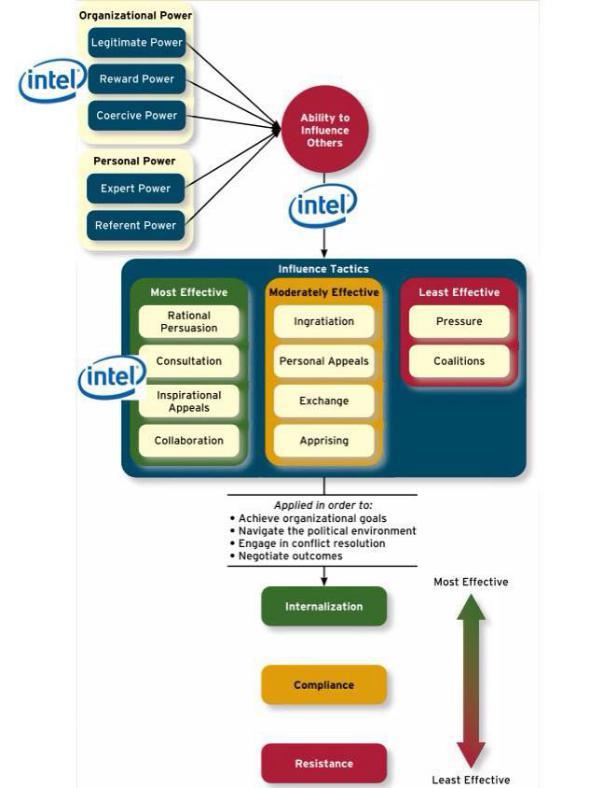
are two types of power presented by the manager in the organization namely
organizational and personal power. The organizational power is established between
legitimate, reward and coercive power, whereas the personal power imbued with expert
and referent power.

146
Intel (M) Corporation manager is preferably using both legitimate and referent
power. Legitimate power is based upon perception and reality. It is based on the reality
that a person holds a particular position in an organization and based on the perception
of employees that someone holding that position has authority to exert control over
them. However, the power of a person is subject to the job structured hierarchy in the
company. Broadly speaking, Intel employees agree that their manager tends to use the
legitimate power peculiarly in determining the activities, policies, programmes and rules
of the company. In fact, their manager uses this power to allocate resources needs in
the company.
Also, the manager of Intel (M) Corporation seems to use the referent power
towards employees. This kind of power provides ample opportunity to the manager to
cultivate the respect and admiration of followers in such a way that they wish to be like
him or her. Referent power is leading by example so in Intel (M) Corporation, this
power is based upon a leader modelling his behavior to demonstrate appropriate
conduct and decision-making. Intel (M) Corporation employees observe a manager’s
behavior and act as they believe their managers would act in the same situation. The
referent power is slightly influencing the rapport between the Intel (M) Corporation
manager and employees so that the employees will see their manager as a charismatic
character to be emulated.
The leadership is one part which cues to the characteristics depicted by the
manager in the company. In Intel (M) Corporation, the company believes no one style
of leadership fits all situations. Pertaining to that, it is useful to understand different
leadership frameworks and styles hence the managers can adapt those different
approaches to fit the situation they are in. In business, the transformational leadership
is frequently claimed to be the best leadership style to use, but in Intel (M) Corporation,
the manager tries to practice equally among the transformational, transactional,
bureaucratic and charismatic leadership. Manager in Intel (M) Corporation performs
transformational leadership to inspire employees with high integrity and high emotional
intelligence. On top of that, for each department in Intel (M) Corporation, the manager
tends to motivate their employees with a shared vision of the future and to do so, they
use well communication. With this kind of leadership, Intel (M) Corporation manager is
said to be self-aware, authentic, empathetic and humble.
6
https://www.taylorfrancis.com/books/9781317778400
For some specific purposes, especially in the department of Order Fulfilment
and Supply Chain, the Intel (M) Corporation manager uses bureaucratic leadership.
This means that the manager rigorously follows Intel (M) Corporation rules and ensures
the employees obey the procedures precisely. Plus, this leadership is also useful for
managing employees who perform the routine tasks. Charismatic leadership resembles
transformational leadership as both types of manager inspire and motivate their team
members. So, the same leadership may apply in certain Intel (M) Corporation activities
but the charismatic leadership is more focusing on the ambition of managers without
having a change.
Lastly, the manager of Intel (M) Corporation pays the employees for investing
their efforts and time in completing some short-term tasks. This refers to the
transactional leadership. When the performance among employees does not meet an
appropriate standard, the Intel (M) Corporation manager has rights to punish them.
This yields very good results as the Intel (M) Corporation employees can often do a
little to improve their job satisfaction. In short, the manager in Intel (M) Corporation
portrays him or herself to be the most influential person in the company. With different
characteristics in different situations, the Intel (M) Corporation manager is eager to
achieve the organizational objectives and ultimately accomplish the mission and vision
147
of the company. The utilization of power and leadership as mentioned above shows
that the Intel (M) Corporation manager is energetic, ambitious, stringent and
enthusiastic. These characteristics help Intel (M) Corporation to produce devoted
workforce that will be readily prepared to encounter upcoming challenges and
unpredictable circumstances within or outside the company.
JUSTIFICATION IDEA
To get more information from Intel (M) Corporation, Ms Melissa Marianne
Anthony Pragasam is interviewed by our group members regarding the organizational
behavior issues we have discovered. She is currently work as Human Resource
Shared Service Center Payroll and Benefit Manager in Intel (M) Corporation Penang
Branch. We conducted this interview by a phone call in the
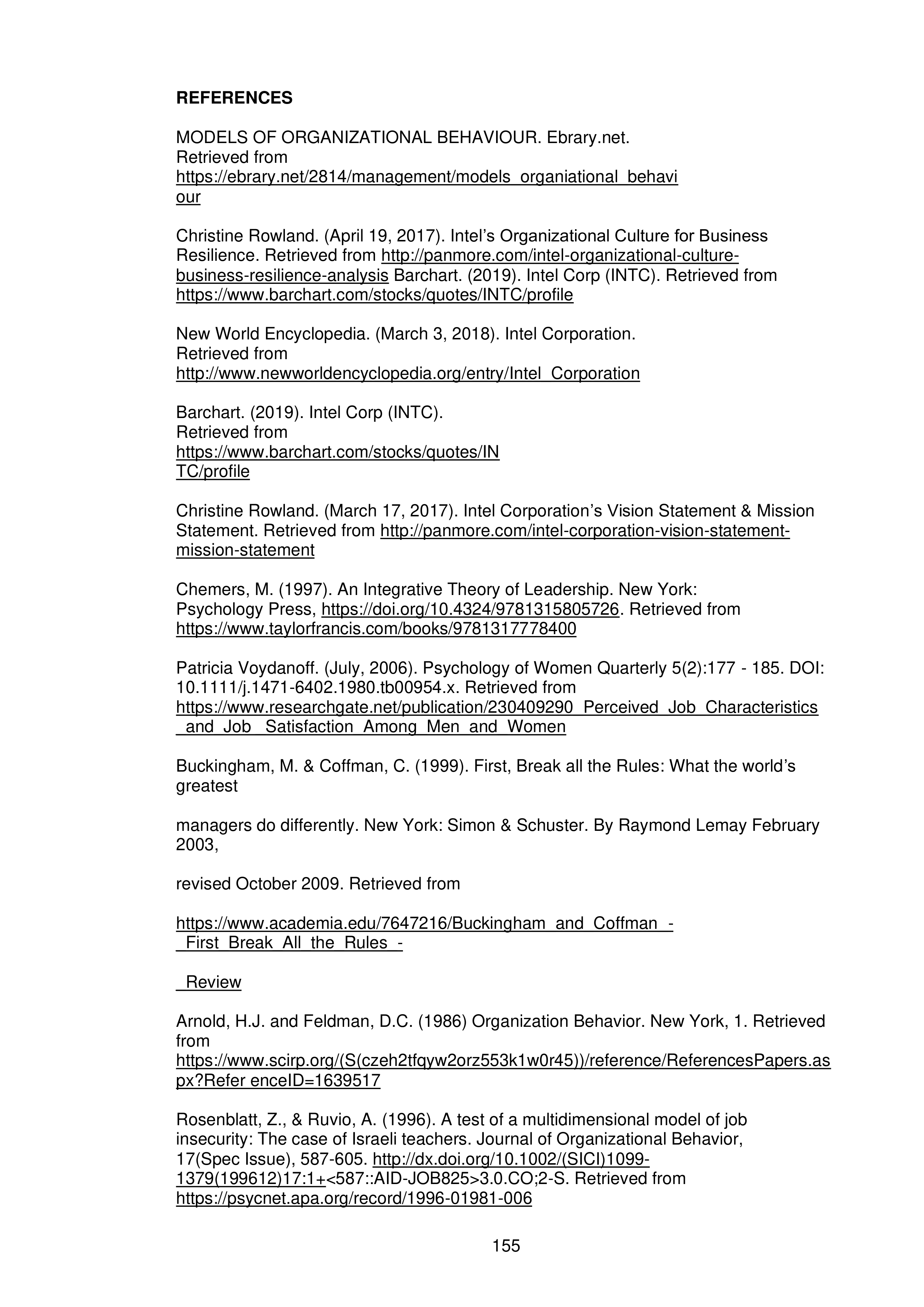
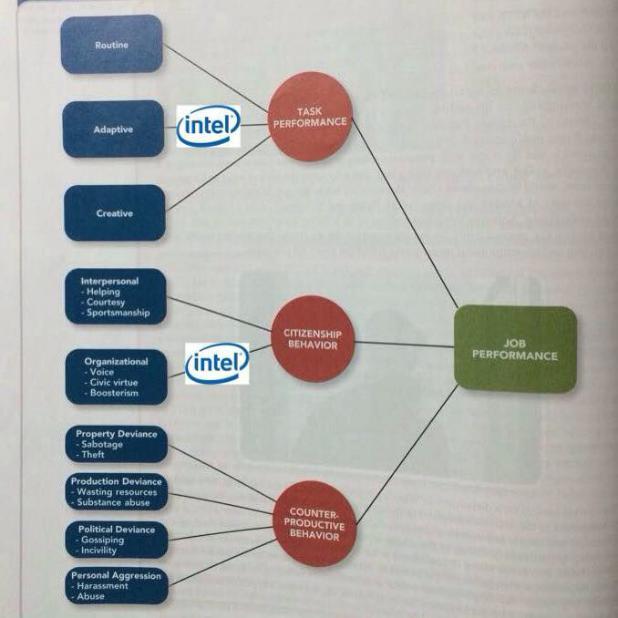
1. Do the employees’ task performances (routine, adaptive and creative) play
important role in determining the success of the company and if so, how does
the citizenship behavior influence the employees’ job performances?
#Refer Appendix 1
Yes, quality employees are important in determining the success of the
company where Intel values adaptive task performance by employees. Intel provides
an ergonomic work space environment where the employees are encouraged to
perform behaviors involved in adaptability such as handling emergency or crisis
situations, handling work stress, solving problems creatively, dealing with uncertain and
unpredictable work situations and demonstrating cultural adaptability. For instance, the
employees are flexible and open minded when dealing with others moreover willingly to
adjust behavior or appearance as necessary to comply with or show respect for others’
values and customs.
Organizational citizenship behavior such as voice, civic virtue and boosterism
are emphasized by Intel where employees are encouraged to react to bad rules or
policies by constructively trying to change them as opposed to passively complaining
about them in a corporate office standard. Office ergonomics are provided by Intel for
employees with complete workplace infrastructure to enhance job performances where
employees are able to participate in the company’s operation at a deeper-than-normal
level by attending voluntary meetings and functions, reading and keeping up with
organizational announcements, and keeping abreast of business news that affects the
company. Intel ensures that organizational citizenship behavior is instilled among
employees where there are no reasons for counterproductive behavior to occur.
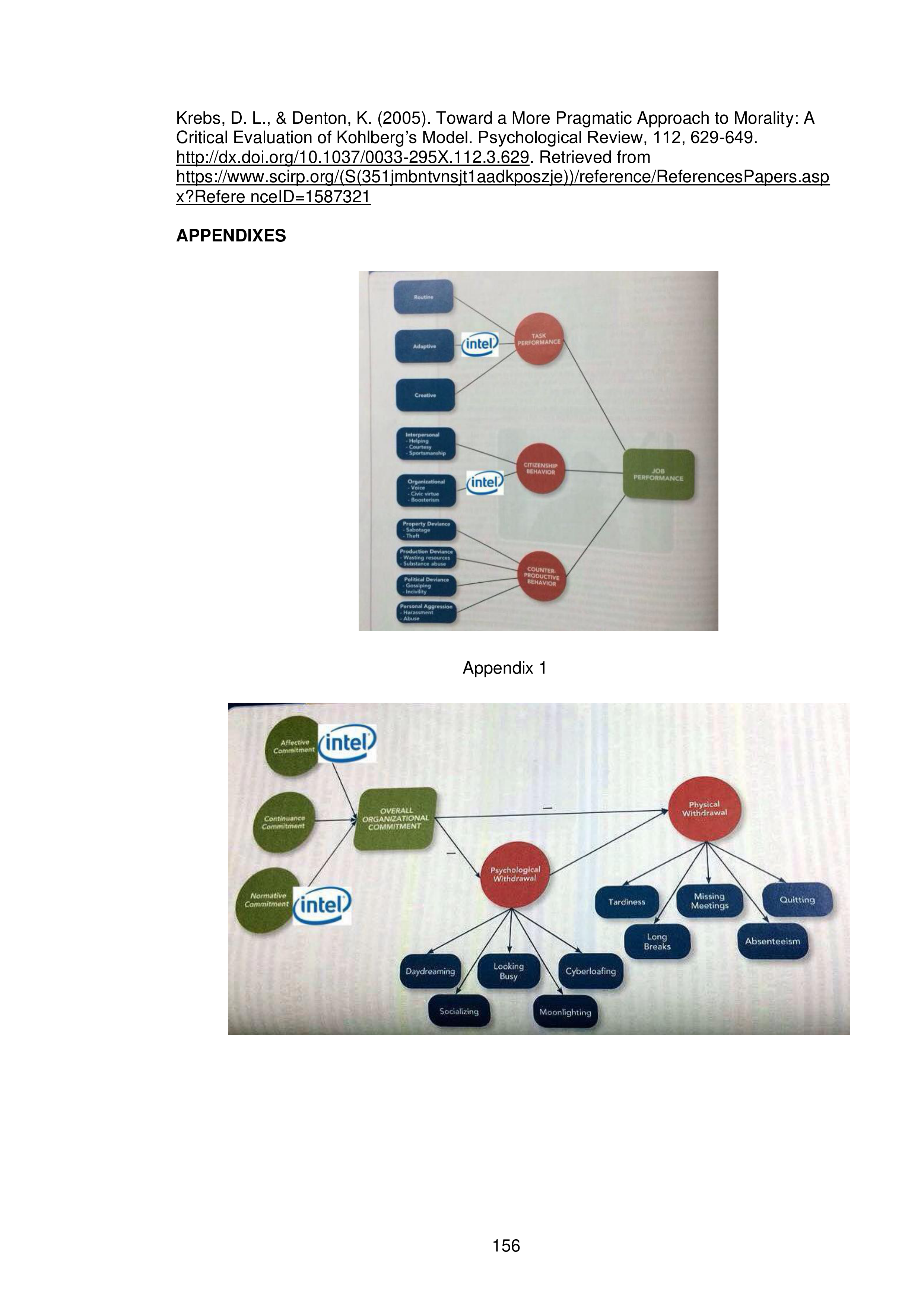
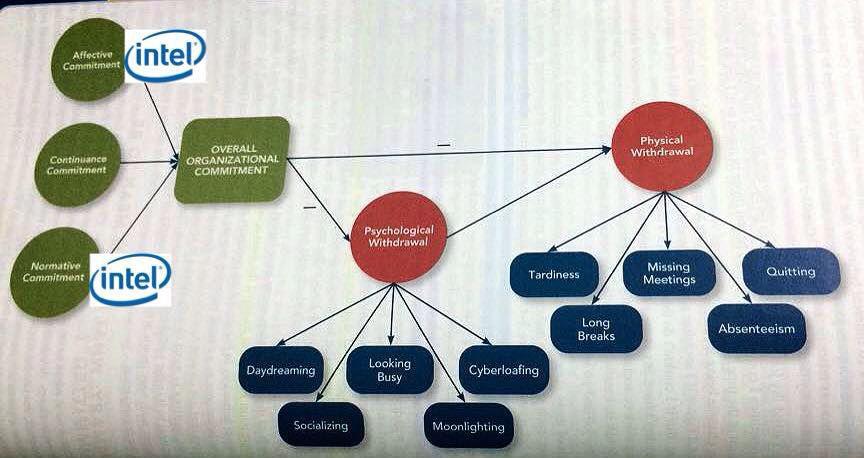
2. In order to increase the overall organizational commitment of the employees,
what are the styles and behaviors of effective leadership you use as one of the
leaders in Intel (M) Corporation?
#Refer Appendix 2
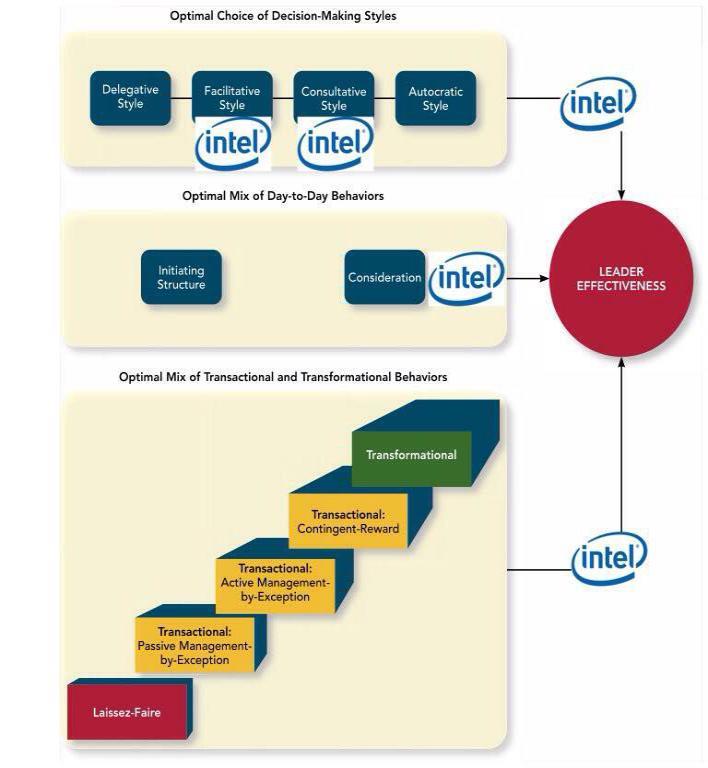
In order to increase employees’ overall organizational commitment, my choices
of optimal decision-making styles are more towards facilitative and consultative and
less of autocratic and delegative. In accordance to Intel’s mission which utilizes the
power of Moore’s Law to bring smart, connected devices to every person on Earth,
Leadership and Learning Program is implemented. Employees from the 19 countries of
Greater Asia Region (GAR) and 36 countries of Greater Europe Region (GER) are
provided with globally consistent, high quality and scalable learning solutions’
execution moreover operationalizes new delivery requirements with innovative process
efficiencies and flawless collaboration. The Leadership and Learning process examples
are Manage Instructor Support Services and Manage Course Offerings. Currently,
148
there are 22 employees in 3 different geographical areas specifically GER and GAR
attending the Leadership and Learning program. Through leaps and bounds, the
organizational commitments of employees are built.
Furthermore, Intel leaders emphasize on relation-oriented behavior where
employees are valued higher than production. Consideration reflects the extent to
which Intel leaders create job relationships characterized by mutual trust, respect for
employees’ ideas and consideration of employees’ feelings. Intel leaders do not take
personal connection with employees for granted but pay attention to their needs and
feelings. There is even an anonymous reporting system in Intel where the employees
are not only able to recognize to efforts of colleagues and supervisors but also
comment on the work of colleagues and supervisors. This system ensures that every
employee has the freedom of voice to change the unsatisfied working condition without
being acknowledged. Intrinsically, this improves the overall organizational commitment
of employees. Since Intel has invested much in the improvement of employees, most of
them are bond to the company by normative commitment. Affective commitment is
shown when Intel employees form emotional attachment towards each other.
Therefore, there is less psychological and physical withdrawal of employees when Intel
employees are normatively and affectively committed.
3. What are the facilities and services provided by the company to
ensure the job satisfaction of employees?
#Refer Appendix 3
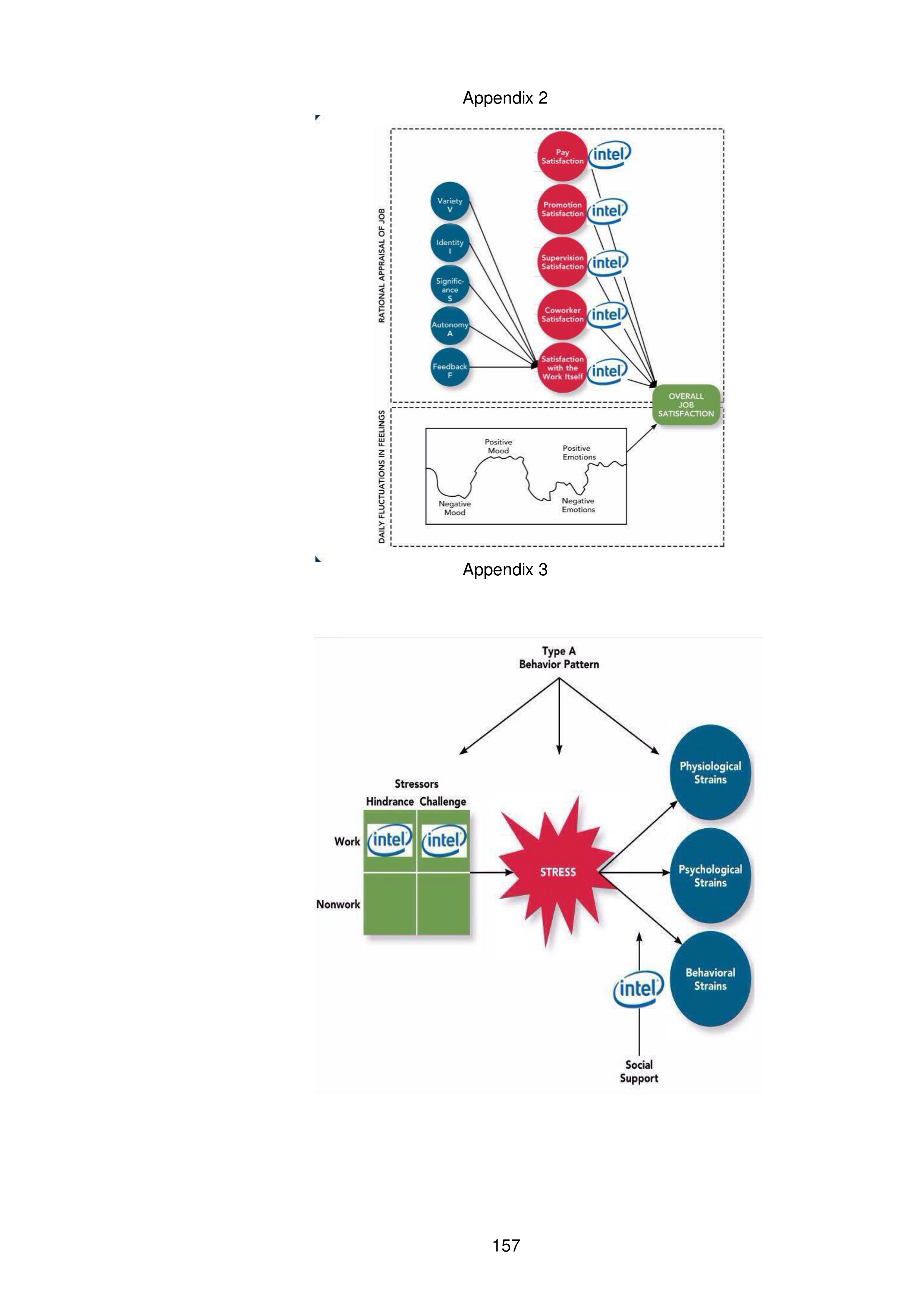
Intel offers a wide range of benefits to make the company the place where
employees want to do their best work. Intel provides numerous facilities and services
such as pay, stock and workplace benefits. For instance, Intel provides a series of food
perks such as free drinks, free buns, monthly meal subsidy of RM50 and free fruits.
These food incentives make food lover employees feel over the moon. Other than that,
pay satisfaction is provided by Intel too. Intel will provide monthly base pay to the
employees, bonus programs including ‘Factory Excellence Bonus’, EPF which Intel
contributes 14%, shift allowance and overtime work allowance. Intel employees will feel
satisfied financially with numerous allowances that are provided by Intel.
Furthermore, they are also provided amenities in the office. For example,
Muslim employees can go to prayer room provided in the office, pregnant employees
can rest in mother’s room, ATM machines are provided in specific areas of Intel
nevertheless pantries are also provided for employees to have a break. Moreover, Intel
provides services in the type of stock for employees such as Stock Grants and Stock
Purchase Plan (SPP). Transportations such as internal shuttle service and bus service
to and fro manufacturing offices, administration offices and hostel are provided to ease
the movement of employees. Apart from that, Intel assures annual leave of 10-20 days
for the employees. Other leaves such as sick leave, hospitalization and so on for
employees and not to mention the annual public holidays of 17 days are guaranteed.
Intel shows concern of employees’ health and medical services by providing fitness
centers, sport facilities, health coverage, dental and optical benefits, mammogram and
prostate examination, health screening, maternity gift, mums-tobe parking, disabled
parking, preventive healthcare and bereavement aid moreover life Insurance. This will
make the employees feel psychologically and physically satisfied with their jobs. In
addition, Intel provides many types of financial assistance such as Employee
Assistance Fund, Intel Scholarship for employees’ children, Extended Education
Program (EEP), vehicles interest subsidy program and toll subsidy. All of these are
called promotion satisfaction which employees will feel frequent, fair, and based on
their ability. All the remunerations are indirectly linked to supervision satisfaction as the
employers of Intel are competent, polite and good communicators. The most important
thing is employers understand the employees’ needs and wants.
149
4. How do you overcome the stress from your work in order to avoid strain? As
a manager, please share your undesirable working experiences and how does
the company address this particular situation.
#Refer Appendix 4 and Appendix 5
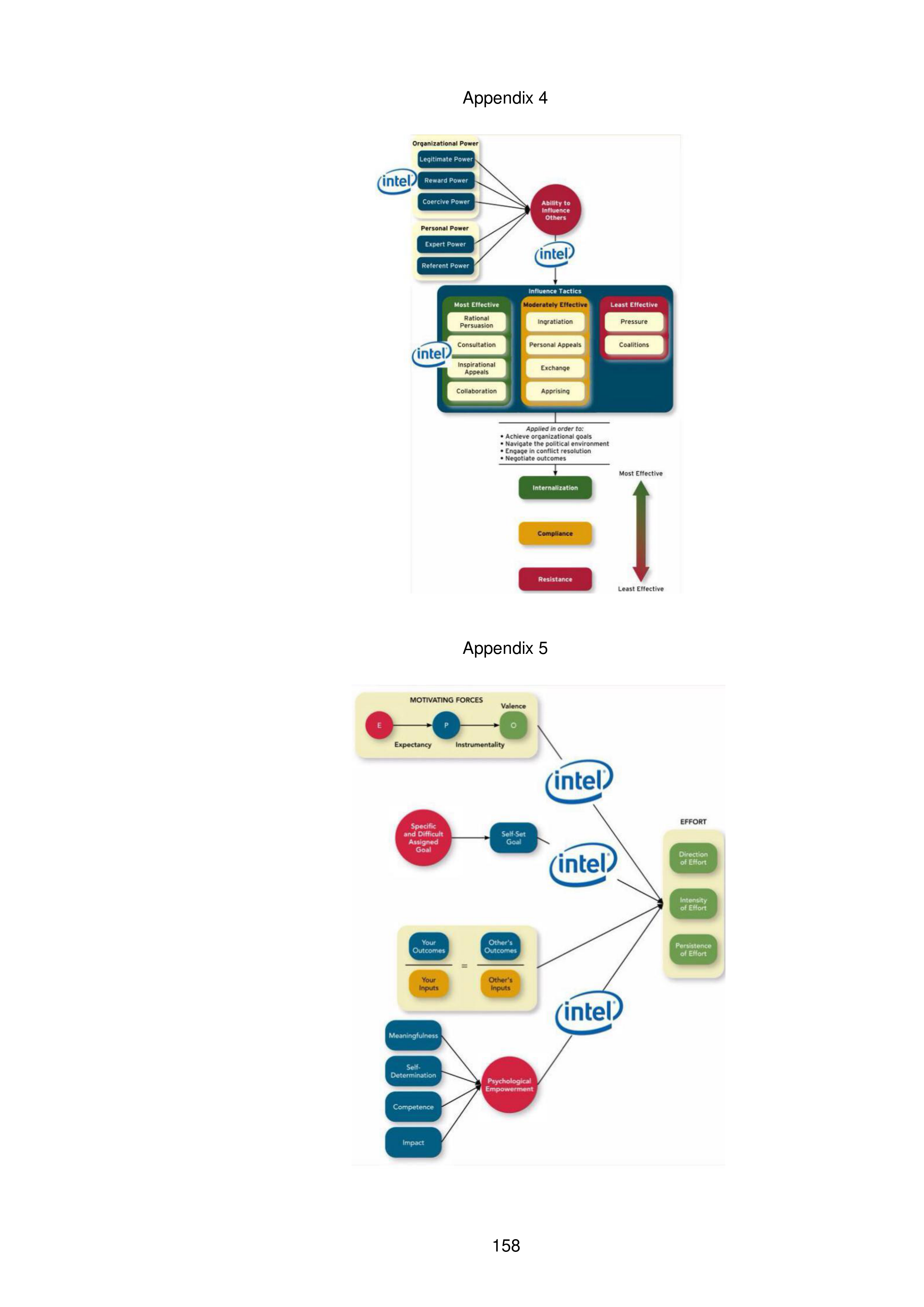
Usually, I will evaluate how stressful is an event by addressing them either
hindrance or challenge in work. Although sometimes I do face role conflict by
conflicting expectations from others, role overload when there are a number of
demanding roles that I need to uphold moreover time pressure and work responsibility
as level of responsibility increases when importance of obligations in the job are higher,
but as a manager, I cope with stress from work by strategizing the problems faced,
self-motivating and changing priorities. For instance, I will think about different ways to
accomplish the work more efficiently when I am confronted with an increase in time
pressure. I think I am more used to cognitive method and problem –focused ways to
cope with stress. However, Intel has ranked top 50 in the world for work- life
effectiveness where the employees are empowered with alternate start time, flexi-time,
business mobile line reimbursement, broadband reimbursement for home connection,
telecommute, part time employment, family access and prolonged leave of absence.
Therefore, I do not face any non-work hindrance such as work family conflict and
financial uncertainty.
As a payroll and benefit manager of Intel Malaysia Human Resource Shared
Service Centre, the undesirable experiences that I am currently facing would be the
drastic job hopping of Gen-Y workers where their turnover rate is high despite Intel had
pampered the Gen-Y newbies with various facilitative and consultative programs such
as arrangement of buddies and 3 months on job training. These are caused by the
Gen-Y nature of anxious to be promoted in pay increment although Intel has provided
the best services for them. Managing job separation program to downsize the
employees during economic recession is heart wrenching for me as leaving decisions
are hard to decide. Therefore, Intel provides postdownsize consulting session for the
involved employees to address this problem.
5. What inspires you to stay passionate and contribute to the company for
years despite facing challenges to achieve successful milestone?
#Refer Appendix 6
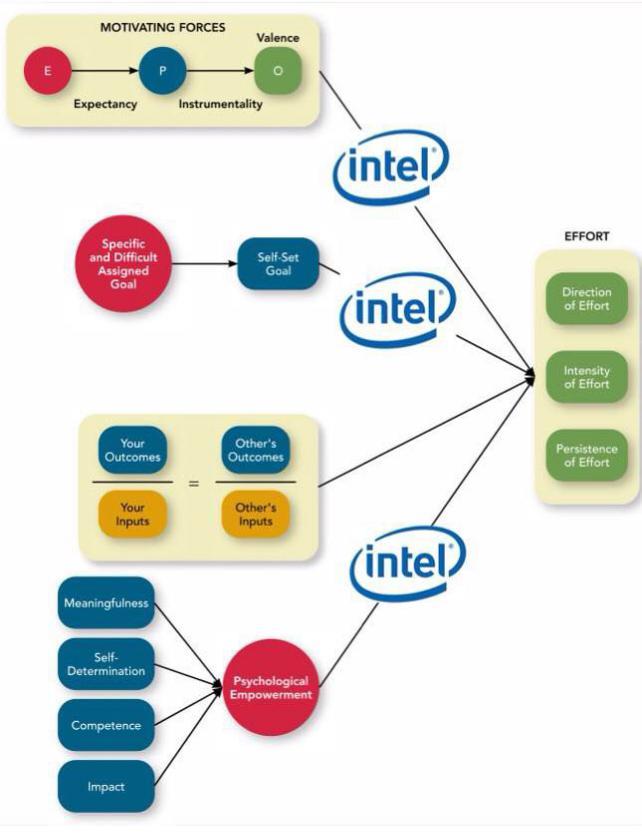
As previously mentioned, Intel treats their employees as family members where
I feel affective commitment to stay and contribute for 11 years. Intel engages workforce
to promote healthy lifestyles nonetheless motivate internal self -confidence among
employees where high levels of valence, instrumentality, and expectancy are the
motivational variables for task performance.
Furthermore, Intel provides spontaneous recognition where anyone may
recognize others efforts through point accumulation of anonymous reporting system
either personally or departmentally. The fun part is where each employee has a goody
drawer for informal appreciation and everyone feels free to show appreciation by giving
out small gifts. Intel employees create meaningful work where they have goals and
targets to achieve. Keep the Business Running (KTBR) performance entices all the
employees to perform exceptionally in their tasks, LEED certified by the US Green
Building Council are vital to ensure the sustainability efforts practiced in the workplace,
Intel’s facilities and environmental systems are also ISO14001 certified moreover
awarded the Kementerian Tenaga, Teknologi Hijau dan Air – Kettha Industry Award
2013 Excellence in Energy Efficiency Management (Industry) category.
150
Besides, both Intel Penang and Kulim were awarded the Green Office Certification by
the Penang Green Council in 2013. Another remarkable milestone would be the
achievement of Intel Kulim placed Top 3 in the Anugerah Cemerlang Keselamatan dan
Kesihatan Pekerjaan Kebangsaan Tahun 2014 by Jabatan Keselamatan dan
Kesihatan Pekerjaan Negeri Kedah. These achievements provide the direction,
intensity and persistence of efforts moreover proven that Intel employees are
psychologically empowered and they have self-determination, competence and impact
on their job.
6. How does the company solve the problems such as trust, justice and ethics
that faced by employees in their work?
#Refer Appendix 7 and Appendix 8
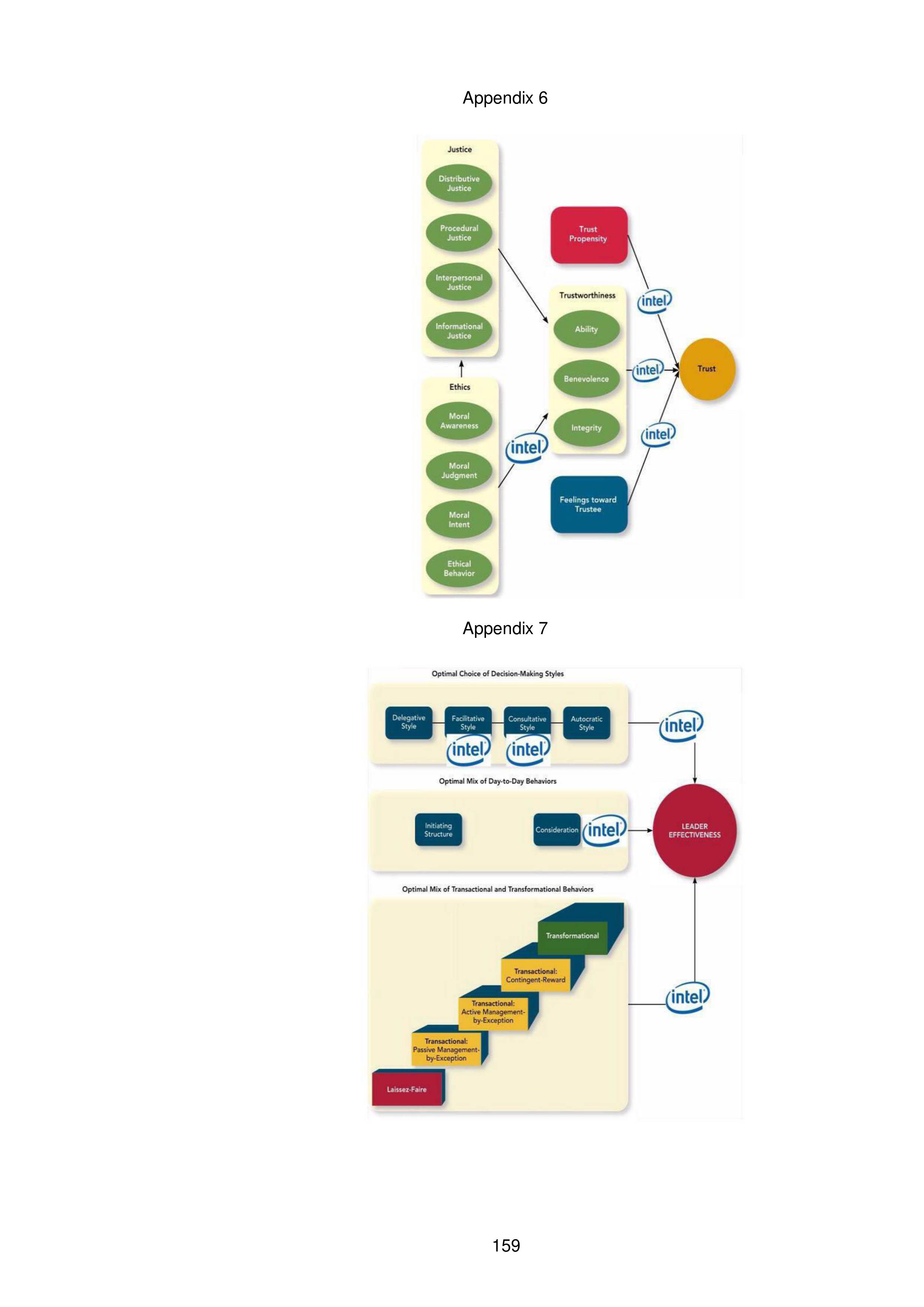
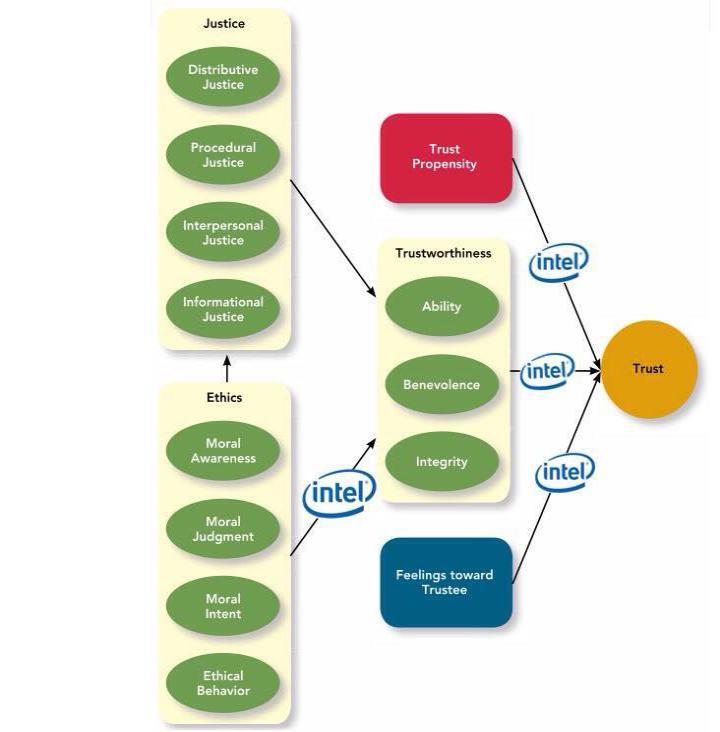
Moral awareness, moral judgment, moral intent and ethical behavior such as IT
sustainability strategies are emphasized by Intel. Intel focused on reducing our own
consumption of IT- related and office energy. For instance, PC Refresh allows our
employees to use new energy efficient computers, our offices use green printing and
iFax to minimize paper and tone usage. This shows that we recognize moral issues
that exist from time to time.
Moreover, our long-term strategy focuses on innovative solutions to optimize
the energy efficiency of our service, storage and network. Precisely, reducing and
recycling waste is one of the main ethical behaviors that we have been focused.
Generally, Intel is leading the local Malaysian industry in recycling, more than 95% of
construction wastes are recycled and more than 93.6% are solid waste recycling
waste. This figure prove that we are take moral judgment and moral intent seriously.
Currently, we are carrying on some programs such as recycle situations, drive-
in recycle centers, food waste composting and reusable dishware and utensils in
cafeterias. These programs have definitely brought many benefits to society and
environment. In order to instill this ethical behavior in our employees, we recognize an
Environmental Excellence Award to inspire them. The award consists of programs that
carried out by employees such as farm to fork program, carpool program, inter-campus
and home shuttle services, nursing mother program and room moreover sports and
recreational amenities. When authorities are morally aware, sophisticated moral
judgment and possess strong moral intent, they will automatically practice ethical
actions and behaviors.
Besides, Intel also builds trustworthiness such as ability, benevolence and
integrity among employees to develop an emotional bond. Trusting the authority will
develop a sense of obligation because employees feel more confident and are more
normative committed. For example, when negative events occur, Intel employees who
trust us are willing to accept the vulnerability with continued employment, remaining
confident in their belief that the company situation will eventually improve. Hence,
building trust among employees is very crucial to ensure the company business runs
smoothly.
7. Based on each decision made by the company, it may alternately leave a big
impact to the employees regardless of their level of position. As a manager, how
do you design each decision?
#Refer Appendix 9
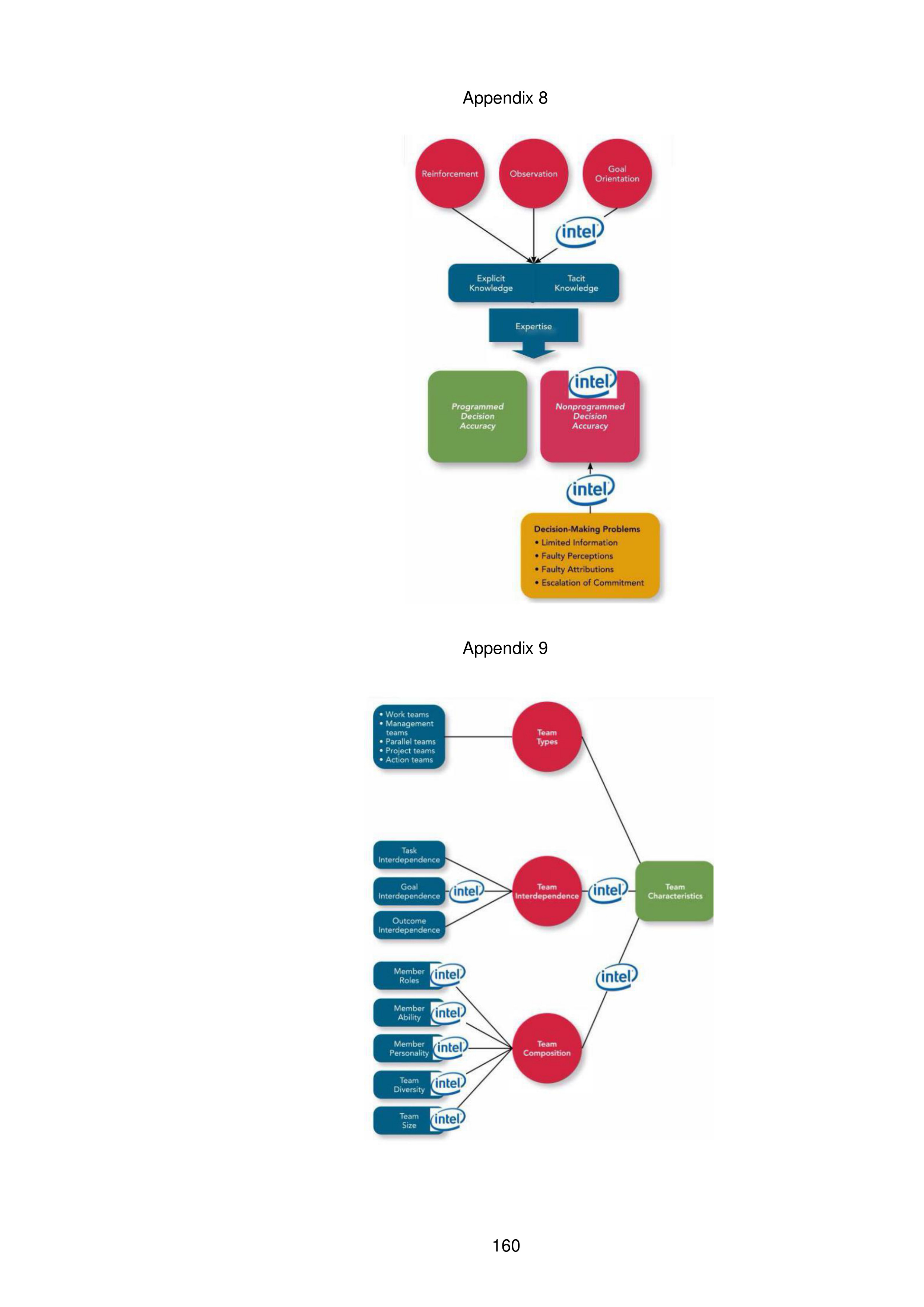
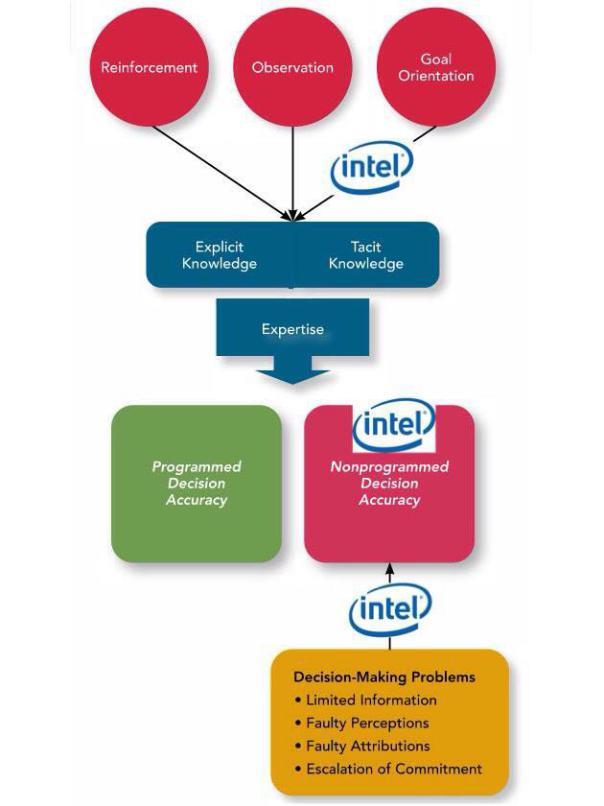
As a manager, I would consider the consequences of decisions before they are
made. Instead of identifying the problem based on previous experiences, I would
determine appropriate criteria, generate list of available alternatives, evaluate the
151
alternatives against criteria, choose the solution that maximizes value then implement
appropriate solution. I would prefer a rational-decision making model that maximizes
outcomes by examining all available alternatives in order to avoid faulty decisions due
to stereotyping, bias and framing.
8. Intel is one if the established company in Malaysia, therefore, what are the
initiatives used by the company to recruit employees from diverse
characteristics and background to form the good image of Intel?
#Refer Appendix 10
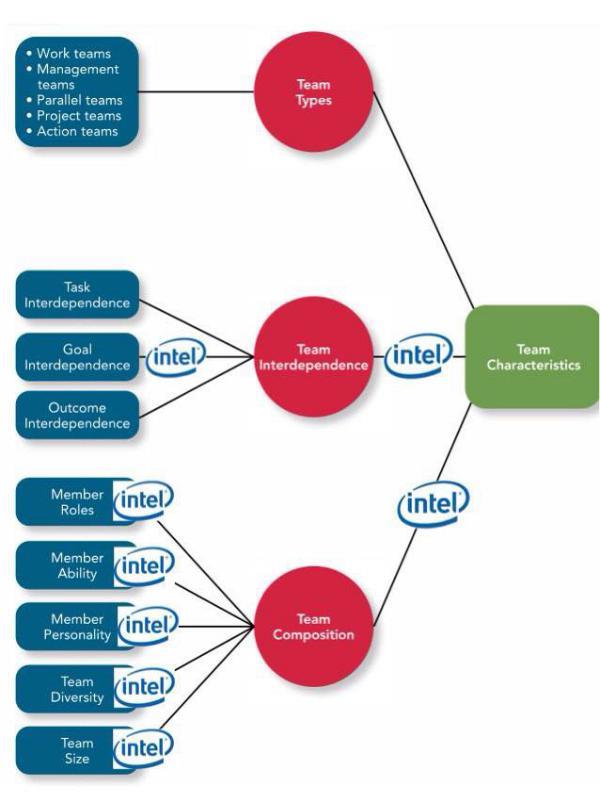
Intel accepts employees from diverse demographic where there are no age,
race and gender discriminations. Mostly, the age of employees ranged from 25 to 45
and there is no retirement age. As long you can contribute to Intel, you are part of the
family. The values, attitudes and personality of employees are emphasized during
interview selection to ensure that they are open-minded and positive enough to melt in
the diverse workforce. Ultimately, Intel would not recruit family members that can’t
adapt to diversity because Intel values the diversity problem-solving approach that
provides a larger pool of knowledge and perspectives from others to carry out work.
For instance, Intel employs engineers to supervise administration and fixed asset
departments other than manufacturing sites. Apart from that, goal interdependence are
focused where employees have not only a shared vision of Intel’s goal but also align
their individual goals with Intel’s vision – If it is smart and connected, it is best with Intel.
9. Does the company open any channel for the staff to voice out their views,
dissatisfaction, restraints and opinion against the company? How does the
company respond to the matter?
#Refer Appendix 11
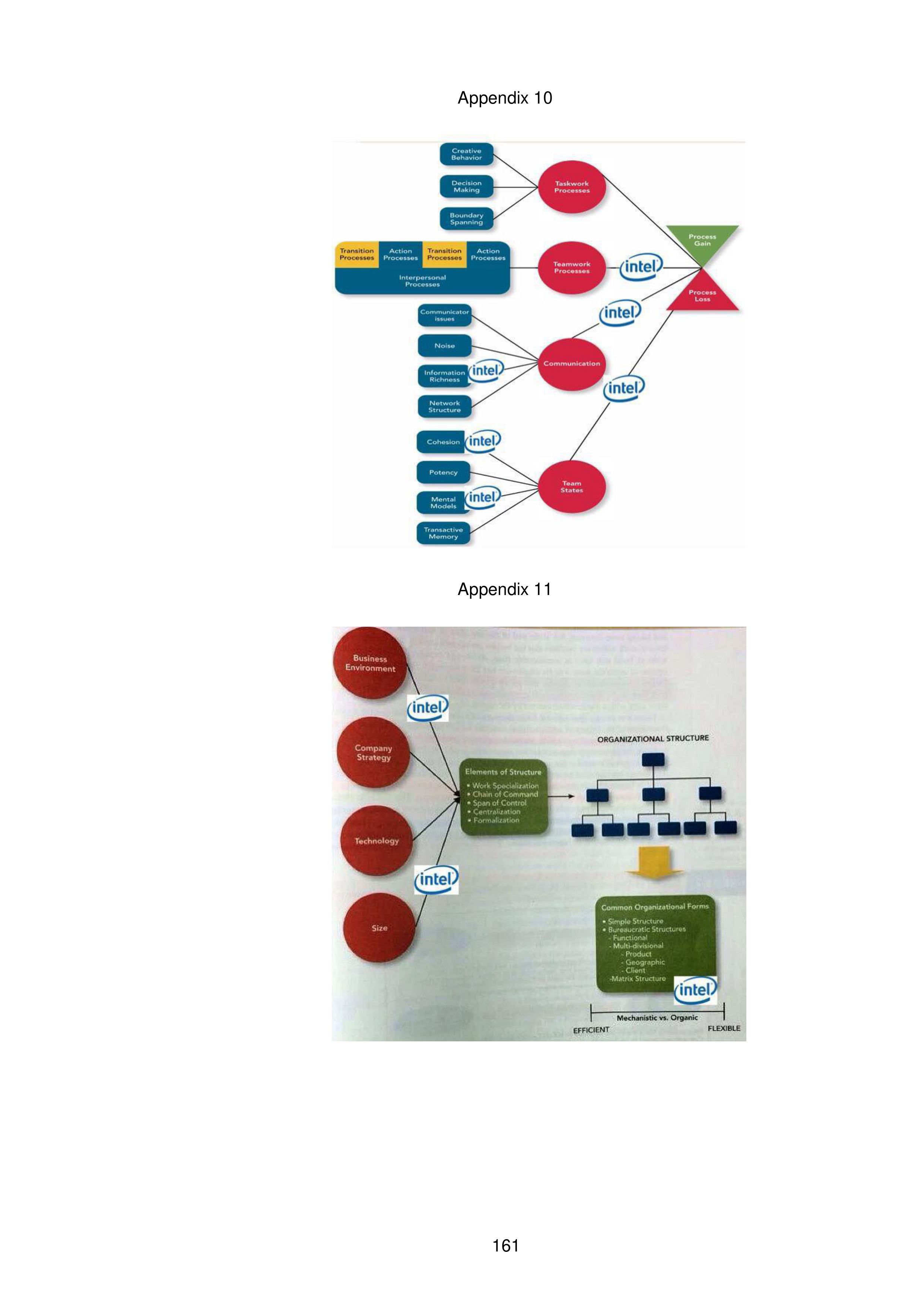
Yes, Intel does open channel for the staff to voice out their views,
dissatisfaction, restraints and opinion through communication. Information richness is
implemented in Intel which the amount and depth of information is transmitted in
messages from employees to employers. For instance, Intel employees are allowed to
use face-to-face channel to voice out any feedback from certain events in order to
verify and ensure that their messages are received and interpreted correctly to others.
Besides, Intel also allows employees to use personal written note to voice out their
dissatisfaction. Furthermore, Intel manager always give support to employees when
they are facing the problems. Manager feedback tools is implemented by Intel which
manager will personally give advice to employees who are facing some difficulty or
have done some mistakes. Indirectly, the employees develop general competencies
related to teamwork activities. Other than that, the team states that Intel focused are
cohesion and mental models. For example, Intel instills a strong trust relationship
among employees by fostering high level of motivation and commitment to the others
and intrinsically promotes a higher level of team performance. Moreover, Intel also
emphasizes mental models where employees share their understanding of one
another’s capabilities therefore they know who to go for assistance in face of problems.
Hence, they can carry out the task more efficiently by sharing the understanding and
skills with each other.
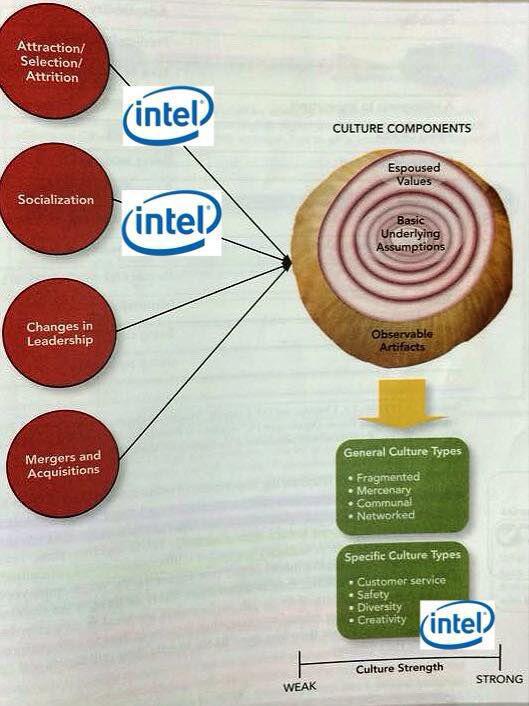
10. Can you describe the structure and culture of Human Resource Shared
Service Centre?
#Refer Appendix 12 and Appendix 13
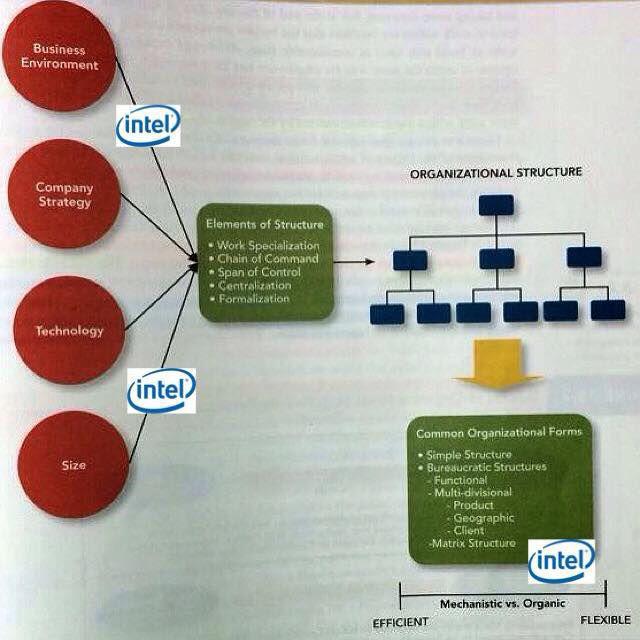
Generally, Intel has an organic structure. There are low degree of work
specialization where employees are empowered to take a broad view of tasks, think
152
more broadly of responsibilities lie although there might be a specified chain of
command, make own decisions appropriately as knowledge and expertise are
decentralized, convey lateral communication where information and advice are focus
compared to orders. Therefore, Human Resource Shared Service Centre has a flexible
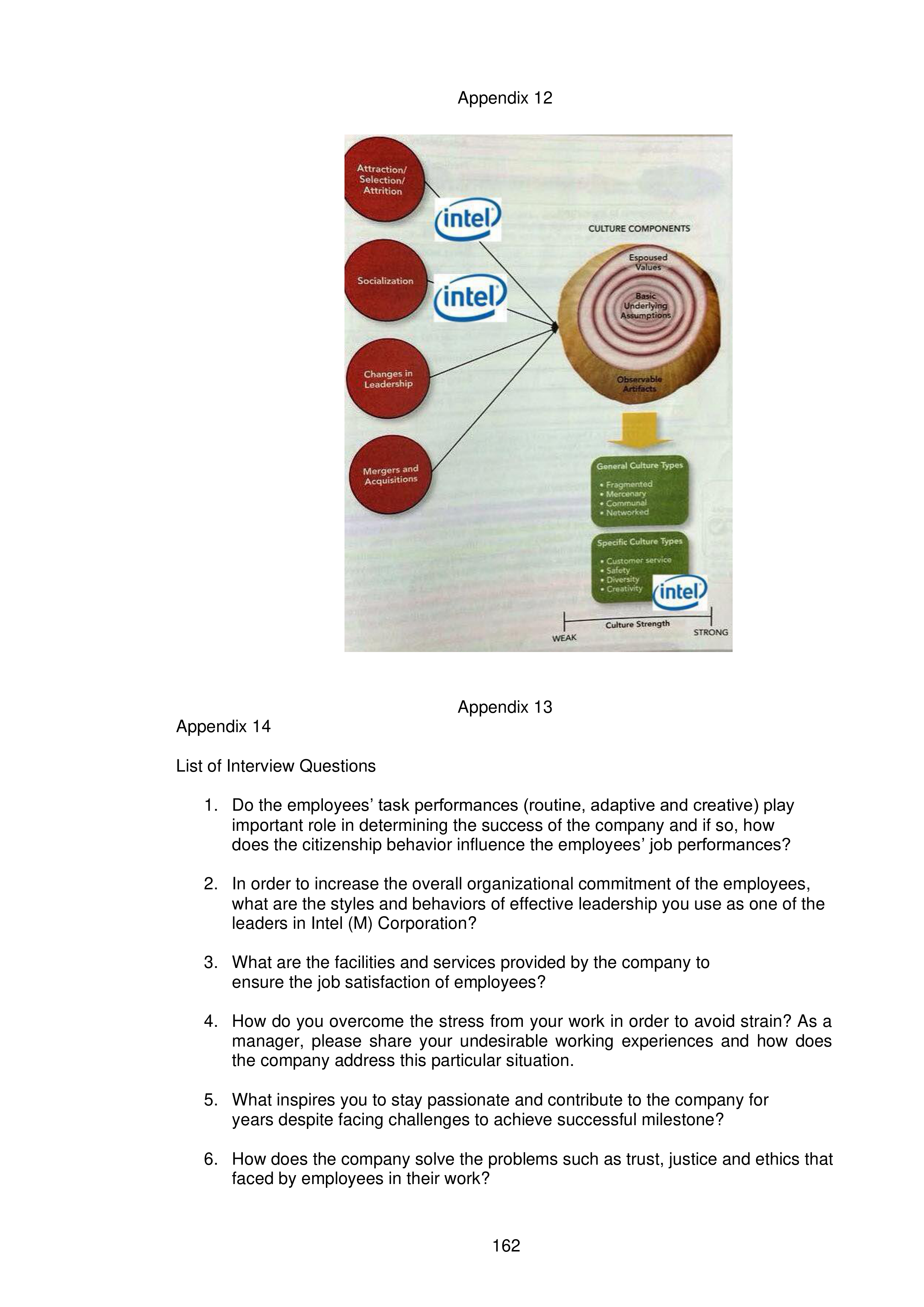
and constructive structure. Intel emphasizes equality where egalitarian culture is
practiced within the organization. Egalitarian culture allows employees regardless of
rank and age to have equality in programs such as Career Growth and Development,
Extended Education Programs, Employee Health and Wellness Programs moreover
Diverse and Inclusive Workplace.
APPLICATION IDEA
What are the factors that affect employees job satisfaction in Intel (M)
Corporation? An employee's overall satisfaction with his job is the result of a
combination of factors -- and financial compensation is only one of them.
Management's role in enhancing employees' job satisfaction is to make sure the work
environment is positive; morale is high and employees have the resources they need to
accomplish the tasks they have been assigned. In 2014, the human resource director
in Intel (M) Corporation reported data from an on-going project. The data below are the
data on the relative importance of 10 longstanding factors that research identifies as
significant in influencing Intel (M) Corporation employee’s job satisfaction. These
factors are listed in the table below, which contrasts the ranking of these factors in
2014 (from a sample of 268 managers in Intel (M) Corporation:
Factor
2014
Compensation/Salary
1
Supervisor Support
2
Good work-life balance
3
Job security
4
Opportunity for Advancement
5
Workload and Stress
6
Respect from Co-Workers
7
Financial Rewards
8
Intel Company values
9
Recognition
10
Based on the data above, compensation or salary is in the first factor that
affects Intel

153
(M) Corporation employee’s job satisfaction. Compensation can be defined as the
monetary benefit given to the employees by the company for their services given to the
company. Voydanoff (1980)
7
have revealed that monetary compensation is one of the
most major vivid variables for job satisfaction. Coming to the relation between job
satisfaction and salary/compensation, it is found by previous researcher said that
“Salary was found to be the key aspect for the drive and job satisfaction of salaried 10
employees of the automobile industry”. The survey assessed the various
characteristics of job and the way the employees ranked them as motivators and
satisfiers. The results revealed that increasing salary for performance was ranked as
the number one job element for motivation and compensation was ranked as the
number one job element for job satisfaction.
7
https://www.researchgate.net/publication/230409290_Perceived_Job_Characteristics_
and_Job_Satisfacti on_Among_Men_and_Women
Supervisor support in Intel (M) Corporation organization plays a crucial factor
towards job satisfaction as well as employee retention. Supervisor support is defined
as the extent to which leaders care about their employees’ welfare and value their
contributions. A leader with high supervisor support is one that makes employees feel
appreciated, heard and cared about. Researchers like Buckingham & Coffman (1999)
8
have found that the talented employee may join an organisation for many reasons, but
how long that employee stays and how productive he/she is while there is determined
by the relationship with the immediate supervisor. It was exposed that management &
friendly staff relationships contribute to the level of job satisfaction. The results showed
that the leadership styles that involve human interaction and encourage participative
decision-making are related positively to the skills and essential information gaining.
In Intel (M) Corporation, good work-life balance is ranked in the third place. A
healthy work environment lies on three aspects: the ethics and value foundation upon
which the organisation rests; the policies that take those principles and convert them
into day to day actions and the corporeal environment in which people work. So, all
three together attracts employees to work for a longer time in an organisation. Arnold &
Feldman (1996)
9
, promoted some factors such as temperature, lighting, ventilation,
hygiene, noise, working hours, and resources as part of working conditions. The worker
would rather desire working conditions that will result in greater physical comfort and
convenience. This is because of poor working conditions; many employees feel
dissatisfied. The working conditions include office space, equipment, comfortable
chairs, air conditioning, tools etc. When working environment is good for an employee,
then his/her productivity level automatically goes up. Positive and good work life
balance is directly related to employee retention and employees feel they are heard
and valued. Intel has ranked top 50 in the world for work-life effectiveness.
The fourth factor is job security in Intel (M) Corporation. Job security is the
chance that a person or an employee will keep his or her job; a person with the job
would have a little possibility of becoming unemployed if his/her job has an elevated
level of job security. Rosenblatt and Ruvio (1996)
10
found in his popular literature that
job security tends to perform better with an employee who is satisfied with his job than
the one who is not satisfied with the job. This finding is also supported by researchers
like Denton (2005)
11
said that if the employees are satisfied and content with the job
security they will automatically be devoted to and reliable to their organizations.
Lastly, recognition in Intel has a least impact towards job satisfaction in which it
is ranked at the 10th place. The availability of rewards and pay raises in the current
climate is having an impact here. Nonetheless they both remain powerful tools for
motivation.
154
8 https://www.academia.edu/7647216/Buckingham_and_Coffman_-
_First_Break_All_the_Rules_-_Review
9
https://www.scirp.org/(S(czeh2tfqyw2orz553k1w0r45))/reference/ReferencesPapers.as
px?ReferenceID=1 639517
10
https://psycnet.apa.org/record/1996-01981-006
11https://www.scirp.org/(S(351jmbntvnsjt1aadkposzje))/reference/ReferencesPapers.a
spx?ReferenceID=15 87321
CONCLUSION AND RECOMMENDATION
Back to all the models that we discovered in this report, it shows that the
employees in Intel (M) Corporation are committed to work with the organization and
that's related to their high job and task performances. The opportunities for
advancement in Intel (M) Corporation has made the employees more satisfied with
their current job when they see a path available to move up the ranks in the company
and be given more responsibility and along with-it higher compensation. Many
companies encourage employees to acquire more advanced skills that will lead to the
chance of promotion. Companies often pay the cost of tuition for employees taking
university courses, for example, during an employee's annual performance review, Intel
(M) Corporation supervisor should map out a path showing her what she needs to
accomplish and what new skills she needs to develop in order to be on a track to
advancement within the organization.
Although the workload and stress level is high among employees in Intel (M)
Corporation. Dealing with a workload that is far too heavy and deadlines that are
impossible to reach can cause job satisfaction to erode for even the most dedicated
employee. Falling short of deadlines results in conflict between employees and
supervisors and raises the stress level of the workplace. Therefore, the supervisors
play the role to elite all the stressors existed in the work environment and this will
indirectly be creating a warm environment for the employees to work.
Undeniably, financial rewards are a part which can affect Intel (M) Corporation
employee’s job satisfaction. Job satisfaction is impacted by an employee's views about
the fairness of Intel (M) Corporation wage scale as well as the current compensation
receiving. Intel
(M) Corporation need to have a mechanism in place to evaluate employee
performance and provide salary increases to top performers. Opportunities to earn
special incentives, such as bonuses, extra paid time off or vacations, also bring
excitement and higher job satisfaction to the workplace. Intel (M) Corporation values
are the identity that uphold by every employee in Intel (M) Corporation. Employees are
more satisfied and are less likely to quit when their personal values are consistent with
the organization’s values, and when they have positive attitudes about work
environment. Values are desired ways of behaving or desired end-states. When an
employee’s values collide with organizational values, employee may have interpersonal
value conflicts, or the individual organizational value conflicts that may affect job
satisfaction, turnover, and potentially performance. Attitudes, on the other hand, are
defined as a learned predisposition to respond in a consistently favourable or
unfavourable manner with respect to a given object.
155
REFERENCES
MODELS OF ORGANIZATIONAL BEHAVIOUR. Ebrary.net.
Retrieved from
https://ebrary.net/2814/management/models_organiational_behavi
our
Christine Rowland. (April 19, 2017). Intel’s Organizational Culture for Business
Resilience. Retrieved from http://panmore.com/intel-organizational-culture-
business-resilience-analysis Barchart. (2019). Intel Corp (INTC). Retrieved from
https://www.barchart.com/stocks/quotes/INTC/profile
New World Encyclopedia. (March 3, 2018). Intel Corporation.
Retrieved from
http://www.newworldencyclopedia.org/entry/Intel_Corporation
Barchart. (2019). Intel Corp (INTC).
Retrieved from
https://www.barchart.com/stocks/quotes/IN
TC/profile
Christine Rowland. (March 17, 2017). Intel Corporation’s Vision Statement & Mission
Statement. Retrieved from http://panmore.com/intel-corporation-vision-statement-
mission-statement
Chemers, M. (1997). An Integrative Theory of Leadership. New York:
Psychology Press, https://doi.org/10.4324/9781315805726. Retrieved from
https://www.taylorfrancis.com/books/9781317778400
Patricia Voydanoff. (July, 2006). Psychology of Women Quarterly 5(2):177 - 185. DOI:
10.1111/j.1471-6402.1980.tb00954.x. Retrieved from
https://www.researchgate.net/publication/230409290_Perceived_Job_Characteristics
_and_Job _Satisfaction_Among_Men_and_Women
Buckingham, M. & Coffman, C. (1999). First, Break all the Rules: What the world’s
greatest
managers do differently. New York: Simon & Schuster. By Raymond Lemay February
2003,
revised October 2009. Retrieved from
https://www.academia.edu/7647216/Buckingham_and_Coffman_-
_First_Break_All_the_Rules_-
_Review
Arnold, H.J. and Feldman, D.C. (1986) Organization Behavior. New York, 1. Retrieved
from
https://www.scirp.org/(S(czeh2tfqyw2orz553k1w0r45))/reference/ReferencesPapers.as
px?Refer enceID=1639517
Rosenblatt, Z., & Ruvio, A. (1996). A test of a multidimensional model of job
insecurity: The case of Israeli teachers. Journal of Organizational Behavior,
17(Spec Issue), 587-605. http://dx.doi.org/10.1002/(SICI)1099-
1379(199612)17:1+3.0.CO;2-S. Retrieved from
https://psycnet.apa.org/record/1996-01981-006
156
Krebs, D. L., & Denton, K. (2005). Toward a More Pragmatic Approach to Morality: A
Critical Evaluation of Kohlberg’s Model. Psychological Review, 112, 629-649.
http://dx.doi.org/10.1037/0033-295X.112.3.629. Retrieved from
https://www.scirp.org/(S(351jmbntvnsjt1aadkposzje))/reference/ReferencesPapers.asp
x?Refere nceID=1587321
APPENDIXES
Appendix 1
157
Appendix 2
Appendix 3
158
Appendix 4
Appendix 5
159
Appendix 6
Appendix 7
160
Appendix 8
Appendix 9
161
Appendix 10
Appendix 11
162
Appendix 12
Appendix 13
Appendix 14
List of Interview Questions
1. Do the employees’ task performances (routine, adaptive and creative) play
important role in determining the success of the company and if so, how
does the citizenship behavior influence the employees’ job performances?
2. In order to increase the overall organizational commitment of the employees,
what are the styles and behaviors of effective leadership you use as one of the
leaders in Intel (M) Corporation?
3. What are the facilities and services provided by the company to
ensure the job satisfaction of employees?
4. How do you overcome the stress from your work in order to avoid strain? As a
manager, please share your undesirable working experiences and how does
the company address this particular situation.
5. What inspires you to stay passionate and contribute to the company for
years despite facing challenges to achieve successful milestone?
6. How does the company solve the problems such as trust, justice and ethics that
faced by employees in their work?
163
7. Based on each decision made by the company, it may alternately leave a big
impact to the employees regardless of their level of position. As a manager,
how do you design each decision?
8. Intel is one if the established company in Malaysia, therefore, what are the
initiatives used by the company to recruit employees from diverse
characteristics and background to form the good image of Intel?
9. Does the company open any channel for the staff to voice out their views,
dissatisfaction, restraints and opinion against the company? How does the
company respond to the matter?
10. Can you describe the structure and culture of Human Resource Shared Service
Centre?