Empowering the next generation of leaders: Maserame Mouyeme’s journey at Coca Cola
It was early January 2019 and Maserame Mouyeme was sitting in her office at Coca-Cola in
Johannesburg, South Africa. She was reviewing her own performance and development goals for the year. Her
role as the Public Affairs, Communications and Sustainability Director for the Southern and East Africa
Business Unit (SEABU) was very demanding (See exhibit 1). During the December break, she read
‘Becoming’
by Michelle Obama
.
The book resonated powerfully with her and made her reflect on her own journey. For
Mouyeme, uplifting others was a highly personal pursuit and she was deeply committed to it. She had spent
many years mentoring both men and women formally and informally, within and outside of the companies that
she had worked at. Her time at Coca-Cola was no different. Mouyeme was, herself, a beneficiary of mentorship
and sponsorship which she credited for her career advancement. Most of her mentees went on to manage
successful careers. Her mentoring experiences left her invigorated, with an even stronger urge to lift others up.
But the competitive context had changed. The outcome was substantive restructuring and increasing pressure
across the business. Her time was now more constrained than ever.
Mouyeme walked to the kitchen to dispose of her coffee cup and to collect bottled water from the fridge.
She came across various colleagues, she smiled and greeted them energetically. She looked thoughtfully at the
young women associates, they reminded her so much of her younger self, so full of passion and ambition. With
the pressures she was facing and the need to prioritise, she wondered what the crucial learnings were from her
own career and what she could specifically share with up and coming women from her own experience?
Background on Coca Cola
The Coca-Cola Company was established in 1886 and was head-quartered in Atlanta, in the United
States. It was a publicly traded company on the New York Stock Exchange (NYSE). The company sold
non-alcoholic ready-to-drink beverages in the fast-moving consumer goods (FMCG) sector. Its core products
were in flavoured sparkling beverages. The company sold its products in more than 200 countries.
1
The company was part of a system which comprises of The Coca-Cola Company and the bottling
operations (known as the bottlers). In this system the company, Coca-Cola, was responsible for producing and
selling concentrates, beverage bases and syrups to bottlers. The company was the owner of the brand and was
responsible for marketing and consumer strategy. The bottlers in turn were responsible for manufacturing, sales
and distribution of the beverages to customers (retail and others) who sell the product to the end consumer. The
company employed over seven-hundred thousand people globally and reported $35.4 billion in net operating
revenues with a market capitalisation of $195.4 billion in 2017.
2
2
The Coca-Cola Company (2018), Coca-Cola at a Glance: Infographic, Retrieved from
https://www.coca-colacompany.com/our-company/infographic-coca-cola-at-a-glance
. Accessed on 30 January
2019
1
The Coca-Cola Company (2018), Coca-Cola at a Glance: Infographic, Retrieved from
https://www.coca-colacompany.com/our-company/infographic-coca-cola-at-a-glance
. Accessed on 30 January
2019
1
In Sub-Saharan and East Africa, the company had recently undergone structural changes in line with its
strategy of a leaner, faster business operating model. In 2016 it merged two business units i.e. the South African
Business Unit and its East Africa Business Unit to form one business unit called the Southern and East African
Business Unit (SEABU). This new unit comprised of 16 countries including those that are part of Central
Africa. South Africa was the biggest volume contributor to the business unit and that is where the head office is
located (in Rosebank, Johannesburg). According to Fitch Solutions’ 2018 Q4 Food and Drink Report, the
non-alcoholic beverage industry for the South African market was estimated to be worth R19.7 billion as at end
2017, with a forecasted annual growth rate of 5.7%. Carbonated soft drinks which were affected by the sugar tax
in early 2018 make up 67% of this market.
3
Coca-Cola had a strong focus on diversity, especially women’s empowerment both internally and in the
communities that it operates in. Speaking at an international women’s conference in 2016, Muthar Kent, then
Chief Executive Officer, stated that endorsing women’s advancement is not only just the right thing to do but
that it is also a catalyst for communities, companies and nations to prosper. By 2016 Coca-Cola had made
significant progress in increasing the number of women in executive roles to 32%, up from 23% in 2008.
Women in middle management had increased to 36% from 28% in the same period. Coca-Cola had established
the Women’s Leadership Council (Exhibit 2) to advise the senior team and Women’s Linc as a forum for women
to share with other women around their advancement (Exhibit 3). In addition, the career growth of five hundred
women employees had also been advanced by its Women-in-Leadership programme
4
.
The gender gap in business
Women graduating from university outnumber men in the United States. Forty-eight percent of
employees at entry level are women. Yet from the moment of first promotion though, the percentage of women
at each level declines. This is also true for other minorities like African Americans in the United States.
Managers tend to provide less support to women than men including providing fewer resources to enable them
to navigate organisational politics. Women are also less likely to socialise with their manager outside of work
which influences workplace satisfaction and retention. Women of colour receive even less support.
5
Progress in addressing the lack of women in senior management in business globally has been slow
although the movement was in the right direction. By 2019, 87% of companies reported having at least one
woman in senior management. This was an improvement of 20 percentage points over five years. 29% of senior
5
LeanIn.org (2018). Women in the workplace report 2018. Retrieved from
https://leanin.org/women-in-the-workplace-report-2018/men-still-outnumber-women-at-every-level
Accessed on
06 November 2018=9
4
Boggs, L. (2016). Coke CEO Muhtar Kent Advocates for Gender Equality at Women’s Forum in France.
Retrieved from
https://www.coca-colacompany.com/stories/coke-ceo-muhtar-kent-advocates-gender-equality-at-women-s-foru
m-in-france
Accessed on 06 November 2019
3
South Africa Food & Drink Report - Q4 2018
2018, Fitch Solutions Group Limited, London. Accessed on 14
February 2019
2
management roles were held by women, an increase of 5 percentage points over five years. But this was still
below the 30% threshold that was expected to open the doors to more rapid change
6
.
Within business, flexible working arrangements, creating an inclusive culture, removing systems of
unconscious bias for example in recruitment were seen as some of the key enablers of women’s advancement. In
addition, opening up developmental work opportunities, coaching and mentoring were seen as critical. Recent
studies had shown that when women had a mentor their belief that they could reach the C-suite jumped from
32% to 49%. This jumped further to 61% when they had a sponsor
7
.
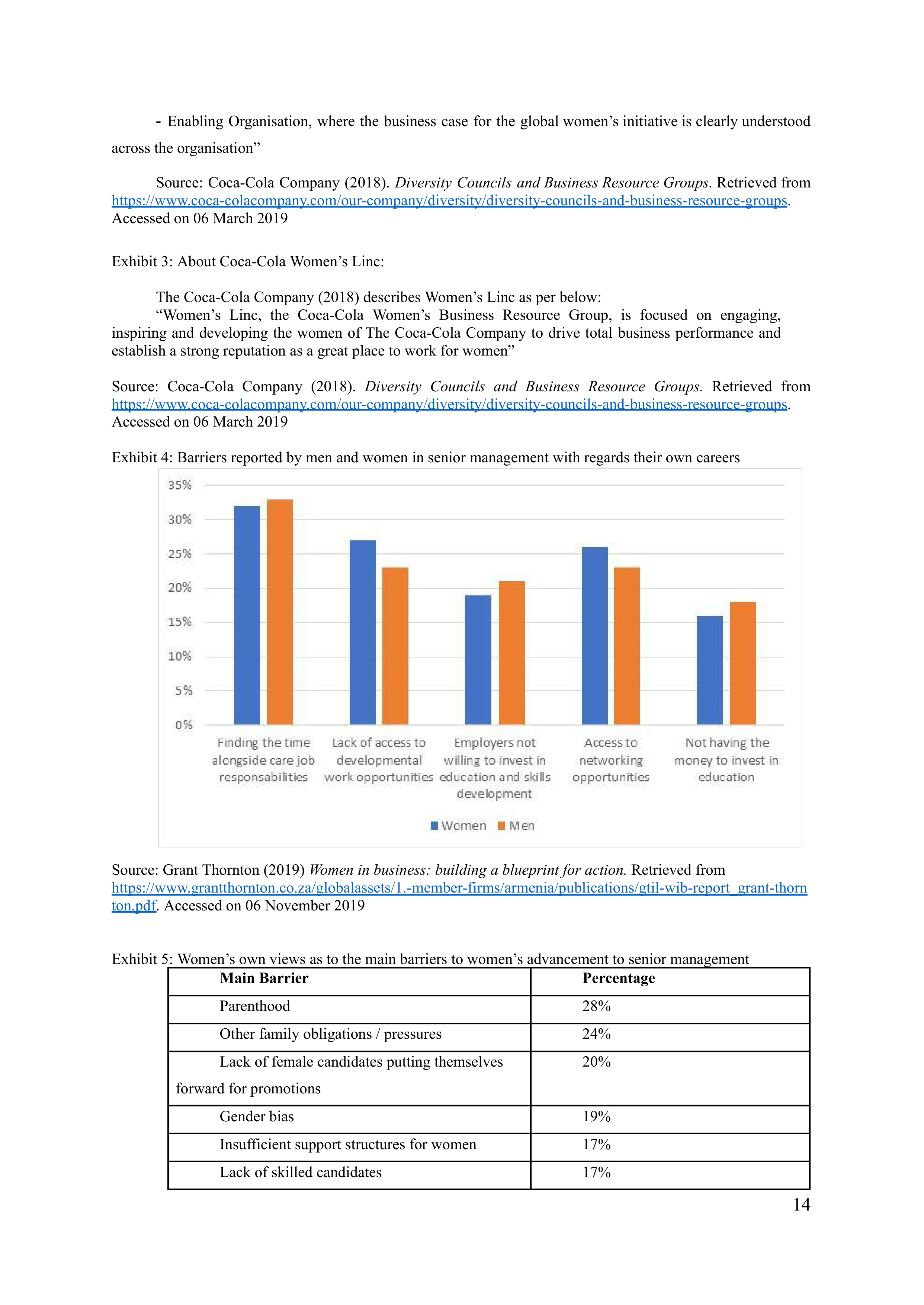
Compared to men, women emphasised more strongly the lack of developmental work opportunities and
networking opportunities as the barriers they faced on their way to the top (Exhibit 4). Women’s own views as
the barriers to women’s advancement included the lack of female candidates putting themselves forward, gender
bias, insufficient support structures for women, lack of skilled candidates in general and the lack of female role
models (Exhibit 5). Many companies were responding to these challenges with their own initiatives including
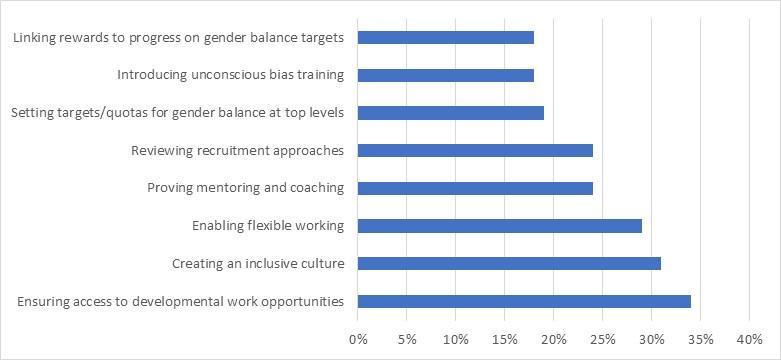
creating equal developmental opportunities, inclusive cultures and flexible work conditions (Exhibit 6).
While many companies said there was a shortage of women candidates, this was changing. Women were
now more likely than men to complete their degrees and were successful in the workplace but as they climbed
the corporate ladder, many exited the corporate world rather that pushing through to the senior ranks. The rapid
gains in female representation in African governments underscored the availability of highly qualified and
capable women. In Rwanda, women held over 60% of parliamentary seats, the largest share in the world.
Senegal also ranked in the top ten countries worldwide in this regard. South Africa had targets of 50% female
representation across parliament and senior political roles. There was a push for more progress in the private
sector to reflect the efforts in the public sector.
The International Monetary Fund estimated that those African countries with the worst gender inequity
could add 35% to their economies, on average, by bringing more women into the workplace. Over the last few
years, Africa has been home to many of the fastest growing economies in the world. There was a huge
opportunity for economic transformation. By 2018, African women held only 12.7% of board seats within
Africa’s top listed companies. 95% of CEOs were men. This reflected a broader pattern across society
8
. On the
southern tip of the continent, in South Africa, the statistics mirrored the global norms. 29% if of senior roles
were filled by women but one in five businesses still had no women at all in senior positions
9
.
9
Grant Thornton (2018)
Women in Business Report
. Retrieved from
https://www.grantthornton.co.za/Newsroom/wib-ibr-2018/
Accessed on 06 November 2019
8
World Economic Forum (2019).
Getting African Women into the Boardroom.
Retrieved from
https://www.weforum.org/agenda/2019/07/getting-african-women-into-the-boardroom/ Accessed on 06
November 2019
Accessed on 06 November 2019
7
Grant Thornton (2019)
Women in business: building a blueprint for action.
Retrieved from
https://www.grantthornton.co.za/globalassets/1.-member-firms/armenia/publications/gtil-wib-report_grant-thorn
ton.pdf
Accessed on 06 November 2019
6
Grant Thornton (2019).
Women in business: building a blueprint for action.
. Retrieved from
https://www.grantthornton.co.za/globalassets/1.-member-firms/armenia/publications/gtil-wib-report_grant-thorn
ton.pdf
Accessed on 06 November 2019
3
Maserame Mouyeme: Early Career
Born and raised by her grandparents in Soweto (the biggest black township in South Africa) in a humble
four-roomed house, Mouyeme had been a little girl with big dreams. She grew up during the peak of the
anti-Apartheid student uprisings in the township and this gave her a heightened sense of the odds she would
have to face. Mouyeme remained keenly aware of the sacrifices that the older generation had made for her. Her
grandfather was her role model. From him she learnt the value of hard work as he had worked long hours,
sourcing fresh produce and selling it at his fruit and vegetable shop. Like him, Mouyeme valued education and
inherited his love for reading, especially newspapers.
Mouyeme showed her courage, tenacity and grit at a young age when she mailed her resume to the CEO
of a leading national printing company to ask for a job upon matriculation. That daring act secured Mouyeme a
meeting with the CEO, who was impressed enough to create a position for her upon graduation. Her bravery and
perseverance would be attributes that would carry her throughout her career.
Mouyeme started her formal career in 1991 when she was recruited from the University of Cape Town to
work at Unilever as a marketing assistant. There she obtained cross-functional experience and rose steadily
through the ranks. Mouyeme then moved to Kellogg’s where she worked on brands such as Rice Crispies and
Frosties. In 1994, Coca-Cola relaunched officially in South Africa after international trade sanctions, imposed
during apartheid, were lifted. There were few black managers in large corporations at the time. The occupied
only 10% of positions in fast-moving consumer goods (food & retail) and 15% in agriculture, manufacturing
and engineering
10
. Recalling her experience and the challenges of starting out, Mouyeme noted:
“We didn’t have a lot of role models from our own background. My colleagues and I always felt we did
not belong. Building relationships with senior leaders required major effort and confidence.”
To diversify its talent to reflect the demographics of the country, Coca Cola recruited Mouyeme as Senior
Brand Manager in the marketing team focused on relaunching the Sparletta brand. She met Charlie Frennett, the
Business Unit President, who became a pivotal sponsor during her time at Coca-Cola. Frennett was a white man
and an expatriate from the United States of America. When Mouyeme shared a 3D model of a children’s
playpark that she wanted to build for the relaunch campaign, her spark and passion impressed him immensely.
Frennett approved it immediately. He invited her to senior meetings (a rare occurrence for associates at her
level) and to work on a special project he sponsored called ‘20 Dollar Coke’. Mouyeme said:
“This opportunity led to me working across the region where we did a lot of research, gathering insights
from youth who are Coca-Cola’s core. The project really set a good base for me”.
The exposure propelled her career, culminating in a promotion to a senior regional marketing role for
West, East and Southern Africa (excluding South Africa).
10
Luhabe, W. (2002).
Defining moments
. Pietermaritzburg: University of Natal Press.
4
Moving into Advertising
In 1998 Mouyeme left Coca-Cola for the advertising industry where she spent six years expanding her
marketing experience. She worked her way up from managing director for a design agency to the group
managing director of the biggest (in terms of billings) advertising agency in South Africa, Draft Foote, Cone and
Belding (FCB). This was a momentous achievement for her, as she was one of the first black female executives
to be appointed in such a role. She reflected on the broader impact of the move:
“I think it encouraged aspiring black talent to join the industry. At that time advertising as a career was
not known amongst youngsters who grew up in South Africa’s townships”.
Mouyeme served as chairperson of the Association for Communication and Advertising (ACA),
vice-chairperson of the South African Audience Research Foundation (SAARF) and was involved in
relaunching the prestigious Loeries Advertising & Communications Awards
11
. She was recognised for her
contribution to the transformation and education portfolios of the ACA and the AAA School of Advertising,
especially for driving access to funding and training for disadvantaged community members. During her tenure
at FCB, she empowered the youth via paid learnership employment opportunities and actively advanced women
in the agency to director level. Furthermore, Mouyeme led one of the biggest black economic empowerment
(BEE) deals between advertising agencies in 2003. She was also a finalist for both the 2004 Shoprite Checkers /
SABC 2 Women of the Year Award
12
as well as for the South African Businesswoman of the Year in 2005
13
. In
that same year, she earned the respect of her industry peers when she was ranked as the second most influential
person in the advertising industry. Being in such a high leadership position in her early 30’s was a great
achievement, but admits that at times, she felt like an impostor. These achievements and the feeling of being an
imposter prompted Mouyeme to obtain a coaching qualification. This learning opportunity set a good base for
her ability to understand others, key skills for a mentor and coach.
Going back to Coca-Cola in East and Central Africa
In 2006, Mouyeme re-joined Coca-Cola as the Marketing Director for the East and Central Africa
Division in Nairobi and was responsible for 27 countries. This development required her family to move to
Kenya and allowed her children to get exposure to the vibrant cosmopolitan culture of the bustling capital. Her
role required frequent travel. She credited her husband and extended family for the sacrifices and support that
13
Hill, L.
, (2005), Businesswoman Award finalists announced, Engineering News. Retrieved from:
http://www.engineeringnews.co.za/print-version/businesswoman-award-finalists-announced-2005-06-09
.
Accessed on 14 February 2019
12
Shoprite Holdings (2004), ‘SA Women of the Year 2004 finalists announced’. Retrieved from
https://www.shopriteholdings.co.za/articles/Newsroom/2004/sa-women-of-the-year-2004-finalists-announced.ht
ml
Accessed on 14 February 2019
11
Started 40 years ago, the ‘Loeries Awards’ is an annual competition for creative excellence and innovation in
brand communication in Africa and Middle East
5
enabled her to advance her career
14
. Mouyeme was aware that men had to make less difficult choices if they
wanted to get ahead in their careers.
In 2008, she moved to operations at Nairobi Bottlers. Mouyeme spent a year on the factory floor, learnt
the ropes and built functional credibility with the bottlers. Many saw this step as a backward one, however, she
saw it as a temporary investment to prepare for a future role
15
. Her move, endorsed by her senior leader in the
business unit, was communicated to the bottlers. She elaborated:
“I had to understand why people would be prejudiced against having a woman as a leader. So, I decided
to earn the bottlers’ respect by moving to their side for a year. I built rapport with them because that
would impact my performance. They got to know me, and I made sure I kept my word. When I said I
would visit a country, I did it without fail”.
The move paid off when she was promoted to the role of General Manager for the Central Africa
Franchise in early 2010.
In this role, Mouyeme led operations in eight countries. This included 22 bottlers, mainly male-led, in
countries that also had massive macro-economic and infrastructural challenges. Her role scope also included
finance, customer management and marketing. For many women at the company, she seemed to have crossed
the rubicon with this achievement, becoming a role model, breaking another barrier as one of the first women
general managers. One of her mentees and a senior member of her team at the time, Katia Muchanga, Customer
and Commercial Manager for East and Central Africa, recalls the moment when Mouyeme’s promotion was
announced. Muchanga recalled that:
“She really broke barriers, I had never been exposed to a female General Manager at Coca-Cola before,
normally those are male positions. And she was coming from marketing, much like what I wanted to do.
She was opening spaces ahead of us.”
16
Mouyeme had a passion for understanding the consumer holistically. She encouraged her team to use the
same approach to ensure they understood their markets. It was important for her to be exemplary and not ask her
team to do things that she herself wouldn’t do. The Franchise Leadership Team (FLT) which comprised of senior
functional members and country managers, was based mostly in Johannesburg and travelled at least once a
month to visit their markets and bottlers. In her monthly meetings with the FLT, Mouyeme regularly challenged
her team to ‘walk the markets’ they served, engaging with consumers and customers. Therefore, she was always
16
Interview with Katia Muchanga, 14 February 2019. All further quotes from Muchanga are from this interview.
15
Grant-Marshall, S., (2015) ‘Winning Women – Maserame Mouyeme: Bubbling to the top’.
City Press
Careers.
Retrieved from
https://city-press.news24.com/Careers/Winning-Women-Maserame-Mouyeme-Bubbling-to-the-top-20150915
Accessed 11 November 2019
14
Grant-Marshall, S., (2015) ‘Winning Women – Maserame Mouyeme: Bubbling to the top’.
City Press
Careers.
Retrieved from
https://city-press.news24.com/Careers/Winning-Women-Maserame-Mouyeme-Bubbling-to-the-top-20150915
Accessed 11 November 2019
6
on the road, away from her family, even though the trips were sometimes tough and gruelling. A FLT member
during Mouyeme’s tenure, Muchanga recalled:
“She always told us to spend less time in the office and more time in the markets. She did the same and
set the example. She really expected us to dig deep and know what was really driving volume”.
Mouyeme reflected on her own experience at the time.
“It really would have been easy for me as a leader to ask for insights or, to just focus on the numbers, but
I believe in experiential learning. So, I travelled to distant small towns in countries like Angola because, I
felt that what I’m asking my team to do, I should be able to do. I think that inspired them to build depth
and understanding so that when they stood in front of me or the broader company leadership and they
talk about a market, that they’re talking from a first base understanding and having been there”
Just before the merger that resulted in the formation of the South East Africa Business Unit in 2017,
Mouyeme was moved from her general manager role to the more front-facing role of Public Affairs,
Communications and Sustainability Director. Although she would miss getting her hands dirty in the market and
in operations, she was ready to take on the challenges of her new role as it brought opportunities to stretch
herself in her passion area of sustainability. She had amassed extensive experience in stakeholder relations and
her marketing and advertising experience stood her in good stead to manage corporate communications. It was a
great feather in her cap when she was recognised by Marketing Communication News in South Africa as one of
its Magnificent Women for 2018
17
.
Authentic Networking
When profiled in a leading Sunday newspaper, Mouyeme said that one of the main things she would
recommend is to surround oneself with people who could offer advice and direction when required. Her ability
to reach out to people, she said, meant she had many mentors throughout her career. There was a mentor
Mouyeme recalled, a senior leader, who had strongly encouraged her to rejoin Coca Cola in a new region. This
led to her gaining diverse leadership experience which was very important.
In her early years there were no black women in senior leadership positions – senior leaders were
exclusively male. Mouyeme did not see seeking advice or sponsorship from male leaders as a barrier. When
quizzed about whether she was intentional in seeking guidance from senior male leaders, she responded:
“No it was unconscious. I was being my authentic self and was driven by my passion, it was not planned.
Because of the paucity of women in leadership positions, I had no choice but to engage the male
leadership with my ideas”.
17
Editor (2018) Retrieved from
https://marcommnews.com/marcomms-magnificence-2018s-magnificent-women/
. Accessed on 16 January
2019
7
Mouyeme believed mentoring relationships could grow, provided one had the courage to seek guidance
and present oneself credibly and with authenticity. She adds:
“I have, however, had women coaches and mentors who provided feedback and helped grow my career”.
Mouyeme expressed concern about some young black people who isolated themselves unconsciously and
missed out on key information and influential networks by sticking exclusively to their ethnic or social group,
what she described as an informal ‘African Cup of Nations’
18
. She advised young women to strategically build
their social network and influence in the workplace and to think carefully about what each network would bring
them. She said:
“One must leverage them to empower and build yourself. You need to have the skills to be able accept
rejection as you may not fit into every network. The network relationships need to be authentic, not fake.
In terms of building relationships with senior leaders, male and women, it is important to first understand
company dynamics and then choose approachable or friendly leaders and get to know them socially. If
they are sitting alone at lunch, sit with them and introduce yourself.”
Reflecting on her style of leadership, Mouyeme thought about how she focused on being authentic
whilst fitting into the corporate environment. She highlighted that:
“I decided to be myself as long as I was professional and respectful. I told myself that people will
have to take me for who I am. Authenticity in corporate is a very difficult thing to maintain, to give in
without compromising who you are.”
Giving in, in this case, meant adapting her leadership style to corporate culture and understanding how
things are done in that environment. Muchanga recalled Mouyeme’s feedback style:
“She leads from her heart, it builds trust. She’s very directive in her approach. She’s very vocal.
She’s very hard, very organised. She gives tough love.”
Mouyeme reflected briefly on the negative side of being direct:
“In some instances being candid hurt, but when people know that you’re coming from a good place to
help them grow, improve and achieve results they appreciate it”.
She was also a firm believer that leadership is earned, and that people will not just follow because of
positional authority. A leader must understand who they are leading and why they think they deserve to be a
leader. Muchanga concurred with the results of Mouyeme’s leadership style:
“She gets followers. People do stuff for her. People cross the river for her.”
18
The Confederation of African Football (CAF) African Cup of Nations is an annual football tournament
exclusively for national soccer teams from various African countries.
8
Mentoring others
Mouyeme had a strong passion for helping others in the workplace. This meant giving them access to
things that she did not have when she started out, such as career counselling and access to credible and strong
women role models. As a senior woman leader at Coca Cola, she felt it was critical for her to be actively
involved in women’s development forums. Mouyeme was nominated to Coca-Cola’s Women’s Leadership
Council (WLC) for three years. This was a global women’s leadership forum consisting of thirteen diverse
senior leaders from across the world. The company website described the role of the WLC as that of being an
advisor and guide to senior leaders on strategies and programs to ensure faster movement and growth of female
employees into more senior or influential roles.
19
WLC was formed to achieve a 50% representation of women
at an executive leadership level by 2020. Her time at the WLC provided global exposure and allowed Mouyeme
to create a strong, enduring network with women associates from across the world.
Mouyeme was also a leading sponsor member of Coca-Cola’s Women’s Linc initiative in the business
unit (SEABU), based in South Africa. Women’s Linc was a localised business initiative whose goal was to
‘engage, inspire, and develop women at lower management levels within the company. Women’s Linc chapters
periodically hosted empowerment workshops where women employees engaged and networked with inspiring
senior women leaders or executives. The workshops were hosted and run by a committee of volunteers, who
gained valuable exposure and leadership skills. The participation of senior women leaders was voluntary.
Mouyeme consistently attended the workshops, sponsored the committee’s work and offered support where
required. She felt that Women’s Linc was a welcome reprieve from her intense work schedule. It gave her a
much-needed opportunity to interact with women employees. Mouyeme was often invited to serve as a guest
speaker or a panel member on various topics. A highlight was when she led a panel discussion about gender
equity at the World Economic Forum for Global Shapers that took place in Cape Town in 2015.
Based on her leadership profile she was often approached by young people, especially women, looking
for advice. These approaches often led to informal mentoring sessions. She was passionate about it because she
wanted to give back and the best way to do that, she thought, was through giving of her time. The company ran
an annual mentoring programme where it matched two lower-to-middle management employees with a member
of senior leadership. The employees were given a list of mentors to choose from and they had to indicate the top
three senior executives they would like to be mentored by. Human Resources then allocated two mentees to a
senior company leader. Mouyeme put her hand up each year to be included in the programme and she had a
good reputation as a mentor which made her a popular choice. At the start of 2019 she had two mentees via
Coca-Cola’s formal mentoring programme.
Mouyeme preferred a monthly meeting with the formal mentees and ad-hoc sessions for the informal
ones. She expected the mentee to lead the relationship and set up appointments when they needed it. A mentor,
19
The
Coca-Cola
Company
(2018).Retrieved
from
https://www.coca-colacompany.com/our-company/diversity/diversity-councils-and-business-resource-groups
.
Accessed on 06 November 2019
9
she felt, had to be flexible and motivating. She wanted people to feel better after speaking to her. She never gave
advice. Instead, she said of her mentoring approach:
“I asked a lot of open questions and played things out. I was not directive in my style, I empowered the
mentee to reflect on what we discussed and then decide for themselves from there. Being present was
important, giving them your undivided attention and showing them that you are genuinely interested. I
was very focused on creating a safe space and confidentiality is a non-negotiable and key to build trust.
This goes both ways. Some things can be taken out of context if revealed. I asked probing questions for
mentees to reflect on post the sessions”.
The mentoring sessions were either conducted in Mouyeme’s office or when she was travelling, via
telephone or video conference. The nature of the relationships she developed with her mentees evolved into
sponsorship and coaching on an ad hoc basis. Her view was that each is required at a different stage in one’s
career, hence as her mentees grew, what they needed from her evolved. As a sponsor, she had to know of her
mentees’ on-the-job performance so she could represent them credibly. During the quarterly People
Development Forums, where talent and promotions were discussed by senior leaders, she advocated for those
who she mentored and sponsored. She shared her opinion and experience of them. Many of them continue to ask
her to be their referee for job applications.
Mouyeme’s impact on others
Various mentees and peers who have worked with Mouyeme recalled her impact on their careers.
Commenting on why he chose to approach her as a mentor, Theron Govender, Commercialisation Manager for
the business unit, stated:
“Mouyeme has been my mentor for six years now. I chose her because she had a very good reputation as
a mentor already and she’s a black woman so I thought she could understand my challenges. I think it’s
important for the mentor and the mentee to have some chemistry, to be able to connect professionally and
relate to each other. As a male I also wanted to experience a woman mentor as I needed a different
perspective. She was very open but also had a reputation of being a trustworthy person. She kept our
discussions confidential”
20
.
John Chadyiwa, a former FLT member who had worked with her for eight years and had moved on to be
an entrepreneur, explained her wider approach in terms of mentoring, coaching and managing him:
“She made sure we discussed all aspects of my personal life and how to balance them with work, i.e.
church, society and work. She brought in a certain way of looking at issues that I did not possess before.
I had very difficult bottlers and she was very supportive and because of that I managed to navigate
dealing with them even when volume was not coming through. She would always make sure that she
20
Interview with Theron Govender, 27 February 2019
10
understood the issue and she gave you a point of view. And from her I learnt to always have a point of
view”
21
.
For a long time, Noma Halimana, country manager for Zimbabwe, was the only franchise manager who
was a woman in the operations environment in Central Africa. She felt the need to prove herself and
experienced doubt from bottlers especially men, who wondered whether she could keep up with the tough trade
environment and travelling schedule. Thankfully, Halimana had a strong support system at home through her
husband who believed in her and encouraged her to learn. The two women met during Mouyeme’s tenure in
Kenya and she took an interest in coaching and mentoring Halimana. When Mouyeme moved to leading
Central Africa, she became one of Halimana’s direct senior leaders. At a bottler’s event, Mouyeme had
challenged her to establish a Women’s Linc forum in Zimbabwe that comprised of women associates of the local
Coca-Cola office and the three bottlers in that country. Halimana recalled being thrilled by the idea and
subsequently successfully established Women’s Linc in Zimbabwe. After a few years, she passed on the baton to
developing women leaders. Halimana maintained her relationship with Mouyeme:
“Our relationship evolved from coaching, to mentoring and then sponsorship. Even now I can still reach
out to her via WhatsApp for advice”.
22
Halimana benefitted from advancement initiatives aimed at women within the company in which her
participation was endorsed by Mouyeme. She was part of the Women’s Leadership initiative and training
programs that took her to Nairobi and the Atlanta head office. She fondly recalled the Atlanta training
programme as a life-changing experience that focused on all aspects of her life, beyond her job.
Increasing pressures with a new role
Mouyeme took on the SEABU director role in mid-2017. This was the year when Coca-Cola announced
a new strategy to drive growth and changes to its operating model and recalled it as a challenging year for her
department. Coca Cola and their competitors had come under pressure the world over due to the negative health
consequences of the high sugar content in its main sparkling beverage products. In line with changes in
consumers’ beverage tastes and their purchase behaviour, President and Chief Operating Officer, James
Quincey
23
announced a new strategy to drive growth. He announced that the company’s goal was to become a
total beverage company. Quincey stated that the company would focus on launching beverages with little or no
sugar, especially in growing categories with high value. The new growth strategy was supported by a leaner
operating model and digitising the enterprise.
23
Moye, J. (2017). Quincey at CAGNY
:
'We Are Going to Be a Total Beverage Company'. Retrieved from:
https://www.coca-colacompany.com/stories/quincey-at-cagny-we-are-going-to-be-a-total-beverage-company.
Accessed on 30 January 2019
22
Interview with Noma Halimana, 05 March 2019
21
Interview with John Chadyiwa, 22 February 2019
11
The South African government proposed a sugar tax on carbonated soft drinks and implemented it in
April of 2018 (Arthur, 2018)
24
. This was a massive development for the African business. Phase I of
implementing the leaner operating model in Southern Africa had already been concluded in 2016. It was a
merger of the non-alcoholic ready-to-drink bottling operations of SABMiller plc, The Coca-Cola Company,
and Gutsche Family Investments.
25
This merger resulted in a company called Coca-Cola Beverages Africa
(CCBA), which became one of the top ten bottlers in the world. It served eleven countries during the first phase
and the second phase now increased the total number of countries under it to fourteen. Since Coca-Cola was the
leading player in non-ready to drink beverages in South Africa, Mouyeme’s role was to lead stakeholder
engagement and deliver a clear communication and public relations strategy. Her new function evolved to
become more dynamic, especially in terms of public policy and regulation. She participated in the widely
publicised Phase Two finalisation of bottler integration that affected her business unit.
Reflecting on the journey and her next steps
Over this same busy period the Women’s Linc forum had become dormant. Sitting in her office in
Johannesburg in January 2019, Mouyeme thought about her goals for the year. She had extensive experience as
an executive in Sub-Saharan and East Africa. She also had a solid track record serving as a non-executive
director on various boards. Her 24-year career in the FMCG industry spanned across the Advertising,
Marketing, Customer Management, Commercial Leadership and General Management fields. She had travelled
a long road from the dusty streets of Soweto and made a number of efforts to empower women and men across
her career. Her time was limited but there was so much to do in terms of sharing and empowering others. She
wondered how best to use her limited available time?
25
The Coca-Cola Company (2016), Coca-Cola Beverages Africa Begins Operations, Retrieved from
https://www.coca-colacompany.com/press-center/press-releases/coca-cola-beverages-africa-begins-opera
tions. Accessed on 30 January 2019
24
Arthur, R. (2018) ‘South Africa introduces sugar tax’ . Beverage Daily. Retrieved from
https://www.beveragedaily.com/Article/2018/04/03/South-Africa-introduces-sugar-tax. Accessed on 30 January
2019
12
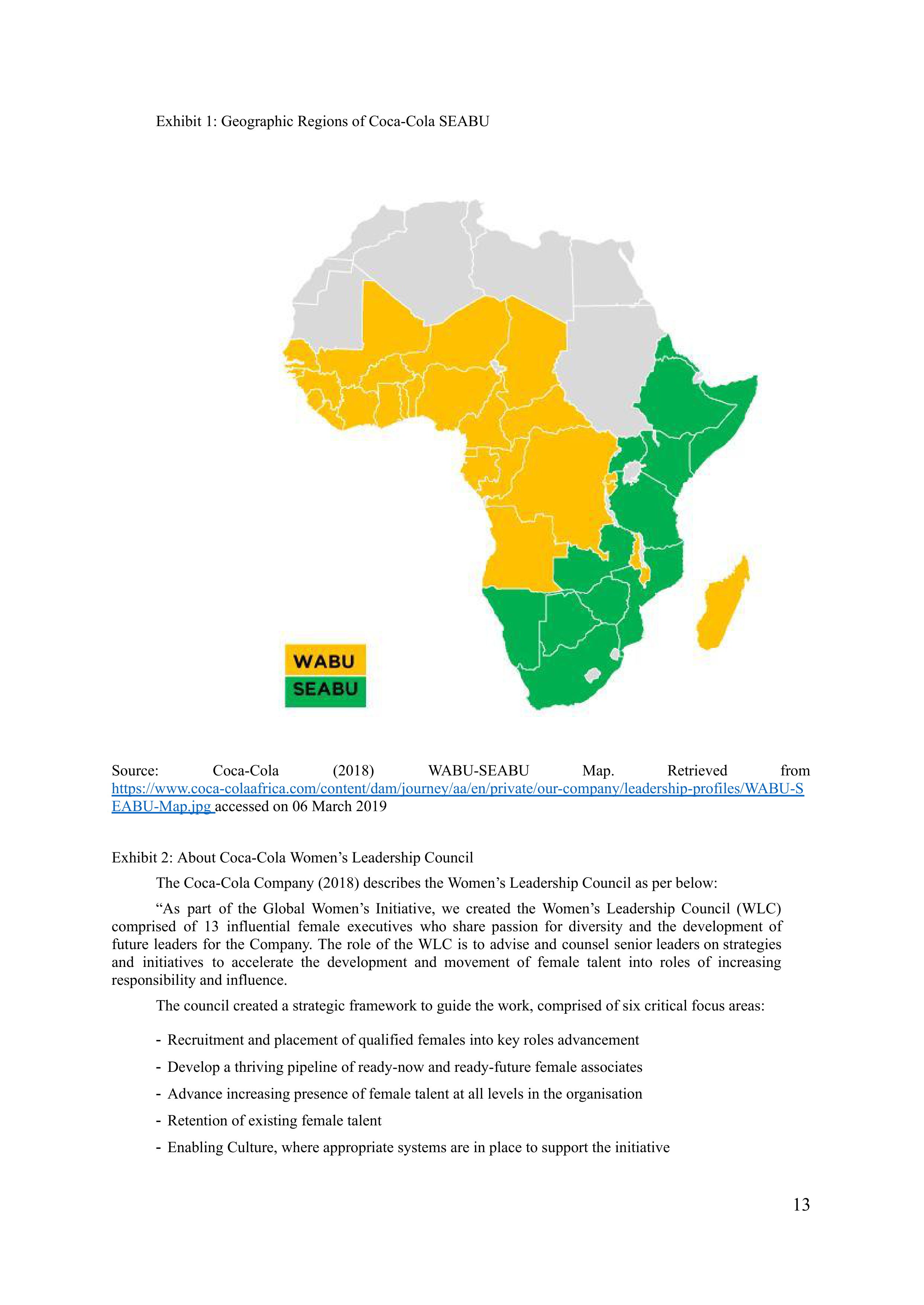
Exhibit 1: Geographic Regions of Coca-Cola SEABU
Source:
Coca-Cola
(2018)
WABU-SEABU
Map.
Retrieved
from
https://www.coca-colaafrica.com/content/dam/journey/aa/en/private/our-company/leadership-profiles/WABU-S
EABU-Map.jpg
accessed on 06 March 2019
Exhibit 2: About Coca-Cola Women’s Leadership Council
The Coca-Cola Company (2018) describes the Women’s Leadership Council as per below:
“As part of the Global Women’s Initiative, we created the Women’s Leadership Council (WLC)
comprised of 13 influential female executives who share passion for diversity and the development of
future leaders for the Company. The role of the WLC is to advise and counsel senior leaders on strategies
and initiatives to accelerate the development and movement of female talent into roles of increasing
responsibility and influence.
The council created a strategic framework to guide the work, comprised of six critical focus areas:
-
Recruitment and placement of qualified females into key roles advancement
-
Develop a thriving pipeline of ready-now and ready-future female associates
-
Advance increasing presence of female talent at all levels in the organisation
-
Retention of existing female talent
-
Enabling Culture, where appropriate systems are in place to support the initiative
13
-
Enabling Organisation, where the business case for the global women’s initiative is clearly understood
across the organisation”
Source: Coca-Cola Company (2018).
Diversity Councils and Business Resource Groups.
Retrieved from
https://www.coca-colacompany.com/our-company/diversity/diversity-councils-and-business-resource-groups
.
Accessed on 06 March 2019
Exhibit 3: About Coca-Cola Women’s Linc:
The Coca-Cola Company (2018) describes Women’s Linc as per below:
“Women’s Linc, the Coca-Cola Women’s Business Resource Group, is focused on engaging,
inspiring and developing the women of The Coca-Cola Company to drive total business performance and
establish a strong reputation as a great place to work for women”
Source: Coca-Cola Company (2018).
Diversity Councils and Business Resource Groups.
Retrieved from
https://www.coca-colacompany.com/our-company/diversity/diversity-councils-and-business-resource-groups
.
Accessed on 06 March 2019
Exhibit 4: Barriers reported by men and women in senior management with regards their own careers
Source: Grant Thornton (2019)
Women in business: building a blueprint for action.
Retrieved from
https://www.grantthornton.co.za/globalassets/1.-member-firms/armenia/publications/gtil-wib-report_grant-thorn
ton.pdf
. Accessed on 06 November 2019
Exhibit 5: Women’s own views as to the main barriers to women’s advancement to senior management
Main Barrier
Percentage
Parenthood
28%
Other family obligations / pressures
24%
Lack of female candidates putting themselves
forward for promotions
20%
Gender bias
19%
Insufficient support structures for women
17%
Lack of skilled candidates
17%
14
Lack of female role models
11%
Legal company conditions
7%
Source: Grant Thornton International Business Report. (2015). Women in business: From Classroom to
Boardroom. Retrieved from
http://www.grantthornton.global/globalassets/1.-member-
firms/global/insights/ibr-charts/ibr2015_wib_report_final.pdf
. Accessed 06 November 2019.
Exhibit 6: Actions being taken on average by business globally to accelerate women’s advancement
Source: Grant Thornton (2019)
Women in business: building a blueprint for action.
Retrieved from
https://www.grantthornton.co.za/globalassets/1.-member-firms/armenia/publications/gtil-wib-report_grant-thorn
ton.pdf
Accessed on 06 November 2019
15

References
16