A-3
deforestation
‑
free certification, and the majority of the suppliers sourcing exclusively from
Michoacán hold such certification. Accordingly, the Proposal concerns only a fraction of an
already immaterial product category. The Proposal and Supporting Statement suggest, without
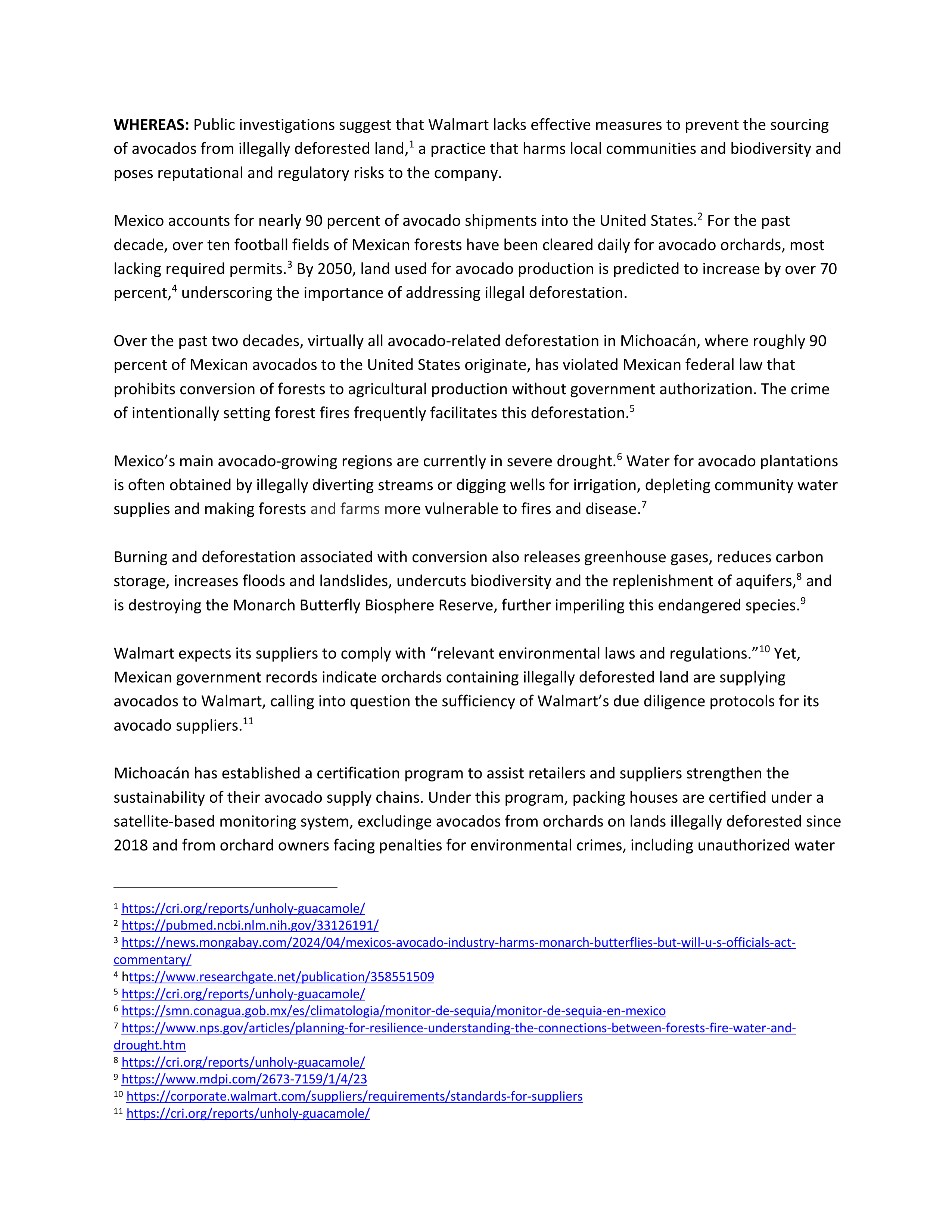
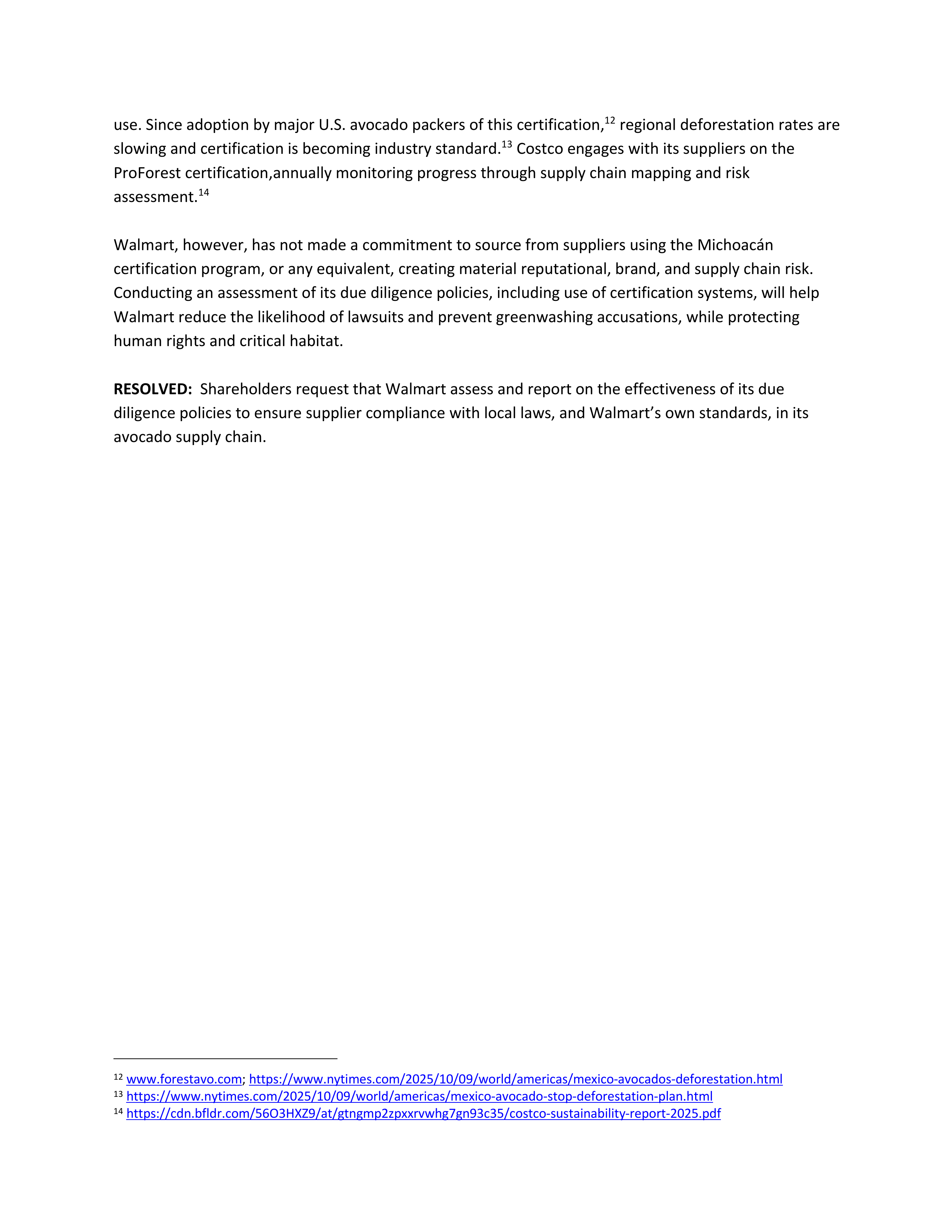
support, that the Proposal will reduce hypothetical risks the Company may face, including the
risk of “lawsuits and . . . greenwashing accusations,” thereby harming its brand and reputation.
As the Staff has confirmed, “[t]he mere possibility of reputational or economic harm alone will
not demonstrate that a proposal is ‘otherwise significantly related to the company’s business.’”
See
SLB 14M.
Further, the Proposal does not include factual or other support to meet the Proponents’
burden of demonstrating that the Proposal is “significantly related to” the Company’s business.
Specifically, nothing in the Proposal indicates that the Proposal relates to matters of significance
to the Company’s business within the meaning of Rule 14a-8(i)(5). As discussed above, the
Company expects its suppliers to comply with all relevant environmental laws and regulations,
and to comply with sustainability policies applicable to their business with the Company,
including policies regarding product certification and sustainable sourcing, throughout their own
supply chains. These Company practices, coupled with the facts presented in Section B above
significantly reduce the likelihood that the issues raised by the Proposal could have a significant
effect on the Company’s business. SLB 14M makes clear that “[t]he mere possibility of
reputational or economic harm alone will not demonstrate that a proposal is ‘otherwise
significantly related to the company’s business.’” Accordingly, the Supporting Statement’s
references to potential “reputational, brand, and supply chain risk” to the Company from
potential “lawsuits [or] greenwashing accusations” and the suggestion that the Company has
previously purchased avocados from certain suppliers that may have sourced a portion of their
avocados from orchards created by illegal deforestation are not sufficient to demonstrate that
the Proposal is “significantly related to” the Company’s business. For these reasons, the
Proposal satisfies the second prong of the Rule 14a-8(i)(5) test.
Finally, exclusion of the Proposal under Rule 14a-8(i)(5) is supported by precedent in
which the Staff concurred that shareholder proposals could properly be excluded under
Rule 14a-8(i)(5). In
PepsiCo, Inc.
(avail. Mar. 17, 2025), the Staff concurred with the exclusion
under Rule 14a-8(i)(5) of a proposal requesting that the board of directors issue a report
“detailing the effectiveness of the [company’s] efforts to uphold its human rights standards
throughout its sugar supply chain in India.” Based on an evaluation of the proposal and
consideration of the nature of the company’s operations related to its “sugar supply chain in
India,” the company determined that the proposal was not otherwise significantly related to the
company’s business, as the company had purchased only very limited amounts of sugar in India
in the past, and expected independent franchisees to apply the company’s human rights policies
in their own supply chains.
In addition, the Proposal is similar to proposals excluded under Rule 14a-8(i)(5) prior to
the issuance of Staff Legal Bulletin No. 14L (Nov. 3, 2021) (“SLB 14L”), which was rescinded by
SLB 14M. Specifically, the Staff’s concurrence with the exclusion of proposals before SLB 14L
was consistent with the underlying purpose of Rule 14a-8(i)(5) and the Staff’s most recent
guidance in SLB 14M, even where such proposals raised an issue of social or ethical
significance. For example, in
Chubb Ltd.
(avail. Mar. 26, 2021), the Staff concurred with the
exclusion under Rule 14a-8(i)(5) of a proposal requesting a report on the company’s policies to
help ensure its insurance offerings reduced, and did not increase, the potential for racist police
brutality or associate the company’s brand with police violations of civil rights and liberties. The
company represented that the volume of business for insurance offerings that could cover law
enforcement activities related to operations that accounted for less than five percent of each of