



2025 Advanced
Therapies Report
Revolutionizing patient care:
the promise and potential of
cell and gene therapies

Table of contents
3
Welcome to the 2025 Advanced
Therapies Report
11
Provider perspectives on referral
challenges and solutions
4
Emerging therapies:
transforming healthcare
14
Beginning the journey:
patient enrollment
5
Navigating the advanced therapies
landscape: a look ahead
16
Optimizing payer access with
early engagement
7
Navigating complexities in the regulatory
and policy landscape
19
Preparing for CGT administration:
travel and logistics
21
A patient centered approach to the
CGT supply chain
9
Hope for patients: Brad’s story
24
Life after treatment: long-term
follow-up and beyond
28
Meet the contributors
2025 Advanced Therapies Report |
2
Cardinal Health is committed to the development and commercialization of cell and gene therapies
(CGTs) due to their potential to improve the quality of life for patients. Our teams are dedicated to
helping biopharma manufacturers get these therapies to market and the providers who need them
for their patients. In the last few years, more than 20 CGTs were approved in the United States (U.S.).
This includes the first therapy indicated in oncology for solid tumors and the first clustered regularly
interspaced short palindromic repeats (CRISPR)- based gene therapy, marking a pivotal point for the
industry. At Cardinal Health, we take pride in our partnership in the CGT space and are excited to present
our inaugural Advanced Therapies Report, which highlights these and other milestones.
Our team has assembled insights from subject-matter experts within Cardinal Health and from industry
partners to create this report. We have also included the brave, compelling story of a former chimeric
antigen receptor (CAR) T-cell therapy patient. In addition, we conducted extensive research and interviews
with providers and pharmacists on the referring and administering sides of CGTs today.
In this report, you’ll learn from experts commenting on key challenges and emerging solutions within
this space, including how CGTs are revolutionizing patient care while creating new challenges for us as
an industry. Paired with the latest pipeline data, experts will provide late-breaking insights on key areas
within the patient and therapy journey, such as the referral process and the importance of timely referral,
patient enrollment, and benefits verification; the growing industry call for expanded networks of sites
administering CGTs beyond the present footprint; continued challenges and innovation within precision-
based supply chains; emerging patient engagement challenges with long-term follow-up and outcomes
tracking following administration and other insights.
After more than 30 years in this field, I am excited by the true innovation CGTs bring to the industry on
behalf of scientists, biopharma manufacturers, providers, payers, patients and care partners, and beyond.
Since we supported the launch of the first approved CAR T-cell therapies, our team at Cardinal Health
has learned and grown significantly while partnering with biopharma manufacturers and the broader
healthcare industry. Together, we can continue to face challenges head-on while driving progress and
innovation for providers and patients.
Cardinal Health’s mission-driven mindset and commitment to being healthcare’s most trusted partner will
allow us to continue driving progress in this important space. On behalf of the Cardinal Health team, thank
you for your continued partnership and trust in Cardinal Health.
Sincerely,
Craig Cowman
Executive Vice President, Biopharma Solutions & Strategic Sourcing, Cardinal Health
Welcome to the 2025
Advanced Therapies Report
Craig Cowman
Executive Vice President, Biopharma Solutions and Strategic Sourcing
2025 Advanced Therapies Report |
3

The entry of many innovative and life-
changing treatments in recent years
has made this a truly pivotal time in
healthcare. At Cardinal Health, we are
excited to be pioneering patient access to
those treatments through our innovative
approach to advanced therapies such as
cell, gene and other complex therapies.
Since the first CAR T-cell therapies came
to market in 2017, the healthcare industry
has seen additional landmark approvals
that have transformed patient outcomes.
Though several of these early treatments
focused on various oncology indications,
these innovative treatments are now
bringing hope to a broader scope of
patients that target many indications.
Some of these novel treatments include
therapies with indications for sickle cell
anemia, hemophilia and solid tumors.
We now have commercially available
treatments using tumor- infiltrating
lymphocyte (TIL) technology, autologous
and allogeneic cell therapies, and gene
editing therapies. These are indeed
exciting times for patients and providers.
However, though these new treatment
options offer life-changing and life-
saving benefits to patients, they also
pose challenges to the healthcare system,
including high costs, a complex patient
journey, and payer and provider barriers.
The importance of the work we do in
partnering with stakeholders across the
advanced therapy value chain is clear
as we develop solutions that work for
providers, biopharma manufacturers,
and ultimately patients. In this report, we
discuss both challenges and solutions.
We are relentlessly focused on improving
patient access to these therapies as we
work with product sponsors long before
they submit products to the Food and
Drug Administration (FDA) for approval.
This facilitates processes and increases
speed to market. Commercialization
planning — including financial risk
management, channel strategy, health
economics, and payer approach — is
critical to launching a complex treatment.
And through it all, the patient is the focus.
You will see this patient focus reflected
throughout the report, which we hope
will give you valuable perspective on
how we can all work together to support
patients and the future of these
exciting treatments.
Sincerely,
Fran Gregory
PharmD, MBA, Vice President, Emerging Therapies,
Cardinal Health
Emerging therapies:
transforming healthcare
Fran Gregory
PharmD, MBA, Vice President, Emerging Therapies,
Cardinal Health
2025 Advanced Therapies Report |
4

The advanced therapies space continues to evolve
in terms of scientific innovation, yet it remains
consistent in its impact and promise for patients. The
market has grown immensely in recent years, with
22 CGTs and 22 ultra-specialty therapies launched to
date in the U.S.
1
The advanced therapies industry shares a common goal of delivering life-
changing treatments to patients. For me, the focus on patients has been a constant
throughout my career, beginning as a clinician at an academic medical center.
The impact of these innovative therapies on patients and their caregiving teams is
what continues to motivate me and the industry as a whole. We have overcome the
initial hurdles of the physical manufacture, storage and delivery of these complex
therapies, the safe coordination of patient and caregiver travel to sites qualified to
administer CGTs, and the proper management of potential adverse events (AEs)
with CGT administration.
Cardinal Health defines the advanced therapy industry in terms of CGTs (the focus
of this report) and ultra-specialty therapies. Ultra-specialty therapies include
additional novel therapies that introduce complexities in terms of administration,
cost and product characteristics (monoclonal antibodies, recombinant antibodies,
DNA/RNA therapeutics, and oncolytic viruses). The advanced therapy industry
is only expected to grow, with projected approvals exceeding 200 advanced
therapies. The number of U.S. patients treated with them is expected to exceed
100,000 by 2030.
1,2
This promising growth expands the magnitude of challenges the
industry will traverse, particularly from the standpoints of patient support, product
supply chain and market access.
Forecasted advanced
therapy approvals
CGT
Ultra Specialty
200
150
100
50
2025
2030
25
93
22
47
183
90
Navigating the advanced
therapies landscape:
a look ahead
Kelly Kester
MBA, MSc, RD, Director, Portfolio Strategy & Planning,
Advanced Therapy Solutions, Cardinal Health
2025 Advanced Therapies Report |
5
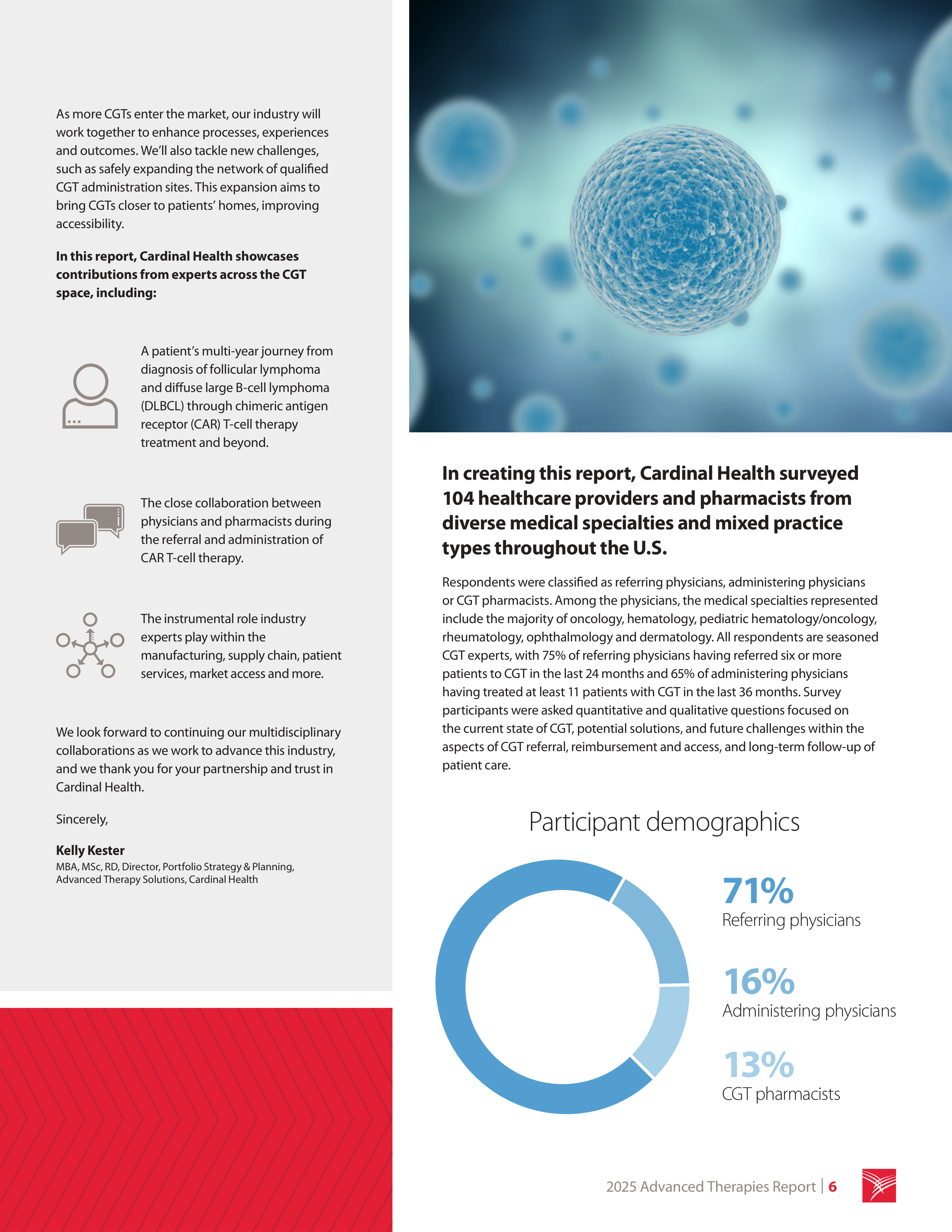

In creating this report, Cardinal Health surveyed
104 healthcare providers and pharmacists from
diverse medical specialties and mixed practice
types throughout the U.S.
Respondents were classified as referring physicians, administering physicians
or CGT pharmacists. Among the physicians, the medical specialties represented
include the majority of oncology, hematology, pediatric hematology/oncology,
rheumatology, ophthalmology and dermatology. All respondents are seasoned
CGT experts, with 75% of referring physicians having referred six or more
patients to CGT in the last 24 months and 65% of administering physicians
having treated at least 11 patients with CGT in the last 36 months. Survey
participants were asked quantitative and qualitative questions focused on
the current state of CGT, potential solutions, and future challenges within the
aspects of CGT referral, reimbursement and access, and long-term follow-up of
patient care.
As more CGTs enter the market, our industry will
work together to enhance processes, experiences
and outcomes. We’ll also tackle new challenges,
such as safely expanding the network of qualified
CGT administration sites. This expansion aims to
bring CGTs closer to patients’ homes, improving
accessibility.
In this report, Cardinal Health showcases
contributions from experts across the CGT
space, including:
We look forward to continuing our multidisciplinary
collaborations as we work to advance this industry,
and we thank you for your partnership and trust in
Cardinal Health.
Sincerely,
Kelly Kester
MBA, MSc, RD, Director, Portfolio Strategy & Planning,
Advanced Therapy Solutions, Cardinal Health
A patient’s multi-year journey from
diagnosis of follicular lymphoma
and diffuse large B-cell lymphoma
(DLBCL) through chimeric antigen
receptor (CAR) T-cell therapy
treatment and beyond.
The close collaboration between
physicians and pharmacists during
the referral and administration of
CAR T-cell therapy.
The instrumental role industry
experts play within the
manufacturing, supply chain, patient
services, market access and more.
Participant demographics
Referring physicians
Administering physicians
CGT pharmacists
71%
16%
13%
2025 Advanced Therapies Report |
6


Given the novel and complex nature of CGTs, they have
historically faced uncertainty during stages of development and
on the regulatory front, nationally and worldwide. CGTs often
present regulators with challenges such as innovative scientific
applications, complex indications with high unmet patient needs,
challenging manufacturing processes and storage/transport
requirements, significant patient risks and potentially life-changing
outcomes, and difficult data collection — to name a few. An area
of particular challenge is Chemistry, Manufacturing and Controls
(CMC). According to Cardinal Health Regulatory Sciences Director
of Chemistry, Manufacturing and Controls Yin Hwa Lai, “One of
the primary challenges in CGT development is CMC, due to the
inherent complexity of these therapies. Factors such as short
shelf life, variability in starting materials, intricate manufacturing
processes, global regulatory differences, logistics and cost all
contribute to significant hurdles in transitioning from clinical trials
to commercial production.”
Navigating
complexities in
the regulatory and
policy landscape
Contributors
Yin Hwa Lai
Director, Chemistry, Manufacturing & Controls,
Cardinal Health Regulatory Sciences
Mamadou Diallo
Director, Global Regulatory Affairs, Cardinal Health
Regulatory Sciences
Abby Barnes
Senior Manager, Federal Government Relations,
Cardinal Health
2025 Advanced Therapies Report |
7
Barnes, Lai and Diallo predict a few areas of focus
in the next decade:
The accelerated approval pathway
will give the FDA more oversight
over post-market follow-up studies
with the goal of developing a larger
dataset to identify and address
potential risks in a timely fashion.
Mamadou Diallo
Director, Global Regulatory Affairs,
Cardinal Health Regulatory Sciences
Continuous industry and regulatory focus on innovating and
traversing challenges such as CMC have benefitted the CGT
development process and overall industry.
In recent years, the industry has received support to develop and
commercialize therapies through the application of pioneering
approval pathways and early exploration of innovative payment
models. Particularly in the U.S., which is currently the largest market
for CGTs, policy and regulation at the federal level have shown support
for the CGT space. “The biopharma manufacturers have had and
will have many opportunities to improve access at the federal policy
level over the next few years,” stated Cardinal Health Senior Manager
of Federal Government Relations Abby Barnes. “First, the FDA has
made strides in creating more flexible and expedited approval
pathways for CGTs, such as the Breakthrough Therapy designation
and Regenerative Medicine Advanced Therapy (RMAT) designation.
These programs could continue to evolve, helping companies bring
treatments to market faster.” The RMAT designation is currently well
utilized within the CGT space to meet development timelines and
patient needs; however, it does come with additional requirements
following approval. According to Cardinal Health Regulatory
Sciences Director of Global Regulatory Affairs Mamadou Diallo,
“The accelerated approval pathway will give the FDA more oversight
over post-market follow-up studies with the goal of developing a
larger dataset to identify and address their potential risks in a timely
fashion.” Diallo and Barnes agree that as an industry, advocacy for the
development or expansion of approval pathways to match patient
needs will play a role in the future.
In addition to specific regulatory approval pathways, recent
industry efforts and federal initiatives support the progression
of reimbursement for these complex therapies. According to
Barnes, “Traditional reimbursement often does not work well for
these newer, more innovative therapies. Many payers, including
Medicare and Medicaid, may struggle to pay for high-cost CGTs.
Limited reimbursement opportunities for new treatments could
create uncertainty for biopharma manufacturers as they consider
profitability and scaling production.” As a result, the Centers for
Medicare & Medicaid Services (CMS) launched the CGT Access Model
in January 2024 under the Biden administration as a framework
designed to improve access to CGTs for Medicaid-eligible patients
with rare and severe diseases. The model was initially focused on
patients with sickle cell disease and allowed CMS to coordinate
multistate payment agreements for therapies that are based on health
outcomes. As of the writing of this report, the recent executive orders
issued by the Trump administration do not appear to impact the CGT
Access Model. According to Barnes, however, “It is possible that its
specific design and implementation may evolve.”
Reimbursement will be further discussed in a later section of the
report by experts in market access and payer insights.
In the current federal policy environment, biopharma manufacturers
could face further regulatory and reimbursement uncertainties.
Regulatory and government relations experts at Cardinal Health
can support biopharma manufacturers navigating their path to
commercialization within the U.S. As we look to the future, many
uncertainties lie afoot as the CGT industry continues to grow amid
cost and access pressures, scientific innovation and changing
government policies around the globe. As Barnes stated, “Because
a clear, standardized process is still in the works, it could be
challenging for biopharma manufacturers to navigate approval,
coverage and commercialization.”
As an industry, it is critical to continue collaboration and progress to
ensure enhanced patient access to these life-changing therapies. The path
forward for CGTs will require ongoing collaboration between industry
stakeholders, regulatory bodies and policymakers. By addressing the
unique challenges posed by these therapies — from manufacturing
complexities to reimbursement hurdles — the industry can work toward
ensuring broader access to these transformative treatments. As the CGT
landscape continues to evolve, staying informed and adaptable will be
key for all parties involved in bringing these innovative therapies from the
preclinical settings to the patient.
Further encouraging the research and development
(R&D) of CGTs by providing support for clinical registries
through the National Institutes of Health (NIH)
Launching new reimbursement and payment
models to match the needs of patients and modern-
day treatments to ensure timely access to CGTs,
including support of the CMS CGT Access Model (to
be discussed in a later section of this report)
Expanding approval pathways, including continued
support of RMAT designations, to further support
the development of CGTs
The growing role of RWE in regulatory submissions
allows biopharma manufacturers to present more
comprehensive datasets earlier on while balancing
patient and provider burdens in reporting
the necessary documentation
2025 Advanced Therapies Report |
8
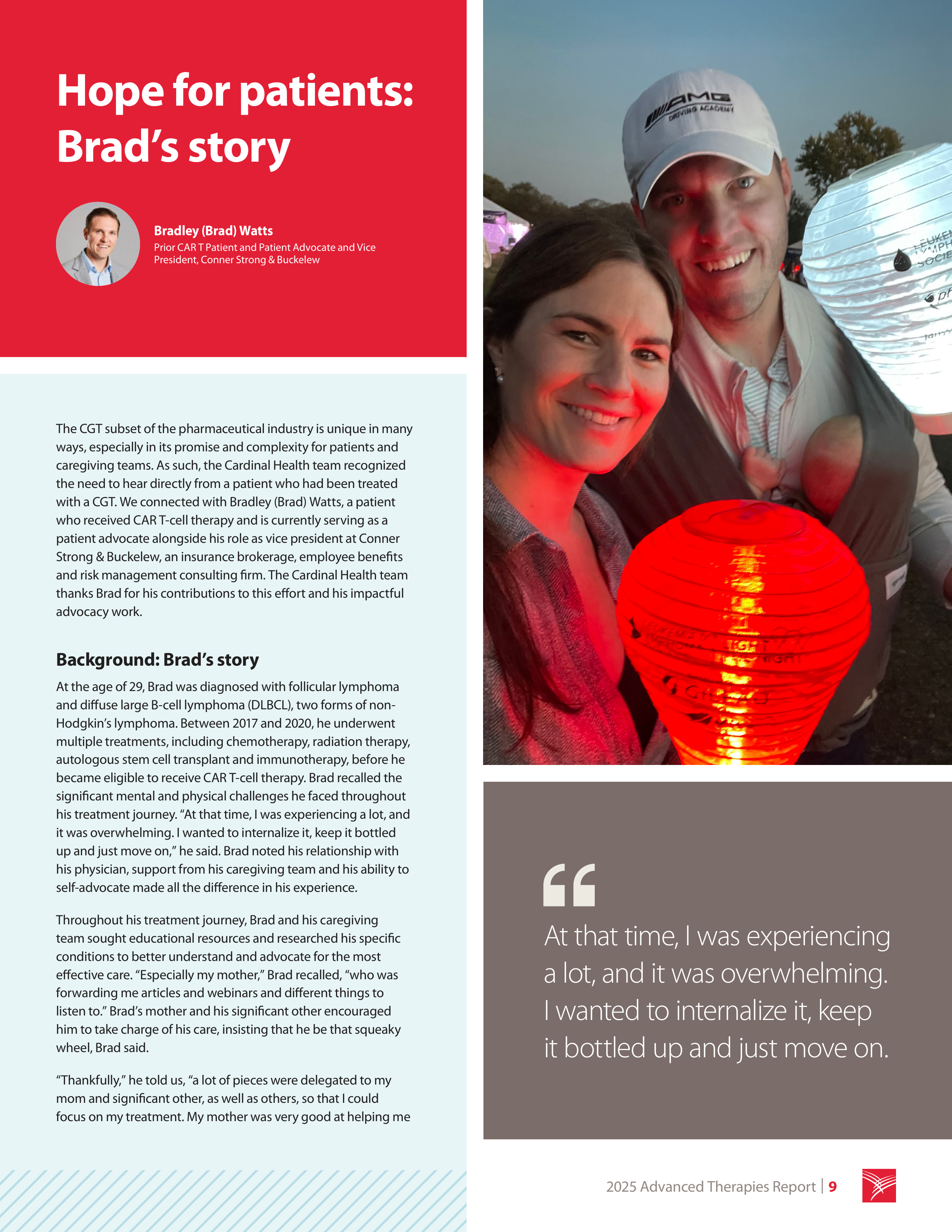
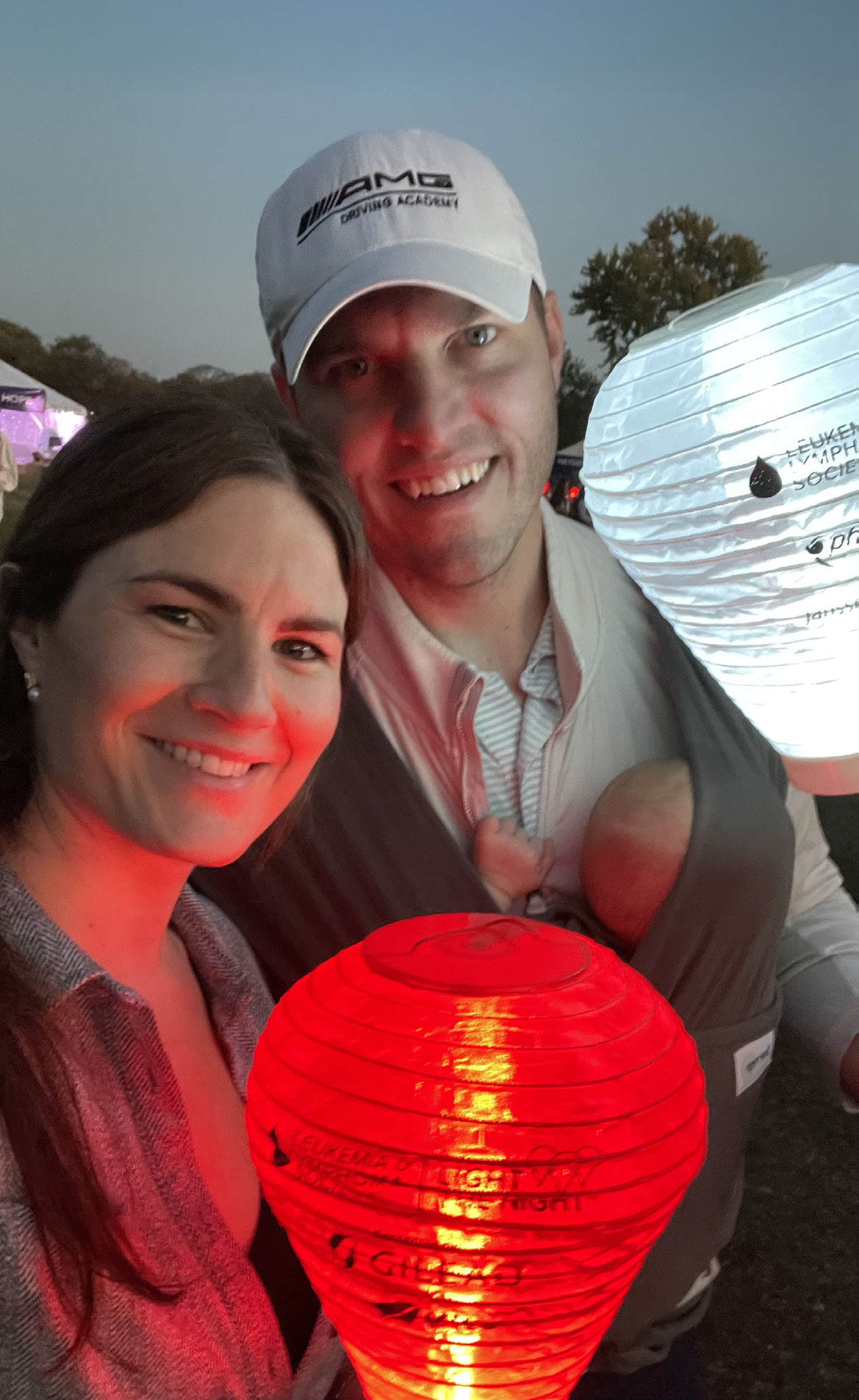

The CGT subset of the pharmaceutical industry is unique in many
ways, especially in its promise and complexity for patients and
caregiving teams. As such, the Cardinal Health team recognized
the need to hear directly from a patient who had been treated
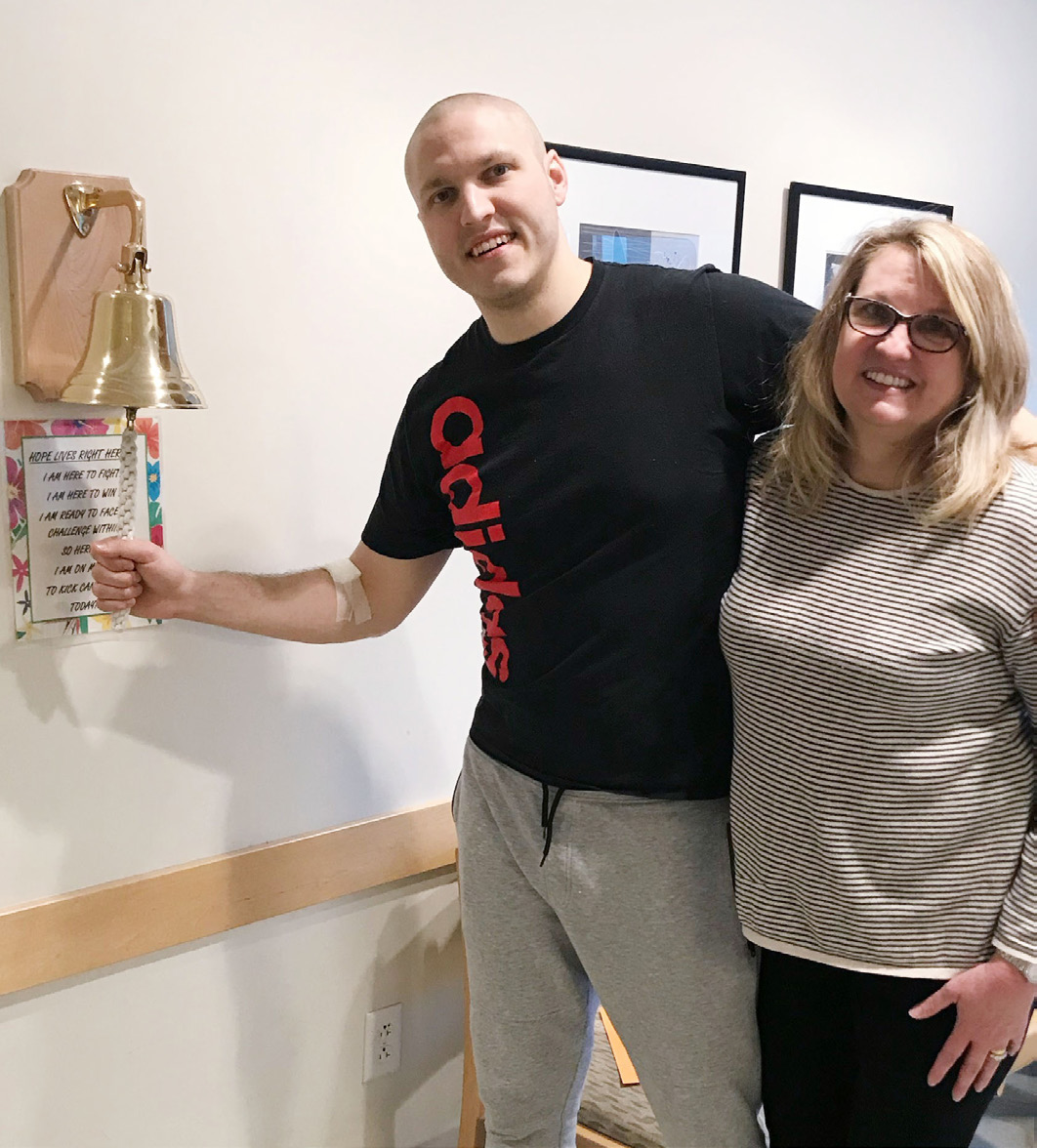
with a CGT. We connected with Bradley (Brad) Watts, a patient
who received CAR T-cell therapy and is currently serving as a
patient advocate alongside his role as vice president at Conner
Strong & Buckelew, an insurance brokerage, employee benefits
and risk management consulting firm. The Cardinal Health team
thanks Brad for his contributions to this effort and his impactful
advocacy work.
Background: Brad’s story
At the age of 29, Brad was diagnosed with follicular lymphoma
and diffuse large B-cell lymphoma (DLBCL), two forms of non-
Hodgkin’s lymphoma. Between 2017 and 2020, he underwent
multiple treatments, including chemotherapy, radiation therapy,
autologous stem cell transplant and immunotherapy, before he
became eligible to receive CAR T-cell therapy. Brad recalled the
significant mental and physical challenges he faced throughout
his treatment journey. “At that time, I was experiencing a lot, and
it was overwhelming. I wanted to internalize it, keep it bottled
up and just move on,” he said. Brad noted his relationship with
his physician, support from his caregiving team and his ability to
self-advocate made all the difference in his experience.
Throughout his treatment journey, Brad and his caregiving
team sought educational resources and researched his specific
conditions to better understand and advocate for the most
effective care. “Especially my mother,” Brad recalled, “who was
forwarding me articles and webinars and different things to
listen to.” Brad’s mother and his significant other encouraged
him to take charge of his care, insisting that he be that squeaky
wheel, Brad said.
“Thankfully,” he told us, “a lot of pieces were delegated to my
mom and significant other, as well as others, so that I could
focus on my treatment. My mother was very good at helping me
At that time, I was experiencing
a lot, and it was overwhelming.
I wanted to internalize it, keep
it bottled up and just move on.
Hope for patients:
Brad’s story
Bradley (Brad) Watts
Prior CAR T Patient and Patient Advocate and Vice
President, Conner Strong & Buckelew
2025 Advanced Therapies Report |
9
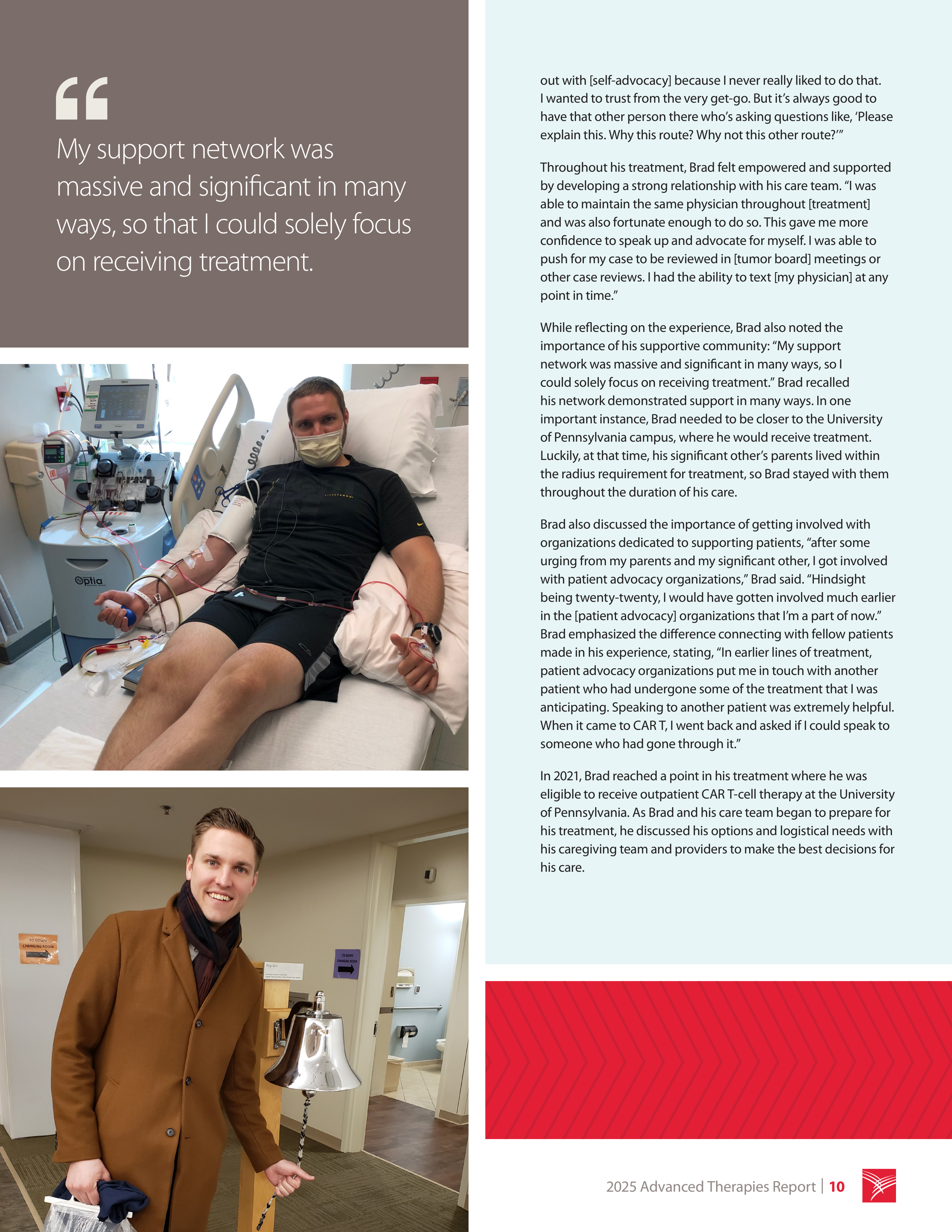
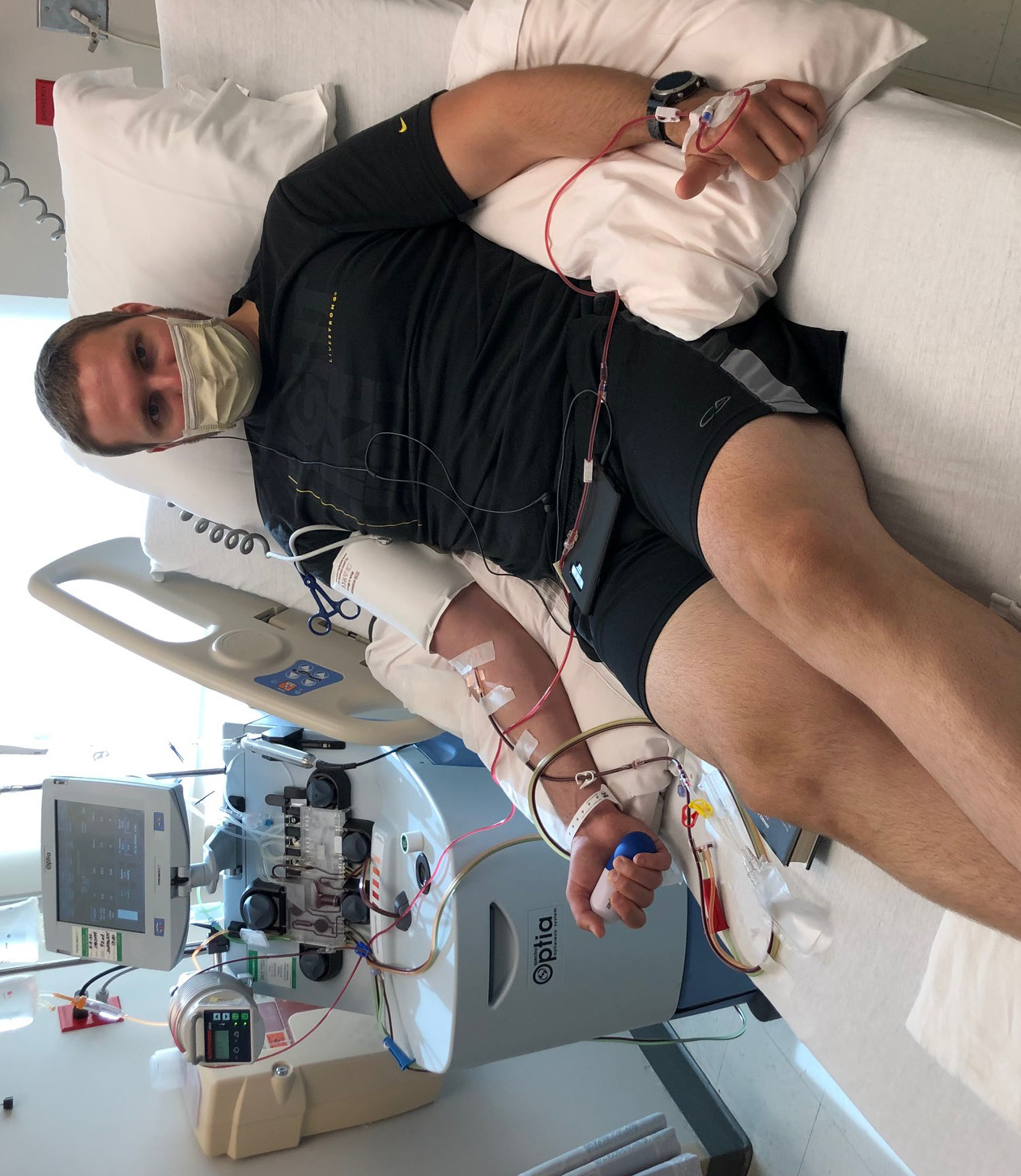
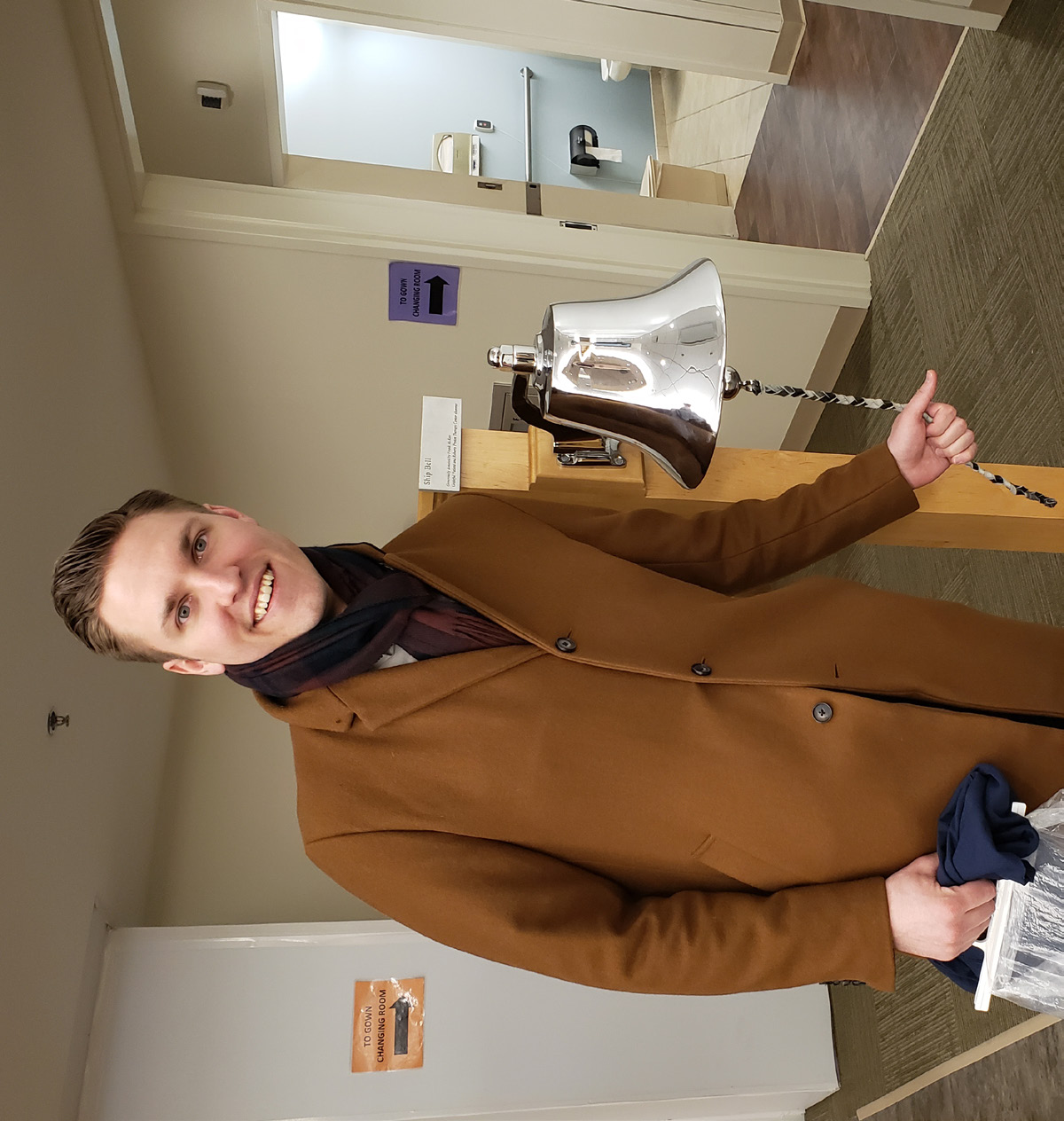
out with [self-advocacy] because I never really liked to do that.
I wanted to trust from the very get-go. But it’s always good to
have that other person there who’s asking questions like, ‘Please
explain this. Why this route? Why not this other route?’”
Throughout his treatment, Brad felt empowered and supported
by developing a strong relationship with his care team. “I was
able to maintain the same physician throughout [treatment]
and was also fortunate enough to do so. This gave me more
confidence to speak up and advocate for myself. I was able to
push for my case to be reviewed in [tumor board] meetings or
other case reviews. I had the ability to text [my physician] at any
point in time.”
While reflecting on the experience, Brad also noted the
importance of his supportive community: “My support
network was massive and significant in many ways, so I
could solely focus on receiving treatment.” Brad recalled
his network demonstrated support in many ways. In one
important instance, Brad needed to be closer to the University
of Pennsylvania campus, where he would receive treatment.
Luckily, at that time, his significant other’s parents lived within
the radius requirement for treatment, so Brad stayed with them
throughout the duration of his care.
Brad also discussed the importance of getting involved with
organizations dedicated to supporting patients, “after some
urging from my parents and my significant other, I got involved
with patient advocacy organizations,” Brad said. “Hindsight
being twenty-twenty, I would have gotten involved much earlier
in the [patient advocacy] organizations that I’m a part of now.”
Brad emphasized the difference connecting with fellow patients
made in his experience, stating, “In earlier lines of treatment,
patient advocacy organizations put me in touch with another
patient who had undergone some of the treatment that I was
anticipating. Speaking to another patient was extremely helpful.
When it came to CAR T, I went back and asked if I could speak to
someone who had gone through it.”
In 2021, Brad reached a point in his treatment where he was
eligible to receive outpatient CAR T-cell therapy at the University
of Pennsylvania. As Brad and his care team began to prepare for
his treatment, he discussed his options and logistical needs with
his caregiving team and providers to make the best decisions for
his care.
My support network was
massive and significant in many
ways, so that I could solely focus
on receiving treatment.
2025 Advanced Therapies Report |
10





Provider perspectives on referral
challenges and solutions
As Brad, his care team and provider approached his
treatment decision to proceed with CAR T-cell therapy,
he recalls being educated by his providers along the
journey about his treatment options. Based on the
resources provided and his self-advocacy efforts,
Brad has since become a strong proponent of CAR
T-cell therapy in his career outside of Conner Strong &
Buckelew. When his previous line of therapy had failed,
Brad noted, “[we then] went directly into [discussions
around] CAR T-cell therapy, which is what I wanted
all along.”
Similar to Brad’s experience, as patients and caregivers
consider advanced therapies as part of their treatment
plan, they need a strong network of providers and
healthcare professionals to guide them through the
journey. Due to the complexity, cost and potential for
adverse events (AEs) that are associated with these
therapies, patients must receive a CGT at a site of
administration that meets the guidelines to safely
administer them; today, most sites are at academic
medical centers and large integrated delivery networks
(IDNs) within major metropolitan areas. If a patient
is not already receiving care at these institutions,
their community provider must refer them to a
CGT site. Successfully gaining access for patients to
advanced therapies requires timely referrals, seamless
coordination of processes and planning, and proper
staffing and infrastructure.
Contributors
David Porter
MD, Director, Center for Cell Therapy and Transplant
at the University of Pennsylvania
Samantha Jaglowski
MD, MPH; Senior Scientific Director, Industry
Program CIBMTR; Medical College of Wisconsin
Ajeet Gajra
MD, Chief Scientific Officer, Hematology Oncology
Associates of Central New York
Bradley (Brad) Watts
Prior CAR T Patient and Patient Advocate and Vice
President, Conner Strong & Buckelew
Akshat Jain
MD, MPH, Medical Director, Inherited Bleeding
Disorders and Hemoglobinopathies Program,
Loma Linda University School of Medicine and
Children’s Hospital
2025 Advanced Therapies Report |
11
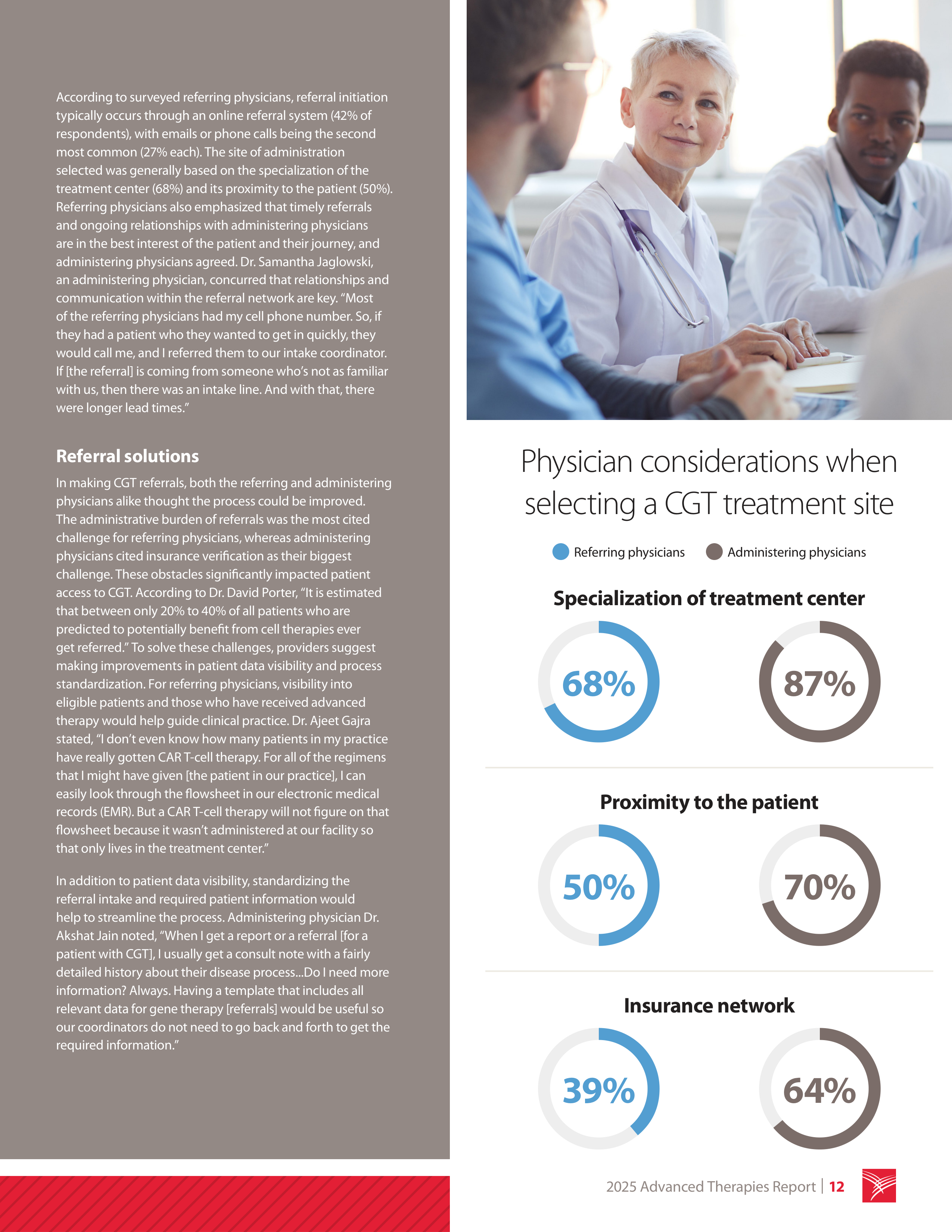

According to surveyed referring physicians, referral initiation
typically occurs through an online referral system (42% of
respondents), with emails or phone calls being the second
most common (27% each). The site of administration
selected was generally based on the specialization of the
treatment center (68%) and its proximity to the patient (50%).
Referring physicians also emphasized that timely referrals
and ongoing relationships with administering physicians
are in the best interest of the patient and their journey, and
administering physicians agreed. Dr. Samantha Jaglowski,
an administering physician, concurred that relationships and
communication within the referral network are key. “Most
of the referring physicians had my cell phone number. So, if
they had a patient who they wanted to get in quickly, they
would call me, and I referred them to our intake coordinator.
If [the referral] is coming from someone who’s not as familiar
with us, then there was an intake line. And with that, there
were longer lead times.”
Referral solutions
In making CGT referrals, both the referring and administering
physicians alike thought the process could be improved.
The administrative burden of referrals was the most cited
challenge for referring physicians, whereas administering
physicians cited insurance verification as their biggest
challenge. These obstacles significantly impacted patient
access to CGT. According to Dr. David Porter, “It is estimated
that between only 20% to 40% of all patients who are
predicted to potentially benefit from cell therapies ever
get referred.” To solve these challenges, providers suggest
making improvements in patient data visibility and process
standardization. For referring physicians, visibility into
eligible patients and those who have received advanced
therapy would help guide clinical practice. Dr. Ajeet Gajra
stated, “I don’t even know how many patients in my practice
have really gotten CAR T-cell therapy. For all of the regimens
that I might have given [the patient in our practice], I can
easily look through the flowsheet in our electronic medical
records (EMR). But a CAR T-cell therapy will not figure on that
flowsheet because it wasn’t administered at our facility so
that only lives in the treatment center.”
In addition to patient data visibility, standardizing the
referral intake and required patient information would
help to streamline the process. Administering physician Dr.
Akshat Jain noted, “When I get a report or a referral [for a
patient with CGT], I usually get a consult note with a fairly
detailed history about their disease process...Do I need more
information? Always. Having a template that includes all
relevant data for gene therapy [referrals] would be useful so
our coordinators do not need to go back and forth to get the
required information.”
87%
68%
Specialization of treatment center
70%
50%
Proximity to the patient
64%
39%
Insurance network
Physician considerations when
selecting a CGT treatment site
Referring physicians
Administering physicians
2025 Advanced Therapies Report |
12

Patient preference for outpatient sites
As the CGT space continues to become more established and grow,
incorporating patient and provider preferences into the journey will remain
critical. There is a growing trend towards providing healthcare closer to home.
This approach aims to reduce the need for patients to travel long distances
for treatment, which can be both expensive and inconvenient. By shifting
therapies into community settings, patients can receive care in familiar
surroundings, close to their families and support networks. Oftentimes,
shifting therapies into community settings is trending as safety profiles allow,
via comprehensive standard operating protocols and practice readiness
assessments. Referring physician Dr. Gajra reflected on his conversations with
patients, “A lot of patients in the community setting have more complex cases
and are either unable or unwilling to travel to a large center, even for a second
opinion or for a CAR T-cell therapy evaluation.” Access to advanced therapies
in the community setting, provides more comprehensive care closer to home.
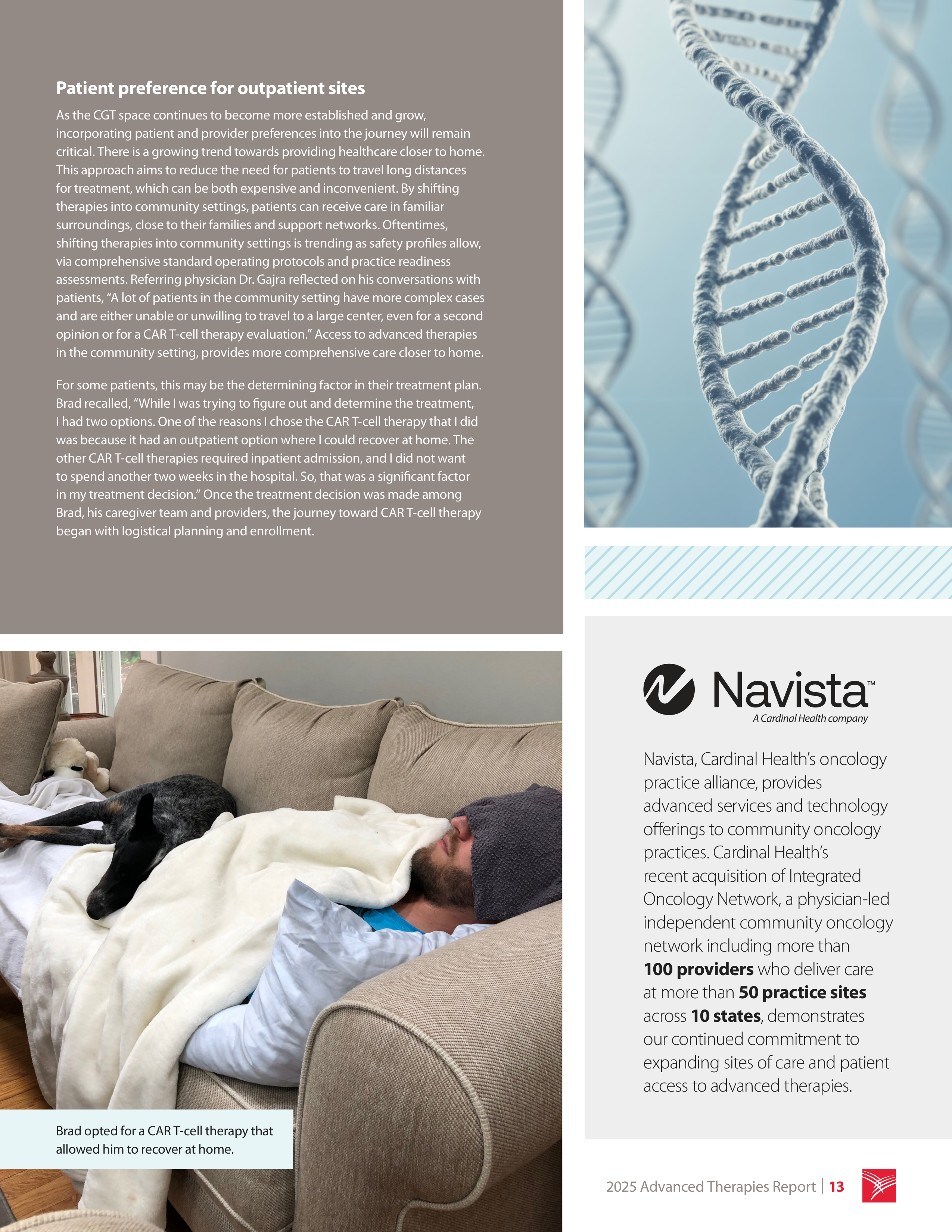
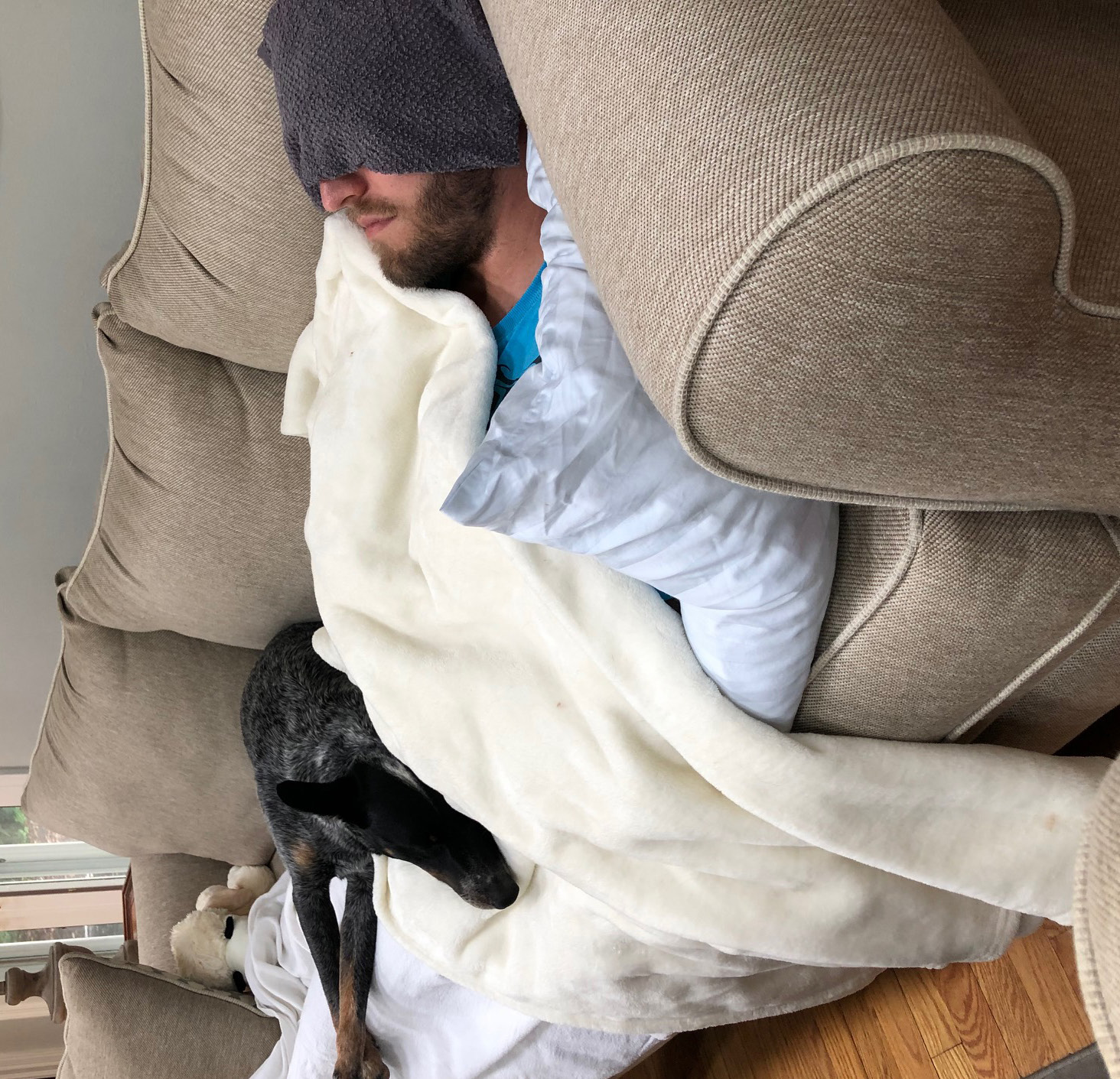
For some patients, this may be the determining factor in their treatment plan.
Brad recalled, “While I was trying to figure out and determine the treatment,
I had two options. One of the reasons I chose the CAR T-cell therapy that I did
was because it had an outpatient option where I could recover at home. The
other CAR T-cell therapies required inpatient admission, and I did not want
to spend another two weeks in the hospital. So, that was a significant factor
in my treatment decision.” Once the treatment decision was made among
Brad, his caregiver team and providers, the journey toward CAR T-cell therapy
began with logistical planning and enrollment.
Navista, Cardinal Health’s oncology
practice alliance, provides
advanced services and technology
offerings to community oncology
practices. Cardinal Health’s
recent acquisition of Integrated
Oncology Network, a physician-led
independent community oncology
network including more than
100 providers
who deliver care
at more than
50 practice sites
across
10 states
, demonstrates
our continued commitment to
expanding sites of care and patient
access to advanced therapies.
Brad opted for a CAR T-cell therapy that
allowed him to recover at home.
2025 Advanced Therapies Report |
13

As patients, caregivers and providers begin the CGT journey,
ensuring the most efficient process requires diligent payer
engagement, patient and caregiver education, and logistics
planning. Often, by the time patients reach the point of CGT
referral, multiple lines of therapy have failed them, making
timely enrollment all the more critical for ensuring their
access to CGT. The enrollment process generally consists
of the following: patient and caregiver education, patient
consent to treatment, labs and genetic testing, travel and
lodging coordination, and prior authorization from the
patient’s insurance.
In addition to the clinical teams, the patient’s support
network and dedicated caregivers play an instrumental
role throughout the CGT enrollment process. Brad recalled
the role that his caregiving team played throughout his
journey, specifically as he was enrolling for CAR T-cell
therapy. Unfortunately, not all patients will have this level of
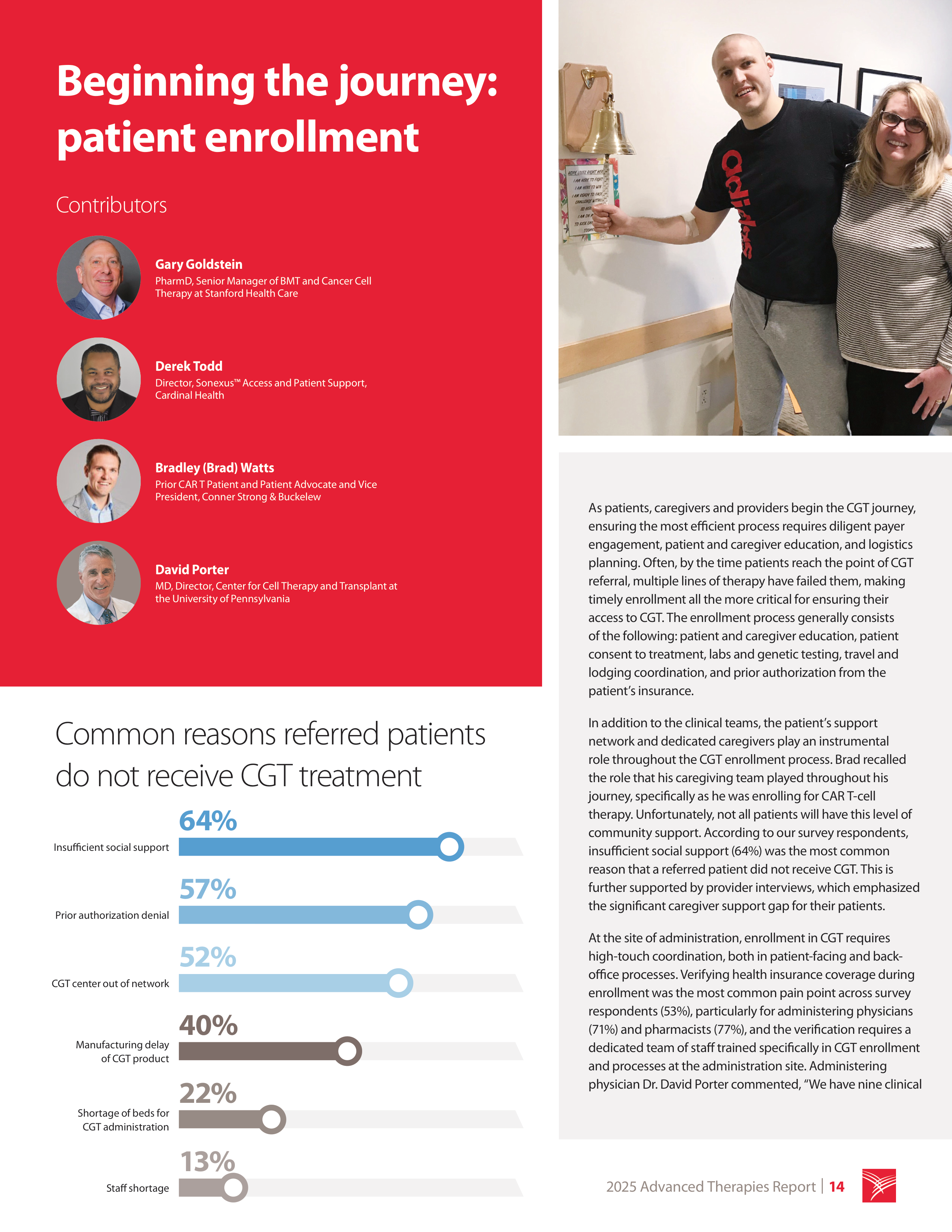
community support. According to our survey respondents,
insufficient social support (64%) was the most common
reason that a referred patient did not receive CGT. This is
further supported by provider interviews, which emphasized
the significant caregiver support gap for their patients.
At the site of administration, enrollment in CGT requires
high-touch coordination, both in patient-facing and back-
office processes. Verifying health insurance coverage during
enrollment was the most common pain point across survey
respondents (53%), particularly for administering physicians
(71%) and pharmacists (77%), and the verification requires a
dedicated team of staff trained specifically in CGT enrollment
and processes at the administration site. Administering
physician Dr. David Porter commented, “We have nine clinical
Insufficient social support
64%
Prior authorization denial
57%
CGT center out of network
52%
Manufacturing delay
of CGT product
40%
Shortage of beds for
CGT administration
22%
Staff shortage
13%
Common reasons referred patients
do not receive CGT treatment
Beginning the journey:
patient enrollment
Contributors
Gary Goldstein
PharmD, Senior Manager of BMT and Cancer Cell
Therapy at Stanford Health Care
Derek Todd
Director, Sonexus™ Access and Patient Support,
Cardinal Health
Bradley (Brad) Watts
Prior CAR T Patient and Patient Advocate and Vice
President, Conner Strong & Buckelew
David Porter
MD, Director, Center for Cell Therapy and Transplant at
the University of Pennsylvania
2025 Advanced Therapies Report |
14
Cardinal Health
Sonexus™ Access
and Patient Support
The Sonexus™ Access and Patient
Support team collaborates with
life sciences companies to empower
patient journeys through seasoned
expertise, advanced technology
and deliberate solutions. From
developing patient support programs
that flex with companies’ shifting
needs to bringing a compassionate
approach to the patient experience,
our team is dedicated to making a
difference across the continuum of
care for patients in need of these
life-saving treatments.
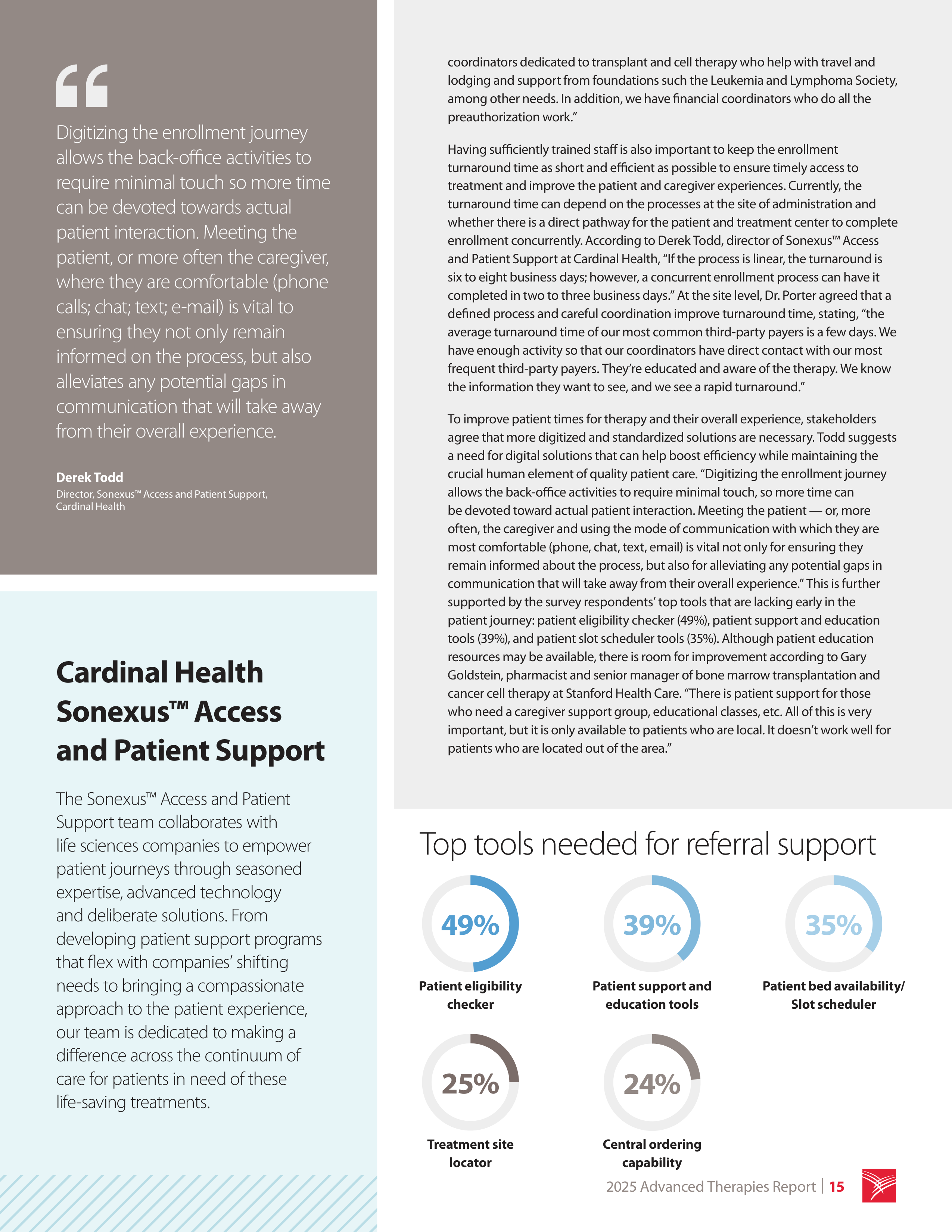
Top tools needed for referral support
coordinators dedicated to transplant and cell therapy who help with travel and
lodging and support from foundations such the Leukemia and Lymphoma Society,
among other needs. In addition, we have financial coordinators who do all the
preauthorization work.”
Having sufficiently trained staff is also important to keep the enrollment
turnaround time as short and efficient as possible to ensure timely access to
treatment and improve the patient and caregiver experiences. Currently, the
turnaround time can depend on the processes at the site of administration and
whether there is a direct pathway for the patient and treatment center to complete
enrollment concurrently. According to Derek Todd, director of Sonexus™ Access
and Patient Support at Cardinal Health, “If the process is linear, the turnaround is
six to eight business days; however, a concurrent enrollment process can have it
completed in two to three business days.” At the site level, Dr. Porter agreed that a
defined process and careful coordination improve turnaround time, stating, “the
average turnaround time of our most common third-party payers is a few days. We
have enough activity so that our coordinators have direct contact with our most
frequent third-party payers. They’re educated and aware of the therapy. We know
the information they want to see, and we see a rapid turnaround.”
To improve patient times for therapy and their overall experience, stakeholders
agree that more digitized and standardized solutions are necessary. Todd suggests
a need for digital solutions that can help boost efficiency while maintaining the
crucial human element of quality patient care. “Digitizing the enrollment journey
allows the back-office activities to require minimal touch, so more time can
be devoted toward actual patient interaction. Meeting the patient — or, more
often, the caregiver and using the mode of communication with which they are
most comfortable (phone, chat, text, email) is vital not only for ensuring they
remain informed about the process, but also for alleviating any potential gaps in
communication that will take away from their overall experience.” This is further
supported by the survey respondents’ top tools that are lacking early in the
patient journey: patient eligibility checker (49%), patient support and education
tools (39%), and patient slot scheduler tools (35%). Although patient education
resources may be available, there is room for improvement according to Gary
Goldstein, pharmacist and senior manager of bone marrow transplantation and
cancer cell therapy at Stanford Health Care. “There is patient support for those
who need a caregiver support group, educational classes, etc. All of this is very
important, but it is only available to patients who are local. It doesn’t work well for
patients who are located out of the area.”
Treatment site
locator
Patient support and
education tools
Central ordering
capability
Patient bed availability/
Slot scheduler
24%
39%
35%
25%
Patient eligibility
checker
49%
Digitizing the enrollment journey
allows the back-office activities to
require minimal touch so more time
can be devoted towards actual
patient interaction. Meeting the
patient, or more often the caregiver,
where they are comfortable (phone
calls; chat; text; e-mail) is vital to
ensuring they not only remain
informed on the process, but also
alleviates any potential gaps in
communication that will take away
from their overall experience.
Derek Todd
Director, Sonexus™ Access and Patient Support,
Cardinal Health
2025 Advanced Therapies Report |
15

Optimizing payer
access with early
engagement
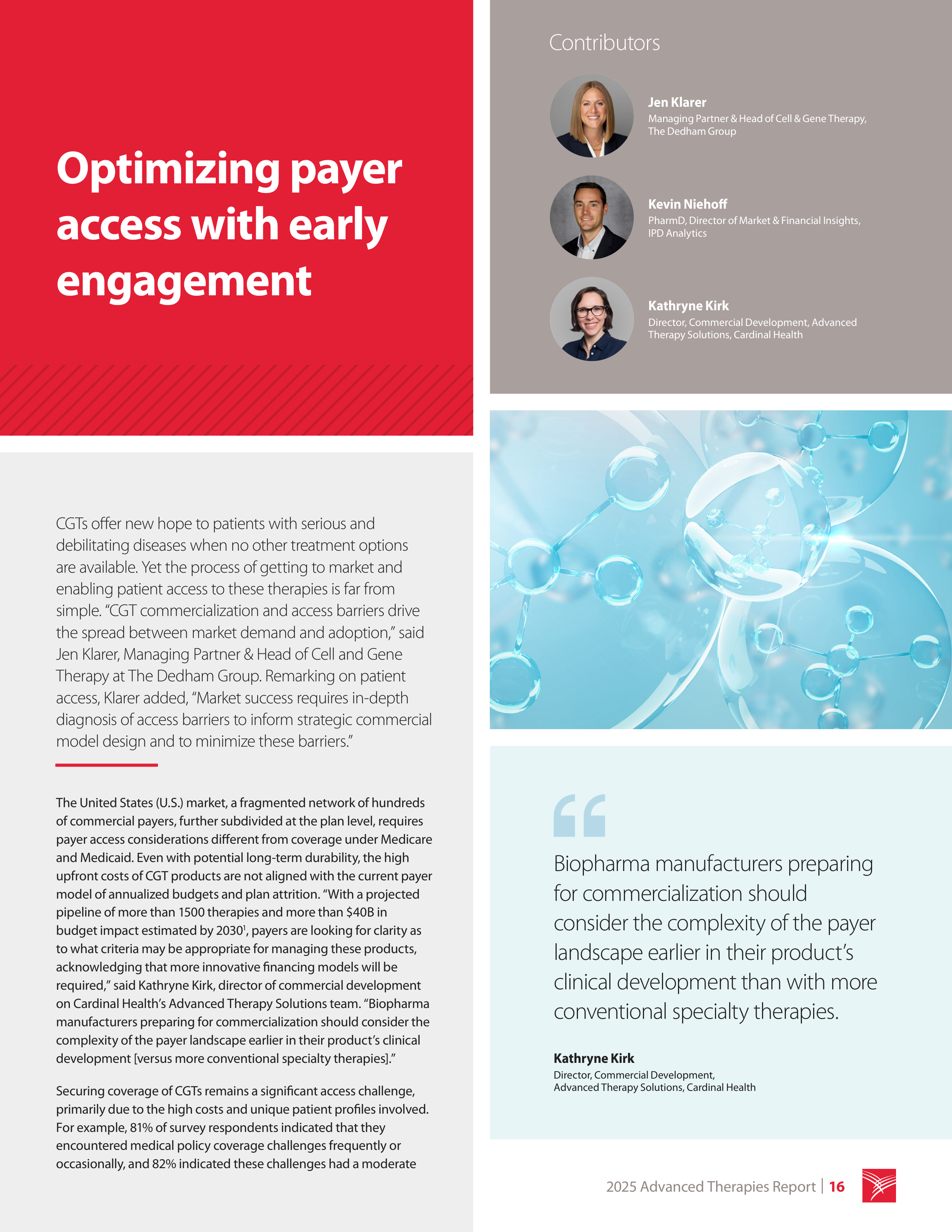
CGTs offer new hope to patients with serious and
debilitating diseases when no other treatment options
are available. Yet the process of getting to market and
enabling patient access to these therapies is far from
simple. “CGT commercialization and access barriers drive
the spread between market demand and adoption,” said
Jen Klarer, Managing Partner & Head of Cell and Gene
Therapy at The Dedham Group. Remarking on patient
access, Klarer added, “Market success requires in-depth
diagnosis of access barriers to inform strategic commercial
model design and to minimize these barriers.”
The United States (U.S.) market, a fragmented network of hundreds
of commercial payers, further subdivided at the plan level, requires
payer access considerations different from coverage under Medicare
and Medicaid. Even with potential long-term durability, the high
upfront costs of CGT products are not aligned with the current payer
model of annualized budgets and plan attrition. “With a projected
pipeline of more than 1500 therapies and more than $40B in
budget impact estimated by 2030
1
, payers are looking for clarity as
to what criteria may be appropriate for managing these products,
acknowledging that more innovative financing models will be
required,” said Kathryne Kirk, director of commercial development
on Cardinal Health’s Advanced Therapy Solutions team. “Biopharma
manufacturers preparing for commercialization should consider the
complexity of the payer landscape earlier in their product’s clinical
development [versus more conventional specialty therapies].”
Securing coverage of CGTs remains a significant access challenge,
primarily due to the high costs and unique patient profiles involved.
For example, 81% of survey respondents indicated that they
encountered medical policy coverage challenges frequently or
occasionally, and 82% indicated these challenges had a moderate
Biopharma manufacturers preparing
for commercialization should
consider the complexity of the payer
landscape earlier in their product’s
clinical development than with more
conventional specialty therapies.
Kathryne Kirk
Director, Commercial Development,
Advanced Therapy Solutions, Cardinal Health
Contributors
Jen Klarer
Managing Partner & Head of Cell & Gene Therapy,
The Dedham Group
Kevin Niehoff
PharmD, Director of Market & Financial Insights,
IPD Analytics
Kathryne Kirk
Director, Commercial Development, Advanced
Therapy Solutions, Cardinal Health
2025 Advanced Therapies Report |
16
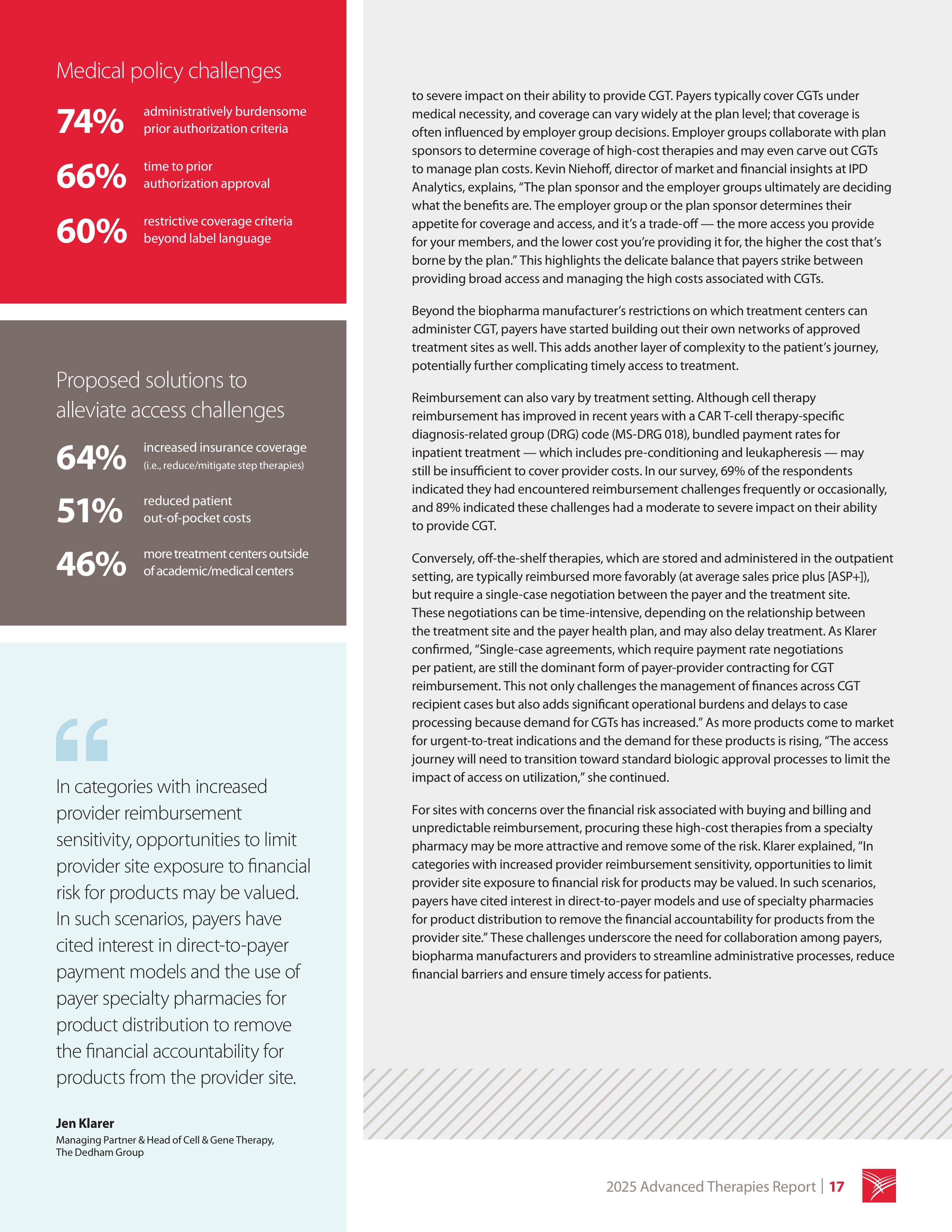
Medical policy challenges
74%
administratively burdensome
prior authorization criteria
66%
time to prior
authorization approval
60%
restrictive coverage criteria
beyond label language
Proposed solutions to
alleviate access challenges
64%
increased insurance coverage
(i.e., reduce/mitigate step therapies)
51%
reduced patient
out-of-pocket costs
46%
more treatment centers outside
of academic/medical centers
to severe impact on their ability to provide CGT. Payers typically cover CGTs under
medical necessity, and coverage can vary widely at the plan level; that coverage is
often influenced by employer group decisions. Employer groups collaborate with plan
sponsors to determine coverage of high-cost therapies and may even carve out CGTs
to manage plan costs. Kevin Niehoff, director of market and financial insights at IPD
Analytics, explains, “The plan sponsor and the employer groups ultimately are deciding
what the benefits are. The employer group or the plan sponsor determines their
appetite for coverage and access, and it’s a trade-off — the more access you provide
for your members, and the lower cost you’re providing it for, the higher the cost that’s
borne by the plan.” This highlights the delicate balance that payers strike between
providing broad access and managing the high costs associated with CGTs.
Beyond the biopharma manufacturer’s restrictions on which treatment centers can
administer CGT, payers have started building out their own networks of approved
treatment sites as well. This adds another layer of complexity to the patient’s journey,
potentially further complicating timely access to treatment.
Reimbursement can also vary by treatment setting. Although cell therapy
reimbursement has improved in recent years with a CAR T-cell therapy-specific
diagnosis-related group (DRG) code (MS-DRG 018), bundled payment rates for
inpatient treatment — which includes pre-conditioning and leukapheresis — may
still be insufficient to cover provider costs. In our survey, 69% of the respondents
indicated they had encountered reimbursement challenges frequently or occasionally,
and 89% indicated these challenges had a moderate to severe impact on their ability
to provide CGT.
Conversely, off-the-shelf therapies, which are stored and administered in the outpatient
setting, are typically reimbursed more favorably (at average sales price plus [ASP+]),
but require a single-case negotiation between the payer and the treatment site.
These negotiations can be time-intensive, depending on the relationship between
the treatment site and the payer health plan, and may also delay treatment. As Klarer
confirmed, “Single-case agreements, which require payment rate negotiations
per patient, are still the dominant form of payer-provider contracting for CGT
reimbursement. This not only challenges the management of finances across CGT
recipient cases but also adds significant operational burdens and delays to case
processing because demand for CGTs has increased.” As more products come to market
for urgent-to-treat indications and the demand for these products is rising, “The access
journey will need to transition toward standard biologic approval processes to limit the
impact of access on utilization,” she continued.
For sites with concerns over the financial risk associated with buying and billing and
unpredictable reimbursement, procuring these high-cost therapies from a specialty
pharmacy may be more attractive and remove some of the risk. Klarer explained, “In
categories with increased provider reimbursement sensitivity, opportunities to limit
provider site exposure to financial risk for products may be valued. In such scenarios,
payers have cited interest in direct-to-payer models and use of specialty pharmacies
for product distribution to remove the financial accountability for products from the
provider site.” These challenges underscore the need for collaboration among payers,
biopharma manufacturers and providers to streamline administrative processes, reduce
financial barriers and ensure timely access for patients.
In categories with increased
provider reimbursement
sensitivity, opportunities to limit
provider site exposure to financial
risk for products may be valued.
In such scenarios, payers have
cited interest in direct-to-payer
payment models and the use of
payer specialty pharmacies for
product distribution to remove
the financial accountability for
products from the provider site.
Jen Klarer
Managing Partner & Head of Cell & Gene Therapy,
The Dedham Group
2025 Advanced Therapies Report |
17

As the advanced therapy market continues to grow, experts agree the announcement of
the CGT Access Model from the Centers for Medicare and Medicaid (CMS) indicates a future
emphasis on innovative payment models (value-based contracts) for commercial products.
“It will vary depending on the therapy space, but ideally, we’re going to see a development
of more value-based contracting coming from the CGT Access Model, which will help
lower some of the liability and hesitancy for coverage,” said Niehoff. He continued, “Even
in the last five years, we’ve seen a tremendous evolution in how CGTs are discussed
and considered. I believe that is only going to continue moving forward, especially
following the introduction of CMS’ CGT Access Model.” This was further supported by our
survey respondents, of whom 79% see value in innovative payment models to improve
reimbursement and access challenges.
Innovative payment models offer value to payers because the cost of the therapy can be
tied to its long-term clinical outcomes, but according to Klarer, “they have been difficult to
operationalize for reasons such as limitations to visibility of outcomes in claims data and
extent of resource allocation required to follow patients in exchange for limited potential
rebate upside.” Niehoff added that additional operational challenges exist when it comes
to tracking clinical outcomes. “There are a number of questions around who’s responsible
for data collection, what metrics are [evaluated], and who’s going to be actually putting
the logistics in place [for tracking the outcomes].”
Considering these challenges, payers, biopharma manufacturers and treatment sites
can take action to mitigate the challenges and ensure the operational success of these
payment models. “More effective implementation of value-based contracts requires
early biopharma manufacturer–payer alignment on measurable metrics, appropriate
timeframes for reviewing metrics, and duration of metrics reviews to demonstrate
value. Additionally, operational processes and data sharing permissions [between
patient, provider, payers and biopharma manufacturer] will be required to manage
patient switches between insurance plans during the value-based contract,” said Klarer.
Additionally, the sites of care can act by setting up the necessary technology infrastructure
and sophistication to be able to monitor, track and report long-term outcomes on a
patient-by-patient basis. By working together to achieve creative solutions, payers,
biopharma manufacturers and sites of care can create equitable patient access to these
innovative and groundbreaking therapies and hope for patients and their families.
More effective implementation of value-based contracts
requires early biopharma manufacturer-payer alignment
on measurable metrics, appropriate timeframes for metric
review and duration of metric review to demonstrate
value. Additionally, operational processes and data sharing
permissions [between payers] will be required to manage
patient switches between insurance plans during the
duration of the value-based contract.
Jen Klarer
Managing Partner & Head of Cell & Gene Therapy,
The Dedham Group
2025 Advanced Therapies Report |
18



Once insurance coverage is authorized for CGT, the patient,
caregiver and providers can begin preparing for the treatment,
which often involves the patient and caregiver traveling to the
site of administration (as needed) and collection of the patient’s
starting material through apheresis.
Today, the potentially burdensome travel to a qualified site
of administration for patients and caregivers can be the main
deterrent to seeking CGT in the first place. In many cases, it
requires significant out-of-pocket costs related to travel, lodging
and meals for both patients and caregivers. Sometimes, a portion
of this cost may be supported through biopharma manufacturer
support programs or patient advocacy organizations; yet,
despite the support, patients may still be required to travel and
receive care far from home. Derek Todd, Director of Sonexus™
Access and Patient Support at Cardinal Health, observed that
the travel commitment required of patients and caregivers may
Preparing for CGT
administration:
travel and logistics
The requirement of multiple
trips covering a few months
is growing into the standard
across several therapies.
Derek Todd
Director, Sonexus™ Access and Patient Support,
Cardinal Health
Contributors
Derek Todd
Director, Sonexus™ Access and Patient Support,
Cardinal Health
Bradley (Brad) Watts
Prior CAR T Patient and Patient Advocate and Vice
President, Conner Strong & Buckelew
Akshat Jain
MD, MPH, Medical Director, Inherited Bleeding
Disorders and Hemoglobinopathies Program,
Loma Linda University School of Medicine and
Children’s Hospital
2025 Advanced Therapies Report |
19

be increasing: “The requirement of multiple trips over a few months is
growing into the standard across several therapies. The first trip may
require multiple weeks of disruption [for the patient and caregiver], as
they must be close to the treatment facility not only for the administration
of CGT, but also for all the follow-up and monitoring activities. If a second
trip is needed, it becomes very expensive for the patient and caregiver
and is part of the consideration when initiating coverage with the
patient’s health insurance.” The industry trend in shifting the selection
of sites of administration closer to patients’ homes, as safety and efficacy
considerations allow, can also help to alleviate burdensome trips while
responding to patient preferences of limiting travel.
For CAR T-cell therapy, patients are required to provide their starting
material (leukocytes) through leukapheresis before the engineered
T-cells can be manufactured. Brad, a CAR T-cell therapy patient recalled
his preparation experience. “Thankfully, with CAR T-cell therapy, it was
pretty straightforward in terms of what needed to occur; I had to start
with the apheresis of the cells, which was easier than in other treatments I
had to endure. After going through apheresis, your cells are then sent out
for the manufacturing [of the CAR T-cell therapy]. There are a number of
processes and things that they went through to make sure you were going
through the right steps.”
Once a patient’s cells enter manufacturing, the waiting period can be a
prominent pain point for patients, caregivers and providers alike. As Brad
recalled, “There are a lot of mixed emotions with [waiting for the therapy
to be manufactured], because you have anxiety and thoughts like, ‘I’ve
got this aggressive cancer, and I failed so many other lines of treatment.
Will this work?’ Thankfully, time flew by, and I was able to receive
[treatment] pretty quickly, but the waiting period was certainly trying.”
Long treatment lead times were cited as a leading challenge in effectively
delivering CGTs to patients, according to 65% of the administering
physicians surveyed.
Looking to the future, digital and automated solutions will elevate product
and patient journeys alike. Todd said, “Automation of the patient journey,
where possible, is important in helping the site of administration manage
the parts of the patient journey that lack visibility — travel scheduling,
tracking, reimbursement and remediation needs.” Brad verified this when
asked whether any solutions could have helped ease his anxiety during
the waiting period by stating with conviction, “100 percent. It would have
been helpful to get updates myself or more updates from my physician.
I wanted to be updated, almost like packages coming for Christmas.
Where are they on the map? What’s the expected time of delivery? It
certainly would have alleviated some of the anxiety and the anticipation of
receiving [the therapy/treatment].”
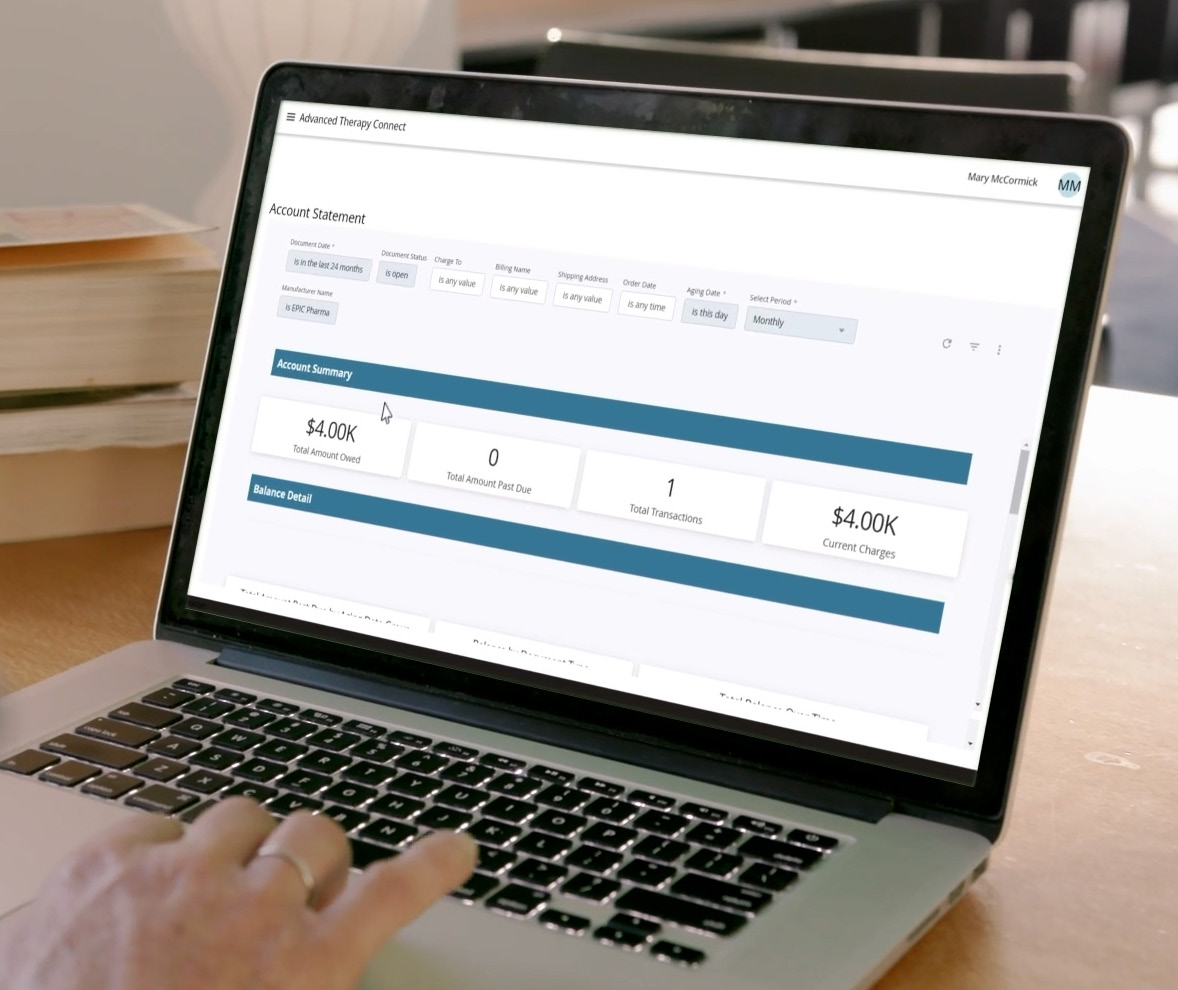
Advanced Therapy Connect
Ordering CGTs has historically required healthcare
providers to log into separate product platforms
with disparate reporting structures and processes for
invoicing and payment. Advanced Therapy Connect,
a first-to-market unified CGT ordering portal, enables
providers at treatment sites to order all available
in-network CGT products within a single platform.
Developed with the help of provider feedback,
Advanced Therapy Connect reduces manual errors
and optimizes access to CGTs. In the next few years,
Cardinal Health will continue to partner with both
healthcare providers and biopharma manufacturers to
develop additional end-to-end services that facilitate
more efficient processes and support these complex
treatments today and into the future.
Automation of the patient journey, where
possible, is important in helping the site
of administration manage the parts of the
patient journey where they lack visibility —
travel scheduling, tracking, reimbursement
and remediation needs.
Derek Todd
Director, Sonexus™ Access and Patient Support,
Cardinal Health
2025 Advanced Therapies Report |
20
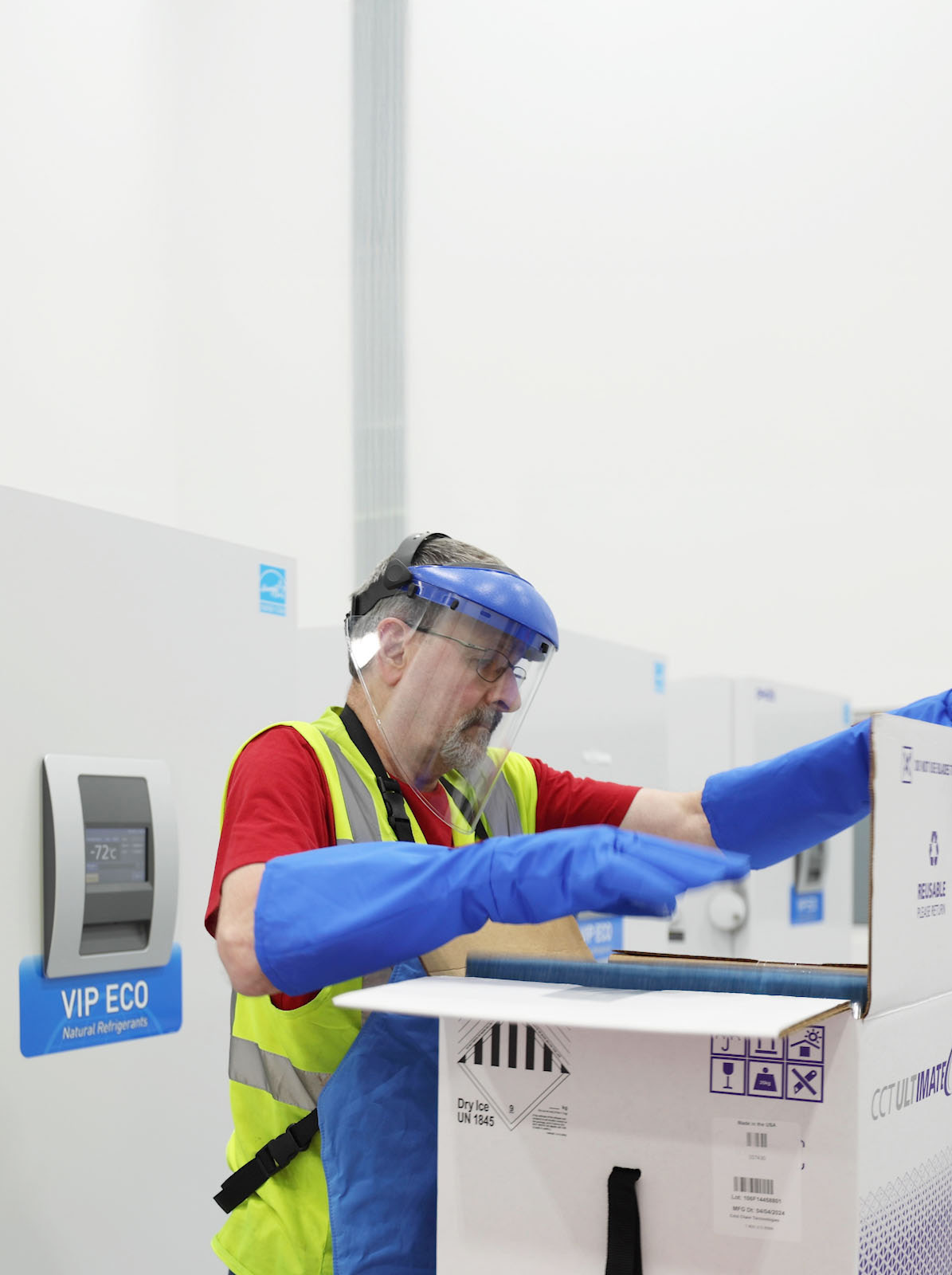


Transporting life-changing CGTs effectively
requires precise coordination across multiple
service providers within a specific timeframe.
Focusing on the patient is embedded into the
culture of the day-to-day operations that deliver
the therapies to the patients. “Patients drive our
sense of urgency, precision and purpose. Every
patient treatment is crucial,” explained Mike
Sweeney, global head of strategy of cell and
gene therapy and direct-to-patient at QuickStat.
“We fully understand there is unlikely to be
another opportunity to get it right, so we strive
for perfection the first time and every time
we ship a CGT.” As additional therapies come
to market, there will be increased demand
for supply chains that are built with patient-
centricity in mind. In this sense, opportunities
exist to expand the current network of CGT
administration sites and enhance existing
supply chains by incorporating the perspectives
of providers, patients and caregivers.
Expanding sites of administration to outpatient
and community settings, especially in
nonmetropolitan areas, introduces new supply
chain challenges. According to Joel Wayment,
vice president of Cardinal Health Third-Party
Logistics and Packaging Solutions, remaining
focused on working with sites to optimize CGT
care delivery is critical. “We want to enable
sites to do what they do best and focus on the
patient, and we’ll streamline and simplify the
CGT administrative process.” Working with the
sites means understanding the most prominent
challenges for providers in CGT care delivery,
including storage capacity and the inefficiencies
of ordering CGT. “With investments such as
the Advanced Therapy Innovation Center and
Advanced Therapy Connect, we are working
to overcome the challenges our customers
are facing when dealing with these products,
ensuring they make their way through the
supply chain effectively and that they are
reaching the sites of care where they can be
administered to patients. I’m proud of
Cardinal Health’s commitment to supporting
the unique challenges associated with these
types of therapies that are coming to market,”
said Wayment.
A patient centered
approach to the
CGT supply chain
Contributors
Joel Wayment
Vice President, Cardinal Health Third-Party Logistics
and Packaging Solutions
Jason Cook
Director, Cardinal Health Third-Party Logistics and
Packaging Solutions
Mike Sweeney
Global Head of Strategy Cell & Gene Therapy and
Direct-to-Patient, QuickStat
Bradley (Brad) Watts
Prior CAR T Patient and Patient Advocate and Vice
President, Conner Strong & Buckelew
2025 Advanced Therapies Report |
21

With the anticipated approval of additional CGTs in the coming
years, there is a heightened sense of urgency to deliver for patients
in need while also scaling as an industry. To most effectively
deliver for patients during this exciting time, Wayment, Sweeney
and Jason Cook, director of Cardinal Health Third-Party Logistics
and Packaging Solutions, outline three considerations for service
providers when developing patient-centric supply chains:
Early planning
For biopharma manufacturers looking to commercialize a
therapy, Wayment’s advice was simple: “Start early. It’s never too
early to start a conversation. We can offer our experience in the
space, market trends and site feedback to help shape a lot of the
processes as biopharma manufacturers build out their commercial
organization and prepare to have this product approved.”
Service provider collaboration
One way to plan effectively is to set the stage for successful
collaboration. Even prior to regulatory approval, Cook
recommended incorporating collaboration into planning efforts
as early as possible. “It starts with collaboration to ensure products
get to where they need to be more quickly and efficiently. I think
the more we can collaborate and come to the table and align on
processes and success metrics, the more it will ultimately help us
make the process successful for the patient.”
Collaboration among service providers does not start and end
with the pre-commercialization planning, however; it is critical
throughout the journey. Successfully coordinating the therapy
journey — from placing the order to collecting the patient’s
starting material, manufacturing the therapy, and ultimately,
delivering it to the patient and site of administration — is complex
and involves different service providers across the industry. Teams
often note that a number of unanticipated challenges can arise,
each requiring swift intervention and communication across
service providers to successfully deliver a CGT to a patient without
altering the timeline for treatment. Sweeney recalled a particular
situation in which teams quickly responded to such barriers. “One
shipment of a patient’s starting material (tumor sample) comes
to mind. After an uncontrollable delay on a long-haul flight into
the U.S., we had an extremely tight window to clear the shipment
through customs, recover it from the airline and then transport
it on a shorter trip to the manufacturing site. Our internal teams
were in constant communication throughout the day, and the
manufacturing site and therapy developer were notified instantly
about each milestone. Ultimately, we made the biopharma
manufacturer’s delivery deadline with around an hour to spare.
We followed up with the therapy developer later to confirm the
therapy had been produced and the patient was successfully
treated within the expected timeframe.”
Advanced Therapy
Innovation Center
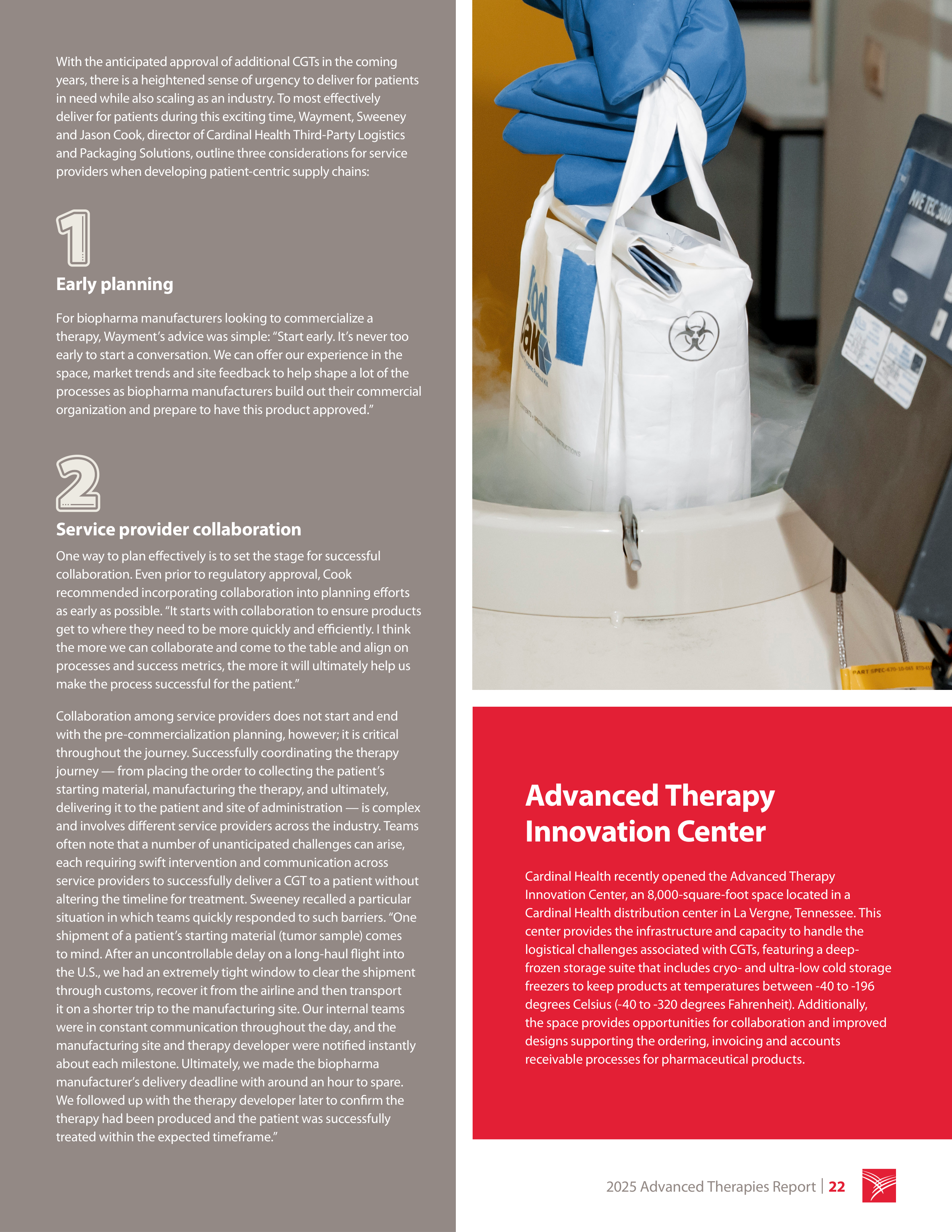
Cardinal Health recently opened the Advanced Therapy
Innovation Center, an 8,000-square-foot space located in a
Cardinal Health distribution center in La Vergne, Tennessee. This
center provides the infrastructure and capacity to handle the
logistical challenges associated with CGTs, featuring a deep-
frozen storage suite that includes cryo- and ultra-low cold storage
freezers to keep products at temperatures between -40 to -196
degrees Celsius (-40 to -320 degrees Fahrenheit). Additionally,
the space provides opportunities for collaboration and improved
designs supporting the ordering, invoicing and accounts
receivable processes for pharmaceutical products.
2025 Advanced Therapies Report |
22
Precision health
courier network
White glove delivery
and final mile logistics
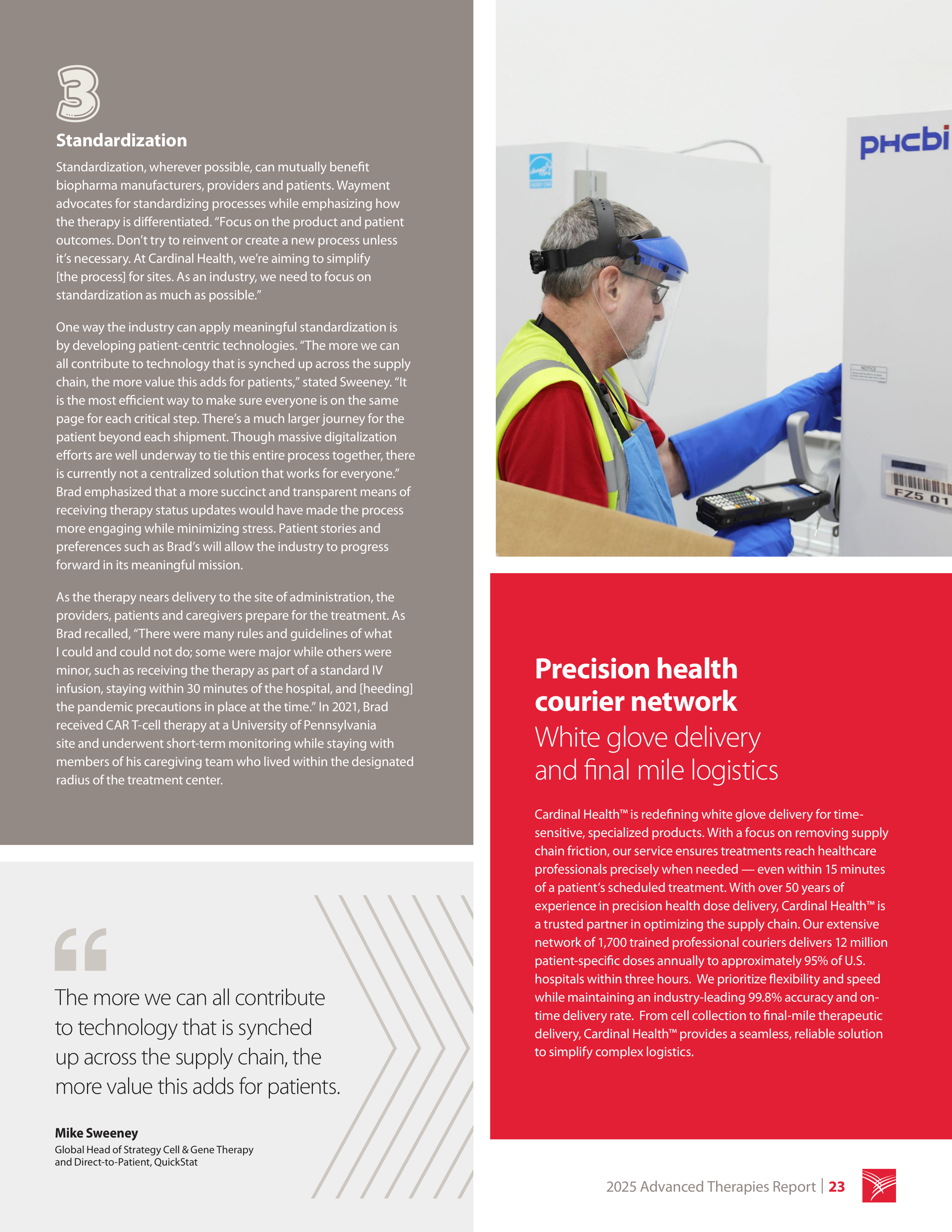
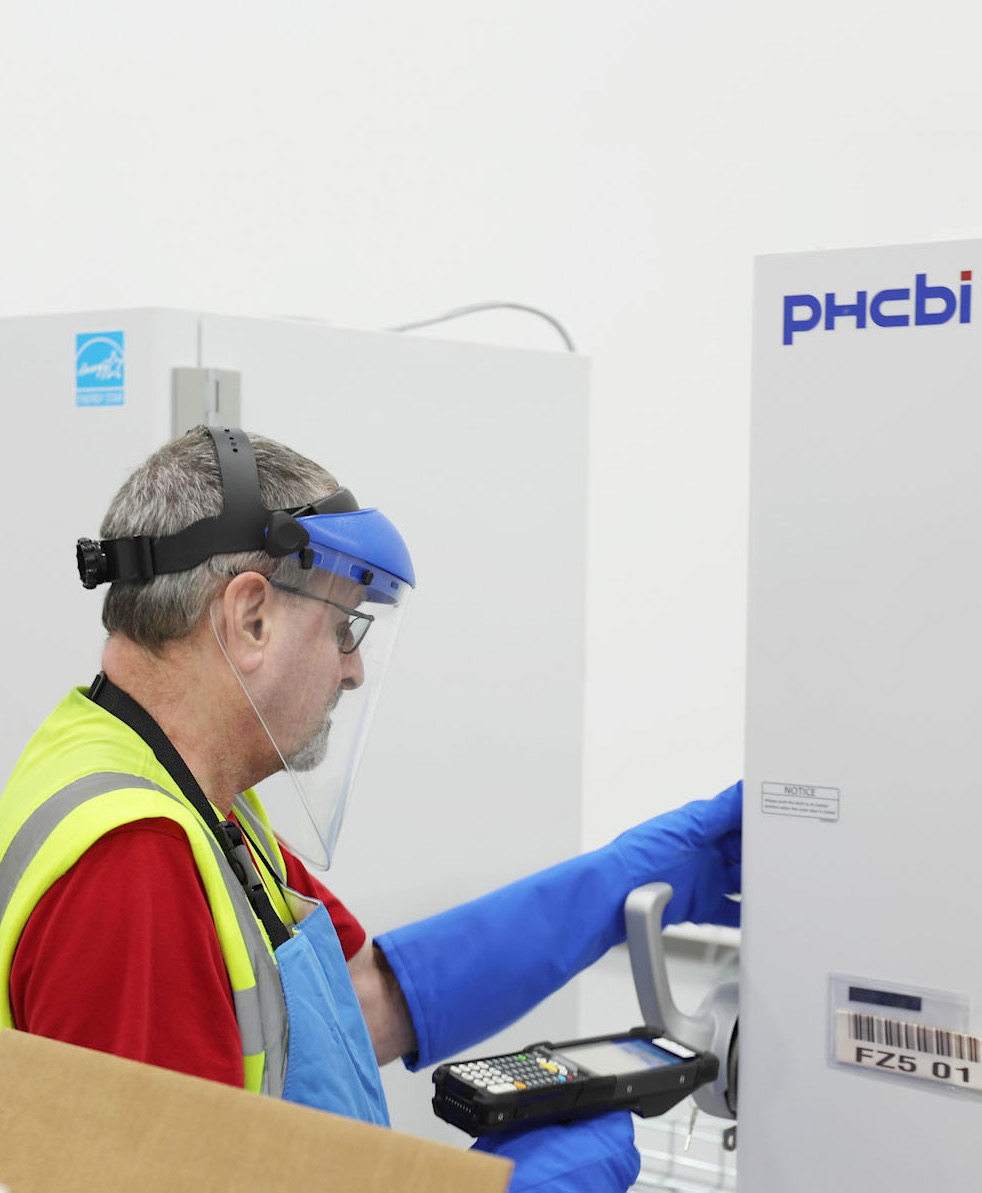
Cardinal Health™ is redefining white glove delivery for time-
sensitive, specialized products. With a focus on removing supply
chain friction, our service ensures treatments reach healthcare
professionals precisely when needed — even within 15 minutes
of a patient’s scheduled treatment. With over 50 years of
experience in precision health dose delivery, Cardinal Health™ is
a trusted partner in optimizing the supply chain. Our extensive
network of 1,700 trained professional couriers delivers 12 million
patient-specific doses annually to approximately 95% of U.S.
hospitals within three hours. We prioritize flexibility and speed
while maintaining an industry-leading 99.8% accuracy and on-
time delivery rate. From cell collection to final-mile therapeutic
delivery, Cardinal Health™ provides a seamless, reliable solution
to simplify complex logistics.
Standardization
Standardization, wherever possible, can mutually benefit
biopharma manufacturers, providers and patients. Wayment
advocates for standardizing processes while emphasizing how
the therapy is differentiated. “Focus on the product and patient
outcomes. Don’t try to reinvent or create a new process unless
it’s necessary. At Cardinal Health, we’re aiming to simplify
[the process] for sites. As an industry, we need to focus on
standardization as much as possible.”
One way the industry can apply meaningful standardization is
by developing patient-centric technologies. “The more we can
all contribute to technology that is synched up across the supply
chain, the more value this adds for patients,” stated Sweeney. “It
is the most efficient way to make sure everyone is on the same
page for each critical step. There’s a much larger journey for the
patient beyond each shipment. Though massive digitalization
efforts are well underway to tie this entire process together, there
is currently not a centralized solution that works for everyone.”
Brad emphasized that a more succinct and transparent means of
receiving therapy status updates would have made the process
more engaging while minimizing stress. Patient stories and
preferences such as Brad’s will allow the industry to progress
forward in its meaningful mission.
As the therapy nears delivery to the site of administration, the
providers, patients and caregivers prepare for the treatment. As
Brad recalled, “There were many rules and guidelines of what
I could and could not do; some were major while others were
minor, such as receiving the therapy as part of a standard IV
infusion, staying within 30 minutes of the hospital, and [heeding]
the pandemic precautions in place at the time.” In 2021, Brad
received CAR T-cell therapy at a University of Pennsylvania
site and underwent short-term monitoring while staying with
members of his caregiving team who lived within the designated
radius of the treatment center.
The more we can all contribute
to technology that is synched
up across the supply chain, the
more value this adds for patients.
Mike Sweeney
Global Head of Strategy Cell & Gene Therapy
and Direct-to-Patient, QuickStat
2025 Advanced Therapies Report |
23
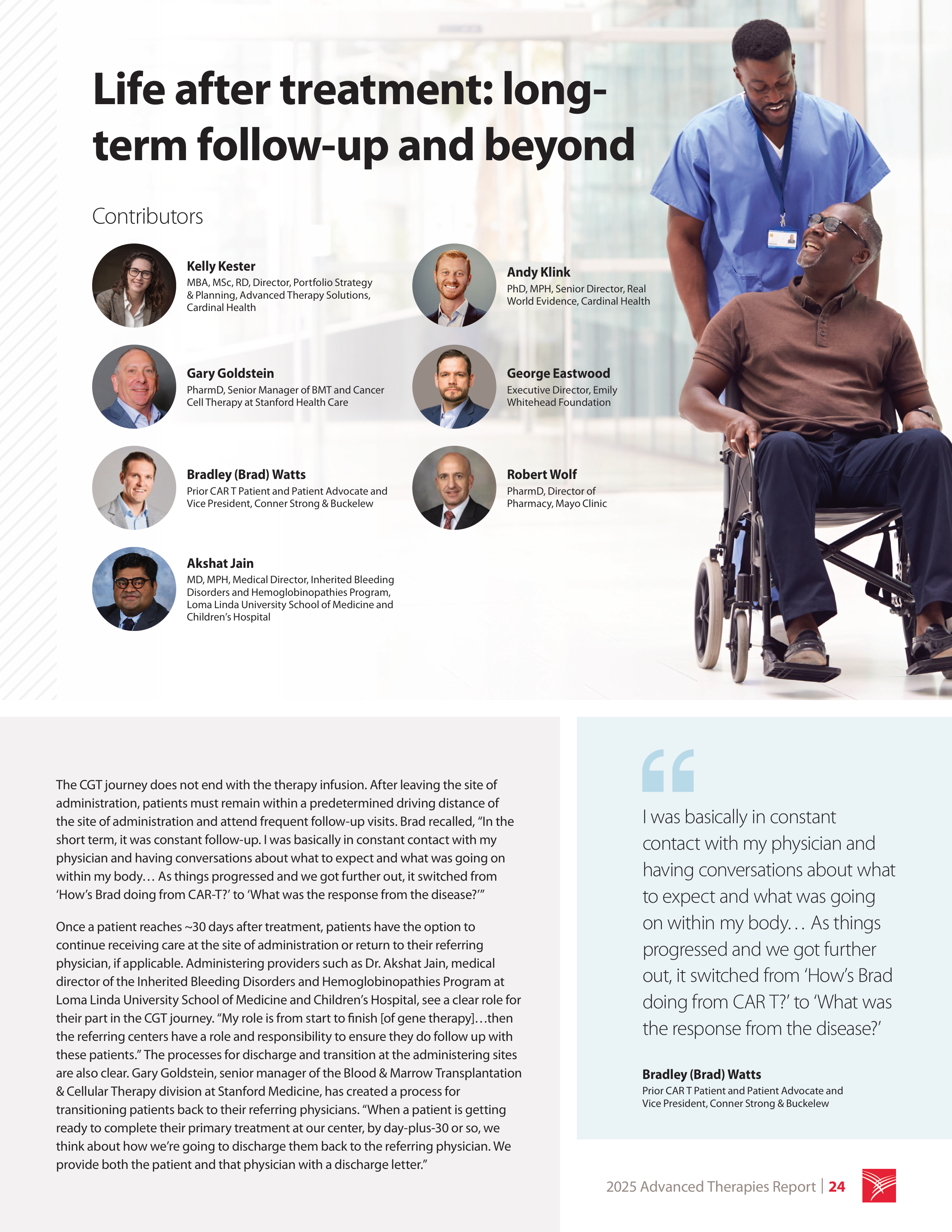



The CGT journey does not end with the therapy infusion. After leaving the site of
administration, patients must remain within a predetermined driving distance of
the site of administration and attend frequent follow-up visits. Brad recalled, “In the
short term, it was constant follow-up. I was basically in constant contact with my
physician and having conversations about what to expect and what was going on
within my body… As things progressed and we got further out, it switched from
‘How’s Brad doing from CAR-T?’ to ‘What was the response from the disease?’”
Once a patient reaches ~30 days after treatment, patients have the option to
continue receiving care at the site of administration or return to their referring
physician, if applicable. Administering providers such as Dr. Akshat Jain, medical
director of the Inherited Bleeding Disorders and Hemoglobinopathies Program at
Loma Linda University School of Medicine and Children’s Hospital, see a clear role for
their part in the CGT journey. “My role is from start to finish [of gene therapy]…then
the referring centers have a role and responsibility to ensure they do follow up with
these patients.” The processes for discharge and transition at the administering sites
are also clear. Gary Goldstein, senior manager of the Blood & Marrow Transplantation
& Cellular Therapy division at Stanford Medicine, has created a process for
transitioning patients back to their referring physicians. “When a patient is getting
ready to complete their primary treatment at our center, by day-plus-30 or so, we
think about how we’re going to discharge them back to the referring physician. We
provide both the patient and that physician with a discharge letter.”
I was basically in constant
contact with my physician and
having conversations about what
to expect and what was going
on within my body… As things
progressed and we got further
out, it switched from ‘How’s Brad
doing from CAR T?’ to ‘What was
the response from the disease?’
Bradley (Brad) Watts
Prior CAR T Patient and Patient Advocate and
Vice President, Conner Strong & Buckelew
Contributors
Andy Klink
PhD, MPH, Senior Director, Real
World Evidence, Cardinal Health
Robert Wolf
PharmD, Director of
Pharmacy, Mayo Clinic
George Eastwood
Executive Director, Emily
Whitehead Foundation
Life after treatment: long-
term follow-up and beyond
Gary Goldstein
PharmD, Senior Manager of BMT and Cancer
Cell Therapy at Stanford Health Care
Kelly Kester
MBA, MSc, RD, Director, Portfolio Strategy
& Planning, Advanced Therapy Solutions,
Cardinal Health
Bradley (Brad) Watts
Prior CAR T Patient and Patient Advocate and
Vice President, Conner Strong & Buckelew
Akshat Jain
MD, MPH, Medical Director, Inherited Bleeding
Disorders and Hemoglobinopathies Program,
Loma Linda University School of Medicine and
Children’s Hospital
2025 Advanced Therapies Report |
24
According to Klink, RWE can provide a number of
insights, including:
•
The cost of care related to one therapy versus another, allowing
payers to make formulary decisions and ensure patients have
access to the appropriate therapies at the right time
•
Outcomes of patients treated outside the clinical trial setting,
which can allow providers to make treatment decisions based on
real-world cases
•
Data not captured in clinical trials, such as longer follow-up among
patients treated with commercially available therapies, outcomes
among patients who look more like the larger patient population
(i.e., more diverse) and additional data that are not reported in the
clinical trial (e.g., costs, patient perspectives quality of life)
•
Allowing patients to make better-informed decisions regarding
their treatment — although clinical trials establish therapeutic
safety and efficacy, RWE may fill the data gaps, including a more
diverse patient population
•
Empowering biopharma manufacturers to effectively deliver
their therapies to the right patients at the right time — this
may include finding the optimal time for the patient to receive
therapy to avoid unnecessary costs and to achieve the best
possible clinical outcomes
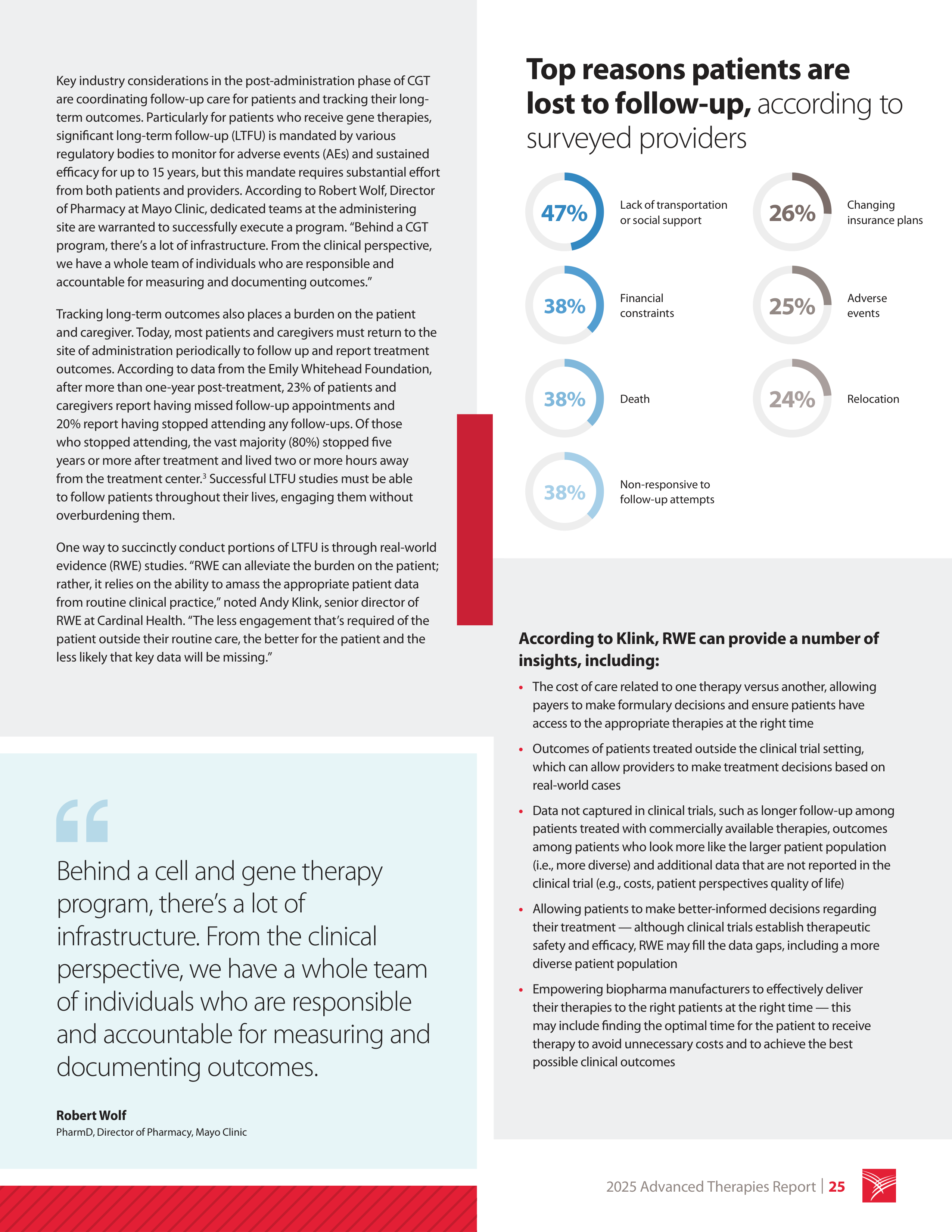
47%
Lack of transportation
or social support
38%
Financial
constraints
26%
Changing
insurance plans
25%
Adverse
events
24%
Relocation
Top reasons patients are
lost to follow-up,
according to
surveyed providers
Death
38%
Non-responsive to
follow-up attempts
38%
Key industry considerations in the post-administration phase of CGT
are coordinating follow-up care for patients and tracking their long-
term outcomes. Particularly for patients who receive gene therapies,
significant long-term follow-up (LTFU) is mandated by various
regulatory bodies to monitor for adverse events (AEs) and sustained
efficacy for up to 15 years, but this mandate requires substantial effort
from both patients and providers. According to Robert Wolf, Director
of Pharmacy at Mayo Clinic, dedicated teams at the administering
site are warranted to successfully execute a program. “Behind a CGT
program, there’s a lot of infrastructure. From the clinical perspective,
we have a whole team of individuals who are responsible and
accountable for measuring and documenting outcomes.”
Tracking long-term outcomes also places a burden on the patient
and caregiver. Today, most patients and caregivers must return to the
site of administration periodically to follow up and report treatment
outcomes. According to data from the Emily Whitehead Foundation,
after more than one-year post-treatment, 23% of patients and
caregivers report having missed follow-up appointments and
20% report having stopped attending any follow-ups. Of those
who stopped attending, the vast majority (80%) stopped five
years or more after treatment and lived two or more hours away
from the treatment center.
3
Successful LTFU studies must be able
to follow patients throughout their lives, engaging them without
overburdening them.
One way to succinctly conduct portions of LTFU is through real-world
evidence (RWE) studies. “RWE can alleviate the burden on the patient;
rather, it relies on the ability to amass the appropriate patient data
from routine clinical practice,” noted Andy Klink, senior director of
RWE at Cardinal Health. “The less engagement that’s required of the
patient outside their routine care, the better for the patient and the
less likely that key data will be missing.”
Behind a cell and gene therapy
program, there’s a lot of
infrastructure. From the clinical
perspective, we have a whole team
of individuals who are responsible
and accountable for measuring and
documenting outcomes.
Robert Wolf
PharmD, Director of Pharmacy, Mayo Clinic
2025 Advanced Therapies Report |
25

Cardinal Health™ Real-World
Evidence and Insights
With extensive networks across specialty therapeutic
areas, Cardinal Health™ Real-World Evidence and Insights
can generate the insights necessary to meet the unique
research objectives of clients. Our diverse data sources
offer flexibility, and our experts provide guidance in
approaching real-world research questions.
•
Together, Cardinal Health and Specialty Networks
have established provider and practice networks that
capture a large percentage of community providers
in specialty therapeutic areas like oncology, urology,
gastroenterology and rheumatology.
•
Our robust access to community practices, where the
majority of patient care occurs, empowers a better
understanding of product outcomes in real-world
patient populations.
•
Our relationships with community practice providers
allow us to gather deep data and insights beyond the
structured data found in typical claims or electronic
medical record (EMR) datasets and to provide data back
to the practices to improve patient outcomes.
•
Our diverse data sources offer flexibility in approaching
research questions, including the option to integrate
multiple real-world data sources and capture unique
variables that allow for deeper insights into patients.
•
Our RWE, data science and clinical experts in oncology,
urology, gastroenterology and rheumatology are part
of the real-world data collection process — regardless
of the data source — to help ensure high-quality,
clinically appropriate data.
Although RWE holds great promise, significant challenges lie in
conducting RWE and LTFU studies. “Identifying the right data in
the CGT care settings requires the ability to combine data from
across multiple sites of care (i.e., inpatient, outpatient, academic
medical center, community practice, imaging, labs and pathology),”
stated Klink. “Many data aggregators have datasets from these
key healthcare settings, but few have a combined, linked dataset,
necessitating the need for vendors who can correctly match
data from patients across datasets,” Klink suggests a few ways to
achieve a more fully linked dataset through data tokenization,
connections with community providers and leveraging of patient-
reported outcomes (PRO) data. The tokenization of data at each
source allows for the linking of the data with the respective patient,
completing a comprehensive view of healthcare encounters and
clinical information. Community-based hematologists/oncologists
are key providers of care, primarily for pre- and post-administration
of CGT that may be given and initially monitored in an academic
medical center. At times, data derived from the patient are essential
for generating the appropriate RWE (e.g., PROs) to characterize that
patient’s health-related quality of life. Direct patient involvement
introduces additional challenges that require the ability to link PRO
data to other sources of RWE for a given patient. One approach is to
engage directly with the patient by collecting PRO data and obtaining
their permission to retrieve other sources of RWE about them (e.g.,
medical records from their physician’s practice).
Identifying the right data in the
CGT care settings requires the
ability to combine data from across
multiple sites of care.
Andy Klink
PhD, MPH, Senior Director, Real World Evidence, Cardinal Health
2025 Advanced Therapies Report |
26
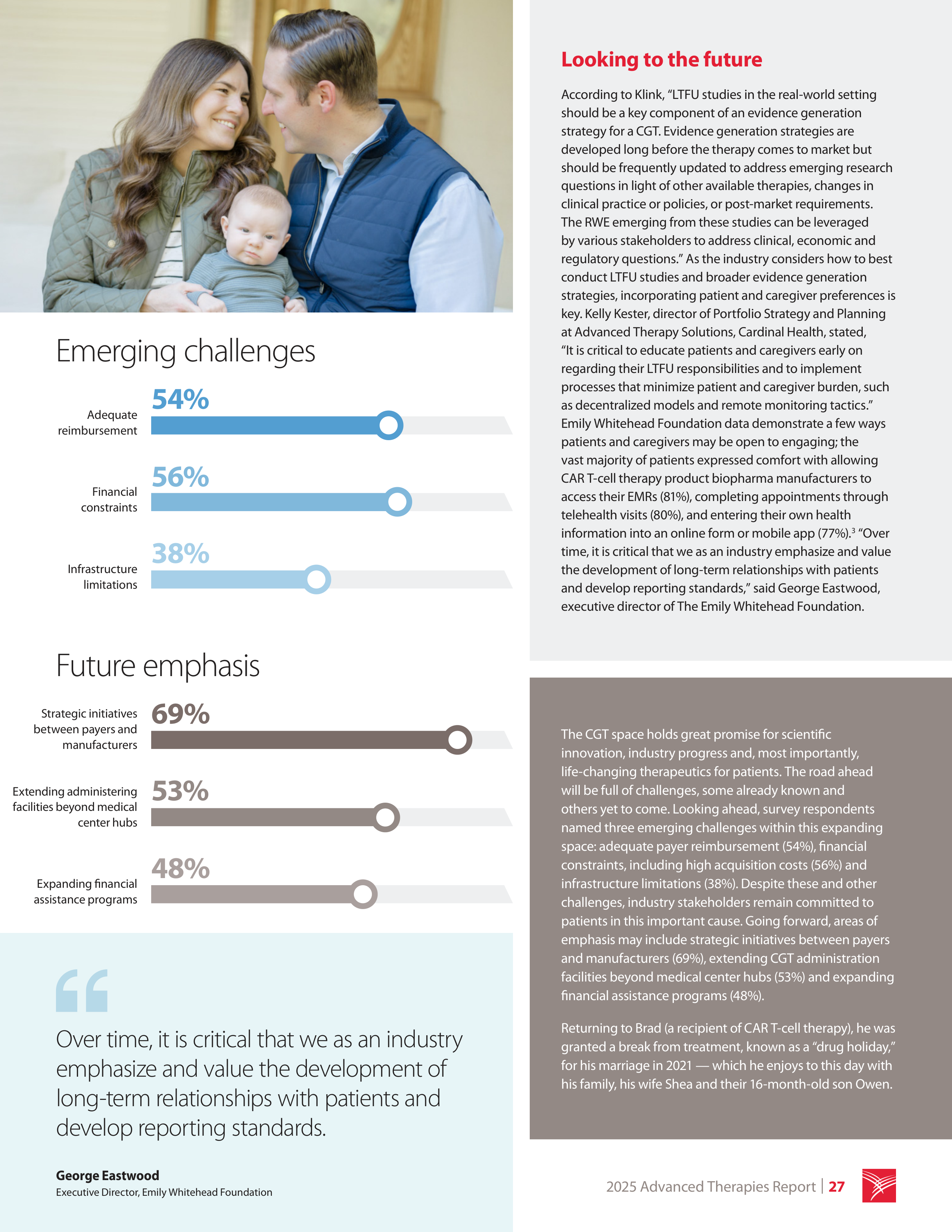

Emerging challenges
Extending administering
facilities beyond medical
center hubs
53%
Strategic initiatives
between payers and
manufacturers
69%
48%
Expanding financial
assistance programs
Future emphasis
Infrastructure
limitations
38%
Financial
constraints
56%
Adequate
reimbursement
54%
Looking to the future
According to Klink, “LTFU studies in the real-world setting
should be a key component of an evidence generation
strategy for a CGT. Evidence generation strategies are
developed long before the therapy comes to market but
should be frequently updated to address emerging research
questions in light of other available therapies, changes in
clinical practice or policies, or post-market requirements.
The RWE emerging from these studies can be leveraged
by various stakeholders to address clinical, economic and
regulatory questions.” As the industry considers how to best
conduct LTFU studies and broader evidence generation
strategies, incorporating patient and caregiver preferences is
key. Kelly Kester, director of Portfolio Strategy and Planning
at Advanced Therapy Solutions, Cardinal Health, stated,
“It is critical to educate patients and caregivers early on
regarding their LTFU responsibilities and to implement
processes that minimize patient and caregiver burden, such
as decentralized models and remote monitoring tactics.”
Emily Whitehead Foundation data demonstrate a few ways
patients and caregivers may be open to engaging; the
vast majority of patients expressed comfort with allowing
CAR T-cell therapy product biopharma manufacturers to
access their EMRs (81%), completing appointments through
telehealth visits (80%), and entering their own health
information into an online form or mobile app (77%).
3
“Over
time, it is critical that we as an industry emphasize and value
the development of long-term relationships with patients
and develop reporting standards,” said George Eastwood,
executive director of The Emily Whitehead Foundation.
Over time, it is critical that we as an industry
emphasize and value the development of
long-term relationships with patients and
develop reporting standards.
George Eastwood
Executive Director, Emily Whitehead Foundation
The CGT space holds great promise for scientific
innovation, industry progress and, most importantly,
life-changing therapeutics for patients. The road ahead
will be full of challenges, some already known and
others yet to come. Looking ahead, survey respondents
named three emerging challenges within this expanding
space: adequate payer reimbursement (54%), financial
constraints, including high acquisition costs (56%) and
infrastructure limitations (38%). Despite these and other
challenges, industry stakeholders remain committed to
patients in this important cause. Going forward, areas of
emphasis may include strategic initiatives between payers
and manufacturers (69%), extending CGT administration
facilities beyond medical center hubs (53%) and expanding
financial assistance programs (48%).
Returning to Brad (a recipient of CAR T-cell therapy), he was
granted a break from treatment, known as a “drug holiday,”
for his marriage in 2021 — which he enjoys to this day with
his family, his wife Shea and their 16-month-old son Owen.
2025 Advanced Therapies Report |
27

Meet the contributors
Fran Gregory
PharmD, MBA, Vice President, Emerging Therapies, Cardinal Health
Fran is responsible for cell and gene therapies and biosimilars at Cardinal Health. Her
background includes extensive clinical, health economic and outcomes research,
trade and commercial experience in the payer/PBM, specialty pharmacy and biotech
manufacturer spaces. Her career reflects a consistent focus on complex, innovative,
high-value pharmaceuticals and a passion for breaking down barriers to access and
care. She holds a Doctor of Pharmacy from the University of Cincinnati, a Master of
Business Administration from Xavier University and a Bachelor of Science from the
University of Cincinnati.
Craig Cowman
Executive Vice President, Biopharma Solutions and Strategic Sourcing
Craig Cowman is the Executive Vice President of Biopharma Solutions and Strategic
Sourcing at Cardinal Health. In this role, he leads the Biopharma and Strategic
Sourcing team, which supports pharmaceutical manufacturers through the critical
stages of regulatory approval, product launch and commercialization.
With more than 30 years at Cardinal Health, Cowman brings a wealth of
management experience and a broad strategic perspective. Most recently, he
served as Executive Vice President of Global Sourcing, overseeing enterprise-
wide strategic sourcing and supplier management. In this capacity, he led teams
responsible for sourcing pharmaceuticals, medical products and indirect goods
and services.
Previously, as Senior Vice President of Strategic Sourcing and Product Management,
Cowman played a key role in shaping the company’s approach to brand, generic,
and consumer health sourcing. He was instrumental in developing and executing
pricing and selling strategies for the Pharmaceutical Segment.
Before joining Cardinal Health, Cowman held marketing and consulting roles for a
variety of companies, including retail pharmacies. Cowman is the executive sponsor
for the veterans and military advocates employee resource group at Cardinal Health
and serves on the board of The National Veterans Memorial and Museum. He serves
on the board of the HDA Research Foundation, where he is a past chairman. He is
also the Vice Chairman of Red Oak Sourcing. Cowman holds a bachelor’s degree in
marketing from The Ohio State University.
2025 Advanced Therapies Report |
28

Mamadou Diallo
PharmD, Director, Regulatory Affairs, Cardinal Health Regulatory Sciences
Mamadou Diallo, PharmD, serves as Director of Regulatory Affairs for Cardinal
Health Regulatory Sciences. He has worked in biopharmaceutical sciences, drug
development and manufacturing improvement processes for more than two
decades. He is also experienced with global health authorities’ CMC perspectives/
compliance requirements, risk posture and risk mitigation. His areas of focus
are large molecules (i.e., biologics), small molecules and combination products.
At Cardinal Health Regulatory Sciences, he manages cross-functional teams of
regulatory scientists.
Yin Hwa Lai
Director, Chemistry, Manufacturing & Controls, Cardinal Health Regulatory Sciences
Yin Lai has extensive experience in the pharmaceutical industry, working in small
molecules, biologics, cell and gene therapy (CGT) development. In her current role
at Cardinal Health Regulatory Sciences, she focuses on providing CMC regulatory
advice and strategies for small molecules and biologics, including CGT. Her role
includes but not limited to helping clients to prepare for FDA meetings (INTERACT,
pre-IND, end-of-phase, Type C, Type D), regulatory correspondences (such as
controlled correspondences), authoring Module 3 quality sections, responding to
information requests (IRs) and authoring of drug and biologics master files.
Kelly Kester
MBA, MSc, RD, Director, Portfolio Strategy & Planning, Advanced Therapy
Solutions, Cardinal Health
Kelly Kester is the Director of Portfolio Strategy & Planning in the Advanced Therapy
Solutions center of excellence at Cardinal Health. As a former clinician and clinical
researcher, Kelly brings 15 years of experience across healthcare and life sciences.
At Cardinal Health, she focuses on expanding access to advanced therapies through
patient and provider focused initiatives, including expanding sites of administration,
real world evidence and outcomes tracking to support use of advanced therapies in
earlier lines of therapy.
2025 Advanced Therapies Report |
29
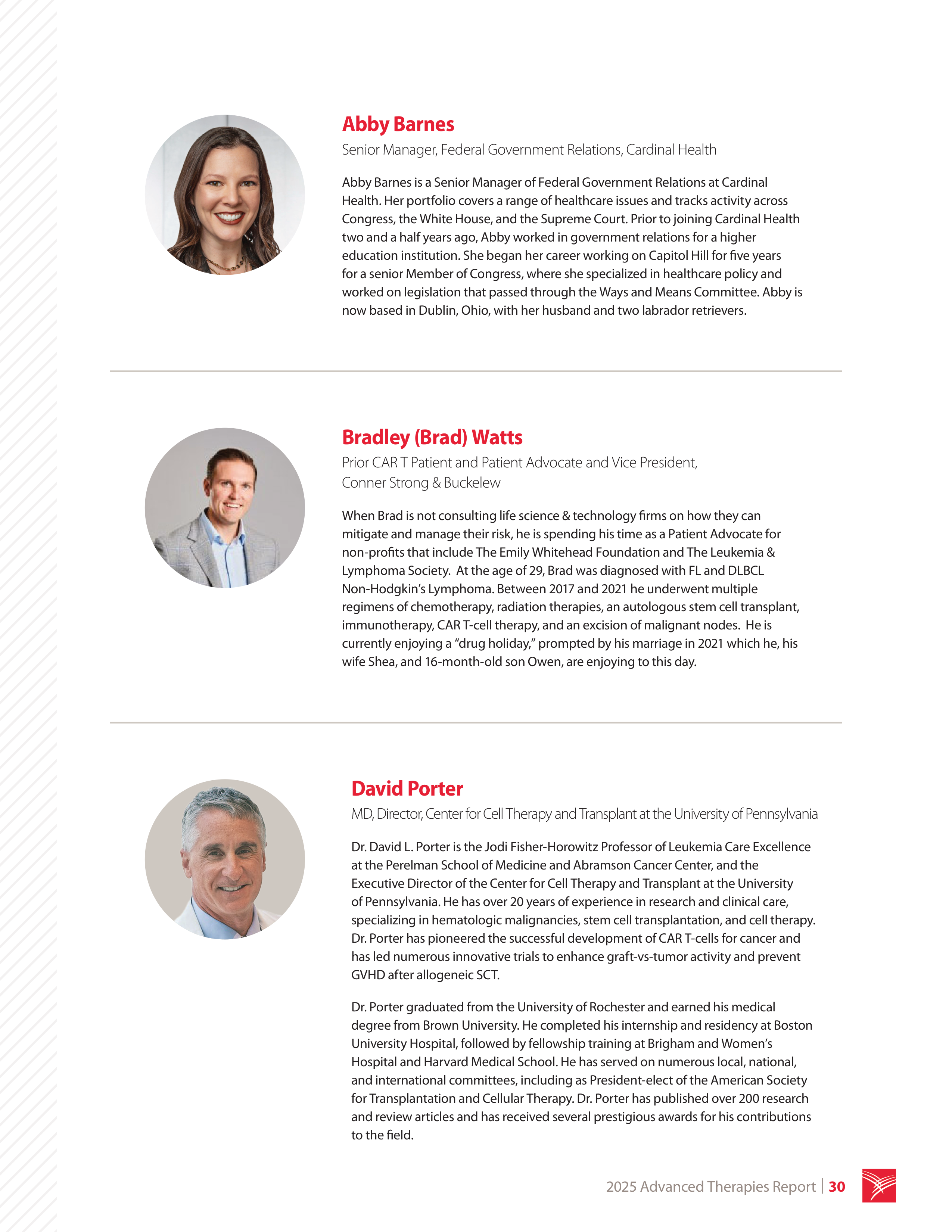
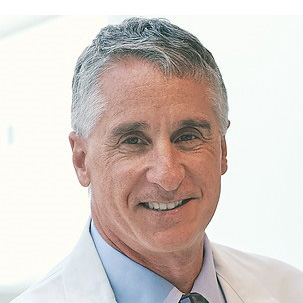
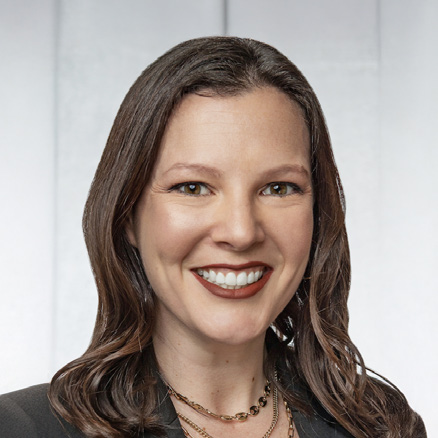
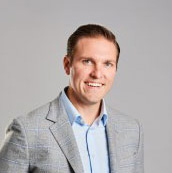
David Porter
MD, Director, Center for Cell Therapy and Transplant at the University of Pennsylvania
Dr. David L. Porter is the Jodi Fisher-Horowitz Professor of Leukemia Care Excellence
at the Perelman School of Medicine and Abramson Cancer Center, and the
Executive Director of the Center for Cell Therapy and Transplant at the University
of Pennsylvania. He has over 20 years of experience in research and clinical care,
specializing in hematologic malignancies, stem cell transplantation, and cell therapy.
Dr. Porter has pioneered the successful development of CAR T-cells for cancer and
has led numerous innovative trials to enhance graft-vs-tumor activity and prevent
GVHD after allogeneic SCT.
Dr. Porter graduated from the University of Rochester and earned his medical
degree from Brown University. He completed his internship and residency at Boston
University Hospital, followed by fellowship training at Brigham and Women’s
Hospital and Harvard Medical School. He has served on numerous local, national,
and international committees, including as President-elect of the American Society
for Transplantation and Cellular Therapy. Dr. Porter has published over 200 research
and review articles and has received several prestigious awards for his contributions
to the field.
Abby Barnes
Senior Manager, Federal Government Relations, Cardinal Health
Abby Barnes is a Senior Manager of Federal Government Relations at Cardinal
Health. Her portfolio covers a range of healthcare issues and tracks activity across
Congress, the White House, and the Supreme Court. Prior to joining Cardinal Health
two and a half years ago, Abby worked in government relations for a higher
education institution. She began her career working on Capitol Hill for five years
for a senior Member of Congress, where she specialized in healthcare policy and
worked on legislation that passed through the Ways and Means Committee. Abby is
now based in Dublin, Ohio, with her husband and two labrador retrievers.
Bradley (Brad) Watts
Prior CAR T Patient and Patient Advocate and Vice President,
Conner Strong & Buckelew
When Brad is not consulting life science & technology firms on how they can
mitigate and manage their risk, he is spending his time as a Patient Advocate for
non-profits that include The Emily Whitehead Foundation and The Leukemia &
Lymphoma Society. At the age of 29, Brad was diagnosed with FL and DLBCL
Non-Hodgkin’s Lymphoma. Between 2017 and 2021 he underwent multiple
regimens of chemotherapy, radiation therapies, an autologous stem cell transplant,
immunotherapy, CAR T-cell therapy, and an excision of malignant nodes. He is
currently enjoying a “drug holiday,” prompted by his marriage in 2021 which he, his
wife Shea, and 16-month-old son Owen, are enjoying to this day.
2025 Advanced Therapies Report |
30


Akshat Jain
MD, MPH, Medical Director, Inherited Bleeding Disorders and Hemoglobinopathies
Program, Loma Linda University School of Medicine and Children’s Hospital
Dr. Akshat Jain is a pediatric hematologist-oncologist who specializes in inherited
bleeding disorders and hemoglobinopathies. He serves as the Director of the
Inherited Bleeding Disorders and Hemoglobinopathies Program at Loma Linda
University School of Medicine and Children’s Hospital in Redlands, California.
Dr Jain has almost 20 years of clinical and research experience dedicated to
advancing the understanding and treatment of hemophilia and related disorders,
particularly through innovative gene therapy approaches. His role at Loma Linda
has enabled him to lead various clinical trials and research studies, contributing
significantly to the field.
Dr Jain earned his medical degree from the SSR Medical College. He completed
his residency at New York Medical College and his fellowship at Cohen Children’s
Hospital of New York. Dr. Jain also holds a master’s in public health from the
Hofstra University School of Public Health. He is board-certified in hematology and
pediatrics. Dr. Jain has been honored with numerous awards for recognizing his
contributions to pediatric healthcare and has held key positions in national and
international medical committees and organizations. Recently, he was appointed as
the 2024 Ambassador for the American Society of Hematology.
Ajeet Gajra
MD, Chief Scientific Officer, Hematology Oncology Associates of Central
New York
Dr. Ajeet Gajra is a medical oncologist/hematologist and serves as the Chief
Scientific Officer at the Hematology-Oncology Associates of Central New York
(HOACNY) in Syracuse, New York. Dr. Gajra is a former Professor of Medicine at SUNY
Update Medical University. He has over 20 years of experience in research and the
clinical care, specializing in medical oncology and hematology. Dr. Gajra has been
principal investigator in over 40 clinical trials, including studies on immunotherapy
and cellular therapy and several dozen real-world evidence studies. Dr. Gajra has
referred several patients for CAR T-cell therapy at qualified treatment centers both in
the clinical trial and real-world setting, and he has administered bispecific therapy to
patients in his practice.
Dr. Gajra earned his medical degree from Delhi University in New Delhi, India. He
completed his residency in internal medicine and fellowship in medical oncology
and hematology at SUNY Upstate Medical University. Prior to joining HOACNY, Dr.
Gajra was Professor of Medicine and Medical Director at the Upstate Cancer Center
in Syracuse, and previously served as Chief Medical Officer for Cardinal Health. He
has published over 100 peer-reviewed manuscripts and has presented more than
200 abstracts at major scientific meetings, including ASCO, ASH, and AACR. He has
also served on the lung cancer guidelines committee of ASCO and is a member of
the Alpha Omega Alpha honor society.
2025 Advanced Therapies Report |
31
Gary Goldstein
PharmD, Senior Manager of BMT and Cancer Cell Therapy at Stanford
Health Care
Gary Goldstein is the Senior Manager for Stanford Health Care’s (SHC) Blood and
Marrow Transplantation and Cellular Therapy Program. Gary joined the SHC BMT
Program in 1995 and leads the Unrelated Donor Search & Procurement team and the
BMT-CT Financial Coordinator team. He has oversight of financial and operational
aspects of the BMT-CT program, including onboarding of new cellular therapies.
Gary is a nationally recognized healthcare finance expert with over 30 years of
leadership experience in academic medical centers. His role involves overseeing
program operations, including hematopoietic cell transplantation, cancer cellular
therapies, and cellular immune tolerance treatments. He has successfully onboarded
and operationalized new cancer cellular therapies, such as CAR T-cell and tumor-
infiltrating lymphocyte (TIL) therapies, and has led teams to enhance service
delivery and patient care.
Gary currently serves as the Chair of the American Society of Transplantation and
Cellular Therapy (ASTCT) Government Relations Committee and is a member of
the ASTCT Finance Committee, ASTCT Payer Policy Committee, and the ASTCT/
NMDP ACCCESS initiative. He earned his extensive experience through various
roles at Stanford Health Care, including Director of Transplant Services Operations
and Business Manager for the Blood & Marrow Transplant Program. He has been
instrumental in developing and implementing strategic initiatives, managing
financial operations, and advocating for policy changes to improve healthcare
delivery. Gary’s work has been recognized with awards and he has served on
numerous advisory boards and committees, including his role as a liaison for the
Strategic Alliance between Stanford and Kaiser Northern California. His expertise
in healthcare finance and program management has made him a valuable asset to
Stanford Health Care and the broader medical community.
Samantha Jaglowski
MD, MPH; Senior Scientific Director, Industry Program CIBMTR; Medical College
of Wisconsin
Dr. Samantha Jaglowski is a Senior Scientific Director at the Center for International
Blood Marrow Transplant Research (CIBMTR) and is responsible for leading their
industry program. Prior to transitioning to CIBMTR, she was a bone marrow
transplant (BMT) and cellular therapy physician at The Ohio State University (OSU).
Dr. Jaglowski has over 20 years of clinical and research experience. She has been
involved in a number of clinical trials for patients with lymphoma or undergoing
transplant and cellular therapy, including pivotal trials for Kymriah™, Yescarta™ and
Tecartus™ for the treatment of lymphoma, and ibrutinib for chronic graft-versus-host
disease.
Dr. Jaglowski earned her medical degree from OSU College of Medicine. She
completed her internal medicine residency at OSU Wexner Medical Center
and her hematology-oncology fellowship at OSU Comprehensive Cancer Center.
Dr. Jaglowski has over 120 publications and has presented her research at numerous
medical congresses, including ASH and SOHO. She is an active member of several
professional societies, including ASCO and ASH.
2025 Advanced Therapies Report |
32
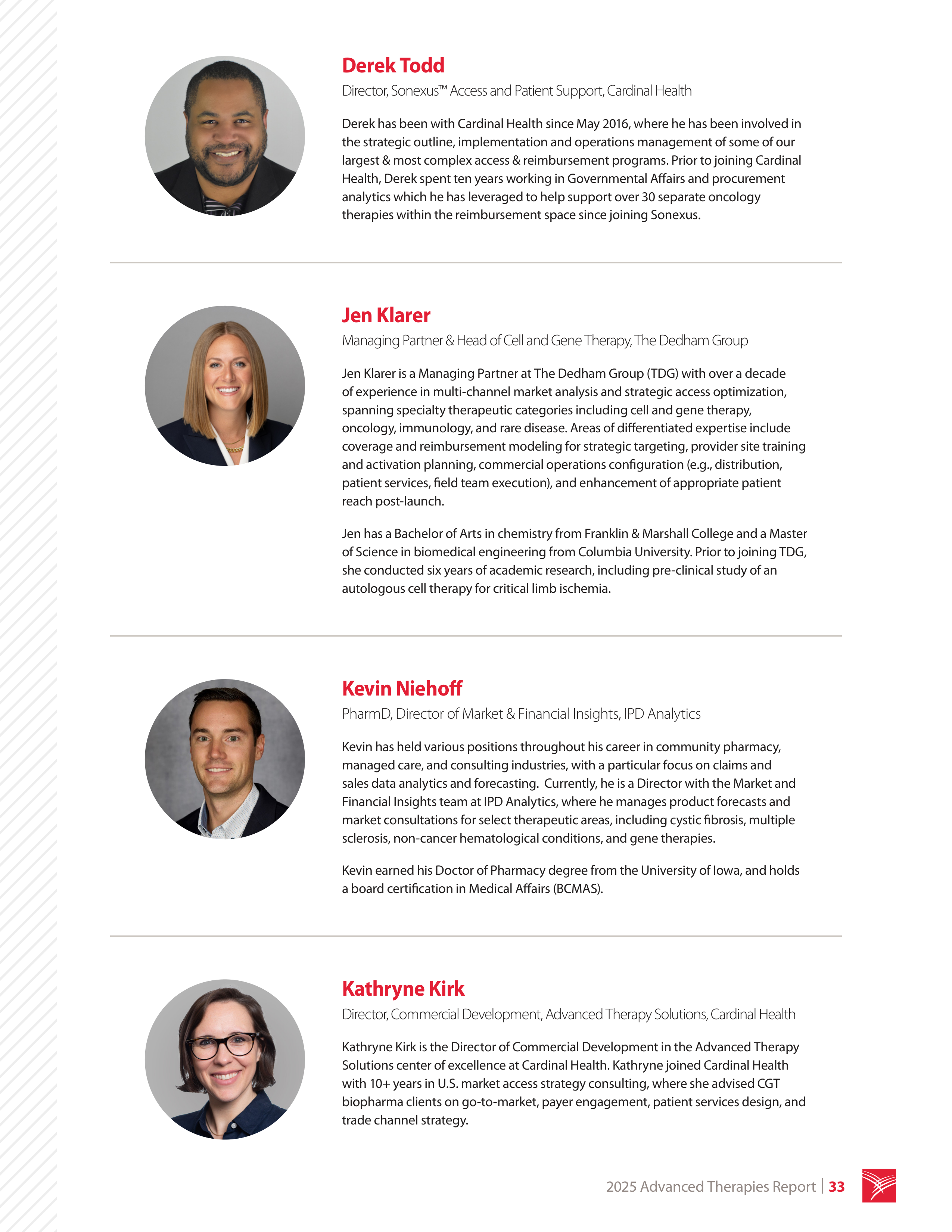
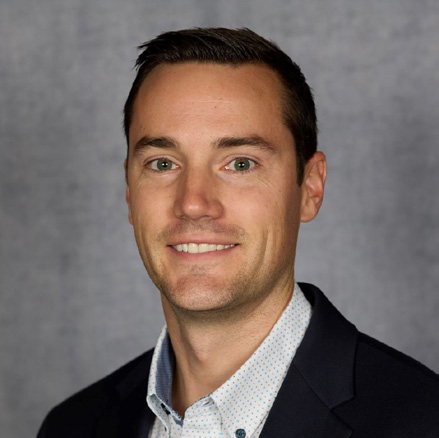
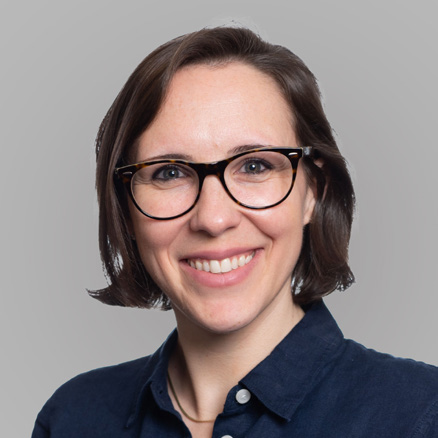
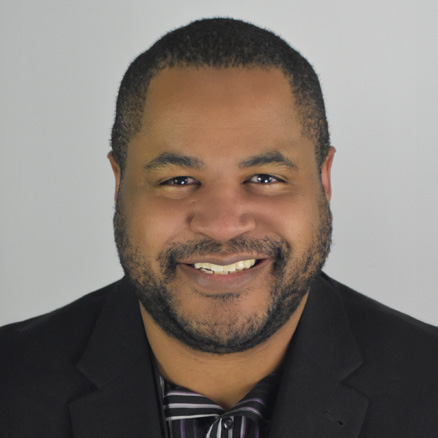
Kevin Niehoff
PharmD, Director of Market & Financial Insights, IPD Analytics
Kevin has held various positions throughout his career in community pharmacy,
managed care, and consulting industries, with a particular focus on claims and
sales data analytics and forecasting. Currently, he is a Director with the Market and
Financial Insights team at IPD Analytics, where he manages product forecasts and
market consultations for select therapeutic areas, including cystic fibrosis, multiple
sclerosis, non-cancer hematological conditions, and gene therapies.
Kevin earned his Doctor of Pharmacy degree from the University of Iowa, and holds
a board certification in Medical Affairs (BCMAS).
Kathryne Kirk
Director, Commercial Development, Advanced Therapy Solutions, Cardinal Health
Kathryne Kirk is the Director of Commercial Development in the Advanced Therapy
Solutions center of excellence at Cardinal Health. Kathryne joined Cardinal Health
with 10+ years in U.S. market access strategy consulting, where she advised CGT
biopharma clients on go-to-market, payer engagement, patient services design, and
trade channel strategy.
Derek Todd
Director, Sonexus™ Access and Patient Support, Cardinal Health
Derek has been with Cardinal Health since May 2016, where he has been involved in
the strategic outline, implementation and operations management of some of our
largest & most complex access & reimbursement programs. Prior to joining Cardinal
Health, Derek spent ten years working in Governmental Affairs and procurement
analytics which he has leveraged to help support over 30 separate oncology
therapies within the reimbursement space since joining Sonexus.
Jen Klarer
Managing Partner & Head of Cell and Gene Therapy, The Dedham Group
Jen Klarer is a Managing Partner at The Dedham Group (TDG) with over a decade
of experience in multi-channel market analysis and strategic access optimization,
spanning specialty therapeutic categories including cell and gene therapy,
oncology, immunology, and rare disease. Areas of differentiated expertise include
coverage and reimbursement modeling for strategic targeting, provider site training
and activation planning, commercial operations configuration (e.g., distribution,
patient services, field team execution), and enhancement of appropriate patient
reach post-launch.
Jen has a Bachelor of Arts in chemistry from Franklin & Marshall College and a Master
of Science in biomedical engineering from Columbia University. Prior to joining TDG,
she conducted six years of academic research, including pre-clinical study of an
autologous cell therapy for critical limb ischemia.
2025 Advanced Therapies Report |
33
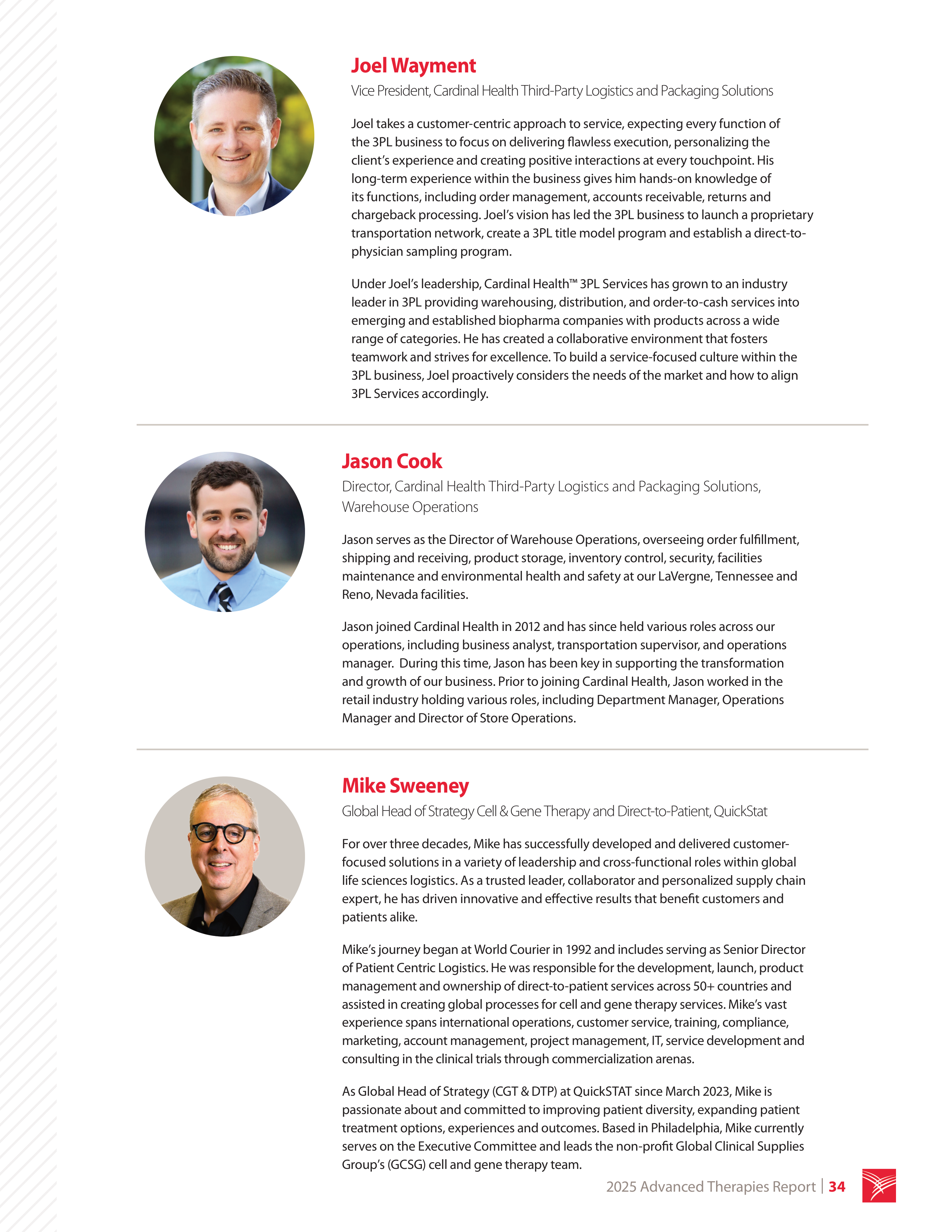

Jason Cook
Director, Cardinal Health Third-Party Logistics and Packaging Solutions,
Warehouse Operations
Jason serves as the Director of Warehouse Operations, overseeing order fulfillment,
shipping and receiving, product storage, inventory control, security, facilities
maintenance and environmental health and safety at our LaVergne, Tennessee and
Reno, Nevada facilities.
Jason joined Cardinal Health in 2012 and has since held various roles across our
operations, including business analyst, transportation supervisor, and operations
manager. During this time, Jason has been key in supporting the transformation
and growth of our business. Prior to joining Cardinal Health, Jason worked in the
retail industry holding various roles, including Department Manager, Operations
Manager and Director of Store Operations.
Mike Sweeney
Global Head of Strategy Cell & Gene Therapy and Direct-to-Patient, QuickStat
For over three decades, Mike has successfully developed and delivered customer-
focused solutions in a variety of leadership and cross-functional roles within global
life sciences logistics. As a trusted leader, collaborator and personalized supply chain
expert, he has driven innovative and effective results that benefit customers and
patients alike.
Mike’s journey began at World Courier in 1992 and includes serving as Senior Director
of Patient Centric Logistics. He was responsible for the development, launch, product
management and ownership of direct-to-patient services across 50+ countries and
assisted in creating global processes for cell and gene therapy services. Mike’s vast
experience spans international operations, customer service, training, compliance,
marketing, account management, project management, IT, service development and
consulting in the clinical trials through commercialization arenas.
As Global Head of Strategy (CGT & DTP) at QuickSTAT since March 2023, Mike is
passionate about and committed to improving patient diversity, expanding patient
treatment options, experiences and outcomes. Based in Philadelphia, Mike currently
serves on the Executive Committee and leads the non-profit Global Clinical Supplies
Group’s (GCSG) cell and gene therapy team.
Joel Wayment
Vice President, Cardinal Health Third-Party Logistics and Packaging Solutions
Joel takes a customer-centric approach to service, expecting every function of
the 3PL business to focus on delivering flawless execution, personalizing the
client’s experience and creating positive interactions at every touchpoint. His
long-term experience within the business gives him hands-on knowledge of
its functions, including order management, accounts receivable, returns and
chargeback processing. Joel’s vision has led the 3PL business to launch a proprietary
transportation network, create a 3PL title model program and establish a direct-to-
physician sampling program.
Under Joel’s leadership, Cardinal Health™ 3PL Services has grown to an industry
leader in 3PL providing warehousing, distribution, and order-to-cash services into
emerging and established biopharma companies with products across a wide
range of categories. He has created a collaborative environment that fosters
teamwork and strives for excellence. To build a service-focused culture within the
3PL business, Joel proactively considers the needs of the market and how to align
3PL Services accordingly.
2025 Advanced Therapies Report |
34
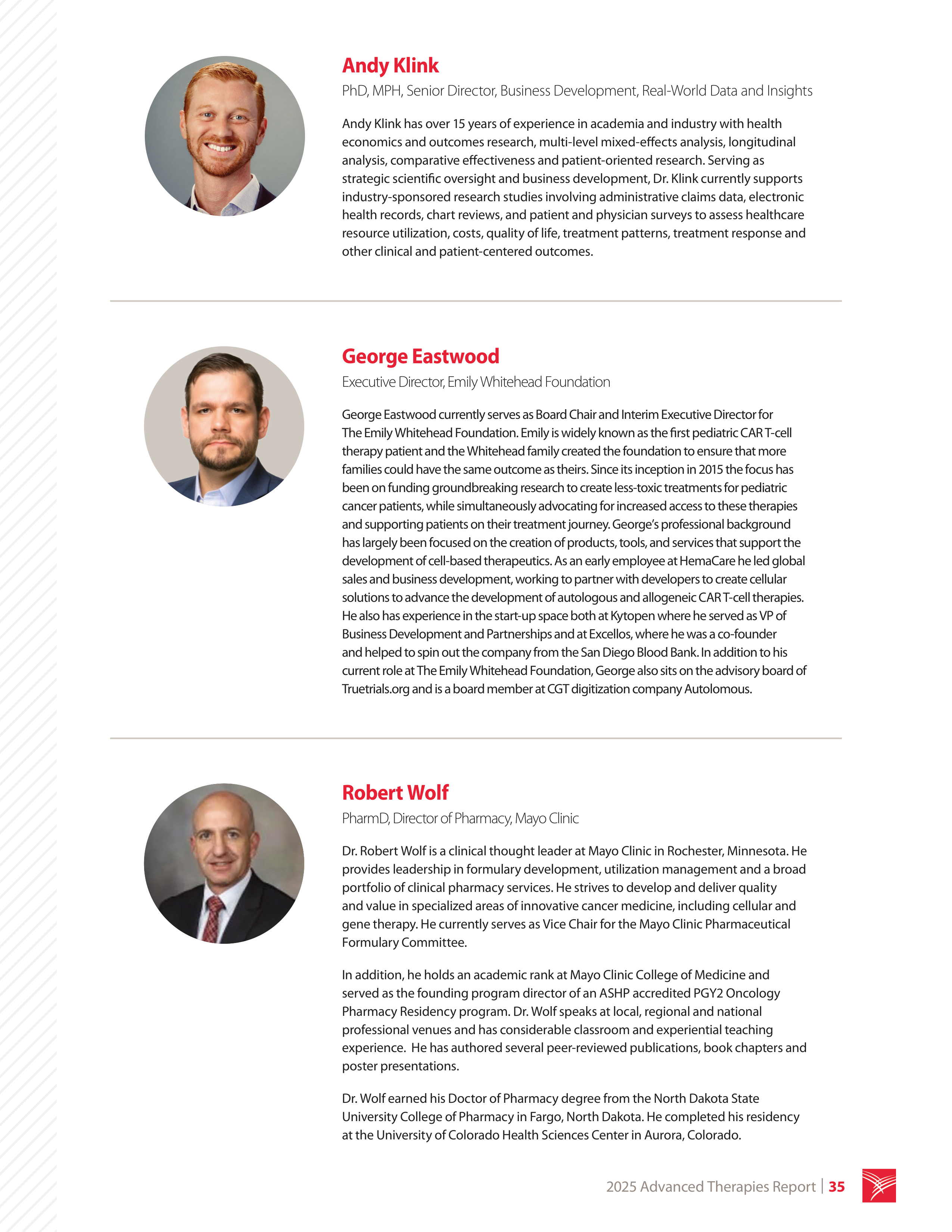
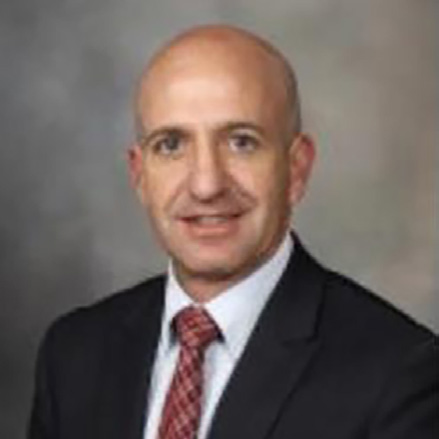
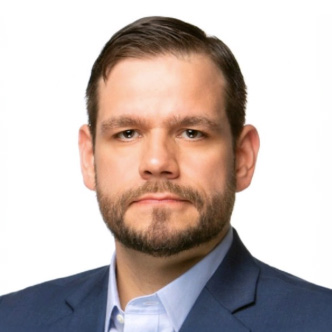
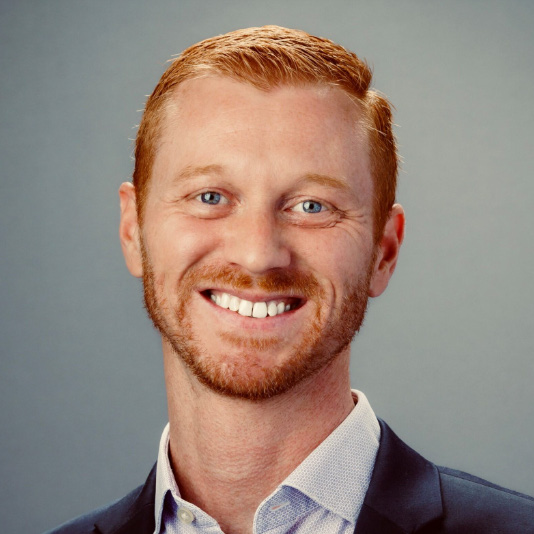
Robert Wolf
PharmD, Director of Pharmacy, Mayo Clinic
Dr. Robert Wolf is a clinical thought leader at Mayo Clinic in Rochester, Minnesota. He
provides leadership in formulary development, utilization management and a broad
portfolio of clinical pharmacy services. He strives to develop and deliver quality
and value in specialized areas of innovative cancer medicine, including cellular and
gene therapy. He currently serves as Vice Chair for the Mayo Clinic Pharmaceutical
Formulary Committee.
In addition, he holds an academic rank at Mayo Clinic College of Medicine and
served as the founding program director of an ASHP accredited PGY2 Oncology
Pharmacy Residency program. Dr. Wolf speaks at local, regional and national
professional venues and has considerable classroom and experiential teaching
experience. He has authored several peer-reviewed publications, book chapters and
poster presentations.
Dr. Wolf earned his Doctor of Pharmacy degree from the North Dakota State
University College of Pharmacy in Fargo, North Dakota. He completed his residency
at the University of Colorado Health Sciences Center in Aurora, Colorado.
George Eastwood
Executive Director, Emily Whitehead Foundation
George Eastwood currently serves as Board Chair and Interim Executive Director for
The Emily Whitehead Foundation. Emily is widely known as the first pediatric CAR T-cell
therapy patient and the Whitehead family created the foundation to ensure that more
families could have the same outcome as theirs. Since its inception in 2015 the focus has
been on funding groundbreaking research to create less-toxic treatments for pediatric
cancer patients, while simultaneously advocating for increased access to these therapies
and supporting patients on their treatment journey. George’s professional background
has largely been focused on the creation of products, tools, and services that support the
development of cell-based therapeutics. As an early employee at HemaCare he led global
sales and business development, working to partner with developers to create cellular
solutions to advance the development of autologous and allogeneic CAR T-cell therapies.
He also has experience in the start-up space both at Kytopen where he served as VP of
Business Development and Partnerships and at Excellos, where he was a co-founder
and helped to spin out the company from the San Diego Blood Bank. In addition to his
current role at The Emily Whitehead Foundation, George also sits on the advisory board of
Truetrials.org and is a board member at CGT digitization company Autolomous.
Andy Klink
PhD, MPH, Senior Director, Business Development, Real-World Data and Insights
Andy Klink has over 15 years of experience in academia and industry with health
economics and outcomes research, multi-level mixed-effects analysis, longitudinal
analysis, comparative effectiveness and patient-oriented research. Serving as
strategic scientific oversight and business development, Dr. Klink currently supports
industry-sponsored research studies involving administrative claims data, electronic
health records, chart reviews, and patient and physician surveys to assess healthcare
resource utilization, costs, quality of life, treatment patterns, treatment response and
other clinical and patient-centered outcomes.
2025 Advanced Therapies Report |
35


To learn how Cardinal Health is empowering
the next generation of advanced therapies, visit
cardinalhealth.com/cellandgene
References: 1.
2025 Cardinal Health Advanced Therapies Pipeline
2.
Cell and gene therapy (CGT) pipeline deep
dive | Center for Biomedical System Design. Tuftsmedicalcenter.org. Published 2020. Accessed March 21, 2025.
https://newdigs.tuftsmedicalcenter.org/payingforcures/defining-disruption/cell-and-gene-therapy-products-
and-pipeline/cgt-pipeline-deep-dive/#gsc.tab=0%E2%80%AF
3.
FDA CBER Meeting: Gene therapy safety in rare
diseases. U.S. Food and Drug Administration. Published 2024. Accessed March 21, 2025. https://www.fda.gov/news-
events/2024-cber-patient-and-care-partner-listening-meetings/meeting-1-patient-and-care-partner-perspectives-
safety-considerations-approved-gene-therapy
© 2025 Cardinal Health. All Rights Reserved. CARDINAL HEALTH, Cardinal Health LOGO, SONEXUS and NAVISTA are
trademarks of Cardinal Health and may be registered in the US and/or in other countries. All other trademarks are
the property of their respective owners. Patent cardinalhealth.com/patents. Lit. No. 1BIO24-3124661-02 (04/2025)