


Journal of Engineering and Technology Management 71 (2024) 101800
0923-4748/©
2024
The
Authors.
Published
by
Elsevier
B.V.
This
is
an
open
access
article
under
the
CC
BY-NC-ND
license
(
http://creativecommons.org/licenses/by-nc-nd/4.0/
).
Impact of artificial intelligence on aeronautics: An
industry-wide review
Amina Zaoui
a
,
*
, Dieudonne
́
Tchuente
b
, Samuel Fosso Wamba
b
,
Bernard Kamsu-Foguem
a
a
LGP-ENIT-INPT, Universite
́
de Toulouse, 47 Avenue Azereix, BP 1629, 65016 Tarbes, France
b
TBS Business School, 1 Place Alphonse Jourdain, 31068, Toulouse, France
A
R
T
I
C
L
E I
N
F
O
Keywords:
Artificial Intelligence
Use cases
Aeronautics
Performance
Benefits
A
B
S
T
R
A
C
T
Curiously, there are few contributions in the scientific literature on the subject of artificial in
telligence (AI) and its impact on aeronautics. However, many communications and reports have
been published by aeronautic companies about their applications of AI technologies. This article
makes an industry-wide review of AI in aeronautics using a three-step sequential approach: (i) a
review of AI and its concepts to define and develop a conceptual map; (ii) a selection of 100 use
cases from aeronautics companies that use AI technologies (e.g., Airbus, Boeing, Air France,
Safran, EasyJet, Dassault Aviation, Altair); and (iii) an analysis of the use cases using the topics
defined in the conceptual map. The main results describe a rising interest in the integration of AI
technologies by entities in the aeronautic sector. Moreover, the results from the use cases show
that the most recurrent technologies are big data analytics, autonomous intelligent systems,
predictive analytics, machine learning, and robotics. Another finding is related to the several
benefits that motivate companies to integrate AI technologies into their industrial and operational
processes. The most frequent benefits include customer satisfaction, saving time, safety and se
curity, cost reduction, better decision making, solving complex problems, and ensuring optimi
sation and efficiency. It also appears that the performance of companies is positively impacted by
using these AI technologies. Such impacts span all operational departments including marketing,
where these technologies help satisfy customer needs; the industrial and operational area, which
is provided with quality products; and where productivity and economic performance are opti
mised for more efficiency.
1.
Introduction
Artificial intelligence (AI) has been discussed since the 1950 s, but it has been developed more and more in many areas this last
decade (
Haenlein and Kaplan, 2019
). In our current big data era, the volume of data has increased significantly in many sectors with
different improved algorithms and more powerful computer hardware, so it has become necessary for organisations to develop new
data-driven technologies based on AI (
Brynjolfsson and McAfee, 2017
). Nowadays, AI influences and improves organisations per
formance in almost all sectors, including medicine, banks, sales and distribution, transport, and logistics, education, insurance, and
computer services, etc. (Fosso Wamba et al., 2020).
*
Corresponding author.
E-mail address:
amina.zaoui@enit.fr
(A. Zaoui).
Contents lists available at
ScienceDirect
Journal of Engineering and
Technology Management
journal homepage:
www.elsevier.com/locate/jengtecman
https://doi.org/10.1016/j.jengtecman.2024.101800
Received 14 January 2023; Received in revised form 25 January 2024; Accepted 2 February 2024
Journal of Engineering and Technology Management 71 (2024) 101800
2
The aviation sector is also facing new complex challenges, such as rising fuel, environmental impacts, growing customer demand,
and the development of new autonomous systems to save production time and costs (
Pierrat et al., 2021
). For example, the invention of
computers in the 1990 s enabled Airbus to enhance its flight operations and safety. Pilots shifted from the use of manual, paper-based
calculations for flight operations. With the emergence of technologies and the increase of worldwide environmental concerns, Airbus
developed the tools needed to have only paperless cockpits in their aircraft (
Electronic Flight Bag, 2021
).
In addition, many other new developments are transforming the aviation sector: autonomous aircraft, renewable energy and
propulsion sources, artificial intelligence, additive manufacturing, big data, blockchains, autonomous control, and many other
promising innovations that contribute to maintaining the performance of air transport in terms of safety, security, efficiency, and
sustainability (
OACI, 2020
). For instance, companies are forced to look for new ways to improve their performance and client base. The
use of artificial intelligence is seen as an essential tool for the development of new innovative services and solutions (
Russell and
Norvig, 2010
).
Some research has looked at introduced AI technologies in aeronautics and generally focused on a single AI technology in a specific
type of aeronautics organisation (airport (Lahna et al., 2023), aeronautic manufacturers, and airlines). For example, (
Yasuda et al.,
2022
) highlighted the potential to automate aircraft visual inspection with computer vision. (
Oehling and Barry, 2019
) were more
interested in machine learning using airline flight data and machine learning methods to generate safety-relevant knowledge. (
Ceruti
et al., 2019
) investigated augmented reality and additive manufacturing technologies for maintenance in aeronautics. (
Wang et al.,
2022
) developed an example of a simulation model by harnessing a dynamic inventory replenishment strategy based on reinforcement
learning to improve supply chain performance in the aerospace industry. Although these few scientific studies have examined some
aspects of the use of AI technologies in the aeronautic sector, there are many other communications done by companies on this subject
that could be interesting to review for a broader analysis perspective. This study, therefore, reviews AI application use cases
communicated by companies through other channels (e.g., their websites or official reports). Thus, access to this broader information
database can help us better understand the types of usage, their interests, and the implications for the future. More precisely, in this
paper, we are interested in the following three research questions (RQ) that will help us understand how the use of artificial intelli
gence impacts performance in the aeronautics industry based on practical use cases.
1. RQ 1: How are AI technologies used in the aeronautics field?
2. RQ 2: What are the benefits of adopting AI in aeronautics organisations?
3. RQ 3: How does the use of AI technology affect the performance of organisations?
More globally, this paper will focus on analysing the impact of AI in the aeronautics field, documenting the current state of aca
demic research and industry implementations, and making recommendations for future research. To answer the aforementioned
research questions RQ1, RQ2, and RQ3, we base our analysis on the analysis of organisations in the aeronautics industry.
The rest of this paper is divided as follows. First, the global methodology of our research is developed in
Section 2
. Next,
Section 3
elaborates on the conceptual map that will be used for driving the case studies analysis. In
Section 4
, we describe how the use cases
were collected.
Section 5
presents an analysis of use cases in order to answer our research questions. In
Section 6
, a result synthesis is
presented, followed by the different implications of our study: implications for research, implications for theory, implications for
practice, and implications for management. Some research limitations and many future research directions are also provided. Finally,
Section 7
provides the conclusions.
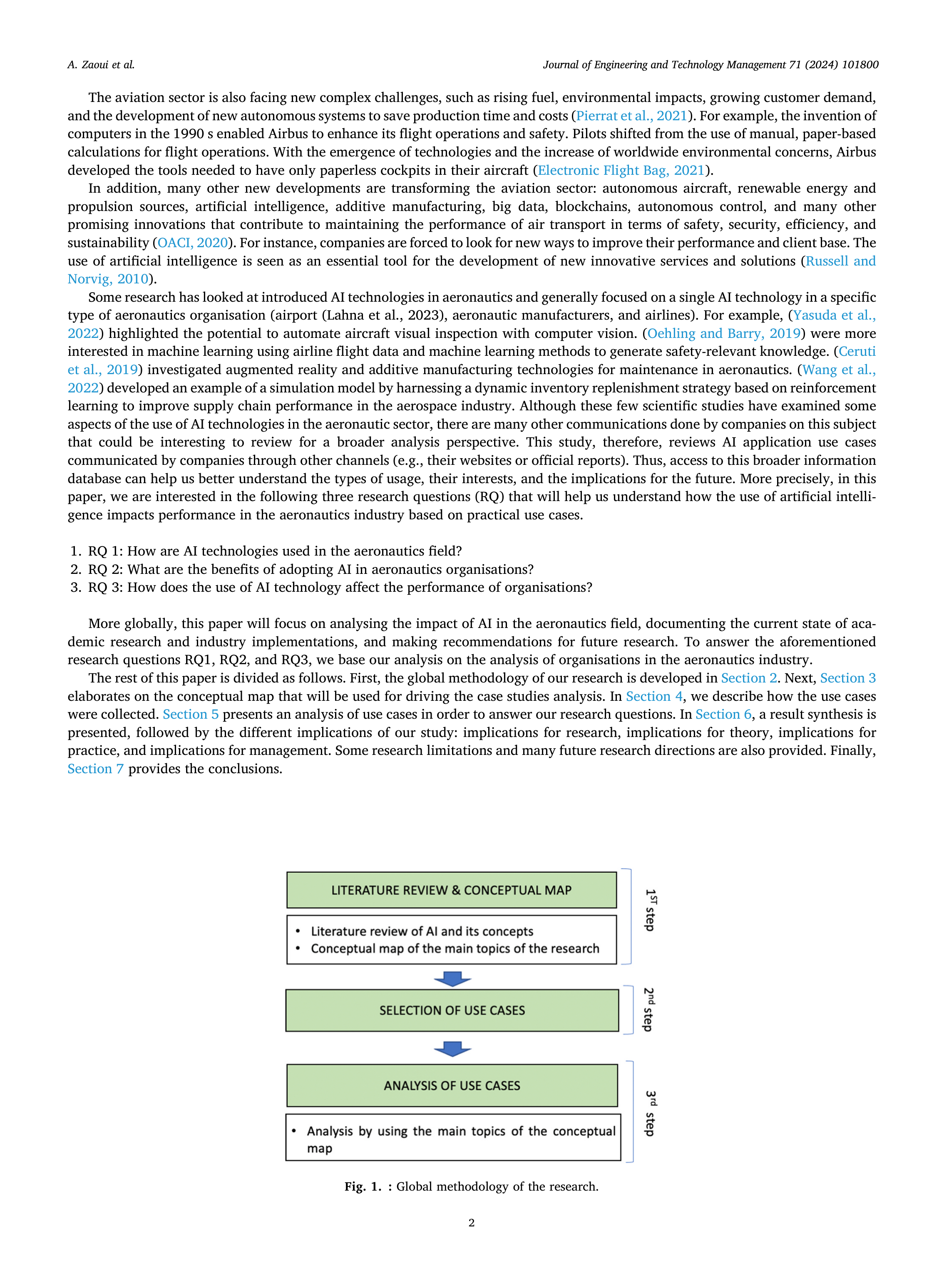
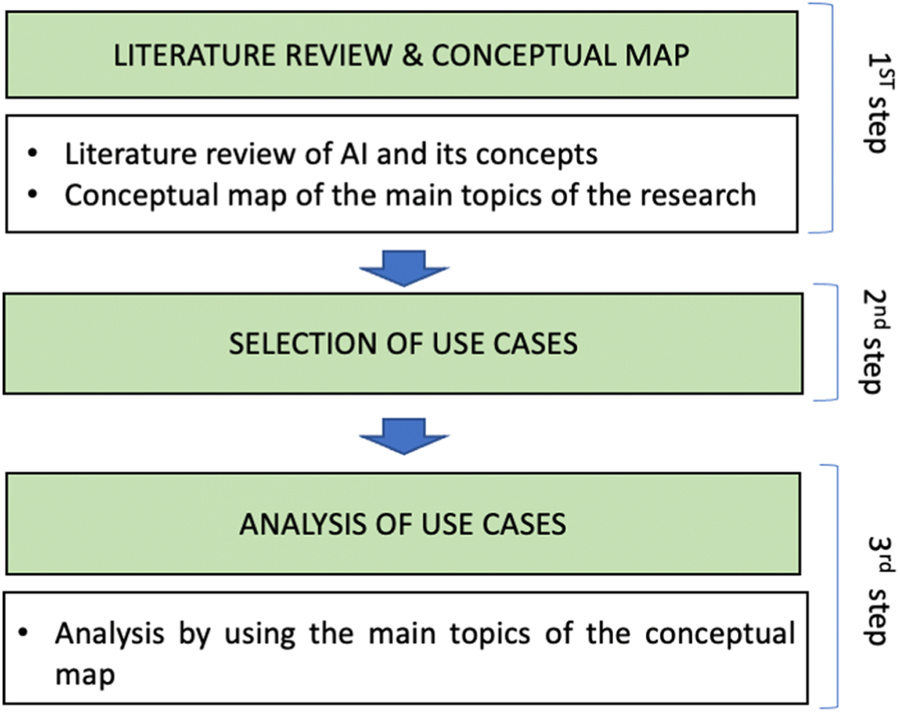
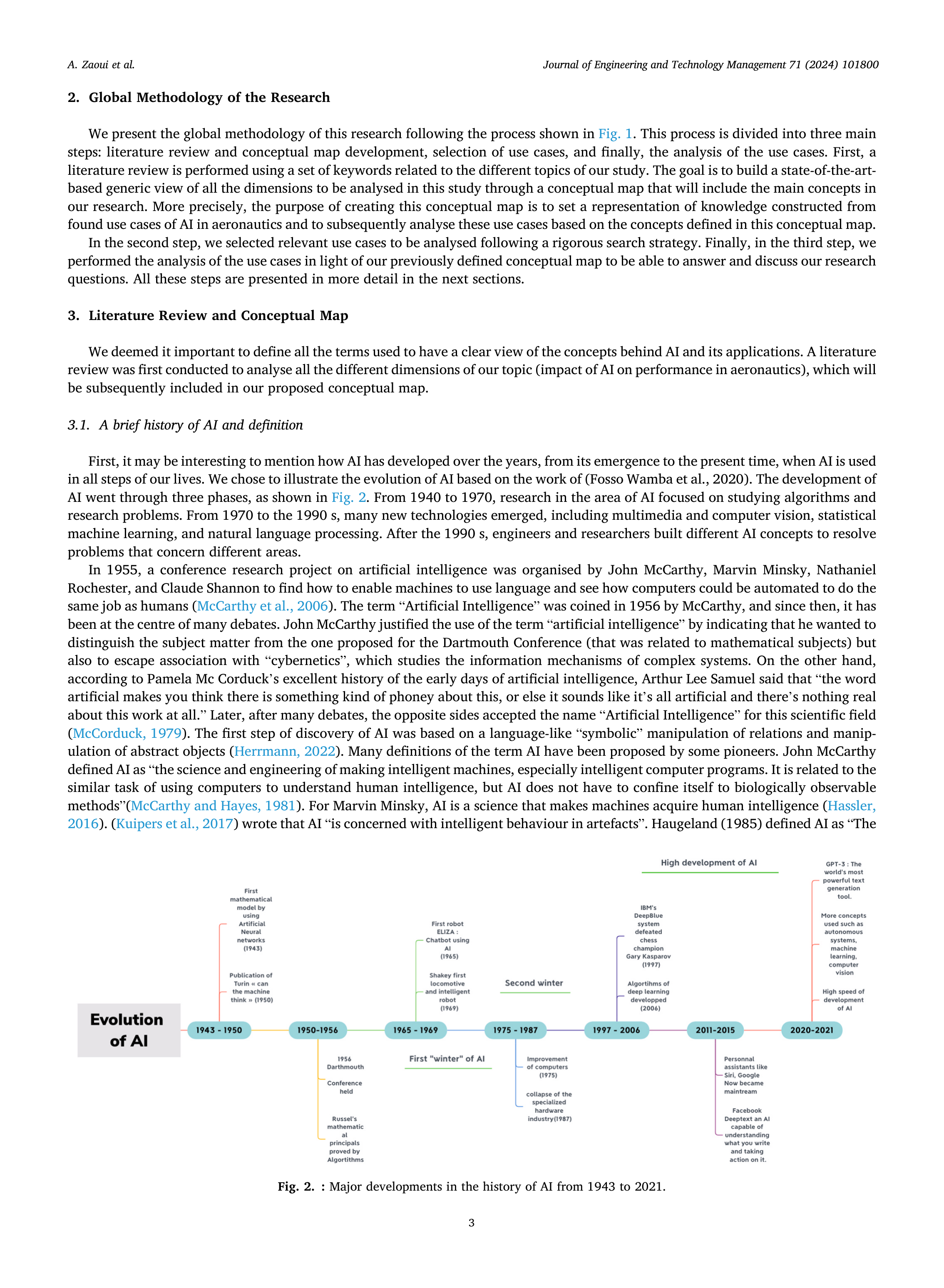
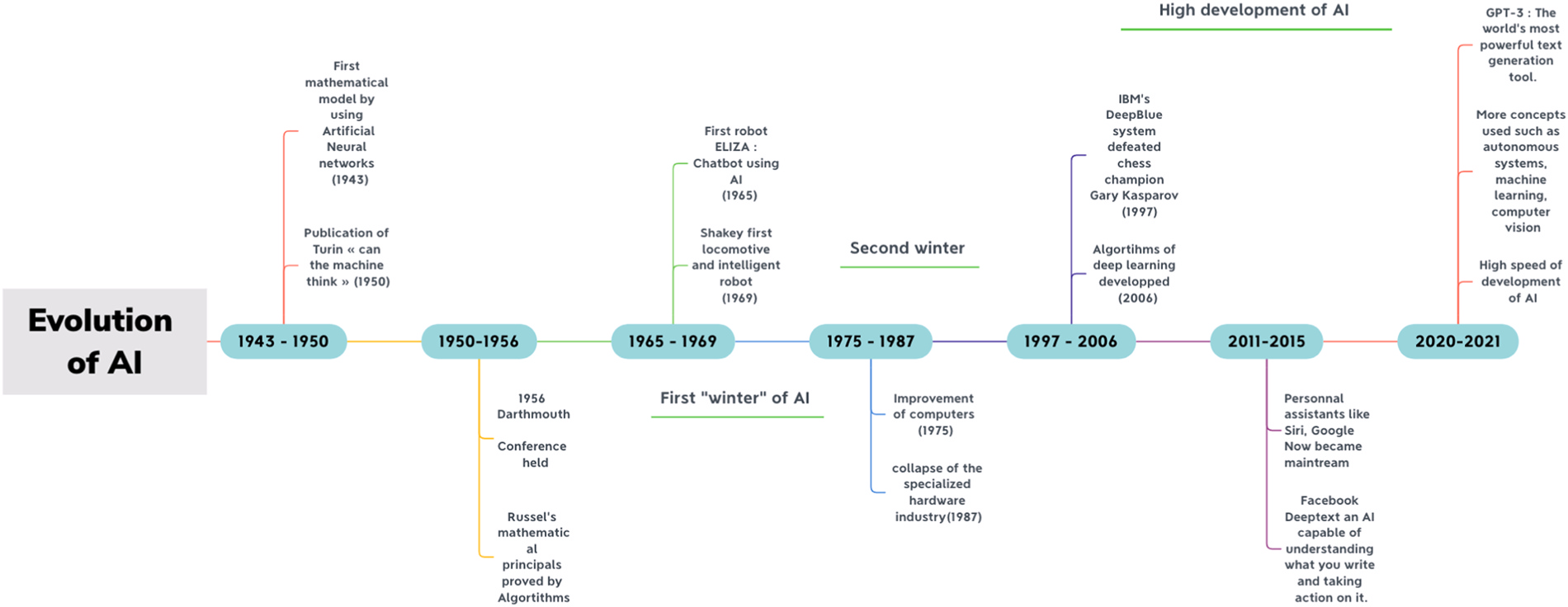
Fig. 1.
:
Global methodology of the research.
A. Zaoui et al.
Journal of Engineering and Technology Management 71 (2024) 101800
3
2.
Global Methodology of the Research
We present the global methodology of this research following the process shown in
Fig. 1
. This process is divided into three main
steps: literature review and conceptual map development, selection of use cases, and finally, the analysis of the use cases. First, a
literature review is performed using a set of keywords related to the different topics of our study. The goal is to build a state-of-the-art-
based generic view of all the dimensions to be analysed in this study through a conceptual map that will include the main concepts in
our research. More precisely, the purpose of creating this conceptual map is to set a representation of knowledge constructed from
found use cases of AI in aeronautics and to subsequently analyse these use cases based on the concepts defined in this conceptual map.
In the second step, we selected relevant use cases to be analysed following a rigorous search strategy. Finally, in the third step, we
performed the analysis of the use cases in light of our previously defined conceptual map to be able to answer and discuss our research
questions. All these steps are presented in more detail in the next sections.
3.
Literature Review and Conceptual Map
We deemed it important to define all the terms used to have a clear view of the concepts behind AI and its applications. A literature
review was first conducted to analyse all the different dimensions of our topic (impact of AI on performance in aeronautics), which will
be subsequently included in our proposed conceptual map.
3.1.
A brief history of AI and definition
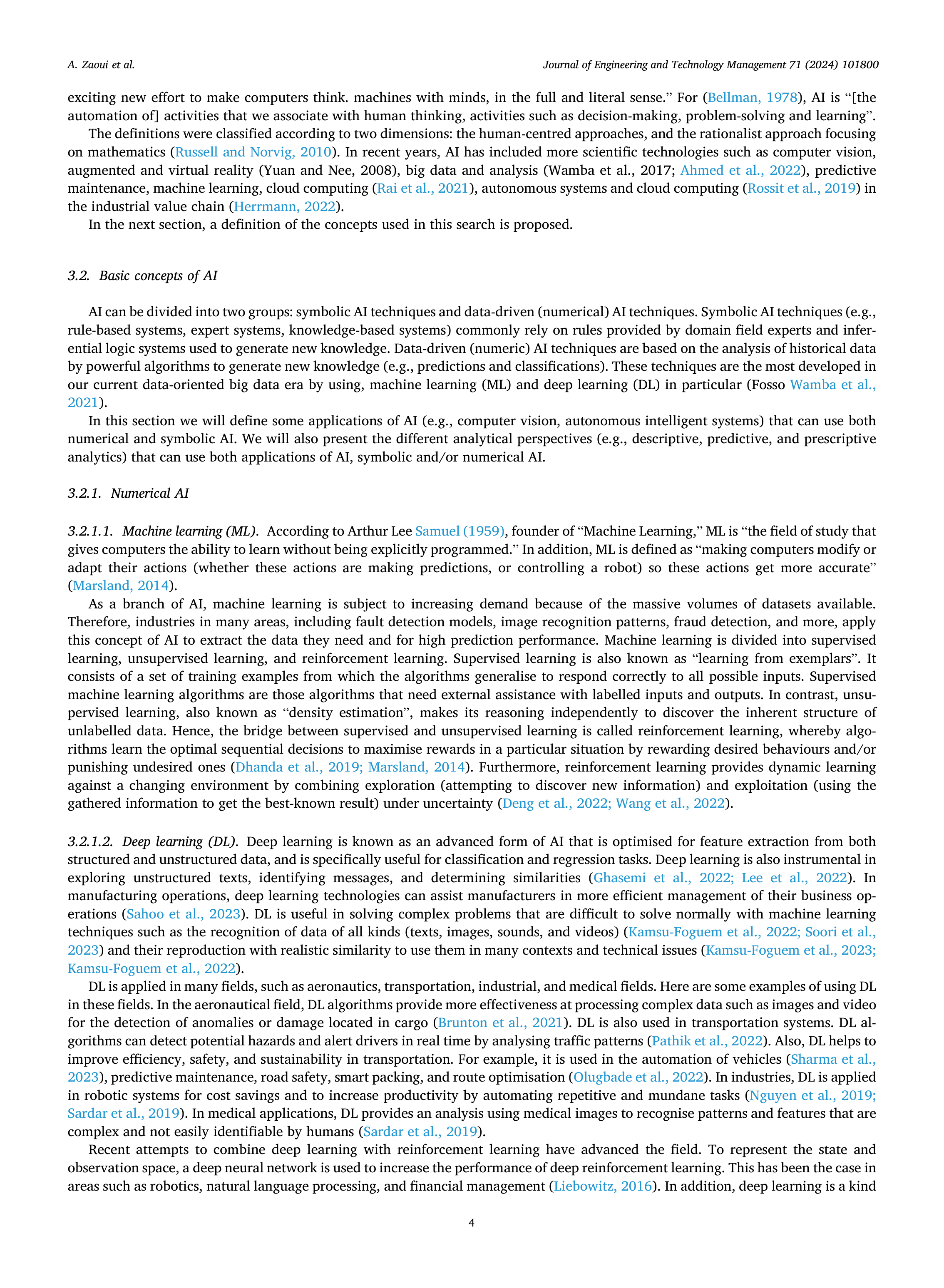
First, it may be interesting to mention how AI has developed over the years, from its emergence to the present time, when AI is used
in all steps of our lives. We chose to illustrate the evolution of AI based on the work of (Fosso Wamba et al., 2020). The development of
AI went through three phases, as shown in
Fig. 2
. From 1940 to 1970, research in the area of AI focused on studying algorithms and
research problems. From 1970 to the 1990 s, many new technologies emerged, including multimedia and computer vision, statistical
machine learning, and natural language processing. After the 1990 s, engineers and researchers built different AI concepts to resolve
problems that concern different areas.
In 1955, a conference research project on artificial intelligence was organised by John McCarthy, Marvin Minsky, Nathaniel
Rochester, and Claude Shannon to find how to enable machines to use language and see how computers could be automated to do the
same job as humans (
McCarthy et al., 2006
). The term
“
Artificial Intelligence
”
was coined in 1956 by McCarthy, and since then, it has
been at the centre of many debates. John McCarthy justified the use of the term
“
artificial intelligence
”
by indicating that he wanted to
distinguish the subject matter from the one proposed for the Dartmouth Conference (that was related to mathematical subjects) but
also to escape association with
“
cybernetics
”
, which studies the information mechanisms of complex systems. On the other hand,
according to Pamela Mc Corduck
’
s excellent history of the early days of artificial intelligence, Arthur Lee Samuel said that
“
the word
artificial makes you think there is something kind of phoney about this, or else it sounds like it
’
s all artificial and there
’
s nothing real
about this work at all.
”
Later, after many debates, the opposite sides accepted the name
“
Artificial Intelligence
”
for this scientific field
(
McCorduck, 1979
). The first step of discovery of AI was based on a language-like
“
symbolic
”
manipulation of relations and manip
ulation of abstract objects (
Herrmann, 2022
). Many definitions of the term AI have been proposed by some pioneers. John McCarthy
defined AI as
“
the science and engineering of making intelligent machines, especially intelligent computer programs. It is related to the
similar task of using computers to understand human intelligence, but AI does not have to confine itself to biologically observable
methods
”
(
McCarthy and Hayes, 1981
). For Marvin Minsky, AI is a science that makes machines acquire human intelligence (
Hassler,
2016
). (
Kuipers et al., 2017
) wrote that AI
“
is concerned with intelligent behaviour in artefacts
”
. Haugeland (1985) defined AI as
“
The
Fig. 2.
:
Major developments in the history of AI from 1943 to 2021.
A. Zaoui et al.
Journal of Engineering and Technology Management 71 (2024) 101800
4
exciting new effort to make computers think. machines with minds, in the full and literal sense.
”
For (
Bellman, 1978
), AI is
“
[the
automation of] activities that we associate with human thinking, activities such as decision-making, problem-solving and learning
”
.
The definitions were classified according to two dimensions: the human-centred approaches, and the rationalist approach focusing
on mathematics (
Russell and Norvig, 2010
). In recent years, AI has included more scientific technologies such as computer vision,
augmented and virtual reality (Yuan and Nee, 2008), big data and analysis (Wamba et al., 2017;
Ahmed et al., 2022
), predictive
maintenance, machine learning, cloud computing (
Rai et al., 2021
), autonomous systems and cloud computing (
Rossit et al., 2019
) in
the industrial value chain (
Herrmann, 2022
).
In the next section, a definition of the concepts used in this search is proposed.
3.2.
Basic concepts of AI
AI can be divided into two groups: symbolic AI techniques and data-driven (numerical) AI techniques. Symbolic AI techniques (e.g.,
rule-based systems, expert systems, knowledge-based systems) commonly rely on rules provided by domain field experts and infer
ential logic systems used to generate new knowledge. Data-driven (numeric) AI techniques are based on the analysis of historical data
by powerful algorithms to generate new knowledge (e.g., predictions and classifications). These techniques are the most developed in
our current data-oriented big data era by using, machine learning (ML) and deep learning (DL) in particular (Fosso
Wamba et al.,
2021
).
In this section we will define some applications of AI (e.g., computer vision, autonomous intelligent systems) that can use both
numerical and symbolic AI. We will also present the different analytical perspectives (e.g., descriptive, predictive, and prescriptive
analytics) that can use both applications of AI, symbolic and/or numerical AI.
3.2.1.
Numerical AI
3.2.1.1.
Machine learning (ML).
According to Arthur Lee
Samuel (1959)
, founder of
“
Machine Learning,
”
ML is
“
the field of study that
gives computers the ability to learn without being explicitly programmed.
”
In addition, ML is defined as
“
making computers modify or
adapt their actions (whether these actions are making predictions, or controlling a robot) so these actions get more accurate
”
(
Marsland, 2014
).
As a branch of AI, machine learning is subject to increasing demand because of the massive volumes of datasets available.
Therefore, industries in many areas, including fault detection models, image recognition patterns, fraud detection, and more, apply
this concept of AI to extract the data they need and for high prediction performance. Machine learning is divided into supervised
learning, unsupervised learning, and reinforcement learning. Supervised learning is also known as
“
learning from exemplars
”
. It
consists of a set of training examples from which the algorithms generalise to respond correctly to all possible inputs. Supervised
machine learning algorithms are those algorithms that need external assistance with labelled inputs and outputs. In contrast, unsu
pervised learning, also known as
“
density estimation
”
, makes its reasoning independently to discover the inherent structure of
unlabelled data. Hence, the bridge between supervised and unsupervised learning is called reinforcement learning, whereby algo
rithms learn the optimal sequential decisions to maximise rewards in a particular situation by rewarding desired behaviours and/or
punishing undesired ones (
Dhanda et al., 2019; Marsland, 2014
). Furthermore, reinforcement learning provides dynamic learning
against a changing environment by combining exploration (attempting to discover new information) and exploitation (using the
gathered information to get the best-known result) under uncertainty (
Deng et al., 2022; Wang et al., 2022
).
3.2.1.2.
Deep learning (DL).
Deep learning is known as an advanced form of AI that is optimised for feature extraction from both
structured and unstructured data, and is specifically useful for classification and regression tasks. Deep learning is also instrumental in
exploring unstructured texts, identifying messages, and determining similarities (
Ghasemi et al., 2022; Lee et al., 2022
). In
manufacturing operations, deep learning technologies can assist manufacturers in more efficient management of their business op
erations (
Sahoo et al., 2023
). DL is useful in solving complex problems that are difficult to solve normally with machine learning
techniques such as the recognition of data of all kinds (texts, images, sounds, and videos) (
Kamsu-Foguem et al., 2022; Soori et al.,
2023
) and their reproduction with realistic similarity to use them in many contexts and technical issues (
Kamsu-Foguem et al., 2023;
Kamsu-Foguem et al., 2022
).
DL is applied in many fields, such as aeronautics, transportation, industrial, and medical fields. Here are some examples of using DL
in these fields. In the aeronautical field, DL algorithms provide more effectiveness at processing complex data such as images and video
for the detection of anomalies or damage located in cargo (
Brunton et al., 2021
). DL is also used in transportation systems. DL al
gorithms can detect potential hazards and alert drivers in real time by analysing traffic patterns (
Pathik et al., 2022
). Also, DL helps to
improve efficiency, safety, and sustainability in transportation. For example, it is used in the automation of vehicles (
Sharma et al.,
2023
), predictive maintenance, road safety, smart packing, and route optimisation (
Olugbade et al., 2022
). In industries, DL is applied
in robotic systems for cost savings and to increase productivity by automating repetitive and mundane tasks (
Nguyen et al., 2019;
Sardar et al., 2019
). In medical applications, DL provides an analysis using medical images to recognise patterns and features that are
complex and not easily identifiable by humans (
Sardar et al., 2019
).
Recent attempts to combine deep learning with reinforcement learning have advanced the field. To represent the state and
observation space, a deep neural network is used to increase the performance of deep reinforcement learning. This has been the case in
areas such as robotics, natural language processing, and financial management (
Liebowitz, 2016
). In addition, deep learning is a kind
A. Zaoui et al.
Journal of Engineering and Technology Management 71 (2024) 101800
5
of neural network algorithm that considers metadata as an input and uses such data through several numbers of non-linear layers to
compute the output classification (
Kamsu-Foguem et al., 2018
).
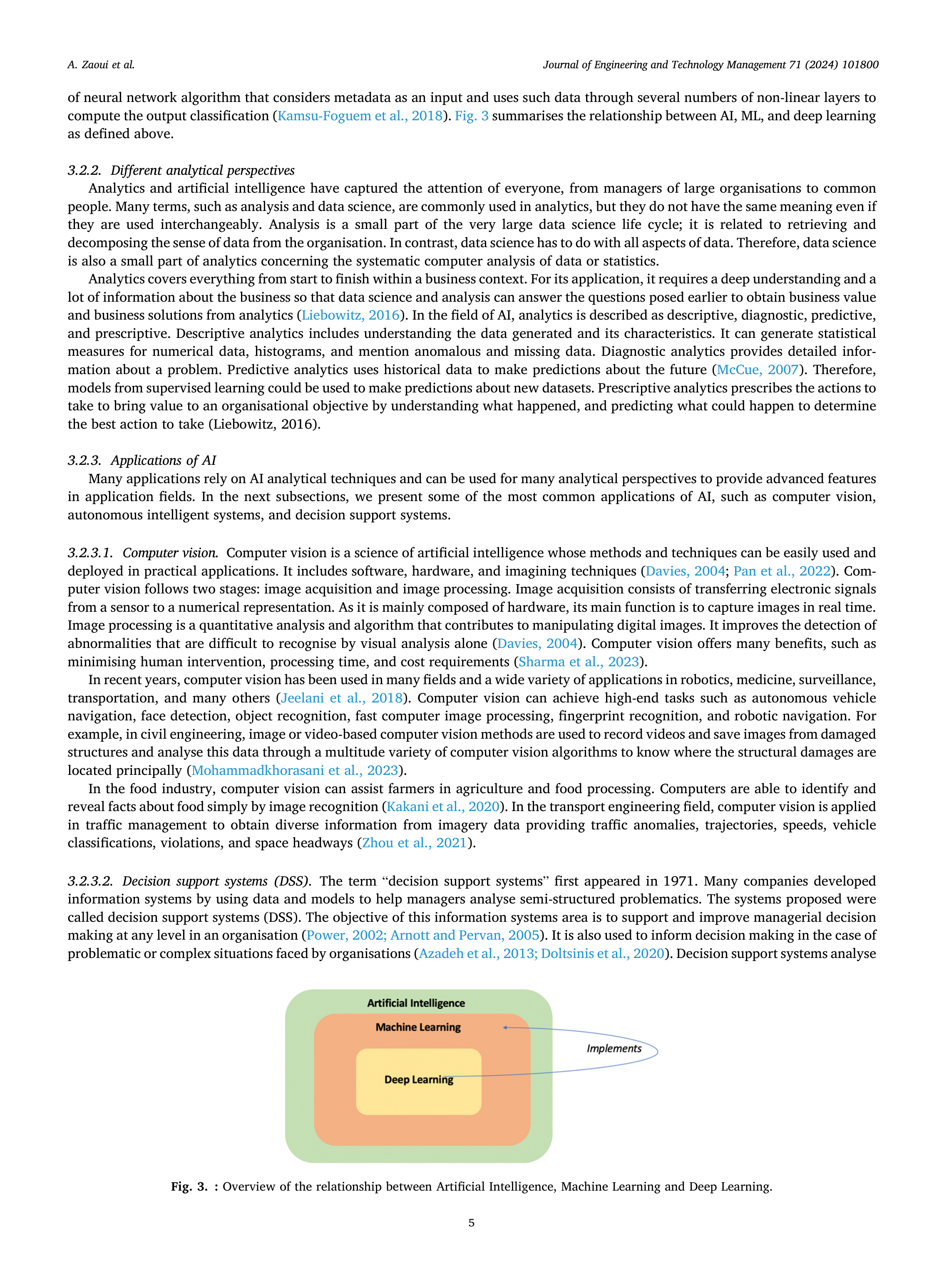
Fig. 3
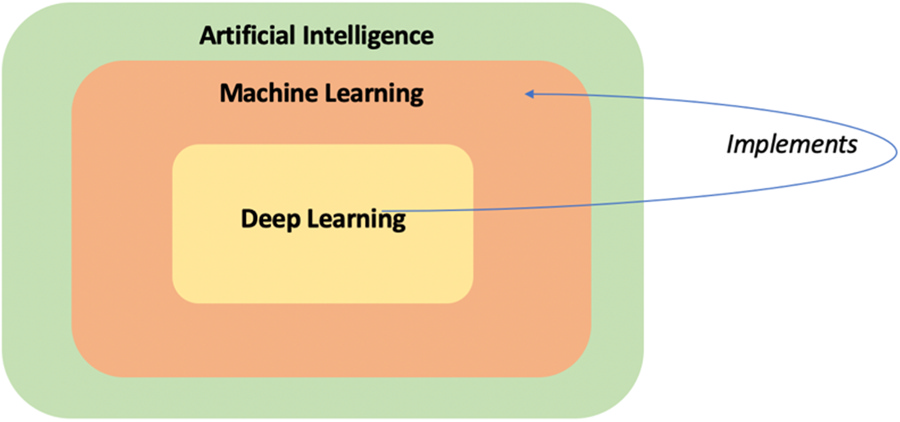
summarises the relationship between AI, ML, and deep learning
as defined above.
3.2.2.
Different analytical perspectives
Analytics and artificial intelligence have captured the attention of everyone, from managers of large organisations to common
people. Many terms, such as analysis and data science, are commonly used in analytics, but they do not have the same meaning even if
they are used interchangeably. Analysis is a small part of the very large data science life cycle; it is related to retrieving and
decomposing the sense of data from the organisation. In contrast, data science has to do with all aspects of data. Therefore, data science
is also a small part of analytics concerning the systematic computer analysis of data or statistics.
Analytics covers everything from start to finish within a business context. For its application, it requires a deep understanding and a
lot of information about the business so that data science and analysis can answer the questions posed earlier to obtain business value
and business solutions from analytics (
Liebowitz, 2016
). In the field of AI, analytics is described as descriptive, diagnostic, predictive,
and prescriptive. Descriptive analytics includes understanding the data generated and its characteristics. It can generate statistical
measures for numerical data, histograms, and mention anomalous and missing data. Diagnostic analytics provides detailed infor
mation about a problem. Predictive analytics uses historical data to make predictions about the future (
McCue, 2007
). Therefore,
models from supervised learning could be used to make predictions about new datasets. Prescriptive analytics prescribes the actions to
take to bring value to an organisational objective by understanding what happened, and predicting what could happen to determine
the best action to take (Liebowitz, 2016).
3.2.3.
Applications of AI
Many applications rely on AI analytical techniques and can be used for many analytical perspectives to provide advanced features
in application fields. In the next subsections, we present some of the most common applications of AI, such as computer vision,
autonomous intelligent systems, and decision support systems.
3.2.3.1.
Computer vision.
Computer vision is a science of artificial intelligence whose methods and techniques can be easily used and
deployed in practical applications. It includes software, hardware, and imagining techniques (
Davies, 2004
;
Pan et al., 2022
). Com
puter vision follows two stages: image acquisition and image processing. Image acquisition consists of transferring electronic signals
from a sensor to a numerical representation. As it is mainly composed of hardware, its main function is to capture images in real time.
Image processing is a quantitative analysis and algorithm that contributes to manipulating digital images. It improves the detection of
abnormalities that are difficult to recognise by visual analysis alone (
Davies, 2004
). Computer vision offers many benefits, such as
minimising human intervention, processing time, and cost requirements (
Sharma et al., 2023
).
In recent years, computer vision has been used in many fields and a wide variety of applications in robotics, medicine, surveillance,
transportation, and many others (
Jeelani et al., 2018
). Computer vision can achieve high-end tasks such as autonomous vehicle
navigation, face detection, object recognition, fast computer image processing, fingerprint recognition, and robotic navigation. For
example, in civil engineering, image or video-based computer vision methods are used to record videos and save images from damaged
structures and analyse this data through a multitude variety of computer vision algorithms to know where the structural damages are
located principally (
Mohammadkhorasani et al., 2023
).
In the food industry, computer vision can assist farmers in agriculture and food processing. Computers are able to identify and
reveal facts about food simply by image recognition (
Kakani et al., 2020
). In the transport engineering field, computer vision is applied
in traffic management to obtain diverse information from imagery data providing traffic anomalies, trajectories, speeds, vehicle
classifications, violations, and space headways (
Zhou et al., 2021
).
3.2.3.2.
Decision support systems (DSS).
The term
“
decision support systems
”
first appeared in 1971. Many companies developed
information systems by using data and models to help managers analyse semi-structured problematics. The systems proposed were
called decision support systems (DSS). The objective of this information systems area is to support and improve managerial decision
making at any level in an organisation (
Power, 2002; Arnott and Pervan, 2005
). It is also used to inform decision making in the case of
problematic or complex situations faced by organisations (
Azadeh et al., 2013; Doltsinis et al., 2020
). Decision support systems analyse
Fig. 3.
:
Overview of the relationship between Artificial Intelligence, Machine Learning and Deep Learning.
A. Zaoui et al.
Journal of Engineering and Technology Management 71 (2024) 101800
6
data and then make comprehensive reports; they can be managed by AI, decision makers, or both.
The development of decision support systems needs considerable effort both methodically and technically, as it is considered a
complex and multi-stage process (
Ponomarev and Mustafin, 2021
). There are five types of decision support systems: data-driven,
model-driven, document-driven, based on communication and group decision support systems, and knowledge-driven (
Power, 2002
).
Decision-making situations are faced in numerous sectors and fields. For example, in education, decision making using artificial
intelligence tools can capture streams of learners
’
behaviours (
Halagatti et al., 2023;
¨
Ozemre
&
Kabadurmus, 2020
). Also, in today
’
s
competitive business environment, the use of big data analytics allows us to make better decisions and predictions for new business
opportunities (
Tchuente
&
El Haddadi, 2023
).
By 2030, according to (
Herrmann, 2022
), it is predictable that DSS will dominate all other fields. DSS includes many subfields of AI
and other technologies outside of AI. DSS will surpass all the types of AI initiatives with 44% of the global AI-derived business (
Gartner,
2020
).
3.2.3.3.
Autonomous intelligent systems.
An autonomous intelligent system stems from an interdisciplinary field that depends on AI and
big data to create unmanned systems to accomplish tasks with human involvement or not. Autonomous driving cars, smart
manufacturing robots, systems of detection of faulty behaviour, care robots for the elderly, and virtual agents for training or support
are examples of autonomous intelligent systems (
Chen et al., 2022
). Furthermore, intelligence techniques are emerging in several
sectors as new tools for the decision process of enterprise information management. The use of these new techniques increases the
flexibility, sensitivity, and accuracy of information management systems (
Kahraman et al., 2011
).
Nowadays, autonomous systems have changed the way of working, the way of thinking, and the world as a whole. Technologies
based on autonomous systems are seen as a way to increase productivity, profitability, and safety. In addition, their use provides many
benefits, such as reducing the work done by humans and offering new business models. Furthermore, autonomous decision making and
situational awareness systems are developed as key elements in autonomous systems. They are all based on AI technologies and
procedures. The design of autonomous systems involves many other sectors, such as social, psychological, economic, political, and
legal aspects, not only a multi-technological effort, because they will have a major impact on all dimensions of society (
Fjellheim,
2013
).
3.3.
Conceptual map
A conceptual map is a diagram that shows the links between different subjects or ideas to better understand the connections
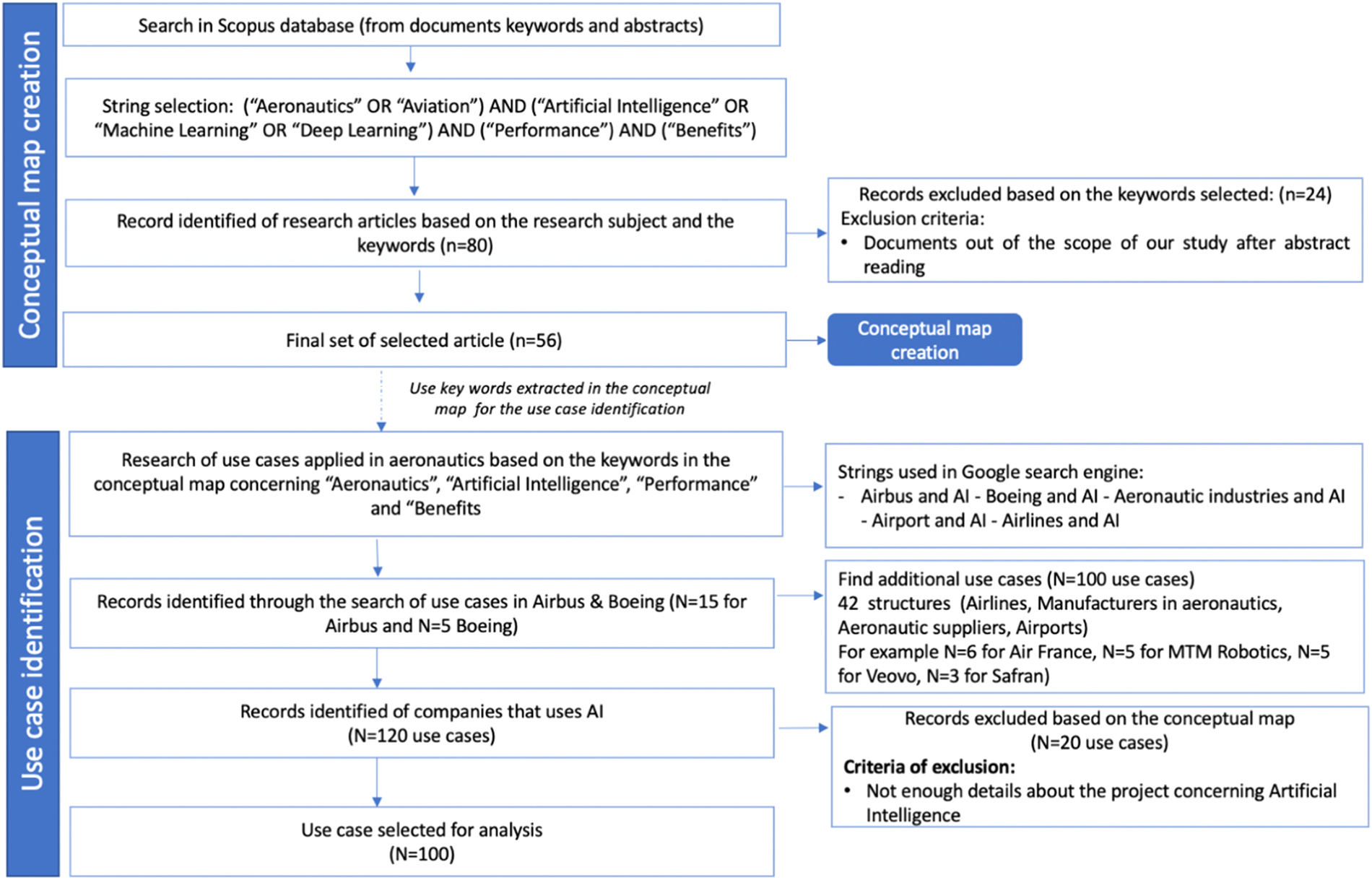
Fig. 4.
:
PRISMA diagram presenting the methodology for selecting articles and use cases.
A. Zaoui et al.
Journal of Engineering and Technology Management 71 (2024) 101800
7
between them. It is a graphic tool for organising and representing knowledge that was developed by Novak and Gowin in the course of
Novak
’
s research program (
Gowin and Novak, 1984
). Novak and Gowin defined a conceptual map as
“
a schematic device for rep
resenting a set of concept meanings embedded in a framework of propositions
”
.
For our study, the main objective of this map is to propose an overview of the main concepts of AI and disclose the concepts related
to benefits and performance before analysing the identified use cases. Based on the research of (
Souza et al., 2020
), who defined the
scope of their research by giving a background scope conceptual map, we deemed it interesting to design our conceptual map with
more information about our research objective to give a detailed view of the principal terms of our study. To create a conceptual map,
we used the following three steps: First, based on the topic of our research,
“
Impact and benefits of AI in the performance in aero
nautics
”
, we identified the most general concepts to position at the top of the map:
“
Artificial Intelligence
”
,
“
Aeronautics
”
,
“
Perfor
mance
”
,
“
Benefits
”
.
Next, we identified the concepts linked to these general concepts. For example, we divided artificial Intelligence into methods
(symbolic AI and numerical AI), applications of AI, and analytical perspectives as presented in the previous sections. It is important to
note that these concepts may overlap. For example, (i) the implementation of an AI application can rely on both numerical and
symbolic AI methods; (ii) the implementation of an analytical perspective can rely on AI applications or methods; (iii) the
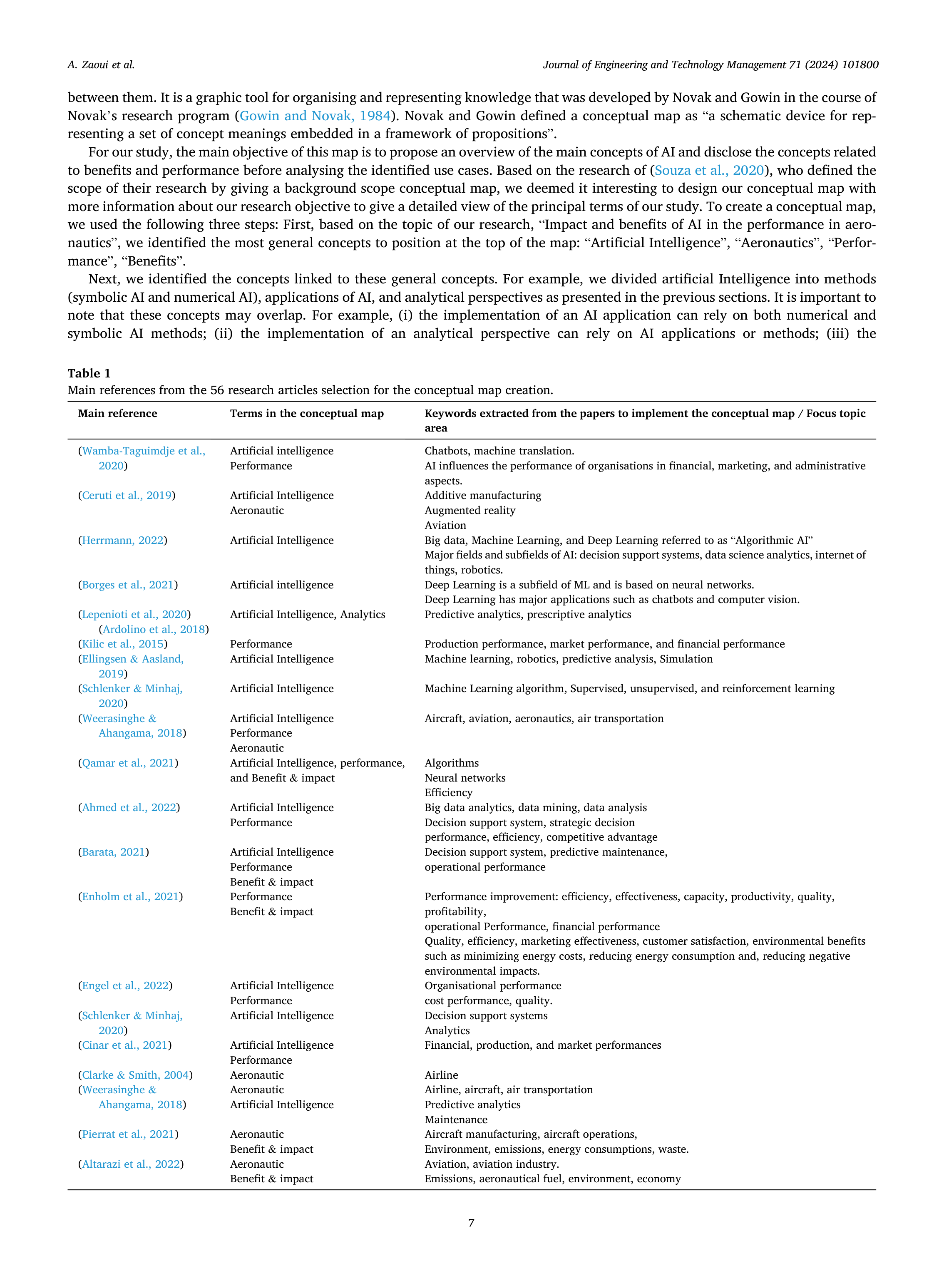
Table 1
Main references from the 56 research articles selection for the conceptual map creation.
Main reference
Terms in the conceptual map
Keywords extracted from the papers to implement the conceptual map / Focus topic
area
(
Wamba-Taguimdje et al.,
2020
)
Artificial intelligence
Performance
Chatbots, machine translation.
AI influences the performance of organisations in financial, marketing, and administrative
aspects.
(
Ceruti et al., 2019
)
Artificial Intelligence
Aeronautic
Additive manufacturing
Augmented reality
Aviation
(
Herrmann, 2022
)
Artificial Intelligence
Big data, Machine Learning, and Deep Learning referred to as
“
Algorithmic AI
”
Major fields and subfields of AI: decision support systems, data science analytics, internet of
things, robotics.
(
Borges et al., 2021
)
Artificial intelligence
Deep Learning is a subfield of ML and is based on neural networks.
Deep Learning has major applications such as chatbots and computer vision.
(
Lepenioti et al., 2020
)
(
Ardolino et al., 2018
)
Artificial Intelligence, Analytics
Predictive analytics, prescriptive analytics
(
Kilic et al., 2015
)
Performance
Production performance, market performance, and financial performance
(
Ellingsen
&
Aasland,
2019
)
Artificial Intelligence
Machine learning, robotics, predictive analysis, Simulation
(
Schlenker
&
Minhaj,
2020
)
Artificial Intelligence
Machine Learning algorithm, Supervised, unsupervised, and reinforcement learning
(
Weerasinghe
&
Ahangama, 2018
)
Artificial Intelligence
Performance
Aeronautic
Aircraft, aviation, aeronautics, air transportation
(
Qamar et al., 2021
)
Artificial Intelligence, performance,
and Benefit
&
impact
Algorithms
Neural networks
Efficiency
(
Ahmed et al., 2022
)
Artificial Intelligence
Performance
Big data analytics, data mining, data analysis
Decision support system, strategic decision
performance, efficiency, competitive advantage
(
Barata, 2021
)
Artificial Intelligence
Performance
Benefit
&
impact
Decision support system, predictive maintenance,
operational performance
(
Enholm et al., 2021
)
Performance
Benefit
&
impact
Performance improvement: efficiency, effectiveness, capacity, productivity, quality,
profitability,
operational Performance, financial performance
Quality, efficiency, marketing effectiveness, customer satisfaction, environmental benefits
such as minimizing energy costs, reducing energy consumption and, reducing negative
environmental impacts.
(
Engel et al., 2022
)
Artificial Intelligence
Performance
Organisational performance
cost performance, quality.
(
Schlenker
&
Minhaj,
2020
)
Artificial Intelligence
Decision support systems
Analytics
(
Cinar et al., 2021
)
Artificial Intelligence
Performance
Financial, production, and market performances
(
Clarke
&
Smith, 2004
)
Aeronautic
Airline
(
Weerasinghe
&
Ahangama, 2018
)
Aeronautic
Artificial Intelligence
Airline, aircraft, air transportation
Predictive analytics
Maintenance
(
Pierrat et al., 2021
)
Aeronautic
Benefit
&
impact
Aircraft manufacturing, aircraft operations,
Environment, emissions, energy consumptions, waste.
(
Altarazi et al., 2022
)
Aeronautic
Benefit
&
impact
Aviation, aviation industry.
Emissions, aeronautical fuel, environment, economy
A. Zaoui et al.
Journal of Engineering and Technology Management 71 (2024) 101800
8
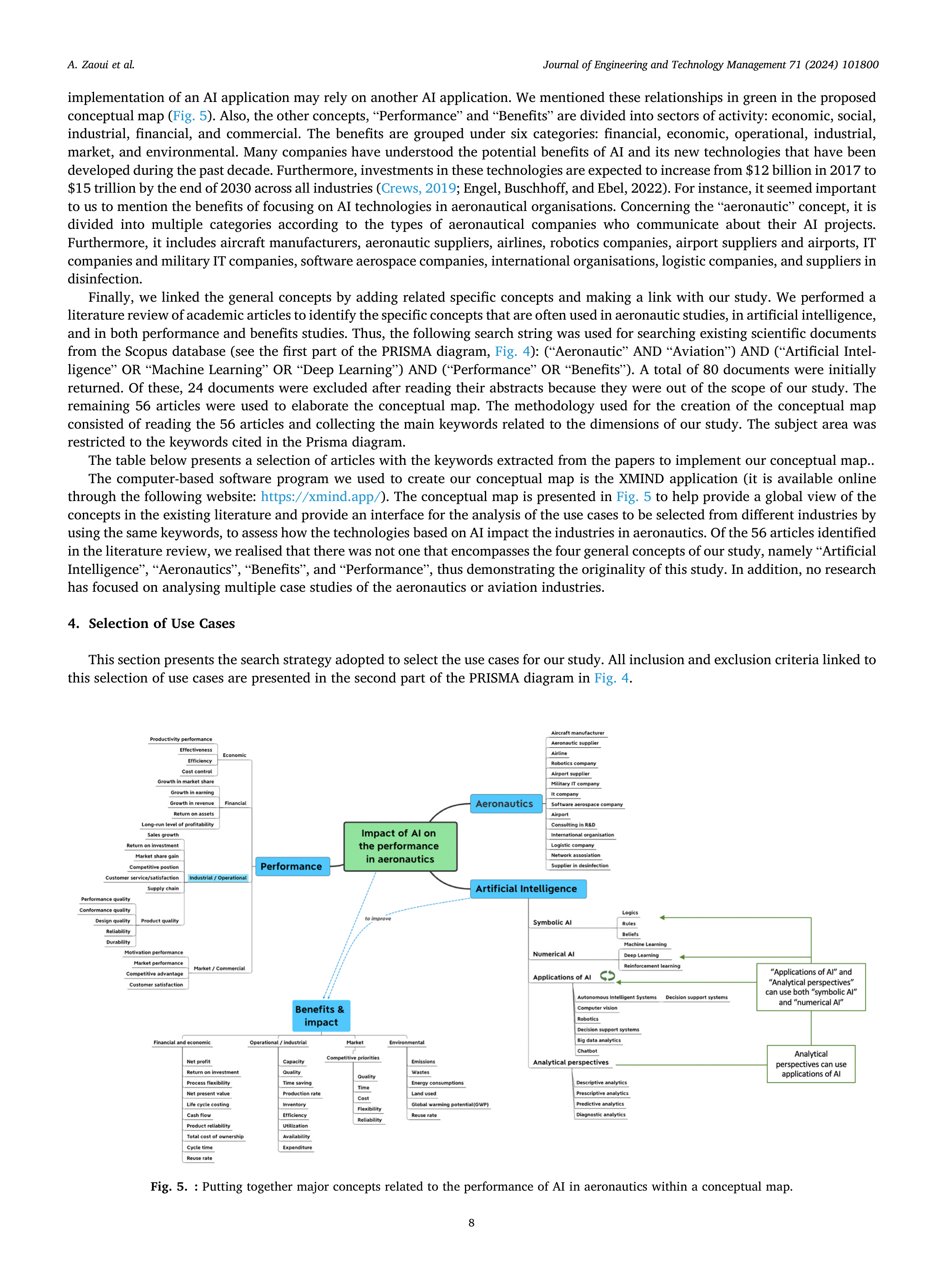
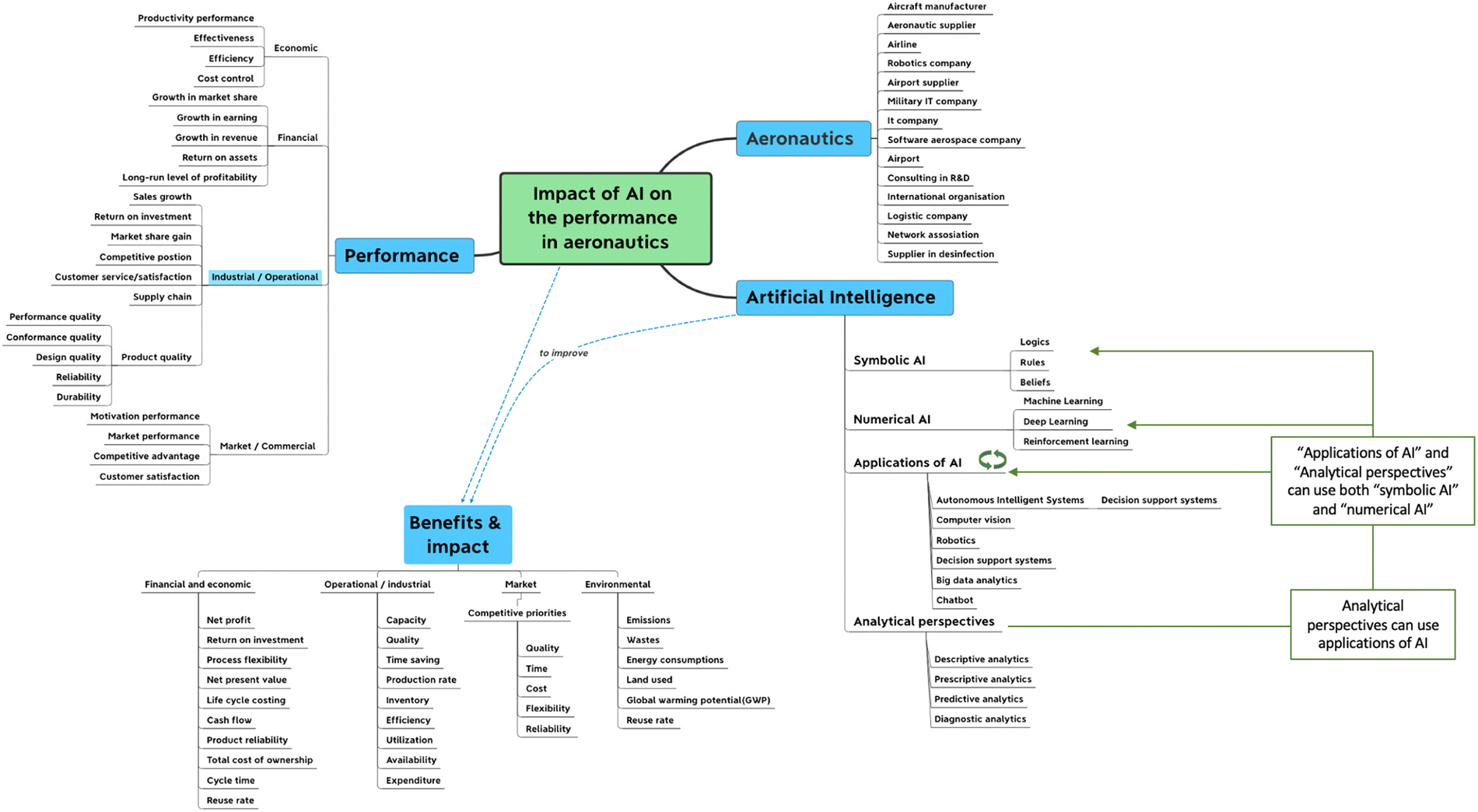
implementation of an AI application may rely on another AI application. We mentioned these relationships in green in the proposed
conceptual map (
Fig. 5
). Also, the other concepts,
“
Performance
”
and
“
Benefits
”
are divided into sectors of activity: economic, social,
industrial, financial, and commercial. The benefits are grouped under six categories: financial, economic, operational, industrial,
market, and environmental. Many companies have understood the potential benefits of AI and its new technologies that have been
developed during the past decade. Furthermore, investments in these technologies are expected to increase from $12 billion in 2017 to
$15 trillion by the end of 2030 across all industries (
Crews, 2019
; Engel, Buschhoff, and Ebel, 2022). For instance, it seemed important
to us to mention the benefits of focusing on AI technologies in aeronautical organisations. Concerning the
“
aeronautic
”
concept, it is
divided into multiple categories according to the types of aeronautical companies who communicate about their AI projects.
Furthermore, it includes aircraft manufacturers, aeronautic suppliers, airlines, robotics companies, airport suppliers and airports, IT
companies and military IT companies, software aerospace companies, international organisations, logistic companies, and suppliers in
disinfection.
Finally, we linked the general concepts by adding related specific concepts and making a link with our study. We performed a
literature review of academic articles to identify the specific concepts that are often used in aeronautic studies, in artificial intelligence,
and in both performance and benefits studies. Thus, the following search string was used for searching existing scientific documents
from the Scopus database (see the first part of the PRISMA diagram,
Fig. 4
): (
“
Aeronautic
”
AND
“
Aviation
”
) AND (
“
Artificial Intel
ligence
”
OR
“
Machine Learning
”
OR
“
Deep Learning
”
) AND (
“
Performance
”
OR
“
Benefits
”
). A total of 80 documents were initially
returned. Of these, 24 documents were excluded after reading their abstracts because they were out of the scope of our study. The
remaining 56 articles were used to elaborate the conceptual map. The methodology used for the creation of the conceptual map
consisted of reading the 56 articles and collecting the main keywords related to the dimensions of our study. The subject area was
restricted to the keywords cited in the Prisma diagram.
The table below presents a selection of articles with the keywords extracted from the papers to implement our conceptual map..
The computer-based software program we used to create our conceptual map is the XMIND application (it is available online
through the following website:
https://xmind.app/
). The conceptual map is presented in
Fig. 5
to help provide a global view of the
concepts in the existing literature and provide an interface for the analysis of the use cases to be selected from different industries by
using the same keywords, to assess how the technologies based on AI impact the industries in aeronautics. Of the 56 articles identified
in the literature review, we realised that there was not one that encompasses the four general concepts of our study, namely
“
Artificial
Intelligence
”
,
“
Aeronautics
”
,
“
Benefits
”
, and
“
Performance
”
, thus demonstrating the originality of this study. In addition, no research
has focused on analysing multiple case studies of the aeronautics or aviation industries.
4.
Selection of Use Cases
This section presents the search strategy adopted to select the use cases for our study. All inclusion and exclusion criteria linked to
this selection of use cases are presented in the second part of the PRISMA diagram in
Fig. 4
.
Fig. 5.
:
Putting together major concepts related to the performance of AI in aeronautics within a conceptual map.
A. Zaoui et al.
Journal of Engineering and Technology Management 71 (2024) 101800
9
For the initial search of use cases, the same search string used to retrieve literature articles for the conceptual map was used, but the
search was performed using the Google search engine. The subsequent selection steps were performed using a snowballing approach.
In the first step, we identified the different AI projects deployed by the largest companies of aeronautics: Airbus and Boeing. The results
show that they deployed 15 and 5 artificial intelligence projects, respectively. For the next step, we searched for additional use cases
deployed by other related companies, as presented in the conceptual map: aeronautic suppliers or subcontractors of both Airbus and
Boeing, airline companies, manufacturers in aeronautics, and airports. A total of 42 companies were identified, and they led to 100
additional use cases being found. In the last step, a full-text reading of all the use cases was performed to check whether there were
enough details about the goals and the AI techniques or technologies used. A total of 20 use cases were removed due to the lack of such
important information for our study.
Thus, a total of 100 use cases were selected to examine the types of AI technologies deployed, the benefits obtained, and the impact
on the performance of organisations that rely on AI technologies in aeronautics. During the whole analysis, the same terms used in the
conceptual map were well highlighted.
An overview of the final selection (see the provided dataset associated with the paper) shows that the large sample of use cases and
the results found are quite representative of the aeronautics field. For instance, we targeted Airbus and Boeing, as well as the biggest
companies with whom they collaborate. Therefore, we believe that the results of this study can be representative of the biggest part of
the aeronautics industry.
5.
Analysis and results
The use cases presented in this section will define examples that solve problems, improve performance, and improve safety across
the aeronautical field. Nowadays, airports, aircraft, airlines, and manufacturers are all concerned with AI development, as they
increasingly use this technology to better serve the aviation community. The future of air transport is driven by digital transformation.
With the use of AI technologies, organisations in the aeronautical field are developing many new innovative services and solutions. AI
is being used, for example, in production lines, maintenance through image recognition, prediction of demand based on multiple
indicators through machine learning, information on future flights, assistance with check-in requests and also to resolve basic customer
queries by chatbot technologies. Many more examples evidencing AI
’
s benefits and its ability to transform the world of the aero
nautical industry and customer satisfaction could be given.
According to the International Air Transport Association (IATA), airline passenger traffic is projected to more than double by 2034.
Today, airlines are exploring how AI can serve needs and improve customer satisfaction with many applications, such as smart lo
gistics, facial recognition, and assistance. Many aeronautical organisations are turning to AI technologies. To answer research ques
tions RQ1, RQ2, and RQ3 quoted in the introduction, we discuss each of them in the following subsections by implementing the
findings of the use cases. In the next subsections, one use case can be affected by many categories (e.g., fields of AI, types of companies,
types of benefits, types of performances) depending on the classification. Thus, the totals for all categories can sometimes be higher
than the total number (100) of use cases.
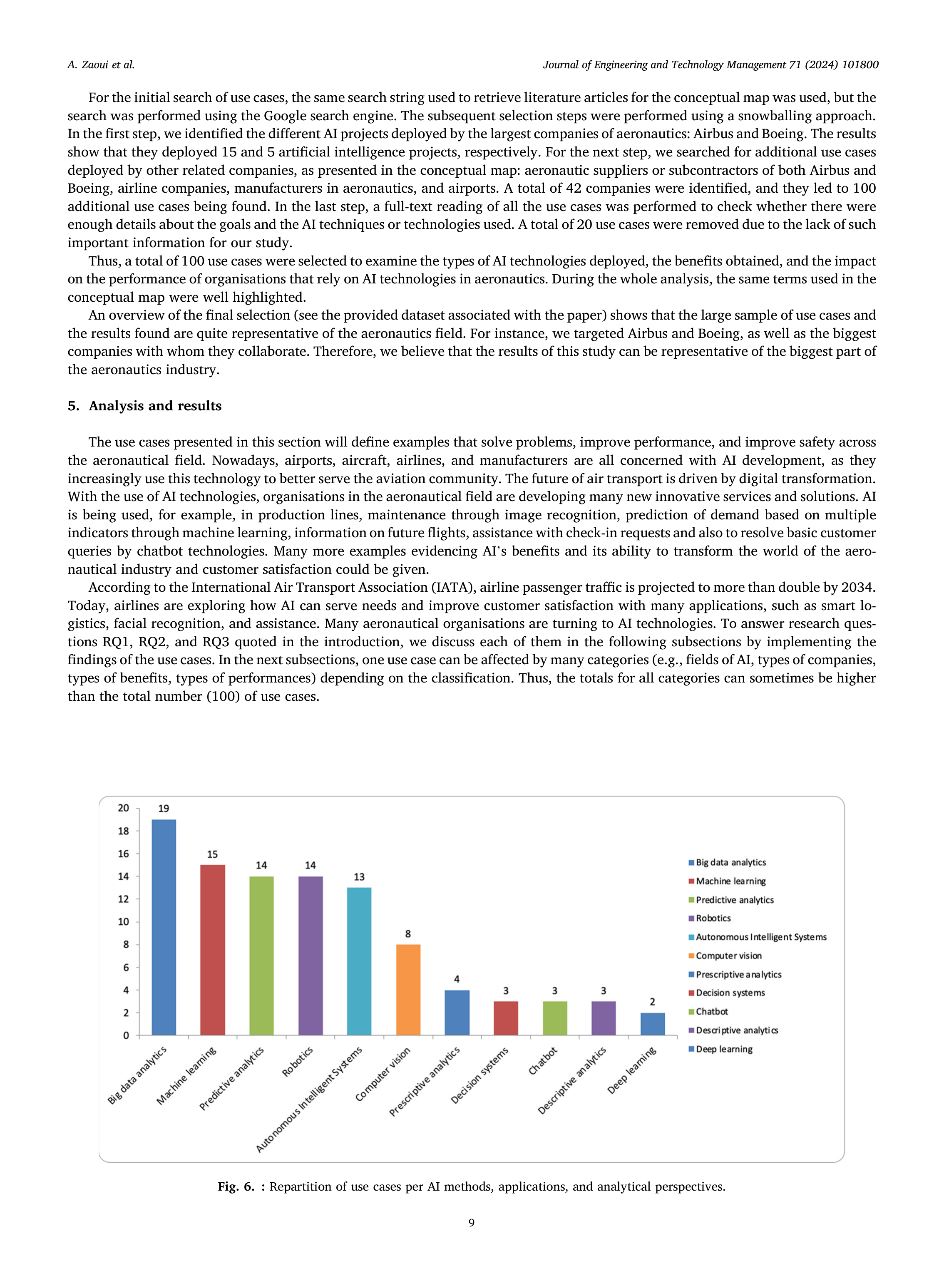
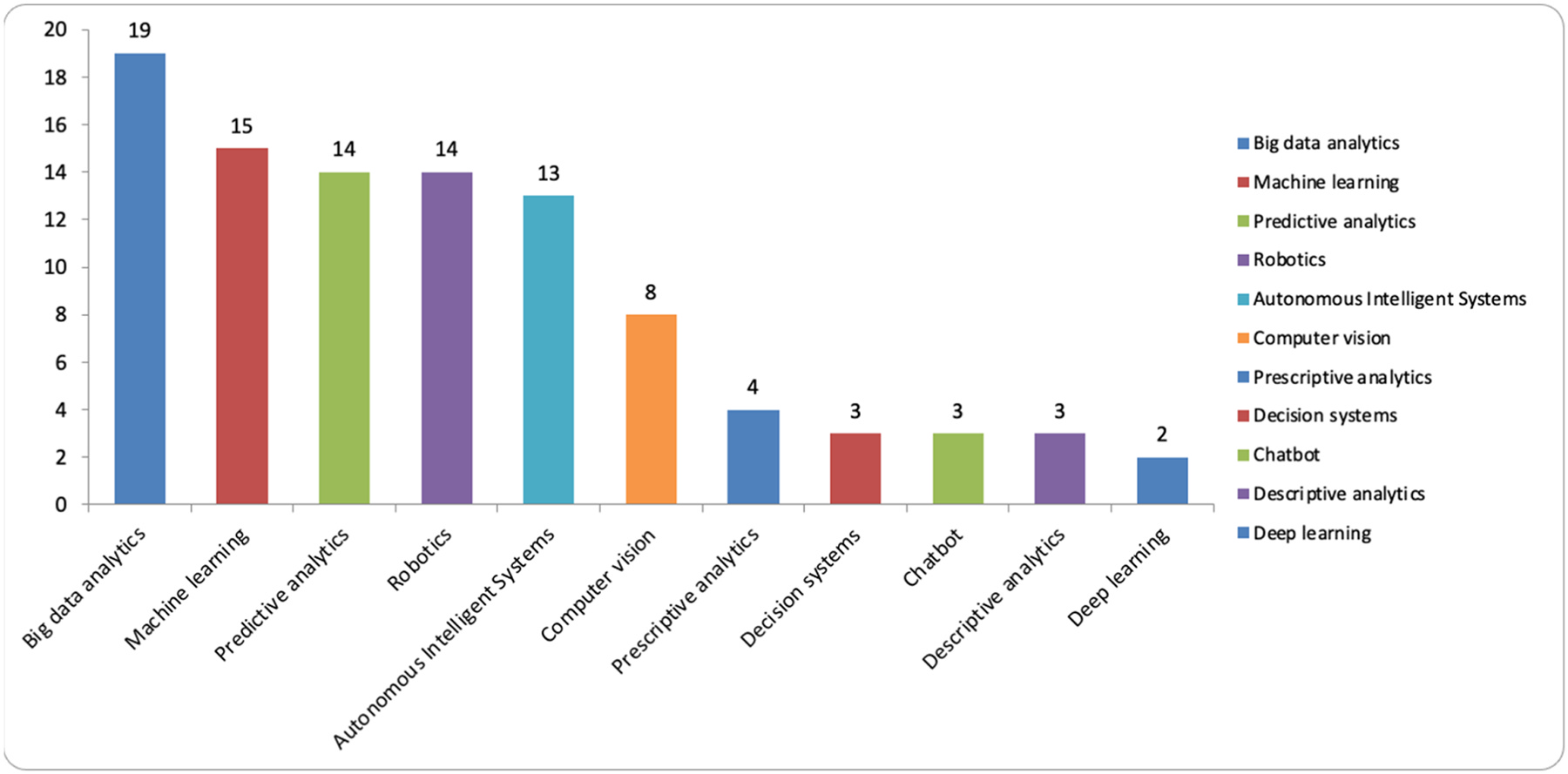
Fig. 6.
:
Repartition of use cases per AI methods, applications, and analytical perspectives.
A. Zaoui et al.
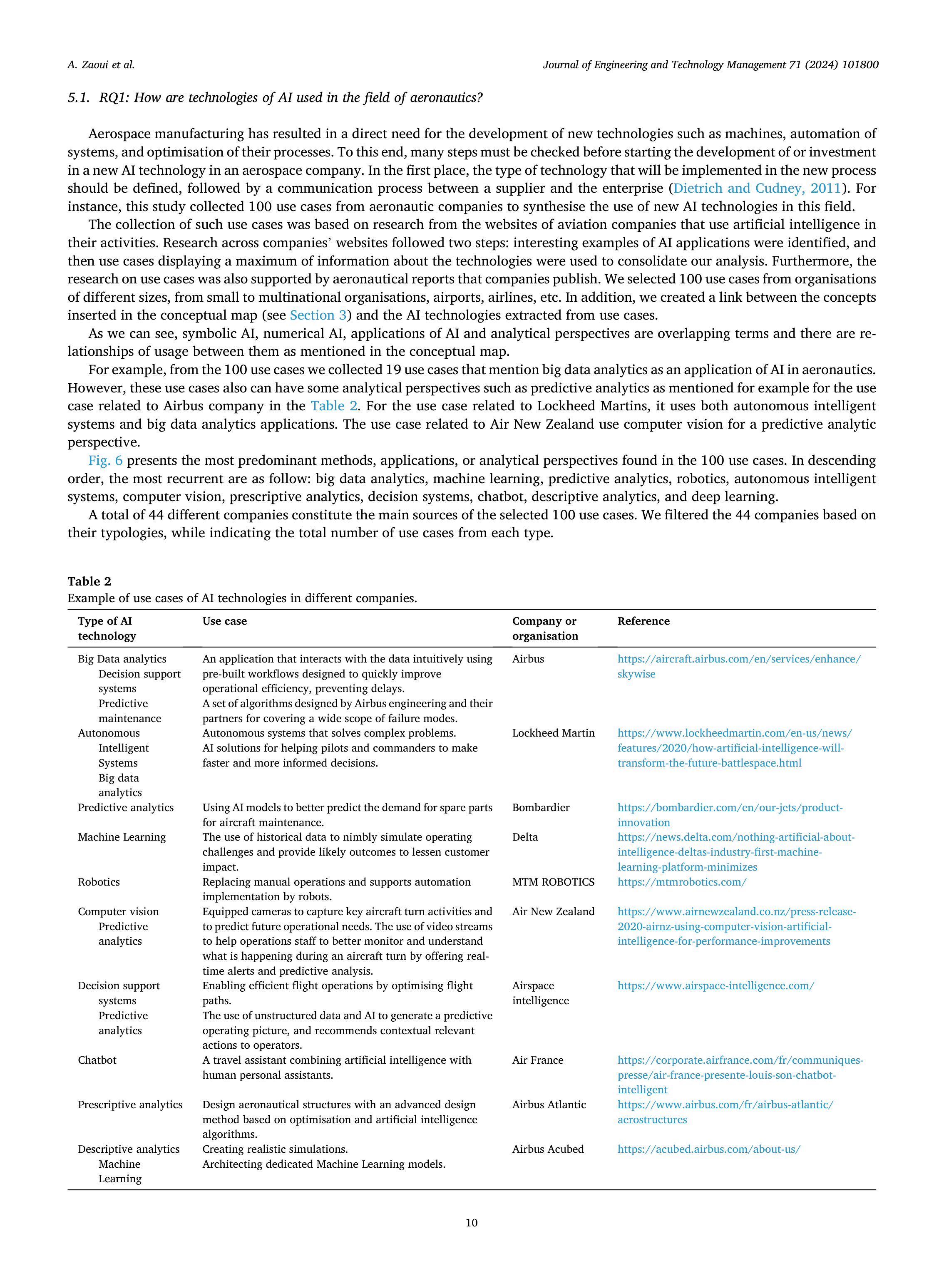
Journal of Engineering and Technology Management 71 (2024) 101800
10
5.1.
RQ1: How are technologies of AI used in the field of aeronautics?
Aerospace manufacturing has resulted in a direct need for the development of new technologies such as machines, automation of
systems, and optimisation of their processes. To this end, many steps must be checked before starting the development of or investment
in a new AI technology in an aerospace company. In the first place, the type of technology that will be implemented in the new process
should be defined, followed by a communication process between a supplier and the enterprise (
Dietrich and Cudney, 2011
). For
instance, this study collected 100 use cases from aeronautic companies to synthesise the use of new AI technologies in this field.
The collection of such use cases was based on research from the websites of aviation companies that use artificial intelligence in
their activities. Research across companies
’
websites followed two steps: interesting examples of AI applications were identified, and
then use cases displaying a maximum of information about the technologies were used to consolidate our analysis. Furthermore, the
research on use cases was also supported by aeronautical reports that companies publish. We selected 100 use cases from organisations
of different sizes, from small to multinational organisations, airports, airlines, etc. In addition, we created a link between the concepts
inserted in the conceptual map (see
Section 3
) and the AI technologies extracted from use cases.
As we can see, symbolic AI, numerical AI, applications of AI and analytical perspectives are overlapping terms and there are re
lationships of usage between them as mentioned in the conceptual map.
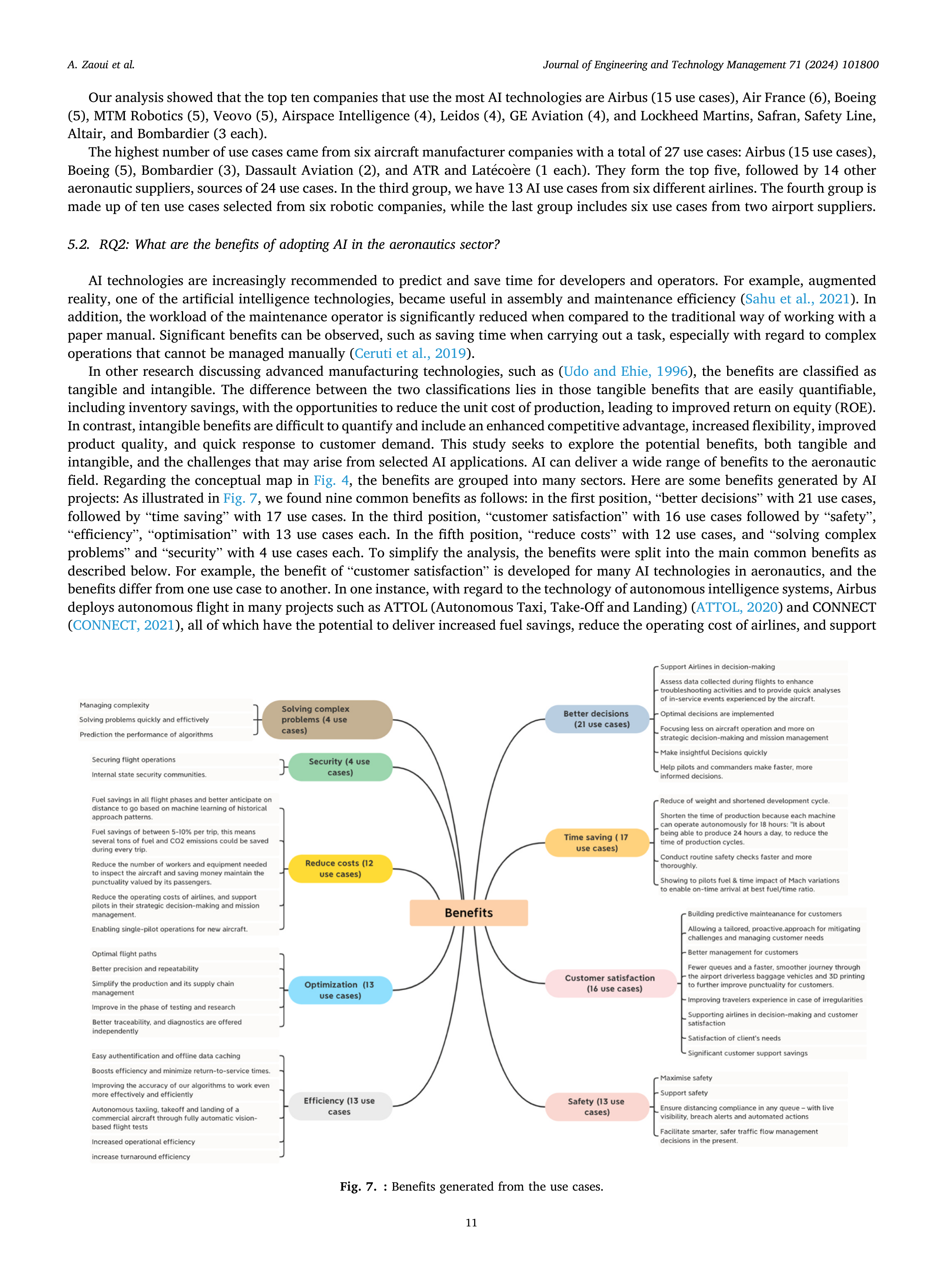
For example, from the 100 use cases we collected 19 use cases that mention big data analytics as an application of AI in aeronautics.
However, these use cases also can have some analytical perspectives such as predictive analytics as mentioned for example for the use
case related to Airbus company in the
Table 2
. For the use case related to Lockheed Martins, it uses both autonomous intelligent
systems and big data analytics applications. The use case related to Air New Zealand use computer vision for a predictive analytic
perspective.
Fig. 6
presents the most predominant methods, applications, or analytical perspectives found in the 100 use cases. In descending
order, the most recurrent are as follow: big data analytics, machine learning, predictive analytics, robotics, autonomous intelligent
systems, computer vision, prescriptive analytics, decision systems, chatbot, descriptive analytics, and deep learning.
A total of 44 different companies constitute the main sources of the selected 100 use cases. We filtered the 44 companies based on
their typologies, while indicating the total number of use cases from each type.
Table 2
Example of use cases of AI technologies in different companies.
Type of AI
technology
Use case
Company or
organisation
Reference
Big Data analytics
Decision support
systems
Predictive
maintenance
An application that interacts with the data intuitively using
pre-built workflows designed to quickly improve
operational efficiency, preventing delays.
A set of algorithms designed by Airbus engineering and their
partners for covering a wide scope of failure modes.
Airbus
https://aircraft.airbus.com/en/services/enhance/
skywise
Autonomous
Intelligent
Systems
Big data
analytics
Autonomous systems that solves complex problems.
AI solutions for helping pilots and commanders to make
faster and more informed decisions.
Lockheed Martin
https://www.lockheedmartin.com/en-us/news/
features/2020/how-artificial-intelligence-will-
transform-the-future-battlespace.html
Predictive analytics
Using AI models to better predict the demand for spare parts
for aircraft maintenance.
Bombardier
https://bombardier.com/en/our-jets/product-
innovation
Machine Learning
The use of historical data to nimbly simulate operating
challenges and provide likely outcomes to lessen customer
impact.
Delta
https://news.delta.com/nothing-artificial-about-
intelligence-deltas-industry-first-machine-
learning-platform-minimizes
Robotics
Replacing manual operations and supports automation
implementation by robots.
MTM ROBOTICS
https://mtmrobotics.com/
Computer vision
Predictive
analytics
Equipped cameras to capture key aircraft turn activities and
to predict future operational needs. The use of video streams
to help operations staff to better monitor and understand
what is happening during an aircraft turn by offering real-
time alerts and predictive analysis.
Air New Zealand
https://www.airnewzealand.co.nz/press-release-
2020-airnz-using-computer-vision-artificial-
intelligence-for-performance-improvements
Decision support
systems
Predictive
analytics
Enabling efficient flight operations by optimising flight
paths.
The use of unstructured data and AI to generate a predictive
operating picture, and recommends contextual relevant
actions to operators.
Airspace
intelligence
https://www.airspace-intelligence.com/
Chatbot
A travel assistant combining artificial intelligence with
human personal assistants.
Air France
https://corporate.airfrance.com/fr/communiques-
presse/air-france-presente-louis-son-chatbot-
intelligent
Prescriptive analytics
Design aeronautical structures with an advanced design
method based on optimisation and artificial intelligence
algorithms.
Airbus Atlantic
https://www.airbus.com/fr/airbus-atlantic/
aerostructures
Descriptive analytics
Machine
Learning
Creating realistic simulations.
Architecting dedicated Machine Learning models.
Airbus Acubed
https://acubed.airbus.com/about-us/
A. Zaoui et al.
Journal of Engineering and Technology Management 71 (2024) 101800
11
Our analysis showed that the top ten companies that use the most AI technologies are Airbus (15 use cases), Air France (6), Boeing
(5), MTM Robotics (5), Veovo (5), Airspace Intelligence (4), Leidos (4), GE Aviation (4), and Lockheed Martins, Safran, Safety Line,
Altair, and Bombardier (3 each).
The highest number of use cases came from six aircraft manufacturer companies with a total of 27 use cases: Airbus (15 use cases),
Boeing (5), Bombardier (3), Dassault Aviation (2), and ATR and Lat
´
eco
`
ere (1 each). They form the top five, followed by 14 other
aeronautic suppliers, sources of 24 use cases. In the third group, we have 13 AI use cases from six different airlines. The fourth group is
made up of ten use cases selected from six robotic companies, while the last group includes six use cases from two airport suppliers.
5.2.
RQ2: What are the benefits of adopting AI in the aeronautics sector?
AI technologies are increasingly recommended to predict and save time for developers and operators. For example, augmented
reality, one of the artificial intelligence technologies, became useful in assembly and maintenance efficiency (
Sahu et al., 2021
). In
addition, the workload of the maintenance operator is significantly reduced when compared to the traditional way of working with a
paper manual. Significant benefits can be observed, such as saving time when carrying out a task, especially with regard to complex
operations that cannot be managed manually (
Ceruti et al., 2019
).
In other research discussing advanced manufacturing technologies, such as (
Udo and Ehie, 1996
), the benefits are classified as
tangible and intangible. The difference between the two classifications lies in those tangible benefits that are easily quantifiable,
including inventory savings, with the opportunities to reduce the unit cost of production, leading to improved return on equity (ROE).
In contrast, intangible benefits are difficult to quantify and include an enhanced competitive advantage, increased flexibility, improved
product quality, and quick response to customer demand. This study seeks to explore the potential benefits, both tangible and
intangible, and the challenges that may arise from selected AI applications. AI can deliver a wide range of benefits to the aeronautic
field. Regarding the conceptual map in
Fig. 4
, the benefits are grouped into many sectors. Here are some benefits generated by AI
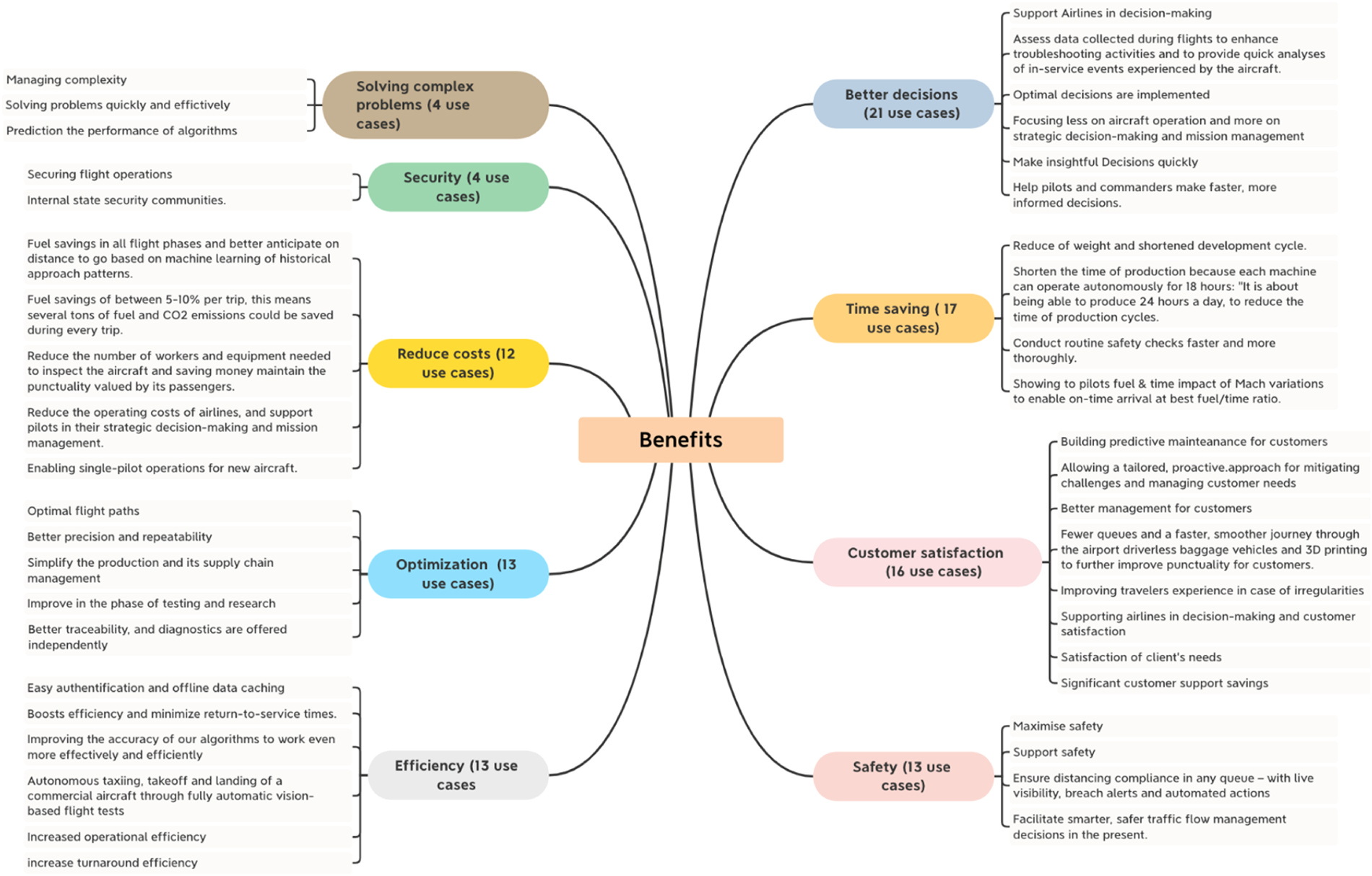
projects: As illustrated in
Fig. 7
, we found nine common benefits as follows: in the first position,
“
better decisions
”
with 21 use cases,
followed by
“
time saving
”
with 17 use cases. In the third position,
“
customer satisfaction
”
with 16 use cases followed by
“
safety
”
,
“
efficiency
”
,
“
optimisation
”
with 13 use cases each. In the fifth position,
“
reduce costs
”
with 12 use cases, and
“
solving complex
problems
”
and
“
security
”
with 4 use cases each. To simplify the analysis, the benefits were split into the main common benefits as
described below. For example, the benefit of
“
customer satisfaction
”
is developed for many AI technologies in aeronautics, and the
benefits differ from one use case to another. In one instance, with regard to the technology of autonomous intelligence systems, Airbus
deploys autonomous flight in many projects such as ATTOL (Autonomous Taxi, Take-Off and Landing) (
ATTOL, 2020
) and CONNECT
(
CONNECT, 2021
), all of which have the potential to deliver increased fuel savings, reduce the operating cost of airlines, and support
Fig. 7.
:
Benefits generated from the use cases.
A. Zaoui et al.
Journal of Engineering and Technology Management 71 (2024) 101800
12
pilots in strategic decision making and mission management.
As an example, here are some benefits derived from
“
customer satisfaction
”
:
1. Building predictive maintenance for customers.
2. Allowing a tailored, proactive approach to mitigating challenges and managing customer needs.
3. Better management of customers.
4. Fewer queues and a faster, smoother journey through airport driverless baggage vehicles and 3D printing to further improve
punctuality for customers.
5. Improving travelers
’
experience in case of irregularities.
6. Supporting airlines in decision making and customer satisfaction.
7. Satisfaction of the client
’
s needs.
8. Significant customer support savings.
As for the benefits of
“
saving time
”
, here are some examples extracted from the use cases:
9. Shorten the time of production because each machine can operate autonomously for 18 h:
“
It is about being able to produce
24 h a day, to reduce the time of production cycles.
”
10. Reduce weight and shorten the development cycle.
11. Conduct routine safety checks faster and more thoroughly.
12. Show to the pilot the fuel and time impact of Mach
’
s variations to enable on-time arrival at the best fuel/time ratio.
The benefits of
“
reduce cost
”
appear as follows:
13. Fuel savings in all flight phases and better anticipation of distance to go based on machine learning of historical approach
patterns.
14. Fuel savings of between 5% and 10% per trip, which means several tonnes of fuel and CO2 emissions could be saved during
every trip.
15. Reduce the number of workers and equipment needed to inspect the aircraft and save money to maintain the punctuality valued
by its passengers.
16. Reduce the operating costs of airlines, and support pilots in their strategic decision making and mission management.
17. Enabling single-pilot operations for new aircraft.
In the conceptual map illustrated in
Fig. 5
, benefits are grouped into four categories: financial/economic, operational/industrial,
market/commercial, and environmental. The main benefits, as noted in our 100 use cases, are generally related to the
“
operational/
industrial
”
field, then
“
financial/economic
”
and finally
“
market/commercial
”
.
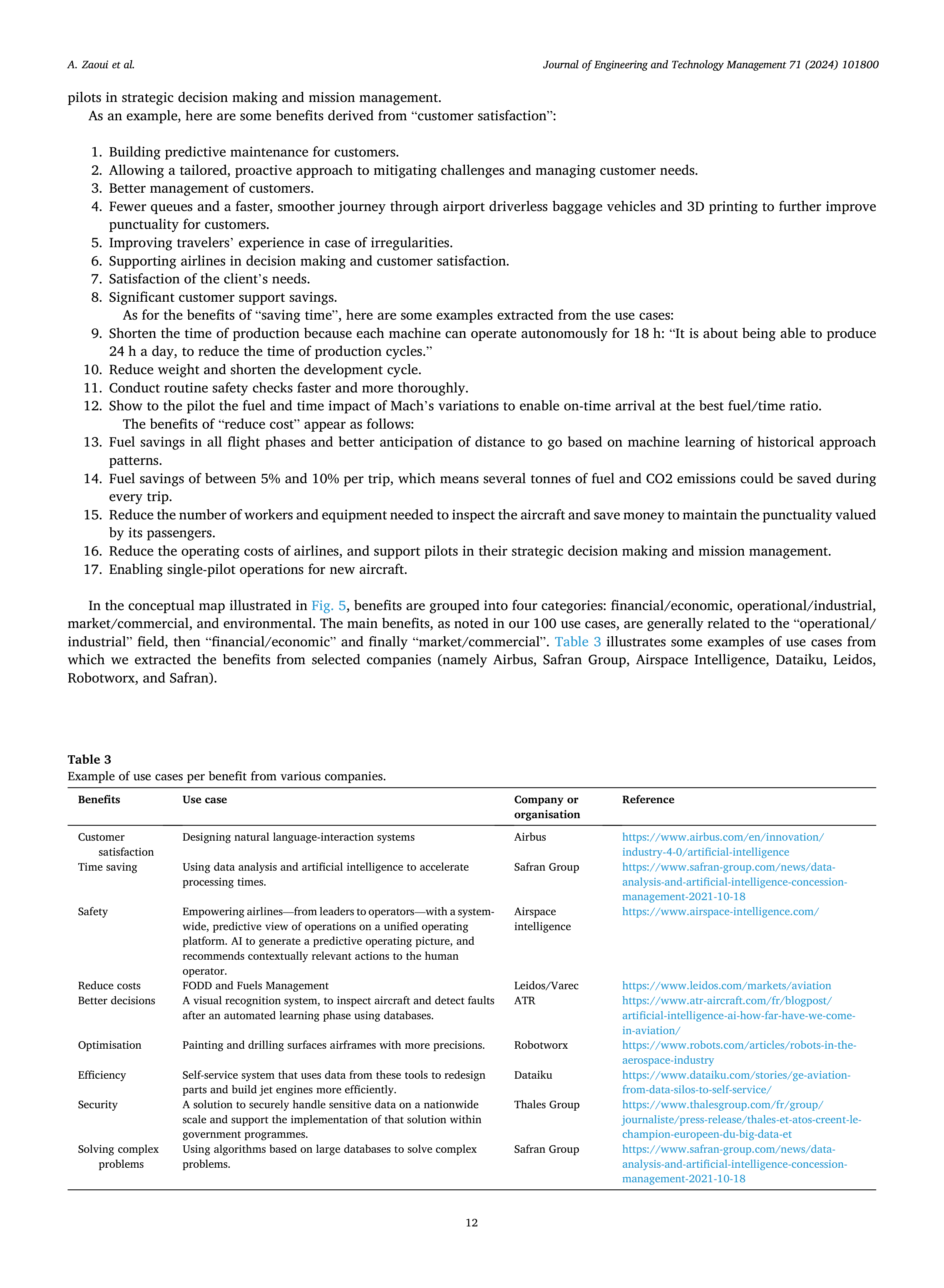
Table 3
illustrates some examples of use cases from
which we extracted the benefits from selected companies (namely Airbus, Safran Group, Airspace Intelligence, Dataiku, Leidos,
Robotworx, and Safran).
Table 3
Example of use cases per benefit from various companies.
Benefits
Use case
Company or
organisation
Reference
Customer
satisfaction
Designing natural language-interaction systems
Airbus
https://www.airbus.com/en/innovation/
industry-4-0/artificial-intelligence
Time saving
Using data analysis and artificial intelligence to accelerate
processing times.
Safran Group
https://www.safran-group.com/news/data-
analysis-and-artificial-intelligence-concession-
management-2021-10-18
Safety
Empowering airlines
—
from leaders to operators
—
with a system-
wide, predictive view of operations on a unified operating
platform. AI to generate a predictive operating picture, and
recommends contextually relevant actions to the human
operator.
Airspace
intelligence
https://www.airspace-intelligence.com/
Reduce costs
FODD and Fuels Management
Leidos/Varec
https://www.leidos.com/markets/aviation
Better decisions
A visual recognition system, to inspect aircraft and detect faults
after an automated learning phase using databases.
ATR
https://www.atr-aircraft.com/fr/blogpost/
artificial-intelligence-ai-how-far-have-we-come-
in-aviation/
Optimisation
Painting and drilling surfaces airframes with more precisions.
Robotworx
https://www.robots.com/articles/robots-in-the-
aerospace-industry
Efficiency
Self-service system that uses data from these tools to redesign
parts and build jet engines more efficiently.
Dataiku
https://www.dataiku.com/stories/ge-aviation-
from-data-silos-to-self-service/
Security
A solution to securely handle sensitive data on a nationwide
scale and support the implementation of that solution within
government programmes.
Thales Group
https://www.thalesgroup.com/fr/group/
journaliste/press-release/thales-et-atos-creent-le-
champion-europeen-du-big-data-et
Solving complex
problems
Using algorithms based on large databases to solve complex
problems.
Safran Group
https://www.safran-group.com/news/data-
analysis-and-artificial-intelligence-concession-
management-2021-10-18
A. Zaoui et al.
Journal of Engineering and Technology Management 71 (2024) 101800
13
5.3.
RQ3: How does the use of AI technologies affect the performance of organisations?
In production systems activities, AI plays a critical role in the improvement of performance and in supporting an entire journey to
business value creation (
Wamba et al., 2021
). This observation was made when seeing through the various selected use cases.
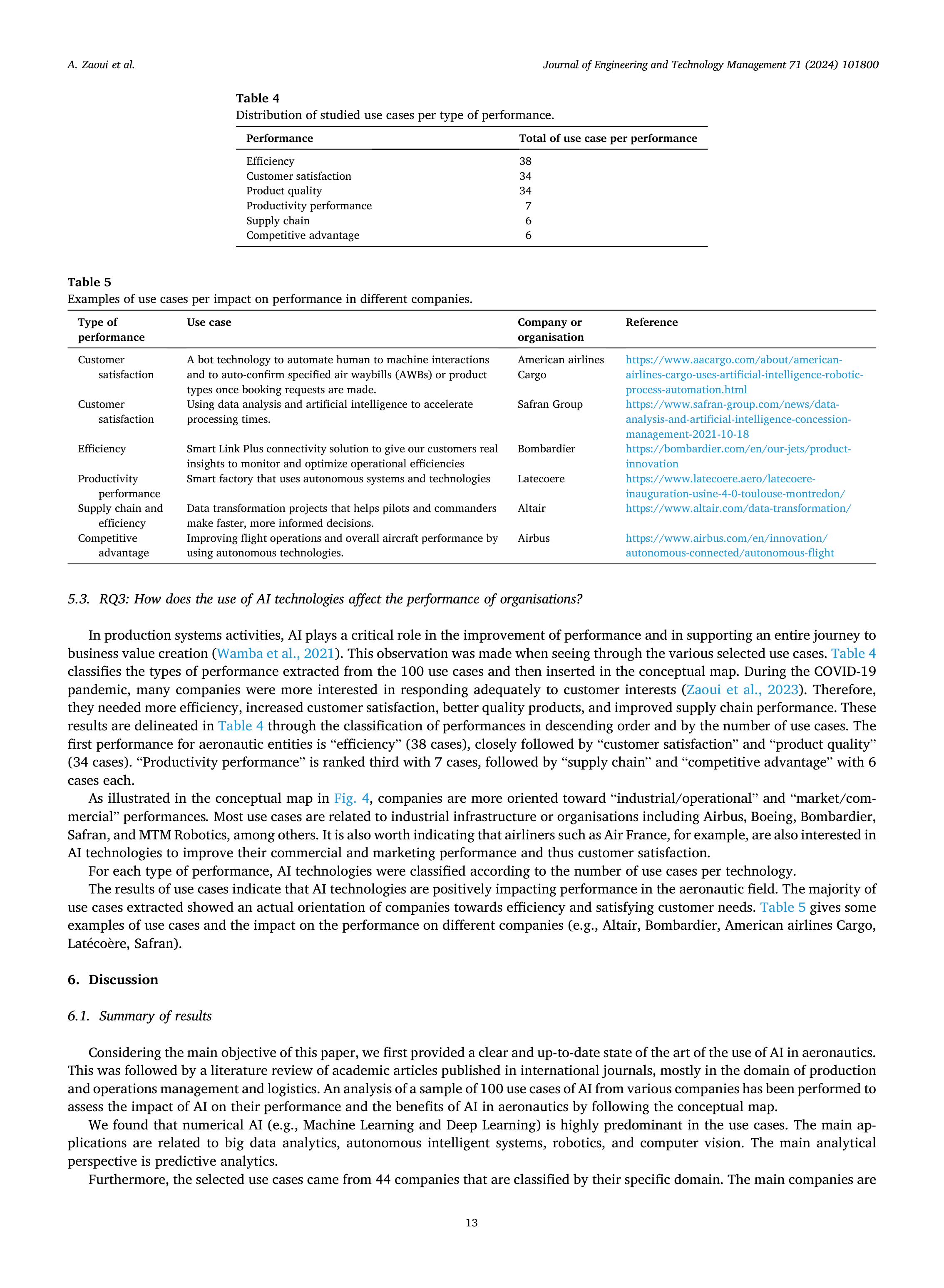
Table 4
classifies the types of performance extracted from the 100 use cases and then inserted in the conceptual map. During the COVID-19
pandemic, many companies were more interested in responding adequately to customer interests (
Zaoui et al., 2023
). Therefore,
they needed more efficiency, increased customer satisfaction, better quality products, and improved supply chain performance. These
results are delineated in
Table 4
through the classification of performances in descending order and by the number of use cases. The
first performance for aeronautic entities is
“
efficiency
”
(38 cases), closely followed by
“
customer satisfaction
”
and
“
product quality
”
(34 cases).
“
Productivity performance
”
is ranked third with 7 cases, followed by
“
supply chain
”
and
“
competitive advantage
”
with 6
cases each.
As illustrated in the conceptual map in
Fig. 4
, companies are more oriented toward
“
industrial/operational
”
and
“
market/com
mercial
”
performances
.
Most use cases are related to industrial infrastructure or organisations including Airbus, Boeing, Bombardier,
Safran, and MTM Robotics, among others. It is also worth indicating that airliners such as Air France, for example, are also interested in
AI technologies to improve their commercial and marketing performance and thus customer satisfaction.
For each type of performance, AI technologies were classified according to the number of use cases per technology.
The results of use cases indicate that AI technologies are positively impacting performance in the aeronautic field. The majority of
use cases extracted showed an actual orientation of companies towards efficiency and satisfying customer needs.
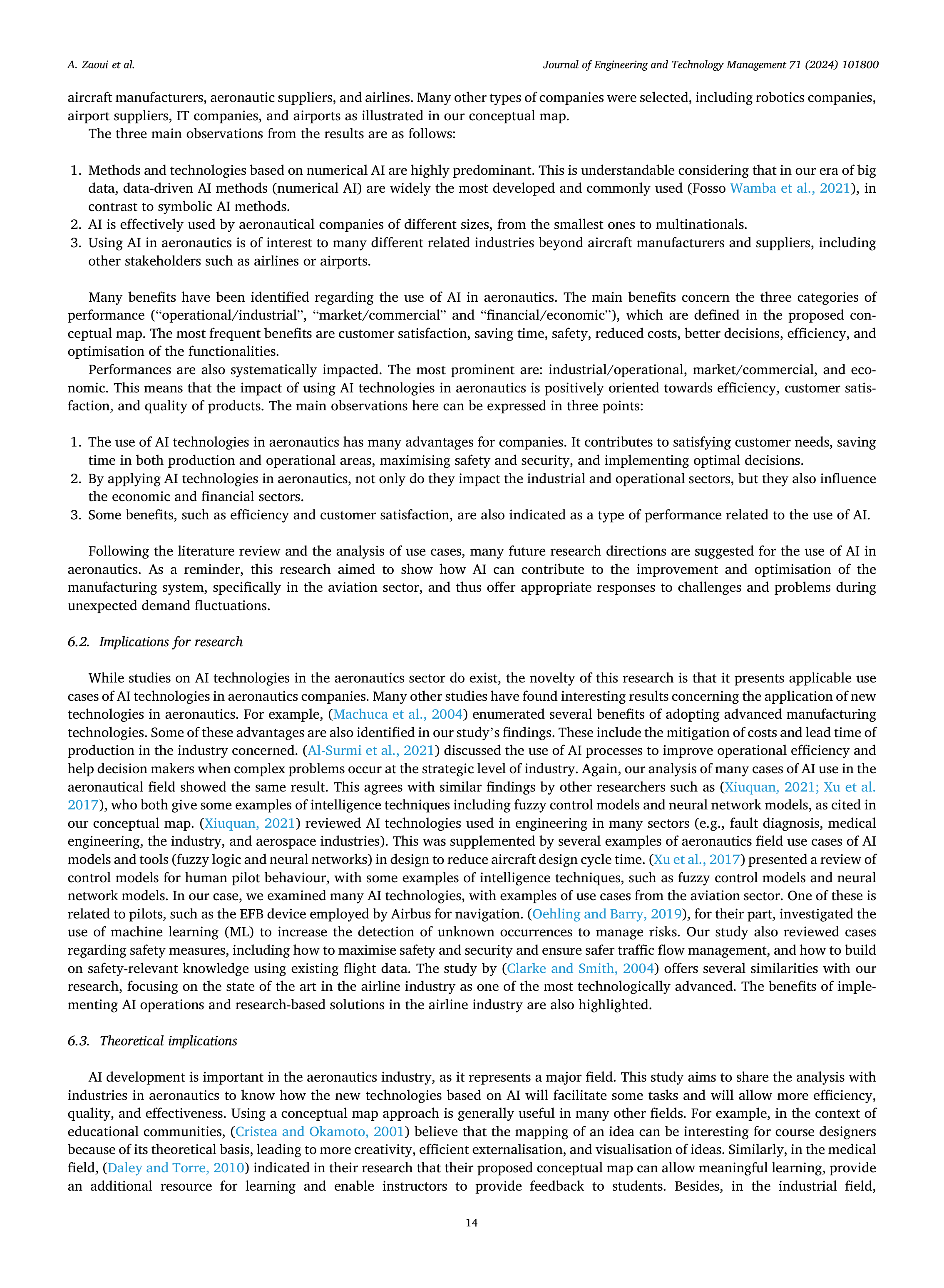
Table 5
gives some
examples of use cases and the impact on the performance on different companies (e.g., Altair, Bombardier, American airlines Cargo,
Lat
´
eco
`
ere, Safran).
6.
Discussion
6.1.
Summary of results
Considering the main objective of this paper, we first provided a clear and up-to-date state of the art of the use of AI in aeronautics.
This was followed by a literature review of academic articles published in international journals, mostly in the domain of production
and operations management and logistics. An analysis of a sample of 100 use cases of AI from various companies has been performed to
assess the impact of AI on their performance and the benefits of AI in aeronautics by following the conceptual map.
We found that numerical AI (e.g., Machine Learning and Deep Learning) is highly predominant in the use cases. The main ap
plications are related to big data analytics, autonomous intelligent systems, robotics, and computer vision. The main analytical
perspective is predictive analytics.
Furthermore, the selected use cases came from 44 companies that are classified by their specific domain. The main companies are
Table 4
Distribution of studied use cases per type of performance.
Performance
Total of use case per performance
Efficiency
38
Customer satisfaction
34
Product quality
34
Productivity performance
7
Supply chain
6
Competitive advantage
6
Table 5
Examples of use cases per impact on performance in different companies.
Type of
performance
Use case
Company or
organisation
Reference
Customer
satisfaction
A bot technology to automate human to machine interactions
and to auto-confirm specified air waybills (AWBs) or product
types once booking requests are made.
American airlines
Cargo
https://www.aacargo.com/about/american-
airlines-cargo-uses-artificial-intelligence-robotic-
process-automation.html
Customer
satisfaction
Using data analysis and artificial intelligence to accelerate
processing times.
Safran Group
https://www.safran-group.com/news/data-
analysis-and-artificial-intelligence-concession-
management-2021-10-18
Efficiency
Smart Link Plus connectivity solution to give our customers real
insights to monitor and optimize operational efficiencies
Bombardier
https://bombardier.com/en/our-jets/product-
innovation
Productivity
performance
Smart factory that uses autonomous systems and technologies
Latecoere
https://www.latecoere.aero/latecoere-
inauguration-usine-4-0-toulouse-montredon/
Supply chain and
efficiency
Data transformation projects that helps pilots and commanders
make faster, more informed decisions.
Altair
https://www.altair.com/data-transformation/
Competitive
advantage
Improving flight operations and overall aircraft performance by
using autonomous technologies.
Airbus
https://www.airbus.com/en/innovation/
autonomous-connected/autonomous-flight
A. Zaoui et al.
Journal of Engineering and Technology Management 71 (2024) 101800
14
aircraft manufacturers, aeronautic suppliers, and airlines. Many other types of companies were selected, including robotics companies,
airport suppliers, IT companies, and airports as illustrated in our conceptual map.
The three main observations from the results are as follows:
1. Methods and technologies based on numerical AI are highly predominant. This is understandable considering that in our era of big
data, data-driven AI methods (numerical AI) are widely the most developed and commonly used (Fosso
Wamba et al., 2021
), in
contrast to symbolic AI methods.
2. AI is effectively used by aeronautical companies of different sizes, from the smallest ones to multinationals.
3. Using AI in aeronautics is of interest to many different related industries beyond aircraft manufacturers and suppliers, including
other stakeholders such as airlines or airports.
Many benefits have been identified regarding the use of AI in aeronautics. The main benefits concern the three categories of
performance (
“
operational/industrial
”
,
“
market/commercial
”
and
“
financial/economic
”
), which are defined in the proposed con
ceptual map. The most frequent benefits are customer satisfaction, saving time, safety, reduced costs, better decisions, efficiency, and
optimisation of the functionalities.
Performances are also systematically impacted. The most prominent are: industrial/operational, market/commercial, and eco
nomic. This means that the impact of using AI technologies in aeronautics is positively oriented towards efficiency, customer satis
faction, and quality of products. The main observations here can be expressed in three points:
1. The use of AI technologies in aeronautics has many advantages for companies. It contributes to satisfying customer needs, saving
time in both production and operational areas, maximising safety and security, and implementing optimal decisions.
2. By applying AI technologies in aeronautics, not only do they impact the industrial and operational sectors, but they also influence
the economic and financial sectors.
3. Some benefits, such as efficiency and customer satisfaction, are also indicated as a type of performance related to the use of AI.
Following the literature review and the analysis of use cases, many future research directions are suggested for the use of AI in
aeronautics. As a reminder, this research aimed to show how AI can contribute to the improvement and optimisation of the
manufacturing system, specifically in the aviation sector, and thus offer appropriate responses to challenges and problems during
unexpected demand fluctuations.
6.2.
Implications for research
While studies on AI technologies in the aeronautics sector do exist, the novelty of this research is that it presents applicable use
cases of AI technologies in aeronautics companies. Many other studies have found interesting results concerning the application of new
technologies in aeronautics. For example, (
Machuca et al., 2004
) enumerated several benefits of adopting advanced manufacturing
technologies. Some of these advantages are also identified in our study
’
s findings. These include the mitigation of costs and lead time of
production in the industry concerned. (
Al-Surmi et al., 2021
) discussed the use of AI processes to improve operational efficiency and
help decision makers when complex problems occur at the strategic level of industry. Again, our analysis of many cases of AI use in the
aeronautical field showed the same result. This agrees with similar findings by other researchers such as (
Xiuquan, 2021; Xu et al.
2017
), who both give some examples of intelligence techniques including fuzzy control models and neural network models, as cited in
our conceptual map. (
Xiuquan, 2021
) reviewed AI technologies used in engineering in many sectors (e.g., fault diagnosis, medical
engineering, the industry, and aerospace industries). This was supplemented by several examples of aeronautics field use cases of AI
models and tools (fuzzy logic and neural networks) in design to reduce aircraft design cycle time. (
Xu et al., 2017
) presented a review of
control models for human pilot behaviour, with some examples of intelligence techniques, such as fuzzy control models and neural
network models. In our case, we examined many AI technologies, with examples of use cases from the aviation sector. One of these is
related to pilots, such as the EFB device employed by Airbus for navigation. (
Oehling and Barry, 2019
), for their part, investigated the
use of machine learning (ML) to increase the detection of unknown occurrences to manage risks. Our study also reviewed cases
regarding safety measures, including how to maximise safety and security and ensure safer traffic flow management, and how to build
on safety-relevant knowledge using existing flight data. The study by (
Clarke and Smith, 2004
) offers several similarities with our
research, focusing on the state of the art in the airline industry as one of the most technologically advanced. The benefits of imple
menting AI operations and research-based solutions in the airline industry are also highlighted.
6.3.
Theoretical implications
AI development is important in the aeronautics industry, as it represents a major field. This study aims to share the analysis with
industries in aeronautics to know how the new technologies based on AI will facilitate some tasks and will allow more efficiency,
quality, and effectiveness. Using a conceptual map approach is generally useful in many other fields. For example, in the context of
educational communities, (
Cristea and Okamoto, 2001
) believe that the mapping of an idea can be interesting for course designers
because of its theoretical basis, leading to more creativity, efficient externalisation, and visualisation of ideas. Similarly, in the medical
field, (
Daley and Torre, 2010
) indicated in their research that their proposed conceptual map can allow meaningful learning, provide
an additional resource for learning and enable instructors to provide feedback to students. Besides, in the industrial field,
A. Zaoui et al.
Journal of Engineering and Technology Management 71 (2024) 101800
15
conceptualisation allows a generic standard-based architectural model that contains and compiles the main concepts under study and
provides the identification, description, organisation, and understanding of these aspects. This methodology makes it possible to
design, for example, an intelligent manufacturing system by ensuring a good structure of the product cycle at all levels (vertical,
horizontal, and end-to-end) (
Ca
˜
nas et al., 2022
).
For our study, the conceptual map allowed us to give an overview of different concepts and helped us explore the subtopics of each
concept to understand relationships and organise our thoughts logically and systematically.
The theoretical implications of this study should help researchers rely on our conceptual model to synthesize concepts and the
objective of their own research. By using a conceptual map, the research adds more value to the standard conceptual phase used in the
literature review. Furthermore, the mapping of the concepts clarifies the objective of the study and facilitates comprehension of the
main concepts used in it. The methodology adopted here will still be useful for more conceptualisations with a detailed research
perspective and a better understanding of the results obtained.
6.4.
Practical implications
The practical implications of this study are twofold. First, from an industrial perspective, it offers an overview and an analysis of the
use of AI technologies in aeronautics. Second, from an academic perspective, this study adds more value and knowledge to the AI
practices in the literature review to understand the impact of using these AI technologies in different structures in aeronautics. The
study could be used as a database for other research studies. The implication insights aim to facilitate industrial executives and
practitioners of the latest technologies developed to improve efficiency, effectiveness, and quality.
Our study confirms the positive influence of AI technologies on the performance of organisations and the many benefits of using
such technologies. More than merely a research field, AI fosters the development of future technologies across the whole aeronautics
industry, from aircraft manufacturers to airports. Due to the fierce competition caused by the economic downturn and growing
numbers of customers, aeronautic companies are more oriented towards technologies that can improve their performance and help
achieve customer satisfaction. Today, air transport is transforming many activities from manual tasks to innovative autonomous
systems. By synthesising the benefits in this research, this study provides the next generation of aerial vehicles with new insights into
the development of core competencies to reduce production costs and flight time. This study gives instructors, industries, and man
agers in the aeronautical field an overview of how AI participates in the development of industrial performance and shows the benefits
of the use of these technologies.
6.5.
Managerial implications
The managerial impact can be divided into two parts for organisations in aeronautics. First, for managers in aeronautics who doubt
in the deployment of AI and who have not yet found solutions to their problems through the implementation of AI. Second, there are
some managerial impacts within specific management roles in aeronautical organisations.
For organisations in aeronautics who doubt in implementing AI in their activities, they can use methods such as Case-Based
Reasoning (CBR) to solve new problems by getting inspired by previously successful solutions to similar problem (
Watson
&
Marir,
1994
). For example, in the aeronautical field, many organisations already implemented intelligent solutions based on AI technologies
to solve recurrent problems and to optimize their production cycle. In this paper, we selected 100 use cases of AI applications in
aeronautics and we observed several benefits and positive impact on performance from different roles in an aeronautical organisation.
Manager in aeronautics who still doubt in implementing AI solutions, can adapt these existent solutions to solve their problems
(
Potes Ruiz et al., 2013
). In a more practical way, the managers in aeronautical organisations can retrieve the most similar case(s) from
a case base like the one provided by our study (100 selected use cases with the analysis of benefits and impact on the performance),
reuse the case(s) to attempt to solve the problem, revise the chosen solution, and finally retain the new solution as part of a new case
(
Watson
&
Marir, 1994
).
Not only for solving problems, in the constant change of the business environment, many organisations in aeronautics are willing to
gain a competitive advantage by implementing the latest technologies to enhance strategic decision-making. The findings of this paper
will be very useful for managers in aeronautics who still hesitate to implement AI for organisational or technical optimisations (
Ahmed
et al., 2022
).
According to (
Jaworski, 2011
) managerial relevance is the degree to which a manager in an organisation can use academic
knowledge to help and facilitate action regarding the objectives of their work. In the context of managerial relevance, academic
knowledge includes many tools and methodologies for good practice. For instance, it includes theories, concepts, empirical findings,
frameworks, measurement instruments, models, and tools for decision support. In our research, we investigated different specific roles
in the aeronautic sector as presented in the conceptual map.
Across the 100-use cases selection, managers in marketing in aeronautical organisations can focus on how to allow a tailored,
proactive approach for mitigating challenges and managing customer needs for better satisfaction of client
’
s needs. Also, they can
improve their marketing targets and focus on the feasibility to enhance the marketing effectiveness by using AI.
In addition, the objectives of time and cost savings can also interest managers in marketing, finance, and economics in aeronautical
organisations. The purpose can be for example to be able to reduce operational costs, to do checks faster and more thoroughly, to save
fuel of between 5
–
10% per trip, or to reduce the number of workers and equipment thanks to AI. All these examples of benefits come
from the concrete use cases of our study. Using them or being inspired by them will be a plus for managers in marketing, finance and
economics to achieve their objectives effectively.
A. Zaoui et al.
Journal of Engineering and Technology Management 71 (2024) 101800
16
Furthermore, through the use of AI, industrial managers in aeronautics can also use our findings by taking some examples of
companies in aeronautics that found strategic solutions to solve complex problems quickly with predictive analytics for instance. Many
solutions can be reused to support in decision-making for industrial managers such as implementing automated indicators for tracking
all the delays, or the non-conformities.
As the aeronautic sector is one of the most polluting sectors in the word, managers in environment in aeronautical organisations can
also use our findings to know how to reduce the operating costs of airlines and support pilots in their strategic decision by imple
menting new tools of measurements of best fuel/time ratio.
Nowadays, organisations in aeronautics are willing to help improve business performance by generating ideas and using these as
building blocks for better quality of products, services, and work processes (
de Jong
&
Den Hartog, 2007
). With the global challenges,
these managerial implications would provide the foundation for new products or new services by using AI. Therefore, managers will
add more value to the infrastructure of organisations in aeronautics and will strengthen customer loyalty and safety.
6.6.
Limitations
This research has several limitations that open avenues for further research.
First, it considers inputs from 44 companies with different structures and sizes, including small and medium-sized entities and
multinationals, but it does not guarantee that all uses have been listed in this search. In fact, some companies do not reveal all the
applications of AI in their activities. The number of use cases extracted may be greater than what we analysed due to the lack of
communication from companies on the subject. Furthermore, some companies do not give detailed explanations on their websites of
the use of AI in their activities. Thus, it becomes more complex to keep some examples without information related to our conceptual
map.
6.7.
Research perspectives
From a technical perspective, AI uses in different fields bring creative solutions in terms of innovation. From technological and
operational angles, AI technologies are instrumental, among other benefits, in eliminating repetitive actions and facilitating complex
tasks within companies. In this study, a review of 100 use cases of AI technologies shows how their implementation impacts industrial
performance. For future research perspectives, in the short term, it would be interesting to conduct a survey with selected companies to
determine how they measure their industrial performance and the different benefits of the implementation of such new technologies.
In the medium term, interviews with managers and collaborators of AI projects already deployed in their companies may deliver
interesting insights. In the long term, a study could be carried out to evaluate several other benefits in term of environmental impacts of
AI models built in aeronautics (Delano
¨
e et al., 2023), explainability of the results of AI models to foster trust in their usage in aero
nautics (
Tchuente et al., 2024
), for risk management in aeronautics (
Kamsu-Foguem et al., 2023
), or inconveniences of implementing
AI technologies in aeronautics.
7.
Conclusion
The majority of today
’
s companies in aeronautics are defined by their eagerness to optimise their production cycle, reduce costs,
and save time in most of their operations, in short, improve performance in all areas. As a result, AI has become increasingly important
but demanding in terms of complexity.
Based on the research results presented in this paper, the conclusions are as follows: First, many companies, from the smallest to
multinationals, are interested in AI technologies such as big data analytics, autonomous intelligent systems, predictive analytics, and
machine learning to perform tasks in production and data optimisations. Second, the findings of the investigation of the 100 use cases
demonstrated that several benefits accrue when using AI technologies. Finally, the use of AI technologies impacts the performance in
all the fields of industrial/operational, economic/financial and market.
The findings of this research will guide strategy managers and professionals in the aeronautical sector in obtaining deeper insights
into the integration and adjustment of AI technologies.
Data Availability
The data that support the findings of this study are openly available in Mendeley Data at http://doi.org/10.17632/j2rp33xdhr.1.
References
Ahmed, R., Shaheen, S., Philbin, S.P., 2022. The role of big data analytics and decision-making in achieving project success. J. Eng. Technol. Manag. 65, 101697
https://doi.org/10.1016/j.jengtecman.2022.101697
.
Al-Surmi, A., Bashiri, M., Koliousis, I., 2021. AI based decision making: combining strategies to improve operational performance. Int. J. Prod. Res. 0 (0), 1
–
23.
https://doi.org/10.1080/00207543.2021.1966540
.
Altarazi, Y.S.M., Abu Talib, A.R., Yusaf, T., Yu, J., Gires, E., Ghafir, M.F.A., Lucas, J., 2022. A review of engine performance and emissions using single and dual
biodiesel fuels: Research paths, challenges, motivations and recommendations. Fuel 326, 125072.
https://doi.org/10.1016/j.fuel.2022.125072
.
Ardolino, M., Rapaccini, M., Saccani, N., Gaiardelli, P., Crespi, G., Ruggeri, C., 2018. The role of digital technologies for the service transformation of industrial
companies. Int. J. Prod. Res. 56 (6), 2116
–
2132.
https://doi.org/10.1080/00207543.2017.1324224
.
Arnott, D., Pervan, G., 2005. A critical analysis of decision support systems research. J. Inf. Technol. 20
https://doi.org/10.1057/palgrave.jit.2000035
.
A. Zaoui et al.
Journal of Engineering and Technology Management 71 (2024) 101800
17
Azadeh, A., Ghaderi, S.F., Anvari, M., Izadbakhsh, H.R., Rezaee, M.J., Raoofi, Z., 2013. An integrated decision support system for performance assessment and
optimization of decision-making units. Int. J. Adv. Manuf. Technol. 66 (5), 1031
–
1045.
https://doi.org/10.1007/s00170-012-4387-6
.
Barata, J., 2021. The fourth industrial revolution of supply chains: A tertiary study. J. Eng. Technol. Manag. 60, 101624
https://doi.org/10.1016/j.
jengtecman.2021.101624
.
Bellman, R.E., 1978. An introduction to artificial intelligence: can computer think?. Boyd and Fraser Publishing Company
.
Borges, A.F.S., Laurindo, F.J.B., Spínola, M.M., Gonçalves, R.F., Mattos, C.A., 2021. The strategic use of artificial intelligence in the digital era: Systematic literature
review and future research directions. Int. J. Inf. Manag. 57, 102225
https://doi.org/10.1016/j.ijinfomgt.2020.102225
.
Brunton, S.L., Nathan Kutz, J., Manohar, K., Aravkin, A.Y., Morgansen, K., Klemisch, J., Goebel, N., Buttrick, J., Poskin, J., Blom-Schieber, A.W., Hogan, T.,
McDonald, D., 2021. Data-driven aerospace engineering: reframing the industry with machine learning. AIAA J. 59 (8), 2820
–
2847.
https://doi.org/10.2514/1.
J060131
.
Ca
˜
nas, H., Mula, J., Campuzano-Bolarín, F., Poler, R., 2022. A conceptual framework for smart production planning and control in Industry 4.0. Comput. Ind. Eng.
173, 108659
https://doi.org/10.1016/j.cie.2022.108659
.
Ceruti, A., Marzocca, P., Liverani, A., Bil, C., 2019. Maintenance in aeronautics in an Industry 4.0 context: the role of augmented reality and additive manufacturing.
J. Comput. Des. Eng. 6 (4), 516
–
526.
https://doi.org/10.1016/j.jcde.2019.02.001
.
Chen, J., Sun, J., Wang, G., 2022. From unmanned systems to autonomous intelligent systems. Engineering 12, 16
–
19
.
Cinar, I., Taspinar, Y., Koklu, M., 2021. Artif. Intell. Appl. Eng. 107
–
125
.
Clarke, M., Smith, B., 2004. Impact of operations research on the evolution of the airline industry. J. Aircr. 41 (1), 62
–
72.
https://doi.org/10.2514/1.900
.
CONNECT, 2021. extended Minimum Crew Operation (eMCO),
https://www.airbus.com/en/innovation/autonomous-connected/autonomous-flight
(accessed on 21-
11-2023).
Crews, C., 2019. What machine learning can learn from foresight: a human-centered approach: for machine learning
–
based forecast efforts to succeed, they must
embrace lessons from corporate foresight to address human and organizational challenges. Res. -Technol. Manag. 62, 30
–
33.
https://doi.org/10.1080/
08956308.2019.1541725
.
Cristea, A., Okamoto, T., 2001. Object-oriented collaborative course authoring environment supported by concept mapping in myenglishteacher. Edu. Technol.
Society
4
.
Daley, B., Torre, D., 2010. Concept maps in medical education: an analytical literature review. Med. Educ. 44, 440
–
448.
https://doi.org/10.1111/j.1365-
2923.2010.03628.x
.
Davies, E.R., 2004. Machine vision: theory, algorithms, practicalities. Elsevier
.
de Jong, J.P.J., Den Hartog, D.N., 2007. How leaders influence employees
’
innovative behaviour. Eur. J. Innov. Manag. 10 (1), 41
–
64.
https://doi.org/10.1108/
14601060710720546
.
Deng, J., Sierla, S., Sun, J., Vyatkin, V., 2022. Reinforcement learning for industrial process control: a case study in flatness control in steel industry. Comput. Ind. 143,
103748
https://doi.org/10.1016/j.compind.2022.103748
.
Dhanda, N., Datta, S.S., Dhanda, M., 2019. Machine learning algorithms. June 210
–
233.
https://doi.org/10.4018/978-1-5225-7955-7.ch009
.
Dietrich, D.M., Cudney, E.A., 2011. Methods and considerations for the development of emerging manufacturing technologies into a global aerospace supply chain.
Int. J. Prod. Res. 49 (10), 2819
–
2831.
https://doi.org/10.1080/00207541003801275
.
Doltsinis, S., Ferreira, P., Mabkhot, M.M., Lohse, N., 2020. A Decision Support System for rapid ramp-up of industry 4.0 enabled production systems. Comput. Ind.
116, 103190
https://doi.org/10.1016/j.compind.2020.103190
.
ATTOL, 2020.
Airbus concludes ATTOL with fully autonomous flight tests,
https://www.airbus.com/en/newsroom/press-releases/2020-06-airbus-concludes-attol-with-
fully-autonomous-flight-tests
(accessed on 21-11-2023).
E. Brynjolfsson and A.N. McAfee. (2017). What
’
s driving the Machine Learning explosion?
Harvard Business Review, 18
. https://hbr.org/2017/07/whats-driving-the-
machine-learning-explosion#:~:text
=
Three factors are at play,substantially more-powerful computer hardware.
Electronic Flight Bag. (2021).
Electronic Flight Bag, the new standard
.
Ellingsen, O., Aasland, K.E., 2019. Digitalizing the maritime industry: a case study of technology acquisition and enabling advanced manufacturing technology. J. Eng.
Technol. Manag. 54, 12
–
27.
https://doi.org/10.1016/j.jengtecman.2019.06.001
.
Engel, C., Schulze Buschhoff, J., Ebel, P., 2022. Struct. Quest. Strateg. Alignment Artif. Intell. (AI): A Taxon. Organ. Bus. Value AI Use Cases.
https://doi.org/
10.24251/HICSS.2022.723
.
Enholm, I.M., Papagiannidis, E., Mikalef, P., Krogstie, J., 2021. Artificial Intelligence and Business Value: a Literature Review. Inf. Syst. Front.
https://doi.org/
10.1007/s10796-021-10186-w
.
Fjellheim, R. (2013).
Autonomous Agents in Oil
&
Gas Operations - Opportunities and Challenges
.
Gartner, 2020. Gart. says AI Augment. Will. Creat. $2. 9 Trillion Bus. Value 2021 https://www.gartner.com/en/newsroom/press-releases/2019-08-05-gartner-says-ai-
augmentation-will-create-2point9-trillion-of-business-value-in-2021
.
Ghasemi, Y., Jeong, H., Choi, S.H., Park, K.-B., Lee, J.Y., 2022. Deep learning-based object detection in augmented reality: a systematic review. Comput. Ind. 139,
103661
https://doi.org/10.1016/j.compind.2022.103661
.
Concept mapping for meaningful learning. In: Gowin, D.B., Novak, J.D. (Eds.), 1984. Learning How to Learn. Cambridge University Press, pp. 15
–
54 https://doi.org/
DOI: 10.1017/CBO9781139173469.004
.
Haenlein, M., Kaplan, A., 2019. A brief history of artificial intelligence: on the past, present, and future of artificial intelligence, 000812561986492 Calif. Manag. Rev.
61.
https://doi.org/10.1177/0008125619864925
.
Halagatti, M., Gadag, S., Mahantshetti, S., Hiremath, C.V., Tharkude, D., Banakar, V., 2023. Artificial Intelligence: The New Tool of Disruption in Educational
Performance Assessment.
Smart Analytics
. Artif. Intell. Sustain. Perform. Manag. a Glob. Digit. Econ.
ISBN: 978
-
1
-
80382
-
556
-
4
,
eISBN: 978
-
1
-
80382
-
555
-
7
.
Hassler, S., 2016. Marvin Minsky and the pursuit of machine understanding - making machines-and people-think [Spectral Lines. IEEE Spectr. 53, 7.
https://doi.org/
10.1109/MSPEC.2016.7420381
.
Herrmann, H., 2022. The arcanum of artificial intelligence in enterprise applications: toward a unified framework. J. Eng. Technol. Manag. 66, 101716
https://doi.
org/10.1016/j.jengtecman.2022.101716
.
Russell, S.J., Norvig, P., 2010. Artificial intelligence a modern approach. London
.
Jaworski, B., 2011. On managerial relevance. J. Mark. 75, 211
–
224.
https://doi.org/10.2307/41228621
.
Jeelani, I., Han, K., Albert, A., 2018. Automating and scaling personalized safety training using eye-tracking data. Autom. Constr. 93, 63
–
77.
https://doi.org/10.1016/
j.autcon.2018.05.006
.
Kahraman, C., Kaya,
˙
I., Çevikcan, E., 2011. Intelligence decision systems in enterprise information management. J. Enterp. Inf. Manag. 24 (4), 360
–
379.
https://doi.
org/10.1108/17410391111148594
.
Kakani, V., Nguyen, V.H., Kumar, B.P., Kim, H., Pasupuleti, V.R., 2020. A critical review on computer vision and artificial intelligence in food industry. J. Agric. Food
Res. 2, 100033
https://doi.org/10.1016/j.jafr.2020.100033
.
Kamsu-Foguem, B., Clermont, P., Tchuente, D., Tiako, P., Fosso Wamba, S., 2023. Service Provider Risk Mitigation in Aeronautics Supply Chains. Glob. J. Flex. Syst.
Manag. 24 (4), 615
–
631
.
Kamsu-Foguem, B., Gueuwou, S., Kounta, C.A.K.A., 2022. Generative Adversarial Networks based on optimal transport: a survey. Artif. Intell. Rev. 56, 1
–
51.
https://
doi.org/10.1007/s10462-022-10342-x
.
Kamsu-Foguem, B., Traore, B.B., Tangara, F., 2018. Deep convolution neural network for image recognition. Ecol. Inform. 48, 257
–
268.
https://doi.org/10.1016/j.
ecoinf.2018.10.002
.
Kilic, K., Ulusoy, G., Gunday, G., Alpkan, L., 2015. Innovativeness, operations priorities and corporate performance: An analysis based on a taxonomy of
innovativeness. J. Eng. Technol. Manag. 35, 115
–
133.
https://doi.org/10.1016/j.jengtecman.2014.09.001
.
Kuipers, B., Feigenbaum, E.A., Hart, P.E., Nilsson, N.J., 2017. Shakey: from conception to history. Ai Magazine 38 (1), 88
–
103
.
A. Zaoui et al.
Journal of Engineering and Technology Management 71 (2024) 101800
18
Lee, J., Yeo, C., Kim, H., Mun, D., 2022. Deep learning-based digitalization of a part catalog book to generate part specification by a neutral reference data dictionary.
Comput. Ind. 139, 103665
https://doi.org/10.1016/j.compind.2022.103665
.
Lepenioti, K., Bousdekis, A., Apostolou, D., Mentzas, G., 2020. Prescriptive analytics: literature review and research challenges. Int. J. Inf. Manag. 50, 57
–
70 https://
api.semanticscholar.org/CorpusID:201240499
.
Machuca, J.A.D., Díaz, M.S., Gil, M.J.
´
A., 2004. Adopting and implementing advanced manufacturing technology: new data on key factors from the aeronautical
industry. Int. J. Prod. Res. 42 (16), 3183
–
3202.
https://doi.org/10.1080/0020754042000197685
.
Marsland, S., 2014. Mach. Learn.: Algorithm Perspect.
McCarthy, J., Hayes, 1981. Some philosophical problems from the standpoint of artificial intelligence. In: In: Readings in artificial intelligence. Morgan Kaufmann,
pp. 431
–
450
.
McCarthy, J., Minsky, M.L., Rochester, N., Shannon, C.E., 2006. A proposal for the dartmouth summer research project on artificial intelligence. AI Manag. 27 (4), 12.
https://doi.org/10.1609/aimag.v27i4.1904
.
McCorduck, P., 1979. Mach. Who Think: A Pers. Inq. into Hist. Prospects Artif. Intell.
McCue, C., 2007. Predictive Analytics. In: McCue, C. (Ed.), Data Mining and Predictive Analysis, 7. Butterworth-Heinemann, pp. 117
–
141.
https://doi.org/10.1016/
B978-075067796-7/50029-5
.
Mohammadkhorasani, A., Malek, K., Mojidra, R., Li, J., Bennett, C., Collins, W., Moreu, F., 2023. Augmented reality-computer vision combination for automatic
fatigue crack detection and localization. Comput. Ind. 149, 103936
https://doi.org/10.1016/j.compind.2023.103936
.
Nguyen, T.N., Wu, W., Woldemichael, E., Toronov, V., Lin, S., 2019. Hyperspectral near-infrared spectroscopy assessment of the brain during hypoperfusion.
J. Biomed. Opt. 24 (3), 35007.
https://doi.org/10.1117/1.JBO.24.3.035007
.
OACI, 2020. OACI: Nouv. Accord OACI-IFAR: pour une Inte
́
gr. Renf. De. l
′
innovation (https://www.icao.int/Newsroom/Pages/FR/New-ICAOIFAR-agreement-to-
enhance-innovation-integration.aspx)
.
Oehling, J., Barry, D.J., 2019. Using machine learning methods in airline flight data monitoring to generate new operational safety knowledge from existing data. Saf.
Sci. 114, 89
–
104.
https://doi.org/10.1016/j.ssci.2018.12.018
.
Olugbade, S., Ojo, S., Imoize, A.L., Isabona, J., Alaba, M.O., 2022. A Review of Artificial Intelligence and Machine Learning for Incident Detectors in Road Transport
Systems. Math. Comput. Appl. 27 (5)
https://doi.org/10.3390/mca27050077
.
¨
Ozemre, M., Kabadurmus, O., 2020. A big data analytics based methodology for strategic decision making. J. Enterp. Inf. Manag. 33 (6), 1467
–
1490.
https://doi.org/
10.1108/JEIM-08-2019-0222
.
Pan, Z., Su, C., Deng, Y., Cheng, J., 2022. Image2Triplets: a computer vision-based explicit relationship extraction framework for updating construction activity
knowledge graphs. Comput. Ind. 137, 103610
https://doi.org/10.1016/j.compind.2022.103610
.
Pathik, N., Gupta, R.K., Sahu, Y., Sharma, A., Masud, M., Baz, M., 2022. AI enabled accident detection and alert system using IoT and deep learning for smart cities.
Sustainability 14 (13), 7701
.
Pierrat, E., Rupcic, L., Hauschild, M.Z., Laurent, A., 2021. Global environmental mapping of the aeronautics manufacturing sector. J. Clean. Prod. 297, 126603
https://doi.org/10.1016/j.jclepro.2021.126603
.
Ponomarev, A., Mustafin, N., 2021. Decision support systems configuration based on knowledge-driven automated service composition: requirements and conceptual
model. Procedia Comput. Sci. 186, 654
–
660.
https://doi.org/10.1016/j.procs.2021.04.213
.
Potes Ruiz, P.A., Kamsu-Foguem, B., Noyes, D., 2013. Knowledge reuse integrating the collaboration from experts in industrial maintenance management. Knowl.
-Based Syst. 50, 171
–
186.
https://doi.org/10.1016/j.knosys.2013.06.005
.
Power, D., 2002. Decis. Support Syst.: Concepts Resour. Manag.
Qamar, Y., Agrawal, R.K., Samad, T.A., Chiappetta Jabbour, C.J., 2021. When technology meets people: the interplay of artificial intelligence and human resource
management. J. Enterp. Inf. Manag. 34 (5), 1339
–
1370.
https://doi.org/10.1108/JEIM-11-2020-0436
.
Rai, Rahul, Tiwari, M.K., Tiwari, M.K., Ivanov, D., Dolgui, A., 2021. Machine learning in manufacturing and industry 4.0 applications. Int. J. Prod. Res. 59 (16),
4773
–
4778.
https://doi.org/10.1080/00207543.2021.1956675
.
Rossit, D.A., Tohm
´
e, F., Frutos, M., 2019. Industry 4.0: smart scheduling. International Journal of Production Research 57 (12), 3802
–
3813
.
Sahoo, S., Kumar, S., Abedin, M.Z., Lim, W.M., Jakhar, S.K., 2023. Deep learning applications in manufacturing operations: a review of trends and ways forward.
J. Enterp. Inf. Manag. 36 (1), 221
–
251.
https://doi.org/10.1108/JEIM-01-2022-0025
.
Sahu, C.K., Young, C., Rai, R., 2021. Artificial intelligence (AI) in augmented reality (AR)-assisted manufacturing applications: a review. Int. J. Prod. Res. 59 (16),
4903
–
4959.
https://doi.org/10.1080/00207543.2020.1859636
.
Samuel, A.L., 1959. Some studies in machine learning using the game of checkers. IBM J. Res. Dev. 3, 210
–
229
.
Sardar, P., Abbott, J.D., Kundu, A., Aronow, H.D., Granada, J.F., Giri, J., 2019. Impact of artificial intelligence on interventional cardiology: from decision-making aid
to advanced interventional procedure assistance. JACC: Cardiovasc. Interv. 12 (14), 1293
–
1303.
https://doi.org/10.1016/j.jcin.2019.04.048
.
Schlenker, L., Minhaj, M., 2020. Machine intelligence and managerial decision-making. In Data Analytics and AI. Auerbach Publications,, pp. 31
–
52.
https://doi.org/
10.1201/9781003019855-3
.
Sharma, H., Kumar, H., Mangla, S.K., 2023. Enablers to computer vision technology for sustainable E-waste management. J. Clean. Prod. 412, 137396
https://doi.
org/10.1016/j.jclepro.2023.137396
.
Soori, M., Arezoo, B., Dastres, R., 2023. Artificial intelligence, machine learning and deep learning in advanced robotics, a review. Cogn. Robot. 3, 54
–
70.
https://doi.
org/10.1016/j.cogr.2023.04.001
.
Souza, Marcos, da Costa, C., Ramos, G., Righi, R., 2020. A survey on decision-making based on system reliability in the context of Industry 4.0. J. Manuf. Syst. 56,
133
–
156.
https://doi.org/10.1016/j.jmsy.2020.05.016
.
Tchuente, Dieudonne, El Haddadi, A., 2023. One decade of big data for firms
’
competitiveness: insights and a conceptual model from bibliometrics. J. Enterp. Inf.
Manag.
36
.
https://doi.org/10.1108/JEIM-03-2022-0074
.
Tchuente, Dieudonn
´
e, Lonlac, J., Kamsu-Foguem, B., 2024. A methodological and theoretical framework for implementing explainable artificial intelligence (XAI) in
business applications. Comput. Ind. 155, 104044
.
Udo, G., Ehie, I., 1996. International Journal of Operations
&
Production Management Advanced manufacturing technologies: Determinants of implementation
success Article information: For Authors Advanced manufacturing technologies Determinants of implementation success. Int. J. Oper. Prod. Manag. 16, 126
–
152
.
Liebowitz Jay, 2016. Data Analytics Applications. Retrieved from
https://digitalcommons.harrisburgu.edu/isem_analytics_faculty-works/2
(accessed on 21-11-2023).
Wamba-Taguimdje, S.L., Fosso Wamba, S., Kala Kamdjoug, Tchatchouang Wanko, Tchatchouang Wanko, 2020. Influence of artificial intelligence (AI) on firm
performance: the business value of AI-based transformation projects. Bus. Process Manag. J. 26 (7), 1893
–
1924
.
Wamba, S.F., Queiroz, M.M., Guthrie, C., Braganza, A., 2021. Industry experiences of artificial intelligence (AI): benefits and challenges in operations and supply
chain management. Prod. Plan. \ Control 0 (0), 1
–
13.
https://doi.org/10.1080/09537287.2021.1882695
.
Wang, H., Tao, J., Peng, T., Brintrup, A., Kosasih, E.E., Lu, Y., Tang, R., Hu, L., 2022. Dynamic inventory replenishment strategy for aerospace manufacturing supply
chain: combining reinforcement learning and multi-agent simulation. Int. J. Prod. Res. 0 (0), 1
–
20.
https://doi.org/10.1080/00207543.2021.2020927
.
Watson, I.D., Marir, F., 1994. Case-based reasoning: A review. Knowl. Eng. Rev. 9, 327
–
354 https://api.semanticscholar.org/CorpusID:41059740
.
Weerasinghe, S., Ahangama, S., 2018. Predictive Maintenance and Performance Optimisation in Aircrafts using Data Analytics. 3rd Int. Conf. Inf. Technol. Res.
(ICITR) 2018, 1
–
8.
https://doi.org/10.1109/ICITR.2018.8736157
.
Xiuquan, Li, H.J., 2021. Artificial Intelligence Technology and Engineering Applications. Appl. Comput. Electromagn. Soc. J. (ACES)
381
–
388
https://journals.
riverpublishers.com/index.php/ACES/article/view/9611
.
Xu, S., Tan, W., Efremov, A.V., Sun, L., Qu, X., 2017. Review of control models for human pilot behavior. Annu. Rev. Control 44, 274
–
291.
https://doi.org/10.1016/j.
arcontrol.2017.09.009
.
A. Zaoui et al.

Journal of Engineering and Technology Management 71 (2024) 101800
19
Yasuda, Y.D.V., Cappabianco, F.A.M., Martins, L.E.G., Gripp, J.A.B., 2022. Aircraft visual inspection: a systematic literature review. Comput. Ind. 141, 103695
https://doi.org/10.1016/j.compind.2022.103695
.
Zaoui, S., Foguem, C., Tchuente, D., Fosso Wamba, S., Kamsu-Foguem, B., 2023. The viability of supply chains with interpretable learning systems: the case of COVID-
19 vaccine deliveries. Glob. J. Flex. Syst. Manag. 24
https://doi.org/10.1007/s40171-023-00357-w
.
Zhou, S., Ng, S.T., Yang, Y., Xu, J.F., 2021. Integrating computer vision and traffic modeling for near-real-time signal timing optimization of multiple intersections.
Sustain. Cities Soc. 68, 102775
https://doi.org/10.1016/j.scs.2021.102775
.
A. Zaoui et al.