
International Journal of Trend in Scientific Research and Development (IJTSRD)
Volume 9 Issue 6, Nov-Dec 2025 Available Online: www.ijtsrd.com e-ISSN: 2456 – 6470
@ IJTSRD | Unique Paper ID – IJTSRD99868 | Volume – 9 | Issue – 6 | Nov-Dec 2025
Page 632
Artificial Intelligence in Media and Entertainment
Matthew N. O. Sadiku
1
, Samuel A. Ajayi
2
, Janet O. Sadiku
3
1
Roy G. Perry College of Engineering, Prairie View A&M University, Prairie View, TX, USA
2
Texas Southern University, Houston, TX, USA
3
Juliana King University, Houston, TX, USA
ABSTRACT
Artificial intelligence (AI) is a developing technology that attempts to
imitate human intellect using robots. AI is used in entertainment for
personalization, content creation, and in various aspects of
production, including scripting, storyboarding, and visual effects. AI
is transforming entertainment by enhancing film, gaming, and music.
AI is seamlessly weaving its magic across the vibrant landscape of
the media and entertainment industry, notably revitalizing diverse
domains such as music, film and TV, gaming, advertising, book
publishing, and content creation. This paper explains the impact of
AI on the media and entertainment industry.
KEYWORDS:
artificial intelligence, machine learning, AI, generative
AI, media and entertainment.
How to cite this paper
:
Matthew N. O.
Sadiku | Samuel A. Ajayi | Janet O.
Sadiku "Artificial Intelligence in Media
and
Entertainment"
Published
in
International
Journal of Trend in
Scientific Research
and
Development
(ijtsrd),
ISSN:
2456-6470,
Volume-9 | Issue-6,
December
2025,
pp.632-642,
URL:
www.ijtsrd.com/papers/ijtsrd99868.pdf
Copyright © 2025 by author (s) and
International Journal of Trend in
Scientific Research and Development
Journal. This is an
Open Access article
distributed under the
terms of the Creative Commons
Attribution License (CC BY 4.0)
(http://creativecommons.org/licenses/by/4.0)
INTRODUCTION
Computers are now seen as companions that are
expected to help not only with efficiency and
effectiveness, but also in supporting our basic need
for entertainment, pleasure, and aesthetics. Computer
communication can be expected to have the same
basic properties of human communication when
artificial agents will be part of our ecological scene.
These
properties
include
humor,
engaging
storytelling, or novel human communication
capabilities, like producing good real life pictures or
video clips. Human computer interaction is one of the
traditional areas of artificial intelligence.
Artificial intelligence (AI) is technology that teaches
robots to understand, analyze, and learn from data to
make intelligent decisions. It has the capability to
replicate voices, create fake videos and photos, called
deepfakes, of just about anything, and can practically
bring people back to life. This technology is taking
over many industries in the modern day. AI can be
used to help with everyday tasks, such as data entry,
which allows workers to have more time to do other
tasks. In recent years, AI techniques have been
increasingly applied in diverse domains, including
media
and
entertainment.
The
entertainment
experience now includes speech recognition,
chatbots, and personal assistants[1].
WHAT IS ARTIFICIAL INTELLENCE?
The term “artificial intelligence” (AI) is an umbrella
term John McCarthy, a computer scientist, coined in
1955 and defined as “the science and engineering of
intelligent machines.” It refers to the ability of a
computer system to perform human tasks (such as
thinking and learning) that usually can only be
accomplished
using
human
intelligence
[2].
Typically, AI systems demonstrate at least some of
the following human behaviors: planning, learning,
reasoning,
problem
solving,
knowledge
representation, perception, speech recognition,
decision-making, language translation, motion,
manipulation, intelligence, and creativity.
The 10 U.S. Code § 2358 define artificial intelligence
as [3]:
1.
“Any artificial system that performs tasks under
varying and unpredictable circumstances without
IJTSRD99868
International Journal of Trend in Scientific Research and Development @
www.ijtsrd.com
eISSN: 2456-6470
@ IJTSRD | Unique Paper ID – IJTSRD99868 | Volume – 9 | Issue – 6 | Nov-Dec 2025
Page 633
significant human oversight, or that can learn
from experience and improve performance when
exposed to data sets.
2.
An artificial system developed in computer
software, physical hardware, or other context that
solves tasks requiring human-like perception,
cognition, planning, learning, communication, or
physical action.
3.
An artificial system designed to think or act like a
human, including cognitive architectures and
neural networks.
4.
A set of techniques, including machine learning,
that is designed to approximate a cognitive task.
5.
An artificial system designed to act rationally,
including an intelligent software agent or
embodied robot that achieves goals using
perception,
planning,
reasoning,
learning,
communicating, decision making, and acting.”
AI provides tools creating intelligent machines which
can behave like humans, think like humans, and make
decisions like humans. The main goals of artificial
intelligence are [4]:
1.
Replicate human intelligence
2.
Solve knowledge-intensive tasks
3.
Make an intelligent connection of perception and
action
4.
Build a machine which can perform tasks that
requires human intelligence
5.
Create some system which can exhibit intelligent
behavior, learn new things by itself, demonstrate,
explain, and can advise to its user.
AI is not a single technology but a range of
computational models and algorithms. The concept
of AI is an umbrella term that encompasses many
different technologies. AI is not a single technology
but a collection of techniques that enables computer
systems to perform tasks that would otherwise require
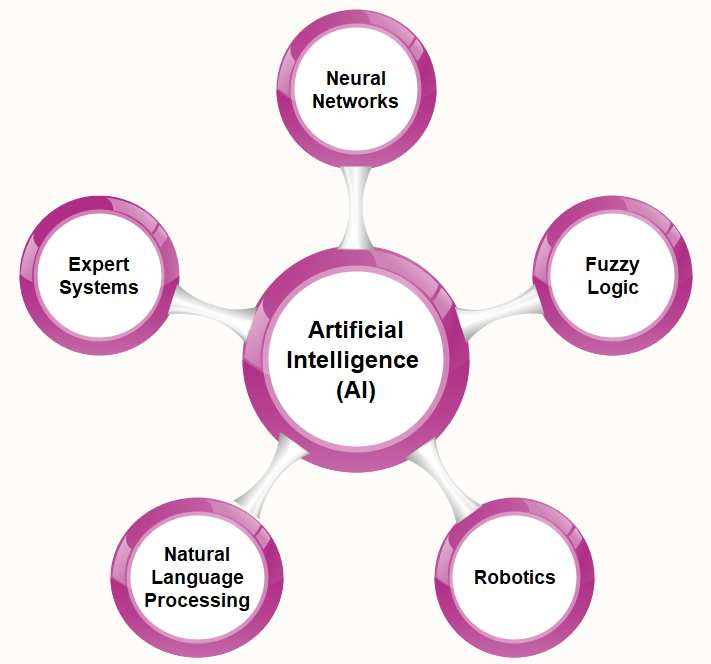
human intelligence. The major disciplines in AI
include [5]:
Expert systems
Fuzzy logic
Neural networks
Machine learning (ML)
Deep learning
Natural Language Processors (NLP)
Robots
These computer-based tools or technologies have
been used to achieve AI’s goals. Each AI tool has its
own advantages. Using a combination of these
models, rather than a single model, is recommended.
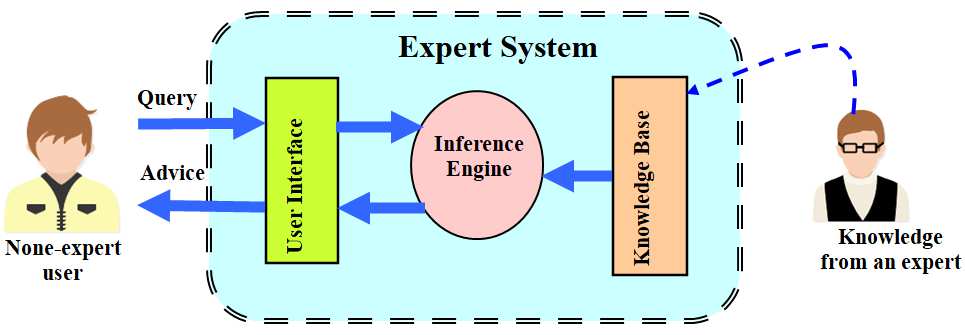
Figure 1 shows a typical expert system, while Figure
2 illustrates the AI tools. These tools are gaining
momentum across every industry. Analytics can be
considered a core AI capability.
AI IN MEDIA AND ENTERTAINMENT
The entertainment industry has become increasingly
diverse and complex, encompassing various sectors
such as film, television, music, gaming, and sports.
The boundaries between these segments are becoming
less distinct. Artificial intelligence is a fast-growing
technology that is quickly taking over many
industries, such as the media and entertainment
industry. The media and entertainment industries are
early
adopters
of
contemporary
technology,
embracing the digital revolution and exploiting the
ever-changing technology to create better content,
improve user experience, and establish a robust brand
presence. Ways that AI can impact the entertainment
industry include digital avatars, synthetic voice, AI
generated scripts, AI generated visuals, task
automation and augmentation, translation, and the
need for public-private collaboration. AI is not just
changing how we create entertainment; it is changing
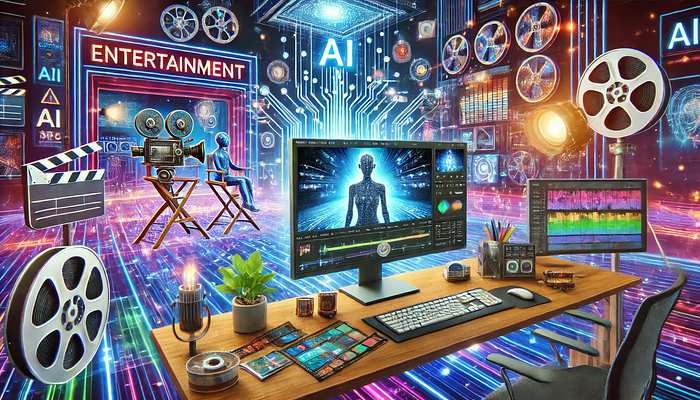
how we experience it. Figure 3 depicts AI in
entertainment [6].
In the media and entertainment industry, the infusion
of artificial intelligence has set the stage for a
remarkable change. The impact of AI in media and
entertainment industry has been significant, with
many companies utilizing AI to improve their
operations, enhance the consumer experience, and
create more personalized content. AI has emerged as
a formidable force in the realms of game
development, movie production, and advertising,
innovating creative processes across industries.
Giants in both the media and entertainment and
technology
spheres,
including
Blizzard
Entertainment,
Walt
Disney
World,
Google,
Microsoft, and Intel, have converged their expertise
to craft, launch, and refine a plethora of AI-driven
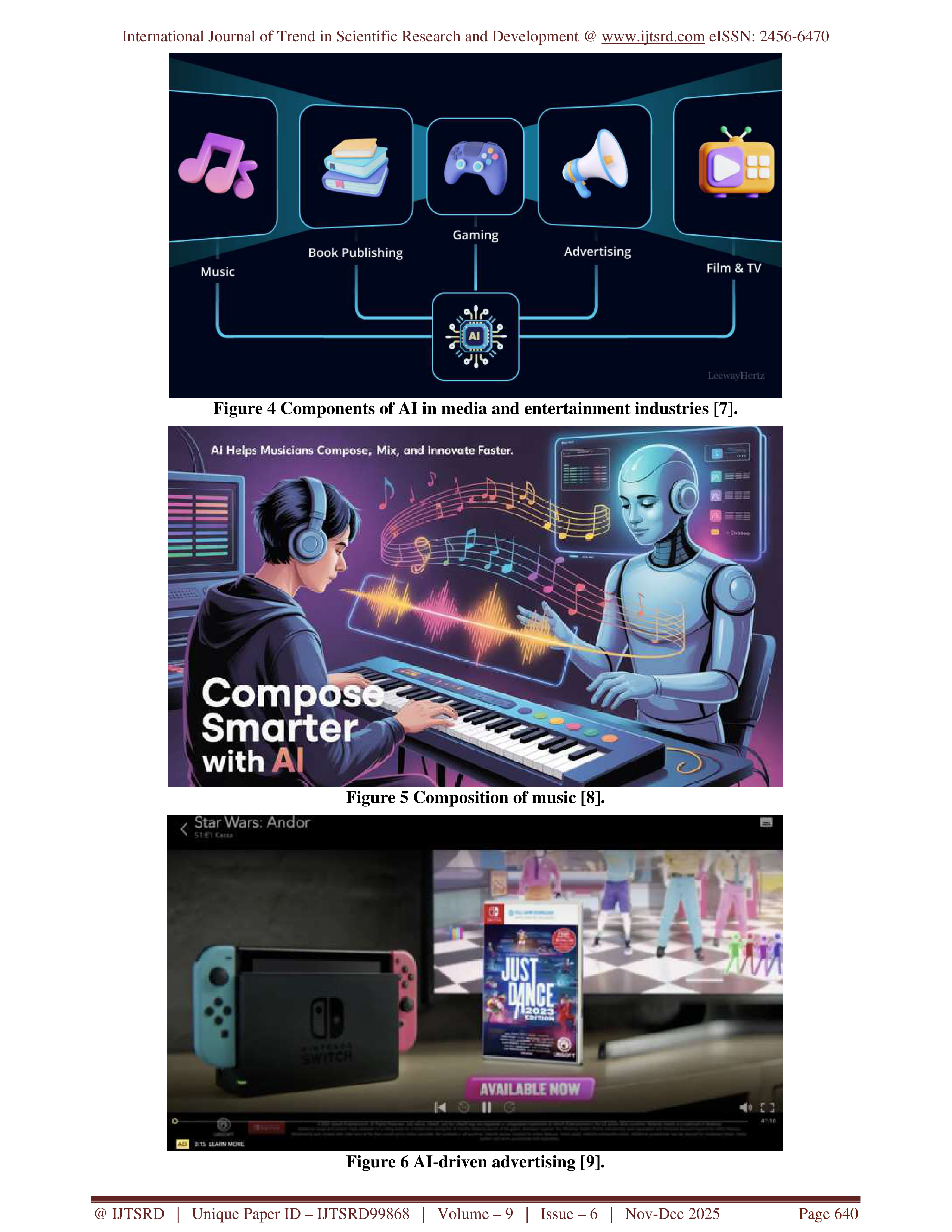
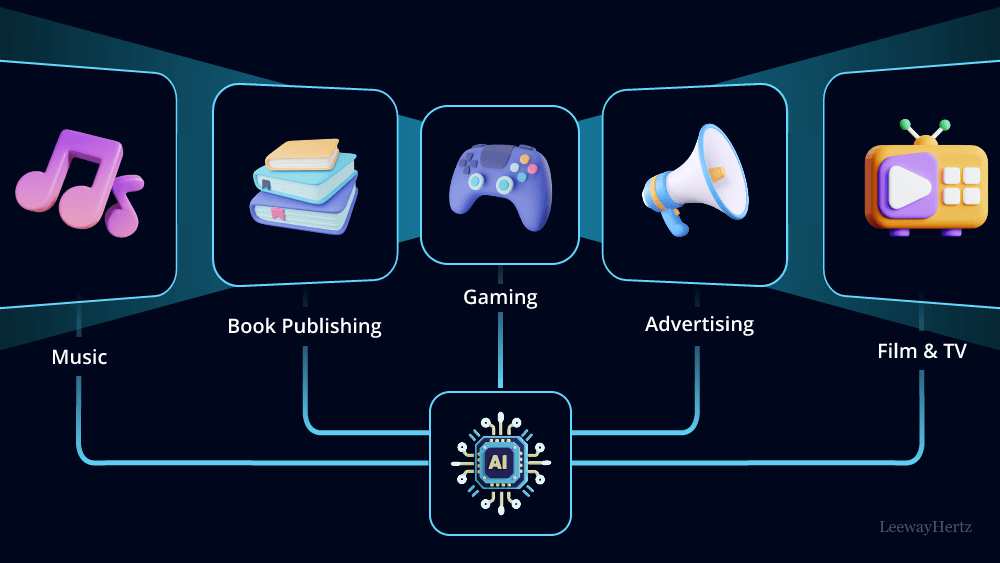
innovations. Figure 4 shows the components of AI in
media and entertainment industries [7].
APPLICATIONS OF AI IN MEDIA AND
ENTERTAINMENT
From content creation to audience engagement, the
influence of AI in media and entertainment is
revolutionizing the industry. Artificial intelligence
now
drives
scalable
production
workflows,
personalized content delivery, and even creative
ideation. AI is used in entertainment in nearly every
stage of the creative process—from ideation to
distribution. Common applications of AI in the media
and entertainment industry include the following [7]:
International Journal of Trend in Scientific Research and Development @
www.ijtsrd.com
eISSN: 2456-6470
@ IJTSRD | Unique Paper ID – IJTSRD99868 | Volume – 9 | Issue – 6 | Nov-Dec 2025
Page 634
Music Production:
The incorporation of AI into
the domain of audio mastering presents an
intriguing development in music production. AI is
making significant strides in music production,
capable of analyzing aspects like melodies and
rhythms and even generating creative inputs for
compositions. AI technologies can process and
potentially enhance sound quality through
automated mastering services. AI tools further
streamline production by automating mixing and
mastering processes, significantly expediting
high-quality music creation. An advantage of AI
in music production is its ability to personalize
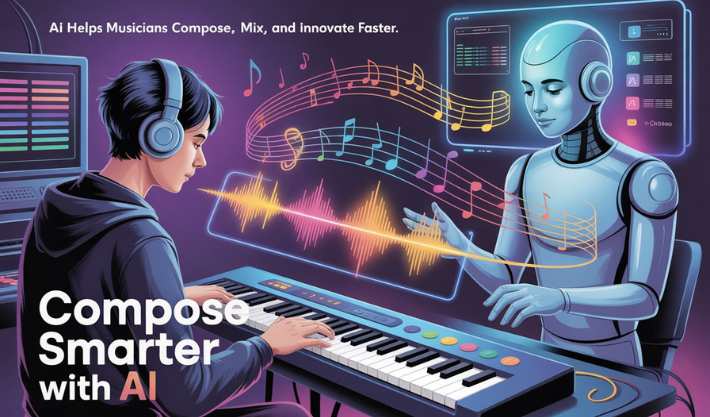
the listening experience. Figure 5 shows the
composition of music [8].
Film Production:
Leveraging AI to craft
impactful and revenue-generating film scripts is a
strategic move for filmmakers. AI aids in the
analysis of scripts destined for the screen,
dissecting storylines to identify questions,
uncertainties, and recommendations, simplifying
and expediting the script evaluation process. AI is
paving the way for enhanced efficiency in film
pre-production by automating and refining
various tasks. It assists in creating optimized
schedules by analyzing and predicting task
durations, suggests potential filming locations
through virtual exploration, and aids in preparing
for shoots by breaking down scripts and
organizing logistical elements. AI plays a pivotal
role in predicting a film’s potential revenue by
analyzing its script. It proves invaluable in editing
entire films, utilizing facial recognition to identify
central characters and key plot-related scenes,
streamlining the editing process for full-length
features.
Game Design:
The introduction of artificial
intelligence
into
games
transformed
the
entertainment business. AI enriches game design
by enhancing non-player characters (NPCs) and
refining game mechanics through its capability to
create realistic and challenging behaviors. In
gameplay, AI not only develops formidable
opponents, providing a heightened and immersive
experience, but also ingeniously generates
procedural content, such as new levels and
characters, ensuring a continually fresh and
engaging gaming journey for players. AI can
dynamically tailor in-game content, like missions
and challenges, according to individual player
behavior and decisions.
Book Publishing:
Authors send their work to
publishers or literary agents in the manuscript
submission and evaluation process. Artificial
intelligence plays a pivotal role in the manuscript
submission and evaluation process. It aids in
automating
initial
manuscript
screening,
categorizing submissions based on predefined
criteria, and expediting the sorting process.
Predictive modeling utilizes AI to analyze market
trends and reader preferences, helping in
forecasting a manuscript’s market potential and
guiding informed publishing decisions. In the
critical editing and proofreading phase of
manuscript preparation, AI proves to be a
valuable tool.
Advertising:
Advertising is one of the most
common uses of AI in the entertainment industry.
By leveraging historical data, companies can
make smarter decisions regarding personalized
creatives and reaching the right audience. AI in
advertising and marketing is a common practice
employed by well-known companies in the
entertainment industry. AI enhances audience
targeting by analyzing vast data, predicting
behavior, and enabling real-time personalization.
It segments users based on behavior, facilitates
A/B testing, and optimizes campaigns for better
results.
AI-driven
automation
streamlines
marketing efforts, making them more cost-
efficient and customer-centric. AI leverages user
browsing history and preferences to target ads
precisely. This intelligent targeting ensures
advertisers reach the most relevant audience,
ultimately
maximizing
their
campaigns’
effectiveness and conversion rates. Figure 6
shows an AI-driven advertising [9].
Storytelling:
Interactive storytelling challenges
storytellers to create dynamic narratives that adapt
based
on
audience
choices,
enhancing
engagement and immersion in digital experiences.
AI aids in storytelling by enhancing various
aspects of content creation and delivery. It
analyzes vast datasets to provide insights for
character development and plot structures,
helping authors craft more engaging narratives.
Media companies use natural language processing
(NLP) to create engaging and interactive
storytelling
experiences.
For
example,
a
developer can use NLP to develop chatbots that
mimic real characters from movies and TV
shows, allowing fans to converse with their
favorite fictional characters.
Content Generation:
The way content is created,
produced and consumed has undergone a
remarkable transformation. The content creation
technologies enable teams to automate complex
tasks, reduce human error and significantly cut
International Journal of Trend in Scientific Research and Development @
www.ijtsrd.com
eISSN: 2456-6470
@ IJTSRD | Unique Paper ID – IJTSRD99868 | Volume – 9 | Issue – 6 | Nov-Dec 2025
Page 635
production times. AI-generated content, such as
ad copy and articles, offers significant time and
cost savings in content production. It is used for
journalism, sports broadcasting, advertisement,
and other industries. Its automated generation
capabilities streamline the creative process and
enhance efficiency. Generative AI plays a
transformative role in transforming content
creation processes within the media and
entertainment industry in which enterprises often
face challenges such as maintaining consistency,
generating innovative ideas, ensuring originality,
and meeting tight deadlines. The rise of AI-driven
entertainment is making it possible for content
creators to tailor their offerings to individual
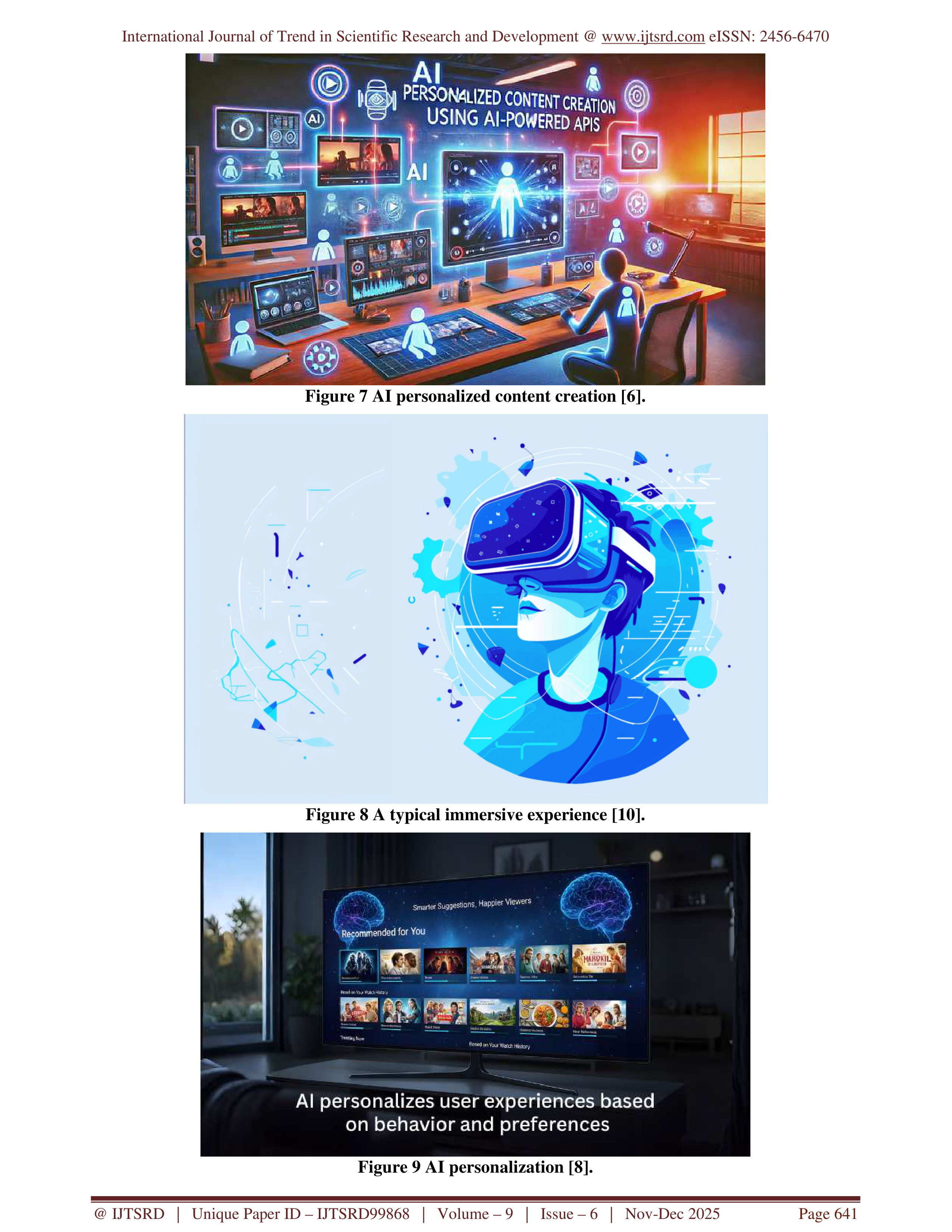
viewers like never before. Figure 7 shows AI
personalized content creation [6].
VR and AR Technologies:
In the entertainment
business, artificial intelligence positive impact
plays an important role in improving users’ visual
experiences. Virtual reality (VR) and augmented
reality (AR) continue to gain popularity, thanks
not only to lower-cost equipment but also to the
expanding number of materials supported by
artificial intelligence. AR and VR enable the
immersive and interactive content that clients
crave today. By enabling media and entertainment
firms to build interactive programs or non-player
characters in video games, AI applications have
expanded the capabilities of AR and VR,
potentially improving the customer experience.
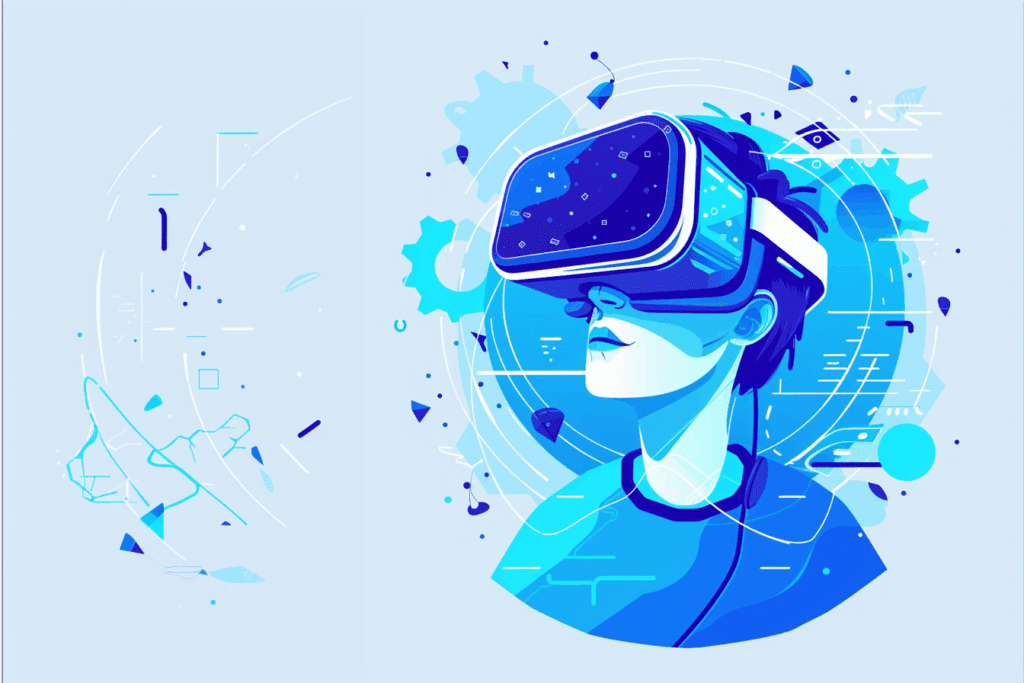
Figure 8 shows a typical immersive experience
[10].
BENEFITS
The media and entertainment industry has benefited
from the efficiency AI brings. AI streamlines the
content creation process by automating tasks like
video editing, proofreading, and even generating ad
copy, leading to cost savings and increased
productivity. AI’s impact on the media and
entertainment industry is transformative, enhancing
creativity, personalization, and efficiency while
optimizing marketing efforts for better results. AI is
also being used to improve marketing and advertising
in the media and entertainment industry. Other
benefits include the following [7,10]:
Automation
: Automation of repetitive tasks like
scene categorization, labeling and background
removal dramatically accelerates the editing
process, allowing teams to complete projects
faster. Automated AI tools produce articles, video
scripts, and marketing materials by identifying
trends and preferences among users. AI-driven
automation minimizes the risk of mistakes that
can occur during manual editing, ensuring more
accurate results in processes like color correction,
facial recognition, and compositing. Media
companies often use an automated content
moderation service powered by AI to keep online
spaces safe and enjoyable.
Personalization:
Personalization is a key facet of
AI’s influence in media and entertainment. Music
and content recommendation systems use AI
algorithms to deliver tailored suggestions,
enhancing user satisfaction by demonstrating
content aligned with individual preferences. AI
algorithms excel at delivering personalized game
suggestions, considering players’ preferences,
gameplay styles, genre inclinations, in-game
choices, and past feedback to recommend game
titles aligned with their interests. AI leverages
machine learning to personalize both audio and
visual content based on user preferences and past
interactions. These advanced algorithms analyze
user behavior and demographics to recommend
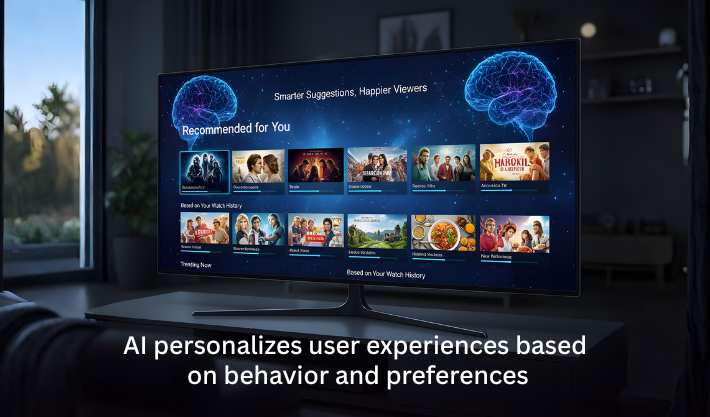
movies, music, and videos tailored to individual
tastes. Figure 9 shows AI personalization [8].
Predictive
Analytics:
Predictive
analytics
powered by AI leverages historical data to
forecast consumer behavior and buying trends.
This empowers advertisers to fine-tune their ad
placements
and
timing,
maximizing
the
effectiveness of their campaigns for better results.
AI analyzes data to help studios predict box office
success, identify trending genres, and understand
audience preferences.
Sentiment Analysis:
Sentiment analysis is a
technique used to determine the sentiment or
emotion expressed in a piece of text, such as
social media posts, reviews, or news articles. In
the media and entertainment industry, sentiment
analysis can be valuable for understanding public
opinion, gauging audience reactions, and making
data-driven decisions. Sentiment analysis also
helps brands monitor and manage their online
reputation. By analyzing sentiment across various
platforms, companies can detect negative
sentiment early and address customer concerns
promptly. Disneyland employs sentiment analysis
to monitor real-time feedback from visitors across
social media platforms, review websites, and
customer surveys.
Production Efficiency:
AI agents solve the
efficiency problem. AI can help improve the
efficiency of production processes in the
entertainment industry. AI in media and
entertainment
allows
companies
to
scale
localization, post-editing, and distribution with
International Journal of Trend in Scientific Research and Development @
www.ijtsrd.com
eISSN: 2456-6470
@ IJTSRD | Unique Paper ID – IJTSRD99868 | Volume – 9 | Issue – 6 | Nov-Dec 2025
Page 636
minimal human intervention. For example, AI can
automate video editing, voiceover, and post-
production tasks, reducing the time and resources
required.
Production Speed:
AI in media and entertainment
accelerates content creation by automating labor-
intensive tasks such as rendering, editing, and
metadata tagging. Studios can now produce and
deliver content at scale, responding quickly to
market trends. This edge in speed keeps
production competitive and audiences satisfied.
Audience Analysis:
This involves analyzing
audience data and past interactions to provide
personalized recommendations and content. AI
can analyze audience behavior and feedback to
provide insights on improving content and
increasing engagement. This information can be
used to create better content that resonates with
audiences and improves the overall user
experience.
Better Decision-making:
AI enhances business
decision-making by analyzing extensive data for
valuable insights. Predictive analytics anticipates
customer behavior, aiding in product development
and marketing decisions. AI will provide deeper
analytics on audience emotions and behavior,
informing creative decisions and optimizing
marketing campaigns. The more comprehensive
the analyses become, the more likely companies
will make informed decisions regarding future
investments.
Reduced Costs:
AI aids businesses in media and
entertainment by cutting costs through task
automation. This diminishes labor expenses by
reducing the reliance on human work, while AI-
driven optimization concurrently curtails energy
consumption, thereby lowering utility costs. AI
optimization minimizes energy consumption in
data centers, resulting in decreased energy
expenditures.
Accessibility:
AI in the media industry offers two
key benefits: automating tedious processes and
making content more accessible. As the
entertainment industry continues to evolve, the
importance of making content accessible to all
audiences
cannot
be
overstated. AI
for
accessibility is at the forefront of this movement,
empowering creators to design more inclusive
experiences. By leveraging AI image processing
APIs, entertainment companies can significantly
enhance accessibility features, such as generating
captions, creating audio descriptions for visually
impaired users and ensuring content is more
inclusive for diverse audiences. By making
content accessible to individuals with hearing or
visual impairments, AI image processing helps
entertainment companies reach a wider audience
and
foster
inclusion.
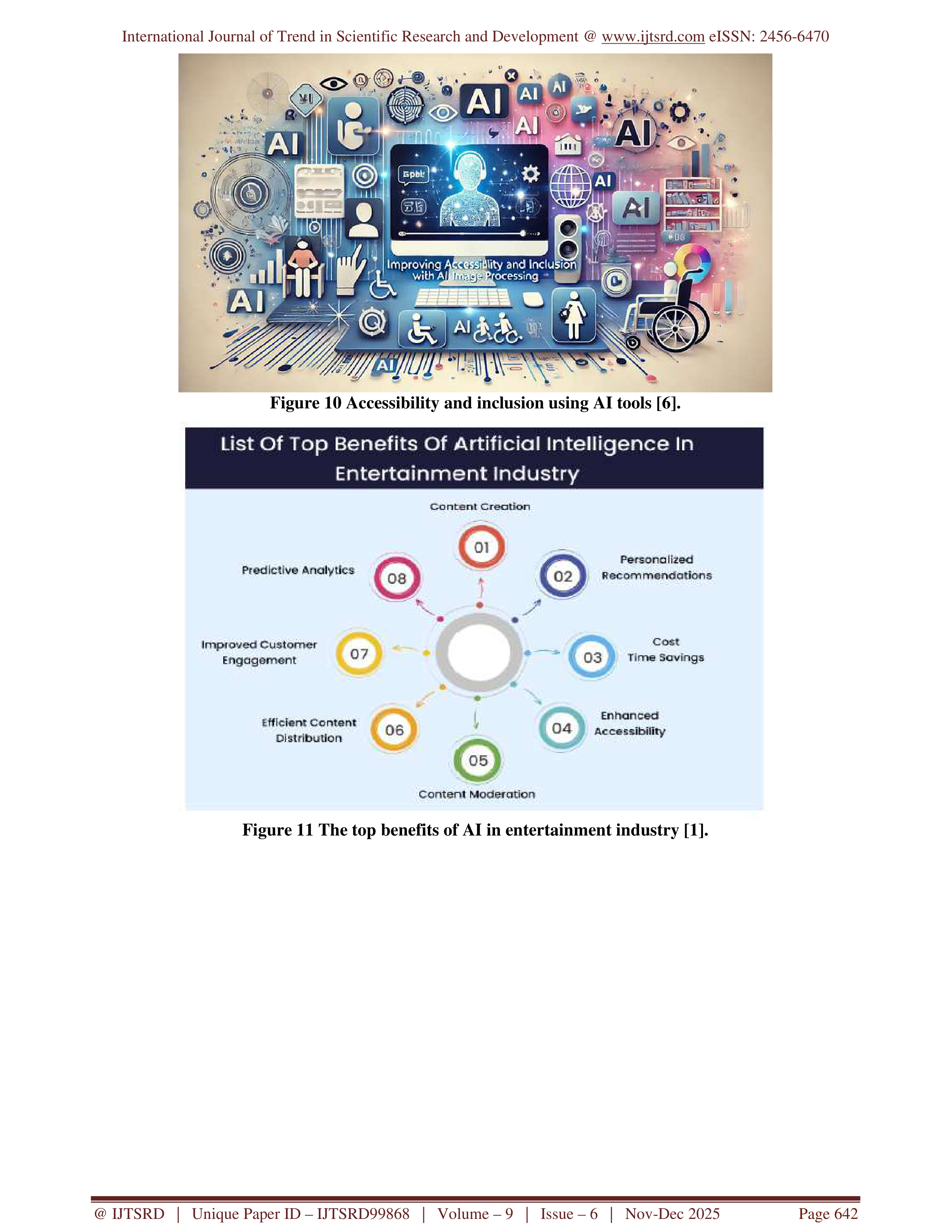
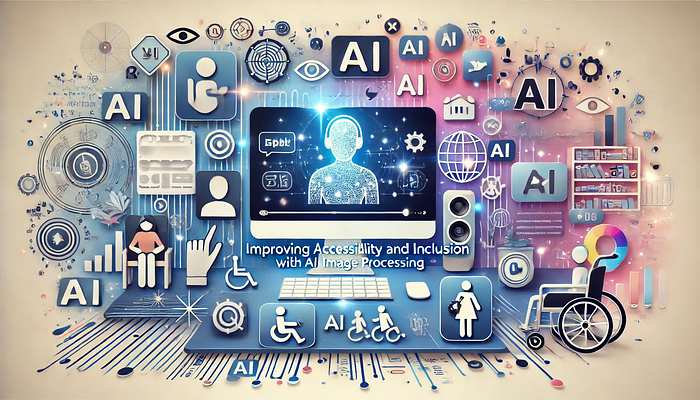
Figure
10
shows
accessibility and inclusion using AI tools [6].
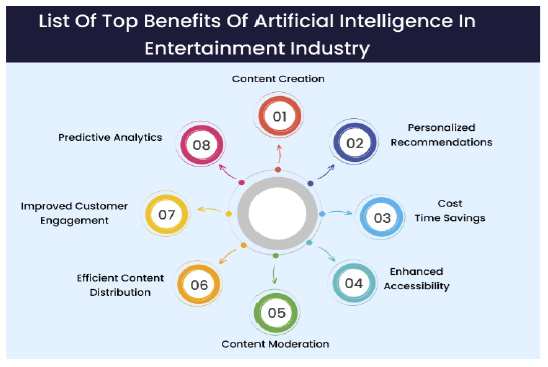
The top benefits of AI in entertainment industry are
displayed in Figure 11 [1].
CHALLENGES
While AI brings enormous benefits, it also presents
ethical, privacy, and employment challenges. AI is
improving at creating content, but it could be better.
AI use in the media and entertainment industry risks
becoming obsolete if human data scientists do not
continuously train and assess it. AI faces challenges
in naturally acquiring knowledge from its own
experiences and errors within the media and
entertainment industry. Other challenges include
[11,12]:
Cost:
One of the major challenges is the cost of
using AI technologies. Small companies may
need more money to invest in AI tools. These
tools can be expensive, especially when you need
to train them with lots of data. Companies must
consider whether the investment will be worth it
in the long run.
Data Privacy:
AI systems need lots of data to
learn and improve. This data might include
personal
information
in
the
media
and
entertainment industries, like people’s preferences
or online activities. Some people are worried
about their privacy and may not want companies
to use their information. This can make it harder
for companies to collect the data they need for
their AI systems.
Ethical Concerns:
There are some ethical
concerns
related
to
AI
in
media
and
entertainment. As AI becomes more prevalent,
ethical frameworks will be necessary to address
concerns about data privacy, intellectual property,
and the potential displacement of human jobs.
Legal Concerns:
Artificial intelligence is growing
so rapidly that lawmakers cannot keep up with it.
Laws have not been created to specifically protect
celebrities in this way since AI has been
advancing so rapidly, and there is a dilemma
between postmortem rights and freedom of
speech. Though there are no comprehensive rules
or laws protecting people from AI, they are
slowly being created. A comprehensive set of
laws need to be enacted by states or the country in
order to protect citizens from the harmful effects
of AI.
International Journal of Trend in Scientific Research and Development @
www.ijtsrd.com
eISSN: 2456-6470
@ IJTSRD | Unique Paper ID – IJTSRD99868 | Volume – 9 | Issue – 6 | Nov-Dec 2025
Page 637
Intellectual Property Concerns
: Front of mind for
creatives are the intellectual property concerns
posed by AI, which pose concerns on multiple
fronts. There are overt IP violations, such as the
AI-facilitated theft, reuse, or repurposing of
another person’s work.
Job Loss:
AI can help make some tasks faster and
more efficient. This can be good for companies,
but it can also lead to job loss for people who
used to do those tasks. For example, AI can write
news articles, create movie trailers, or even
compose music. Workers in these industries
might feel threatened by AI and worry about their
job security.
Deepfakes
: Another issue of AI and the
entertainment industry is deepfakes. Deepfakes
are videos, audio, or images that have been
manipulated using artificial intelligence (AI),
often to create, replace, or alter faces or
synthesize speech. In commercial applications,
“deepfake actors” can be hired to record
personalized messages as a famous personality,
then they are edited to look like the talent which
can save the real talent hundreds of hours of
work. When consensual, AI and deepfakes can be
time saving and allow for a greater audience,
which can be a great thing. However, deepfake
actors could also be a bad thing. Deepfakes and
synthetic voices of celebrities are also being used
in positive way.
Public Acceptance:
People need to accept and
trust AI in media and entertainment. Some people
prefer to avoid AI creating their favorite songs,
movies, or news articles. It might take time for
people to get used to this new technology and
trust that it can produce high-quality content.
Lack of Creativity
: While generative AI has the
potential to expedite the creative process, there
are numerous apprehensions surrounding the
content it produces. Despite its ability to generate
realistic and natural-sounding works through
natural language processing (NLP), machines still
authored these creations. They often lack the
passion, nuance, and perspective in human-
created works.
Regulations:
Regulatory authorities necessitate
control over content, and AI plays an important
role in detecting and filtering objectionable
content. AI can ascertain a user’s age and gender,
ensuring appropriate content delivery, or it can
employ automated content moderation to ensure
that objectionable content is not broadcasted
without appropriate audience categorization, such
as for children or adults only. To ensure
responsible growth, companies must establish
internal AI governance policies and advocate for
industry-wide ethical standards and transparency.
FUTURE
OF
AI
IN
MEDIA
AND
ENTERTAINMENT
The entertainment industry constantly evolves and
adapts to new technologies and consumer demands.
There is a wide perception in the field that the future
is in themes such as entertainment, fun, emotions,
aesthetic pleasure, motivation, attention, engagement
and so on. AI will continue to evolve from a tool into
a creative partner, helping with tasks like writing
scripts, composing music, and generating character
backstories. We can expect more sophisticated AI-
generated films, music, and animation, blurring the
lines between human and machine creativity.
One of the biggest future trends expected to shape the
industry is using virtual and augmented reality (VR
and AR) to provide audiences with more immersive
and interactive experiences. AI will power more
immersive VR and AR experiences that adapt in real-
time based on user interactions. As the technology for
VR and AR continues to improve, we can expect to
see
it
increasingly
integrated
into
various
entertainment areas, from gaming and live events to
film and television. Another trend expected to
continue is the growing emphasis on personalization.
With the help of AI and machine learning,
entertainment companies can analyze vast amounts of
data to create personalized content recommendations,
targeted advertising, and more. The future of AI in
entertainment will involve AI acting as both a
creative partner and a tool for personalization, leading
to AI-generated content, more immersive VR/AR
experiences, hyper-realistic visual effects, and
dynamically personalized content recommendations
[7]. The future promises to increase value for
businesses and service providers. AI-powered voice
assistants will become more integrated into
entertainment, enabling more hands-free interaction
with content and virtual environments.
CONCLUSION
Artificial intelligence (AI) is becoming a superstar in
media and entertainment industry. It has subtly but
powerfully reshaped our media and entertainment
experiences. This has enabled firms to make content
more interesting, interactive, and influential. Through
machine learning and automated content moderation,
AI has the potential to change how traditional media
platforms work. AI is used extensively in the media
and entertainment industry for all sorts of things, like
making gameplay more realistic, spotting fake stories,
catching plagiarism, managing production schedules,
International Journal of Trend in Scientific Research and Development @
www.ijtsrd.com
eISSN: 2456-6470
@ IJTSRD | Unique Paper ID – IJTSRD99868 | Volume – 9 | Issue – 6 | Nov-Dec 2025
Page 638
personalizing content, boosting sales and marketing,
and even discovering new talent. AI is having a
significant effect on human creativity in the media
and entertainment industries.
AI has a bright future in the media and entertainment
industries because it gives people new ways to make
more interesting content while cutting costs and
making more money. While AI excels at automation
and data analysis, human creativity remains
irreplaceable.
One should not consider AI as a replacement for
writers, directors, or musicians. Instead, we should
see it as a powerful collaborator. More information on
AI in media and entertainment industry is available
from the books in [13-23] and the following related
journals:
The AI Journal
AI Magazine
Journal of Intelligence
REFERENCES
[1]
R. K. Prasad and D. Makesh, “Impact of AI on
media & entertainment industry,” June 2024,
https://www.researchgate.net/publication/38165
4818_Impact_of_AI_on_Media_Entertainment
_Industry/link/66792c01d21e220d89cc1ba0/do
wnload?_tp=eyJjb250ZXh0Ijp7ImZpcnN0UGF
nZSI6InB1YmxpY2F0aW9uIiwicGFnZSI6InB
1YmxpY2F0aW9uIn19
[2]
M. N. O. Sadiku, “Artificial intelligence,”
IEEE
Potentials,
May 1989, pp. 35-39.
[3]
“Artificial
intelligence
(AI),”
https://www.law.cornell.edu/wex/artificial_intel
ligence_(ai)
[4]
“Artificial
intelligence
tutorial,”
https://www.javatpoint.com/artificial-
intelligence-tutorial
[5]
D. Quinby, “Artificial intelligence and the
future
of
travel,”
May
2017,
https://www.phocuswright.com/Travel-
Research/Research-Updates/2017/Artificial-
Intelligence-and-the-Future-of-Travel
[6]
“How AI image processing APIs are
transforming
content
creation
in
the
entertainment
industry,”
October
2024,
https://medium.com/@API4AI/how-ai-image-
processing-apis-are-transforming-content-
creation-in-the-entertainment-industry-
b357192cb957
[7]
“AI in media and entertainment: Use cases,
benefits
and
solution,”
https://www.leewayhertz.com/ai-in-media-and-
entertainment/
[8]
“Top 7 use cases of AI in media and
entertainment,”
March
2025,
https://webosmotic.com/blog/ai-in-media-and-
entertainment/
[9]
J. Matuszewska, “How is AI used in
entertainment? Use cases, examples, and tools,”
January
2025,
https://www.miquido.com/blog/how-is-ai-used-
in-entertainment/
[10]
“AI in entertainment: 5 best application use
cases,”
November
2025,
https://litslink.com/blog/ai-in-entertainment-
best-use-cases
[11]
“AI in media and entertainment industry:
Market trends, forecast & future,” March 2023,
https://castr.com/blog/ai-in-media-and-
entertainment-industry/
[12]
C. R. McCarthy, “Artificial intelligence and the
entertainment
industry,”
Spring
2024,
https://scholars.unh.edu/cgi/viewcontent.cgi?art
icle=1864&context=honors
[13]
M. N. O. Sadiku, S. M. Musa, and S. R.
Nelatury,
Applications of Artificial Intelligence
.
Sherida, NY: Gotham Books, 2022.
[14]
M. N. O. Sadiku,
Applications of Artificial
Intelligence – Volume 2.
Tallahassee, FL: John
& Johnna Publishers, 2025.
[15]
A. Connock,
Media Management and Artificial
Intelligence.
Routledge, 2022.
[16]
M. Jana and S. Banerjee,
Artificial Intelligence
and Contemporary Media
. Notion Press, 2025.
[17]
B.
Williams,
The
AI
Revolution
in
Entertainment: Unleashing the Power of
Artificial Intelligence to Shape the Future of
Media.
Barrett Williams, 2024.
[18]
J. Schott,
The AI Revolution in Entertainment:
Unleashing the Power of Artificial Intelligence
to Shape the Future of Media.
Amazon Digital
Services LLC, 2023.
[19]
M. Bolte,
12 Uses for Artificial Intelligence in
Entertainment.
Black Rabbit Books, 2026.
[20]
Matthew N. O. Sadiku | Samuel A. Ajayi | Janet
O. Sadiku "Machine Learning in Media and
Entertainment" Published in International
Journal of Trend in Scientific Research and
Development
(ijtsrd),
ISSN:2456-6470,
Volume-9 | Issue-6, December 2025, pp.163-
171
[21]
Ajayi, A. S., Abimbola, J., Segun, S. E.,
Ajayi,E. I., & Bodude, A. D. (2026).
International Journal of Trend in Scientific Research and Development @
www.ijtsrd.com
eISSN: 2456-6470
@ IJTSRD | Unique Paper ID – IJTSRD99868 | Volume – 9 | Issue – 6 | Nov-Dec 2025
Page 639
Harnessing artificial intelligence for methane
emissions control in industrial natural gas
engines: Optimizing exhaust after treatment to
advance U.S. clean energy goals–A review.
European Journal of Sustainable Development
Research,10(1), em0345
[22]
Ajayi, A., Badmus, O., Iheuwa, G., Ehizojie,
L., & Segun, S. (2025). Comparative Analysis
of GitOps Tools and Frameworks. Path of
Science, 11(5), 2017-2030
[23]
Matthew N. O. Sadiku | Samuel A. Ajayi | Janet
O. Sadiku "Artificial Intelligence in Sports"
Published in International Journal of Trend in
Scientific Research and Development (ijtsrd),
ISSN: 2456- 6470, Volume-9 | Issue-6,
December 2025, pp.643-653
Figure 1 A typical expert system.
Figure 2 AI tools.
Figure 3 AI in entertainment [6].

International Journal of Trend in Scientific Research and Development @
www.ijtsrd.com
eISSN: 2456-6470
@ IJTSRD | Unique Paper ID – IJTSRD99868 | Volume – 9 | Issue – 6 | Nov-Dec 2025
Page 640
Figure 4 Components of AI in media and entertainment industries [7].
Figure 5 Composition of music [8].
Figure 6 AI-driven advertising [9].
International Journal of Trend in Scientific Research and Development @
www.ijtsrd.com
eISSN: 2456-6470
@ IJTSRD | Unique Paper ID – IJTSRD99868 | Volume – 9 | Issue – 6 | Nov-Dec 2025
Page 641
Figure 7 AI personalized content creation [6].
Figure 8 A typical immersive experience [10].
Figure 9 AI personalization [8].
International Journal of Trend in Scientific Research and Development @
www.ijtsrd.com
eISSN: 2456-6470
@ IJTSRD | Unique Paper ID – IJTSRD99868 | Volume – 9 | Issue – 6 | Nov-Dec 2025
Page 642
Figure 10 Accessibility and inclusion using AI tools [6].
Figure 11 The top benefits of AI in entertainment industry [1].