
Heliyon 10 (2024) e23492
Available online 13 December 2023
2405-8440/©
2023
The
Author(s).
Published
by
Elsevier
Ltd.
This
is
an
open
access
article
under
the
CC
BY-NC-ND
license
(
http://creativecommons.org/licenses/by-nc-nd/4.0/
).
Applications of artificial intelligence and machine learning in the
financial services industry: A bibliometric review
Debidutta Pattnaik
a
, Sougata Ray
a
, Raghu Raman
b
,
*
a
International Management Institute, Bhubaneswar, 751 003, India
b
Amrita School of Business, Amrita Vishwa Vidyapeetham, Kerala, 690 525, India
A
R
T
I
C
L
E I
N
F
O
Keywords:
AI
ML
BFSI
Bibliometrics
Co-occurrence analysis
N-gram analysis
A
B
S
T
R
A
C
T
This bibliometric review examines the research state of artificial intelligence (AI) and machine
learning (ML) applications in the Banking, Financial Services, and Insurance (BFSI) sector. The
study focuses on Scopus-indexed articles to identify key research clusters. Following the Preferred
Reporting Items for Systematic Reviews and Meta-Analyses (PRISMA) protocol, 39,498 articles
were screened, resulting in 1045 articles meeting the inclusion criteria. N-gram analysis identified
177 unique terms in the article titles and abstracts. Co-occurrence analysis revealed nine distinct
clusters covering fintech, risk management, anti-money laundering, and actuarial science, among
others. These clusters offer a comprehensive overview of the multifaceted research landscape. The
identified clusters can guide future research and inform study design. Policymakers, researchers,
and practitioners in the BFSI sector can benefit from the study
’
s findings, which identify research
gaps and opportunities. This study contributes to the growing literature on bibliometrics,
providing insights into AI and ML applications in the BFSI sector. The findings have practical
implications, advancing our understanding of AI and ML
’
s role in benefiting academia and
industry.
1.
Introduction
The use of AI and ML has rapidly increased in recent years, transforming the way businesses operate [
1
]. The BFSI sector is no
exception, where AI and ML are being implemented to improve operational efficiency, enhance customer experience, and mitigate
risks [
2
,
3
]. The use of AIML-based applications has increased significantly in the BFSI sector due to its potential to automate processes
[
4
], enhance decision-making [
5
], improve customer experience [
6
], and detect fraud [
7
]. Using bibliometrics, this study aims to
provide a comprehensive overview of the current state of research on AI and ML applications in the BFSI sector.
AI and ML have emerged as valuable tools in combating financial crimes, including money laundering and cybercrime [
8
,
9
].
Financial institutions prioritize anti-money laundering (AML) measures to comply with regulations and prevent illicit activities [
10
].
By automating the detection of suspicious transactions, AI and ML techniques enhance efficiency and minimize manual intervention
[
11
]. Moreover, these technologies enable the identification of patterns in customer behaviour indicative of fraudulent activity,
facilitating proactive measures [
12
].
Algorithmic trading, facilitated by computer algorithms, has gained considerable traction [
13
]. It is particularly prevalent in
high-frequency trading [
14
]. AI and ML play a crucial role in developing sophisticated algorithms capable of analyzing large datasets
*
Corresponding author.
E-mail addresses:
2018rbm9086@mnit.ac.in
(D. Pattnaik),
sougata.ray@imibh.edu.in
(S. Ray),
raghu@amrita.edu
(R. Raman).
Contents lists available at
ScienceDirect
Heliyon
journal homepage:
www.cell.com/heliyon
https://doi.org/10.1016/j.heliyon.2023.e23492
Received 8 August 2023; Received in revised form 5 December 2023; Accepted 5 December 2023
Heliyon 10 (2024) e23492
2
and detecting patterns beyond human capacity. This advancement leads to enhanced trading performance and risk reduction [
15
].
AI and ML also find extensive applications in the insurance sector, specifically in claims reserving and risk assessment [
16
,
17
].
Through data analysis and predictive modelling, these technologies facilitate precise pricing and risk evaluations [
18
]. Furthermore,
AI-powered chatbots and virtual assistants enhance customer experience by offering tailored recommendations and assistance [
19
].
Conversely, the BFSI sector is experiencing a growing adoption of blockchain technology [
20
]. Blockchain, as a decentralized
ledger, facilitates secure and transparent transactions, eliminating intermediaries. Its application extends to areas like payments, trade
finance, and supply chain management, promising revolutionary changes [
21
]. By analyzing the abundant data generated from
blockchain transactions, AI and ML offer valuable insights for enhancing operational efficiency and risk mitigation [
22
].
Thus, AI and ML have brought about transformative changes in the BFSI sector, enhancing efficiency, customer experience, and risk
management [
6
,
11
,
23
]. This progress has sparked substantial growth in the academic discourse on AI and ML applications within BFSI
[
24
]. Research efforts have concentrated on algorithms, models, tools, and frameworks [
3
] while also delving into specific sub-sectors
like banking, insurance, and asset management [
21
].
In the realm of AI and ML applications in BFSI, deep learning algorithms have emerged as a prominent research trend. These al
gorithms possess the capability to analyze extensive volumes of unstructured data, including text, images, and videos, extracting
valuable insights [
25
]. Additionally, reinforcement learning has garnered attention as another research trend. This approach allows
systems to learn from experience and make decisions based on rewards and penalties [
26
].
Research is also emerging on the use of AI and ML in insurance underwriting, where AI and ML algorithms can analyze large
amounts of data to determine the level of risk associated with a policy [
27
]. Similarly, research has been conducted on the use of AI and
ML in asset management, where AI and ML algorithms can analyze market trends and make investment decisions [
28
].
Given the diverse and evolving research landscape, a periodic comprehensive summary of the literature is essential for guiding
future scholarly endeavours [
28
]. However, existing reviews such as Goodell et al. [
3
], Tepe et al. [
21
] and Pattnaik et al. [
29
] provide
only fragmented insights. Goodell et al. [
3
] concentrated on the utilization of AI and ML applications in financial management. Their
study examined 283 research articles, emphasizing the wide adoption of machine learning methods. They primarily narrowed down
their suggested scope for future research to the areas of asset pricing, fintech, and financial fraud. Tepe et al. [
21
], on the other hand,
examined financial services, financial access, and financial technology, with fintech at the centre. Pattnaik et al. [
29
] specifically
reviewed the cryptocurrency and blockchain literature. Although these studies offer valuable insights into the fintech literature, they
lack a comprehensive coverage of publications and are limited in suggesting the scope for future scholarship in BFSI.
To address this gap, our study fills the void by conducting a bibliometric review to assess the research landscape. We systematically
analyze scholarly publications, citations, and themes, building upon the works of Goodell et al. [
3
], Pattnaik et al. [
29
] and Baker et al.
[
30
]. Precisely, we answer the following research questions (RQs) to provide a comprehensive overview of the literature on AI and ML
applications in the BFSI sector.
RQ1
.
What trends are evident in the research on AI and ML applications in the BFSI sector?
RQ2
.
What is the thematic structure of the research domain?
RQ3
.
What is the direction for future research?
In accordance with established bibliometric protocols, we screened and evaluated a total of 39,498 articles, resulting in the in
clusion of 1045 articles that meet our specific selection criteria. Employing N-gram analysis, we identify 177 unique terms from the
titles and abstracts of the selected articles. Furthermore, co-occurrence analysis on these terms yields nine distinct clusters representing
various sub-domains within the study field. In contrast to previous reviews, we place specific emphasis on the average publication year
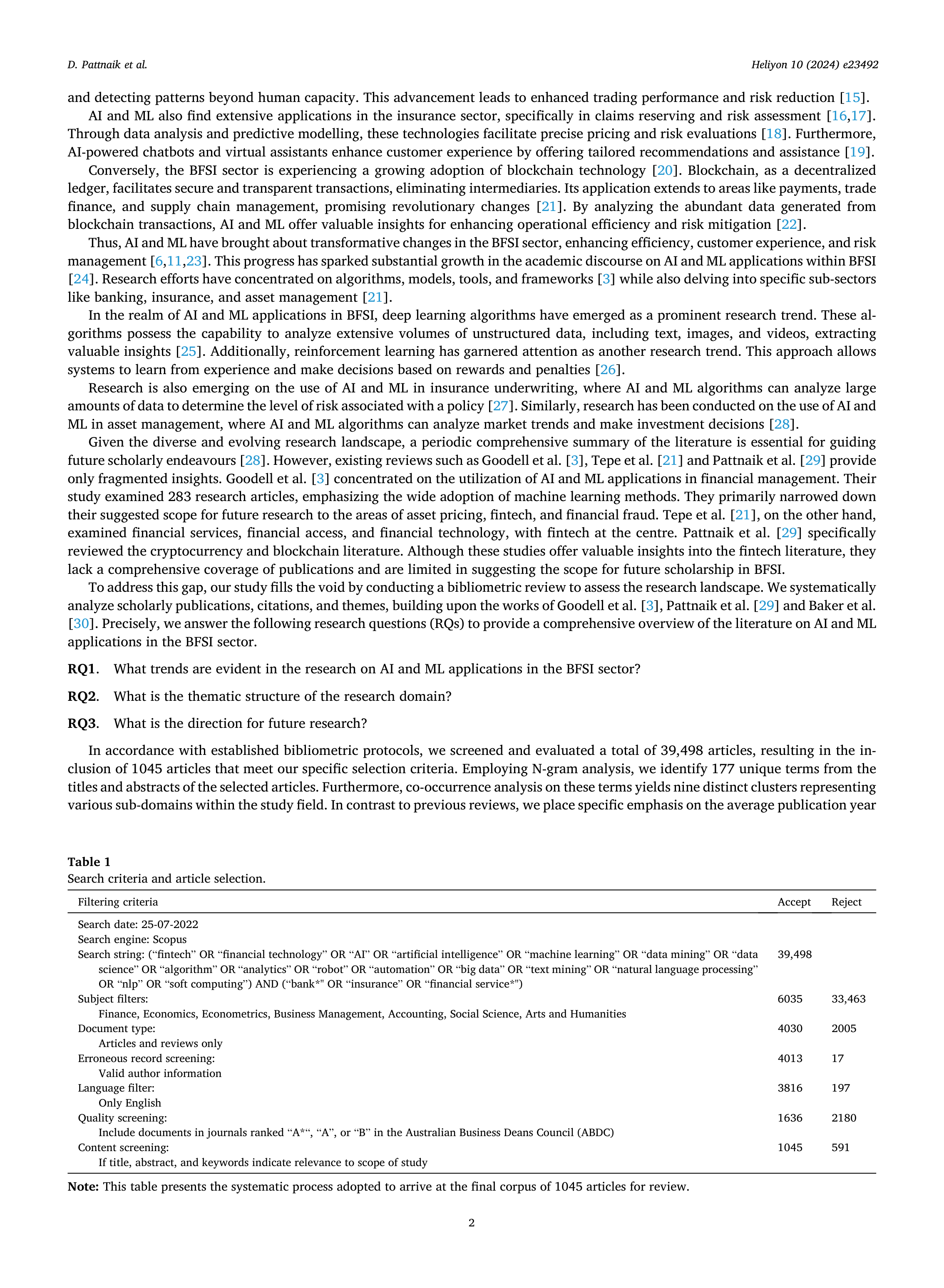
Table 1
Search criteria and article selection.
Filtering criteria
Accept
Reject
Search date: 25-07-2022
Search engine: Scopus
Search string: (
“
fintech
”
OR
“
financial technology
”
OR
“
AI
”
OR
“
artificial intelligence
”
OR
“
machine learning
”
OR
“
data mining
”
OR
“
data
science
”
OR
“
algorithm
”
OR
“
analytics
”
OR
“
robot
”
OR
“
automation
”
OR
“
big data
”
OR
“
text mining
”
OR
“
natural language processing
”
OR
“
nlp
”
OR
“
soft computing
”
) AND (
“
bank*" OR
“
insurance
”
OR
“
financial service*")
39,498
Subject filters:
Finance, Economics, Econometrics, Business Management, Accounting, Social Science, Arts and Humanities
6035
33,463
Document type:
Articles and reviews only
4030
2005
Erroneous record screening:
Valid author information
4013
17
Language filter:
Only English
3816
197
Quality screening:
Include documents in journals ranked
“
A*
“
,
“
A
”
, or
“
B
”
in the Australian Business Deans Council (ABDC)
1636
2180
Content screening:
If title, abstract, and keywords indicate relevance to scope of study
1045
591
Note:
This table presents the systematic process adopted to arrive at the final corpus of 1045 articles for review.
D. Pattnaik et al.
Heliyon 10 (2024) e23492
3
of each unique term contributing to the clusters. This focus helps us distinguish the most current topics from older ones, providing
valuable insights that can guide future scholarly endeavours, particularly in the most emergent research areas.
Our study contributes to the expanding body of knowledge, providing invaluable insights into the research landscape. The findings
hold practical implications for future research endeavours and advance our understanding of the pivotal role played by AI and ML
technologies in shaping the BFSI sector, benefitting both academia and industry.
The remainder of the study has the following organization. Section
2
discusses the data and study methods. Section
3
presents the
key findings, including the trends and thematic structure of the research domain. Section
4
enumerates the future research directions,
and finally, in Section
5
, we summarize the core content and conclude the paper.
2.
Methodology
The review was conducted following the PRISMA protocol which provides a comprehensive guideline for conducting systematic
reviews and meta-analyses in a transparent, reproducible, and comprehensive process [
3
,
30
–
33
].
Table 1
presents the systematic
process adopted for article selection.
The search for articles on AI and ML applications in the BFSI sector was conducted in the Scopus database [
30
]. We limited the
search to journals of at least B category as per the Australian Business Deans Council
’
s (ABDC) Journal Quality List to ensure that the
articles were of high quality [
34,35
]. The search was conducted using keywords such as
“
artificial intelligence,
” “
machine learning,
”
“
bank*,
” “
financial service,
” “
insurance
”
, and related terms and phrases to ensure that we capture all relevant articles following
Goodell et al. [
3
]. The search strategy based on the inclusion and exclusion criteria mentioned in
Table 1
yielded 1045 articles.
We analyzed the data using bibliometric techniques, including performance and network analyses as suggested by Pattnaik et al.
[
34
] and Sreenivasan et al. [
36
], to identify the most influential articles, authors, and their affiliations. We employ various quantitative
measures suggested in the paper to analyze BFSI publications and citations. Academic contributions are gauged using the total pub
lications (TP), while the scientific impact is assessed through the total citations (TC). Additionally, we utilize other metrics, such as
total cited publications (TCP), to identify impactful research and citations per cited publication (C/CP) to gauge the average impact.
Furthermore, we create a h-index and a g-index to evaluate influential and impactful research. We categorize the influence of
articles into varying degrees, including low, mild, moderate, and highly impactful research, using the i-10, i-100, i-250, and i-500
indices. These indices consider the study articles cited at least 10, 100, 250, and 500 times, respectively.
To assess the activity and research productivity of BFSI authors, we analyze the number of active years (NAY) and the productivity
per active year (PAY). The number of contributing authors is used to measure academic quality. We also investigate co-authorship and
the evolution of author diversity at different stages in the development of AI and ML applications within the BFSI sector. Given the
collaborative nature of contemporary research, the increased need for specialization, and methodological complexity, we delve into
co-authorship analysis. This allows us to identify evolving collaborations among authors. We employ the average authors per co-
authored article (AACA) as a metric to quantify the extent of collaborations. Mathematically, AACA is calculated as follows: AACA
=
(NCA - SA)/CA, where NCA represents the number of contributing authors, SA stands for sole-authored articles, and CA signifies co-
authored articles. For instance, if NCA equals 40, SA is 5, and CA is 10, the AACA would be 3.50, indicating that more than three
authors contribute to each co-authored article.
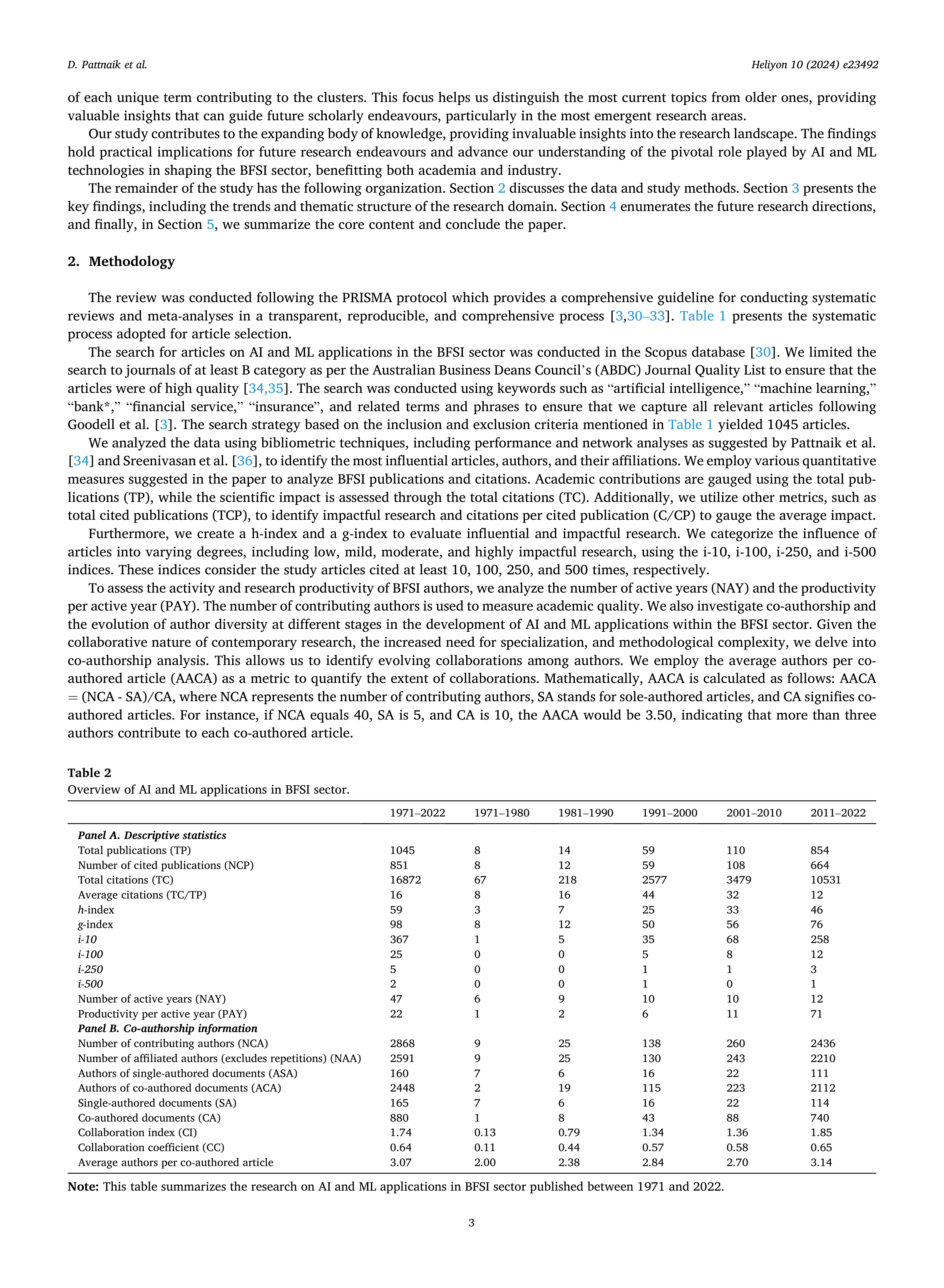
Table 2
Overview of AI and ML applications in BFSI sector.
1971
–
2022
1971
–
1980
1981
–
1990
1991
–
2000
2001
–
2010
2011
–
2022
Panel A. Descriptive statistics
Total publications (TP)
1045
8
14
59
110
854
Number of cited publications (NCP)
851
8
12
59
108
664
Total citations (TC)
16872
67
218
2577
3479
10531
Average citations (TC/TP)
16
8
16
44
32
12
h
-index
59
3
7
25
33
46
g
-index
98
8
12
50
56
76
i-10
367
1
5
35
68
258
i-100
25
0
0
5
8
12
i-250
5
0
0
1
1
3
i-500
2
0
0
1
0
1
Number of active years (NAY)
47
6
9
10
10
12
Productivity per active year (PAY)
22
1
2
6
11
71
Panel B. Co-authorship information
Number of contributing authors (NCA)
2868
9
25
138
260
2436
Number of affiliated authors (excludes repetitions) (NAA)
2591
9
25
130
243
2210
Authors of single-authored documents (ASA)
160
7
6
16
22
111
Authors of co-authored documents (ACA)
2448
2
19
115
223
2112
Single-authored documents (SA)
165
7
6
16
22
114
Co-authored documents (CA)
880
1
8
43
88
740
Collaboration index (CI)
1.74
0.13
0.79
1.34
1.36
1.85
Collaboration coefficient (CC)
0.64
0.11
0.44
0.57
0.58
0.65
Average authors per co-authored article
3.07
2.00
2.38
2.84
2.70
3.14
Note:
This table summarizes the research on AI and ML applications in BFSI sector published between 1971 and 2022.
D. Pattnaik et al.
Heliyon 10 (2024) e23492
4
Further, N-gram analysis of the articles
’
titles and abstracts revealed key themes related to AI and ML applications in the BFSI
sector. Co-word analysis unveiled their thematic structure, while the average publication year (APY) of themes presented in the nodal
network gave an idea about the degree of hotness and coldness of the topics. We analyzed the data using Excel, R, VOSviewer, and
Gephi tools to visualize the networks.
3.
Findings
Our analysis of the literature has yielded significant findings that provide valuable insights into the current state of the study field.
3.1.
Performance analysis
Our first research question (
RQ1
) investigates the research trends in AI and ML applications in the BFSI sector.
Table 2
provides an
overview of the bibliometric analysis, presenting the publication trend, citation structure, influence, impact, activity, and productivity
of the research domain. Subsequently, we discuss the top publications, authors, and their affiliations denoting research hotspots.
Panel A of
Table 2
shows that the number of publications on AI and ML applications in the BFSI sector has seen an exponential jump
in the past decade between 2011 and 2022, suggesting rapid growth of interest in this area of research. The h-index, g-index, i-10
index, and PAY all increased over time, indicating that the research output is becoming increasingly impactful.
Panel B of
Table 2
provides co-authorship information, such as the number of contributing authors, affiliated authors, single-
authored documents, co-authored documents, collaboration index, collaboration coefficient, and average authors per co-authored
article. A total of 2868 contributing authors and 2591 affiliated authors contributed to the research. Out of these, 160 publications
were single-authored and 2448 co-authored. Such a high number of co-authored publications suggests that collaboration is important
in this field. This argument is further supported by the decreasing number of single-authored documents and the increasing collab
oration index and collaboration coefficient. The average number of authors per co-authored article was found to be highest for the
2011
–
2022 period, with over three authors per article. However, the higher number of single-authored documents was in the most
recent period, suggesting that there is a growing number of researchers who are making significant contributions independently.
Overall,
Table 2
provides a comprehensive overview of the research trends, characteristics, and authorship patterns of AI and ML
applications in the BFSI sector. Delving into the content of some notable works, the review highlights the need and the potential for
further research, particularly in terms of investigating the impact of these technologies on the BFSI sector and identifying new areas for
innovation and development.
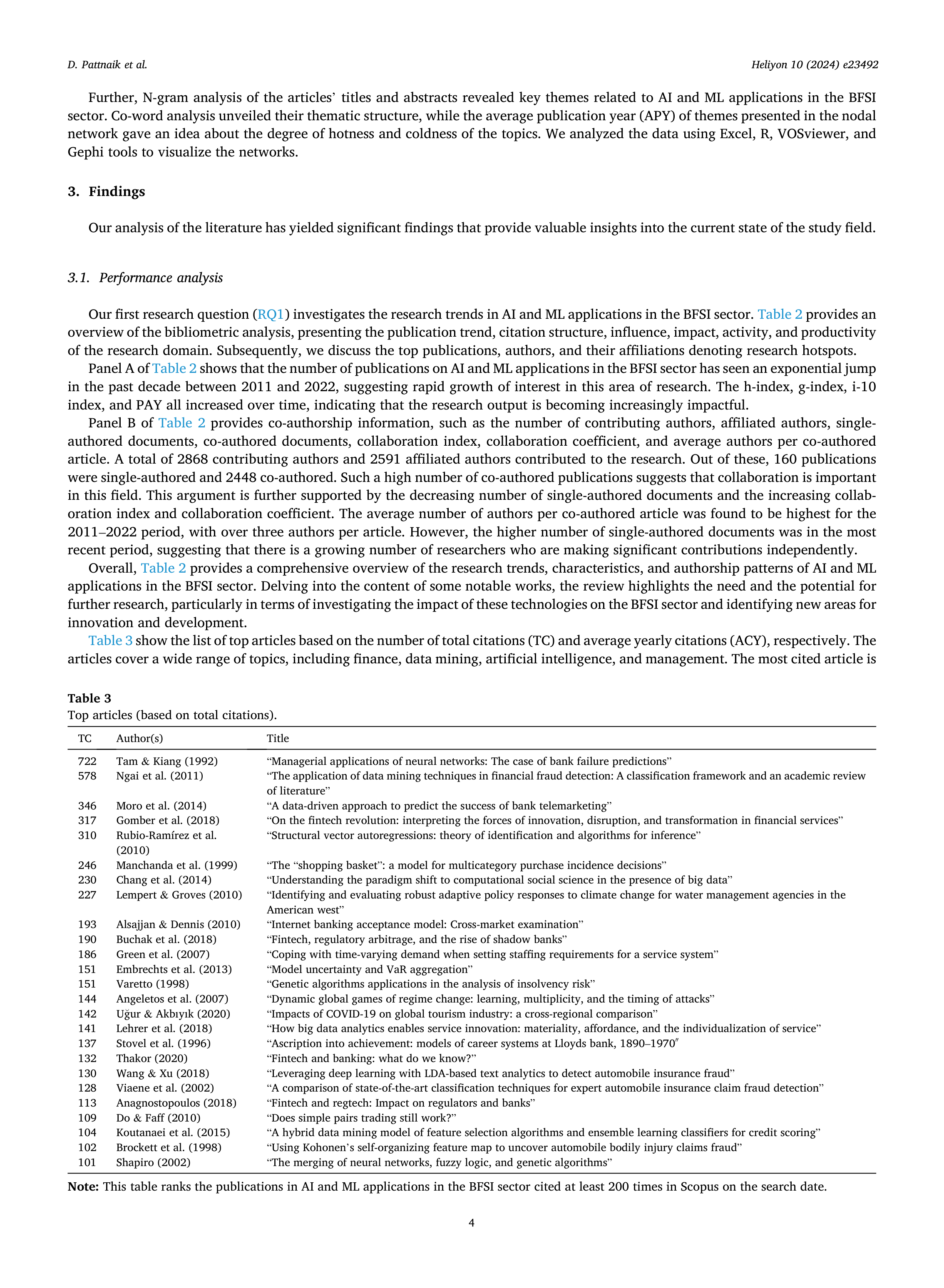
Table 3
show the list of top articles based on the number of total citations (TC) and average yearly citations (ACY), respectively. The
articles cover a wide range of topics, including finance, data mining, artificial intelligence, and management. The most cited article is
Table 3
Top articles (based on total citations).
TC
Author(s)
Title
722
Tam
&
Kiang (1992)
“
Managerial applications of neural networks: The case of bank failure predictions
”
578
Ngai et al. (2011)
“
The application of data mining techniques in financial fraud detection: A classification framework and an academic review
of literature
”
346
Moro et al. (2014)
“
A data-driven approach to predict the success of bank telemarketing
”
317
Gomber et al. (2018)
“
On the fintech revolution: interpreting the forces of innovation, disruption, and transformation in financial services
”
310
Rubio-Ramírez et al.
(2010)
“
Structural vector autoregressions: theory of identification and algorithms for inference
”
246
Manchanda et al. (1999)
“
The
“
shopping basket
”
: a model for multicategory purchase incidence decisions
”
230
Chang et al. (2014)
“
Understanding the paradigm shift to computational social science in the presence of big data
”
227
Lempert
&
Groves (2010)
“
Identifying and evaluating robust adaptive policy responses to climate change for water management agencies in the
American west
”
193
Alsajjan
&
Dennis (2010)
“
Internet banking acceptance model: Cross-market examination
”
190
Buchak et al. (2018)
“
Fintech, regulatory arbitrage, and the rise of shadow banks
”
186
Green et al. (2007)
“
Coping with time-varying demand when setting staffing requirements for a service system
”
151
Embrechts et al. (2013)
“
Model uncertainty and VaR aggregation
”
151
Varetto (1998)
“
Genetic algorithms applications in the analysis of insolvency risk
”
144
Angeletos et al. (2007)
“
Dynamic global games of regime change: learning, multiplicity, and the timing of attacks
”
142
U
˘
gur
&
Akbıyık (2020)
“
Impacts of COVID-19 on global tourism industry: a cross-regional comparison
”
141
Lehrer et al. (2018)
“
How big data analytics enables service innovation: materiality, affordance, and the individualization of service
”
137
Stovel et al. (1996)
“
Ascription into achievement: models of career systems at Lloyds bank, 1890
–
1970
″
132
Thakor (2020)
“
Fintech and banking: what do we know?
”
130
Wang
&
Xu (2018)
“
Leveraging deep learning with LDA-based text analytics to detect automobile insurance fraud
”
128
Viaene et al. (2002)
“
A comparison of state-of-the-art classification techniques for expert automobile insurance claim fraud detection
”
113
Anagnostopoulos (2018)
“
Fintech and regtech: Impact on regulators and banks
”
109
Do
&
Faff (2010)
“
Does simple pairs trading still work?
”
104
Koutanaei et al. (2015)
“
A hybrid data mining model of feature selection algorithms and ensemble learning classifiers for credit scoring
”
102
Brockett et al. (1998)
“
Using Kohonen
’
s self-organizing feature map to uncover automobile bodily injury claims fraud
”
101
Shapiro (2002)
“
The merging of neural networks, fuzzy logic, and genetic algorithms
”
Note:
This table ranks the publications in AI and ML applications in the BFSI sector cited at least 200 times in Scopus on the search date.
D. Pattnaik et al.
Heliyon 10 (2024) e23492
5
“
Managerial applications of neural networks: the case of bank failure predictions
”
by Tam and Kiang, with 722 citations on the search
date. Following next is
“
The application of data mining techniques in financial fraud detection: a classification framework and an
academic review of literature
”
by Ngai et al. with 578 citations. Conversely, as per ACY,
“
On the fintech revolution: interpreting the
forces of innovation, disruption, and transformation in financial services
”
, published in 2018, leads the table with 53 average annual
citations, followed by
“
Impacts of COVID-19 on global tourism industry: a cross-regional comparison
”
published in 2020 and
“
A data-
driven approach to predict the success of bank telemarketing
”
published in 2014. Such evidence suggests that topics such as machine
learning, big data analytics, and fintech applications in the area of BFSI are highly emerging.
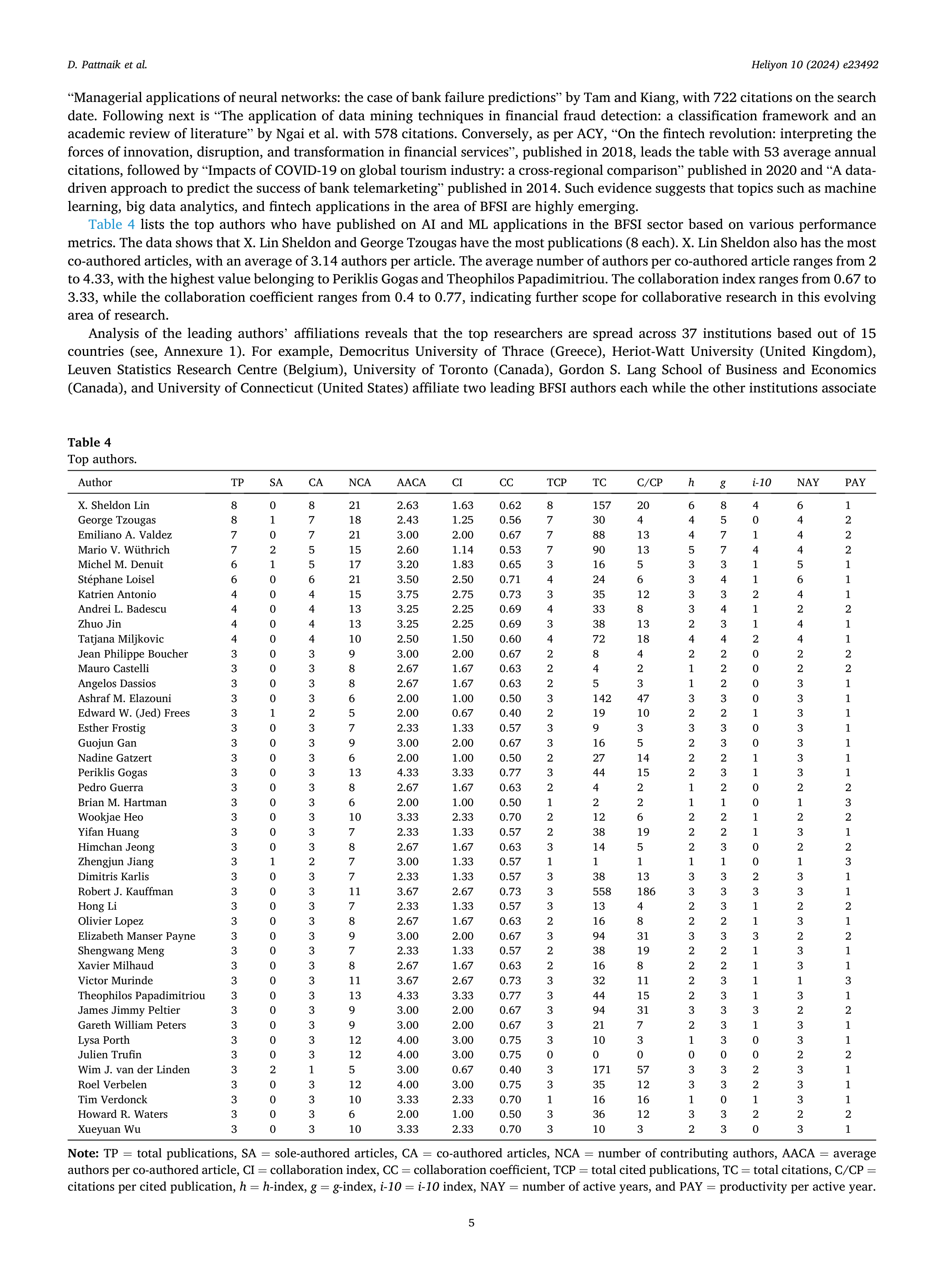
Table 4
lists the top authors who have published on AI and ML applications in the BFSI sector based on various performance
metrics. The data shows that X. Lin Sheldon and George Tzougas have the most publications (8 each). X. Lin Sheldon also has the most
co-authored articles, with an average of 3.14 authors per article. The average number of authors per co-authored article ranges from 2
to 4.33, with the highest value belonging to Periklis Gogas and Theophilos Papadimitriou. The collaboration index ranges from 0.67 to
3.33, while the collaboration coefficient ranges from 0.4 to 0.77, indicating further scope for collaborative research in this evolving
area of research.
Analysis of the leading authors
’
affiliations reveals that the top researchers are spread across 37 institutions based out of 15
countries (see, Annexure 1). For example, Democritus University of Thrace (Greece), Heriot-Watt University (United Kingdom),
Leuven Statistics Research Centre (Belgium), University of Toronto (Canada), Gordon S. Lang School of Business and Economics
(Canada), and University of Connecticut (United States) affiliate two leading BFSI authors each while the other institutions associate
Table 4
Top authors.
Author
TP
SA
CA
NCA
AACA
CI
CC
TCP
TC
C/CP
h
g
i-10
NAY
PAY
X. Sheldon Lin
8
0
8
21
2.63
1.63
0.62
8
157
20
6
8
4
6
1
George Tzougas
8
1
7
18
2.43
1.25
0.56
7
30
4
4
5
0
4
2
Emiliano A. Valdez
7
0
7
21
3.00
2.00
0.67
7
88
13
4
7
1
4
2
Mario V. Wüthrich
7
2
5
15
2.60
1.14
0.53
7
90
13
5
7
4
4
2
Michel M. Denuit
6
1
5
17
3.20
1.83
0.65
3
16
5
3
3
1
5
1
St
´
ephane Loisel
6
0
6
21
3.50
2.50
0.71
4
24
6
3
4
1
6
1
Katrien Antonio
4
0
4
15
3.75
2.75
0.73
3
35
12
3
3
2
4
1
Andrei L. Badescu
4
0
4
13
3.25
2.25
0.69
4
33
8
3
4
1
2
2
Zhuo Jin
4
0
4
13
3.25
2.25
0.69
3
38
13
2
3
1
4
1
Tatjana Miljkovic
4
0
4
10
2.50
1.50
0.60
4
72
18
4
4
2
4
1
Jean Philippe Boucher
3
0
3
9
3.00
2.00
0.67
2
8
4
2
2
0
2
2
Mauro Castelli
3
0
3
8
2.67
1.67
0.63
2
4
2
1
2
0
2
2
Angelos Dassios
3
0
3
8
2.67
1.67
0.63
2
5
3
1
2
0
3
1
Ashraf M. Elazouni
3
0
3
6
2.00
1.00
0.50
3
142
47
3
3
0
3
1
Edward W. (Jed) Frees
3
1
2
5
2.00
0.67
0.40
2
19
10
2
2
1
3
1
Esther Frostig
3
0
3
7
2.33
1.33
0.57
3
9
3
3
3
0
3
1
Guojun Gan
3
0
3
9
3.00
2.00
0.67
3
16
5
2
3
0
3
1
Nadine Gatzert
3
0
3
6
2.00
1.00
0.50
2
27
14
2
2
1
3
1
Periklis Gogas
3
0
3
13
4.33
3.33
0.77
3
44
15
2
3
1
3
1
Pedro Guerra
3
0
3
8
2.67
1.67
0.63
2
4
2
1
2
0
2
2
Brian M. Hartman
3
0
3
6
2.00
1.00
0.50
1
2
2
1
1
0
1
3
Wookjae Heo
3
0
3
10
3.33
2.33
0.70
2
12
6
2
2
1
2
2
Yifan Huang
3
0
3
7
2.33
1.33
0.57
2
38
19
2
2
1
3
1
Himchan Jeong
3
0
3
8
2.67
1.67
0.63
3
14
5
2
3
0
2
2
Zhengjun Jiang
3
1
2
7
3.00
1.33
0.57
1
1
1
1
1
0
1
3
Dimitris Karlis
3
0
3
7
2.33
1.33
0.57
3
38
13
3
3
2
3
1
Robert J. Kauffman
3
0
3
11
3.67
2.67
0.73
3
558
186
3
3
3
3
1
Hong Li
3
0
3
7
2.33
1.33
0.57
3
13
4
2
3
1
2
2
Olivier Lopez
3
0
3
8
2.67
1.67
0.63
2
16
8
2
2
1
3
1
Elizabeth Manser Payne
3
0
3
9
3.00
2.00
0.67
3
94
31
3
3
3
2
2
Shengwang Meng
3
0
3
7
2.33
1.33
0.57
2
38
19
2
2
1
3
1
Xavier Milhaud
3
0
3
8
2.67
1.67
0.63
2
16
8
2
2
1
3
1
Victor Murinde
3
0
3
11
3.67
2.67
0.73
3
32
11
2
3
1
1
3
Theophilos Papadimitriou
3
0
3
13
4.33
3.33
0.77
3
44
15
2
3
1
3
1
James Jimmy Peltier
3
0
3
9
3.00
2.00
0.67
3
94
31
3
3
3
2
2
Gareth William Peters
3
0
3
9
3.00
2.00
0.67
3
21
7
2
3
1
3
1
Lysa Porth
3
0
3
12
4.00
3.00
0.75
3
10
3
1
3
0
3
1
Julien Trufin
3
0
3
12
4.00
3.00
0.75
0
0
0
0
0
0
2
2
Wim J. van der Linden
3
2
1
5
3.00
0.67
0.40
3
171
57
3
3
2
3
1
Roel Verbelen
3
0
3
12
4.00
3.00
0.75
3
35
12
3
3
2
3
1
Tim Verdonck
3
0
3
10
3.33
2.33
0.70
1
16
16
1
0
1
3
1
Howard R. Waters
3
0
3
6
2.00
1.00
0.50
3
36
12
3
3
2
2
2
Xueyuan Wu
3
0
3
10
3.33
2.33
0.70
3
10
3
2
3
0
3
1
Note:
TP
=
total publications, SA
=
sole-authored articles, CA
=
co-authored articles, NCA
=
number of contributing authors, AACA
=
average
authors per co-authored article, CI
=
collaboration index, CC
=
collaboration coefficient, TCP
=
total cited publications, TC
=
total citations, C/CP
=
citations per cited publication,
h
=
h-
index,
g
=
g-
index,
i-10
=
i-10
index, NAY
=
number of active years, and PAY
=
productivity per active year.
D. Pattnaik et al.
Heliyon 10 (2024) e23492
6
one, each. Interestingly, the majority of the leading BFSI authors work in the areas of actuarial sciences, contributing to risk modelling,
claim settlement, chain ladder and mortality forecasting. Some of them also work on bankruptcy prediction, credit scoring, crop in
surance, and oil price shocks, while some work on climate change and natural disasters like weather derivatives, heat waves,
earthquakes, etc.
Conversely, the total citations range from 1 to 558, with Robert J. Kauffman having the most citations. The h, g and i-10 indices
range from 0 to 6, 0 to 8 and 0 to 4, respectively. Interestingly, X. Lin Sheldon has the highest value in all these performance indicators.
Similarly, the productivity per active year ranges from 1 to 3, with Brian M. Hartman, Zhengjun Jiang, and Victor Murinde having the
highest productivity.
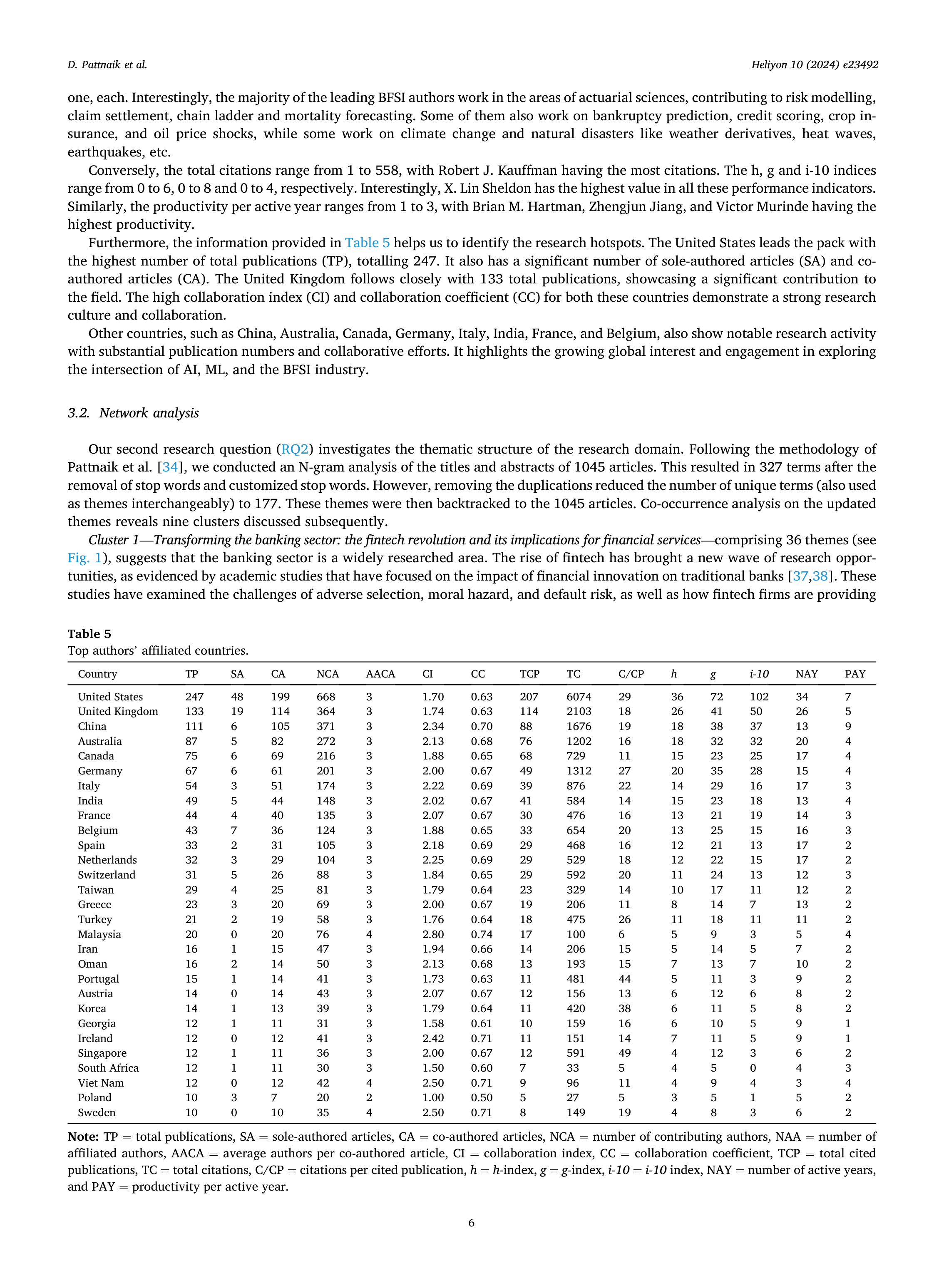
Furthermore, the information provided in
Table 5
helps us to identify the research hotspots. The United States leads the pack with
the highest number of total publications (TP), totalling 247. It also has a significant number of sole-authored articles (SA) and co-
authored articles (CA). The United Kingdom follows closely with 133 total publications, showcasing a significant contribution to
the field. The high collaboration index (CI) and collaboration coefficient (CC) for both these countries demonstrate a strong research
culture and collaboration.
Other countries, such as China, Australia, Canada, Germany, Italy, India, France, and Belgium, also show notable research activity
with substantial publication numbers and collaborative efforts. It highlights the growing global interest and engagement in exploring
the intersection of AI, ML, and the BFSI industry.
3.2.
Network analysis
Our second research question (
RQ2
) investigates the thematic structure of the research domain. Following the methodology of
Pattnaik et al. [
34
], we conducted an N-gram analysis of the titles and abstracts of 1045 articles. This resulted in 327 terms after the
removal of stop words and customized stop words. However, removing the duplications reduced the number of unique terms (also used
as themes interchangeably) to 177. These themes were then backtracked to the 1045 articles. Co-occurrence analysis on the updated
themes reveals nine clusters discussed subsequently.
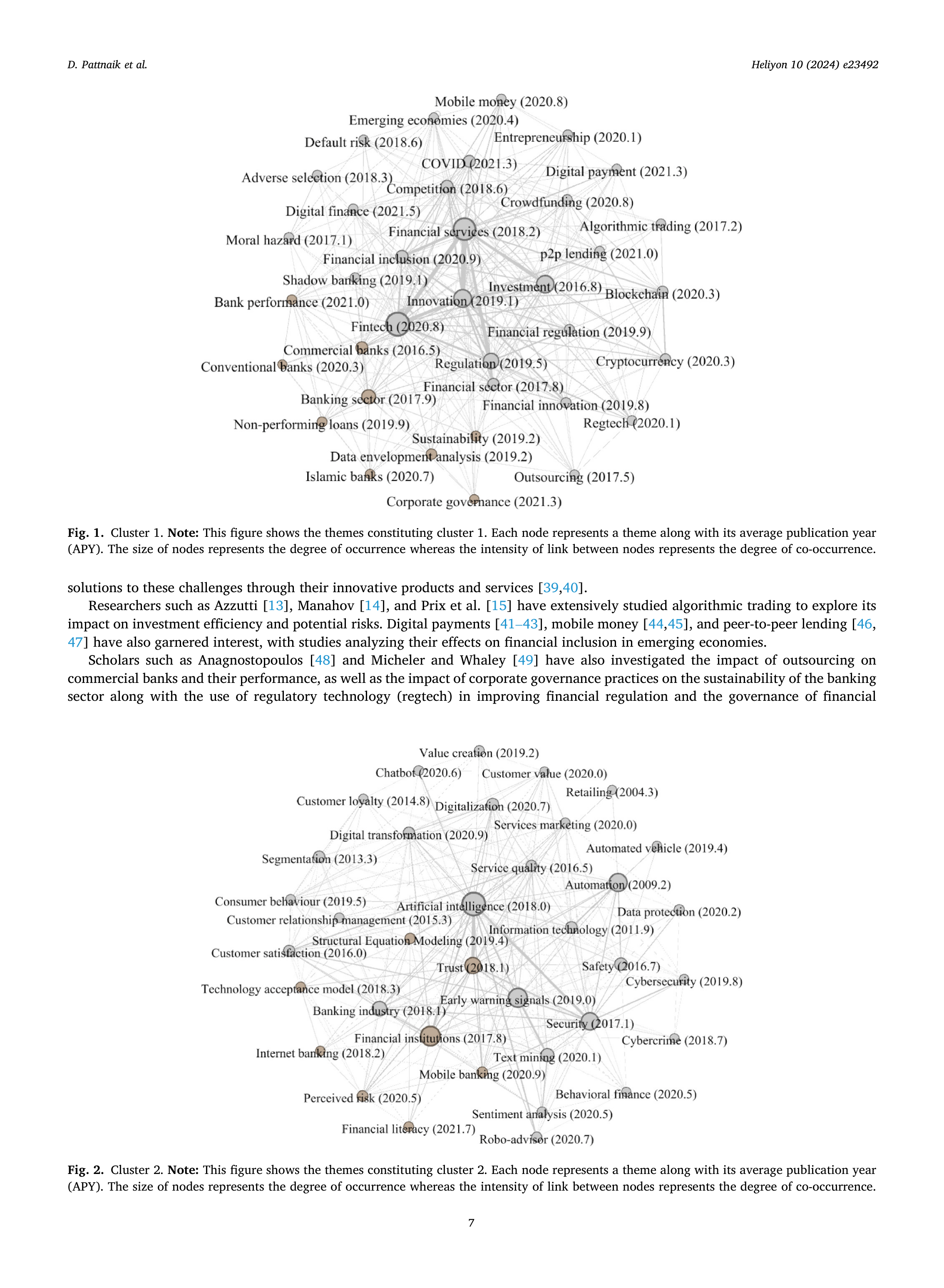
Cluster 1
—
Transforming the banking sector: the fintech revolution and its implications for financial services
—
comprising 36 themes (see
Fig. 1
), suggests that the banking sector is a widely researched area. The rise of fintech has brought a new wave of research oppor
tunities, as evidenced by academic studies that have focused on the impact of financial innovation on traditional banks [
37
,
38
]. These
studies have examined the challenges of adverse selection, moral hazard, and default risk, as well as how fintech firms are providing
Table 5
Top authors
’
affiliated countries.
Country
TP
SA
CA
NCA
AACA
CI
CC
TCP
TC
C/CP
h
g
i-10
NAY
PAY
United States
247
48
199
668
3
1.70
0.63
207
6074
29
36
72
102
34
7
United Kingdom
133
19
114
364
3
1.74
0.63
114
2103
18
26
41
50
26
5
China
111
6
105
371
3
2.34
0.70
88
1676
19
18
38
37
13
9
Australia
87
5
82
272
3
2.13
0.68
76
1202
16
18
32
32
20
4
Canada
75
6
69
216
3
1.88
0.65
68
729
11
15
23
25
17
4
Germany
67
6
61
201
3
2.00
0.67
49
1312
27
20
35
28
15
4
Italy
54
3
51
174
3
2.22
0.69
39
876
22
14
29
16
17
3
India
49
5
44
148
3
2.02
0.67
41
584
14
15
23
18
13
4
France
44
4
40
135
3
2.07
0.67
30
476
16
13
21
19
14
3
Belgium
43
7
36
124
3
1.88
0.65
33
654
20
13
25
15
16
3
Spain
33
2
31
105
3
2.18
0.69
29
468
16
12
21
13
17
2
Netherlands
32
3
29
104
3
2.25
0.69
29
529
18
12
22
15
17
2
Switzerland
31
5
26
88
3
1.84
0.65
29
592
20
11
24
13
12
3
Taiwan
29
4
25
81
3
1.79
0.64
23
329
14
10
17
11
12
2
Greece
23
3
20
69
3
2.00
0.67
19
206
11
8
14
7
13
2
Turkey
21
2
19
58
3
1.76
0.64
18
475
26
11
18
11
11
2
Malaysia
20
0
20
76
4
2.80
0.74
17
100
6
5
9
3
5
4
Iran
16
1
15
47
3
1.94
0.66
14
206
15
5
14
5
7
2
Oman
16
2
14
50
3
2.13
0.68
13
193
15
7
13
7
10
2
Portugal
15
1
14
41
3
1.73
0.63
11
481
44
5
11
3
9
2
Austria
14
0
14
43
3
2.07
0.67
12
156
13
6
12
6
8
2
Korea
14
1
13
39
3
1.79
0.64
11
420
38
6
11
5
8
2
Georgia
12
1
11
31
3
1.58
0.61
10
159
16
6
10
5
9
1
Ireland
12
0
12
41
3
2.42
0.71
11
151
14
7
11
5
9
1
Singapore
12
1
11
36
3
2.00
0.67
12
591
49
4
12
3
6
2
South Africa
12
1
11
30
3
1.50
0.60
7
33
5
4
5
0
4
3
Viet Nam
12
0
12
42
4
2.50
0.71
9
96
11
4
9
4
3
4
Poland
10
3
7
20
2
1.00
0.50
5
27
5
3
5
1
5
2
Sweden
10
0
10
35
4
2.50
0.71
8
149
19
4
8
3
6
2
Note:
TP
=
total publications, SA
=
sole-authored articles, CA
=
co-authored articles, NCA
=
number of contributing authors, NAA
=
number of
affiliated authors, AACA
=
average authors per co-authored article, CI
=
collaboration index, CC
=
collaboration coefficient, TCP
=
total cited
publications, TC
=
total citations, C/CP
=
citations per cited publication,
h
=
h-
index,
g
=
g-
index,
i-10
=
i-10
index, NAY
=
number of active years,
and PAY
=
productivity per active year.
D. Pattnaik et al.
Heliyon 10 (2024) e23492
7
solutions to these challenges through their innovative products and services [
39
,
40
].
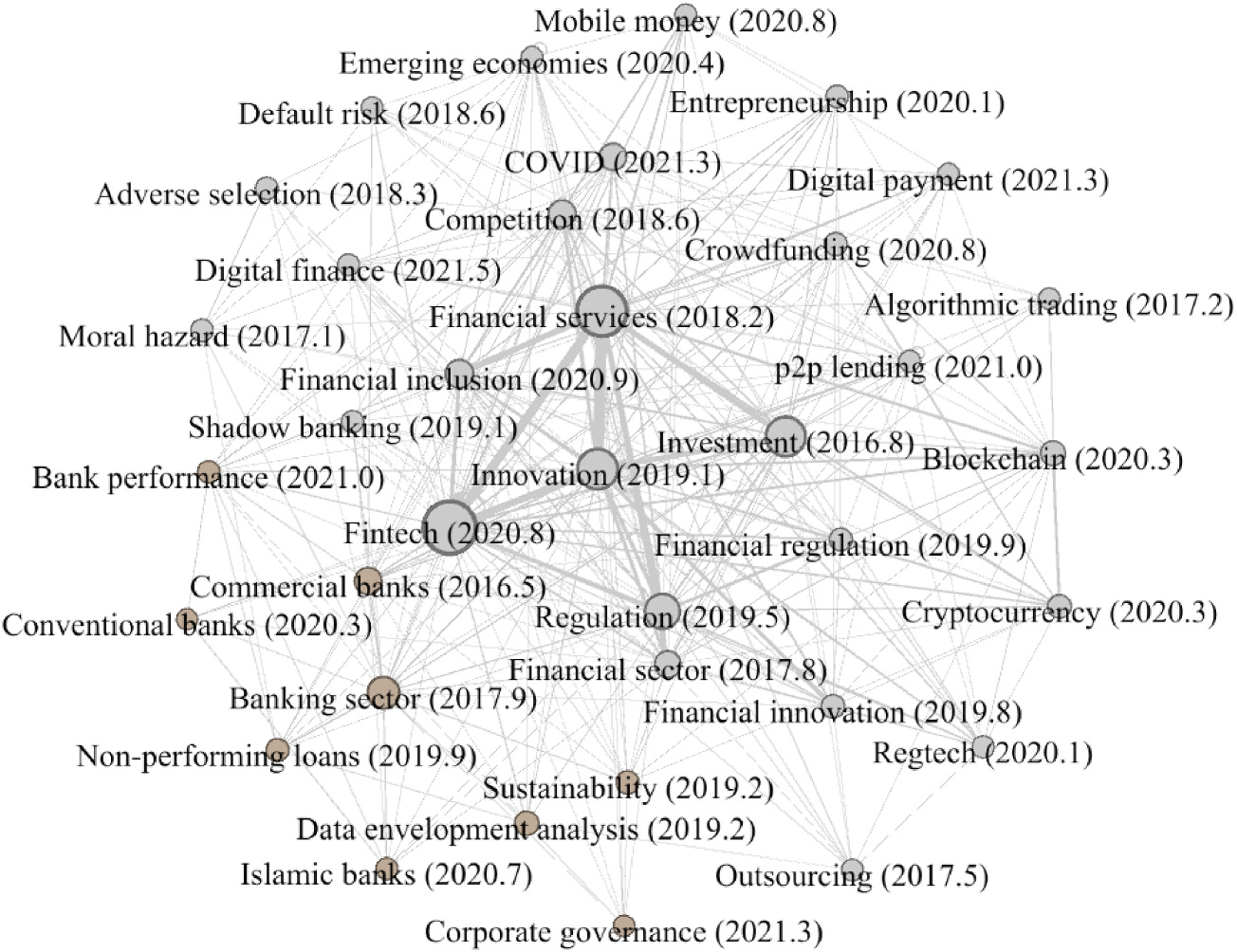
Researchers such as Azzutti [
13
], Manahov [
14
], and Prix et al. [
15
] have extensively studied algorithmic trading to explore its
impact on investment efficiency and potential risks. Digital payments [
41
–
43
], mobile money [
44
,
45
], and peer-to-peer lending [
46
,
47
] have also garnered interest, with studies analyzing their effects on financial inclusion in emerging economies.
Scholars such as Anagnostopoulos [
48
] and Micheler and Whaley [
49
] have also investigated the impact of outsourcing on
commercial banks and their performance, as well as the impact of corporate governance practices on the sustainability of the banking
sector along with the use of regulatory technology (regtech) in improving financial regulation and the governance of financial
Fig. 1.
Cluster 1.
Note:
This figure shows the themes constituting cluster 1. Each node represents a theme along with its average publication year
(APY). The size of nodes represents the degree of occurrence whereas the intensity of link between nodes represents the degree of co-occurrence.
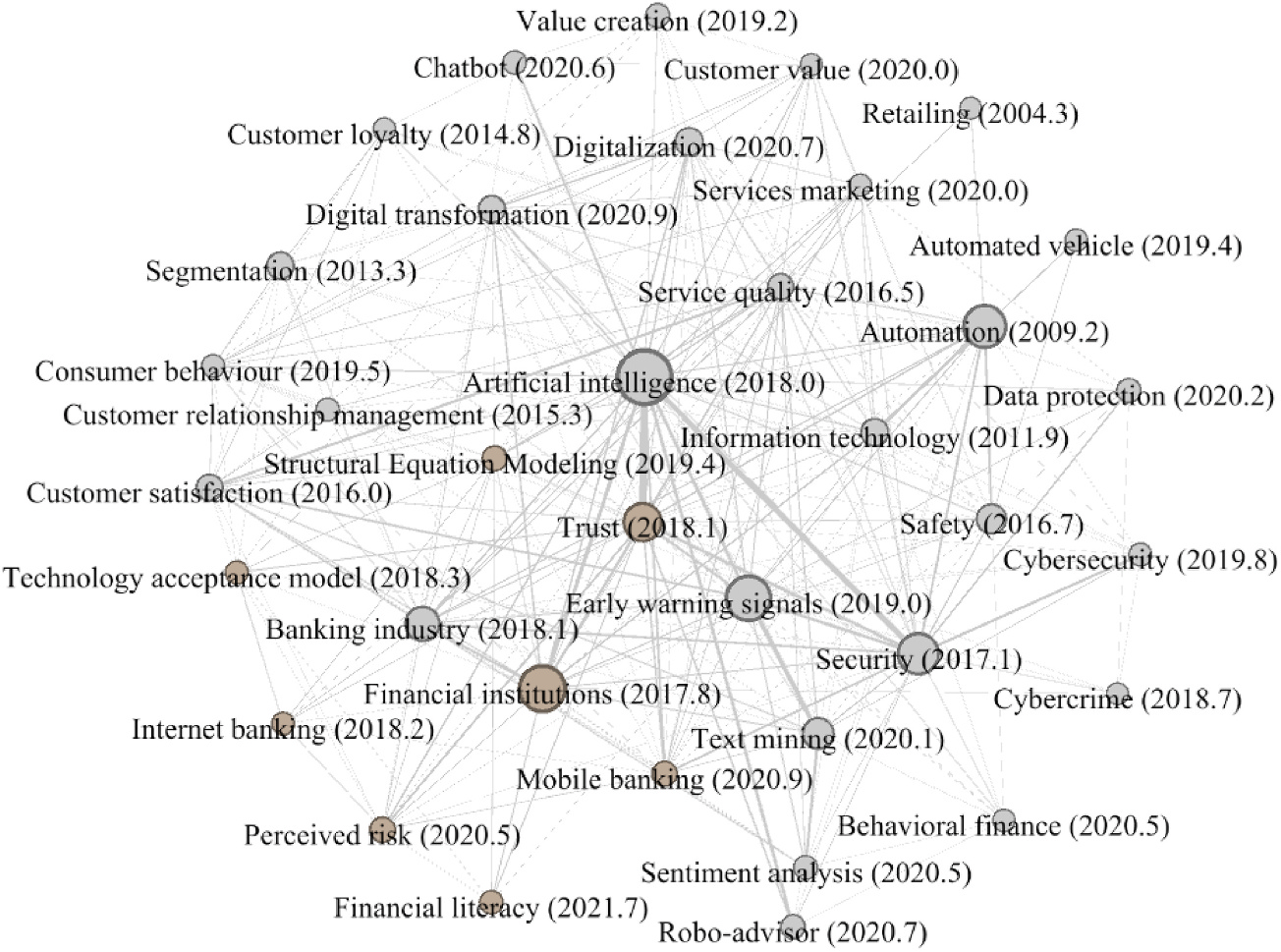
Fig. 2.
Cluster 2.
Note:
This figure shows the themes constituting cluster 2. Each node represents a theme along with its average publication year
(APY). The size of nodes represents the degree of occurrence whereas the intensity of link between nodes represents the degree of co-occurrence.
D. Pattnaik et al.
Heliyon 10 (2024) e23492
8
institutions.
Expanding the dimensions of the cluster further, the COVID-19 pandemic has brought new research opportunities, with studies
examining the acceleration of the adoption of digital finance and its impact on financial services [
50
]. Additionally, scholars have
analyzed the potential risks associated with the shadow banking sector and the cybersecurity implications of digital finance [
51
]. Thus,
the extensive research in Cluster 1 highlights the wide interest in the banking sector, particularly the transformative impact of the
fintech revolution.
Cluster 2
—
Exploring the role of AI and ML in the banking industry: enhancing service quality, customer satisfaction, and mitigating
risk
—
comprising 36 themes (see
Fig. 2
) suggests that academic research in the banking industry has focused extensively on the role of
digital transformation, artificial intelligence, and automation in enhancing customer satisfaction, loyalty, and value creation.
Researchers, including Gatzert and Schubert [
52
] and Northey et al. [
53
], have conducted studies investigating the use of chatbots
and robo-advisors to enhance customer relationship management, as well as the potential of sentiment analysis and text mining to gain
insights into customer behaviour and segmentation. Moreover, scholars such as Anand and Mishra [
54
] and Heo et al. [
55
] have
examined the impact of digitalization and internet banking on financial literacy. They have also explored the factors influencing
customer perceptions of new technologies using the technology acceptance model.
Furthermore, researchers have devoted attention to the challenges of cybersecurity and data protection in the banking industry, as
well as the risk mitigation measures implemented by financial institutions [
56
,
57
]. The perceived risks associated with these issues
have been analyzed, and the role of early warning systems (EWS) in risk monitoring and mitigation have been explored [
58
]. In
addition, studies have investigated the impact of automation on retailing and the potential of behavioural finance to enhance customer
decision-making [
59
,
60
].
Thus, the extensive research in Cluster 2 on the role of AI and ML in the banking industry indicates a strong focus on digital
transformation, AI, and automation for enhancing customer satisfaction, loyalty, and value creation, as well as addressing cyberse
curity and risk mitigation concerns.
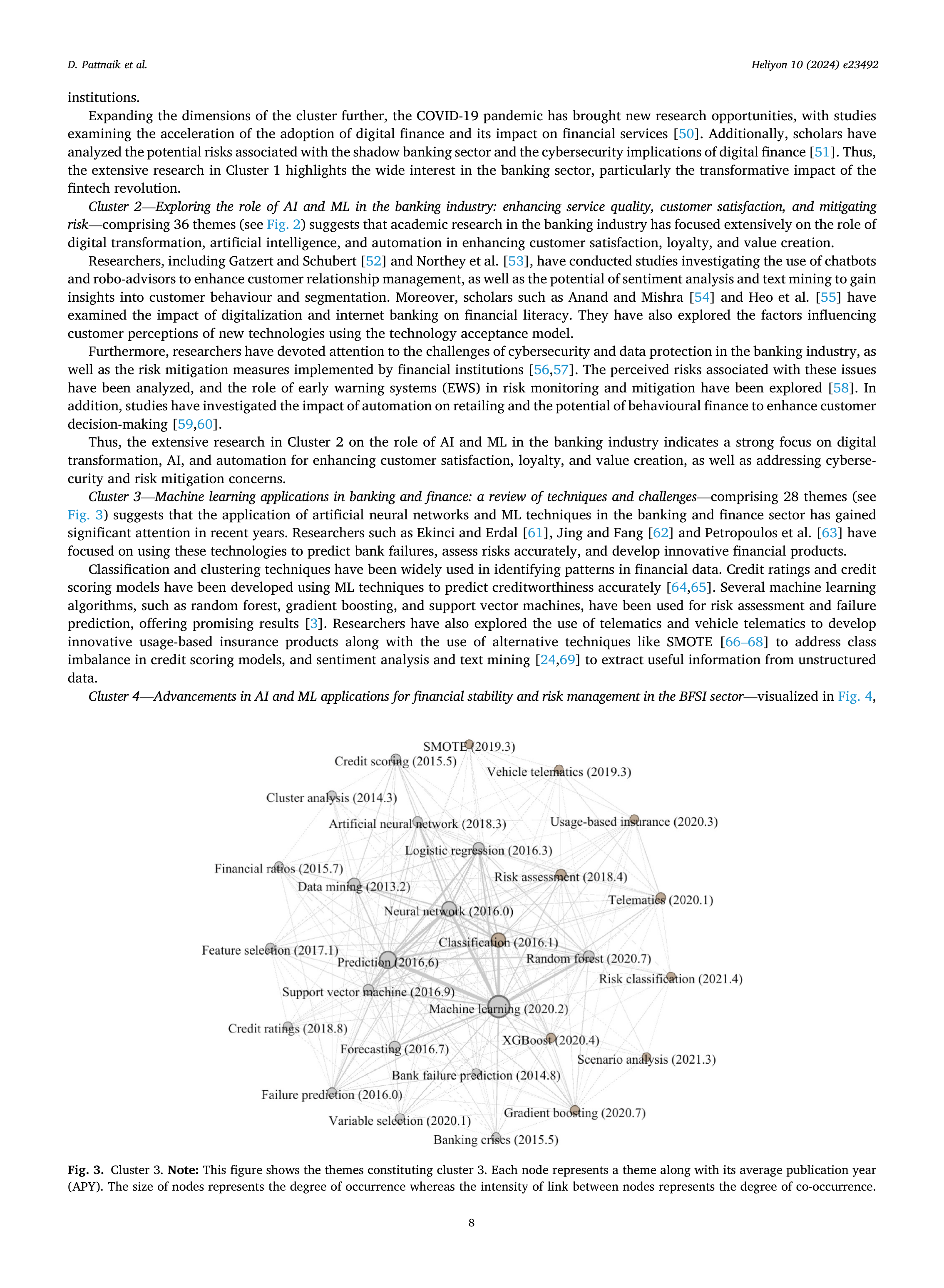
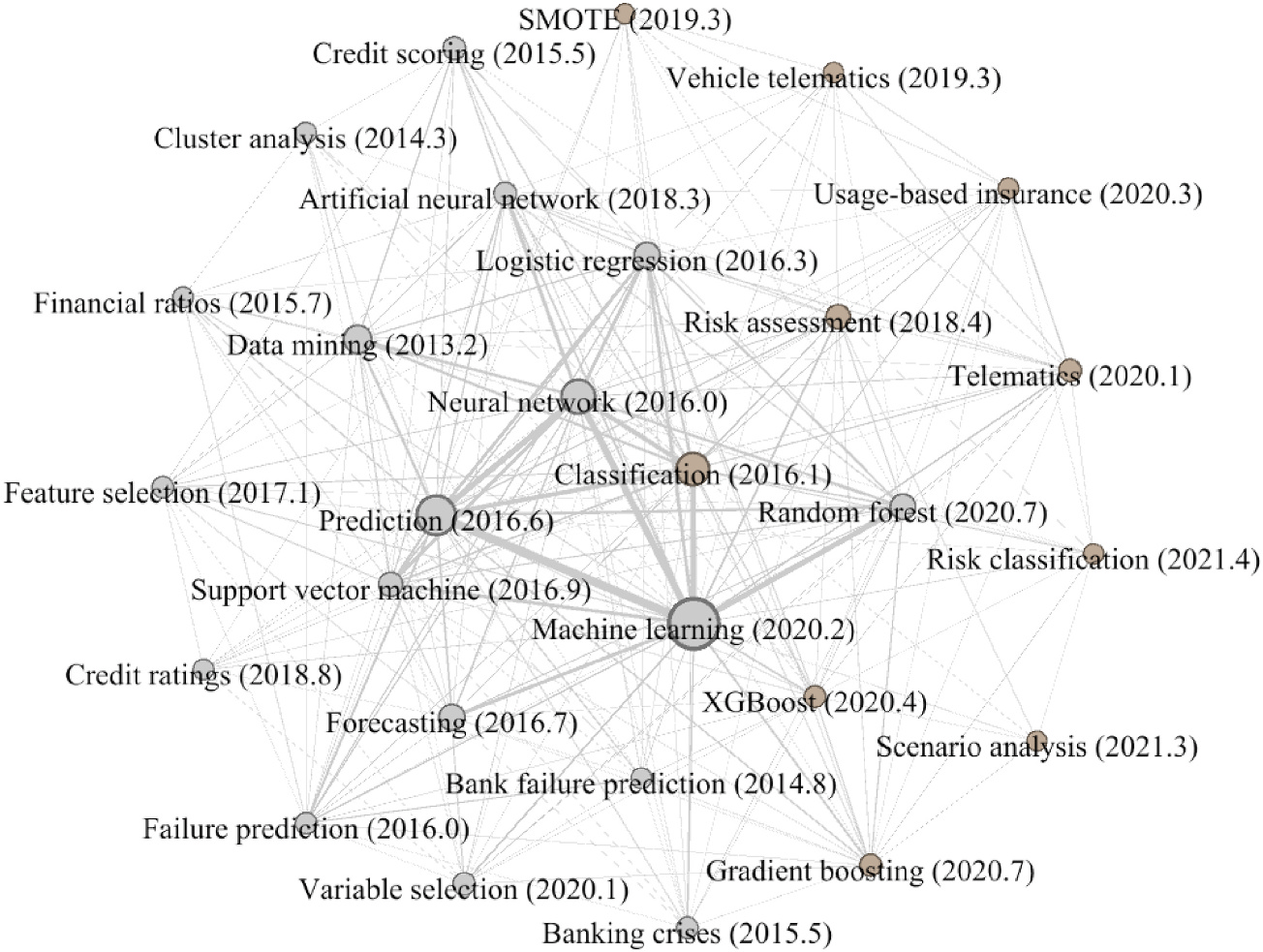
Cluster 3
—
Machine learning applications in banking and finance: a review of techniques and challenges
—
comprising 28 themes (see
Fig. 3
) suggests that the application of artificial neural networks and ML techniques in the banking and finance sector has gained
significant attention in recent years. Researchers such as Ekinci and Erdal [
61
], Jing and Fang [
62
] and Petropoulos et al. [
63
] have
focused on using these technologies to predict bank failures, assess risks accurately, and develop innovative financial products.
Classification and clustering techniques have been widely used in identifying patterns in financial data. Credit ratings and credit
scoring models have been developed using ML techniques to predict creditworthiness accurately [
64
,
65
]. Several machine learning
algorithms, such as random forest, gradient boosting, and support vector machines, have been used for risk assessment and failure
prediction, offering promising results [
3
]. Researchers have also explored the use of telematics and vehicle telematics to develop
innovative usage-based insurance products along with the use of alternative techniques like SMOTE [
66
–
68
] to address class
imbalance in credit scoring models, and sentiment analysis and text mining [
24
,
69
] to extract useful information from unstructured
data.
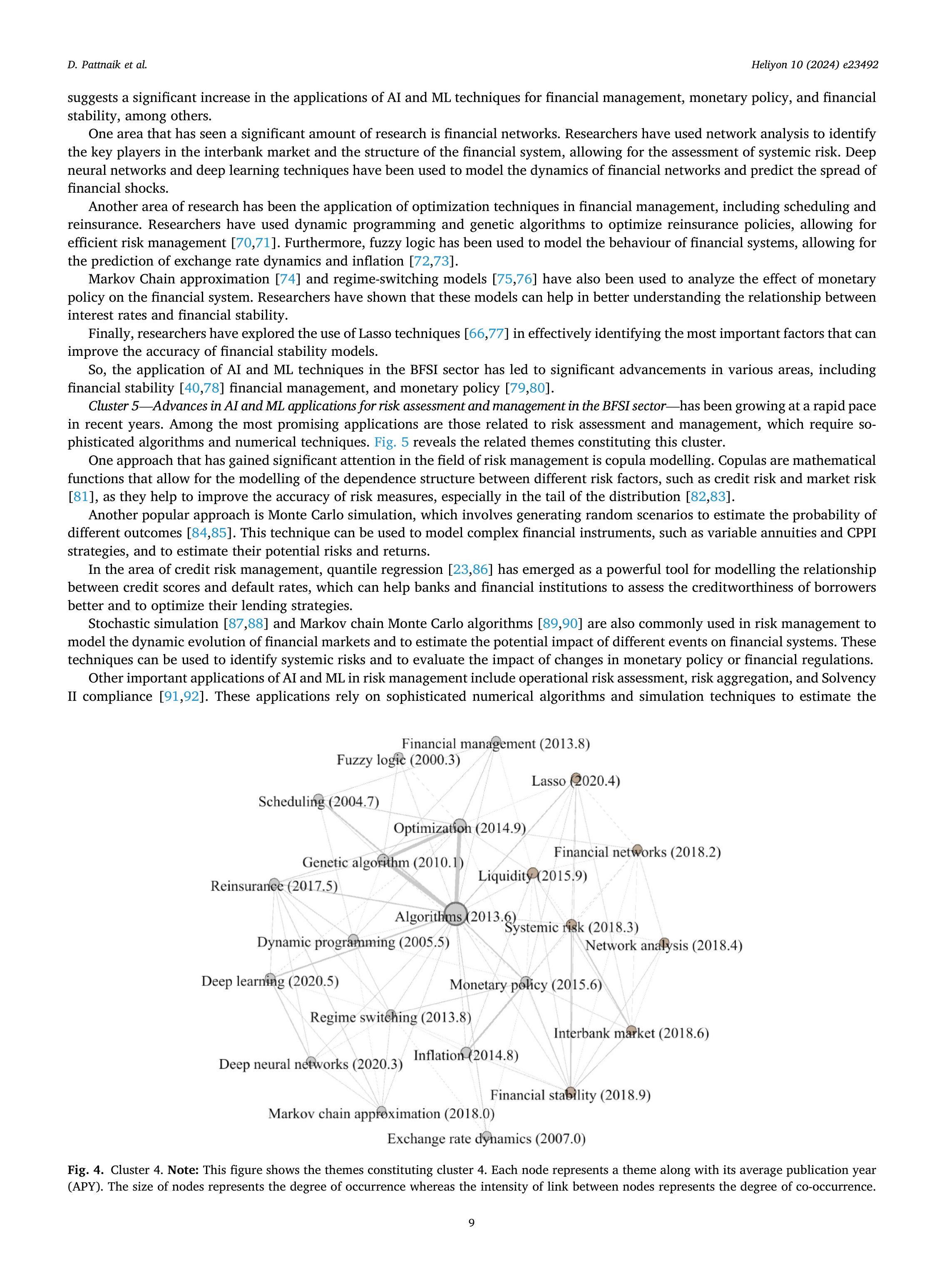
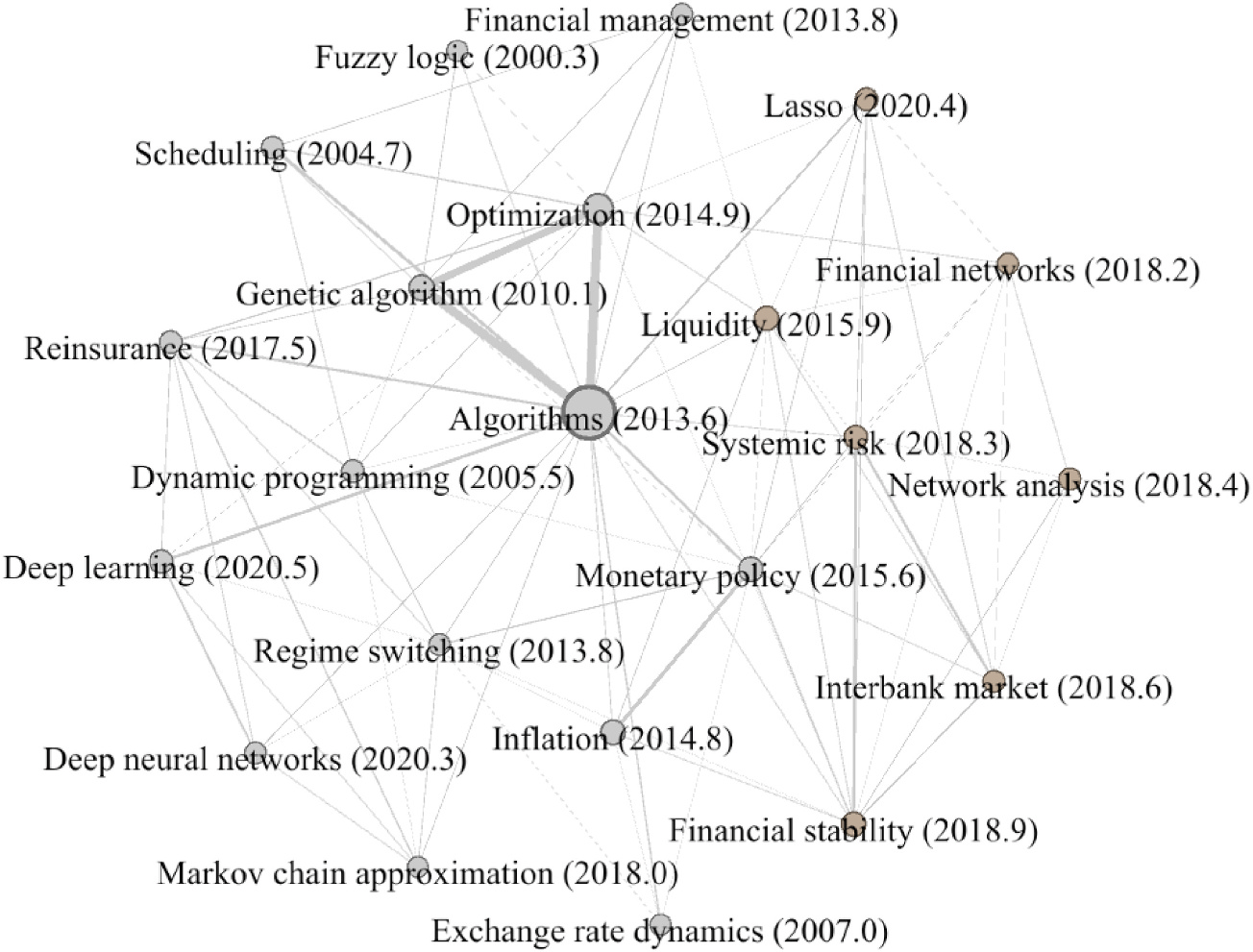
Cluster 4
—
Advancements in AI and ML applications for financial stability and risk management in the BFSI sector
—
visualized in
Fig. 4
,
Fig. 3.
Cluster 3.
Note:
This figure shows the themes constituting cluster 3. Each node represents a theme along with its average publication year
(APY). The size of nodes represents the degree of occurrence whereas the intensity of link between nodes represents the degree of co-occurrence.
D. Pattnaik et al.
Heliyon 10 (2024) e23492
9
suggests a significant increase in the applications of AI and ML techniques for financial management, monetary policy, and financial
stability, among others.
One area that has seen a significant amount of research is financial networks. Researchers have used network analysis to identify
the key players in the interbank market and the structure of the financial system, allowing for the assessment of systemic risk. Deep
neural networks and deep learning techniques have been used to model the dynamics of financial networks and predict the spread of
financial shocks.
Another area of research has been the application of optimization techniques in financial management, including scheduling and
reinsurance. Researchers have used dynamic programming and genetic algorithms to optimize reinsurance policies, allowing for
efficient risk management [
70
,
71
]. Furthermore, fuzzy logic has been used to model the behaviour of financial systems, allowing for
the prediction of exchange rate dynamics and inflation [
72
,
73
].
Markov Chain approximation [
74
] and regime-switching models [
75
,
76
] have also been used to analyze the effect of monetary
policy on the financial system. Researchers have shown that these models can help in better understanding the relationship between
interest rates and financial stability.
Finally, researchers have explored the use of Lasso techniques [
66
,
77
] in effectively identifying the most important factors that can
improve the accuracy of financial stability models.
So, the application of AI and ML techniques in the BFSI sector has led to significant advancements in various areas, including
financial stability [
40
,
78
] financial management, and monetary policy [
79
,
80
].
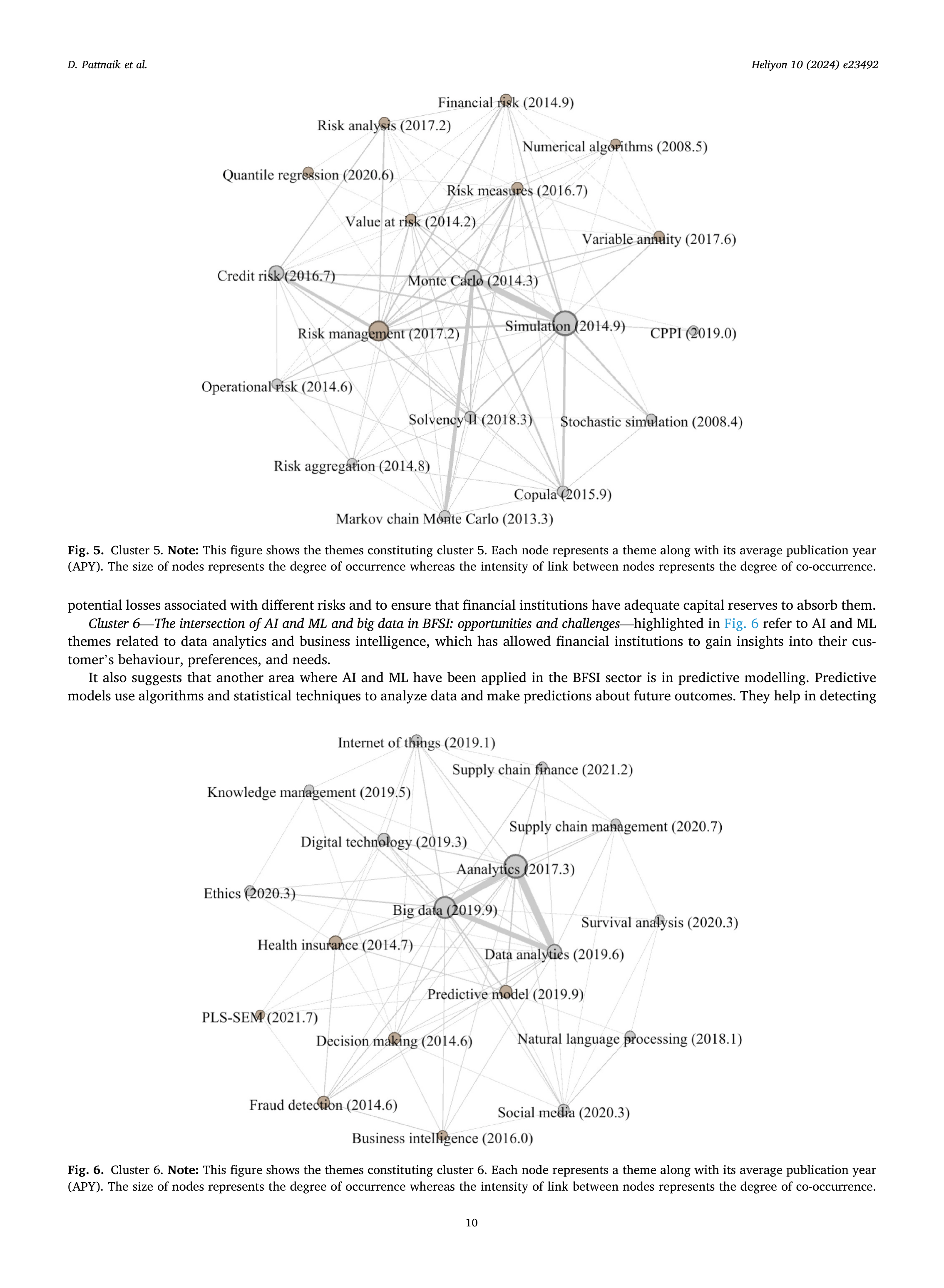
Cluster 5
—
Advances in AI and ML applications for risk assessment and management in the BFSI sector
—
has been growing at a rapid pace
in recent years. Among the most promising applications are those related to risk assessment and management, which require so
phisticated algorithms and numerical techniques.
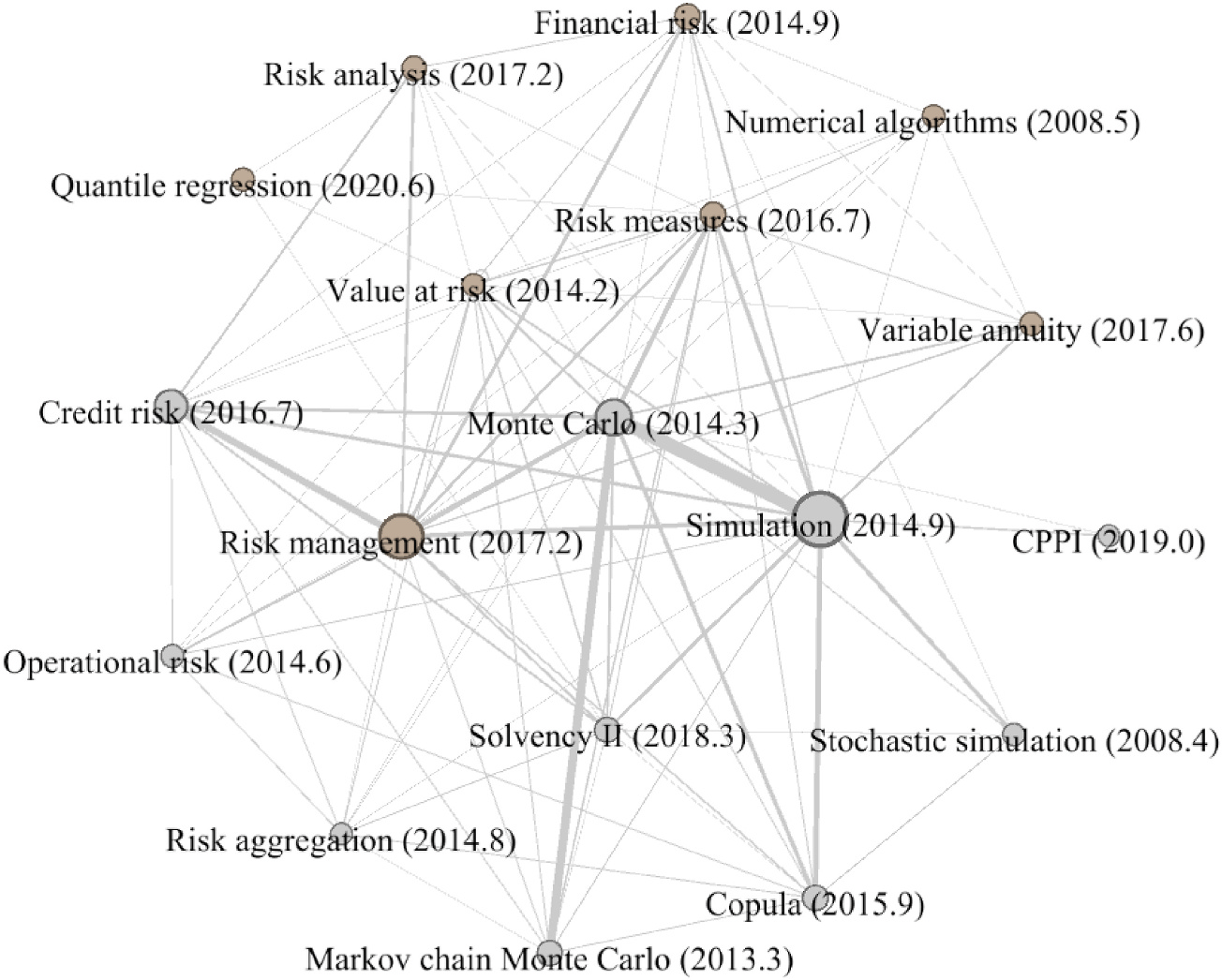
Fig. 5
reveals the related themes constituting this cluster.
One approach that has gained significant attention in the field of risk management is copula modelling. Copulas are mathematical
functions that allow for the modelling of the dependence structure between different risk factors, such as credit risk and market risk
[
81
], as they help to improve the accuracy of risk measures, especially in the tail of the distribution [
82
,
83
].
Another popular approach is Monte Carlo simulation, which involves generating random scenarios to estimate the probability of
different outcomes [
84
,
85
]. This technique can be used to model complex financial instruments, such as variable annuities and CPPI
strategies, and to estimate their potential risks and returns.
In the area of credit risk management, quantile regression [
23
,
86
] has emerged as a powerful tool for modelling the relationship
between credit scores and default rates, which can help banks and financial institutions to assess the creditworthiness of borrowers
better and to optimize their lending strategies.
Stochastic simulation [
87
,
88
] and Markov chain Monte Carlo algorithms [
89
,
90
] are also commonly used in risk management to
model the dynamic evolution of financial markets and to estimate the potential impact of different events on financial systems. These
techniques can be used to identify systemic risks and to evaluate the impact of changes in monetary policy or financial regulations.
Other important applications of AI and ML in risk management include operational risk assessment, risk aggregation, and Solvency
II compliance [
91
,
92
]. These applications rely on sophisticated numerical algorithms and simulation techniques to estimate the
Fig. 4.
Cluster 4.
Note:
This figure shows the themes constituting cluster 4. Each node represents a theme along with its average publication year
(APY). The size of nodes represents the degree of occurrence whereas the intensity of link between nodes represents the degree of co-occurrence.
D. Pattnaik et al.
Heliyon 10 (2024) e23492
10
potential losses associated with different risks and to ensure that financial institutions have adequate capital reserves to absorb them.
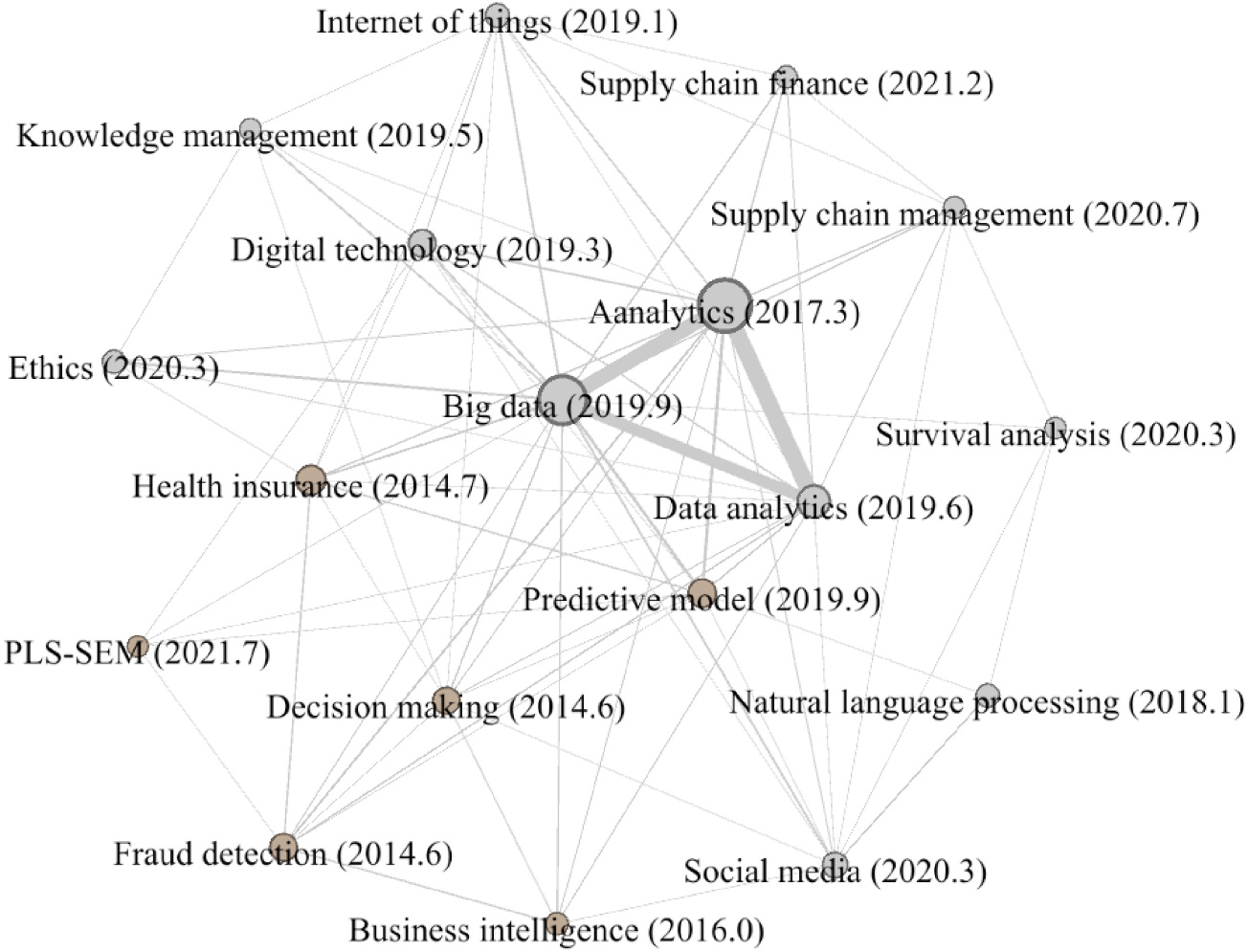
Cluster 6
—
The intersection of AI and ML and big data in BFSI: opportunities and challenges
—
highlighted in
Fig. 6
refer to AI and ML
themes related to data analytics and business intelligence, which has allowed financial institutions to gain insights into their cus
tomer
’
s behaviour, preferences, and needs.
It also suggests that another area where AI and ML have been applied in the BFSI sector is in predictive modelling. Predictive
models use algorithms and statistical techniques to analyze data and make predictions about future outcomes. They help in detecting
Fig. 5.
Cluster 5.
Note:
This figure shows the themes constituting cluster 5. Each node represents a theme along with its average publication year
(APY). The size of nodes represents the degree of occurrence whereas the intensity of link between nodes represents the degree of co-occurrence.
Fig. 6.
Cluster 6.
Note:
This figure shows the themes constituting cluster 6. Each node represents a theme along with its average publication year
(APY). The size of nodes represents the degree of occurrence whereas the intensity of link between nodes represents the degree of co-occurrence.
D. Pattnaik et al.
Heliyon 10 (2024) e23492
11
patterns and anomalies in large data sets that are indicative of fraudulent activity [
12
,
93
].
Moreover, the advent of the Internet of Things (IoT) has opened new doors for financial institutions to collect and analyze data [
94
,
95
]. IoT devices, such as health monitors, sensors, and GPS trackers, generate massive amounts of data that can be used to develop
predictive models and improve decision-making.
Natural Language Processing (NLP) is another area where AI and ML have been applied. NLP techniques enable financial in
stitutions to analyze and understand unstructured data, such as social media posts and customer reviews, to gain insights into customer
preferences and sentiments [
96
,
97
].
Supply chain finance and management is another area where AI and ML have been applied. AI and ML algorithms are being used to
analyze data from suppliers
’
financial statements and credit reports to assess their creditworthiness, determine the risk of default, and
help them access finances based on their invoices [
98
,
99
].
Lastly, ethical considerations in the use of AI and ML in the BFSI sector cannot be overemphasized. To this end, researchers have
developed frameworks and models such as Partial Least Squares Structural Equation Modelling (PLS-SEM) [
100
,
101
] and survival
analysis [
102
,
103
] to assess the impact of AI and ML on various stakeholders, such as customers, employees, and society at large.
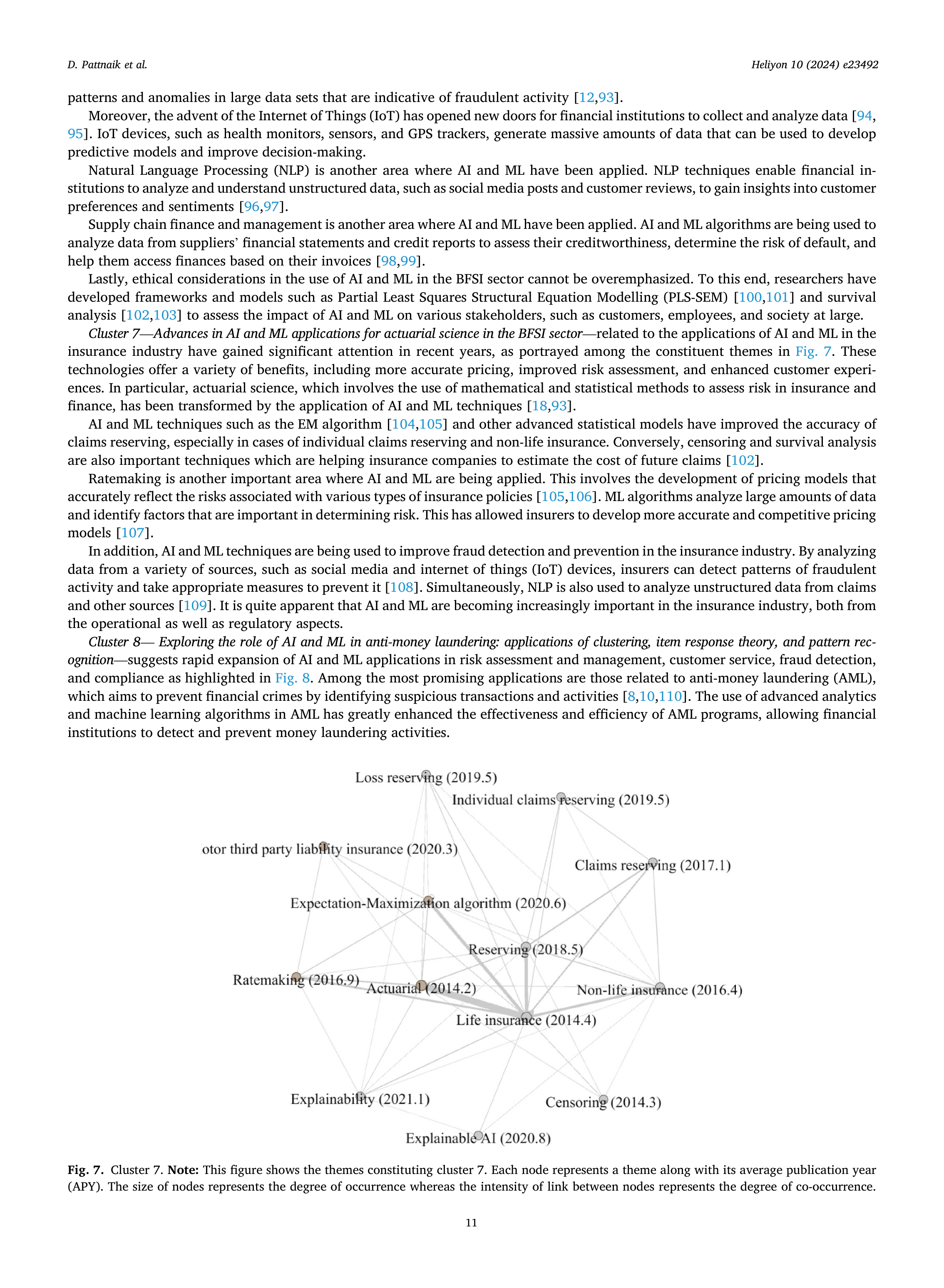
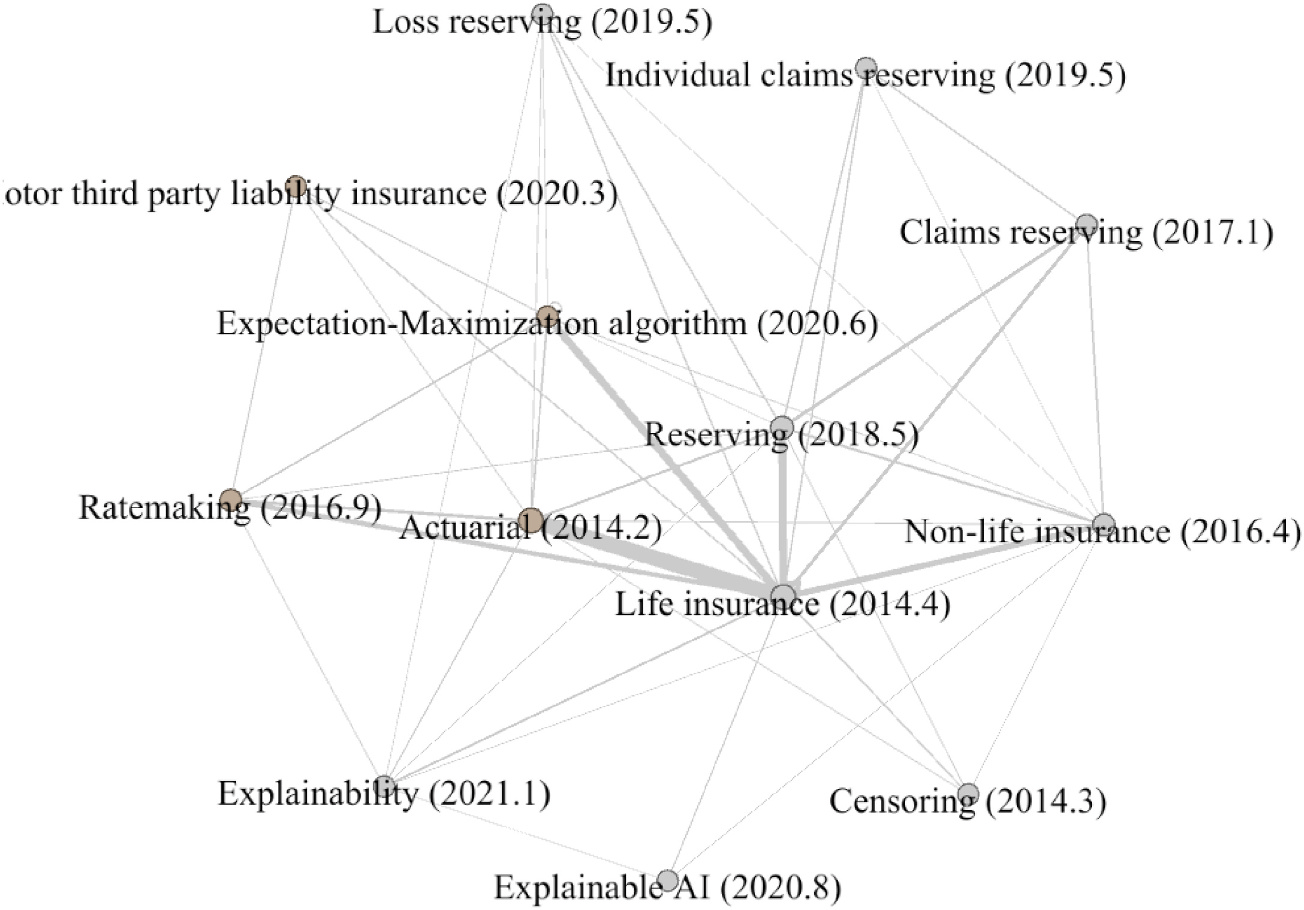
Cluster 7
—
Advances in AI and ML applications for actuarial science in the BFSI sector
—
related to the applications of AI and ML in the
insurance industry have gained significant attention in recent years, as portrayed among the constituent themes in
Fig. 7
. These
technologies offer a variety of benefits, including more accurate pricing, improved risk assessment, and enhanced customer experi
ences. In particular, actuarial science, which involves the use of mathematical and statistical methods to assess risk in insurance and
finance, has been transformed by the application of AI and ML techniques [
18
,
93
].
AI and ML techniques such as the EM algorithm [
104
,
105
] and other advanced statistical models have improved the accuracy of
claims reserving, especially in cases of individual claims reserving and non-life insurance. Conversely, censoring and survival analysis
are also important techniques which are helping insurance companies to estimate the cost of future claims [
102
].
Ratemaking is another important area where AI and ML are being applied. This involves the development of pricing models that
accurately reflect the risks associated with various types of insurance policies [
105
,
106
]. ML algorithms analyze large amounts of data
and identify factors that are important in determining risk. This has allowed insurers to develop more accurate and competitive pricing
models [
107
].
In addition, AI and ML techniques are being used to improve fraud detection and prevention in the insurance industry. By analyzing
data from a variety of sources, such as social media and internet of things (IoT) devices, insurers can detect patterns of fraudulent
activity and take appropriate measures to prevent it [
108
]. Simultaneously, NLP is also used to analyze unstructured data from claims
and other sources [
109
]. It is quite apparent that AI and ML are becoming increasingly important in the insurance industry, both from
the operational as well as regulatory aspects.
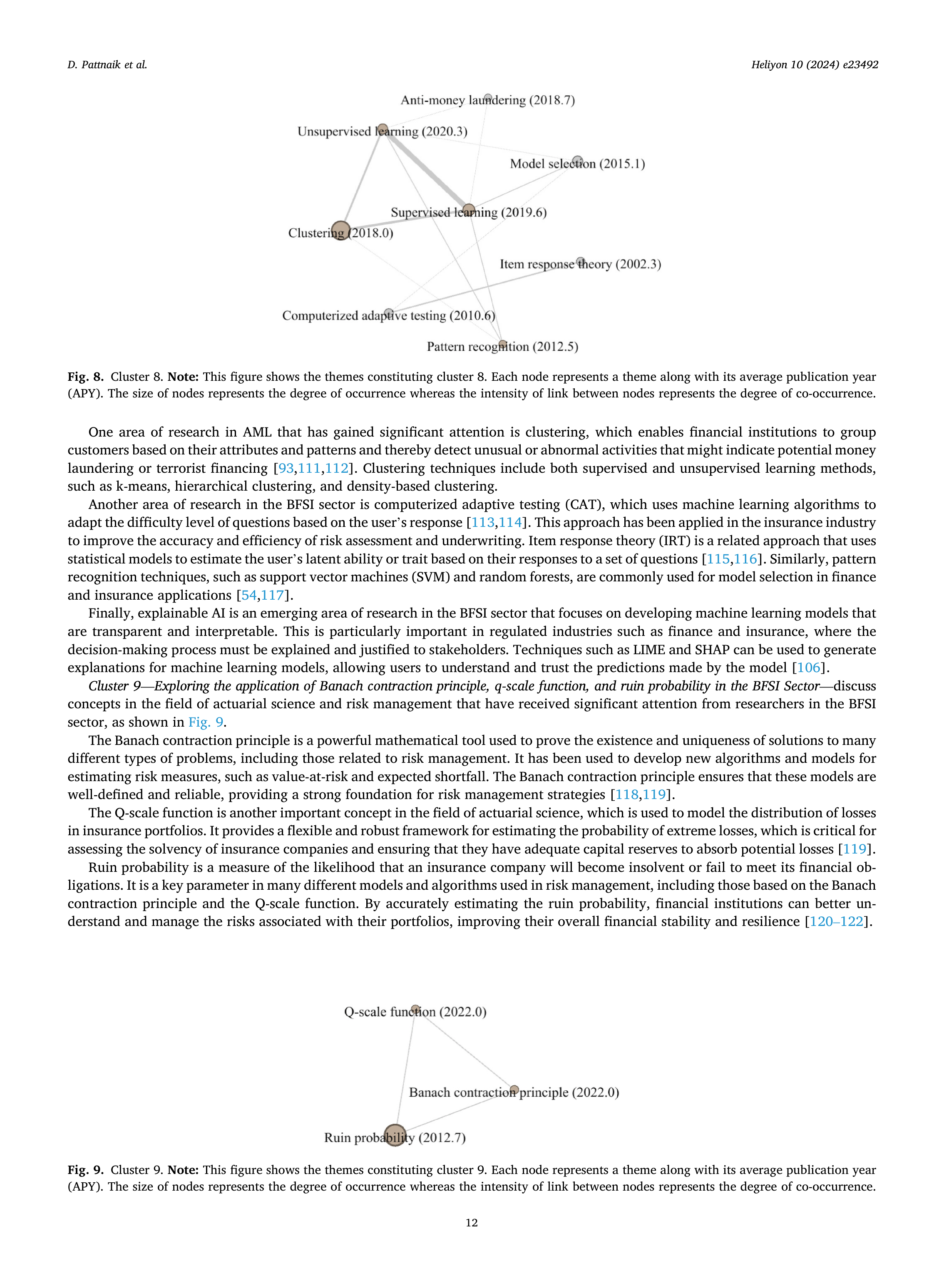
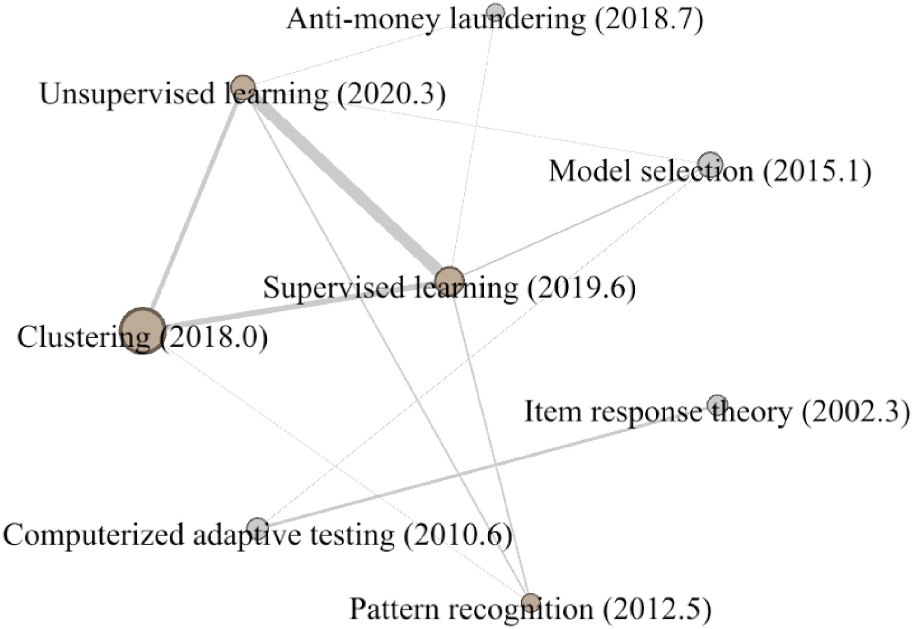
Cluster 8
—
Exploring the role of AI and ML in anti-money laundering: applications of clustering, item response theory, and pattern rec
ognition
—
suggests rapid expansion of AI and ML applications in risk assessment and management, customer service, fraud detection,
and compliance as highlighted in
Fig. 8
. Among the most promising applications are those related to anti-money laundering (AML),
which aims to prevent financial crimes by identifying suspicious transactions and activities [
8
,
10
,
110
]. The use of advanced analytics
and machine learning algorithms in AML has greatly enhanced the effectiveness and efficiency of AML programs, allowing financial
institutions to detect and prevent money laundering activities.
Fig. 7.
Cluster 7.
Note:
This figure shows the themes constituting cluster 7. Each node represents a theme along with its average publication year
(APY). The size of nodes represents the degree of occurrence whereas the intensity of link between nodes represents the degree of co-occurrence.
D. Pattnaik et al.
Heliyon 10 (2024) e23492
12
One area of research in AML that has gained significant attention is clustering, which enables financial institutions to group
customers based on their attributes and patterns and thereby detect unusual or abnormal activities that might indicate potential money
laundering or terrorist financing [
93
,
111
,
112
]. Clustering techniques include both supervised and unsupervised learning methods,
such as k-means, hierarchical clustering, and density-based clustering.
Another area of research in the BFSI sector is computerized adaptive testing (CAT), which uses machine learning algorithms to
adapt the difficulty level of questions based on the user
’
s response [
113
,
114
]. This approach has been applied in the insurance industry
to improve the accuracy and efficiency of risk assessment and underwriting. Item response theory (IRT) is a related approach that uses
statistical models to estimate the user
’
s latent ability or trait based on their responses to a set of questions [
115
,
116
]. Similarly, pattern
recognition techniques, such as support vector machines (SVM) and random forests, are commonly used for model selection in finance
and insurance applications [
54
,
117
].
Finally, explainable AI is an emerging area of research in the BFSI sector that focuses on developing machine learning models that
are transparent and interpretable. This is particularly important in regulated industries such as finance and insurance, where the
decision-making process must be explained and justified to stakeholders. Techniques such as LIME and SHAP can be used to generate
explanations for machine learning models, allowing users to understand and trust the predictions made by the model [
106
].
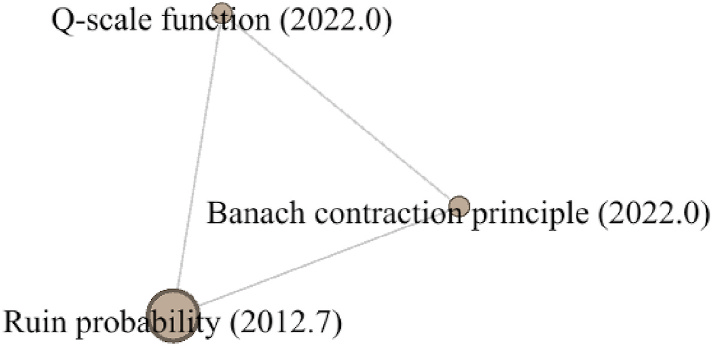
Cluster 9
—
Exploring the application of Banach contraction principle, q-scale function, and ruin probability in the BFSI Sector
—
discuss
concepts in the field of actuarial science and risk management that have received significant attention from researchers in the BFSI
sector, as shown in
Fig. 9
.
The Banach contraction principle is a powerful mathematical tool used to prove the existence and uniqueness of solutions to many
different types of problems, including those related to risk management. It has been used to develop new algorithms and models for
estimating risk measures, such as value-at-risk and expected shortfall. The Banach contraction principle ensures that these models are
well-defined and reliable, providing a strong foundation for risk management strategies [
118
,
119
].
The Q-scale function is another important concept in the field of actuarial science, which is used to model the distribution of losses
in insurance portfolios. It provides a flexible and robust framework for estimating the probability of extreme losses, which is critical for
assessing the solvency of insurance companies and ensuring that they have adequate capital reserves to absorb potential losses [
119
].
Ruin probability is a measure of the likelihood that an insurance company will become insolvent or fail to meet its financial ob
ligations. It is a key parameter in many different models and algorithms used in risk management, including those based on the Banach
contraction principle and the Q-scale function. By accurately estimating the ruin probability, financial institutions can better un
derstand and manage the risks associated with their portfolios, improving their overall financial stability and resilience [
120
–
122
].
Fig. 8.
Cluster 8.
Note:
This figure shows the themes constituting cluster 8. Each node represents a theme along with its average publication year
(APY). The size of nodes represents the degree of occurrence whereas the intensity of link between nodes represents the degree of co-occurrence.
Fig. 9.
Cluster 9.
Note:
This figure shows the themes constituting cluster 9. Each node represents a theme along with its average publication year
(APY). The size of nodes represents the degree of occurrence whereas the intensity of link between nodes represents the degree of co-occurrence.
D. Pattnaik et al.
Heliyon 10 (2024) e23492
13
4.
Summary and future research directions
The clusters uncovered through co-occurrence analysis provide valuable insights into the multifaceted nature of research in this
field, spanning fintech, risk management, anti-money laundering, and more. Our examination of the current literature through our
third research question (
RQ3
) aims to identify themes for future research. Based on the average publication year of topics and the
intensity of their co-occurrence within a cluster, we have the following recommendations.
1. Cluster 1 focuses on the fintech revolution and its implications for financial services, highlighting the transformative impact of AI
and ML applications in the banking sector. The most recent topics in this cluster are related to Covid (APY: 2021.3) and its impact
on digital payments (APY: 2021.3) and p2p lending (APY: 2021.0). As the world emerges from the pandemic, there is a need to re-
look at the innovation and sustainability aspects. Therefore, future research is likely to focus on governance, regulation, and
performance evaluation of services such as crowdfunding, blockchain, cryptocurrency and many other innovative services which
are likely to emerge in the coming days.
2. Cluster 2 explores the role of AI and ML applications in the banking industry, with a specific emphasis on enhancing service quality,
customer satisfaction, and mitigating risk. As a summation, academic research progressing in this cluster has highlighted the
potential benefits of AI and ML applications in the banking industry, emphasizing the importance of ensuring trust, security, and
privacy. Financial literacy (APY: 2021.7) is the most recent topic in this cluster. Digital transformation (APY: 2020.9), use of Robo-
advisors (APY: 2020.7) and data protection (APY: 2020.2) mechanisms are likely to continue in the coming days, resulting in the
need for more studies on financial and digital literacy. These transitions will also result in new research possibilities related to
behavioural finance (APY: 2020.5)
3. Cluster 3 provides a comprehensive review of ML techniques in the banking and finance sector that have shown promising results in
various areas, such as risk assessment, failure prediction, and product innovation. The most recent topics in this cluster are risk
classification (APY: 2021.4) and scenario analysis (APY: 2021.3). As the use of AI and ML has changed the operating landscape of
financial institutions and the sector, there is a need to evaluate and access the risk involved. Therefore, future studies in this cluster
can be around risk assessment by conducting sensitivity and scenario analysis, which can help in tackling bank failure and crisis.
4. Cluster 4 delves into advancements in AI and ML applications for financial stability and risk management in the BFSI sector, and the
most recent topics are deep learning (APY: 2020.5) and deep neural networks (APY: 2020.3). Future research in this area should
therefore focus on developing more robust and accurate models along with the development of more advanced and sophisticated
algorithms for risk assessment and management, as well as addressing the ethical concerns associated with the use of AI and ML in
finance.
5. Cluster 5 highlights the advances in AI and ML applications for risk assessment and management in BFSI. Research assessing the
uses of sophisticated algorithms and numerical techniques, such as copula modelling (APY: 2015.9), Monte Carlo simulation (APY:
2014.3), and Markov chain Monte Carlo algorithms (APY: 2013.3) in understanding and managing complex risks, improving the
overall financial stability and resilience is highly recommended. However, the APY counts of the above topics suggest that they are
not in much use in recent times. This provides an enormous scope for future research as it will help in the development of simulation
algorithms for accessing both the operational and financial risk of fintech and other traditional financial institutions.
6. Cluster 6 examines the intersection of AI, ML, and big data in BFSI, presenting opportunities and challenges in this area. Supply
chain financing (APY: 2020.7), social media (APY: 2020.3) along with research techniques such as PLS-SEM (APY: 2021.7) and
survival analysis (APY: 2020.3) are some of the most recent topics in this cluster. The growing usage of AI and ML will also increase
the importance of fraud detection and ethical issues. Therefore, future research needs to focus on both improvisations of new
techniques as well as policy prospective.
7. Cluster 7 suggests that the use of AI and ML in the insurance industry is transforming traditional actuarial practices, allowing
insurers to understand better and be able to make more informed decisions about pricing, reserving, and fraud prevention, resulting
in a more efficient and effective industry, particularly in the context of severe pandemics. Explainability (APY: 2021.1) and
explainable AI (APY: 2020.8) are the most recent topics in this cluster. Future research can extend the existing learnings to develop
new insurance products that are affordable and easily accessible. Further, future studies can also focus on using AI and ML to
improve the penetration of insurance among people from rural and poorer communities. Research in these areas provides ample
opportunities for further exploration.
8. Cluster 8 explores the role of AI and ML in anti-money laundering, with specific applications of clustering, item response theory,
and pattern recognition. The recent topics are Unsupervised learning (APY: 2020.3), which is strongly connected with supervised
learning (APY: 2019.6), and clustering (APY: 2018.0). The scope of similar studies is likely to increase further in the new digitalized
interconnected world. Future research is likely to advance the usage of unsupervised learning in understanding and managing
various aspects of financial institutions, such as risk assessment, detection and prevention of financial crimes, and means of
providing better services to their customers.
9. Cluster 9 explores the application of Banach contraction principle (APY: 2022.0), Q-scale function (APY: 2022.0), and ruin
probability (APY: 2012.7) in managing risk of financial service providers. As the BFSI sector continues to evolve and become more
complex, these concepts and techniques will likely play an increasingly important role in ensuring the stability and resilience of
financial institutions. Therefore, future research can investigate the usage of the techniques mentioned above in various other
operational aspects of fintech and financial institutions.
D. Pattnaik et al.
Heliyon 10 (2024) e23492
14
5.
Conclusions
Through a comprehensive bibliometric analysis, this study provides a panoramic view of the research landscape surrounding the
applications of AI and ML in the BFSI sector. Our findings highlight the significant emphasis placed by academia on exploring this area,
underscoring the extensive research interest it has garnered. Understanding the dynamic trends and patterns within the literature
becomes imperative for gaining valuable insights into the advancements, challenges, and prospects of this rapidly evolving domain.
RQ1
delves into the publication trends, revealing a remarkable surge in the number of publications focused on AI and ML appli
cations in the BFSI sector over the past decade.
RQ2
meticulously examines the thematic structure, enabling the categorization of the
vast body of literature into nine distinct clusters. Furthermore, RQ3 identifies crucial research gaps that offer valuable opportunities
for future scholarly pursuits.
Extensive scholarly endeavours have brought to light a multitude of benefits and challenges in areas such as digital finance,
cybersecurity, behavioural finance, and the application of ML techniques in risk management and forecasting. These advancements
have empowered financial institutions to gain better insights into and effectively mitigate risks. However, ethical concerns and data
privacy issues persist, emphasizing the need for further research to inform best practices within the industry.
The insurance industry has witnessed significant transformations through the utilization of AIML techniques, revolutionizing
actuarial science and claims reserving. The effectiveness of anti-money laundering programs has also experienced notable enhance
ments with the adoption of clustering, CAT, IRT, and explainable AI. As technology continues to evolve, we can anticipate further
innovations in AIML applications that will drive continued advancements in the BFSI sector.
Moreover, our findings highlight the profound impact of AI and ML techniques in enhancing the efficiency and effectiveness of anti-
money laundering programs within the banking, financial services, and insurance (BFSI) sector. With the increasing digitization of the
financial industry and the rise of online transactions, the importance of robust AML programs becomes increasingly critical.
Conversely, while AI and automation offer significant benefits, they also pose substantial challenges. Policymakers, businesses, and
individuals must collectively address these challenges and ensure that the advantages of AI and automation are harnessed while
minimizing potential negative consequences. A thoughtful and nuanced approach is essential, considering the complex and evolving
nature of AI and automation and their impact on society. Ultimately, the goal is to utilize these technologies in a manner that max
imizes their potential to improve lives while mitigating potential harm.
Although our study provides valuable insights and contributions, it is important to acknowledge its limitations. One of these is our
reliance on data obtained solely from Scopus. By expanding the databases used for data collection, the analysis could be further
enhanced in the future.
Data availability statement
Data will be made available on reasonable request to the communicating author.
Annexure 1
Affiliation and research area of leading BFSI authors
Author
Affiliation
Research Area
X. Sheldon Lin
University of Toronto, Toronto, Canada
claim; chain ladder; bonus-malus systems; variable annuities; life insurance; costs and
cost analysis; fire insurance; composite model; pareto distribution
George Tzougas
Heriot-Watt University, Edinburgh, United
Kingdom
claim; chain ladder; bonus-malus systems; count data; Poisson regression; regression
model; expert opinions; decision making; G-idea protocol
Emiliano A. Valdez
University of Connecticut, Storrs, United States
variable annuities; life insurance; costs and cost analysis; claim; chain ladder; bonus-
malus systems; copula; bivariate; vines
Mario V. Wüthrich
ETH Zürich, Zurich ZH, Switzerland
claim; chain ladder; bonus-malus systems; longevity risk; mortality forecasting; life
expectancy; classifier ensemble; adaboost; transfer of learning
Michel M. Denuit
Universit
´
e Catholique de Louvain, Louvain-la-
Neuve, Belgium
optimal reinsurance; value at risk; expected shortfall; claim; chain ladder; bonus-
malus systems; longevity risk; mortality forecasting; life expectancy
St
´
ephane Loisel
Laboratoire de Sciences Actuarielle et Financi
`
ere,
Lyon, France
longevity risk; mortality forecasting; life expectancy; variable annuities; life insurance;
costs and cost analysis; copula; bivariate; vines
Katrien Antonio
Leuven Statistics Research Centre, Heverlee,
Belgium
claim; chain ladder; bonus-malus systems; longevity risk; mortality forecasting; life
expectancy; product-service systems; service economy; value co-creation document
Andrei L. Badescu
University of Toronto, Toronto, Canada
claim; chain ladder; bonus-malus systems; fire insurance; composite model; pareto
distribution; risk model; ruin probability; classical risk model
Zhuo Jin
Macquarie University, Sydney, Australia
mean-variance; surplus process; defined contribution pension plan; risk model; ruin
probability; classical risk model; Hawkes processes; stochastic intensity; maximum
likelihood method
Tatjana Miljkovic
Miami University, Oxford, United States
fire insurance; composite model; pareto distribution; model-based clustering; cluster
analysis; EM algorithm; heat wave; climate change; distributed lag
Jean Philippe
Boucher
Universit
´
e du Qu
´
ebec
`
a Montr
´
eal, Montreal,
Canada
claim; chain ladder; bonus-malus systems; imbalanced data; cost-sensitive learning;
data classification; annuities; health insurance; adverse selection
Mauro Castelli
NOVA Information Management School,
Universidade Nova de Lisboa, Lisbon, Portugal
grammatical evolution; symbolic regression; genetic programming; object detection;
deep learning; IOU; bankruptcy prediction; credit scoring; prediction
(
continued on next page
)
D. Pattnaik et al.
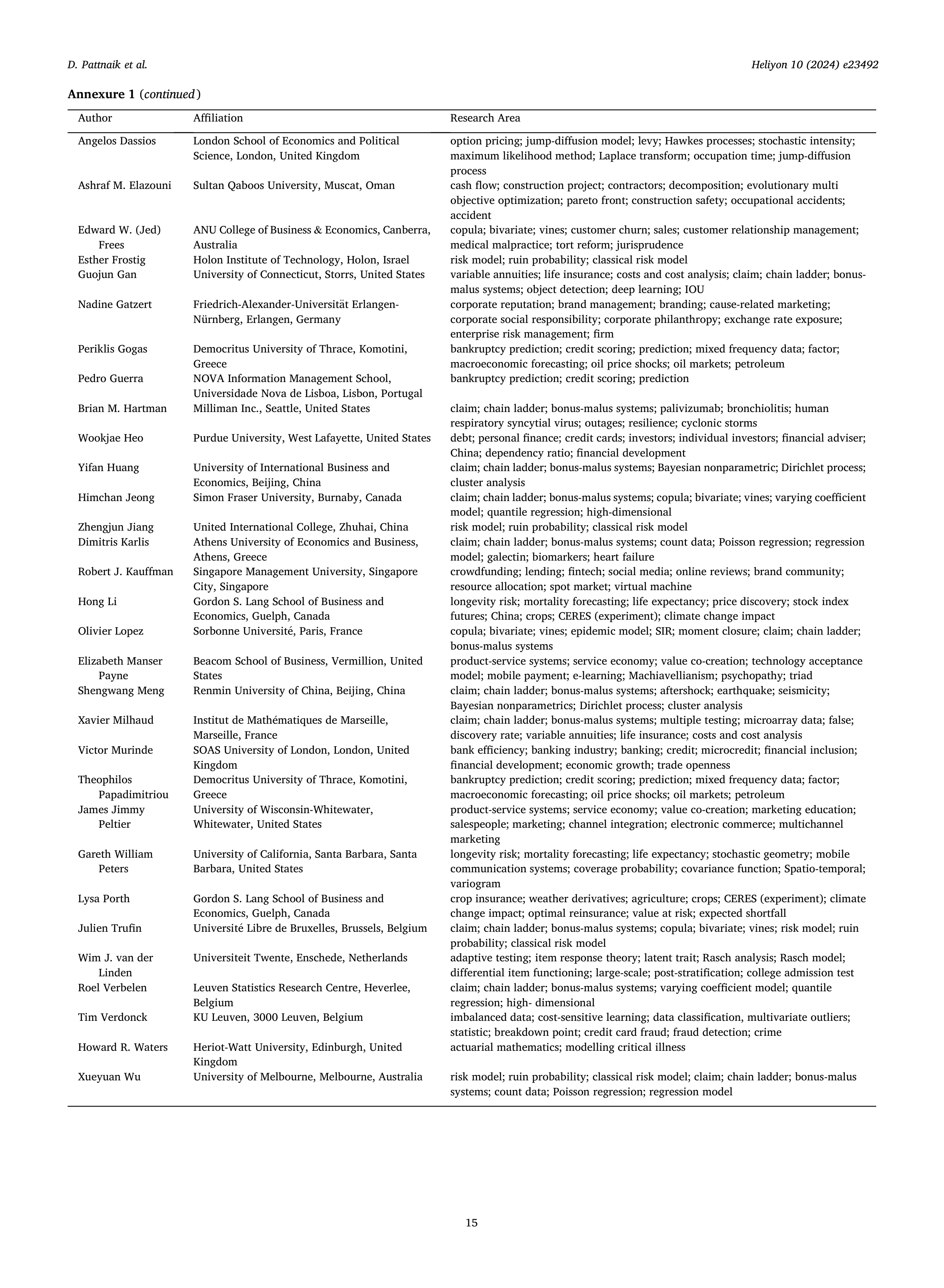
Heliyon 10 (2024) e23492
15
Annexure 1
(
continued
)
Author
Affiliation
Research Area
Angelos Dassios
London School of Economics and Political
Science, London, United Kingdom
option pricing; jump-diffusion model; levy; Hawkes processes; stochastic intensity;
maximum likelihood method; Laplace transform; occupation time; jump-diffusion
process
Ashraf M. Elazouni
Sultan Qaboos University, Muscat, Oman
cash flow; construction project; contractors; decomposition; evolutionary multi
objective optimization; pareto front; construction safety; occupational accidents;
accident
Edward W. (Jed)
Frees
ANU College of Business
&
Economics, Canberra,
Australia
copula; bivariate; vines; customer churn; sales; customer relationship management;
medical malpractice; tort reform; jurisprudence
Esther Frostig
Holon Institute of Technology, Holon, Israel
risk model; ruin probability; classical risk model
Guojun Gan
University of Connecticut, Storrs, United States
variable annuities; life insurance; costs and cost analysis; claim; chain ladder; bonus-
malus systems; object detection; deep learning; IOU
Nadine Gatzert
Friedrich-Alexander-Universit
¨
at Erlangen-
Nürnberg, Erlangen, Germany
corporate reputation; brand management; branding; cause-related marketing;
corporate social responsibility; corporate philanthropy; exchange rate exposure;
enterprise risk management; firm
Periklis Gogas
Democritus University of Thrace, Komotini,
Greece
bankruptcy prediction; credit scoring; prediction; mixed frequency data; factor;
macroeconomic forecasting; oil price shocks; oil markets; petroleum
Pedro Guerra
NOVA Information Management School,
Universidade Nova de Lisboa, Lisbon, Portugal
bankruptcy prediction; credit scoring; prediction
Brian M. Hartman
Milliman Inc., Seattle, United States
claim; chain ladder; bonus-malus systems; palivizumab; bronchiolitis; human
respiratory syncytial virus; outages; resilience; cyclonic storms
Wookjae Heo
Purdue University, West Lafayette, United States
debt; personal finance; credit cards; investors; individual investors; financial adviser;
China; dependency ratio; financial development
Yifan Huang
University of International Business and
Economics, Beijing, China
claim; chain ladder; bonus-malus systems; Bayesian nonparametric; Dirichlet process;
cluster analysis
Himchan Jeong
Simon Fraser University, Burnaby, Canada
claim; chain ladder; bonus-malus systems; copula; bivariate; vines; varying coefficient
model; quantile regression; high-dimensional
Zhengjun Jiang
United International College, Zhuhai, China
risk model; ruin probability; classical risk model
Dimitris Karlis
Athens University of Economics and Business,
Athens, Greece
claim; chain ladder; bonus-malus systems; count data; Poisson regression; regression
model; galectin; biomarkers; heart failure
Robert J. Kauffman
Singapore Management University, Singapore
City, Singapore
crowdfunding; lending; fintech; social media; online reviews; brand community;
resource allocation; spot market; virtual machine
Hong Li
Gordon S. Lang School of Business and
Economics, Guelph, Canada
longevity risk; mortality forecasting; life expectancy; price discovery; stock index
futures; China; crops; CERES (experiment); climate change impact
Olivier Lopez
Sorbonne Universit
´
e, Paris, France
copula; bivariate; vines; epidemic model; SIR; moment closure; claim; chain ladder;
bonus-malus systems
Elizabeth Manser
Payne
Beacom School of Business, Vermillion, United
States
product-service systems; service economy; value co-creation; technology acceptance
model; mobile payment; e-learning; Machiavellianism; psychopathy; triad
Shengwang Meng
Renmin University of China, Beijing, China
claim; chain ladder; bonus-malus systems; aftershock; earthquake; seismicity;
Bayesian nonparametrics; Dirichlet process; cluster analysis
Xavier Milhaud
Institut de Math
´
ematiques de Marseille,
Marseille, France
claim; chain ladder; bonus-malus systems; multiple testing; microarray data; false;
discovery rate; variable annuities; life insurance; costs and cost analysis
Victor Murinde
SOAS University of London, London, United
Kingdom
bank efficiency; banking industry; banking; credit; microcredit; financial inclusion;
financial development; economic growth; trade openness
Theophilos
Papadimitriou
Democritus University of Thrace, Komotini,
Greece
bankruptcy prediction; credit scoring; prediction; mixed frequency data; factor;
macroeconomic forecasting; oil price shocks; oil markets; petroleum
James Jimmy
Peltier
University of Wisconsin-Whitewater,
Whitewater, United States
product-service systems; service economy; value co-creation; marketing education;
salespeople; marketing; channel integration; electronic commerce; multichannel
marketing
Gareth William
Peters
University of California, Santa Barbara, Santa
Barbara, United States
longevity risk; mortality forecasting; life expectancy; stochastic geometry; mobile
communication systems; coverage probability; covariance function; Spatio-temporal;
variogram
Lysa Porth
Gordon S. Lang School of Business and
Economics, Guelph, Canada
crop insurance; weather derivatives; agriculture; crops; CERES (experiment); climate
change impact; optimal reinsurance; value at risk; expected shortfall
Julien Trufin
Universit
´
e Libre de Bruxelles, Brussels, Belgium
claim; chain ladder; bonus-malus systems; copula; bivariate; vines; risk model; ruin
probability; classical risk model
Wim J. van der
Linden
Universiteit Twente, Enschede, Netherlands
adaptive testing; item response theory; latent trait; Rasch analysis; Rasch model;
differential item functioning; large-scale; post-stratification; college admission test
Roel Verbelen
Leuven Statistics Research Centre, Heverlee,
Belgium
claim; chain ladder; bonus-malus systems; varying coefficient model; quantile
regression; high- dimensional
Tim Verdonck
KU Leuven, 3000 Leuven, Belgium
imbalanced data; cost-sensitive learning; data classification, multivariate outliers;
statistic; breakdown point; credit card fraud; fraud detection; crime
Howard R. Waters
Heriot-Watt University, Edinburgh, United
Kingdom
actuarial mathematics; modelling critical illness
Xueyuan Wu
University of Melbourne, Melbourne, Australia
risk model; ruin probability; classical risk model; claim; chain ladder; bonus-malus
systems; count data; Poisson regression; regression model
D. Pattnaik et al.
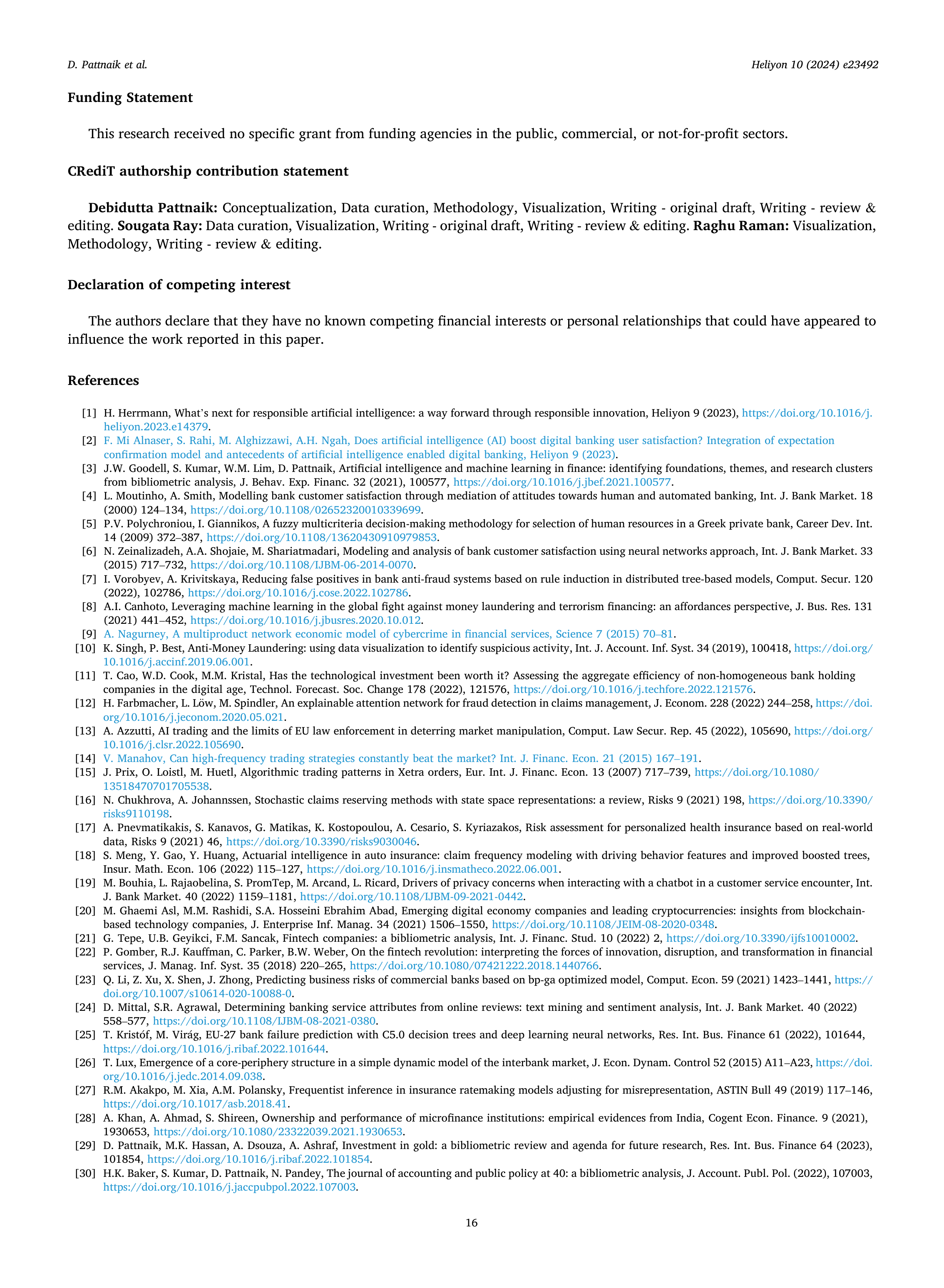
Heliyon 10 (2024) e23492
16
Funding Statement
This research received no specific grant from funding agencies in the public, commercial, or not-for-profit sectors.
CRediT authorship contribution statement
Debidutta Pattnaik:
Conceptualization, Data curation, Methodology, Visualization, Writing - original draft, Writing - review
&
editing.
Sougata Ray:
Data curation, Visualization, Writing - original draft, Writing - review
&
editing.
Raghu Raman:
Visualization,
Methodology, Writing - review
&
editing.
Declaration of competing interest
The authors declare that they have no known competing financial interests or personal relationships that could have appeared to
influence the work reported in this paper.
References
[1]
H. Herrmann, What
’
s next for responsible artificial intelligence: a way forward through responsible innovation, Heliyon 9 (2023),
https://doi.org/10.1016/j.
heliyon.2023.e14379
.
[2]
F. Mi Alnaser, S. Rahi, M. Alghizzawi, A.H. Ngah, Does artificial intelligence (AI) boost digital banking user satisfaction? Integration of expectation
confirmation model and antecedents of artificial intelligence enabled digital banking, Heliyon 9 (2023)
.
[3]
J.W. Goodell, S. Kumar, W.M. Lim, D. Pattnaik, Artificial intelligence and machine learning in finance: identifying foundations, themes, and research clusters
from bibliometric analysis, J. Behav. Exp. Financ. 32 (2021), 100577,
https://doi.org/10.1016/j.jbef.2021.100577
.
[4]
L. Moutinho, A. Smith, Modelling bank customer satisfaction through mediation of attitudes towards human and automated banking, Int. J. Bank Market. 18
(2000) 124
–
134,
https://doi.org/10.1108/02652320010339699
.
[5]
P.V. Polychroniou, I. Giannikos, A fuzzy multicriteria decision-making methodology for selection of human resources in a Greek private bank, Career Dev. Int.
14 (2009) 372
–
387,
https://doi.org/10.1108/13620430910979853
.
[6]
N. Zeinalizadeh, A.A. Shojaie, M. Shariatmadari, Modeling and analysis of bank customer satisfaction using neural networks approach, Int. J. Bank Market. 33
(2015) 717
–
732,
https://doi.org/10.1108/IJBM-06-2014-0070
.
[7]
I. Vorobyev, A. Krivitskaya, Reducing false positives in bank anti-fraud systems based on rule induction in distributed tree-based models, Comput. Secur. 120
(2022), 102786,
https://doi.org/10.1016/j.cose.2022.102786
.
[8]
A.I. Canhoto, Leveraging machine learning in the global fight against money laundering and terrorism financing: an affordances perspective, J. Bus. Res. 131
(2021) 441
–
452,
https://doi.org/10.1016/j.jbusres.2020.10.012
.
[9]
A. Nagurney, A multiproduct network economic model of cybercrime in financial services, Science 7 (2015) 70
–
81
.
[10]
K. Singh, P. Best, Anti-Money Laundering: using data visualization to identify suspicious activity, Int. J. Account. Inf. Syst. 34 (2019), 100418,
https://doi.org/
10.1016/j.accinf.2019.06.001
.
[11]
T. Cao, W.D. Cook, M.M. Kristal, Has the technological investment been worth it? Assessing the aggregate efficiency of non-homogeneous bank holding
companies in the digital age, Technol. Forecast. Soc. Change 178 (2022), 121576,
https://doi.org/10.1016/j.techfore.2022.121576
.
[12]
H. Farbmacher, L. L
¨
ow, M. Spindler, An explainable attention network for fraud detection in claims management, J. Econom. 228 (2022) 244
–
258,
https://doi.
org/10.1016/j.jeconom.2020.05.021
.
[13]
A. Azzutti, AI trading and the limits of EU law enforcement in deterring market manipulation, Comput. Law Secur. Rep. 45 (2022), 105690,
https://doi.org/
10.1016/j.clsr.2022.105690
.
[14]
V. Manahov, Can high-frequency trading strategies constantly beat the market? Int. J. Financ. Econ. 21 (2015) 167
–
191
.
[15]
J. Prix, O. Loistl, M. Huetl, Algorithmic trading patterns in Xetra orders, Eur. Int. J. Financ. Econ. 13 (2007) 717
–
739,
https://doi.org/10.1080/
13518470701705538
.
[16]
N. Chukhrova, A. Johannssen, Stochastic claims reserving methods with state space representations: a review, Risks 9 (2021) 198,
https://doi.org/10.3390/
risks9110198
.
[17]
A. Pnevmatikakis, S. Kanavos, G. Matikas, K. Kostopoulou, A. Cesario, S. Kyriazakos, Risk assessment for personalized health insurance based on real-world
data, Risks 9 (2021) 46,
https://doi.org/10.3390/risks9030046
.
[18]
S. Meng, Y. Gao, Y. Huang, Actuarial intelligence in auto insurance: claim frequency modeling with driving behavior features and improved boosted trees,
Insur. Math. Econ. 106 (2022) 115
–
127,
https://doi.org/10.1016/j.insmatheco.2022.06.001
.
[19]
M. Bouhia, L. Rajaobelina, S. PromTep, M. Arcand, L. Ricard, Drivers of privacy concerns when interacting with a chatbot in a customer service encounter, Int.
J. Bank Market. 40 (2022) 1159
–
1181,
https://doi.org/10.1108/IJBM-09-2021-0442
.
[20]
M. Ghaemi Asl, M.M. Rashidi, S.A. Hosseini Ebrahim Abad, Emerging digital economy companies and leading cryptocurrencies: insights from blockchain-
based technology companies, J. Enterprise Inf. Manag. 34 (2021) 1506
–
1550,
https://doi.org/10.1108/JEIM-08-2020-0348
.
[21]
G. Tepe, U.B. Geyikci, F.M. Sancak, Fintech companies: a bibliometric analysis, Int. J. Financ. Stud. 10 (2022) 2,
https://doi.org/10.3390/ijfs10010002
.
[22]
P. Gomber, R.J. Kauffman, C. Parker, B.W. Weber, On the fintech revolution: interpreting the forces of innovation, disruption, and transformation in financial
services, J. Manag. Inf. Syst. 35 (2018) 220
–
265,
https://doi.org/10.1080/07421222.2018.1440766
.
[23]
Q. Li, Z. Xu, X. Shen, J. Zhong, Predicting business risks of commercial banks based on bp-ga optimized model, Comput. Econ. 59 (2021) 1423
–
1441,
https://
doi.org/10.1007/s10614-020-10088-0
.
[24]
D. Mittal, S.R. Agrawal, Determining banking service attributes from online reviews: text mining and sentiment analysis, Int. J. Bank Market. 40 (2022)
558
–
577,
https://doi.org/10.1108/IJBM-08-2021-0380
.
[25]
T. Krist
´
of, M. Vir
´
ag, EU-27 bank failure prediction with C5.0 decision trees and deep learning neural networks, Res. Int. Bus. Finance 61 (2022), 101644,
https://doi.org/10.1016/j.ribaf.2022.101644
.
[26]
T. Lux, Emergence of a core-periphery structure in a simple dynamic model of the interbank market, J. Econ. Dynam. Control 52 (2015) A11
–
A23,
https://doi.
org/10.1016/j.jedc.2014.09.038
.
[27]
R.M. Akakpo, M. Xia, A.M. Polansky, Frequentist inference in insurance ratemaking models adjusting for misrepresentation, ASTIN Bull 49 (2019) 117
–
146,
https://doi.org/10.1017/asb.2018.41
.
[28]
A. Khan, A. Ahmad, S. Shireen, Ownership and performance of microfinance institutions: empirical evidences from India, Cogent Econ. Finance. 9 (2021),
1930653,
https://doi.org/10.1080/23322039.2021.1930653
.
[29]
D. Pattnaik, M.K. Hassan, A. Dsouza, A. Ashraf, Investment in gold: a bibliometric review and agenda for future research, Res. Int. Bus. Finance 64 (2023),
101854,
https://doi.org/10.1016/j.ribaf.2022.101854
.
[30]
H.K. Baker, S. Kumar, D. Pattnaik, N. Pandey, The journal of accounting and public policy at 40: a bibliometric analysis, J. Account. Publ. Pol. (2022), 107003,
https://doi.org/10.1016/j.jaccpubpol.2022.107003
.
D. Pattnaik et al.
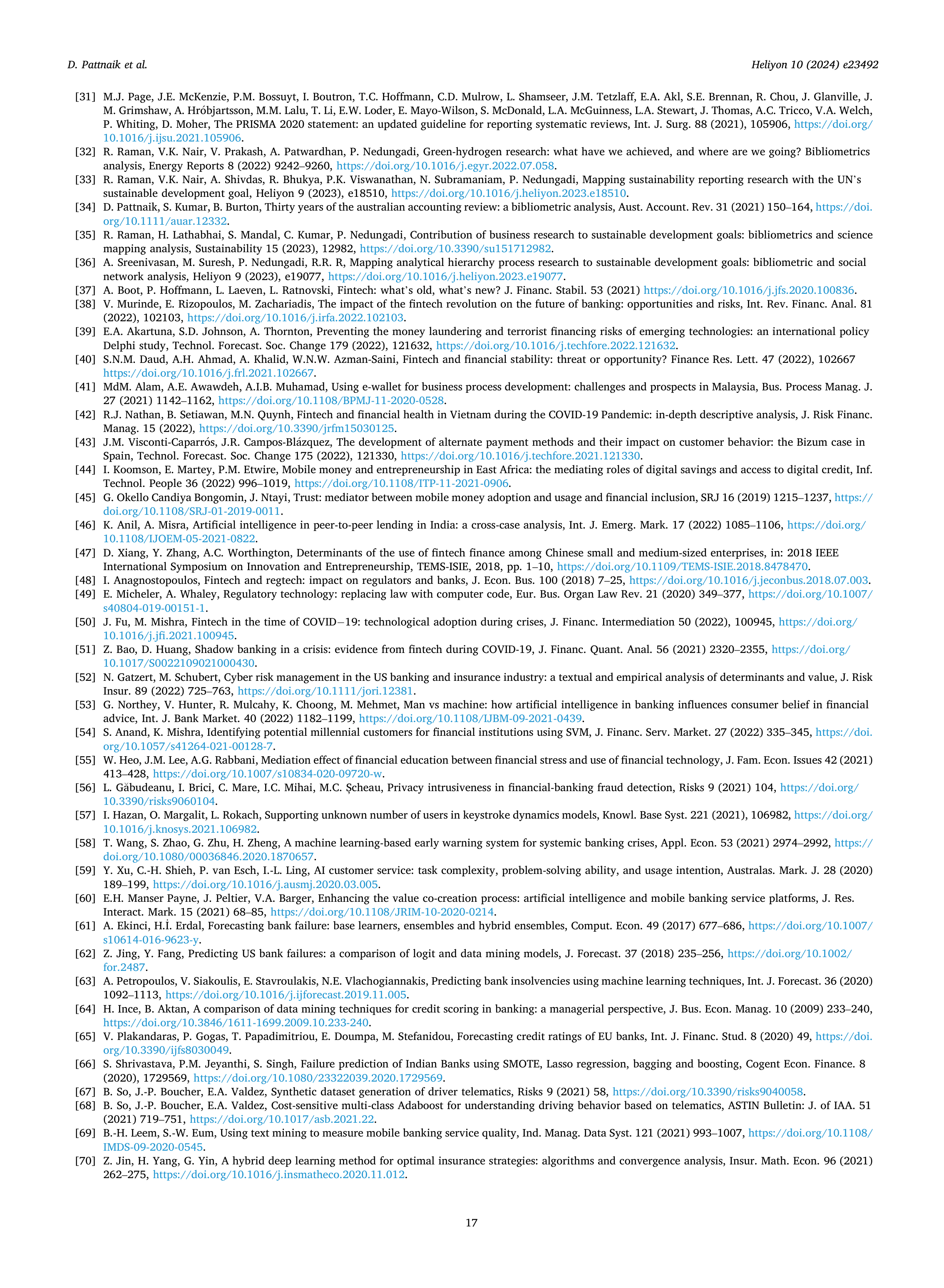
Heliyon 10 (2024) e23492
17
[31]
M.J. Page, J.E. McKenzie, P.M. Bossuyt, I. Boutron, T.C. Hoffmann, C.D. Mulrow, L. Shamseer, J.M. Tetzlaff, E.A. Akl, S.E. Brennan, R. Chou, J. Glanville, J.
M. Grimshaw, A. Hr
´
objartsson, M.M. Lalu, T. Li, E.W. Loder, E. Mayo-Wilson, S. McDonald, L.A. McGuinness, L.A. Stewart, J. Thomas, A.C. Tricco, V.A. Welch,
P. Whiting, D. Moher, The PRISMA 2020 statement: an updated guideline for reporting systematic reviews, Int. J. Surg. 88 (2021), 105906,
https://doi.org/
10.1016/j.ijsu.2021.105906
.
[32]
R. Raman, V.K. Nair, V. Prakash, A. Patwardhan, P. Nedungadi, Green-hydrogen research: what have we achieved, and where are we going? Bibliometrics
analysis, Energy Reports 8 (2022) 9242
–
9260,
https://doi.org/10.1016/j.egyr.2022.07.058
.
[33]
R. Raman, V.K. Nair, A. Shivdas, R. Bhukya, P.K. Viswanathan, N. Subramaniam, P. Nedungadi, Mapping sustainability reporting research with the UN
’
s
sustainable development goal, Heliyon 9 (2023), e18510,
https://doi.org/10.1016/j.heliyon.2023.e18510
.
[34]
D. Pattnaik, S. Kumar, B. Burton, Thirty years of the australian accounting review: a bibliometric analysis, Aust. Account. Rev. 31 (2021) 150
–
164,
https://doi.
org/10.1111/auar.12332
.
[35]
R. Raman, H. Lathabhai, S. Mandal, C. Kumar, P. Nedungadi, Contribution of business research to sustainable development goals: bibliometrics and science
mapping analysis, Sustainability 15 (2023), 12982,
https://doi.org/10.3390/su151712982
.
[36]
A. Sreenivasan, M. Suresh, P. Nedungadi, R.R. R, Mapping analytical hierarchy process research to sustainable development goals: bibliometric and social
network analysis, Heliyon 9 (2023), e19077,
https://doi.org/10.1016/j.heliyon.2023.e19077
.
[37]
A. Boot, P. Hoffmann, L. Laeven, L. Ratnovski, Fintech: what
’
s old, what
’
s new? J. Financ. Stabil. 53 (2021)
https://doi.org/10.1016/j.jfs.2020.100836
.
[38]
V. Murinde, E. Rizopoulos, M. Zachariadis, The impact of the fintech revolution on the future of banking: opportunities and risks, Int. Rev. Financ. Anal. 81
(2022), 102103,
https://doi.org/10.1016/j.irfa.2022.102103
.
[39]
E.A. Akartuna, S.D. Johnson, A. Thornton, Preventing the money laundering and terrorist financing risks of emerging technologies: an international policy
Delphi study, Technol. Forecast. Soc. Change 179 (2022), 121632,
https://doi.org/10.1016/j.techfore.2022.121632
.
[40]
S.N.M. Daud, A.H. Ahmad, A. Khalid, W.N.W. Azman-Saini, Fintech and financial stability: threat or opportunity? Finance Res. Lett. 47 (2022), 102667
https://doi.org/10.1016/j.frl.2021.102667
.
[41]
MdM. Alam, A.E. Awawdeh, A.I.B. Muhamad, Using e-wallet for business process development: challenges and prospects in Malaysia, Bus. Process Manag. J.
27 (2021) 1142
–
1162,
https://doi.org/10.1108/BPMJ-11-2020-0528
.
[42]
R.J. Nathan, B. Setiawan, M.N. Quynh, Fintech and financial health in Vietnam during the COVID-19 Pandemic: in-depth descriptive analysis, J. Risk Financ.
Manag. 15 (2022),
https://doi.org/10.3390/jrfm15030125
.
[43]
J.M. Visconti-Caparr
´
os, J.R. Campos-Bl
´
azquez, The development of alternate payment methods and their impact on customer behavior: the Bizum case in
Spain, Technol. Forecast. Soc. Change 175 (2022), 121330,
https://doi.org/10.1016/j.techfore.2021.121330
.
[44]
I. Koomson, E. Martey, P.M. Etwire, Mobile money and entrepreneurship in East Africa: the mediating roles of digital savings and access to digital credit, Inf.
Technol. People 36 (2022) 996
–
1019,
https://doi.org/10.1108/ITP-11-2021-0906
.
[45]
G. Okello Candiya Bongomin, J. Ntayi, Trust: mediator between mobile money adoption and usage and financial inclusion, SRJ 16 (2019) 1215
–
1237,
https://
doi.org/10.1108/SRJ-01-2019-0011
.
[46]
K. Anil, A. Misra, Artificial intelligence in peer-to-peer lending in India: a cross-case analysis, Int. J. Emerg. Mark. 17 (2022) 1085
–
1106,
https://doi.org/
10.1108/IJOEM-05-2021-0822
.
[47]
D. Xiang, Y. Zhang, A.C. Worthington, Determinants of the use of fintech finance among Chinese small and medium-sized enterprises, in: 2018 IEEE
International Symposium on Innovation and Entrepreneurship, TEMS-ISIE, 2018, pp. 1
–
10,
https://doi.org/10.1109/TEMS-ISIE.2018.8478470
.
[48]
I. Anagnostopoulos, Fintech and regtech: impact on regulators and banks, J. Econ. Bus. 100 (2018) 7
–
25,
https://doi.org/10.1016/j.jeconbus.2018.07.003
.
[49]
E. Micheler, A. Whaley, Regulatory technology: replacing law with computer code, Eur. Bus. Organ Law Rev. 21 (2020) 349
–
377,
https://doi.org/10.1007/
s40804-019-00151-1
.
[50]
J. Fu, M. Mishra, Fintech in the time of COVID
−
19: technological adoption during crises, J. Financ. Intermediation 50 (2022), 100945,
https://doi.org/
10.1016/j.jfi.2021.100945
.
[51]
Z. Bao, D. Huang, Shadow banking in a crisis: evidence from fintech during COVID-19, J. Financ. Quant. Anal. 56 (2021) 2320
–
2355,
https://doi.org/
10.1017/S0022109021000430
.
[52]
N. Gatzert, M. Schubert, Cyber risk management in the US banking and insurance industry: a textual and empirical analysis of determinants and value, J. Risk
Insur. 89 (2022) 725
–
763,
https://doi.org/10.1111/jori.12381
.
[53]
G. Northey, V. Hunter, R. Mulcahy, K. Choong, M. Mehmet, Man vs machine: how artificial intelligence in banking influences consumer belief in financial
advice, Int. J. Bank Market. 40 (2022) 1182
–
1199,
https://doi.org/10.1108/IJBM-09-2021-0439
.
[54]
S. Anand, K. Mishra, Identifying potential millennial customers for financial institutions using SVM, J. Financ. Serv. Market. 27 (2022) 335
–
345,
https://doi.
org/10.1057/s41264-021-00128-7
.
[55]
W. Heo, J.M. Lee, A.G. Rabbani, Mediation effect of financial education between financial stress and use of financial technology, J. Fam. Econ. Issues 42 (2021)
413
–
428,
https://doi.org/10.1007/s10834-020-09720-w
.
[56]
L. G
˘
abudeanu, I. Brici, C. Mare, I.C. Mihai, M.C. Șcheau, Privacy intrusiveness in financial-banking fraud detection, Risks 9 (2021) 104,
https://doi.org/
10.3390/risks9060104
.
[57]
I. Hazan, O. Margalit, L. Rokach, Supporting unknown number of users in keystroke dynamics models, Knowl. Base Syst. 221 (2021), 106982,
https://doi.org/
10.1016/j.knosys.2021.106982
.
[58]
T. Wang, S. Zhao, G. Zhu, H. Zheng, A machine learning-based early warning system for systemic banking crises, Appl. Econ. 53 (2021) 2974
–
2992,
https://
doi.org/10.1080/00036846.2020.1870657
.
[59]
Y. Xu, C.-H. Shieh, P. van Esch, I.-L. Ling, AI customer service: task complexity, problem-solving ability, and usage intention, Australas. Mark. J. 28 (2020)
189
–
199,
https://doi.org/10.1016/j.ausmj.2020.03.005
.
[60]
E.H. Manser Payne, J. Peltier, V.A. Barger, Enhancing the value co-creation process: artificial intelligence and mobile banking service platforms, J. Res.
Interact. Mark. 15 (2021) 68
–
85,
https://doi.org/10.1108/JRIM-10-2020-0214
.
[61]
A. Ekinci, H.
˙
I. Erdal, Forecasting bank failure: base learners, ensembles and hybrid ensembles, Comput. Econ. 49 (2017) 677
–
686,
https://doi.org/10.1007/
s10614-016-9623-y
.
[62]
Z. Jing, Y. Fang, Predicting US bank failures: a comparison of logit and data mining models, J. Forecast. 37 (2018) 235
–
256,
https://doi.org/10.1002/
for.2487
.
[63]
A. Petropoulos, V. Siakoulis, E. Stavroulakis, N.E. Vlachogiannakis, Predicting bank insolvencies using machine learning techniques, Int. J. Forecast. 36 (2020)
1092
–
1113,
https://doi.org/10.1016/j.ijforecast.2019.11.005
.
[64]
H. Ince, B. Aktan, A comparison of data mining techniques for credit scoring in banking: a managerial perspective, J. Bus. Econ. Manag. 10 (2009) 233
–
240,
https://doi.org/10.3846/1611-1699.2009.10.233-240
.
[65]
V. Plakandaras, P. Gogas, T. Papadimitriou, E. Doumpa, M. Stefanidou, Forecasting credit ratings of EU banks, Int. J. Financ. Stud. 8 (2020) 49,
https://doi.
org/10.3390/ijfs8030049
.
[66]
S. Shrivastava, P.M. Jeyanthi, S. Singh, Failure prediction of Indian Banks using SMOTE, Lasso regression, bagging and boosting, Cogent Econ. Finance. 8
(2020), 1729569,
https://doi.org/10.1080/23322039.2020.1729569
.
[67]
B. So, J.-P. Boucher, E.A. Valdez, Synthetic dataset generation of driver telematics, Risks 9 (2021) 58,
https://doi.org/10.3390/risks9040058
.
[68]
B. So, J.-P. Boucher, E.A. Valdez, Cost-sensitive multi-class Adaboost for understanding driving behavior based on telematics, ASTIN Bulletin: J. of IAA. 51
(2021) 719
–
751,
https://doi.org/10.1017/asb.2021.22
.
[69]
B.-H. Leem, S.-W. Eum, Using text mining to measure mobile banking service quality, Ind. Manag. Data Syst. 121 (2021) 993
–
1007,
https://doi.org/10.1108/
IMDS-09-2020-0545
.
[70]
Z. Jin, H. Yang, G. Yin, A hybrid deep learning method for optimal insurance strategies: algorithms and convergence analysis, Insur. Math. Econ. 96 (2021)
262
–
275,
https://doi.org/10.1016/j.insmatheco.2020.11.012
.
D. Pattnaik et al.
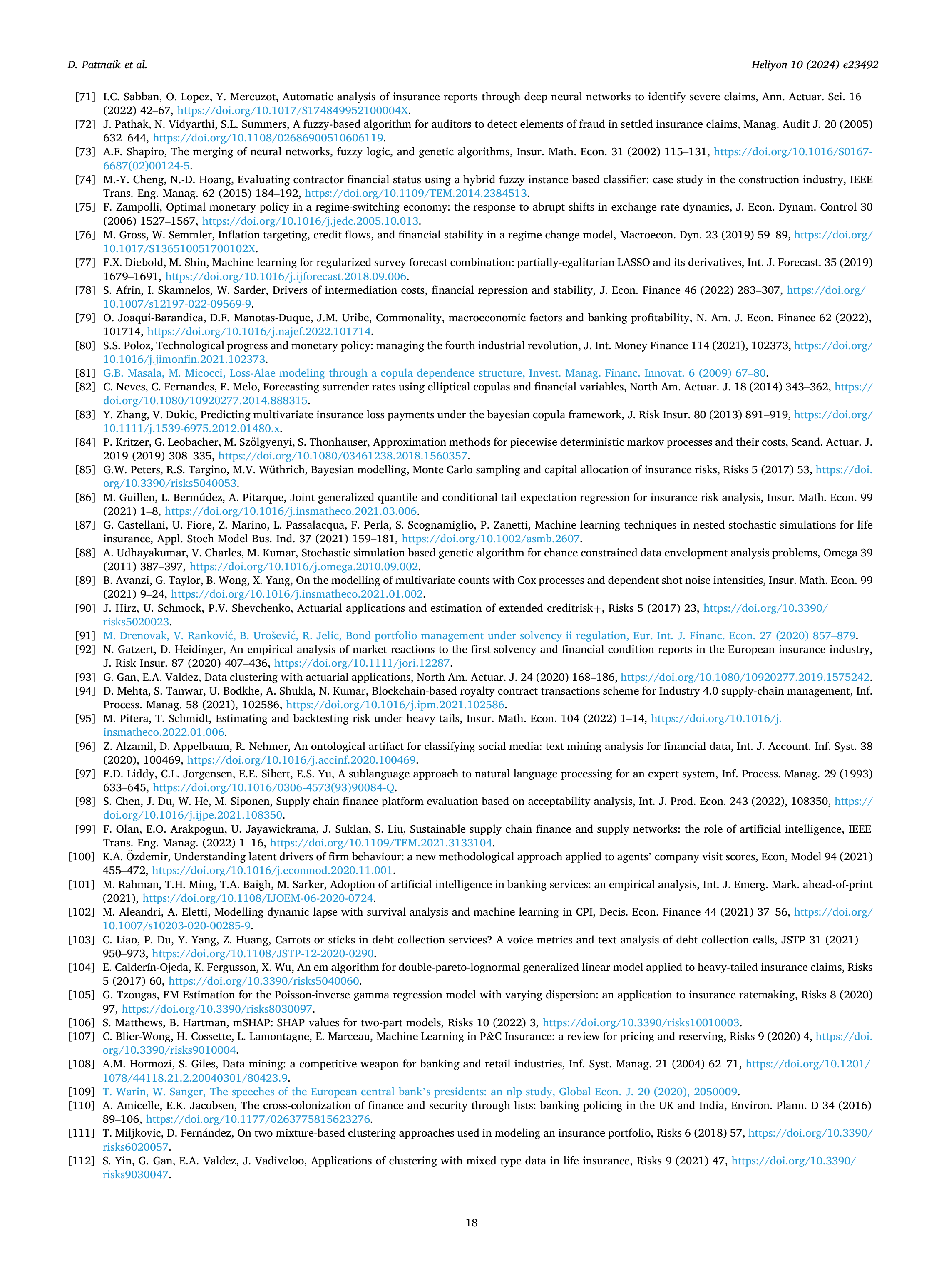
Heliyon 10 (2024) e23492
18
[71]
I.C. Sabban, O. Lopez, Y. Mercuzot, Automatic analysis of insurance reports through deep neural networks to identify severe claims, Ann. Actuar. Sci. 16
(2022) 42
–
67,
https://doi.org/10.1017/S174849952100004X
.
[72]
J. Pathak, N. Vidyarthi, S.L. Summers, A fuzzy-based algorithm for auditors to detect elements of fraud in settled insurance claims, Manag. Audit J. 20 (2005)
632
–
644,
https://doi.org/10.1108/02686900510606119
.
[73]
A.F. Shapiro, The merging of neural networks, fuzzy logic, and genetic algorithms, Insur. Math. Econ. 31 (2002) 115
–
131,
https://doi.org/10.1016/S0167-
6687(02)00124-5
.
[74]
M.-Y. Cheng, N.-D. Hoang, Evaluating contractor financial status using a hybrid fuzzy instance based classifier: case study in the construction industry, IEEE
Trans. Eng. Manag. 62 (2015) 184
–
192,
https://doi.org/10.1109/TEM.2014.2384513
.
[75]
F. Zampolli, Optimal monetary policy in a regime-switching economy: the response to abrupt shifts in exchange rate dynamics, J. Econ. Dynam. Control 30
(2006) 1527
–
1567,
https://doi.org/10.1016/j.jedc.2005.10.013
.
[76]
M. Gross, W. Semmler, Inflation targeting, credit flows, and financial stability in a regime change model, Macroecon. Dyn. 23 (2019) 59
–
89,
https://doi.org/
10.1017/S136510051700102X
.
[77]
F.X. Diebold, M. Shin, Machine learning for regularized survey forecast combination: partially-egalitarian LASSO and its derivatives, Int. J. Forecast. 35 (2019)
1679
–
1691,
https://doi.org/10.1016/j.ijforecast.2018.09.006
.
[78]
S. Afrin, I. Skamnelos, W. Sarder, Drivers of intermediation costs, financial repression and stability, J. Econ. Finance 46 (2022) 283
–
307,
https://doi.org/
10.1007/s12197-022-09569-9
.
[79]
O. Joaqui-Barandica, D.F. Manotas-Duque, J.M. Uribe, Commonality, macroeconomic factors and banking profitability, N. Am. J. Econ. Finance 62 (2022),
101714,
https://doi.org/10.1016/j.najef.2022.101714
.
[80]
S.S. Poloz, Technological progress and monetary policy: managing the fourth industrial revolution, J. Int. Money Finance 114 (2021), 102373,
https://doi.org/
10.1016/j.jimonfin.2021.102373
.
[81]
G.B. Masala, M. Micocci, Loss-Alae modeling through a copula dependence structure, Invest. Manag. Financ. Innovat. 6 (2009) 67
–
80
.
[82]
C. Neves, C. Fernandes, E. Melo, Forecasting surrender rates using elliptical copulas and financial variables, North Am. Actuar. J. 18 (2014) 343
–
362,
https://
doi.org/10.1080/10920277.2014.888315
.
[83]
Y. Zhang, V. Dukic, Predicting multivariate insurance loss payments under the bayesian copula framework, J. Risk Insur. 80 (2013) 891
–
919,
https://doi.org/
10.1111/j.1539-6975.2012.01480.x
.
[84]
P. Kritzer, G. Leobacher, M. Sz
¨
olgyenyi, S. Thonhauser, Approximation methods for piecewise deterministic markov processes and their costs, Scand. Actuar. J.
2019 (2019) 308
–
335,
https://doi.org/10.1080/03461238.2018.1560357
.
[85]
G.W. Peters, R.S. Targino, M.V. Wüthrich, Bayesian modelling, Monte Carlo sampling and capital allocation of insurance risks, Risks 5 (2017) 53,
https://doi.
org/10.3390/risks5040053
.
[86]
M. Guillen, L. Bermúdez, A. Pitarque, Joint generalized quantile and conditional tail expectation regression for insurance risk analysis, Insur. Math. Econ. 99
(2021) 1
–
8,
https://doi.org/10.1016/j.insmatheco.2021.03.006
.
[87]
G. Castellani, U. Fiore, Z. Marino, L. Passalacqua, F. Perla, S. Scognamiglio, P. Zanetti, Machine learning techniques in nested stochastic simulations for life
insurance, Appl. Stoch Model Bus. Ind. 37 (2021) 159
–
181,
https://doi.org/10.1002/asmb.2607
.
[88]
A. Udhayakumar, V. Charles, M. Kumar, Stochastic simulation based genetic algorithm for chance constrained data envelopment analysis problems, Omega 39
(2011) 387
–
397,
https://doi.org/10.1016/j.omega.2010.09.002
.
[89]
B. Avanzi, G. Taylor, B. Wong, X. Yang, On the modelling of multivariate counts with Cox processes and dependent shot noise intensities, Insur. Math. Econ. 99
(2021) 9
–
24,
https://doi.org/10.1016/j.insmatheco.2021.01.002
.
[90]
J. Hirz, U. Schmock, P.V. Shevchenko, Actuarial applications and estimation of extended creditrisk
+
, Risks 5 (2017) 23,
https://doi.org/10.3390/
risks5020023
.
[91]
M. Drenovak, V. Rankovi
´
c, B. Uro
ˇ
sevi
´
c, R. Jelic, Bond portfolio management under solvency ii regulation, Eur. Int. J. Financ. Econ. 27 (2020) 857
–
879
.
[92]
N. Gatzert, D. Heidinger, An empirical analysis of market reactions to the first solvency and financial condition reports in the European insurance industry,
J. Risk Insur. 87 (2020) 407
–
436,
https://doi.org/10.1111/jori.12287
.
[93]
G. Gan, E.A. Valdez, Data clustering with actuarial applications, North Am. Actuar. J. 24 (2020) 168
–
186,
https://doi.org/10.1080/10920277.2019.1575242
.
[94]
D. Mehta, S. Tanwar, U. Bodkhe, A. Shukla, N. Kumar, Blockchain-based royalty contract transactions scheme for Industry 4.0 supply-chain management, Inf.
Process. Manag. 58 (2021), 102586,
https://doi.org/10.1016/j.ipm.2021.102586
.
[95]
M. Pitera, T. Schmidt, Estimating and backtesting risk under heavy tails, Insur. Math. Econ. 104 (2022) 1
–
14,
https://doi.org/10.1016/j.
insmatheco.2022.01.006
.
[96]
Z. Alzamil, D. Appelbaum, R. Nehmer, An ontological artifact for classifying social media: text mining analysis for financial data, Int. J. Account. Inf. Syst. 38
(2020), 100469,
https://doi.org/10.1016/j.accinf.2020.100469
.
[97]
E.D. Liddy, C.L. Jorgensen, E.E. Sibert, E.S. Yu, A sublanguage approach to natural language processing for an expert system, Inf. Process. Manag. 29 (1993)
633
–
645,
https://doi.org/10.1016/0306-4573(93)90084-Q
.
[98]
S. Chen, J. Du, W. He, M. Siponen, Supply chain finance platform evaluation based on acceptability analysis, Int. J. Prod. Econ. 243 (2022), 108350,
https://
doi.org/10.1016/j.ijpe.2021.108350
.
[99]
F. Olan, E.O. Arakpogun, U. Jayawickrama, J. Suklan, S. Liu, Sustainable supply chain finance and supply networks: the role of artificial intelligence, IEEE
Trans. Eng. Manag. (2022) 1
–
16,
https://doi.org/10.1109/TEM.2021.3133104
.
[100]
K.A.
¨
Ozdemir, Understanding latent drivers of firm behaviour: a new methodological approach applied to agents
’
company visit scores, Econ, Model 94 (2021)
455
–
472,
https://doi.org/10.1016/j.econmod.2020.11.001
.
[101]
M. Rahman, T.H. Ming, T.A. Baigh, M. Sarker, Adoption of artificial intelligence in banking services: an empirical analysis, Int. J. Emerg. Mark. ahead-of-print
(2021),
https://doi.org/10.1108/IJOEM-06-2020-0724
.
[102]
M. Aleandri, A. Eletti, Modelling dynamic lapse with survival analysis and machine learning in CPI, Decis. Econ. Finance 44 (2021) 37
–
56,
https://doi.org/
10.1007/s10203-020-00285-9
.
[103]
C. Liao, P. Du, Y. Yang, Z. Huang, Carrots or sticks in debt collection services? A voice metrics and text analysis of debt collection calls, JSTP 31 (2021)
950
–
973,
https://doi.org/10.1108/JSTP-12-2020-0290
.
[104]
E. Calderín-Ojeda, K. Fergusson, X. Wu, An em algorithm for double-pareto-lognormal generalized linear model applied to heavy-tailed insurance claims, Risks
5 (2017) 60,
https://doi.org/10.3390/risks5040060
.
[105]
G. Tzougas, EM Estimation for the Poisson-inverse gamma regression model with varying dispersion: an application to insurance ratemaking, Risks 8 (2020)
97,
https://doi.org/10.3390/risks8030097
.
[106]
S. Matthews, B. Hartman, mSHAP: SHAP values for two-part models, Risks 10 (2022) 3,
https://doi.org/10.3390/risks10010003
.
[107]
C. Blier-Wong, H. Cossette, L. Lamontagne, E. Marceau, Machine Learning in P
&
C Insurance: a review for pricing and reserving, Risks 9 (2020) 4,
https://doi.
org/10.3390/risks9010004
.
[108]
A.M. Hormozi, S. Giles, Data mining: a competitive weapon for banking and retail industries, Inf. Syst. Manag. 21 (2004) 62
–
71,
https://doi.org/10.1201/
1078/44118.21.2.20040301/80423.9
.
[109]
T. Warin, W. Sanger, The speeches of the European central bank
’
s presidents: an nlp study, Global Econ. J. 20 (2020), 2050009
.
[110]
A. Amicelle, E.K. Jacobsen, The cross-colonization of finance and security through lists: banking policing in the UK and India, Environ. Plann. D 34 (2016)
89
–
106,
https://doi.org/10.1177/0263775815623276
.
[111]
T. Miljkovic, D. Fern
´
andez, On two mixture-based clustering approaches used in modeling an insurance portfolio, Risks 6 (2018) 57,
https://doi.org/10.3390/
risks6020057
.
[112]
S. Yin, G. Gan, E.A. Valdez, J. Vadiveloo, Applications of clustering with mixed type data in life insurance, Risks 9 (2021) 47,
https://doi.org/10.3390/
risks9030047
.
D. Pattnaik et al.
Heliyon 10 (2024) e23492
19
[113]
W.J. van der Linden, Computerized adaptive testing with equated number-correct scoring, Appl. Psychol. Meas. 25 (2001) 343
–
355,
https://doi.org/10.1177/
01466210122032208
.
[114]
M.A. Sorrel, F.J. Abad, P. N
´
ajera, Improving accuracy and usage by correctly selecting: the effects of model selection in cognitive diagnosis computerized
adaptive testing, Appl. Psychol. Meas. 45 (2021) 112
–
129,
https://doi.org/10.1177/0146621620977682
.
[115]
R.D. Armstrong, D.H. Jones, C.S. Kunce, IRT test assembly using network-flow programming, Appl. Psychol. Meas. 22 (1998) 237
–
247,
https://doi.org/
10.1177/01466216980223004
.
[116]
C.-L. Hsu, W.-C. Wang, Multidimensional computerized adaptive testing using non-compensatory item response theory models, Appl. Psychol. Meas. 43 (2019)
464
–
480,
https://doi.org/10.1177/0146621618800280
.
[117]
A. Bansal, R.J. Kauffman, R.M. Mark, E. Peters, Financial risk and financial risk management technology (RMT): issues and advances, Inf. Manag. 24 (1993)
267
–
281,
https://doi.org/10.1016/0378-7206(93)90004-D
.
[118]
Z. Jiang, Banach contraction principle,
q
-scale function and ultimate ruin probability under a Markov-modulated classical risk model, Scand. Actuar. J. 2022
(2022) 234
–
243,
https://doi.org/10.1080/03461238.2021.1958917
.
[119]
Y. Liu, Z. Jiang, Y. Zhang, q-scale function, Banach contraction principle, and ultimate ruin probability in a Markov-modulated jump
–
diffusion risk model,
Scand. Actuar. J. 2023 (2023) 38
–
50,
https://doi.org/10.1080/03461238.2022.2078221
.
[120]
R.M.R. Cardoso, H.R. Waters, Recursive calculation of finite time ruin probabilities under interest force, Insur. Math. Econ. 33 (2003) 659
–
676,
https://doi.
org/10.1016/j.insmatheco.2003.09.008
.
[121]
E. Frostig, M. Denuit, Ruin probabilities and optimal capital allocation for heterogeneous life annuity portfolios, 2009, Scand. Actuar. J. (2009) 295
–
305,
https://doi.org/10.1080/03461230902753507
.
[122]
Y. Liu, Z. Jiang, Y. Qu, Gambler
’
s ruin problem in a markov-modulated jump-diffusion risk model, Scand. Actuar. J. 2022 (2022) 682
–
694,
https://doi.org/
10.1080/03461238.2021.2025145
.
D. Pattnaik et al.