Journal of Ecohumanism
2025
Volume: 4, No: 4, pp. 1702 – 1712
ISSN: 2752-6798 (Print) | ISSN 2752-6801 (Online)
https://ecohumanism.co.uk/joe/ecohumanism
DOI:
https://doi.org/10.62754/joe.v4i4.6912
1702
Generative Artificial Intelligence in Game Design: A Narrative Review
Mazen Mohammed Al-Surayhi
1
, Mohammed Rashid Al-Qahtani
2
, Saleh Nasser Al-Marshadi
3
,
Ahmad Abdullah Qeran Al-Ghamdi
4
, Monther Mohammed Al-Surayhi
5
Abstract
Generative artificial intelligence (AI) is redefining the landscape of game design by enabling the automated creation of high-quality
content such as 2D/3D assets, environments, and personalized narratives. This paper presents a narrative review of recent
advancements (2018–2024) in generative AI applications within the gaming industry, focusing on tools like GANs, VAEs, LLMs,
and diffusion models. The study highlights how these technologies enhance development efficiency, foster creativity, and empower indie
developers by reducing production costs and democratizing access. Moreover, the integration of generative AI with immersive technologies
such as VR and AR is creating more responsive and emotionally engaging gameplay experiences.Despite these advantages, several
challenges persist. These include ensuring playability, maintaining narrative originality, addressing ethical concerns such as bias and
intellectual property, and avoiding content homogenization. The study proposes practical recommendations for developers and researchers
to adopt hybrid workflows, promote AI literacy, establish ethical standards, and enhance inclusive access to AI tools. By striking a
balance between innovation and human creativity, the paper argues that generative AI can elevate video games into powerful platforms
for cultural expression and social engagement.
Keywords:
Generative AI, Game Design, Procedural Content Generation, Virtual Reality, Narrative Personalization, Ethics
in AI, AI-generated Assets.
Introduction
The global video-game industry is expanding rapidly, functioning both as a major economic driver and a
highly consumed cultural medium (Bowman et al., 2022; Jagoda, 2023). In the same period, generative
artificial intelligence (AI) has matured into a suite of techniques that automate content creation across
creative fields (Cotroneo & Hutson, 2023; Epstein et al., 2023).
When applied to game development, generative AI enables procedural worlds, adaptive narratives, and real-
time asset customization, thereby shortening production cycles and lowering costs (Khatri, 2021; Marsh et
al., 2021). Early studies, however, call for robust metrics and ethical safeguards to ensure that AI-generated
content remains playable, inclusive, and legally compliant (Fukaya et al., 2024; Melhart et al., 2023).
As a result, generative AI is shifting from an auxiliary tool to a core design paradigm. It lets developers
tailor gameplay to individual preferences while raising new questions about originality, bias, and intellectual-
property rights.
This narrative review examines peer-reviewed work published between 2018 and 2024. We map how key
generative models—GANs, VAEs, large language models, and diffusion networks—support each stage of
the game-design pipeline. By synthesizing current evidence, we identify benefits, limits, and research gaps,
and we outline guidelines for integrating generative AI responsibly into future game projects.
Methodology
1
Jeddah Education Department, Email: Mazenalsurayhi@gmail.com
2
PhD Student in Educational Technology, King Abdulaziz University, Email: mralkahtanee@kau.edu.sa.
3
PhD Student in Educational Technology, King Abdulaziz University, Email: salehnnn@hotmail.com.
4
Associate Professor of Educational Technology, King Abdulaziz University, Email: Aaaalgamdi5@kau.edu.sa.
5
College of Computing | Umm Al-Qura University, Email: Montheralsurayhi@protonmail.com
Journal of Ecohumanism
2025
Volume: 4, No: 4, pp. 1702 – 1712
ISSN: 2752-6798 (Print) | ISSN 2752-6801 (Online)
https://ecohumanism.co.uk/joe/ecohumanism
DOI:
https://doi.org/10.62754/joe.v4i4.6912
1703
This study adopts a narrative-review design to examine how generative artificial intelligence (AI) tools are
used in video-game production. We synthesize evidence from peer-reviewed journals, conference
proceedings, and technical reports published between 2018 and 2024. Eligible studies apply Generative
Adversarial Networks (GANs), Variational Autoencoders (VAEs), large language models (LLMs), or
diffusion models to one or more stages of game development—including asset creation, level design,
character animation, and procedural content generation.
Review Procedure
Literature Search
Searches were carried out in IEEE Xplore, ACM Digital Library, Scopus, and Google Scholar with
keywords such as “generative AI in games”, “procedural content generation”, “GAN game assets”, “AI-
generated storytelling”, and “LLM game design”.
Inclusion Criteria
Studies were retained if they
o
were published from 2018 to 2024,
o
focused explicitly on generative-AI applications in game development, and
o
provided practical examples, tool implementations, or structured evaluation frameworks.
Exclusion Criteria
Work discussing AI in general without a direct link to game design, or lacking technical depth, was excluded.
Data Synthesis
Selected papers were grouped thematically into asset creation, environment design, character animation,
evaluation metrics, ethical considerations, and workflow impact. We conducted an interpretive analysis to
trace emerging trends and persistent challenges.
This review does not perform statistical meta-analysis; instead, it offers a structured thematic synthesis
supported by conceptual comparisons and summary tables that highlight current practices and recommend
directions for future research.
AI-Generated Content as a Design Paradigm
Generative AI has become a core toolset for creating two- and three-dimensional assets, dynamic worlds,
and interactive systems. Models such as GANs, VAEs, diffusion networks, and large language models now
generate art, animation, level geometry, and dialogue that meet commercial-quality standards (Game
Character Generation with Generative Adversarial Networks, 2022). By automating routine asset
production, these tools reduce artists’ workloads and let teams focus on narrative structure and gameplay
balance (Marsh et al., 2021).
The shift also promotes experimentation. Indie and AAA studios alike can prototype ideas that were
previously constrained by time or budget, broadening the range of game aesthetics and mechanics
(Kuznetsov, 2023). In practice, designers and AI models work in iterative loops: creators set goals and
refine prompts, the models return rapid variations, and teams select or adjust outputs in successive cycles.
For players, generative pipelines enable games whose stories and environments adapt in real time to
individual actions. Agency thus extends beyond choosing from fixed branches to co-creating personalized
Journal of Ecohumanism
2025
Volume: 4, No: 4, pp. 1702 – 1712
ISSN: 2752-6798 (Print) | ISSN 2752-6801 (Online)
https://ecohumanism.co.uk/joe/ecohumanism
DOI:
https://doi.org/10.62754/joe.v4i4.6912
1704
narrative paths (Arrambide, 2019; Bai, 2023). While this capability deepens immersion, it raises quality-
control questions.
Robust evaluation metrics are therefore required to judge both technical fidelity—such as geometry integrity
and animation smoothness—and narrative coherence, including thematic consistency and emotional
pacing. Establishing these metrics is essential for the responsible deployment of generative AI at scale.
2D and 3D Asset Generation
Generative AI has become a primary means of producing two- and three-dimensional game assets. Image-
generation systems such as DALL·E, Midjourney, and Stable Diffusion convert written prompts into high-
fidelity art within minutes, sharply reducing both time and cost (Singh et al., 2024). By delegating early asset
iterations to these models, development teams can redirect effort toward core mechanics and story design.
AI-driven pipelines also let studios tailor environments and characters to individual preferences, laying the
groundwork for worlds that adapt to player choices (Rath & Preethi, 2021). As asset variety grows, narrative
frameworks move beyond fixed paths and invite designers to explore non-linear, player-directed storytelling
(Mariani & Ciancia, 2019).
Personalized content attracts a broader audience but challenges creators to keep thematic coherence and
emotional depth (Pescarin & Martinez Pandiani, 2022). Addressing these demands will require clear quality-
control guidelines and inclusive design practices.
For 3D production, methods such as the Parallel PIFu model convert 2D images into detailed avatars,
enabling custom character creation at scale (Wang et al., 2023). This capability democratizes high-quality
asset generation, giving small studios tools once reserved for large publishers.
The next section reviews how these asset-generation techniques integrate with other stages of the game-
development pipeline.
Integrating Generative AI Across the Development Pipeline
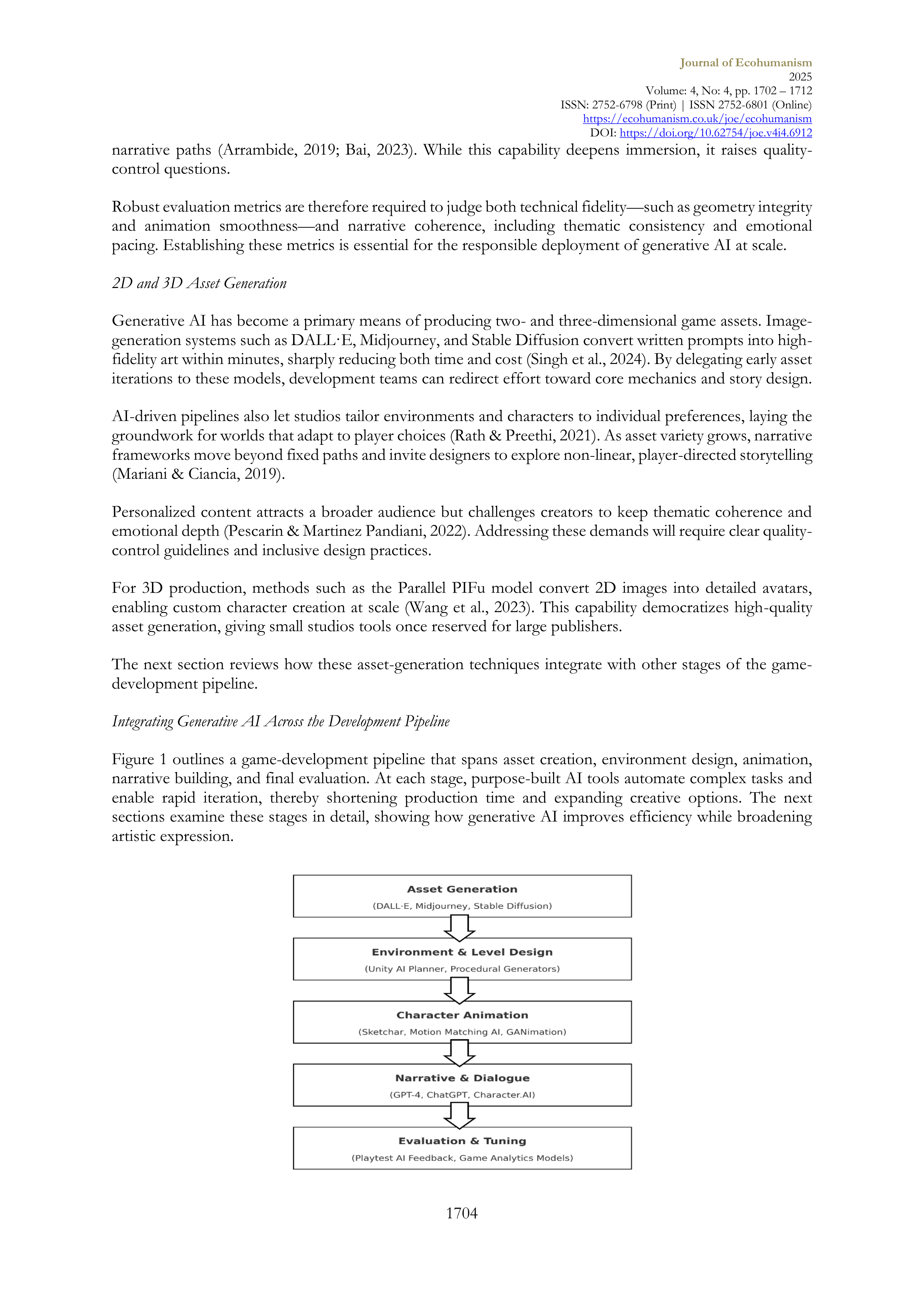
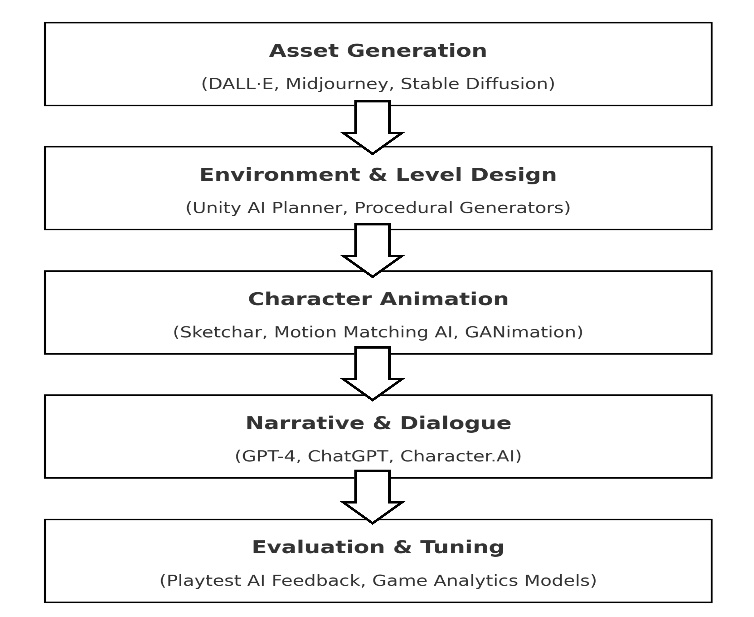
Figure 1 outlines a game-development pipeline that spans asset creation, environment design, animation,
narrative building, and final evaluation. At each stage, purpose-built AI tools automate complex tasks and
enable rapid iteration, thereby shortening production time and expanding creative options. The next
sections examine these stages in detail, showing how generative AI improves efficiency while broadening
artistic expression.
Journal of Ecohumanism
2025
Volume: 4, No: 4, pp. 1702 – 1712
ISSN: 2752-6798 (Print) | ISSN 2752-6801 (Online)
https://ecohumanism.co.uk/joe/ecohumanism
DOI:
https://doi.org/10.62754/joe.v4i4.6912
1705
Figure 1: Stages of Game Design Enhanced by Generative AI
This diagram illustrates the integration of generative AI tools at various stages of the game development
pipeline, from asset creation to evaluation
Dynamic Environments and Levels
Generative AI is reshaping environment and level design through procedural content generation (PCG)
combined with machine-learning models. These systems construct expansive worlds that adapt to players
in real time. PlayGen, for example, blends gameplay-data synthesis with diffusion networks, preserving both
visual fidelity and mechanical integrity (Yang et al., 2024). Adaptive methods let designers deliver spaces
that evolve with player choices, increasing replay value and encouraging strategic experimentation (Ruela et
al., 2020; Volkmar et al., 2022). Coupled with affective-computing modules, such environments can even
adjust challenges to a player’s behavioral and emotional cues, further deepening immersion.
Character Design and Animation
Generative AI is reshaping character design and animation by turning rough sketches into functional
prototypes and linking artists with illustrators in real-time collaborative loops (Ling et al., 2024).Workflows
that connect Sketchar, ChatGPT, Midjourney, Stable Diffusion, and Unity let teams lacking specialized art
skills produce consistent 2D animations within minutes while preserving stylistic coherence (Qiu,
2023).Beyond visuals, generative models now script dialogue, emotional reactions, and adaptive personality
traits, enabling non-playable characters to evolve alongside players and enhance narrative engagement
(Barthet et al., 2022).
Together, these advances lower production barriers, reduce costs, and broaden the expressive range of
digital personas across contemporary game genres.
Evaluation Metrics for AI-Generated Game Assets
Assessing AI-generated assets requires a structured set of metrics that capture technical fidelity, creative
relevance, and practical cost (Fukaya et al., 2024). A well-defined framework lets developers compare
competing models, identify limitations, and match tools to project goals. Four metrics are commonly
applied:
1.
Visual quality – coherence, readability, and aesthetic appeal of textures, lighting, and form.
2.
Diversity – breadth of distinct outputs a model can produce across multiple runs.
3.
Relevance – fit between the generated asset and the game’s narrative, mechanics, or stylistic
guidelines.
4.
Efficiency – time and computational resources required to produce assets at production scale.
By applying these metrics consistently, teams can select models that balance creative ambition with
performance constraints, supporting more engaging and inclusive play experiences.
Overcoming Challenges in AI-Driven Game Development
Maintaining coherent, engaging play remains one of the most demanding hurdles when generative AI drives
content creation, because newly generated assets must both respect core mechanical rules and continuously
surprise players. A representative solution, the PlayGen framework, fuses gameplay-data synthesis with
diffusion models, applying carefully tuned constraints that preserve level logic while keeping encounters
mechanically sound during lengthy sessions across a broad spectrum of 2D as well as 3D titles (Yang et al.,
2024). Development teams further close the loop by coupling adaptive-learning algorithms with live
Journal of Ecohumanism
2025
Volume: 4, No: 4, pp. 1702 – 1712
ISSN: 2752-6798 (Print) | ISSN 2752-6801 (Online)
https://ecohumanism.co.uk/joe/ecohumanism
DOI:
https://doi.org/10.62754/joe.v4i4.6912
1706
telemetry and player feedback, thereby iteratively fine-tuning assets, rules, and difficulty curves so that
virtual worlds evolve organically alongside individual actions. This continuous refinement cycle deepens
emotional investment, reinforces narrative coherence, and ultimately delivers personalized, emergent
storylines that feel deliberately authored for each participant (Guzdial, 2023; Barthet et al., 2022; Gao &
Yu, 2023; Jabla et al., 2022).
Controlling Randomness
Managing the stochastic nature of generative AI is critical, because variation fuels creativity yet unchecked
randomness can erode narrative coherence and break player immersion. Moonshine mitigates this tension
by transforming conventional procedural-content-generation (PCG) algorithms into controllable PCG-ML
models that accept plain-language prompts (Cao et al., 2023). The system relies on synthetic labels—
produced automatically by large language models—to impose high-level structure without eliminating
surprise, allowing designers to steer output toward established aesthetic and mechanical goals while still
encouraging novelty (Nie et al., 2024).
By merging algorithmic control with prompt-level flexibility, developers craft game spaces that feel both
bespoke and mechanically consistent. Controlled randomness yields assets and levels that remain
emotionally resonant, align with player preferences, and adapt fluidly to divergent play styles (Karp &
Swiderska-Chadaj, 2021; Trautmann et al., 2020;
Exploring Player Adaptivity through Level Design
, 2022). This
approach deepens narrative texture and amplifies replay value, because individual decisions can
meaningfully alter subsequent encounters without jeopardizing overall design integrity
.
Ethical Considerations
Integrating generative AI into game design raises intertwined questions of authorship, intellectual property,
and the risk that data-driven models reproduce cultural bias or exclusionary themes (Melhart et al., 2023;
Yu et al., 2018). Responsible adoption therefore calls for transparent workflows, explicit attribution of AI
contributions, and inclusive design checkpoints embedded throughout production. When studios codify
ethics policies and keep dialogue open among artists, engineers, and community advocates, they can balance
algorithmic output with human creative judgment, broadening narrative perspectives and strengthening
cultural representation (Larsson & Heintz, 2020; Sparrow et al., 2021). Concrete practices—diverse writing
rooms, periodic bias audits, and structured player consultation—help ensure that storylines reflect a wide
range of lived experiences and foster empathy among players (Lee et al., 2022; Walker & Weidenbenner,
2019; Xue et al., 2019). By embedding these principles at every stage, development teams can leverage
generative AI not only to refine mechanics but also to craft socially conscious, culturally rich worlds that
cultivate enduring trust with their audiences.
The Impact of Generative AI on Game Developers
Generative AI is lowering entry barriers for independent teams by automating labor-intensive tasks and
producing production-ready assets in minutes, thus freeing designers to concentrate on creative structure
and strategic pacing (Lv, 2023; Epstein et al., 2023). The result is a wave of titles that experiment with
narrative form and interactive mechanics, enriching the market with diverse voices and unfamiliar play
styles (Gao & Yu, 2023). Players now encounter stories that mirror the intricacies of global society, and this
widened perspective encourages interdisciplinary collaboration among artists, writers, and engineers,
fostering an industry that prizes varied cultural viewpoints (Xue et al., 2019; Chee et al., 2021).
Such collaborations are delivering projects that challenge genre conventions, invite players to shape
unfolding events, and tackle complex themes through emotionally resonant characters (Bowman et al.,
2022; Mortensen, 2018). In turn, games increasingly serve as platforms for social commentary, enabling
audiences to reflect on pressing issues while co-creating meaningful storylines that influence both virtual
outcomes and real-world perceptions (Cruz, 2022; Yang, 2022; Pontin, 2019).
Journal of Ecohumanism
2025
Volume: 4, No: 4, pp. 1702 – 1712
ISSN: 2752-6798 (Print) | ISSN 2752-6801 (Online)
https://ecohumanism.co.uk/joe/ecohumanism
DOI:
https://doi.org/10.62754/joe.v4i4.6912
1707
Empowering Indie Developers
Generative AI has emerged as a transformative force in independent game development, particularly for
small teams and solo creators seeking to compete in a saturated market. AI tools such as DALL-E and
Midjourney significantly reduce the time and cost associated with asset creation, enabling indie developers
to produce competitive content with limited resources (Qin, 2023). These efficiencies grant developers
more freedom to experiment with innovative storytelling techniques and elevate underrepresented
narratives (Freeman et al., 2023).
By democratizing content creation, generative AI empowers a wider range of creators to contribute to the
gaming landscape, fostering a marketplace of fresh ideas and culturally relevant themes (Torres-
Toukoumidis et al., 2023). Players, in turn, are exposed to narratives that resonate with real-world issues,
prompting reflection and dialogue within the gaming community (Baltezarevic & Baltezarević, 2023). This
shift supports a more inclusive and socially aware development culture, encouraging developers to embed
values of equity, justice, and empathy into gameplay (Garcia & Neris, 2019; Tseng & Thiele, 2022).
Enhancing Collaboration
Generative AI is tightening the feedback loop between designers and artists by turning rough concepts into
shareable prototypes within minutes; tools such as Sketchar convert sketches into usable characters and
assets, streamlining dialogue and accelerating iterative refinement throughout production (Ling et al., 2024).
This technology-driven synergy allows interdisciplinary teams to align aesthetic vision with mechanical goals
more quickly, boosting efficiency while supporting games that serve educational, reflective, and socially
relevant purposes (Karapakdee & Wannapiroon, 2023). As ideas circulate across art, writing, and
engineering groups, developers craft experiences that engage players on multiple levels and broaden the
cultural reach of interactive storytelling.
In parallel, leading studios are drafting informal yet evolving guidelines for responsible AI use—covering
content moderation, cultural sensitivity, and transparent attribution of AI-generated assets—to balance
rapid innovation with ethical standards (Canca et al., 2024).
The Future of Generative AI in Game Design
Emerging applications—personalized quest lines, dynamic dialogue engines, neural-network procedural
worlds, and tight integration with virtual or augmented reality—signal a future in which every choice
reshapes an evolving journey (Santana-Mancilla et al., 2023). As studios refine these tools, narrative
complexity and character development are set to deepen: intelligent agents will no longer merely react but
will anticipate player intentions, weaving storylines that remain fluid, bespoke, and continuously immersive
(Liu et al., 2020). This adaptive interactivity blurs the line between player and game, fostering stronger
emotional bonds and a heightened sense of agency, so that each action meaningfully advances the unfolding
plot (Carbone et al., 2020; Pyjas et al., 2022).
Ultimately, generative AI will redefine design mechanics while elevating games as platforms for
introspection, cultural expression, and social dialogue. By expanding both the technical and educational
dimensions of play, it promises a future in which digital worlds serve as spaces for creative empowerment,
inclusive representation, and experiential learning.
Personalized Quest and Dialogue Generation
A promising line of research combines knowledge-graph story structures with large language models to
generate quests and conversations that adapt continuously to player choices in role-playing games (Fulda,
2023). The framework produces branching narrative paths and context-aware dialogue, then scores each
segment with a coherence metric that measures logical fit between events, characters, and world state
Journal of Ecohumanism
2025
Volume: 4, No: 4, pp. 1702 – 1712
ISSN: 2752-6798 (Print) | ISSN 2752-6801 (Online)
https://ecohumanism.co.uk/joe/ecohumanism
DOI:
https://doi.org/10.62754/joe.v4i4.6912
1708
(Quiñones & Fernández-Leiva, 2022). Designers can adjust thresholds on that metric to fine-tune pacing
or thematic focus, ensuring that every quest aligns with a player’s emerging play style. By tying progression
to individual preferences, generative AI moves RPGs toward experiences in which players feel genuinely
recognized and central to the unfolding story
.
Neural Network-Based Procedural Content Generation
Neural networks—including generative models, autoencoders, and recurrent architectures—now drive
procedural content generation in esports, creating unpredictable arenas and shifting challenge patterns
(Sergeev
&
Mikryukova,
2024).
These systems adapt in real time to player telemetry, closing a feedback loop that sustains engagement and
personalizes
play
for
each
competitor
(Tap
et
al.,
2019;
Shum
et
al.,
2023).
The unique trajectories that emerge foster vibrant communities, as players trade strategies and recount
encounters shaped by their own actions (Jagoda, 2023).
Integration with Emerging Technologies
Generative AI, when fused with virtual and augmented reality, can construct context-aware environments
that evolve instantaneously in response to player actions, thereby redefining immersion and agency (Hashim
et al., 2024). By aligning scenery, characters, and mechanics to individual behavior, these adaptive spaces
weave personalized story arcs that feel natural and spontaneous (Esteves et al., 2022). Players gain
unprecedented creative freedom: they explore reactive worlds, converse with dynamic characters, and steer
unfolding plots in real time, all without breaking narrative coherence (Hall et al., 2022). This convergence
marks a decisive step toward emotionally resonant digital storytelling, positioning VR/AR—guided by
generative intelligence—as a foundation for hyper-personalized, culturally diverse game experiences in the
coming decade.
Conclusion
Generative AI is reshaping game development by automating tasks once limited by labor, cost, and time,
from rapid 2-D and 3-D asset production to real-time worlds and personalized quests. In doing so, it
broadens access to professional grade tools and opens the medium to new voices and experimental
narratives. Yet this progress comes with trade-offs. Models trained on similar datasets can steer art towards
a shared visual grammar, dulling stylistic variety; overreliance on automated workflows may compress
nuance in story structure or level design; and teams without technical expertise can be shut out of the very
efficiencies AI promises.
Responsible adoption therefore rests on three pillars. First, studios must pair generative systems with clear
authorship and provenance tracking to protect originality and copyright. Second, periodic bias and similarity
audits should safeguard diversity in aesthetics, mechanics, and cultural themes. Third, training and accessible
toolchains can lower new knowledge barriers, sustaining the democratizing spirit often claimed for AI. By
anchoring innovation in ethical practice and inclusive design, developers can ensure that future games
remain not only technically sophisticated but also distinctive, resonant, and emphatically human-centered.
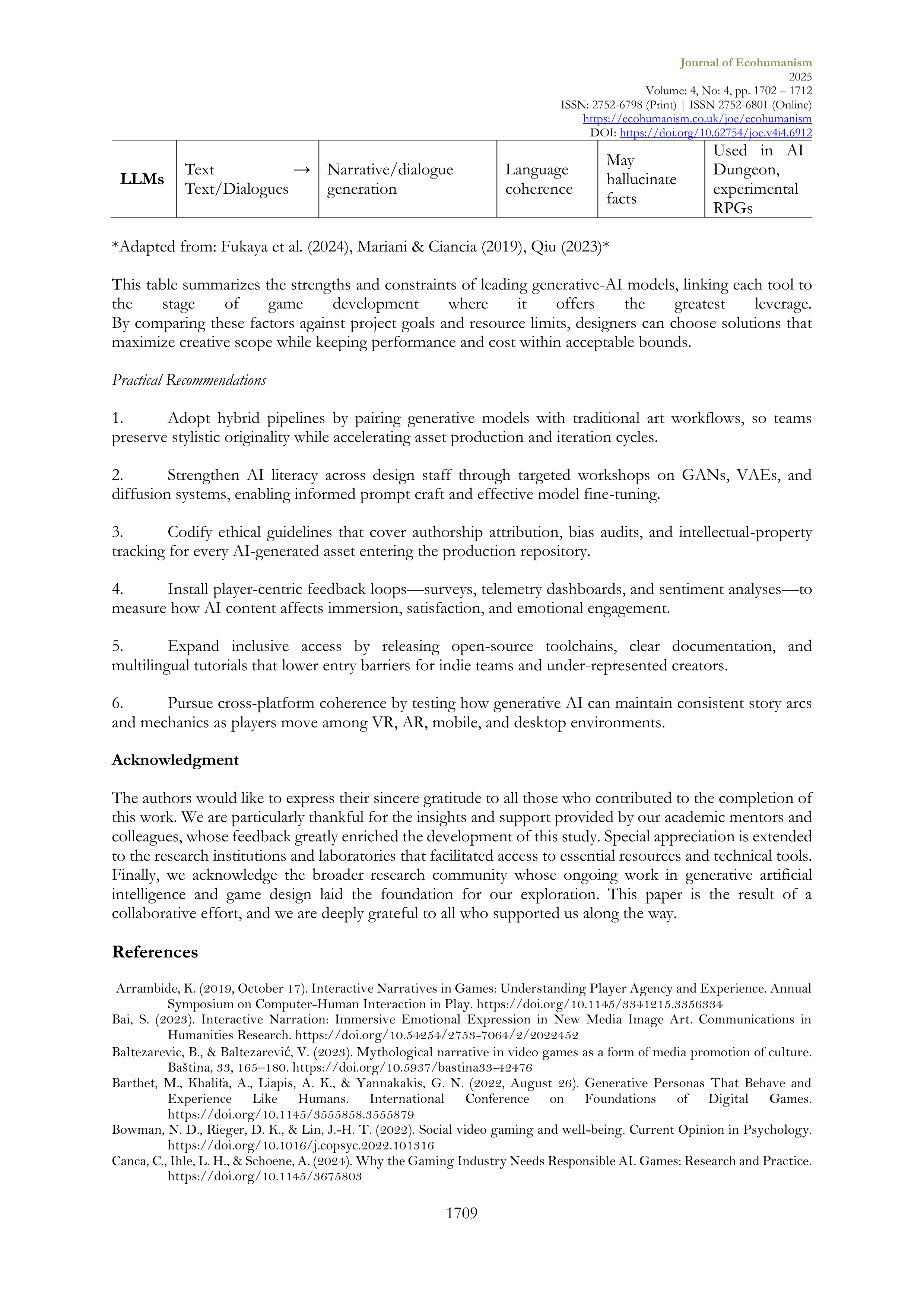
Table1: Comparative Overview of Generative AI Tools in Game Design
Model
Input/Output
Application
Strengths
Limitations
Real-World
Usage
GANs
Image → Image
Character/Environment
generation
High realism
Needs large
data
Used
in
character skin
design
by
indie studios
VAEs
Image → Latent
→ Reconstruct
Stylized asset generation
High
diversity
Less
sharp
output
Concept art
stylization
Journal of Ecohumanism
2025
Volume: 4, No: 4, pp. 1702 – 1712
ISSN: 2752-6798 (Print) | ISSN 2752-6801 (Online)
https://ecohumanism.co.uk/joe/ecohumanism
DOI:
https://doi.org/10.62754/joe.v4i4.6912
1709
LLMs
Text
→
Text/Dialogues
Narrative/dialogue
generation
Language
coherence
May
hallucinate
facts
Used in AI
Dungeon,
experimental
RPGs
*Adapted from: Fukaya et al. (2024), Mariani & Ciancia (2019), Qiu (2023)*
This table summarizes the strengths and constraints of leading generative-AI models, linking each tool to
the
stage
of
game
development
where
it
offers
the
greatest
leverage.
By comparing these factors against project goals and resource limits, designers can choose solutions that
maximize creative scope while keeping performance and cost within acceptable bounds.
Practical Recommendations
1.
Adopt hybrid pipelines by pairing generative models with traditional art workflows, so teams
preserve stylistic originality while accelerating asset production and iteration cycles.
2.
Strengthen AI literacy across design staff through targeted workshops on GANs, VAEs, and
diffusion systems, enabling informed prompt craft and effective model fine-tuning.
3.
Codify ethical guidelines that cover authorship attribution, bias audits, and intellectual-property
tracking for every AI-generated asset entering the production repository.
4.
Install player-centric feedback loops—surveys, telemetry dashboards, and sentiment analyses—to
measure how AI content affects immersion, satisfaction, and emotional engagement.
5.
Expand inclusive access by releasing open-source toolchains, clear documentation, and
multilingual tutorials that lower entry barriers for indie teams and under-represented creators.
6.
Pursue cross-platform coherence by testing how generative AI can maintain consistent story arcs
and mechanics as players move among VR, AR, mobile, and desktop environments.
Acknowledgment
The authors would like to express their sincere gratitude to all those who contributed to the completion of
this work. We are particularly thankful for the insights and support provided by our academic mentors and
colleagues, whose feedback greatly enriched the development of this study. Special appreciation is extended
to the research institutions and laboratories that facilitated access to essential resources and technical tools.
Finally, we acknowledge the broader research community whose ongoing work in generative artificial
intelligence and game design laid the foundation for our exploration. This paper is the result of a
collaborative effort, and we are deeply grateful to all who supported us along the way.
References
Arrambide, K. (2019, October 17). Interactive Narratives in Games: Understanding Player Agency and Experience. Annual
Symposium on Computer-Human Interaction in Play. https://doi.org/10.1145/3341215.3356334
Bai, S. (2023). Interactive Narration: Immersive Emotional Expression in New Media Image Art. Communications in
Humanities Research. https://doi.org/10.54254/2753-7064/2/2022452
Baltezarevic, B., & Baltezarevi
ć
, V. (2023). Mythological narrative in video games as a form of media promotion of culture.
Baština, 33, 165–180. https://doi.org/10.5937/bastina33-42476
Barthet, M., Khalifa, A., Liapis, A. K., & Yannakakis, G. N. (2022, August 26). Generative Personas That Behave and
Experience
Like
Humans.
International
Conference
on
Foundations
of
Digital
Games.
https://doi.org/10.1145/3555858.3555879
Bowman, N. D., Rieger, D. K., & Lin, J.-H. T. (2022). Social video gaming and well-being. Current Opinion in Psychology.
https://doi.org/10.1016/j.copsyc.2022.101316
Canca, C., Ihle, L. H., & Schoene, A. (2024). Why the Gaming Industry Needs Responsible AI. Games: Research and Practice.
https://doi.org/10.1145/3675803
Journal of Ecohumanism
2025
Volume: 4, No: 4, pp. 1702 – 1712
ISSN: 2752-6798 (Print) | ISSN 2752-6801 (Online)
https://ecohumanism.co.uk/joe/ecohumanism
DOI:
https://doi.org/10.62754/joe.v4i4.6912
1710
Cao, Y., Li, S., Yan, Z., Dai, Y., Yu, P. S., & Sun, L. (2023). A comprehensive survey of AI-generated content (AIGC): A
history of generative AI from GAN to ChatGPT. arXiv. https://doi.org/10.48550/arXiv.2303.04226
Carbone, J. N., Crowder, J. A., & Carbone, R. A. (2020, December 1). Radically simplifying game engines: AI emotions &
game self-evolution. In 2020 International Conference on Computational Science and Computational Intelligence
(CSCI) (pp. 41–46). IEEE. https://doi.org/10.1109/CSCI51800.2020.0008
Chee, F., Hjorth, L., & Davies, H. (2021). An ethnographic co-design approach to promoting diversity in the games industry.
Feminist Media Studies, 22(3), 491–506. https://doi.org/10.1080/14680777.2021.1905680
Carolin, A., & Lintangsari, A.
P. (2022). Collaborative gaming approach in online learning to improve students’ engagement.
Language
Literacy:
Journal
of
Linguistics,
Literature,
and
Language
Teaching,
6(1),
154–166.
https://doi.org/10.30743/ll.v6i1.5259
Hutson, J., & Cotroneo, P. (2023). Generative AI tools in art education: Exploring prompt engineering and iterative
processes for enhanced creativity. Metaverse, 4(1), 1–14. https://doi.org/10.54517/m.v4i1.2164
Cruz, P. J. A. (2022). Understanding students’ engagement with a serious game to learn English: A sociocultural perspective.
International Journal of Serious Games, 9(4), 1–18. https://doi.org/10.17083/ijsg.v9i4.554
Epstein, Z., Hertzmann, A., Herman, L., Mahari, R., Frank, M. R., Groh, M., Schroeder, H., Smith, A., Akten, M., Fjeld, J.,
Farid, H., Leach, N., Pentland, A., & Russakovsky, O. (2023). Art and the science of generative AI: A deeper dive.
arXiv. https://doi.org/10.48550/arXiv.2306.04141
Esteves, P., Jacob, J., & Rodrigues, R. (2022, November 3). Exploring Player Adaptivity through Level Design: A Platformer
Case
Study.
International
Conference
on
Graphics
and
Interaction.
https://doi.org/10.1109/ICGI57174.2022.9990340
Freeman, G., Li, L., McNeese, N. J., & Schulenberg, K. (2023, April 19). Understanding and mitigating challenges for non-
profit driven indie game development to innovate game production. In Proceedings of the 2023 CHI Conference
on Human Factors in Computing Systems (pp. 1–14). ACM. https://doi.org/10.1145/3544548.3580976
Fukaya, K., Daylamani-Zad, D., & Agius, H. (2024). Evaluation metrics for intelligent generation of graphical game assets:
A systematic survey-based framework. IEEE Transactions on Pattern Analysis and Machine Intelligence.
https://doi.org/10.1109/tpami.2024.3398998
Fulda, N. (2023, April 19). Personalized quest and dialogue generation in role-playing games: A knowledge graph- and
language model-based approach. In Proceedings of the 2023 CHI Conference on Human Factors in Computing
Systems (Article 657, pp. 1–14). ACM. https://doi.org/10.1145/3544548.3581441
Game character generation with generative adversarial networks. (2022, May 15). In 2022 30th Signal Processing and
Communications
Applications
Conference
(SIU)
(pp.
1–4).
IEEE.
https://doi.org/10.1109/SIU55565.2022.9864747
Gao, X., & Yu, W. (2023). Innovative thinking about human-computer interaction in interactive narrative games. In L.
Kruger, T. Winckler, C. Johnson, & G. Lindgaard (Eds.), Human-computer interaction and emerging technologies:
Adjunct proceedings from the INTERACT 2023 workshops (pp. 88–98). Springer. https://doi.org/10.1007/978-
3-031-35930-9_7
Garcia, F. E., & Neris, V. P. de A. (2019). Strategies for inclusive end-user co-creation of inclusive storytelling games. In D.
Lamas, F. Reichert, A. Veríssimo, M. Lopes, H. N. Winckler, & M. D. Antunes (Eds.), Human-computer interaction
– INTERACT 2019 (pp. 261–271). Springer. https://doi.org/10.1007/978-3-030-34644-7_16
Guzdial, M. (2023). Joint level generation and translation using gameplay videos [Preprint]. arXiv.
https://doi.org/10.48550/arXiv.2306.16662
Hall, J., Herodotou, C., & Iacovides, I. (2022). Measuring player creativity in digital entertainment games using the Creativity
in Gaming Scale. In C. T. Fleming, L. A. Gouseti, & R. Gerber (Eds.), Creativity in education: New perspectives
from research and practice (pp. 188–202). Routledge. https://doi.org/10.4324/9781003177098-14
Hashim, M. E. A., Mustafa, W. A. W., Prameswari, N. S., Ghani, M. M., & Hanafi, H. F. (2024). Revolutionizing virtual
reality with generative AI: An in-depth review. Journal of Advanced Research in Computing and Applications,
30(1). https://doi.org/10.37934/arca.30.1.1930
Jabla, R., Khemaja, M., & Faiz, S. (2022). Decision-making improvement in dynamic environments using machine learning.
Journal of Human, Earth, and Future, 3(1), 1–14. https://doi.org/10.28991/hef-2022-03-01-04
Jagoda,
P.
(2023).
Artificial
intelligence
in
video
games.
American
Literature,
95(2),
435–438.
https://doi.org/10.1215/00029831-10575246
Karapakdee, J., & Wannapiroon, P. (2023). Immersive digital storytelling learning experience with a metaverse gamification
game platform to enhance game developer competency. International Journal of Information and Education
Technology, 13(6), 428–433. https://doi.org/10.18178/ijiet.2023.13.6.1884
Karp, R., & Swiderska-Chadaj, Z. (2021, July 13). Automatic generation of graphical game assets using GAN. Proceedings
of the 16th International Conference on the Foundations of Digital Games (FDG ’21), 1–9. ACM.
https://doi.org/10.1145/3477911.3477913
Khatri, P. (2021). The gaming experience with AI. In S. P. Singh, A. Abraham, & P. Siarry (Eds.), Handbook of research on
innovating trends and applications of artificial intelligence in the gaming industry (pp. 142–156). IGI Global.
https://doi.org/10.4018/978-1-7998-3499-1.CH009
Kuznetsov, N. G. (2023). Application of artificial intelligence in computer gaming and game content. In Smart Innovation,
Systems and Technologies (Vol. 319, pp. 445–454). Springer. https://doi.org/10.1007/978-981-19-7411-3_42
Larsson, S., & Heintz, F. (2020). Transparency in artificial intelligence. Philosophical Transactions of the Royal Society A:
Mathematical,
Physical
and
Engineering
Sciences,
378(2166),
Article
20190469.
https://doi.org/10.14763/2020.2.1469
Journal of Ecohumanism
2025
Volume: 4, No: 4, pp. 1702 – 1712
ISSN: 2752-6798 (Print) | ISSN 2752-6801 (Online)
https://ecohumanism.co.uk/joe/ecohumanism
DOI:
https://doi.org/10.62754/joe.v4i4.6912
1711
Lee, J. A. C., Lim, R., Mohamad, F. S., Chan, K., & Mas’ud, F. (2022). Collaborative creativity among undergraduate students
as game creators during gamification in a university-wide elective course. Journal of University Teaching and
Learning Practice, 19(1), Article 16. https://doi.org/10.53761/1.20.01.16
Ling, L., Chen, X., Wen, R., Li, T. J.-J., & LC, R. (2024). Sketchar: Supporting character design and illustration prototyping
using generative AI. Proceedings of the ACM on Human-Computer Interaction, 8(CSCW1), Article 123.
https://doi.org/10.1145/3677102
Liu, D., Li, J., Yu, M.-H., Huang, Z., Liu, G., Zhao, D., & Yan, R. (2020). A character-centric neural model for automated
story generation. In Proceedings of the AAAI Conference on Artificial Intelligence (Vol. 34, No. 02, pp. 1725–
1732). AAAI Press. https://doi.org/10.1609/aaai.v34i02.5536
Lv, Z. (2023). Generative artificial intelligence in the Metaverse era. Cognitive Robotics, 3, 100084.
https://doi.org/10.1016/j.cogr.2023.06.001
Mariani, I., & Ciancia, M. (2019, January 1). Character driven narrative engine: Storytelling system for building interactive
narrative experiences. In Proceedings of the 2019 DiGRA International Conference: Game, Play and the Emerging
Ludo Mix (DiGRA ’19). DiGRA. https://doi.org/10.26503/dl.v2019i1.1078
Marsh, T., Thomas, A., & Khoo, E. T. (2021). Between game mechanics and immersive storytelling: Design using an
extended activity theory framework. In K. L. Andersen, A. Cox, N. Dogan, J. Abdelnour-Nocera, P. Campos, & T.
Clemmensen
(Eds.),
Human-computer
interaction
–
INTERACT
2021
(pp.
122–141).
Springer.
https://doi.org/10.1007/978-3-030-88272-3_9
Melhart, D., Togelius, J., Holmgård, C., & Yannakakis, G. N. (2023). The ethics of AI in games [Preprint]. arXiv.
https://doi.org/10.48550/arXiv.2305.07392
Mortensen, T. E. (2018). Real game worlds: The emotional reality of fictional worlds. MedieKultur: Journal of Media and
Communication Research, 34(64), 120–137. https://doi.org/10.7146/mediekultur.v34i64.97015
Nie, Y., Middleton, M., Merino, T., Kanagaraja, N., Kumar, A., Zhuang, Z., & Togelius, J. (2024). Moonshine: Distilling
game
content
generators
into
steerable
generative
models
[Preprint].
arXiv.
https://doi.org/10.48550/arXiv.2408.09594
Pescarin, S., & Martinez Pandiani, D. (2022). The impact of story structure, meaningfulness, and concentration in serious
games. Information, 13(12), 567. https://doi.org/10.3390/info13120567
Pontin, C. J. (2019). The narrative and the interactive: A critical theology of video games. Fortress Academic.
Pyjas, G. M., Weinel, J. R., & Broadhead, M. (2022). Storytelling and VR: Inducing emotions through AI characters. In
Proceedings of the Electronic Visualisation and the Arts 2022 Conference (pp. 195–198). BCS Learning &
Development. https://doi.org/10.14236/ewic/eva2022.37
Qin, J. (2023). How does text to image AI affect indie game designers and artists? Journal of Innovation and Development,
5(3), 107–111. https://doi.org/10.54097/f7of9f8k
Qiu, S. (2023). Generative AI processes for 2D platformer game character design and animation. Lecture Notes in Education
Psychology and Public Media, 29(1), 146–160. https://doi.org/10.54254/2753-7048/29/20231440
Quiñones, J. R., & Fernández-Leiva, A. J. (2022). Automated video game parameter tuning with XVGDL+. Journal of
Universal Computer Science, 28(12), 1282–1311. https://doi.org/10.3897/jucs.75357
Rath, T., & Preethi, N. (2021, June 18). Application of AI in video games to improve game building. In Proceedings of the
2021 International Conference on Communication Systems and Network Technologies (CSNT) (pp. 145–149).
IEEE. https://doi.org/10.1109/CSNT51715.2021.9509685
Ruela, A.
S., Delgado, K.
V., & Bernardes, J.
L. (2020). A multi-objective evolutionary approach for the nonlinear scale free
level problem. Applied Intelligence, 50(12), 4223–4240. https://doi.org/10.1007/s10489-020-01788-z
Saleh, A., Hmelo Silver, C. E., Glazewski, K. D., Mott, B. W., Chen, Y., Rowe, J. P., & Lester, J. C. (2019). Collaborative
inquiry play: A design case to frame integration of collaborative problem solving with story centric games.
Information and Learning Sciences, 120(9–10), 547–566. https://doi.org/10.1108/ILS-03-2019-0024
Santana-Mancilla, P. C., Montesinos-López, O. A., & Anido-Rifón, L. E. (2023). The use of deep learning to improve player
engagement in a video game through a dynamic difficulty adjustment based on skills classification. Applied
Sciences, 13(14), 8249. https://doi.org/10.3390/app13148249
Sergeev, S. F., & Mikryukova, A. (2024). Prospects for applying neural networks for procedural generation of game content
in esports. Ergodesign, 2024(1), 37–45. https://doi.org/10.30987/2658-4026-2024-1-37-45
Shum, L. C., Rosunally, Y., Scarle, S., & Munir, K. (2023). Personalised learning through context based adaptation in serious
games
with
gating
mechanism.
Education
and
Information
Technologies,
28(10),
13077–13108.
https://doi.org/10.1007/s10639-023-11695-8
Singh, D., Banerjee, J. P., & Jayaraj, L. (2024, October). Enhancing game development process using AI: A comparative
analysis of image generative AI. In 2024 IEEE International Conference on Metrology for eXtended Reality,
Artificial
Intelligence
and
Neural
Engineering
(MetroXRAINE)
(pp.
1–6).
IEEE.
https://doi.org/10.1109/MetroXRAINE62247.2024.10796123
Sparrow, L. A., Gibbs, M., & Arnold, M. (2021, May 6). The ethics of multiplayer game design and community management:
Industry perspectives and challenges. In Proceedings of the 2021 CHI Conference on Human Factors in
Computing Systems (pp. 1–19). ACM. https://doi.org/10.1145/3411764.3445363
Tap, R.
M., Zin, N.
A.
M., & Sarim, H.
M. (2019, July). Requirements for creative skills development in game design. In
Proceedings of the 2019 International Conference on Electrical Engineering and Informatics (ICEEI) (pp. 176–
182). IEEE. https://doi.org/10.1109/ICEEI47359.2019.8988799
Torres Toukoumidis, Á., Marín
Gutiérrez, I., Becerra, M.
H., León Alberca, T.
B., & Pérez
Curiel, C. P. (2023). Let’s Play
Democracy,
exploratory
analysis
of
political
video
games.
Societies,
13(2),
Article
28.
https://doi.org/10.3390/soc13020028

Journal of Ecohumanism
2025
Volume: 4, No: 4, pp. 1702 – 1712
ISSN: 2752-6798 (Print) | ISSN 2752-6801 (Online)
https://ecohumanism.co.uk/joe/ecohumanism
DOI:
https://doi.org/10.62754/joe.v4i4.6912
1712
Trautmann, L., Piros, A., & Botzheim, J. (2020). Application of the fuzzy system for an emotional pattern generator. Applied
Sciences, 10(19), Article
6930. https://doi.org/10.3390/app10196930
Tseng, C.-I., & Thiele, L. (2022). Actions and digital empathy in the interactive storytelling of serious games: A multimodal
discourse approach. Social Semiotics, 34(3), 312–331. https://doi.org/10.1080/10350330.2022.2128039
Volkmar, G., Alexandrovsky, D., Eilks, A. E., Queck, D., Herrlich, M., & Malaka, R. (2022). Effects of PCG on creativity in
playful city-building environments in VR. Proceedings of the ACM on Human-Computer Interaction, 6(CHI
PLAY), Article 230. https://doi.org/10.1145/3549493
Walker, G., & Weidenbenner, J. V. (2019). Social and emotional learning in the age of virtual play: Technology, empathy,
and
learning.
Journal
of
Research
in
Innovative
Teaching
&
Learning,
12(2),
116–132.
https://doi.org/10.1108/JRIT-03-2019-0046
Wang, H., Tsai, C.-L., & Sun, C. (2023). Automatic generation of game content customized by players: Generate 3D game
characters based on pictures. IntechOpen. https://doi.org/10.5772/intechopen.1002024
Xue, H., Newman, J. I., & Du, J. (2019). Narratives, identity and community in esports. Leisure Studies, 38(6), 845–861.
https://doi.org/10.1080/02614367.2019.1640778
Yang, M., Li, J., Fang, Z., Chen, S., Yu, Y., Fu, Q., Yang, W., & Ye, D. (2024). Playable game generation. arXiv.
https://doi.org/10.48550/arxiv.2412.00887
Yang, Q. (2022). New formulas of interactive entertainment. In Advances in Marketing, Customer Relationship
Management, and e-Services (Book Series). https://doi.org/10.4018/978-1-6684-3971-5.ch004
Yu, H., Shen, Z., Miao, C., Leung, C., Leung, C., Lesser, V., & Yang, Q. (2018, July). Building ethics into artificial intelligence.
In Proceedings of the 27th International Joint Conference on Artificial Intelligence (IJCAI’18) (pp. 5527–5533).
International
Joint
Conferences
on
Artificial
Intelligence
Organization.
https://doi.org/10.24963/IJCAI.2018/779.